
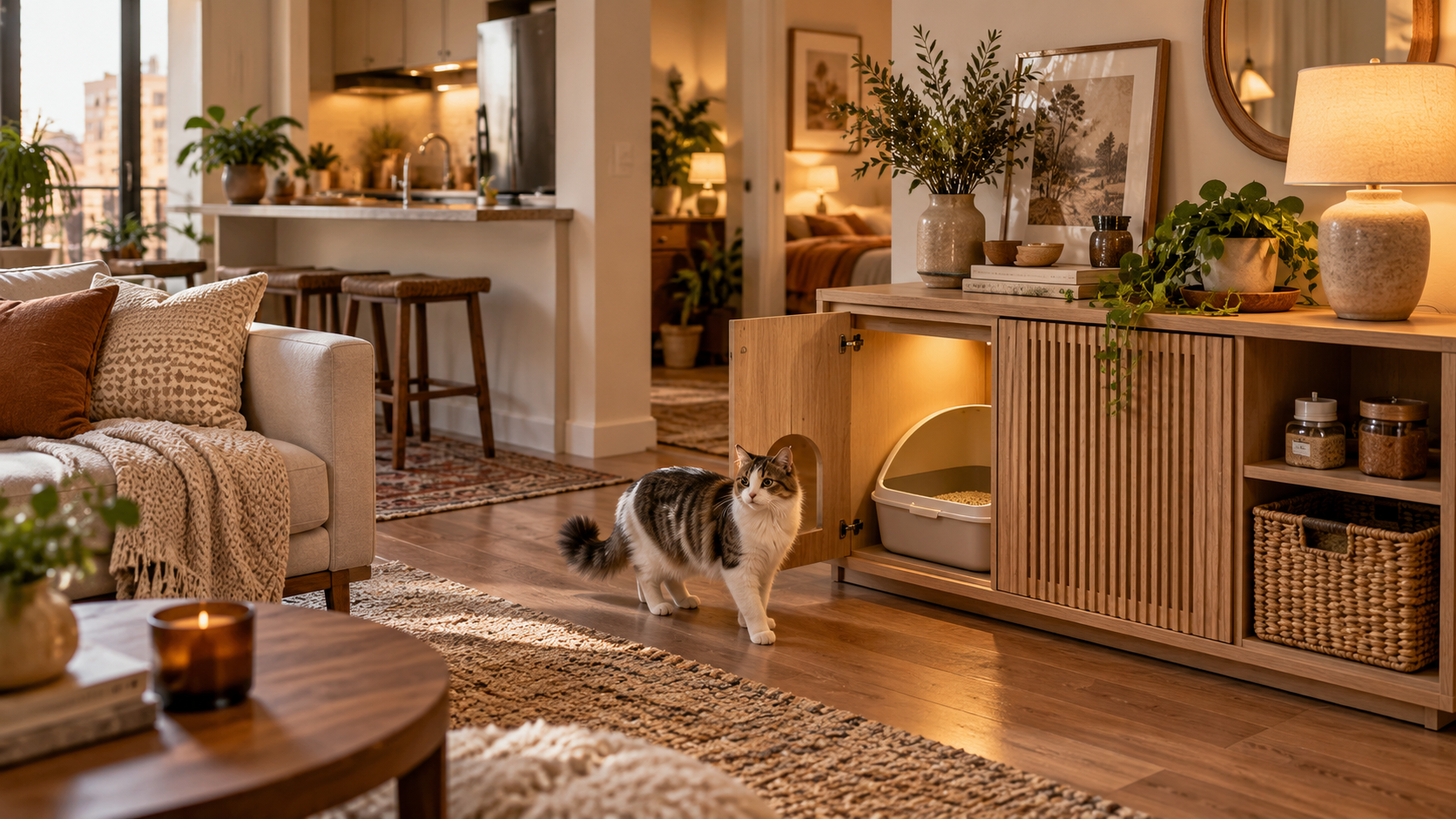
Finding a discreet cat litter box location in a small apartment takes more than hiding a plastic tray behind furniture. Your cat needs a reliable, comfortable place, while you need an easy-to-clean layout that suits the home. Here are practical options for studios, narrow hallways and compact bathrooms.
Editorial note: This guide combines small-space organization principles with published feline welfare guidance. It does not replace veterinary advice; a sudden change in litter-box habits warrants veterinary attention.
Choose the largest comfortable, easy-entry litter tray your space permits. Place it somewhere quiet, continuously accessible, well ventilated, away from food and water, and easy to scoop every day. Concealment is optional; your cat’s comfort is not.
Small-space layout planner
Find the Best Place Before You Buy Furniture
Walk through your apartment with your cat’s daily route in mind. Rate each candidate location using these three practical zones; individual cats may have different preferences.
Quiet, level, well-ventilated corner with 24/7 access, enough room to turn, and a clear exit path.
Bathroom, hallway niche, bedroom or furniture enclosure: check door access, noise, internal size and cleaning reach.
Near food and water, loud appliances, blocked escape routes, extreme temperatures, or spaces that can be locked shut.
Five-point placement test: Can your cat reach the tray at all times? Turn and dig comfortably? Exit without being cornered? Use it without nearby startling noise? Can you clean it easily every day?
Illustrative planning aid, not a veterinary assessment. Any change in litter-box habits warrants attention and may require veterinary advice.
Affiliate disclosure: As an Amazon Associate, we earn from qualifying purchases. This article contains affiliate links; if you buy through them, we may earn a commission at no additional cost to you.
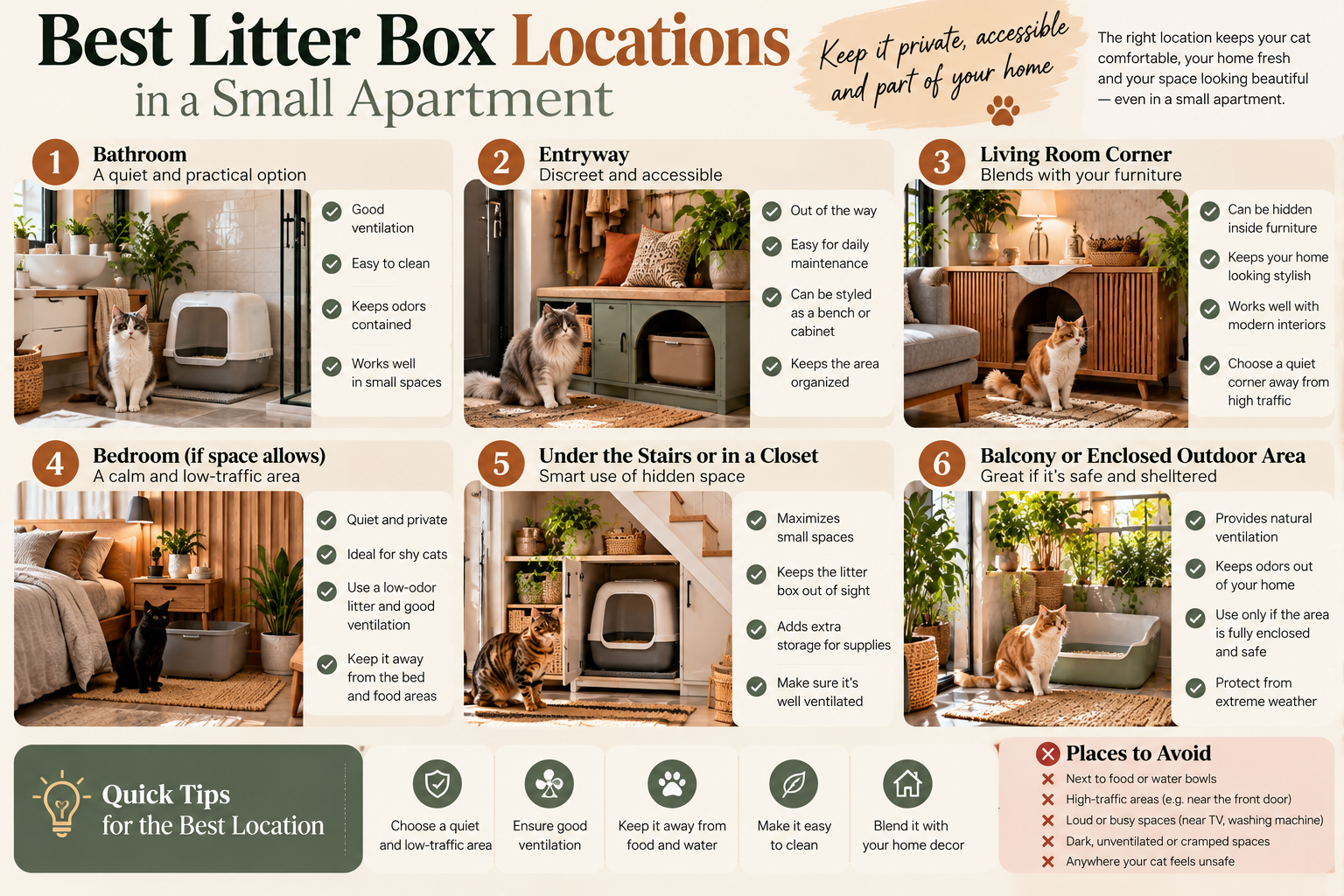
Best Cat Litter Box Locations in a Small Apartment: Quick Comparison
| Location | Advantages | Watch out for |
|---|---|---|
| Bathroom corner | Washable surfaces; discreet placement | Closed doors, humidity, cleaning chemicals |
| Quiet hallway niche | Uses otherwise awkward floor space | Foot traffic, blocked entry or escape |
| Bedroom corner | May offer predictable access | Ventilation and nighttime disturbance |
| Living-room furniture area | Can fit a stable, open-sided arrangement | Noise, cramped enclosures and poor airflow |
| Laundry nook | Easy cleaning-supply storage nearby | Washer noise, inaccessible doors, vibration |
Design rule: prioritize a safe and accessible toileting station over a hidden one. If your cat avoids a location, reconsider the setup rather than forcing the design.
The 30-second decision
Best all-round choice: a generously sized, easy-entry open tray in a quiet, accessible location.
If litter scatters: consider a high-sided tray with a low doorway, plus a washable mat.
If you want to hide the box: start with the cat’s comfort, ventilation, internal dimensions and an exit that cannot be blocked.
If you have two cats: plan for multiple stations in separate locations, not one shared decorative cabinet.
Keep reading: compare five apartment layouts, choose the right box style, measure your space, then build a cleaning routine that lasts.
Interactive guide · Start here
Find a Cat-Friendly Litter Setup for Your Apartment
Choose the situation closest to yours to reveal a practical starting recommendation. These are general guidelines, not a substitute for your cat’s preferences or veterinary advice.
My studio apartment has very little floor space
Try: a spacious open litter tray in a quiet, permanently accessible bathroom or low-traffic corner. Measure the cat and usable floor area before selecting a cabinet. A low-profile, washable mat and nearby storage for supplies can keep the area tidy without making the tray smaller.
My cat is older, very young, or has limited mobility
Try: an easy-entry, roomy open tray with a low front edge. Avoid top-entry boxes or steep steps. Keep the path clear and speak with a veterinarian about any new difficulty entering or using the litter box.
I have two or more cats
Try: multiple appropriately sized trays in separate accessible locations. A useful starting point is one box per cat plus one extra, adjusted for the cats’ behavior and living space. Avoid grouping every box inside one shared enclosure.
My cat scatters litter or I prefer discreet furniture
Try: a spacious high-sided tray with an easy entrance and a washable tracking mat. If testing furniture concealment, check ventilation, inside dimensions and uninterrupted access, and keep an open alternative if your cat dislikes the enclosure.
Always check: the box should let your cat turn and dig comfortably, stay away from food and water, and remain available at all times. A sudden change in toilet habits warrants veterinary advice.
Put Your Cat’s Needs Ahead of Appearance
A litter box must be easy for the cat to find and access at all times. Choose a quiet, predictable location with enough space for the animal to enter, turn around, dig and exit comfortably. Do not place a box where doors are frequently shut, where a noisy appliance starts unexpectedly, or where another pet can trap the cat. Senior cats and animals with mobility challenges may prefer a low entry. Consider a larger open tray before purchasing a decorative enclosure that might feel cramped. The most elegant hidden litter setup is not successful if your cat refuses to use it. Monitor normal toileting habits and seek veterinary advice when there is an unexplained change.
Five Small-Apartment Litter Box Layout Ideas
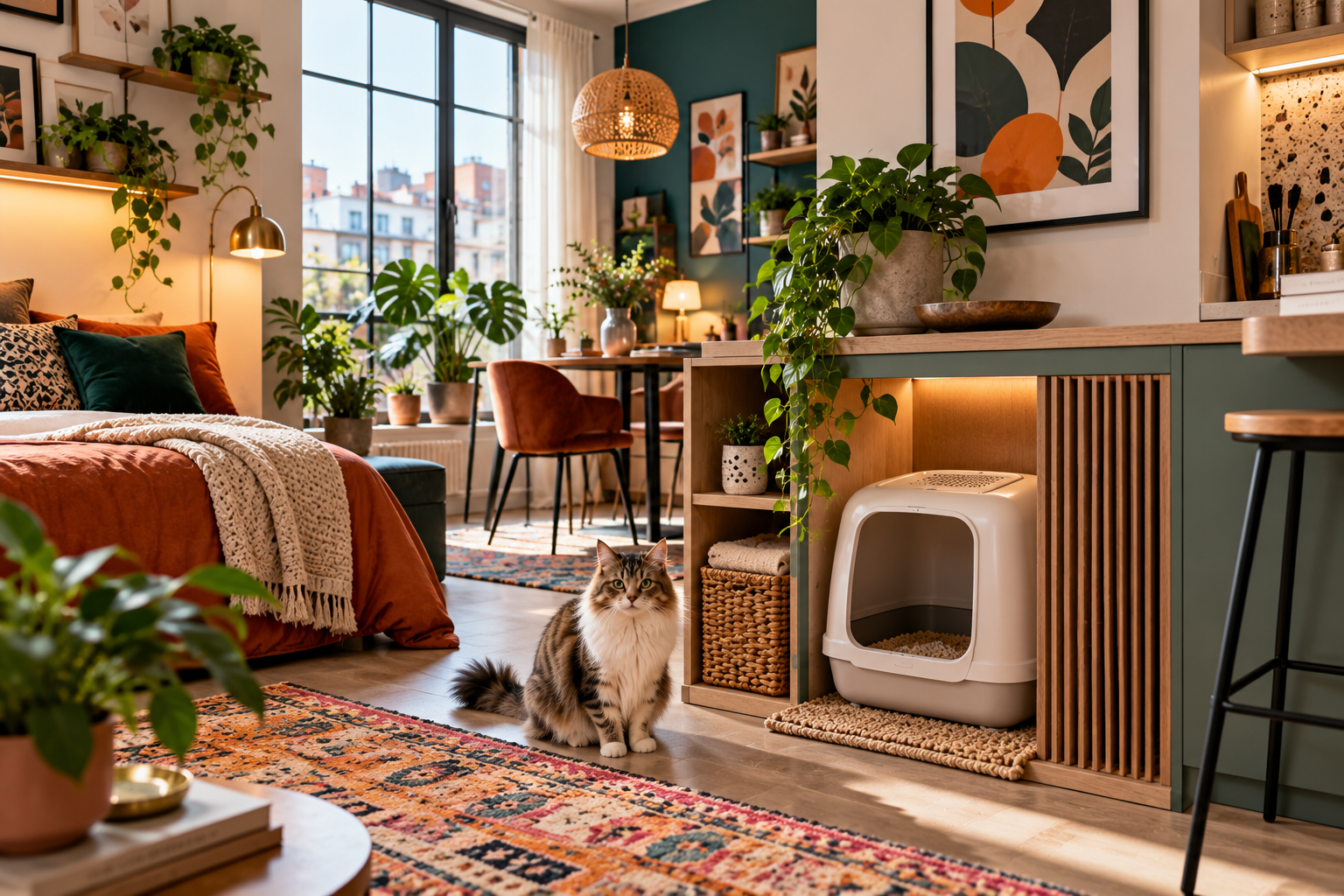
Instead of buying a cabinet first, map the routes your cat already uses. The best litter station feels predictable from your cat’s perspective while remaining simple to clean.
1. An open bathroom nook
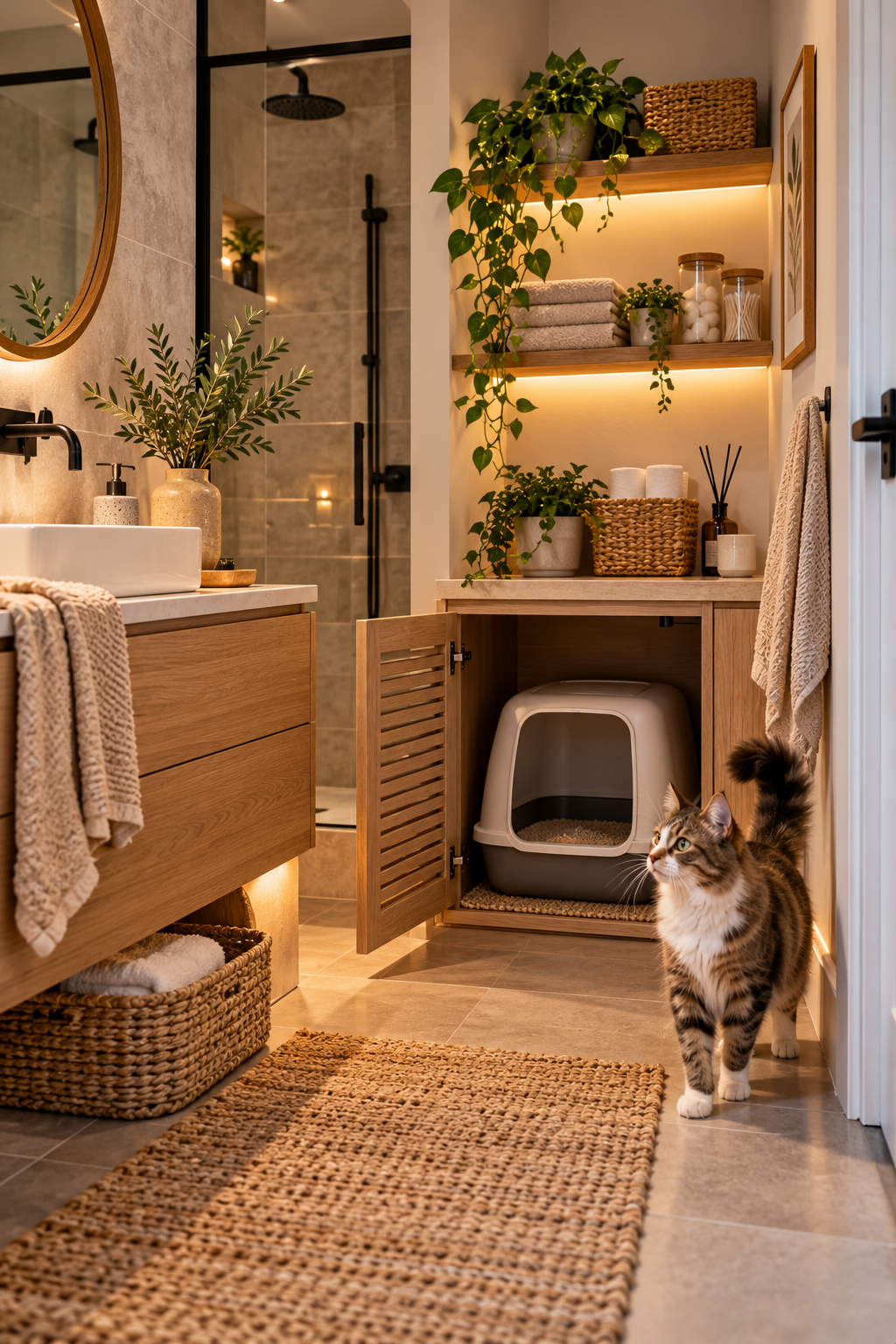
Position a generously sized, low-entry tray in a dry, quiet corner, leaving enough clearance to scoop without moving the entire setup. A thin, washable litter mat can reduce tracking. Keep the bathroom door open or provide reliable access at all times; avoid placing the box where splashing water, toiletries or cleaning products could reach it.
2. A quiet end of a wide hallway
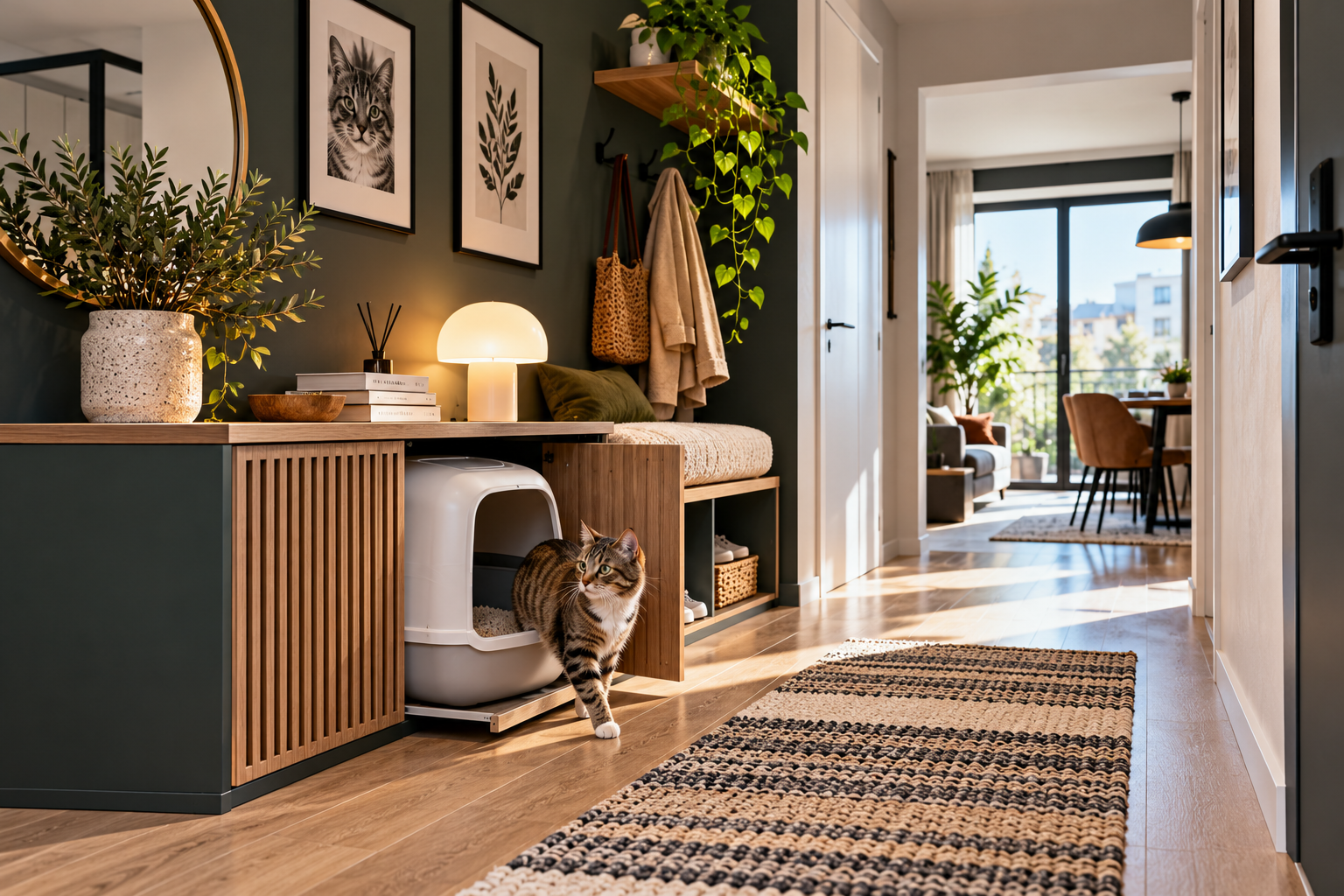
Use a recessed area only when the tray does not narrow an escape route or sit in a heavy-traffic path. A cat should be able to approach, turn and leave without another pet or person blocking its way. Choose soft visual screening rather than a tight, one-exit cabinet.
3. Beside a console, not inside a cramped console
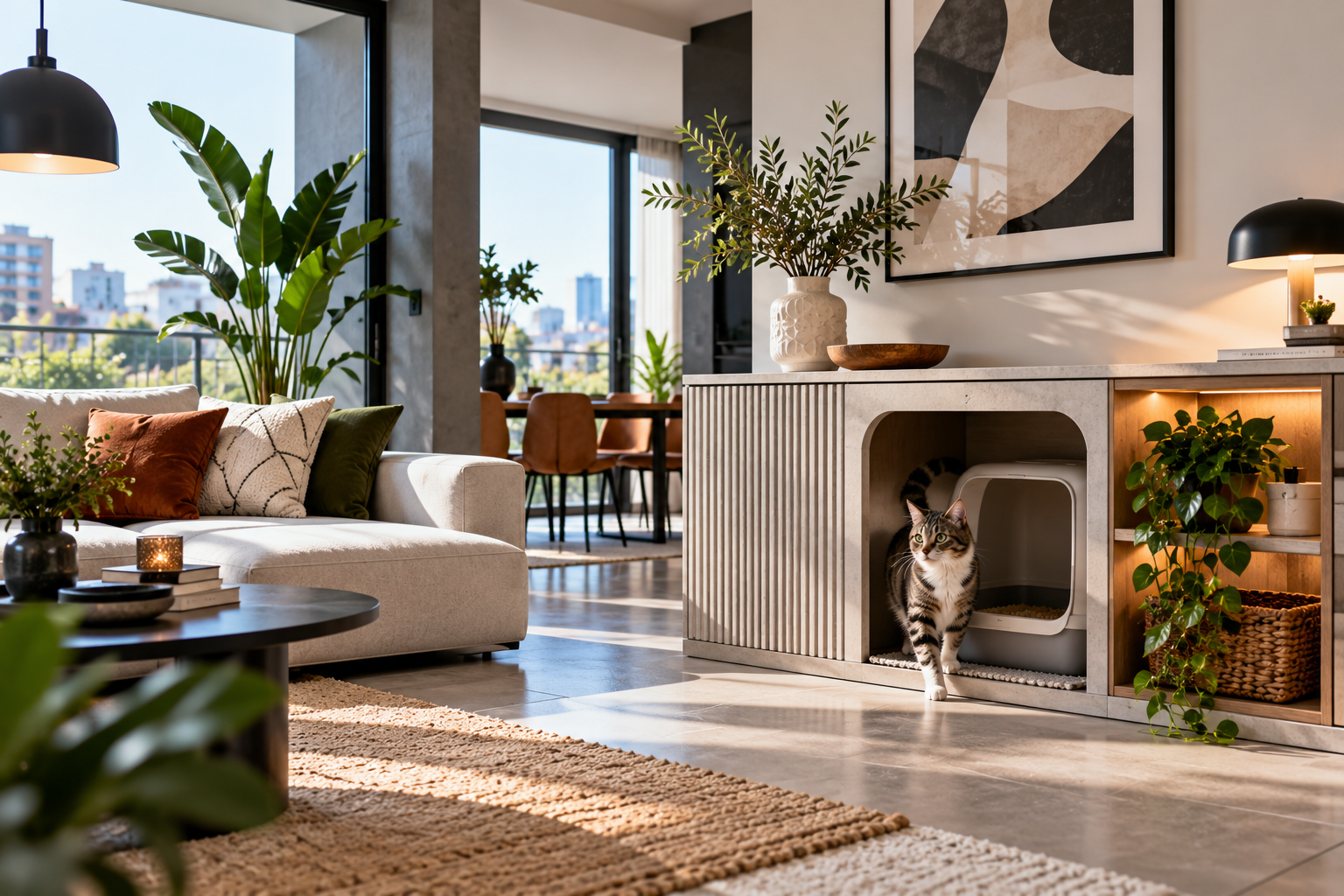
A low storage cabinet can visually balance a living room, with an open litter station positioned beside it. This allows the furniture to conceal supplies while the cat retains ventilation and unobstructed access. Pick wipeable finishes and avoid storing scented products immediately next to the tray.
4. A bedroom corner with a washable floor protector
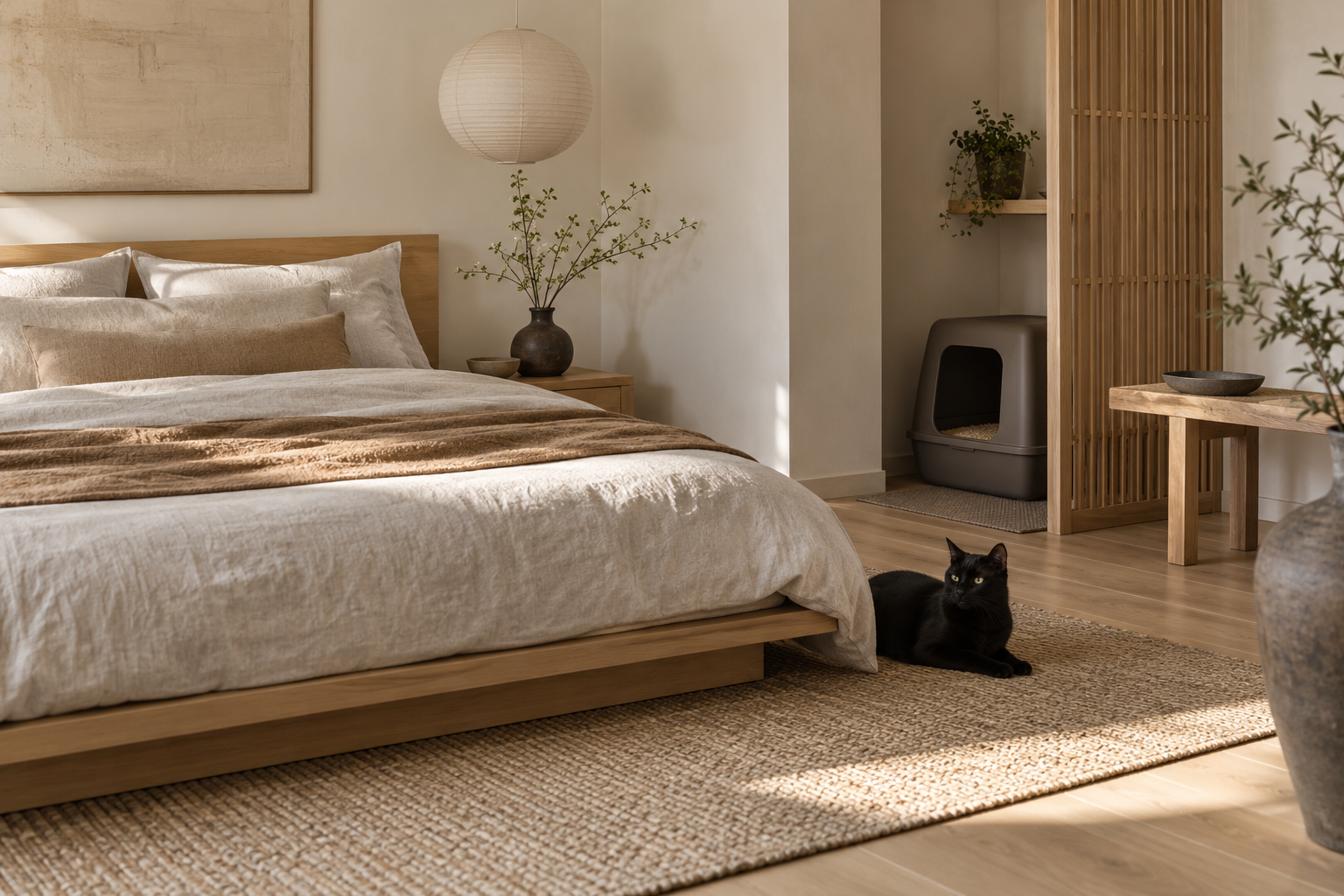
In a studio or tiny one-bedroom apartment, a bedroom location may be more accessible than a shared bathroom. If the cat already favors the spot, use a washable, nonslip mat, clean regularly, and keep the box away from food, water and direct heat. Noise and airflow are more important than perfect visual concealment.
5. A flexible second station for multi-cat households
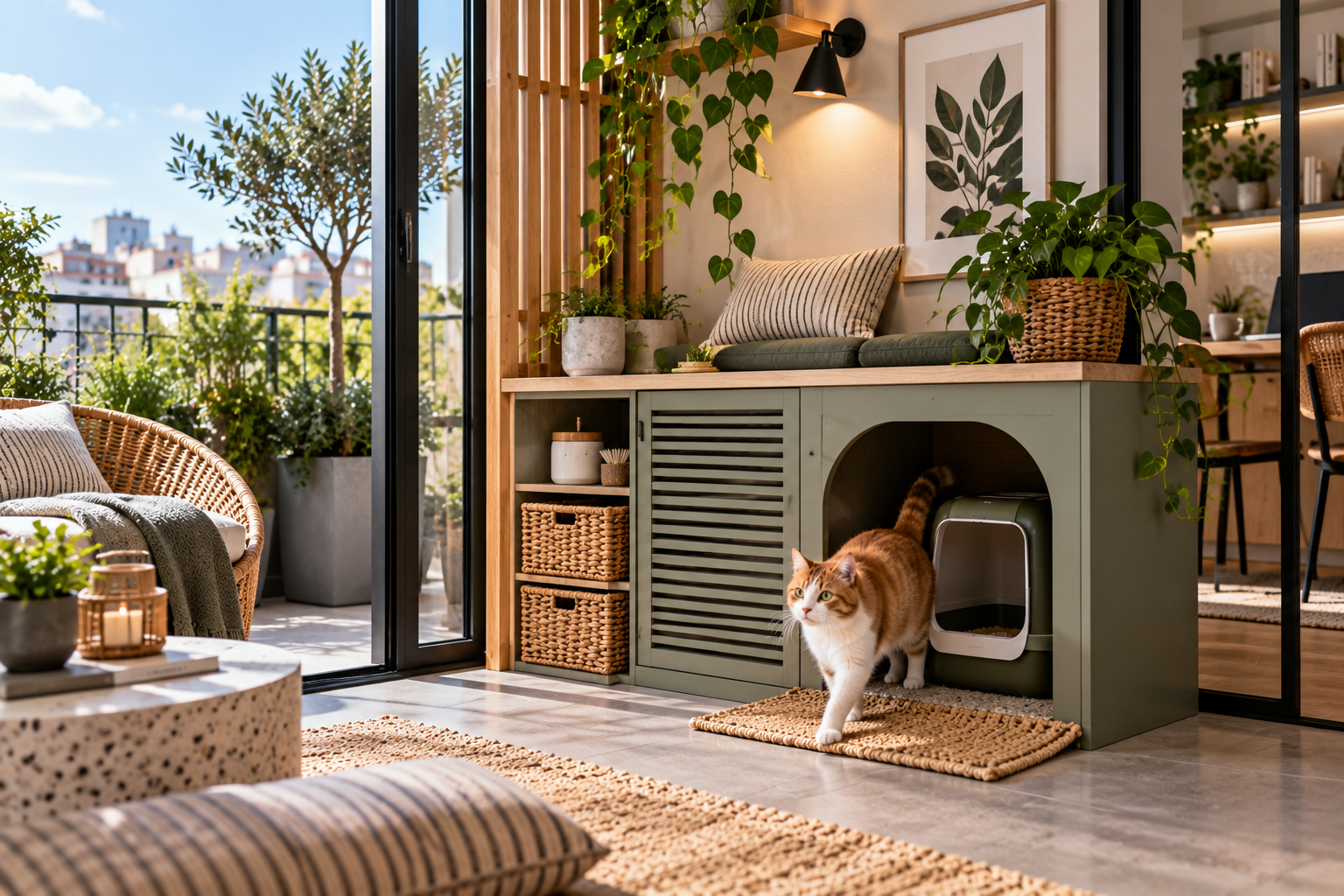
When floor space is limited, create smaller organization zones around each full-size litter tray rather than concentrating every tray in one enclosure. Separate stations can reduce competition and give each cat a reliable alternative. Avoid locations that require a door to be left open only some of the time.
A Bathroom Corner Can Work
If your bathroom has an unused corner, a washable litter mat and tray may fit without adding furniture to the living area. Ensure that the box stays accessible even when someone is taking a shower. Keep it away from water splashes and store cleaning agents securely. Check that the toilet, shower door and vanity cupboards still open fully. The bathroom should have adequate ventilation and be easy to clean around the box. Do not squeeze the tray behind the toilet where it cannot be removed without awkward lifting. A practical and regularly cleaned open tray can be tidier than a complicated hidden arrangement.
Use a Hallway Recess Carefully
A nook beside a hallway cupboard may offer privacy, but never block the route to the front door or force household members to step around the tray. Measure the full footprint of the box and the litter mat. Keep the tray away from muddy shoes, falling coats and delivery packages. A busy entrance may be stressful for shy cats, so observe whether the animal is comfortable before committing. A quiet spare corner of the living room could be better than a fashionable location that creates constant interruptions. See our small entryway organization ideas for safer hallway planning.
THE SMALL-SPACE REALITY CHECK
A hidden litter box is always better.
Your cat’s access, comfort and usable space matter more than concealment.
A well-designed enclosure can work for some cats, but others prefer a roomy open tray. Observe your cat’s behavior and never trade ventilation or easy access for appearance.
Think Carefully Before Buying an Enclosure
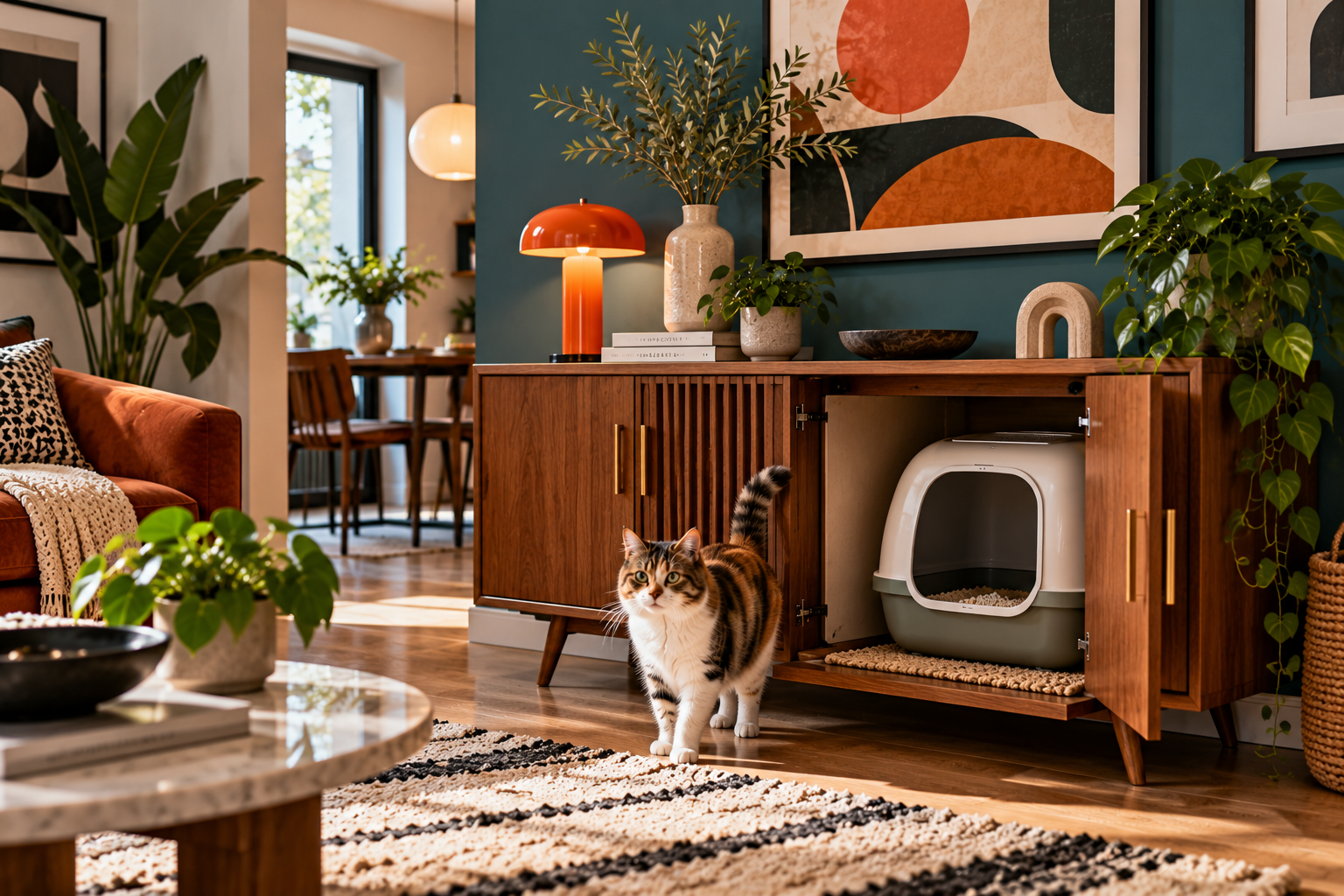
A furniture-style litter cabinet can disguise the box, but ventilation, interior height and easy access are more important than its finish. Some cabinets have tight openings or lids that make daily scooping difficult. Check the interior dimensions with the litter tray already installed and allow enough room for the cat’s natural movements. Look for smooth surfaces that can be cleaned thoroughly. Avoid trapping odors inside a poorly ventilated compartment or storing chemicals beside the tray. Cats that dislike covered spaces may do better with an ordinary open box. Introduce changes gradually rather than replacing a familiar litter setup overnight.
Keep the Litter Box Away from Food and Water
Cats often prefer their toileting area to be separate from eating and drinking. In a studio apartment this requires intentional zoning rather than a completely different room. Place food and water on the opposite side of the living area where practical, and keep the tray away from food preparation surfaces. Use furniture to create visual separation, but do not seal the box into a tiny enclosed space. An existing low shelf nearby can store sealed supplies if those supplies are kept secure. Think about how the cat moves between resting, feeding and toileting locations, particularly when people are home and furniture is being moved.
Create a Compact Cleaning Station
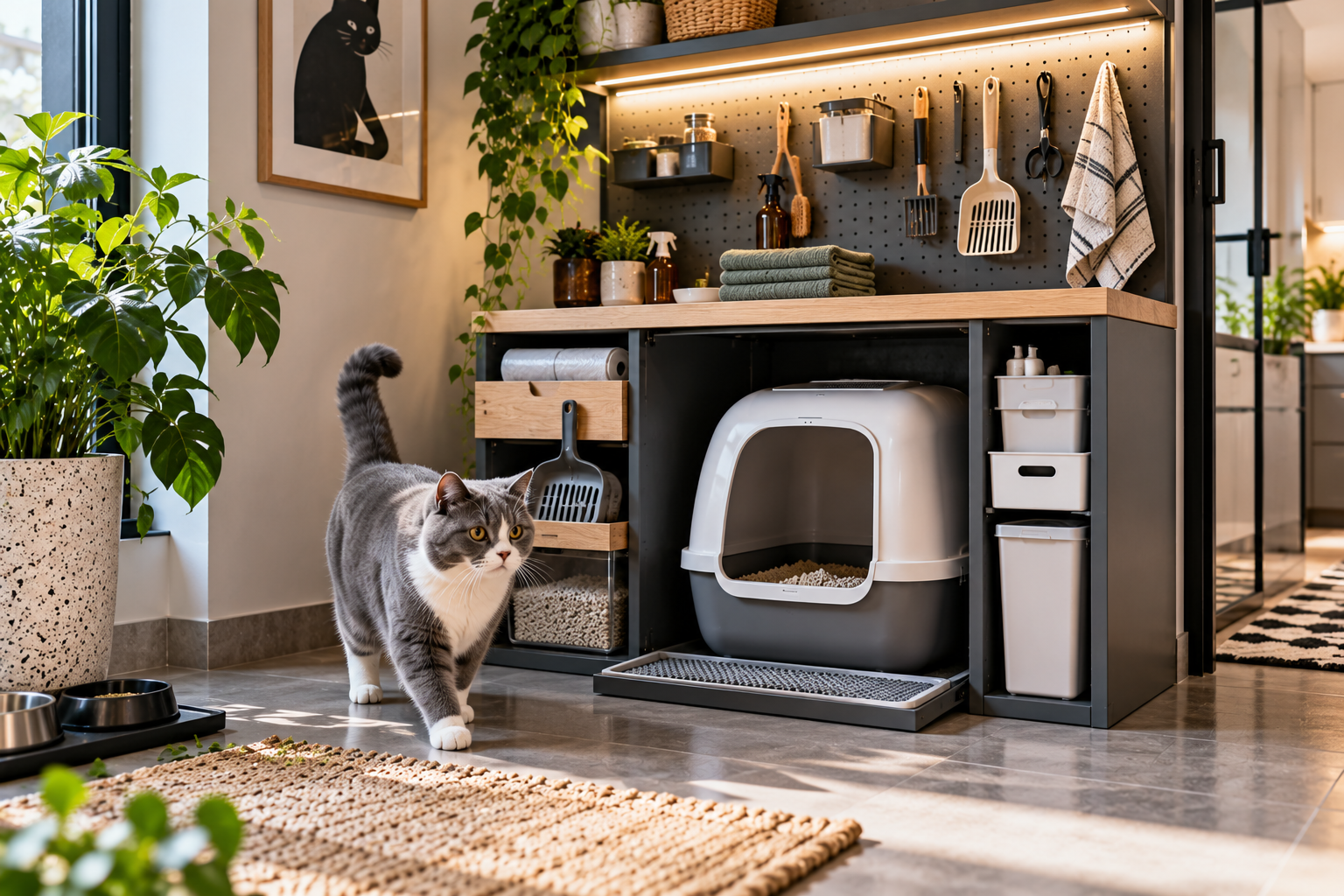
Store a litter scoop, disposal bags and a small cleaning cloth in a nearby lidded caddy, where children and pets cannot access used supplies. Empty waste regularly according to local disposal rules and the litter manufacturer’s instructions. Wash and dry the tray as appropriate before refilling it. A small mat at the entrance may reduce litter tracking, although it will not eliminate it. Vacuum or sweep around the box often. Choose unscented litter if strong fragrances bother your cat; avoid masking poor cleaning with heavy perfume. Hygiene and regular care are more reliable than decorative odor solutions.
Choose the Right Tray Size
The four essentials · Quick visual guide
Space
Choose usable interior dimensions that let your cat turn and dig comfortably.
Access
Keep the entrance clear and choose an easy step-in height for your cat.
Ventilation
Avoid stuffy cabinets and closed spaces where odors can build up.
Cleaning
Leave enough reach to scoop daily and remove the tray for washing.
A tray that fits the apartment perfectly may be too small for the cat. Compare the animal’s body length and turning space with the usable interior of the box rather than trusting a generic product label. Many cats appreciate enough room to dig and turn without touching the sides. High-sided designs can reduce scatter for some animals but may be difficult for kittens or older pets. Automatic boxes should be evaluated carefully for safety, the manufacturer’s recommended age and weight range, cleaning instructions and the cat’s comfort. Do not assume technology makes regular observation and maintenance unnecessary.
Keep the Visual Styling Simple
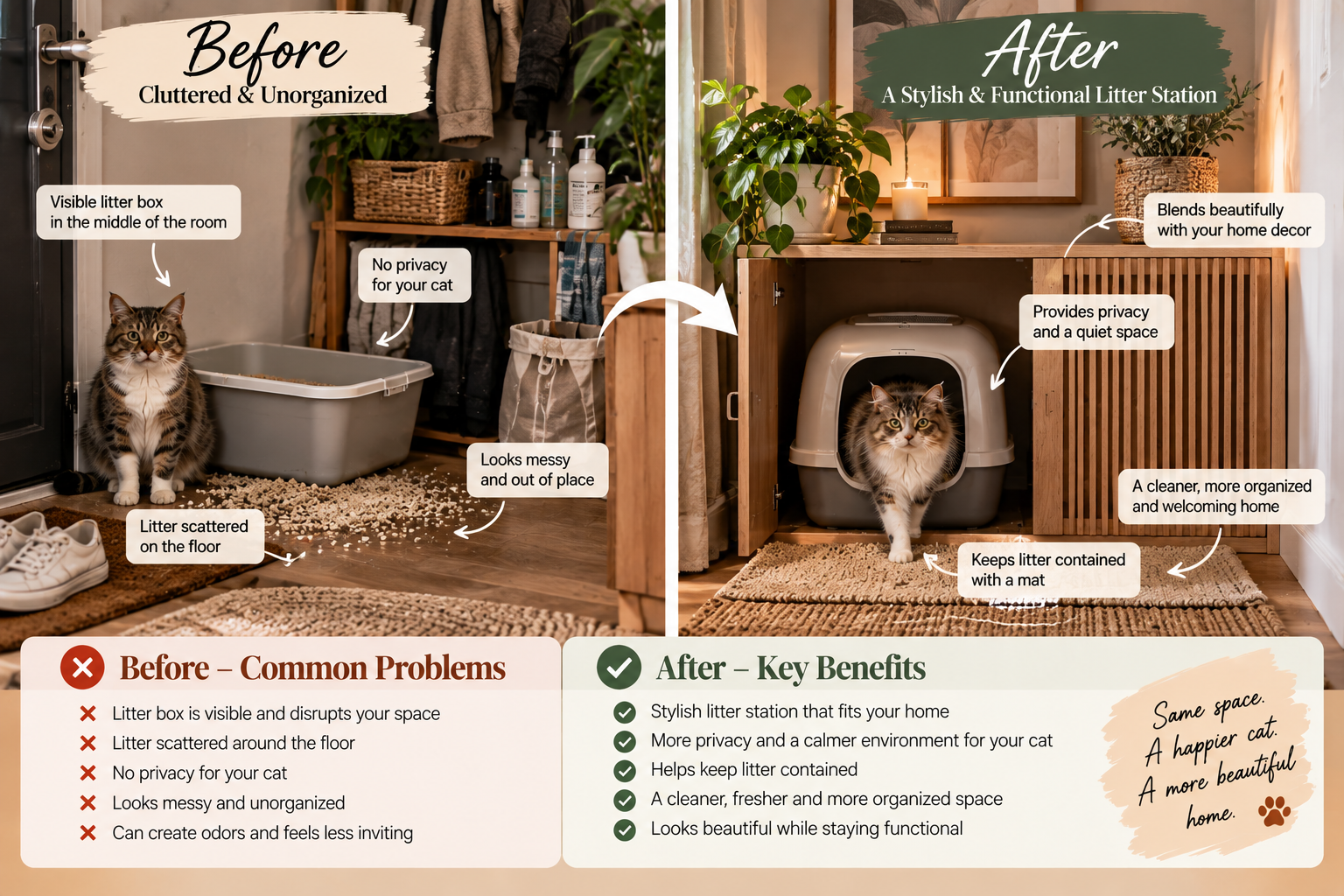
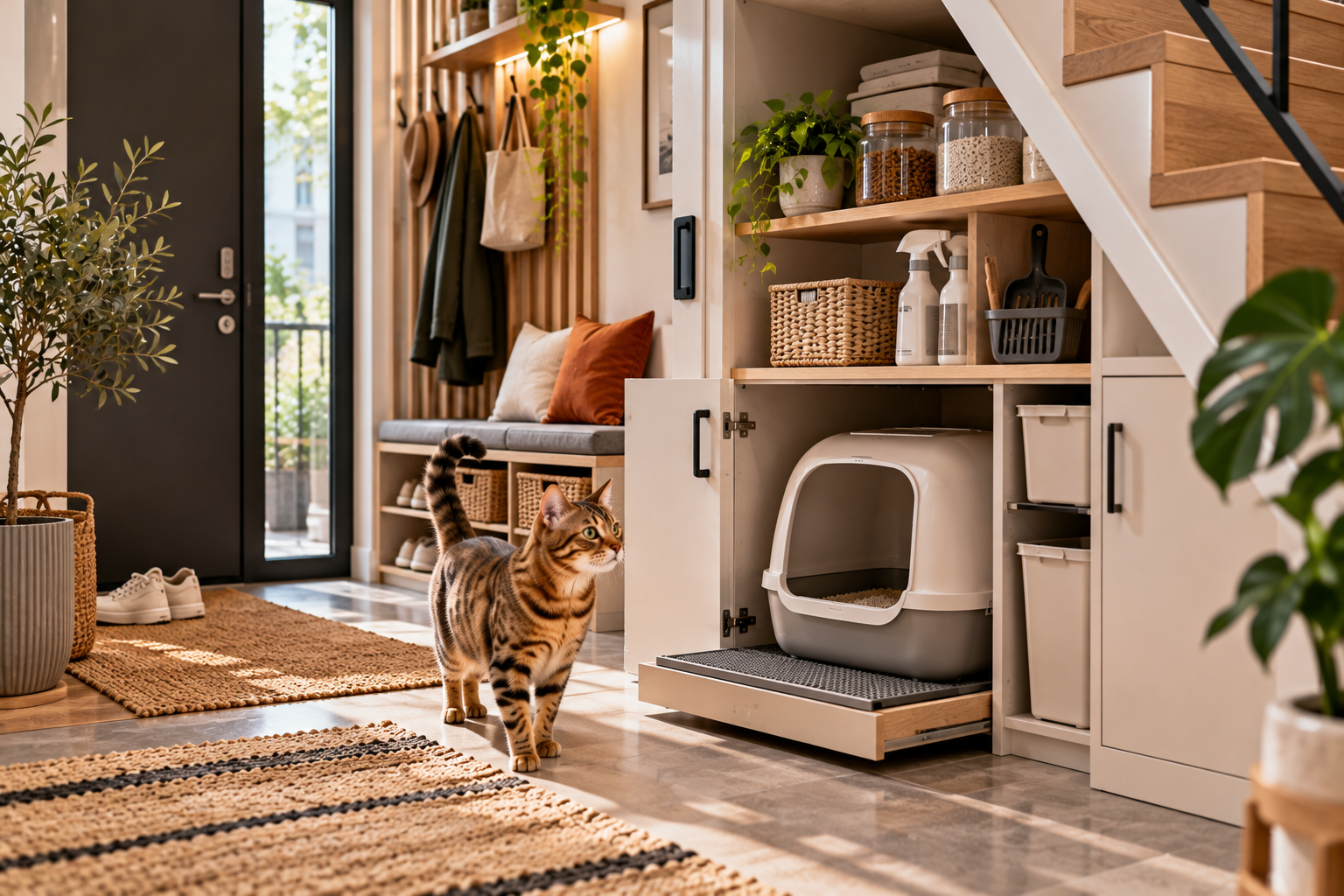
A calm small apartment can incorporate a litter area without turning it into a focal point. Coordinate a washable mat and nearby storage container with existing cream, taupe, muted green or warm wood tones. Resist covering the box with decorative fabrics that can trap dirt and odors. If the tray is visible from the sofa, a thoughtfully placed existing piece of furniture may screen it from view without blocking the cat’s entrance or airflow. Limit nearby objects so the surrounding floor is easy to clean. For broader pet-friendly layout inspiration, read our cat-friendly apartment ideas.
Multiple Cats Need More Thoughtful Planning
In a multi-cat household, a single discreet box may create competition and stress. A common starting guideline is one litter box per cat plus one extra, distributed across suitable locations, although individual needs vary. Placing multiple boxes beside one another may not provide the same access as separate stations. Watch for guarding, avoidance or changes in elimination habits, and speak with a veterinarian or qualified feline behavior specialist if problems occur. Space constraints matter, but accessibility and feline wellbeing should guide the layout. A small apartment may need more than one toileting zone even if that requires simplifying other furniture.
Save this routine · Small apartment essentials
The Cat Litter Station Cleaning Checklist
A simple routine you can tick off on screen, print, or save as a PDF using your browser’s Print menu. Adjust cleaning frequency to the litter type, the number of cats and the manufacturer’s instructions.
Daily essentials
Regular refresh
When replacing litter
Cat-friendly reminder: avoid strong fragrances or harsh cleaning chemicals. If your cat suddenly avoids the tray, strains, or has unusual urination habits, consult a veterinarian promptly.
Keep a copy: use your browser’s Print command and choose “Save as PDF,” or print the checklist on paper. Tick marks on the webpage are not stored between visits.
A Weekly Maintenance Plan
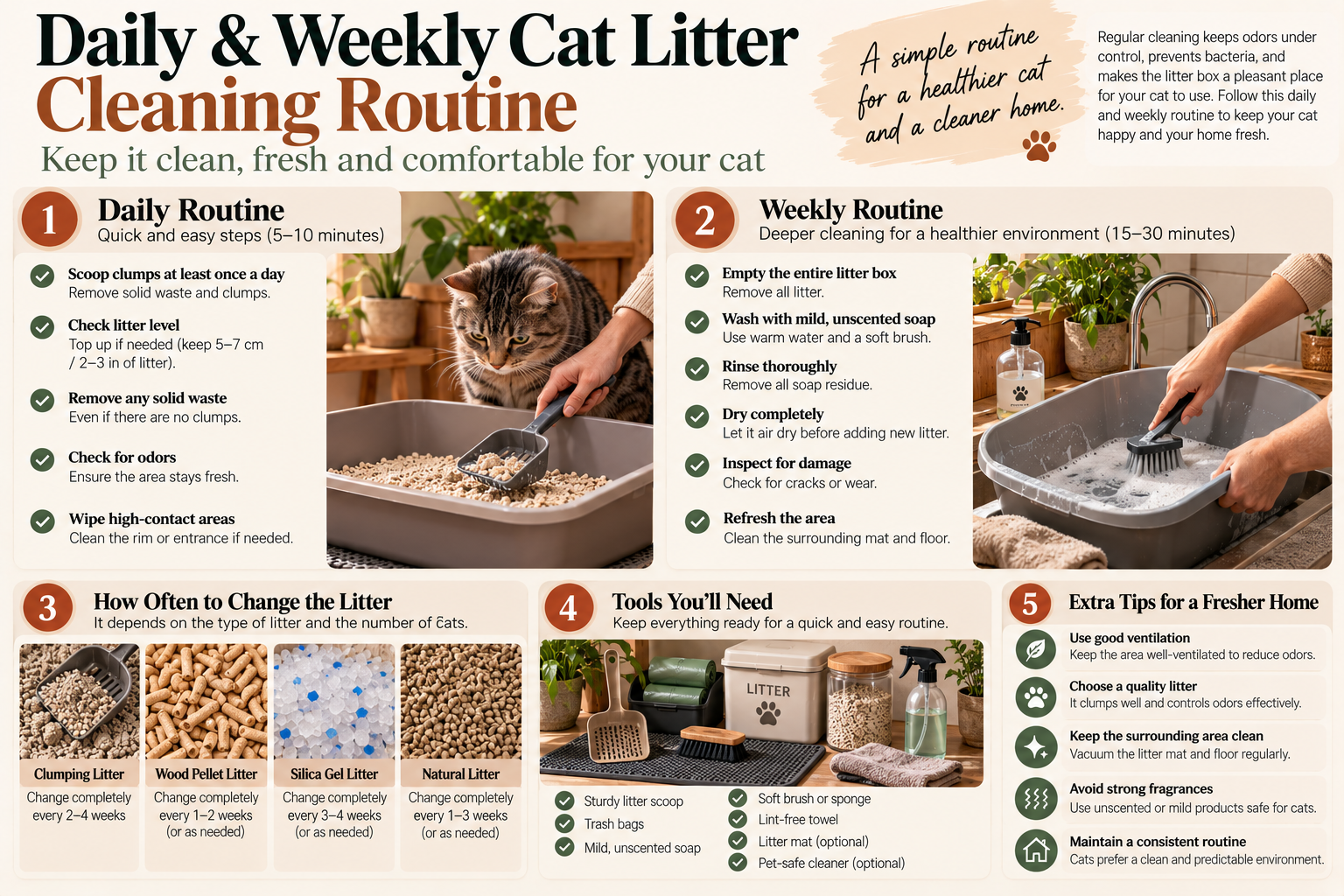
Every day, scoop waste, check that litter remains at a suitable level and inspect the surrounding floor. Regularly clean the tray according to the litter and manufacturer’s guidance. Weekly, move any surrounding storage, wash the mat and inspect for tracked litter, moisture or odors. If you notice damp surfaces, improve cleaning and ventilation rather than concealing them. Review the setup whenever you rearrange furniture or introduce a new pet. A consistent routine prevents small issues from becoming permanent smells or cleaning problems. Keep spare litter stored securely and avoid buying oversized sacks that block a narrow hallway.
Measure the Space Before Buying Litter Furniture
Measure the exact floor footprint available, including the room needed to pull the tray out for scooping. Account for door swing, baseboards, the width of the cat’s route and any nearby furniture legs. Then measure your cat from nose to the base of the tail. Veterinary guidance frequently recommends a litter tray roughly one and a half times that body length, so many attractive compact trays will be too short for a fully grown cat. A large open-sided storage tray can be more practical than an undersized designer box.
For older cats, kittens and cats with limited mobility, consider a low entrance rather than a top-entry design. High walls may help contain scatter, but entry should still be comfortable. Avoid placing the tray where another pet can block its only exit.
Decision guide
Which Litter Box Style Fits Your Cat?
Compare daily practicality, not just how discreet a tray looks. Every box should provide comfortable turning room and dependable access.
| Type | Best starting point for | Advantage | Check before buying |
|---|---|---|---|
| Large open tray | Most adult cats | Access and easy scooping | Enough floor space |
| High-sided open tray | Cats that scatter litter | Helps contain granules | Comfortable entry height |
| Covered box | Cats comfortable with hoods | Discreet appearance | Airflow and usable interior |
| Furniture enclosure | Design-integrated layouts | Hides the station visually | Ventilation, access and exits |
| Top-entry box | Some mobile adult cats | Can reduce tracking | Unsuitable for some cats |
| Automatic box | Owners considering automation | May reduce manual scooping | Safety, noise, dimensions, cleaning |
Editor’s starting recommendation: try a generously sized, easy-entry open tray first; add features only if they suit your cat.
Open, Covered or Furniture-Enclosed Litter Box?
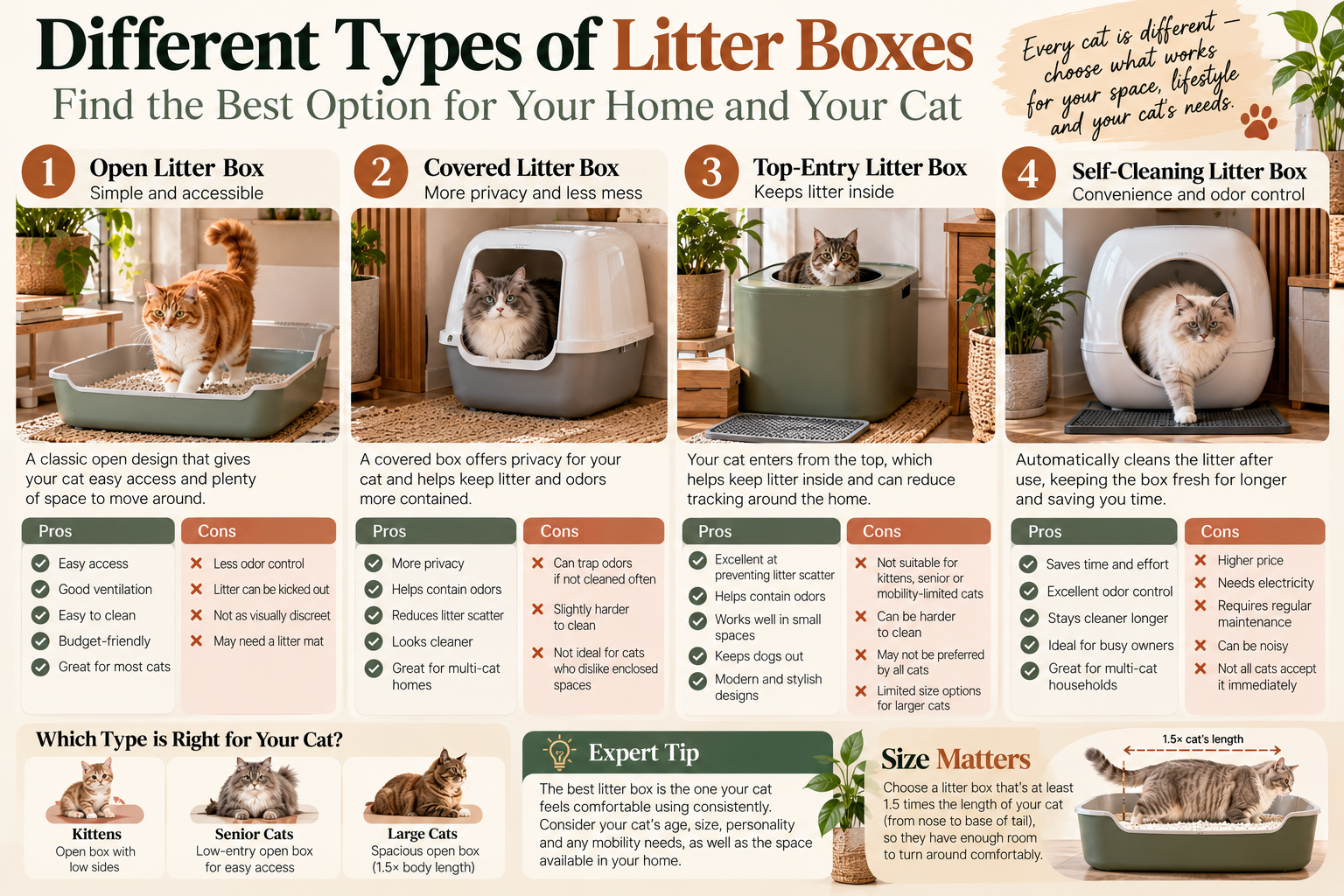
| Style | Small-space benefit | Possible drawback |
|---|---|---|
| Large open tray | Easy access, airflow and cleaning | More visually apparent |
| High-sided open tray | Helps contain kicked litter | Entrance may be difficult for some cats |
| Covered hooded box | Partly contains visible litter | Some cats dislike the hood or confined feeling |
| Ventilated furniture enclosure | More discreet in shared rooms | Can restrict turning space, escape routes and cleaning access |
| Automatic self-cleaning box | May reduce some scooping tasks | Size, noise, safety checks, cost and ongoing cleaning |
A furniture cabinet is only worth considering if the litter box inside is spacious, the opening stays accessible, there is adequate ventilation, and the cat uses it willingly. Avoid describing an enclosure as universally better for odor: poor ventilation can make the experience less comfortable for the cat.
How to Control Litter Odor Without Overpowering Fragrance
What actually works: scoop consistently, provide enough spacious boxes, use a cat-accepted unscented litter, ventilate the room and clean surrounding surfaces. A covered box or scented product cannot substitute for routine maintenance. Some cats dislike enclosed boxes, so do not sacrifice access to conceal odors.
Remove waste at least daily and maintain a cleaning routine suited to the litter material and manufacturer’s instructions. Many cats prefer unscented clumping litter. A washable tracking mat outside the box may catch granules without restricting access. Keep cleaning products secure and avoid heavily scented additives or sprays placed inside the tray. Good airflow, a correctly sized litter box and prompt scooping generally matter more than masking odors with perfume.
If accidents happen, clean affected surfaces with an appropriate enzymatic cleaner and consider whether the box is uncomfortable, dirty, difficult to reach or stressful to use. Persistent or sudden toileting changes need veterinary evaluation; they are not simply housekeeping issues.
A Realistic Setup for One Cat vs Two Cats
For one cat, provide two accessible trays in separate locations where feasible. For two cats, a common starting recommendation is three trays distributed around the home rather than crowded together in one cabinet. A truly small apartment may require creative positioning, but offering choice and avoiding conflict is more important than achieving perfect visual symmetry. Consider separate bathroom and hallway stations rather than one large enclosed multi-cat unit.
Common Small-Apartment Litter Box Mistakes to Avoid
Buying furniture before measuring the tray: a beautiful cabinet may be too small for the cat to turn comfortably. Measure the actual usable interior first.
Assuming covered boxes eliminate odor: a hood can retain unpleasant smells and limit airflow. Offer an open alternative if your cat seems hesitant.
Placing all boxes together: neighboring boxes may function like a single location for cats that need separate access. Spread stations out when feasible.
Moving the box without a transition: sudden changes can lead to avoidance. Introduce the new location gradually while keeping a familiar option available.
Confusing accidents with bad behavior: pain, urinary problems, stress or mobility changes can affect toileting. Prompt veterinary advice is appropriate for new or persistent problems.
Small-Apartment Litter Station Checklist
- Choose an easy-entry tray large enough for the cat to turn and dig comfortably.
- Keep the tray available 24 hours a day, including when bathroom doors are closed.
- Separate litter stations from food, water, loud appliances and blocked escape routes.
- Use a suitable, cat-accepted litter, preferably unscented if your cat likes it.
- Leave floor clearance for removing the tray and cleaning behind it.
- Provide extra trays in different locations for multi-cat homes.
- Watch for changes in behavior and seek veterinary advice when appropriate.
More Small-Space Ideas for a Home That Works
The best litter station is part of a wider small-apartment plan: store supplies where you can reach them, maintain clear walking routes, and leave room for the cat to move comfortably. Explore our small entryway shoe storage ideas to free up a hallway nook, space-saving laundry organization ideas for keeping household supplies tidy, and small bathroom upgrades for making a compact bathroom easier to live with. For a calmer bedroom backdrop, see our calming bedroom ideas. The litter tray itself should stay accessible and appropriately sized regardless of decor.
Your Small-Space Cat Setup, Simplified.
A successful litter station should feel effortless for your cat and manageable for you. Start with these essentials.
Pick a quiet, accessible location with a clear way in and out.
Give your cat enough usable space to enter, turn and dig.
Scoop regularly, keep the route clear and adjust to your cat’s habits.
The best-looking setup is the one your cat willingly uses. Check the FAQs below for common small-apartment questions.
Frequently Asked Questions
How big should a litter box be for an adult cat?
A commonly recommended starting point is a tray about 1.5 times the cat’s body length, measured from nose to the base of the tail. Check the usable inside dimensions and make sure the cat can enter, turn and dig without feeling cramped.
Are open litter boxes better than covered ones?
Many cats prefer a spacious, open, accessible tray. A cover may suit some individuals, but it can reduce usable space and retain odors. Offer a choice if practical and observe your cat’s behavior.
How many litter boxes do two cats need?
A common starting guideline is one per cat plus one extra, placed in different accessible locations. Individual preferences, conflict and space constraints may require adjustments.
Can I hide a litter box in a cabinet?
Sometimes, but the cabinet needs adequate interior space, airflow, easy access and regular cleaning. Not every cat tolerates an enclosed setup.
Where can a litter box go in a studio apartment?
Consider a quiet bathroom corner or another low-traffic, accessible location away from food and water.
How do I reduce odor in a small apartment?
Clean and scoop consistently, maintain ventilation, use an appropriate tray and litter, and investigate unusual changes with a veterinarian.
Should I put the litter box next to the washing machine?
Prefer a quieter spot when possible, since sudden appliance noise may make some cats reluctant to use the area.
Give comfort, access and cleaning priority over concealment. A well-chosen location and simple daily routine can make a litter station work in a small home without compromising your cat’s wellbeing.