
Affiliate disclosure: This article may contain Amazon affiliate links. As an Amazon Associate, we earn from qualifying purchases at no additional cost to you.
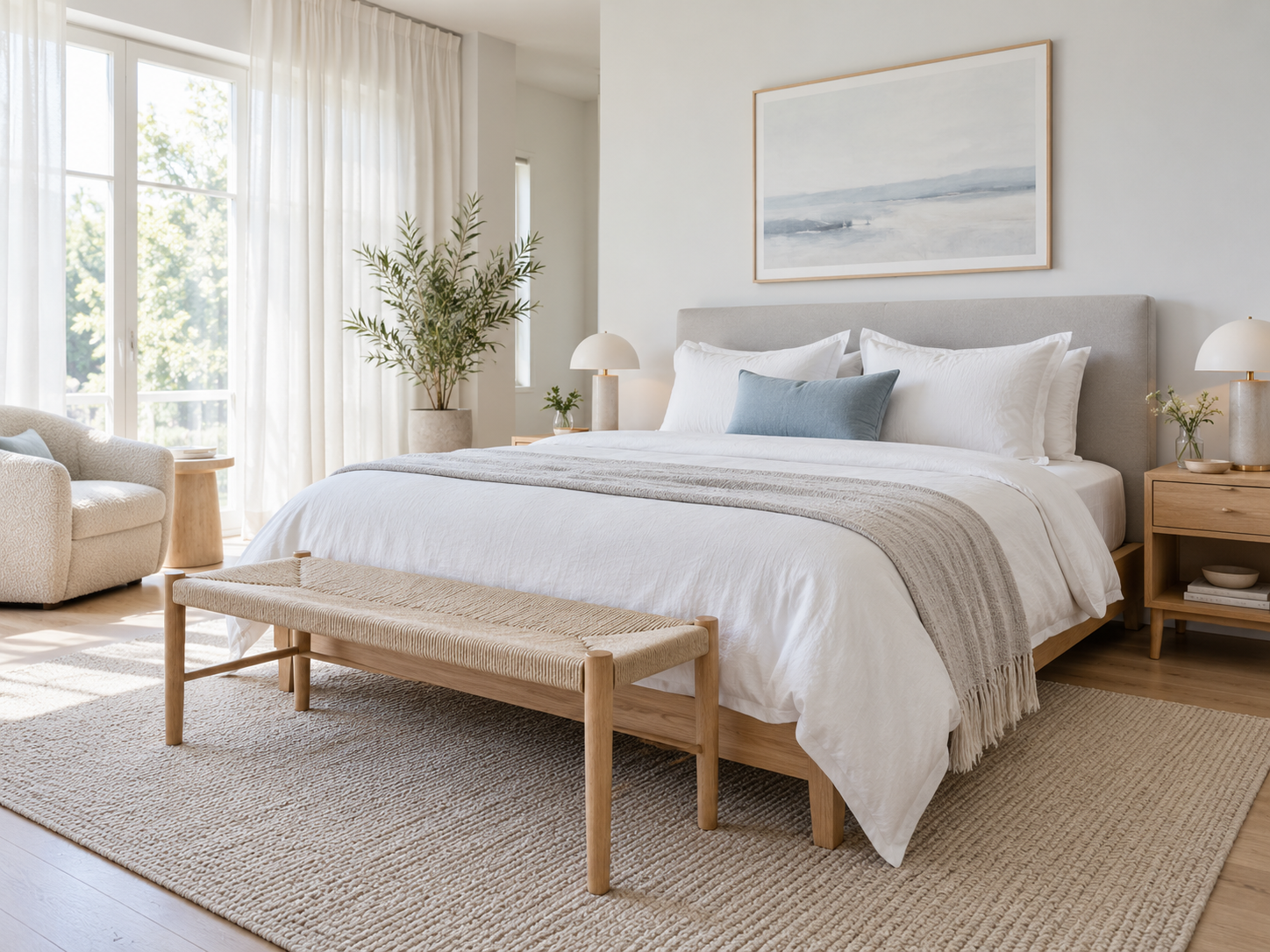
A calmer bedroom supports an easier evening
Bedrooms are often asked to do too much. In a small apartment, the same space may serve as a dressing room, office, storage area and retreat. Creating a calmer bedroom does not require perfect minimalism or an expensive furniture set. It requires identifying the distractions and frustrations that make the end of the day harder, then addressing them in sensible order. The following fifteen ideas focus on atmosphere, comfort and layout. They are design and routine suggestions, not guaranteed solutions to insomnia or other medical sleep problems.
1. Clear the route from the doorway to the bed
The first calming upgrade is circulation. Shoes, baskets and furniture corners that block your path make a compact bedroom feel busy and can create avoidable tripping hazards. Walk the room at night with the lighting you usually use. Remove objects from the main route and make sure closet and bedside drawers can open. Choose one designated area for shoes and laundry rather than storing both beside the bed. A clear route creates breathing space even when the room itself is small.

2. Let the nightstand hold only useful things
A bedside table is not a display shelf. Keep a reading lamp, water if you want it, a book and perhaps a small tray for daily essentials. Move spare chargers, cosmetics and papers elsewhere. If the tabletop is tiny, use a wall-free standing storage caddy attached according to manufacturer instructions or a narrow side table with a shelf below. Avoid stacks that make the lamp unstable or leave loose cables hanging across the floor. A consistent nightly reset takes less than two minutes when every object has a home.

3. Replace harsh light with layered lighting
Overhead lighting is useful for dressing and cleaning, but warm bedside or ambient lighting can create a gentler transition in the evening. Use shades that reduce direct glare while still providing adequate light for reading. Make the switch easy to reach from the bed. Check the bulb’s brightness and color temperature instead of relying on decorative descriptions. Keep electrical products away from bedding and do not cover lamps with fabric. For renters, portable lamps often provide more flexibility than permanent fixtures.
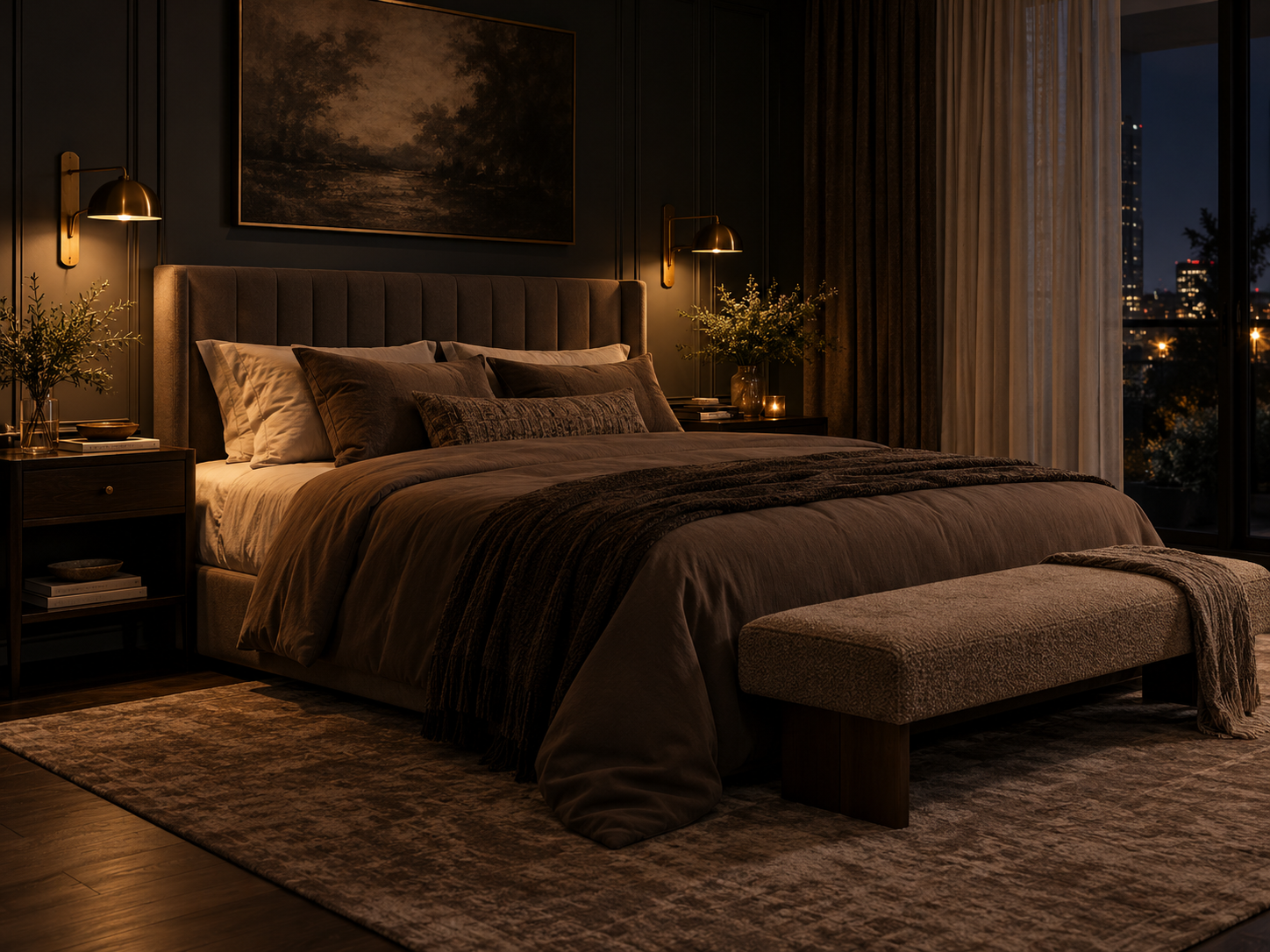
4. Build a coherent palette from existing furniture
You do not need to repaint to make a bedroom feel connected. Start with the largest pieces you own: floor, curtains, bed frame and wardrobe. Choose two compatible base tones and one gentle accent. Warm ivory, oatmeal, chestnut and muted olive can create a cozy look without turning everything beige. Repeat the accent through a cushion or throw rather than adding multiple competing patterns. The goal is visual continuity, not a showroom. A personal photograph or favorite artwork can provide character without becoming clutter.
5. Layer bedding for comfort, not for the photograph
A styled bed may feature five pillows and three blankets, but most people do not need that many layers. Start with clean sheets and a duvet or blanket suited to the actual room temperature. Add one washable throw if it genuinely improves comfort. Look for care instructions, ease of laundering and fabrics that feel pleasant against your skin. If a material causes irritation or is too warm, the appearance is not worth the tradeoff. Keep spare bedding in a breathable storage area rather than piled on a chair.
6. Give laundry a closed destination
A laundry pile quickly dominates a small bedroom. Put a hamper exactly where clothes tend to accumulate, provided it does not block circulation. A slim, ventilated basket can fit beside a wardrobe or behind a door with enough clearance. Establish a separate place for clothes that are clean enough to rewear. One hook or dedicated drawer works better than the back of an armchair, which gradually turns into an unplanned closet. Set a short daily routine for returning items to their storage zones.
7. Choose window coverings based on the room
Curtains and blinds influence both privacy and the mood of a room. If streetlights disturb you, consider suitable blackout or room-darkening options that fit your window and rental rules. Ensure cords and fittings are safe, especially around children and pets. If you enjoy daylight, use a sheer layer during the day and close heavier curtains in the evening. Measure the full window, account for handles and ventilation, and check whether your landlord permits mounting. Good window treatments should be practical to open, clean and maintain.
8. Reduce visual noise on open shelves
Open shelves often hold books, folded sweaters, decor, charging devices and paperwork at once. Pick a simple organizing rule: group books vertically, store little items in one labeled box and give decorative pieces breathing room. Leave some visible space between groups. If shelves are above the bed, check installation and load safety; heavy objects can be dangerous if poorly secured. The calmest arrangement is one that stays usable through the week, not one that must be restyled after every search for a charger.
9. Make charging less intrusive
Phones and tablets commonly create cable clutter on nightstands. Put charging devices in one stable location, route cords along a safe path and avoid placing chargers under pillows or blankets. If you prefer fewer evening notifications, adjust your device’s focus settings or leave it across the room where practical. There is no need to buy a special charging station merely for the appearance. Focus on tidy wiring, access to alarms and a routine that works for the people sharing the space.
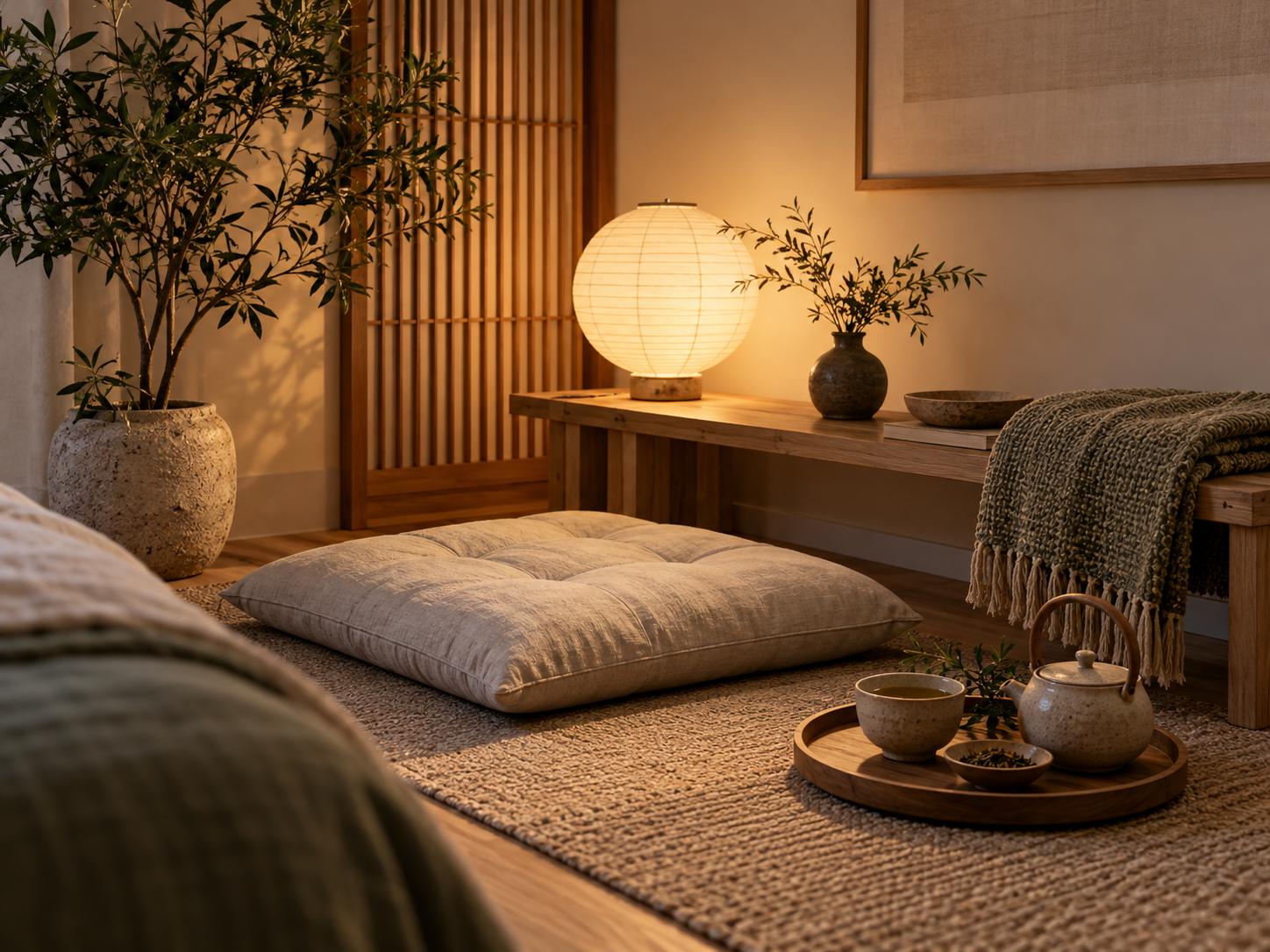
10. Use one texture that softens the room
Texture gives a bedroom warmth without many objects. A washable knit throw, subtle rug or fabric lampshade can soften hard surfaces. Think about cleaning before purchasing. In dusty rooms or allergy-sensitive households, smooth easily washed textiles may be preferable to shaggy rugs and large collections of cushions. Choose a material that coordinates with existing furniture and serves a practical purpose. One carefully chosen texture makes a stronger impression than several unrelated decorative accessories.
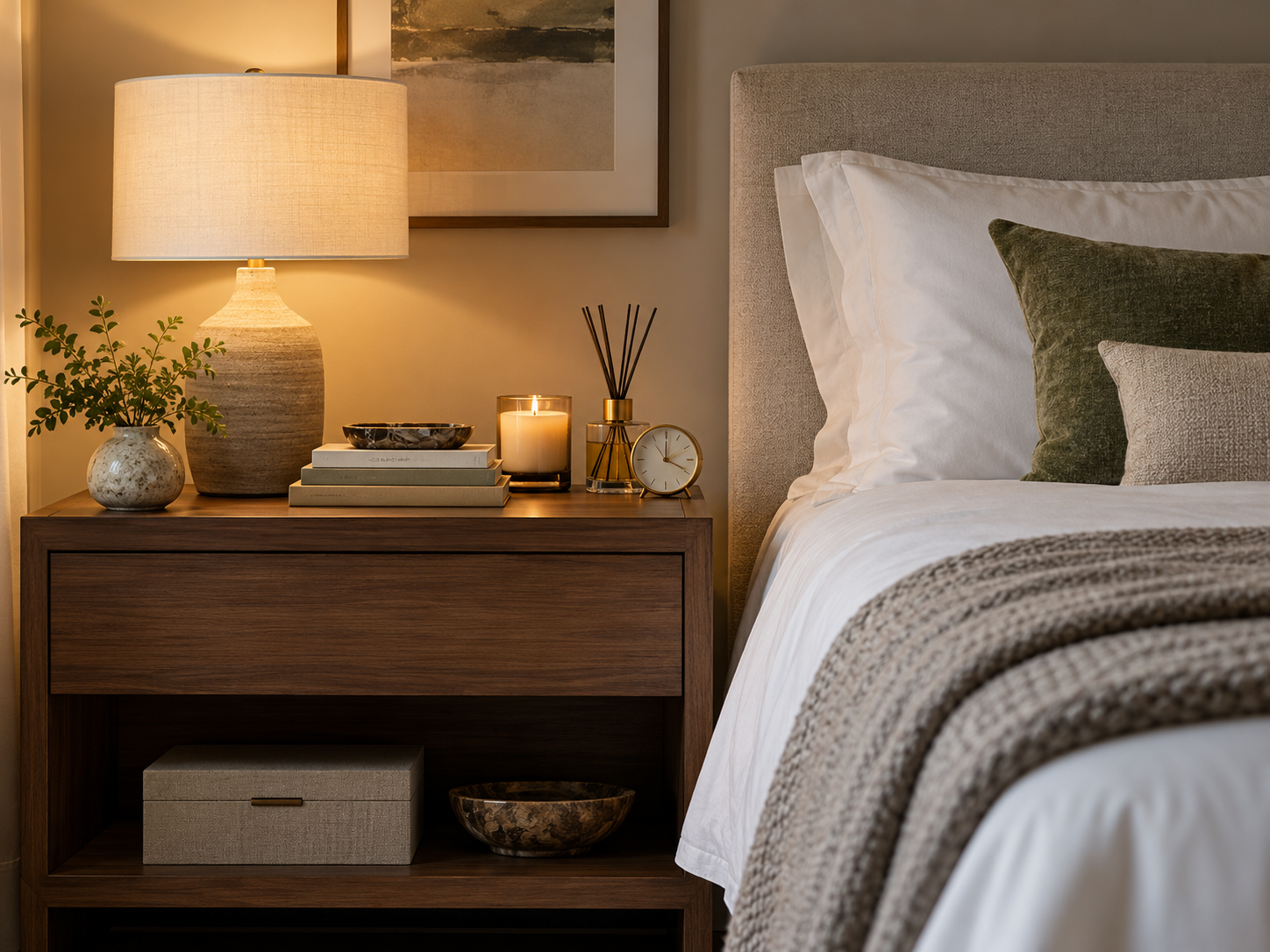
11. Keep a small reading or journaling option nearby
An evening routine works best when it is easy to start. Put one book or notebook within reach, together with a useful lamp. If you do not have space for a chair, the bed can be the reading spot, with appropriate support and light. Avoid adding a dedicated reading nook that squeezes your access to the wardrobe. For ideas that use little floor space, explore cozy bedroom styling. The most appealing ritual is often one that asks for almost no setup.
12. Create a clear boundary for work
If your bedroom doubles as an office, store work materials after your day ends. Close the laptop, file loose papers and move the chair back into place. A covered basket or compact drawer unit can help keep work items out of sight. If moving equipment is impossible, simply angle your seat away from the desk during your evening routine. A physical change, however small, signals a shift in how the room is being used. Focus on what you can control rather than investing in complex room dividers.
13. Design around the temperature and airflow
Soft decor will not compensate for a room that feels stuffy or uncomfortable. Keep radiators and vents clear, maintain suitable ventilation and use bedding appropriate to the season. A small fan, if used, should be positioned safely with cords away from walkways. Do not block a window with a tall piece of furniture just to create a styled corner. Check indoor conditions and follow local safety guidance for any heating appliance. A comfortable room is more relaxing than an overdressed room.
14. Use a two-minute reset after dressing
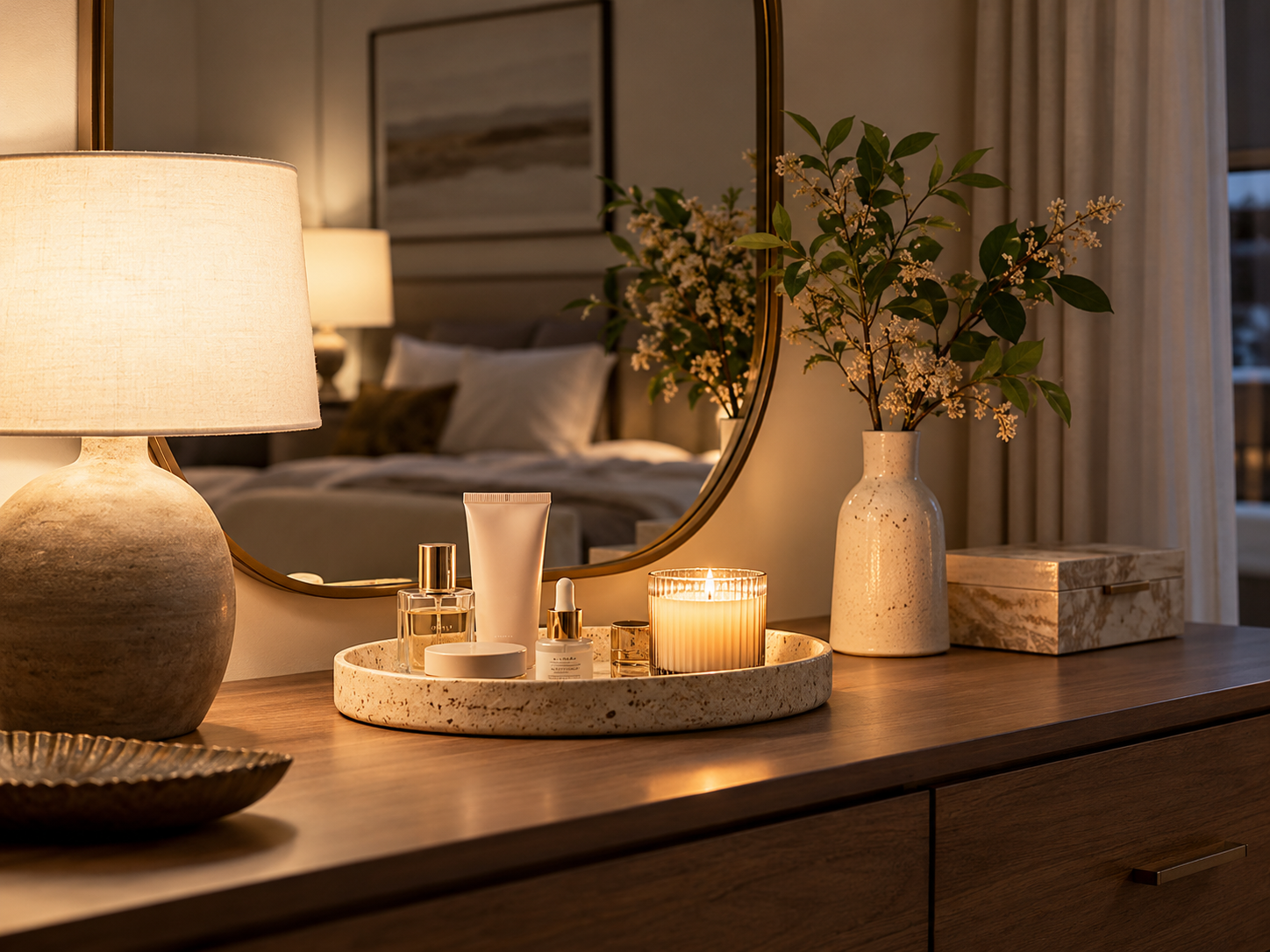
The best evening routine often begins in the morning. After getting dressed, put shoes away, return hangers and clear the floor. When the room is already functional at night, you can spend your limited time winding down rather than tidying. Keep a small container for items that belong elsewhere and empty it regularly. Avoid creating a catch-all basket that simply moves clutter out of sight. The purpose of the reset is to make tomorrow easier as well.
15. Personalize the corner you see from bed
Consider what you see when you first sit on the bed. A simple framed print, tidy dresser, soft lamp or single healthy plant can be enough. Remove visual distractions that make the room feel like unfinished work, but retain meaningful belongings. Calm does not require an impersonal room. In a shared space, discuss choices with the other person before removing objects. Aim for a restful view that feels true to your taste and realistic to maintain.
A simple evening routine you can repeat
| Step | Approximate time | Purpose |
|---|---|---|
| Put daily items away | 2 minutes | Clear surfaces and floor |
| Switch to softer lighting | 1 minute | Create a different atmosphere |
| Prepare clothing for tomorrow | 3 minutes | Reduce morning searching |
| Read, journal or relax | 5–15 minutes | Enjoy a chosen quiet activity |
This schedule is a flexible home routine rather than a medical sleep protocol. Adjust it for shift work, family needs and your own preferences. If worries or sleep problems persist, speak with an appropriate healthcare professional instead of expecting decor to solve them.
Frequently asked questions
How can I make a tiny bedroom feel calm?
Begin with clear circulation, practical storage and gentle lighting. Avoid adding decor until those foundations work.
Do calming bedrooms have to be neutral?
No. Richer colors, personal artwork and patterned textiles can feel relaxing when thoughtfully coordinated.
What is the cheapest bedroom upgrade?
Decluttering the nightstand and arranging existing lighting often costs nothing and changes the atmosphere immediately.
Can this help with sleep?
A comfortable, practical room can support an evening routine, but interior decorating is not treatment for sleep disorders.
The takeaway
A calmer bedroom is not about buying a perfect collection of matching objects. It is about removing friction and creating comforting conditions: clear access, better storage, gentle light and repeatable habits. Start with two changes you can maintain. When they feel natural, consider a third. For more inspiration, explore warm lighting ideas, closet organization options and our cozy bedroom ideas.