
Affiliate disclosure: As an Amazon Associate, we earn from qualifying purchases. This article contains affiliate links; purchasing through them may earn us a commission at no additional cost to you. We have not independently tested the featured products.
A pile of shoes near the front door can make even a welcoming apartment feel cramped. The fix is rarely a bigger storage unit. Instead, rethink how many pairs you keep in the entryway and choose storage that fits your exact space, routine, and household. These practical small entryway shoe storage ideas will help you create a clutter-free, cozy entrance without sacrificing your walking path.
Entryway shoe storage: quick comparison
| Solution | Best for | What to measure |
|---|---|---|
| Slim tilt-out cabinet | Narrow hallways | Depth and opening clearance |
| Compact storage bench | Daily shoe changes | Seat depth and doorway width |
| Raised-edge boot tray | Wet shoes | Floor footprint |
| Ventilated shoe boxes | Closet overflow | Internal shoe dimensions |
| Over-door organizer | Renters and closets | Door thickness and overhead gap |
| Open narrow rack | Frequently worn shoes | Rack width and shelf clearance |
1. Start with a realistic shoe count
Decide which pairs actually belong beside the front door. Start with one everyday pair per person, then add only footwear needed for current weather. Keep special-occasion shoes elsewhere. This is the fastest way to make any small entryway feel larger without buying another cabinet. Mark the proposed storage footprint on the floor with painter’s tape and confirm the door can open fully.
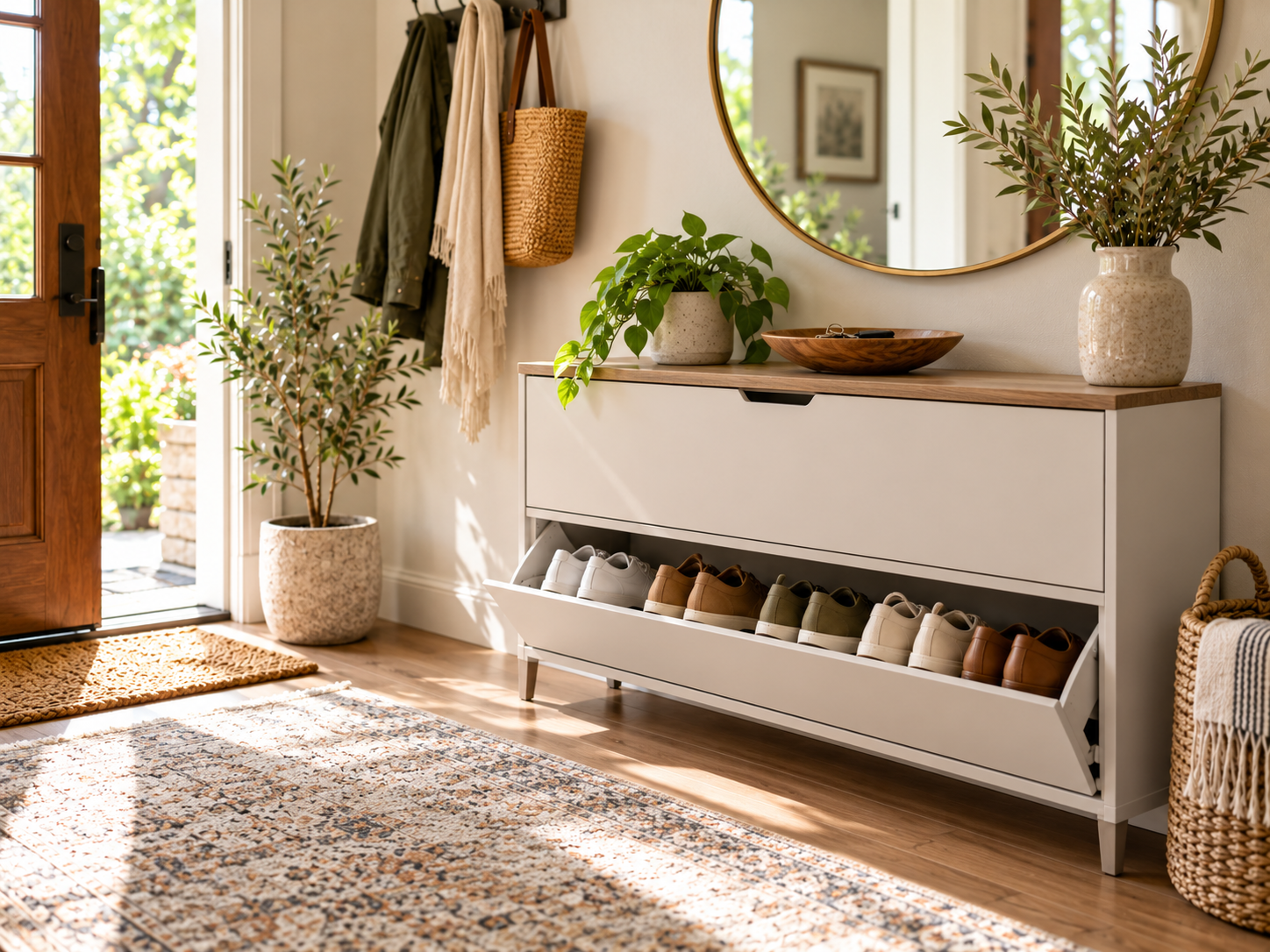
2. Choose a slim tilt-out shoe cabinet
A tilt-out shoe cabinet can conceal clutter while using relatively little floor depth. Check the external depth, clearance needed to open its compartments, and internal shoe-length dimensions. Some styles do not accommodate large sneakers or boots. Follow the manufacturer’s anti-tip instructions and use suitable anchors if required..
Suggested product: VASAGLE Farmhouse Slim Shoe Cabinet. Verify size, fit, current listing details and availability on Amazon.
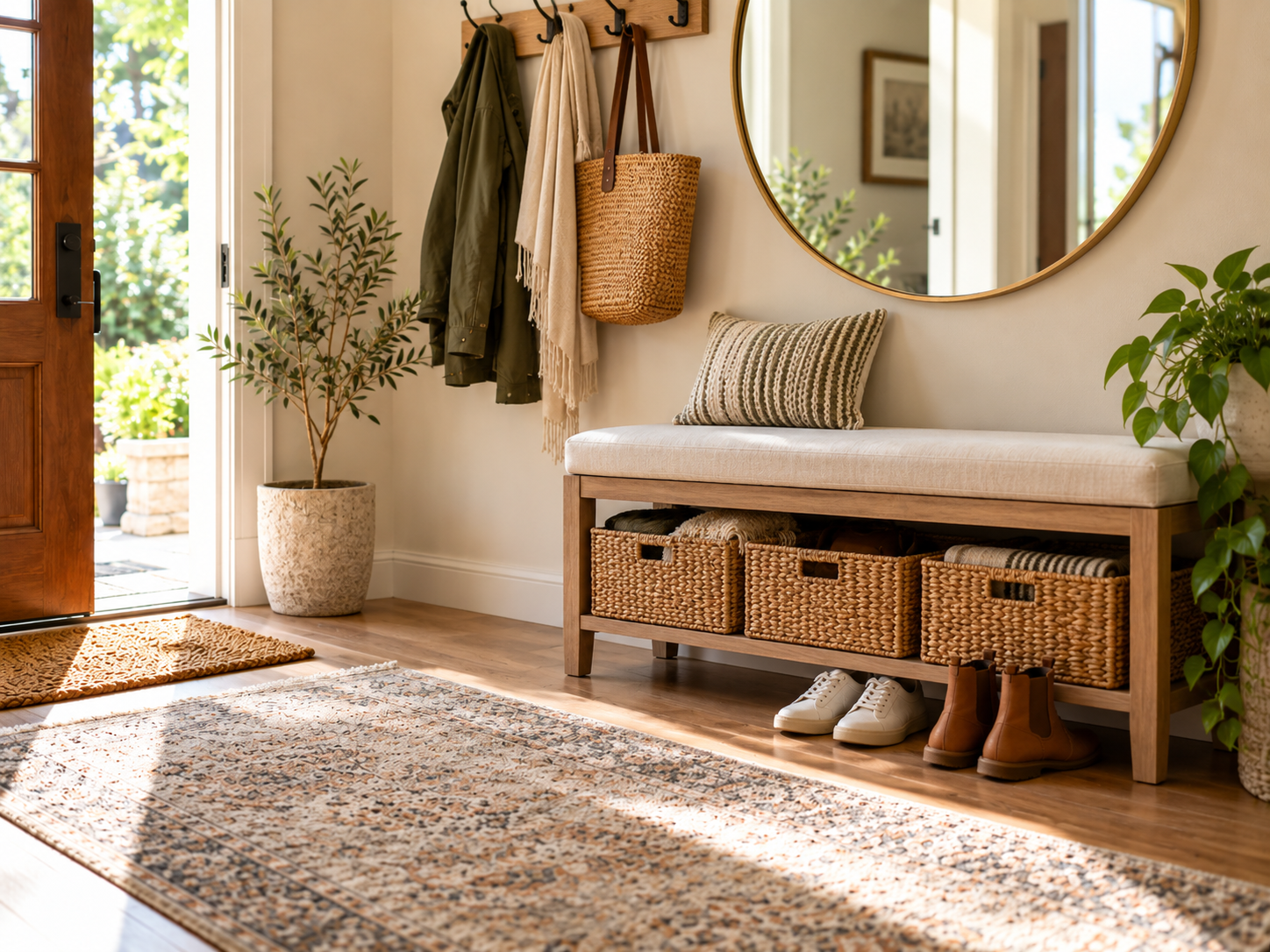
3. Add a shoe bench that doubles as seating
A bench gives you a practical place to change shoes, with storage below. An open lower shelf keeps everyday footwear visible and promotes airflow. Measure the seat depth and ensure someone sitting on it will not block the hallway. Check load capacity and stability rather than choosing by appearance alone..
Suggested product: VASAGLE 3-Tier Shoe Storage Bench. Verify size, fit, current listing details and availability on Amazon.
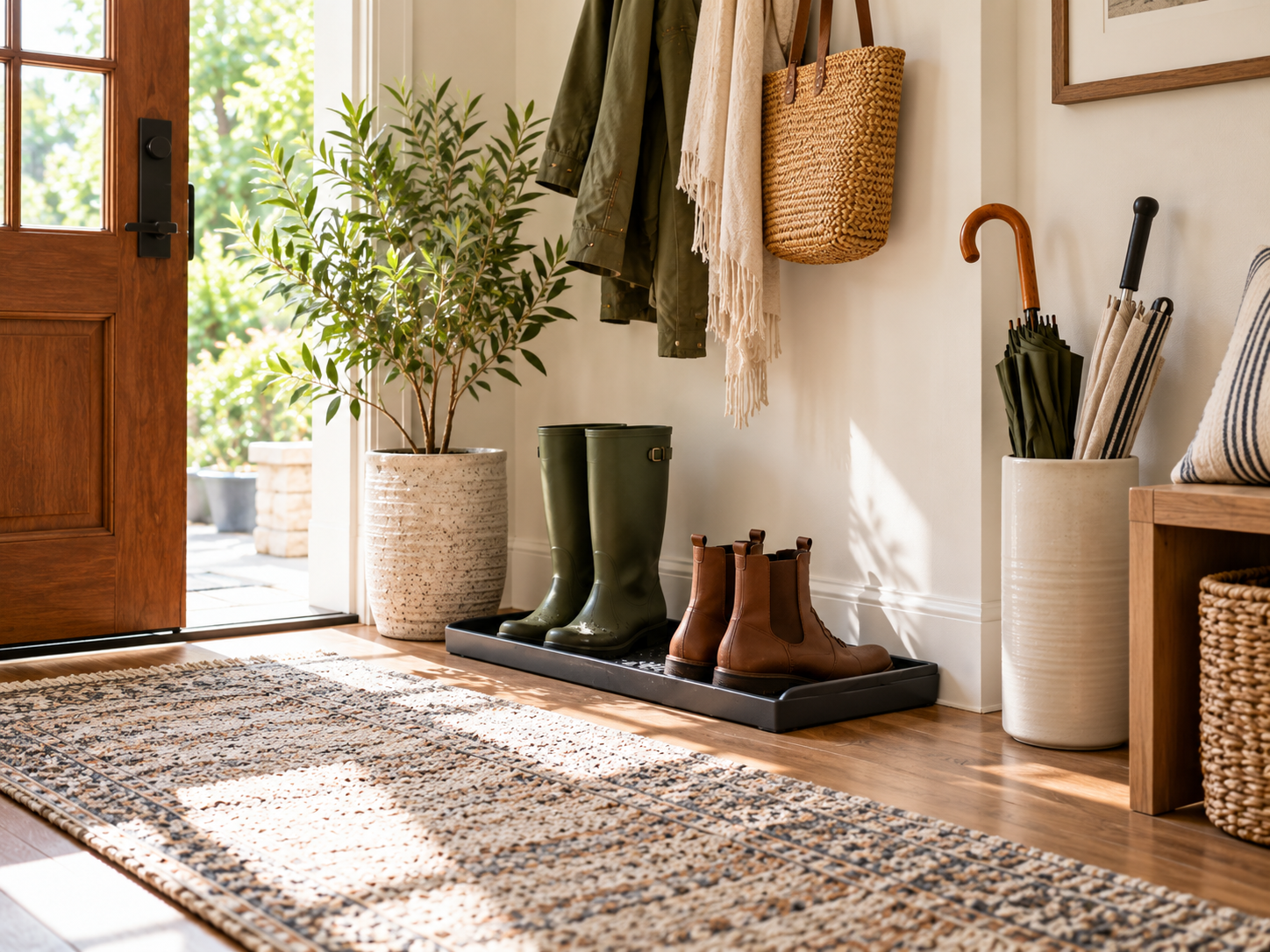
4. Use a washable boot tray
A boot tray keeps wet soles and grit together, particularly in rainy or snowy climates. Look for a raised edge and a surface that can be wiped clean. Empty standing water promptly and protect moisture-sensitive floors. A matte black or warm neutral tray can fit a cozy entryway without looking utilitarian..
Suggested product: Gardener’s Supply Waterproof Boot Tray. Verify size, fit, current listing details and availability on Amazon.
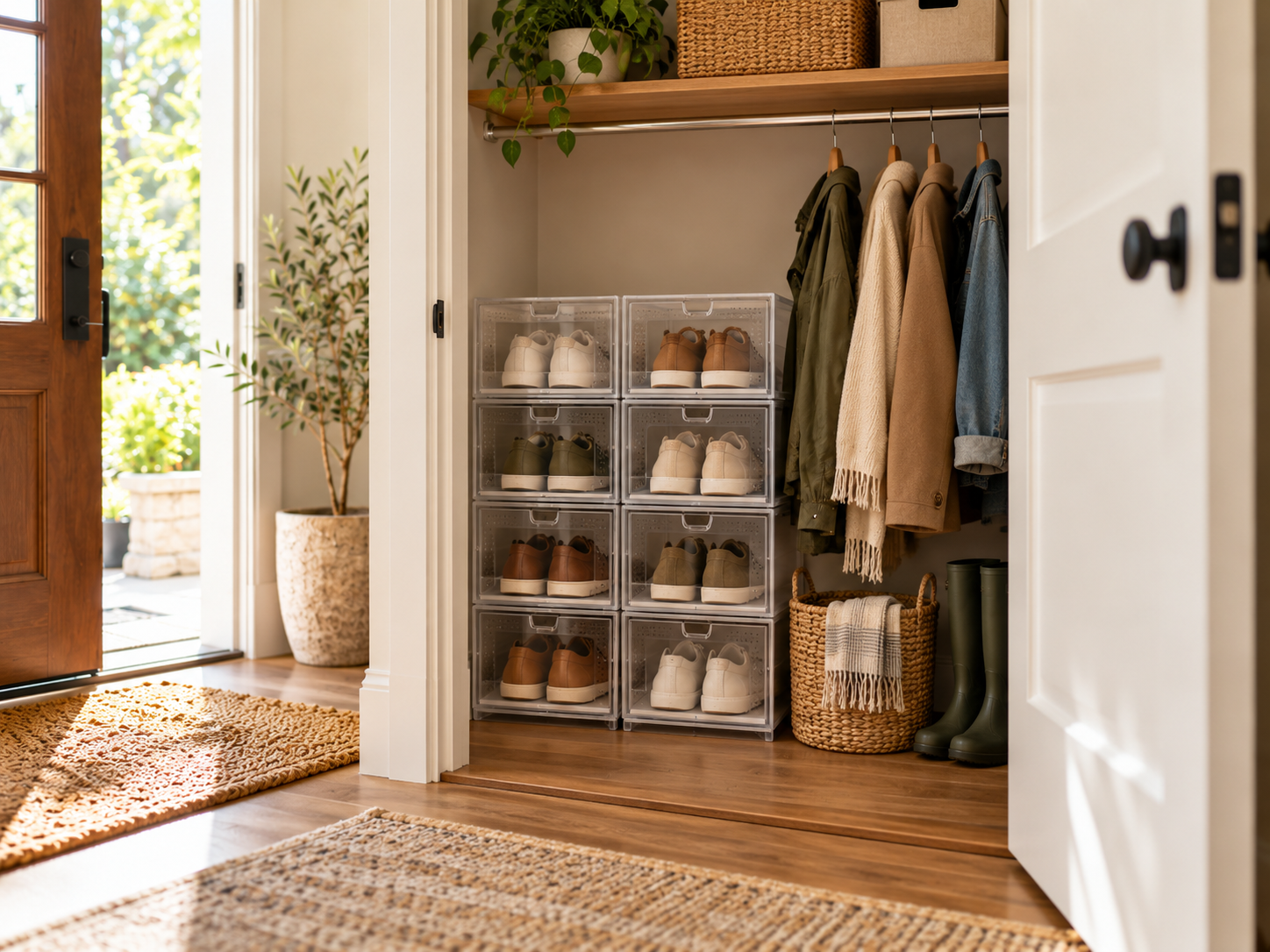
5. Create vertical storage inside the coat closet
Stackable ventilated shoe containers can make better use of a coat closet than leaving pairs in a heap. Measure the interior box width, height, and depth—advertised external measurements can be misleading. Store only clean, dry footwear, and keep heavier items low..
Suggested product: SEE SPRING 12-Pack Shoe Storage Boxes. Verify size, fit, current listing details and availability on Amazon.
6. Consider an over-the-door shoe organizer
When floor space is exceptionally limited, the inside of a closet door may provide a home for slippers and lightweight footwear. Measure door thickness and the gap above it so the organizer does not prevent the door from closing. Never interfere with fire-rated door hardware or safe access..
Suggested product: Simple Houseware Over-the-Door Shoe Organizer. Verify size, fit, current listing details and availability on Amazon.
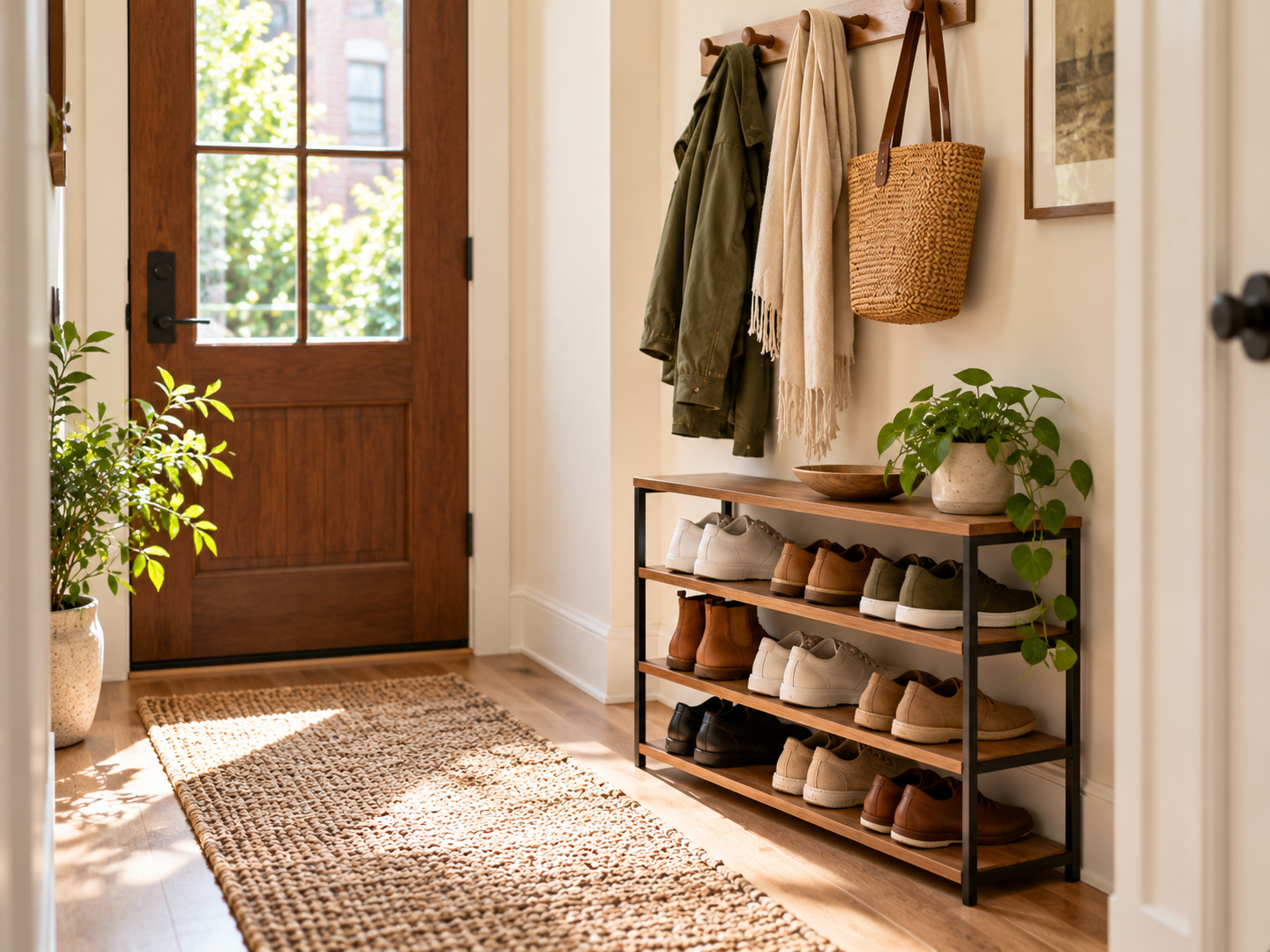
7. Keep the narrowest rack for daily shoes
A simple open rack can outperform a bulky enclosed unit if your household rotates shoes frequently. Choose a shallow design with shelves tall enough for your footwear, and check whether its base is level on your flooring. Leave a clear walking route and avoid arranging shoes where a door might catch them..
Suggested product: SONGMICS 2-Tier Shoe Rack. Check the current Amazon listing for sizing, fit, and availability.
8. Give tall boots their own home
Tall boots rarely fit well into ordinary racks. Place them upright in a closet, dry them according to their care labels, and use removable boot shapers where appropriate. Keeping bulky boots out of the entryway frees the front-door zone for pairs worn every day.
9. Create a dedicated family drop zone
Assign each person a specific shelf, bin, or clearly marked portion of a rack. A system that children can understand is easier to maintain than intricate compartments. Ensure tall storage is secured, keep access routes unobstructed, and store potentially hazardous shoe-care products safely out of children’s reach.
10. Add one catch-all basket for accessories
Shoes often share space with keys, scarves, shopping bags, and pet leads. A single small basket or tray can prevent these accessories from spreading across the shoe bench. Empty it weekly. Avoid adding decorative containers until you know precisely what you need to store.
11. Make an awkward corner earn its place
Corner racks are not automatically space-saving. Check the diagonal reach, the usable shelf dimensions, and the clearance around open doors. Compare the corner solution to a straight narrow rack; sometimes the simplest straight unit gives more accessible storage.
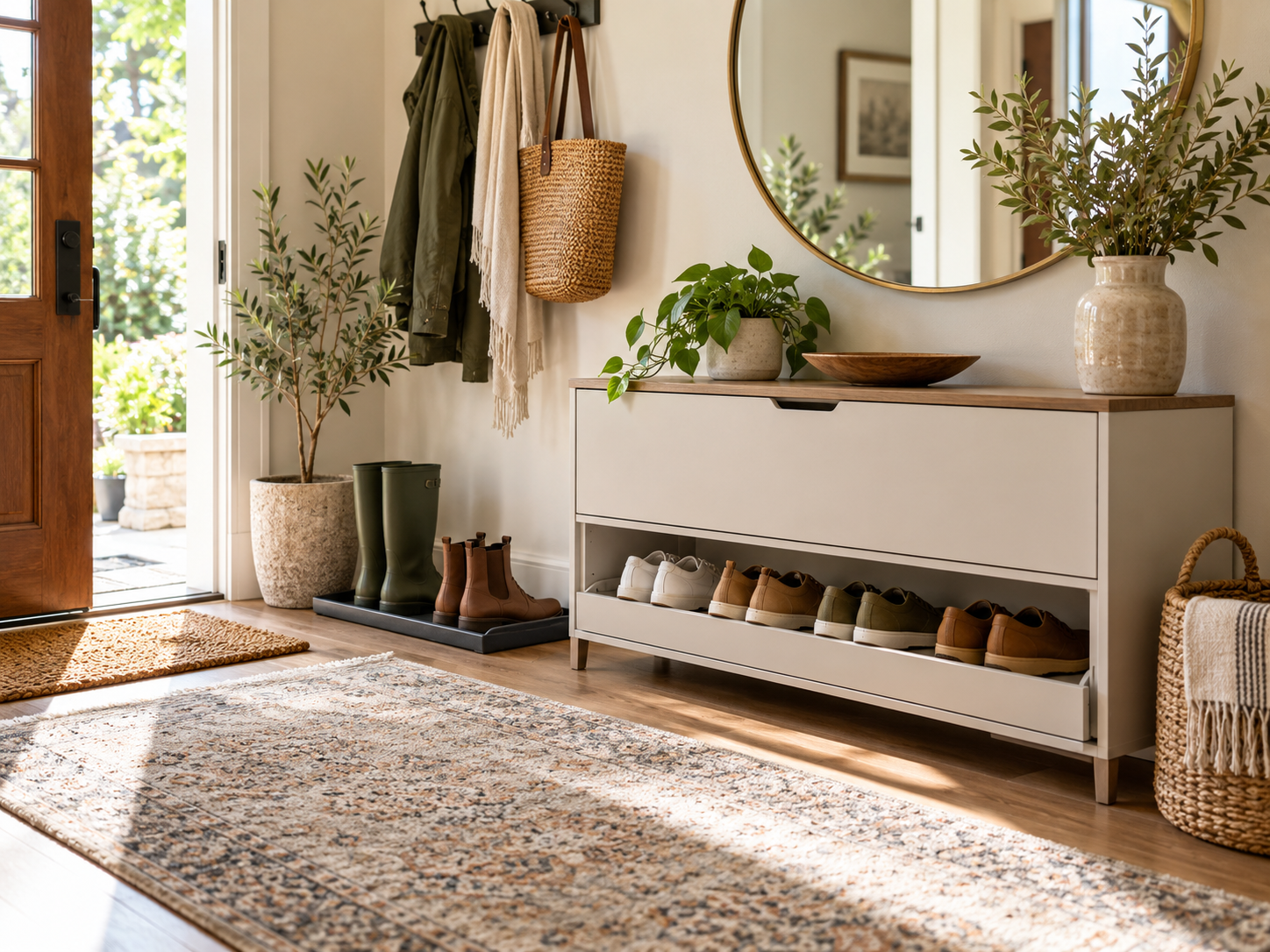
12. Finish with a five-minute weekly reset
Return out-of-season pairs to closets, wipe the boot tray, dry wet footwear thoroughly, and check for loose or unstable fittings. A beautiful entryway depends more on this small habit than on purchasing one more organizer. Leave some empty space: a calm arrival area is easier to use and looks more inviting.
How to measure your entryway before buying
Measure the available floor width and depth, the door’s full swing, and the location of baseboards, radiators, outlets, and nearby closet doors. A cabinet that technically fits a wall may still block the route when its doors open. Mark the footprint with masking tape and walk through the entrance with a bag or laundry basket in hand. For seated benches, allow enough room to sit and stand. Check manufacturer dimensions and mounting instructions carefully; advertised shoe capacity depends on the size and shape of the footwear.
Common mistakes that make small entryways feel smaller
Buying by appearance before measuring, keeping every pair beside the door, overcrowding a closed cabinet with damp shoes, and ignoring anti-tip instructions are common mistakes. Another is choosing storage so tall or deep that it interrupts circulation. Prioritize safe movement, usable capacity, and easy cleaning. A compact entryway works when its organizers make the daily routine simpler.
Frequently asked questions
What is the best shoe storage for a very narrow hallway?
A properly measured slim tilt-out cabinet or narrow open rack is often a good starting point. Choose according to your available depth and the size of your shoes.
Is an open shoe rack better than a closed cabinet?
Open racks offer visibility and ventilation; closed cabinets conceal clutter. Damp footwear should be dried before long-term enclosed storage.
How can renters store shoes without drilling?
Low freestanding racks, boot trays, and suitable over-door organizers are possibilities. Always check stability and ensure door hardware is not obstructed.
How many pairs should stay near the front door?
Only the pairs worn frequently during the current season, with enough space left for safe entry and exit.
The final edit
A welcoming entryway starts with an honest inventory of daily-use shoes. Choose one reliable storage system, keep your walkways clear, and maintain the area with a weekly reset. For Smart Space Finds readers, the goal is not a showroom-perfect closet; it is a practical, cozy home that works every day.
Editorial note: Check product dimensions, specifications, pricing and availability on Amazon before purchasing. Images in this guide are AI-generated editorial illustrations and do not depict or guarantee the exact linked products.