
Affiliate disclosure: As an Amazon Associate, we earn from qualifying purchases. This editorial guide includes affiliate links; purchases through them may earn us a commission at no additional cost to you. We do not claim hands-on testing of the organizers discussed.
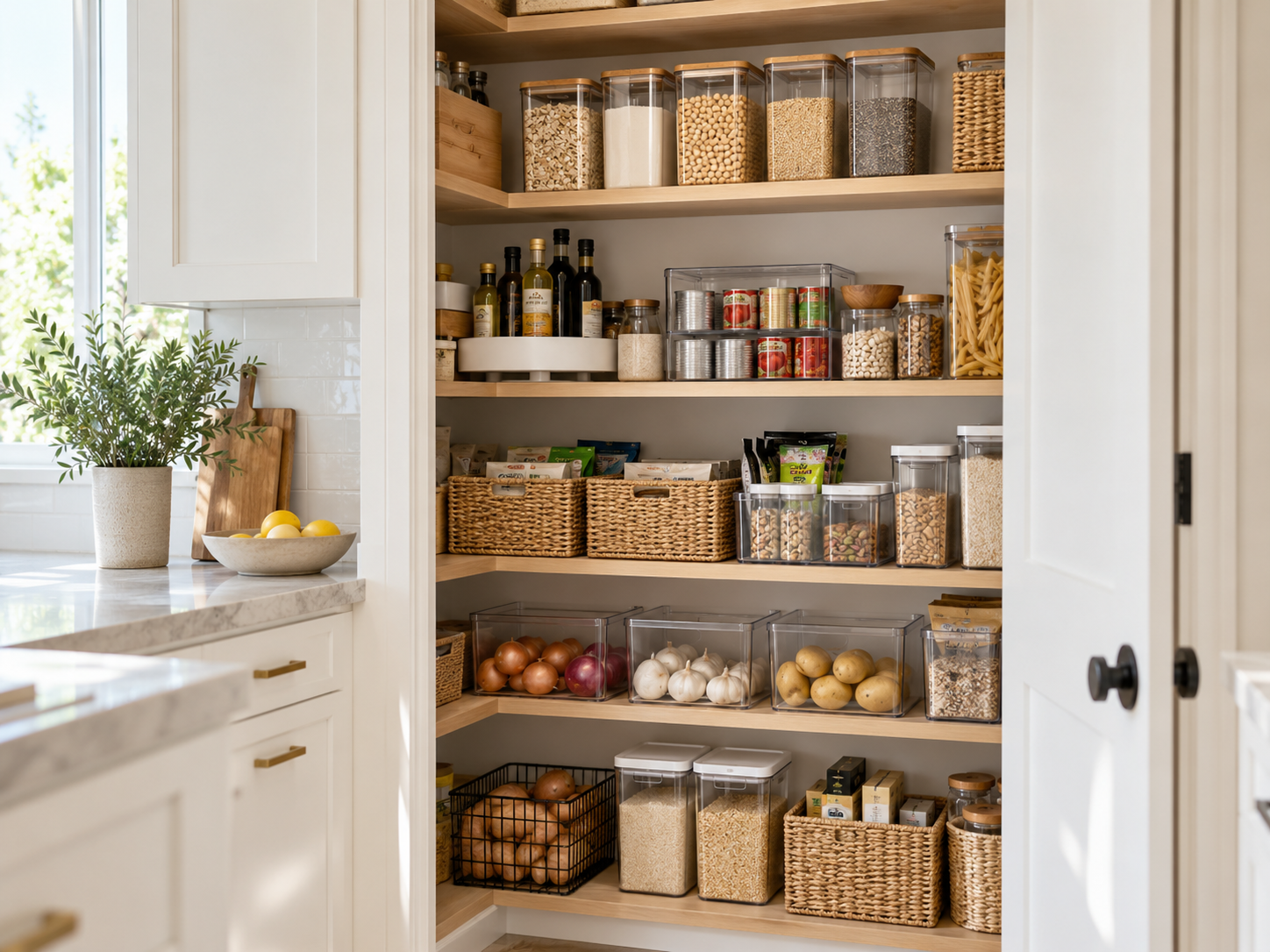
A compact pantry can look beautiful and still fail on a busy weekday. The solution is not to purchase a matching container for everything: it is to make packages visible, reachable and easy to put away. In this product-focused guide, we compare twelve types of pantry organizers for small kitchens, explain the measurements that matter and identify when a popular accessory is not worth the counter or shelf space.
Unlike a general step-by-step pantry-cleanout guide, this article focuses on shopping decisions, sizing and real-life usability. Begin by measuring your shelves and identifying the one or two trouble spots that slow you down every day.
Quick comparison: best organizer types for small pantries
| Organizer | Best use | Check before buying |
|---|---|---|
| Clear bins | Loose packets and snack categories | Handle clearance and shelf depth |
| Airtight containers | Frequently used dry staples | Food-contact safety and size |
| Lazy Susan | Small bottles in deep corners | Tray diameter and bottle height |
| Shelf risers | Tall shelves | Stability and usable height |
| Tiered can racks | Canned foods | Depth and full expanded width |
| Over-door racks | Lightweight packets | Door thickness and swing |
| Pull-out baskets | Deep lower cupboards | Internal width and installation |
| Vertical dividers | Boards and trays | Slot dimensions |
| Clear drawers | Individually wrapped snacks | Inside drawer dimensions |
| Rolling cart | Narrow kitchen gaps | Wheel and handle clearance |
| Reusable labels | Easy identification | Food date and allergen retention |
| Backstock basket | Duplicate staple packets | Liftable loaded weight |
1. Clear, stackable pantry bins
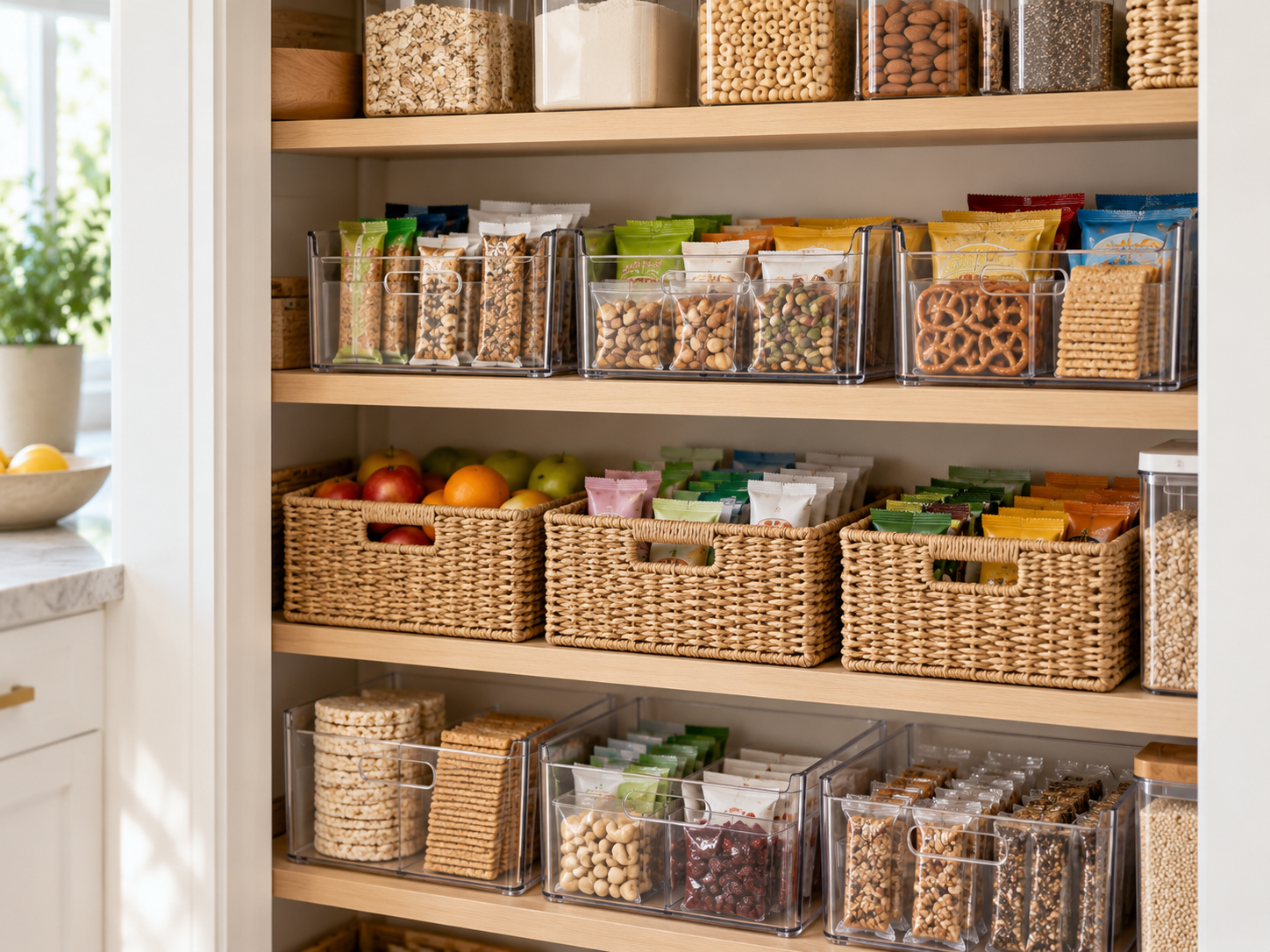
Use open-front bins to group snack packets, baking supplies and backup staples. In a narrow cupboard, one removable bin can be much easier to use than twenty loose packages.
Suggested product: Vtopmart Clear Storage Bins. Check current dimensions, specifications and availability on Amazon.
What to look for
Look for smooth edges, an easy-to-grip handle and a width that leaves enough clearance to pull the bin forward. Deep bins may waste space if they hide older packets at the bottom.
Practical styling tip
Label by use, not by rigid food category: breakfast, baking, lunch boxes or quick dinners. Avoid making each category so narrow that it requires its own container.
2. Airtight dry-food containers
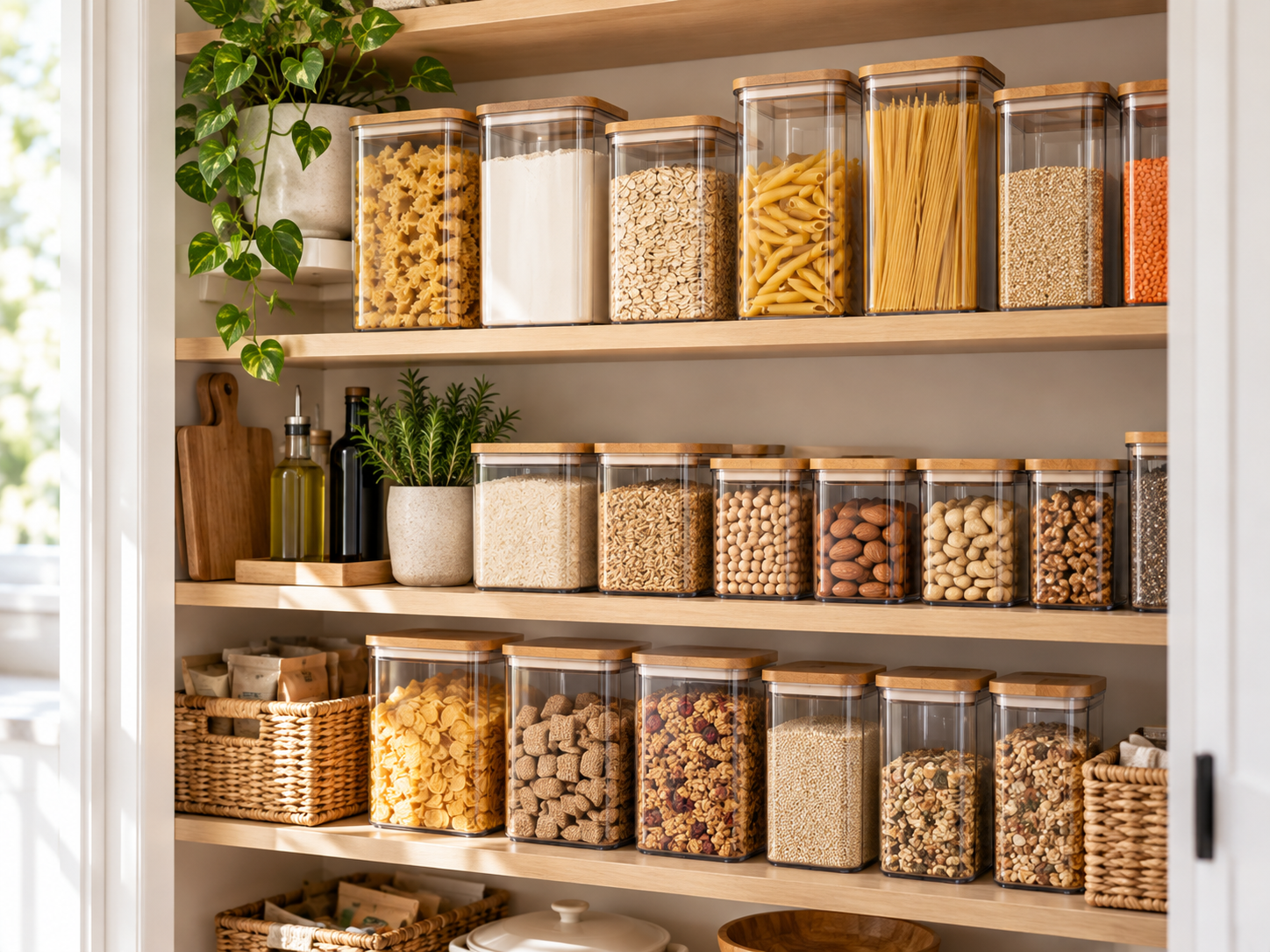
Decant frequently used pasta, rice, flour and cereal only when sealed containers actually improve everyday access. Clear sides make running low easy to spot, while rectangular shapes can fit shelves more efficiently than round jars.
Suggested product: OXO POP Container Set. Check current dimensions, specifications and availability on Amazon.
What to look for
Check food-contact suitability, seal replacement availability, dishwasher restrictions and internal capacity. Keep the original best-before date, ingredient information and allergen details accessible.
Practical styling tip
Avoid purchasing a uniform set before checking how much of each ingredient your household really buys. A four-liter container is not always useful for a pantry that holds tiny packets.
3. A compact lazy Susan
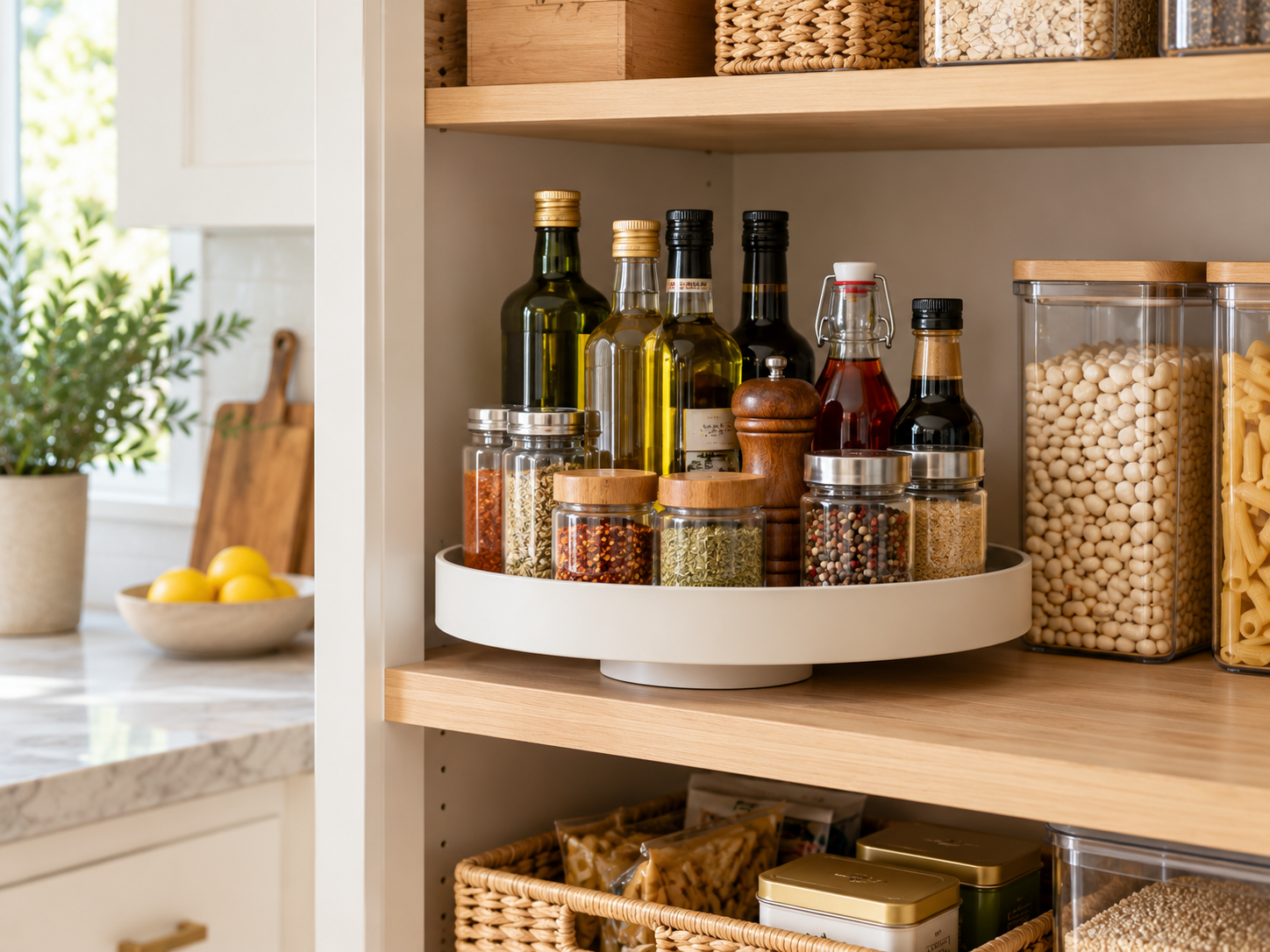
A small rotating tray helps collect sauces, oils, vinegars and condiment jars in a deep corner, provided the diameter fits without touching the cabinet door.
Suggested product: Copco Lazy Susan. Check current dimensions, specifications and availability on Amazon.
What to look for
Measure the usable shelf depth and height of the tallest bottle. A non-slip base and a shallow lip can improve everyday handling. Keep fragile or very heavy items out of poorly balanced trays.
Practical styling tip
Use it for one routine group rather than mixing snacks, baking ingredients and cleaning products.
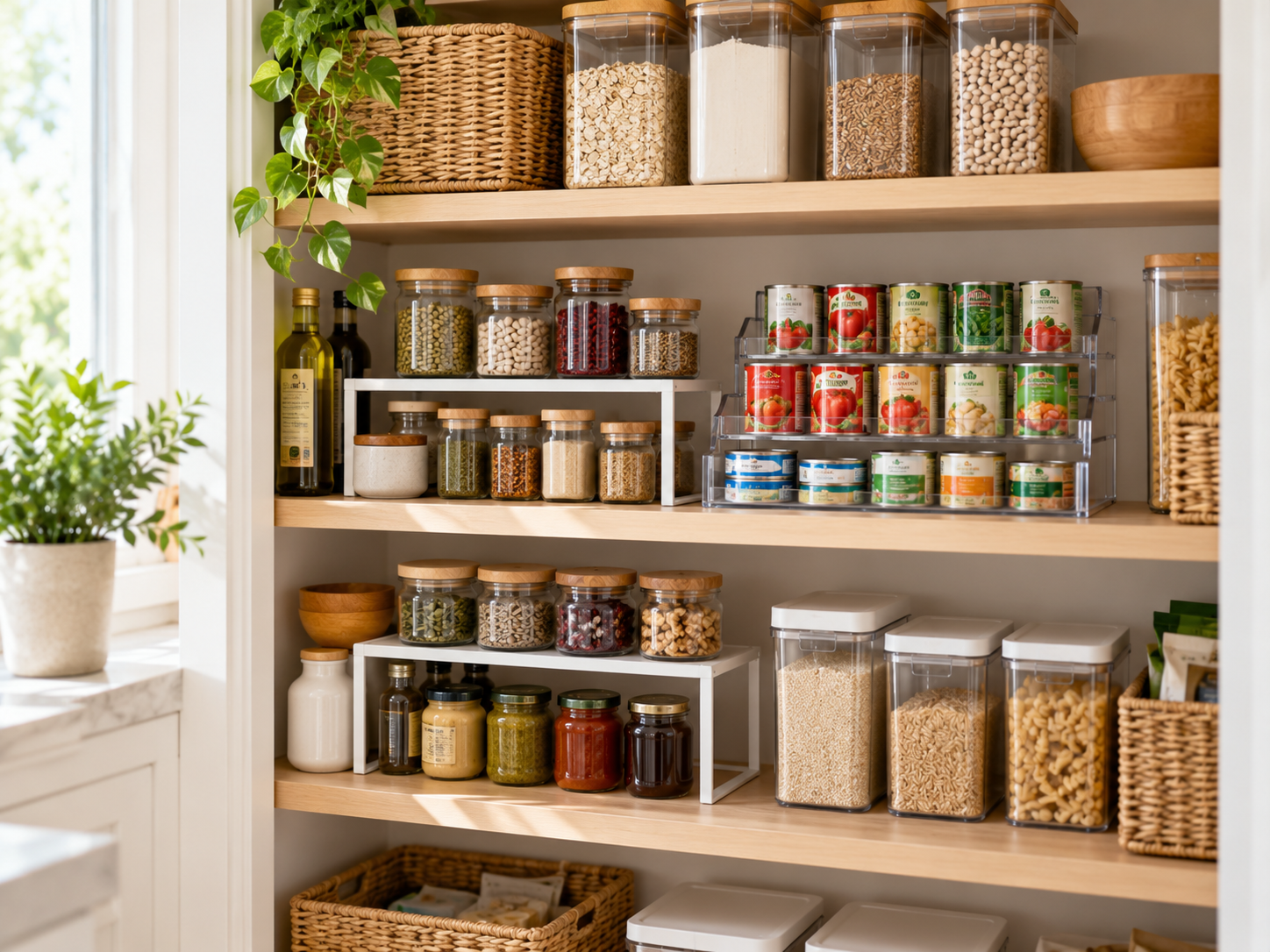
4. Adjustable shelf risers
A riser can turn the empty air above canned goods or tea boxes into a second visible level. It works well when the original shelf is tall but the packages are short.
What to look for
Look for stable feet, real load ratings and enough vertical clearance to grasp items from both levels. A riser that blocks tall containers is not a space saver.
Practical styling tip
Put light, frequently used items above and heavier jars below. Never overload unsupported shelves.
5. Expandable tiered can organizers
Tiered steps make rows of small canned foods visible without pulling every tin forward. These are particularly helpful for narrow pantry shelves that otherwise become a single wall of labels.
Suggested product: Deco Brothers Can Rack. Check current dimensions, specifications and availability on Amazon.
What to look for
Measure depth from the inside back wall to the closed door. If using an expandable model, confirm its full adjusted width fits.
Practical styling tip
Rotate new stock behind existing cans and check dates rather than treating the tiered shelf as permanent storage.
6. Over-the-door pantry racks
An over-door rack may create extra room for packets, foil, food wraps or light seasoning containers when pantry walls are already full.
What to look for
Check the door thickness, hinge clearance, shelves, door swing and any manufacturer weight limits. Not every cupboard door suits a hanging organizer.
Practical styling tip
Keep heavier or breakable bottles on fixed shelves. In rented homes, avoid hardware that scratches the door or interferes with closure.
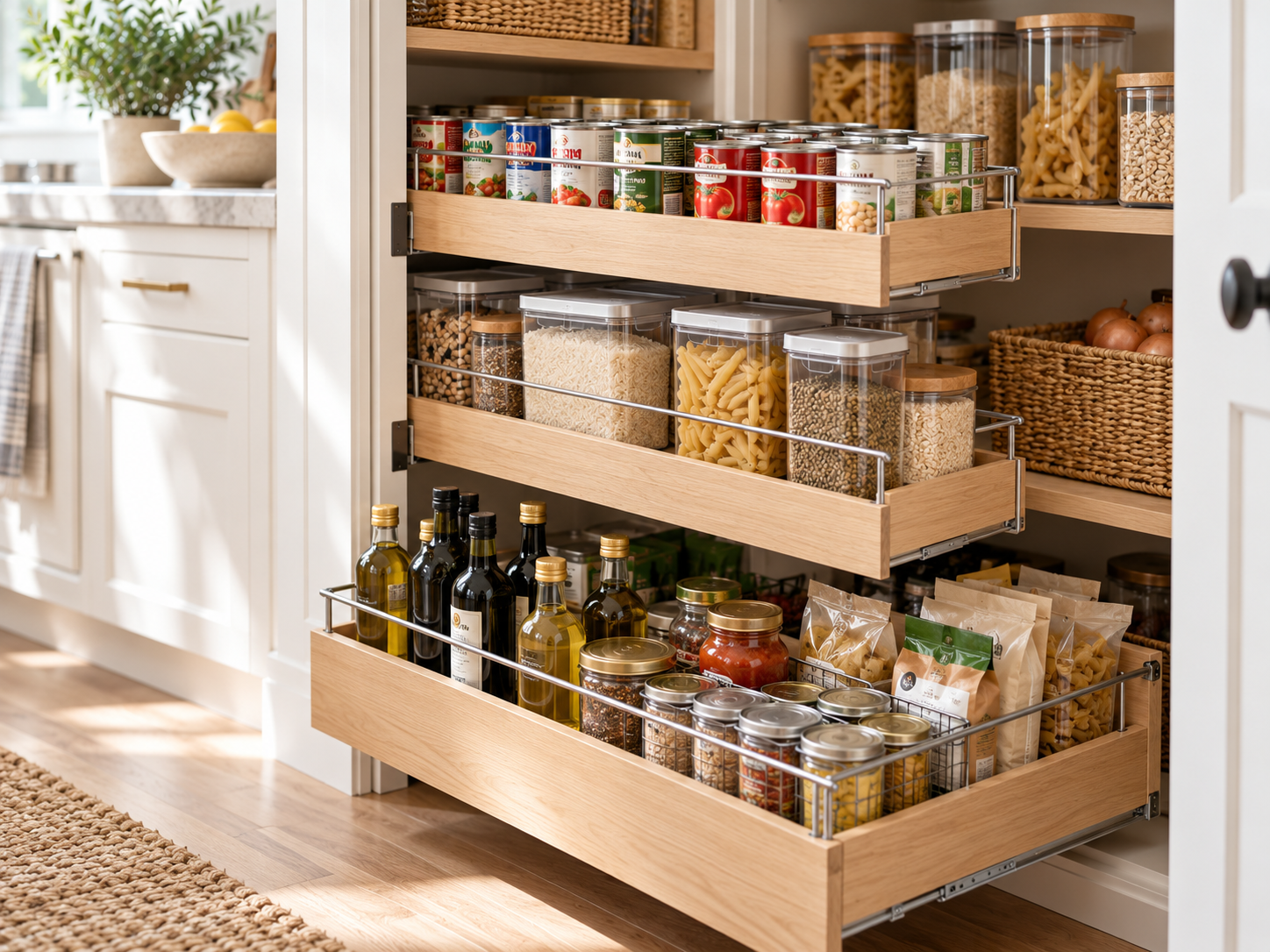
7. Pull-out cabinet baskets
Pull-out mesh or solid baskets help recover deep lower shelves that require kneeling and rummaging. When properly installed, they make weekly stock checks easier.
Suggested product: Rev-A-Shelf Pull-Out Basket. Check current dimensions, specifications and availability on Amazon.
What to look for
Check exact internal cabinet width, frame projections, hinge obstruction and installation requirements. Some slides require drilling and secure attachment.
Practical styling tip
A removable freestanding basket is often a better first purchase than permanent hardware for renters.
8. Vertical plate and baking tray dividers
A divider can keep cutting boards, baking trays and cooling racks upright. Although these are not dry-food staples, moving them out of the pantry floor area may free enough room for bulk goods.
What to look for
Check slot width, stability and cabinet height. Wide baking sheets need more clearance than cutting boards.
Practical styling tip
Separate food items from cookware where possible so the pantry stays easy to clean.
9. Clear drawers for individually wrapped snacks
Small pull-out drawers can help children see approved snack options without taking apart large packages. They can also hold tea sachets, bars or lunchbox additions.
Suggested product: Vtopmart Stackable Drawers. Check current dimensions, specifications and availability on Amazon.
What to look for
Check the usable inside drawer dimension, especially the height once stacked. Avoid sharply edged plastic drawers or unstable towers.
Practical styling tip
Keep a small selection in the drawer and store backups in their original packaging with ingredient labels intact.
10. Narrow rolling storage cart
If your pantry is really a spare wall or small kitchen gap, a narrow rolling cart may hold sealed foods and lightweight supplies. It should move smoothly without blocking exits or appliance ventilation.
What to look for
Measure wheel clearance, full handle width and the minimum gap beside the appliance. Follow manufacturers’ guidance around heat sources.
Practical styling tip
Do not leave uncovered food in direct sunlight or next to radiators.
11. Simple pantry labels and date markers
Reusable labels are inexpensive compared with buying all-new storage furniture. They make a good-looking pantry function well because everyone knows where items belong.
What to look for
Choose wipe-clean labels and a marker that can be changed as the household’s needs shift.
Practical styling tip
For decanted foods, preserve allergen information, cooking directions, lot details if important and use-by dates. Labels are a supplement to food-safety information, not a replacement.
12. One basket dedicated to backstock
A single clearly labeled overflow bin prevents duplicate packets from spreading into every shelf. Store only extras of items you buy regularly and check it before shopping.
What to look for
Pick a bin that fits at floor or low-shelf level and can be lifted comfortably when full.
Practical styling tip
A backstock basket should make your weekly grocery routine easier, not encourage bulk buying that your home cannot reasonably hold.
Measure first: the five dimensions that prevent disappointing purchases
Inside width: Measure the actual usable shelf, accounting for hinges and frames. Usable depth: Stop at the point where the door shuts without touching containers. Vertical clearance: Leave room to lift a lid or remove a basket. Door swing: Check whether organizers catch the adjacent wall or shelf. Pull-out clearance: Allow space to grasp handles and fully extend drawers.
Record every measurement on your phone. An organizer that looks perfect in a styled product photograph may be unusable if it wastes a few critical centimeters. Consider buying one representative bin first and testing it before ordering a complete matching set.
What should you buy first on a limited budget?
Start with a small number of clear bins for loose packets and a set of reusable labels. If you regularly lose sauces in the back of a shelf, add a compact turntable. If the cupboard has substantial unused height, try one stable shelf riser. Only buy specialized sliding hardware once you know the cabinet dimensions and how often you access the contents.
Pantry safety and food storage essentials
Use food-contact-approved containers for unpackaged ingredients and follow care instructions. Keep raw or leaking goods isolated and dry. Retain original labels or record important ingredient and allergen information when decanting. Avoid storing food in unsuitable temperatures, direct sunlight or humid areas, and check the manufacturer’s loading guidance for tall and wall-mounted organizers. Any tall unstable furniture should be secured according to its instructions.
Frequently asked questions
Are airtight containers always better?
No. They are worthwhile when you buy suitable staples repeatedly, use containers made for food contact and can preserve necessary labeling information. They are often unnecessary for occasional ingredients.
Should I use clear or woven bins?
Clear bins make stock visible; woven bins can add texture to a cozy pantry but may conceal what is inside and require more maintenance. Choose for function first.
How do I organize a pantry in a rental apartment?
Favor freestanding bins, risers, removable drawers and properly fitting over-door accessories. Check any adhesive or hanging hardware before use and avoid damaging doors.
How many organizers should a small pantry have?
There is no universal number. A few appropriately sized pieces usually work better than a shelf filled edge to edge with containers.
The final edit
The best pantry organizers for small kitchens make ingredients easier to find and replace. Buy for the cabinet you actually have, not for a picture-perfect pantry that demands constant upkeep. Combine good measurements, a modest number of durable storage tools and a weekly five-minute reset for a calm, functional kitchen.
Editorial note: the AI-generated images in this article are editorial illustrations and do not represent the exact Amazon-linked products. Always check dimensions, specifications, pricing and availability before purchasing.