
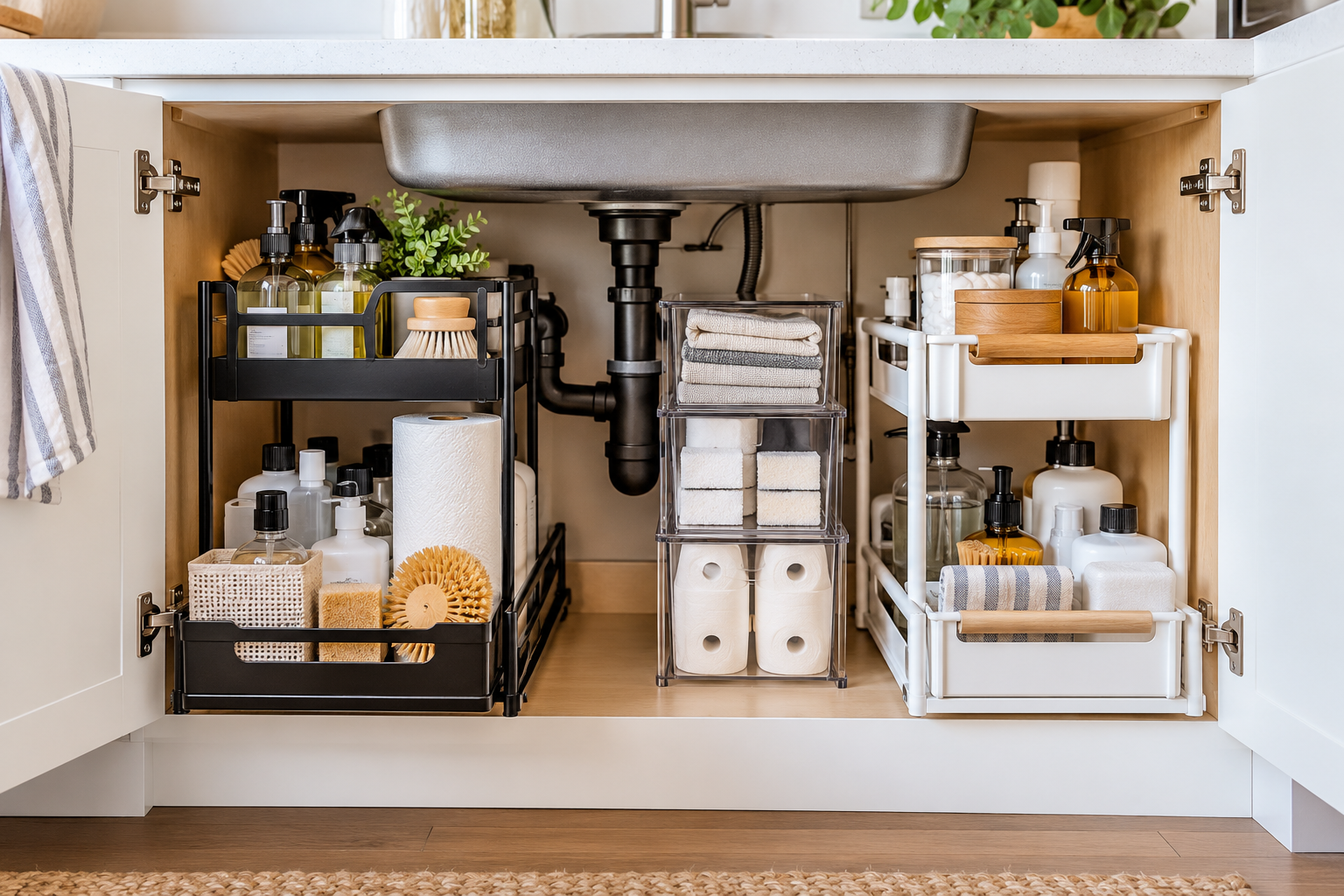
A practical, design-minded guide to transforming an awkward kitchen sink cabinet into a useful, easy-to-maintain storage zone.
Under the kitchen sink is one of the most neglected storage spots in the home. Pipes interrupt the floor, cleaning bottles crowd the front, and the items we reach for most disappear behind a jumble of backups. The solution is not simply to buy more containers. It is to build a storage system around the plumbing, your everyday routine, and the actual dimensions of the cabinet.
These ten under-sink kitchen organization ideas help you take control of the cabinet without sacrificing access to plumbing or creating new safety risks. Nine ideas include optional Amazon product recommendations; the tenth is a no-purchase monthly maintenance routine. You do not need to buy everything to make this system work. The approach works for compact apartment kitchens, family homes, and small galley layouts alike.
Affiliate disclosure: Smart Space Finds may earn from qualifying purchases through Amazon affiliate links added to this guide, at no additional cost to you. Product examples are editorial suggestions; verify exact dimensions, materials, and installation requirements on the product listing.
Before you buy: a five-minute under-sink audit
Empty the cabinet and wipe the floor. Check for moisture, damage, loose connections or leaks before adding new storage. Measure the usable internal width, depth and height, then note the position of the P-trap, water lines, disposal unit, door hinges and any pipes that descend from above.
Next, divide everything into four groups: daily-use supplies, weekly cleaning supplies, refills, and things that belong elsewhere. Keep access to shutoff valves and plumbing unobstructed. If children or pets could reach the area, store cleaning chemicals according to their labels and use suitable secure storage; an ordinary organizer is not a child-safety device.
Quick comparison: which solution fits which problem?
| Idea | Best for | Measure first |
|---|---|---|
| 1. L-shaped pull-out organizer | Plumbing in the middle | Pipe and door clearance |
| 2. Two narrow baskets | Small cabinets | Left/right usable widths |
| 3. Portable cleaning caddy | Daily cleaning routines | Handle and shelf height |
| 4. Door-mounted pockets | Lightweight small items | Hinges and door closing space |
| 5. Clear refill bins | Backstock visibility | Internal depth and bin height |
| 6. Two-tier under-sink organizer | Extra storage where plumbing permits | Height, pipe clearance and load rating |
| 7. Vertical spray bottle zone | Tall cleaning bottles | Trigger clearance |
| 8. Washable waterproof mat | Easy cleanup | Cabinet floor dimensions |
| 9. Open-top basket for dry cloths | Easy access to clean supplies | Dry storage and accessibility |
| 10. Simple monthly reset | Long-term order | No purchase required |
1. Choose an L-shaped pull-out organizer around the pipes
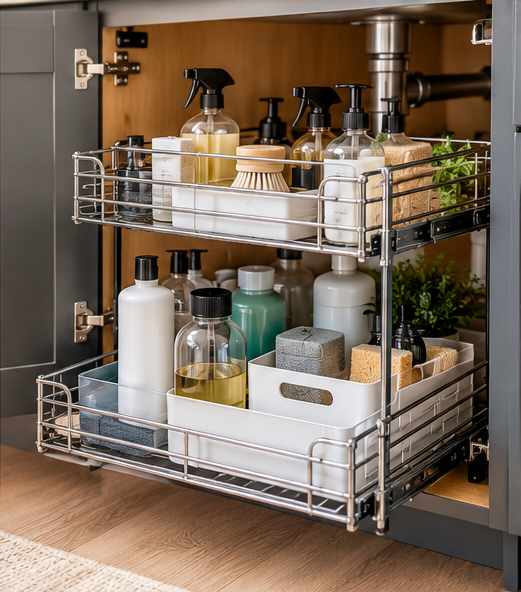
An L-shaped unit uses the space on one side of the plumbing while leaving a taller opening on the other. The lower basket slides forward so you do not have to reach to the dark back corner. For a conventional cabinet, that can make the biggest difference between storage that looks good and storage you can actually use.
Before selecting one, measure the width of the basket and check whether the drawer can open fully without colliding with the cabinet door. Check weight limits with full liquid bottles rather than relying on photos of lightweight cosmetics. Make sure the organizer does not block shutoff valves or leak inspections.
Amazon Find: REALINN L-Shaped Under Sink Organizer. View on Amazon
2. Use two narrow bins instead of one oversized rack
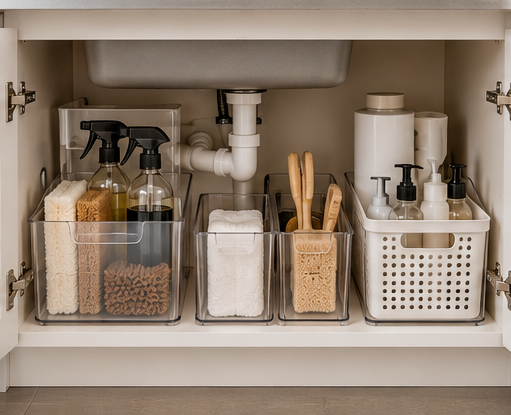
Sometimes a symmetrical organizer is the wrong purchase because the pipe configuration is asymmetrical. Two independent narrow bins—one for dishwashing supplies and one for general kitchen cleaning—can move around the plumbing more easily than a single large frame.
Look for baskets with handles or smooth pull surfaces, especially in cabinets deep enough to hide the back row. A low profile helps them pass underneath hoses. Clear plastic is convenient for identifying contents, while sealed metal or coated baskets can offer a sturdier feel in dry cabinets.
Amazon Find: ClearSpace Clear Storage Bins. View on Amazon
3. Create a grab-and-go cleaning caddy
A portable caddy works best when you regularly move between rooms. Keep frequently used, compatible cleaning tools together: cloths, a brush, gloves and the cleaner you need for a particular task. Rather than lifting several bottles each time, you pull out one carrier and return it afterward.
Do not transfer chemicals into unlabelled bottles or mix cleaning products. Preserve original packaging and instructions. A caddy should be stable and sized so taller bottles do not tip when carried.
Amazon Find: JiatuA Large Cleaning Supplies Caddy. View on Amazon
4. Make the inside of the cabinet door work harder
The back of a sink cabinet door may have just enough room for a slim sponge holder, gloves or lightweight microfiber cloths. That allows the main shelf to stay clear. Choose hardware suitable for the cabinet surface and observe the manufacturer’s load and installation instructions.
Close the door slowly with the proposed holder in place before permanently mounting anything. Dishwashers, hinges and deeper rack frames can conflict with door-mounted organizers. Avoid storing heavy glass or hazardous chemicals high on an unsecured door accessory.
Amazon Find: mDesign Over-the-Cabinet Door Storage Basket. View on Amazon
5. Corral replacement supplies in clear refill bins
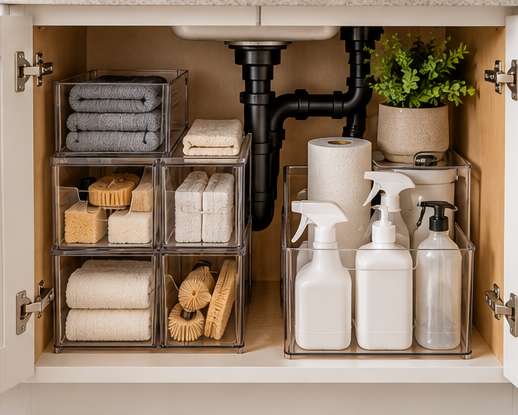
Dishwasher tablets, spare sponges, unopened dish soap and replacement scrubbers can spread into unused corners. Create one visibly labelled refill zone, separate from the products in active use. Use bins with smooth, wipe-clean surfaces so small spills do not become a permanent problem.
For any detergent or cleaning product, keep the original package and all its safety information. If the item presents a risk to children or pets, use secure storage consistent with product instructions. Clear bins are for organization, not a substitute for child-resistant packaging.
Amazon Find: ClearSpace Clear Plastic Storage Bins. View on Amazon
6. Add a stable two-tier organizer where space allows
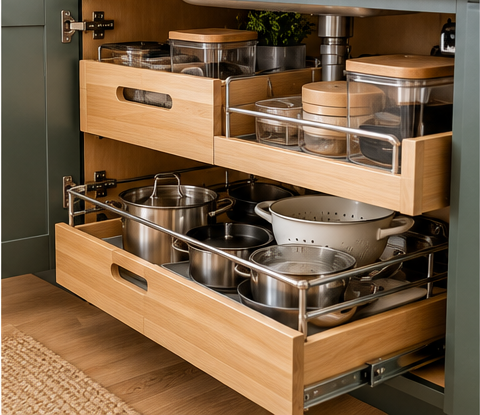
Some cabinets can accommodate a compact two-tier organizer on one side of the pipe run. It can create a second level for lightweight backups or sponges while leaving plumbing access clear. Choose a model that fits the measured cabinet opening; do not assume the tiers or height are adjustable unless the selected variant explicitly says so. Measure around each obstacle, including sidewall trim and the path the cabinet doors take as they open.
Only use a shelf according to its instructions and stated weight rating. Avoid drilling into hidden pipes or wiring. If the installation is uncertain, a removable freestanding basket is usually the lower-risk alternative.
Amazon Find: Sevenblue 2-Tier Under Sink Organizers (check fit, height and capacity before purchase). View on Amazon
7. Keep tall spray bottles in one clearly defined area
Tall bottles tend to knock over smaller supplies when everything shares the same level. Reserve the tallest part of the cabinet for them, then keep other products in shorter baskets beside it. Choose a spot where trigger handles will not catch on plumbing or shelves.
Separate incompatible products and follow each cleaner’s storage requirements. Never arrange chemicals simply by bottle color for aesthetic effect. Place frequently used bottles at the front, but protect them from access by children and pets.
Amazon Find: JiatuA Portable Cleaning Supplies Caddy (also featured in idea #3; one multipurpose product can serve both routines). View on Amazon
8. Protect the cabinet floor with a washable liner
A fitted cabinet mat simplifies cleaning and can help protect a finished surface from small drips. Choose a liner designed for cabinet use, with a non-slip base or raised edge if appropriate. Keep it removable so you can inspect underneath it.
A mat does not repair a leak and should never be used to conceal ongoing moisture. If you see water, investigate and fix the source before reinstalling organizers. A simple periodic inspection is a far better defense against damage than a crowded cabinet floor.
Amazon Find: SIKADEER Waterproof Under Sink Mat. View on Amazon
9. Organize clean, dry cloths in open-top baskets
Reusable microfiber cloths and scrub pads need a simple system that distinguishes clean from used. Store dry, clean cloths in a shallow basket; move damp items to a ventilated drying location rather than sealing them into a bin below the sink.
Keep fresh sponges and replacement brushes together in one clearly marked container. When you can see what is on hand, it is easier to avoid buying another pack unnecessarily.
Amazon Find: Sterilite Small Stacking Basket (open-top; suitable for dry supplies, not for drying damp cloths). View on Amazon
10. Establish a ten-minute monthly reset (no purchase needed)
Pull everything out once a month, check for leakage, wipe the cabinet surface, discard empty packaging appropriately, and return only what belongs there. Make a short replenishment list before shopping. If a product is consistently hard to return to its designated spot, adjust the layout instead of ignoring the problem.
Leave a little unused space for easier access and maintenance. The goal is not to store the maximum number of bottles—it is to create a kitchen that is simpler to use every day.
How to make under-sink storage feel more intentional
Limit the system to two or three container finishes, such as clear acrylic, warm white, and brushed metal. Use simple waterproof labels where they improve retrieval, but prioritize practical categories over picture-perfect symmetry. A cozy home is a home that works, not a display cabinet that is difficult to maintain.
FAQ: under-sink kitchen cabinet organization
What is the best organizer if there is a disposal unit?
Start with measurements, then look at independent narrow baskets or a pull-out unit built to clear the disposal housing. Avoid forcing a standard two-tier rack into a configuration it was not designed for.
Should cleaning products be kept under the kitchen sink?
Follow the product labels and household safety needs. If children or pets can access the cabinet, choose secure storage appropriate for the contents. Store incompatible cleaning products separately and in their original containers.
Are pull-out organizers worth it?
They are useful when reaching to the back of the cabinet is difficult and there is room for a drawer to slide. A measured, stable system is worth more than an elaborate unit that blocks plumbing.
How do I prevent moisture and odors?
Inspect for leaks regularly, keep the cabinet clean, allow appropriate ventilation and avoid storing damp textiles in sealed bins. Address persistent moisture at its source.
Continue exploring Smart Space Finds
For more organization inspiration, explore our Kitchen Organization articles and browse the latest curated Amazon Finds guides. If you are organizing a small home room by room, our bathroom organization ideas offer the same practical approach.
For cabinets with exposed plumbing, compare adjustable shelves, sliding drawers and pipe-friendly configurations in our guide to the best under-sink organizers for cabinets with pipes.
Image disclosure: Original AI-generated editorial imagery will illustrate organization principles, not exact merchant products. Verify product details and suitability directly with Amazon before purchasing.