
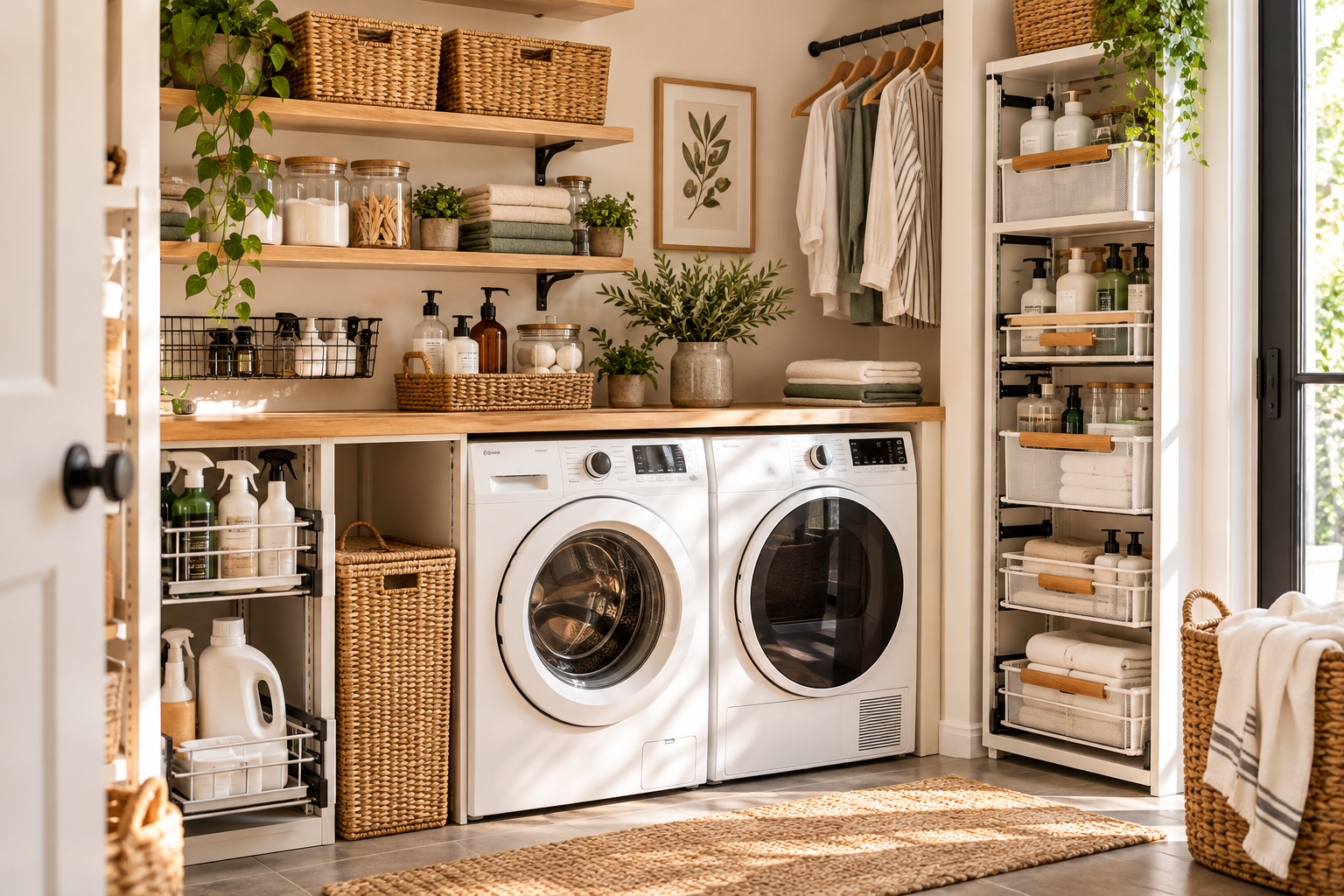
Small laundry rooms rarely lack potential—they lack a clear plan. A narrow closet, a washing machine tucked into a hallway, or a combined utility space can work beautifully when each object has an intentional place. The goal is easy access, safe product storage, and enough free room to sort, wash, dry, and fold without moving clutter from one surface to another.
Below are eleven practical laundry organization ideas, ranging from compact rolling carts to wall-mounted drying solutions. Many have optional Amazon product suggestions, but several cost nothing. Measure your room and appliance clearances before ordering, and always follow installation and safety guidance.
Affiliate disclosure: As an Amazon Associate, Smart Space Finds earns from qualifying purchases made through eligible Amazon links in this guide, at no additional cost to you. This guide includes nine optional Amazon product recommendations across eleven organization ideas; two ideas require no purchase. Always confirm product fit and installation requirements before buying.
Small laundry room ideas at a glance
| Idea | Best for | Key consideration |
|---|---|---|
| Start with a three-zone laundry layout | Shared households | Keep pathways clear |
| Slide a slim rolling cart into a narrow gap | Small floor gaps | Measure outside width |
| Add wall shelves above the machines | Vertical space | Check wall anchors |
| Use a collapsible hamper for sorting | Limited floor space | Ventilate damp clothes |
| Keep detergents in their original packaging | Safer product storage | Follow detergent labels |
| Make room for a fold-down drying rack | Air-drying clothes | Rated load and clearance |
| Install a compact ironing-board holder | Irregular accessories | Strong mounts |
| Group small tools in one portable caddy | Loose small tools | Separate chemicals |
| Try stackable bins for seasonal laundry supplies | Bulk spare items | Stable shelving |
| Add a simple folding station | Folding clothes | Avoid appliance obstruction |
| Do a weekly five-minute reset | Everyday maintenance | Inspect for moisture |
1. Start with a three-zone laundry layout
Divide the space into supplies, active laundry, and clean laundry. Keep detergent and stain-treatment products together, give dirty clothes a dedicated home, and designate one uncluttered surface for folding. In a compact closet, these zones may be stacked vertically rather than spread across the room. Measure the width, depth, hinge swing, and appliance access before adding furniture.
Practical next step: A simple laundry zoning plan requires no purchase.
2. Slide a slim rolling cart into a narrow gap
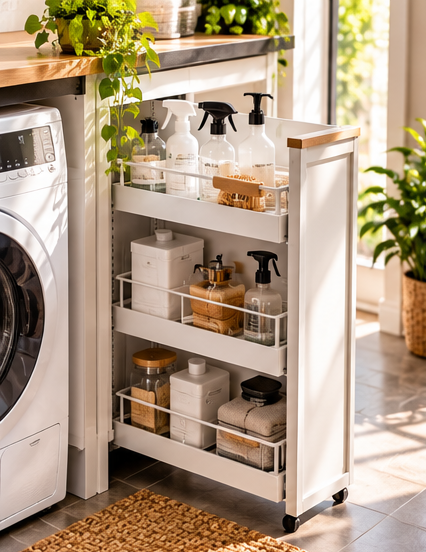
The strip beside a washer is often too slim for a standard shelf but wide enough for a narrow utility cart. A wheeled cart can organize compatible laundry supplies and cleaning accessories while rolling out when you need access. Check floor level, the cart’s actual external width, and any appliance ventilation clearances; never crowd electrical or water connections.
Practical next step: Amazon Find: SPACEKEEPER Slim Rolling Storage Cart. View on Amazon
3. Add wall shelves above the machines
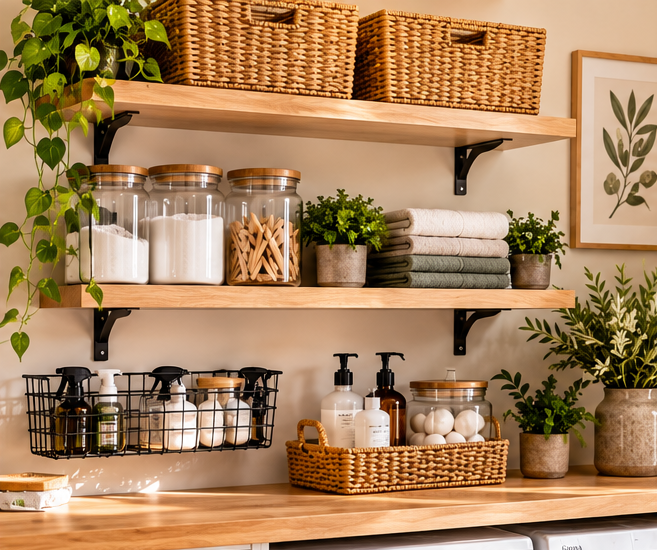
Wall-mounted shelves can free up the only usable floor area. Place them where they do not interfere with washer lids, doors, hoses, or required service access. Use brackets and anchors appropriate to the wall type and weight of full containers, and never drill without checking for hidden wiring or pipes.
Practical next step: Amazon Find: Axeman Floating Shelves (2-Pack). View on Amazon
4. Use a collapsible hamper for sorting
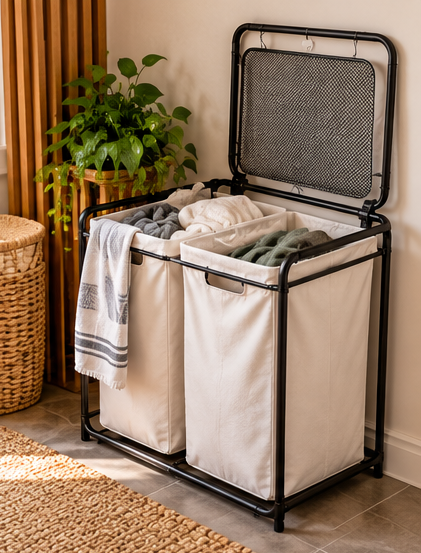
A folding hamper solves a common problem: a basket occupies valuable space even when empty. Choose a model that opens easily and stands firmly when loaded. For family sorting, a narrow two-compartment hamper may be more useful than several freestanding baskets. Keep airflow in mind when storing damp garments.
Practical next step: Amazon Find: SAMMART Collapsible Laundry Basket. View on Amazon
5. Keep detergents in their original packaging
Acrylic jars may photograph beautifully, but detergent pods, powders, and concentrates should remain in their original child-resistant or otherwise appropriate containers with instructions intact. A tray, lidded cabinet, or secure shelf can organize those original packages without removing safety information. Store laundry products out of reach of children and pets.
Practical next step: Amazon Find: ClearSpace Clear Plastic Storage Bins. View on Amazon
6. Make room for a fold-down drying rack
A wall-mounted folding rack can open only when needed and disappear into a shallow profile afterward. Check its rated load, bracket requirements, full opening arc, and whether wet clothes will contact surrounding finishes. If a wall-mounted option is impractical, a compact freestanding folding rack is a flexible alternative.
Practical next step: Amazon Find: Step Up Wall-Mounted Drying Rack. View on Amazon
7. Install a compact ironing-board holder
Store an ironing board flat against a wall or behind a door when the support is rated for the board’s weight. The mounting point should be away from appliance ventilation and clear of doors and people walking through the space. In very small apartments, an ironing mat paired with a safe heat-resistant work surface may be more practical.
Practical next step: Amazon Find: VINAEMO Ironing Board Hanger. View on Amazon
8. Group small tools in one portable caddy
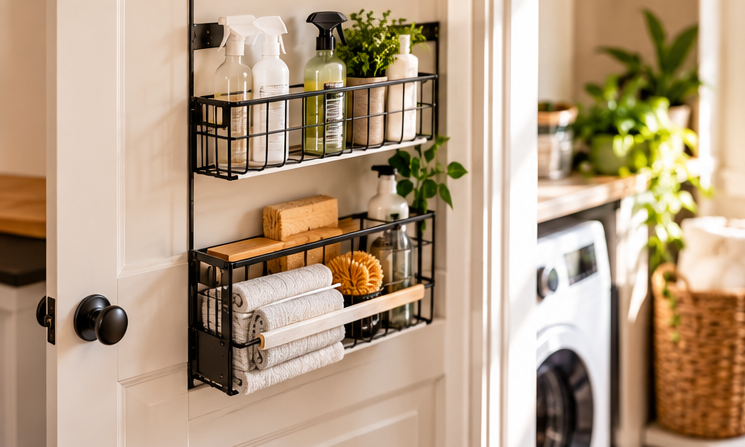
Lint rollers, stain brushes, mesh washing bags, sewing kits, and spare clothespins tend to become invisible clutter. A portable caddy makes these items easy to retrieve and return. Separate potentially hazardous stain removers and chemicals according to their product labels rather than storing everything indiscriminately together.
Practical next step: Amazon Find: JiatuA Portable Cleaning Caddy. View on Amazon
9. Try stackable bins for seasonal laundry supplies
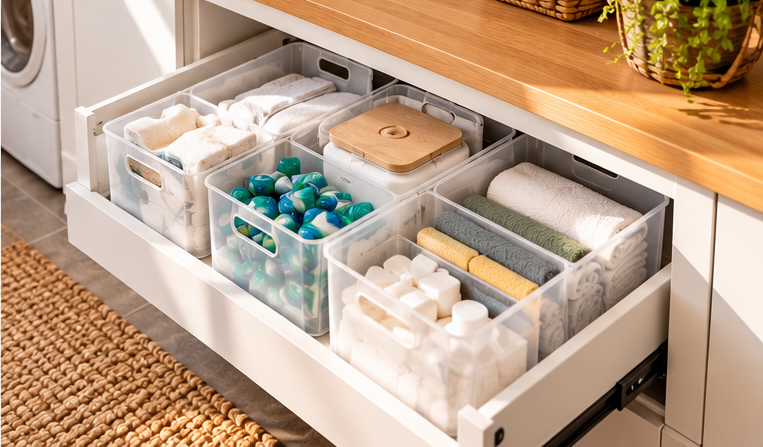
Extra laundry bags, garment-care tools, and clean dryer balls do not need daily access. Lightweight labelled bins on a stable shelf keep them from spreading around the room. Choose sizes that can be lifted comfortably and do not block plumbing shutoffs or appliance servicing. Store clean and completely dry items only.
Practical next step: Amazon Find: IRIS USA Clear Storage Bins (6-Pack). View on Amazon
10. Add a simple folding station
A small counter over compatible front-loading machines can provide a folding spot, but it needs appropriate support and must not obstruct ventilation or service access. Do not place an unsecured heavy board on top of vibrating appliances. Where countertop installation is unsuitable, use a nearby console surface or fold-out wall table.
Practical next step: Amazon Find: koretech Laundry Folding Table, 32″ × 16″ (ASIN B0D8VTNVLV). View on Amazon
11. Do a weekly five-minute reset
Before laundry day, clear the folding area, return tools to their bins, check product levels, and wipe visible surfaces. Keep a small maintenance checklist for spotting drips or blocked dryer ventilation. Regular upkeep is the cheapest organization system and prevents the gradual return of clutter.
Practical next step: No purchase needed: this routine finishes the system.
Measure before buying laundry organizers
Measure the narrowest point—not just the open floor width. Account for doors, cabinet handles, machine vibration, power sockets, water shutoffs, dryer vents, and access for routine appliance maintenance. Oversized storage is often more frustrating than having fewer containers.
FAQ: small laundry room organization
How can I organize a laundry closet with no counter?
Use clearly assigned storage zones and, if safely feasible, a separate folding station nearby. Do not improvise a surface that obstructs a machine or could slide off.
What is the best storage for a narrow laundry room?
A slim rolling cart or vertical shelving can help, provided the actual dimensions and required appliance clearances fit.
Should laundry pods go into clear glass jars?
No. Preserve original packaging and follow the manufacturer’s safe-storage instructions, especially around children and pets.
How do I make a laundry space look less cluttered?
Keep everyday supplies accessible, relocate rarely used items to labelled bins, limit visible containers, and maintain a simple weekly reset.
More small-space storage inspiration
Explore the Amazon Finds collection, and see our under-sink kitchen organization guide for additional ideas for awkward cabinet spaces.
Photography note: Editorial AI-generated images, when added, are illustrative and do not represent exact merchant products.