
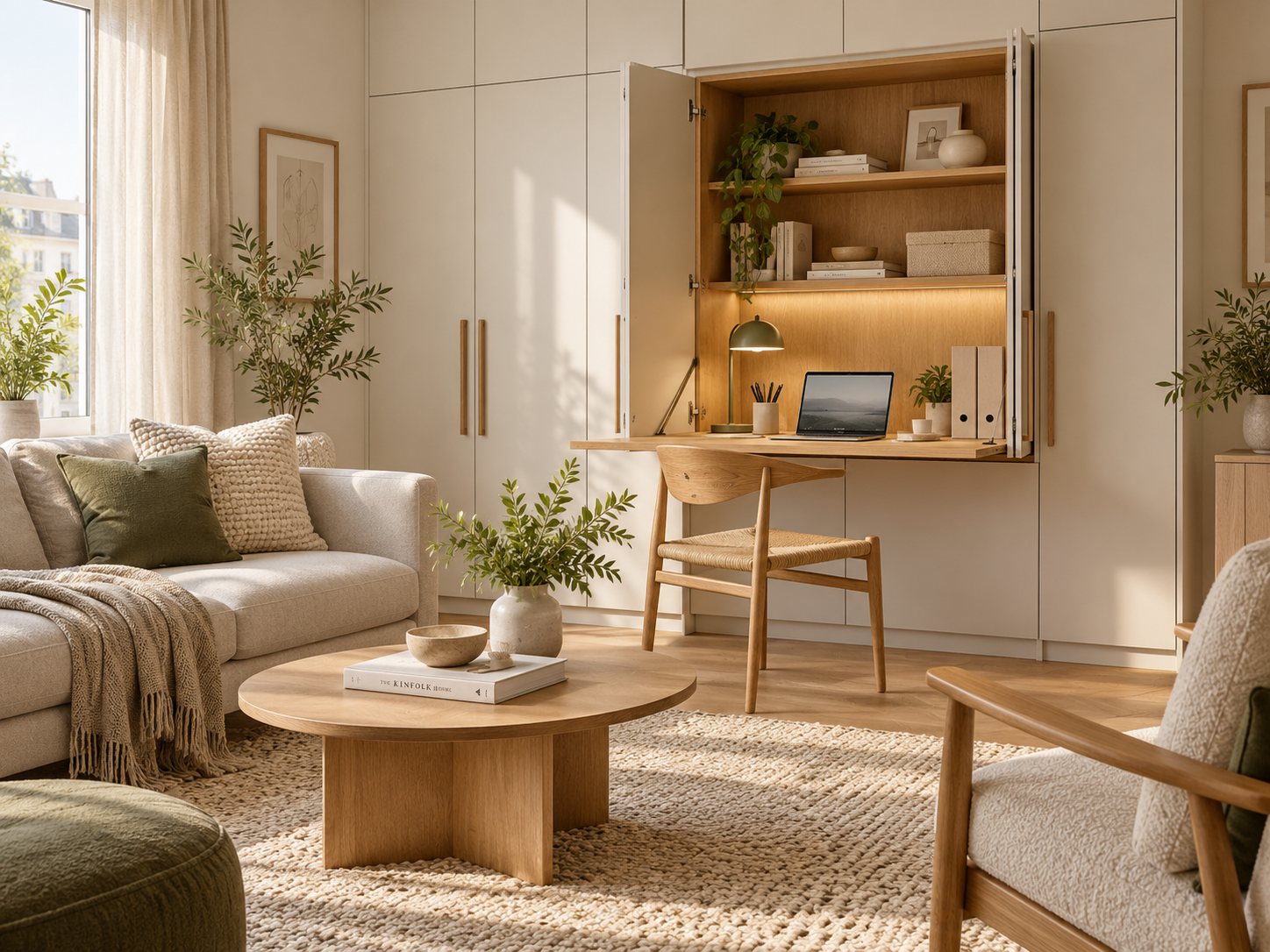
Looking for hidden desk ideas for small living rooms? The smartest setup is one that works comfortably during the day and blends into your living space afterward. From fold-down wall desks and secretary cabinets to console tables and mobile laptop stations, the right solution depends on floor clearance, how often you work and whether you can install fixtures.
Affiliate disclosure: As an Amazon Associate, Smart Space Finds earns from qualifying purchases. Some links in this article are affiliate links, at no additional cost to you.
How to Choose a Hidden Desk for Your Living Room
Start with your daily routine, not the furniture’s appearance. Measure the available wall or furniture footprint, then account for a pulled-out chair, open doors, folded-down surfaces and nearby traffic. A beautiful desk that blocks the hallway or forces you to hunch over a laptop is not a space-saving solution.
THE RIGHT DESK FOR YOUR SPACE
| Desk style | Best for | Watch out for |
|---|---|---|
| Wall-mounted fold-down | Occasional work with limited floor space | Fixings, load rating and open clearance |
| Secretary cabinet | Hiding equipment after daily use | Cabinet depth and ventilation |
| Sofa console | Short laptop sessions | Working height and chair fit |
| Dining-table work kit | Renters and flexible routines | Daily setup and cable storage |
| Built-in concealed station | Custom, long-term layouts | Installation cost and access |
| Mobile work cart | No-drill, easily relocated setups | Stability and ergonomic limitations |
Choose an Unused Corner, Not the Main Walkway
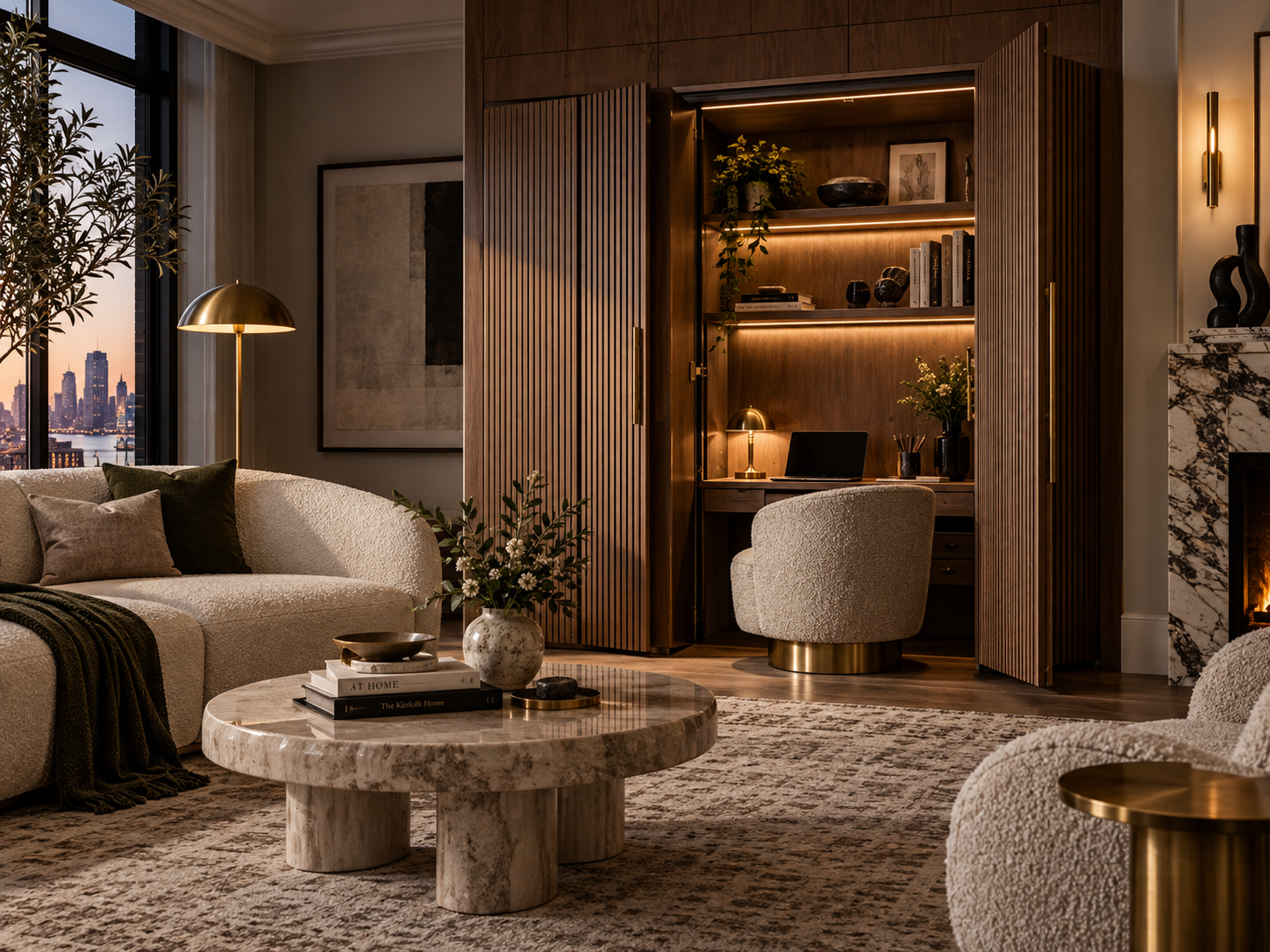
A compact work area begins with a realistic floor plan. Walk through the living room as you normally would, including while carrying drinks, shopping and laundry. Mark the proposed desk footprint with painter’s tape and pull out the chair to its fully usable position. That clearance matters as much as the desktop dimensions. Avoid placing furniture in front of doors, heaters or frequently used storage. If the desk would interrupt a route through the room, move the workspace to a recess, console area or dining nook. A hidden desk is successful when you can work comfortably and restore the living room afterward.
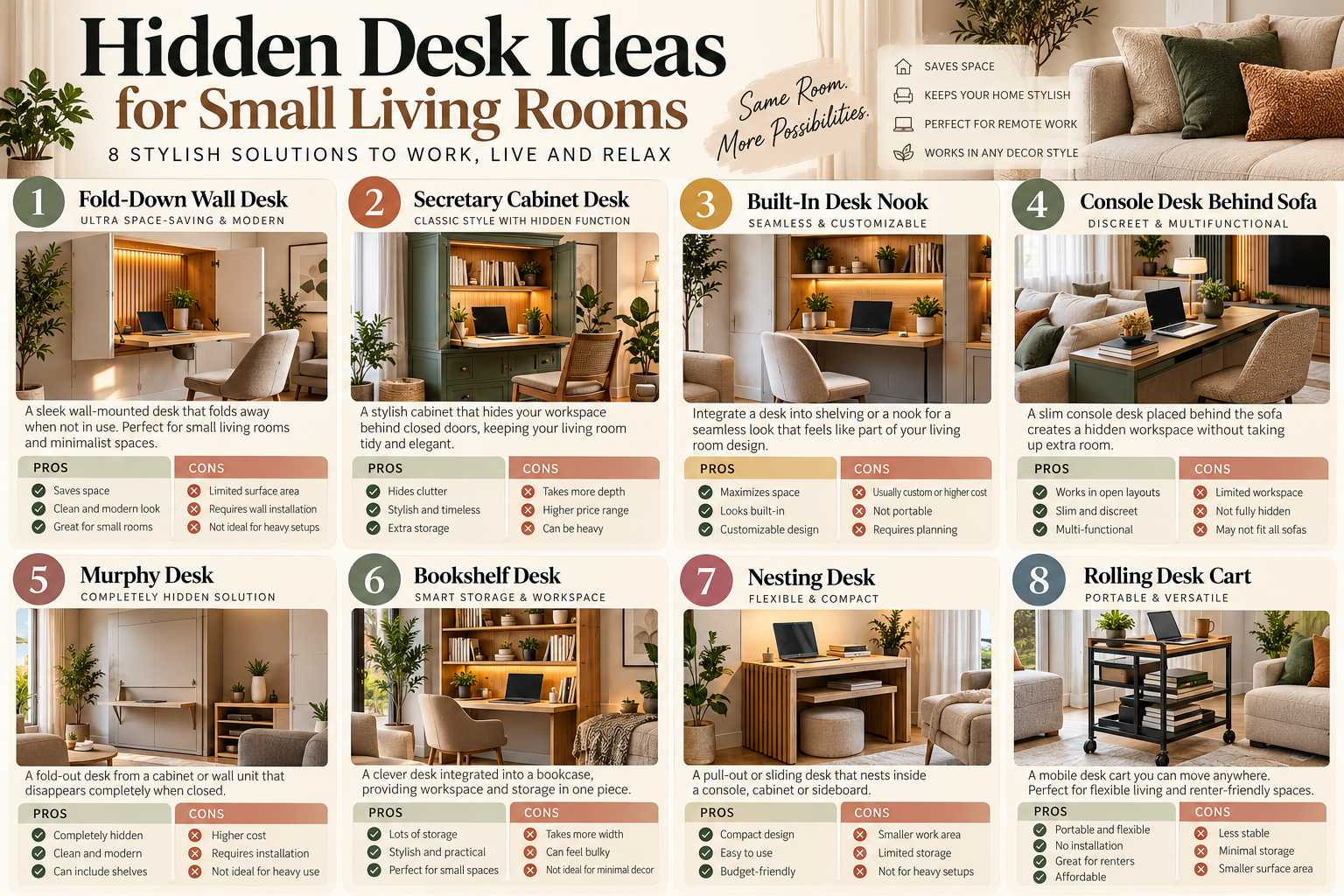
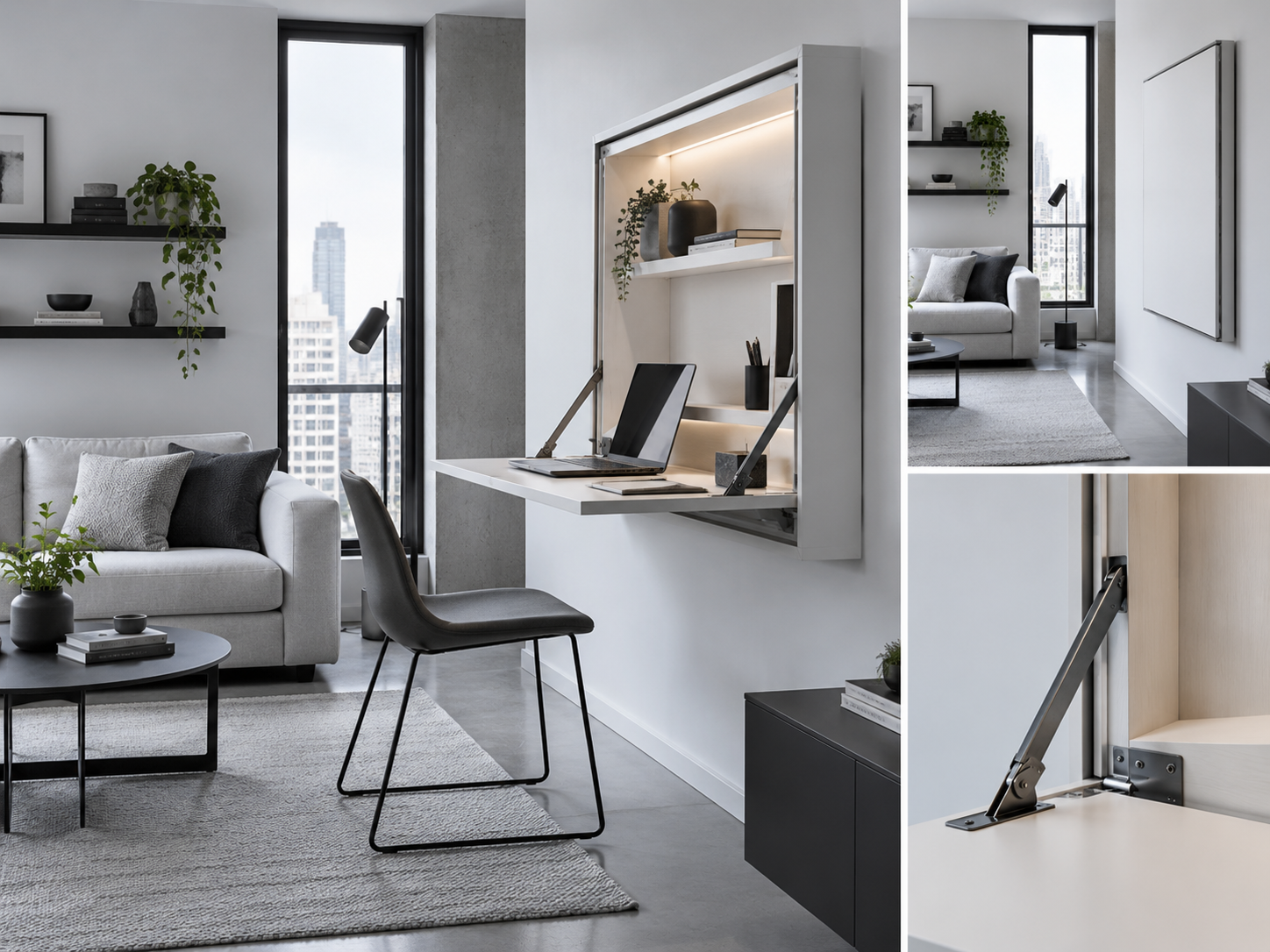
1. Fold-Down Wall Desk: Hide the Surface After Work
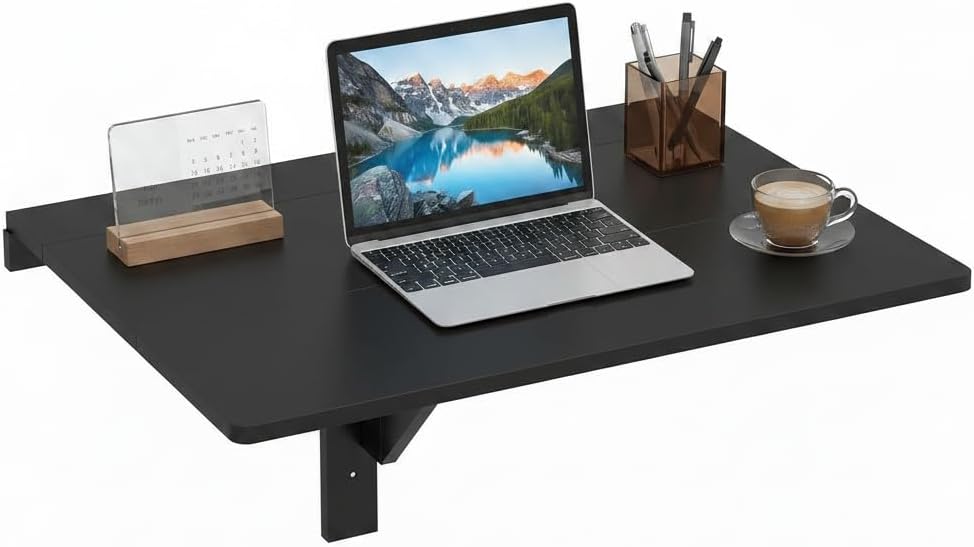
EDITORIAL PRODUCT PICK
Tangkula 31.5-Inch Wall-Mounted Folding Desk
Space-saving fold-down surface for small rooms. Check the exact color, finish, mounting hardware and dimensions on the linked Amazon listing before ordering.
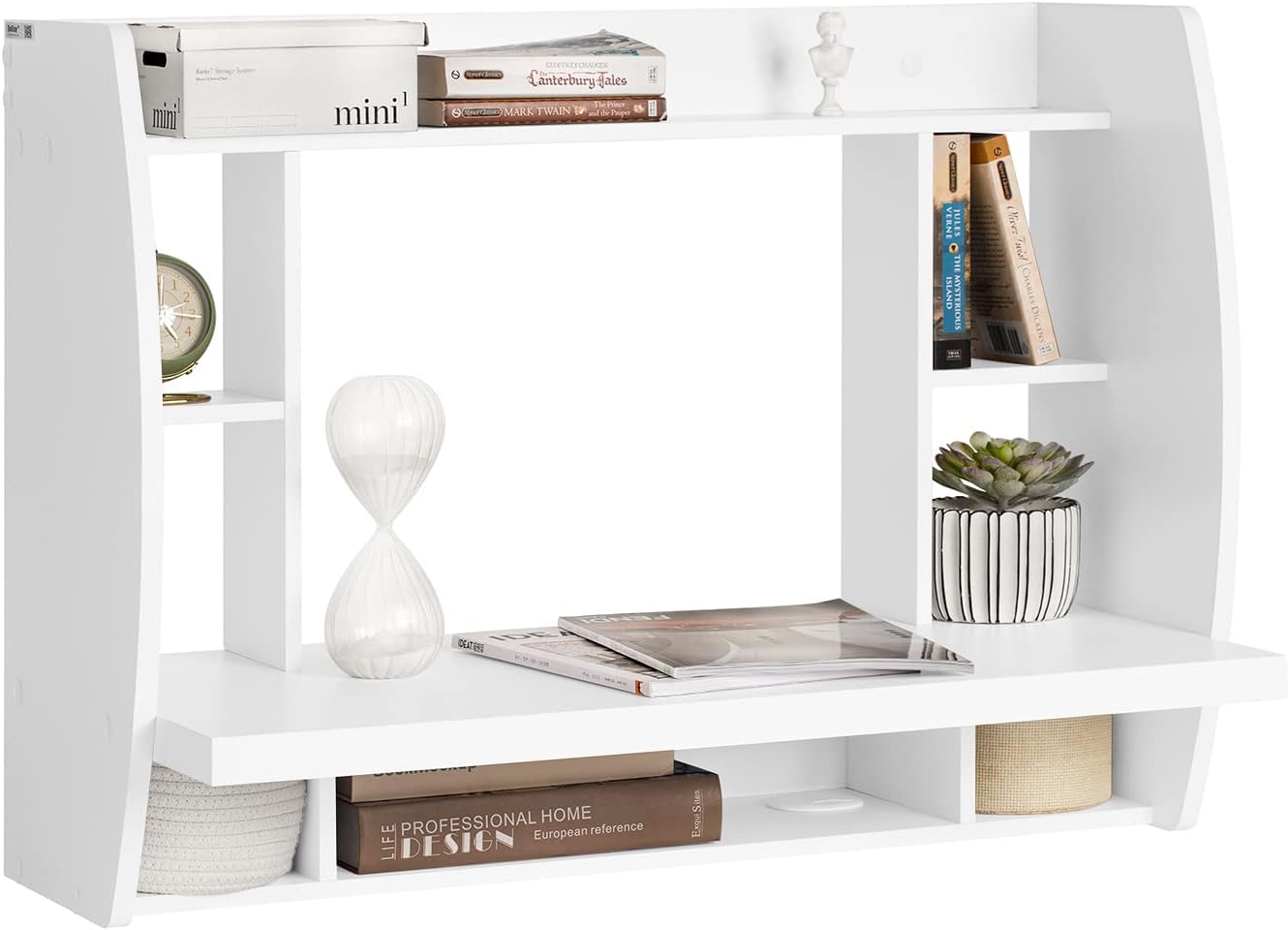
EDITORIAL PRODUCT PICK
SoBuy FWT18 Wall-Mounted Folding Desk
Best for a wall-mounted work surface with built-in storage. Check the wall type and mounting requirements.
A fold-down desk can reduce the room’s visual footprint when closed, but wall construction and load ratings must be checked. Follow manufacturer instructions for fixing and check rental permissions before drilling. Test how far the surface extends and whether nearby furniture interferes with it. Some fold-down designs provide small internal shelves for stationery; others are simply worktops. A sturdy chair with an appropriate working height is essential. Avoid a unit that cannot support your actual monitor or laptop setup. If installation is unsuitable, choose a portable table or compact freestanding console instead.
2. Slim Console Desk Behind the Sofa
EDITORIAL PRODUCT PICK
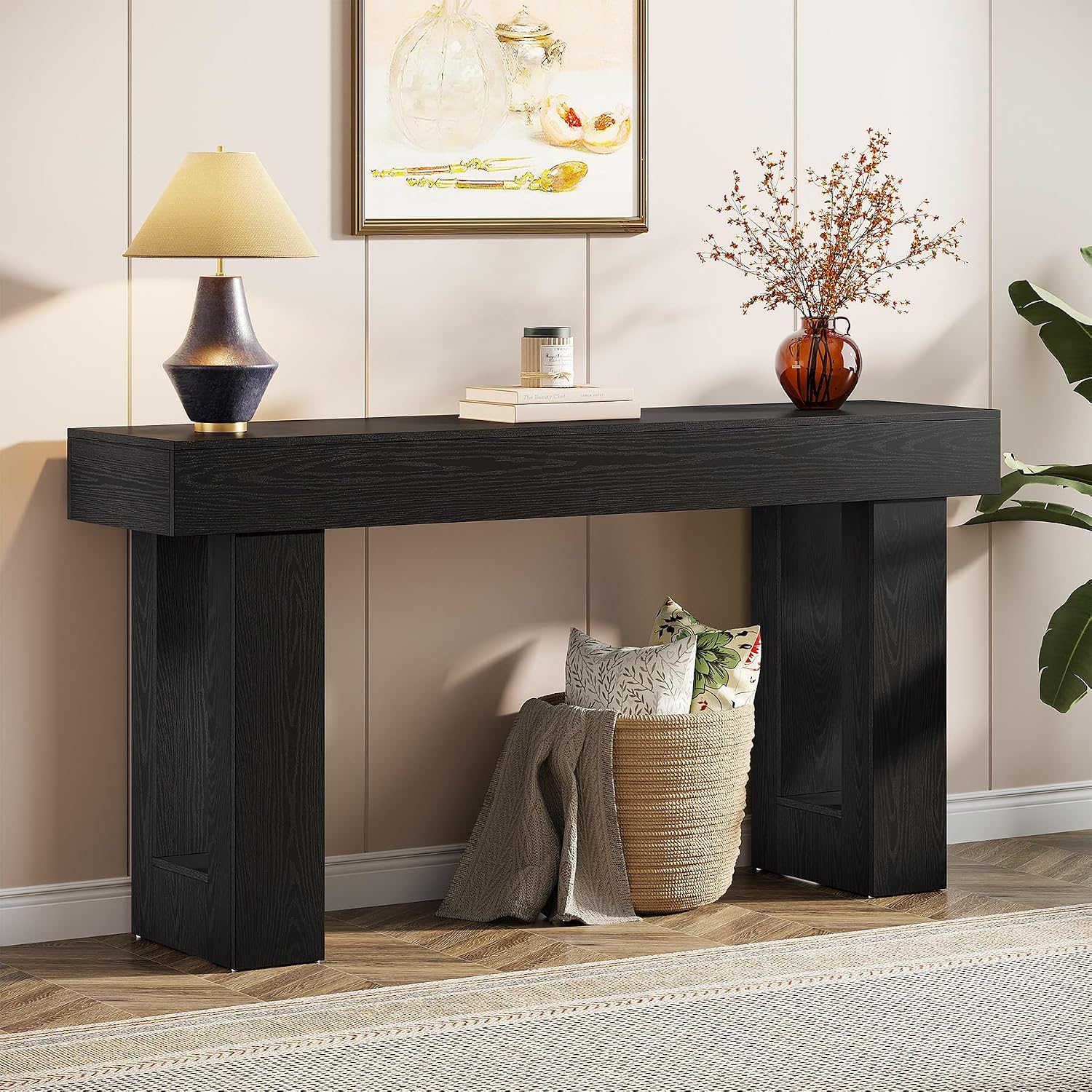
Tribesigns Sofa Console Table
Useful as a sofa-back surface, but not automatically suitable as a full-time ergonomic workstation.
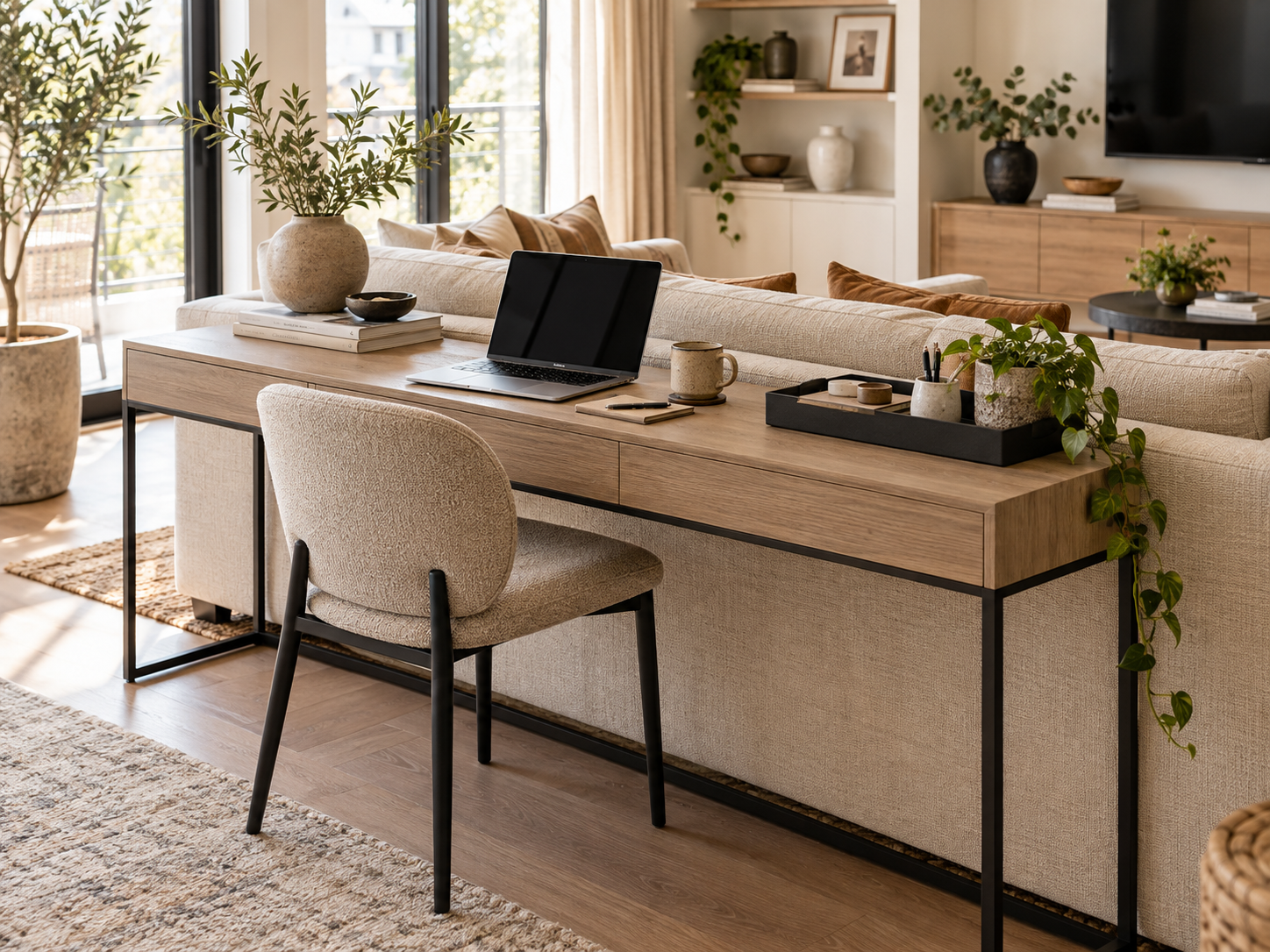
A slim console behind a sofa or against a wall may support occasional laptop work, provided its depth and height are comfortable. Do not assume a decorative console is ergonomically suitable for full working days. Check room for forearms, laptop ventilation and any mouse or keyboard you use. Pair it with a chair that can be stored neatly nearby without obstructing the room. When work finishes, put computer accessories into a shallow drawer or basket. Keep the console surface clear of unrelated ornaments during working hours. A dual-purpose piece of furniture reduces spending and preserves floor space.
3. Secretary Cabinet with a Concealed Workspace
EDITORIAL PRODUCT PICK
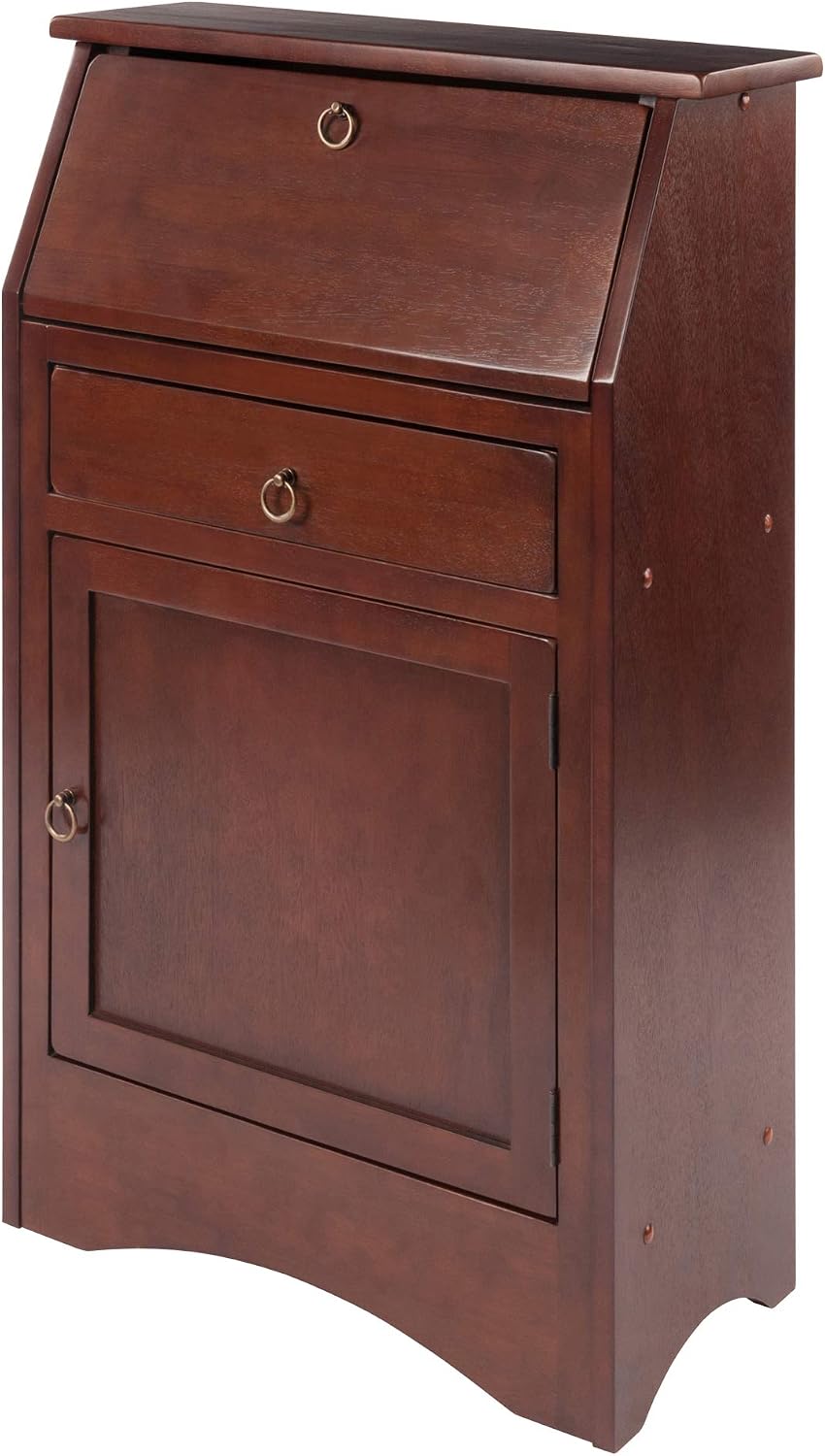
Winsome Wood Regalia Secretary Desk
A freestanding secretary desk that folds closed, suited to traditional and transitional interiors.
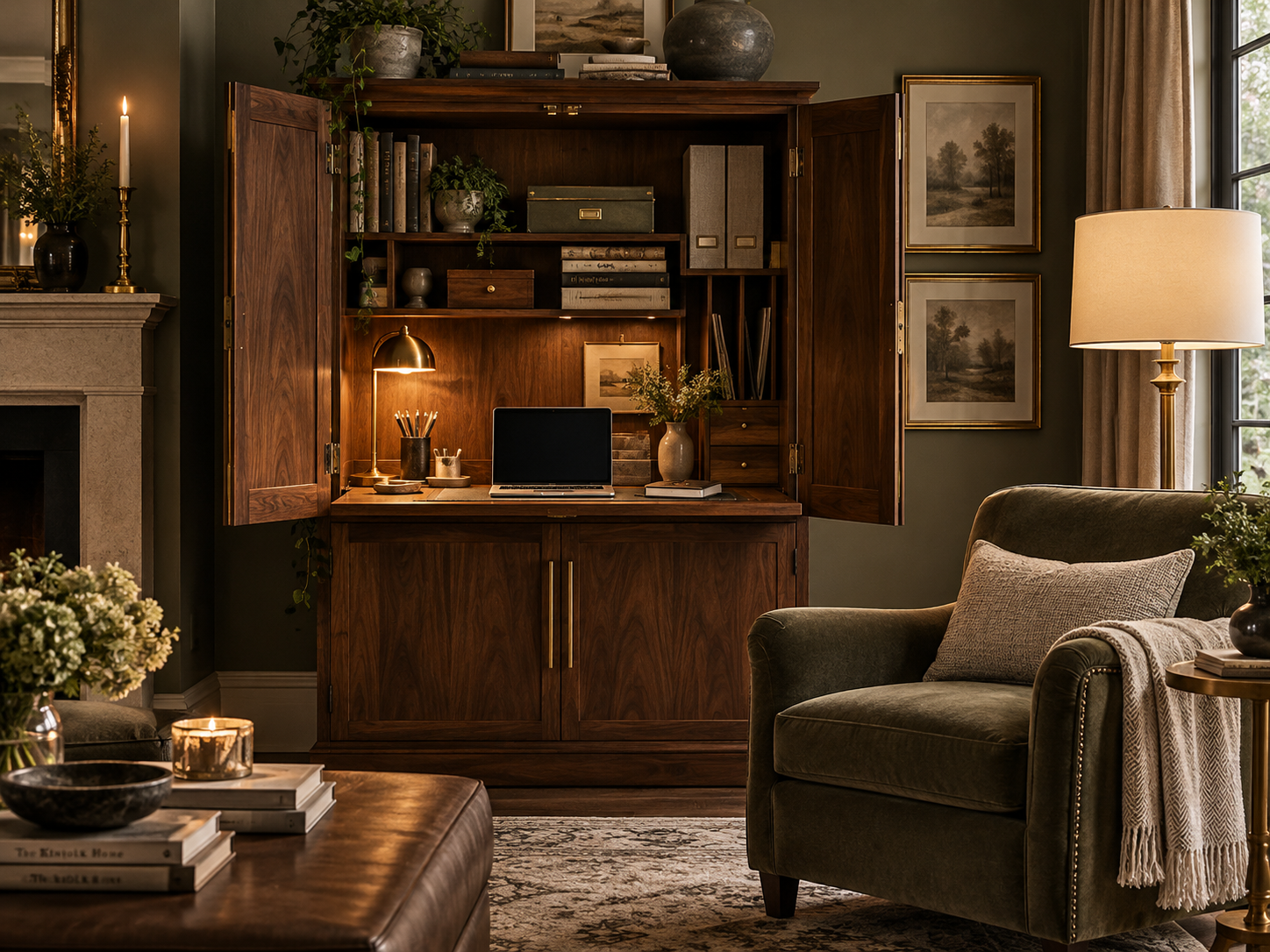
A secretary desk or cabinet with doors can hide equipment at the end of a workday. Pay attention to the inside dimensions, monitor clearance, ventilation and cable routing. Enclosed electronics may build up heat; follow the device manufacturer’s instructions and avoid leaving equipment operating in an unsuitable closed compartment. The storage should fit essential tools without becoming a dumping ground. A simple closed cabinet can keep living-room decor visually calm, especially when the finish complements nearby bookcases. Compare the actual footprint with a conventional small desk before purchasing, because some enclosed pieces are deeper than expected.
4. Dining Table Workspace with a Portable Work Kit
EDITORIAL PRODUCT PICK
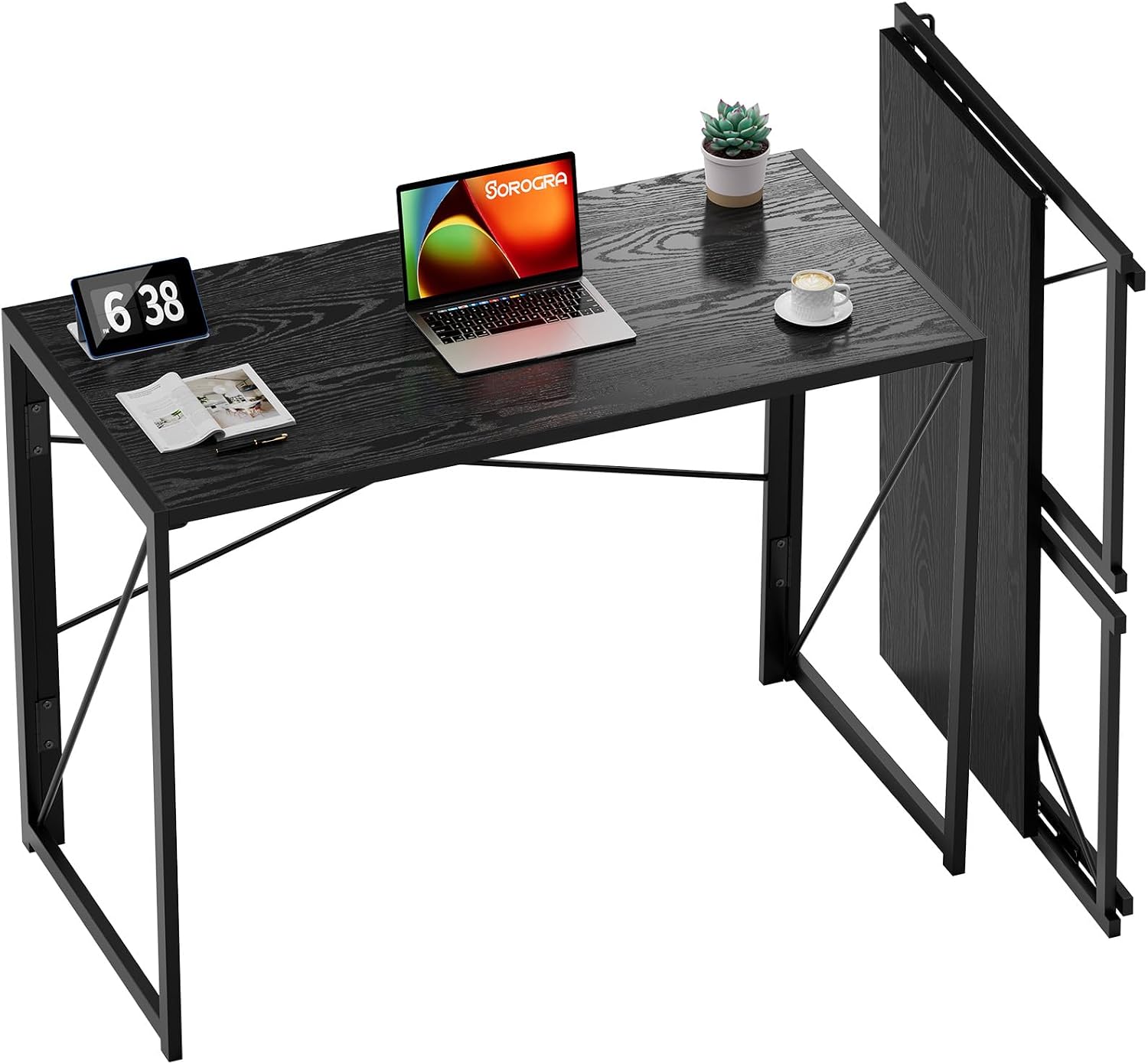
Coavas Folding Desk
A folding alternative for households that cannot install a wall-mounted desk. Measure storage space when folded.
For apartments with almost no spare wall space, using an existing dining table may be the most efficient solution. Create a portable laptop kit containing the charger, mouse, notebook and other daily essentials. Choose a box or caddy that slides into nearby storage when you finish. Protect the table if necessary, maintain a comfortable seated posture and avoid trailing cords through the room. Agree on a clear transition time if several household members share the table. The ability to clear the setup quickly is more valuable than pretending the dining surface can remain a permanent workstation.

5. Build a Calm Visual Boundary
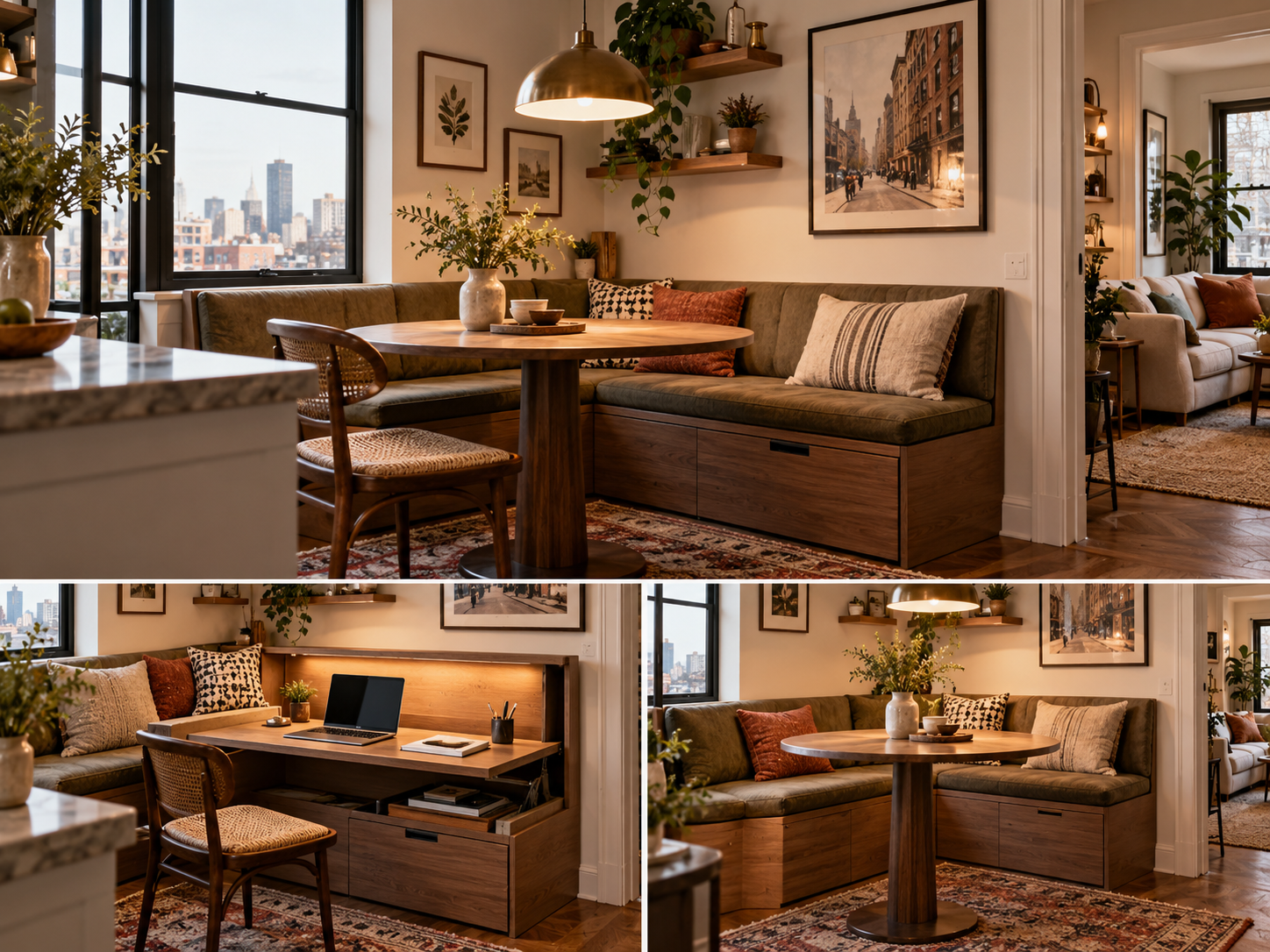
A workspace integrated into the living room looks more intentional when it repeats the room’s existing palette. Warm wood, cream accessories, chestnut details and muted green can coordinate a desk with sofa textiles. Use one framed picture or a small lamp rather than multiple decorative objects around screens. A rug can define a zone but should not create a trip hazard under chair wheels. Position storage to reduce visible paperwork from the sofa. Do not install oversized screens or shelving that overwhelms the furniture around it. A tidy work zone can still have personality without visually taking over the room.
Keep a close-down kit: Use one shallow tray for your charger, keyboard, mouse and notebook. When work ends, move the tray into the cabinet instead of relocating five loose objects.
6. Conceal Chargers and Cables for a Clutter-Free Desk
EDITORIAL PRODUCT PICK
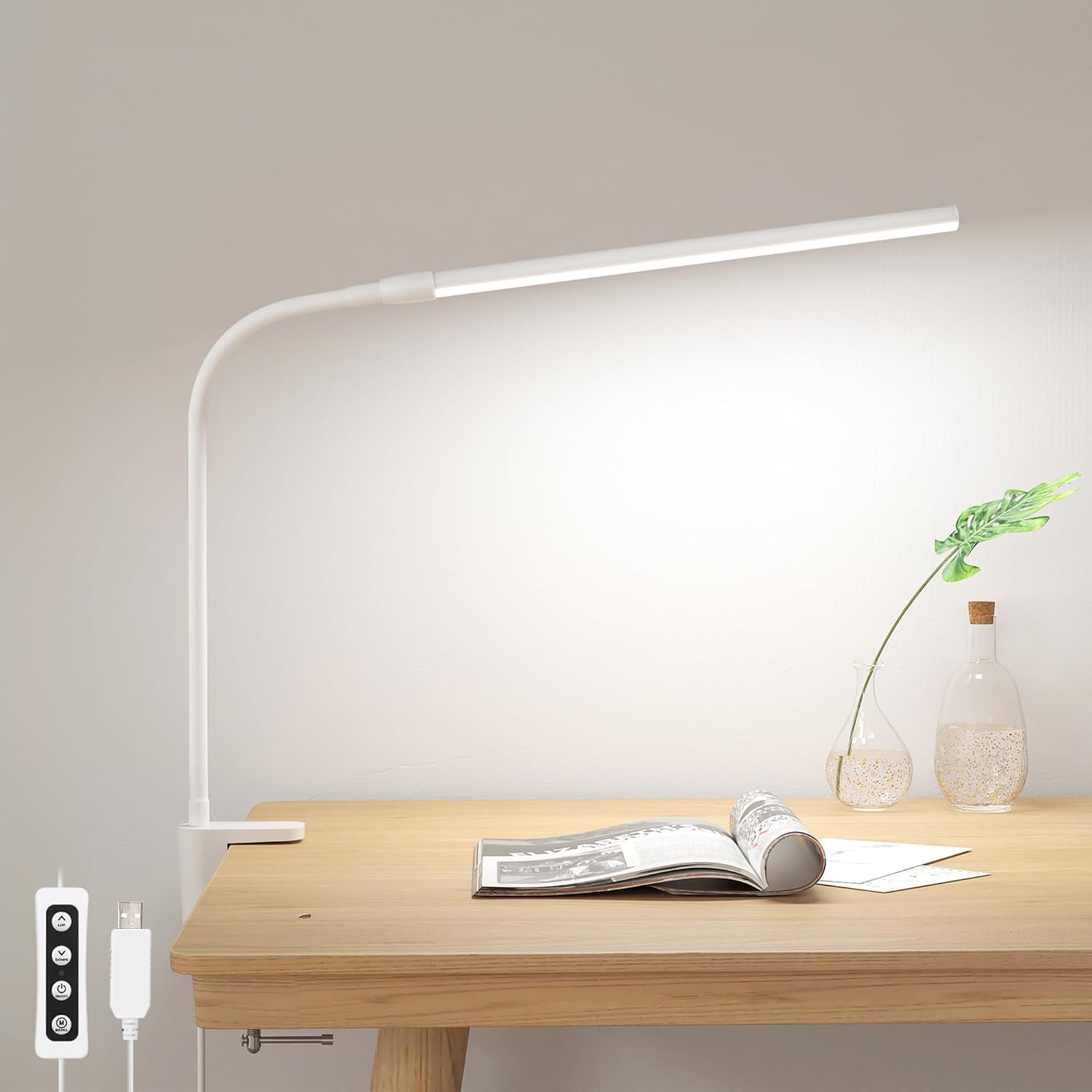
Lepro Clamp LED Desk Lamp
Compact clip-on task lighting for a desk where surface space is limited.
Even a compact laptop desk can collect chargers, adapters and loose cables. Decide where power comes from and route cables so they do not cross walking paths, become pinched beneath furniture or exceed electrical safety guidance. Use removable clips suitable for the surface and avoid tightly bundling cords that require heat dissipation. Label chargers where several devices share a drawer. Disconnect and store rarely used accessories. If a desk folds away, verify cable clearance before closing it. Our home office cable management guide offers more everyday strategies.
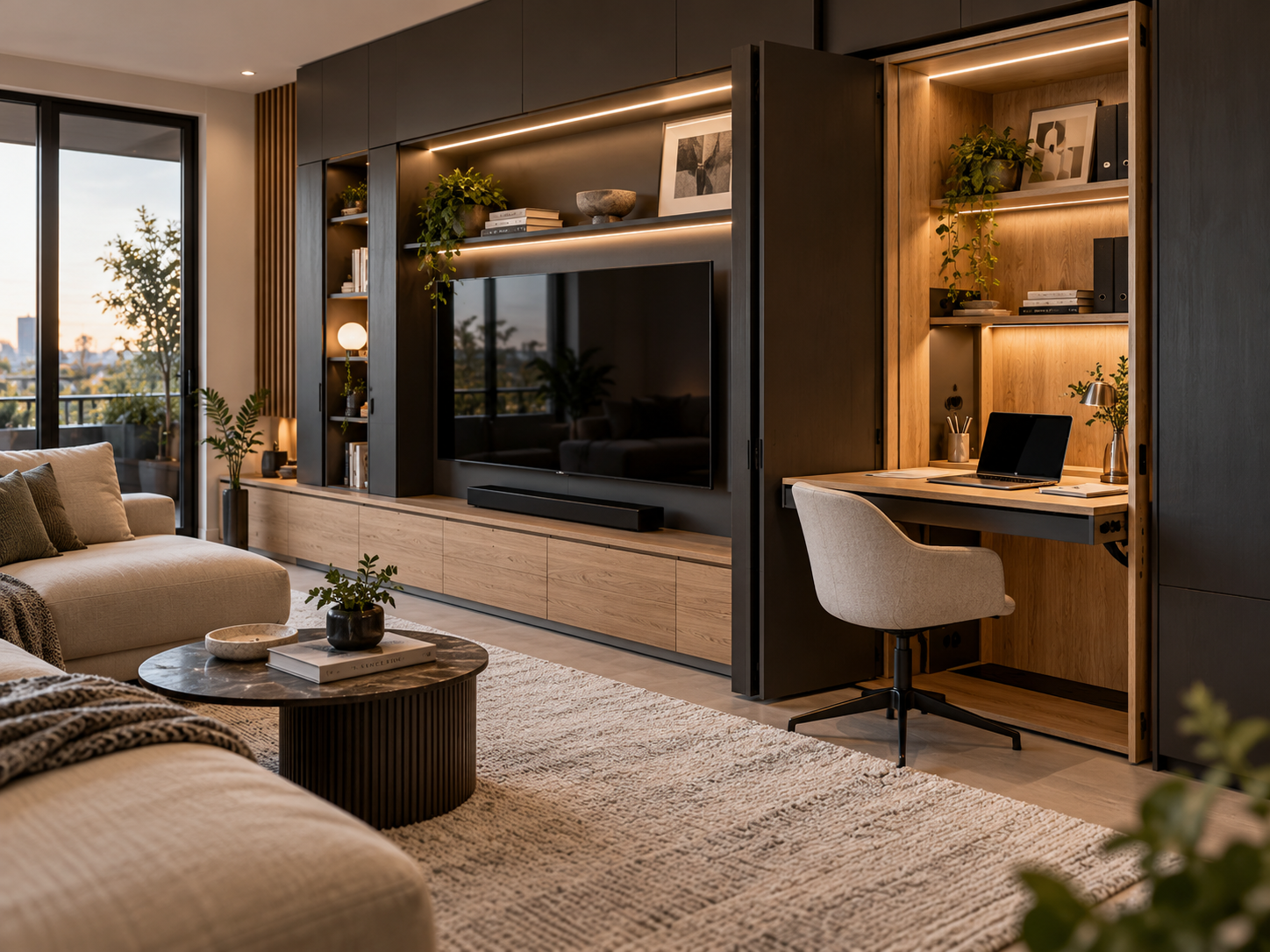
7. Build a Comfortable Compact Workstation
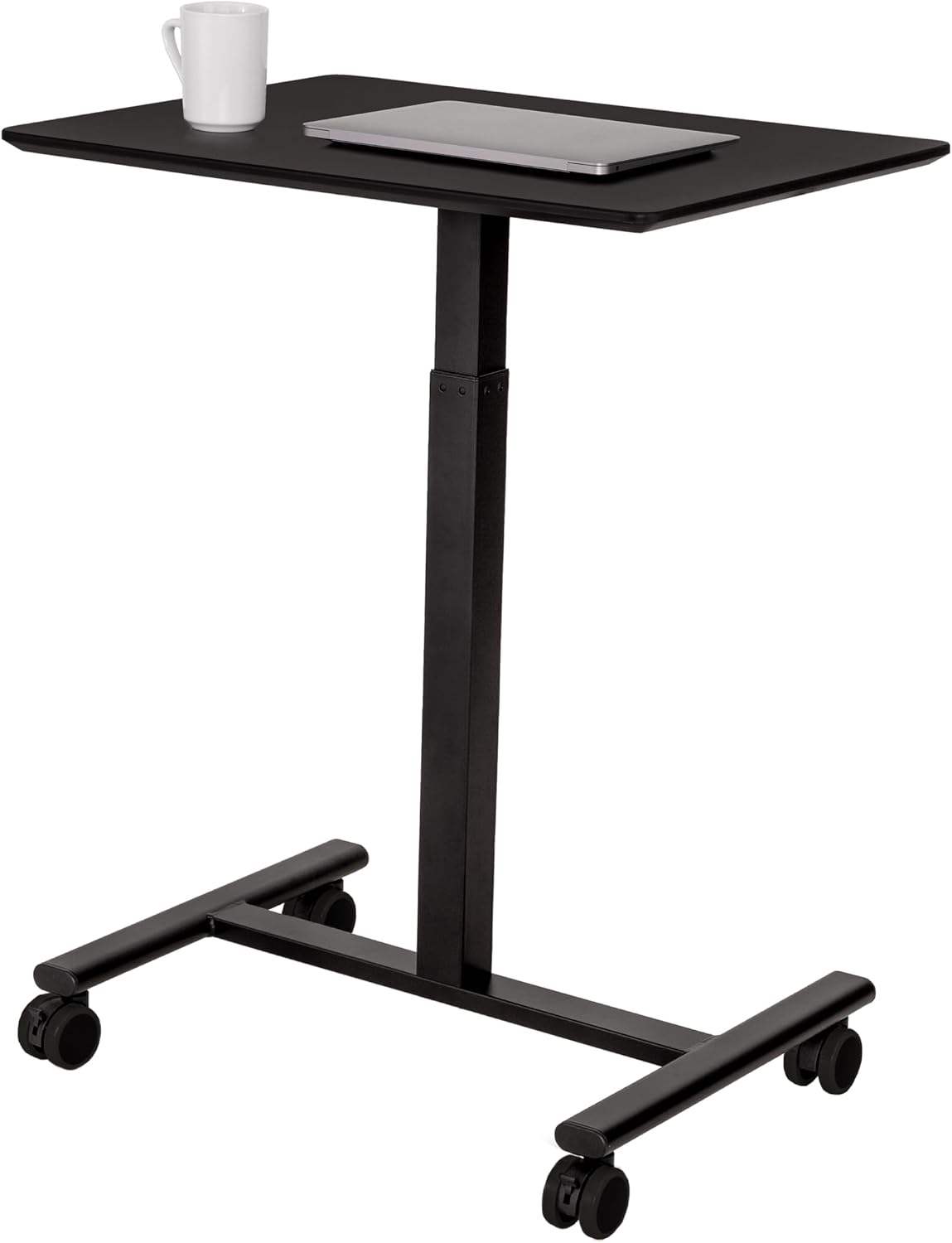
EDITORIAL PRODUCT PICK
Seville Classics AIRLIFT Pneumatic Desk Cart
Height-adjustable mobile option. Confirm the tabletop area is sufficient for the devices you use.
Working from a sofa for long periods may feel convenient but can result in an awkward neck and back position. Use a chair, table height and screen setup suited to your work duration. A raised laptop stand with a separate keyboard may improve positioning, provided the desk has enough depth. Take breaks and vary your posture. Lighting should illuminate your work without glare on the screen; a small adjustable task light may be preferable to purely decorative ambient lighting. If you work full-time from home, a permanent ergonomic workstation may be more important than concealment. Fit the design to the duration and nature of the job.
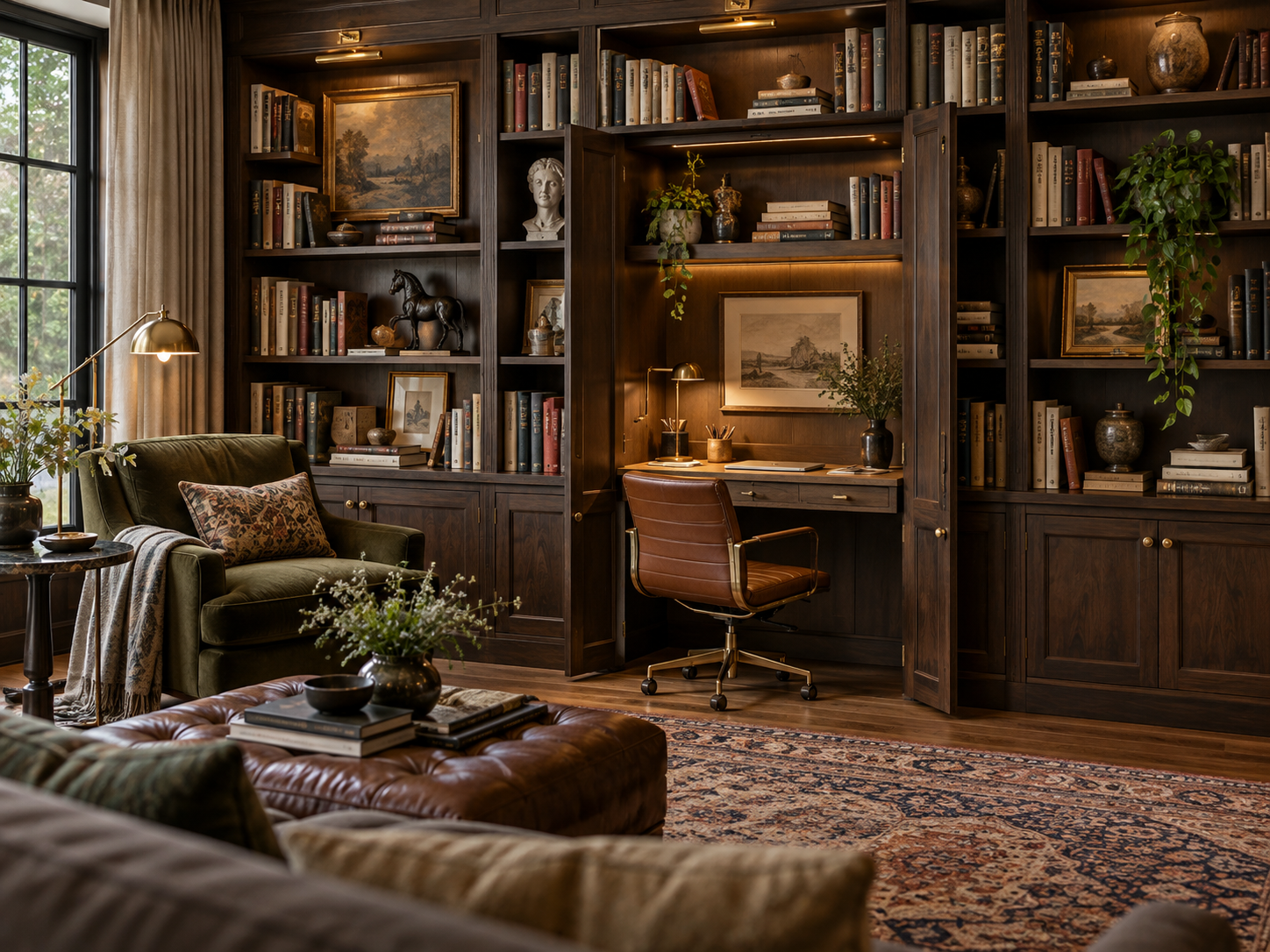
8. Use Vertical Storage Sparingly
A small wall shelf above a desk can hold files and stationery, but only when securely installed and placed where it will not create a head-level obstacle. Renters should check wall-fixing rules and load requirements. Freestanding organizers or drawers inside an existing cabinet may provide safer alternatives. Store frequently used supplies within easy reach and less common items elsewhere. Avoid stacking heavy books on narrow desk extensions. One container for paperwork is usually simpler than numerous open baskets. A small workspace feels larger when shelves and surfaces are not filled to their capacity.
9. Make Closing Time a Five-Minute Habit
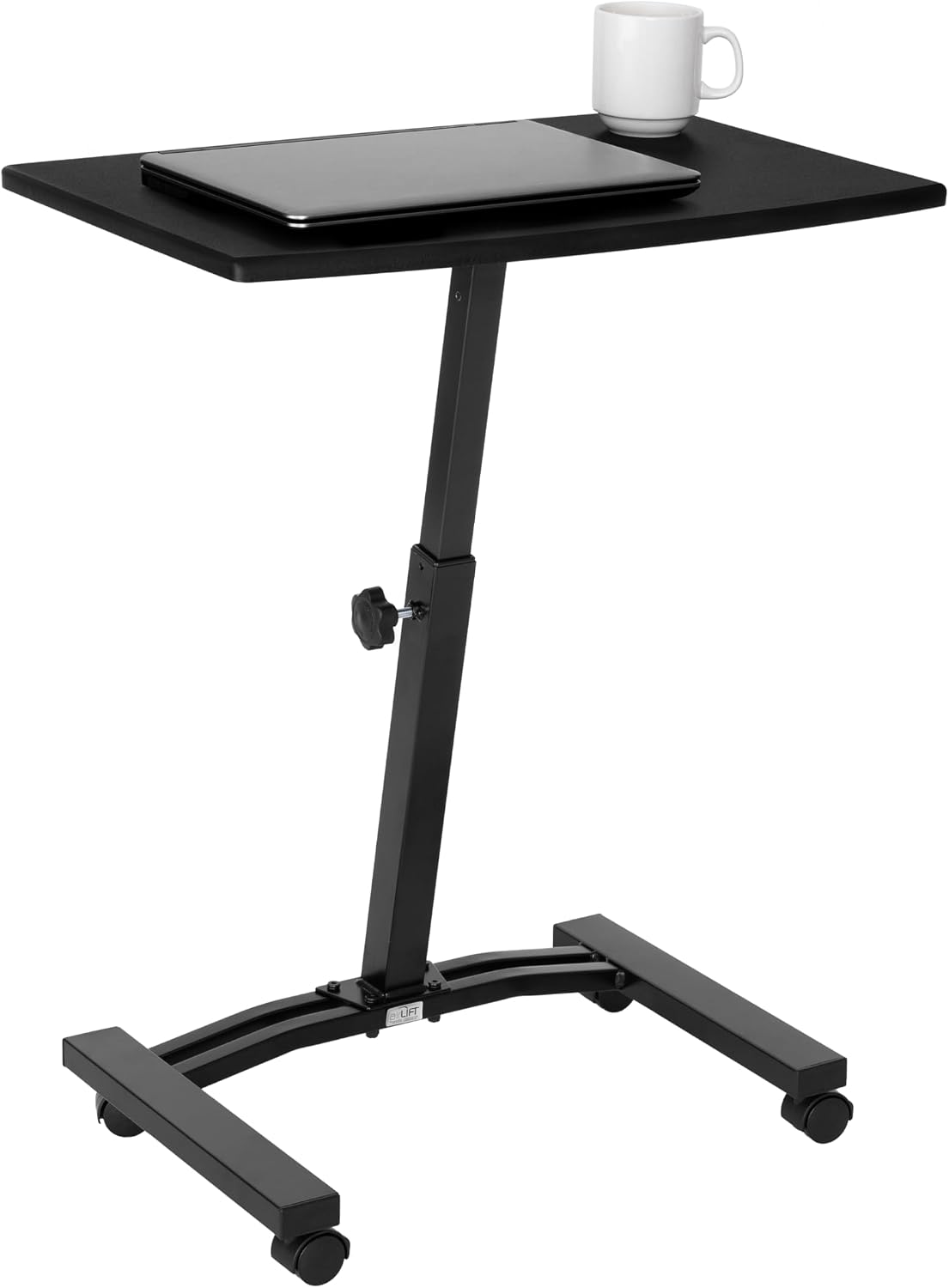
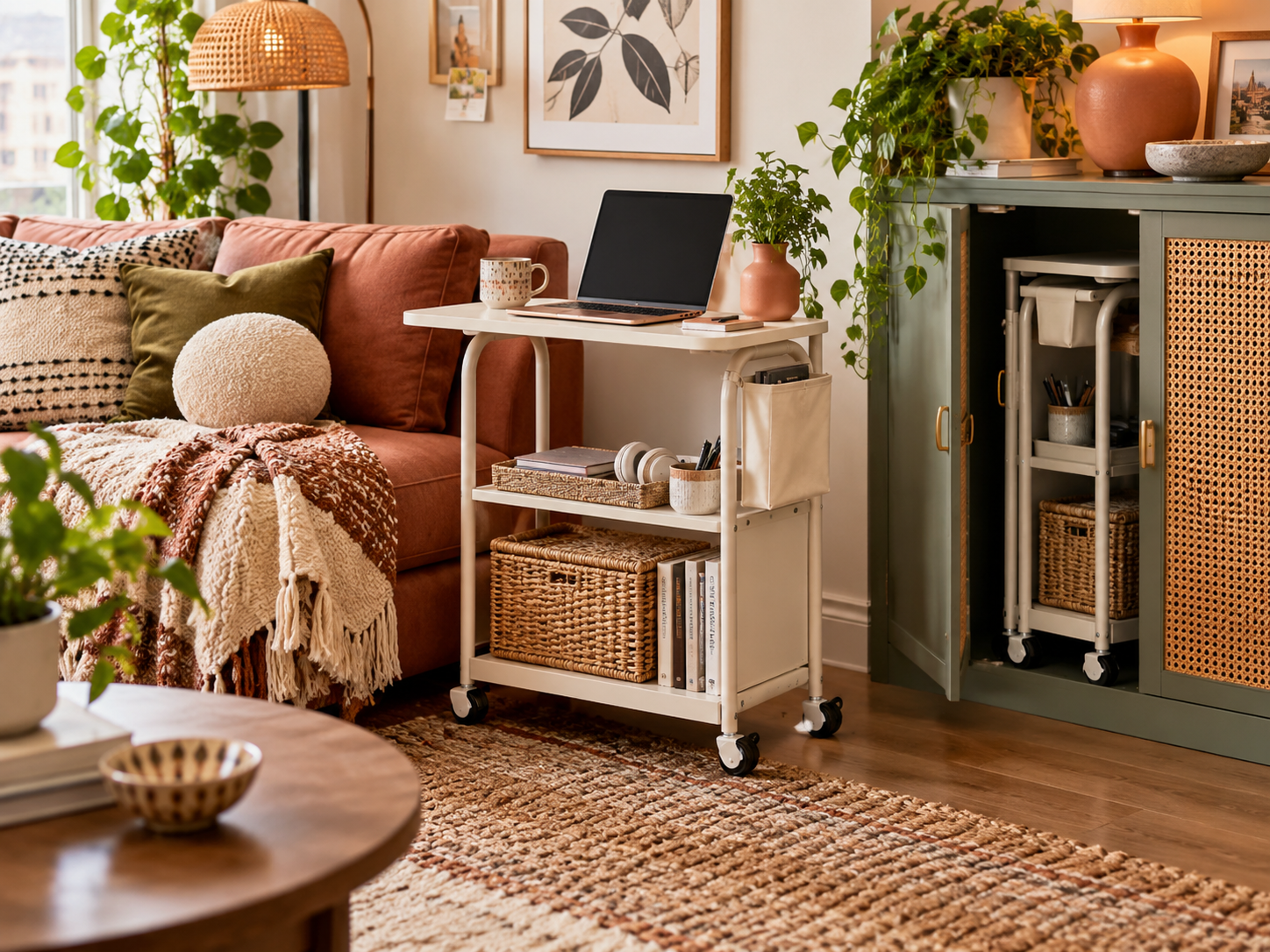
EDITORIAL PRODUCT PICK
Seville Classics AIRLIFT Mobile Laptop Desk
A mobile laptop surface that can be moved after work. Check wheel locks, stability and working height.
At the end of each work session, save your files, disconnect equipment safely, return stationery to its organizer and clear the desktop. Wipe down the surface as appropriate and put the chair back in its assigned spot. If the work area is part of a dining table, remove the entire kit so the household can use the table normally. Keep a short list of tomorrow’s priorities digitally rather than leaving loose notes everywhere. This simple routine protects the psychological boundary between working and relaxing in one room. A hidden desk should actually disappear from daily view when not needed.
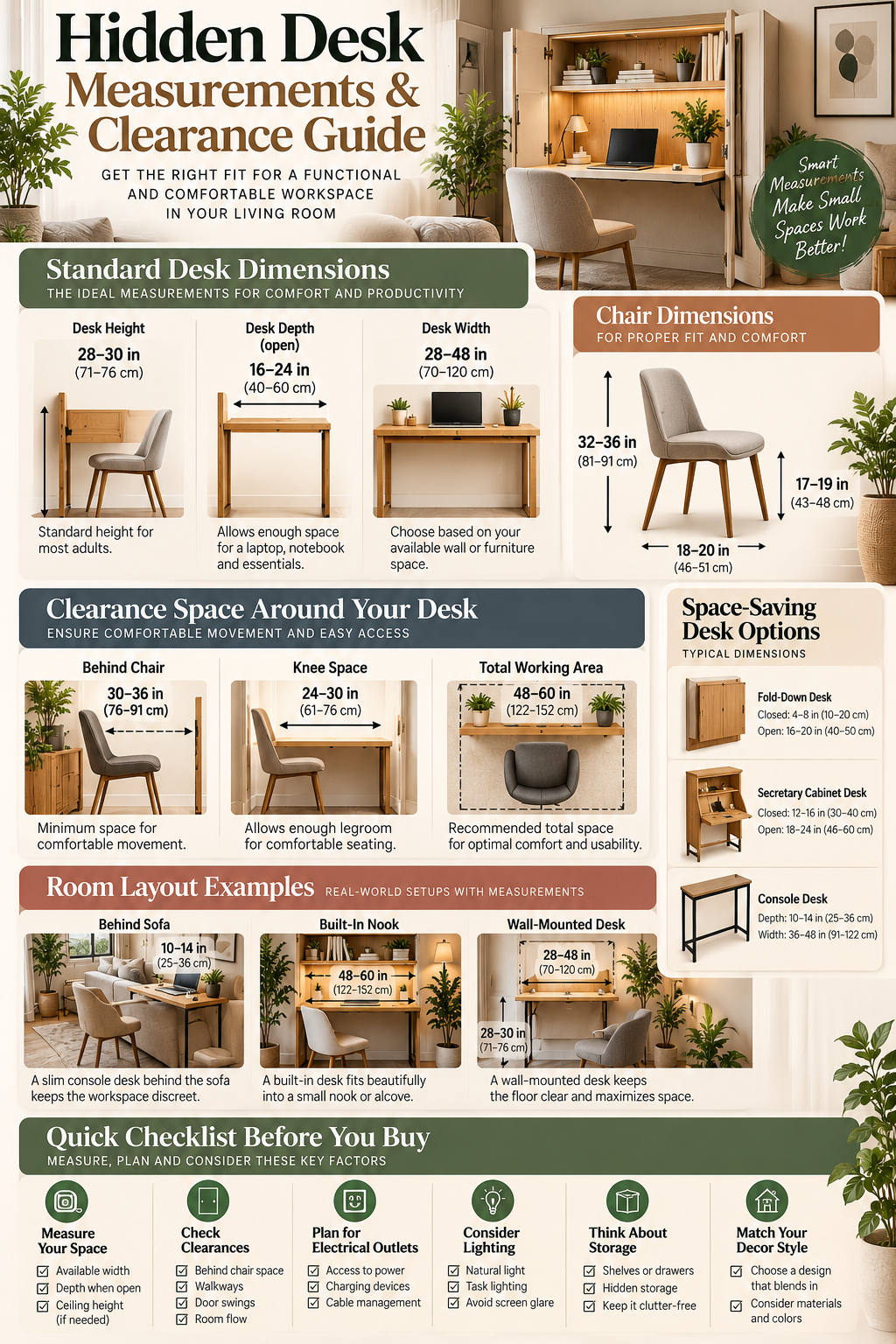
Measurements are approximate and may vary by furniture design. Always check the manufacturer’s specifications before purchasing.
Hidden Desk Buying Checklist: Measure Before You Order
Use the measurement infographic above as a planning aid, not as a substitute for product specifications. Check actual dimensions against your room and working posture before committing to furniture.
- Measure available wall width, desk depth and the space needed when doors or panels open.
- Check seated knee room and whether your chair can be pulled out without blocking a walkway.
- Confirm the manufacturer’s load capacity, hardware requirements and permitted mounting surface.
- Plan accessible outlets and cable routing without pinching or overheating cords.
- Decide where the chair, laptop and accessories will go when the workspace is closed.
- For everyday work, check screen height, lighting and external keyboard space.
10. Match Your Hidden Desk to Your Work Routine
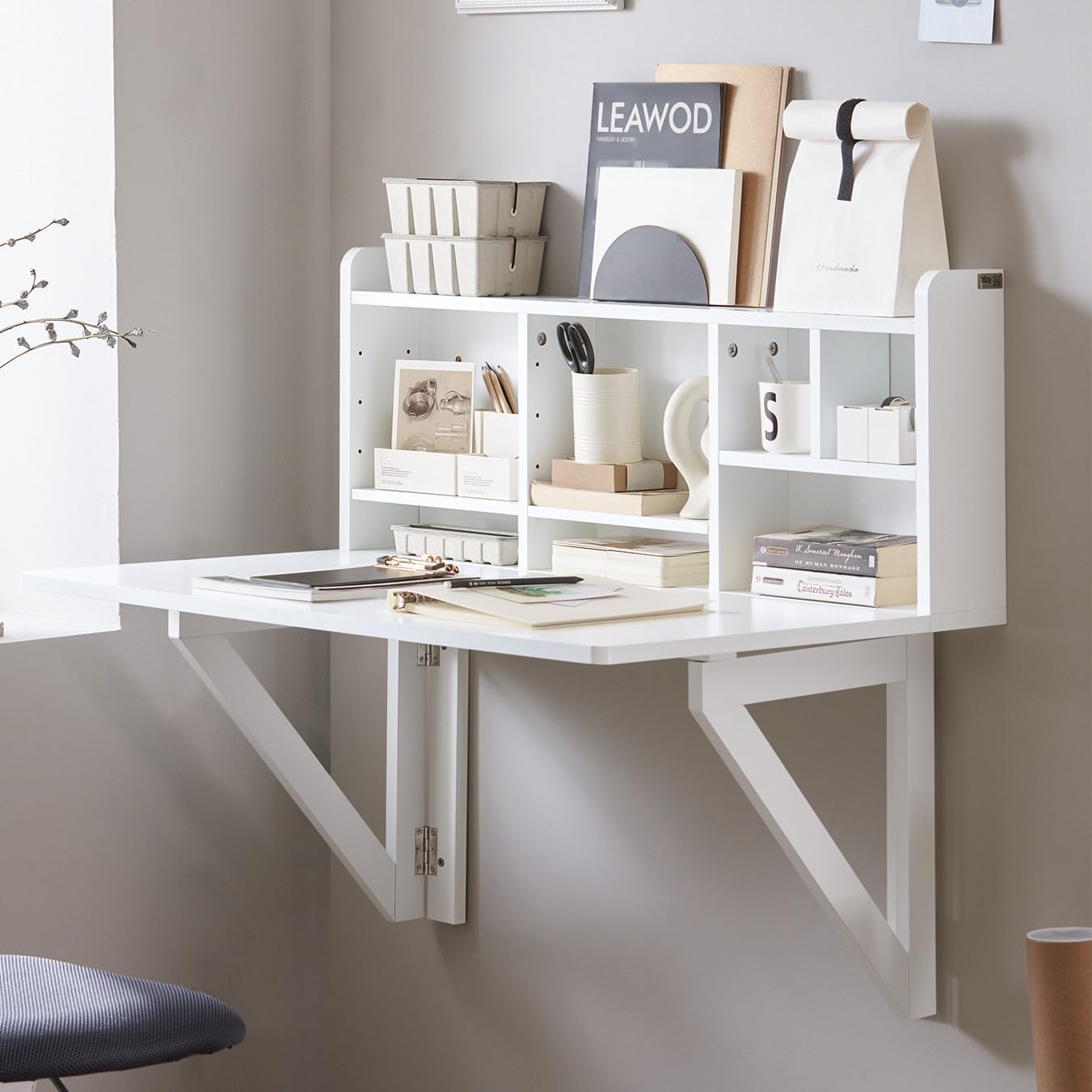
EDITORIAL PRODUCT PICK
Haotian Wall-Mounted Folding Table
Another compact wall-folding option; compare open depth and installation requirements before buying.
For occasional emails and household admin, a fold-down table or portable kit may be enough. For a few hours of work most days, consider a compact desk with suitable task lighting and proper chair support. For full-time remote work, prioritize ergonomics and practical equipment storage, even if the workspace remains visible. Compare costs, installation needs and clearances before purchasing. Explore our small home office guide for further planning and multifunctional furniture ideas for other adaptable layouts.
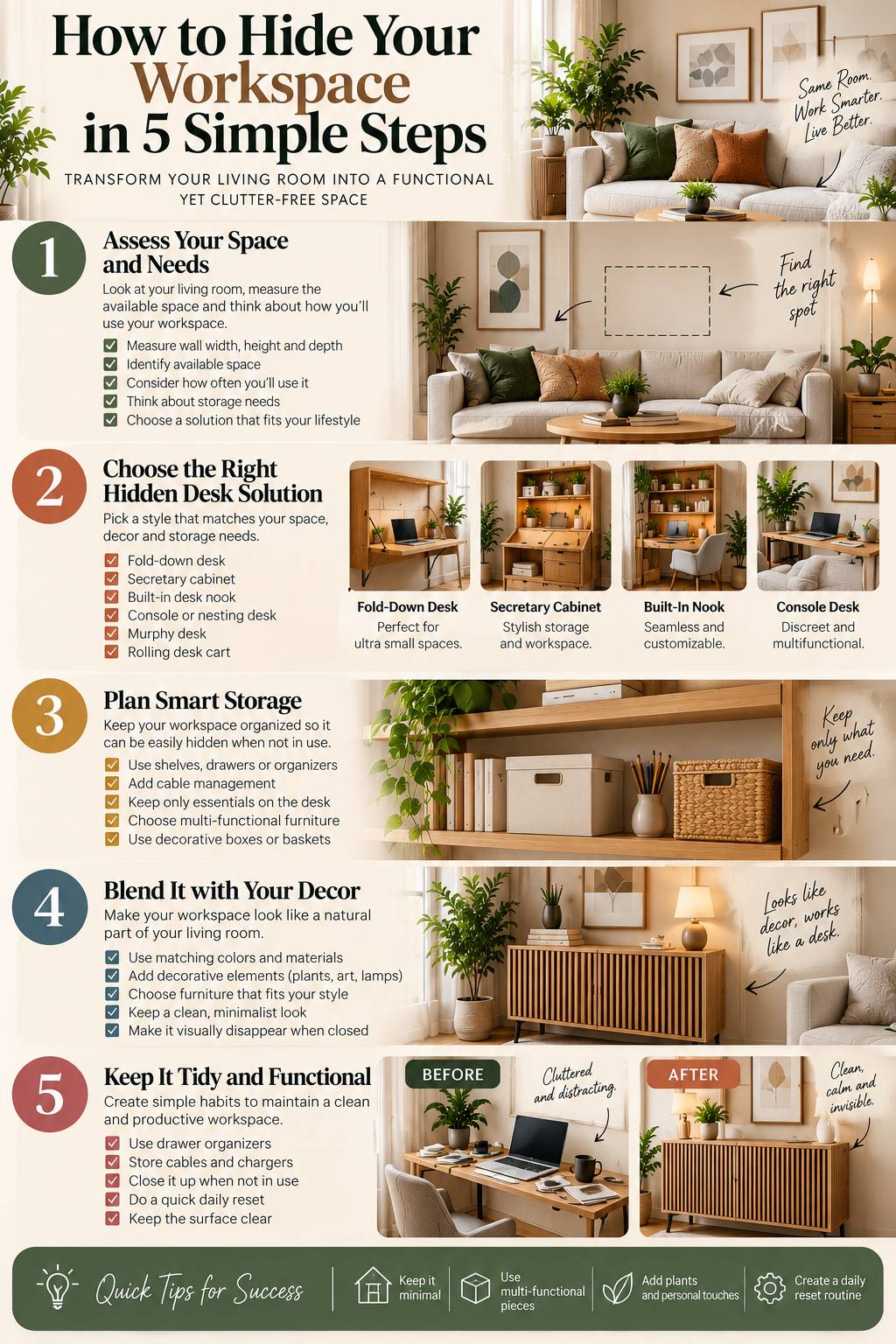
Save this checklist before shopping and explore our small home office planning guide for complementary layout and lighting ideas. You can also browse multifunctional furniture solutions when every piece has to earn its place.
Frequently Asked Questions
How can I hide a desk in a small living room?
Try a closed secretary cabinet, a suitable fold-down unit or a portable laptop kit stored inside existing furniture.
Are fold-down desks good for renters?
Only when installation is permitted and the wall and fixings can support the required loads. Portable alternatives avoid drilling.
Is a hidden desk comfortable enough for full-time remote work?
It can be, but concealment should never compromise desk stability, screen position, chair support or available legroom. If you work long hours, an ergonomic workstation may be a better choice than a very shallow fold-down desk.
What is the best hidden desk option if I cannot drill into walls?
Consider a freestanding secretary cabinet, a sturdy console with a suitable chair, or a portable laptop setup stored in a nearby cabinet. Check dimensions and stability before purchase.
How much room do I need behind the chair?
There is no universal figure: measure your chair in its actual working position, then check that people can still move through the room safely. The desk’s open footprint alone does not reveal the space you need.
Can I store a powered-on laptop inside a closed desk cabinet?
Avoid operating electronics in an enclosed, poorly ventilated compartment unless the manufacturer explicitly permits it. Allow equipment to cool and follow its ventilation and electrical safety instructions.
Can a console table work as a laptop desk?
Sometimes, but check working height, depth, stability and chair clearance before using it for long sessions.
Start with how many hours you work and the space you truly have. A carefully chosen desk and an easy closing routine can preserve both productivity and a cozy home.