
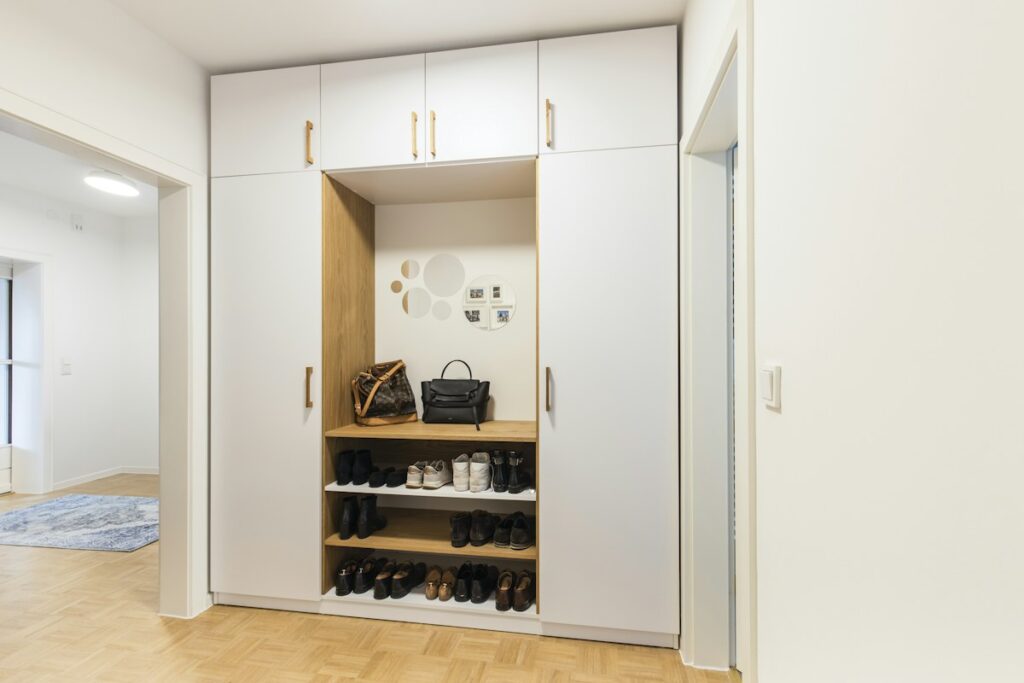
A narrow hallway can become a welcoming, hardworking entryway without bulky furniture or an expensive renovation. The key is to preserve circulation first, then use shallow storage, wall space, thoughtful lighting and a few warm details. This practical guide shows how to plan a small entryway makeover that looks polished and works on busy mornings.
Start here: Measure the clear path when your front door is fully open. Pick one home for shoes, one for coats and bags, and one for keys. If a purchase interferes with that route, it is not a space-saving solution.
In this guide
Measure Before You Make Over a Narrow Entryway
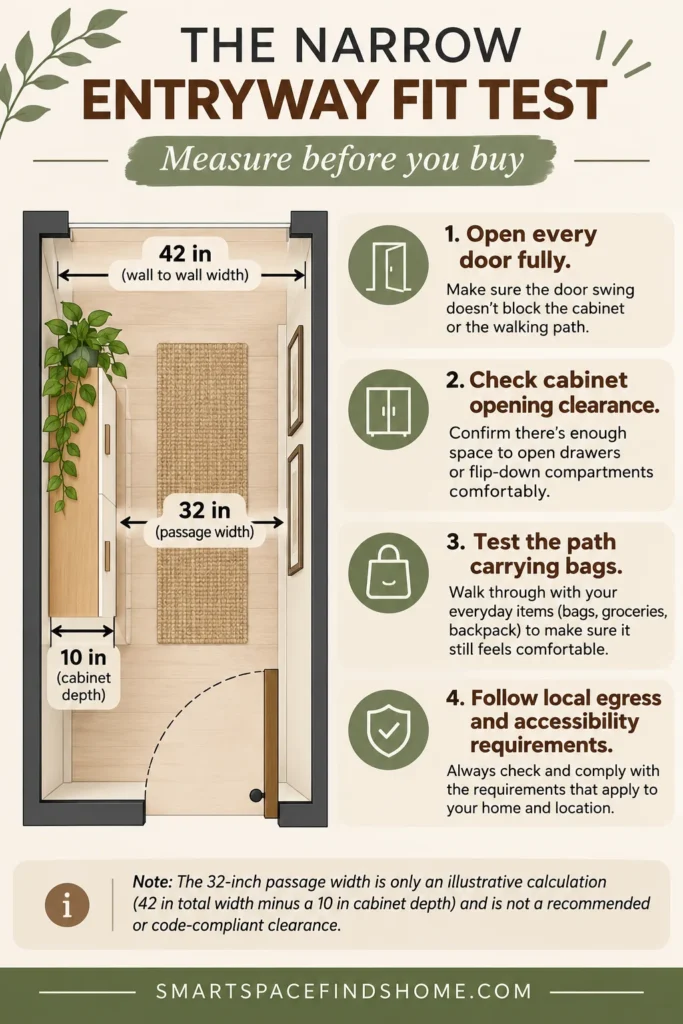
A great hallway makeover starts with a sketch, not a shopping cart. Measure wall-to-wall width at the tightest point, available wall length, baseboards, ceiling height, switch locations and the full swing of every nearby door. Include the depth of handles and the space you need to open a tilt-out shoe cabinet, drawer or closet.
Record your remaining clear passage width after furniture is added. There is no universal furniture-depth rule for every home: accessibility, building regulations and the needs of your household differ. As a useful planning example, a 42-inch-wide hallway with a 10-inch-deep cabinet leaves about 32 inches before accounting for baseboards or projections. That may still be too tight for your circumstances. Never reduce a required exit or accessible route; check applicable local rules and keep doors fully operable.
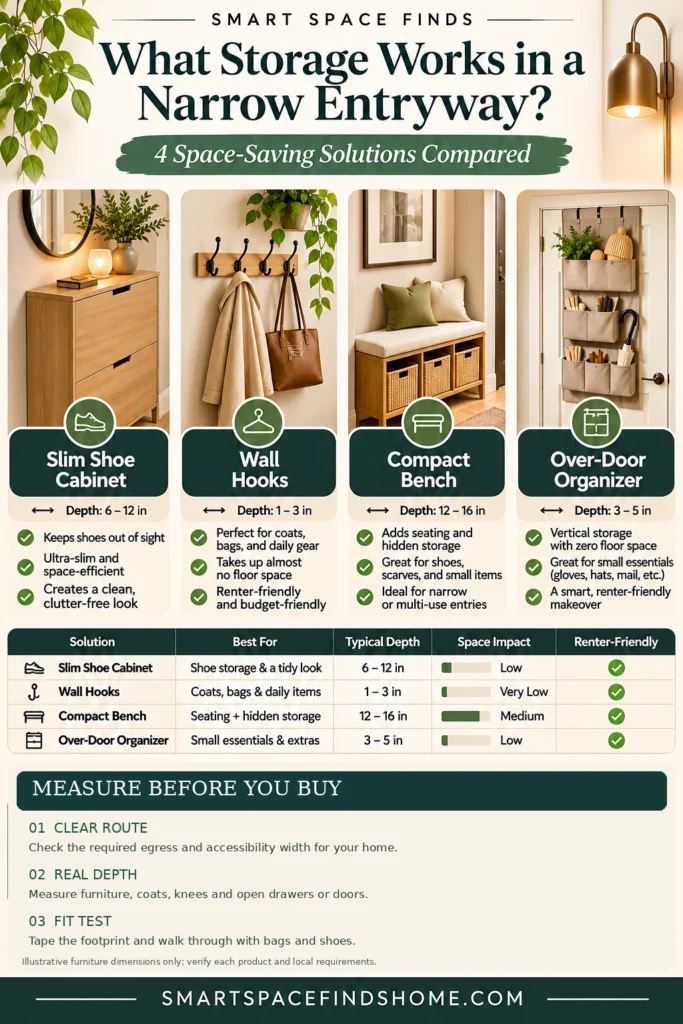
Entryway Furniture: Quick Comparison
| Solution | Best for | Critical measurement | Watch out for |
|---|---|---|---|
| Slim tilt-out shoe cabinet | Concealing everyday shoes | Cabinet depth + open-door projection | Tall shoes, anti-tip requirements |
| Wall hooks or rail | Coats and bags | Hanging item projection + usable mounting height | Wall capacity, crowded hooks |
| Small shoe bench | Putting on shoes | Seat depth + room for knees | Blocking circulation while seated |
| Narrow console or wall shelf | Keys and outgoing mail | Depth at the narrowest point | Clutter on an oversized surface |
| Over-door organizer | Rental closet storage | Door thickness and top clearance | Interference with door hardware |
| Boot tray | Rainy and snowy climates | Floor footprint with shoes inside | Standing water and trip hazards |
Three Small Entryway Layouts That Actually Work
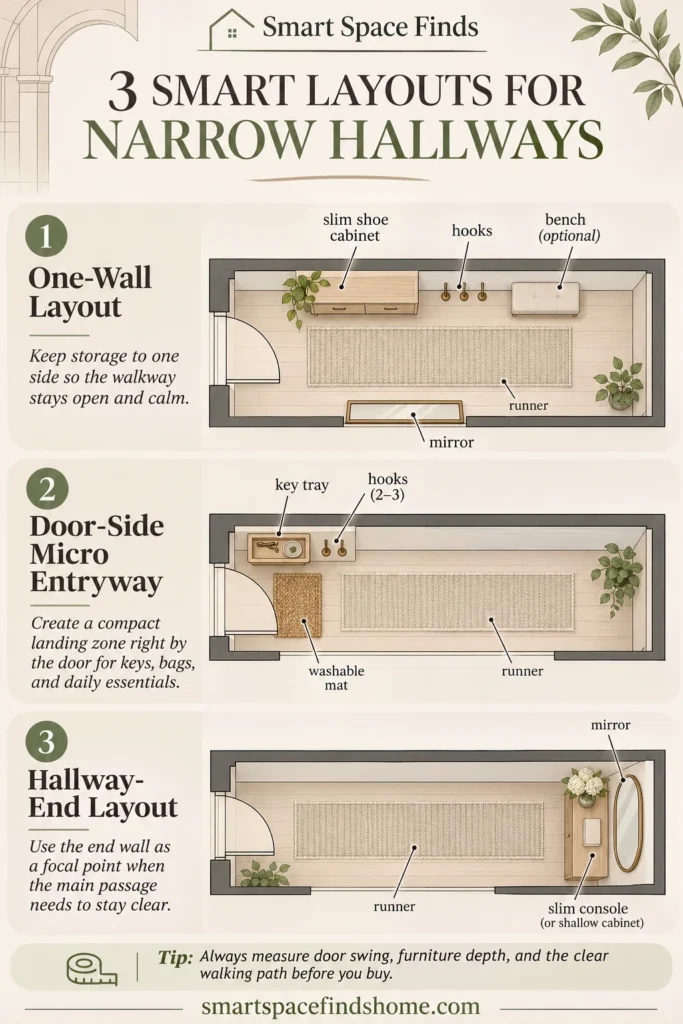
1. The One-Wall Layout
For a long, narrow passage, keep your functional pieces on one wall and the opposite wall visually quiet. Pair a shallow shoe cabinet with hooks above or beside it, provided hanging coats do not project into the walking route. A single framed print or restrained mirror across from the storage creates balance without reducing usable space.
2. The Door-Side Micro Entryway
When there is no true foyer, organize a compact drop zone immediately next to the door: a small key tray, two or three hooks and a washable mat. Use adjacent closet space for bulky coats and seasonal shoes. Do not place objects behind the door or where the door could strike them.
3. The Hallway-End Layout
In a passage with a small wall at its far end, place a shallow storage piece there only if the end is not part of a necessary turning or exit route. A mirror above a slim console can become a focal point; choose closed storage when visible clutter is the main problem. Test all door swings first.
12 Space-Saving Small Entryway Makeover Ideas
1. Replace a Deep Shoe Rack with a Slim Shoe Cabinet
A tilt-out cabinet creates a cleaner look than several rows of shoes. Compare the exterior depth, usable interior dimensions and space required to open the compartments. Large sneakers and boots may not fit. Follow manufacturer anchoring instructions and avoid freestanding tall cabinets that can tip.
For additional storage configurations, see our small entryway shoe storage guide.
2. Install a Short, Well-Spaced Hook Rail
A few sturdy wall hooks often work better than a full coat tree. Space them for bulky winter coats rather than displaying a dense row of hooks. Keep frequently used bags lower, where appropriate, and avoid overhead objects that could fall. Renters should use only permitted hardware and understand that adhesive hooks have surface and weight limitations.
3. Choose a Bench Only if Sitting Fits
A compact bench is valuable for families and people who prefer to sit while putting on shoes. However, a bench that fits when empty can still block the hallway when occupied. Test the seated footprint, seat height, weight capacity and the access to any storage underneath. In extremely narrow halls, skip the bench entirely.
4. Give Keys a Single, Consistent Landing Spot
Use one shallow tray, small wall pocket or shelf near the entrance for keys and everyday essentials. Keep mail from turning the tray into permanent storage with a weekly reset. Avoid stacking organizers just because they fit the wall.
5. Put Seasonal Items Above Eye Level—Safely
An existing coat closet can hold labeled baskets for scarves, gloves and off-season accessories on an upper shelf. Keep heavy items lower and make sure nothing can fall into the walking path. Avoid mounting loaded shelves over the entrance without suitable wall fixings.
6. Use the Inside of a Closet Door
A lightweight over-door organizer can store dog leads, gloves, reusable shopping bags or small accessories. Confirm that the door closes completely and that hooks do not interfere with hinges, seals or fire-rated components. This is often better than covering an already narrow hallway wall with more storage.
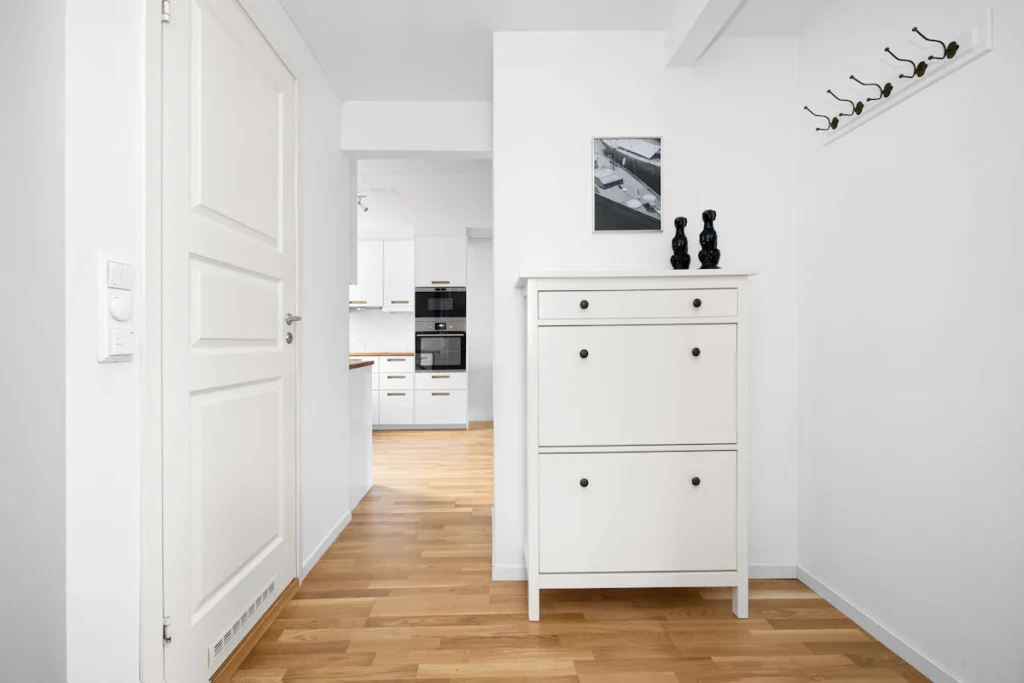
7. Hide Visual Clutter in One Closed Unit
In a tiny entryway, a single properly sized cabinet can make the entire area feel calmer. Closed fronts work particularly well in Scandinavian and warm minimalist interiors. Allow wet shoes to dry before enclosing them and avoid overfilling compartments.
8. Create a Wet-Weather Station
Place a washable, raised-edge boot tray where it will not create a trip hazard. Add a mat that catches grit and water, choose a low-maintenance surface, and clean moisture promptly. Explore our winter entryway ideas for wet shoes and coats for seasonal routines.
9. Upgrade the Hallway Rug
A narrow runner can visually lengthen a corridor, but the fit matters more than the pattern. Keep door clearance, rug thickness, curl-resistant edges and appropriate nonslip backing in mind. Avoid using a runner to cover an uneven threshold or other hazard. Low-contrast patterns can disguise everyday dirt without adding visual noise.
10. Reflect Light with a Thoughtfully Placed Mirror
Place a mirror where it reflects daylight or an attractive adjacent wall rather than a pile of coats. Use appropriate mounting hardware, especially in high-traffic family areas. An elongated oval or simple rectangular frame can make a short entryway feel taller; the mirror should not project dangerously into circulation space.
11. Layer Warm Lighting
Bright enough to find your keys but not harsh: that is the goal. Consider a well-positioned ceiling fixture, an existing wall sconce or suitable low-profile lighting. Choose warm-white light for a welcoming atmosphere and keep cords out of the walking path. Renters should confirm permissions before changing wired fittings.
12. Edit Before You Decorate
Remove duplicate shoes, outdated mail and bags that never get used. Keep just one or two decorative accents—perhaps a small artwork and a narrow vase on a stable surface. Empty space is part of the design. For reversible organization ideas, see our renter-friendly storage hacks.
Three Premium Design Directions for Small Hallways
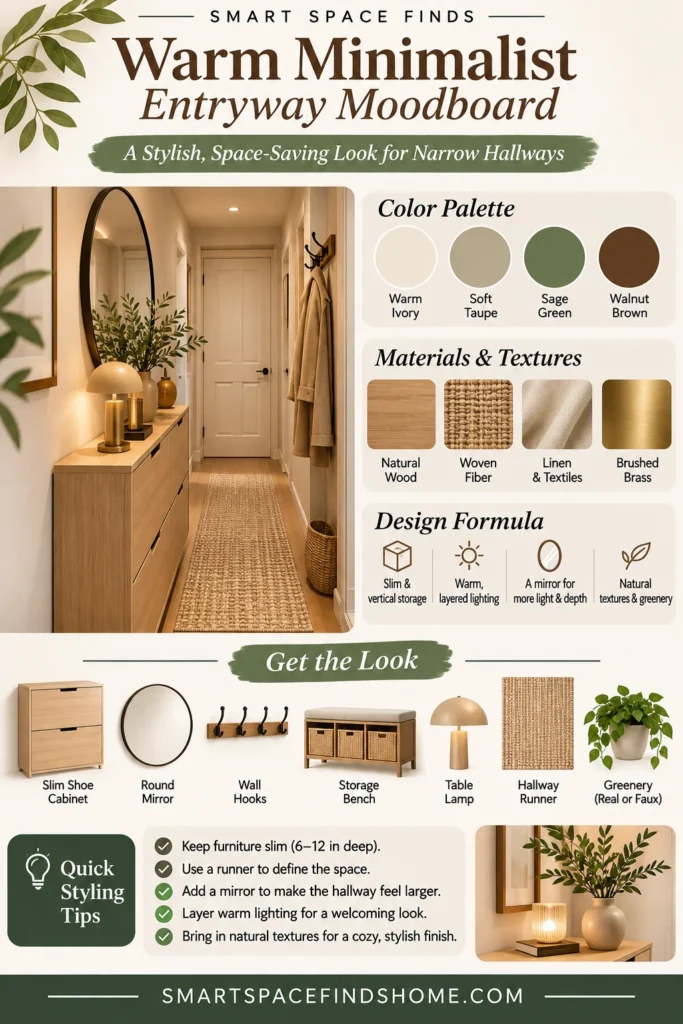
Scandinavian: Pale Oak, Soft White and Black Details
Combine light walls, a shallow pale-wood cabinet, a simple round mirror and a small number of matte-black hooks. Add texture with a washable neutral runner. This palette feels light without requiring stark all-white surfaces.
Contemporary: Architectural Lines and Concealed Storage
Choose flat-front storage, a narrow rectangular mirror and one statement light fixture where permitted. Limit finishes to two or three: warm white, charcoal and a restrained wood tone create a cohesive impression. Repeat a finish rather than adding more accessories.
Warm Minimalist: Cream, Walnut and Natural Texture
Use warm cream walls, walnut-toned wood, an earthy runner and a single organic-shaped mirror. Keep materials tactile but practical: anything that touches dirty shoes or wet coats should be easy to clean. A visually quiet wall can make the narrowest hallway look more intentional.
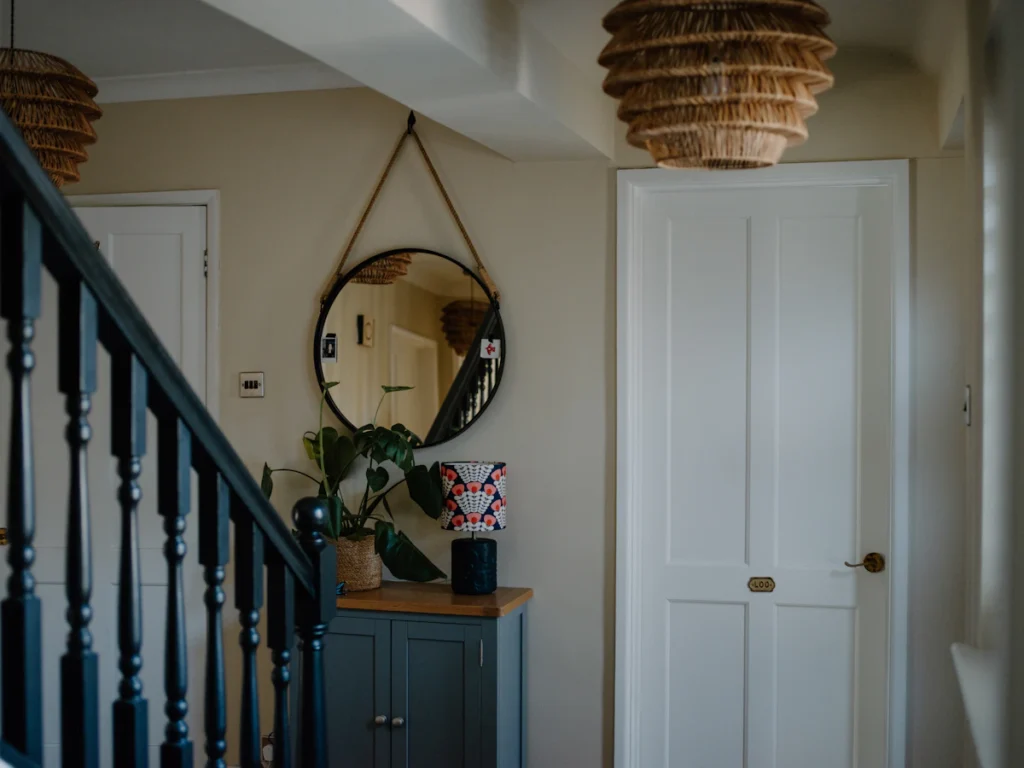
Renter-Friendly Narrow Entryway Makeovers
Start with a freestanding low shoe rack, removable tray, washable runner and existing lighting. Choose approved removable hooks only on compatible surfaces and within stated limits; even removable adhesives can pull paint or plaster. Avoid drilling into unknown wiring or plumbing. Check the lease and seek permission for shelves, wired fixtures and paint. Keep safety and accessibility requirements above styling preferences.
Small Entryway Makeover Budget: Where to Spend
Prices vary by retailer and location; these are illustrative project allowances, not current product quotes. The lowest-cost makeover often comes from clearing the entryway, relocating extra shoes and improving the existing layout before buying anything.
| Budget level | Focus | Possible upgrades |
|---|---|---|
| Under $50 | Organize and refresh | Declutter, boot tray, small catch-all, washable mat |
| $50–$150 | One useful upgrade | Shallow rack or approved hooks plus a runner |
| $150–$350 | Coordinated makeover | Better-fitting cabinet, mirror and lighting accessories |
| $350+ | Durable furniture investment | Quality storage sized for your household; installation where needed |
Buying order: fix the biggest daily problem first, verify measurements, then add lighting and visual finishing touches. Never buy three organizers to solve a problem that one properly sized unit can handle.
The 30-Minute Entryway Reset
- Minutes 0–5: remove everything from the floor and sort by household member.
- Minutes 5–10: relocate off-season footwear and unused outerwear.
- Minutes 10–15: measure clearances and sketch your one-wall or door-side zone.
- Minutes 15–20: clean the floor, existing hooks and shelf surfaces.
- Minutes 20–25: return only daily-use essentials to defined positions.
- Minutes 25–30: photograph the result and note the one actual storage gap worth buying for.
Common Narrow Hallway Decorating Mistakes
- Buying furniture before measuring: even shallow products need opening clearance.
- Choosing too many hooks: overloaded walls become visual clutter and create protrusions.
- Adding a bench to every entryway: seating is only useful if you can sit without blocking the route.
- Ignoring wet footwear: moisture damages finishes and makes enclosed storage unpleasant.
- Using oversized mirrors or rugs: scale and safety matter more than a dramatic look.
- Neglecting lighting: a well-organized space still feels cramped when it is dim.
Small Entryway Makeover FAQ
How do I make a very narrow entryway look wider?
Keep one side visually quiet, use shallow storage, match larger furniture tones to the wall, and place a mirror where it reflects useful light. Reduce floor clutter before adding decor.
What is the best storage for an entryway with almost no floor space?
A small number of properly mounted hooks or a suitable closet-door organizer can keep essentials off the floor. A narrow rack can work when there is enough remaining passage width.
Is a slim shoe cabinet better than a bench?
Choose a slim cabinet when hiding shoes is the priority and the cabinet can open safely. Choose a bench when seated shoe changes are important and the seated footprint fits your route. Neither is universally better.
Can I redesign an apartment entryway without drilling?
Yes. Decluttering, a washable rug, an appropriately sized freestanding organizer and removable accessories can make a big difference. Follow lease rules and adhesive weight limits.
What colors work best in a small dark hallway?
Warm white, soft greige, pale wood and muted sage can feel inviting. Lighter colors help distribute available light, but good lighting placement and reduced clutter matter more than any one paint shade.
What should I buy first on a tight budget?
Buy only what solves the most persistent daily problem after decluttering and measuring. For many households that is a washable mat, compact shoe storage or a reliable key station—not decorative accessories.
Final takeaway: The most successful narrow entryway makeover is not the one with the most furniture. It is the one that keeps the route clear, gives everyday essentials an obvious home, and feels comfortable every time you walk in.
Shop Small Entryway Storage & Organization Ideas
These products represent different storage configurations for narrow entryways. Measure available depth and door clearance before choosing. Availability, current price and seller details can change; check each Amazon listing before purchasing.
Amazon Associate disclosure: As an Amazon Associate, we earn from qualifying purchases.
Affiliate disclosure: As an Amazon Associate, we earn from qualifying purchases. This guide may contain affiliate links; if you purchase through them, we may earn a commission at no additional cost to you. We have not independently tested products unless explicitly stated. Always confirm sizes, mounting requirements and current seller details before purchase.