
Affiliate disclosure: As an Amazon Associate, Smart Space Finds earns from qualifying purchases. Some links in this guide are affiliate links, which may earn us a commission at no additional cost to you.
Rain, snow and bulky winter clothing can overwhelm a small apartment entrance. The right winter entryway setup catches moisture at the door, protects the floor and lets coats dry without obstructing the hallway.
Define the Wet Zone
Watch where shoes and shopping bags naturally land when somebody enters from the rain. The ideal drip zone is immediately beside the door, but not across its swing or the exit path. Measure the floor space with the door fully open and mark a proposed tray or bench using removable tape. In a narrow hallway, a single boot tray and secure coat hooks may be more practical than a full storage unit. Keep the arrangement small enough for two people to pass safely.
Choose a Raised-Lip Boot Tray
WINTER ENTRYWAY FIND
Ottomanson Raised-Edge Boot Tray
A washable tray option for everyday wet footwear.
Waterproof trays collect rainwater, melted snow and road grit before these spread across the floor. Choose a washable model with a raised edge and enough room for the shoes used that day. Empty standing water frequently so footwear does not remain submerged. A removable ribbed insert can elevate wet soles, provided the entire unit is easy to wash. Avoid placing a heavy tray where residents will trip on it. When boots are dry, move spare pairs to another appropriate storage location.
Use a Washable Entrance Mat
WINTER ENTRYWAY FIND
Muddy Mat Chenille Indoor Doormat
An absorbent entrance mat for damp footprints.
An absorbent mat catches moisture during the first few steps, while a separate tray holds wet footwear. Check that the mat has a backing compatible with your flooring and does not curl or block the door. Clean it according to its label, and examine the floor underneath for trapped water or discoloration. Salt and grit should be swept or vacuumed before washing so the surface is not scratched. A practical mat must be functional under wet conditions, not simply attractive in an entryway photograph.
Give Coats Enough Breathing Room
WINTER ENTRYWAY FIND
Umbra Flip 5-Hook Coat Rack
A compact wall-mounted option for frequently used coats.

Hang frequently worn coats where they are accessible without blocking the door. Do not pack saturated jackets immediately into a closed wardrobe; give them space and ventilation to dry. Follow the garment’s care label and keep outerwear away from radiators and other heat sources. Heavy coats require hooks or rails rated for their actual weight. Renters should check wall-fixing permissions and avoid hanging a stack of wet jackets on lightweight adhesive fittings. Store less-used coats away from the prime entrance space.
A Basket for Gloves and Scarves
WINTER ENTRYWAY FIND
Amazon Basics Wire Storage Baskets
Organize dry gloves, hats and scarves by category.
Small accessories tend to scatter through the hall because each has a different size and drying requirement. Give each person one labeled basket or fabric pouch for dry gloves, scarves and hats. A shallow dish nearby can hold keys and travel cards, but should not become a collection of wet fabric. Separate damp gloves until fully dry, then return them to their basket. Check pockets for tissues and receipts during the weekly reset. Avoid buying a huge organizer for a few small accessories.
Dry Boots Without Damage
WINTER ENTRYWAY FIND
PEET Original Boot Dryer
A dedicated boot dryer for damp winter footwear; follow the shoe manufacturer’s care instructions.
Different materials need different care: leather, suede, fabric and rubber do not tolerate identical cleaning and drying methods. Remove grit gently, follow footwear instructions and let shoes dry away from direct high heat. Never seal wet boots inside an unventilated cabinet. If a pair has absorbed a large amount of water, allow sufficient drying time before wearing again. A compact apartment benefits from keeping only the active pairs in the landing zone and rotating dry footwear into a closet, not from displaying every shoe in the hallway.
Create a Safe Umbrella Station
WINTER ENTRYWAY FIND
Mind Reader Mesh Umbrella Stand
A designated place for umbrellas near the doorway.
A narrow, stable umbrella stand with a removable water catchment can prevent drips on the floor. Put it somewhere the handles will not snag jackets or reduce the walking path. Allow umbrellas to dry appropriately after use and empty collected water. A wall-side container can be sufficient for one or two umbrellas; a decorative tall stand may be unnecessary. Store walking accessories, pet leads and similar items in separate small categories if they are used frequently, rather than adding them to the umbrella container.
Protect Wood and Laminate Floors
WINTER ENTRYWAY FIND
Ottomanson Heavy-Duty Rubber Mat
A rubber mat option for protecting high-traffic entryway floors.
Repeated wet footwear and salt residue can stain or damage vulnerable flooring and seams. Wipe pooled water promptly and clean with products approved for the surface. A tray should catch water before it reaches the skirting boards, while a mat takes care of damp footprints. Check underneath both items, especially after heavy rain. If the threshold is consistently damp even when nobody enters, investigate the seal or ventilation instead of covering the issue. Seasonal storage should not hide long-term moisture problems in a rented home.
Do Not Block the Escape Route
Storage is a failure if it prevents a door opening fully or narrows an essential passage. Test the hall with somebody putting on boots while another person walks through with groceries. Keep building corridors clear according to local rules, and avoid storing shoes outside the apartment entrance. Storage benches should not obstruct routes when their lids open. Use stable furniture and protect children from tip-over hazards. Practical winter organization places safety and movement ahead of decorative symmetry.
A No-Drill Option for Renters
WINTER ENTRYWAY FIND
SONGMICS Bamboo Shoe Bench — Alternative
Another seating and shoe-storage layout to compare by dimensions.
A low tray, a sturdy freestanding coat stand and a small accessories basket can create an effective entrance without drilling. Check the stand’s stability when several heavy coats hang on one side. An over-door rack may be useful only if it allows the door to close and is rated for the weight. Protect floor surfaces beneath furniture feet and photograph the original setup. The arrangement should be straightforward to disassemble when you move, without damaging paint, doors or flooring.

Plan for Two People Arriving Together
A compact entry should handle at least two pairs of shoes and two winter coats without creating a pile. Place boots in the tray first, then hang outerwear in a spot that does not interrupt the second person’s movement. Keep glove baskets at an accessible height and reserve a surface for bags if space allows. If a bench consumes too much floor area, skip it in favor of a clear threshold and a slim organizer. Test the setup with real coats rather than empty hooks.
Five-Minute Evening Reset
Before bedtime, empty any water from the boot tray and wipe the edge where it contacts the floor. Separate damp outerwear, return dry accessories to their basket and remove mud or salt from the entrance mat. Once shoes have dried, move spare pairs away from the landing zone. Weekly, clean the tray thoroughly and inspect underneath for damp patches. A simple routine prevents the corridor from filling with clutter during the wettest months and makes the entrance welcoming the next morning.
Care for Seasonal Accessories
Before packing away winter gear, wash scarves and gloves according to their labels and check shoes for damage. Dry everything completely before placing it into storage, especially leather boots and insulated fabric accessories. Brush salt deposits gently using methods appropriate to the material. Repair loose hooks or unstable racks before the next winter begins. A small labeled storage container can hold seasonal accessories without mixing them with everyday coats. This end-of-season review makes it easier to start the following autumn without purchasing duplicate items.
The practical winter edit
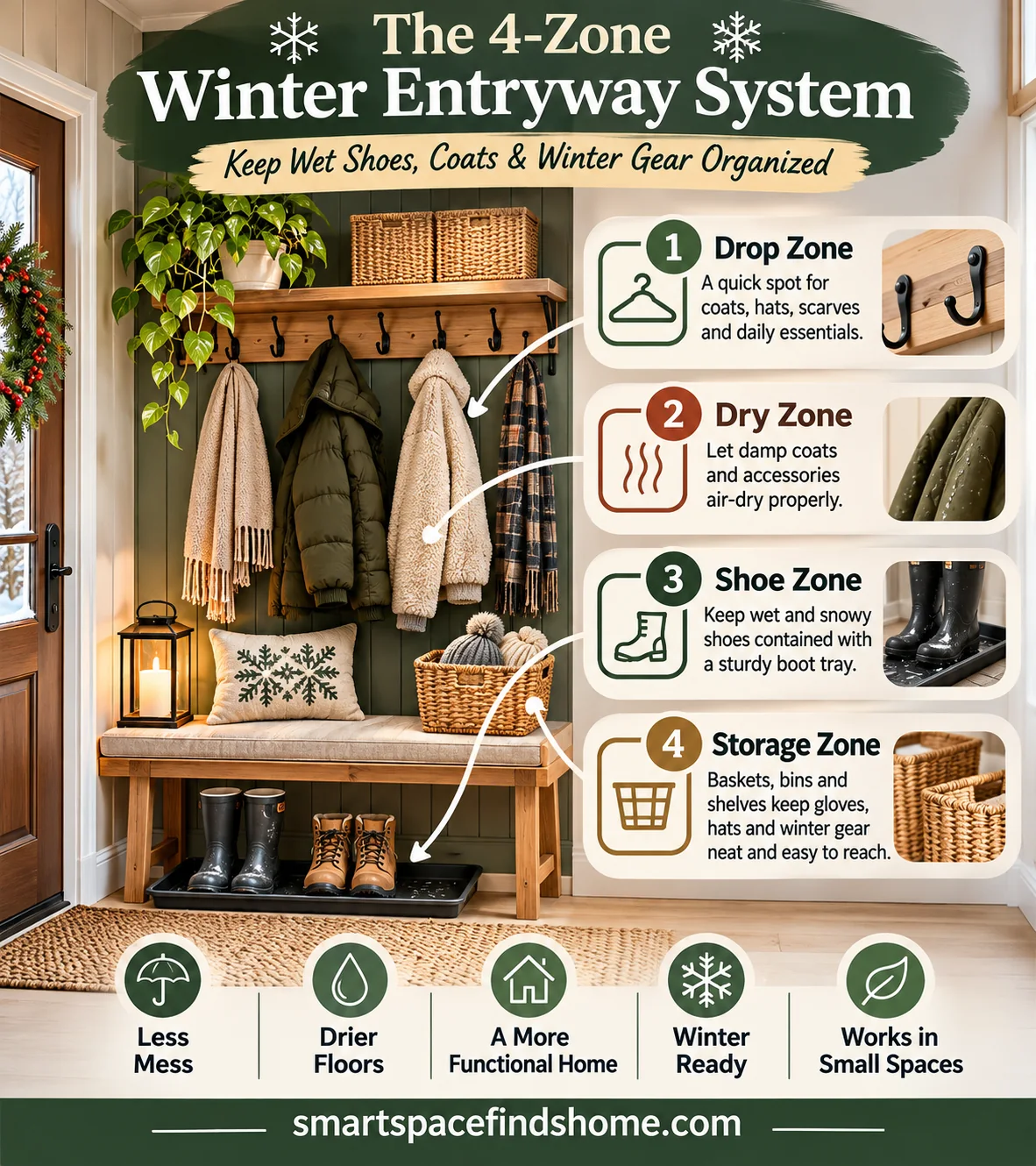
Your 4-Zone Winter Entryway Plan
Organize a small entrance by task, not by furniture. A setup that handles water first and storage second stays easier to maintain all season.
- Catch the water: Place a low-profile washable entrance mat where it will not interfere with the door.
- Contain wet footwear: Position a raised-edge boot tray beside the walking route, not in it.
- Air out outerwear: Hang wet coats on securely installed hooks with adequate spacing for ventilation.
- Store dry essentials: Keep hats, scarves, and gloves in a labeled basket only after they have dried.
Before buying: measure the doorway swing, usable wall width, tray footprint, hook load rating, and the space needed to walk through comfortably.
Winter Entryway Storage: What Works Best?
| Solution | Best for | Check before buying |
|---|---|---|
| Raised-edge boot tray | Snowy boots and wet shoes | Inside dimensions, edge height, washability |
| Washable absorbent mat | Damp footprints and tracked-in grit | Flooring compatibility, door clearance |
| Wall-mounted coat rail | Bulky winter outerwear | Anchors, load capacity, available wall width |
| Stable freestanding coat rack | No-drill rental layouts | Tip resistance with uneven loads |
| Ventilated shoe rack | Drying and rotating everyday pairs | Airflow, footprint, cleanable surfaces |
| Washable accessory basket | Dry hats, scarves and gloves | Capacity, accessible placement |
Three Small-Space Layouts to Try
WINTER ENTRYWAY FIND
Simple Houseware 3-Tier Shoe Rack
Open-tier shoe storage for organizing everyday footwear in a compact entryway.
WINTER ENTRYWAY FIND
SONGMICS Bamboo Shoe Bench
A bench-and-shoe-storage option for compact hallways.

For a narrow apartment hallway
Use one compact tray along a wall and a sturdy coat rail outside the door swing. Avoid deep shoe cabinets that make the walking route uncomfortable.
For a renter-friendly entrance
Combine a washable mat, freestanding rack, and removable basket. Test stability with real coats and do not assume adhesive hooks can hold soaked outerwear.
For a family entryway
Assign a labeled accessory basket to each person, designate a limited number of active shoe slots, and rotate spare winter gear to a dry storage area.
Winter Entryway Shopping Checklist
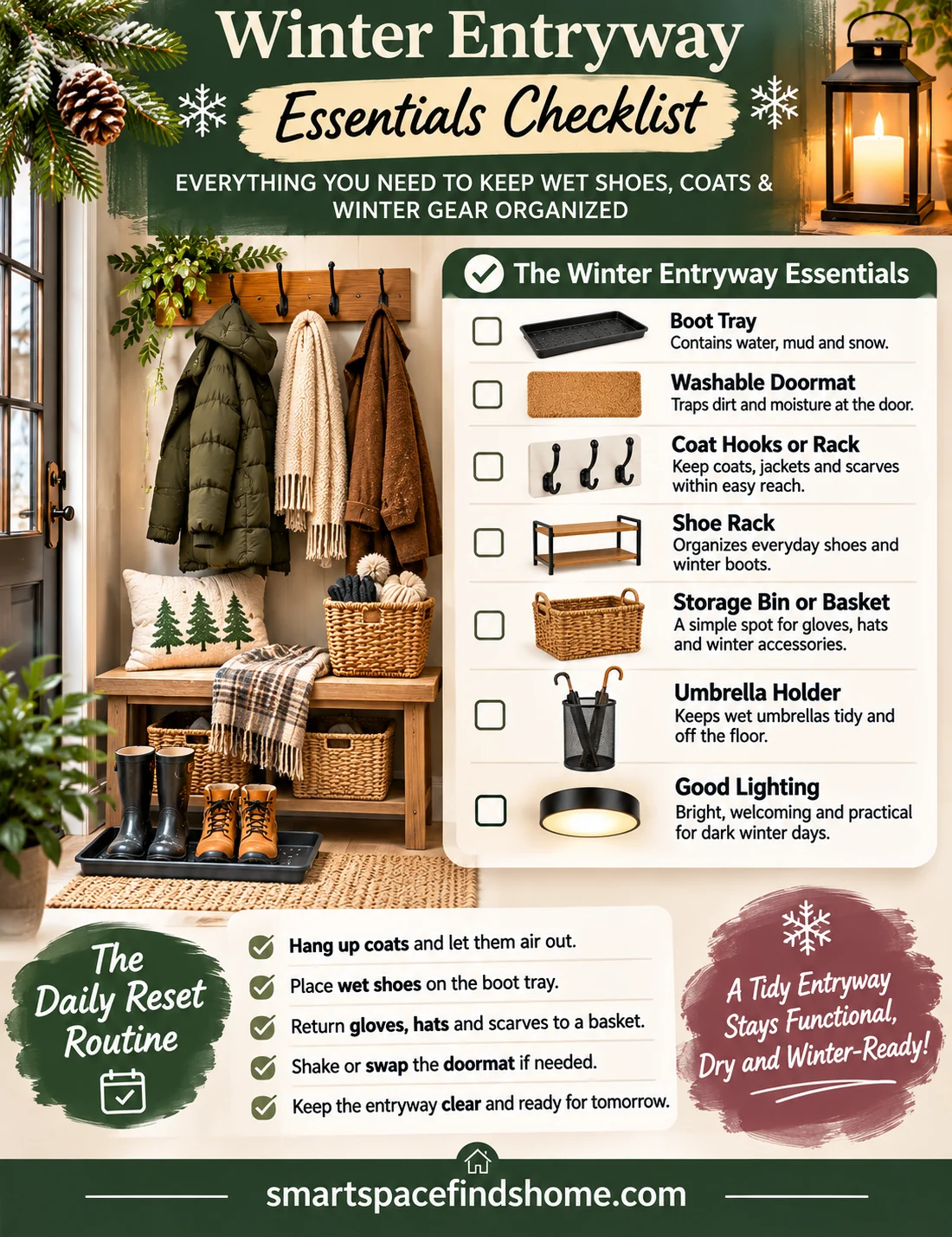
- Measure the floor and door clearance before ordering.
- Prioritize removable, washable materials and a tray with raised edges.
- Confirm hardware capacity and follow manufacturer installation directions.
- Choose accessories that can air-dry instead of trapping moisture.
- Inspect product dimensions, maintenance instructions, current listing details, and return terms.
Related guide: Renter-Friendly Storage Hacks for Small Apartments.
Editorial note: Suggested products and storage principles are based on published specifications and practical fit considerations; Smart Space Finds has not independently tested every product.
Frequently Asked Questions
Where should wet boots go in a small apartment?
Keep them on a washable raised-lip tray near the door, leaving safe walking clearance and sufficient airflow for drying.
Are adhesive hooks suitable for wet winter coats?
Only when the manufacturer explicitly rates the fitting for the actual load and surface. Heavy wet coats generally require more secure support.
What should I clean every day?
Empty pooled water, remove grit, separate damp clothing and keep the entry path unobstructed.