
SMALL-SPACE LIVING / THE WELLNESS EDIT
A peaceful workout space should not turn into a pile of mats, resistance bands, and stray dumbbells the moment your session ends. These thoughtful yoga mat and workout gear storage ideas make a small apartment feel like a home again—without sacrificing your daily practice.
THE QUICK ANSWER
Store a fully dry yoga mat upright in a breathable basket or on a suitable wall rack; corral bands and small accessories in labeled pouches; and keep heavy weights on a stable low shelf or floor-level stand. For most apartments, one compact storage zone beats several scattered organizers.
Whether your workout happens beside the sofa, at the foot of your bed, or in a corner of the living room, the best solution is the one you can reset in under two minutes. Below, find 15 apartment-friendly storage ideas, a layout decision guide, and a practical plan for keeping everything clean, accessible, and visually calm.
A SMALL-SPACE DECISION TOOL
Find Your Ideal Yoga Storage Setup
Choose the room, your mounting options and the equipment you own. The recommendation updates instantly—no account, downloads or personal data required.
To choose without JavaScript, use the room-by-room recommendations and equipment matrix below; they contain the same core guidance.
First, Choose Storage That Fits Your Apartment
Start with your equipment—not a shopping cart. Take out everything you actually use in a typical week: mat, yoga blocks, strap, foam roller, bands, jump rope, sliders, and weights. Sort it into three groups: daily essentials, occasional gear, and heavy equipment. Daily items belong at arm’s reach; occasional items can live higher or farther away; heavy items should stay low and secure.
| Your situation | Best starting point |
|---|---|
| No spare floor space | Wall-mounted or over-door accessory storage |
| Renting with no drilling | Freestanding basket, rolling cart, or closet organizer |
| Working out in the living room | Closed cabinet with one dedicated gear compartment |
| Mats plus dumbbells | Separate breathable mat holder and low weight stand |
| Very small bedroom | Narrow vertical rack or a closet-side storage station |
Measure before buying: check the diameter of your rolled mat, the width of your foam roller, the interior depth of the intended organizer, and the clearance needed for doors and drawers. A beautiful basket that cannot fit your actual mat is clutter in a different form.
15 Yoga Mat and Workout Gear Storage Ideas for Small Apartments
The edit: practical storage, considered proportions, and pieces that belong in a home—not a commercial gym.
01. Use a Tall Woven Basket for a Beautiful, Easy Reset
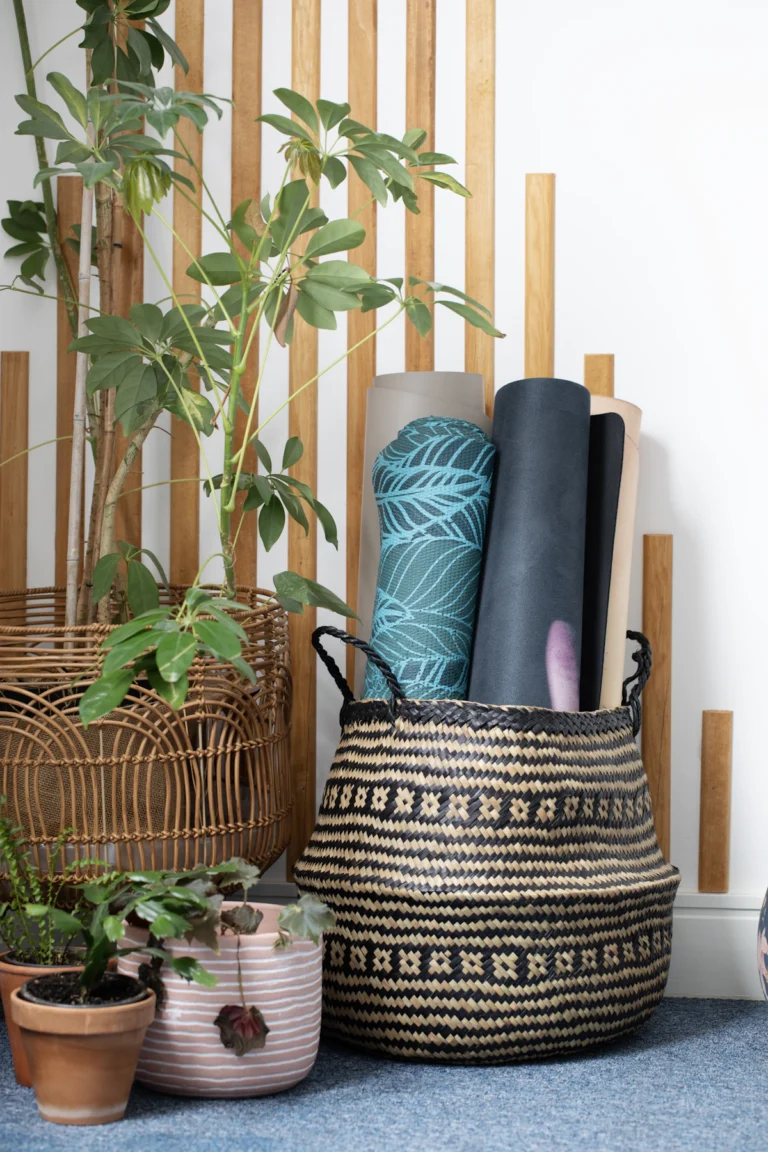
A tall, sturdy basket can turn a rolled mat, foam roller, and yoga strap into a deliberate-looking corner arrangement. Choose an open-top design with a stable base and sufficient interior height; natural woven texture softens a modern living room. Keep the mat completely dry before putting it away, and avoid squeezing it against rough edges.
Best for: living rooms, studio apartments, and renters. Design note: choose one basket tone that echoes a rug, wood finish, or throw.
02. Install a Slim Wall Rack—When Your Walls Allow It
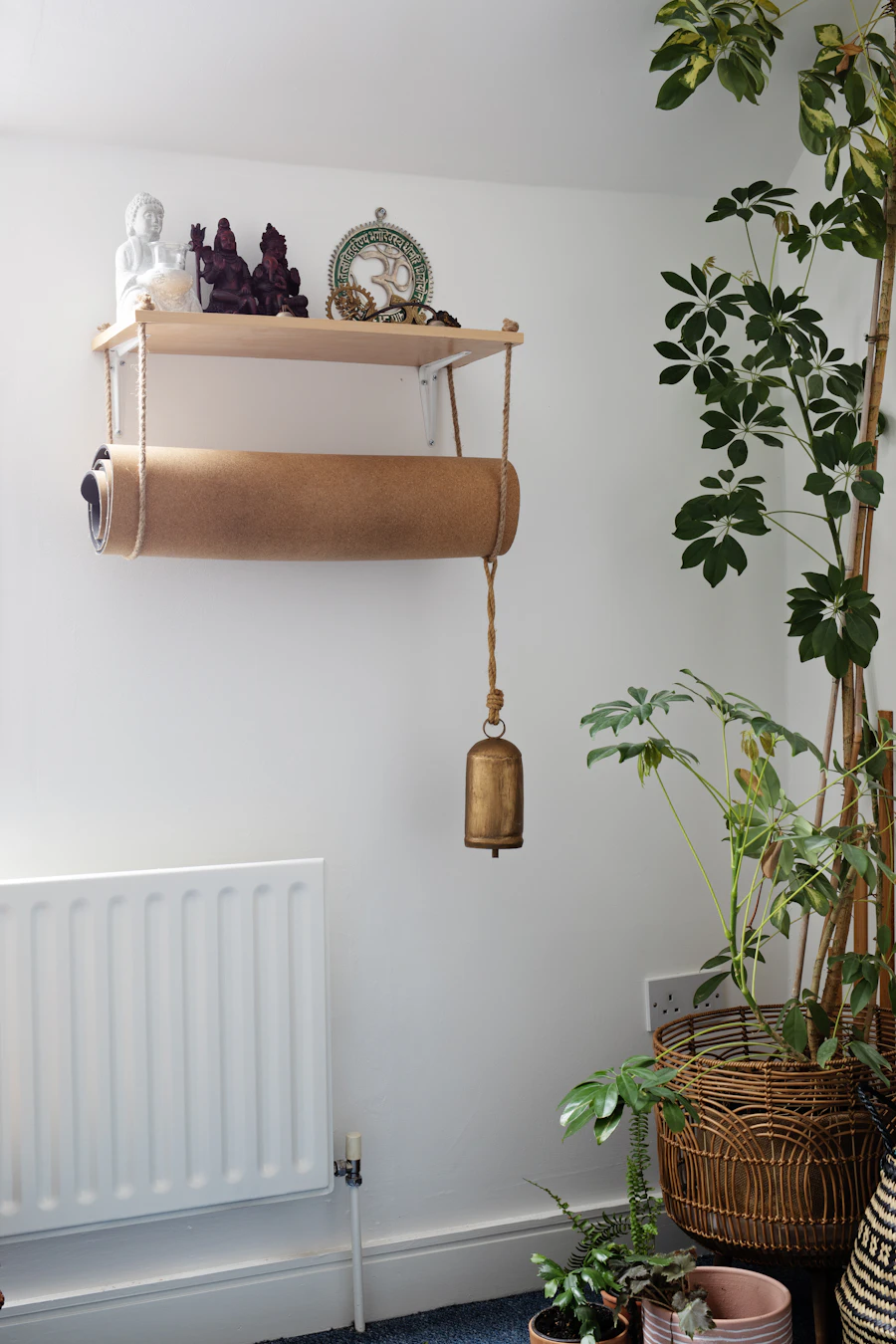
A compact mat rack clears the floor and creates a single place to return equipment after practice. Place it on a structurally appropriate wall, away from direct heat and strong sunlight. Select smooth, broad supports compatible with your mat; narrow pressure points can damage softer materials. Check the rack’s specified load and the wall’s mounting requirements before installation.
Best for: dedicated workout corners and narrow rooms. Renter alternative: a freestanding vertical stand.
03. Turn One Closet Side into a Workout-Gear Station
Reserve a slim vertical zone along one side of a wardrobe. Stand the dry mat in a breathable sleeve or open holder; put blocks in a small bin and stash bands in a separate pouch. Keeping everything together reduces the friction of starting a workout and stops loose accessories migrating through drawers.
Best for: bedrooms with existing closet space. Explore our workout gear organization guide for more closet-focused solutions.
Yoga Mat Storage Essentials
Beautiful vertical storage, wall options, and freestanding mat holders
A compact wall-mounted option for mats and light yoga accessories.
A layered vertical solution when secure wall installation is possible.
Freestanding organization for rolled mats and workout accessories.
A second wall-storage format for vertically organized equipment.
Affiliate disclosure: As an Amazon Associate, Smart Space Finds earns from qualifying purchases. Product details and availability may change; check the listing before buying.
04. Choose a Three-Tier Rolling Cart for Flexible Routines
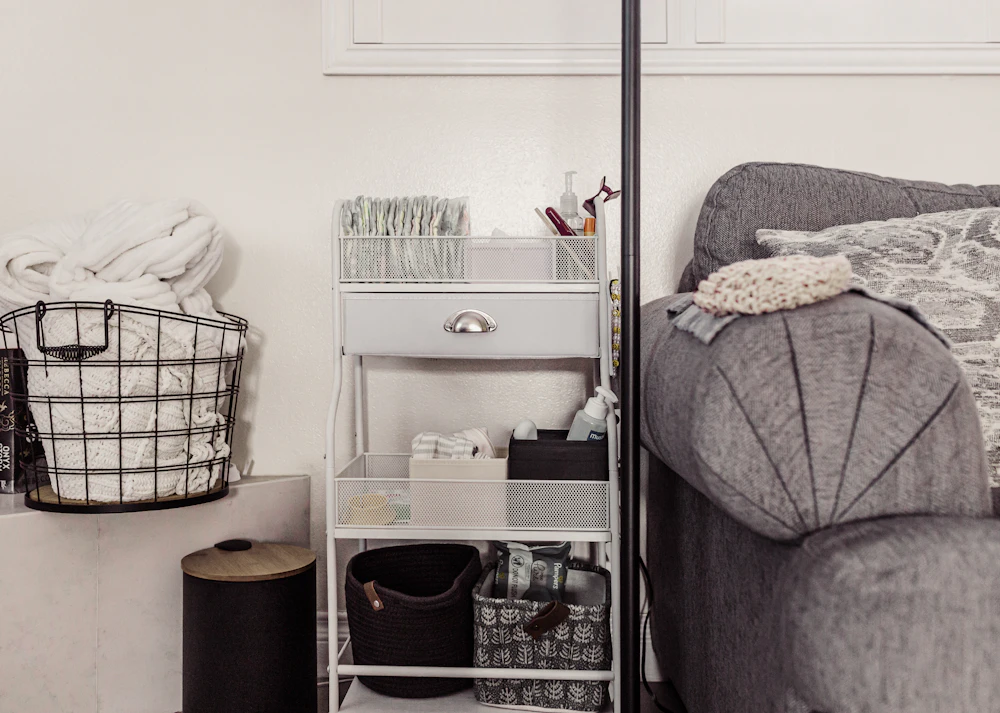
When your workout spot changes from room to room, mobility matters more than perfectly hidden storage. Use the bottom tier for stable, heavier small items within the cart’s rated capacity; middle for blocks and towels; top for light bands and water-bottle accessories. Keep a tall mat in a dedicated safe holder rather than forcing it into a shallow cart.
Best for: multi-use living rooms and home offices. Design note: a muted finish helps a utility cart recede into the decor.
05. Add a Door-Back Pocket Organizer for Tiny Accessories
Resistance loops, jump ropes, ankle straps, and grip socks have a habit of disappearing. An over-door pocket organizer makes each small item visible without taking drawer space. Confirm that the hardware clears the door frame and that the door opens smoothly; avoid loading pockets with dumbbells or other heavy objects.
Best for: small bedrooms and renters who cannot drill.
Mobile & Renter-Friendly Storage
Flexible storage that can move with your routine
For towels, bands, small blocks, and other lightweight accessories.
Mobile storage designed around yoga mats and practice accessories.
Combined organizer; review rated load and stability before adding weights.
Multi-level storage; confirm weight capacity and wheel-lock design.
Affiliate disclosure: As an Amazon Associate, Smart Space Finds earns from qualifying purchases. Product details and availability may change; check the listing before buying.
06. Use a Low, Stable Shelf for Dumbbells and Kettlebells
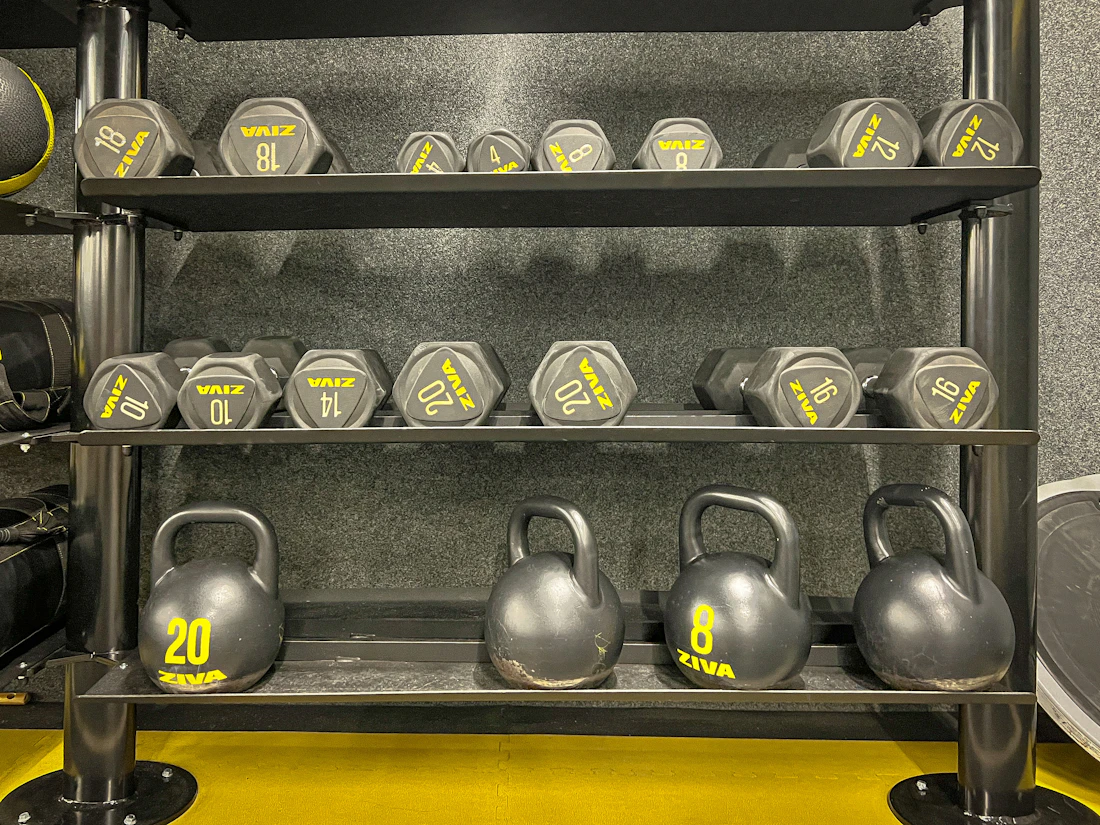
Weights are not interchangeable with yoga props. They need support that is rated for their actual load. Place heavier equipment on a purpose-built low rack or stable floor-level surface, never on a lightweight wall shelf, high closet shelf, or rolling organizer not intended for weight. Keep the floor around the stand clear and protect delicate flooring where appropriate.
Best for: strength-training setups. For larger equipment, see our home gym equipment storage guide.
07. Hide Your Workout Kit in a Closed Media Cabinet
When the same room hosts movie nights and mobility sessions, concealment creates visual calm. Allocate a single shelf or compartment to a dry mat (only if it fits without sharp bending), blocks, and a neatly coiled strap. Store the mat outside the cabinet until it is fully dry. Add a small removable bin so the shelf can be cleared in one movement.
Best for: living rooms that must feel like living rooms.
08. Make a Pegboard for Bands, Straps, and Light Accessories
A considered pegboard can function like a mini equipment wall, with hooks for dry resistance bands, a pouch for hair ties and grip socks, and a narrow ledge for light props. Use a secure installation and follow the board manufacturer’s weight limits. Leave negative space between accessories; it makes the station easier to use and more visually refined.
Best for: flexible accessory storage, not heavy weights.
09. Try a Freestanding Vertical Organizer in an Awkward Corner
That narrow gap between a bookshelf and wall may be just enough for a purpose-made mat and foam-roller stand. Measure both the floor footprint and the height of the longest accessory. If the stand is tall or top-heavy, choose a stable base and follow any supplied anti-tip guidance.
Best for: unused corners and compact home gym nooks.
Secure Dumbbell & Kettlebell Storage
Keep heavy equipment in stable, load-rated locations
A compact vertical rack for compatible pairs of dumbbells.
A small-footprint option for separately organized weights.
Tiered shelving for home strength-training equipment.
A two-tier alternative for a compact home workout setup.
Affiliate disclosure: As an Amazon Associate, Smart Space Finds earns from qualifying purchases. Product details and availability may change; check the listing before buying.
10. Store Accessories in Matching Zip Pouches
Small gear rarely needs a full piece of furniture. Group resistance loops by resistance level, keep massage balls in one pouch, and put straps or sliders in another. Labels can be discreet: “Strength,” “Stretch,” and “Recovery” work better than a drawer full of miscellaneous objects.
Best for: drawers, shelves, and workout kits that travel.
11. Repurpose a Bench with Interior Storage
A storage bench near the foot of the bed or an entryway can conceal soft, dry accessories and towels. Before buying, verify usable interior measurements and ventilation, especially if you hope to accommodate a rolled mat. Never trap damp gear inside an upholstered or sealed bench.
Best for: dual-purpose furniture and uncluttered bedrooms.
12. Create a Minimal Yoga Corner with One Shelf and One Basket
Instead of buying a dedicated home gym unit, pair a slim shelf for lightweight blocks, folded clean towels, and a calming object with one floor basket for your mat. The visual formula is simple: one storage material, one neutral palette, and a modest amount of breathing room. Keep any decorative objects separate from the usable exercise floor.
Best for: wellness-focused interiors. For a softer setup, browse our small-room meditation corner ideas.
13. Use Under-Bed Drawers for Dry, Infrequently Used Gear
Shallow sliding drawers are useful for extra towels, flat sliders, bands, and seasonal accessories. If your mat fits only when sharply folded or compressed, store it elsewhere. Keep bags breathable and dry, and avoid pushing equipment into dusty spaces without protection.
Best for: very small bedrooms with limited closets.
Hidden Storage That Looks Like Furniture
Conceal small workout accessories without sacrificing your living-room style
Dual-purpose seating with hidden room for clean, lightweight gear.
A streamlined, neutral-looking enclosed storage option.
Compact concealed storage where a longer bench will not fit.
An open, decorative basket for clean and fully dry rolled mats.
Affiliate disclosure: As an Amazon Associate, Smart Space Finds earns from qualifying purchases. Product details and availability may change; check the listing before buying.
14. Make a Workout Drawer with Modular Dividers
A designated drawer can hold resistance bands, a jump rope, hand grips, charging cables for fitness trackers, and clean exercise socks. Adjustable dividers prevent small pieces from tangling; the result looks organized even when the drawer is opened several times a day. Reserve the drawer for light, clean items rather than loose heavy weights.
Best for: compact apartments that already have sufficient drawer space.
15. Build a Two-Minute Post-Workout Reset Station
Sometimes the most effective storage idea is a routine rather than a product. Keep a cleaning cloth and manufacturer-approved mat-care product nearby, have one place for drying, and designate one accessible container for putting everything back. Your goal is a process you can repeat after every session, not a Pinterest-perfect display that takes 20 minutes to maintain.
Best for: every apartment, especially when motivation is limited.
THE EDITOR’S RULE
Keep the equipment you use daily visible enough to reach, but contained enough that your apartment still feels intentional.
From Workout Clutter to a Quiet Living Space
A real workout photograph and an original storage illustration show two distinct moments: equipment out for exercise, then put away in a calm, functional home base. This is a conceptual transformation, not a photographed before-and-after of the same room.
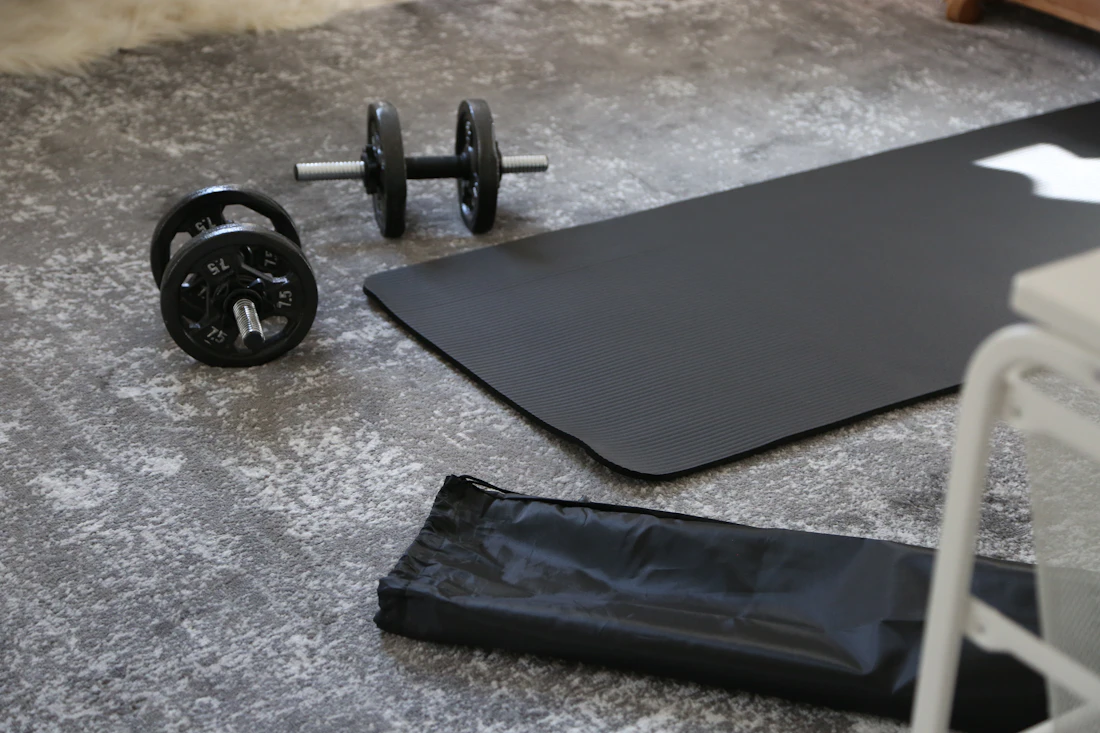 01 / IN USE
Make space for movement. Keep the room for living.
THE SMALL-SPACE WELLNESS PRINCIPLE
SPACE PLANNING / THREE REAL-LIFE SCENARIOS
Three Small-Apartment Yoga Storage Blueprints
These conceptual layouts demonstrate where storage can live in an actual multi-use room. They are schematic rather than measured floor plans: verify furniture dimensions, exercise clearance, door swings and safe exit routes before adopting any layout.
Studio Apartment
Keep the workout kit in one corner so the living space can reset quickly.
BASKETBIN
Storage recipe: open-top mat basket + removable accessory bin. Keep the walking path and door clear.
Small Bedroom
Use the wardrobe edge without turning the sleep zone into a gym.
STANDCLOSET
Storage recipe: freestanding vertical mat stand + labeled soft-gear pouch. Keep wardrobe doors accessible.
Living Room
Conceal props in furniture you already own.
CABINETLOW WEIGHTS
Storage recipe: closed prop cabinet + low stable weight rack if needed. Never store damp gear inside a closed cabinet.
Planning principle: the storage footprint can be narrow, but the workout area itself needs enough clear room for your movements; the diagrams are not to scale.
The Best Storage Layout for Every Room
Living room: conceal the accessories, display the mat beautifully
Use an open basket that looks like part of the decor and a closed cabinet compartment for dry bands and blocks. Preserve the flow between furniture pieces and keep traffic routes clear. A small accent lamp or plant can make the station feel integrated, but should not obstruct access.
Bedroom: keep the floor clear
A closet-side caddy or over-door organizer is ideal for soft accessories. Store weights securely at floor level, and check that mats or stands won’t block wardrobe doors. If your bedroom doubles as a fitness room, aim for a layout that can be returned to sleep mode quickly.
Studio apartment: build one portable system
Choose one compact mat holder plus a removable accessory bin. Avoid spreading equipment across the apartment. A single consistent landing zone makes your workout ritual simpler and your interior appear more spacious.
Entryway: only when it is genuinely practical
A slim mat stand near the door can help if you frequently carry your mat to classes, but do not compromise the exit path. Choose a well-ventilated spot away from wet shoes and outdoor dirt.
What Should You Buy—and What Can You Skip?
| Item | Worth it when… | Skip it when… |
|---|---|---|
| Mat basket | You want no-install, visible storage | Your mat remains damp after use |
| Wall rack | Floor space is scarce and mounting is possible | You cannot mount it safely |
| Rolling cart | Your workout location changes | You only own a mat and one band |
| Weight rack | You own several free weights | You have only lightweight yoga props |
| Accessory pouches | Bands and cables get tangled | An existing divider already works |
Budget-smart approach: try a dry-mat basket and repurposed pouches before buying a matching storage collection. Upgrade to dedicated furniture only when your equipment and actual routine justify it. A durable, well-sized solution is more valuable than an impressive-looking organizer that complicates everyday use.
THE ORGANIZATION REFERENCE
What to Store Where: The Equipment Matrix
Different pieces need different storage. This quick-reference matrix separates soft props from heavy equipment and helps you avoid the common mistake of buying one organizer for everything.
MAT / ROLLAiry vertical basket or compatible holder
BLOCKS / STACKDry, accessible shelf
BANDS / TUCKShaded pouch or shallow drawer
WEIGHTS / SECURELow, stable, load-rated rack
One organizer does not need to hold everything. Separate heavy equipment from lightweight yoga props for a cleaner, safer setup.
| Equipment | Best placement | Avoid |
|---|---|---|
| Yoga mat | Dry, loosely rolled, upright basket or compatible rack | Crushing, tight folds, humid closed storage |
| Foam roller | Freestanding tall bin or stable low shelf | Pressure beneath heavy objects |
| Cork / foam blocks | Dry shelf or ventilated open bin | Storing wet or soiled |
| Resistance bands | Shaded, dry pouches or light hooks | Sunlight, sharp edges, prolonged tension |
| Straps / jump ropes | Coiled in labeled drawer or pouch | Tangled, loose floor storage |
| Dumbbells / kettlebells | Low, level, manufacturer-rated weight storage | Decorative shelves or unstable elevated racks |
| Towels / grip socks | Completely dry, clean drawer or breathable bin | Mixing with damp used gear |
The Small-Accessory Organization Edit
Keep straps, resistance bands, socks and light accessories easy to find
Separate lightweight accessories into a few accessible compartments.
A practical choice for very small bands, straps, and grip socks.
Visible storage for small, frequently misplaced workout essentials.
Wall-mounted organizer for bands, jump ropes and light workout accessories. Requires secure wall installation; confirm your wall type and rated load.
Affiliate disclosure: As an Amazon Associate, Smart Space Finds earns from qualifying purchases. Product details and availability may change; check the listing before buying.
Six Finishes That Make Yoga Storage Feel Designed
Instead of adding more containers, unify what you already own around one tactile palette. These swatches are original digital color-and-texture studies—not photographs or manufacturer samples.
Choose two dominant finishes and one accent. For heavy gym gear, prioritize certified load capacity and stability over aesthetics.
THREE LOOKS / ONE ORGANIZED PRACTICE
The Designer Yoga Storage Edit
A storage zone should feel like part of your interior. Choose one visual direction rather than mixing several competing finishes; adapt the setup to what you already own before shopping for new pieces.
THE LOOK / 01
Japandi Wellness
Light oak, mushroom beige, cork and sage. A smooth vertical stand and minimal wooden shelf keep the practice zone airy.
Storage edit: natural mat basket · pale-wood shelf · fabric accessory pouch
THE LOOK / 02
Quiet Luxury Fitness
Charcoal, warm ivory and subtle brass. Hide smaller pieces inside closed cabinetry; allow just one intentional mat storage element to remain visible.
Storage edit: closed cabinet · tailored zip pouches · sleek mat stand
THE LOOK / 03
Warm Organic Minimalism
Rattan texture, terracotta, creamy linen and deep olive. A woven basket makes everyday yoga equipment read like home decor.
Storage edit: textured basket · low wood bench · woven soft-gear bin
These are original color-and-material direction boards, not photographs of finished rooms or claims about specific products.
Can Your Storage Station Fit Into a Narrow Corner?
A compact vertical zone may be enough to hold a rolled mat and lightweight accessories. Try one of three approaches: a tall woven basket, a slim floor stand, or a narrow closet-side organizer. The 24-inch width is a design challenge, not a guarantee that any product will fit: measure the exact unit, mat diameter, access clearance and base stability first.
The Everyday Kit, Beautifully Considered
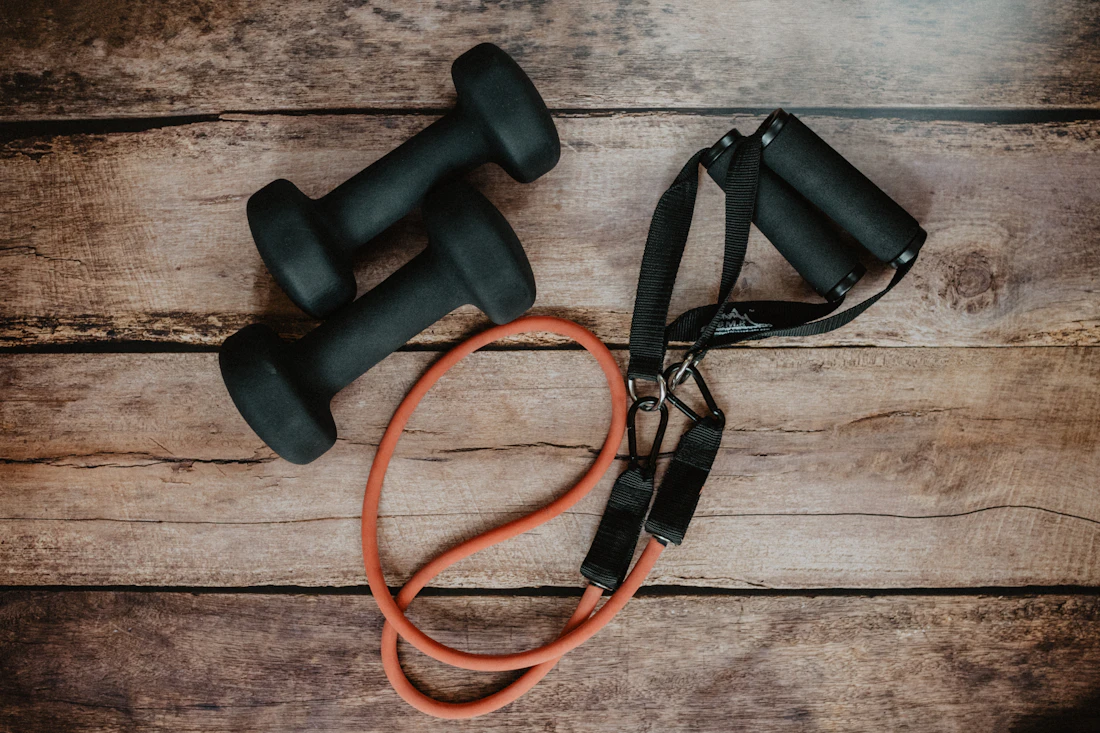
Mat, blocks, favorite band and strap.
Extra props and recovery accessories.
Dumbbells and kettlebells on rated support.
How to Store a Yoga Mat Without Damaging It
Good storage protects your mat as well as your floor plan. Because mats vary in construction and surface treatment, follow the care and rolling direction specified by your particular manufacturer rather than relying on a universal rule.
- Clean according to the mat’s care label. Some materials and finishes react poorly to harsh chemicals or prolonged soaking.
- Air-dry both sides completely. Never seal a damp mat inside a bag, cabinet, or basket.
- Roll it in the recommended direction. Roll evenly without excessive compression; do not repeatedly fold a conventional non-foldable mat.
- Store away from heat and direct sunlight. Choose a dry indoor location with reasonable ventilation.
- Keep pressure off the mat. Do not stack heavy dumbbells or furniture on top of a rolled mat.
Mat-maker Manduka’s care guidance highlights complete drying and material-specific rolling instructions. Its GRP variants even differ in preferred rolling direction—an excellent reason to check your mat’s own documentation.
Five Storage Mistakes That Make Small Spaces Feel Messier
- Buying organizers before measuring. Check rolled dimensions and opening widths, not just exterior product photos.
- Mixing damp and clean gear. Create a drying step before any closed storage.
- Putting heavy weights on decorative shelving. Use load-rated, stable, low storage instead.
- Storing everything in different rooms. A single home base reduces the time spent searching for gear.
- Overstyling the workout corner. Leave enough actual floor space to exercise and enough clearance to move safely.
The 10-Minute Apartment Workout Storage Makeover
Minute 1–2: Gather your gear in one place and identify the items you use every week.
Minute 3–4: Measure your rolled mat and choose one accessible, dry landing zone.
Minute 5–6: Separate heavy weights from soft accessories and assign safe locations.
Minute 7–8: Group bands, straps, towels, and blocks in bins or pouches you already own.
Minute 9–10: Practice your post-workout reset. If you cannot put everything away easily, simplify the system.
Frequently Asked Questions
How do you store a yoga mat in a small apartment?
Once it is completely dry, keep the mat in a suitable loose roll in a tall breathable basket, purpose-built rack, or appropriately sized closet zone. Avoid heat, direct sun, crushing pressure, and anything that forces a sharp fold.
Can I store a yoga mat under my bed?
Yes, if the mat is dry, protected from dust, and fits without being tightly compressed or sharply folded. Confirm the manufacturer permits your chosen storage position and that the under-bed area stays dry.
How do I organize workout equipment without a dedicated home gym?
Create one compact gear station: mat holder, labeled pouches for bands and straps, a bin for lightweight props, and a separate stable floor-level place for free weights. Focus on the equipment you actually use, not on filling a storage unit.
What is the best yoga mat storage for renters?
A freestanding tall basket or vertical mat stand is often the easiest no-drill option. Over-door pockets can hold light accessories when the door has adequate clearance. Check load limits and stability before use.
Should yoga mats be stored rolled or flat?
Many standard mats can be kept in a loose roll, while others have specific manufacturer instructions. Flat storage may suit particular materials or long-term storage situations. Always follow the care guidance for your exact mat.
Where should I keep dumbbells in a small bedroom?
Choose a stable low rack or a secure floor-level location that does not block doors or walking paths. Do not place heavy dumbbells on unverified decorative shelving, high storage, or lightweight rolling carts.
Complete Yoga & Workout Storage Systems
Shop an integrated setup instead of collecting mismatched organizers
A multipurpose organizer for combining yoga props and weights.
Combined shelving for mats and workout equipment.
A freestanding system for several types of workout accessories.
A configurable wall system; compatible hooks may be sold separately.
Affiliate disclosure: As an Amazon Associate, Smart Space Finds earns from qualifying purchases. Product details and availability may change; check the listing before buying.
Make Room for the Ritual, Not Just the Equipment
The best apartment workout storage doesn’t need to look like gym storage. It can look like a woven basket beside a sofa, a quiet closet edit, or a compact shelf with precisely what you need. Give every piece a sensible home, build in time to dry your mat, and let the rest of your space breathe.