
SMART SPACE FINDS / THE ORGANIZED HOME GYM EDIT
Your bedroom should feel like a place to unwind—not a showroom for scattered dumbbells and tangled resistance bands. These 15 workout gear organization ideas make room for movement while keeping your closet, floor and favorite quiet corners beautifully organized.
THE QUICK ANSWER
Store heavy weights low and secure, hang or compartmentalize lightweight accessories, give mats a dry vertical home, and use under-bed space for flat, light gear. The best system keeps the workout area clear and takes only a couple of minutes to reset.
First, Design Around the Gear You Actually Own
Before adding a rack, basket or set of hooks, gather your equipment and sort it into three groups: dense and heavy (dumbbells, kettlebells, plates), long or bulky (mats, rollers, folding equipment), and small and flexible (bands, straps, jump ropes). These categories need different storage—not a single oversized bin.
Measure the inside width, depth and height of your available closet zone, plus the clearance at its opening. Note baseboards, sliding doors, drawer pulls and any area a door sweeps through. For under-bed storage, measure the lowest obstruction rather than the visible gap at the bed’s edge.
Low, stable, load-rated storage
Breathable vertical parking
Pouches, pockets and dividers
THE SPACE PLANNING NOTEBOOK / 01
How to Plan Workout Equipment Storage Without Wasting Space
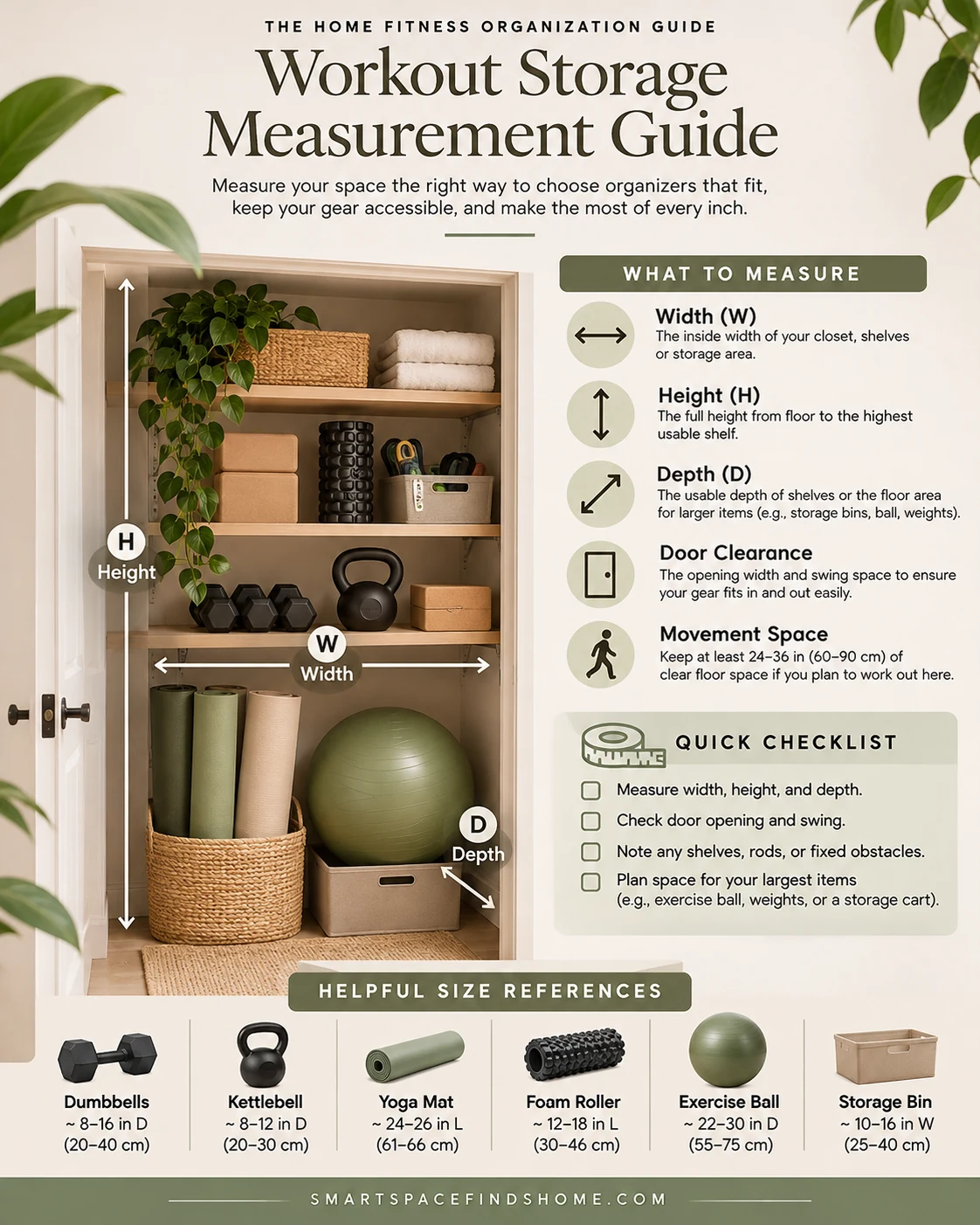
The best storage layout begins with the room you already have. Treat the closet, bedroom floor and furniture as one system. When you map storage by weight, frequency of use and access, you can keep equipment easy to reach without turning a restful room into a permanent gym.
MEASURE BEFORE YOU BUY
Available storage space = interior dimensions minus clearance needed to lift, open and retrieve your gear.
Measure the smallest usable width, depth and height; check closet doors, hinges, baseboards, shelves and the space your hands need to move items safely. Never treat a visual gap as guaranteed storage capacity.
For a narrow reach-in closet
Reserve the floor or lowest load-rated shelf for weights; use one short organizer for bands and gloves, and one breathable mat holder only if the door closes freely. Clothes should still slide without snagging on training equipment. Heavy gear stays below lightweight fabric and accessories.
For a bedroom with no spare closet space
Choose one visually quiet home for the entire routine: a discreet basket for soft gear, a ventilated bench for light accessories, or a low storage unit sized to your actual equipment. Match the finish to existing furniture to reduce visual noise, but never compromise load ratings for appearance.
For a studio apartment or shared bedroom
Create a portable training kit, identify a clear floor area for movement, and give the kit a fixed return location. If two people share the room, prioritize safe walking paths and sleeping areas before trying to increase storage capacity.
Designer’s rule: One concealed storage zone plus one repeatable reset routine usually looks calmer than five different baskets scattered around a bedroom.
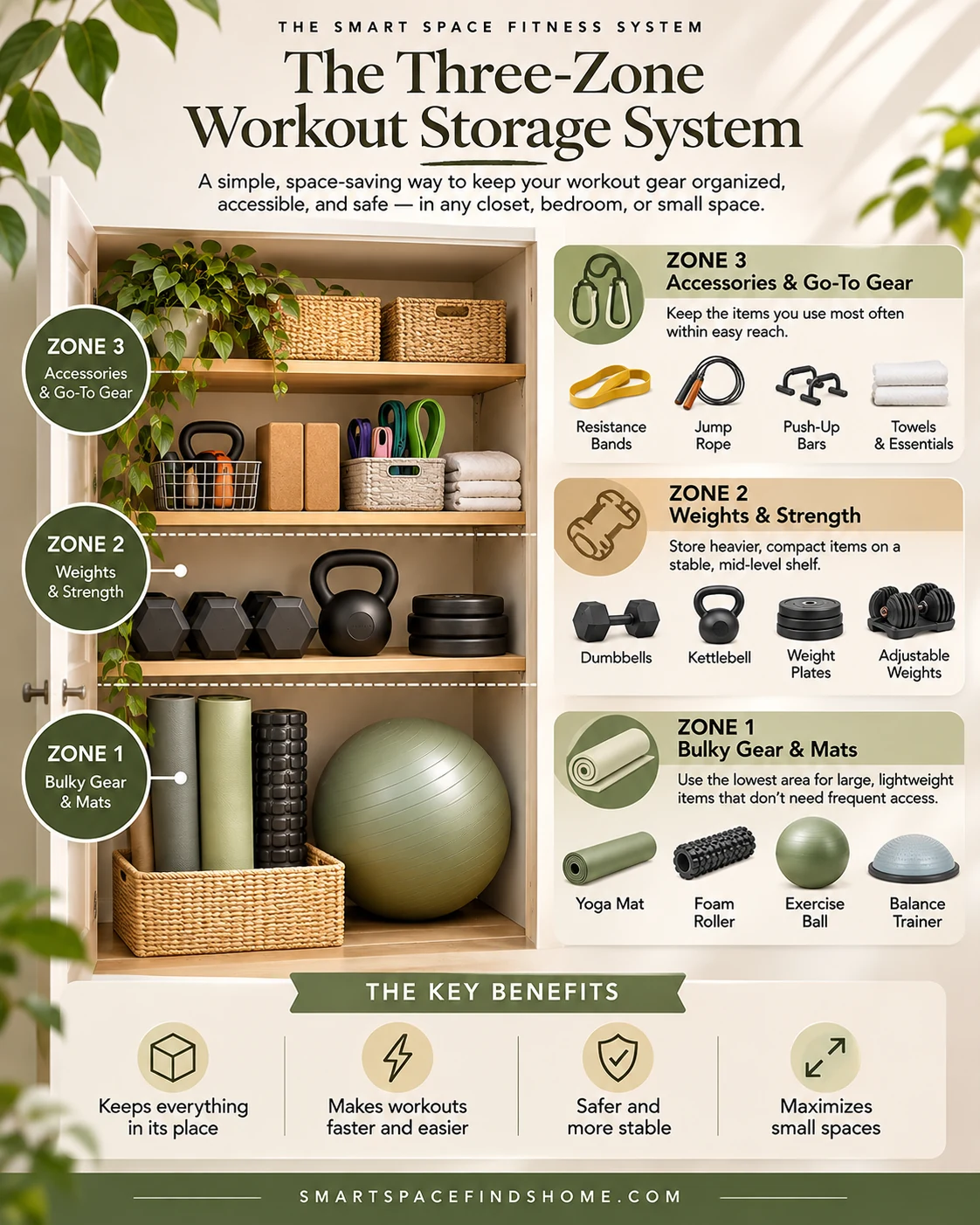
15 Workout Gear Organization Ideas for Closets and Bedrooms
From concealed dumbbell storage to no-drill solutions, these ideas work best when you choose only the ones that suit your equipment, routine and available floor space.
IDEA 01 / SMALL-SPACE SOLUTION
Claim one dedicated closet zone
Choose one lower shelf or a 12–18-inch-wide section of closet floor before buying another organizer. Group training gear together rather than spreading it across drawers and corners. Keep daily-use accessories at arm’s reach; reserve higher shelves for lightweight backups.
Best for: shared closets and compact wardrobes.
IDEA 02 / SMALL-SPACE SOLUTION
Keep dumbbells on a low, stable surface
A pair of dumbbells can fit on a low dedicated rack, a manufacturer-rated platform, or the closet floor on a protective mat. Never assume a normal floating shelf or lightweight shoe rack can carry concentrated free-weight loads. Measure both the storage footprint and the clearance needed to lift each weight safely.
Best for: strength equipment and adjustable dumbbells.
IDEA 03 / SMALL-SPACE SOLUTION
Stand yoga mats upright in a narrow holder
An open, tall basket or dedicated mat holder can keep one or two rolled mats from sliding around. Choose a breathable design and let damp mats dry completely before storing. Check that the holder does not pinch thick exercise mats or obstruct the closet door.
Best for: yoga, Pilates and mobility gear.
IDEA 04 / SMALL-SPACE SOLUTION
Create a resistance-band sorting station
Sort bands by resistance level or intended use. Use labeled fabric pouches, small divided drawers, or lightweight hooks to prevent tangling. Keep latex and rubber bands away from direct sun and heat; inspect for tears before use. Do not hang heavy weights from accessory hooks.
Best for: resistance bands, handles and ankle straps.
IDEA 05 / SMALL-SPACE SOLUTION
Put flat accessories under the bed
A low-profile lidded container can hold sliders, spare towels, jump ropes and folded exercise bands. Measure the actual under-bed clearance, including legs and center supports, before ordering. Avoid putting heavy loose weights into a flexible bag you must drag out.
Best for: lightweight, low-frequency essentials.
IDEA 06 / SMALL-SPACE SOLUTION
Use an over-door organizer for light gear only
SMART SPACE FINDS / CURATED STORAGE EDIT
Closet Door Storage for Light Workout Accessories
Useful for resistance bands, grip straps, workout gloves and other light items. Check fit, door clearance, hanging weight and security before use.
Affiliate disclosure: As an Amazon Associate, Smart Space Finds earns from qualifying purchases. We may earn a commission through these product links at no additional cost to you.
A slim pocket organizer can hold workout gloves, hair ties, towels, small bands and a jump rope. Check door clearance, hinge movement and the manufacturer’s weight rating; avoid using it for kettlebells or dumbbells. Keep door hardware from scratching the frame.
Best for: renters who cannot drill.
IDEA 07 / SMALL-SPACE SOLUTION
Try a discreet bedroom storage bench
A bench with a lift-up compartment can hide soft fitness accessories while doubling as seating. Check interior dimensions and lid mechanisms, and avoid placing heavy, uncontained weights inside unless the manufacturer explicitly permits that load.
Best for: bedrooms without a usable closet.
IDEA 08 / SMALL-SPACE SOLUTION
Dedicate a lower dresser drawer to fitness
Small mesh dividers make it easy to separate bands, grip aids, socks and straps. Keep sweaty or damp items out until fully dry. A single purpose-specific drawer makes morning sessions easier without adding another visible storage unit.
Best for: minimalist bedrooms.
IDEA 09 / SMALL-SPACE SOLUTION
Use a rolling cart for lightweight training kits
SMART SPACE FINDS / CURATED STORAGE EDIT
Rolling Carts for Portable Workout Gear
Group towels, bands, yoga blocks and lightweight recovery gear in a moveable station. Do not make carts top-heavy; check wheel locks and load ratings.
Affiliate disclosure: As an Amazon Associate, Smart Space Finds earns from qualifying purchases. We may earn a commission through these product links at no additional cost to you.
A narrow cart can group a mat, towels and recovery tools, then move aside when the bedroom returns to its everyday function. Check wheel locks, floor protection and total load rating. Avoid top-heavy arrangements or unsecured free weights.
Best for: flexible workout corners.
IDEA 10 / SMALL-SPACE SOLUTION
Hide a foam roller beside a wardrobe
Tall awkward accessories need a designated vertical home. A narrow corner between furniture and a wall can accommodate a foam roller or rolled mat if it stays out of the walking path. Avoid leaning equipment where it can tip onto a sleeping area.
Best for: recovery accessories.
IDEA 11 / SMALL-SPACE SOLUTION
Build a portable grab-and-go workout kit
Keep a few bands, sliders and a jump rope in one ventilated tote or basket. The entire kit can move from the closet to a clear exercise area in seconds. This works especially well when your home gym is temporary rather than a permanent room.
Best for: studio apartments and multi-use rooms.
IDEA 12 / SMALL-SPACE SOLUTION
Separate clean and used workout textiles
Provide one small, breathable laundry bag or hamper near the closet. Do not pack damp towels, sweaty shoes or wet mats into closed storage; dry them before returning them to the system. This simple distinction prevents the whole workout zone from becoming a laundry pile.
Best for: daily workouts.
IDEA 13 / SMALL-SPACE SOLUTION
Use modular bins by activity
Rather than one overflowing catch-all container, try a mobility bin, a strength-accessories bin and a recovery bin. Label the front, not the lid, so contents remain identifiable when stacked. Keep the lightest containers on higher shelves.
Best for: households with several workout styles.
IDEA 14 / SMALL-SPACE SOLUTION
Keep the workout floor completely clear
Make the equipment’s parking place separate from the place where you move. Leave doors, exits and everyday routes unobstructed. Allow enough room to perform your intended movement without hitting furniture, mirrors, lamps or low ceilings.
Best for: every bedroom training setup.
IDEA 15 / SMALL-SPACE SOLUTION
Set a two-minute reset ritual
After exercising, wipe equipment as instructed, let moisture dry, return every item to its assigned zone and check the floor for stray weights or bands. A storage system succeeds when putting equipment away is almost as effortless as taking it out.
Best for: keeping the bedroom calm long-term.
The Complete Guide to Storing Every Type of Workout Equipment
Different workout tools create very different storage problems. Instead of buying a collection of matching baskets, match your storage system to each object’s weight, shape, cleaning requirements and frequency of use.
Dumbbell storage in a bedroom or closet
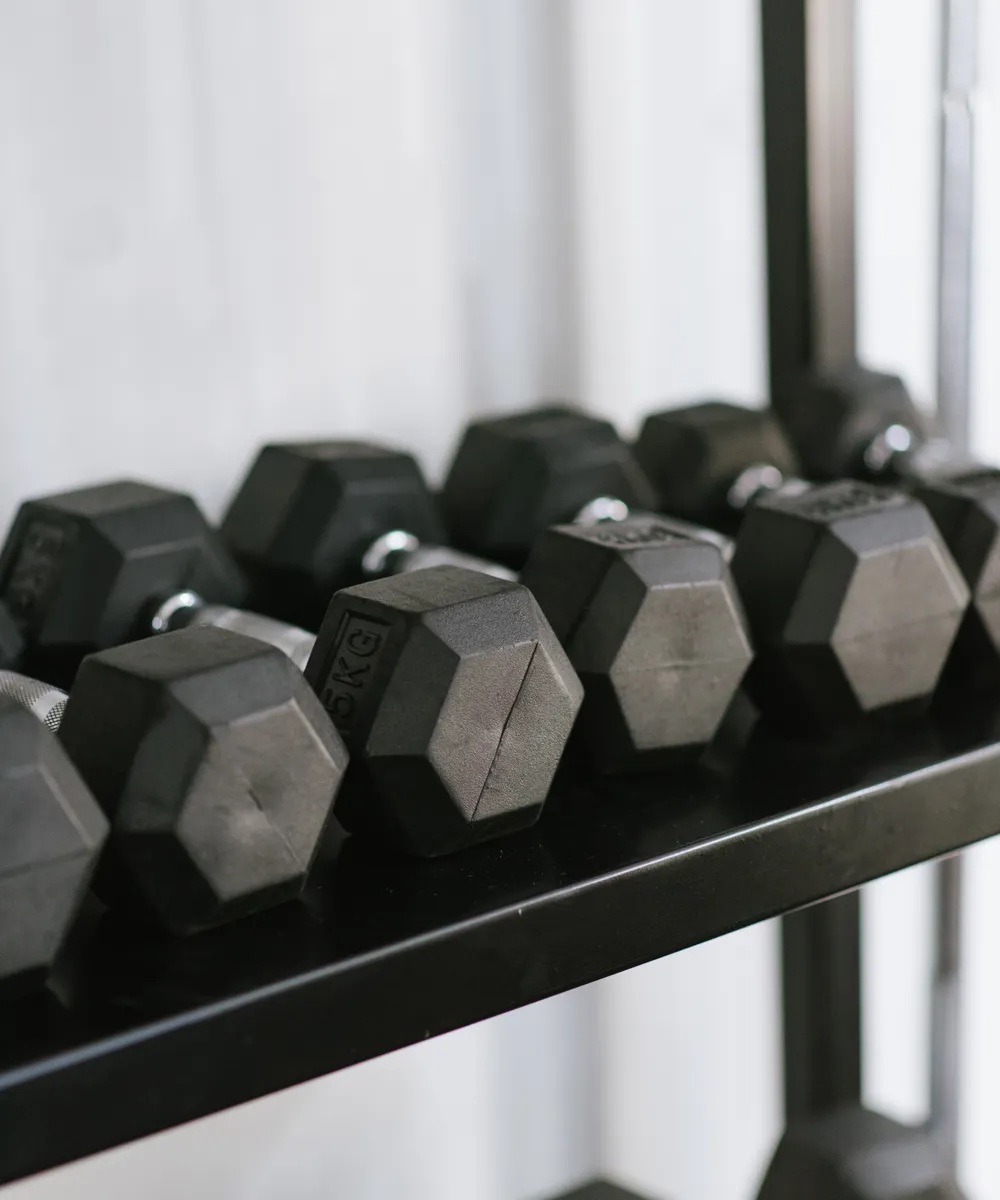
Start by weighing the gear you intend to store, including handles and accessories, then verify the published capacity of any rack or shelf. A freestanding rack should sit on a level surface with enough access to lift each weight without twisting into a cramped corner. If you own just one pair, a low stable tray or protective floor mat may be more discreet than a full stand. Do not place loose weights on furniture with an unknown load capacity or balance them on open overhead shelving.
Adjustable dumbbells: measure their full length at the widest setting and keep any adjustment base or cradle together with the handles. Follow the manufacturer’s storage and handling directions. Kettlebells: use low storage that prevents rolling or tipping and leaves adequate grip clearance.
SMART SPACE FINDS / CURATED STORAGE EDIT
Dumbbell Storage Worth Considering
Choose a rack only after checking your available floor space, dumbbell dimensions and the manufacturer’s load rating.
Affiliate disclosure: As an Amazon Associate, Smart Space Finds earns from qualifying purchases. This product link may earn us a commission at no additional cost to you.
Yoga mat and Pilates equipment storage
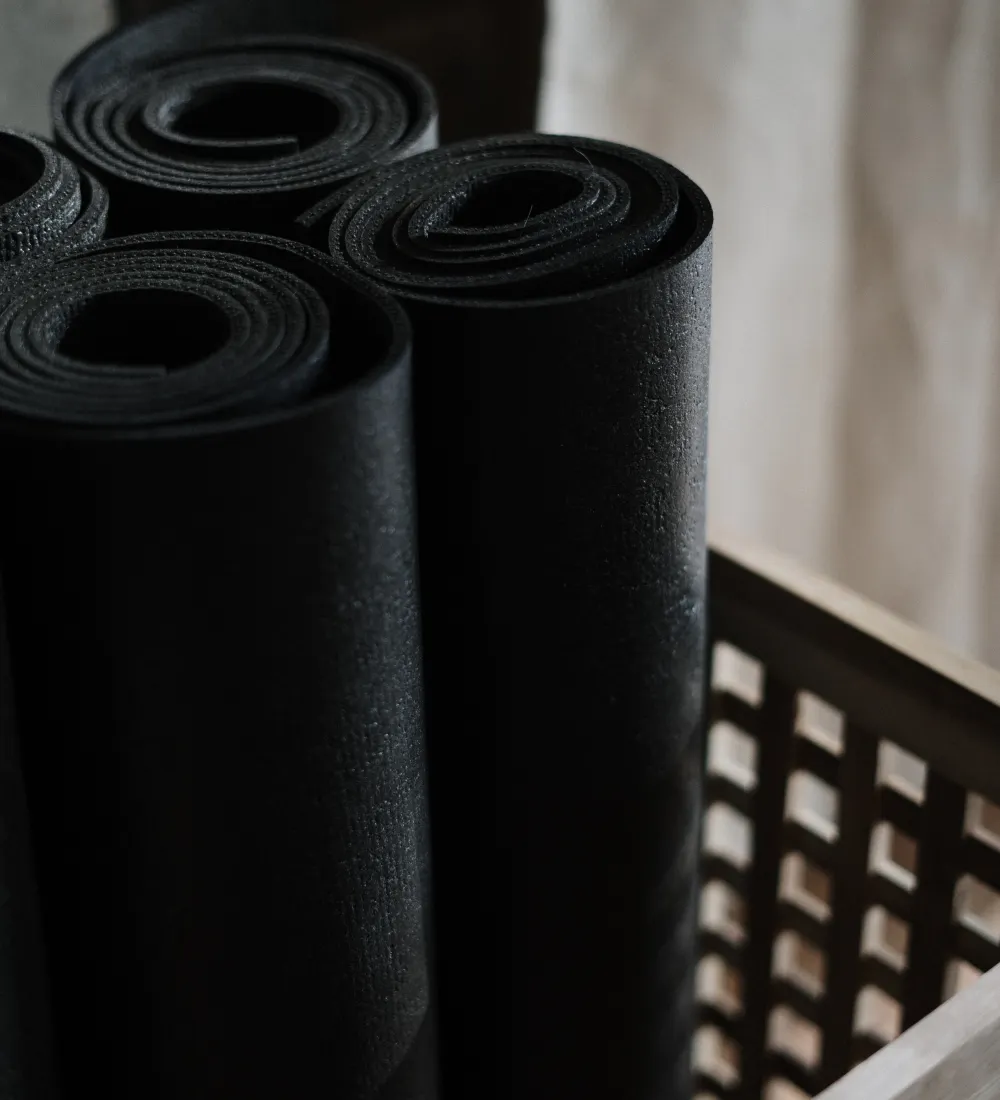
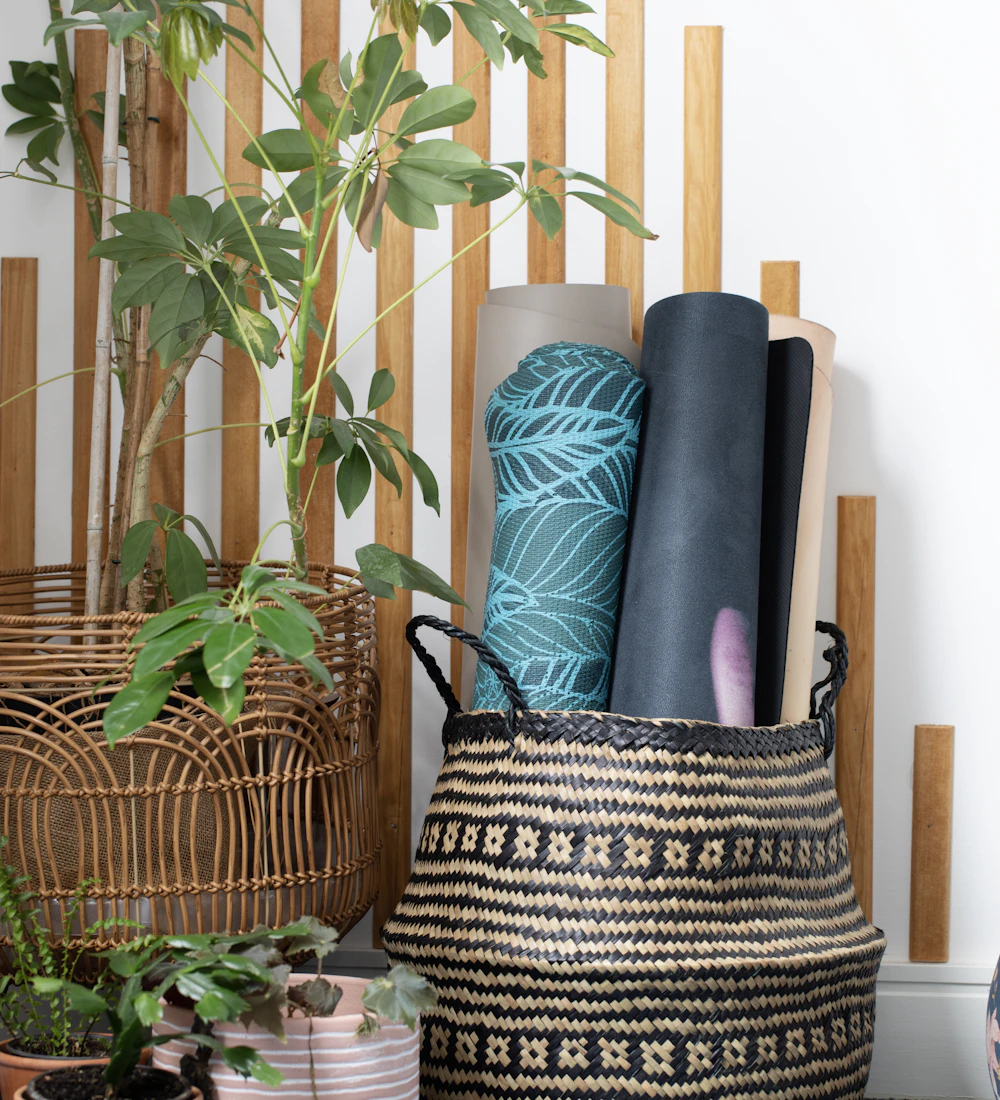
Store a mat rolled only if the manufacturer’s care instructions allow it; some thicker mats are designed to lie flat or fold. A tall open basket, corner holder or dedicated lightweight wall-mounted mat holder can free up floor space. Leave room for the mat to dry after cleaning. Keep yoga blocks together in a small open basket and place straps or soft Pilates accessories in a labeled pouch.
SMART SPACE FINDS / CURATED STORAGE EDIT
Yoga Mat & Foam Roller Storage
Wall-mounted organizer for yoga mats, rollers and lightweight exercise accessories. Install into suitable structural support according to the maker’s instructions.
Affiliate disclosure: As an Amazon Associate, Smart Space Finds earns from qualifying purchases. We may earn a commission from qualifying purchases through these links, at no additional cost to you.
Resistance bands, handles and small exercise accessories
SMART SPACE FINDS / CURATED FITNESS EDIT
Compact Workout Kit Add-Ons
A simple set of resistance loops is easy to organize in a small pouch or drawer. Inspect the bands for damage before each use.
Affiliate disclosure: As an Amazon Associate, Smart Space Finds earns from qualifying purchases. We may earn a commission through these product links at no additional cost to you.
Fabric bands, mini loops, long latex bands and tube bands are easier to find when kept in separate pouches. Label storage by activity—strength, mobility or recovery—rather than by color alone because color-to-resistance coding varies across brands. Store away from sunlight, extreme temperatures and sharp edges. Check bands for wear before each workout and replace damaged items.
Foam rollers, massage balls and recovery accessories
Foam rollers can fit beside a wardrobe, but only where they cannot tip into the walking path. Massage balls fit well in small divided bins. Keep recovery and strength accessories separate so smaller items do not end up buried underneath heavier equipment.
Jump ropes, sliders, ankle weights and workout towels
Coil jump ropes loosely, keeping the rope from sharp bends. Store sliders flat, protect surfaces from abrasive accessories, and keep ankle weights on a low, adequately rated surface. Clean and dry towels and sweat-prone gear before returning them to enclosed storage. If an item is still damp, provide a temporary drying location rather than putting it straight back in the closet.
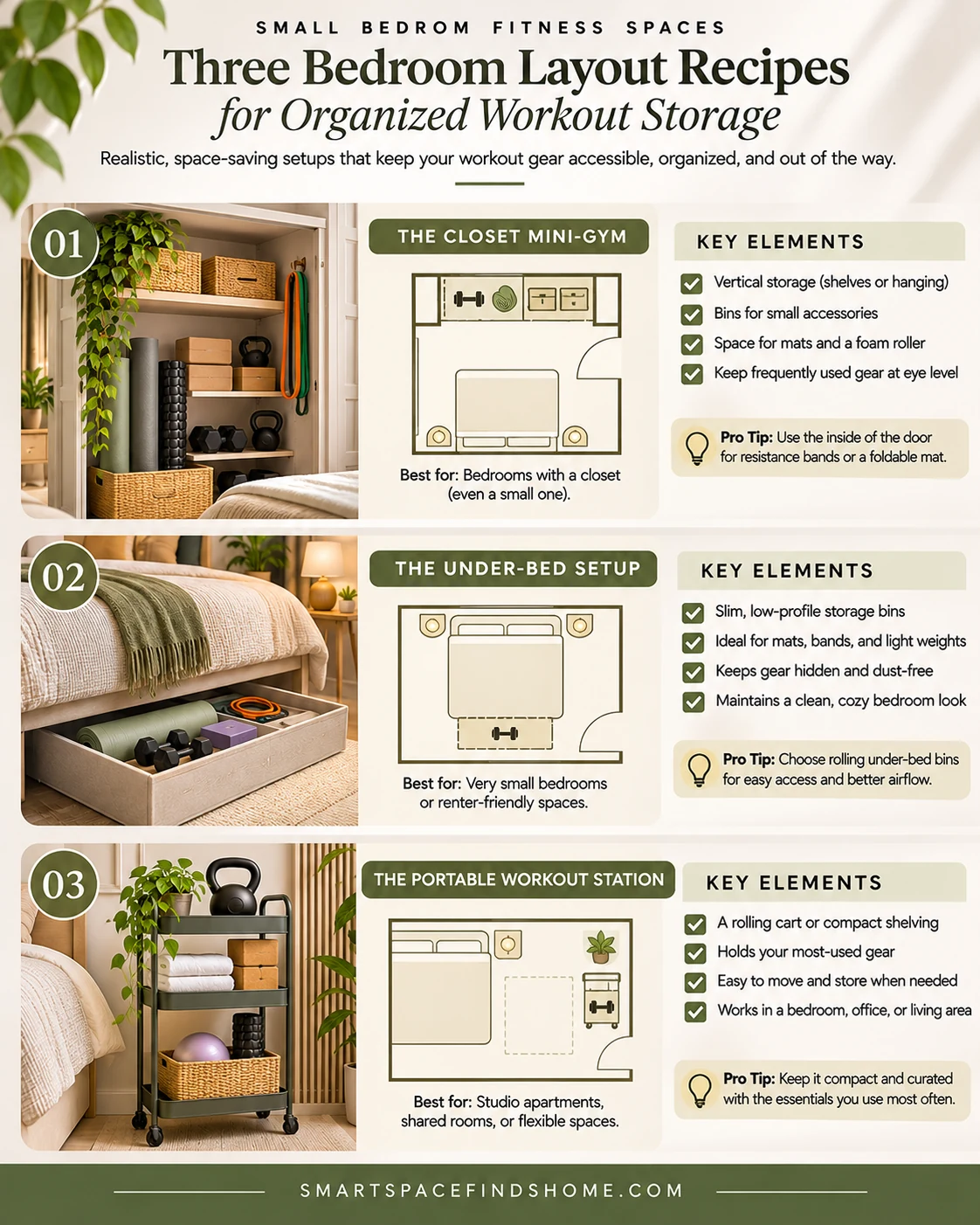
Three Layout Recipes That Keep a Bedroom Looking Like a Bedroom
LAYOUT A / THE CLOSET MICRO-GYM
One lower shelf + one accessory bin
Set a small, rated weight stand at floor level, place a vertical mat holder beside it, and use one upper bin for bands and straps. Ideal when you can give up a narrow slice of a wardrobe.
LAYOUT B / THE UNDER-BED EDIT
Flat containers + a concealed kit
Store clean, fully dry mats and light accessories in shallow bins; reserve a nearby low, stable location for weights. Ideal for small bedrooms where closet space is already full.
LAYOUT C / THE NO-DRILL RESET
Portable basket + light door pockets
Use one carry basket for portable accessories and an over-door pocket organizer for very light items only. Ideal for renters and workouts that disappear immediately after use.
SMART SPACE FINDS / CURATED STORAGE EDIT
Under-Bed Workout Accessory Storage
Fabric containers work best for clean, dry, lightweight mats, towels, bands and recovery accessories. Never use them to drag or carry loose heavy weights.
Affiliate disclosure: As an Amazon Associate, Smart Space Finds earns from qualifying purchases. We may earn a commission from qualifying purchases through these links, at no additional cost to you.
THE ROOM EDIT / 02
Three Realistic Storage Setups, from Minimal to Fully Equipped
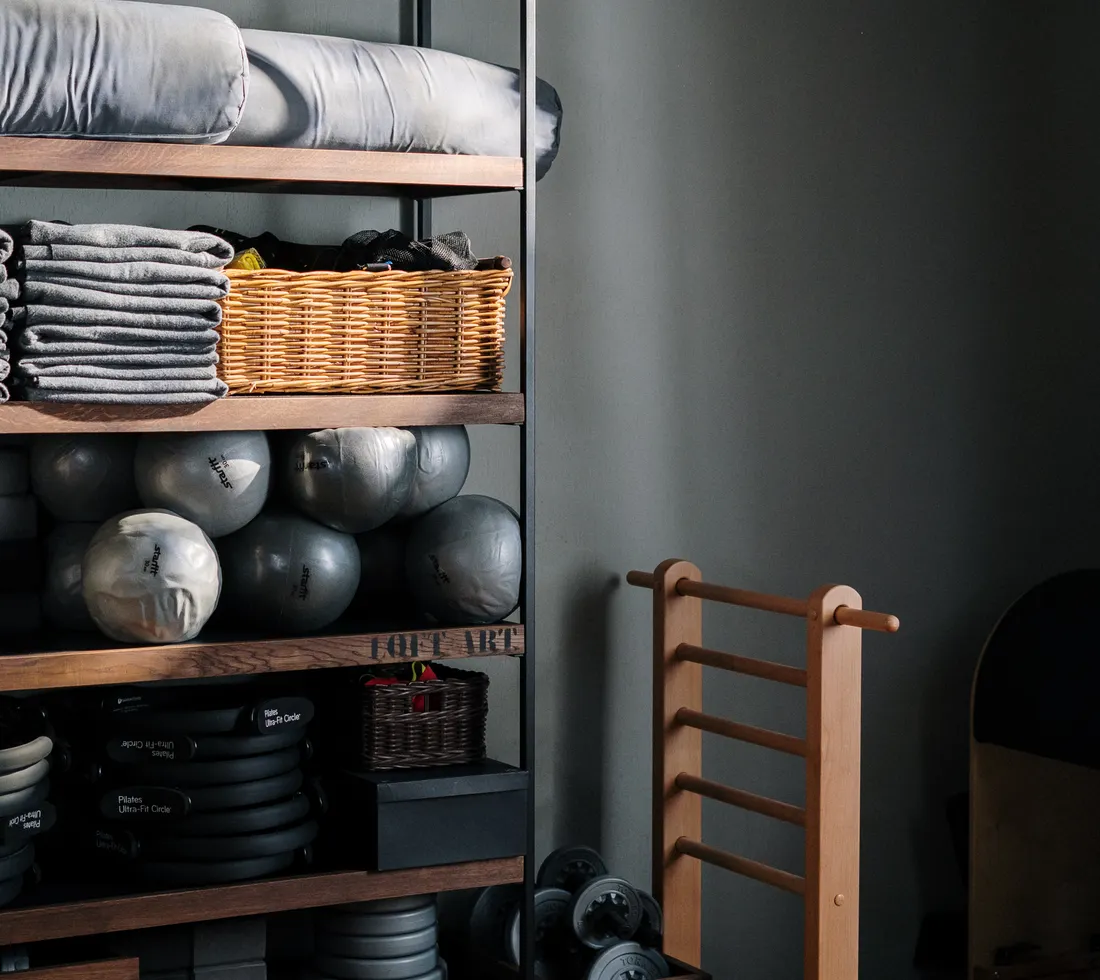
A small-space workout system should match the amount of gear you own—not an idealized photo of an enormous home gym. These three examples are starting layouts, not universal product recommendations.
01 / THE ESSENTIALS KIT
A mat, two bands and a jump rope
Use one vented mat holder and one divided drawer or grab-and-go pouch. This is a smart setup for daily mobility, Pilates or light workouts, especially when a full rack would be unnecessary.
02 / THE COMPACT STRENGTH EDIT
One adjustable dumbbell set plus accessories
Place the dumbbells and their stand or cradle on a level, load-rated floor zone. Add one lightweight organizer for bands and grips, rather than storing everything on the weight station. Confirm space to lift the handles safely.
03 / THE SHARED BEDROOM SYSTEM
Equipment that has to disappear after every workout
Combine a soft-accessory tote, a stable low-weight parking spot and a separate laundry or drying zone. Keep floor clearance around the bed, doors and furniture completely unobstructed.
THE 90-SECOND RESET
A beautiful home gym is one that knows when to disappear.
Allow sweat-prone gear to dry, return heavy items to their secure low location, roll or fold the mat according to its care guidance, put small accessories back in their labeled zone and leave the floor clear.
What Should Go Where? A Simple Storage Matrix
| Equipment | Best starting place | Avoid |
|---|---|---|
| Dumbbells & kettlebells | Closet floor or rated low stand | High or unrated shelves |
| Yoga & exercise mats | Dry upright holder | Sealed storage while damp |
| Resistance bands | Divided pouch or light hooks | Heat, sunlight and tangles |
| Foam roller | Stable vertical corner | Doorways and walkways |
| Jump ropes & straps | Drawer divider or pocket | Mixed catch-all bins |
| Towels & workout clothes | Breathable laundry station | Closed damp containers |
Choose the Right Organizer for Your Space
There is no universally best workout gear organizer. A closet with deep shelves needs a different solution from a narrow bedroom with an under-bed gap, and heavy weights require a different safety standard from fabric bands.
YOUR STORAGE DECISION TREE
Mostly heavy weights? Begin with a stable, rated low rack or floor-level station.
Mostly mats and rollers? Look for breathable vertical storage or a low-profile dry compartment.
Mostly bands and small items? Choose divided drawers, pouches or a lightweight pocket organizer.
No permanent workout corner? Create one portable kit with a clear return location.
Closet vs. bedroom vs. under-bed: the tradeoffs
Closet storage hides gear and works well when there is spare low-level space, but access can be awkward behind clothing. Bedroom furniture offers faster access and may double as decor but can add visual bulk. Under-bed storage keeps lightweight gear out of sight but is inconvenient for heavy objects and requires precise clearance measurements. Choose based on how often you work out, not solely on the organizer’s appearance.
What about renters and no-drill storage?
Use freestanding containers, stable floor-level stands, drawer dividers and removable organizers designed for light loads. Check door movement and the building’s rules before attaching anything. Adhesive hooks, over-door pockets and tension poles are not substitutes for engineered weight-bearing anchors.
A practical 30-minute closet reset
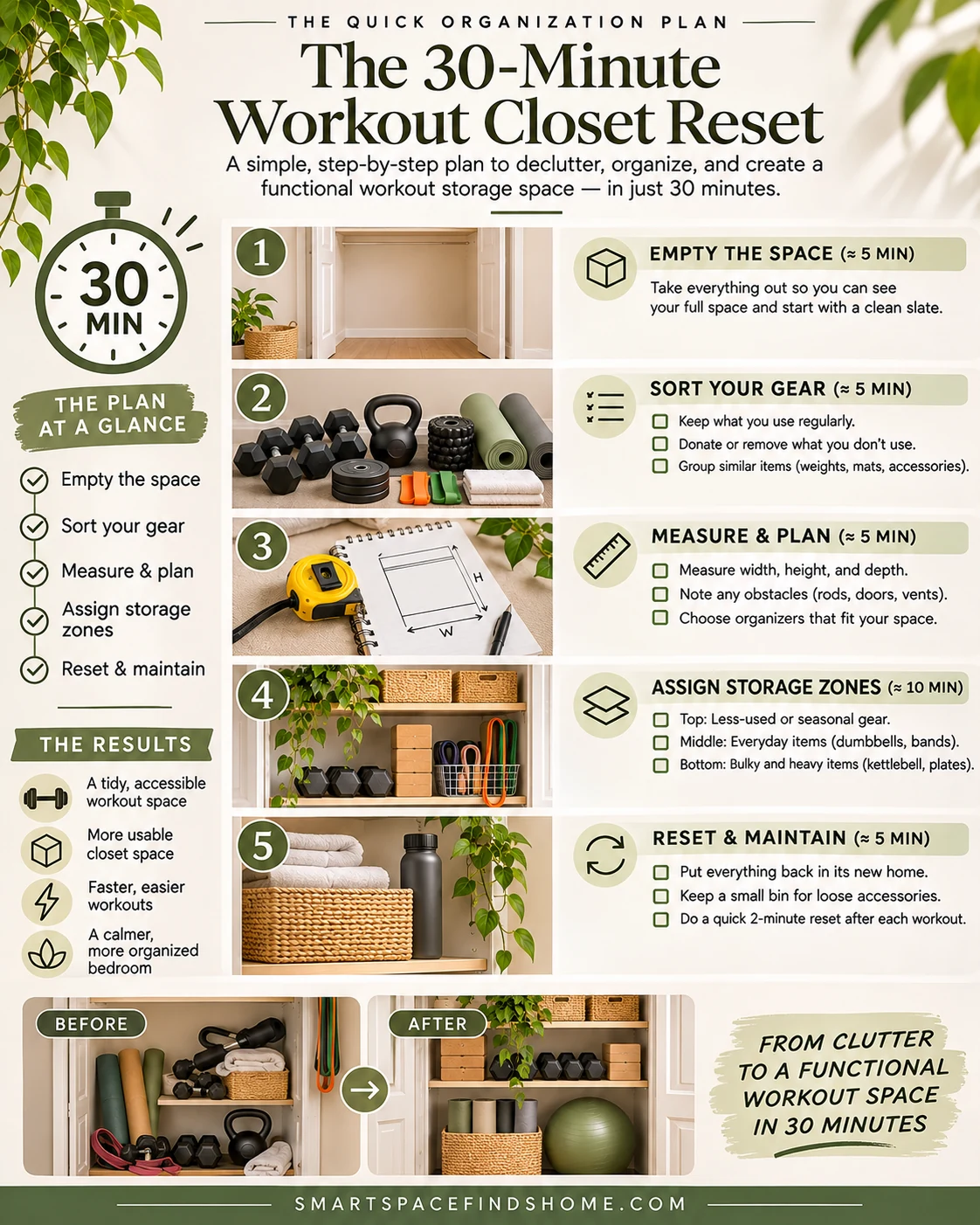
- Minutes 0–5: remove the gear, wipe and dry the storage space, and discard broken accessories.
- Minutes 5–10: sort by weight and workout type; identify which items you use weekly.
- Minutes 10–15: measure the available shelf, closet floor and door clearance.
- Minutes 15–25: create a low, stable heavy-equipment zone and separate compartments for lightweight tools.
- Minutes 25–30: return everything, test the opening and walking path, and photograph the layout for your next reset.
What to Buy—and What to Skip
A beautiful organizer is only useful when its dimensions, load rating and daily access match your actual space. Before purchasing, check:
- Exact dimensions: include handles, lid swing, door clearance and mat diameter.
- Published load limits: especially for racks, shelves, carts and wall attachments.
- Installation requirements: renter-friendly does not mean every hook can safely carry exercise weights.
- Floor protection: use suitable mats or pads under stable heavy gear where needed.
- Ventilation and cleaning: dry equipment before putting it away.
- Visual cohesion: choose one or two basket finishes instead of six competing organizer styles.
Start with the storage zone, not the product. A narrow shelf you already own may solve the problem better than a new organizer that consumes valuable floor space.
Common Mistakes to Avoid
Do not stack loose dumbbells, store weighted equipment above head height, attach heavy loads to unverified drywall anchors, block bedroom exits, or seal damp gear in an airtight bin. Avoid elaborate display systems if your real goal is for the workout space to disappear.
Frequently Asked Questions
How do I hide workout equipment in a small bedroom?
Start with a closet-floor zone, a concealed bench for light accessories, or a shallow under-bed bin. Select a limited everyday kit, then store each piece in a designated place so the room can return to its normal function after training.
Where should dumbbells be stored in a closet?
On a low, stable surface or a dedicated stand rated for their combined weight. Check stability, clearance and the manufacturer’s limits. Do not place heavy dumbbells on ordinary floating shelves.
Can I store yoga mats under my bed?
Yes, if the mat is completely dry, lies or rolls without damage, and the container fits your under-bed clearance. Avoid squeezing thick mats into spaces that deform them.
What is the best no-drill workout gear organizer?
For light gear, use a divided drawer, portable basket or properly rated over-door pockets. Heavy dumbbells and kettlebells still need secure low-level storage rather than hanging organizers.
How do I keep resistance bands from getting tangled?
Separate bands by type, fold them loosely, and use individual pouches or dividers. Keep them away from excess heat and sunlight, and inspect them for wear before use.
How much space do I need for a bedroom workout corner?
There is no one-size-fits-all footprint. Check the clear space your actual movements require, including arm reach, mat length, head clearance and a safe path around furniture. Test the layout without equipment first.
The Final Edit: Make the Space Easy to Reset
A well-organized bedroom gym doesn’t have to look like a gym. When weights live low, accessories stay sorted, mats have a dry home and every item returns to its place, your room can support both training and rest.
For more ideas, explore our home gym equipment storage guide, closet organization ideas and small bedroom closet organizers.
Editorial note: We prioritize practical fit and safe storage. Any future product recommendations should be verified for exact model, dimensions, load capacity and availability before affiliate links are added.