
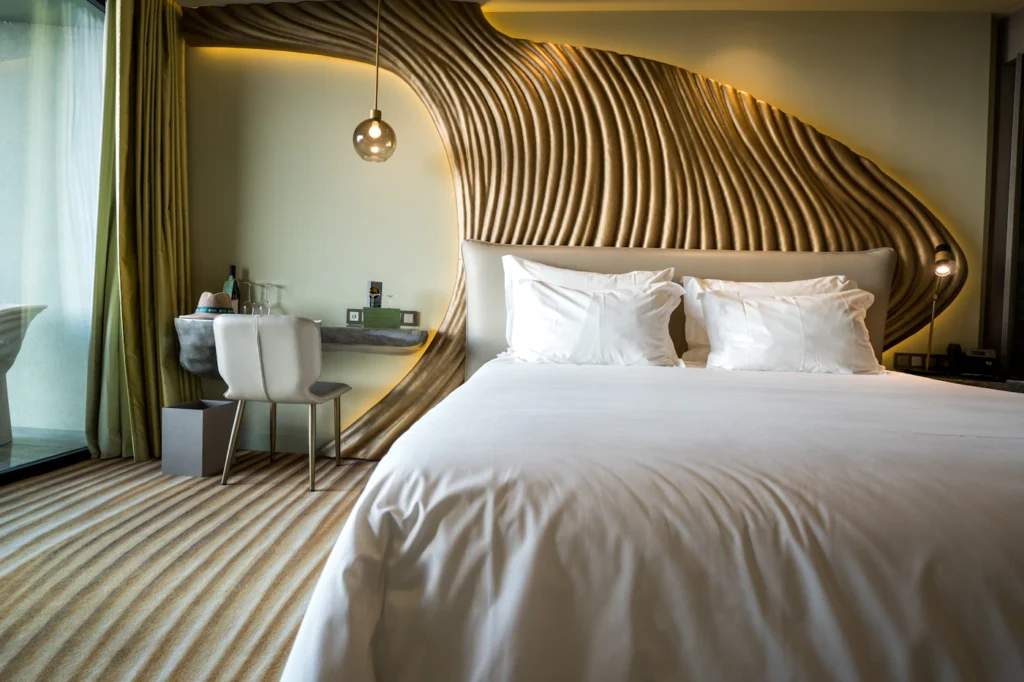
THE BEDROOM EDIT / SMALL SPACE LUXURY
A beautiful hotel room isn’t defined by its square footage. It’s defined by how carefully every detail has been considered.
Wondering how to make a small bedroom feel like a boutique hotel without a renovation or designer-sized budget? Start with the elements you actually experience: a welcoming bed, soft light, considered textures, calm surfaces, and an easy evening routine. Even a compact rental bedroom can feel like a thoughtfully designed retreat.
This guide walks you through the entire transformation, from the first five-minute edit to the finishing details, with realistic solutions for tight floor plans and limited storage.
THE BOUTIQUE-HOTEL FORMULA
One focal point + beautiful bedding + three layers of light + concealed clutter + a restrained palette + one signature detail.
01 / THE FOUNDATION
Make the Room Feel Intentional Before You Buy Anything
The most expensive-looking bedrooms usually have a clear point of view. Begin by taking a photo from the doorway. What is the first thing you notice: the bed, a pile of clothes, tangled chargers, or a crowded dresser? Your goal is to make the bed—or a beautiful feature behind it—the obvious focal point.
Edit the visible surfaces
Remove the temporary residents: packaging, spare cables, abandoned laundry, mismatched bottles and anything that belongs in another room. Limit the nightstand to a reading light, one useful object and perhaps a small personal detail. Keep essential belongings close, but give them a drawer, tray or basket rather than a permanent place on display.
Measure the everyday pathways
Measure the bed, door swing, drawer clearance and actual walking routes before buying a larger headboard or another piece of furniture. Aim for approximately 24–30 inches of circulation where feasible, but adapt to your real floor plan; don’t sacrifice safe access to doors or windows. Mark possible furniture footprints with painter’s tape to test them before spending.
Editor’s note: A boutique look is curated, not empty. Keep a few personal objects that make the room yours, rather than copying an anonymous hotel suite.
02 / THE FOCAL POINT
Build a Hotel-Worthy Bed in Five Layers
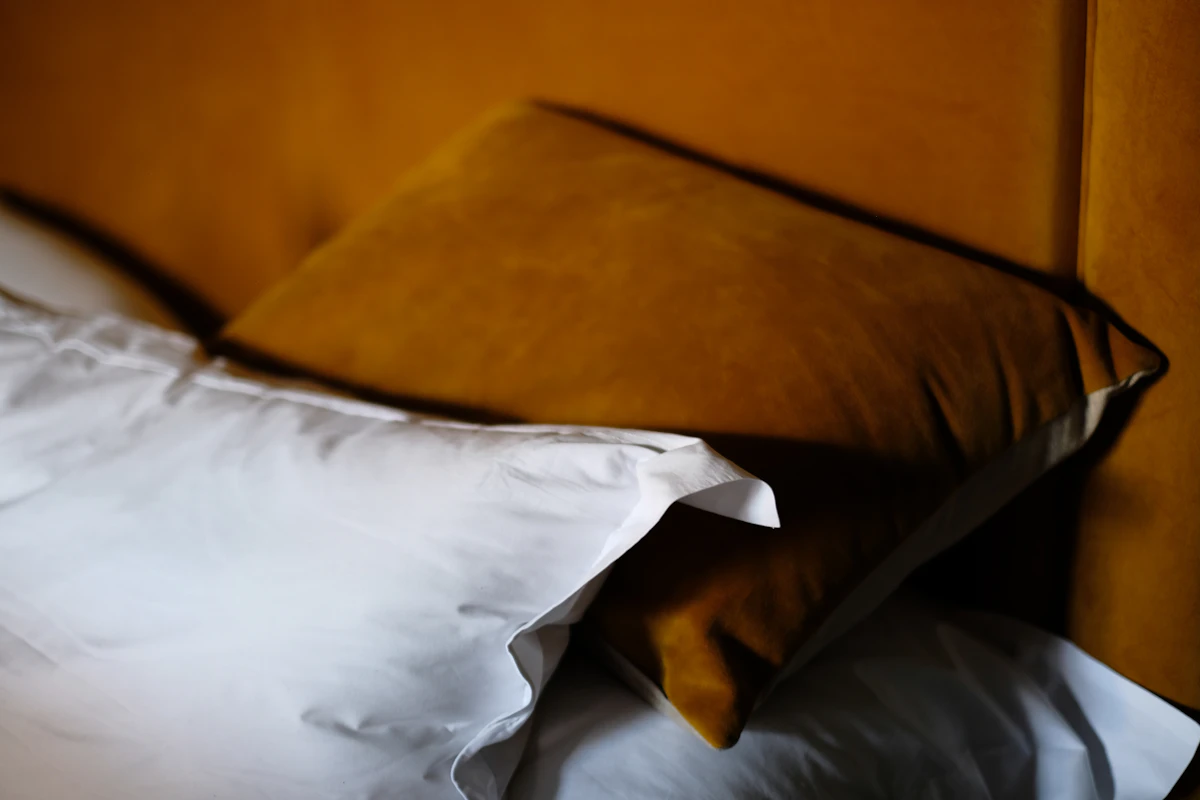
In most small bedrooms, the bed dominates the visual field. That makes it your highest-impact styling opportunity. You don’t need a giant bed frame: you need well-fitting bedding and a sense of proportion.
- Start with the foundation. Select breathable sheets that feel comfortable against your skin. Cotton percale is crisp; cotton sateen feels smoother and more fluid. Material and weave matter more than a large thread-count number.
- Choose a properly sized duvet. A well-filled insert inside a correctly sized cover creates soft volume without the untidy overhang of an oversized comforter.
- Give the pillows structure. Arrange sleeping pillows at the back and add one or two decorative cushions. Avoid piling on so many that the entire bed needs to be disassembled every night.
- Fold in a tactile layer. A cotton, linen or wool-blend throw across the foot of the bed adds a restrained second texture.
- Finish with restraint. Smooth the duvet, soften one corner and allow some natural folds. An inviting bed should look comfortable, not staged beyond use.
Upgrade the pillow and sheets you actually sleep on before buying decorative cushions. Comfort is part of the design.
THE FIVE-STAR BED / LAYER-BY-LAYER
Choose a headboard that adds presence, not bulk
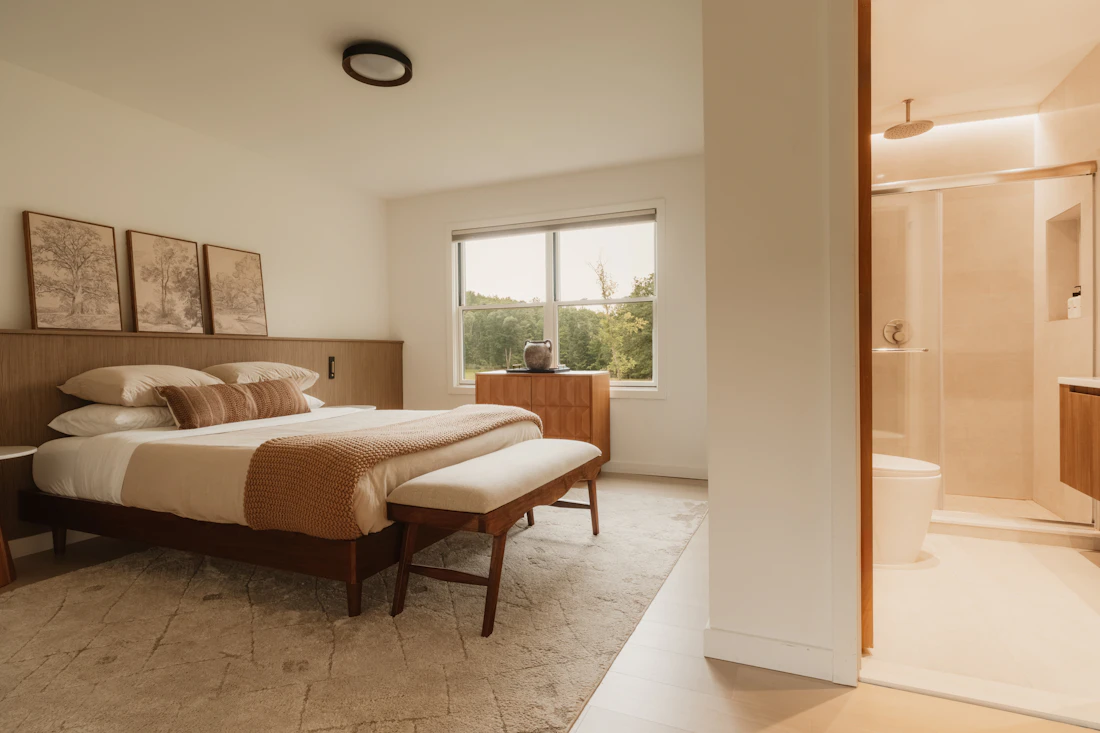
A simple upholstered or lightly padded headboard instantly gives the bed a tailored look. In a narrow bedroom, a slim wall-mounted design can deliver impact without consuming valuable depth. Renters can instead rely on oversize framed artwork, a removable textile panel used safely, or a strong paint color behind the bed.
03 / THE ATMOSPHERE
Use Layered Lighting Instead of One Harsh Ceiling Light
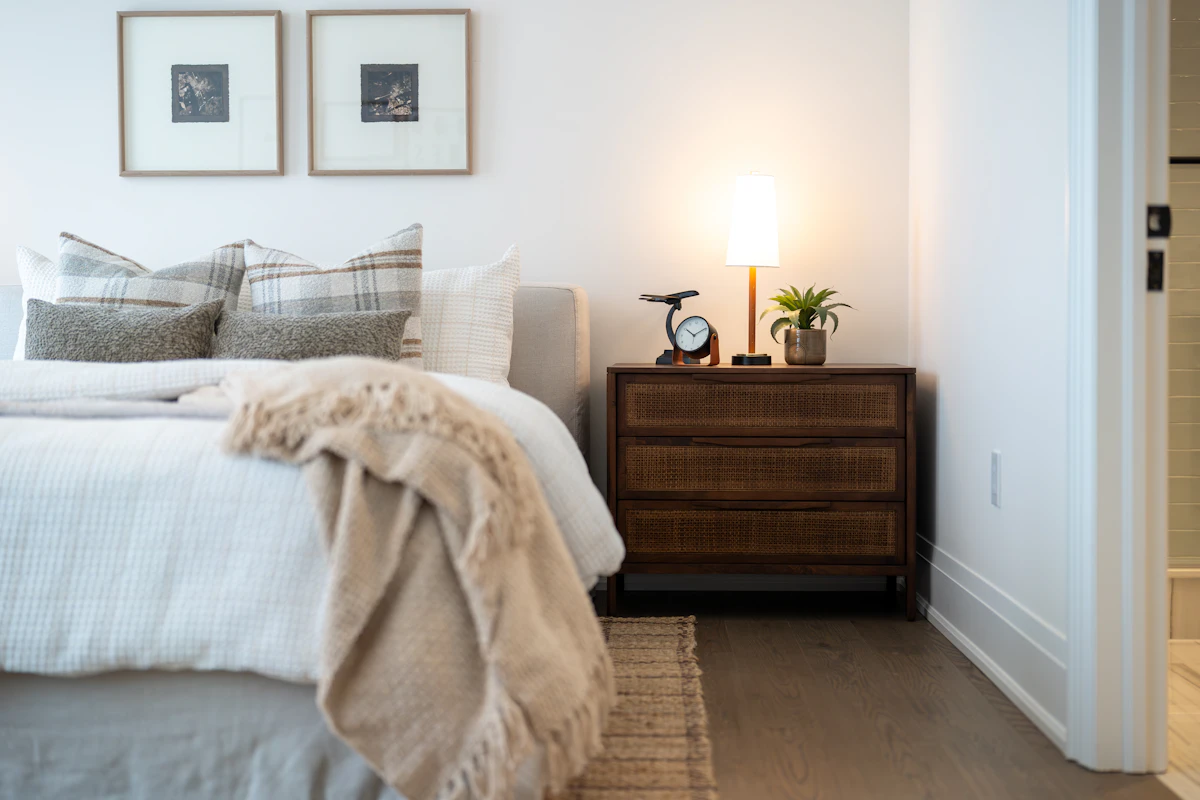
Lighting is one of the strongest differences between an ordinary bedroom and a carefully designed hotel room. Think in three layers: ambient light for the room, task light for reading and dressing, and accent light to create depth.
The compact-room lighting plan
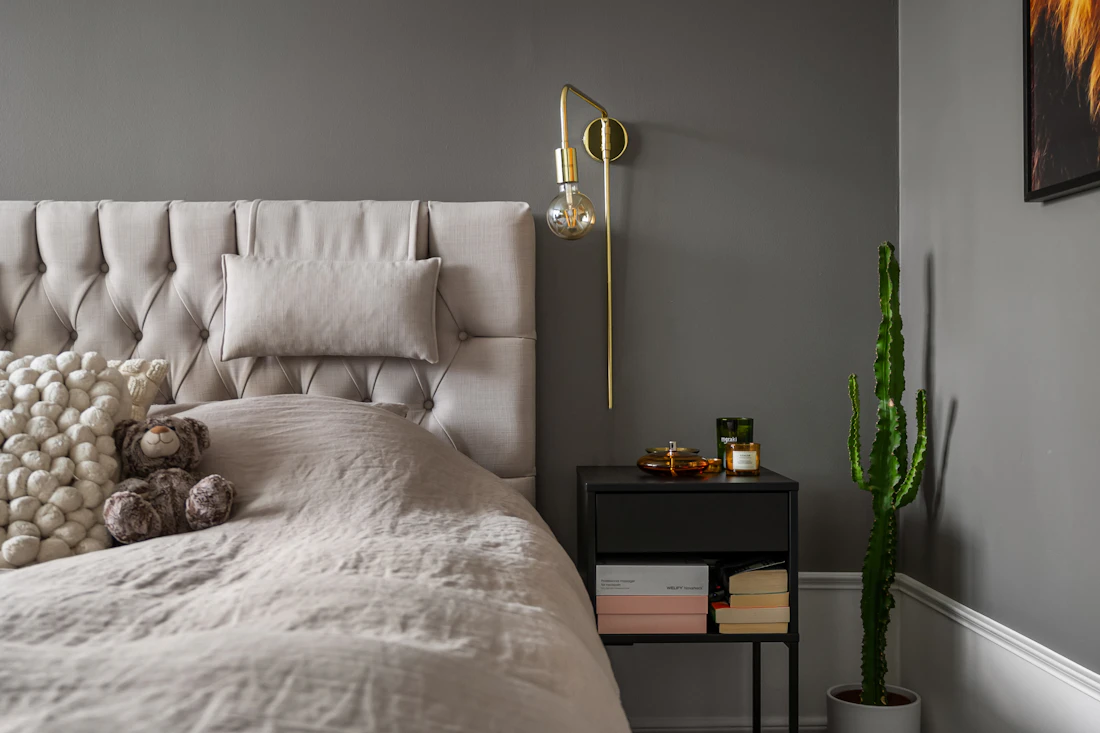
Use a warm, diffused overhead source for general illumination, then add adjustable bedside sconces or shaded lamps. A slim accent lamp or discreet picture light can make the bed wall feel considered. Around 2700K is a practical starting point for a cozy evening glow, while reading lights should be bright and directional enough for the task. Choose dimmable and compatible fixtures where possible.
Wall sconces are particularly useful when nightstands are narrow. For rentals, plug-in wall lights may avoid hardwiring, but route cords securely and follow the mounting and electrical instructions. Never place hot lamps against fabric or use incompatible bulbs.
For more placement ideas, explore our cozy bedroom lighting guide.
Make the window treatment work twice
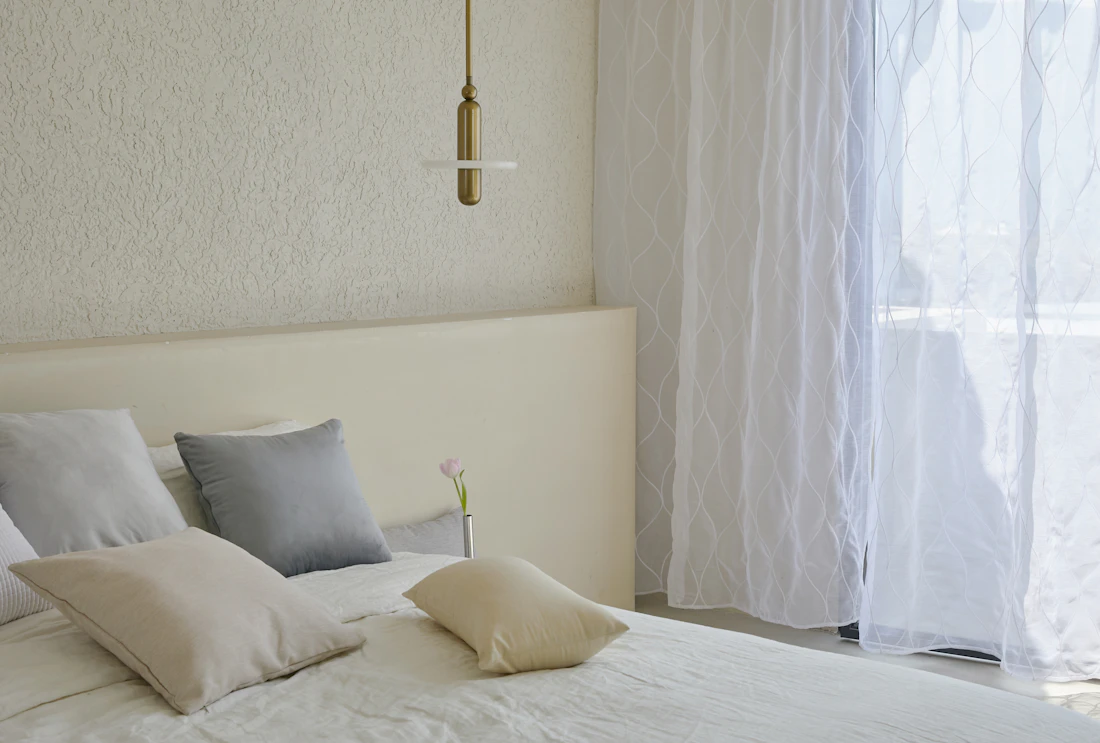
Choose curtains that control unwanted light while contributing texture and height. A properly fitted blackout lining helps with streetlights and early sun; a sheer layer offers daytime privacy while admitting light. Where the room allows, placing the rod higher and slightly wider than the window can make the opening feel more generous. Check the mounting method and curtain clearance before committing.
04 / THE DESIGN LANGUAGE
Create Quiet Luxury with Color, Texture and Scale
A boutique hotel bedroom doesn’t have to be white or beige. What matters is a cohesive, deliberate palette. Choose one dominant wall color, a supporting tone for bedding and upholstery, and one restrained accent for art, hardware or cushions.
Three palettes that work in a small bedroom
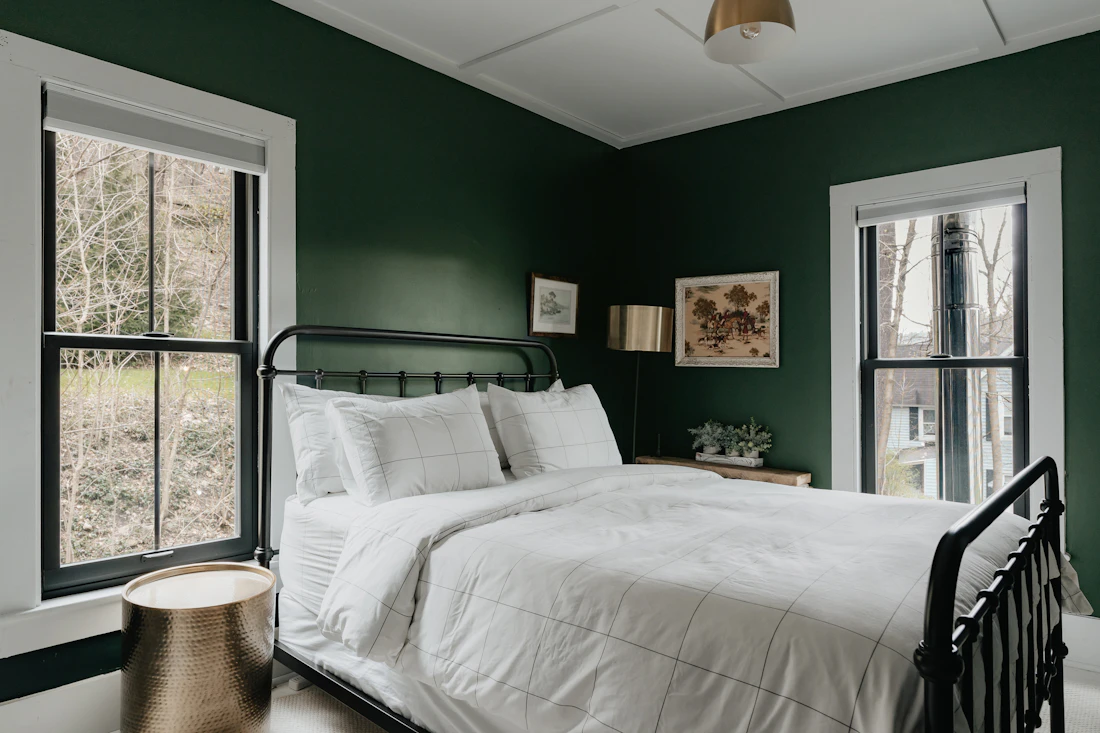
Warm minimal: ivory, oatmeal, mushroom and aged brass. Soft, airy and easy to layer.
Moody boutique: olive, deep tobacco, warm cream and dark timber. Best when the lighting is intentional.
Modern coastal: chalk, soft sand, faded blue-gray and natural oak. Relaxed without feeling themed.
Mix materials within the palette: matte ceramic, washed linen, wood grain, woven textiles or brushed metal. Repetition makes the room coherent; tactile contrast keeps it interesting. Avoid adding multiple competing patterns just because each looked beautiful on its own.
Get the scale right
Don’t automatically buy miniature furniture. A too-small rug or several tiny pictures can make the room appear fragmented. One well-proportioned piece of artwork above the bed may look calmer than a busy gallery wall. If you add a rug, measure from the bed outward so that its visible edges feel substantial instead of accidental.
Use mirrors strategically
Position a mirror where it reflects daylight or an attractive part of the room rather than clutter. Anchor tall mirrors securely to prevent tipping. The goal is visual depth and useful function, not simply more reflective surfaces.
05 / THE SMALL-SPACE BLUEPRINT
Choose the Layout That Fits Your Bedroom
THE LAYOUT ATLAS / FOUR REAL-WORLD SOLUTIONS
Small Bedroom Layouts, Decoded
These are conceptual arrangements—not construction drawings. Measure your exact room, check door swings, and keep all exit routes clear.
Bed on a long wall
Balanced bed wall
Defined sleep zone
Ease of access first
DESIGN NOTE: These diagrams show spatial priorities, not scaled measurements or guaranteed furniture clearances.
Layout A: The narrow bedroom
Place the bed along the longest practical wall and preserve the best circulation route. Replace chunky bedside cabinets with slim wall-mounted shelves or a single compact table if needed. Keep the opposite wall visually light and avoid deep furniture that blocks drawers or doors.
Layout B: The square bedroom
Center the bed on a clear wall when the dimensions permit, then create balance through paired sconces, artwork or repeated finishes—not necessarily identical furniture. If one bedside is tighter, use a small stool or floating shelf to maintain function without forcing symmetry.
Layout C: The studio sleeping nook
Let the bedroom zone have its own identity through bedding, a rug and a localized bedside lamp. Consider a lightweight screen or curtain only where it won’t block ventilation, windows or emergency routes. Concealed storage is particularly valuable when the bed is visible from the living area.
Layout D: The tiny guest bedroom
Focus on comfortable linens, an accessible outlet, a reading light, a hook, a small surface for water and room for a suitcase. Guests appreciate practical hospitality more than elaborate styling. See also our small-space furniture and decor ideas.
Practical rule: The right layout is the one that works with the door open, storage in use and a real person moving through the space.
06 / THE LAST FIVE PERCENT
Add the Personal Details That Make a Room Memorable
Once the bed, lighting and layout work, introduce just one signature moment: a sculptural lamp, framed artwork, a beautiful ceramic vase, a textured bed throw or a neatly arranged book. Boutique hotels often feel memorable because a few pieces have character, not because every surface is decorated.
Keep fragrance subtle and optional. Fresh air and clean fabrics are a better starting point than overpowering room sprays. Be mindful of allergies and pets when choosing scented products. Put charging cables out of sight but keep outlets accessible, and choose a small catchall tray for everyday necessities.
The five-minute evening turn-down
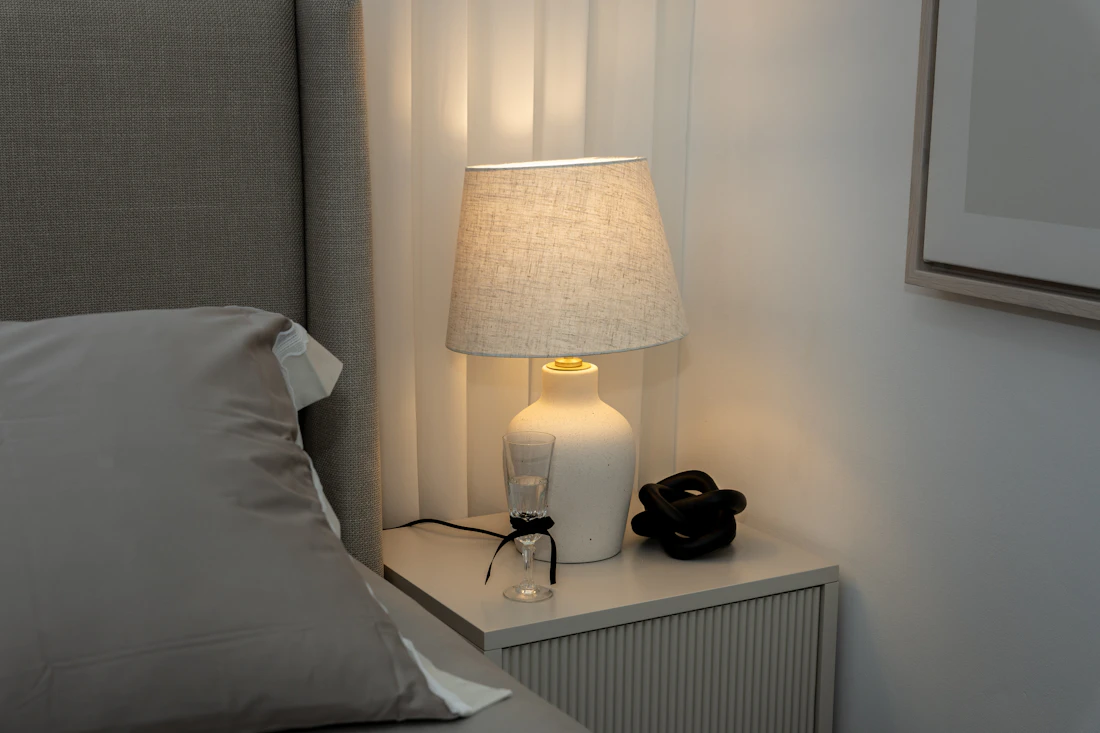
Put away clothes, reset the nightstand, dim the main lights, close the curtains and straighten the bedding. This simple routine reinforces the quiet atmosphere you’ve created without turning your bedroom into another chore.
For a calmer daily ritual, read our calming bedroom ideas.
07 / THE SMART SPEND
What to Upgrade First: Three Realistic Budgets
These are planning ranges, not current product prices. Your final spend will depend on what you already own and your room’s dimensions.
Under $100 — The styling reset
Declutter and rearrange what you have. Prioritize a warm-compatible bulb, a useful tray, fresh pillowcases or one coordinated textile. Spend almost nothing on decor until the room’s problem areas are clear.
$100–$300 — The comfort edit
Invest in bedding you will use nightly, improve bedside lighting, and add practical hidden storage if it solves a real problem.
$300–$750+ — The considered upgrade
Consider a slim upholstered headboard, better window coverings, a properly sized rug or more durable furniture. Choose the single change with the greatest visual and functional payoff first.
Seven mistakes that make a small bedroom feel less luxurious
- Buying a king bed that crowds the circulation route.
- Using only a bright overhead light.
- Combining too many decorative colors and finishes.
- Choosing a rug too small to visually anchor the bed.
- Overfilling the bed with decorative pillows.
- Leaving everyday clutter exposed on all surfaces.
- Buying decor before measuring the room and identifying storage needs.
08 / THE DESIGN DESK
The Boutique Bedroom Design Desk: Make Every Inch Count
Transforming a bedroom is easier when you stop shopping by category and start planning by experience. Walk through your room in this order: what you see upon entering, how you reach the bed, how you turn off the light, where you store essentials, and what you see when you wake up. The hotel feeling should work throughout those moments.
Choose a signature look: three curated color stories
The Linen Suite
Ivory + oat + mushroom + brushed brass. Ideal for a bright bedroom that needs warmth.
The Olive Residence
Olive + camel + espresso + cream. For intimate, moody hotel character.
The Coastal Atelier
Chalk + mist + oak + slate. A sophisticated coastal mood without obvious nautical decor.
THE $300 ROOM EDIT / ILLUSTRATIVE SHOPPING PLAN
A Boutique-Hotel Feeling, Not a Boutique-Hotel Price Tag
Example allocation for a renter who already owns a bed, mattress and essential furniture. This is a suggested spending framework—not a claim that a photographed room was renovated for $300 or a quote for specific products.
| Upgrade | Example allowance | Why it matters |
|---|---|---|
| Sheets + pillowcases | $90 | Touch and consistency |
| Duvet cover or throw | $70 | A tailored focal point |
| Warm bedside lighting | $60 | Evening atmosphere |
| Curtain improvement | $55 | Light control |
| Styling tray + finishing detail | $25 | Clear, cohesive surfaces |
| Illustrative total | $300 |
Prices are indicative planning allowances, not verified current retail offers; taxes, shipping and labor are not included.
The 48-hour boutique-bedroom makeover
Friday evening — Clear the canvas: Remove visual clutter; sort bedside items; measure pathways, bed width, window and rug zones; take a doorway photograph.
Saturday — Build the atmosphere: Wash and style bedding, arrange or relocate furniture within safe clearances, adjust bedside lamps, and test curtain positions. Shop only for gaps that the room actually reveals.
Sunday — Curate the finish: Add one visual statement, tidy cables, refine the color palette, and test the room in daylight and at night. Take a second photo from the same doorway position to judge the difference.
A small-room purchasing decision matrix
| Upgrade | Best when… | Watch out for… |
|---|---|---|
| New bedding | The bed feels tired or mismatched | Poor sizing or fabric discomfort |
| Bedside sconces | Nightstands have little surface area | Unsafe mounting and exposed cords |
| Blackout curtains | Outdoor light interrupts rest | Insufficient width, gaps, bad hardware |
| Concealed storage | Clutter keeps resurfacing | Blocking outlets, vents or access |
| Accent artwork | Essentials already work well | Too many tiny pieces |
Renters: get the luxury look without permanent changes
Build a coordinated bed with removable covers and a folded throw. Use freestanding or properly mounted plug-in lamps rather than rewiring. Try a lightweight rug for softness, curtains with landlord-approved hardware, and one large print leaning safely on a shelf rather than putting unsecured heavy art over the bed. Always check your lease and avoid placing decor over heating equipment or vents.
THE FIVE-SENSES HOTEL EXPERIENCE
Luxury Is Something You Feel, Not Just See
- Sight — An edited view
- Make your bed the focal point and give everyday objects a home out of sight.
- Touch — Comfortable materials
- Choose sheets, pillows and textiles for how they feel against the skin, not labels alone.
- Sound — A quieter room
- Soft furnishings can reduce echoes. Address rattling doors or external noise if possible.
- Smell — Fresh before fragrant
- Prioritize clean linens and ventilation; fragrance should remain optional and subtle.
- Comfort — Temperature and ease
- Make controls reachable from bed, adjust bedding to the season and avoid blocking ventilation.
Where to save and where to spend
Spend on what touches you: the mattress, pillow, sheets and lighting you use each evening. Save on flexible styling: ceramic trays, secondhand frames, simple curtain panels and cushion covers. A secondhand solid-wood nightstand can bring more character than a cheaply made accent piece bought only to match a trend.
Take two photos of the finished room: one in daylight and one with evening lamps on. If the bed remains the focal point, the pathways are clear and the palette still reads as cohesive in both, your bedroom has passed its boutique-hotel design test.
09 / QUICK ANSWERS
Frequently Asked Questions
How do I make a small bedroom look expensive on a budget?
Start with a controlled color palette, neatly layered bedding, warm bedside lighting and fewer visible belongings. A coordinated room generally feels more polished than one filled with unrelated accent pieces.
What colors make a small bedroom feel like a boutique hotel?
Warm ivory, taupe, clay, olive, muted blue and even deep brown can work. Use a limited set of complementary tones and give special attention to lighting and contrast.
Can a dark bedroom still feel luxurious if it is small?
Yes. Deep colors can create a cozy, enveloping atmosphere, particularly when paired with layered lights, contrasting bedding and thoughtful material textures. Dark paint will not suit every light level or preference, so test samples first.
How can I get a hotel look without a headboard?
Create a focal point with larger artwork, a carefully painted bed wall or a simple textile treatment. Prioritize proper mounting, comfort and safe clearances.
Which upgrade makes the biggest difference?
If you can change only one thing, upgrade the area you see and use most: usually the bed. If the room already has good bedding, improve the lighting next.
How should I style a very small nightstand?
Keep one functional light, a small tray and only your nighttime essentials. A wall light or floating shelf can give you more usable surface.
THE FINAL EDIT
A small bedroom feels like a boutique hotel when comfort, calm and character work together. Begin with the bed, refine the light, remove visual noise, and let a few beautiful details do the rest.
Further reading: Architectural Digest on small bedroom design · Hotel-inspired bedroom styling.