
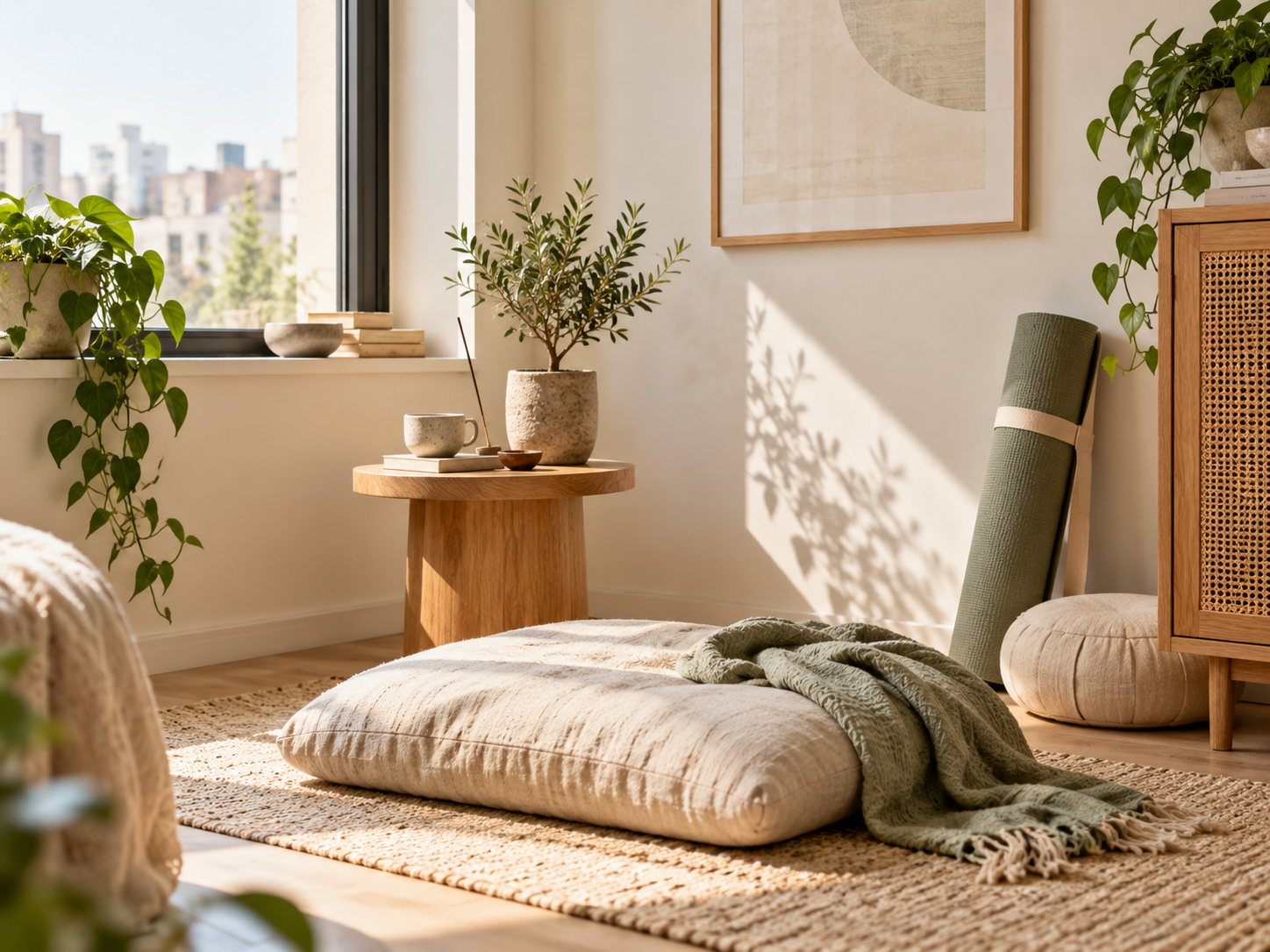
A wellness corner is a routine, not a room
You do not need a dedicated yoga studio, a spare bedroom or an expensive collection of wellness products to make room for a quieter moment. In a small apartment, a wellness corner is simply one deliberately arranged place that makes a healthy daily ritual easier to begin. It might be a chair beside a window for reading, a clear patch of floor for gentle stretching, or a compact table with a notebook and warm lamp.
Successful corners are flexible. They leave circulation routes open, use items you already own, and still feel like part of your home when the ritual is finished. Rather than design for an ideal photograph, design around the five or ten minutes you will genuinely use. This guide covers layout, light, comfort, acoustics, storage, renter-friendly changes and simple maintenance.
Affiliate disclosure: This article may contain Amazon affiliate links. As an Amazon Associate, we earn from qualifying purchases at no additional cost to you.
Start with the ritual you want to support
Before choosing furniture, write down what you want the area to make easier. The answer determines the necessary footprint. A reading or journaling corner needs one comfortable seat, accessible light and a stable surface. Stretching needs floor clearance and a place to store a mat. A breathing or reflection area may need nothing more than a supportive cushion and a distraction-free view. Avoid turning the space into a multipurpose display that requires ten minutes of preparation.
Choose a ritual you can complete in a short session, then test the spot for several days before purchasing anything. If it feels awkward or interrupts other people using the room, change the location, not your entire apartment.
Find a spot that does not steal useful floor space
Look for underused spaces rather than the center of the room: the end of a sofa, a section of bedroom wall, an unused dining corner between meals, or a wide windowsill with a nearby chair. Check door swings, radiator positions and access to sockets. A corner that blocks cupboards or a balcony door will quickly become an annoyance.
For a seated ritual, leave enough space to approach the chair comfortably and set down a cup without reaching across a walkway. For mat-based movement, lay the actual mat on the floor and try a few gentle movements. Make sure there is clearance around your arms and feet, including when furniture drawers are open. Do not anchor heavy shelves into a rental wall without permission or suitable fixings.
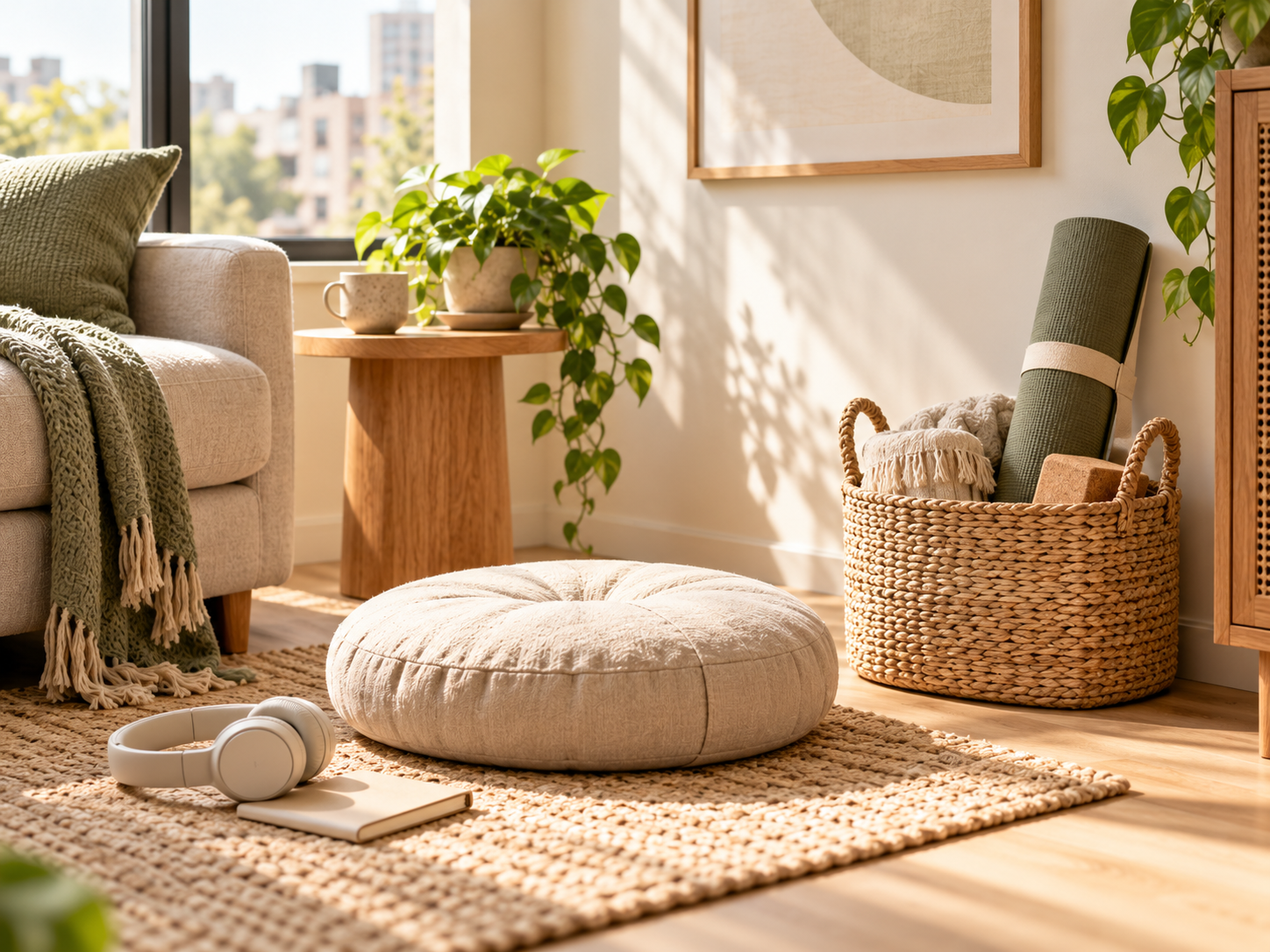
Choose one visual anchor
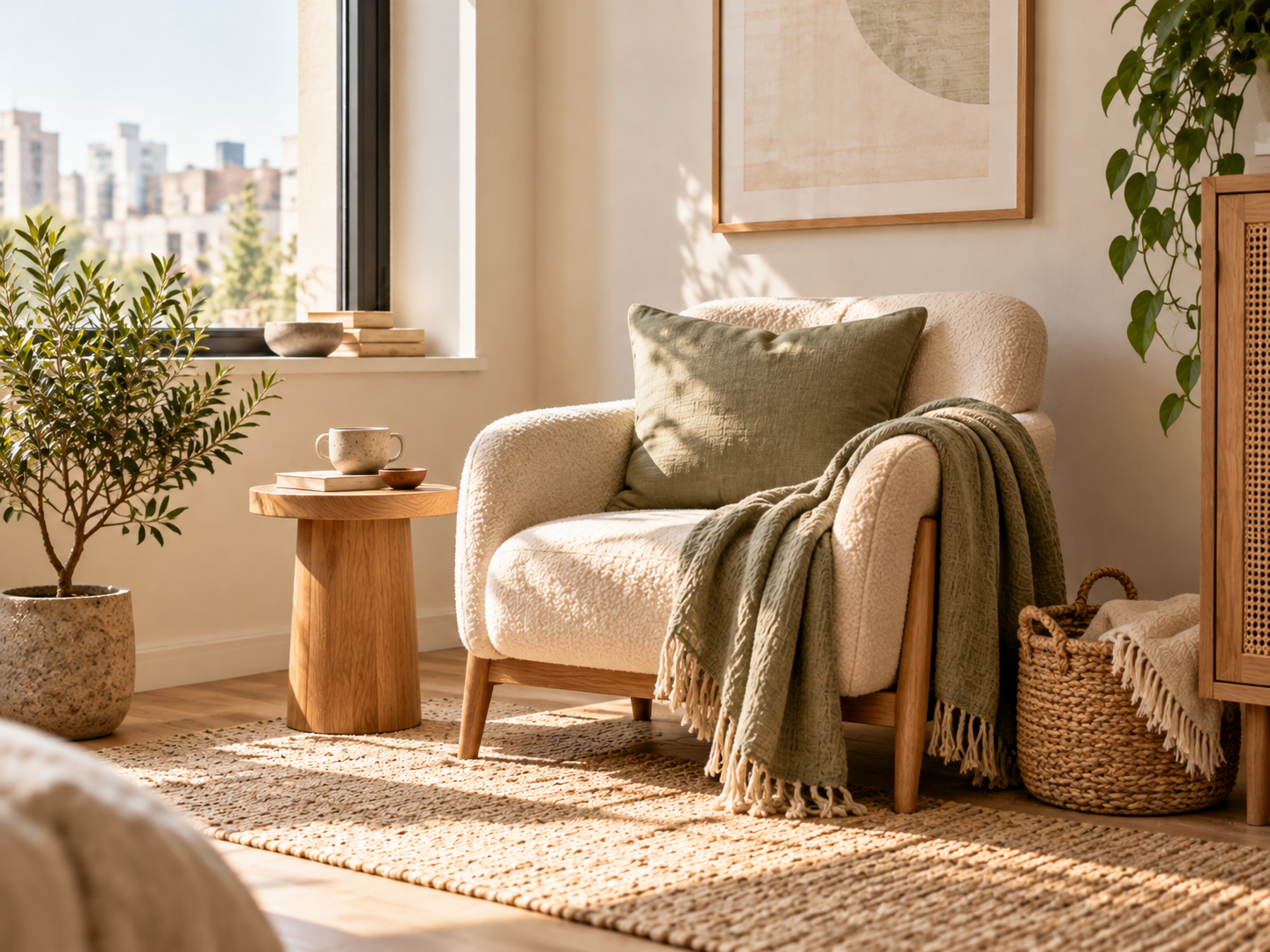
One visual anchor makes a small area feel intentional: a textured chair, a framed print, a softly draped throw or a tall but stable plant. Keep the rest quieter. A neutral palette does not have to mean sterile white. Warm ivory, oatmeal, natural oak, muted sage and cinnamon work together in a cozy home and coordinate with existing furniture.
Repeat one material already present elsewhere in the room. For example, if your living room has walnut legs and cream curtains, try a small walnut side table and a washable cream cushion. This creates continuity rather than a separate themed zone. Keep decoration limited to pieces that add comfort, meaning or practical function.
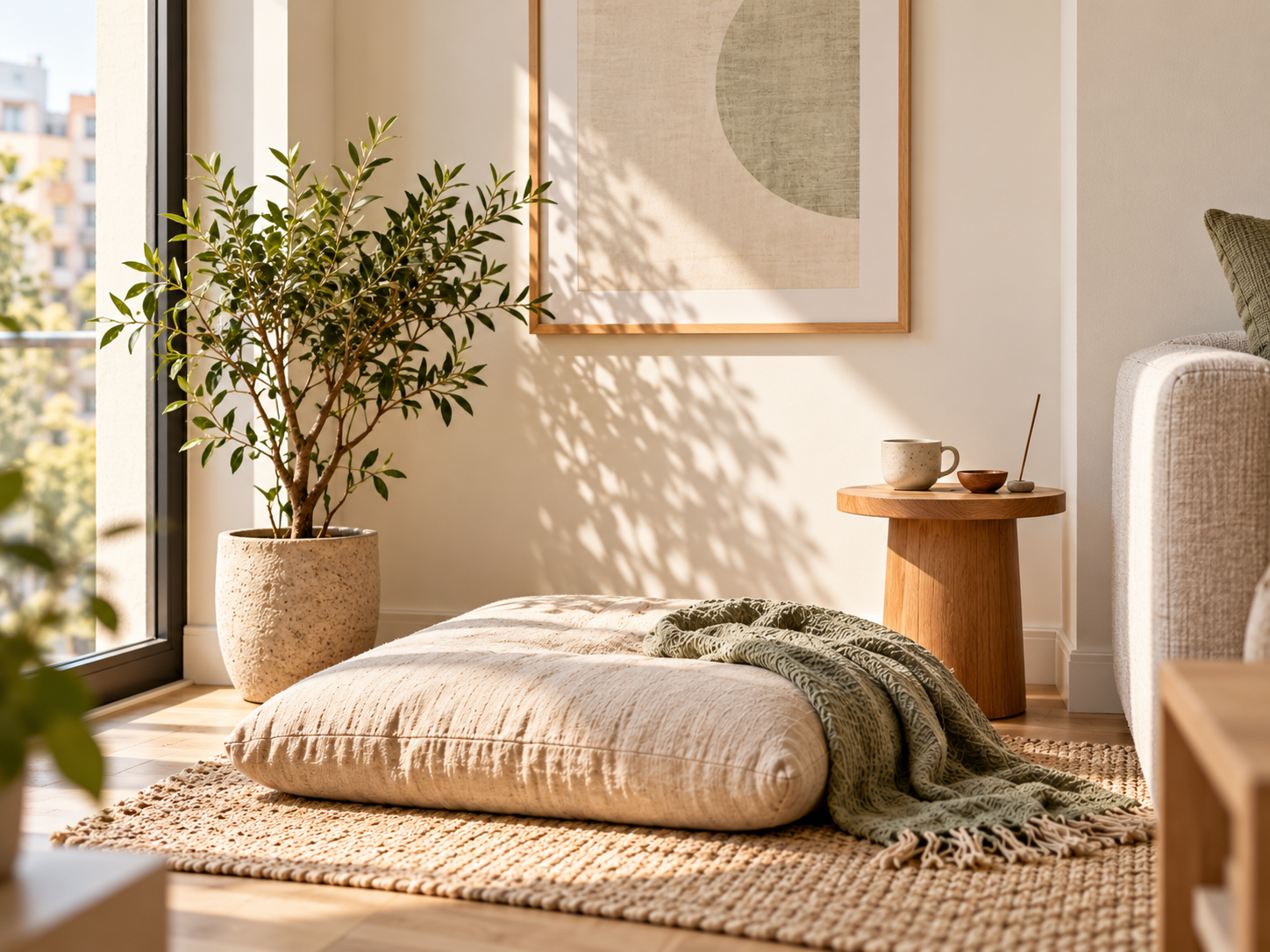
Layer light instead of relying on overhead fixtures
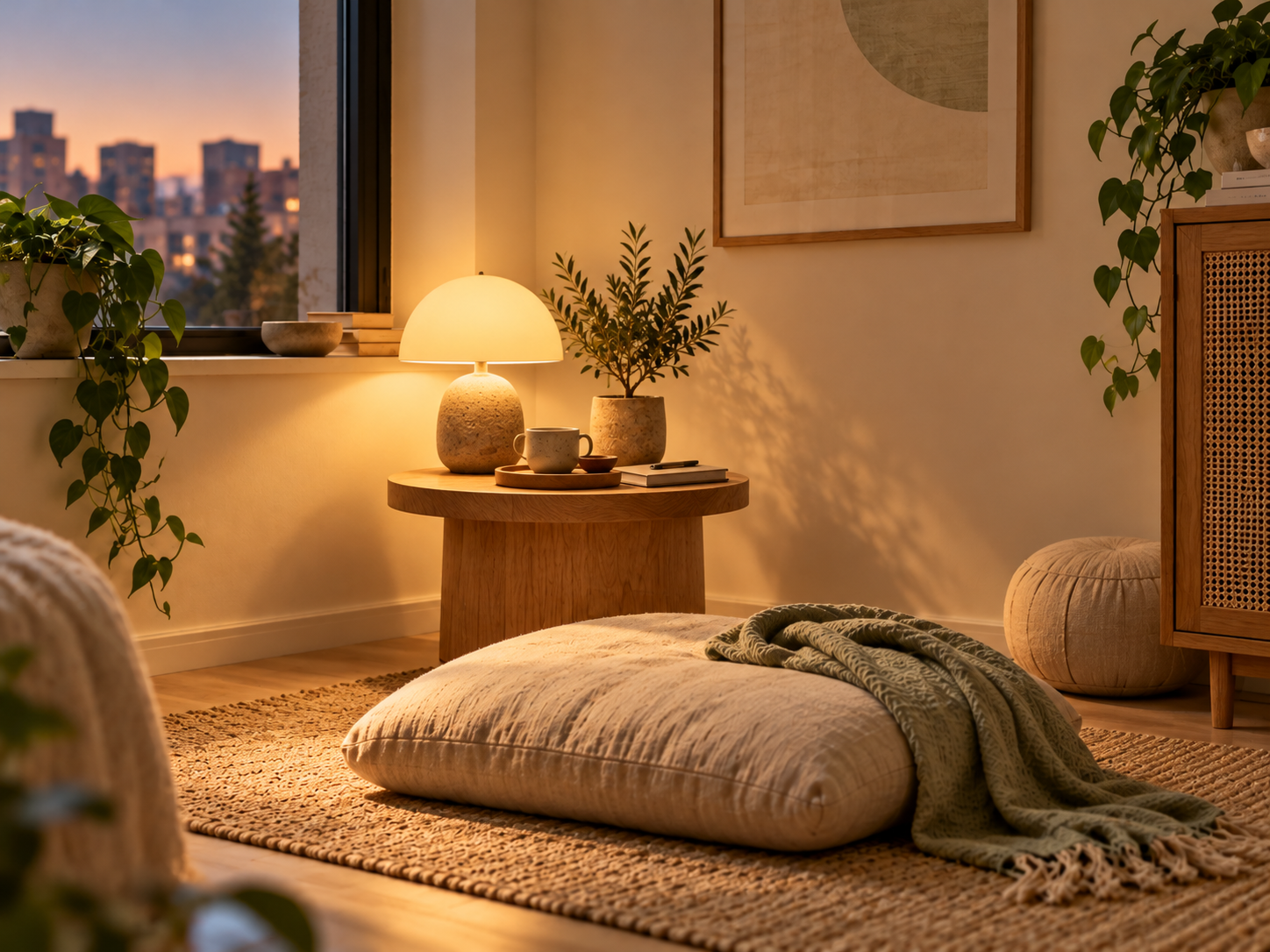
Light strongly changes how a corner feels. If you have daylight, angle the seat to enjoy it without direct glare on a book or screen. At night, add a small warm-toned lamp with an accessible switch. A shaded table lamp, clip-on reading light or stable wall-free standing fixture is usually easier for renters than permanent wiring.
Use a brighter task light when reading and a gentler ambient setting for winding down. Check bulb color temperature and brightness on the packaging rather than assuming every decorative lamp produces useful light. Keep cables away from walking paths and textiles, and never cover bulbs or electrical fittings with fabric.
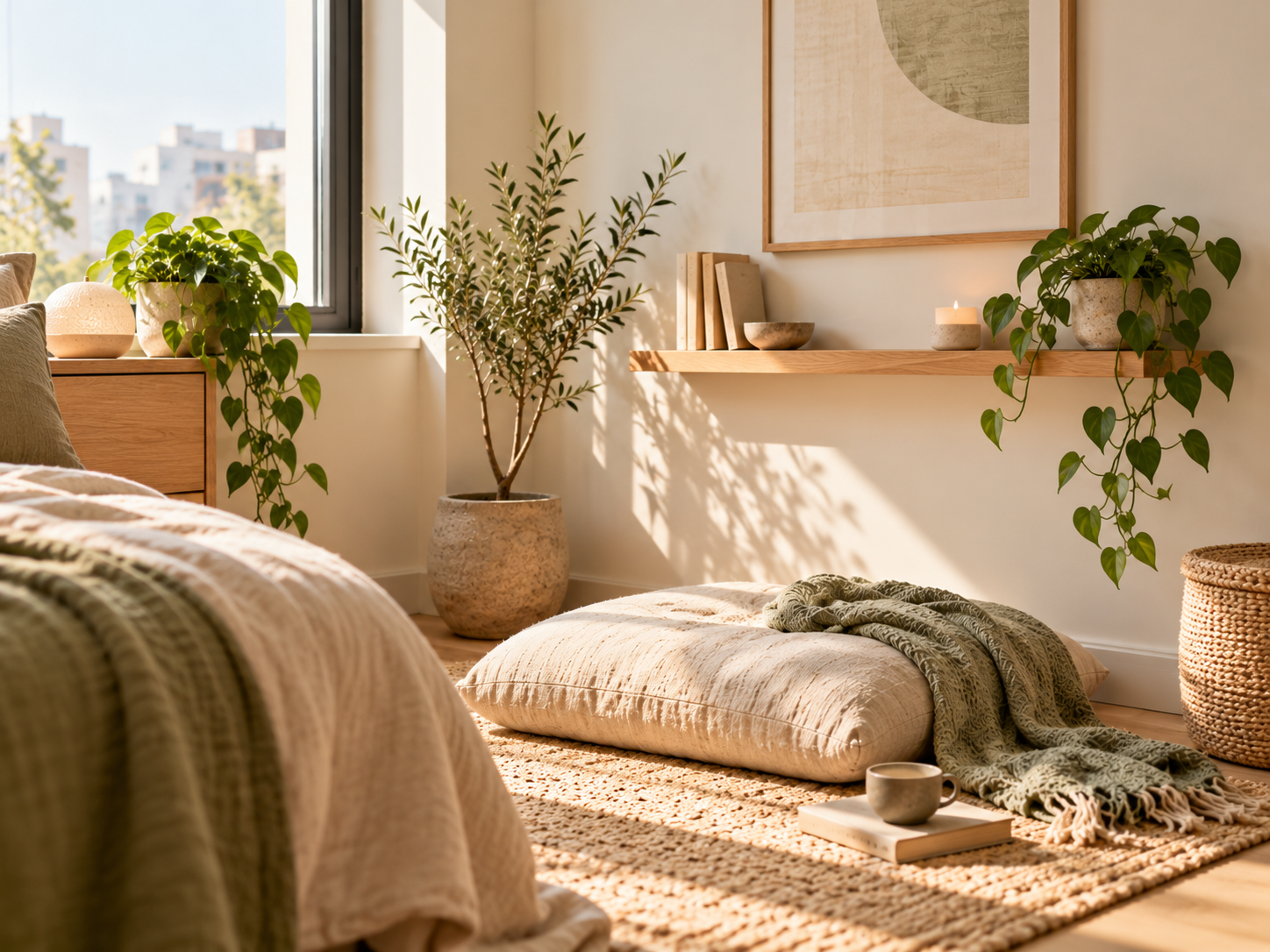
Comfort comes before styling
An attractive chair is not necessarily a comfortable one. Sit for the length of your intended routine before deciding. Your feet should rest securely, your back should feel supported and your shoulders should not be forced forward. A removable lumbar cushion or folded throw can improve an existing chair more economically than buying a new one.
If your corner is on the floor, use a non-slip mat appropriate for the surface and a cushion or supportive block when needed. Do not assume floor-sitting suits everyone. Comfort should be adjustable, especially if multiple people share the space. The corner should encourage ease rather than create pressure to hold a particular posture.
Keep sound and privacy realistic
In a shared apartment, perfect silence is rarely available. Consider the sound environment at the hour you intend to use the space. A thick rug and soft curtains may reduce some reflection within a room, but they will not soundproof it. A partial bookcase or folding screen can provide a gentle visual boundary if it is stable and does not obstruct exits.
Headphones, low-volume audio or simply turning away from the busiest part of the room may be more effective than changing the layout. If you share the apartment, make the routine predictable and respect other people’s circulation and quiet hours. Treat privacy as something negotiated, not something purchased.
Give every item a home
A wellness corner usually becomes cluttered when it turns into storage for everything related to self-care. Choose a short inventory: a book or journal, pen, water glass, throw and perhaps a mat. A shallow basket, lidded box or single drawer is enough in most cases. Store infrequently used supplies elsewhere.
A closed container offers visual calm, while an open basket works when items are genuinely attractive and used daily. If space is tight, choose a slim side table with a shelf beneath, or use a portable tray that can move from dining table to armchair. This allows the same square footage to serve different purposes without permanent installation.
Five small-apartment wellness corner layouts
1. The window-side reading chair
Place a compact chair near indirect daylight with a side table and reading lamp. Keep the window operational and leave ventilation unobstructed. Best for journaling, quiet reading and a short morning pause.
2. The bedroom wind-down corner
Use a single upholstered seat or floor cushion away from the bed if possible. A small lamp and closed basket help create a visual distinction between rest and other activities. Keep laundry and work equipment out of this zone.
3. The living room stretch station
Reserve a clear mat-sized footprint beside furniture that can remain stationary. Keep a mat rolled in a nearby basket. Prioritize traction and clearance over decorative accessories.
4. The tiny desk reset
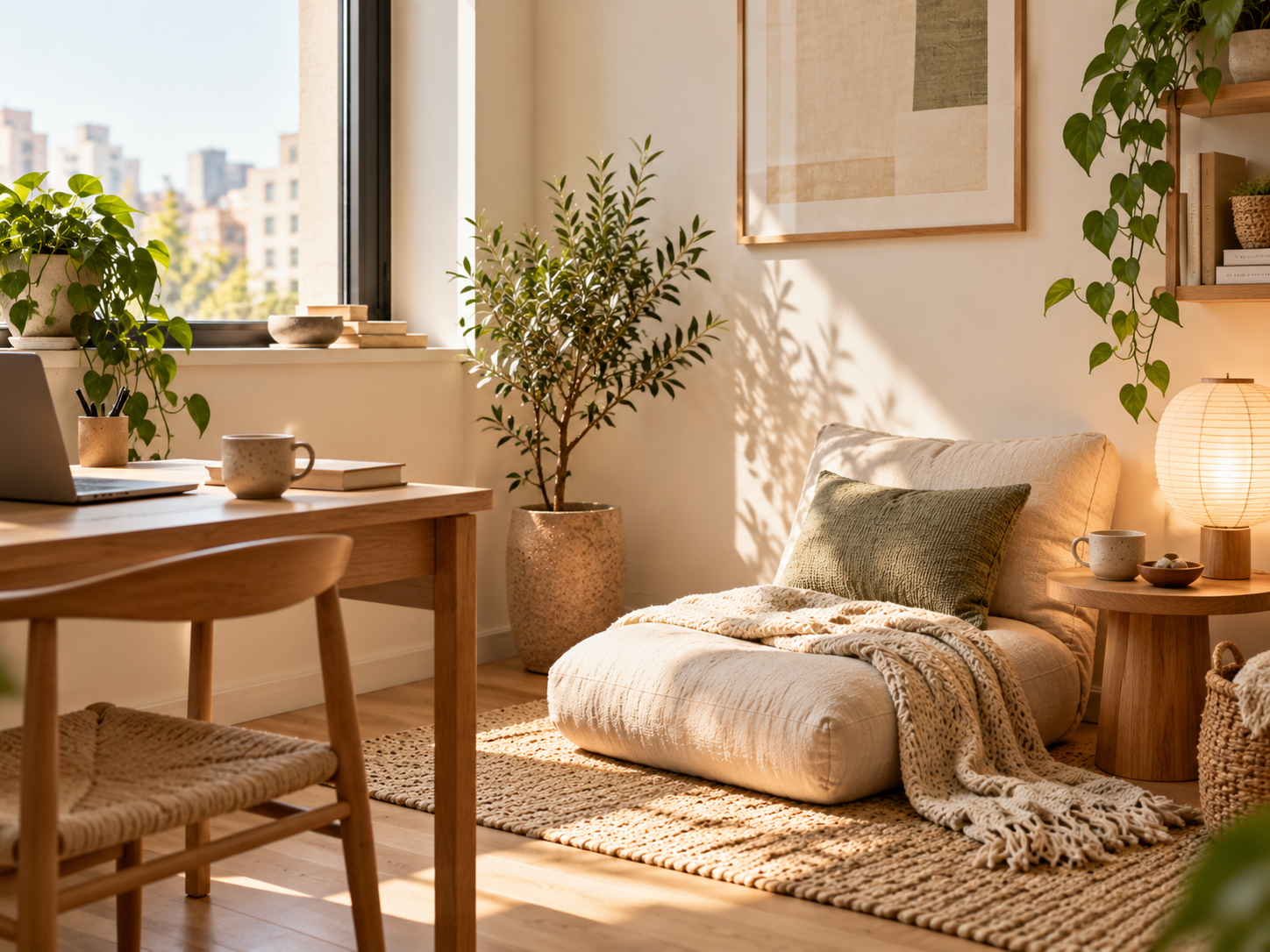
For apartments without free floor area, dedicate one end of a desk to a notebook and lamp. Clear the work materials before your short reset so the surface changes function. Avoid adding more screen-based equipment simply to create a wellness atmosphere.
5. The portable evening ritual tray
Use a sturdy tray to carry a notebook, book or tea to whichever seat is free. This is a strong option for shared flats and studio apartments because it takes no permanent footprint. Store the tray in a cabinet when finished.
A practical budget checklist
Start with what you already have. Rearranging a chair, relocating a lamp and removing clutter may deliver most of the benefit. Buy only to solve a real problem after testing the setup. A small warm lamp, supportive cushion, washable textile and storage basket are more useful than an elaborate collection of coordinated accessories.
| Need | Low-cost approach | Check first |
|---|---|---|
| Seating | Reuse an existing chair with a cushion | Support, stability and footprint |
| Lighting | Move a table lamp or use a clip light | Glare, outlet and cable route |
| Storage | Repurpose one basket or drawer | Easy access and cleanability |
| Softness | Use a washable throw or cushion cover | Fabric care and allergies |
| Privacy | Adjust chair orientation | Doors, exits and shared use |
Do not put an item on the shopping list simply because it appears in a styled photograph. Each purchase should either improve comfort, reduce friction or help maintain a workable layout.
Common mistakes that undermine the calm
Overfilling the corner: Several candles, bowls, books and plants may look appealing but leave no space to use the surface. Edit down to essentials.
Choosing an inaccessible location: If the area is behind a chair that needs moving every day, the ritual becomes inconvenient. Favor ease of use.
Ignoring practical safety: Avoid unstable shelving, overloaded sockets, tripping cables, open flames near textiles and blocked ventilation. Battery-operated candles can create a similar glow without a flame.
Confusing wellness with a purchase: A beautiful corner cannot guarantee better sleep, reduced stress or medical benefits. It can simply support routines you find useful.
Making upkeep difficult: Choose cleanable textiles and a small enough collection of objects that you can restore the space in less than two minutes.
A seven-day setup plan
Day 1: Choose one repeatable five-minute activity. Day 2: Test two possible locations without purchasing anything. Day 3: Check light at the actual time you plan to use the space. Day 4: Adjust the seat, mat or table for comfort. Day 5: Store supplies in one basket or tray. Day 6: Remove items that do not support the routine. Day 7: Use the corner, then review what felt easy and what created friction.
The goal is a corner that fades naturally into your day. If you need a complicated reset each time, simplify. If the corner interrupts a shared room, make it portable. An effective small-space solution is one that works repeatedly, not one that looks finished only on the first day.
Frequently asked questions
Can I create a wellness corner in a studio apartment?
Yes. A portable tray, one chair or a mat-sized open space can be enough. Prioritize multifunctional furniture and keep the setup reversible.
Do I need plants or scented products?
No. Plants are optional, and scented products may bother people with sensitivities or pets. Comfort, useful light and easy access matter more.
How can I make the corner renter-friendly?
Use movable furniture, plug-in lamps and removable decor that is appropriate for the surface. Avoid drilling or permanent electrical changes without permission.
What if I cannot keep the space permanently?
Use a portable kit in a basket or tray and a routine tied to an existing seat. A repeatable ritual can work without a dedicated corner.
The takeaway
Make the wellness corner practical before making it picturesque. Choose a useful ritual, find an accessible footprint, improve lighting and comfort, and store only the supplies you use. In a small apartment, calm often comes from fewer obstacles, not more objects. The best result is an inviting place you actually return to.
For more practical ideas, explore cozy bedroom styling, warm lighting ideas, and small home office comfort upgrades.