

THE SMALL-SPACE EDIT · Everyday Organization
A calmer home does not require a weekend purge, a perfect pantry, or another cart full of matching bins. These five small changes are designed to reduce the everyday friction that makes clutter return.
The most successful home organization idea is often the one you hardly notice: a hook in the right place, a counter with room to work, or a drawer you can open without rearranging everything first.
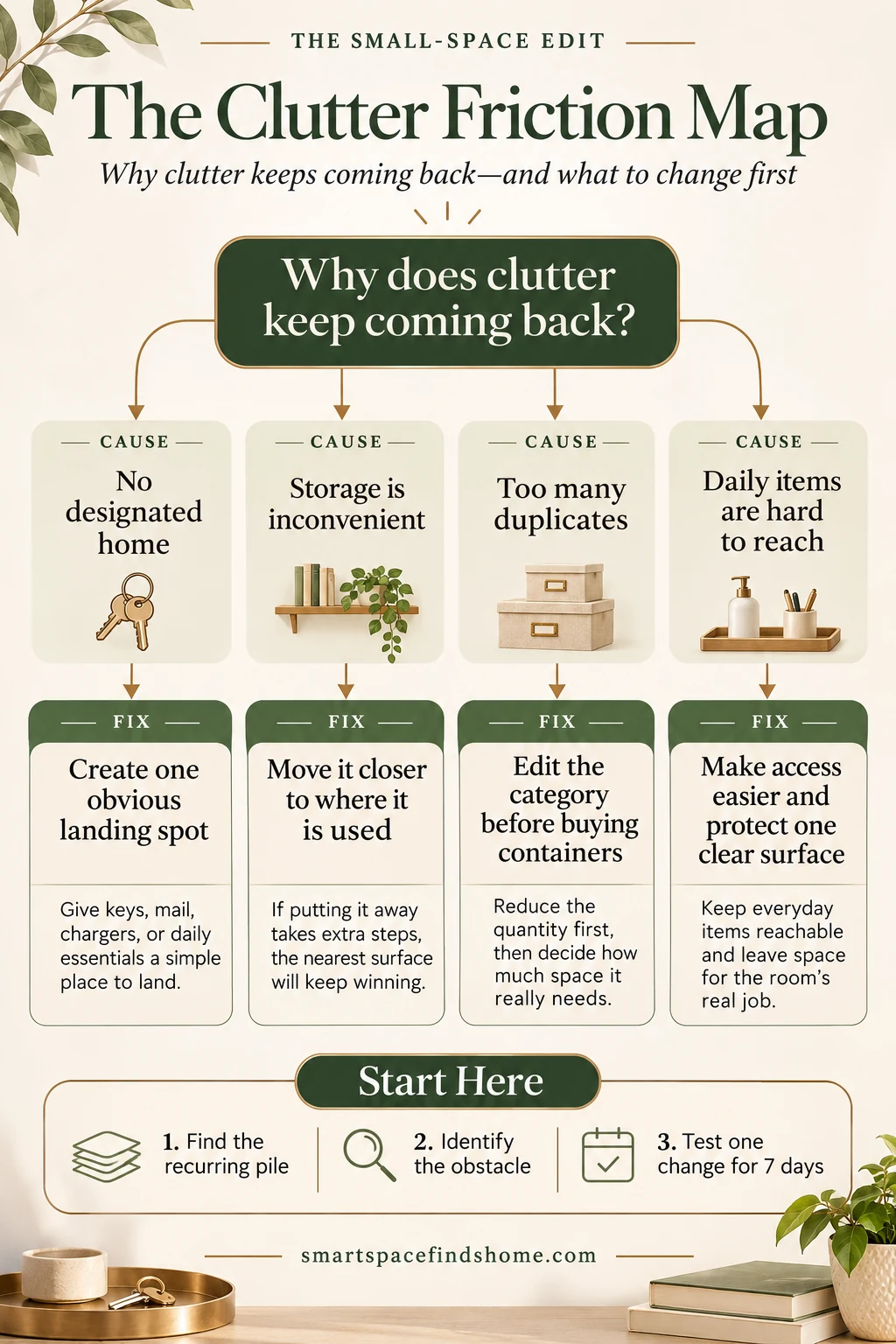
Start here: Notice where things collect, make their easiest landing spot more useful, and test whether the new setup works on an ordinary busy day. The goal is a home that supports your life—not a room that only looks organized in photographs.
Realistic fixes for everyday clutter
New products required to get started
To test one change in real life
Why the clutter keeps coming back
A pile is often a clue, not a character flaw. Keys may land on the kitchen counter because there is no convenient place by the door. Clean laundry may linger on a chair because the closet is crowded. A bathroom countertop may fill up because items used twice a day are stored behind less-used products.
Before buying organizers, ask three questions: What collects here? Where do I actually use it? What makes putting it away inconvenient? The answers will help you fix the system rather than move the pile.
Locate the pile. Look for the place where objects repeatedly collect, not just the place that looks untidy.
Remove the obstacle. Is the correct home too far away, too full, hard to reach, or hidden behind a lid?
Test the change. Make a tiny adjustment and see whether people use it without reminders.
Give everyday essentials one obvious landing spot
Begin with the smallest recurring pile: keys, incoming mail, chargers, sunglasses, or dog-walking essentials. Choose one location as close as possible to where the objects naturally arrive or get used. A shallow tray may work for keys; a small upright file may work for action-required mail.
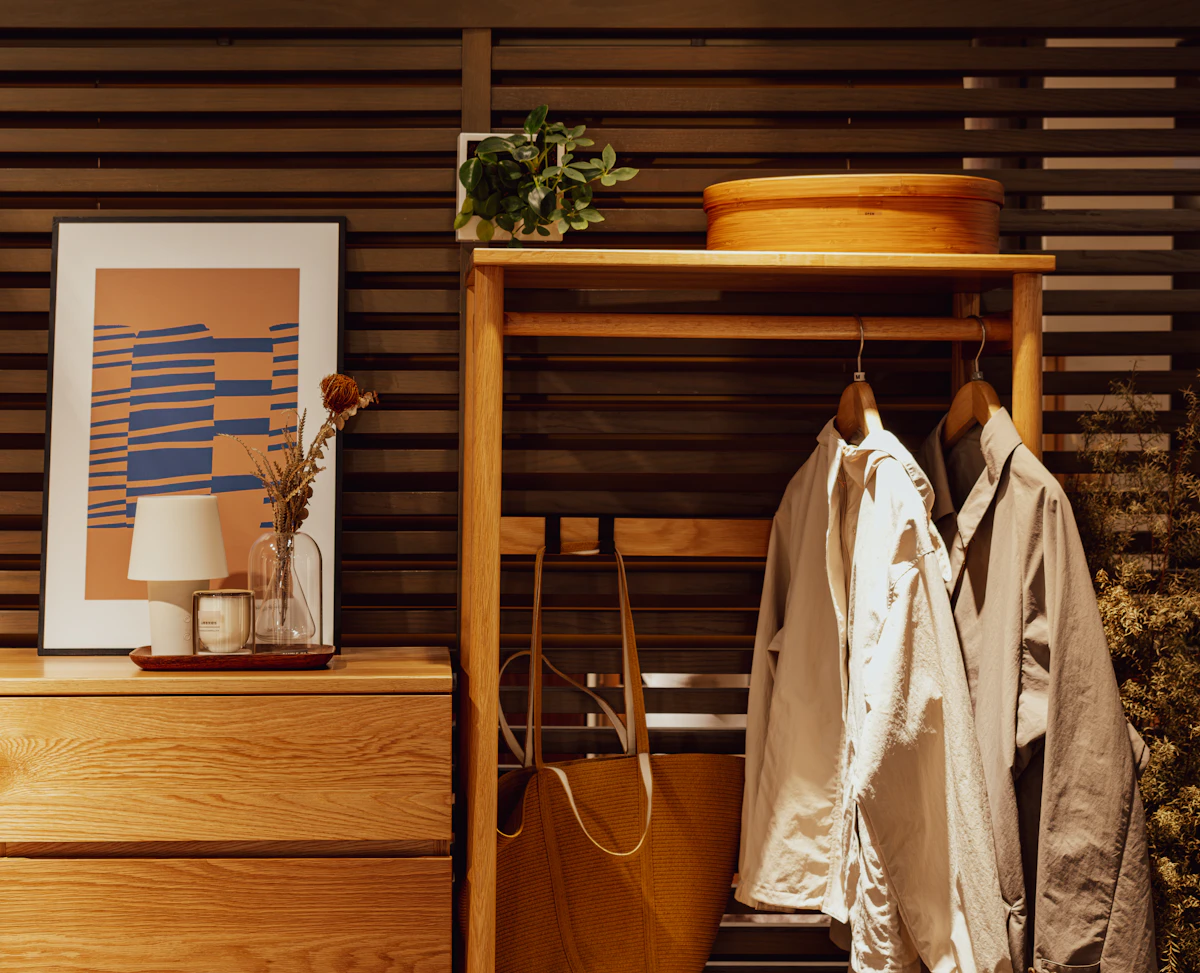
Try it in a small apartment
If your front door opens straight into the living room, create a discreet entry point on the side of an existing cabinet rather than buying an entryway console. A compact hook arrangement can keep frequently used items off the countertop, provided it is suitable for the surface and load.
Before: keys move between the kitchen, sofa, and bag. After: keys have one obvious drop location that takes no extra trip. If a family member repeatedly ignores it, the location—not the person—may need adjusting.
For more layout-specific ideas, see our entryway drop-zone guide for apartments without a hall.
Before · Unclear destination
Keys, receipts, and sunglasses land on the nearest counter, then move again when someone needs the space.
After · One easy return
A slim tray catches the daily essentials; paper requiring action goes into one upright holder, reviewed each week.
Use vertical space without making life harder
When counters and floors are crowded, look at unused wall, door, and cabinet space. The point is not to fill every inch: it is to move a useful category into a secure location that takes fewer steps to access.
Lightweight accessories can live in an over-door organizer, appropriate hooks, or a wall-mounted holder. Store heavy items low and follow installation instructions, load ratings, lease restrictions, and the weight capacity of the actual wall or door.
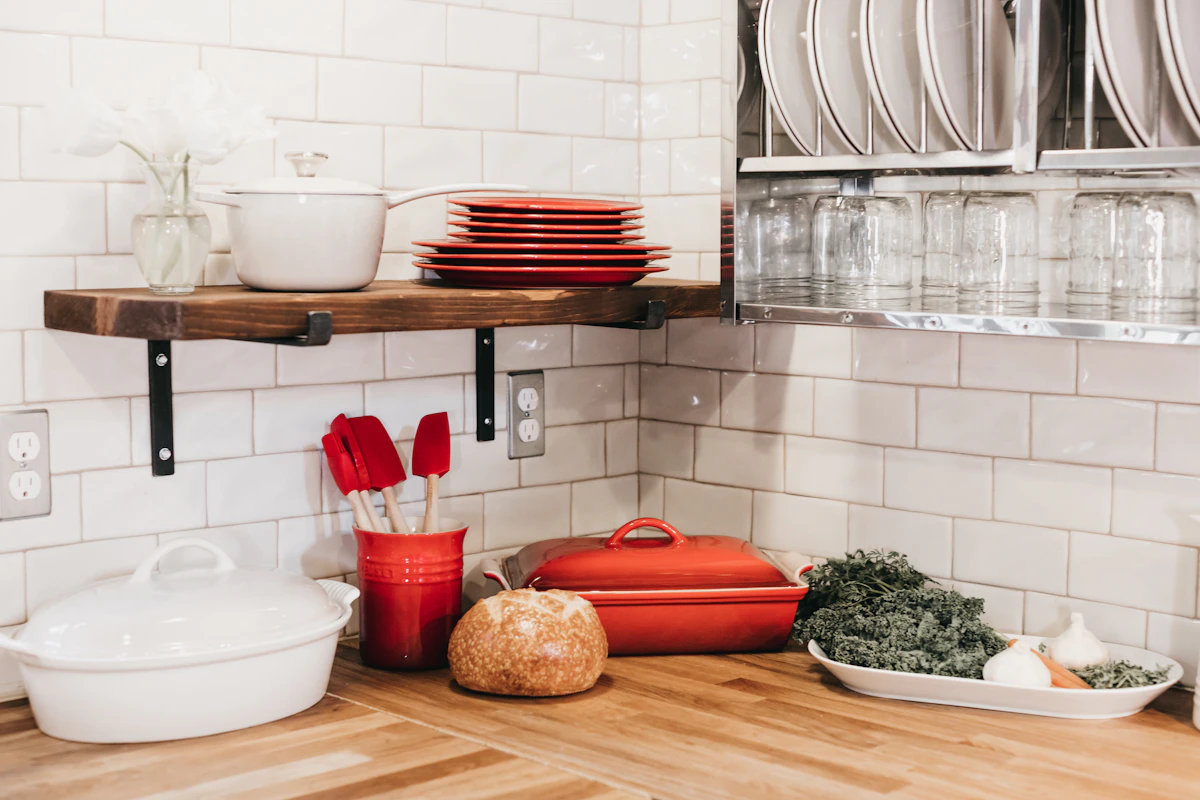
Choose the right kind of vertical storage
| Problem | Consider | Check before using |
|---|---|---|
| Scarves and bags on chairs | Door hooks or a narrow rail | Door clearance and weight |
| Small items crowding a desk | Wall pocket or compact shelf | Installation and reachable height |
| Bathroom bottles on the counter | Cabinet-door organizer | Hinges, depth, and moisture resistance |
Renter-friendly note: No-drill does not automatically mean damage-free. Test compatible removable mounts according to the manufacturer’s directions and avoid mounting breakable or heavy objects on adhesive alone.
Open or concealed storage? Choose open storage for a small group of frequently reached objects that look intentional on display. Choose a closed cabinet or drawer for visual noise, mixed packaging, and backup supplies. Avoid making daily essentials difficult to retrieve just for a cleaner photograph.
Edit duplicate supplies before buying more containers
Open one small category—not the entire storage closet. Compare what you already own: cleaning sprays, batteries, charging cables, beauty products, reusable bags, or pantry staples. Keep a practical number based on real usage, household size, and replacement availability.
Place the item already in use at the front and group reasonable backups together. Check expiration dates and safe disposal guidance where applicable. If you discover three half-used products, finish appropriate ones before buying another.
The useful rule: Decide how much space a category deserves first. A container is a boundary, not a reason to fill it. Labeling may help when several people share the same storage.
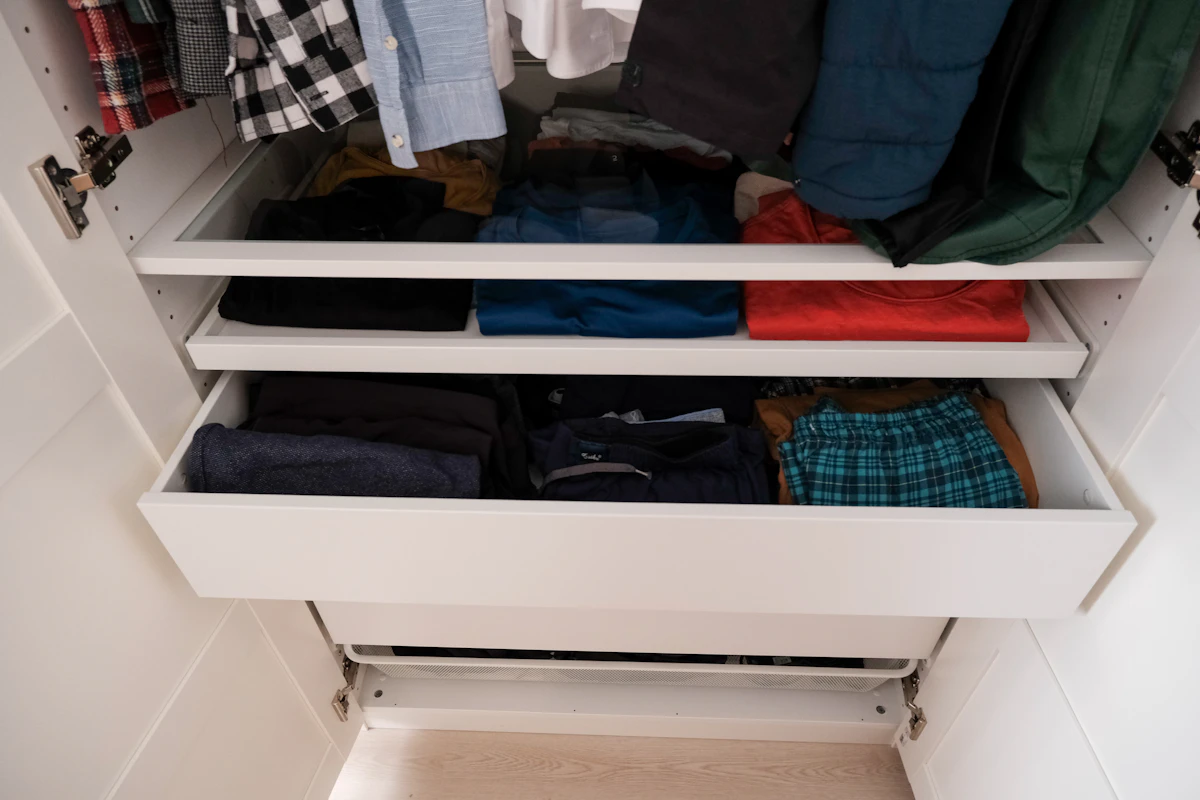
Create a donation exit—not another clutter zone
Give usable unwanted items one temporary bag or box and decide how they will leave the home. Choose a local donation center, community group, or pickup option that accepts those items, and set a realistic handoff date. Do not place damaged, unsafe, or unacceptable items in a donation bag.
A tiny home rarely benefits from a large, indefinitely growing donation station. When the container is full, complete the handoff before starting another. Secure documents containing personal information before disposal.
Small-space alternative: If you cannot spare floor space, reserve a modest labeled bag inside an existing closet and schedule the drop-off as part of an errand you already make.
Protect one clear surface for everyday living
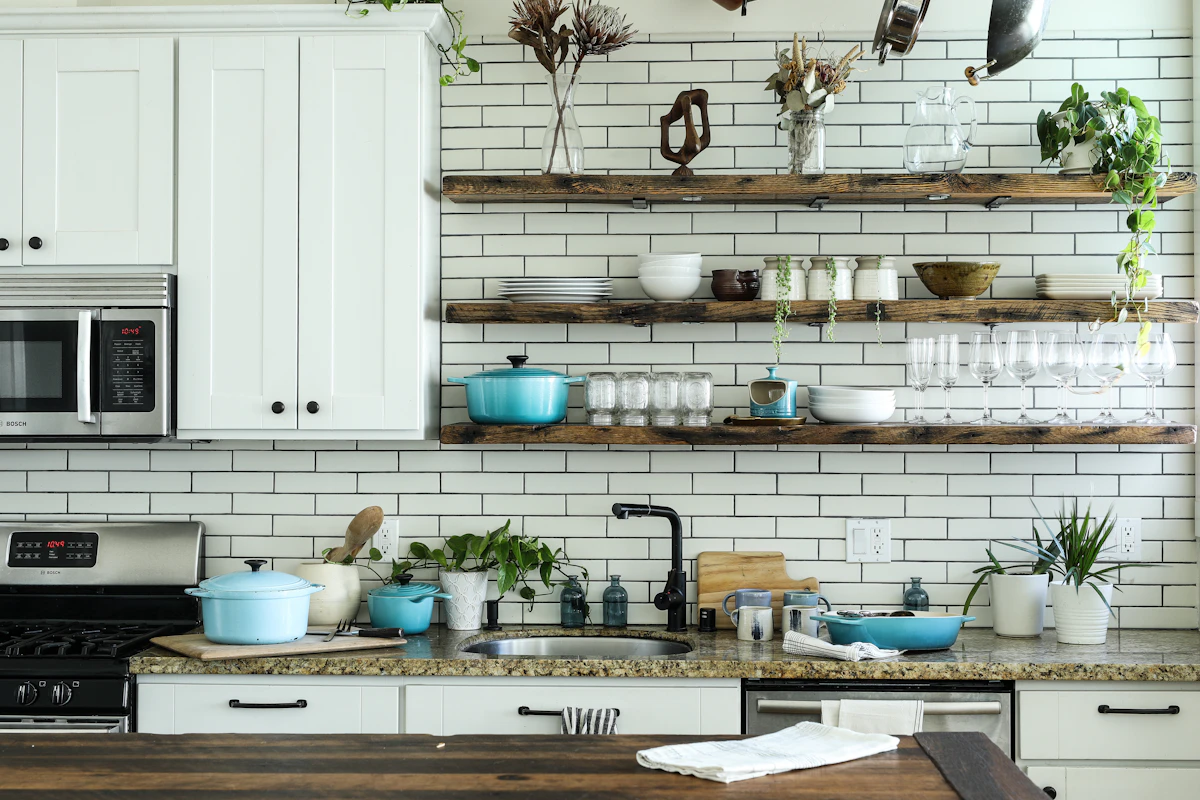
An empty patch of countertop or table is functional space. Keep enough of your kitchen counter clear to prepare a meal, your desk clear to work, or your dining table clear to eat. Resist the temptation to decorate every remaining inch.
Identify the main job of the surface and give frequently used items a nearby home. Less-used pieces can go into accessible drawers or cabinets, rather than being pushed into an unrelated room.
A room-by-room surface reset
- Kitchen: Preserve a safe food-prep zone; move loose mail and unrelated appliances.
- Bedroom: Keep the bedside essentials you actually use; relocate spare toiletries and random paperwork.
- Living room: Reserve enough coffee-table space for a drink or book; corral remotes only if a tray makes them easier to find.
- Bathroom: Keep daily routines accessible without leaving every backup product on display.
For a broader approach to everyday upkeep, read five everyday habits that make home maintenance easier.
Make the return easier than the drop. When putting an item away requires opening several doors or moving another box, the nearest flat surface will keep winning. Simplify the route before adding more storage.
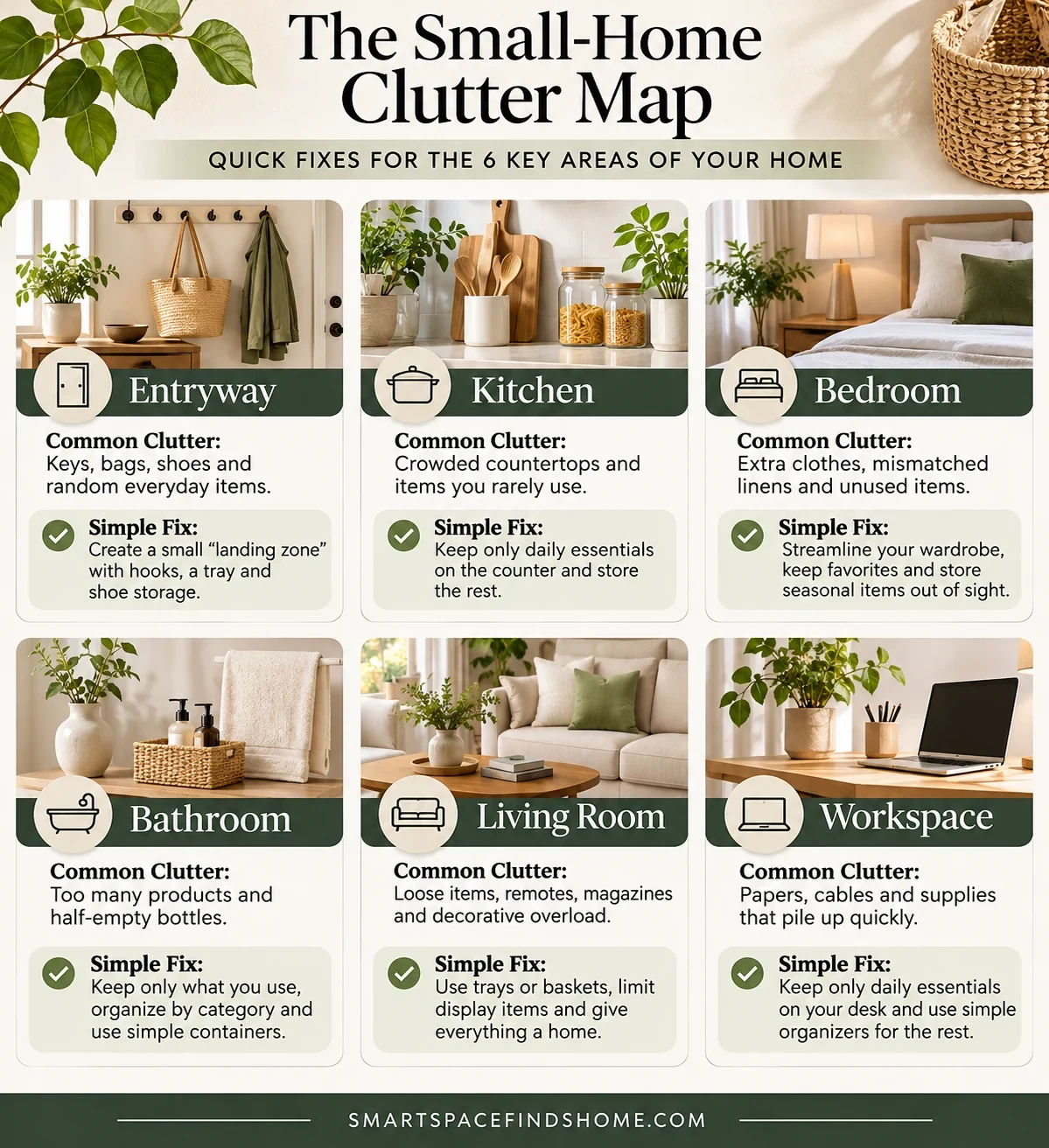
A practical small-home decluttering map
If you are unsure where to start, pick a hotspot based on the disruption it causes, not the size of the mess. These are low-cost first moves; none requires completing a full-room makeover.
| Space | Recurring problem | First change to try |
|---|---|---|
| Entryway | Keys, mail, bags on the nearest surface | One small drop zone near the door |
| Kitchen | Prep space crowded by extras | Relocate one seldom-used appliance |
| Bedroom | Clothes accumulating on a chair | Make the easiest hanger or laundry basket more accessible |
| Bathroom | Backups mixed with daily products | Separate the daily set from reserves |
| Living room | Remote controls and chargers everywhere | Give each a return point next to where it is used |
| Work area | Mixed cables and papers | Separate active work from items that can be filed |
For spaces with limited cabinet capacity, see our small-space storage ideas for additional approaches, and adapt any product idea to your actual measurements.
The seven-day friction test: does your new system actually work?
Rather than reorganizing the entire apartment, test one change during a normal week. A beautiful setup that takes too much effort to maintain is not the right setup.
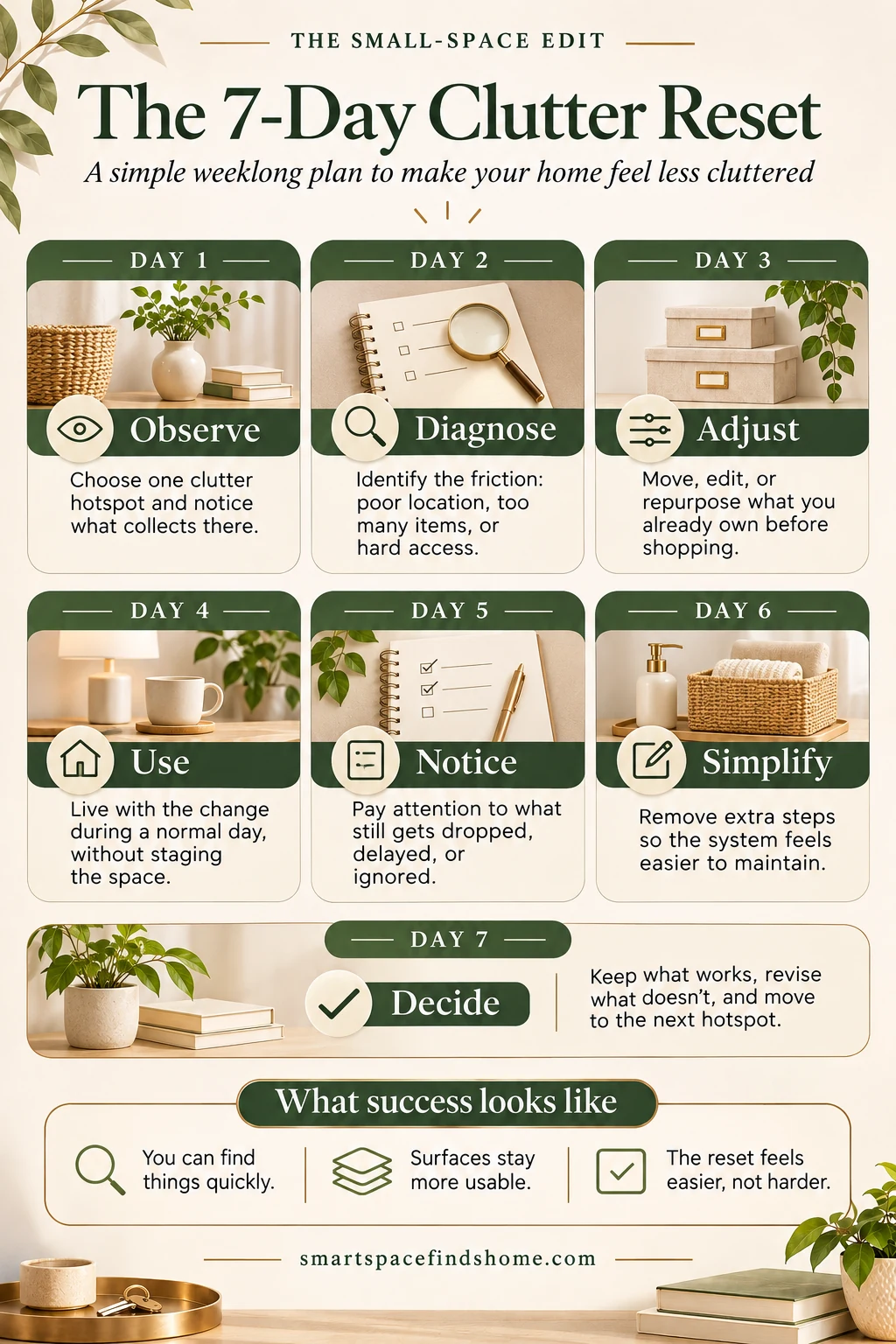
- Day 1 — Observe: Choose one clutter hotspot and write down what collects there.
- Day 2 — Diagnose: Identify the extra step, poor location, or insufficient space causing it.
- Day 3 — Adjust: Move, edit, or repurpose what you already own before shopping.
- Day 4 — Use: Follow your usual routine without staging the space.
- Day 5 — Notice: See whether objects return to the same pile.
- Day 6 — Simplify: Remove an unnecessary container, lid, or extra step if needed.
- Day 7 — Decide: Keep the system if it saves searching and feels easy; revise it otherwise.
Success is not a perfect photograph. It is finding things more easily, moving through rooms safely, and spending less energy resetting the same space.
- You can find and return the item without searching through another category.
- The surface or walkway stays usable during an ordinary week.
- The system does not require a big reset every evening.
If two of these are still difficult after a week, revise the location, the amount stored, or the number of steps rather than adding complexity.
Where should an item actually live?
- Used every day
- Keep it close to where you need it, easy to reach, and simple to put away.
- Used every week
- Give it accessible closed storage without consuming your best working surface.
- Used occasionally
- Group it safely in a labeled location farther from the everyday zone.
- No longer needed
- Decide whether to donate, recycle, discard responsibly, or keep intentionally for sentimental reasons.
A five-minute daily reset that does not turn into another chore
Think of this as a closing routine, not a cleaning marathon. Set a gentle five-minute limit and focus on putting commonly used objects back into the easy-to-reach homes you created.
- Minute 1 — Entry point: Hang your bag, return keys to their landing spot, and put actionable mail in one designated place.
- Minute 2 — Main surface: Return dishes, devices, or papers that do not belong on the counter or table.
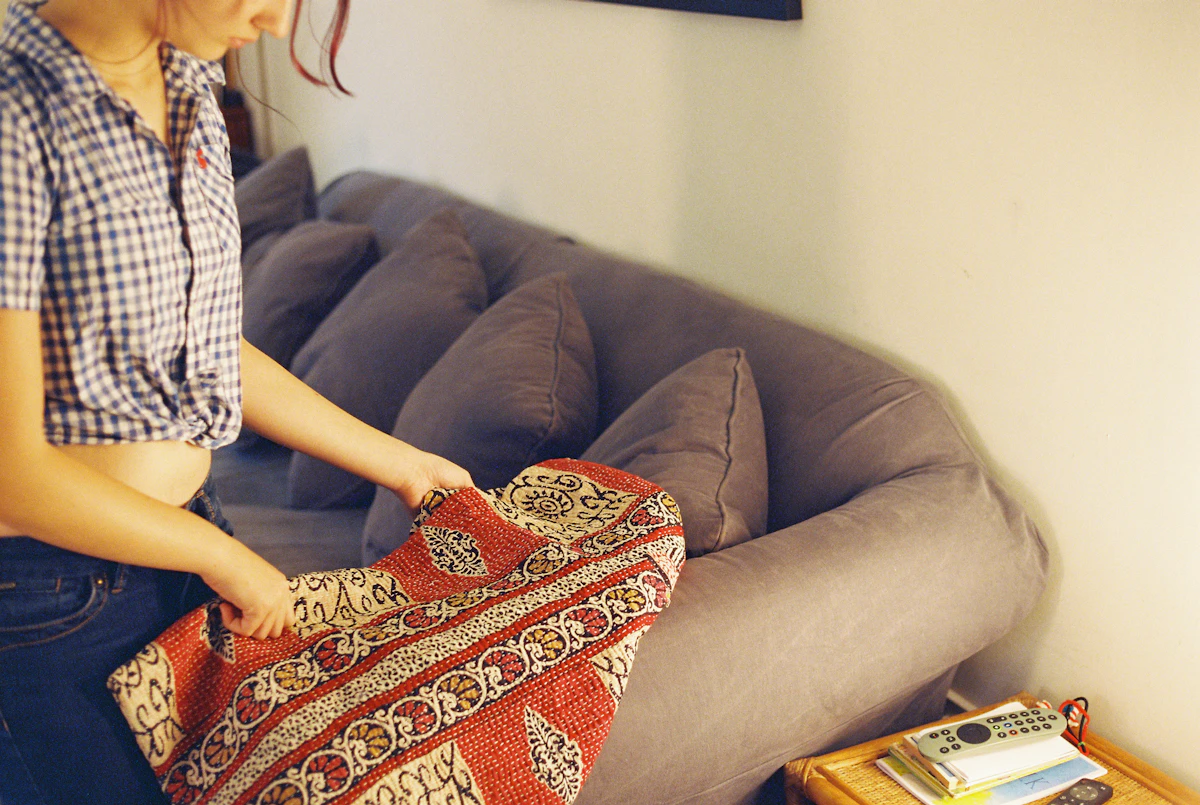
- Minute 3 — Living area: Replace remotes, books, and charging accessories in their convenient spots.
- Minute 4 — Bedroom or bathroom: Move laundry toward the hamper or return daily-use products to their designated location.
- Minute 5 — Tomorrow’s obstacle: Identify one item that repeatedly lands in the wrong place. Make a note to adjust its storage rather than blaming yourself for forgetting.
Do less on particularly busy days. A reset is helpful only when the effort is proportional to its benefit. And if items have no home, solve the storage problem before trying to tidy faster.
What is worth buying—and what is not?
Shop only when the problem remains after you have reduced duplicates, chosen a suitable location, and checked measurements. A tray may help a genuine entryway pile; a narrow divider may help a drawer whose contents mix together. Neither solves owning more than the space comfortably holds.
Before any purchase, measure the available width, depth, height, door swing, and clearance. Think about how easy the item will be to clean, remove, and use daily. Small organizers should earn their footprint.
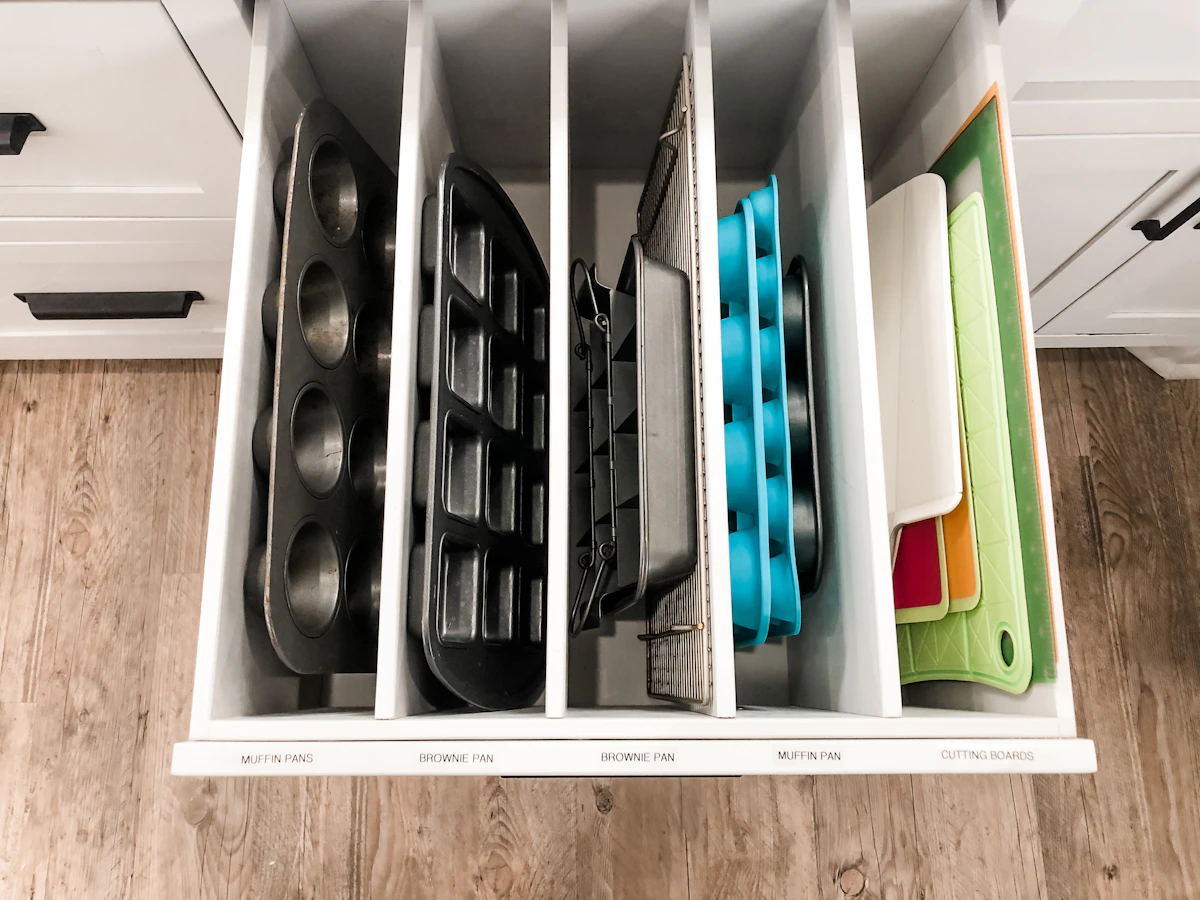
Before adding an organizer, ask: Does it fit the exact measurements? Can I reach what is inside? Does it use space already available? Will it be easy to clean? Does it solve a recurring problem, not just improve the appearance of a photograph? If the answer is no, keep looking—or skip the purchase.
Five organizing mistakes that make a small home feel more cluttered
- Buying containers before editing belongings. Measure what remains after a category is sorted, not the overflow at its peak.
- Putting daily essentials in hard-to-reach places. A tidy cupboard may look efficient while making the counter pile worse.
- Using every inch of visible shelving. Leave some visual breathing room so frequently used pieces can be noticed and retrieved.
- Moving clutter from room to room. A relocated pile is still waiting for a decision; finish with a true home or an exit route.
- Copying a system that does not match your household. Children, shared spaces, mobility needs, pets, and work schedules change what is sensible.
Keep walkways, doorways, exits, ventilation, electrical panels, and heat sources unobstructed. Place regularly used essentials within comfortable reach; avoid unstable stacking and do not create tripping hazards with floor baskets or charging cables. Storage should always work with your household’s access needs.
Make the system work for shared homes, renters, and different routines
Households do not operate like catalog sets. In a shared apartment, agree on a limited number of shared landing zones rather than expecting everyone to follow an elaborate filing system. Label only categories where it genuinely removes ambiguity, such as recycling, spare batteries, or incoming mail.
For renters, favor movable furniture and appropriately rated over-door solutions where practical, and confirm lease rules before drilling. For children, place suitable everyday objects at a safe and comfortable height. For people with mobility or reach limitations, prioritize storage that can be used without bending, stretching, or moving heavy objects.
One person’s tidy aesthetic should never make another person’s daily routine less accessible. The best system accommodates the people who live there.
Frequently asked questions
How can I make my home look less cluttered without spending money?
Start by returning misplaced items to the room where they are used, removing duplicates, and clearing one functional surface. Repurpose a tray or box you already own before considering storage purchases.
What should I declutter first in a small home?
Choose the lowest-effort area that annoys you regularly, such as the key pile by the door, a drawer of spare cables, or the bathroom counter. Avoid starting with sentimental belongings if decisions feel difficult.
How do I stay organized with only five minutes a day?
Connect one short reset to an existing routine. Return items to their assigned locations and check that your one priority surface remains usable. If it takes too long, simplify the storage setup.
Do I need matching bins to create an organized home?
No. Matching bins can give a cohesive appearance, but measurements, accessible placement, and appropriate capacity matter more. Use what you have before investing in a coordinated collection.
What if my family or roommates do not use the system?
Make the storage visible, intuitive, and convenient to the people who share it. Discuss shared priorities, and revise any arrangement that requires extra work from others.
How do I reduce visual clutter without hiding things I need?
Give visually busy packaging and backups concealed storage, while keeping frequently used essentials within easy reach. Consolidate small related items into a single practical zone, and leave clear space around the objects you choose to display.
What should I do with sentimental items while decluttering?
Leave sentimental categories for a separate session. Start with low-stakes duplicates or everyday items, and avoid making rushed decisions about photographs, letters, or heirlooms.
How do I organize when my home has almost no storage?
First identify the items that must stay accessible, then remove or relocate low-use possessions. Use existing drawers, underused cabinet space, and safe vertical storage deliberately. Preserve walking routes, furniture clearance, and access to exits.
The takeaway: make it easier, not emptier
A less cluttered home is not necessarily a minimalist home. It is a space where the things you use have logical homes, important surfaces can do their jobs, and a small reset does not feel like another project. Choose one hotspot this week and let everyday use tell you what to improve next.
Your next five-minute action: Pick the pile you move out of the way most often. Give it an easy, safe, convenient home—or remove what you no longer need.