
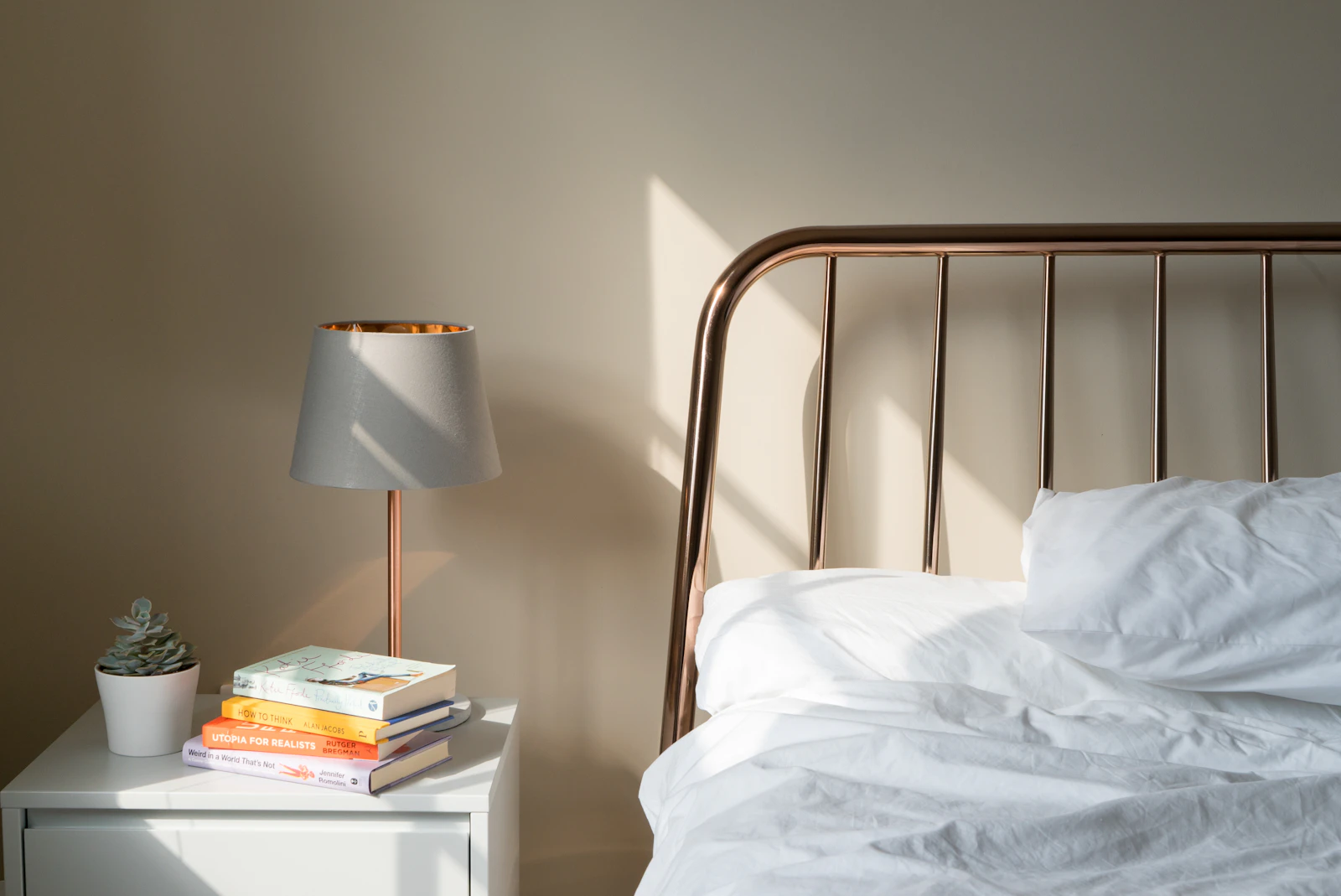
The Quiet Home Edit / Bedroom Comfort
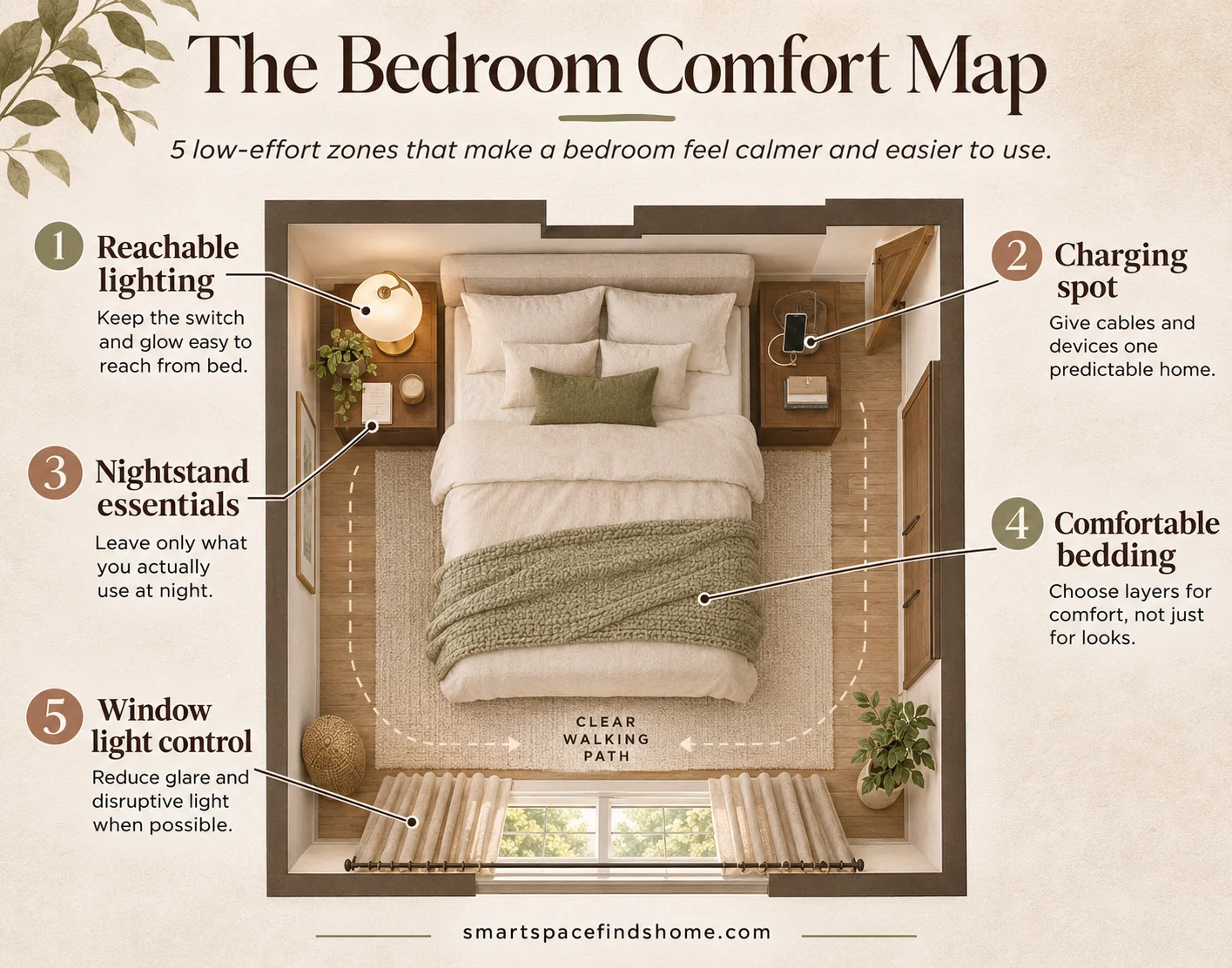
A calmer bedroom doesn’t require a full makeover. Start with five small changes that make the room easier to use at night: a light you can reach, a predictable charging spot, an uncluttered bedside surface, bedding suited to your comfort, and fewer distractions from light or noise.
Editorial premise: Make the room easier to live in before trying to make it look different. This guide focuses on no-renovation, renter-considerate upgrades and starts with the fixes you can try using what you already own.
Think of this as a five-minute bedroom comfort edit, not a promise of perfect sleep. A bedroom can look beautiful and still be frustrating to live in. The point is to identify what repeatedly interrupts your evening, solve that particular problem, and leave everything else alone.
Start here: If your bedside table is crowded, begin with step 3. If you search for a switch in the dark, begin with step 1. If the room is too bright or noisy at night, skip straight to step 5. You don’t have to follow these ideas in order.
At a glance: pick the change that matches your bedroom
| What bothers you? | Try first | No-purchase option |
|---|---|---|
| You can’t comfortably reach the light | Reposition a bedside lamp | Move an existing lamp or adjust its angle |
| Chargers and cables spread across the nightstand | Give the charging cable one home | Route it behind the furniture without pinching it |
| The nightstand collects everything | Keep a small essentials zone | Remove duplicates and relocate occasional-use items |
| You’re too hot, cold, or uncomfortable | Reconsider the bedding layers | Adjust the layers you already own |
| Streetlight, noise, or obstacles interrupt the room | Fix the most noticeable disturbance | Change placement or use existing window coverings |
1. Put the light where your hand naturally reaches
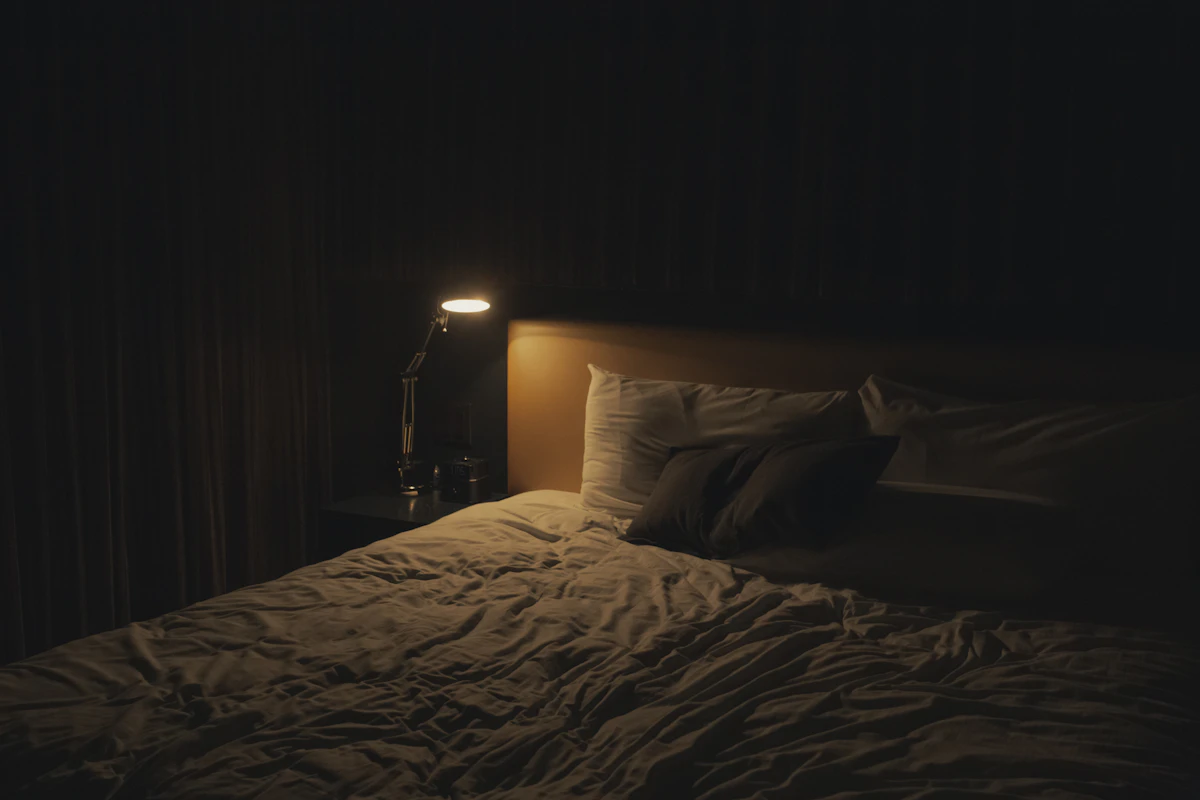
A beautiful lamp isn’t useful if you have to lean across the bed to turn it off. Sit where you normally read or wind down and check whether you can comfortably reach the switch. Aim the light toward your book or bedside surface rather than directly toward your eyes.
For small bedrooms, a compact lamp with a stable base often works better than a large sculptural fixture. If the table is especially narrow, explore our guide to reading lamp placement in small rooms. A cordless table lamp may be another option where an outlet is awkward, provided its charging and operating instructions suit your space.
Five-minute edit: Move the lamp, test its switch from your usual position, and check the route of its cord. Don’t stretch cords across walking paths, hide them under rugs, or place hot lamps against bedding.
SMART SPACE FINDS / THE BEDROOM COMFORT SHOPPING EDIT
The Reachable Light Edit
Start by moving the lamp you already own. If reach, brightness or switching remains inconvenient, compare these compact bedside options.
Affiliate disclosure: As an Amazon Associate, Smart Space Finds earns from qualifying purchases. Product selection is optional; always check current availability, dimensions and details on Amazon before buying.
2. Create a charging spot without creating a cable display
Phones, watches, and other small electronics tend to migrate across any open surface. Instead of adding an elaborate docking station, assign each frequently used device a consistent location. One cable clip or a shallow tray may be enough.
Make it practical: Keep the outlet and charger accessible, follow the manufacturer’s ventilation guidance, and avoid placing charging electronics under pillows, blankets, or beside water. If you prefer not to keep a phone next to the bed, a safe charging spot elsewhere in the room can be even simpler.
Five-minute edit: Remove unused cables, route only the cable you need, and leave enough slack to disconnect it without pulling the lamp or another object off the table.
SMART SPACE FINDS / THE BEDROOM COMFORT SHOPPING EDIT
The Almost-Invisible Charging Edit
Tidy and position cables before buying a new charger. Choose accessories only for the cord clutter or outlet shortage you actually have.
Affiliate disclosure: As an Amazon Associate, Smart Space Finds earns from qualifying purchases. Product selection is optional; always check current availability, dimensions and details on Amazon before buying.
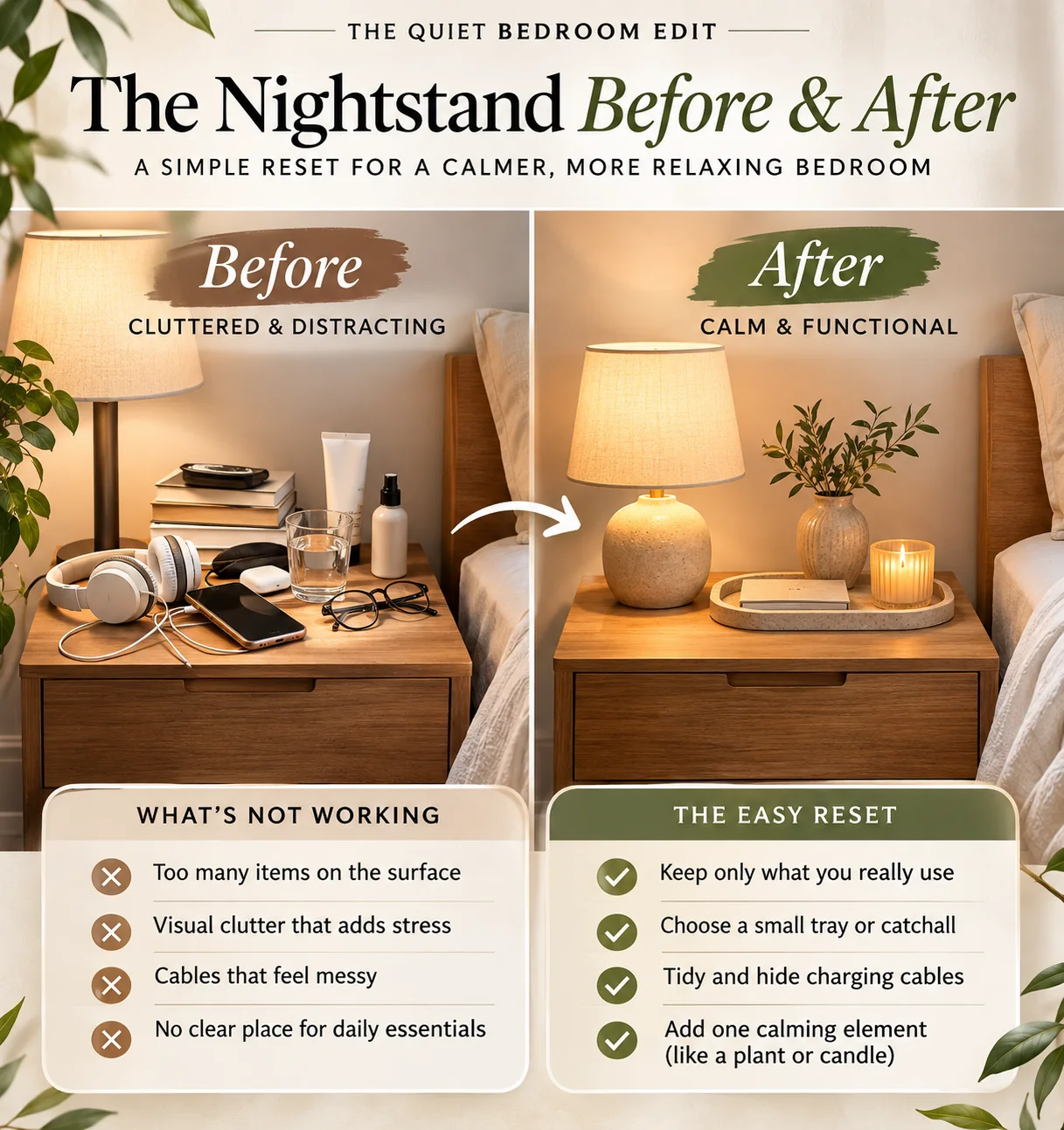
3. Give your nightstand one small, intentional landing zone

Visual calm usually comes from fewer competing tasks, not from owning a perfectly styled nightstand. Choose what you genuinely reach for at night: perhaps a light, glasses, a book, and water in a stable container. Move spare accessories, receipts, and decorative duplicates elsewhere.
In a tight room, try a two-zone arrangement: everyday essentials at the front and occasional-use items in a drawer, basket, or other secure storage spot. For more ideas, see our small-bedroom bedside table guide.
Five-minute edit: Take everything off the bedside surface, return only tonight’s essentials, and give the rest a definite home. Leave clear access to controls, drawers, and the bed.
SMART SPACE FINDS / THE BEDROOM COMFORT SHOPPING EDIT
The One-Surface Nightstand Edit
Keep your top surface mostly clear. Drawer dividers work best when you already have a drawer and a few small essentials to sort.
Affiliate disclosure: As an Amazon Associate, Smart Space Finds earns from qualifying purchases. Product selection is optional; always check current availability, dimensions and details on Amazon before buying.
4. Adjust bedding to your body and the season—not a photo

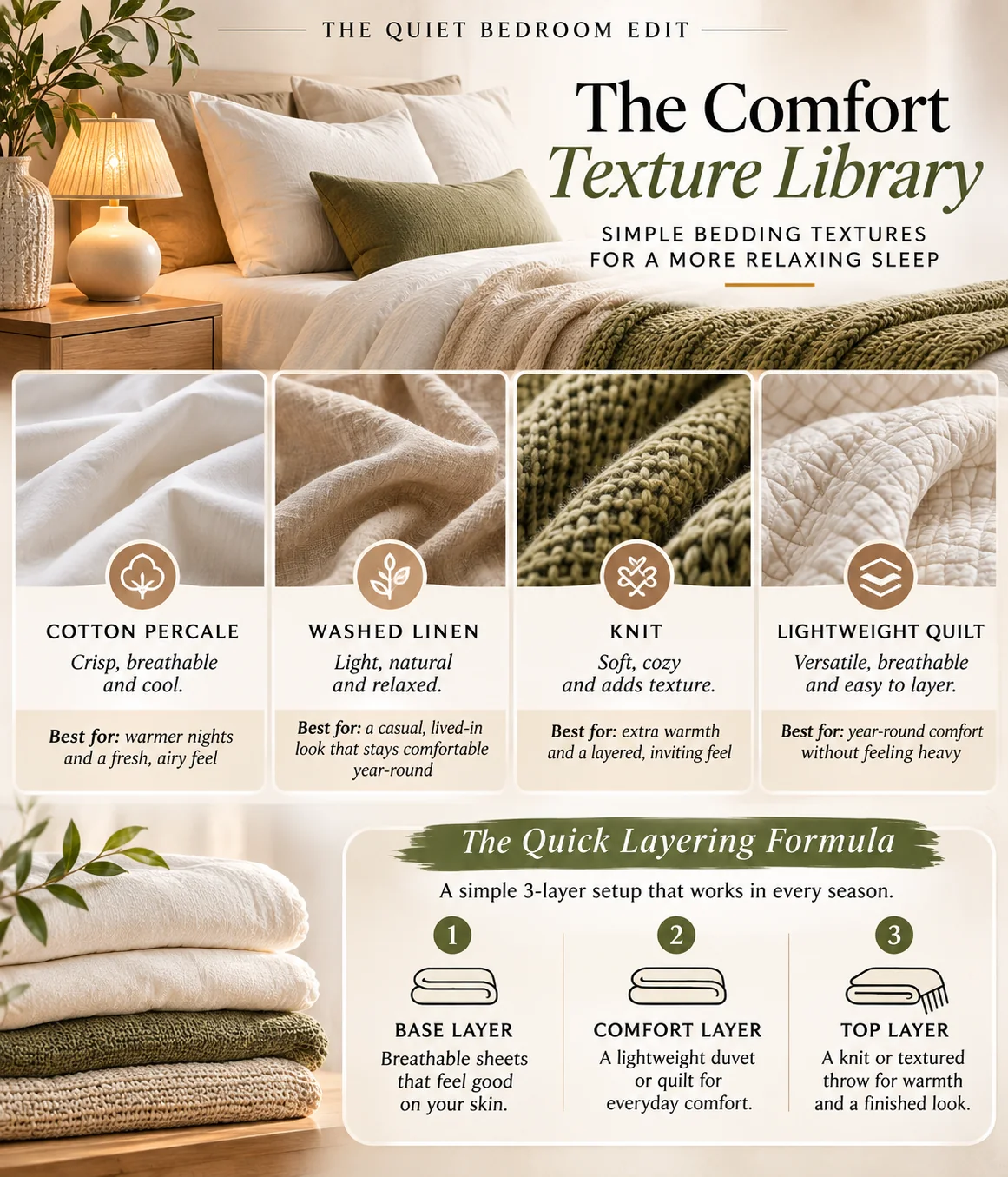
More cushions, throws, and layers can make a bed look inviting, but they also create more work and may feel too warm. Begin with comfort: Is your pillow supportive for you? Does the bedding feel pleasant against your skin? Can you remove or add a layer without remaking the whole bed?
Try swapping the placement of existing layers before buying a new set. If you want the editorial look without a crowded bed, our bedding layering guide explores flexible combinations for compact spaces.
Five-minute edit: Remove one unnecessary decorative layer, straighten the bedding you use, and notice whether the bed is easier to enter and maintain the next morning.
SMART SPACE FINDS / THE BEDROOM COMFORT SHOPPING EDIT
The Just-Enough Bedding Edit
Choose by comfort, climate and care requirements—not by how many layers are in a photo. Check fabric composition and exact size before ordering.
Affiliate disclosure: As an Amazon Associate, Smart Space Finds earns from qualifying purchases. Product selection is optional; always check current availability, dimensions and details on Amazon before buying.
5. Address one environmental distraction before adding more decor
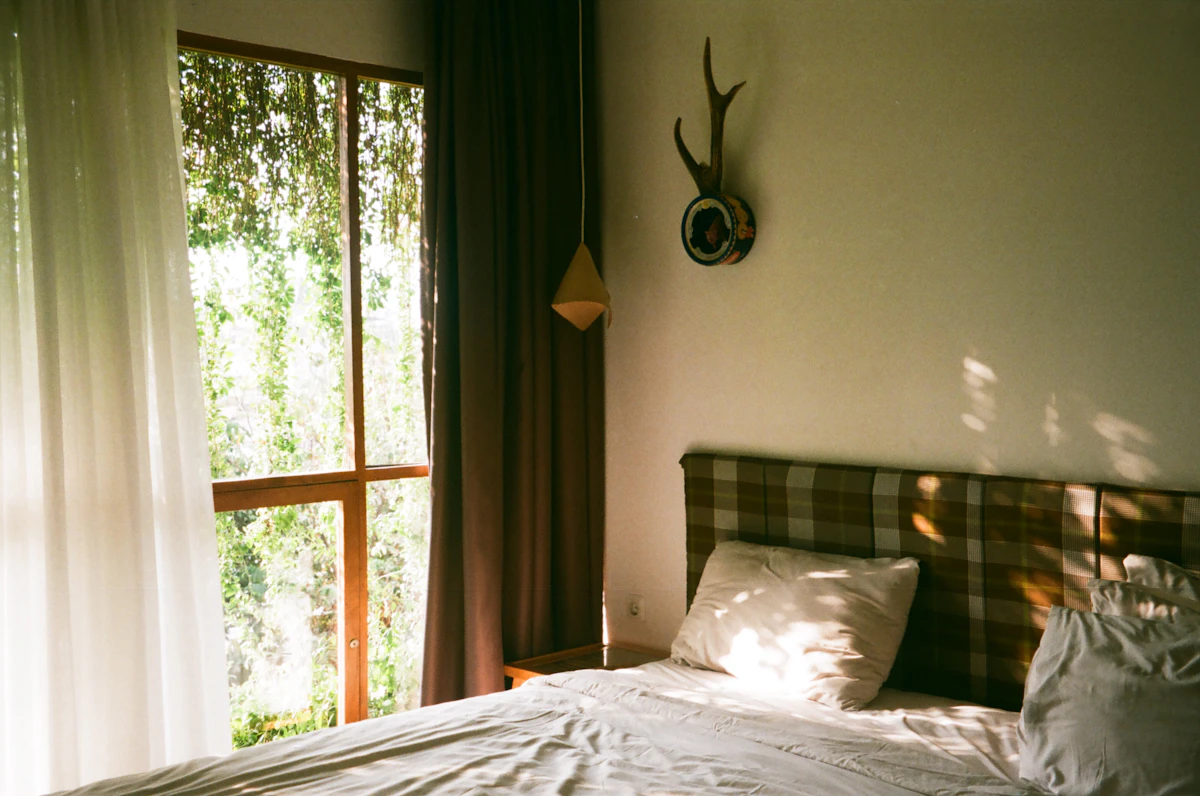
Sometimes the biggest bedroom improvement is barely visible: blocking a strip of streetlight, reducing an irritating noise, or making the route to the bathroom easier to navigate. Light, noise, and thermal comfort are important parts of a sleep-friendly environment, though individual preferences differ.
For a bright window, first check whether your existing curtain can close more fully. If you rent, explore renter-friendly blackout ideas without drilling. For noise, start with low-effort changes such as closing gaps where appropriate or moving a rattling item. Keep pathways and exits clear; if you need light for safe nighttime movement, use a suitably dim and well-positioned light rather than navigating in complete darkness.
Five-minute edit: Stand in the room after dark and identify the single most distracting light, sound, or obstacle. Make one reversible adjustment and test it.
For more detail on environmental factors, see the Sleep Foundation guide to setting up a bedroom, including lighting, noise, temperature, and comfort. These are general environment recommendations, not treatments for a sleep disorder.
A room feels calmer when the things you do every evening become easier—not when every surface looks empty.
SMART SPACE FINDS / THE BEDROOM COMFORT SHOPPING EDIT
The Light-and-Sound Control Edit
Fix one specific distraction first: excess streetlight, unwanted glare or ambient noise. Renter-friendly setups may work without drilling.
Affiliate disclosure: As an Amazon Associate, Smart Space Finds earns from qualifying purchases. Product selection is optional; always check current availability, dimensions and details on Amazon before buying.
The bedroom friction map: what to fix first
Before shopping, look at your bedroom from three positions: standing in the doorway, sitting on the bed, and lying down. Each reveals a different kind of friction.
| Viewpoint | What to notice | Useful first action |
|---|---|---|
| Doorway | Blocked walking routes or items without a home | Clear the route before rearranging decor |
| Sitting on the bed | Awkward switches, glare, unreachable essentials | Adjust light and bedside placement |
| Lying down | Direct light, irritating sound, uncomfortable layers | Change one environmental factor |
This is a practical observation method, not a scientific assessment or a substitute for professional advice. Its advantage is that it directs attention toward problems you actually experience.
A seven-day comfort test that takes less than a minute to track
Day 1: Write down one repeat inconvenience, such as “I have to reach behind the bed for the lamp.” Choose one action from the table above.
Days 2–6: Use the room normally. Don’t add more changes unless a safety issue needs immediate attention. Simply notice whether the new arrangement is easier to use.
Day 7: Ask three questions: Did I save a step? Did I search for fewer things? Did I feel more comfortable using the space? If the answer is no, reverse or simplify the change. There is no score to achieve.
What to skip: three upgrades that often add more effort
- Too many decorative pillows: If they live on the floor every night, use fewer.
- Oversized bedside organizers: A smaller landing zone may suit the room better than a complex multi-compartment system.
- Bright decorative lighting: Favor useful, comfortable task lighting over glare or a permanently illuminated display.
If your bedroom already feels functional and you’re looking for a different visual direction, see our separate guide to small bedrooms with a boutique-hotel feel. The goal of this article, however, is to improve how the room works before changing how it looks.
The $0-first bedroom refresh: when to spend and when to skip
Before choosing a bedside product, use a three-step purchase filter: (1) Name the specific inconvenience; (2) try a reversible, no-cost arrangement; (3) buy only if the same inconvenience remains after several ordinary evenings. This keeps the room from filling up with solutions to problems you don’t have.
| Problem | Try for $0 | If it still bothers you |
|---|---|---|
| Light is hard to reach | Move an existing lamp | Consider a stable, accessible task light |
| Cables look messy | Remove unused cords; reroute safely | Consider a modest cable organizer |
| Small items spread out | Reduce items to nightly essentials | Consider a shallow tray or drawer divider |
| Streetlight enters the room | Reposition existing curtains | Explore properly fitting renter-friendly light control |
Small bedrooms and rentals: the details that matter
For narrow bedrooms: Protect a comfortable walking route and avoid floor-standing accessories that force you to sidestep furniture. Measure usable space before choosing bedside storage.
For renters: Begin with movable lamps, freestanding organizers and existing window treatments. Check lease terms before mounting hardware or adding adhesive materials, and follow product installation and removal directions.
For shared bedrooms: Discuss light preferences, charging placement and nighttime movement with the other person. A solution that inconveniences your roommate or partner is unlikely to remain useful.
Why this approach is different
General bedroom inspiration often starts with a visual style. Our approach starts with friction mapping: one problem, one reversible adjustment, then a short real-life assessment. It is an editorial framework for making practical decisions, not a medically validated method or a claim that any particular decor choice will improve sleep.
Frequently asked questions
How can I make my bedroom relaxing without buying anything?
Reposition an existing lamp, remove items you never use at bedtime, simplify bedding layers, and adjust curtains or furniture placement. Start with the change that solves a repeated inconvenience.
What is the best first change for a very small bedroom?
Clear the route to the bed and create a reachable place for essentials. In a small room, reducing obstacles usually matters more than adding decorative pieces.
Should a relaxing bedroom always be dark?
Reducing disruptive light can be helpful, but safe navigation matters too. Use the level and placement of light appropriate to your needs, particularly if you get up at night.
Can bedroom decor cure insomnia?
No. A comfortable environment can support rest, but design changes are not a treatment for insomnia or another medical condition. Consult a qualified healthcare professional if sleep problems persist.
How much should I spend on a bedroom refresh?
Start at $0. Rearrange, remove, and test before you buy. If a specific obstacle remains, shop for a product that solves that exact problem rather than purchasing a coordinated collection.
The takeaway: make the room easier to live in
A relaxing bedroom is not necessarily a perfectly styled one. A reachable switch, a clear nightstand, comfortable layers, and one fewer distraction may be enough to make your evenings feel simpler. Choose the smallest useful change, test it in real life, and keep only what works for you.