
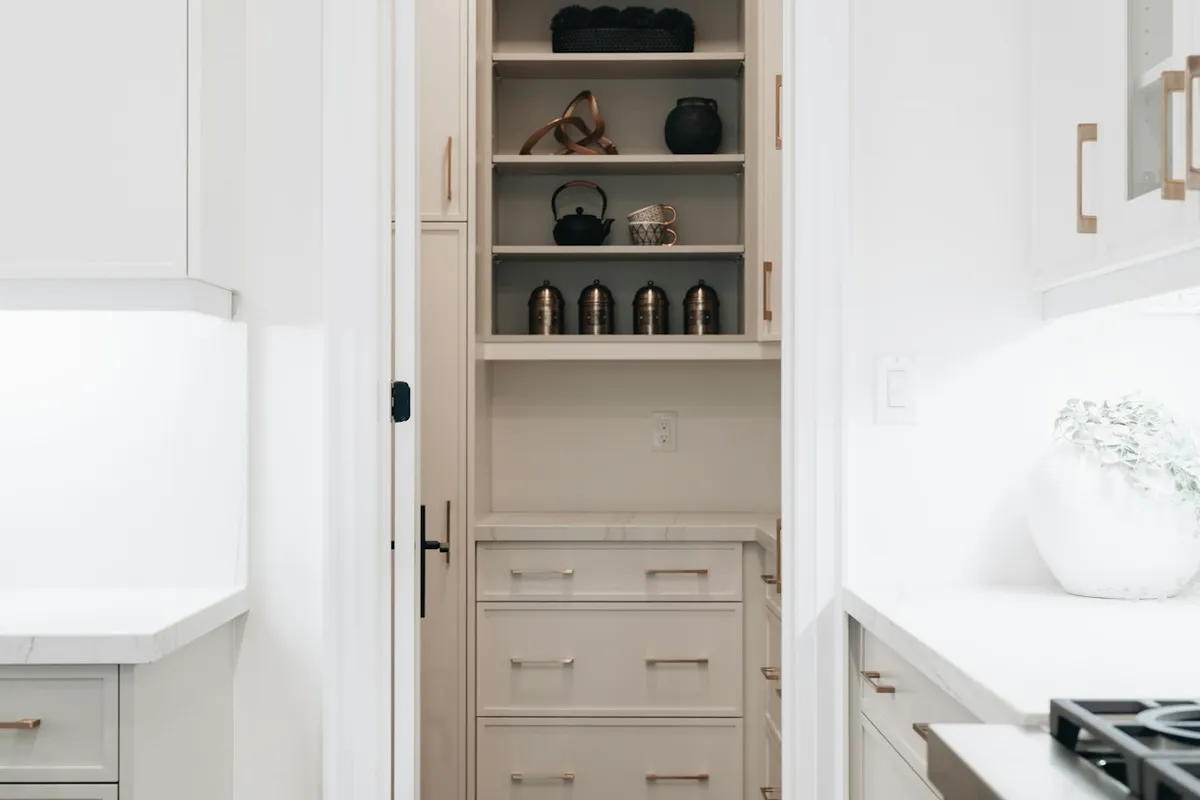
Short on space? You may not need another cabinet. The smartest storage ideas make everyday belongings easier to reach, return, and maintain. This guide covers ten practical storage solutions for small apartments, rental homes, tight closets, and hardworking kitchens—plus the measurements, safety checks, and buying criteria that help you choose what actually fits.
QUICK ANSWER · Start with the space you already have: cabinet doors, deep shelves, narrow gaps, drawers, and the area beneath furniture. Choose organizers based on usable dimensions and how often you need the contents, not just how neat they look in photos.
The Smart Storage Standard
Every clever solution should pass four simple tests.
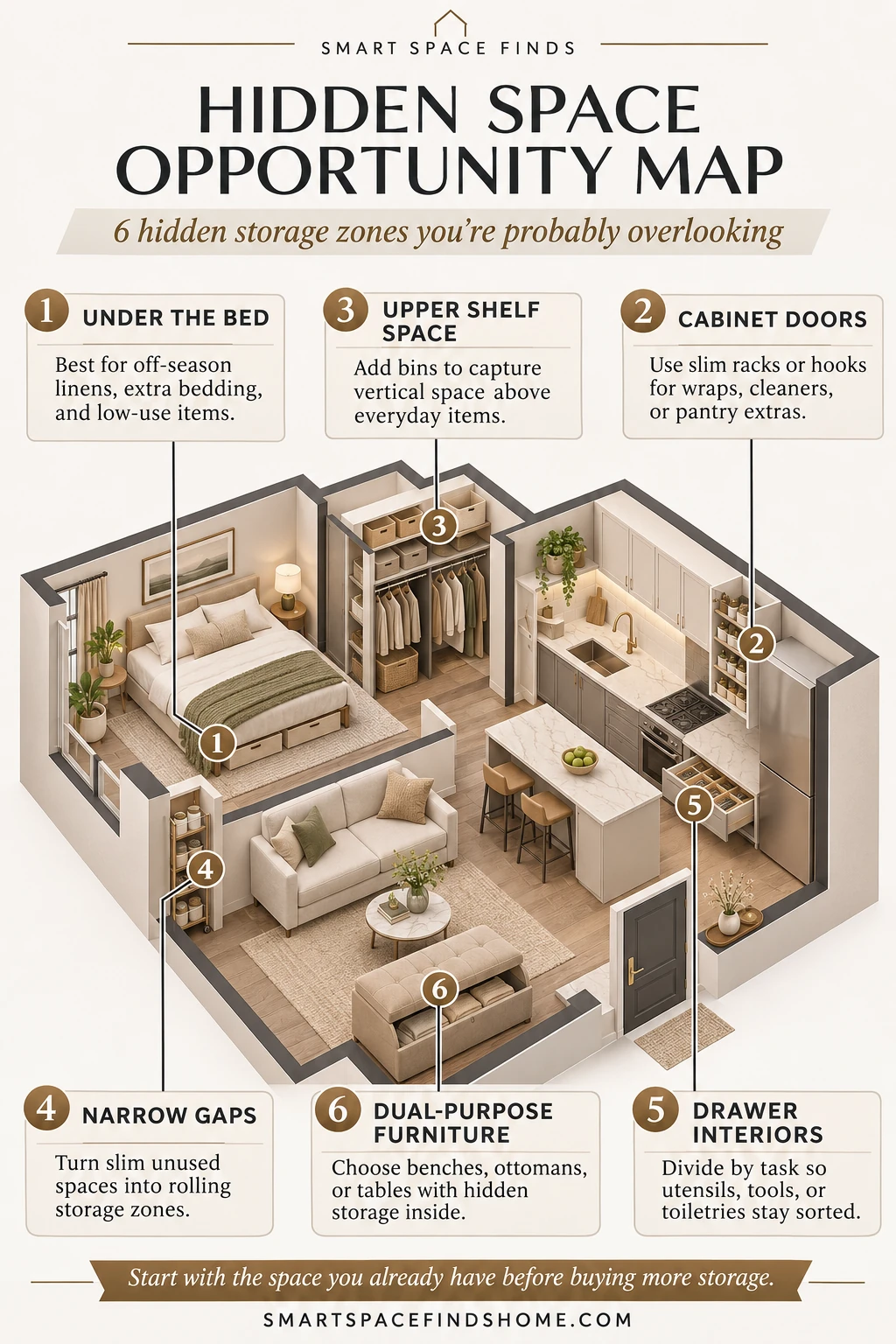
10 Genius Storage Ideas That Work in Real Homes
Each idea below includes the problem it solves, the best place to use it, and the detail to check before you spend money. You do not need to use all ten: pick the one that removes the most friction from your day.
1. Turn cabinet doors into lightweight storage zones
BEST FOR · Small kitchens, bathrooms, and utility cabinets. The inside of a cabinet door is often unused, but it can hold light items such as measuring spoons, dishcloths, or a narrow organizer. Before adding a rack, check that shelves, hinges, handles, and stored items will not collide when the door closes.
HOW TO MAKE IT WORK · Hold a cardboard template in place and close the door carefully to test clearance. Avoid heavy bottles on thin doors and keep under-sink shutoff valves accessible. If you rent, choose removable systems only where the surface and weight limits allow, and remember that adhesive removal can damage finishes.
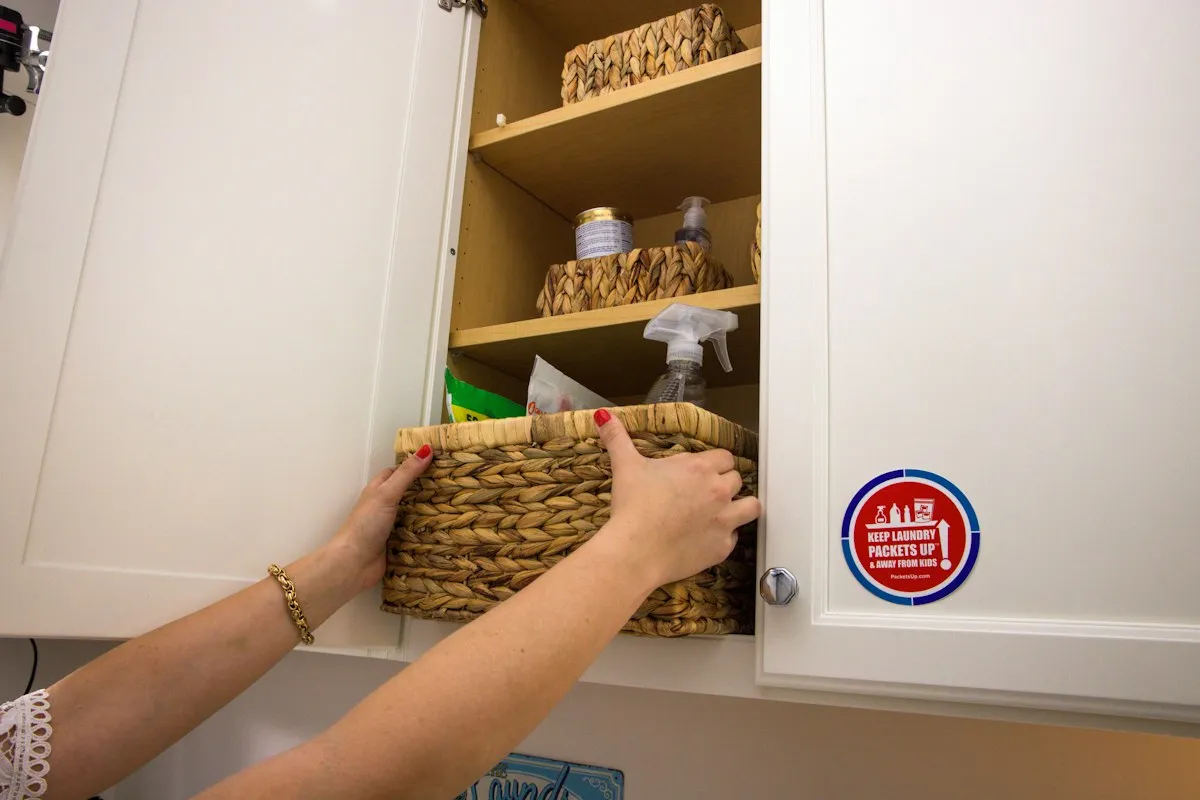
2. Make deep cabinets accessible with removable bins
BEST FOR · Pantries, lower kitchen cabinets, linen cupboards, and utility storage. Deep shelves can hide smaller items behind taller ones. A bin with a comfortable grip works like a pull-out category: remove one container rather than unpacking an entire shelf.
HOW TO MAKE IT WORK · Sort by task—breakfast supplies, baking tools, spare toiletries—rather than by arbitrary color. Measure the cabinet opening, not only the interior width; face frames and hinges can narrow the usable route. Keep heavy items low. For more targeted pantry organization, read our small pantry organization guide.
3. Double useful shelf levels with stable risers
BEST FOR · Tall pantry shelves, cupboards with stacked mugs, and low-height collections of jars. A well-sized riser creates a second visible level without remodeling the cabinet. It is especially useful when the shelf is tall but the things on it are short.
HOW TO MAKE IT WORK · Measure height above and below the riser, including room for your hand. Place light, frequently used items on top; follow the manufacturer’s load rating. Avoid building unstable stacks or putting heavy jars high enough that you must stretch to retrieve them.
4. Use narrow gaps—without blocking circulation
BEST FOR · Slim openings beside a desk, washer, vanity, or pantry unit. A rolling cart can transform an awkward gap into a tidy, accessible home for smaller supplies. The catch: a cart only works if it rolls out without scraping adjacent surfaces or blocking doors.
HOW TO MAKE IT WORK · Measure the gap at the front, middle, and back, including baseboards and pipes. Check the cart’s assembled dimensions and wheel clearance; a nominally narrow cart can be wider at its handles. Avoid gaps adjacent to heat sources or appliances where the manufacturer requires ventilation.
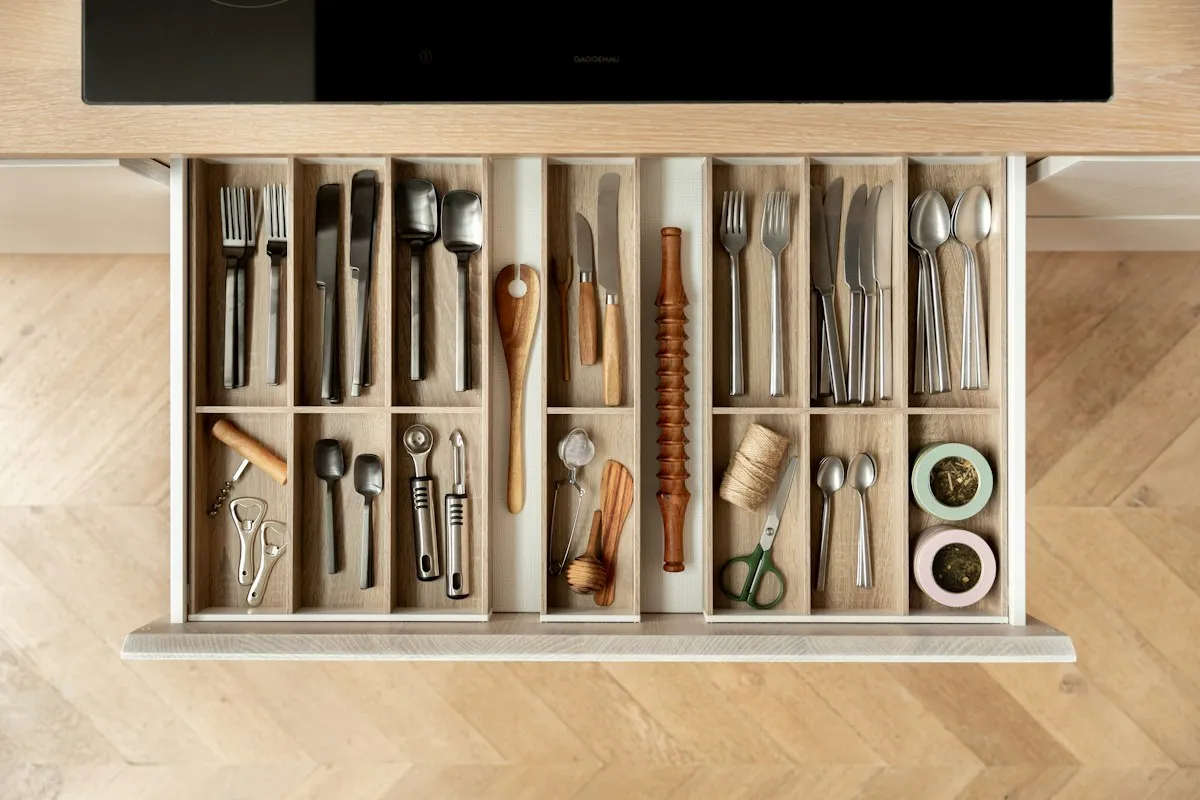
5. Divide drawers by real-life tasks
BEST FOR · Cutlery, accessories, stationery, chargers, and folded clothing. Drawer dividers prevent small things from turning into a single pile. The goal is a one-glance layout: every item has a clear, easy-to-reach category.
HOW TO MAKE IT WORK · Measure internal width, depth, and usable height, then test arrangements with small boxes before buying. Allow for the drawer’s slides and closing clearance. Group items by how they are used together; a beautiful grid that requires constant rearranging is not a good system.
6. Choose furniture that performs two jobs
BEST FOR · Studios, small living rooms, and entryways. A storage ottoman or bench can combine a useful seat with enclosed room for shoes, throws, or occasional-use accessories. This works best when it replaces—not merely adds—another piece of furniture.
HOW TO MAKE IT WORK · Tape the furniture footprint on the floor and test the walking route. Confirm seating weight limits and the space required for drawers or hinged lids to open. In homes with children, review lid safety and avoid unstable pieces that could tip.
7. Use under-bed space for dry, lower-frequency items
BEST FOR · Seasonal linens, spare pillowcases, and occasionally used textiles. Under-bed space can reduce pressure on a small closet, but it works poorly when bags are overfilled, damp, or too difficult to pull out.
HOW TO MAKE IT WORK · Measure the lowest frame clearance, taking floor variations and wheels into account. Choose containers that can be retrieved without straining. Store only clean, fully dry fabrics and allow for routine floor cleaning. For a more detailed approach, review clearance, ventilation, and retrieval ease before choosing a container.
8. Set up flexible closet zones
BEST FOR · Narrow wardrobes, reach-in closets, and shared bedrooms. Organize clothes into everyday, occasional, and seasonal zones. Slim consistent hangers, shelf dividers, and small open baskets can make categories visible without forcing a costly full closet system.
HOW TO MAKE IT WORK · Keep daily clothing at an easy reach and heavier boxes near floor level. Do not cram delicate items tightly. Review the system after one week and remove dividers that create more work. See our closet organization ideas for a room-specific breakdown.
9. Build one portable station for repeat activities
BEST FOR · Small homes where a dining table doubles as a desk, craft area, or homework surface. Keep the essentials for one task in a compact carry tray, caddy, or case. You can clear the shared surface in a single trip.
HOW TO MAKE IT WORK · Give the station a dedicated parking spot. Keep electrical cords untangled and avoid putting incompatible cleaning chemicals in a shared caddy. If children use the home, store hazardous products in secure, appropriate locations rather than in an accessible portable bin.
10. Create a compact entryway drop zone
BEST FOR · Apartments without a mudroom. A slim tray, a small shoe zone, and one appropriate hook or freestanding rack can prevent keys, bags, and shoes from migrating into the living area. The most effective drop zone is simple enough to use with your hands full.
HOW TO MAKE IT WORK · Keep the door swing and walkway unobstructed. Limit the landing tray to daily essentials and clear paper clutter regularly. For renters, prefer a freestanding piece over questionable wall mounting.
Editorial note · Start with one frustration point and test the layout before you spend. An organizer should remove work, not add a new chore.
Which Storage Idea Should You Try First?
| Your biggest problem | First solution to try | Measure or check |
|---|---|---|
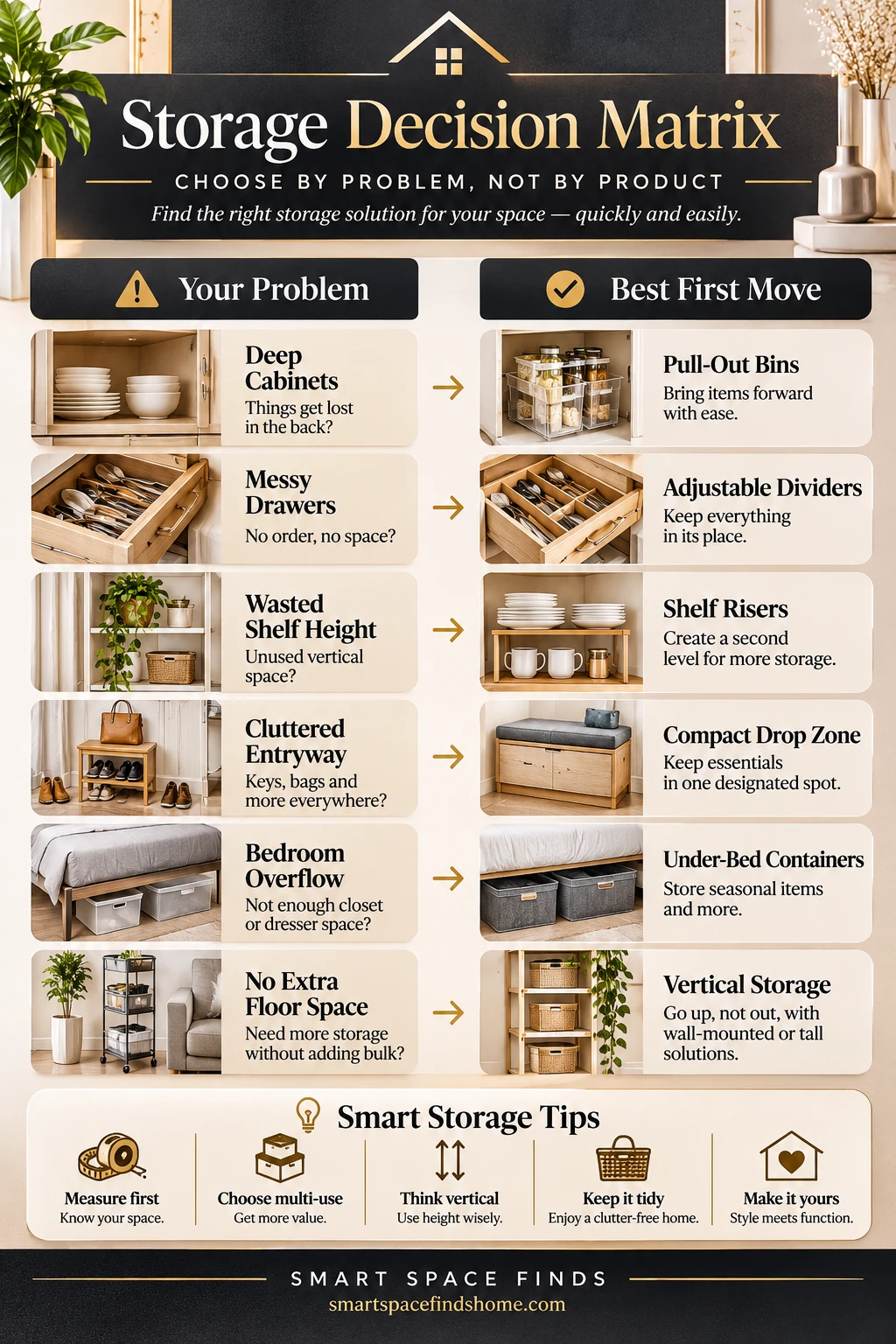
| Items disappear in deep cabinets | Removable category bins | Clear cabinet opening and pull-out space |
| Wasted height above short items | Shelf risers | Vertical clearance and load limit |
| Small accessories mix together | Drawer dividers | Internal drawer depth and height |
| Closet overflows with textiles | Closet zones or under-bed storage | Accessibility, airflow, and clearance |
| Living room lacks enclosed storage | Storage ottoman or bench | Floor footprint and safe opening space |
| Counter or table stays cluttered | Portable task station | Easy retrieval and a permanent parking spot |
| Entryway collects daily clutter | Small landing tray and shoe zone | Door swing and clear walking route |
How to Measure for Storage Organizers Before You Buy
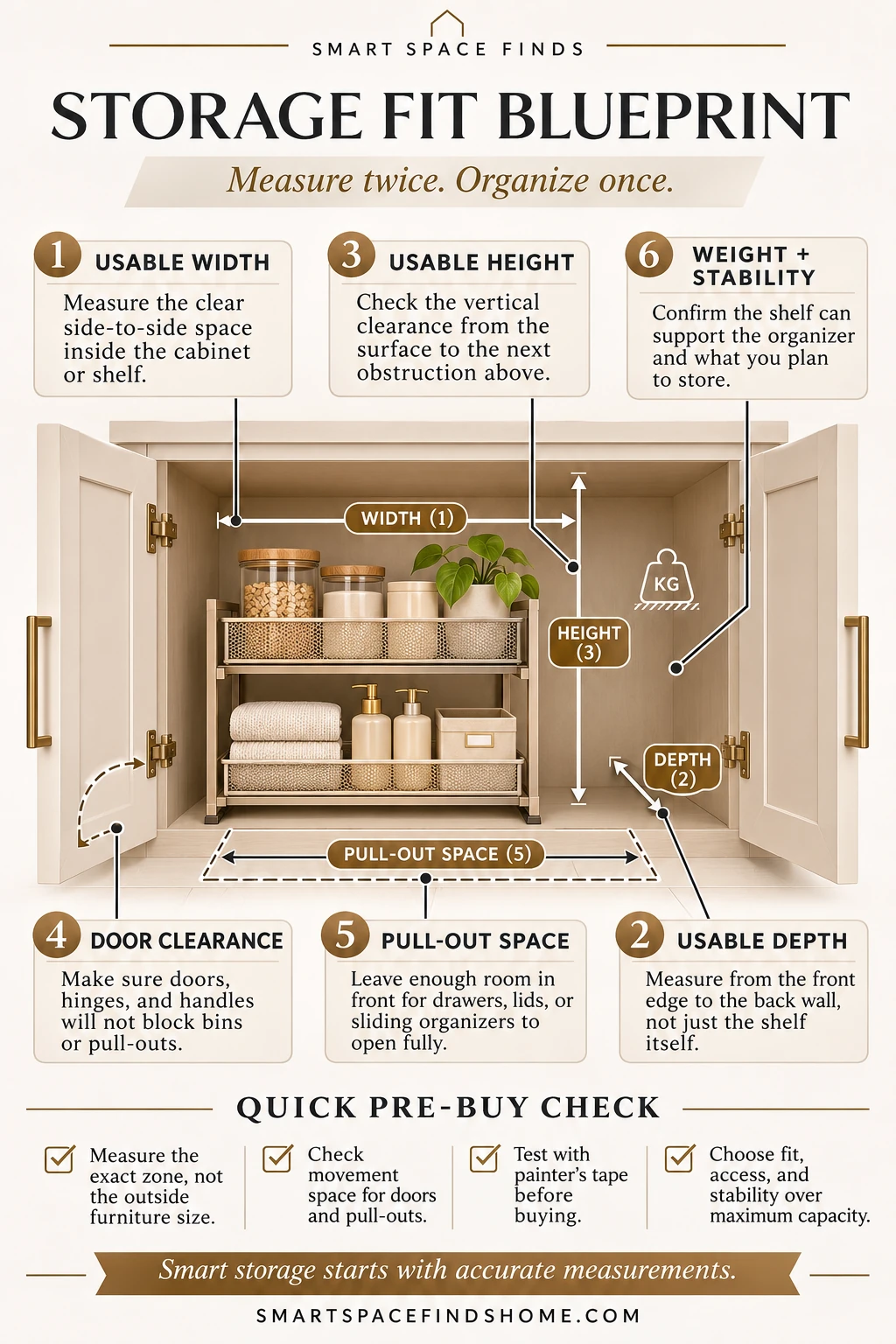
An organizer is useful only if it fits and works while you are using the space. Record more than the empty shelf dimensions:
- Usable width: Measure the narrowest opening, including hinges, face frames, or trim.
- Usable depth: Allow for pipes, plugs, cabinet backs, and door closure.
- Usable height: Include clearance for lifting items and gripping the container.
- Movement clearance: Make room for drawers to extend, wheels to roll, and lids to open.
- Weight and safety: Confirm the load rating of shelves, hooks, and storage furniture.
- Daily access: Imagine reaching for the item when you are rushing, carrying groceries, or putting away laundry.
PRACTICAL TEST · Use painter’s tape or an existing box to mark the proposed footprint. Try the layout for several days. This low-cost test often prevents a purchase that technically fits but makes daily life harder.
What Makes a Storage Organizer Worth Buying?
Buying the most bins rarely produces the most usable space. Compare options using four criteria: fit, accessibility, durability, and flexibility. The right product should fit the space after accounting for clearance; let you retrieve items with minimal steps; withstand the load and room conditions; and remain useful if your layout changes.
When to choose open versus closed storage
Open trays and baskets work for items you reach for constantly, because they reduce the steps needed to put things away. Closed containers protect infrequently used items and reduce visual clutter. Clear bins can help identify contents, but an opaque basket may look calmer on a visible shelf. Choose based on the job, not a single aesthetic rule.
Storage mistakes to avoid
- Buying matching sets before measuring anything.
- Stacking daily-use items behind heavy containers.
- Filling every inch until objects become hard to remove.
- Blocking ventilation, plumbing access, doors, or walkways.
- Using adhesive hooks beyond their rated capacity or on incompatible surfaces.
- Buying extra furniture that reduces circulation more than it adds usable storage.
The 7-Day Storage Reset: A Small-Space Action Plan
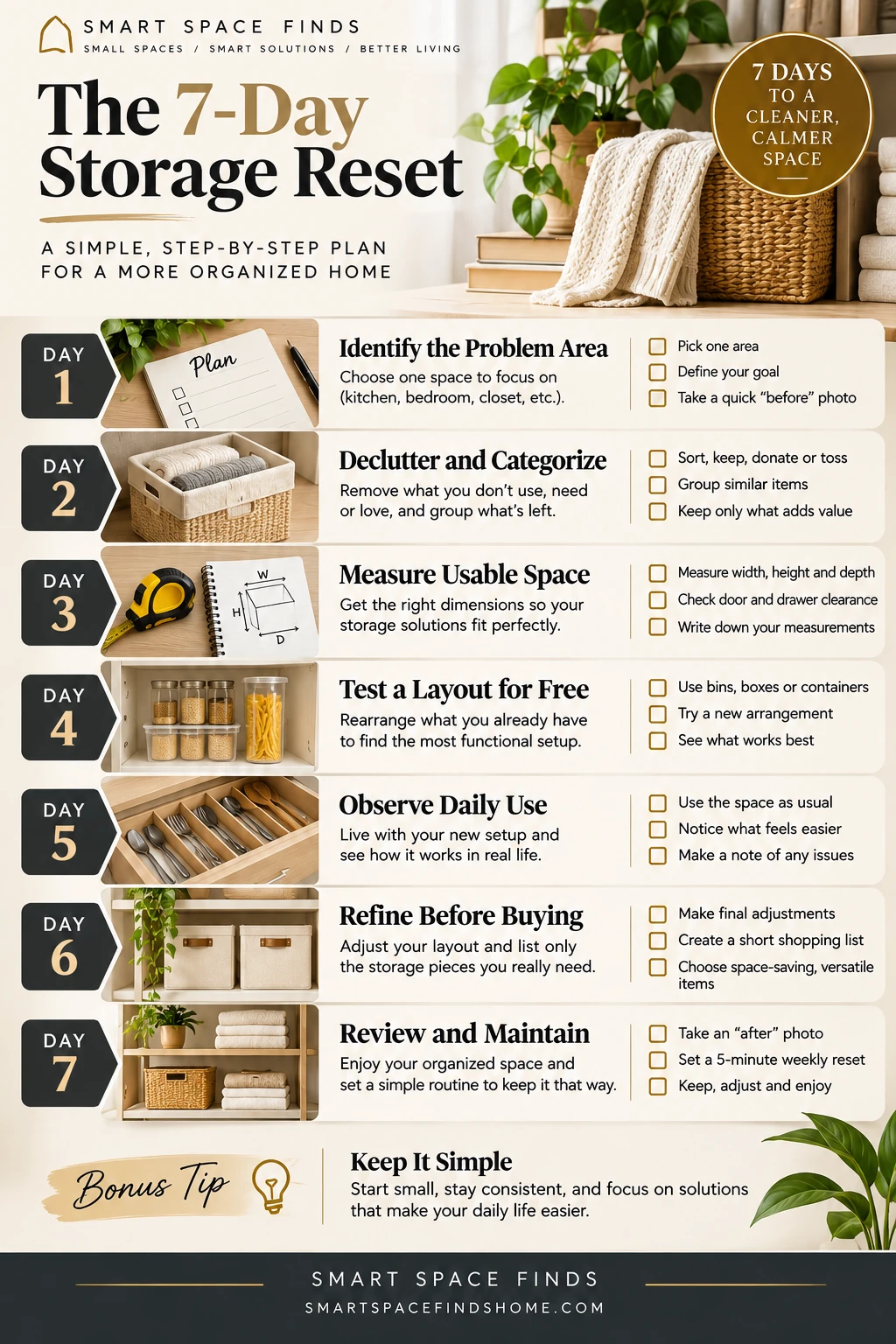
- Day 1: Pick one frustrating cabinet, drawer, or corner. Photograph how it currently functions.
- Day 2: Remove the contents, group like items, and set aside what does not belong.
- Day 3: Measure usable space, openings, and the movement required to access it.
- Day 4: Test one layout using containers or dividers you already own.
- Day 5: Use the area during your normal routine. Note anything hard to reach or return.
- Day 6: Adjust the system, then buy only the organizer that solves a remaining problem.
- Day 7: Recheck access, safety, cleaning, and maintenance. Repeat the approach in a second area only after the first feels easy.
Frequently Asked Questions About Genius Storage Ideas
Practical answers to the most common small-space storage questions.
What are the best storage ideas for a very small apartment?
Start with underused vertical space, adjustable drawer dividers, cabinet-door storage for lightweight items, and furniture that serves two functions. Select ideas based on what is hardest to access in your apartment, and protect clear walking routes.
How can I add storage without drilling into walls?
Use freestanding carts, bins, drawer dividers, shelf risers, storage ottomans, and suitable over-door organizers. Check door clearance and manufacturer instructions; removable adhesives are not risk-free on every finish.
How do I organize deep cabinets so nothing gets lost?
Group related items in removable shallow bins, place frequent-use categories near the front, and label bins only where it adds clarity. Measure the opening and leave room to pull each container out without removing neighboring items.
Are clear storage bins better than baskets?
Neither is always better. Clear bins make contents easy to identify and work well in hidden cabinets. Open baskets simplify access to frequently used items. Opaque baskets can reduce visual clutter in areas on display.
What should I measure before ordering a storage organizer?
Measure usable width, height, and depth, plus door swing, drawer extension, lid opening space, and any obstructions. Check the product’s actual assembled dimensions and load rating.
How can I make an organization system easier to maintain?
Use fewer categories, keep daily-use items within comfortable reach, and avoid unnecessary lids or stacked containers. Test the new layout during a normal week, not only immediately after tidying.
The essential takeaway
Choose Access Over Extra Containers
The most effective genius storage ideas make a home easier to use. Reclaim overlooked space, measure carefully, keep heavy objects low, and favor systems that require fewer steps to maintain. Begin with one frustrating area and refine it before buying organizers for the rest of the house.