
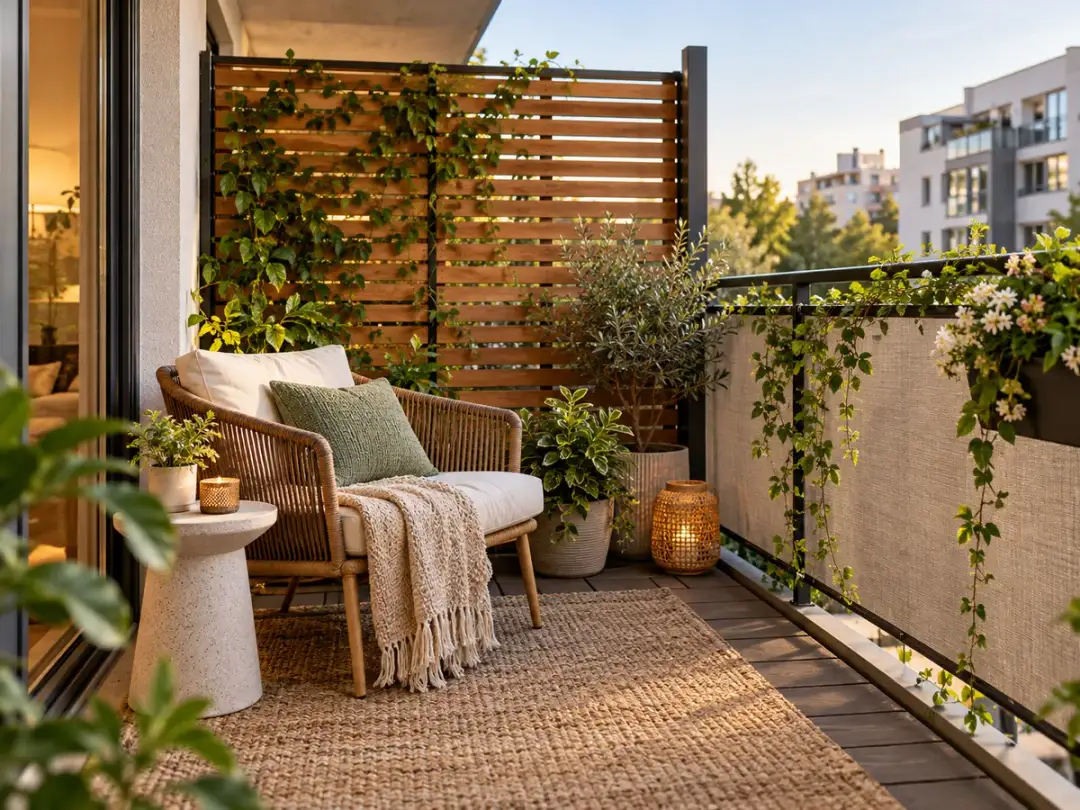
Balcony privacy ideas for renters should make a small outdoor space feel calmer—not darker, cramped, or unsafe. Whether you face a neighboring window, an open railing or a balcony directly across the courtyard, there is often a reversible way to reduce unwanted views without drilling into the building.
This practical guide compares 12 no-drill and low-commitment balcony privacy solutions, explains which ones work for different viewing angles, and walks you through measurements, wind exposure, lease restrictions and a designer-approved finishing plan.
The balcony privacy solution selector
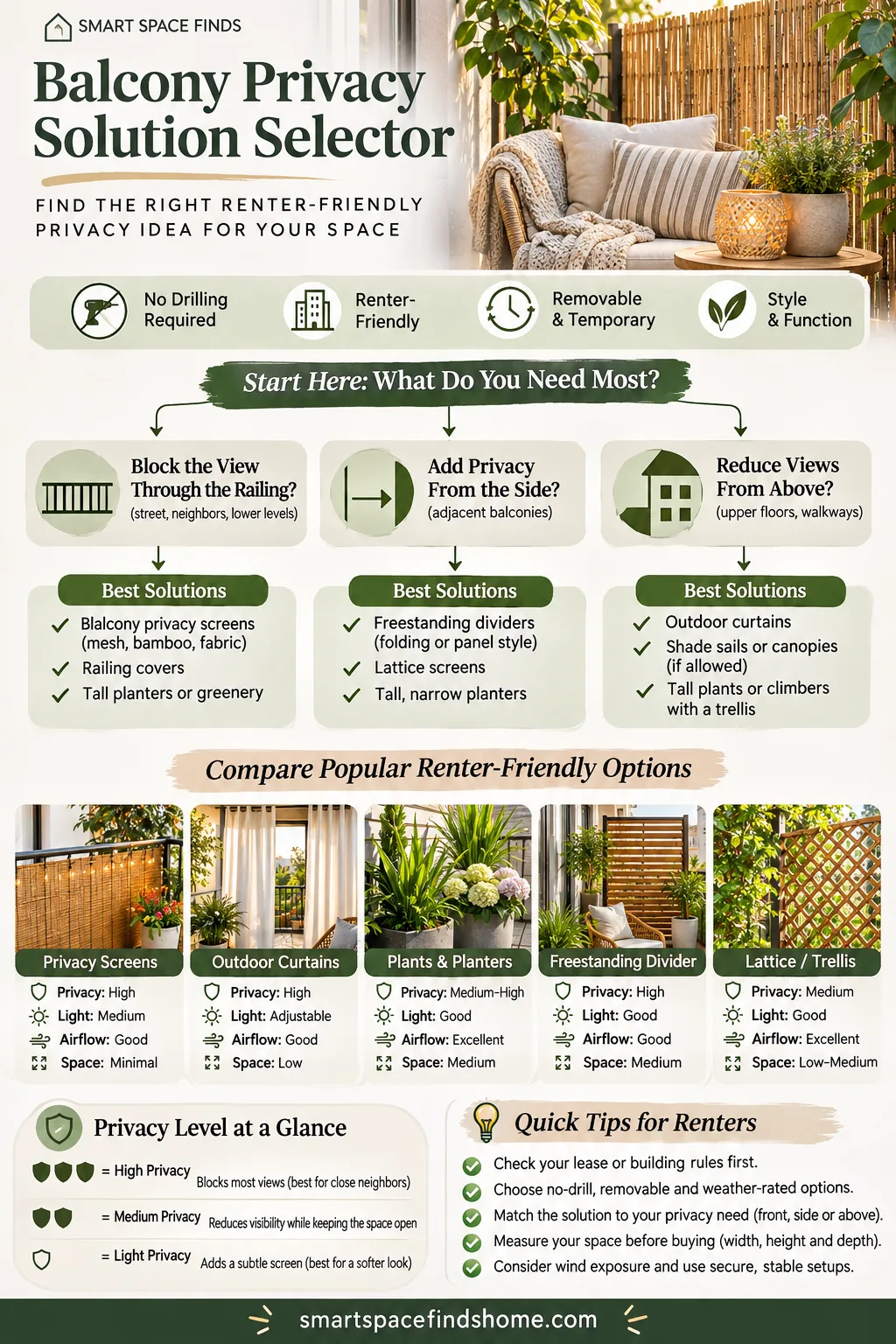
Start with the direction of the unwanted view. A screen installed in the wrong place may consume precious floor space while doing little for privacy. The comparison below is a decision aid, not an installation or engineering approval.
| Your privacy problem | Potential solution | Privacy level | Space needed | Check before buying |
|---|---|---|---|---|
| Seated view through railing | Permitted mesh railing panel | Medium–high | Low | Permission + secure manufacturer-approved installation |
| Neighbor looking from the side | Outdoor-rated freestanding divider | Medium–high | Medium | Footprint + tip-over risk |
| Occasional side exposure | Approved outdoor curtains | Adjustable | Medium | Support system + wet fabric + wind |
| Soft partial screening | Tall planters | Low–medium | Medium–high | Saturated weight + seasonal foliage |
| Preserve daylight | Open lattice / slats | Low–medium | Medium | Viewing angle + wind-rated structure |
| Overlooking from above | Approved overhead shade | Variable | High | Building consent + wind exposure |
Privacy levels are relative estimates, not product ratings; actual performance depends on coverage, lighting, seating height and viewing angle.
First, map the view you want to block
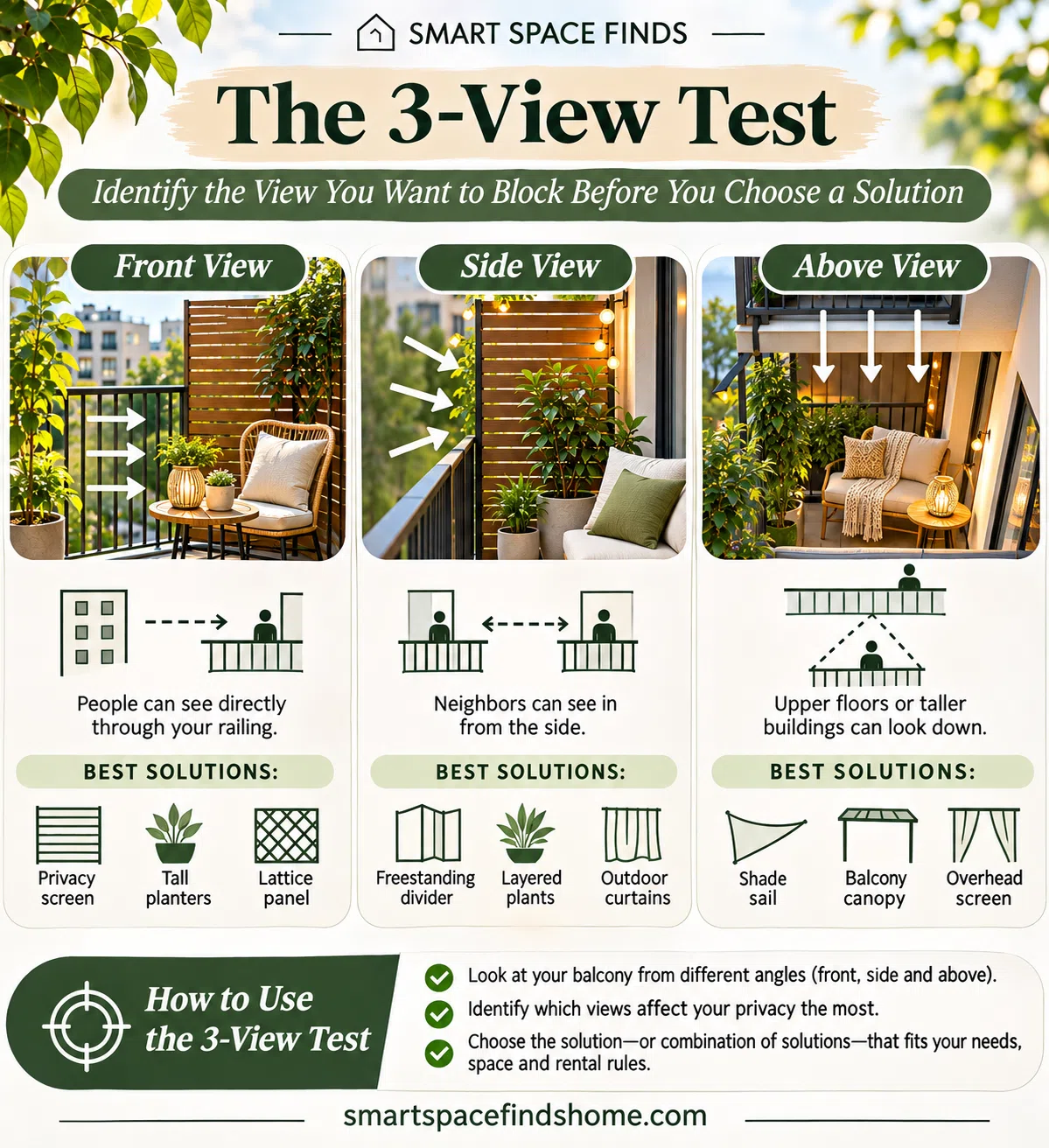
Stand and sit where you normally use the balcony. Look toward nearby windows and walkways. Is the problem a view straight through the railing, an angled view from the side, or neighbors looking down from above? Each requires a different screen height and position.
Side: Does an adjacent window overlook your chair or table?
Above: Can an upstairs neighbor see over any proposed barrier?
Photograph your layout from your own seating positions, noting the direction of each sightline. Do not enter anyone else’s property to test it.
12 renter-friendly balcony privacy ideas that actually work
01. A breathable railing privacy screen
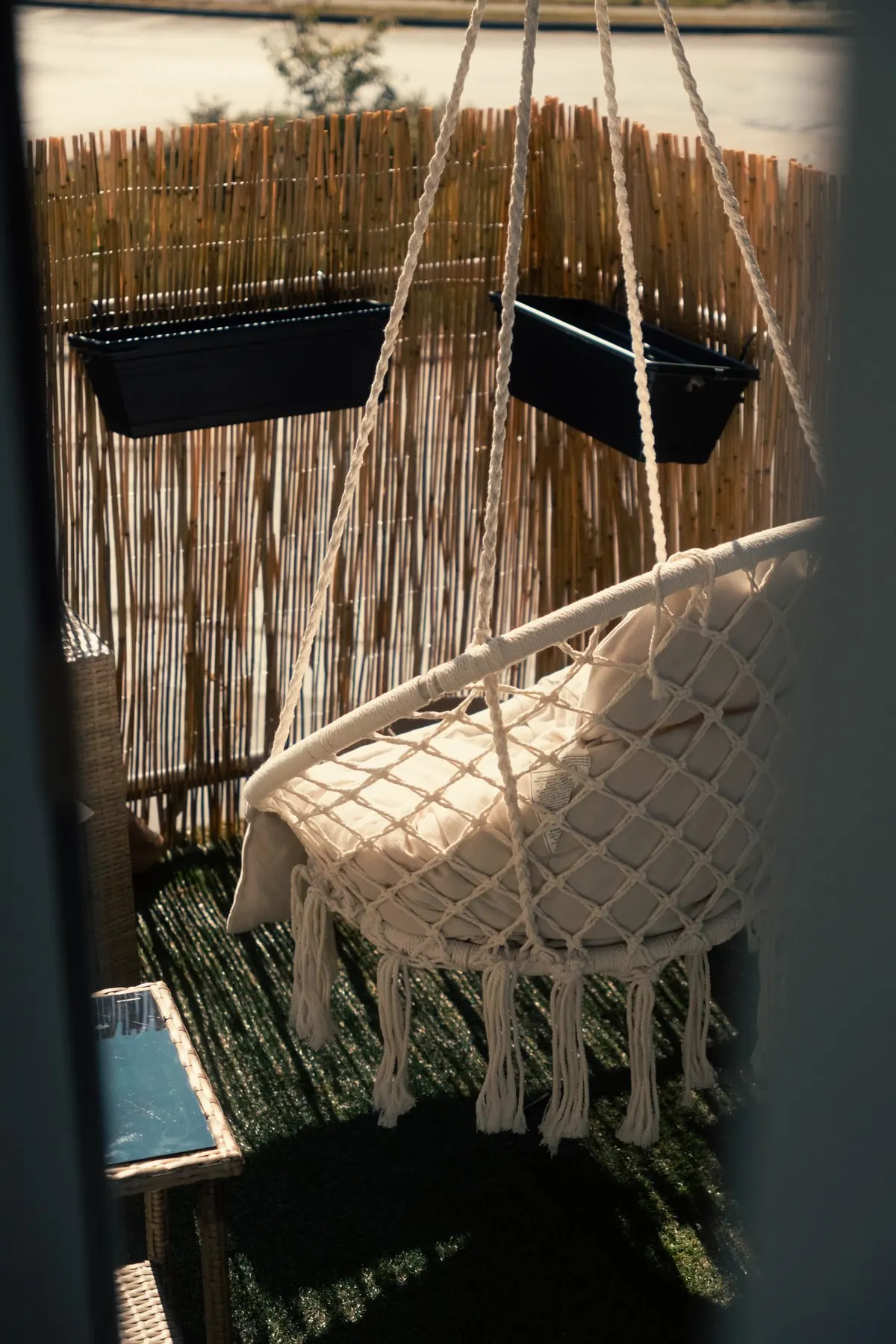
A purpose-made, UV-resistant mesh panel can reduce views through a see-through railing without taking up floor space. Measure the inside width and height of the permitted area, then check the manufacturer’s exact attachment pattern and the building’s restrictions. More open fabrics can preserve light and ventilation, but no fabric is automatically wind-safe. Do not improvise mounting with household ties or attach a panel to the outside of a high-rise railing.
02. A slim freestanding outdoor divider
A narrow divider positioned beside the seating area can interrupt a neighbor’s diagonal sightline while leaving the rest of the balcony open. Select an outdoor-rated design with a documented stability and anchoring method that is actually permitted at your address. Freestanding does not mean tip-proof: tall panels can overturn in gusts.
03. Outdoor curtains on an approved support
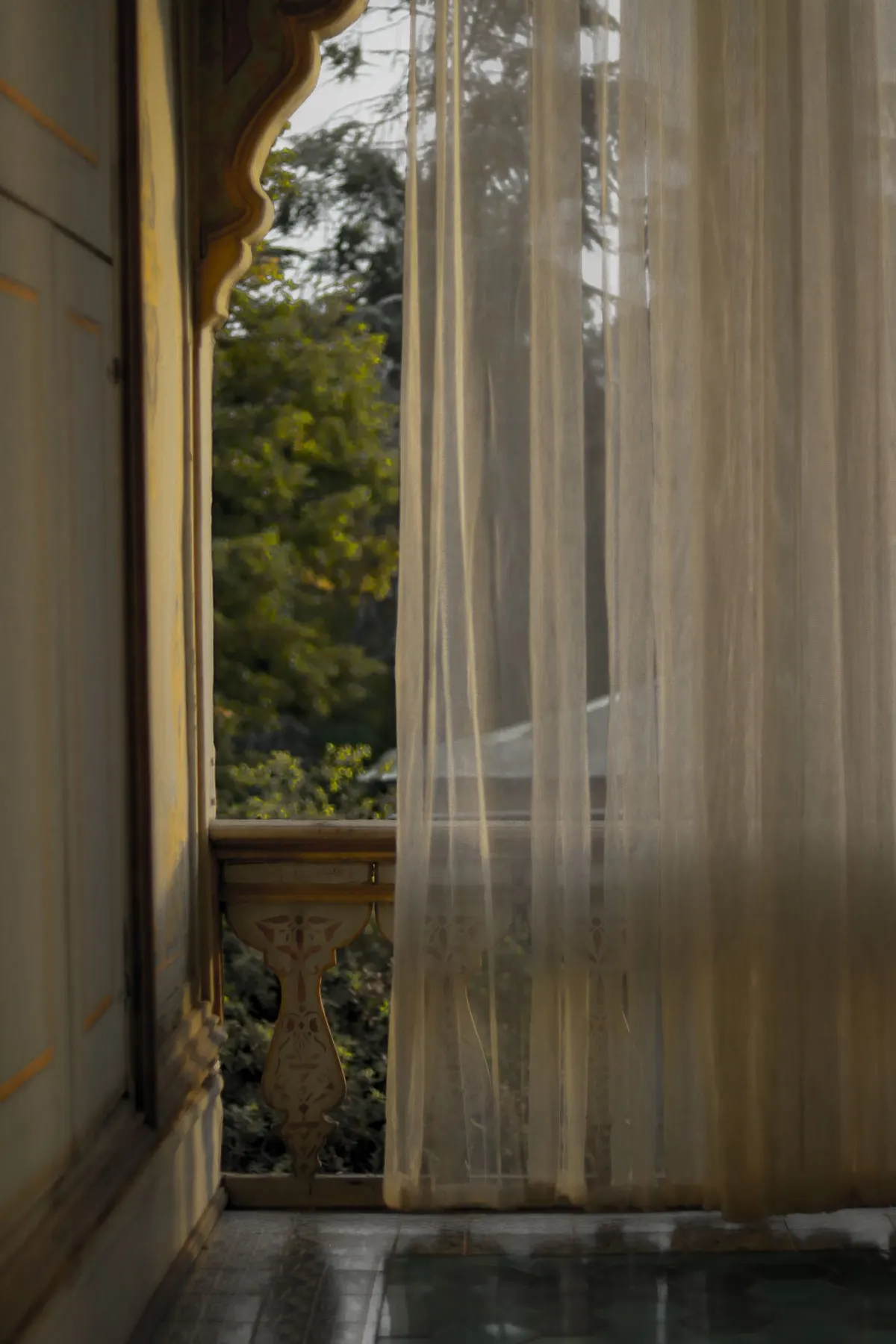
Weather-rated curtains give the space a soft resort feel and can be pulled back when privacy is unnecessary. The challenge is the support system. A tension rod only works if its manufacturer allows the exact span, surface and outdoor exposure; it may slip under wind or wet-fabric weight. An existing permitted overhead track is preferable to improvising a cable across an exposed balcony.
04. Tall planters for a living screen
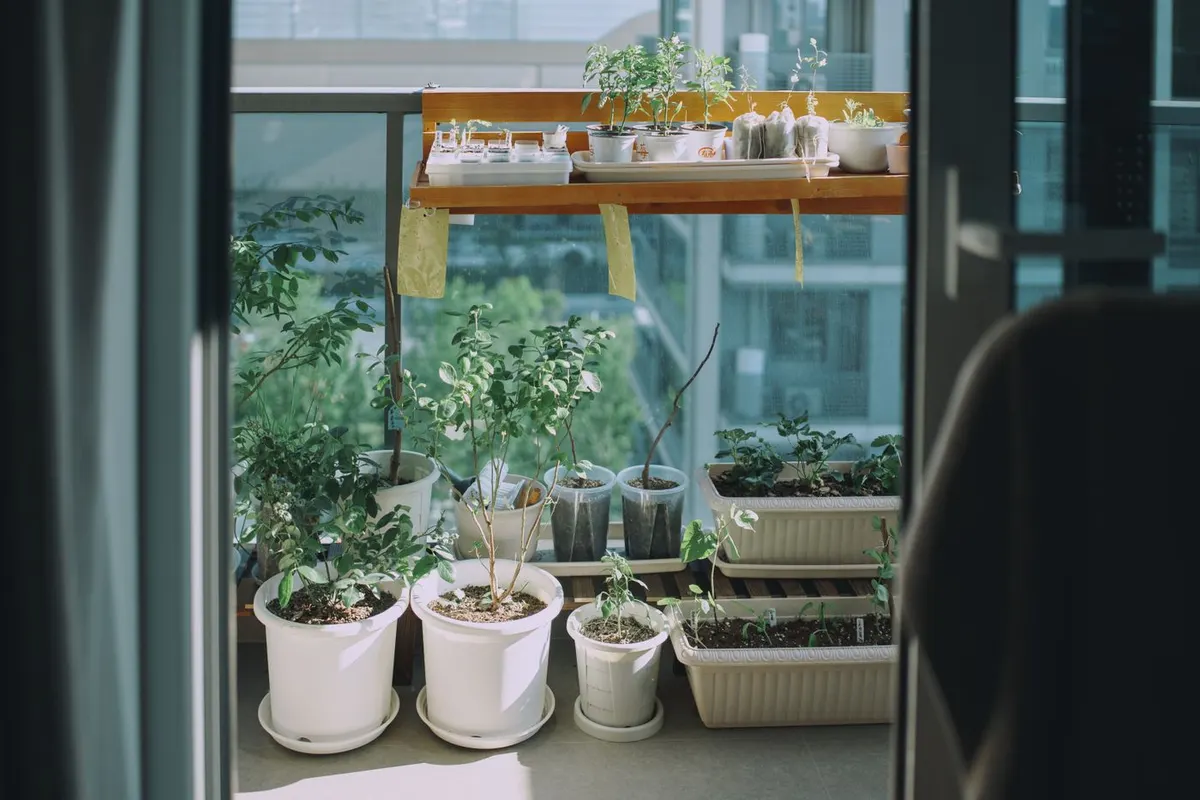
Cluster two or three appropriately sized containers around the actual viewing angle rather than lining the entire railing. Choose plants for your local climate, sunlight and exposure; evergreen species may offer more consistent cover, while ornamental grasses can move and open gaps. Account for the complete saturated weight of soil, containers, plants and water.
05. Slatted or lattice-style privacy panels
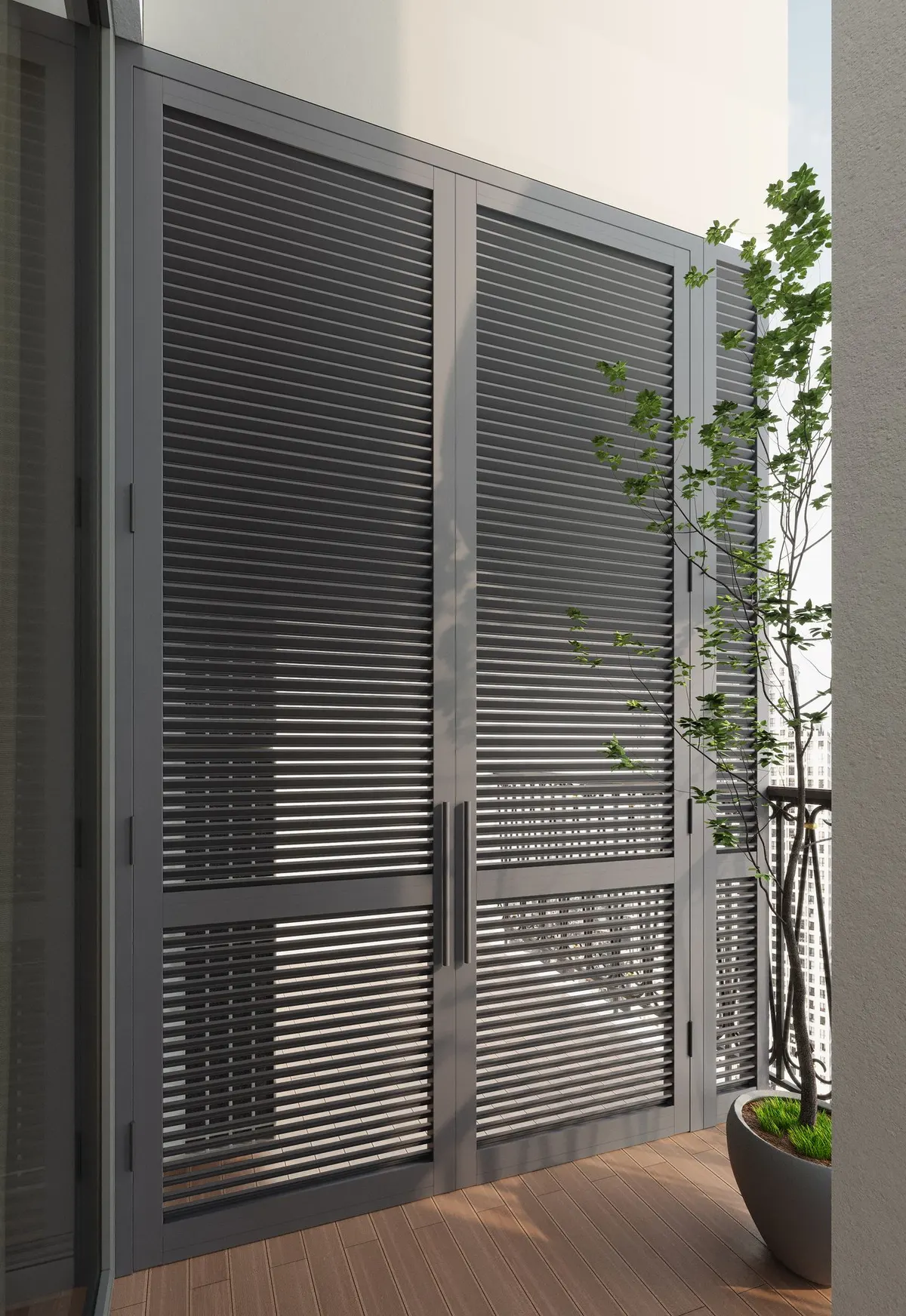
Open slats can make the space look more architectural than solid vinyl while preserving glimpses of daylight. Orientation matters: gaps that look private straight on may reveal your seating area from an oblique window. An outdoor-rated lattice also needs a documented support and wind plan.
06. A compact movable screen behind seating
A folding screen can make sense when you need privacy during short daytime use and have a sheltered, appropriate location to deploy it. Check the manufacturer’s outdoor-use, wind and storage requirements. A lightweight indoor room divider is not a safe substitute on an exposed exterior balcony.
07. An angled seating arrangement
Sometimes moving a chair toward a solid sidewall and rotating it slightly has greater impact than covering the entire railing. From the actual seated position, identify whether a neighboring window is looking toward your face or only the edge of your chair. Move the seat within the safe footprint, with ample clearance at the door.
08. A permitted side-wall planter grouping
Where a balcony has a solid side return, a grouping of plants placed toward that wall can create a layered corner and shield the chair from one side. Select stable floor-standing containers and keep access to drainage and maintenance points.
09. A translucent panel in an approved system
Frosted or translucent materials can blur silhouettes while making a narrow balcony feel bright. Their real privacy varies with the product, distance and light direction; a brightly lit balcony at night can reveal shapes. Because broad panels carry wind loads, use only a suitable, approved engineered system.
10. A compact approved shade screen
An angled outdoor shade may help with views from upper windows, but overhead screening is often the most challenging option for renters. Umbrellas, canopies and shade sails need manufacturer-approved anchoring and may be restricted on elevated balconies. An umbrella base alone does not establish wind safety.
11. A layered mesh-and-greenery look
Where both components are individually permitted and safely supported, a modest breathable privacy layer combined with greenery can make an apartment balcony feel designed rather than blocked off. Keep planting clear of any fabric fixings and allow inspection access.
12. A privacy-first layout with fewer objects
In a tight footprint, rethink the zone itself: place one slim chair in the least overlooked corner, choose a small side table instead of a large bistro set, and use the building’s solid wall as a visual anchor. A taller barrier that makes walking unsafe is not an upgrade.
How to measure for balcony privacy without wasting money
Shop Privacy Screens & Faux Greenery
Three screening looks for low-level views and decorative coverage. Choose the smallest suitable footprint.
Affiliate disclosure: As an Amazon Associate, Smart Space Finds earns from qualifying purchases, at no additional cost to you.
Check the live Amazon listing for price, delivery and current stock. For any railing, curtain or divider installation, confirm building approval and product-specific wind and anchoring requirements.
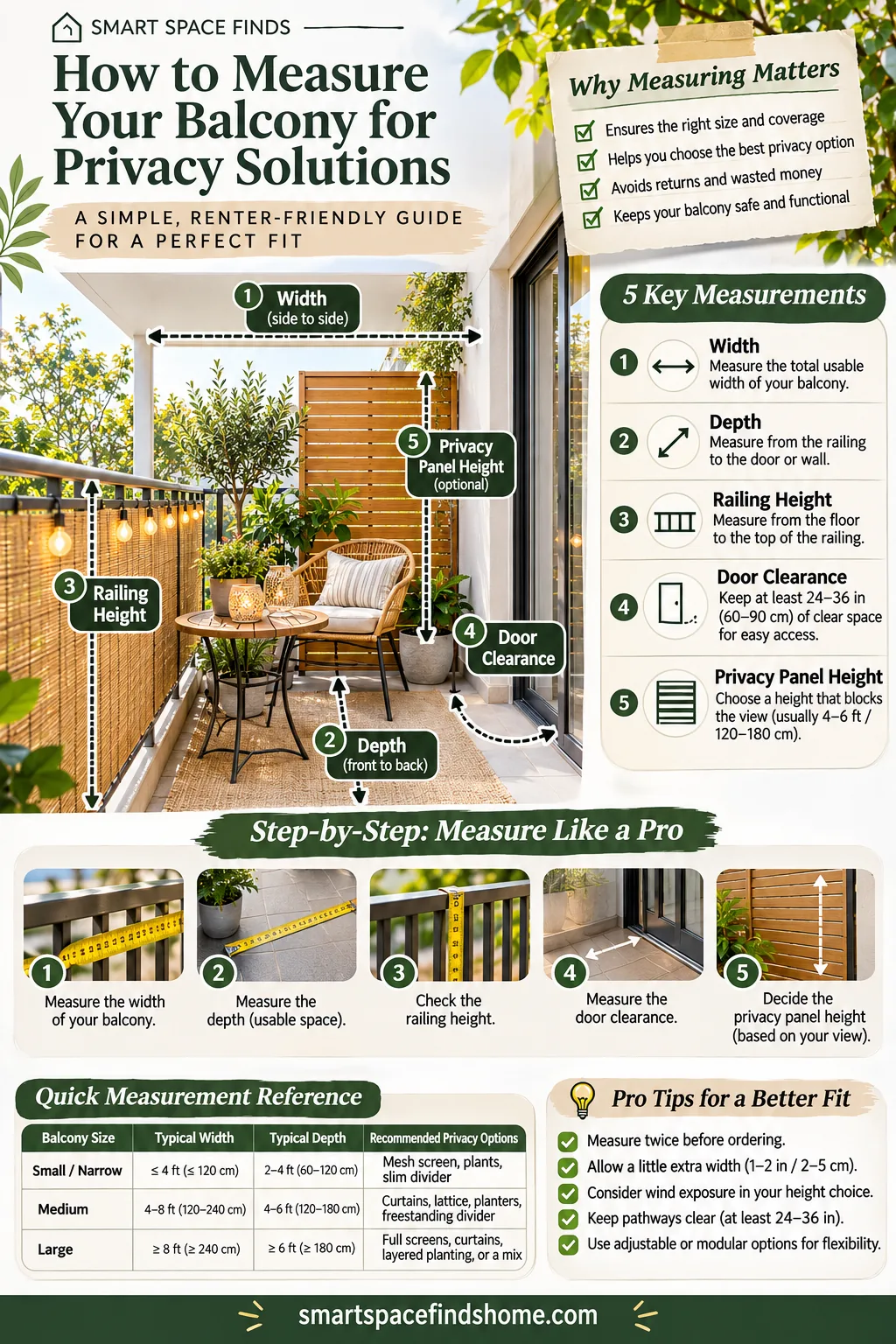
Measure before you choose a product—not after. Keep a simple sketch with the usable balcony width and depth, the length and height of the exposed railing, the distance from the seat to the screen location, and the clearance needed to open the balcony door fully. Your measurements are for fit only; they do not determine safe loads or wind ratings.
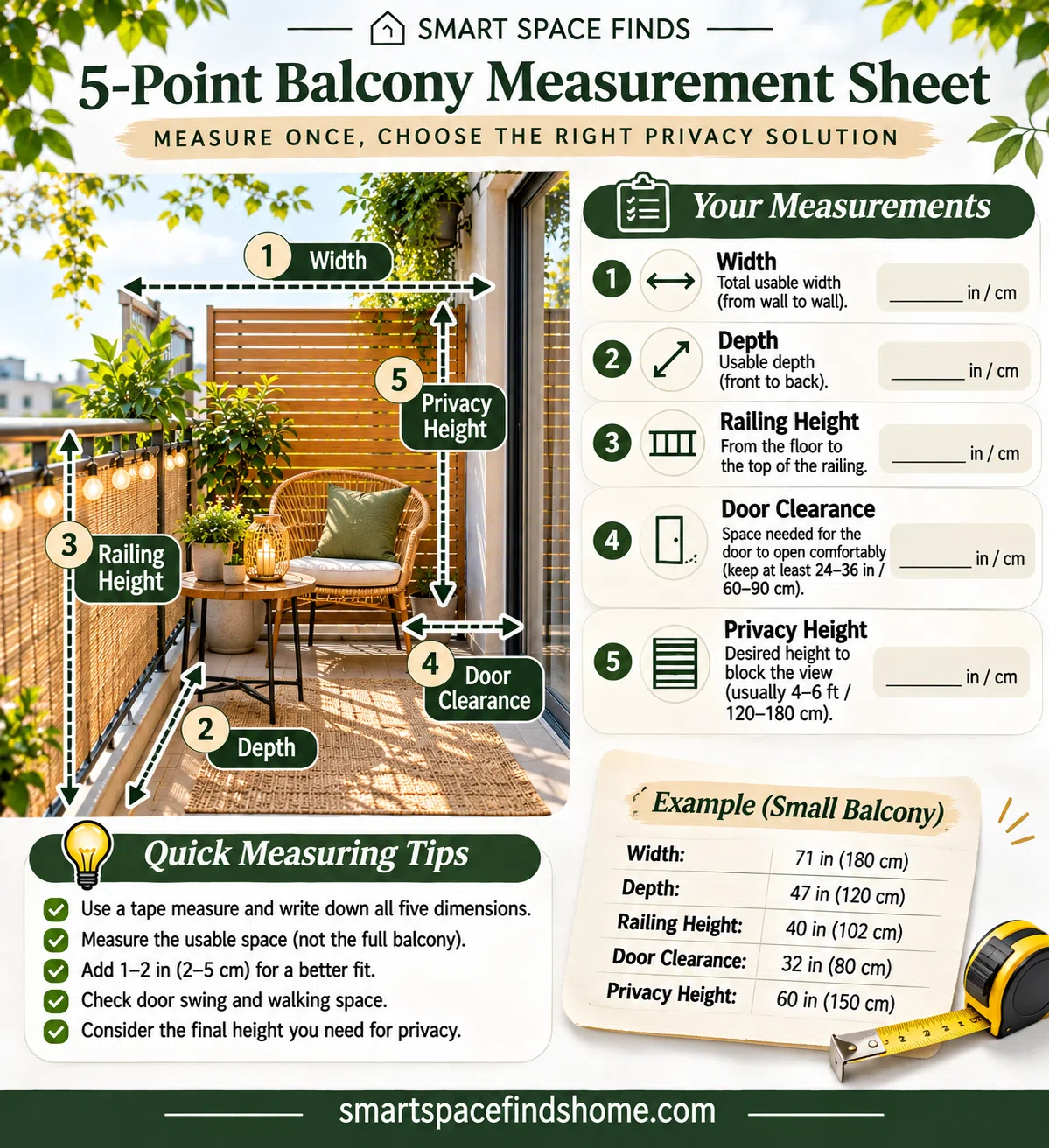
- Measure usable balcony width and depth in inches.
- Record railing dimensions and any manufacturer-approved attachment zones.
- Sit down and identify the minimum vertical coverage needed to block the actual sightline.
- Mark the screen or planter footprint on the floor with removable painter’s tape.
- Check door swing, safe walking clearance, drains, vents and any required emergency access.
For a narrow outdoor space, the screen should not consume more usable depth than the comfort it creates. If you are planning a two-person setup, explore four compact balcony seating layouts alongside your privacy plan.
The non-negotiables: wind, weight, permission and exits
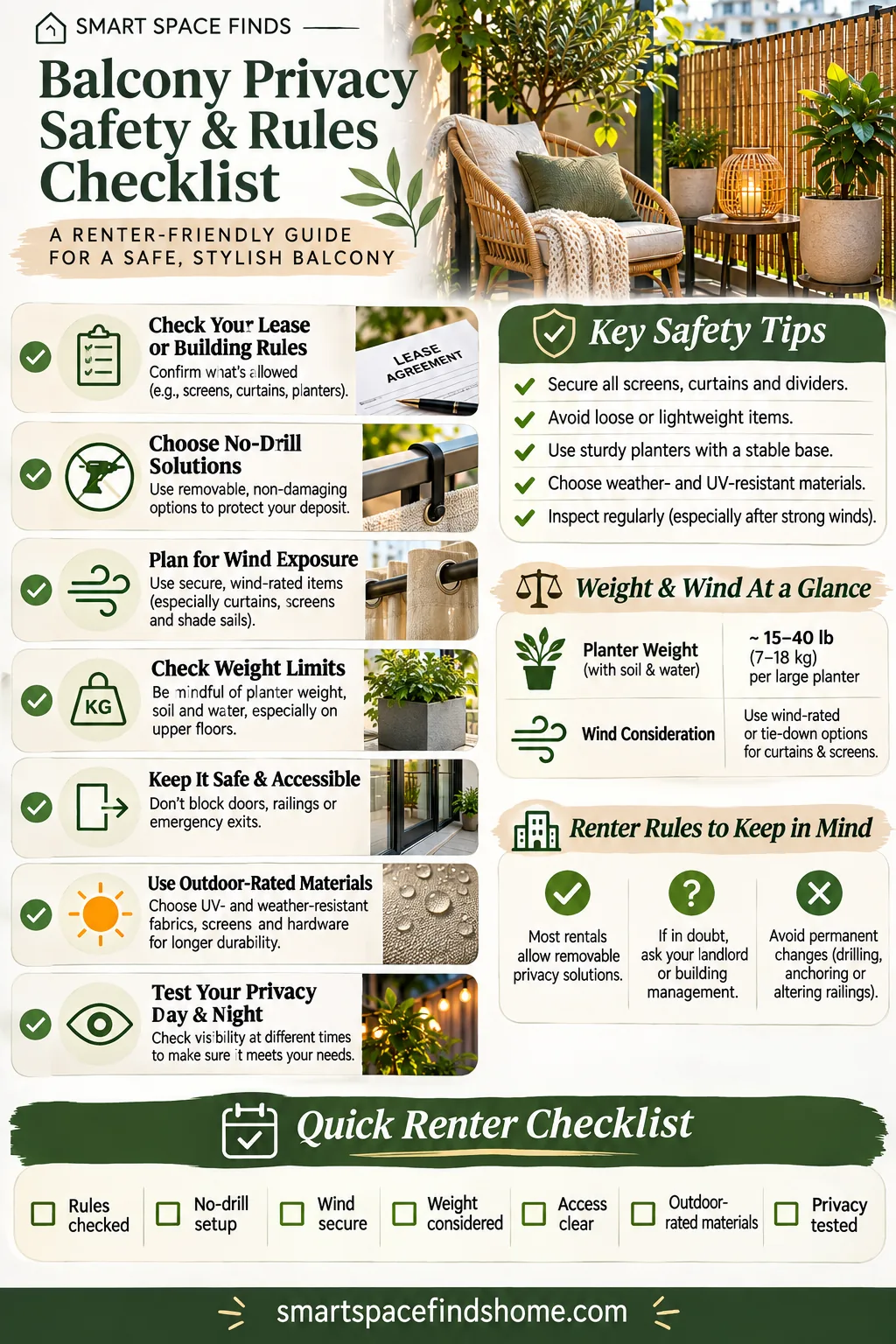
A large screen can act like a sail in gusty conditions, especially on exposed upper floors. Permeable materials may reduce pressure compared with solid panels in some configurations, but they are not automatically safe. Product dimensions, design, mounting details, local exposure and building conditions all matter.
Wind: Use a product and anchoring method suitable for your specific site, and comply with its removal guidance.
Railing integrity: Never drill, clamp or tie material to a guardrail unless that exact method is permitted and suitable.
Falling objects: Keep every item within your balcony footprint; never balance unsecured planters on a railing.
Loads and access: Account for wet soil and water, keep exits and drains clear, and never obstruct required ventilation.
Fire: Check applicable restrictions on fabrics, combustible screening and outdoor materials.
If any requirement cannot be confirmed, do not install the screen. Ask building management or a qualified local professional. A beautiful photo is never evidence that an installation is compliant.
How much privacy do you really need?
Shop Outdoor Balcony Curtains
Soft, adjustable coverage for a permitted curtain-support system.
Check the live Amazon listing for price, delivery and current stock. For any railing, curtain or divider installation, confirm building approval and product-specific wind and anchoring requirements.
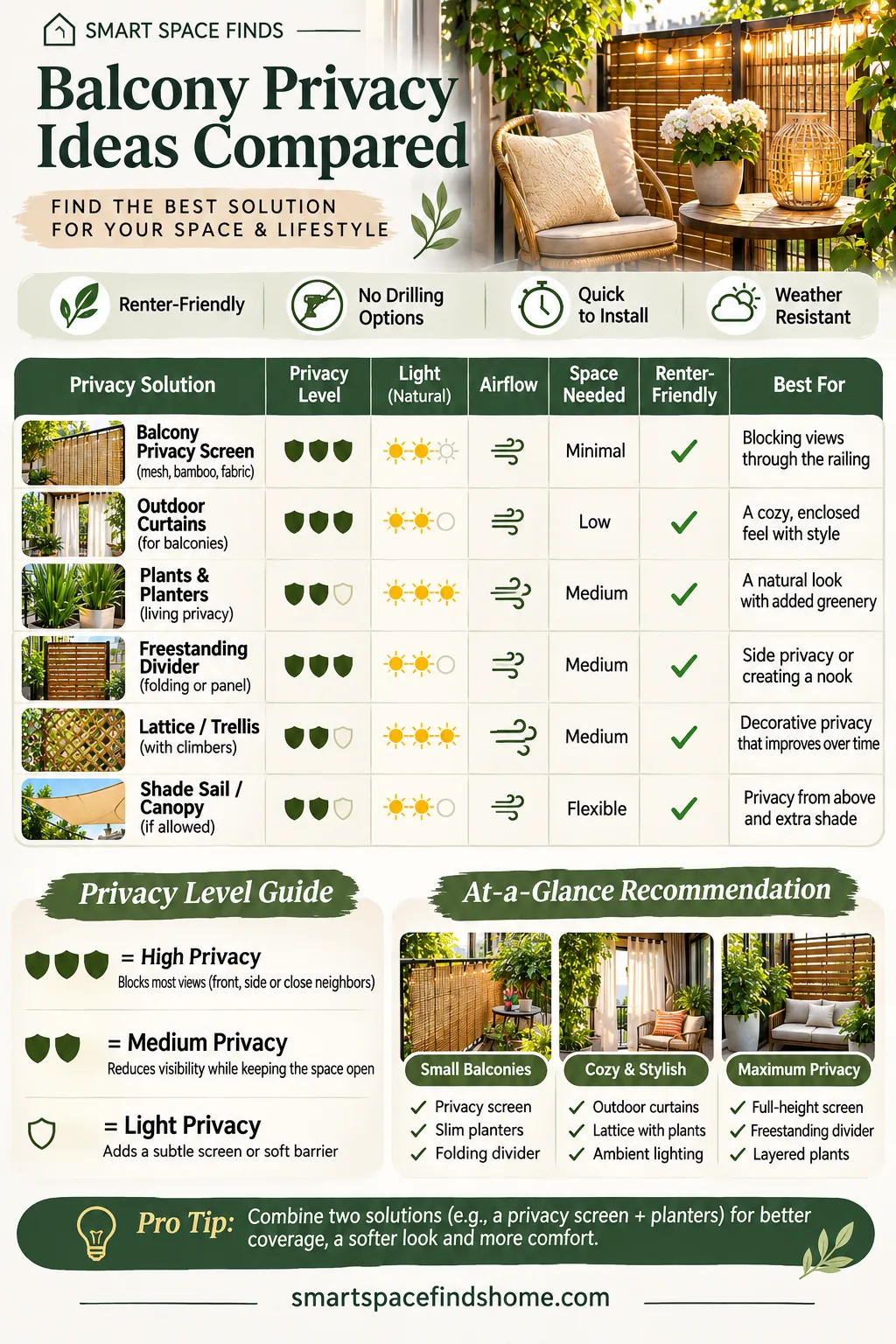
Low privacy: greenery, furniture placement and open lattice soften a view without fully concealing a person. Medium privacy: carefully positioned slats, selected mesh or a partial divider can obscure a particular angle. High privacy: opaque barriers may shield direct views but can also reduce light and increase wind loading; full concealment from every level is often unrealistic in a rental.
Remember the nighttime test: backlit curtains and translucent screens may reveal silhouettes after dark. The most comfortable balcony is the one that balances privacy with daylight and ventilation—not the one surrounded by the most material.
The premium magazine look: style the screen, not the clutter
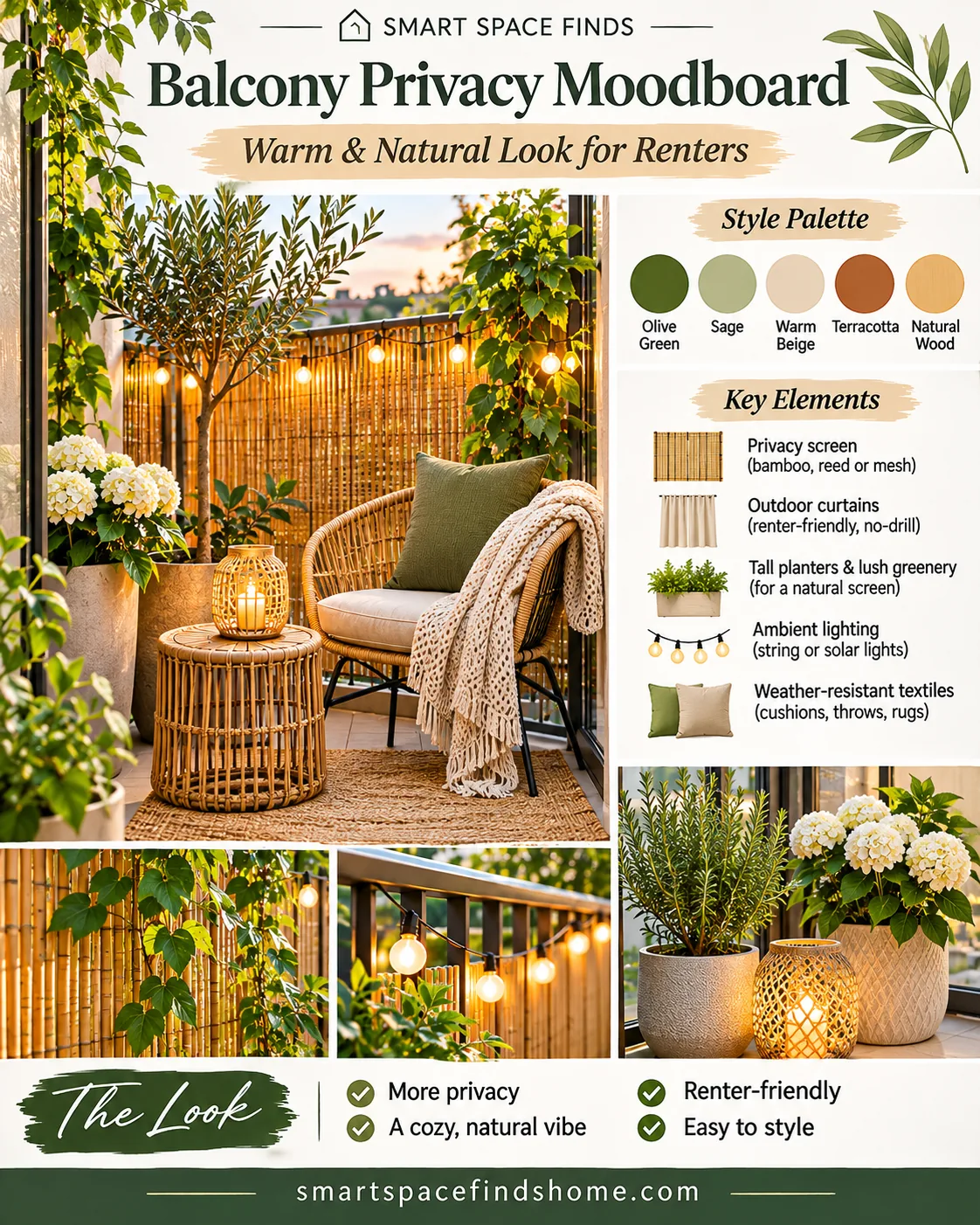
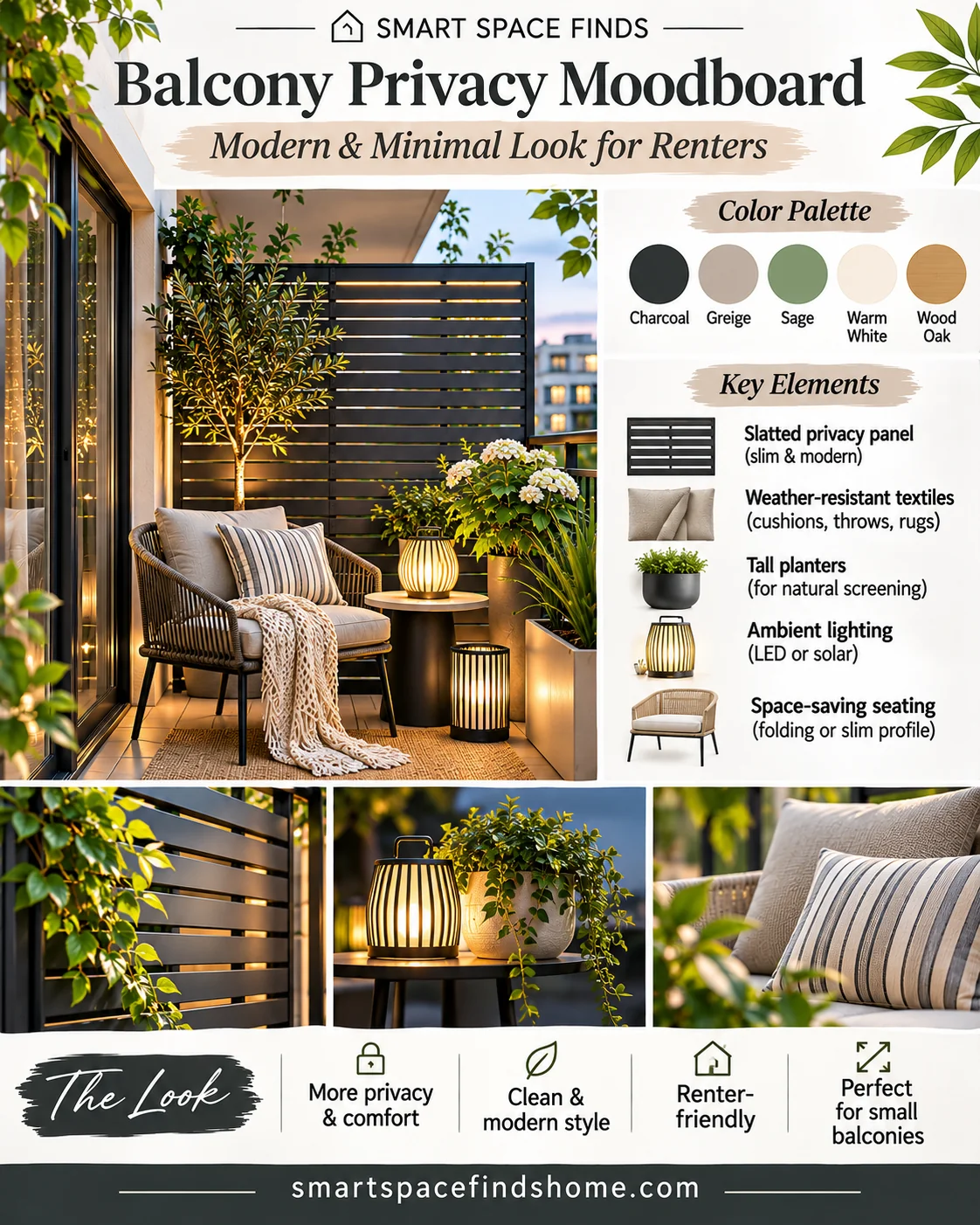
Choose one architectural texture and let the setting breathe. Warm woven materials, powder-coated charcoal finishes and natural greenery work well with small-space outdoor furniture, provided every product is rated and approved for its location. Avoid a patchwork of mismatched panels, oversize plant stands and multiple competing fabrics.
Olive · stone · natural wood
Sand · terracotta · cream
Charcoal · sage · warm gray
Try a slim chair, a compact outdoor side table and just one restrained plant grouping. For more atmosphere, browse our cozy balcony evening styling guide or turn a sheltered corner into a tiny outdoor reading nook.
Choosing plants for real-life balcony exposure
A living privacy screen succeeds when the plants are healthy where they actually grow. Prioritize sunlight, wind, temperature, mature width and your watering schedule over the appearance of a nursery photo. Evaluate the combined saturated container weight and seek any required load guidance before bringing large planters upstairs.
For practical ideas, see balcony gardening with three containers, what to grow on a shady balcony and vertical garden ideas for small outdoor spaces.
Your renter-friendly balcony privacy checklist
Shop Privacy Dividers & Outdoor Planters
Architectural dividers and space-conscious planters for outdoor privacy. Check the approved stability plan, balcony load limits and precise footprint before purchasing.
Check the live Amazon listing for price, delivery and current stock. For any railing, curtain or divider installation, confirm building approval and product-specific wind and anchoring requirements.
- Identify the one or two sightlines that matter most.
- Check lease, building rules, exterior appearance and fire restrictions.
- Measure railings, floor footprint, door clearance and required access.
- Confirm the product is specifically outdoor-rated.
- Verify approved installation, wind exposure and stability requirements.
- Check the saturated weight and secure placement of planters.
- Preserve drainage, ventilation, required exits and guardrail function.
- Test visibility by day and after dark.
- Keep instructions and plan seasonal maintenance or removal.
7 common balcony privacy mistakes to avoid
1. Covering every side when only one angle matters. 2. Buying a tall panel before checking its footprint. 3. Assuming “no drill” means landlord-approved. 4. Treating mesh as automatically wind-safe. 5. Forgetting wet planter weight. 6. Blocking the door, drainage or daylight. 7. Buying indoor curtains or folding screens for an exposed outdoor location.
Frequently asked questions about apartment balcony privacy
What is the best balcony privacy idea for renters?
The best option is the smallest permitted solution that blocks the specific view into your seating area. An approved mesh railing screen can help with low frontal views; a properly stabilized outdoor divider may work for side exposure; furniture repositioning is the lowest-risk first step.
How can I make my apartment balcony private without drilling?
First shift your seating away from the exposed sightline. Then consider suitable floor-standing plants or a manufacturer-approved freestanding outdoor divider. Railing covers and curtain supports may also be no-drill, but they still require building permission and safe installation.
Can I attach a privacy screen to an apartment balcony railing?
Only when your lease, building management and the screen manufacturer allow the specific installation. Railing attachment can affect wind loads and safety even without holes.
How high should a balcony privacy screen be?
There is no universal height. Sit in the chair, identify the offending window and measure the barrier height required to interrupt that exact viewing angle. Include the screen base, required clearances and building restrictions.
Are outdoor balcony curtains safe in the wind?
They can become hazardous when an unsuitable rod or improvised support is used. Choose products explicitly approved for your exposure, follow installation instructions and retract or remove them when weather guidance requires.
What balcony plants give privacy year-round?
Evergreen species suited to your climate can offer more consistent coverage, but actual screening depends on mature size, leaf density and seasonal conditions. Check wind tolerance and saturated planter weight before selecting any species.
Can I use bamboo or reed screening on a balcony?
Natural rolls can create an appealing texture, but their mounting, wind resistance, weather durability and permission requirements matter. A bamboo or reed screen is not inherently safer because it is natural.
Will a balcony privacy screen block sunlight?
Possibly. Dense fabric and solid panels may reduce daylight into both the balcony and adjacent room. Open slats, selective screening and thoughtful seating placement help maintain more light.
Is a no-drill privacy screen automatically renter-approved?
No. Building rules may restrict screens, railing attachments, exterior visibility, load limits and combustible materials even when installation leaves no holes.
What is the cheapest renter-friendly balcony privacy option?
Rearranging seating is free and often makes a noticeable difference. When physical screening is needed, compare the full installed cost and safety requirements of building-approved options rather than choosing by material price alone.
The bottom line: more privacy, less compromise
The best balcony privacy ideas for renters are specific, reversible and appropriate for the property. Start with the view you want to interrupt, choose the smallest safe solution and finish with just enough texture and greenery to create a tranquil place to sit. A little visual restraint often makes a tiny balcony feel more luxurious than an elaborate enclosure.
Privacy is only the first layer. Make the floor plan comfortable, add seasonally appropriate greenery and finish with thoughtful outdoor lighting.
Balcony seating layoutsCozy balcony stylingWinter balcony garden
Editorial note: This guide offers design and shopping-planning information, not structural engineering, legal or installation advice. Always follow manufacturer instructions and applicable building requirements. No specific products are recommended or linked here until their suitability and details are verified.