
Affiliate disclosure: As an Amazon Associate I earn from qualifying purchases. Some links in this guide are affiliate links, at no extra cost to you.
SMART SPACE FINDS / SEASONAL GARDENING / WINTER 2026–2027
A beautiful balcony can thrive through winter—even when space is limited.
Plan around cold-hardy plants, protected roots, reliable drainage and an arrangement you can enjoy from indoors. This guide helps you choose what works for your climate—not just what looks good in a photograph.
Best for: compact apartments · exposed balconies · container gardens · renters
In this practical guide
A small balcony does not have to look abandoned from November through March. Even if outdoor temperatures fall below freezing, you can give a compact outdoor space structure, texture, and a little evergreen color. The trick is to treat winter balcony gardening as an exercise in container management and site conditions, not as a miniature version of a sheltered backyard garden.
Containers cool and dry differently from soil in the ground. Balconies can also be windy, exposed to reflected heat, or shaded by neighboring buildings. A plant described as hardy in a particular growing zone may still struggle when its roots sit in a small pot during repeated freezes. This guide offers a sensible planning method that you can adapt to your climate, building, and local plant availability.
Assess Your Balcony Before Buying Plants
Spend several days noting light, wind, rain exposure, and where water pools. Is the space sheltered by a roof? Does the afternoon sun reach only one corner? Does a cold crosswind blow between buildings? Keep notes on the most exposed railing and the area close to the apartment wall, which may offer a slightly more sheltered position.
Measure the usable floor area and how far doors swing open. If you live in a rental or apartment building, review restrictions on balcony load, drainage, attaching objects to railings, and allowing water to drip below. Avoid assuming a balcony can support the weight of many large wet containers: soil, water, and ceramic pots add up quickly. Seek building-specific guidance when weight limits are unclear.
Start With Evergreen Structure
During winter, foliage shape often matters more than flowers. Compact evergreens, appropriate ornamental grasses, and winter-tolerant shrubs can provide a stable framework. Which species will work depends on your actual winter minimum temperatures and the conditions on your balcony. Ask a reputable local nursery for varieties suited to container growing in your region, not merely plants advertised as hardy for in-ground beds.
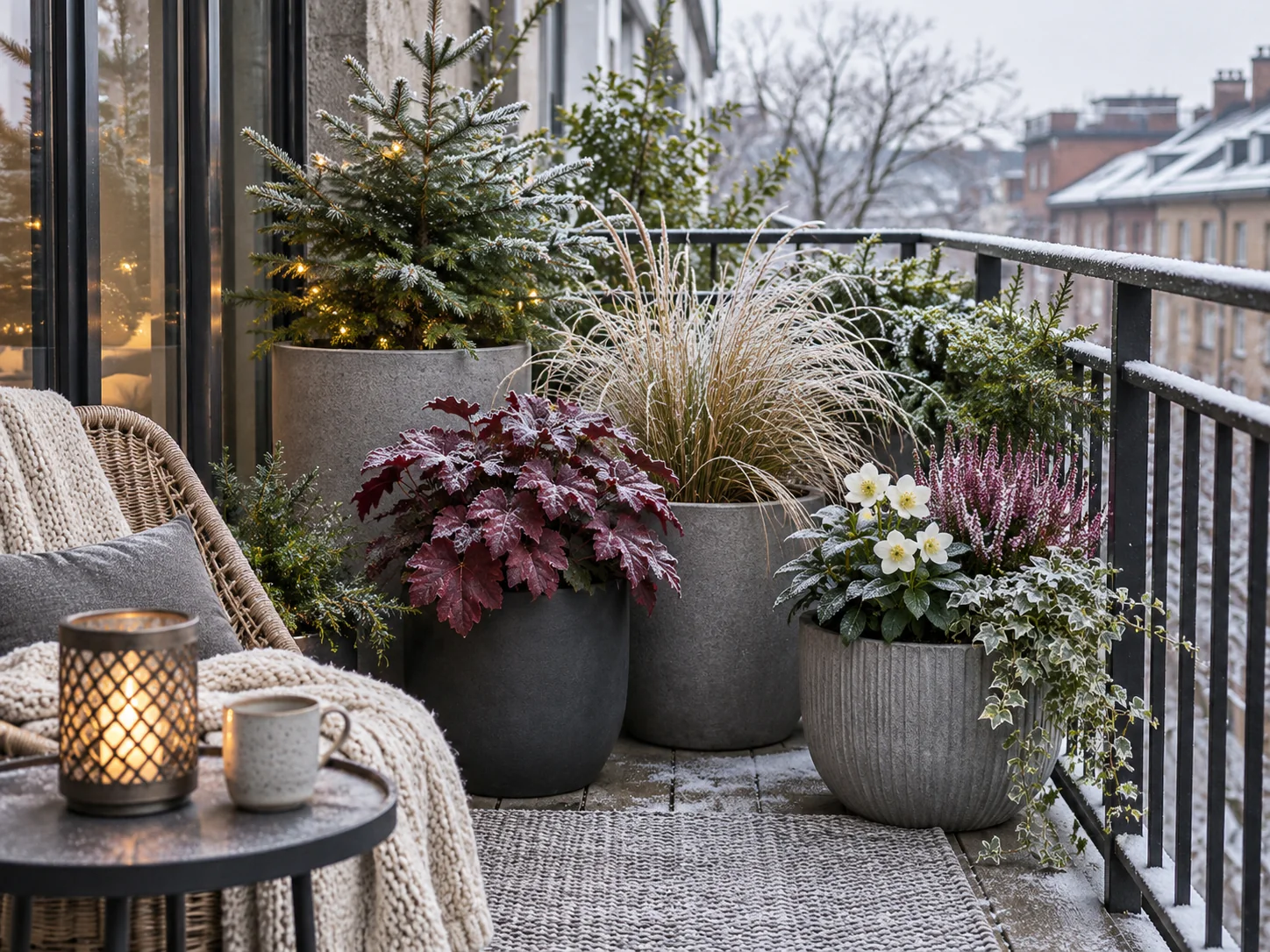
A practical starting arrangement might use one structural evergreen in a substantial container and two smaller pots with contrasting leaf shapes. Repetition can create a more polished effect than a crowded mix of unrelated plants. For a very narrow balcony, one beautiful evergreen by the door may be better than a line of planters obstructing the railing.
Choose Frost-Resistant Balcony Containers
OUTDOOR PLANTER · PREMIUM OPTION
Veradek Mason Series Demi Planter — 20 Inch
Modern stone-plastic composite outdoor planter with drainage holes. Check the 18.5-inch footprint, filled weight and balcony load limits before purchasing.
Not every decorative pot is frost-resistant. Some porous terracotta and glazed ceramics can crack when saturated material freezes and expands. Select containers explicitly rated for the winter conditions expected in your area. Durable resin, suitable fiberglass, and frost-resistant ceramics are among the options, but quality varies by manufacturer. Check product labeling rather than judging by appearance alone.
Drainage matters in winter. Use containers with adequate holes, do not leave drainage outlets blocked, and ensure excess water can escape without damaging the building or dripping onto neighbors. Elevating a heavy pot slightly on suitable feet can help keep outlets open. Do not add large rocks to the bottom in the mistaken belief that they automatically improve root drainage; use an appropriate potting medium and correctly sized drainage system instead.
PREMIUM DOUBLE-WALL PLANTER
Crescent Garden Madison Double-Wall Planter — 20 in, Olive
Weather-resistant double-wall planter with a drainage opening. Check dimensions and the full wet weight before placing a large pot on an apartment balcony.
Protect Container Roots From Freezing
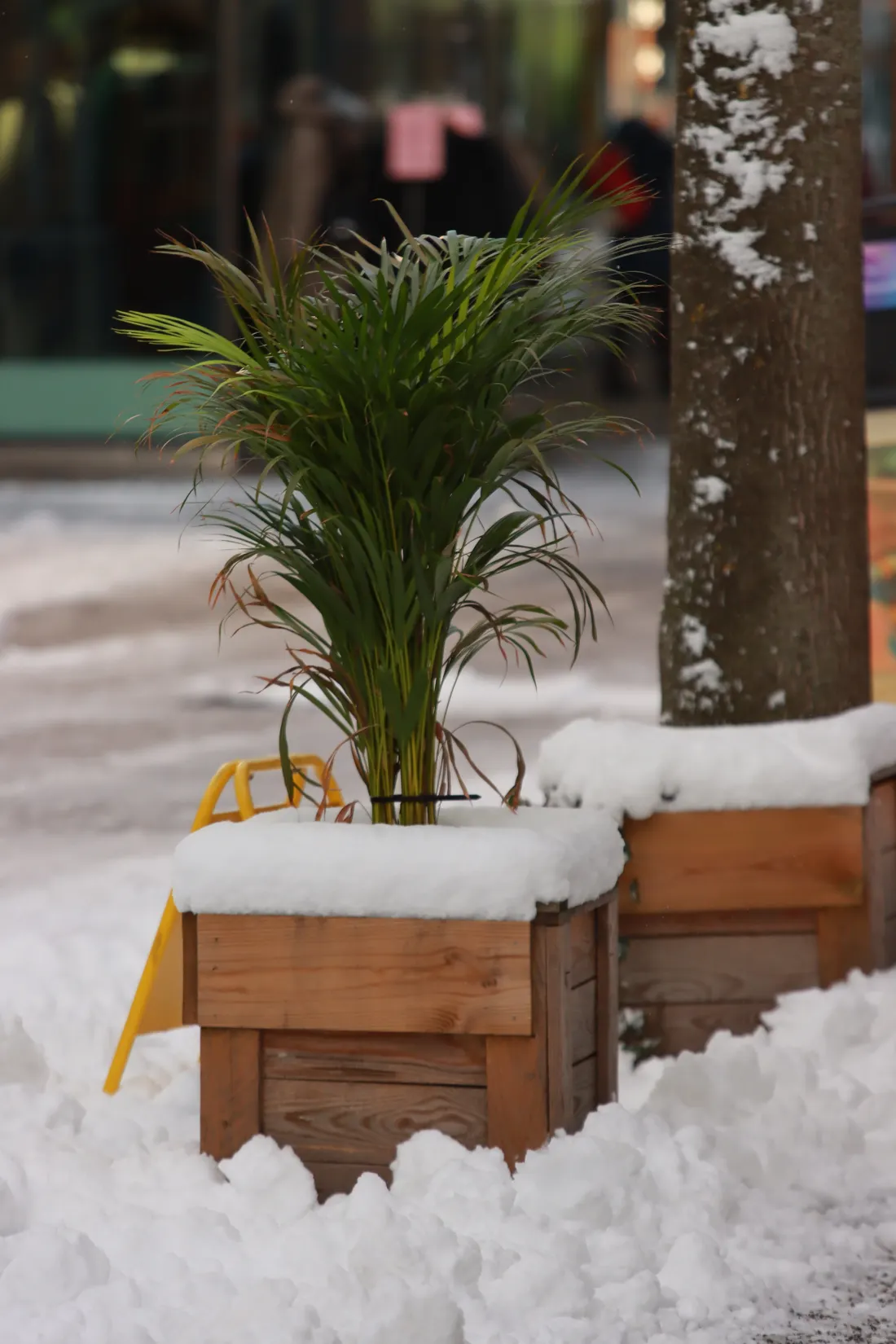
The roots in a pot are generally more exposed to cold than the roots of the same plant growing in garden soil. A larger volume of potting mix can buffer rapid temperature changes better than a tiny container, though size must still respect the balcony’s weight and access limits. Group compatible containers together in a sheltered area so they are less exposed from every side.
In periods of exceptional cold, a temporary insulating wrap designed for containers can help limit sudden fluctuations. Keep wraps away from heater outlets or open flames and make sure drainage and ventilation remain appropriate. Do not assume insulation makes a tender plant fully hardy; some species need indoor overwintering or specialist protection.
WINTER BALCONY ESSENTIAL · POT FEET
UFelice 24-Pack Invisible Rubber Pot Feet
Non-slip rubber risers help lift containers for airflow and drainage. Check your planter weight, surface and drainage openings before use.
PLANTER INSULATION · NATURAL JUTE
RAINFLOW Natural Burlap Roll — 39 in × 13 ft
Natural jute wrap suitable for adding an outer insulating layer around a container. Keep drainage holes open; burlap alone does not guarantee frost protection.
Reduce Winter Wind Exposure
Strong winter wind can desiccate evergreen foliage even when the soil feels cold and damp. Move portable pots toward a sheltered wall if they still receive suitable light. If the building permits a privacy screen or freestanding trellis, use a structurally safe, wind-permeable solution. Solid barriers can catch significant wind and become dangerous on upper floors, so never improvise heavy attachments to railings.
Layout test: keep the door’s full swing clear and group low, stable pots in the most sheltered area. Do not leave heavy planters beside exposed railing edges; plan for the strongest forecast wind rather than a calm day.
Add Winter Color and Texture
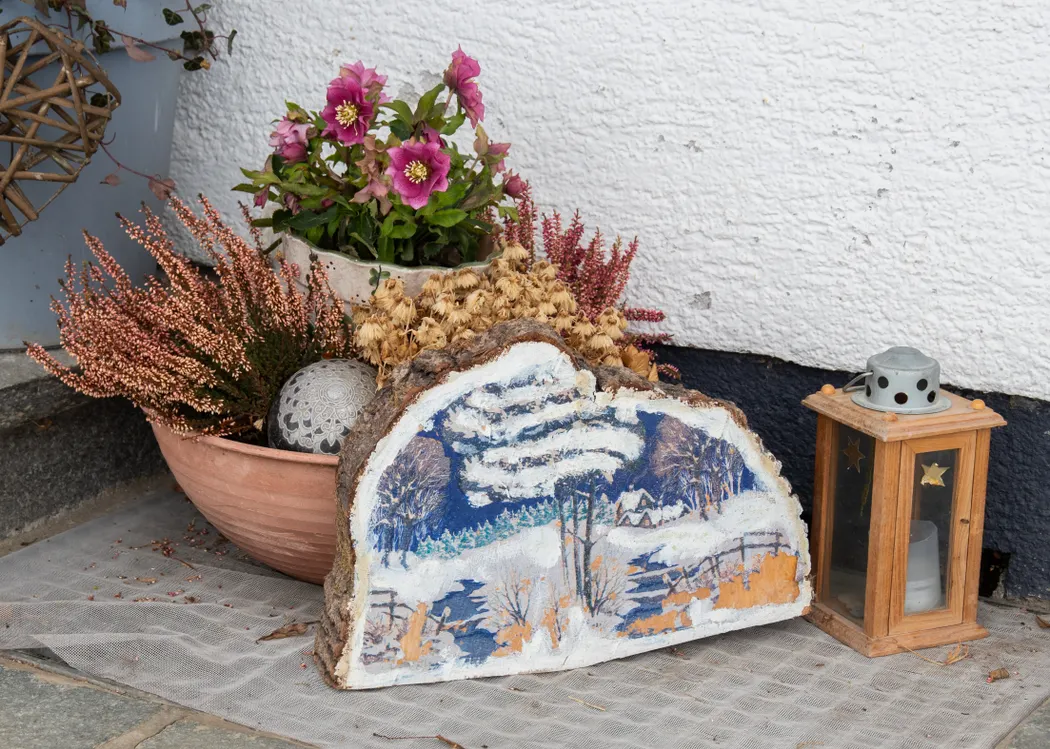
Winter interest can come from berries, colored stems, variegated foliage, and attractive bark. Evergreen cuttings can also be arranged in a weighted, weather-appropriate container as a temporary seasonal display. If you use berries or plant cuttings, identify the species and keep potentially toxic materials away from children and pets. Never rely on an AI-generated image or an online color chart to identify an edible or safe plant.
A simple scheme of dark evergreen, muted brown, and pale winter grasses often looks more coherent than an assortment of bright artificial decorations. If the balcony is visible from the living room, orient your strongest visual group toward that window so you can enjoy it without having to step outside.
Choose a Free-Draining Potting Mix
Use container potting mix rather than dense garden soil. Check ingredients and plant-specific needs before repotting; avoid unnecessary fertilizer during winter dormancy.
CONTAINER GARDENING · POTTING MIX
Miracle-Gro Potting Mix — 16 qt, 2-Pack
General-purpose container potting mix for balcony planters. Contains added nutrients; evaluate drainage and plant requirements, and avoid repotting during a hard freeze.
Water Balcony Plants Correctly in Winter
WINTER WATERING · PRECISION SPOUT
Fasmov Stainless Steel Watering Can — 51 oz
Long-spout watering can for controlled application to balcony containers. Check soil moisture first; avoid watering when the root ball is frozen and store the can where leftover water will not freeze.
Winter watering rule: test the potting mix before you water. Evergreens can still dry out in windy weather, but cold, saturated roots may suffer when drainage is poor. Use the weather-based watering table below to decide what to do rather than following a fixed calendar.
If the root ball is frozen, wait for suitable thaw conditions before reassessing moisture. Empty standing water from saucers and ensure runoff is safe for the balcony and neighbors. There is no reliable universal winter watering interval.
Grow Cold-Tolerant Herbs Where Climate Allows
Some hardy culinary herbs may survive outdoors in suitably mild climates, while others need shelter, a larger pot, or indoor protection. Rosemary, thyme, sage, and parsley are not interchangeable in cold tolerance, and the cultivar and local microclimate matter. For a balcony with freezing winters, verify survival expectations with a local gardening source before treating herbs as permanent outdoor winter plants.
Even without harvesting, a few healthy herb pots near the kitchen door can offer texture and fragrance during suitable weather. If you must move plants indoors, ensure they receive sufficient light and do not introduce pests into other houseplants. Watering needs often change significantly once a pot moves inside.
Keep the Balcony Safe in Snow, Ice and Wind
The ideal winter garden still allows you to open the balcony door fully, clean windows, and reach drainage points. Leave enough room for maintenance and avoid a layout that requires squeezing between wet planters. On upper levels, secure approved containers properly and do not balance small pots on exposed railing tops. Loose ornament hooks, trays, or plant labels can become windborne hazards.
Use a non-slip, weather-suitable surface if you add a mat, and check that it does not trap standing water. Snow and ice may change the safest route across a balcony. Garden styling should never compromise access or building safety.
Style Your Winter Balcony for the View Indoors
WINTER STYLING · CORDLESS LIGHT
WEILAILUX Rechargeable Outdoor Table Lamp — Wood Grain
Warm cordless accent lighting for a sheltered balcony. IP44 is splash-resistant, not protection against prolonged rain, snow, immersion or freezing conditions; follow the maker’s care guidance.
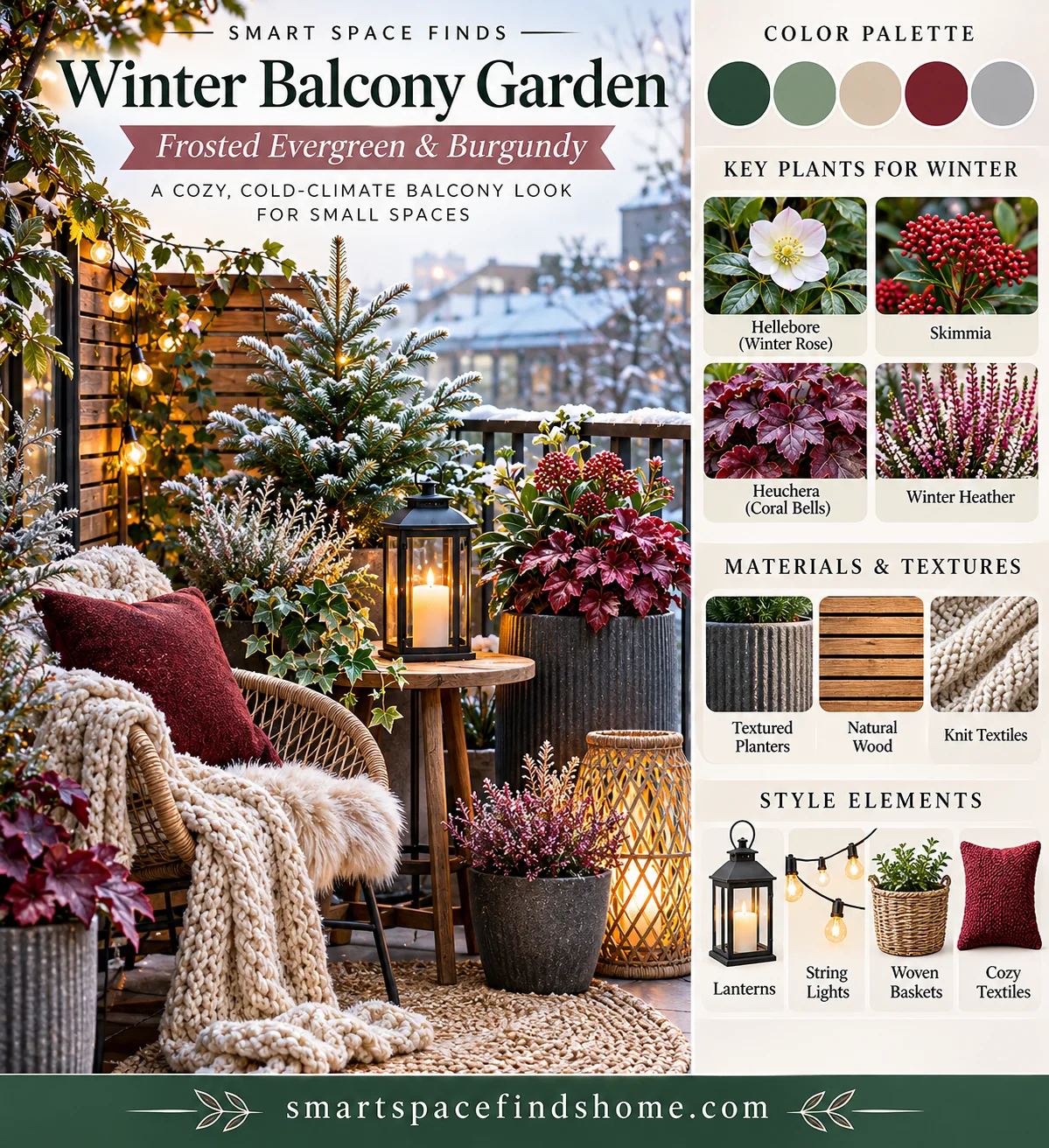
In winter, you may enjoy the balcony more through the window than from a chair outside. Arrange the tallest plant slightly off-center, place one lower textured container in front, and leave visible negative space. This layered composition works well even on a narrow balcony because it gives depth without requiring a large collection.
Consider using one warm outdoor-rated light fixture if the building permits it. Battery-operated products still need a suitable outdoor rating. Keep lighting away from water and ensure cables do not create hazards. For many small balconies, one glowing point viewed from the sofa is enough.
Cold-Hardy Plants, Container Materials and Frost Protection
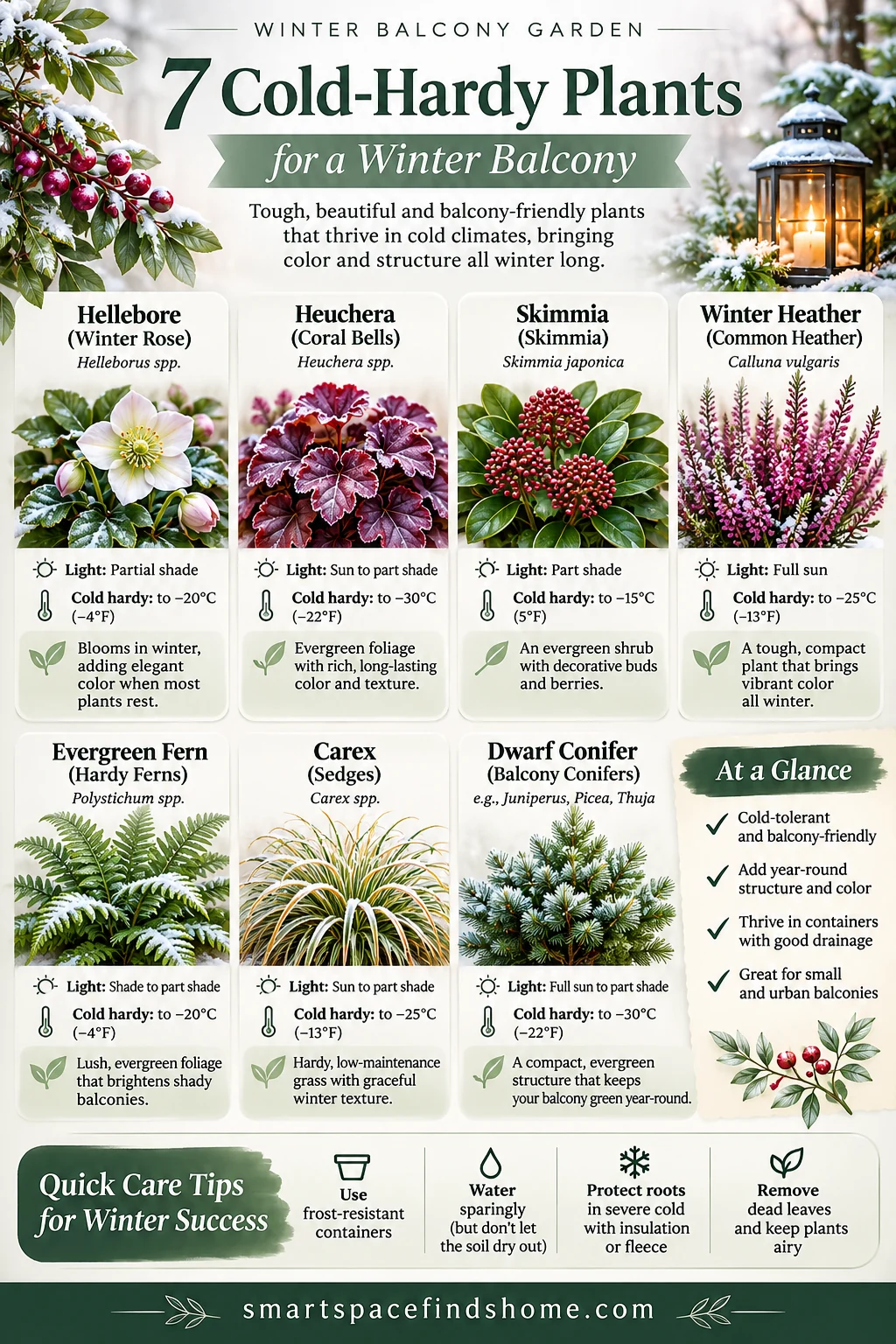
Start with your coldest likely overnight temperature, not the look of a plant in a store. A balcony pot is more exposed than garden soil, so in-ground hardiness ratings do not guarantee container survival. As a conservative screening rule, some university extension services suggest selecting perennials rated approximately two USDA hardiness zones colder than your own when pots stay outside; the right margin still depends on pot size, wind, shelter, and the plant itself.
Best cold-season plants for small balcony containers
| Plant | Best situation | Winter appeal | Important caution |
|---|---|---|---|
| Heuchera (coral bells) | Part shade; free-draining pot | Plum, copper or lime-toned foliage | Foliage may die back in harsh winters; keep crown above soggy compost. |
| Skimmia japonica (compact cultivar) | Sheltered, partly shaded balcony | Evergreen leaves and buds; berries on some plants | Check cultivar and pollination requirements; berries should not be eaten. |
| Carex (suitable evergreen cultivar) | Light shade to sun, depending on cultivar | Soft, architectural foliage | Hardiness and winter appearance differ by species. |
| Hardy ferns (e.g., Polystichum setiferum) | Shady, sheltered position | Layered evergreen texture | Prevent drying winds and waterlogging. |
| Winter pansies and violas | Bright, cool spot | Seasonal flowers in mild spells | Flowers may pause during sustained hard freezes. |
| Dwarf conifers (locally suited cultivar) | Usually brighter exposure | Year-round evergreen structure | Check mature size, root hardiness and winter wind exposure. |
| Thyme or sage (locally hardy cultivar) | Sunny, well-drained position | Fragrance and edible foliage when healthy | Never assume Mediterranean herbs survive severe freezes in pots. |
Plant selection is illustrative, not a guarantee of survival in every cold climate. Verify the specific cultivar and minimum winter temperature with a reputable local nursery. Do not eat ornamental plants or berries unless positively identified as edible.
Choose a container that protects both roots and building
| Container material | Main advantage | Winter trade-off |
|---|---|---|
| Outdoor-rated resin or plastic | Usually lightweight and easy to move | Low-quality products can become brittle; check frost and UV ratings. |
| Outdoor-rated fiberglass | Relatively light with a clean contemporary finish | Confirm manufacturer frost rating and adequate drainage. |
| Frost-proof ceramic | Substantial and decorative | Heavy when saturated; unsuitable ceramic can crack. |
| Wooden planter | Warm, natural appearance | Needs weather-suitable construction and maintained drainage. |
| Ordinary terracotta | Breathable, classic appearance | Can crack during freeze–thaw cycles unless explicitly frost-proof. |
How to protect balcony plants before a freeze
Choose the cover weight and size for your climate and plants; a fleece cover alone cannot guarantee survival in severe freezes.
FROST PROTECTION · 0.9 OZ
Agfabric 0.9 oz Frost Cloth — 12 × 25 ft
Light-to-medium-weight floating row cover for temporary cold-weather protection. Size or cut the fabric to fit; keep it secured without crushing plant foliage.
FROST PROTECTION · 1.5 OZ
Agfabric 1.5 oz Frost Cover — 7 × 50 ft
Heavier frost-protection fabric for more exposed cold-weather situations. This roll is long for small balconies; measure carefully and allow suitable ventilation.
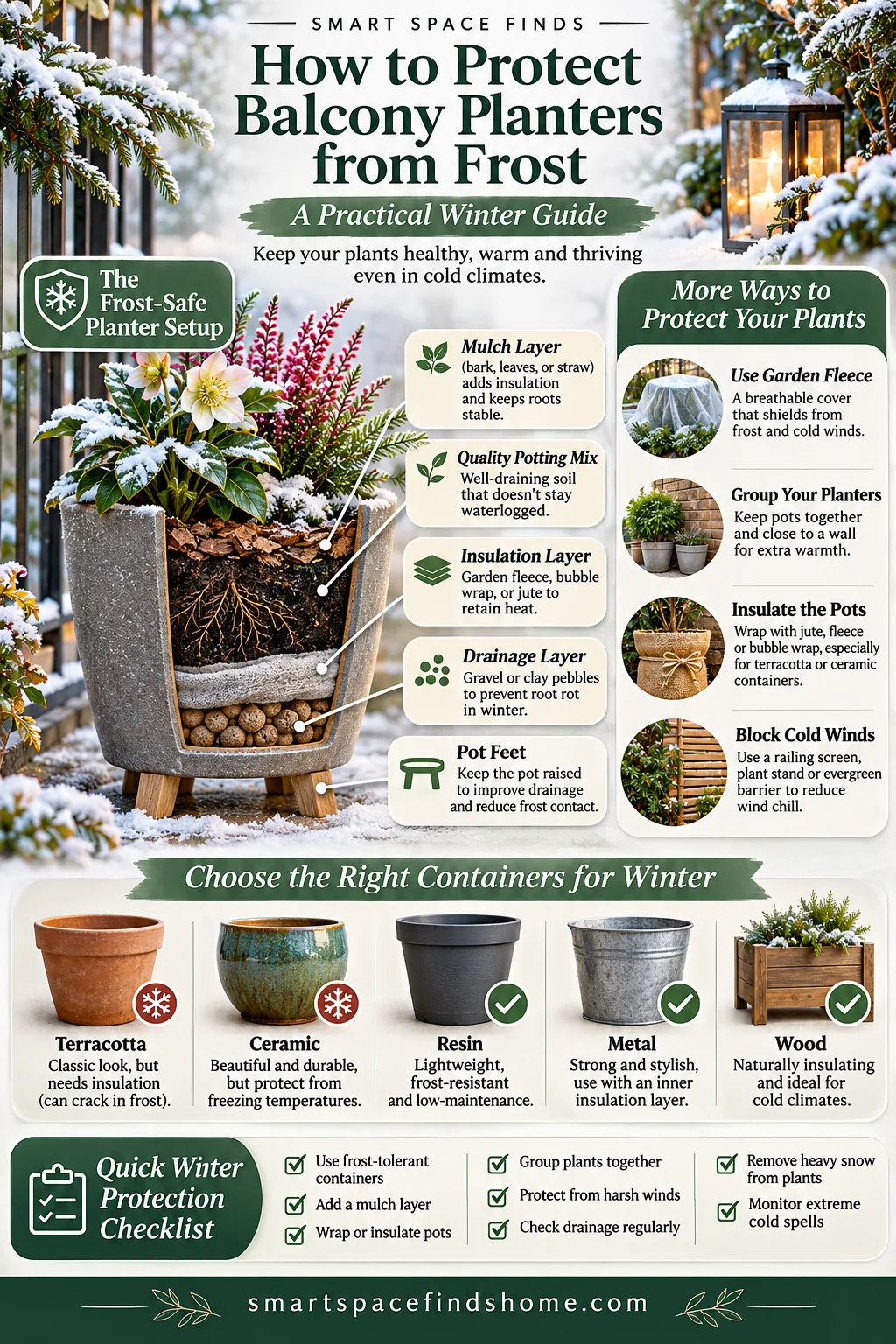
- Check the forecast and identify species that need moving to a suitable protected location.
- Group hardy pots near a sheltered wall while preserving the plants’ light needs and door access.
- Raise pots on stable, suitable feet to keep drainage holes open; prevent runoff onto neighbors.
- Wrap the outside of vulnerable containers with horticultural insulation during extreme cold, without blocking drainage.
- Use breathable horticultural fleece on foliage only when appropriate for the plant and weather; secure it against wind and remove or adjust it when conditions improve.
- Never attach an improvised screen to exposed balcony railings or exceed structural load limits.
Winter watering: a weather-based decision guide
| Condition | Practical action |
|---|---|
| Compost is still moist | Hold off watering; check drainage and inspect again later. |
| Mild, unfrozen weather and compost is dry | Water according to species needs and allow surplus to drain fully. |
| Root ball is frozen | Do not force water into solidly frozen compost; reassess at a suitable thaw. |
| Persistent wind on evergreen foliage | Check moisture more often during mild, unfrozen periods; wind can dry plants. |
| Repeated rain, standing water or blocked outlets | Correct drainage promptly and move portable plants to shelter if needed. |
Simple seasonal care checklist
- Before the first freeze: verify plant hardiness, inspect drainage holes, secure containers, and prepare frost protection.
- Every week: check pot stability, compost moisture, wind damage, fallen leaves and drain access.
- After storms: check approved fixtures, loose objects, soil displacement and railing clearance.
- On mild winter days: water only if needed and rotate or relocate portable pots if light conditions have changed.
- In early spring: assess winter damage before pruning, refresh exhausted compost where appropriate, and resume feeding only when plants are actively growing.
What should you actually buy?
Prioritize essentials in this order: one frost-rated container with drainage, locally appropriate hardy plants, stable pot feet, and weather-suitable pot insulation if your climate needs it. Horticultural fleece, a watering can with a narrow spout, and a simple moisture-checking routine can be useful extras. Avoid buying oversized decorative structures, plant heaters, or heavy railing planters simply to recreate an inspiration photo.
Three Winter Balcony Layouts for Small Spaces
BALCONY LAYOUT · MOVABLE PLANTERS
LUBORN Heavy-Duty Rolling Plant Caddy — 12 in, 2-Pack
Lockable wheeled plant stands can make suitable pots easier to reposition. Measure the planter base and total load; keep casters locked and avoid moving pots across icy or sloped flooring.
A sheltered balcony with room for three pots
Place one large hardy evergreen near a wall, then group two smaller weather-appropriate containers in front. Leave the door side clear. The repetition of simple pots gives the arrangement a cohesive look, and the plants can be reached for watering without rearranging the entire space.
An exposed, narrow balcony
Avoid attaching heavy planters or rigid screens to railings without approval. Choose a low group of suitable containers positioned in the most sheltered part, keeping the center pathway open. Prioritize wind tolerance and stability over height. If conditions are extreme, a seasonal cut-greenery display may be more realistic than maintaining tender living plants outside.
A north-facing apartment balcony
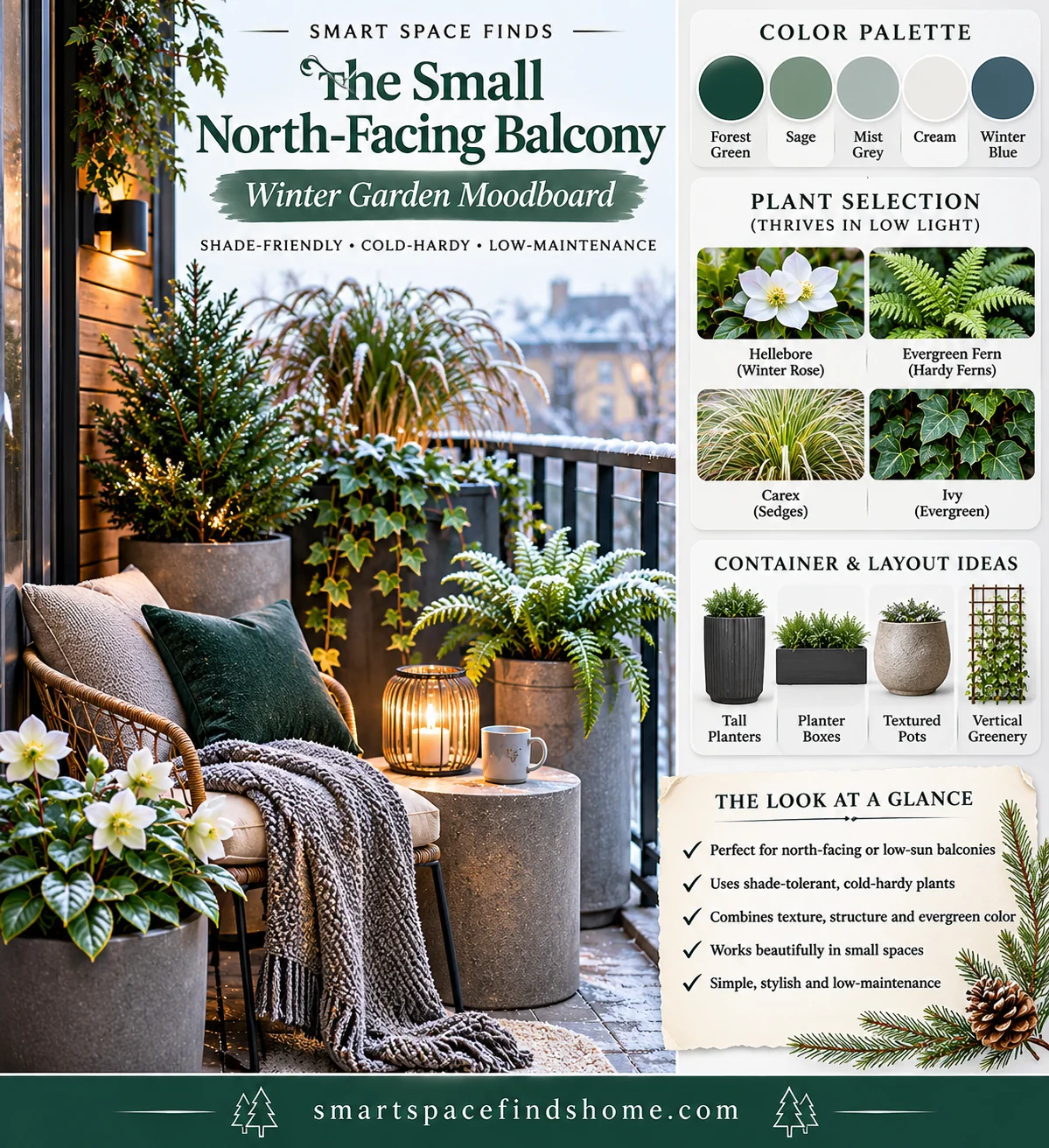
Focus on foliage and form rather than plants that require direct winter sun. Ask a local nursery to confirm species suitable for low light, cold containers, and your hardiness range. Keep the display simple enough to monitor moisture easily, because shaded containers can stay wet longer than sunny ones.
Your Five-Minute Winter Maintenance Routine
WINTER MAINTENANCE · HAND TOOLS
Garden Guru 3-Piece Gardening Tool Set
Hand trowel, transplanter and cultivator for container maintenance in workable soil. Avoid digging into frozen root balls or unnecessary winter disturbance.
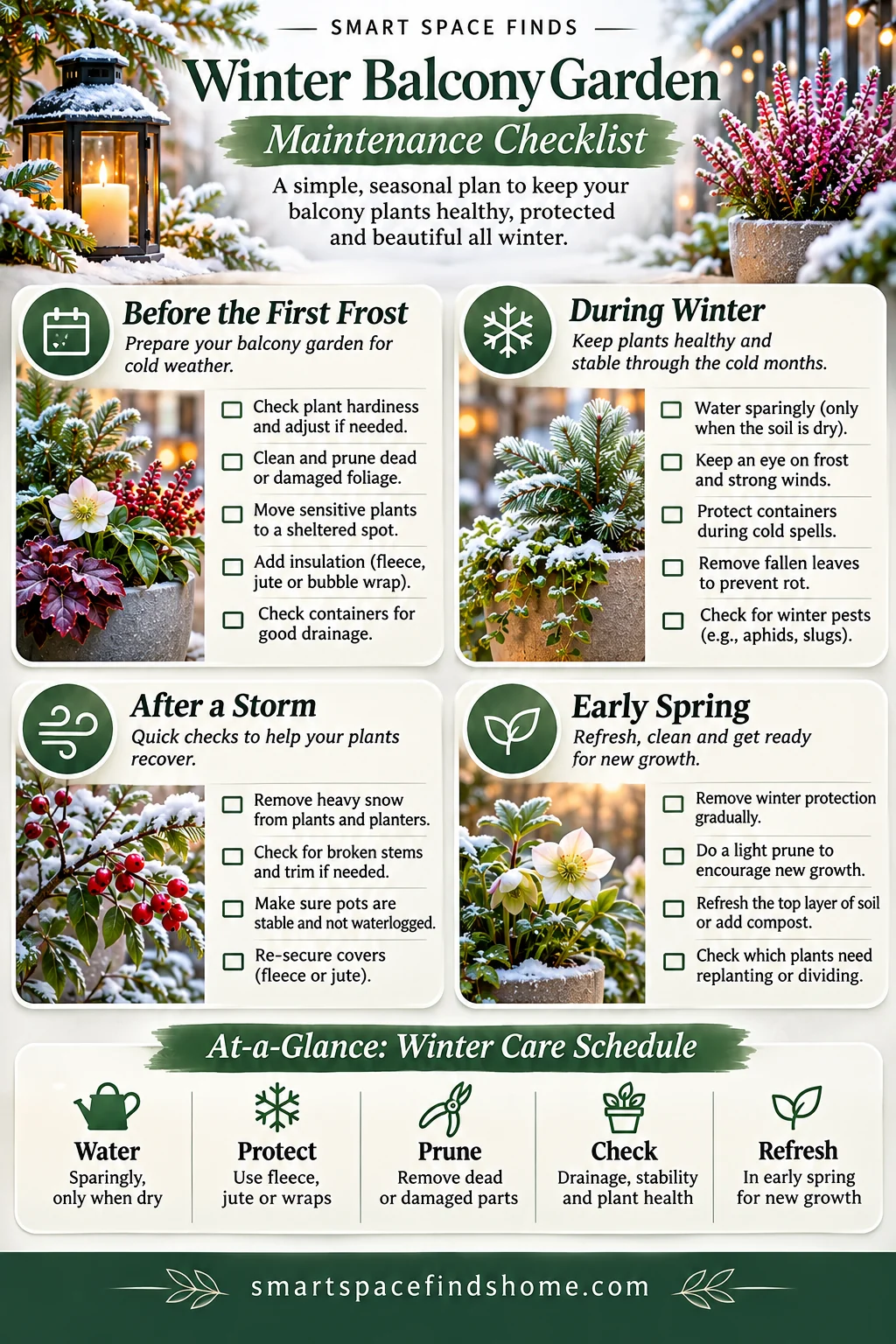
Your five-minute weekly check: test pot stability, inspect moisture and drainage, and remove debris blocking outlets. Look for winter wind damage and pests. Avoid routine fertilizer or aggressive pruning while growth is slow; use the seasonal checklist for the more detailed routine.
After a storm, inspect both the plants and any approved attachments. Replace damaged fasteners and move unsafe objects rather than trying to preserve a particular look. A small, well-maintained arrangement gives more pleasure than a complicated setup that becomes difficult to manage.
Winter Balcony Mistakes and Purchases to Avoid
Avoid buying plants solely because the marketing photo shows snow on the leaves. Look for information about container hardiness, root exposure, wind tolerance, and irrigation needs. Skip unverified hanging systems for heavy pots, decorative containers without working drainage, and tender plants advertised without realistic local climate guidance.
You also do not need a heater or greenhouse structure for a decorative winter balcony. Such equipment can introduce electrical, structural, and building-compliance issues. Begin with hardy choices that match the site rather than attempting to change the balcony’s climate dramatically.
Winter Balcony Gardening: Frequently Asked Questions
Can plants survive winter in containers on a balcony?
Many can, but survival depends on species, pot size, wind, moisture, exposure, and local temperatures. Container roots are often colder than roots in the ground. Verify individual plant suitability with a regional gardening resource or nursery.
Should I bring all balcony plants indoors during frost?
No universal rule applies. Tender plants may need protection, while suitably hardy plants can remain outside. Moving plants indoors can create light and pest-management problems, so follow the requirements of each species.
Should I water balcony plants in winter?
Check the actual moisture needs of the species and weather conditions. Evergreens may need moisture even when growth is slow, but waterlogged or frozen soil creates problems. Keep drainage clear and seek region-specific guidance during severe freezes.
How can I decorate a balcony without risking railing damage?
Favor freestanding, appropriately weighted containers on the balcony floor, subject to building load limits. Do not fasten heavy items to railings or exterior walls without the property’s approval and a suitable installation method.
Which USDA hardiness zone should I use for balcony pots?
Start with your local USDA zone, but remember that exposed container roots can become colder than roots planted in the ground. A conservative plant choice, a suitable pot and a sheltered microclimate matter more than a zone label alone.
Can I leave ceramic pots outside all winter?
Only if the product is explicitly rated for your freeze–thaw conditions and has working drainage. Saturated, non-frost-proof ceramic can crack.
How do I protect a balcony planter without a greenhouse?
Use a sufficiently hardy plant, shelter the container from strong winds, keep drainage open and apply appropriate temporary pot insulation during cold snaps. Protection reduces stress but does not make a tender plant winter-hardy.
What is the easiest winter balcony arrangement for beginners?
Choose one compact locally hardy evergreen, one contrasting foliage plant and an optional pot of seasonal violas. Keep all three within easy reach and away from door swings and exposed railing edges.
A calmer view all winter
A winter balcony garden should make your apartment feel more connected to the outdoors, not create extra stress. Choose climate-appropriate plants, protect container roots sensibly, preserve drainage and safe access, and give each plant enough space to be noticed. When the view from your window looks peaceful on a grey morning, the garden has already done its job.
For more small-space planting ideas, explore our beginner three-container balcony garden, shady balcony planting guide, and indoor autumn plant care advice.