

The renter’s storage playbook · Smart Space Finds
More storage. Zero unnecessary holes.
Seven practical ways to organize an apartment—without sacrificing floor space, safety or your security deposit.
You don’t need a drill—or a bigger apartment—to create storage that works. The best renter-friendly storage hacks reclaim space behind doors, inside cabinets, and under furniture while keeping your home flexible for moving day. Start with these seven practical solutions, then use the safety checks and room-by-room plan below to choose what fits your rental.
Jump to: 7 storage ideas · Quick comparison · Room-by-room setup · Safety · FAQ
7 renter-friendly storage hacks worth trying
1. Put lightweight essentials behind doors
Over-the-door pocket organizers are useful for scarves, hair tools (after cooling), cleaning cloths, kids’ accessories, and pantry packets. Measure the door thickness, the gap above it, and how far the organizer protrudes. Use felt or protective pads only where the manufacturer permits; check that doors, latches and exits still work freely.
Best for: Small bedrooms, linen closets, and compact entryways. Skip it when: The door binds, an emergency exit is affected, or contents exceed the permitted load.
SHOP THE IDEA · Over-the-door picks
Always confirm dimensions, load ratings and surface or lease compatibility before purchase.
2. Use adjustable tension rods only for rated loads
A purpose-rated tension rod can organize light spray bottles or cleaning cloths inside a suitable cabinet. Measure the internal span, confirm that both contact surfaces match the instructions, and test for slipping before loading. Never improvise hanging storage for glass, heavy cookware or anything positioned above people.
For awkward plumbing, see our under-sink organization guide.
SHOP THE IDEA · Closet and tension-rod options
Always confirm dimensions, load ratings and surface or lease compatibility before purchase.
3. Choose stable freestanding shelves over tall improvised stacks
A shallow bookshelf or low open cabinet makes better use of vertical space without customizing walls. Measure its footprint with nearby doors and drawers fully open. Keep heavy objects low, obey manufacturer weight limits, and never assume a tall bookshelf is safe without its required anti-tip device. If anchoring is prohibited, choose a genuinely stable lower-height option instead.
Design tip: Matching baskets visually quiet a shared living room. Leave some open shelves empty so the storage doesn’t feel like an overcrowded warehouse.
4. Try removable hooks for truly lightweight items
Adhesive hooks can help with keys or lightweight accessories on compatible smooth surfaces. Read the exact surface restrictions, preparation, curing and removal directions. Even well-rated products can pull paint from delicate or recently painted walls. Avoid valuable, breakable or heavy objects—and never use general-purpose adhesive hooks as safety-critical supports.
SHOP THE IDEA · Light-duty removable hooks
Always confirm dimensions, load ratings and surface or lease compatibility before purchase.
5. Reclaim the space under the bed
Measure the lowest clearance beneath the frame, including center supports. Choose low lidded bins or breathable fabric storage according to the textiles and room conditions. Store off-season bedding or clothing only when clean and dry. Use labels facing outward and avoid oversized boxes that cannot be pulled out comfortably.
SHOP THE IDEA · Under-bed storage picks
Always confirm dimensions, load ratings and surface or lease compatibility before purchase.
6. Add shelf risers and drawer organizers inside existing cabinets
Start with the storage you already rent. Freestanding shelf risers can separate short glasses from plates; removable dividers can make utensils and toiletries easier to find. Measure inside dimensions around hinges and plumbing, allow room for cabinet doors to close, and keep heavier supplies low. Compare options in our small kitchen organization guide.
7. Create a mobile storage station with a rolling cart
A slim cart works well beside a desk, in a pantry corner or as a portable craft station. Choose easy-clean surfaces and casters appropriate for your flooring; use brakes where available. Check width including handles, the fully loaded capacity, and the turning space needed to move it. Never operate hot appliances from an unstable cart or route cords across walking paths.
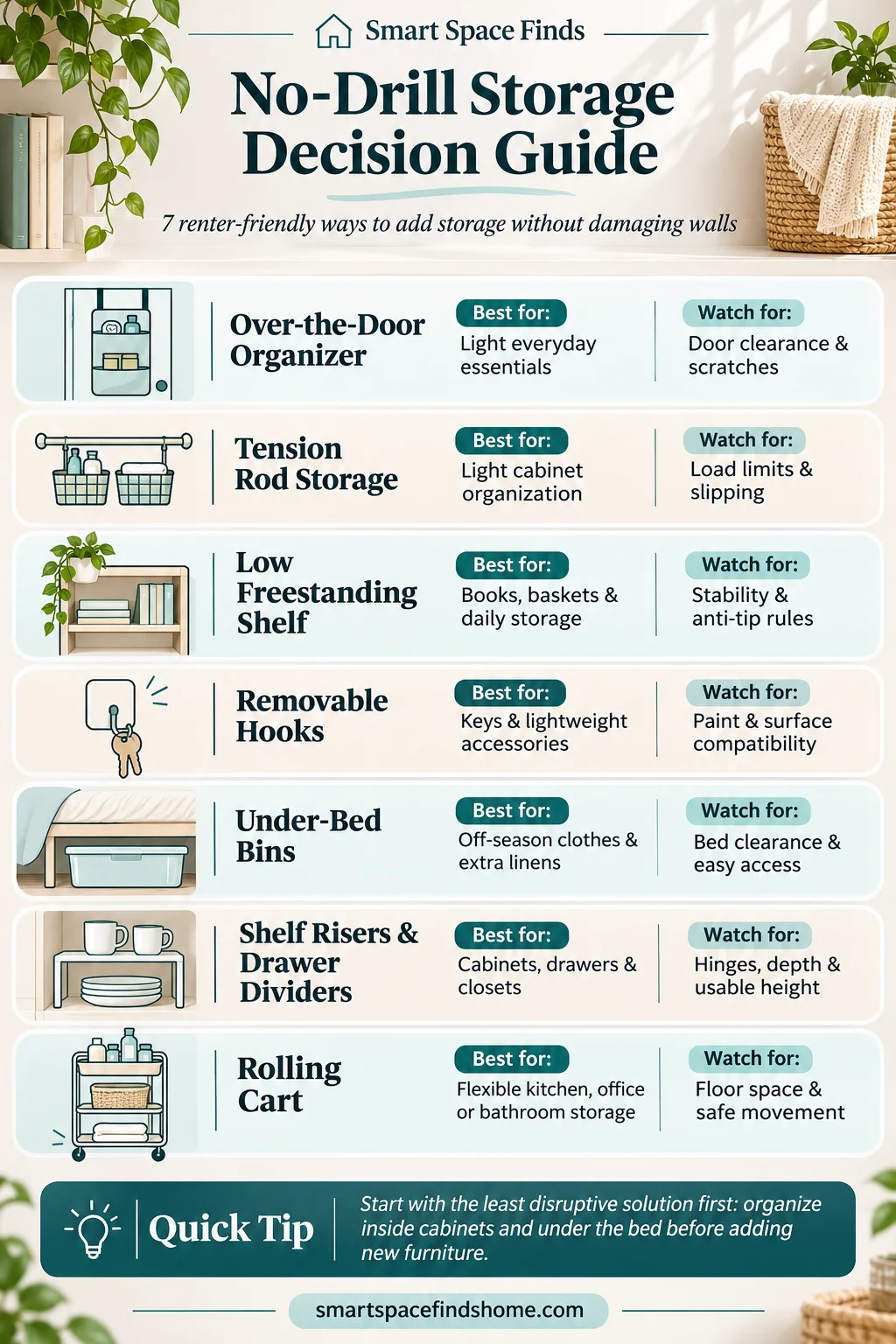
THE RENTAL-FRIENDLY DECISION GUIDE
SHOP THE IDEA · Flexible rolling carts
Always confirm dimensions, load ratings and surface or lease compatibility before purchase.
Start with the least disruptive solution
Use what you have: cabinet risers, drawer dividers and under-bed bins. These preserve floor space and are usually easy to move.
Try over-door pockets or a rolling cart—only if door swing, floor protection and load ratings work for your home.
Consider low freestanding storage. Review anti-tip instructions before choosing any tall or narrow unit.
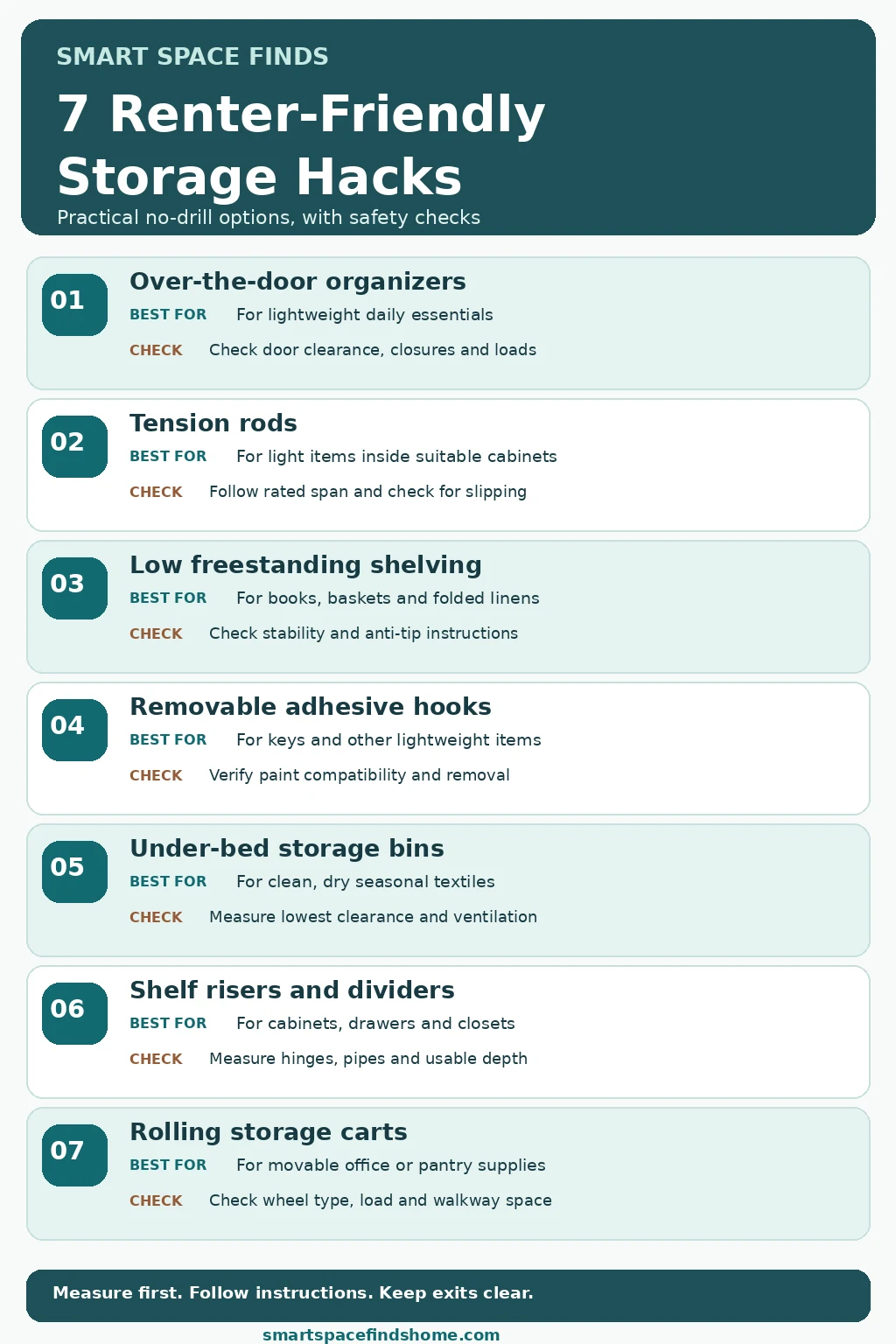
Which storage solution works best?
| Solution | Best use | Rental and safety check |
|---|---|---|
| Over-door organizer | Light daily essentials | Door thickness, closure, scratching |
| Tension rod | Light interior-cabinet organization | Surface fit, span, slipping, load |
| Freestanding shelf | Books, bins, folded linens | Anti-tip instructions and clear exits |
| Removable hooks | Small light items | Paint compatibility and removal |
| Under-bed bins | Seasonal textiles | Clearance, ventilation and access |
| Shelf risers | Inside cabinets | Measurements and stability |
| Rolling cart | Mobile supplies | Wheel protection and safe loads |
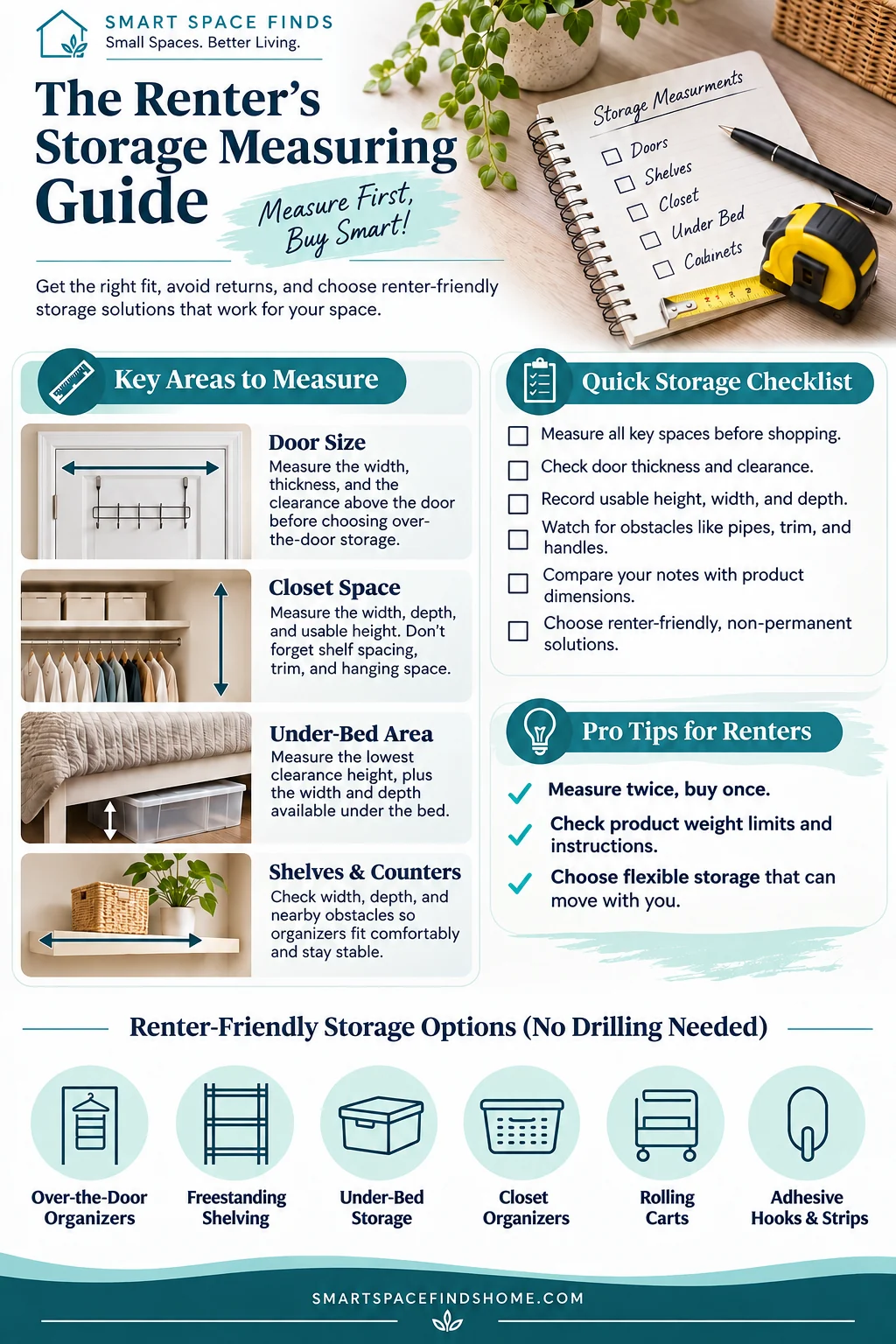
How to measure before ordering organizers
For cabinets, record the interior width, depth and usable height, then subtract space occupied by hinges, pipes or shelf supports. For over-door systems, measure door thickness, the gap between the top of the door and its frame, and the swing clearance. For under-bed bins, measure at the lowest crossbar—not just at the bed edge. For carts, include handles and allow space to pull them out without blocking a walkway.
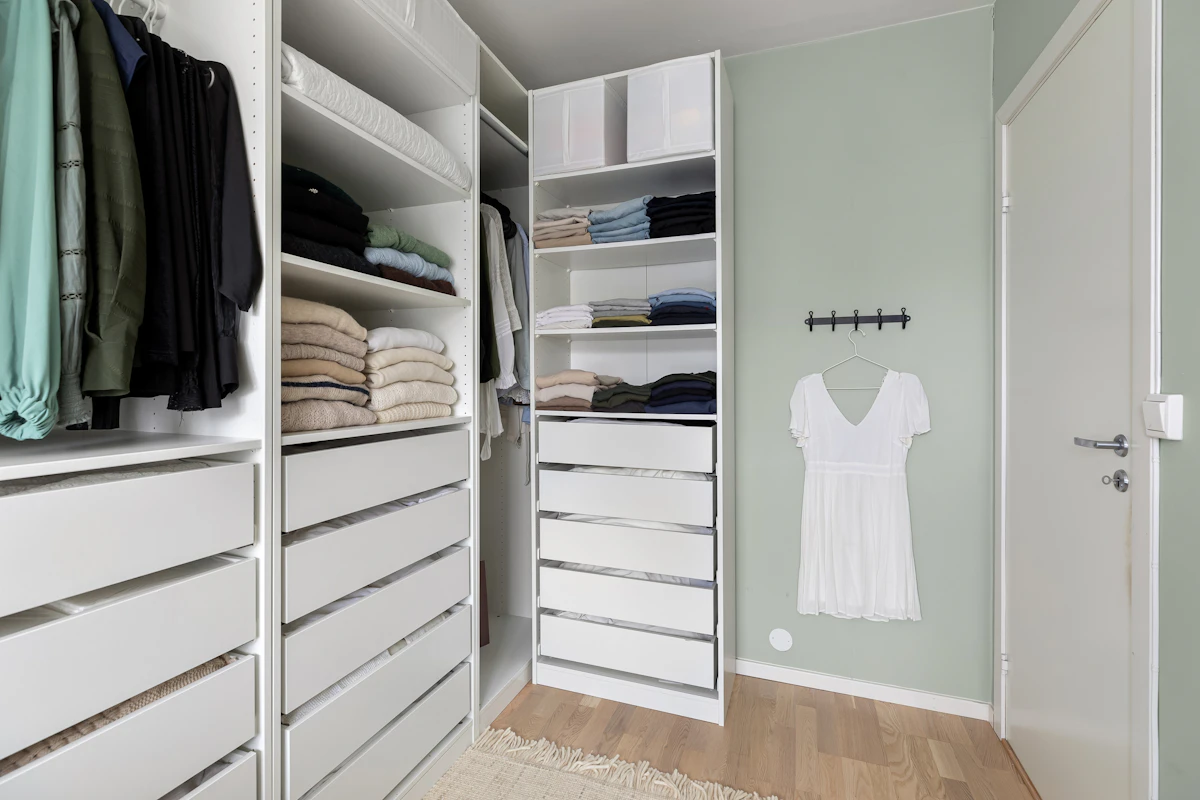
Build a no-drill storage system room by room
Entryway: make a landing zone
Pair a narrow shoe rack with a key tray and a basket for daily accessories. Measure the clear walking route before buying a bench. More ideas: entryway storage without a hallway.
Kitchen: use cabinet interiors first
Group pantry staples in bins, divide drawers by task and use risers only where dishes remain secure. In a narrow kitchen, a cart might obstruct the fridge or sink, so test the footprint with painter’s tape on the floor before ordering.
Closet and bedroom: rotate instead of stacking
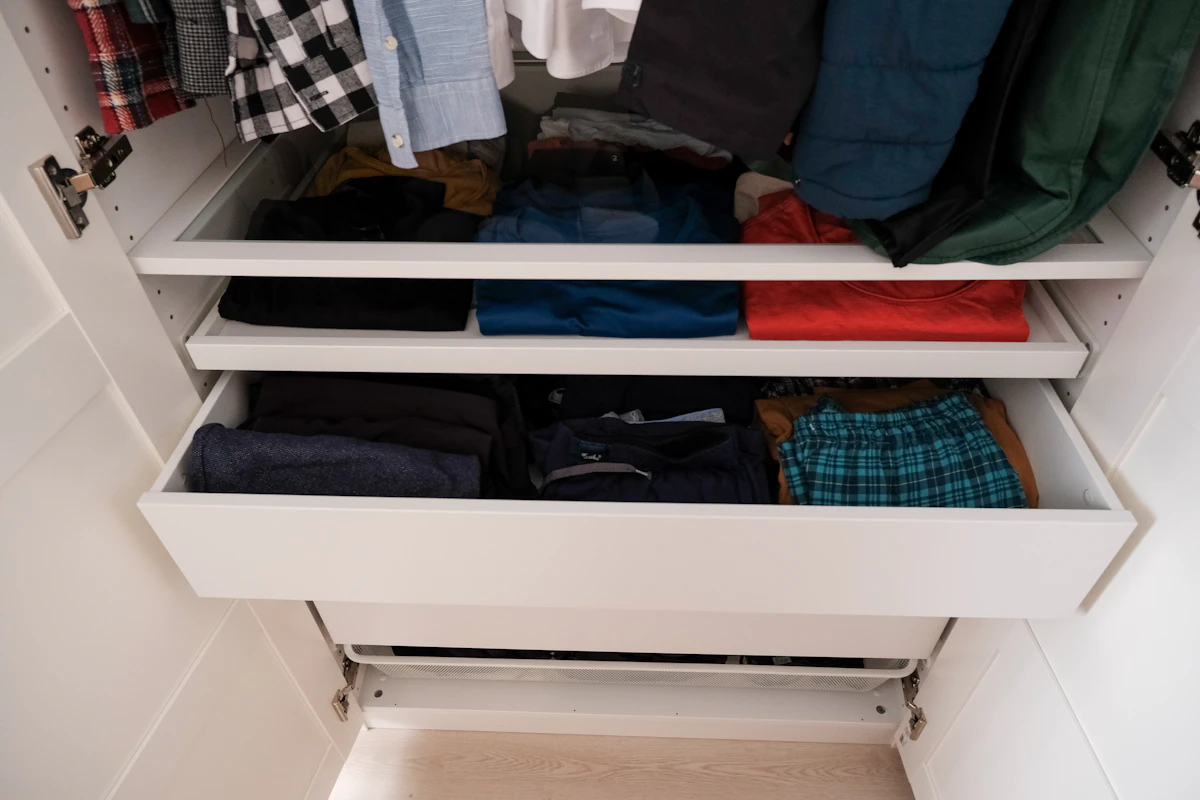
Use lightweight over-door organizers, drawer dividers and under-bed bins to separate everyday pieces from seasonal extras. Give shoes and bags defined limits; if a bin is full, edit the contents before adding another container.
Bathroom: prioritize moisture resistance
Freestanding, moisture-suitable containers can organize toiletries. Keep access to plumbing and outlets clear; avoid heavy unsecured shelving above toilets. Follow product-specific storage instructions for medication and cleaning products.
Living room and home office: make one piece do two jobs
A low bookshelf with labeled bins can store cables, stationery and games without turning the room into a stockroom. A stable rolling drawer unit can serve a work area by day and move out of sight later. See how to make a small living room feel bigger.
What “damage-free” storage really means
- Lease first: Your rental agreement may restrict more than drilling, including adhesive mounting.
- Anchor where required: Furniture that requires wall restraint should not be used unsecured merely to avoid holes; request approval or select a safer low-height alternative.
- Respect surfaces: Adhesive can lift paint, tension feet may mark finishes, and rolling carts can scratch soft floors.
- Protect movement: Never block exits, doors, vents, electrical panels or accessibility routes.
- Check contents: Heavy, fragile and hazardous items require appropriate secure storage; keep cleaning products away from children and pets.
Five mistakes that make rental storage worse
- Buying organizers before measuring usable depth and door swing.
- Assuming “removable” means safe on every painted surface.
- Using a tall freestanding unit without following anti-tip instructions.
- Blocking access to plumbing, outlets or an exit with attractive storage.
- Adding more bins without decluttering or labeling what you own.
Step-by-step renter storage checklist
- Audit: Photograph the clutter hotspots in each room.
- Check: Read your lease and the installation directions.
- Measure: Record inside dimensions, openings, door swings and floor clearance.
- Edit: Donate or relocate items you rarely use before purchasing.
- Choose: Start with one portable low-risk solution.
- Install: Follow load ratings, anti-tip requirements and surface guidance.
- Test: Open every door and walk through the space with storage in place.
- Maintain: Review the setup in a week; keep what genuinely improves access.
What to buy first on a limited budget
Avoid buying a coordinated set of bins before you know what needs organizing. Use a three-step approach: sort and remove duplicates, test the arrangement with containers you already own, and purchase only the missing organizer. Start with drawer dividers or a single cabinet riser if they solve a daily annoyance; move to larger portable pieces only if the problem remains. A more expensive system is not automatically more effective.
Frequently asked questions
Can removable hooks damage rental apartment walls?
Yes. Some adhesives can peel paint or leave residue, particularly on incompatible, delicate or recently painted finishes. Use only where the manufacturer allows and follow the exact removal procedure.
How can I add storage without drilling?
Start with shelf risers, drawer dividers, under-bed containers, low freestanding units and suitably sized over-door organizers. These usually avoid permanent building modifications, but still require safe installation and appropriate load management.
Are tension rods safe for heavy storage?
Not unless the manufacturer explicitly rates the specific product, surface and span for that load. For most rental organizing tasks, choose lightweight contents and avoid overhead or fragile objects.
What is the best storage solution for a very small rental?
It depends on what you own and where the clutter accumulates. In many apartments, reorganizing existing cabinets and drawers before adding furniture gives the greatest benefit with the least loss of floor space.
Do renters need to anchor bookshelves?
Follow the furniture manufacturer’s instructions. Many tall storage pieces require anti-tip anchoring. If your lease limits drilling, discuss an approved installation with the landlord or use a safer alternative rather than leaving required restraints off.
How do I protect floors when using rolling carts?
Choose wheels designed for the floor type, avoid dragging loaded units, keep grit away from contact points and use compatible protective mats when appropriate.
Make storage portable, not permanent
The strongest renter-friendly systems are flexible: use the storage already built in, add low-risk movable pieces, and buy only after measuring. The result is a calmer apartment now—and less to repair, discard or rebuild when you move. Explore more small-space storage ideas and our guide to reducing visible apartment clutter.
Affiliate disclosure: Smart Space Finds may earn a commission from qualifying purchases made through affiliate links, at no additional cost to you. We recommend choosing products based on suitability, safety and your measurements.