
Affiliate disclosure: As an Amazon Associate I earn from qualifying purchases. Some links in this guide are paid links, which may earn us a commission at no additional cost to you. We have not personally tested the products featured.
Organizing a compact pantry starts with the meals you actually cook. Instead of buying matching jars for every product, create practical zones for daily cooking, baking, cans, spices and backup ingredients, while preserving important food storage information.
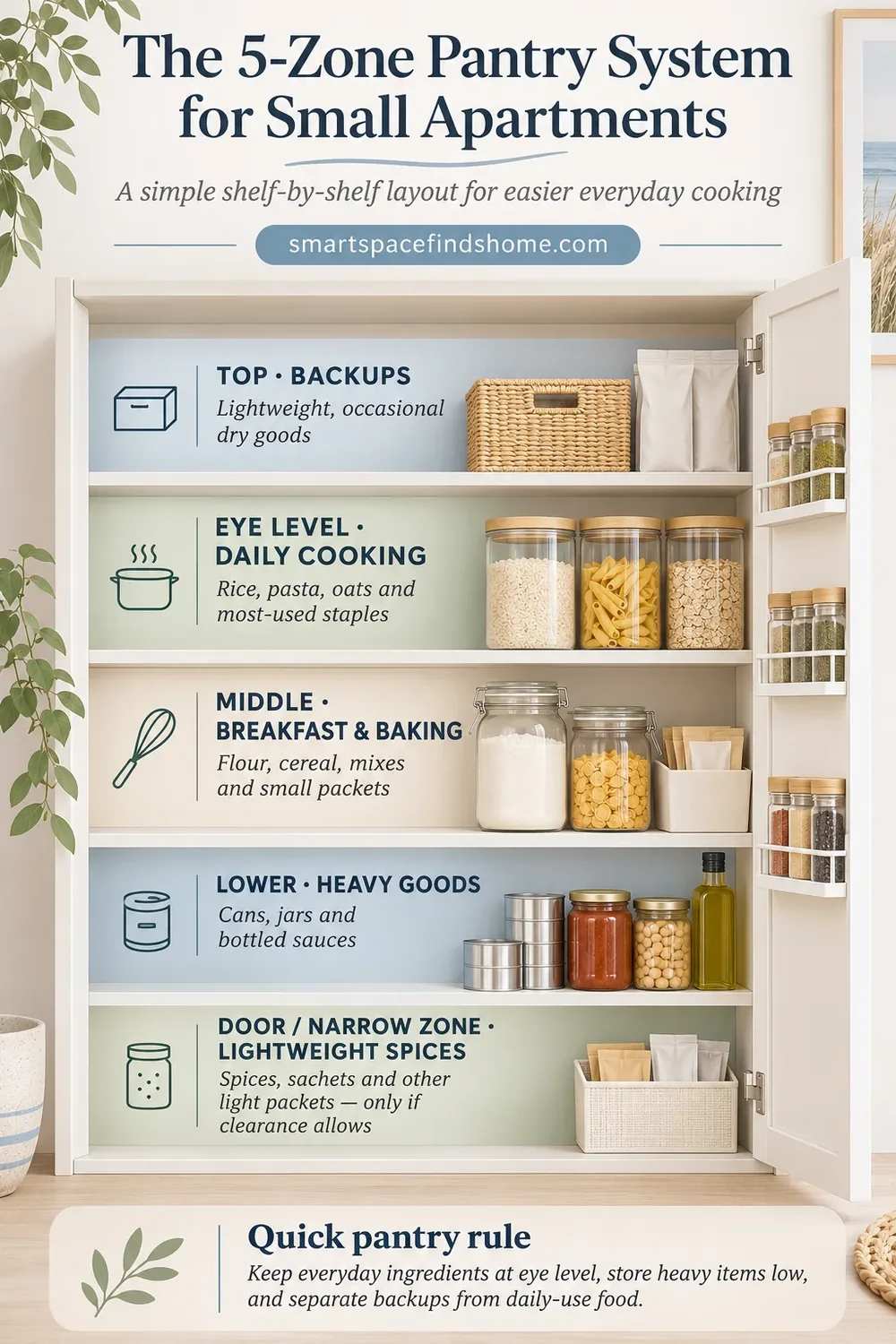
The Five-Zone Pantry Map for a Small Apartment
Use these zones as a flexible starting point. Adjust to the height and weight limits of your shelves and the needs of your household.
SMART SPACE FINDS · THE FIVE-ZONE METHOD
Keep heavy containers off high shelves and avoid overloading cabinet doors.
Start With Your Actual Cooking Habits
A small pantry should reflect the meals you cook every week, not the appearance of a large walk-in pantry. Take everything from one shelf at a time and group ingredients by use: everyday grains, baking products, canned foods, breakfast supplies, spices and oils. Check dates and package instructions as you sort. Discard food that is unsafe or spoiled, and avoid treating a decorative container as a replacement for proper storage guidance. Keep a short inventory of frequently bought staples. This is the easiest way to discover duplicate bags of rice, unopened flour and condiments forgotten behind taller jars.
Measure Each Shelf and Door Opening
Small apartment cupboards often have irregular usable depth because of hinges, shelf supports or pipework. Measure the internal width and height and the clear doorway before purchasing stackable bins. A container that fits between side walls may still be too wide to remove through the opening. Check whether the pantry shelf is rated to hold dense items such as tins or large flour bags. Leave enough space to lift products without scraping their packaging. Deep shelves generally benefit from smaller removable categories, while shallow cupboards are often easier to organize without many accessories.
Create a Daily Cooking Zone
Keep the ingredients used in most meals in the easiest-to-reach area: cooking oil, a few staple grains, salt or commonly used dried herbs. Group ingredients by task rather than by packaging color. If you cook pasta several nights a week, store its sauces or legumes within convenient reach. Do not place oils next to a hot hob or in direct sunlight where storage guidance warns against heat. A small everyday category should be easy to inspect during meal planning and easy to restock after shopping. Resist filling it with specialty products used only twice a year.
Make a Separate Baking Shelf
Flour, sugar, raising agents and baking additions are easier to manage when kept together. Retain expiry dates, allergen information and preparation directions when transferring ingredients to reusable containers. Use suitable food-safe packaging that closes securely and is easy to clean. Different flours may have different storage needs, so check individual instructions. A shallow tray for small sachets and cake decorations prevents loose packets disappearing at the rear of the cupboard. Keep heavier flour containers on lower stable shelves. Baking storage should support accurate measurement and ingredient freshness, not simply a row of identical jars.
Group Cans and Jars Safely
Cans, glass jars and bottled sauces create significant shelf weight. Keep heavy items at a comfortable lifting height rather than stacking them precariously above eye level. Organize by broad category such as tomatoes, beans and ready-made sauces so shopping lists are easier to write. Rotate older suitable products to the front while respecting use-by and best-before distinctions. Never use a damaged, bulging or leaking can. A shallow stepped riser can make labels more visible where space permits, but only if the product and shelf safely support the load. Avoid stacking glass jars in unstable towers.
Give Spices a Visible Home
A narrow spice tray, rack or drawer insert can help you find seasonings without opening every jar. Store spices away from excessive heat, moisture and sunlight where practical, following packaging directions. Keep labels visible and check whether aromas have faded before buying duplicate packets. Most small kitchens do not need dozens of varieties permanently displayed. Group the five or six used most often near cooking, with occasional blends in a secondary category. Clean spills promptly because powdered spices can gather in corners and contaminate neighboring containers. A well-chosen shallow tray may be more useful than an elaborate wall installation.
Use Clear Containers Selectively
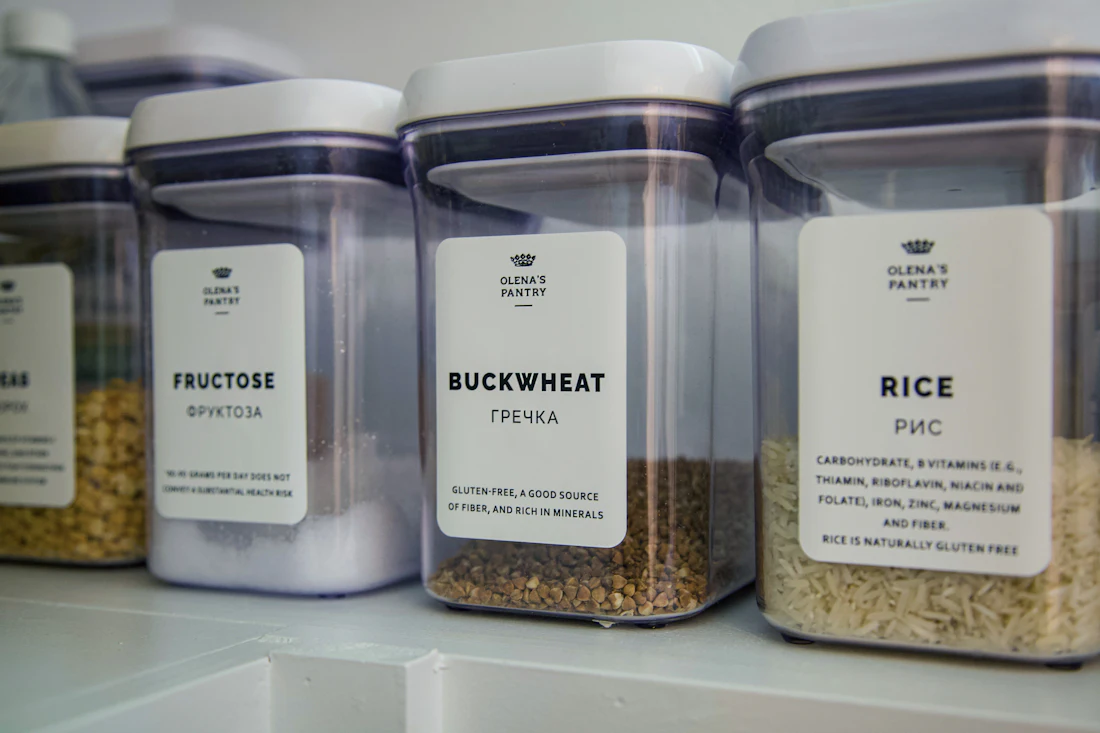
Clear bins and jars help with visibility, but decanting every ingredient creates work and can remove important package information. Choose suitable food-safe containers for products you buy regularly and in consistent quantities, such as oats or rice. Label transferred food with its identity and any required date or allergen details, retaining manufacturer guidance. Avoid mixing new food into old leftovers without considering freshness and safe handling. A removable transparent bin may be especially helpful for small seasoning packets or baking sachets. Before shopping for organizers, test whether the original packaging already fits neatly with a simple shelf division.
Keep Oils and Condiments Practical
Cooking oils and vinegar bottles are often tall and awkward to store. Keep them upright on a stable shelf that can handle the weight, away from heat and direct sun when required. A small washable tray contains ordinary drips but should not encourage crowding around the stove. Opened sauces and condiments may need refrigeration; follow their labels instead of assuming every bottle belongs in the pantry. Group similar products so an almost-empty bottle is noticed before a duplicate is purchased. Wipe bottle bases when returning them to the cupboard, and avoid overfilling a tray with fragile glass.
Make Use of Deeper Cupboards
Deep pantry shelves can hide half-used packets and duplicate tins. Use two small lift-out bins with distinct jobs instead of one oversized container that must be emptied to reach the back. Place occasional supplies farther inside and everyday ingredients closer to the opening. Do not block access to valves or electrical equipment if the storage shares space with services. A narrow turntable can help some jars remain visible, but check its usable diameter, height and stability. The best solution is the one that allows a quick inventory without requiring complete shelf removal.
Plan for a Household of One or Two
Bulk-buying can appear economical but may overwhelm a small kitchen and lead to stale supplies or waste. Estimate how quickly you use flour, pasta, legumes and snacks before choosing package sizes. Keep a reasonable reserve of true staples rather than stockpiling every discounted ingredient. Share cupboard capacity among breakfast, lunch and dinner categories according to cooking habits. Smaller quantities can be practical if storage is limited and shopping is convenient. A short list on a phone or inside a cabinet helps prevent duplicates. Use the available space to support meals you actually enjoy preparing.
Protect Food From Moisture and Pests
Inspect shelves periodically for dampness, damaged packaging and signs of pests. Keep food in appropriate sealed packaging and clean spills immediately. Do not place dry goods directly beside a leaking pipe or in a cupboard with persistent condensation. Remove potentially contaminated food safely and investigate the source of any infestation rather than merely adding scented products. Check the storage requirements for nuts, whole grains and flours, some of which may keep better chilled or frozen under certain conditions. Food safety and freshness matter much more than matching containers or uniform label typography.
A Ten-Minute Pantry Reset
Once a week, bring the most-used bins forward and check which ingredients need using soon. Move older safe stock to the front, wipe spilled crumbs and update the shopping list based on the real inventory. Inspect oils and opened packets for leaks or unsuitable storage. Before a grocery trip, confirm that you do not already own the product being considered. Every few months, empty one shelf for a deeper clean and review specialty ingredients that no longer fit your cooking habits. This brief routine makes a compact pantry easier to maintain without a costly storage makeover.
Which Pantry Organizer Is Actually Worth Buying?
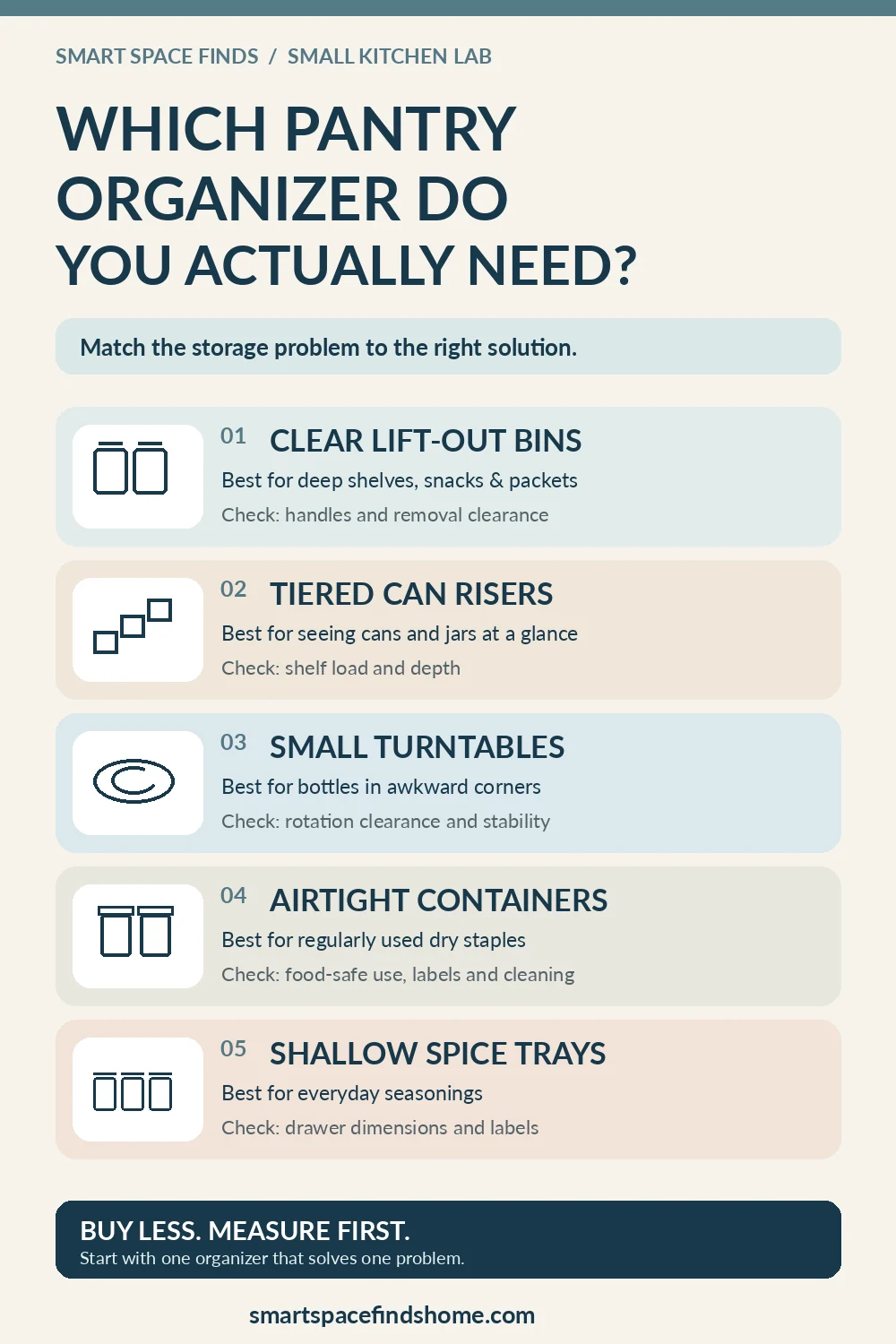
Choose organizers to solve an actual problem, not simply to make the pantry look uniform. Measure shelf openings and check material suitability first.
| Organizer | Best for | Check first |
|---|---|---|
| Lift-out bins | Deep shelves, snacks, packets | Handle and removal clearance |
| Tiered risers | Visible can and jar labels | Weight and shelf depth |
| Small turntables | Bottles in deep corners | Rotation clearance and stability |
| Airtight containers | Frequently used dry goods | Food safety, labels and cleaning |
| Shallow spice trays | Everyday seasonings | Drawer dimensions |
Explore the pantry organizer comparison for small kitchens for additional options.
Small Pantry Shopping Checklist
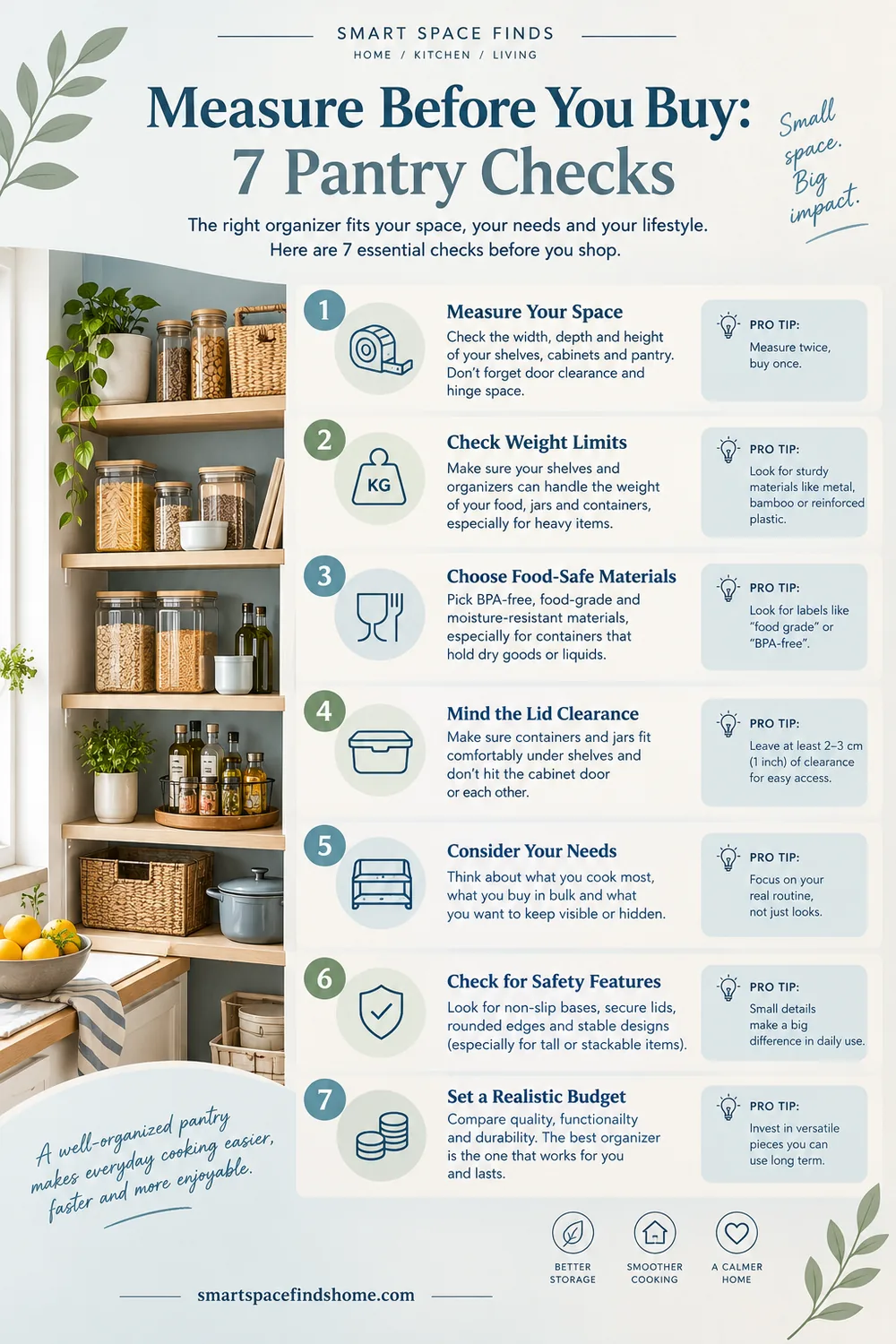
Before you buy, verify:
- ☐ Interior shelf width, depth and height
- ☐ Clear door opening, hinges and supports
- ☐ Shelf load rating and heavy-food placement
- ☐ Clearance for lifting bins and opening lids
- ☐ Food-safe materials and storage instructions
- ☐ Whether existing trays or bins could work
Budget-first order: Declutter → measure → trial one organizer → review after a week.
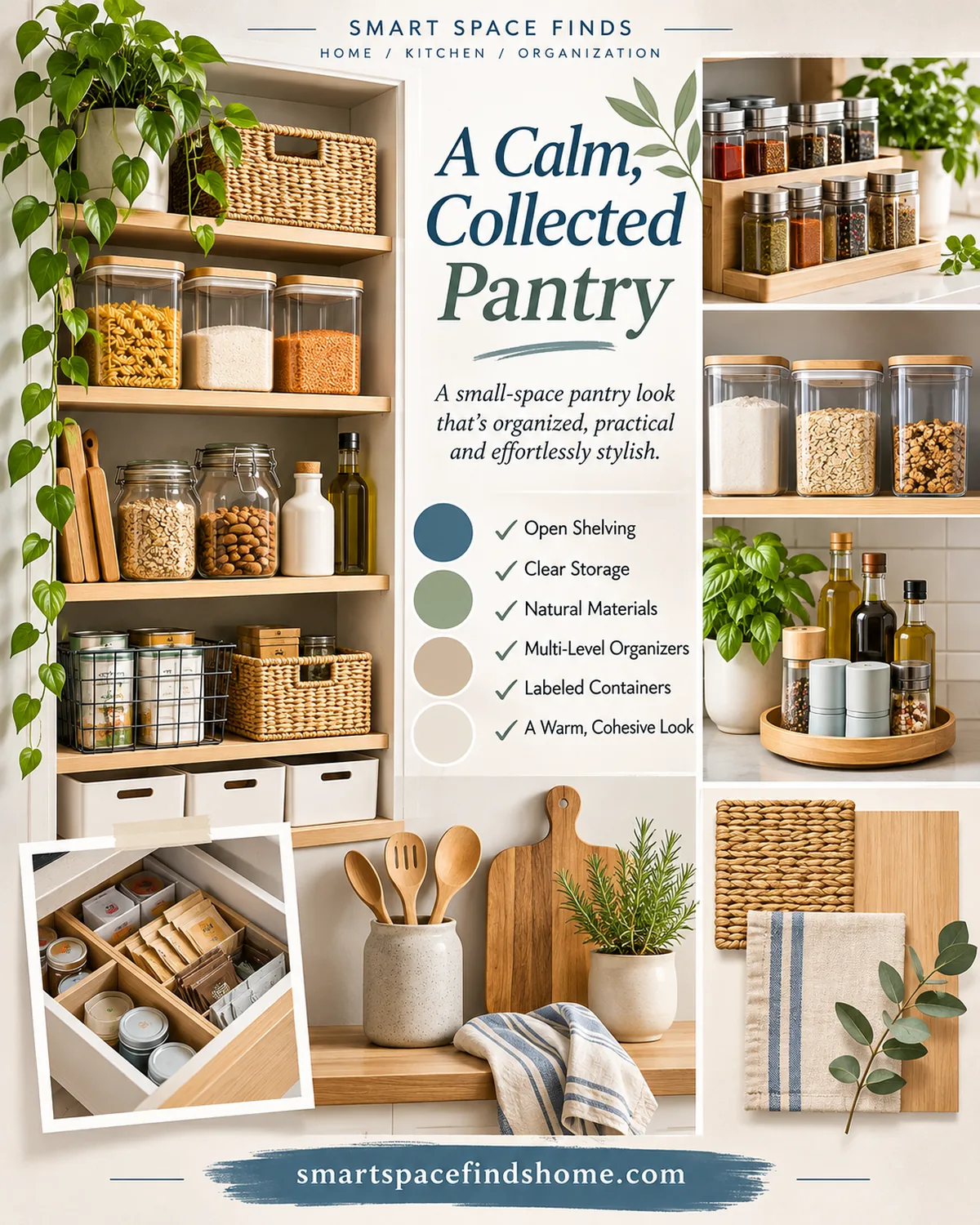
A Calm, Collected Pantry: Coastal Nordic Inspiration
Keep finishes cohesive without sacrificing usability. Mix light wood, durable clear containers and washable trays, choosing organizers that fit the shelves you already own.
More Small-Kitchen Guides
Continue with our practical pantry organization guide, small-kitchen counter-space ideas and one-wall kitchen storage solutions.
Frequently Asked Questions
Should I decant all pantry foods into jars?
No. Transfer only suitable foods where the container helps; preserve essential identity, dates, allergens and storage instructions.
How do I organize a very deep cupboard?
Use small removable categories, place daily items near the front and measure all organizers for clear retrieval.
What is the fastest way to reduce clutter?
Remove unsafe or spoiled food, identify duplicates and buy only the staples you can realistically use.