
SMART SPACE FINDS · THE COMPACT COOK’S STUDIO
Small kitchen cooking is less about owning clever gadgets and more about protecting a reliable place to prepare food. With a clear sequence, versatile tools, and a few safety-first routines, even a narrow counter can support enjoyable everyday meals.
This practical guide explains 12 ways to save counter space while cooking—including chef-inspired prep methods, storage decisions, and a simple routine you can test tonight. Most improvements cost nothing.
Start by mapping your kitchen’s three working zones
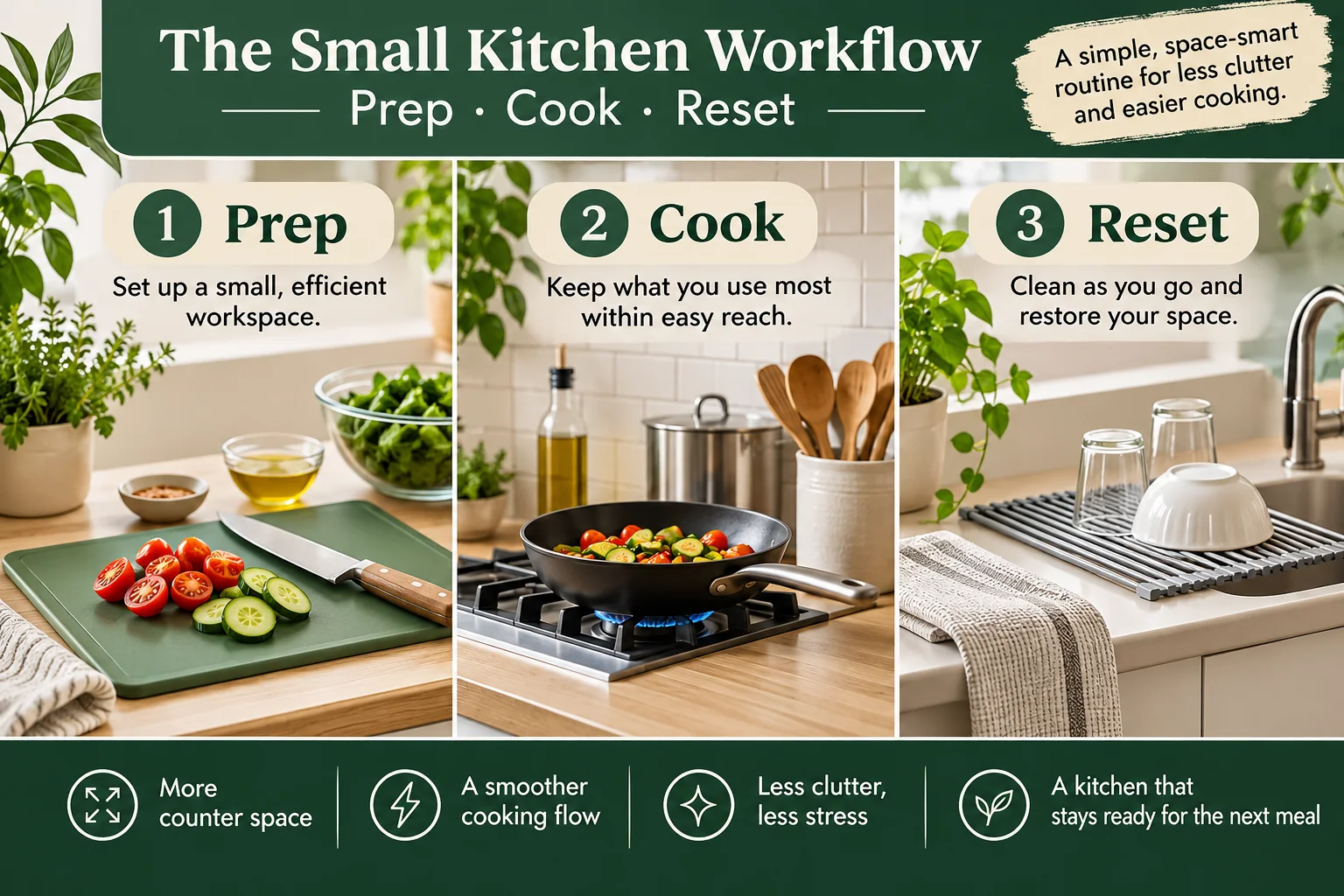
Think in terms of prep, heat, and cleanup. These areas may overlap physically in a tiny apartment, but they should not compete for the same surface at the same moment. Prep needs a dry, clean, stable board; the heat zone needs safe pan clearance; cleanup needs somewhere for used tools without contaminating fresh food.
Observe one ordinary dinner before purchasing storage. Which objects keep getting moved? Which tools do you reach for repeatedly? Where do vegetable scraps and dirty utensils pile up? These friction points tell you what to fix first.
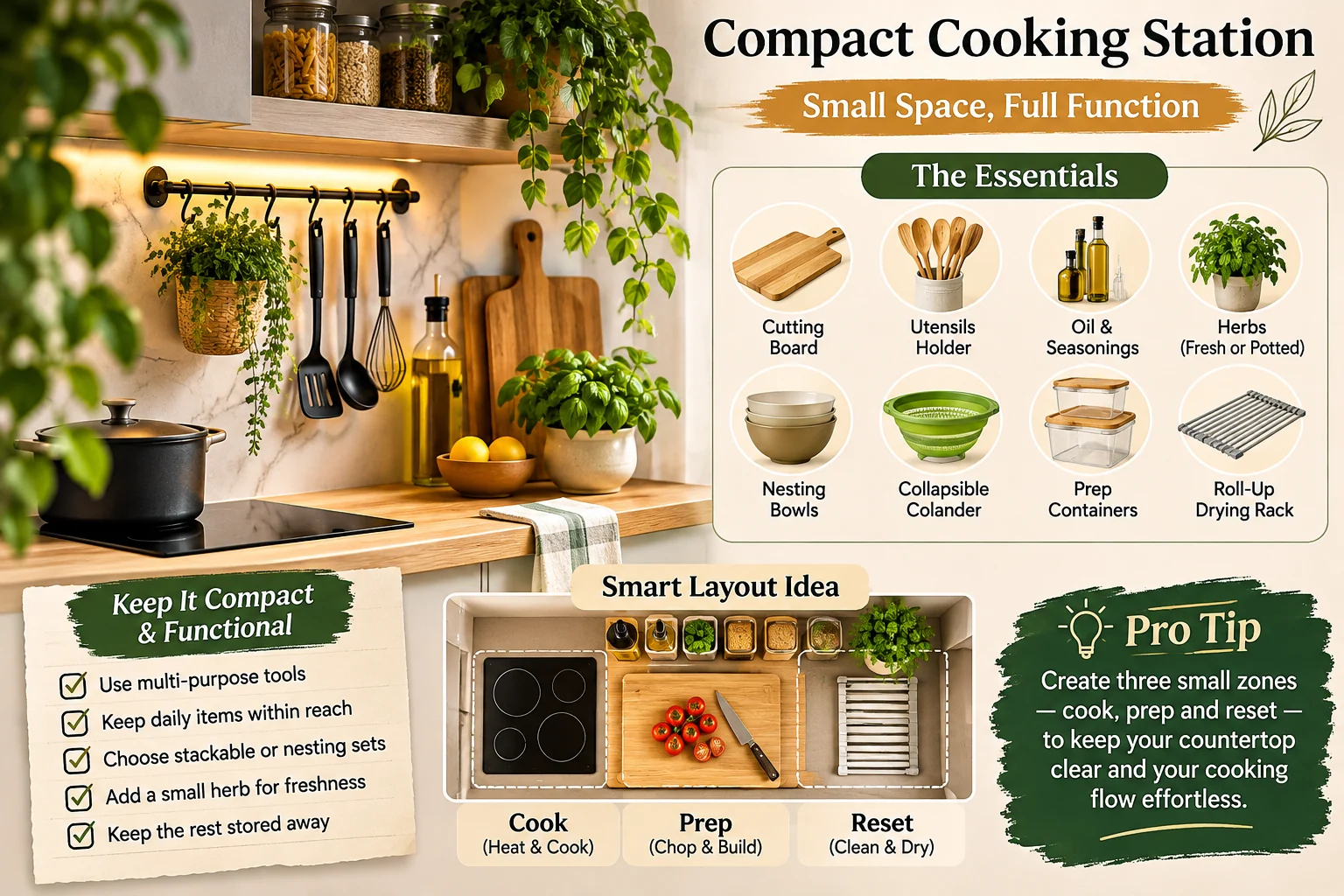
12 small kitchen cooking tips that actually free counter space
1. Protect one genuine prep zone
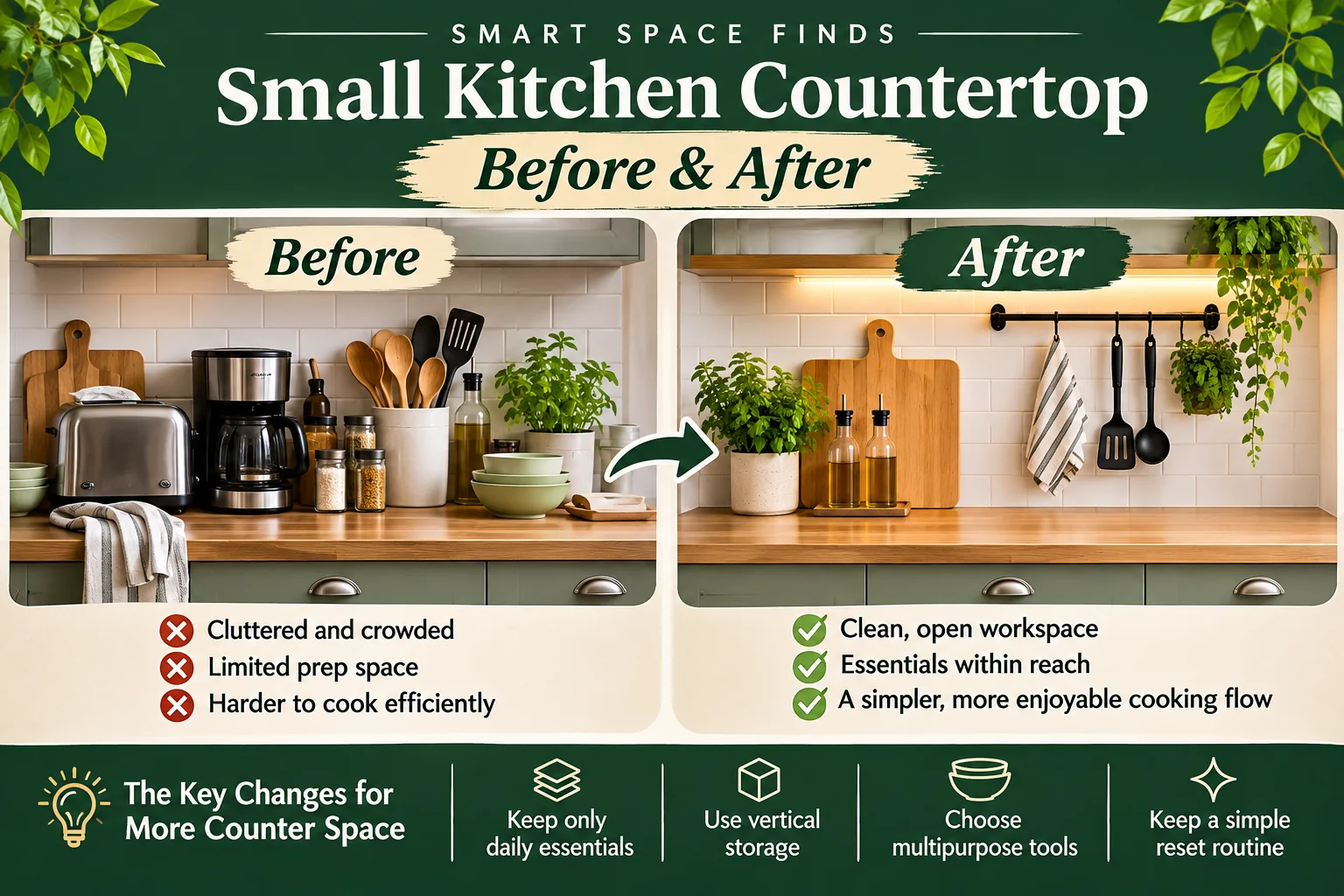
Start by identifying the largest stable, dry section of countertop that is not needed for a sink, stove, or hot appliance. Clear it before you cook. You need enough room for a stable cutting board, your hands, and a temporary landing spot for ingredients; the right dimensions depend on your board and the way you work.
If your only available counter is narrow, use a smaller board with a nonslip mat underneath rather than balancing a large board over a sink. Do not treat a burner, a hot stovetop, or the edge of the sink as extra preparation space. An uninterrupted safe workspace is more valuable than several small patches divided by jars and gadgets.
2. Plan the cooking sequence before unpacking
Read the recipe once, then write a three-part plan: what to prepare before heat, what to add during cooking, and what can wait. For a pasta skillet, that may mean chopping onion and garlic first, washing spinach next, and leaving the cheese in the refrigerator until the finish.
Bring out ingredients in the order you need them instead of arranging every packet across the counter. A recipe that looks cluttered when everything is displayed can become manageable when only one stage is active at a time.
3. Use a small-batch mise en place
Mise en place means having the right ingredients and tools ready for the job. It does not mean filling a tiny worktop with twelve matching bowls. Group spices that enter the pan together on one saucer, place vegetables cooked at the same stage in one bowl, and keep the next-stage ingredients on a compact tray.
For raw meat, seafood, eggs, and ready-to-eat ingredients, maintain appropriate separation and clean utensils and surfaces between tasks. Do not combine ingredients merely to save dishes when doing so would create an allergen or cross-contamination problem.
4. Choose tools that perform several jobs
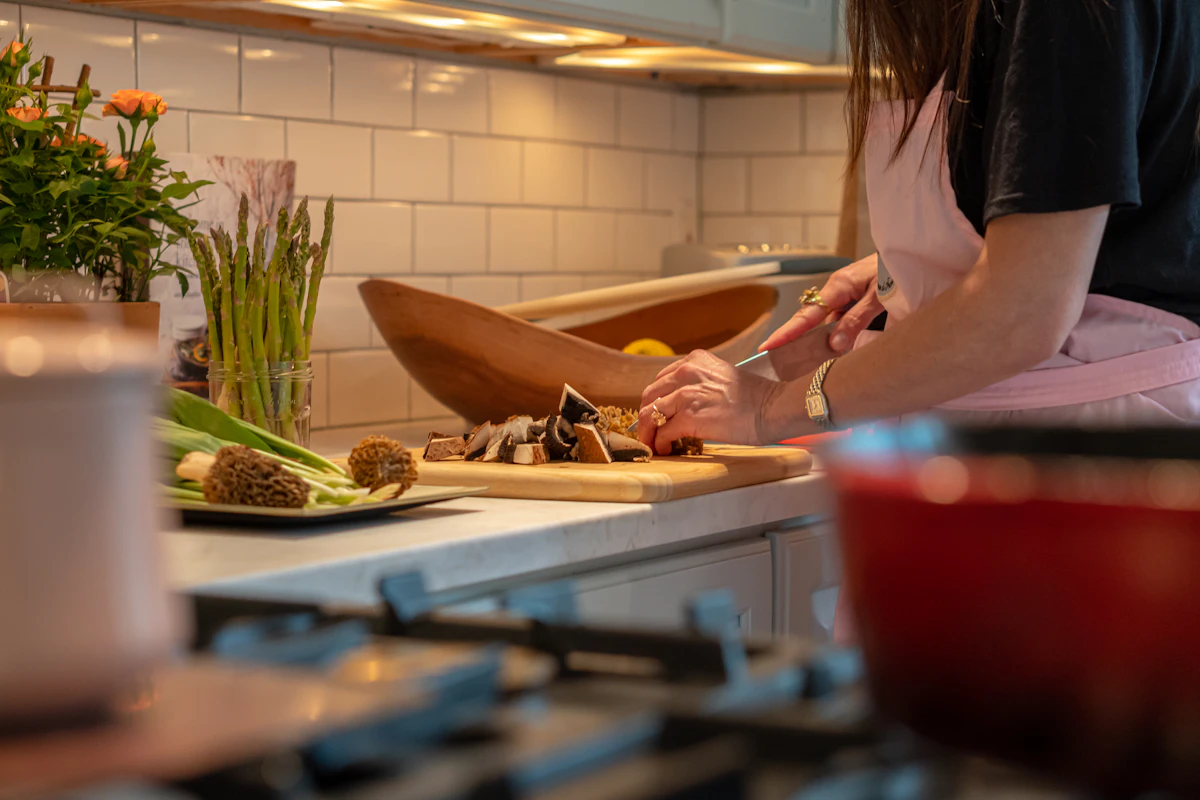
A comfortable chef’s knife, a stable board, a versatile skillet or saucepan, a heat-safe spatula, and a pair of tongs cover many meals. A colander that fits inside a mixing bowl and nesting storage containers can reduce the storage footprint when not in use.
Keep a frequently used device on the counter only if its daily value outweighs its footprint. Store occasional appliances in an accessible cabinet, preferably on a sturdy lower shelf if they are heavy. The goal is not to own as little as possible; it is to avoid constantly moving equipment out of your own way.
5. Move secondary tasks off the main counter
Reserve the best surface for cutting and assembly. Store unopened groceries, spare dishes, recipe books, and finished cold ingredients elsewhere if there is a safe, clean location. A nearby dining table can sometimes serve for arranging sealed pantry items or meal planning, but it should not become a substitute for a safe kitchen preparation surface.
Do not balance food-preparation boards on open drawers, unstable carts, or top-loading appliances. Any movable surface used for prep must be stable, cleanable, and rated for the loads placed on it.
6. Keep a landing zone beside active cooking
A hot skillet needs a safe place for the next ingredient and a place for utensils that will not drip onto clean food. Before turning on the heat, position a heat-safe spoon rest and identify where a hot pan could be set down on an appropriate trivet if necessary.
Never place cookware on a heat-sensitive countertop without suitable protection. Keep handles turned away from walkways and children, and leave the manufacturer’s required clearance around cooking appliances and vents.
7. Cook in one pan when the recipe allows
One-pan cooking can simplify both the countertop and the cleanup. Try a vegetable-and-bean skillet, a stir-fry with pre-portioned ingredients, or a sheet-pan dinner when there is enough oven space and the ingredients can safely share cooking conditions.
Do not overcrowd a pan just to use fewer dishes: crowded food may steam instead of brown and may cook unevenly. Check safe cooking temperatures for meat and poultry, and use a food thermometer rather than appearance alone.
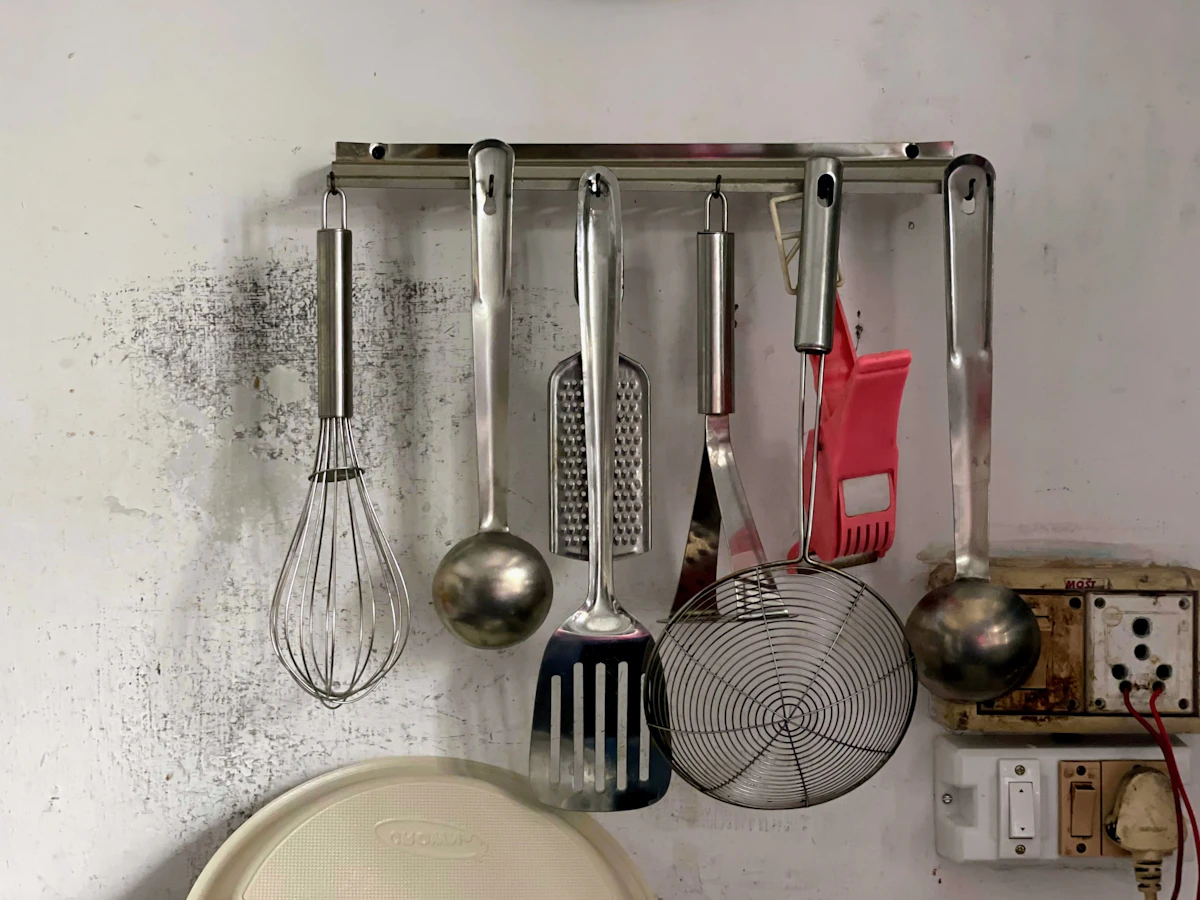
8. Use wall and cabinet storage selectively
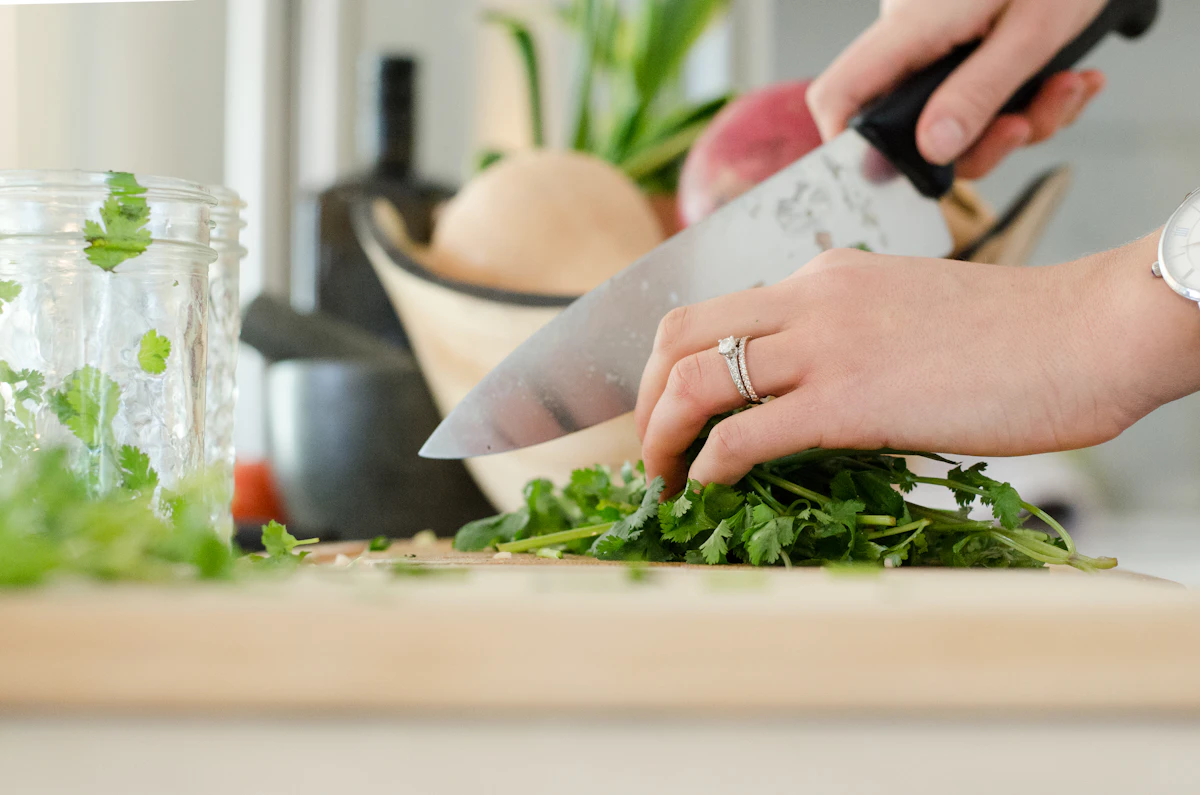
A securely installed rail, shallow shelf, or inside-cabinet organizer can move lightweight everyday tools off the work surface. But vertical storage is not automatically better. Shelves can trap grease near a stove, block light, or make daily items harder to reach.
Measure clearance before installing accessories. In rentals, verify mounting permissions and avoid unsupported adhesive fixtures for knives, heavy cookware, or anything that might fall into an active cooking area. Keep ventilation paths and electrical outlets accessible.
9. Design a realistic appliance rule
Ask three questions about each countertop appliance: How often is it used? Is it safe and convenient to retrieve from storage? Does it need permanent ventilation or operating clearance? A coffee maker used every morning may deserve a dedicated station, while a stand mixer used monthly may not.
Do not hide an appliance in a closed cabinet while operating it unless the manufacturer expressly permits that setup. Keep cords away from water and heat; never rely on overloaded extension leads to support an attractive countertop layout.
10. Clean in short, safe intervals
Keep a small bowl for vegetable scraps, place packaging straight into the bin, and move dirty tools to the washing side as each stage ends. During a safe simmer or oven interval, clear packaging and wipe noncritical spills, provided the cooking task does not demand constant attention.
Wash hands, boards, knives, and food-contact surfaces as required when moving between raw animal ingredients and ready-to-eat foods. Keep cleaning chemicals away from exposed ingredients. Cleaning as you go should never mean leaving active cooking unattended.
11. Set up a small-kitchen serving routine
Before food is ready, clear a suitable plate-up area and take out only the dishes you will use. For one or two people, plating directly from the pan may reduce serving bowls. For several people, move finished food to the table safely rather than covering the entire worktop with dishes.
Return perishable ingredients to cold storage promptly. A crowded kitchen is not a reason to leave food at room temperature longer than food-safety guidance permits.
12. Finish with a five-minute counter reset
Once the meal is safely served or stored, remove scraps, wash or organize dishes, clean the prep zone, and put the daily tools back into their assigned places. Aim to leave the cutting area ready for the next meal, rather than staging a complete kitchen makeover every evening.
If one item keeps ending up on the counter, that is useful feedback: improve the place where it belongs. Storage should fit your actual cooking routine, not a photograph of somebody else’s kitchen.
THE SMALL KITCHEN LAB · PRACTICAL DECISION GUIDE
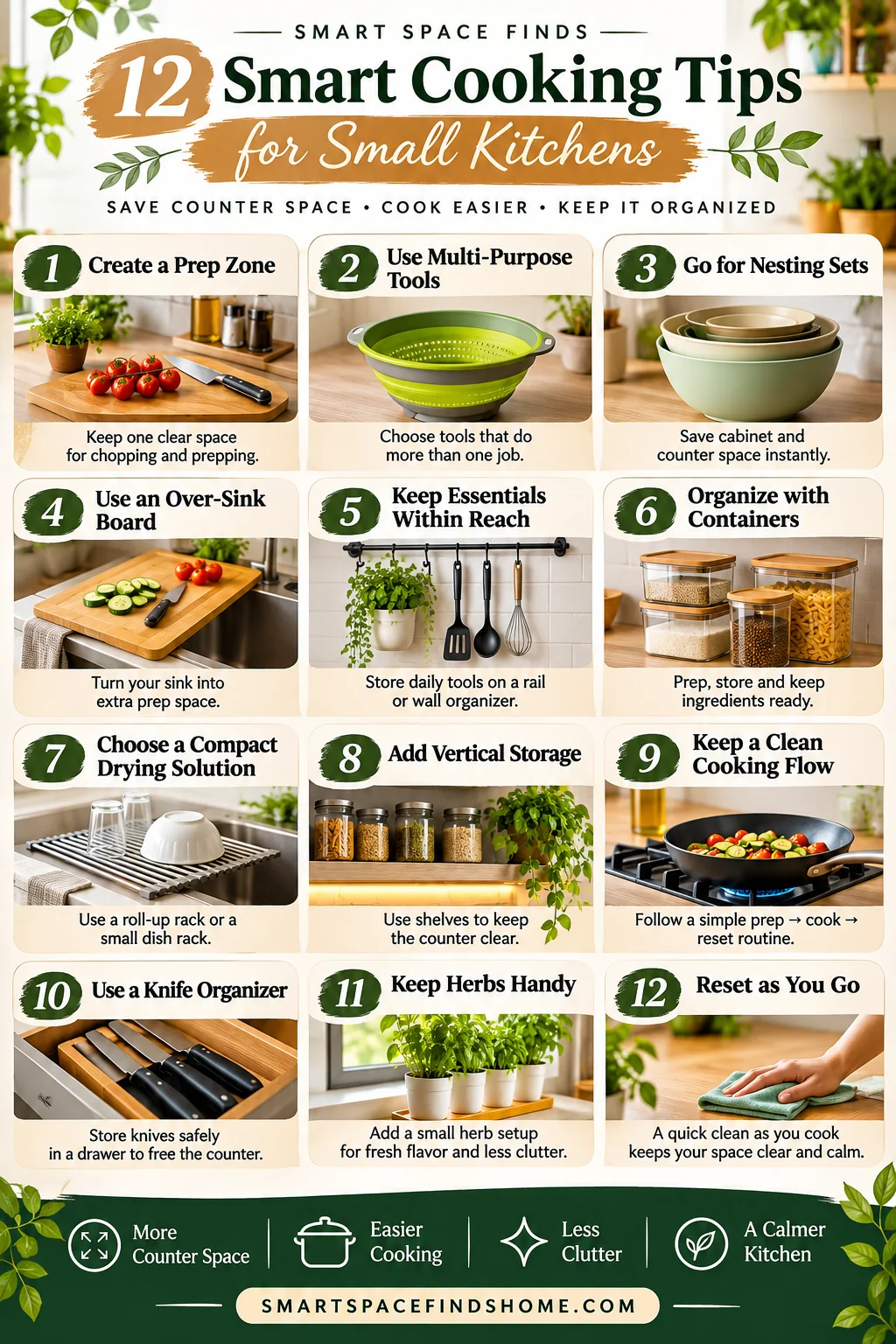
What should stay on your countertop?
Rather than buying another organizer, assess each object against actual cooking frequency, retrieval effort, and safe operating clearance. Use these rules as a starting point—not as rigid requirements.
Before buying anything: measure the clear countertop after essential appliances and safe clearances are accounted for.
Which space-saving cooking methods work best?
| Method | Best for | Counter-space benefit | Watch out for |
|---|---|---|---|
| Stage-by-stage prep | Almost every meal | Only current ingredients occupy the workspace | Plan before heating the pan |
| One-pan meals | Simple weeknight dinners | Fewer pans, lids and dirty dishes | Pan crowding and safe temperatures |
| Nesting equipment | Limited cabinets | Smaller stored footprint | Items must remain accessible |
| Selective vertical storage | Frequently used lightweight tools | Removes clutter from the prep zone | Safe fixings, ventilation and reach |
| Short cleanup intervals | Multistage recipes | Prevents used tools accumulating | Never neglect active cooking |
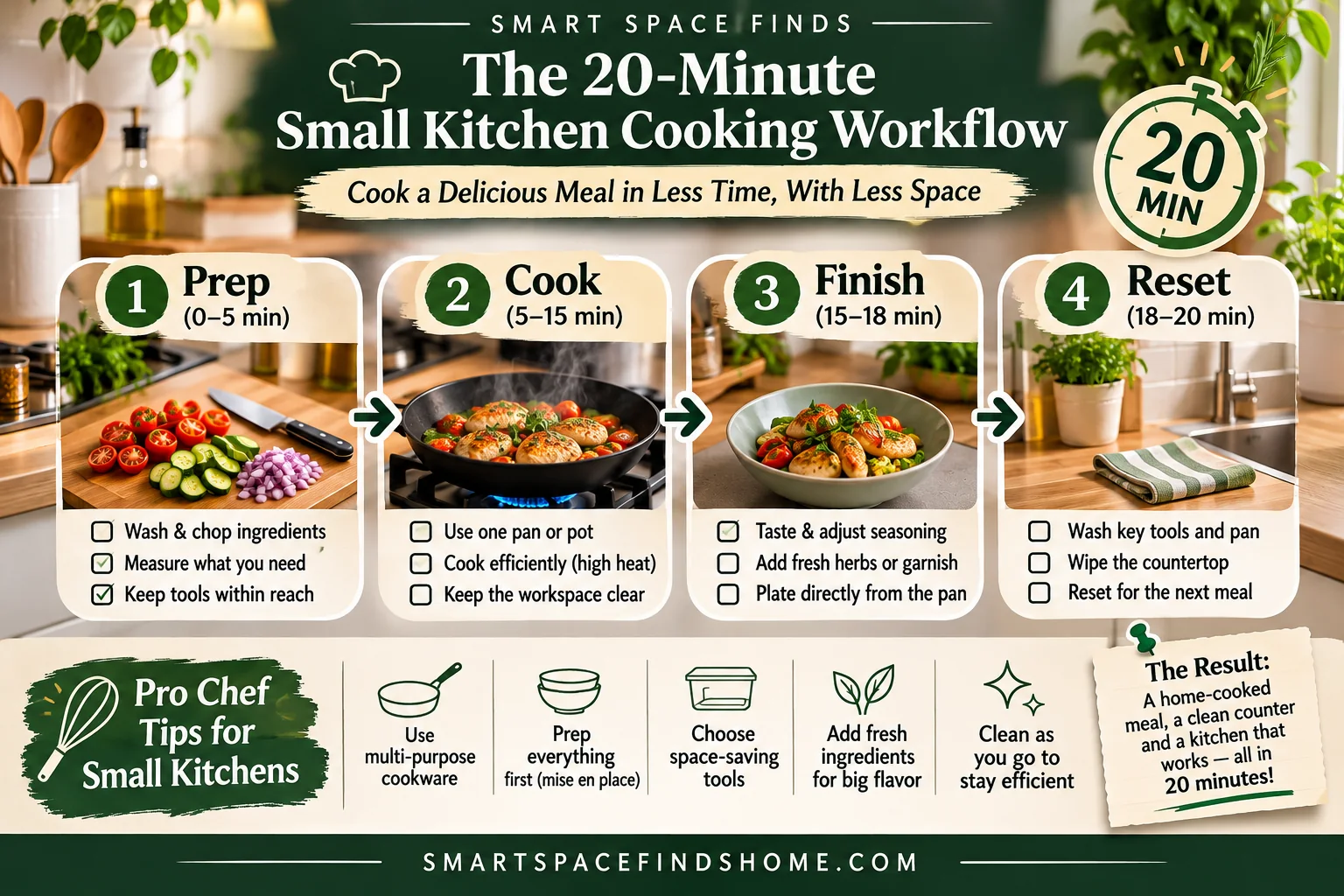
A realistic 20-minute cooking workflow
Minutes 0–3: Read the recipe, wash hands, clear a board-sized zone, set out only the first ingredients and required utensils.
Minutes 3–8: Prepare vegetables and aromatics. Transfer compatible ingredients to a single clean bowl or tray and discard packaging.
Minutes 8–17: Cook in the planned order. Move used utensils to the washing zone and clean only when the cooking process safely allows it. Follow the recipe and food thermometer rather than arbitrary timing for doneness.
Minutes 17–20: Plate food, refrigerate perishables promptly when appropriate, and clear the prep surface. These times illustrate a simple meal—not a promise that every recipe can be cooked in 20 minutes.
The small-kitchen counter checklist
- Is one stable preparation surface completely clear?
- Have you read the recipe through before heating anything?
- Are raw animal foods safely separated from ready-to-eat ingredients?
- Are cords, pan handles, and hot surfaces kept clear of traffic and water?
- Can used tools be moved away without blocking the next step?
- Do the appliances left on the counter justify their daily footprint?
- Can the main preparation zone be reset after serving?
Common mistakes that make a tiny kitchen harder to cook in
Buying organizers before changing the routine. A rack may hold more items but take away the last useful cutting space. First check whether those items belong on the countertop at all.
Displaying everything before cooking. A restaurant-style row of ingredient bowls can be beautiful in a photograph but awkward in a kitchenette. Keep only the next stage visible.
Confusing tidy with safe. A board balanced across a sink, a knife on an insecure magnetic strip, or a plugged-in appliance beneath a low shelf might look compact but create avoidable risks.
Keeping a “just in case” appliance permanently on display. Frequency of use—not the original purchase price—should determine valuable counter real estate.
REAL-WORLD EXAMPLE
A one-skillet dinner in a narrow kitchen
Imagine preparing chickpeas with tomatoes, spinach, garlic, and lemon with room for only one cutting board. This simple workflow applies the techniques above without requiring extra kitchen equipment.
- Prepare the sequence: drain the chickpeas, chop the garlic, rinse spinach, and keep the lemon aside until finishing.
- Use one landing tray: place garlic and tomatoes there while the skillet heats; keep the cutting surface available.
- Cook in stages: sauté aromatics, add tomatoes and chickpeas, then fold in spinach when ready.
- Reset: clear packaging as you go, serve safely, and clean the one prep zone after the meal.
The benefit is fewer simultaneous objects on the counter—not a guarantee that every one-pan recipe takes the same amount of time.
Frequently asked questions
How can I cook when I have almost no counter space?
Clear one stable area large enough for a nonslip cutting board and work in short ingredient stages. Keep sealed groceries and unused equipment off that surface. If there is no safe prep area at all, prioritize a suitable stable kitchen work surface rather than improvising over a hot stove or sink.
What kitchen tools save the most space?
Versatile tools such as a chef’s knife, compact cutting board, multipurpose pan, tongs, and nesting bowls can replace several dedicated gadgets. The best selection depends on what you cook regularly and whether every tool has a safe storage location.
Should I store appliances on the countertop or inside cabinets?
Leave truly daily-use appliances accessible when their operating clearance and electrical setup are safe. Store occasional appliances off the counter if their weight and shape allow safe retrieval. Never run an appliance in a closed cabinet unless its instructions expressly allow it.
Is a sink-cover cutting board a good idea?
Only consider one if it is specifically designed to fit the sink securely and can be used hygienically without slipping. A loose board balanced across an opening is not a safe substitute for a stable worktop.
How do I keep a small kitchen organized while preparing several meals?
Choose a few flexible ingredients, prepare them in a deliberate sequence, and check refrigerator capacity before beginning. Keep raw and ready-to-eat foods separate, refrigerate perishables promptly, and use suitable food-storage containers.
Explore more small-kitchen guides
For more ways to reduce clutter, read our small kitchen organization guide and compare space-saving countertop organizers. For cooking ahead, follow our weekly meal prep routine for tiny kitchens. Improve ingredient storage with the small pantry organization guide, or create a compact drink zone with our small-counter coffee station ideas.