
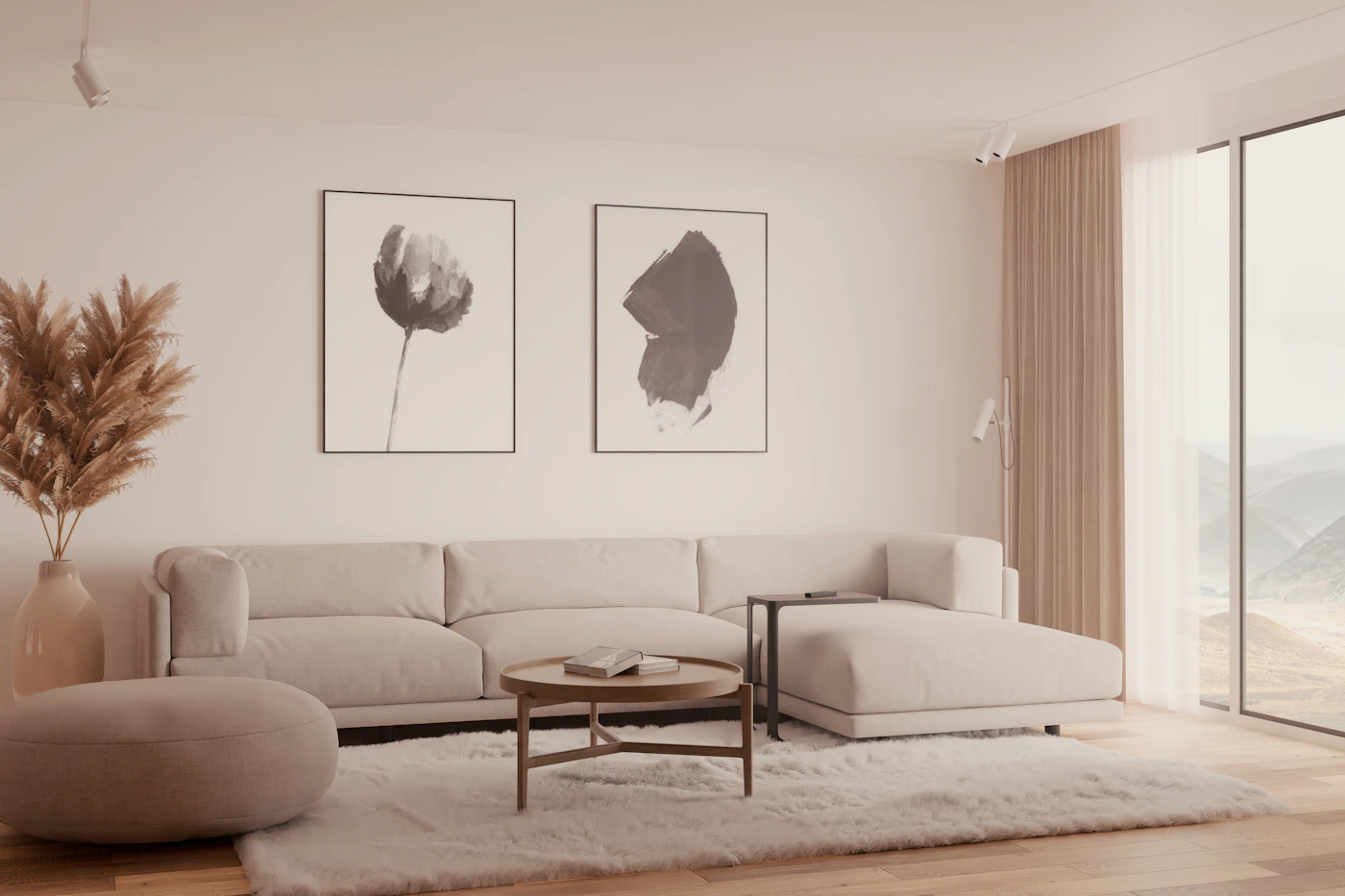
THE REFINED HOME / DESIGN DETAILS EDIT
The secret is rarely what a room costs. It is how thoughtfully everything fits together.
Want to make your home look expensive without spending a fortune? Start with the details your eye registers first: correctly placed artwork, a few repeated finishes, calmer cable routes, curtains with better proportions, and shelves that let your favorite objects shine. These design details make a room feel considered and welcoming—not staged or impersonal.
This is a realistic, renter-conscious guide for American homes and apartments. Every section includes a no-spend first step, useful measurements where appropriate, and a reason to skip a purchase when what you own already works.
SMART SPACE FINDS EDITORIAL · APPROX. 10-MINUTE READ · FIVE PRACTICAL DESIGN FIXES
THE EDITOR’S SHORT ANSWER
How do you make a home look expensive on a budget? Align art with furniture, repeat a few finishes, tame visible cables, hang curtains with intention, and give important objects breathing room. The goal is visual coherence—not an expensive receipt.
01 / THE PRACTICAL DESIGN AUDIT
The Five-Detail Room Audit: What to Fix First
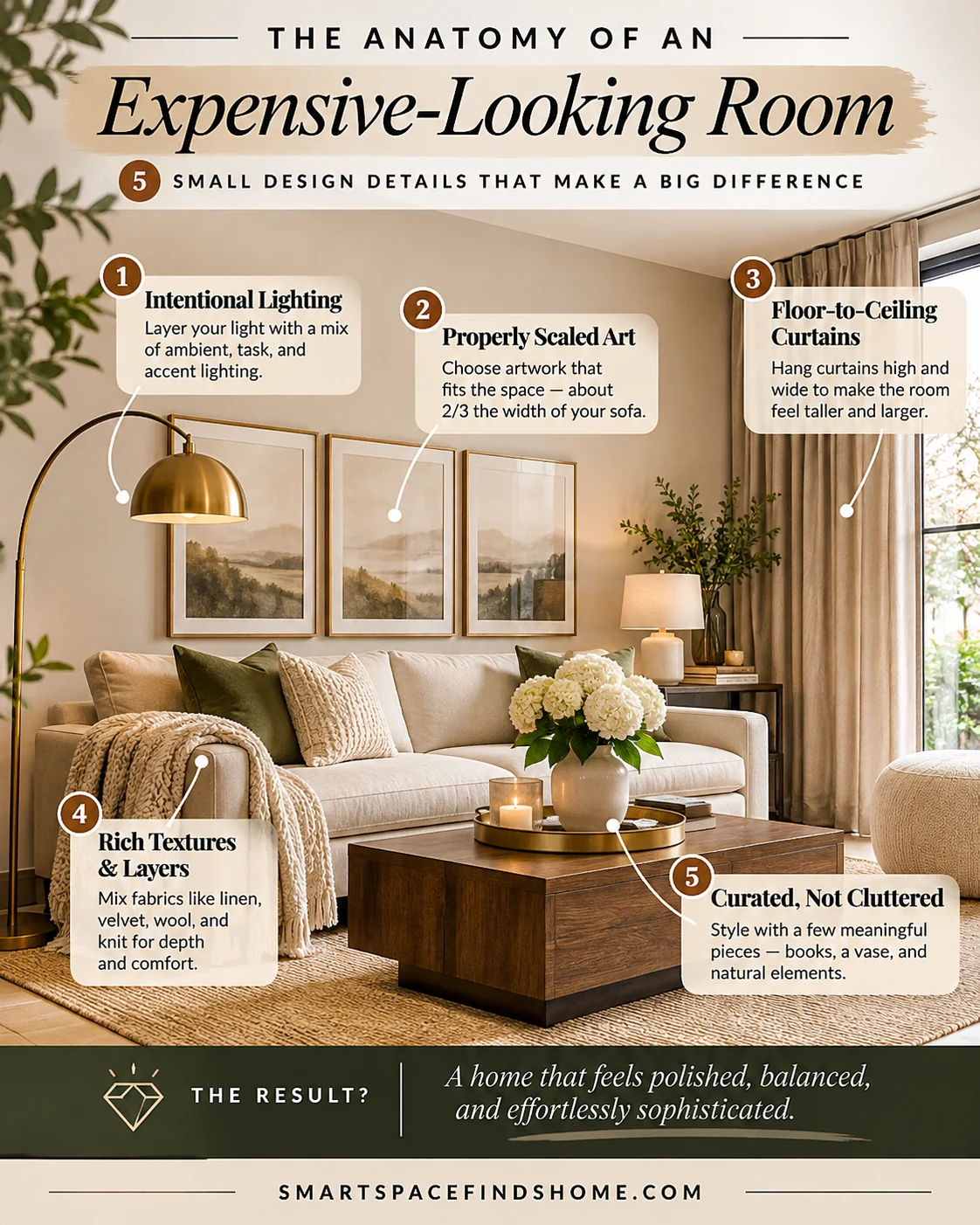
Use this quick reference to decide which detail is making your room feel unfinished. The right first move usually costs nothing.
| Design detail | No-spend improvement | Buy only if… |
|---|---|---|
| Wall art | Re-center and align your existing frames | You lack safe hanging hardware |
| Finishes | Repeat a tone already in the room | A functional fitting needs replacing |
| Cables | Reposition devices and reroute safely | A rated organizer fits the setup |
| Curtains | Adjust rod height and panel arrangement | Measurements show panels are too narrow |
| Shelves | Remove, regroup and rotate objects | A tray solves a real storage problem |
01 / THE ARTWORK EDIT
1. Give Your Artwork Better Proportions
A beautiful print can look disconnected when it floats far above the sofa or gets lost on a wide wall. The fix is usually the relationship between the artwork and the furniture below it, not the art’s price tag. Treat a cluster of frames as one visual shape and use the furniture as the anchor.
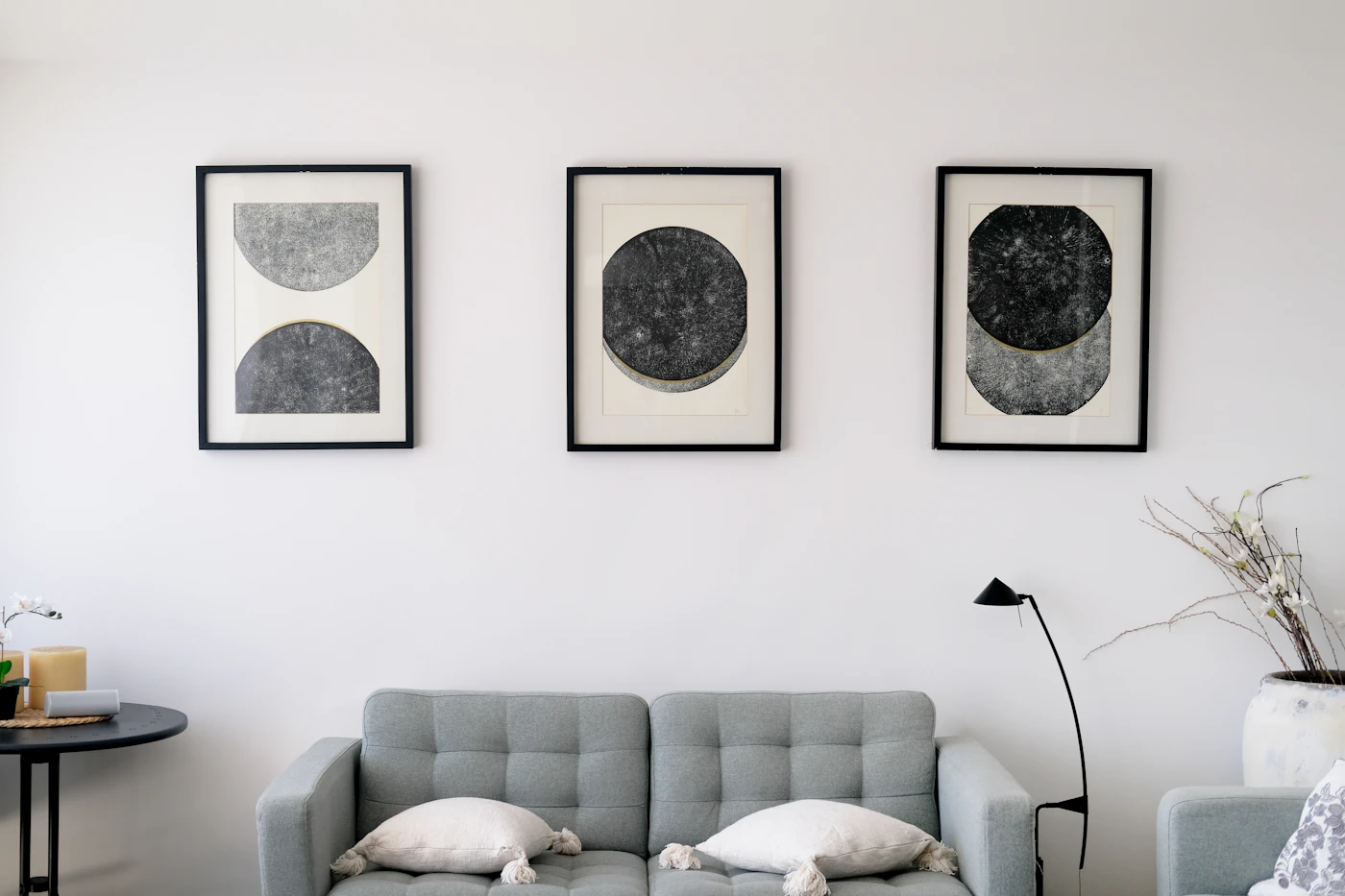
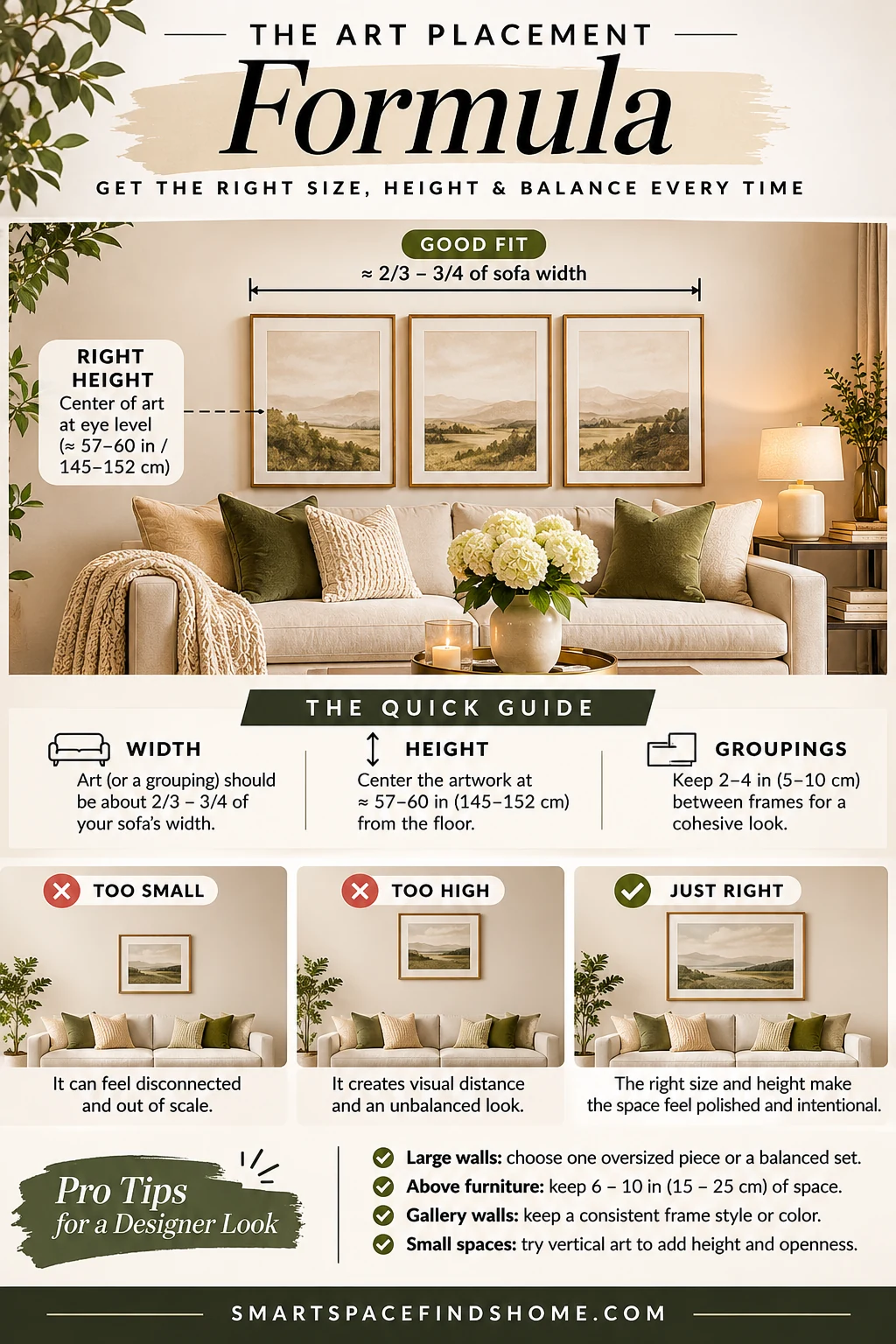
The artwork placement test
- Start with the furniture. For a piece or grouping above a sofa, an approximate width of two-thirds to three-quarters of the sofa can be a useful visual starting point—not an inflexible rule.
- Try the eye-level reference. A center around 57–60 inches from the floor is a common gallery-style starting point for art on an open wall; adjust for ceilings, sightlines and seating.
- Check the gap. Above furniture, start by testing roughly 6–10 inches between the bottom of a frame and the furniture, then step back and judge the balance.
- Preview without holes. Tape paper templates to the wall and view them from the doorway and the sofa.
Want a more personal wall? Mix photographs, drawings and meaningful objects rather than buying a set of generic matching prints. For inspiration, read our guide to expressing your personality through home decor.
SMART SPACE FINDS / CURATED FINDS
THE WALL EDIT
Hanging and framing options for an intentional gallery wall.
Command 20 lb X-Large Picture Hanging Strips
White · 16 pairs · XL · A01
Command 20 lb XL Picture Hanging Strips
White · 8 pairs · XL · A02
Americanflat 11×14 Signature Picture Frame
Black · 11×14 / 8×10 with mat · A03
Americanflat Gallery Wall Frame Set
Black · 10 frames · assorted sizes · A04
upsimples Picture Frame Set of 5
Black · 11×14 / 8×10 with mat · A05
upsimples Large Poster Frame
Black · 16×20 / 11×14 with mat · A06
Affiliate disclosure: As an Amazon Associate, Smart Space Finds earns from qualifying purchases. Product options may change; check current details and availability on Amazon before buying.
02 / THE FINISHES EDIT
2. Repeat Materials Without Making Everything Match
Rooms feel cohesive when the eye recognizes a few recurring notes. This does not require identical handles, identical wood tones or one-color-everything decorating. A small amount of deliberate repetition can connect furniture acquired years apart.
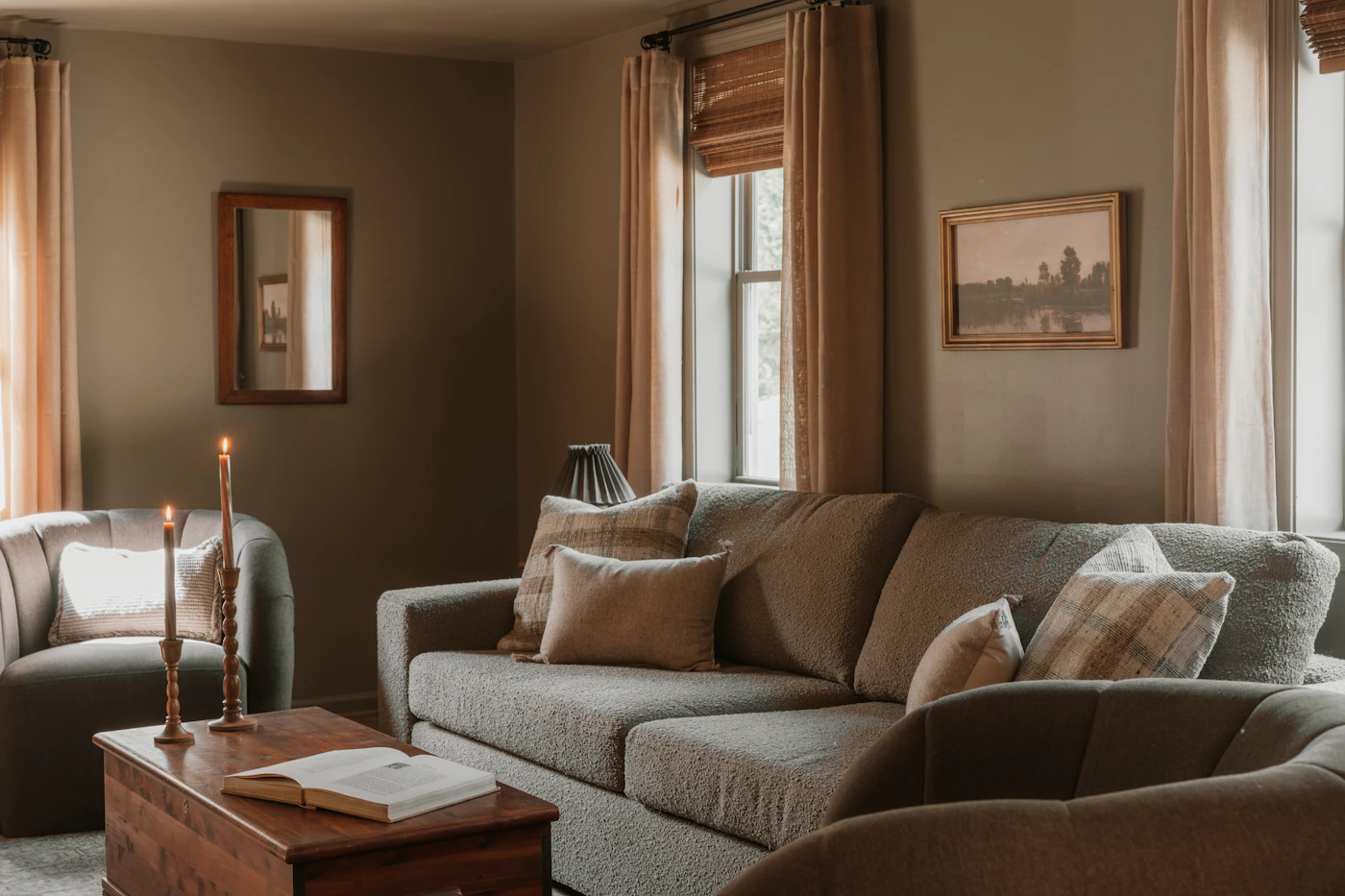
Build a three-note material palette
Look around the space and identify a dominant material, a supporting finish and one contrasting accent. For example, warm oak + soft ivory fabric + aged brass creates a different character from walnut + creamy upholstery + matte black metal. Both can feel polished when the materials appear more than once.
- Repeat the main wood tone in two places, even if the pieces are different.
- Let upholstery, curtains and a rug share a gentle undertone rather than an exact shade.
- Use the accent metal sparingly on a lamp, frame or hardware detail.
- Inspect your choices in morning and evening light before buying paint or fabric.
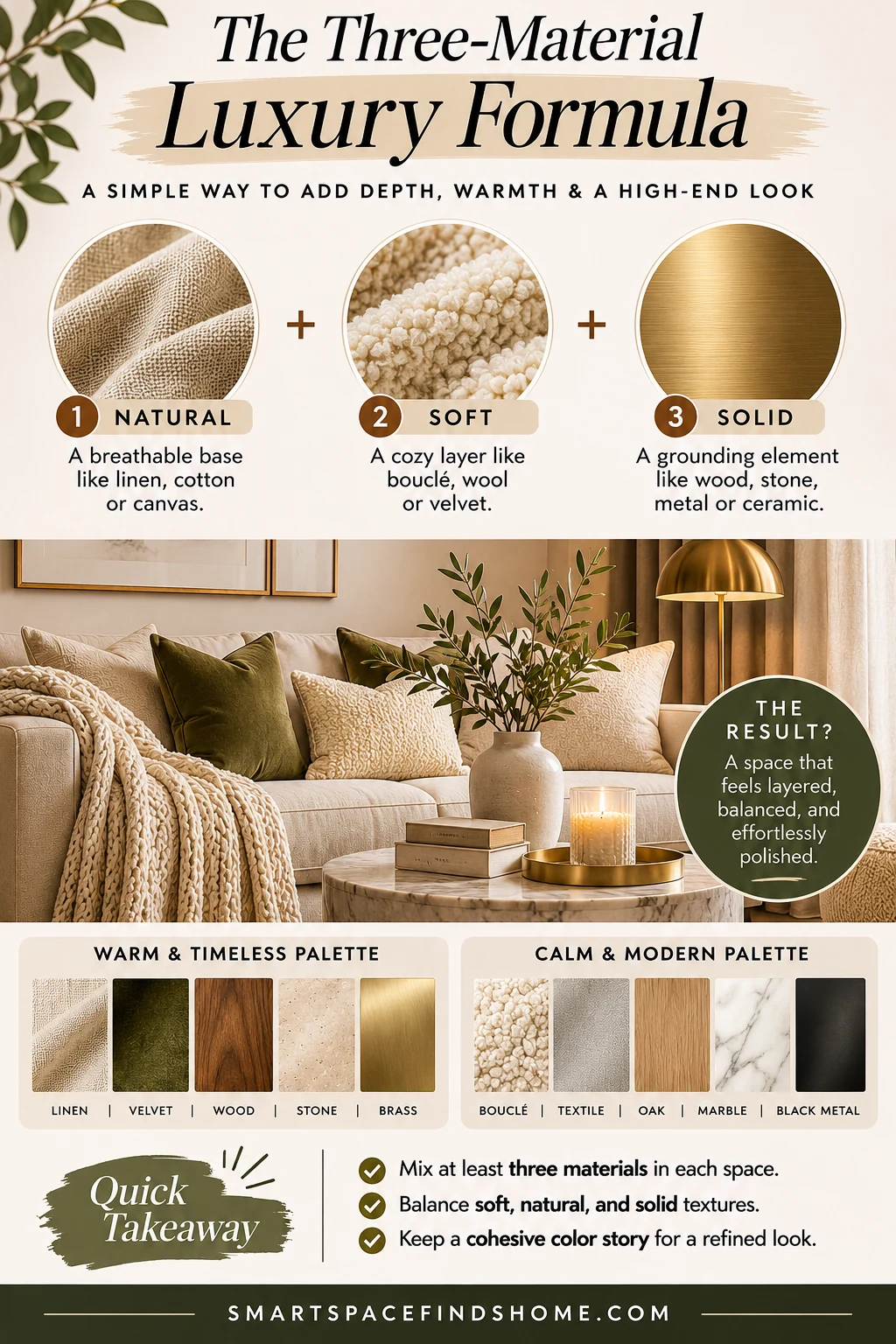
If you’re still deciding what aesthetic suits you, start with our interior design style guide or explore our more restrained quiet luxury guide.
SMART SPACE FINDS / CURATED FINDS
THE TEXTURE EDIT
Coordinated pillow covers for soft, layered finishes without replacing furniture.
MIULEE Linen Decorative Pillow Covers
Natural beige · 20×20 in · 2 pack · C01
MIULEE Corduroy Pillow Covers
Cream white · 18×18 in · 2 pack · C02
MIULEE Boho Sage Green Pillow Covers
Sage green · 18×18 in · 4 pack · C03
MIULEE Neutral Chenille Pillow Covers
Neutral · 18×18 in · 4 pack · C04
MIULEE Olive Green Chenille Pillow Covers
Olive green · 18×18 in · 2 pack · C05
Affiliate disclosure: As an Amazon Associate, Smart Space Finds earns from qualifying purchases. Product options may change; check current details and availability on Amazon before buying.
03 / THE VISUAL CALM EDIT
3. Reduce Visible Cables and Everyday Clutter
Visual calm is easier when your eye can follow furniture lines without encountering a tangle of chargers, remotes and cords. Think of cable management as part of the room layout: move devices nearer to suitable outlets, gather loose accessories in one accessible location, and avoid turning a living room into a showroom that is awkward to use.
Three safe places to begin
- Behind the media console: separate and route cables so plugs remain accessible and ventilation is unobstructed.
- Beside the sofa: place a charging station where you actually sit instead of stretching loose leads across walkways.
- On the desk: leave only the devices you use daily in plain view; store the rest in a labeled drawer or bin.
For a wider range of space-saving ideas, see our media storage without clutter guide.
SMART SPACE FINDS / CURATED FINDS
THE CABLE EDIT
Low-profile organizers for reducing visible cords and everyday surface clutter.
Alex Tech Split Cable Sleeve
Black · 10 ft · 1/2 in · D01
Nettbe Reusable Cable Ties
Black · 60 pcs · 6 in · D02
XHF Adhesive Cable Clips
Clear · 60 pcs · D03
JOYROOM Magnetic Cable Clips
9 pack · adhesive · D04
Lamicall Spring-Powered Cord Organizer
8 pack · desk/nightstand clips · D05
Affiliate disclosure: As an Amazon Associate, Smart Space Finds earns from qualifying purchases. Product options may change; check current details and availability on Amazon before buying.
04 / THE WINDOW EDIT
4. Make Your Curtains Look Considered, Not Accidental
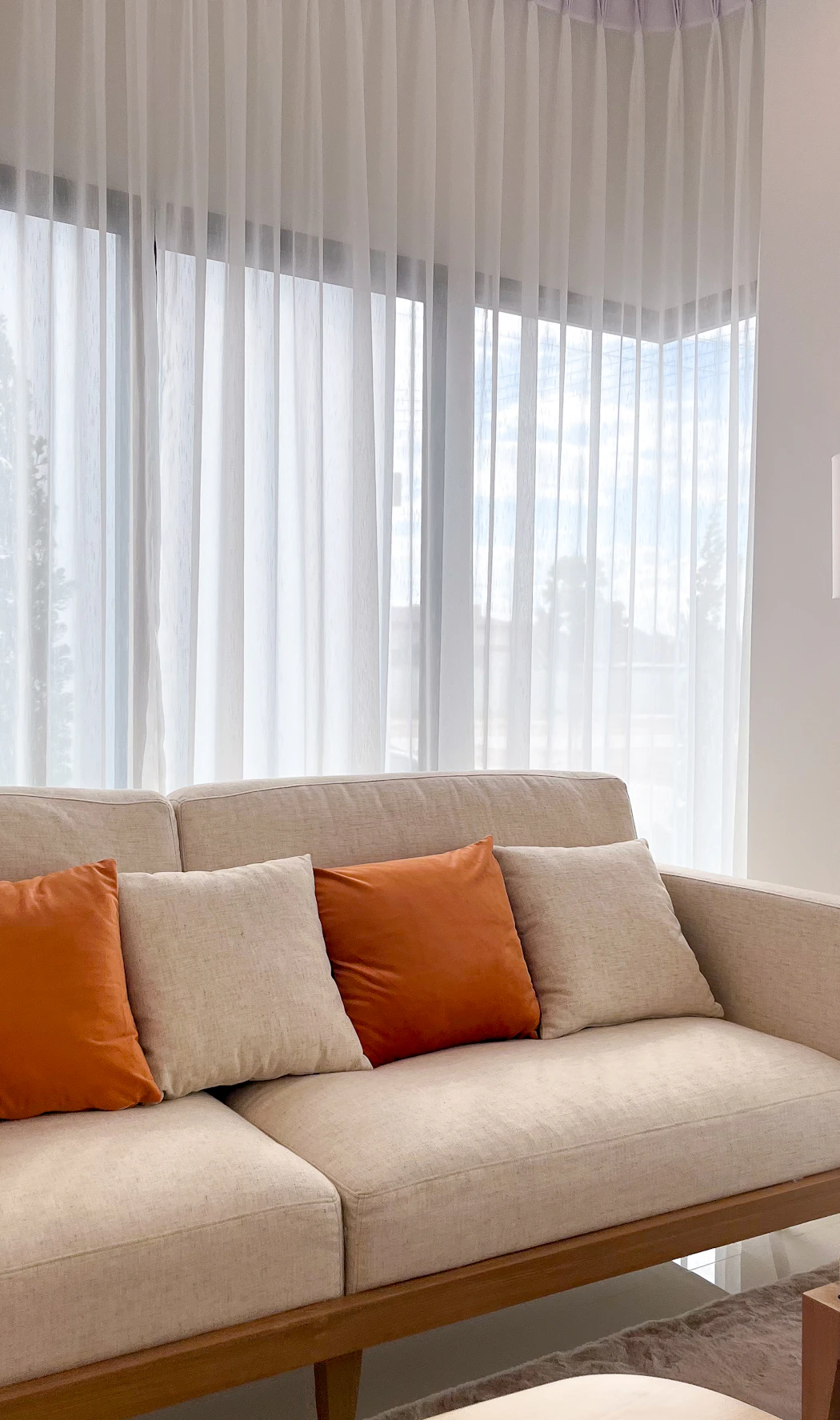
Window treatments cover a large visual area, so even simple panels can transform the room’s proportions. Fabric that barely spans the window, hangs at random lengths, or blocks all the daylight may appear less intentional than a modestly priced pair that fits well.
The simple curtain measurement worksheet
Write down these four measurements:
A. Window width: ______ in
B. Planned rod width: ______ in
C. Rod-to-floor distance: ______ in
D. Total panel width when flat: ______ in
A practical starting point for a gathered look is often total panel width around 1.5–2 times the rod span, adjusted for fabric weight, pleat style and how fully you want curtains to close. Check the manufacturer’s guidance.
Where architecture and fixtures permit, extending the rod several inches past the window frame can let open panels sit beside the glass rather than covering it. A rod placed higher than the frame may create a taller-looking silhouette, but never block vents, heaters, fire-safety equipment or operable windows.
What about curtain length?
For an easy-care appearance, panels that just meet or skim the floor often look tailored. A deliberate, slightly shorter hem may be more practical where pets, cleaning or floor vents are involved. Avoid a long puddle simply because a photo makes it look romantic; test how the fabric behaves in everyday life.
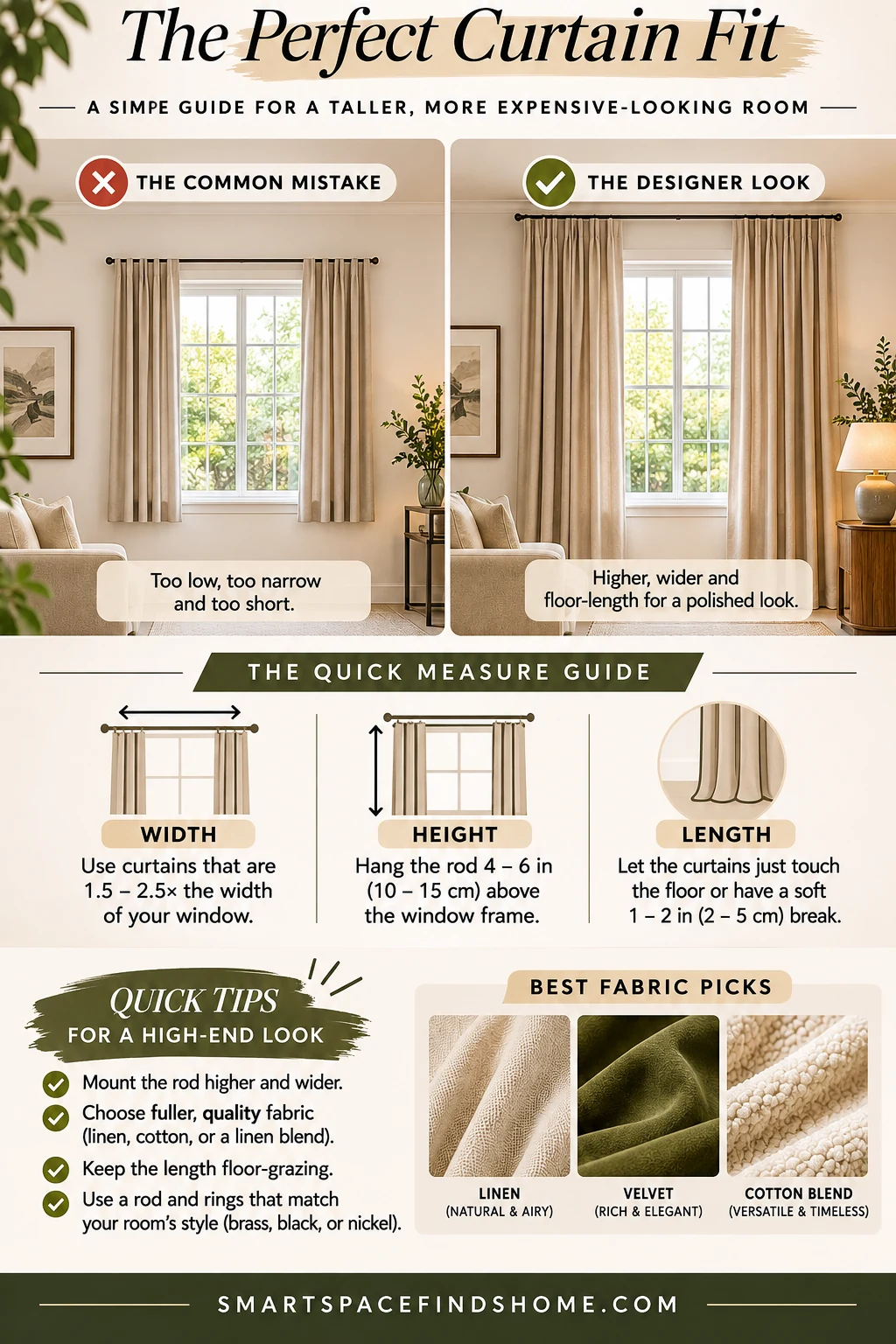
For small rooms, combine curtain choices with furniture placement rather than treating windows in isolation. Our small bedroom boutique hotel ideas offer related inspiration.
SMART SPACE FINDS / CURATED FINDS
THE WINDOW EDIT
Curtain panels and rods to support better window proportions. Measure before choosing a length or finish.
MIULEE Linen-Textured Blackout Curtains
Natural beige · 52×84 in · 2 panels · B01
Cream Linen-Blend Back Tab Curtains
Cream · 84 in · 2 panels · semi-sheer · B02
100% Blackout Shield Linen-Textured Drapes
Cream · 50×84 in · 2 panels · B03
NICETOWN Natural Linen Curtains
Natural · 55×84 in · 2 panels · B04
YaFex Heavy-Duty Curtain Rod
Black · adjustable 32–144 in · B05
GXOACKJ Matte Black Curtain Rod
Matte black · 32–48 in · B06
Affiliate disclosure: As an Amazon Associate, Smart Space Finds earns from qualifying purchases. Product options may change; check current details and availability on Amazon before buying.
05 / THE STYLING EDIT
5. Let Your Favorite Objects Have Breathing Room
An expensive-looking shelf does not need expensive accessories. It needs a clear focal point and enough open space for you to notice it. Displaying every decorative object you own can make an otherwise elegant shelf feel crowded.
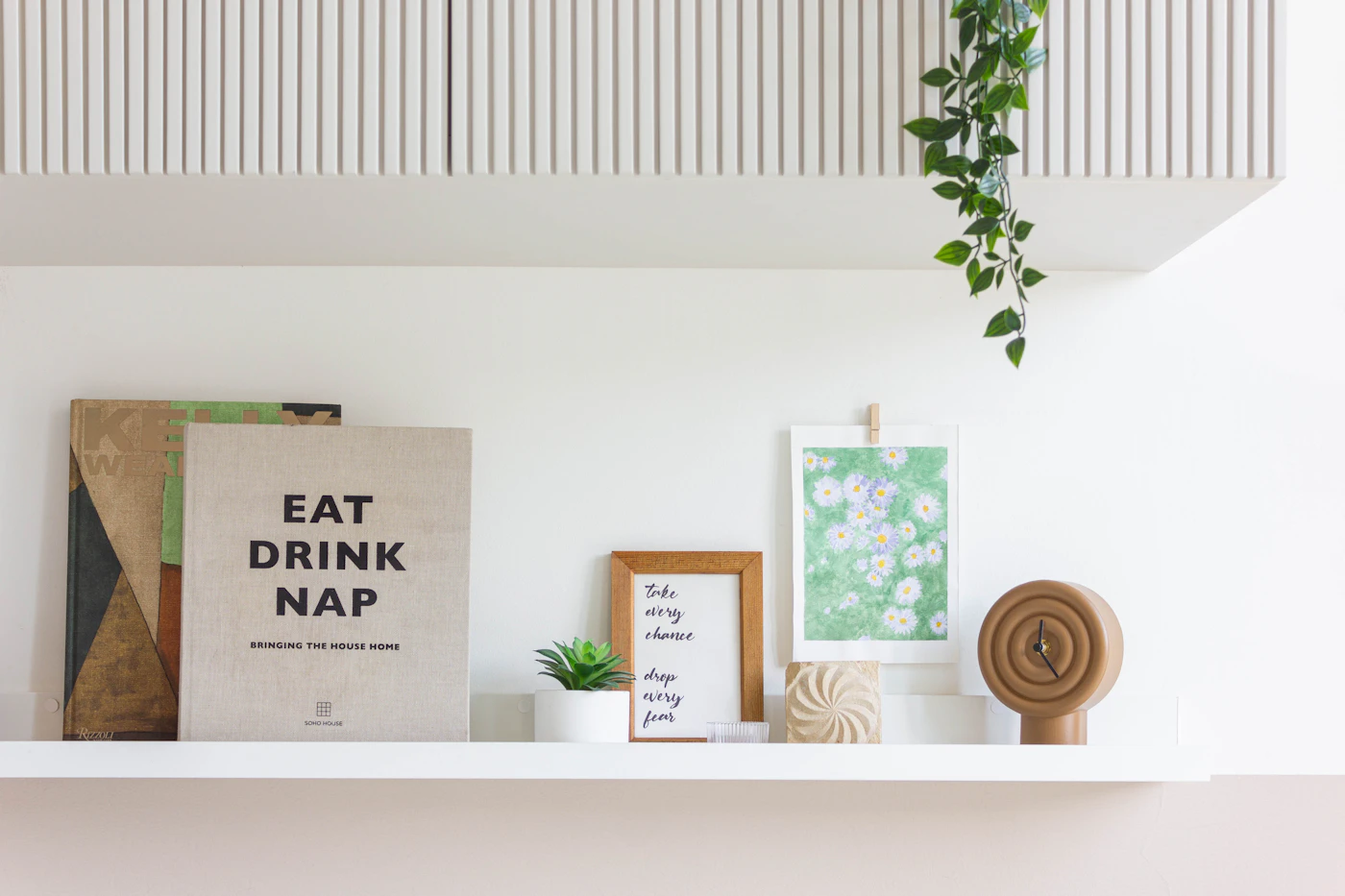
Try the one-anchor shelf method
- Remove everything from one shelf and clean the surface.
- Return the item that matters most—a photograph, pottery piece or favorite book.
- Add one contrasting shape or texture, perhaps a vertical book stack beside a rounded vessel.
- Keep part of the shelf visibly open and see how the arrangement reads from across the room.
- Put daily-use items in a nearby accessible place rather than hiding what you need.
Odd-number groupings can be useful, but there is no rule that three items always outperform two. The right arrangement follows the scale of your shelf and your taste. A collected space can be colorful, minimal, vintage or eclectic.
SMART SPACE FINDS / CURATED FINDS
THE SHELF EDIT
Floating shelves and a restrained decor accent for considered, practical styling.
BAYKA Rustic Floating Shelves
Black · set of 3 · 15.7 in · E01
AMADA HOMEFURNISHING Floating Shelves
White · set of 3 · E02
BAYKA Rustic Wood Floating Shelves
Rustic brown · set of 2 · 22.5 in · E03
upsimples Clear Acrylic Wall Shelves
Clear · 15 in · 4 pack · E04
ooit Vintage Ceramic Vase Set
Green/beige · set of 3 · E05
Affiliate disclosure: As an Amazon Associate, Smart Space Finds earns from qualifying purchases. Product options may change; check current details and availability on Amazon before buying.
THE PROPORTION STUDIO / TWO USEFUL EXAMPLES
Better proportions. No guesswork.
ARTWORK / AN 84-INCH SOFA
56–63 in.
Try this approximate total art width (two-thirds to three-quarters of the sofa). Tape out the shape first. It is a composition guide, not a safety or installation standard.
CURTAINS / A 60-INCH SPAN
90–120 in.
Test total flat fabric width of 1.5–2 times the rod span for many conventional curtains. Sheers or specific pleat systems may require different fullness.
Measure the real space, check the manufacturer’s instructions and adjust for architecture, accessibility and daily use.
02 / THE AT-HOME CHALLENGE
The 30-Minute, No-Spend Room Edit
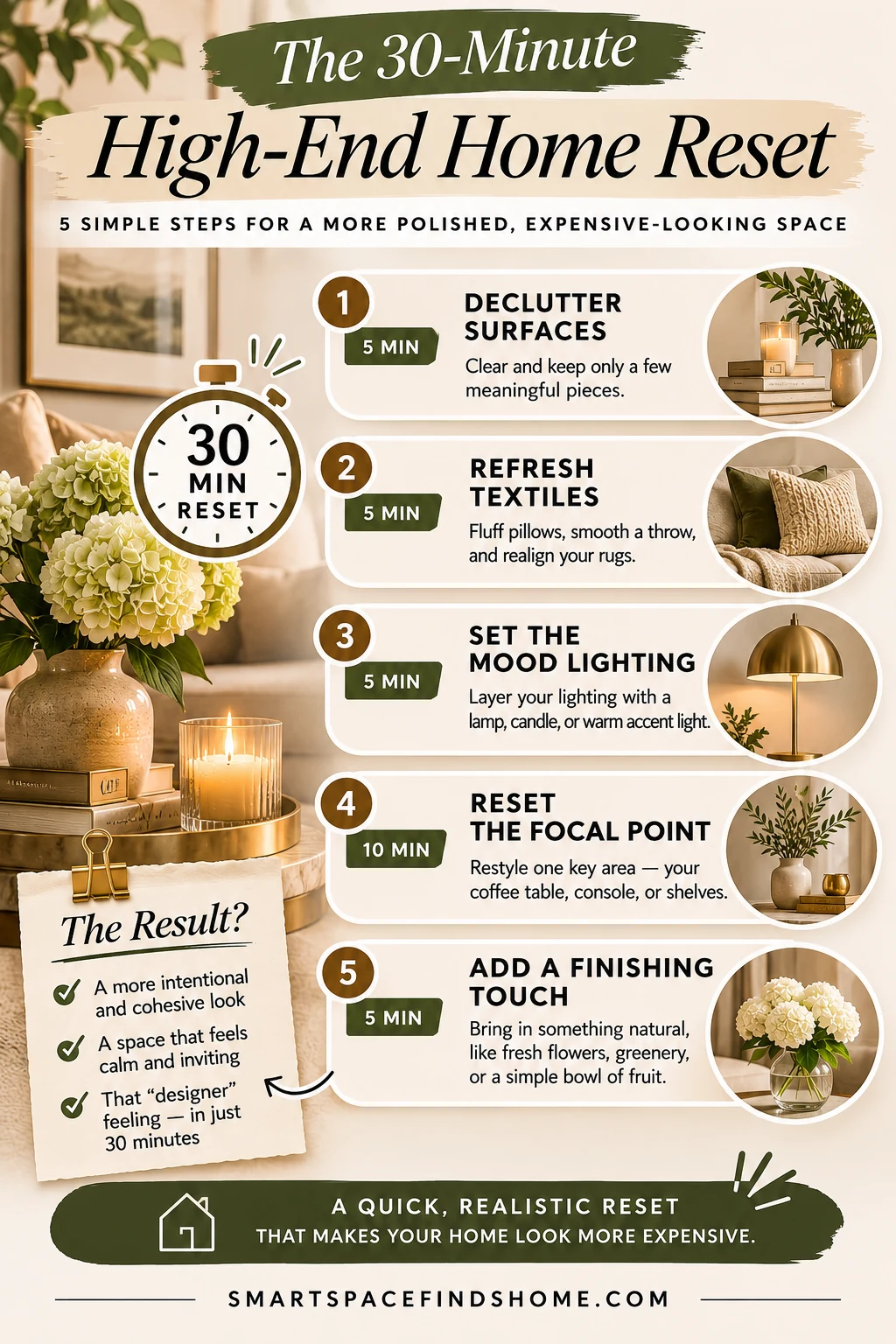
Before spending money, give one room a focused half-hour. This short exercise makes the five details tangible and helps you tell the difference between a styling issue and a genuine functional need.
Minutes 0–5 — Observe. Stand at the entrance. Identify the first element that distracts you from the room’s best feature.
Minutes 5–10 — Align. Straighten frames and check whether artwork relates to the seating below.
Minutes 10–15 — Edit. Remove a few nonessential objects and uncover one useful surface.
Minutes 15–20 — Reconnect. Repeat an existing material or color by swapping a cushion, throw or accent.
Minutes 20–25 — Reassess. Adjust curtain panels where possible and safely neaten easy-to-reach cables.
Minutes 25–30 — Compare. Take a photo from the same spot as before. Keep only the changes that improve daily life.
THE ROOM DIAGNOSIS / OPEN EACH QUESTION
What does your room actually need?
My room feels busy and unfinished
Remove three small items, pick one focal point, and allow a surface to remain partly empty. If it still feels visually inconsistent, repeat a material or color already present.
My windows make the room feel smaller
Measure the whole rod span and fabric width. Test whether the open curtains could sit to either side of the glazing, without obstructing fixtures or window operation.
My wall art looks out of place
Use the furniture below as a reference. Paper templates let you test scale and grouping before committing to mounting hardware.
I want to buy something but cannot decide
Define the repeated problem first. Check fit, safety, upkeep and alternatives. If the same issue disappears after rearranging existing pieces, skip the purchase.
Should You Buy It, Rearrange It, or Skip It?
When an upgrade requires a purchase, treat it as a practical decision rather than a reward for finishing the article.
| If you notice… | Try first | Consider buying when… |
|---|---|---|
| Artwork feels too small | Regroup existing frames | The arrangement still lacks balance |
| Curtains look thin | Adjust panel positioning | Measurements confirm insufficient fullness |
| Cables look messy | Move and separate devices safely | Rated accessories suit the setup |
| Shelves feel crowded | Remove and regroup objects | You have a specific storage need |
Prioritize fit, durability, safe installation, return terms and maintenance. A low-price object that constantly needs replacing can be more expensive over time, while the costliest item is not necessarily the most suitable. For a related spending framework, explore what is worth splurging on at home.
Three Styling Mistakes Worth Avoiding
Buying every trend at once
A room with many unrelated new accessories may look busy rather than layered. Give each purchase a role before introducing it.
Confusing symmetry with balance
A pair of matching lamps can work beautifully, but an asymmetrical composition can feel equally intentional when visual weight is balanced.
Copying a photograph without considering your routine
Real homes need storage, walking space, light control and comfortable seating. Adapt a photo’s proportions and textures—not necessarily every object in it.
Frequently Asked Questions
What makes a living room look expensive without spending much?
Intentional artwork placement, clean furniture lines, repeated materials and well-fitted window treatments can make a room feel more coherent. Start by rearranging what you own and addressing one visual distraction.
Can a small apartment look high-end?
Yes. Smaller spaces can benefit from correctly scaled furniture, clear walking paths, selective storage and a few thoughtfully repeated finishes. Spaciousness is not the only indicator of good design.
Are neutral colors essential for a luxury look?
No. Warm neutrals can create calm, but rich color, vintage pieces and expressive artwork can also feel sophisticated. Consistency and proportion matter more than following a single palette.
How high should I hang artwork above a sofa?
Use the sofa as a visual anchor. A starting gap of roughly 6–10 inches can help, but the ideal height depends on the composition, ceiling, furniture and viewing position. Test paper templates before drilling.
What should I upgrade first on a tight budget?
First address anything unsafe or nonfunctional. For purely aesthetic improvements, start with the free change that affects the most visible area: often art alignment, curtain adjustment or clutter reduction.
THE SMART SPACE FINDS EDITORIAL NOTE
Our recommendations focus on practical proportions, livable design, safety, and thoughtful spending. Measurements are flexible starting points, not universal installation standards. Check product instructions and the needs of your own space before making changes. This guide is editorial guidance; we have not independently tested every product or installation method discussed.
The Final Edit
The most convincing high-end rooms rarely look like every object arrived on the same day. They feel collected, comfortable and thought through. Align the artwork, repeat what already works, preserve clear surfaces, measure the curtains, and give favorite pieces room to shine. Make one change at a time. When it genuinely improves how your home looks and feels, you have found a detail worth keeping.