
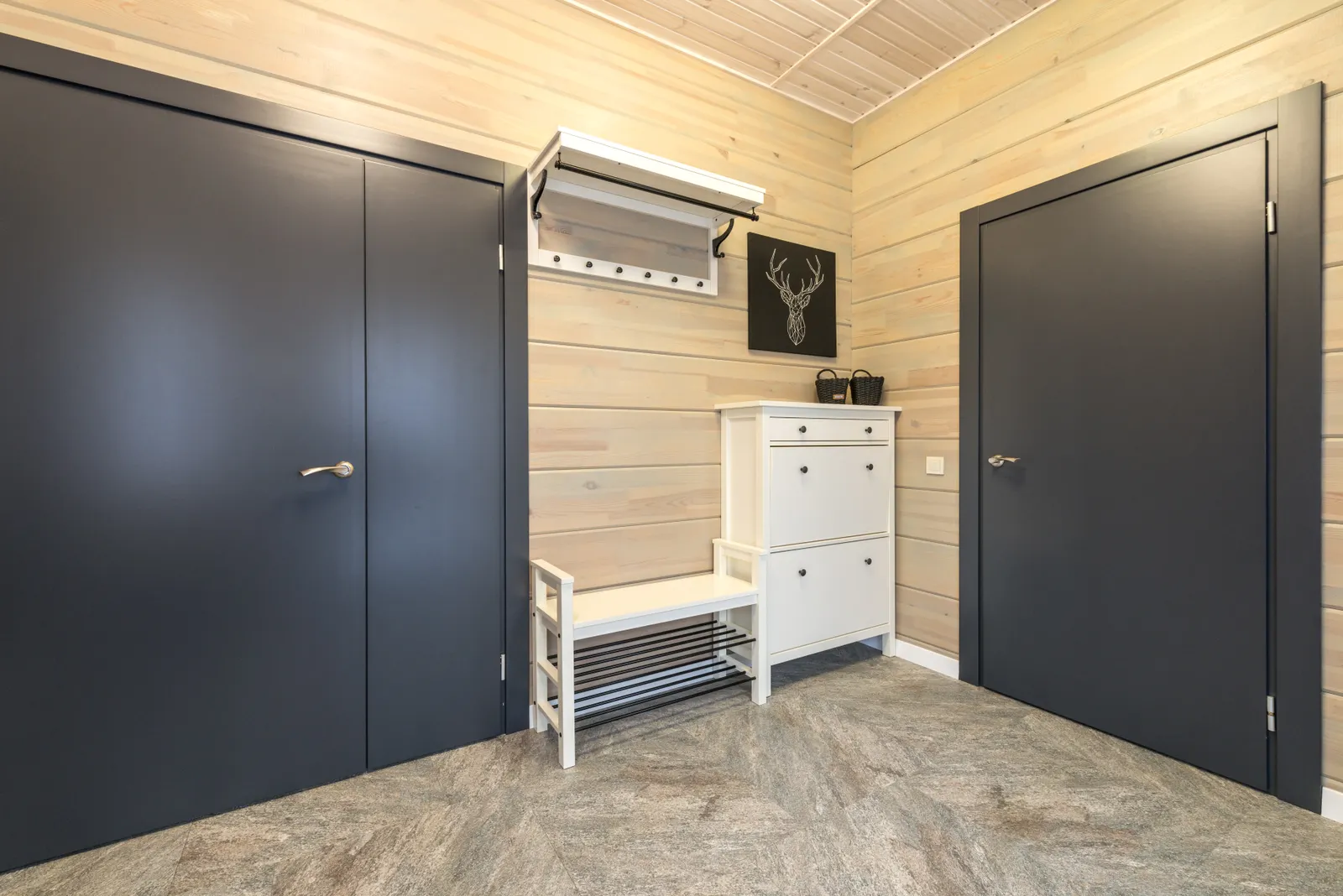
Finding shoe storage for a narrow entryway is less about owning the biggest rack and more about protecting the route through your home. These practical ideas cover slim cabinets, benches, vertical organizers and simple systems that keep everyday footwear easy to reach without making a small hallway feel crowded.
For a broader selection of compact cabinets, vertical racks and apartment-friendly solutions, explore our 12 small entryway shoe storage ideas.
Quick Answer: Choose Shoe Storage by Available Depth
The best shoe storage for a narrow entryway is the option that protects your walking route, accommodates the shoes you wear most often and does not interfere with opening doors. Measure the space first, then choose a shallow tilt-out cabinet, compact open rack, inside-closet organizer or low shoe tray according to the clearance you actually have.
| Storage solution | Depth to investigate | Best use | Main limitation |
|---|---|---|---|
| Wall-secured slim cabinet | 6–9 in (15–23 cm) | Visually tidy narrow halls | Needs approved anchoring; internal fit varies |
| Tilt-out shoe cabinet | 7–12 in (18–30 cm) | Daily shoes behind closed fronts | Bulky sneakers or boots may not fit |
| Open shoe rack | 10–14 in (25–36 cm) | Affordable, quick-access storage | Can look cluttered and collect dust |
| Shoe storage bench | 12–16 in (30–41 cm) | Entryways with comfortable seating clearance | Often too deep for tight corridors |
| Over-door organizer | No floor footprint | Closets and suitable interior doors | Door and weight compatibility matter |
These are illustrative shopping ranges, not standardized specifications. Verify each product’s listed dimensions, usable interior capacity and installation requirements.
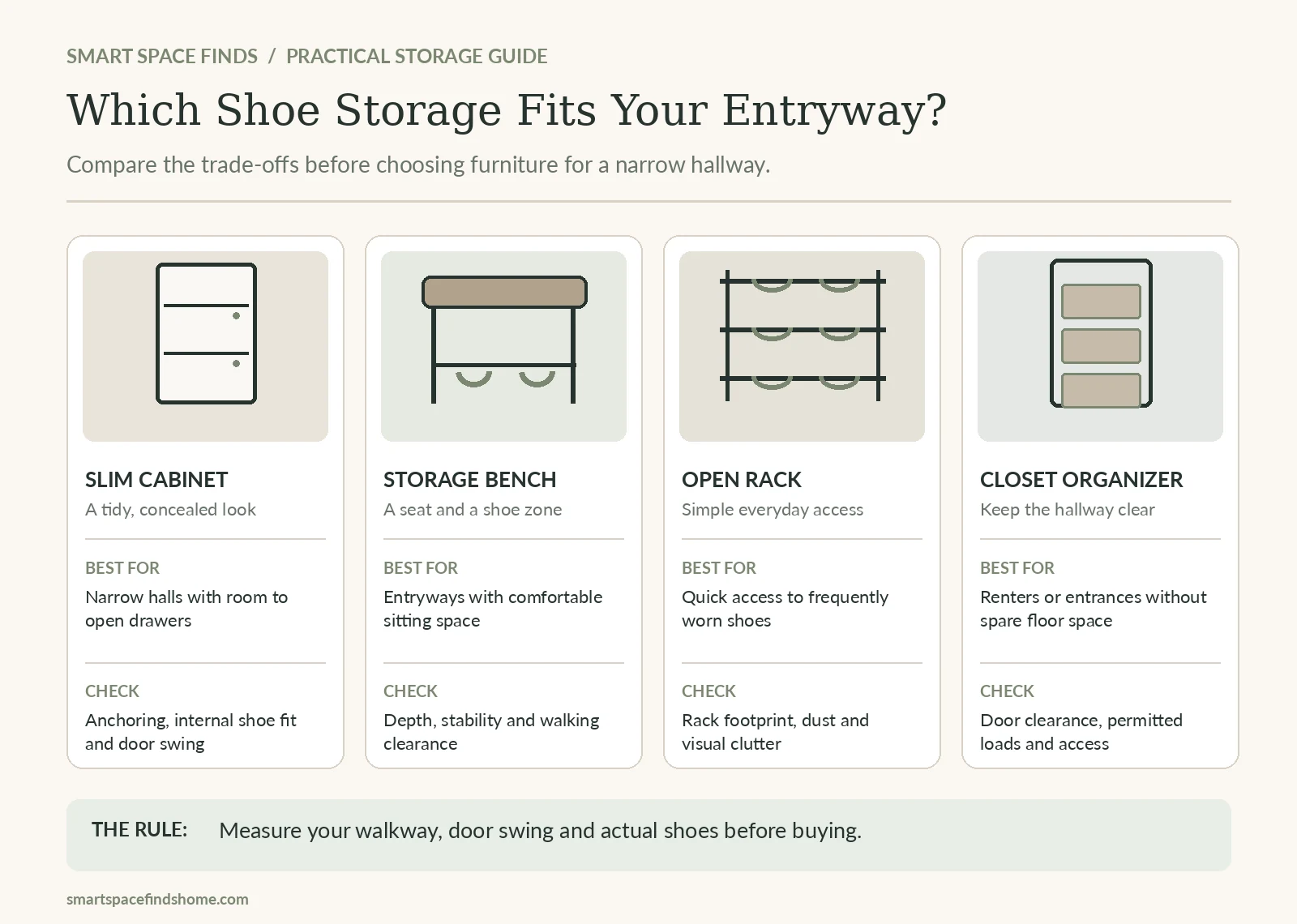
SMART SPACE FINDS · COMPARISON GUIDE
Which Shoe Storage Fits Your Entryway?
Concealed everyday footwear
Check internal fit, drawer swing and required anchoring.
Seat plus accessible shoes
Best where seating does not obstruct circulation.
Fast, flexible access
Check the footprint and leave room for shoe removal.
No new hallway footprint
Confirm door clearance, load rating and compatibility.
Design rule: Choose by measured clearance and your actual shoe sizes—not advertised capacity alone.
How to Measure a Narrow Entryway in Five Steps
- Record the narrowest wall-to-wall width. Measure at more than one point because radiators, trims and corners can change the usable footprint.
- Open every relevant door fully. Include the entry door, nearby closet doors and the storage unit’s own drawers or tilt-out compartments.
- Mark the furniture footprint. Use removable painter’s tape to simulate depth and width before ordering.
- Test real movements. Walk past with groceries or a laundry basket, put on a coat and check how the space works for everyone using it.
- Assess stability. Review wall construction and manufacturer anchoring guidance for tall or shallow cabinets. Where secure installation is impossible, select a safer location or alternative design.
For example, a 42-inch-wide hall and an 8-inch-deep cabinet leave a theoretical 34 inches of width beside the cabinet. That number alone cannot establish safe clearance: handles, door swing, mobility needs and local building rules can alter the decision. Do not use a generic target width as a substitute for applicable access or egress requirements.
Which Shoe Storage Works Best for Your Household?
For one person in a studio apartment
Start with a small tray or a narrow two-level rack for the two or three pairs worn most often. Keep special-occasion and seasonal pairs elsewhere. This avoids buying furniture before proving the routine works.
For a couple sharing a narrow hallway
Split a slim cabinet into designated zones, or allocate one shelf per person. Account for the larger shoe sizes when estimating actual capacity; manufacturer pair counts often assume smaller footwear.
For families with children
Use low, accessible shelves with clear assigned locations. A washable tray is valuable in wet weather. Never treat a tall unsecured shoe cabinet as child-safe, even when its footprint looks compact.
For renters who cannot drill
Prioritize an existing closet, compatible over-door organizer or stable low rack. Some tall cabinets specifically require wall anchoring; if that requirement cannot be met, do not use the product unsecured. Check lease conditions before installation.
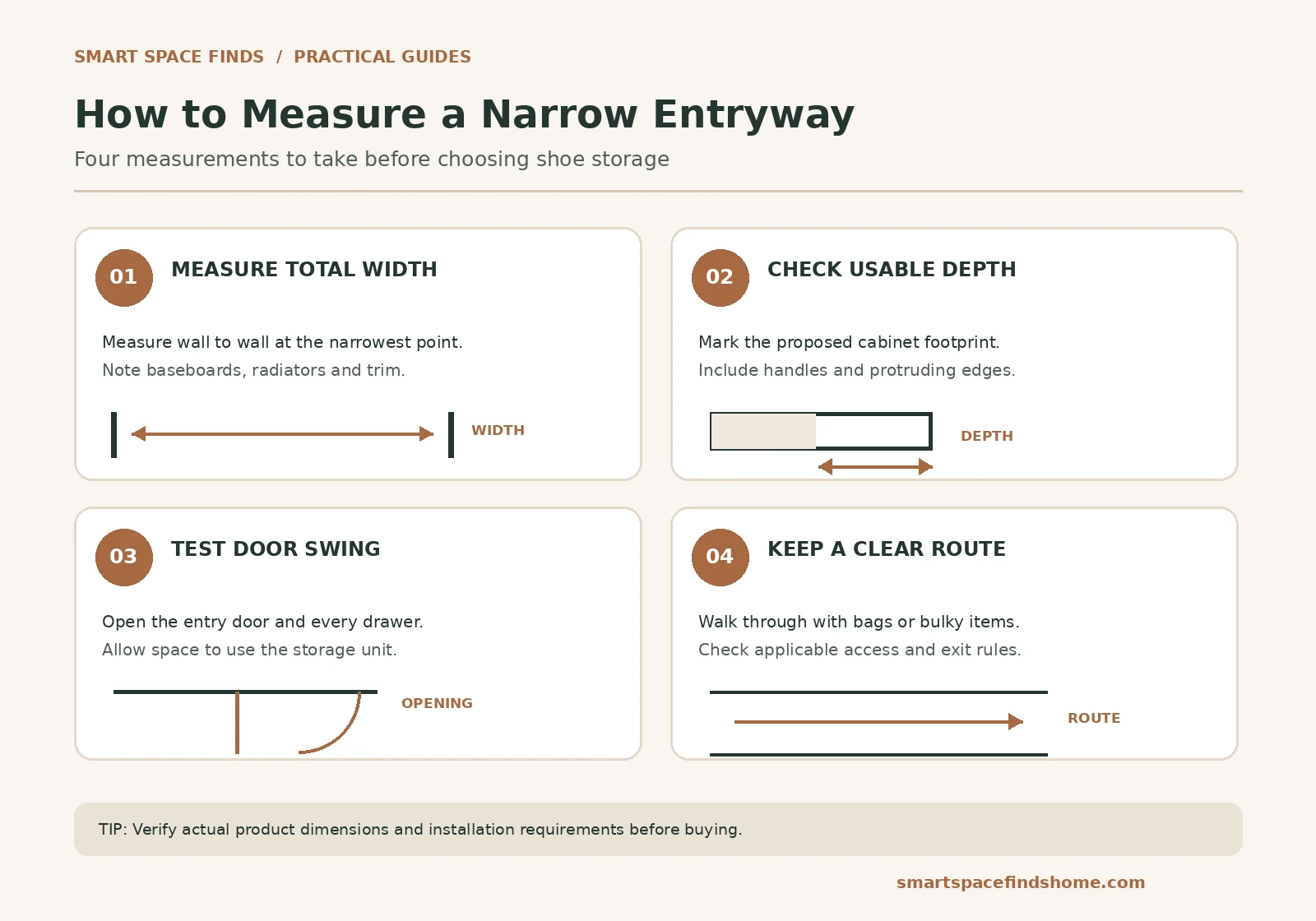
SMART SPACE FINDS · MEASURING GUIDE
Measure First, Buy Second
Measure at the tightest point, including trim and obstacles.
Mark the proposed furniture footprint using painter’s tape.
Allow for the entry door, tilt drawers and closet doors.
Test walking through with bags and check applicable accessibility and exit requirements.
Before checkout: Verify external dimensions, internal shoe fit, mounting instructions and return terms for the specific product.
Shopping Checklist: What to Compare Before Buying
- External width, height and depth, including protruding handles
- Clearance needed to open drawers, doors or tilt mechanisms
- Internal compartment dimensions for the largest pair of shoes
- Specified load limit and required wall-mounting hardware
- Ease of cleaning and airflow for everyday shoes
- Materials that tolerate muddy or damp entryway conditions
- Return policy and assembly requirements
Think of each item’s listed shoe capacity as an estimate, not a guarantee. Measure your own widest and tallest shoes before committing to enclosed storage.
Four Smart Ways to Store Shoes
Keep daily pairs out of sight.
Add a seat where space allows.
Make frequently worn shoes easy to reach.
Keep the hallway floor clear.
Measure the Walkway, Not Just the Wall
Before ordering a shoe cabinet, stand in the hallway with the front door and nearby cupboards fully open. Measure the width that remains when people carry bags or pass each other. Note skirting boards, radiator pipes and protruding handles. A shallow cabinet can still obstruct circulation if its drawers swing into the only walking route. Mark the proposed footprint with painter’s tape and try entering with shopping bags. Remember that a shoe rack needs clear space in front of it, too. If the hall is narrow, prioritize unobstructed access and a safe route to the exit rather than maximizing the number of pairs displayed. Check whether shoes can be stored inside another closet or in a nearby bedroom instead.
A Slim Tilt-Out Cabinet Can Hide Everyday Shoes
Tilt-out shoe cabinets are popular for small entryways because they take less depth than traditional cupboards. However, their internal capacity depends on shoe size, and tall boots or bulky trainers may not fit. Compare internal dimensions rather than the advertised pair count. Check drawer clearances, door swing and the type of fixing required. Tall shallow units can tip; follow manufacturer anchoring instructions and check whether your rental permits appropriate installation. Do not place unsecured furniture in a home with children. Choose a finish that matches the room so the cabinet reads as simple furniture instead of another storage obstacle. Leave its top mostly clear for a small key tray or lamp.
Use a Bench Only When It Fits Comfortably
A short storage bench can combine a seat for putting on shoes with an accessible place for everyday footwear. In very narrow hallways, however, a bench may take too much floor space. Check the bench depth and seat height against the actual layout before purchasing. Open shelves beneath the seat make pairs easy to find, while baskets create a calmer look but can collect dust and dirt. Put a washable mat below wet shoes and dry footwear before closing it into a storage compartment. A cushion can soften a wooden bench, but choose a washable cover. The best arrangement allows you to sit safely without blocking the door or access to other rooms.
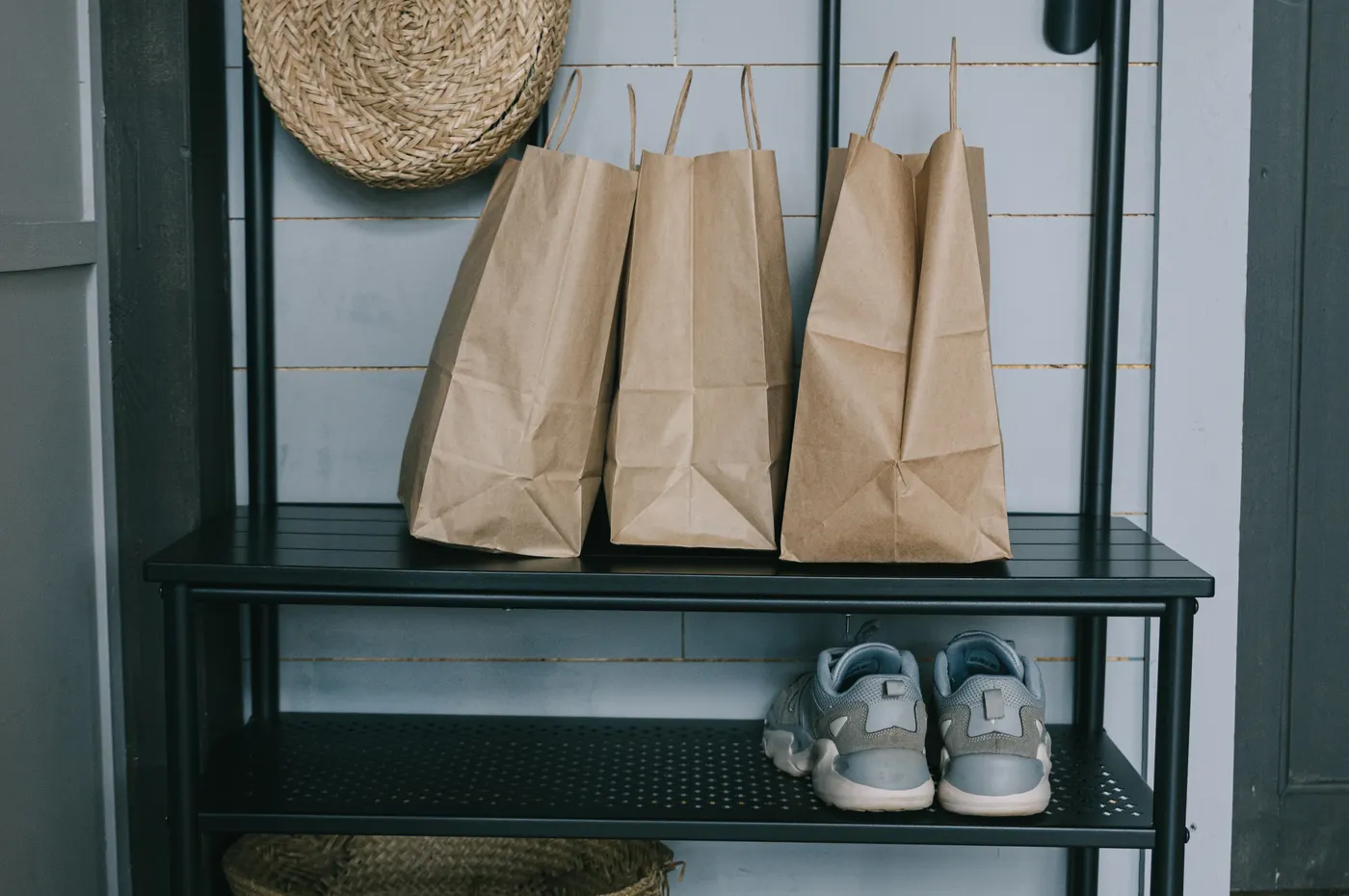
Keep Just the Current Rotation Near the Door
One major cause of entryway clutter is treating the hallway as the storage location for every pair owned. Keep only the pairs used regularly in the current season close to the door. Move dress shoes, summer sandals or spare trainers to a bedroom closet, under-bed container or other dry storage location. This makes a modest shoe rack more useful. Establish an easy one-pair-in, one-pair-out rotation as seasons change. If you share the home, allocate a small number of slots per person and label baskets when useful. A short weekly reset is easier than trying to squeeze an entire household’s footwear into one narrow corridor.
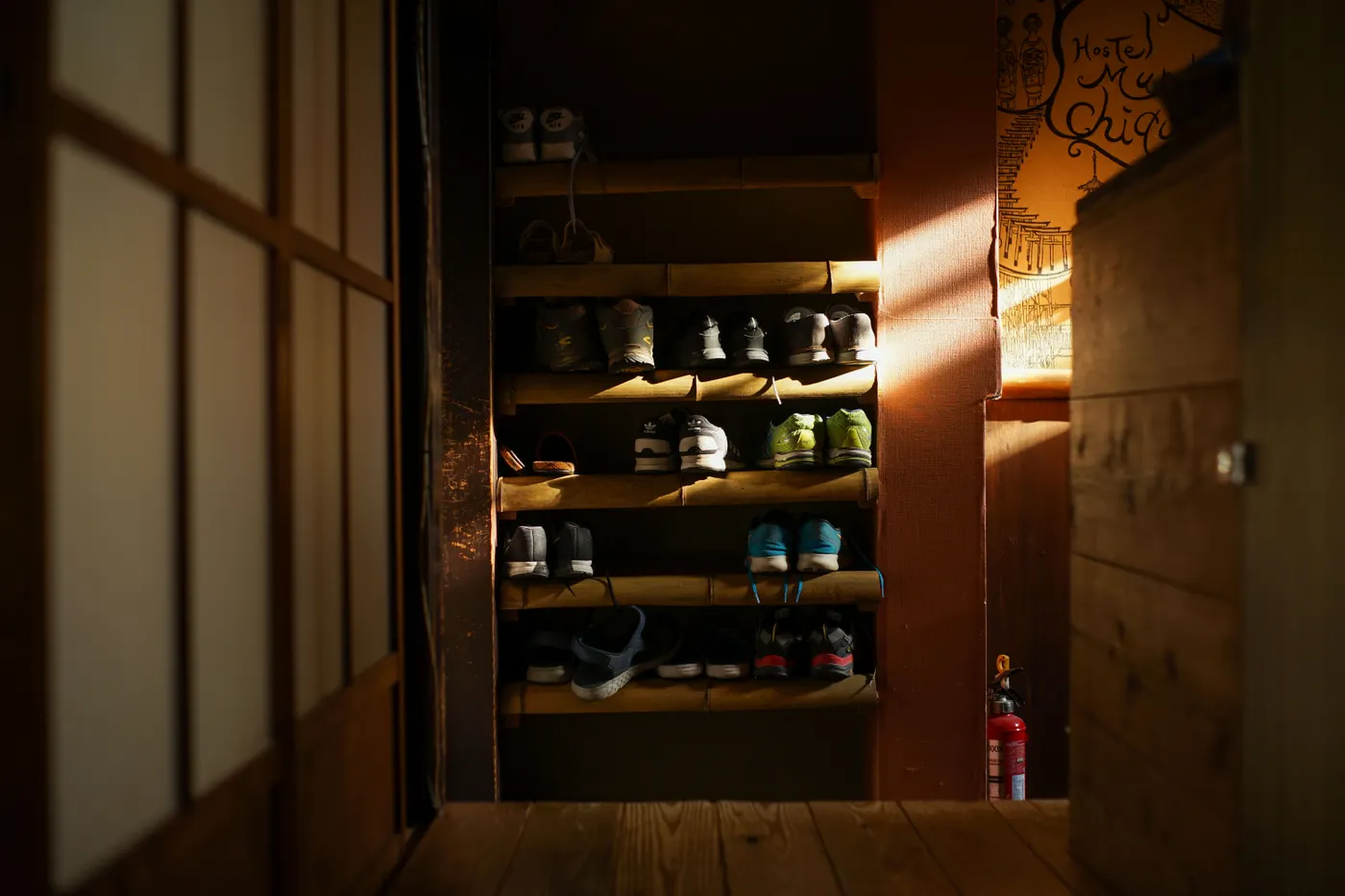
Use Vertical Storage Without Creating a Hazard
Wall-mounted shelves and narrow vertical units can make use of underused wall space, but do not install heavy storage without suitable fixings. Wall composition, hardware load ratings and any building restrictions matter, particularly in rented apartments. Avoid shelves at head or shoulder height along a tight walking route where someone might bump into them. Never store muddy shoes over coats or clean linens. Lightweight seasonal footwear may fit in purpose-made hanging organizers inside a cupboard. If vertical storage is not safe or permitted, use a freestanding low cabinet that remains stable on the floor. Securing storage correctly is more important than squeezing in one extra row.
A Basket for Wet Shoes Needs Airflow
When people return home during rain or snow, wet footwear should not be placed immediately into sealed baskets or cabinets. Create a small drying location with a washable waterproof tray and enough ventilation for shoes to dry. Wipe mud from the soles before storing them. A rigid low tray is simpler to clean than a fabric basket, which may remain damp. Keep the tray away from sensitive flooring and do not place shoes against radiators unless the shoe manufacturer’s care guidance permits it. If the entrance is extremely tight, put the temporary drying area just inside a utility zone rather than in the corridor itself. Keeping moisture under control helps protect both the shoes and the room.
Treat the Top of the Cabinet as a Landing Zone
A narrow cabinet often becomes the natural place to drop keys, mail and packages. Give those items a defined home so the surface does not become a cluttered pile. Use one shallow tray for keys and a small file or basket for incoming letters. Avoid large decorative objects that fall when the cabinet door opens. A single mirror above the unit can make a narrow hall feel brighter, provided it is safely attached and does not project into the walkway. Resist layering plants, frames and candles across the whole top. The most effective small-space styling gives essential objects a place while leaving some visual breathing room.
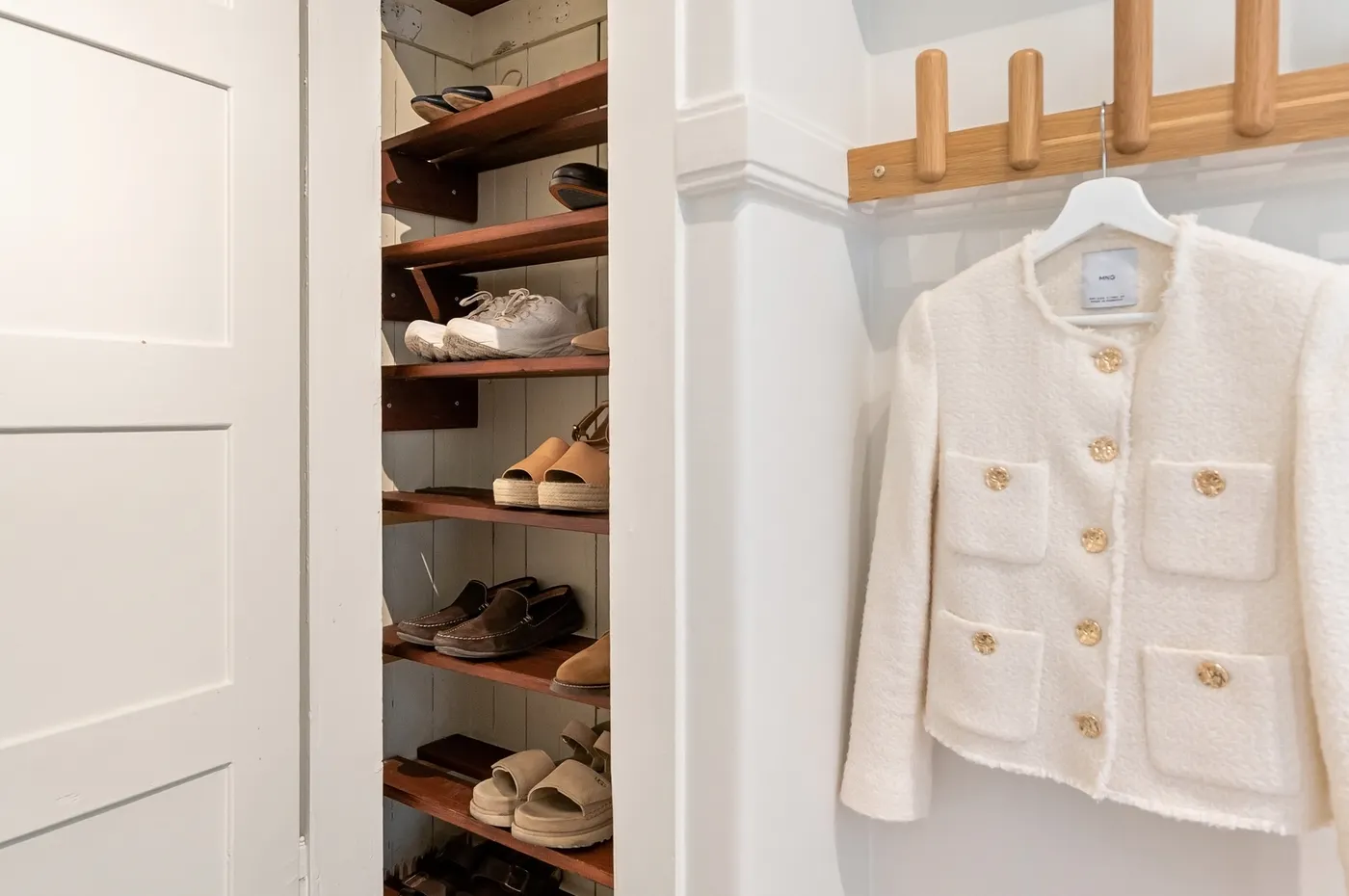
Consider Over-Door and Closet-Based Alternatives
If an extra freestanding cabinet is impossible, look at existing internal doors and closet shelves. An over-door shoe organizer may hold light flats, sandals or accessories, but check the door thickness, hinge clearance and the organizer’s weight limit. It must not interfere with closing the door or compromise a fire-rated door. Rigid containers on existing closet shelves are another option for less frequently worn pairs. Photograph or label opaque boxes so you can find shoes without opening every container. The goal is to reduce traffic around the entrance, not transfer an unmanageable pile into a different corner.
Choose by Your Daily Routine
Use stable low racks or existing closets.
Assign reachable spaces for each person.
Keep only the most-used pairs by the door.
Choose concealed storage if it fits safely.
Give Each Household Member an Easy Rule
Storage systems work only when everybody can use them consistently. Agree that shoes are returned to a specific shelf or bin, and that extra pairs stay elsewhere. Children may need lower shelves and simple labels; adults may prefer separate sections for work footwear and casual shoes. Keep a small brush or cloth near the cleaning supplies to remove dirt quickly. Every weekend, take a few minutes to return misplaced pairs, wipe the tray and check whether anything needs drying. Make the most common action the easiest one. If returning shoes requires rearranging an elaborate display, the system is too complicated.
Keep the Look Cozy but Uncluttered
Light wood, warm white, taupe and woven textures suit many narrow entrances. Closed shoe storage creates a calmer view, while a simple runner can help define the space. Choose a rug with appropriate non-slip backing and ensure it does not catch beneath the door. The lighting should make it easy to spot misplaced shoes without overwhelming the hall; see our small hallway lighting ideas. For broader layout inspiration, explore entryway makeovers for narrow hallways. Coordinate materials, not dozens of decorations. A narrow hallway feels much better when every object earns its place.
Three Looks, One Organized Entryway
Light wood, woven tray, soft white.
Flat-front cabinet, black hooks, simple runner.
Oak finish, washable mat, one mirror.
Three Layouts Worth Testing Before You Buy
For a hall with one usable wall, a slim closed cabinet may offer the neatest solution. For a wider square entry, a small bench and washable boot tray can combine comfort with storage. For an apartment without a hallway, use existing closet space and one compact shoe landing tray inside the living area. Draw each option on paper and compare how the doors open, where wet shoes dry and how many pairs actually fit. If a solution requires permanent installation, verify the wall and rental requirements first. Buy storage only after trying the floor layout with tape; this avoids purchasing a unit that looks excellent online but fails in everyday use.
Common Narrow-Entryway Mistakes to Avoid
Buying by pair count alone
A cabinet advertised for twelve pairs may accommodate fewer pairs of chunky sneakers or boots. Confirm the internal dimensions and compare those with your own footwear. A smaller cabinet that accommodates the pairs you genuinely wear can outperform a larger piece that forces shoes into awkward positions.
Ignoring the swing of a tilt-out drawer
Shallow cabinetry saves floor space when closed, but its usable operating footprint can be considerably larger. Check the manufacturer’s diagram for the drawer’s opening arc. Test whether someone can access the cabinet while another person uses the doorway.
Putting wet footwear in closed compartments
A tidy front is not worth trapping moisture around leather, textiles or wooden furniture. Dry shoes first in a ventilated area, then return them to their assigned shelf. Choose easy-clean liners for areas that routinely collect grit.
Mounting a shelf in a collision zone
Unused wall space is not automatically safe storage space. Avoid protruding shelves near head height, in turning corners or along the route used to carry bulky items. Follow fixing instructions and seek professional installation where appropriate.
Three Practical Styling Directions
Minimal Scandinavian
Combine a pale-wood cabinet with warm-white walls and a slim black hook rail. Let the cabinet’s front remain visually simple; a single mirror helps reflect available daylight without taking floor area.
Modern apartment
Use a flat-front storage cabinet in the color of the surrounding wall. A shallow metal tray for keys and a narrow washable runner create distinct zones without adding unnecessary furniture.
Warm natural entryway
Choose a medium-oak finish, a small woven catchall and a durable, low-profile mat. Restrict visible shoes to the current rotation to keep the natural materials from competing with clutter.
Ten-Minute Weekly Shoe-Storage Reset
- Return stray shoes to their assigned zones.
- Remove any pairs that belong in a bedroom or seasonal closet.
- Wipe grit from the waterproof shoe tray.
- Check damp footwear and allow it to dry fully.
- Keep cabinet tops clear except for a small everyday essentials tray.
A sustainable routine is more valuable than complicated organizational accessories. Start with the minimum amount of storage and expand only when daily use shows exactly what is missing.
Before You Buy
✓ Measure the narrowest point ✓ Test door swing ✓ Check shoe fit ✓ Review anchoring requirements ✓ Plan space for wet shoes
Frequently Asked Questions
What is the best shoe storage for a very narrow hallway?
A properly secured shallow cabinet or an organizer within an existing closet often works best, depending on door clearance and shoe sizes.
Where should wet shoes go?
Use a washable water-resistant tray where footwear can dry before it is placed inside enclosed storage.
Are shoe benches good for small apartments?
They can be excellent when there is enough room to sit and walk safely. In the narrowest entrances a slim cabinet may be more suitable.
Can renters mount shoe storage?
Check landlord rules, wall construction and the manufacturer’s mounting instructions. Avoid tall unsecured storage that could tip.
Measure carefully, store only the current shoe rotation near the door and choose furniture that suits the actual traffic flow. The best narrow-entryway storage is simple enough to use every day.