
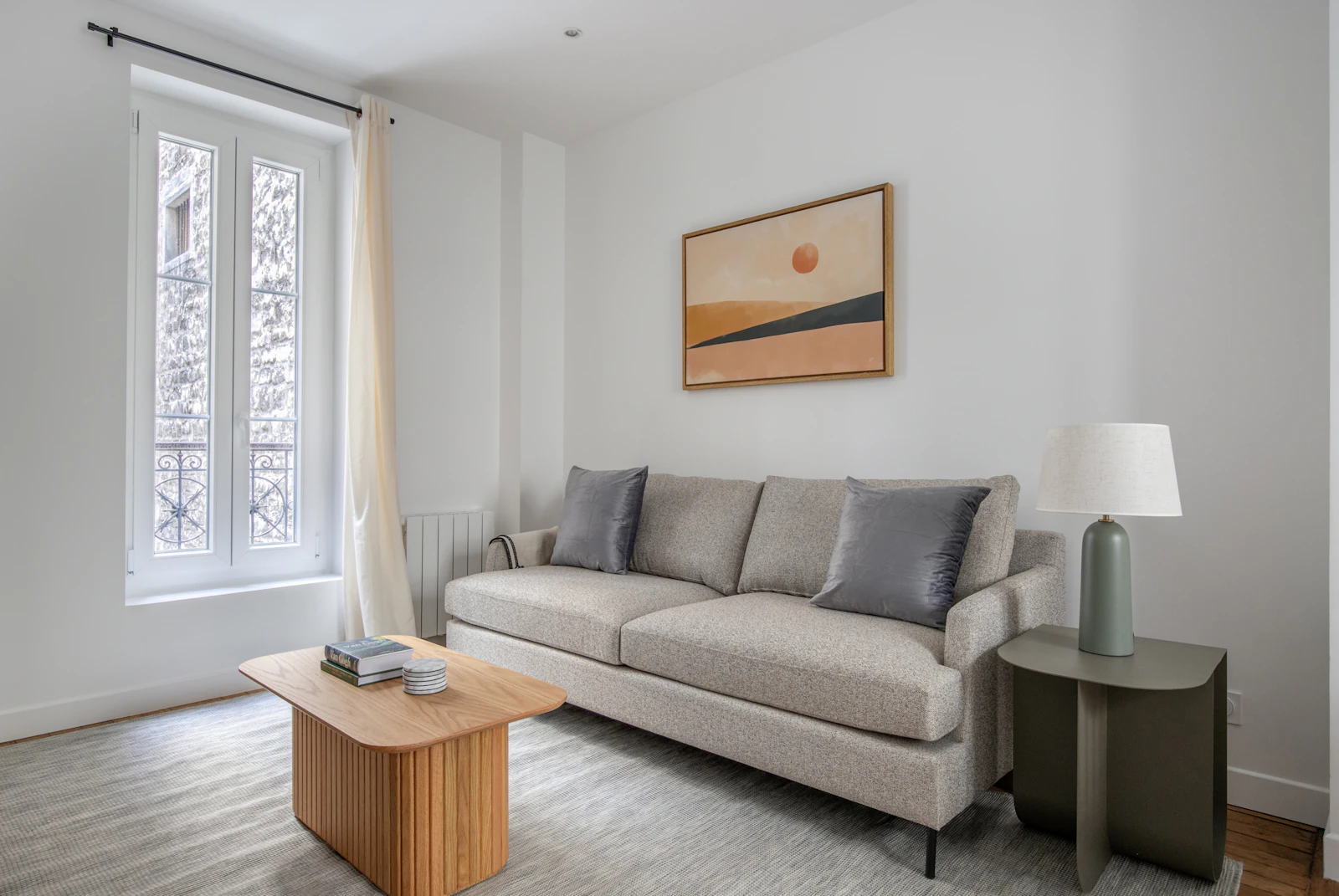
THE PORTABLE HOME / SMART SPACE FINDS
You turn the key, drop your bag by the door and switch on the same unforgiving ceiling light. The apartment is perfectly livable, but it still feels like a place you are passing through. If that sounds familiar, you do not have to wait until you own a home to make everyday life feel more considered. The most rewarding renter-friendly home upgrades often begin with the smallest details: a softer pool of light, a rug that brings the room together, or a place for the keys you keep losing.
This renter-friendly home upgrade checklist helps you make a room feel personal without committing to permanent changes. Prioritize upgrades that move with you, and treat lease compliance and safe installation as nonnegotiable.
What to try first
Start with light, layout and textiles. Next solve a recurring storage or privacy problem. Reserve adhesive treatments and hardware changes for surfaces and situations where they are suitable and permitted.
IN THIS GUIDE
The five-minute rental audit
- Read your lease and document existing damage.
- Photograph the room in daylight and after dark.
- Measure door swings, windows, furniture and walking routes.
- Identify one visual problem and one recurring inconvenience.
- List existing items you can rearrange before shopping.
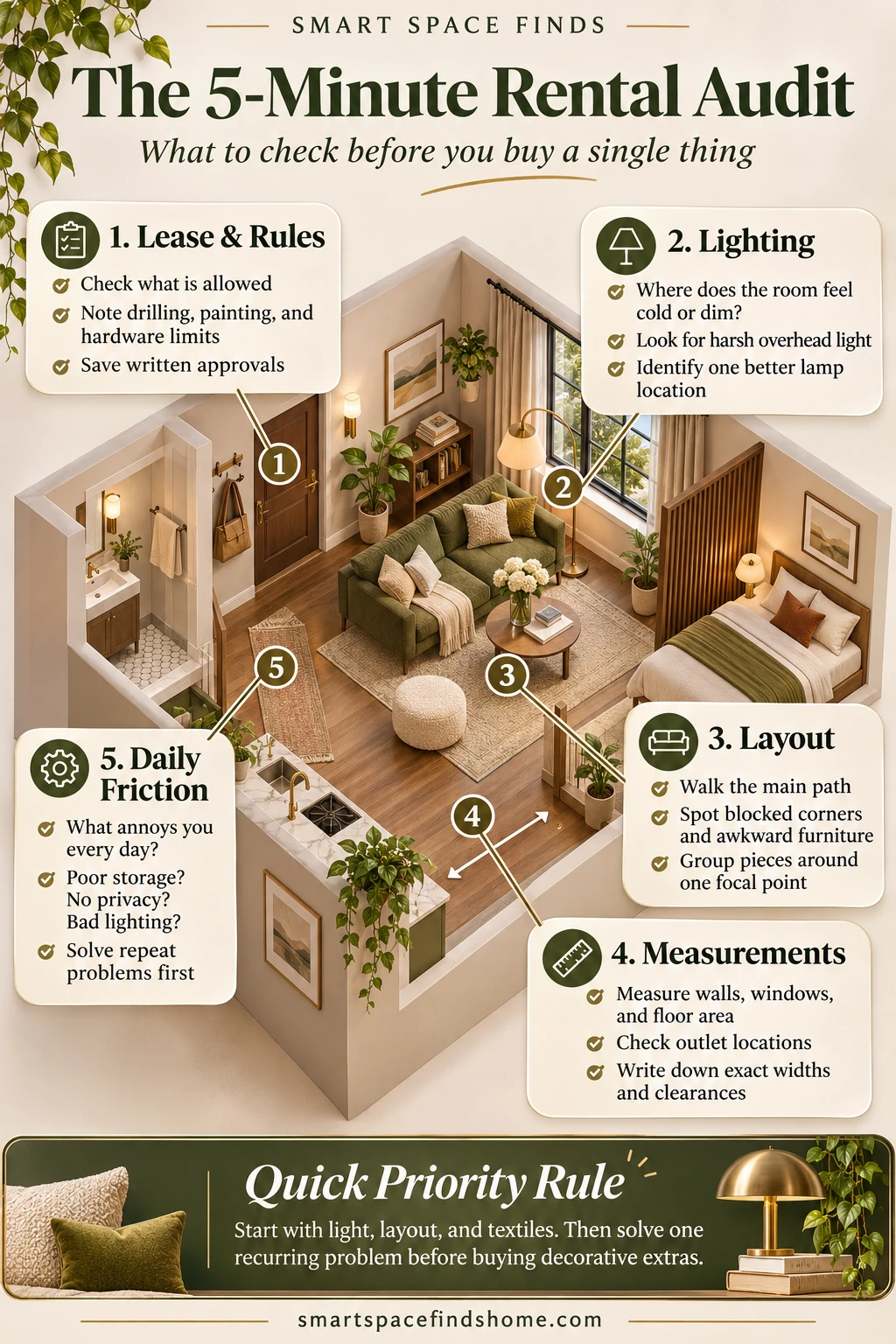
Five checks to make before spending money on a rental.
The Rental Upgrade Intelligence Matrix
Score each upgrade from 1 to 5 for visual impact (30%), daily usefulness (25%), reversibility (25%), cost efficiency (10%) and portability (10%). Multiply each rating by its weight, add the results and multiply by 20 for a score out of 100. This original editorial framework is a prioritization aid, not a safety rating. Do not proceed if your lease or product requirements prohibit the installation.
SMART SPACE FINDS / DESIGN INTELLIGENCE LAB
Interactive Rental Upgrade Calculator
Rate one potential upgrade from 1 (low) to 5 (high). Compare options before buying. These are your personal estimates, not product test results.
Editorial priority bands: 80–100 high, 60–79 consider, below 60 lower priority. Safety and permissions always override the score. A high score does not certify safety or guarantee deposit return.
JavaScript is disabled. Calculate manually: add each rating multiplied by its percentage weight, then divide by five to obtain a score out of 100.

Illustrative alternative matrix. Use the article’s authoritative weights: visual impact 30%, usefulness 25%, reversibility 25%, cost efficiency 10%, portability 10%. Multiply the weighted 1–5 average by 20. Scores are hypothetical, not product tests.
The zero-dollar reset
Move a lamp closer to the reading chair, clear the busiest countertop, reposition the rug and repeat one existing accent color across the room. Photograph the result before spending money. A better furniture arrangement can solve a problem that a decorative purchase cannot.
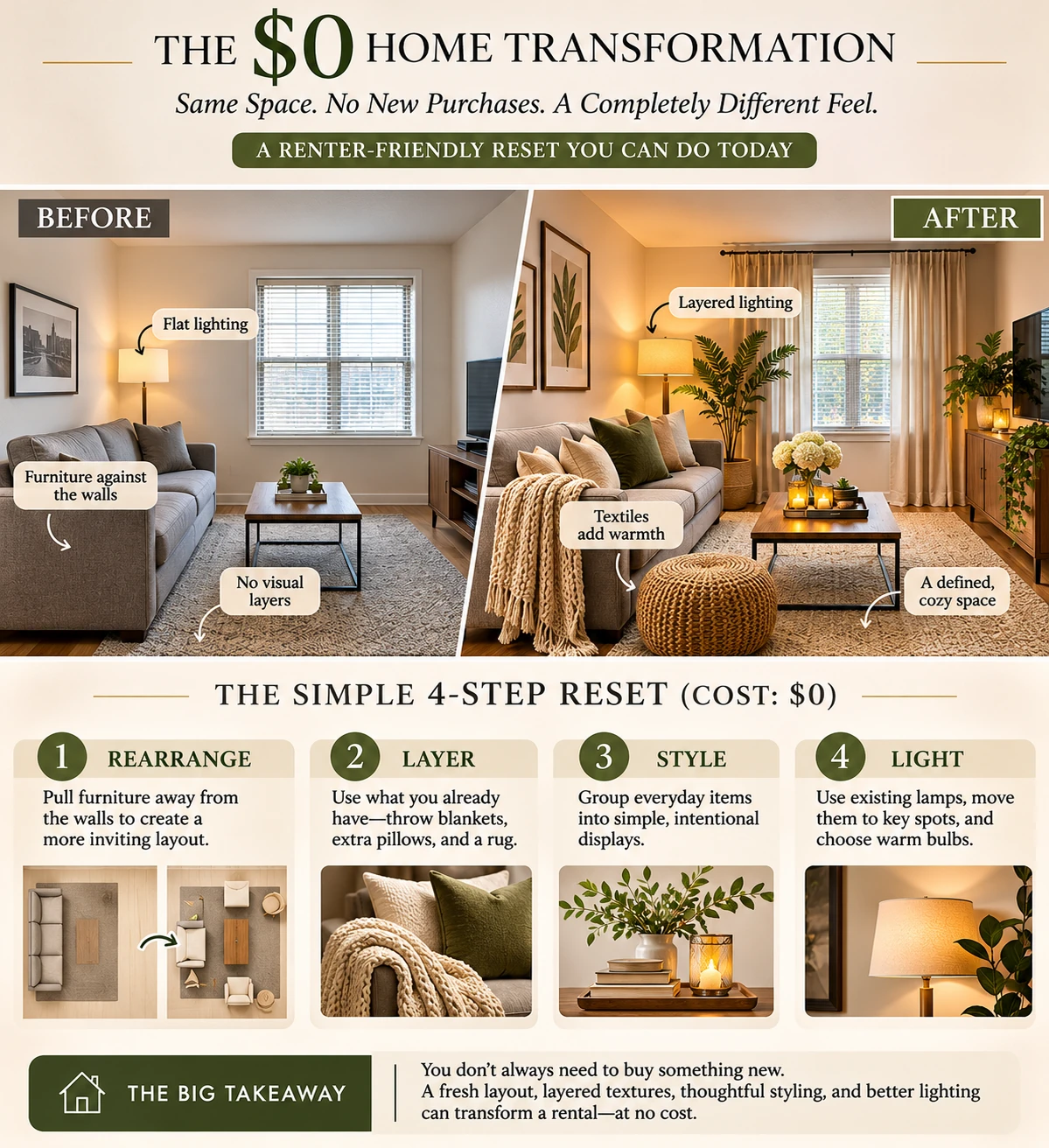
A conceptual no-spend reset: use only items you already own; the pictured accessories are illustrative.
30 renter-friendly home upgrades, room by room
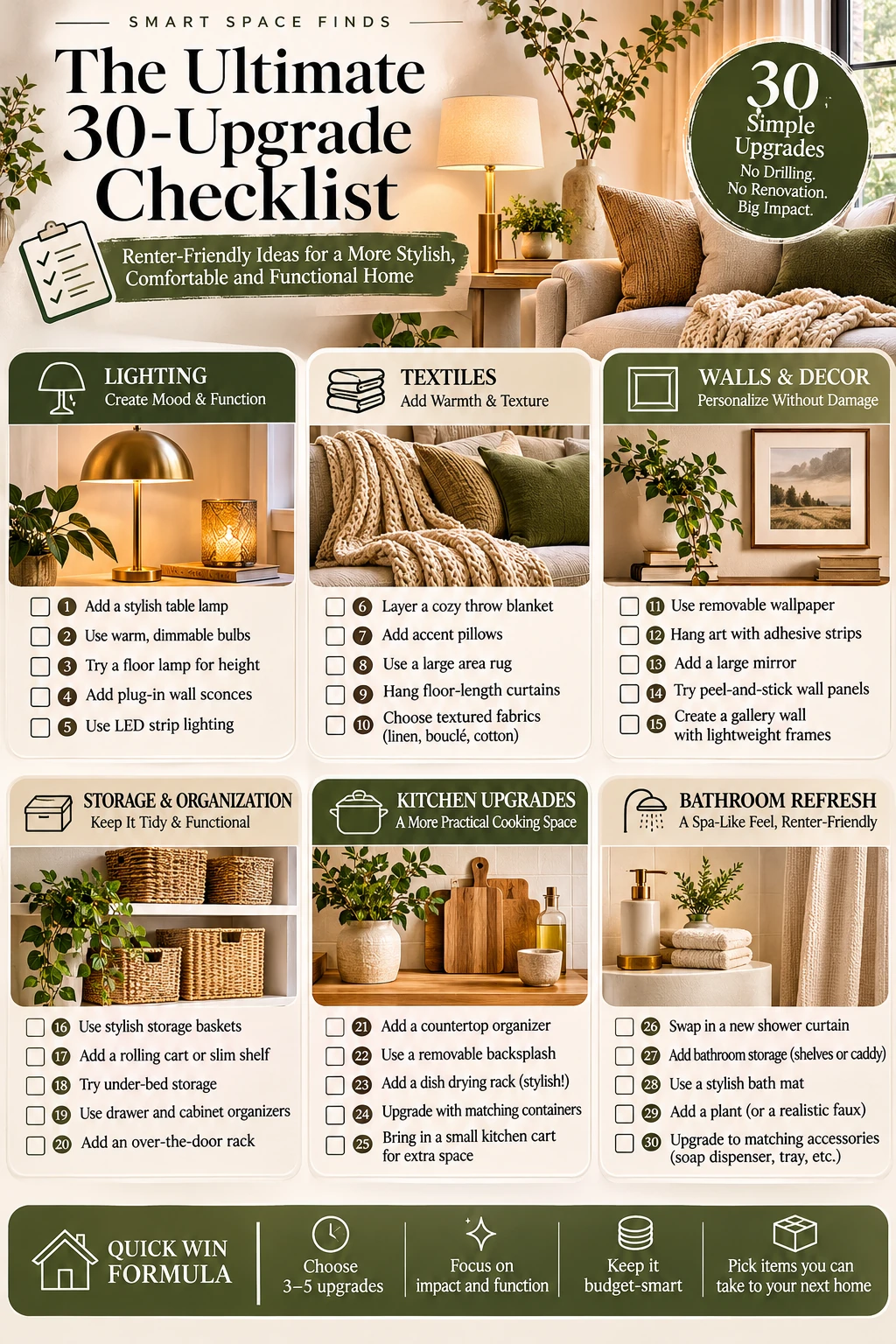
A companion inspiration checklist, not an exact copy of the numbered article list. Check lease, surface compatibility and installation requirements; no-drill does not guarantee damage-free use.
Lighting: five changes to consider
If your apartment looks flat even after cleaning, the problem may be the distribution of light rather than the furniture. Build three layers: general illumination, focused task light and a gentle accent. Start with the room you spend the evening in.
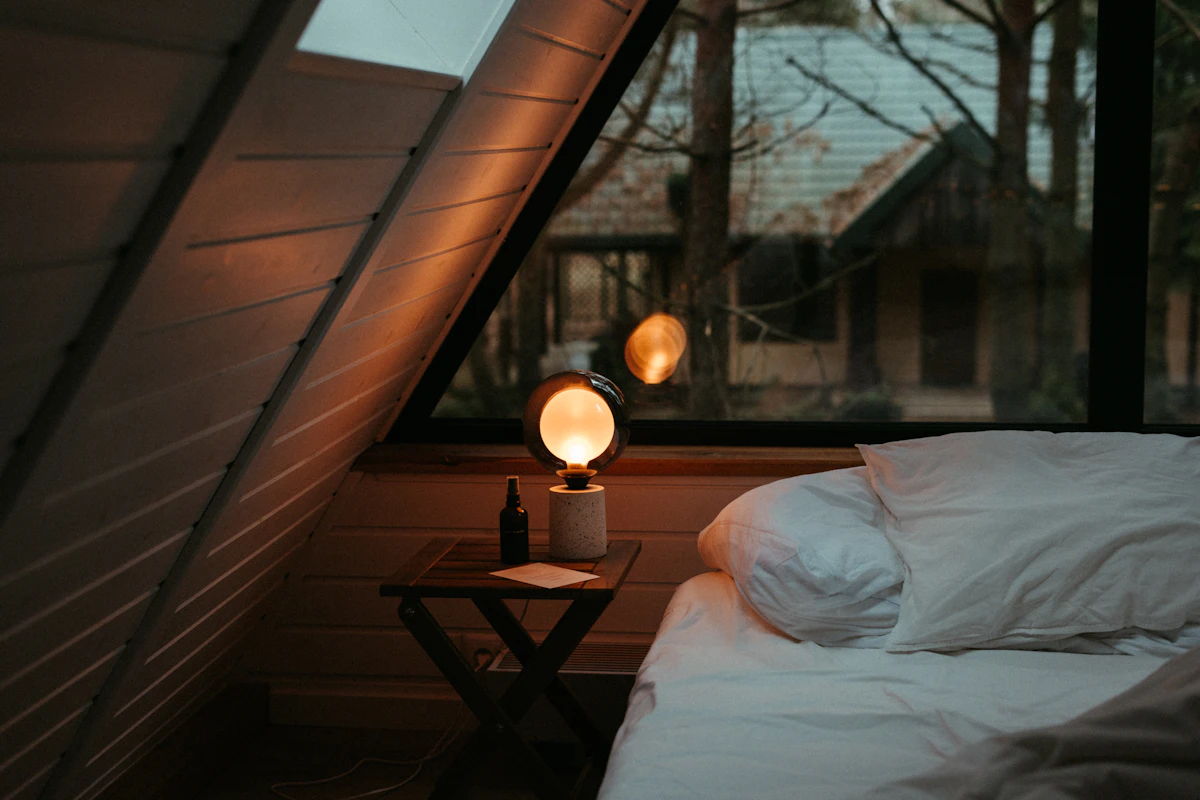
1. Warm LED bulbs
Match color temperature across compatible fixtures; check wattage and dimmer ratings.
Begin with the room you use after sunset. A warm-white bulb around 2700K is a useful starting point for living areas; a task lamp may benefit from a different brightness. Compare lumen output, not wattage alone, and check fixture labels before replacing bulbs. Avoid mixing visibly different white tones in a single sightline unless you have a deliberate reason.
2. Shaded floor lamp
Light a dark corner by bouncing light off a wall; keep cords out of circulation routes.
Try placing the lamp at the edge of the seating group rather than in the farthest empty corner. A fabric shade creates a gentler transition between the illuminated surface and the rest of the room. Before purchasing, measure the base footprint and locate the outlet.
3. Bedside lamp
Choose a shade that shields the bulb at eye level.
Sit on the bed and check whether the light reaches your book without exposing the bare bulb. A compact lamp with a convenient switch is more useful than a dramatic shade that consumes the entire nightstand.
4. Rechargeable task light
Use approved mounts and keep batteries away from heat.
Before buying, identify the exact dark zone: a drawer, a shelf or a work surface. Compare runtime, charging access and the mounting method. A freestanding rechargeable lamp is the lower-commitment alternative if adhesive mounts are unsuitable.
5. Plug-in dimmer
Use only with compatible dimmable bulbs and lamps.
Instead of buying another decorative lamp, consider whether the existing one could provide two moods. A compatible plug-in dimmer can make the same light useful for reading and relaxing. Never assume a non-dimmable LED will work correctly.
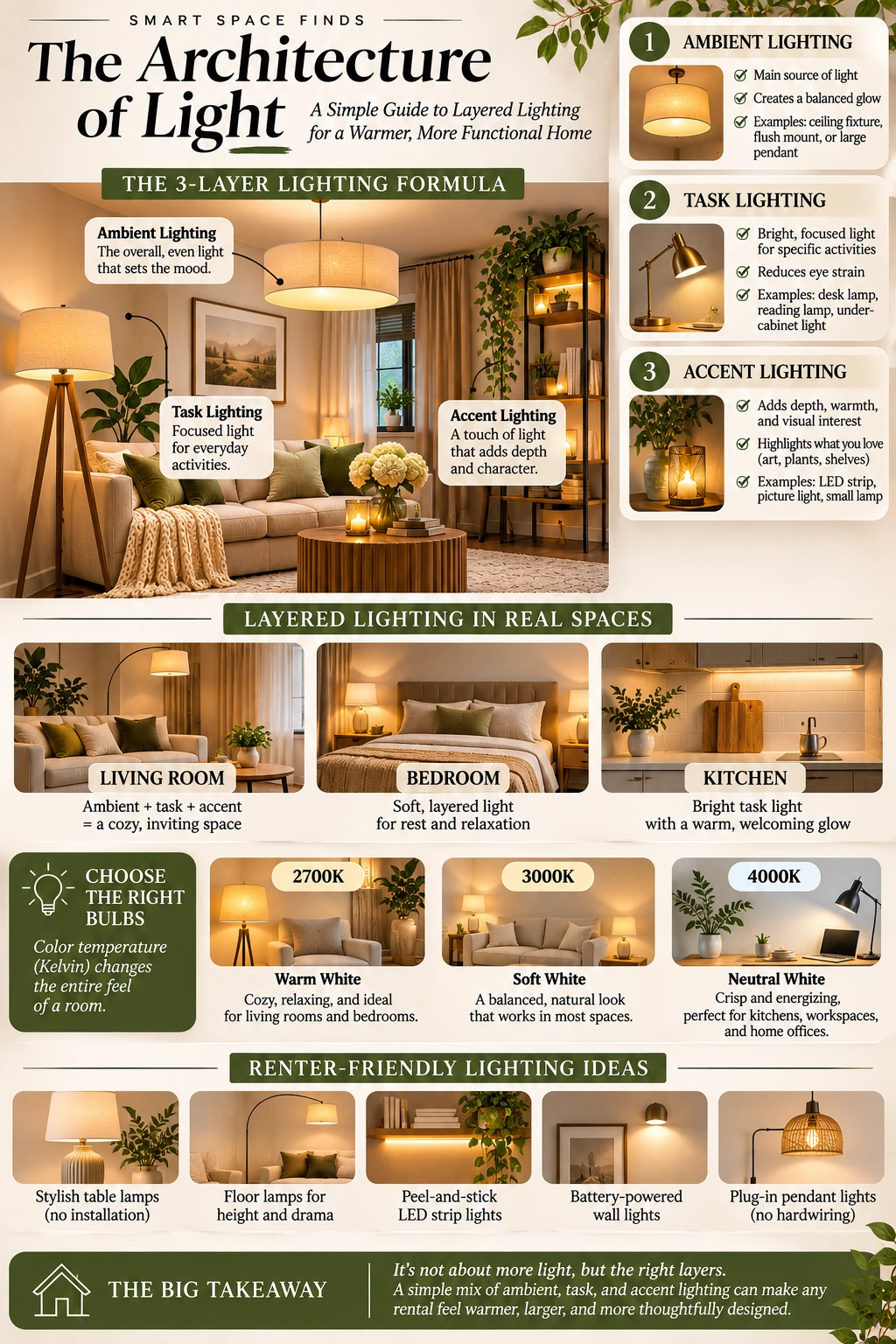
Layer lighting for comfort and function. Check compatibility and permission before using adhesive or mounted fixtures.
Shop the edit: Portable lighting
As an Amazon Associate I earn from qualifying purchases. Check current product details, dimensions and availability before buying.
Textiles: five changes to consider
A rental often has finishes you cannot change. Treat the floor, walls and largest furniture piece as the fixed background. Add a coherent layer of textiles rather than trying to hide every imperfection. Choose two related neutrals and one accent to repeat.
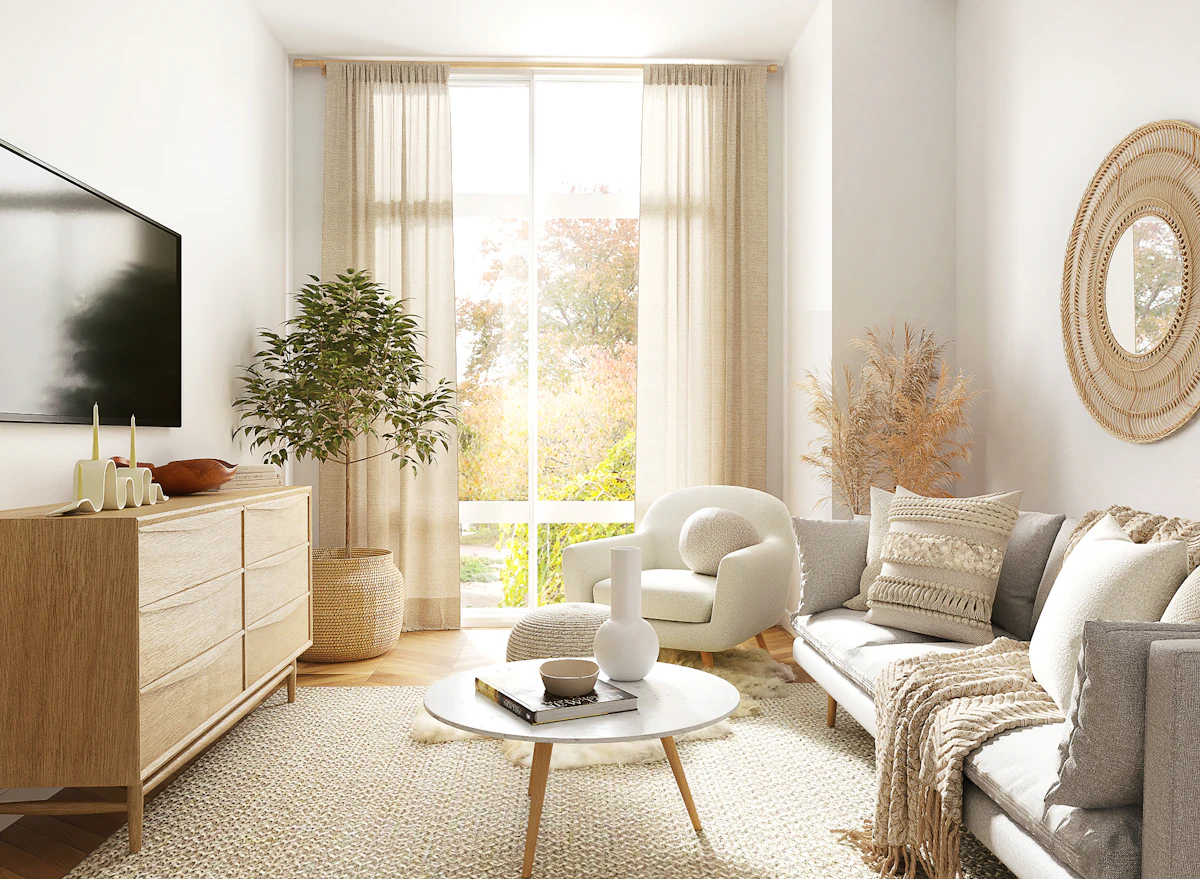
6. Area rug
Measure your seating group and place front furniture legs on the rug where practical.
Mark the intended footprint using paper or a tape measure. In an open-plan studio, a rug establishes the visual boundary of the living area; a tiny rug stranded beneath the coffee table can make the furniture feel disconnected. Leave doors and vents unobstructed.
7. Rug pad
Check compatibility with the existing floor finish.
A pad should stabilize the rug without trapping moisture or reacting with the finish beneath it. Check instructions for vinyl, hardwood or laminate specifically, and trim the pad to remain concealed beneath the rug.
8. Curtains
Use existing hardware, and keep fabric away from heaters.
Measure from the existing rod to the desired hem, not from the ceiling. If the window is narrow, consider simple panels that can sit to either side when open. Preserve access to window handles and emergency exits, and keep cords away from children.
9. Tension rod
Check the opening, load rating and potential pressure marks.
A tension rod is a candidate for lightweight fabric, not a substitute for every curtain installation. Check the manufacturer’s minimum and maximum opening dimensions. If a frame is fragile or the rod slips, use the existing approved hardware instead.
10. Washable sofa cover
Measure arms, back and seat separately before buying.
Treat the sofa as the room’s largest color sample. A fitted cover can make a mismatched sofa feel intentional, while a washable throw may be enough for a seat that is already in good condition. Check fabric care and attachment details.
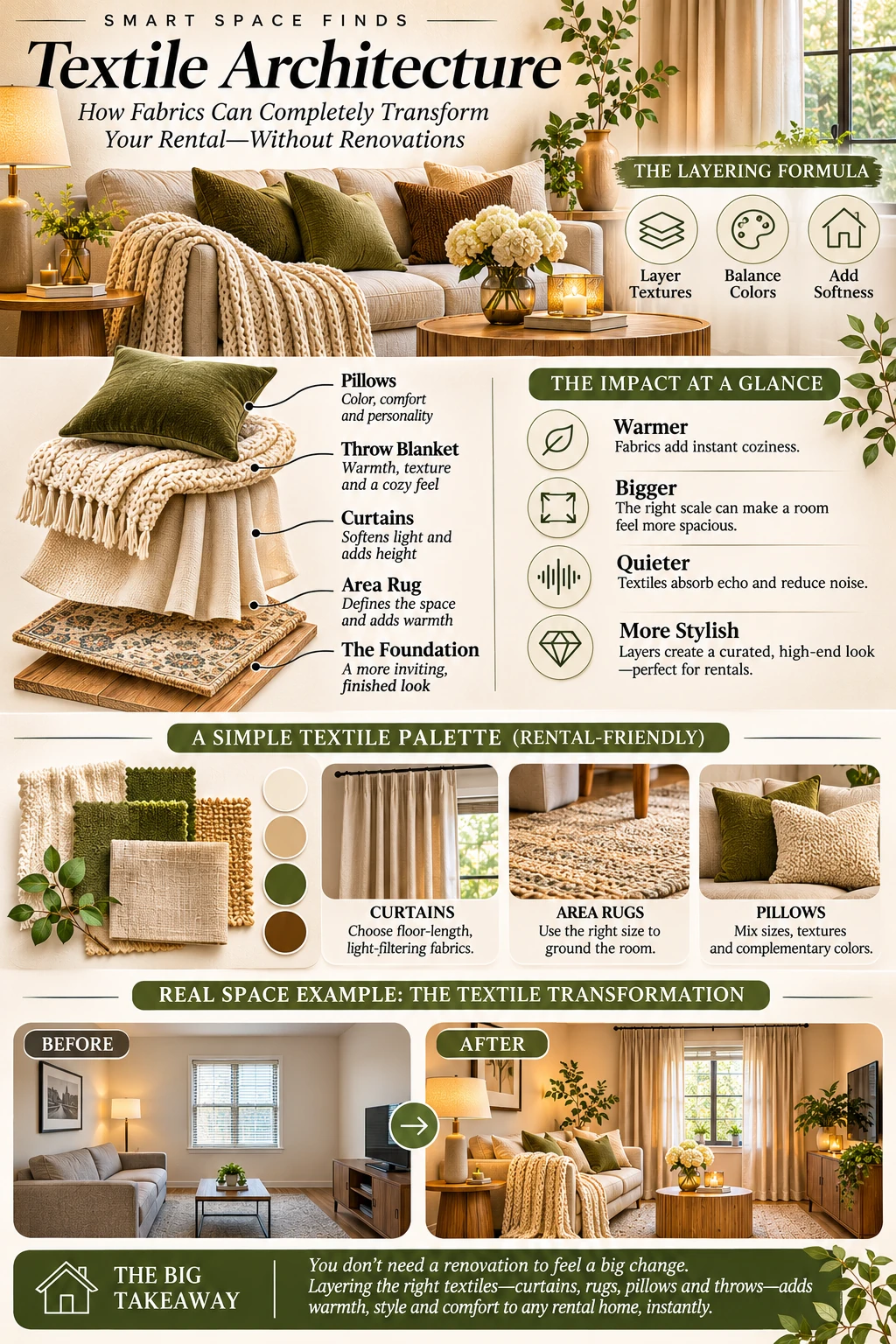
Use appropriately scaled textiles to soften a room and define its visual zones.
Shop the edit: Textile architecture
As an Amazon Associate I earn from qualifying purchases. Check current product details, dimensions and availability before buying.
Walls and privacy: five changes to consider
Blank walls are not a problem you need to solve everywhere. Choose a single focal point from the doorway and let quieter surfaces provide breathing room. The safest option is usually the one that does not touch the property.
11. Lightweight art
Create one focal point on stable furniture rather than attaching heavy pieces.
Choose an artwork palette that repeats one color already in your room. A small frame on a stable console is often more useful than several new holes in a wall. Keep breakable art out of high-traffic areas and away from children.
12. Removable picture strips
Check surface and weight limits, curing requirements and removal instructions; never hang over beds.
Choose the specific adhesive product for your surface and object; check the full package instructions, not just the advertised load. For example, Command recommends smooth, sound paint cured for at least seven days, and advises against use on heavily textured walls or wallpaper. Follow longer curing periods if your paint or adhesive manufacturer requires them. Pull the removal tab in the specified direction, and do not improvise if it breaks.
13. Tabletop frame
Repeat your accent color without changing the wall.
A tabletop frame changes the balance of a vignette without adding wall hardware. Pair one taller frame with a lower object to create two distinct heights. Reuse a frame from another room before ordering one.
14. Static-cling film
Confirm compatibility with the window glazing before installing.
Decide whether the problem is daytime privacy, nighttime privacy or glare. Frosted film and reflective film do not necessarily solve the same problem. Check the manufacturer’s glazing restrictions and preserve the window’s operation.
15. Wallpaper sample
Get permission if required and test a hidden area before committing.
Before covering a large surface, compare the sample under daylight and artificial light. Ask the property owner about acceptable restoration methods and avoid covering dampness, damage or failing paint. If the test is not permitted, choose textile or framed-art alternatives.
Shop the edit: Walls, art & privacy
As an Amazon Associate I earn from qualifying purchases. Check current product details, dimensions and availability before buying.
Kitchen: five changes to consider
Before covering cabinets or countertops, map the sequence of making breakfast or dinner. The goal is fewer unnecessary movements, not more organizers. Protect food-preparation space, appliance ventilation and access to outlets.
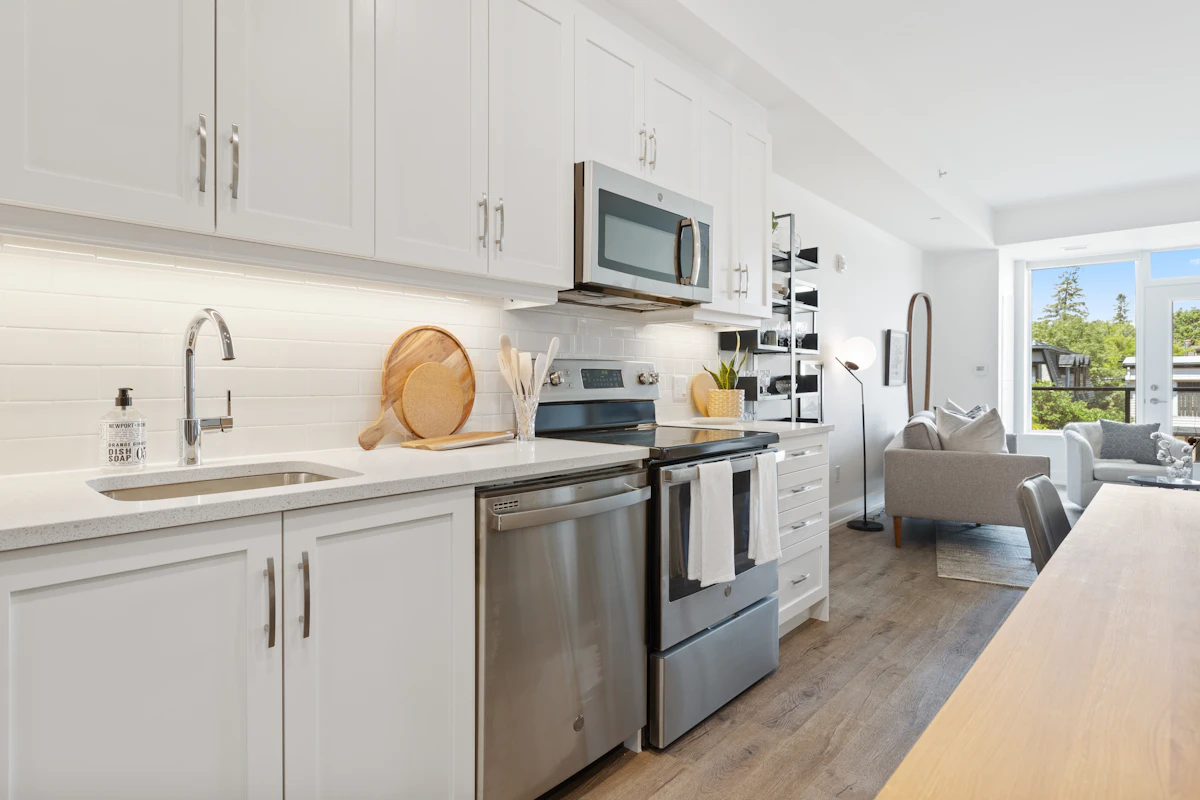
16. Countertop shelf
Create a second storage level without attaching to cabinets.
Measure the height under the upper cabinets and the depth of the counter. Store lighter, frequently used items on the upper level, respecting the stated load rating. Leave adequate clearance around hot appliances.
17. Nonadhesive drawer liner
Cut to fit and lift periodically to clean and dry.
A loose liner can reduce movement and simplify cleaning without adding glue. Measure the interior after removing drawer contents, and make sure the liner does not catch on runners or prevent the drawer from closing.
18. Drawer dividers
Measure internal dimensions and avoid excessive spring pressure.
Map items by use: cooking utensils near prep, cutlery near dining. Use adjustable dividers only where they fit securely without forcing the drawer sides. A small freestanding tray is an alternative.
19. Rolling cart
Lock wheels during use and leave circulation clear.
A cart is most valuable when its contents have one destination: breakfast, coffee or cleaning. Measure the route between rooms and avoid overloaded top shelves. Keep cords, hot items and liquids away from unstable positions.
20. Cabinet knobs
Obtain required permission, match existing holes and retain original hardware.
Take one original knob off only if permitted, measure the screw and mounting arrangement, then reinstall it until you have a compatible replacement. Store originals together in a labeled bag. Do not drill a new hole to fit a decorative upgrade.
Shop the edit: Kitchen upgrades
As an Amazon Associate I earn from qualifying purchases. Check current product details, dimensions and availability before buying.
Bathroom: five changes to consider
A small bathroom feels better when the eye meets fewer unrelated colors and the most-used items have a home. Moisture and slip resistance take priority over decorative materials.
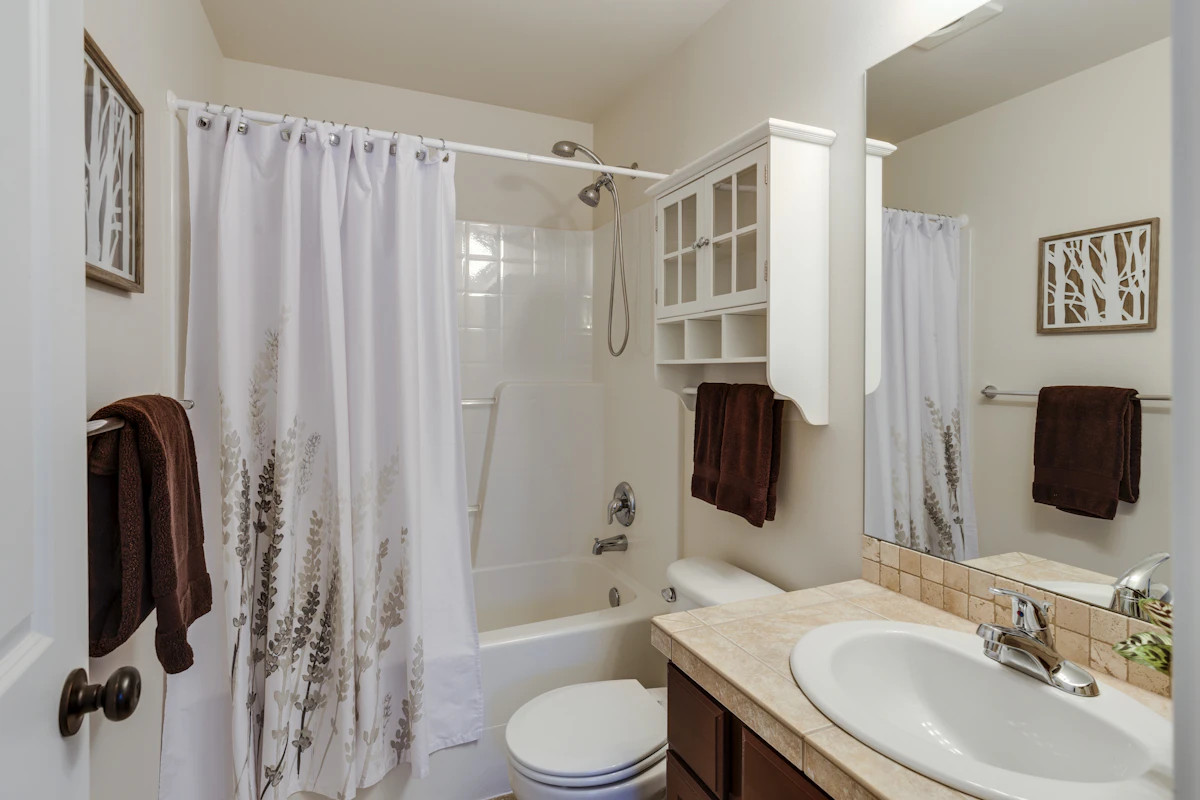
21. Fabric shower curtain
Use texture and a calm color to soften hard surfaces.
The curtain is often the largest fabric surface in a small bathroom. Repeat its color in one towel or mat, rather than buying an entire matching collection. Make sure the curtain and liner hang inside the wet area as intended.
22. Shower liner
Choose the correct length and dry between uses.
Choose the liner to fit your tub or shower configuration and follow its care instructions. If it sticks to the floor or interferes with drainage, correct the length or placement rather than ignoring it.
23. Freestanding caddy
Choose a stable corrosion-resistant design away from the drain.
A caddy should make daily products reachable without requiring you to balance bottles on a narrow ledge. Check the base on the actual floor slope, and keep the entry path clear. Avoid unstable stacks of containers.
24. Bath mat
Use a floor-compatible nonslip backing and dry regularly.
Check the floor manufacturer’s backing restrictions and the mat’s washing instructions. If a mat shifts underfoot or remains wet, remove it until you can replace or dry it. Leave enough space for the door to open freely.
25. Vanity tray
Corral daily items while leaving room to clean.
Start by grouping only the items you use daily. A shallow washable tray makes it easier to move everything at once when cleaning. Keep medicines and other sensitive products stored according to their labels.
Shop the edit: Bathroom refresh
As an Amazon Associate I earn from qualifying purchases. Check current product details, dimensions and availability before buying.
Storage: five changes to consider
The best storage solves a specific daily transition: arriving home, getting dressed or preparing for bed. Choose pieces that fit the available footprint, maintain clear routes and can travel to your next home.

26. Low shoe rack
Measure door swing and choose a stable footprint.
Measure the narrowest passage after the rack is installed, including the space needed to open the door. Keep frequently worn shoes on the lowest convenient level and avoid stacking heavy items on top.
27. Woven basket
Assign each basket a single purpose and measure the shelf first.
A basket is not a storage system until it has a purpose. Choose one for spare linens, another for accessories only if both are needed. Check interior dimensions and handles, not just exterior width.
28. Under-bed bags
Measure clearance and leave room for ventilation.
Use a tape measure at the lowest point of the bed frame and account for central supports. Choose breathable storage for suitable textiles and avoid storing damp items or blocking heating or ventilation.
29. Over-door organizer
Check latch clearance and never obstruct a fire door.
Measure the door thickness and top clearance before shopping. Check that the brackets do not interfere with the latch, seals or frame. If the door is a required fire barrier, keep it unobstructed and use freestanding storage instead.
30. Storage ottoman
Choose a stable design and use as seating only if rated for it.
Choose an ottoman whose dimensions allow you to move around it comfortably. A removable lid or hinged top changes the access requirements. Store light items you need often, and confirm the weight rating before using it as a seat.
Shop the edit: Portable storage
As an Amazon Associate I earn from qualifying purchases. Check current product details, dimensions and availability before buying.
DESIGN STUDIO / THREE REAL HOMES
Which rental problem sounds like yours?
Studio, 350 sq. ft.: Define the living zone with a rug, keep the path to the door open, and give the bed and seating area separate pools of light. Avoid adding furniture until the layout works.
One-bedroom with dated finishes: Repeat warm textiles and a single accent color, use a portable lamp, and simplify the counter. Keep permanent surfaces as the background rather than fighting each finish.
Shared apartment: Focus on your private room and portable personal storage. Agree on any common-area changes with housemates and obtain permission where required.
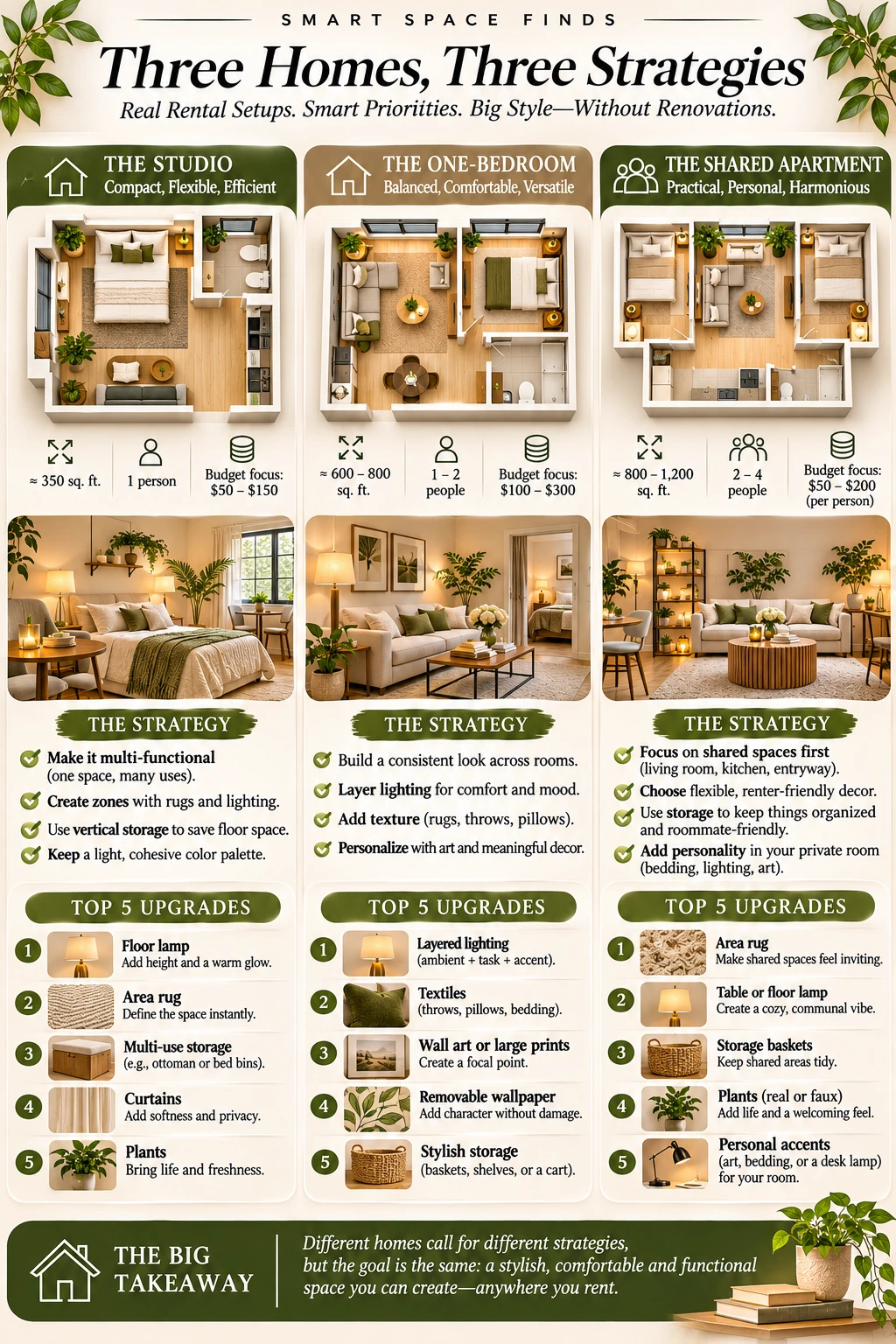
Three hypothetical layouts and spending ranges; prioritize your actual measurements and agree on changes in shared spaces.
Surface compatibility: check before you stick
Removable does not mean universally damage-free. Paint condition, texture, humidity, weight and removal technique all matter. Follow the exact product instructions. Avoid adhesive hanging on wallpaper or unsuitable textured walls; use freestanding alternatives where compatibility is uncertain. For picture strips, follow the specified curing and removal directions rather than pulling the adhesive outward.
SURFACE DECISION GUIDE
- No attachment needed
- Portable lighting, textiles, low stable furniture and tabletop art. Check product safety and floor compatibility.
- Attachment or pressure required
- Tension rods, adhesive strips and films. Check exact material, load, lease and removal instructions before buying.
- Property alteration
- Painting, drilling, fixture replacement and changes to wiring or plumbing. Obtain required written approval and use qualified help where necessary.
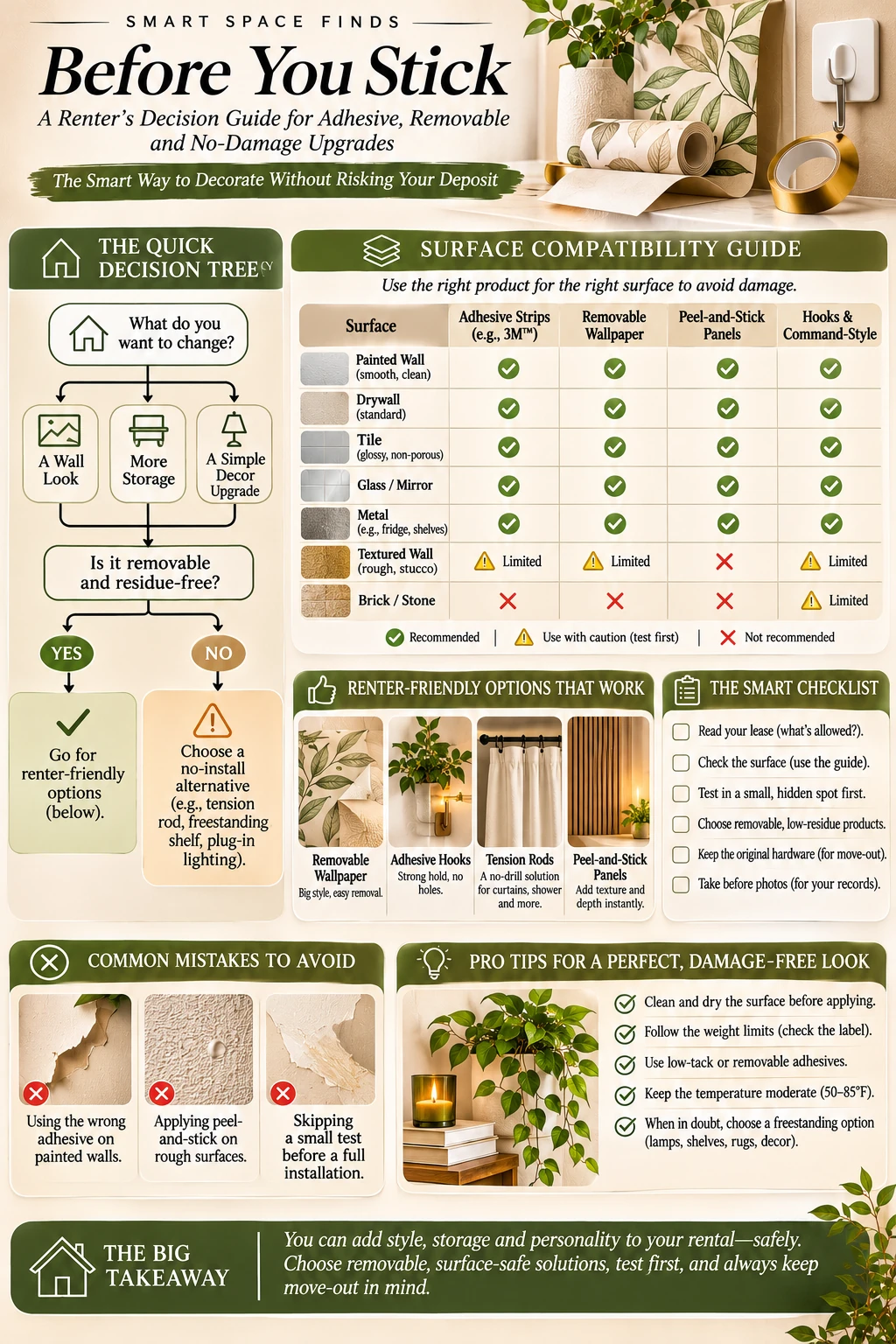
Important: the green checks in this illustration are not compatibility approvals. No surface or adhesive is universally safe. Follow the exact product and surface instructions, obtain permission if required, and choose freestanding alternatives when uncertain.
Three realistic budget plans
These are illustrative allocations, not quoted retail prices.
- $50: $20 lighting, $15 organization, $15 textiles.
- $150: $50 lighting, $60 curtains, $40 storage.
- $300: $110 rug and pad, $80 lighting, $60 textiles, $50 storage.
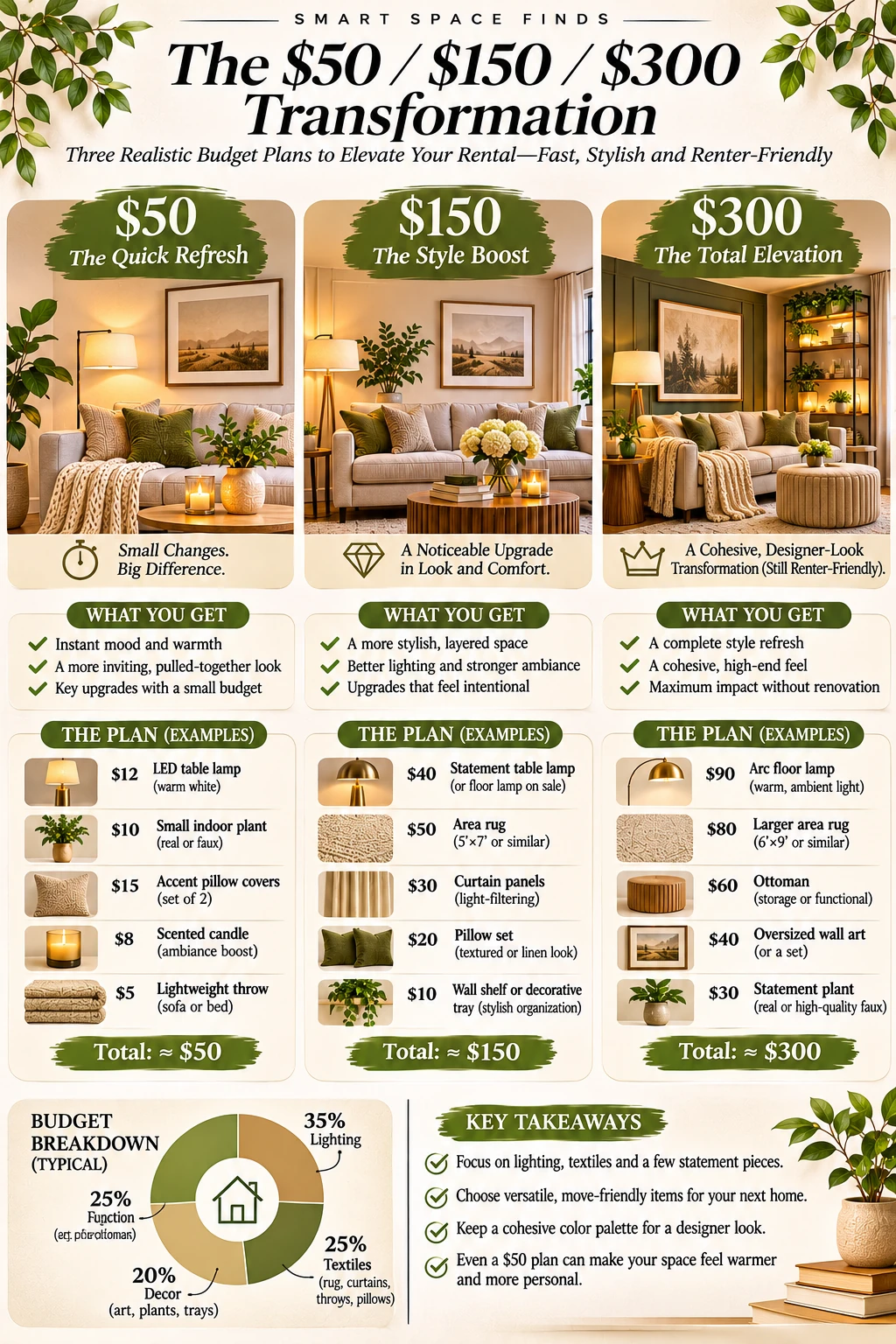
Alternative illustrative shopping budgets, not verified prices or guaranteed results. The article’s budget allocations are the primary plan.
The 48-hour reset
Saturday: measure, rearrange and improve lighting. Sunday: organize the two places that cause the most daily frustration, choose a cohesive palette and shop only for the remaining gaps.
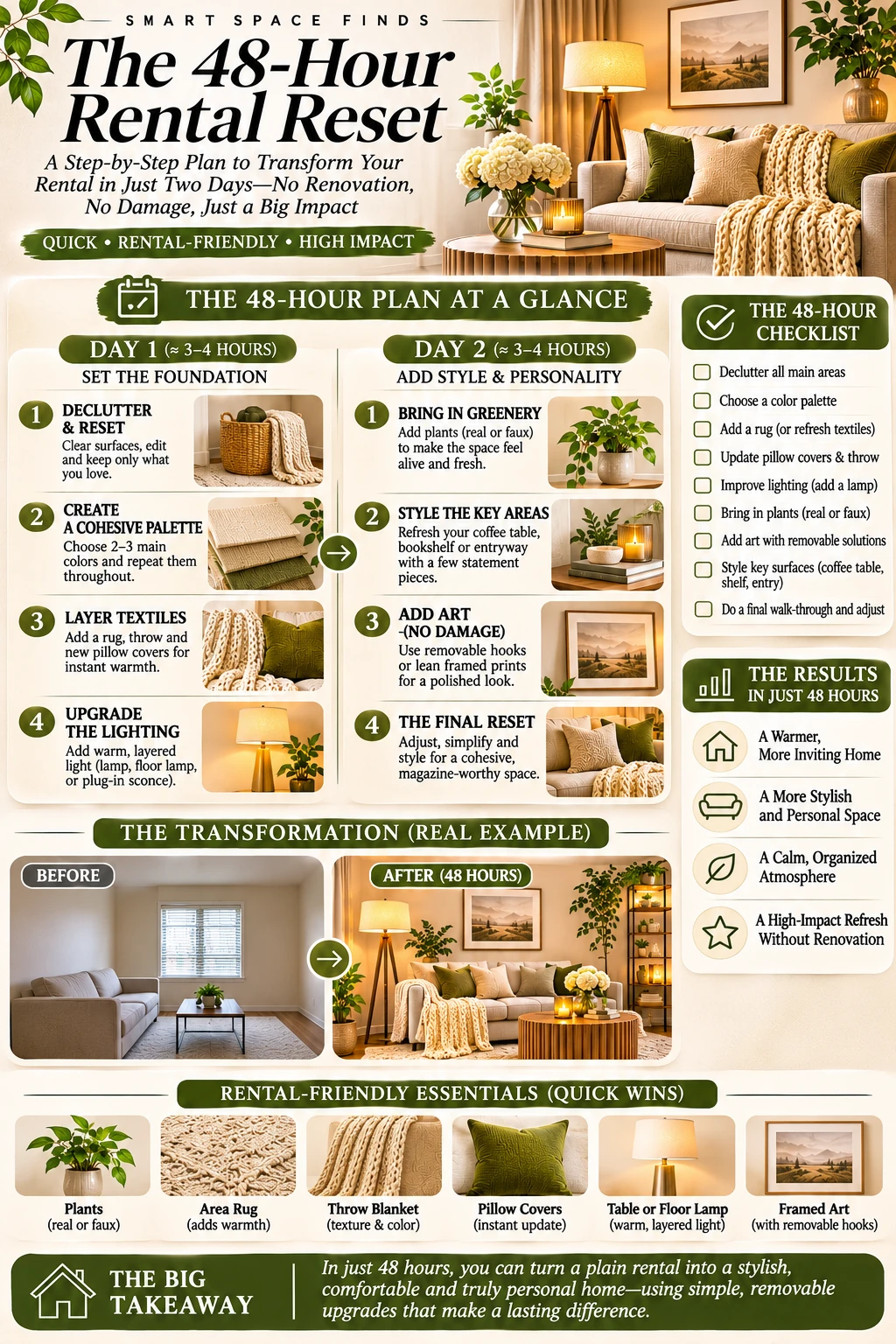
An illustrative weekend reset; reuse existing items and confirm any installation requirements. Results vary.
SAVE THIS BEFORE YOU BUY
Your portable-home checklist
- Does the upgrade solve a real problem?
- Have I measured the exact location?
- Can I install and remove it as instructed?
- Have I checked permission and compatibility?
- Could I take it to a different home?
- Would I still buy it if nobody saw a photo of the room?
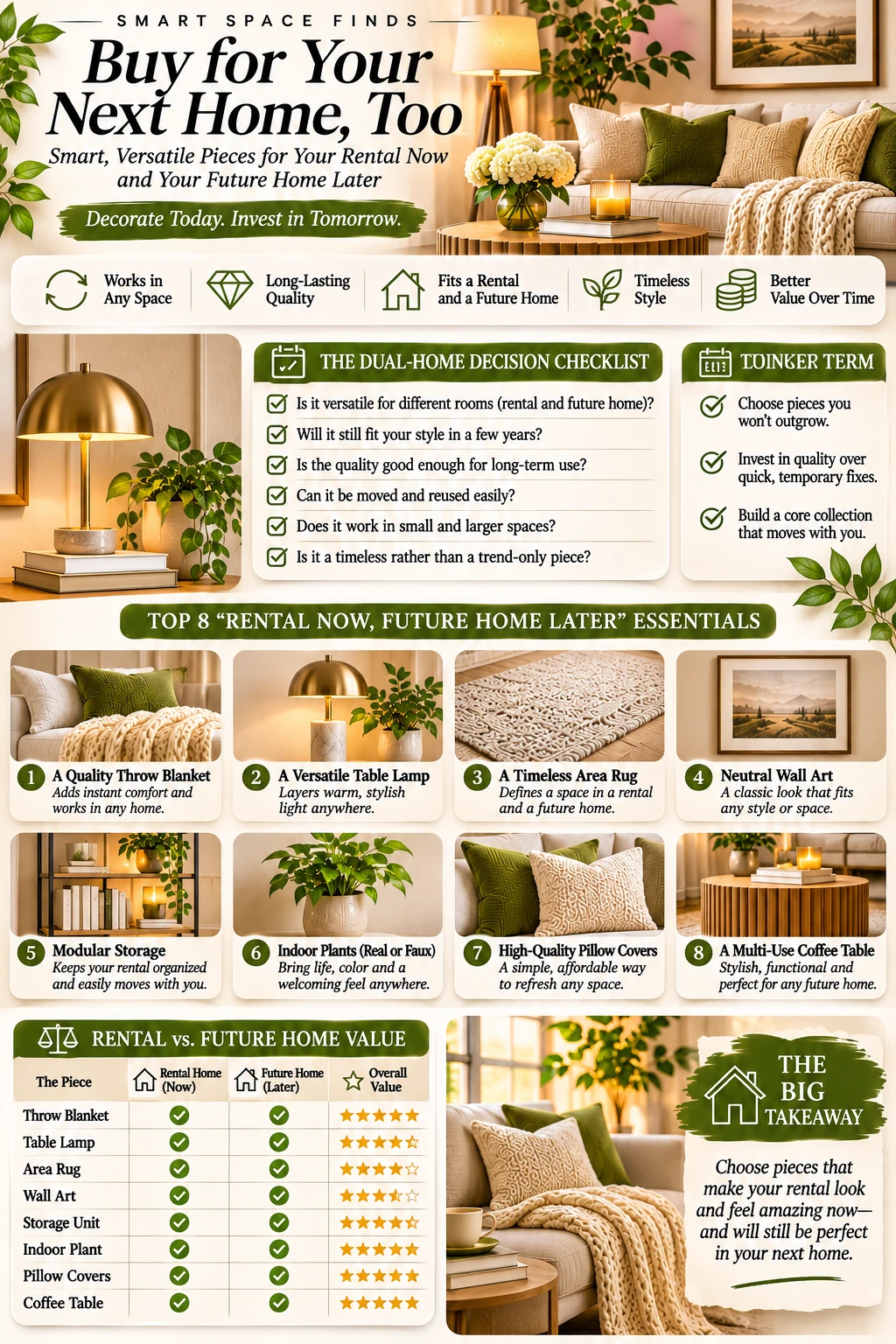
Buy with future layouts in mind. The stars are illustrative editorial judgments, not tested product ratings.
Design with your next home in mind
Prioritize portable, adaptable pieces over products cut to fit one unusual surface. Keep landlord-owned hardware labeled, preserve permissions and installation instructions, and photograph changes. Follow agreed restoration requirements when you move.
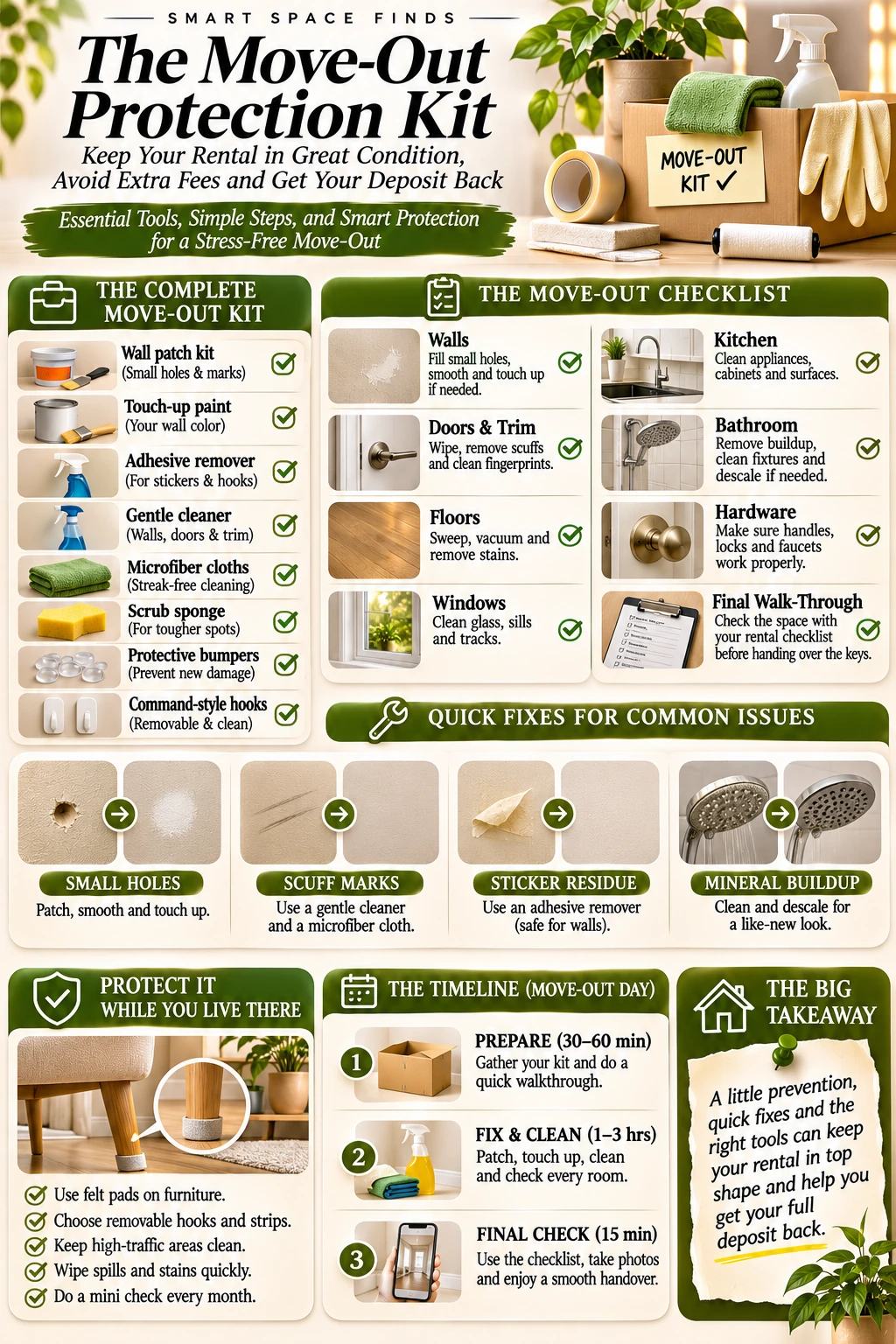
Use only approved repair methods and compatible cleaners. Keep written permissions, dated photos and original hardware. No kit guarantees the return of a deposit.
Common mistakes to avoid
- Buying decor before addressing lighting or circulation.
- Assuming every removable product works on every surface.
- Ignoring furniture anti-tip requirements. The U.S. Consumer Product Safety Commission recommends anchoring furniture such as dressers and bookcases; if required anchoring is not permitted, choose a different storage solution rather than omitting it.
- Changing electrical wiring, plumbing or safety equipment without proper authorization.
Frequently asked questions
What can I upgrade without drilling?
Portable lamps, rugs, textiles and suitable freestanding storage are excellent starting points.
Can peel-and-stick wallpaper damage paint?
Yes. Surface preparation, paint condition and adhesive compatibility matter. Check permission requirements and test first.
How do I make a rental look expensive on a budget?
Repeat a restrained color palette, improve lighting and choose appropriately scaled textiles before adding small decorative objects.
How do I decorate a rental with ugly floors?
Use a correctly sized area rug and a compatible pad where appropriate. Keep the original floor dry, clean and ventilated. Avoid adhesive floor tiles unless the property owner permits them and the product is suitable for the flooring.
Can I change rental cabinet handles?
Check the lease and obtain any required approval. Match the existing mounting holes and hardware specifications, and preserve the original pieces for restoration.
What should I buy first when moving into an apartment?
Prioritize essential lighting, privacy, sleep and daily organization. Live with the layout for a few days before buying decorative extras.
How do I avoid wasting money on rental upgrades?
Choose flexible sizes, portable objects and items that solve problems you encounter repeatedly. Compare the cost of an upgrade with the time you expect to use it. Do not buy a custom surface treatment just because it is inexpensive.
Can renter-friendly upgrades guarantee my security deposit?
No. Deposit deductions depend on your lease, applicable local law and the property’s condition. Keep dated photos, written approvals and records of restoration. Report maintenance problems rather than covering them with decorative products.
Continue your home refresh
Explore how to add color without painting, our budget home makeover guide and bathroom refresh ideas.
A home does not have to belong to you on paper to feel like yours in everyday life. Start with one useful change and build from there.