
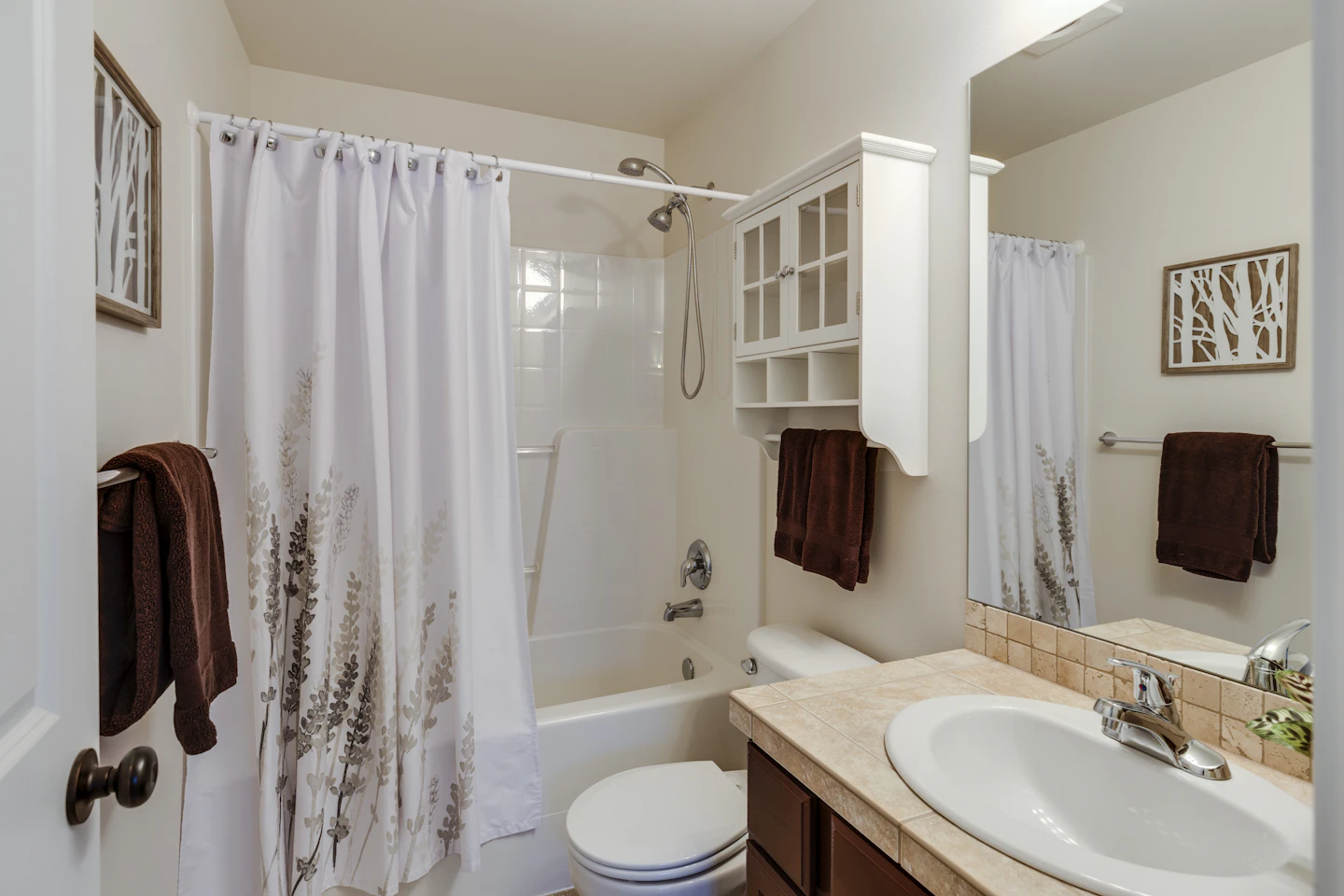
Your bathroom can feel entirely different without replacing a single tile. The trick is to fix the things that make it feel tired—visual clutter, worn fabric, harsh lighting, awkward storage and surfaces that never quite look clean—before spending money on decor.
This is a realistic, budget-friendly bathroom refresh for renters, small-space dwellers and anyone who wants more comfort without a construction project. You’ll find five high-impact changes, a practical cost-planning matrix, moisture-safe decision rules and a one-weekend action plan. Start with what you own; shop only when a specific change earns its place.
The quick answer
For the biggest visual improvement on a small budget: clear the vanity, deep-clean material-safe surfaces, replace one tired textile, unify visible accessories, then address lighting or storage only if they solve an everyday problem.
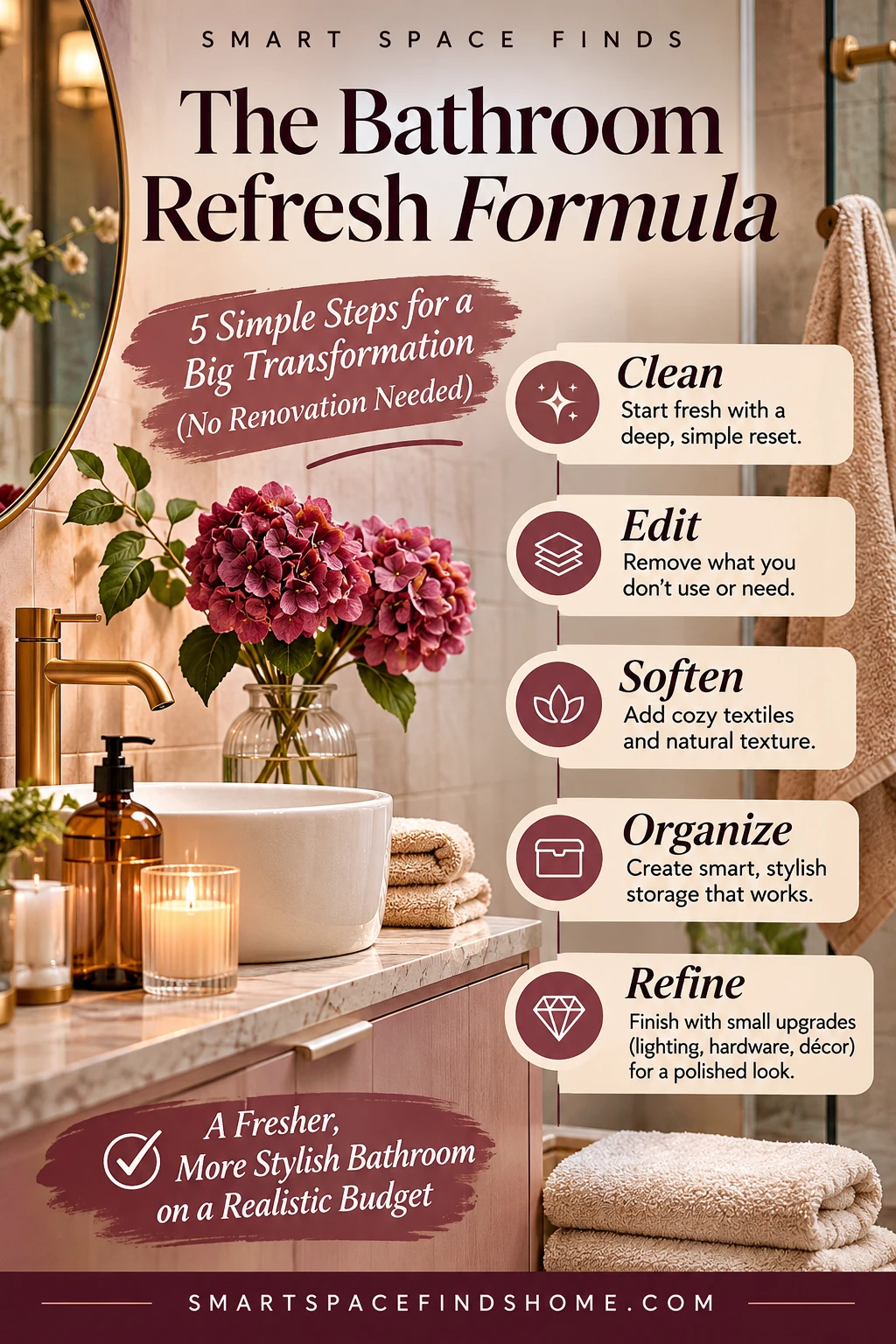
The Smart Space Finds Method
Repair what is failing. Remove what is unnecessary. Upgrade what you actually use.
A refresh should be beautiful on day one—and still easier to live with on day thirty.
Before you buy: identify what makes the bathroom feel tired
Before choosing a color or shopping for storage, do the Doorway, Daylight & Daily-Use Audit. It takes about ten minutes and reveals the difference between a room that looks dated and one that actually works badly. Stand in the doorway, switch on the usual lights, and pay attention to what you can see, what you need to reach, and what takes too long to clean.
ORIGINAL EDITORIAL TOOL / THE 3D AUDIT
Doorway. Daylight. Daily use.
Which object or color dominates the first glance? Remove one distracting cluster before buying decor.
Are stains, worn fabric or shadows the real problem? Check in normal light, not a staged photo.
What do you move or reach around every morning? Prioritize that friction above decorative trends.
The decision: If one issue appears in two of the three checks, fix it first. This is a practical prioritization heuristic—not a scientific scoring system.
Stand in the doorway and take one honest photo in ordinary daylight. Is the room visually busy? Are towels frayed? Is the mirror area shadowy? Do bottles accumulate around the sink? Choose the single dominant issue rather than treating every surface as a shopping opportunity.
| What bothers you | First move | Buy only if… |
|---|---|---|
| Looks cluttered | Edit countertop items | Essentials still lack a home |
| Feels worn | Wash, repair and assess linens | Fabric is no longer functional |
| Looks dull | Clean the mirror and suitable finishes | Lighting remains inadequate |
| Feels cramped | Reclaim one storage zone | Measurements support the solution |
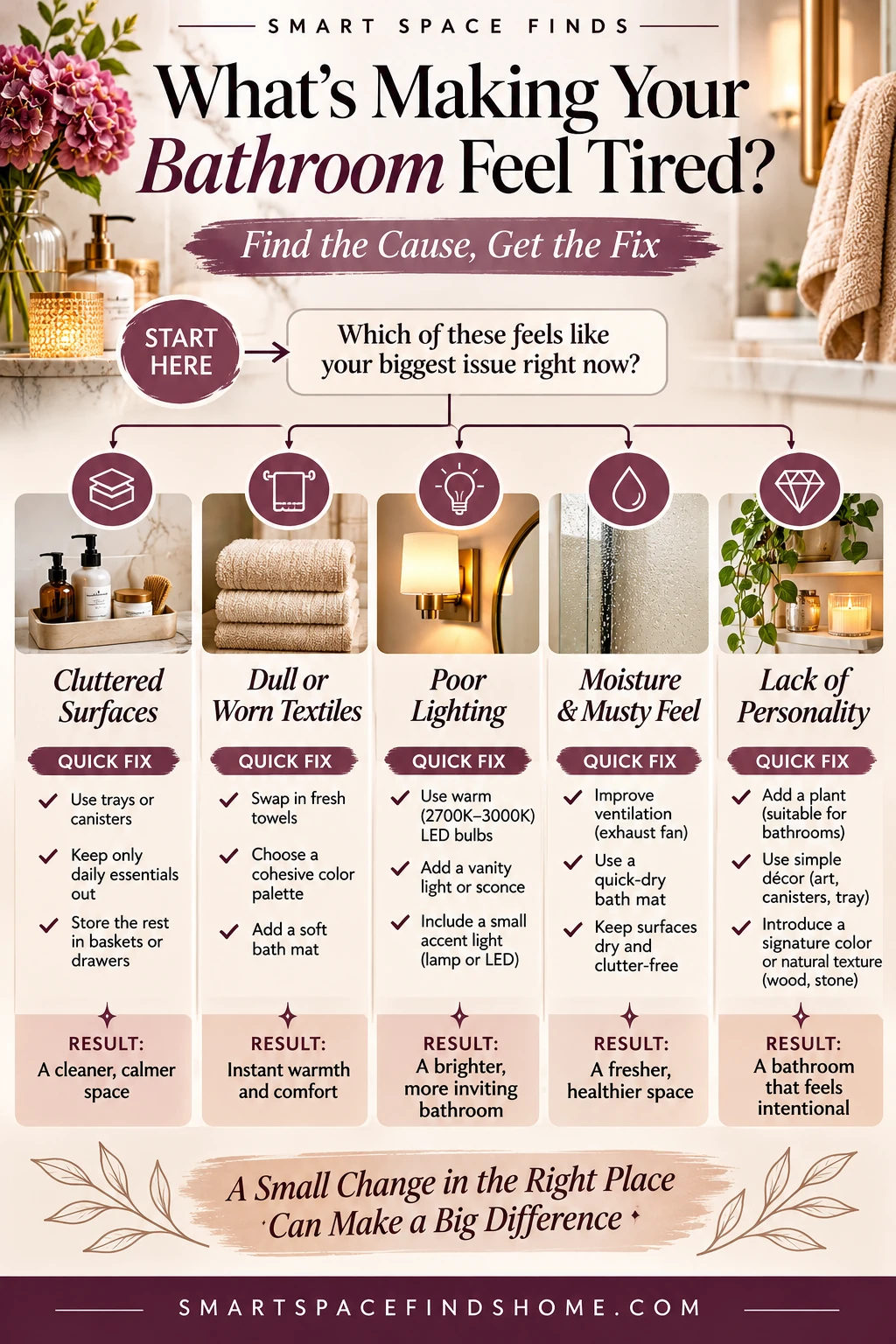
PART ONE / THE FIVE MOVES
Small changes, considered beautifully.
1. Let one beautiful textile reset the room
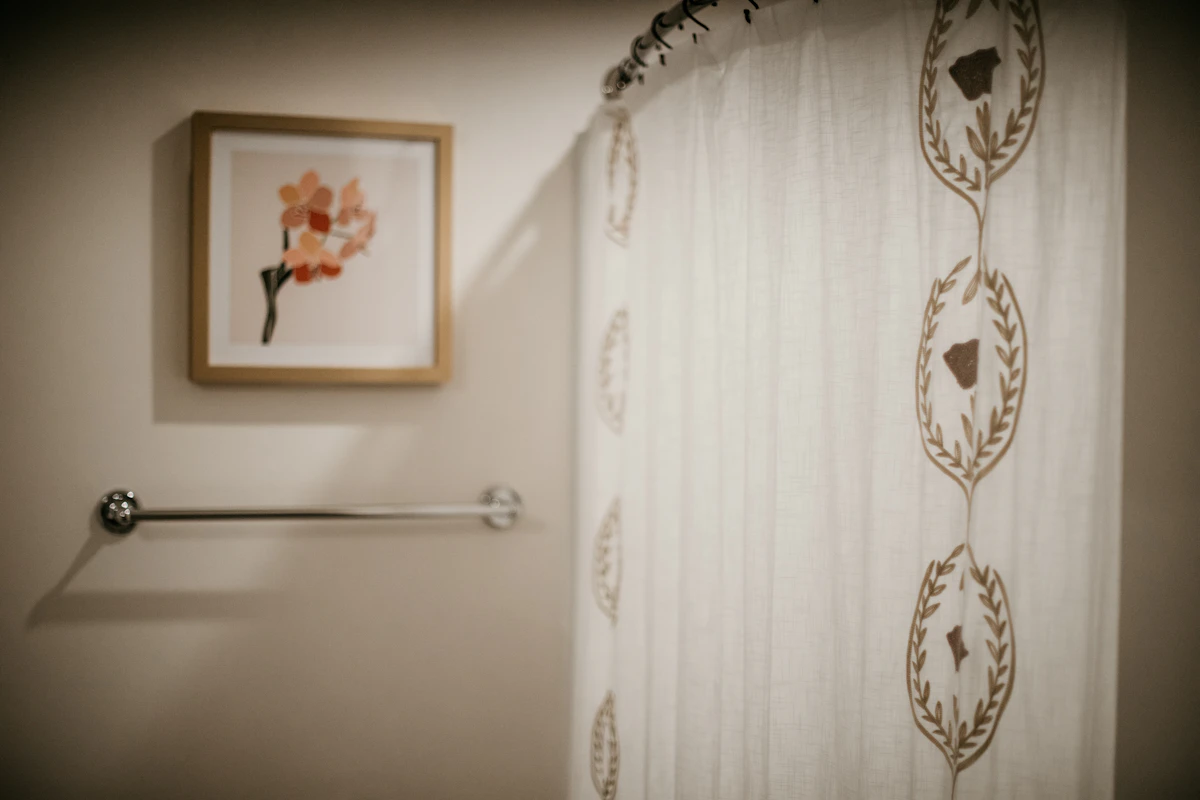
A shower curtain, bathmat or pair of hand towels occupies enough visual space to change the mood immediately. Pick one lead textile, then make the rest of the palette quieter. For a serene look, combine chalk white, oatmeal and soft olive; for a sharper contemporary look, try warm white with deep espresso and one brushed-metal finish.
What to choose—and what to skip
Look for washable textiles, a bathmat suitable for your floor and a shower curtain or liner that fits the space without dragging. Avoid slippery mats and thick fabric that stays damp for hours. If existing towels are clean, absorbent and in good condition, there is no reason to replace them merely to match a photograph.
Design move: Fold hand towels in one consistent way and limit the number on display. A deliberate rhythm often looks more expensive than a pile of new purchases.
SMART SPACE FINDS / THE PRACTICAL SHOPPING EDIT
The Instant Visual Reset
Choose only what solves a real problem. Check dimensions, finish, current availability and the exact variant before ordering.
Affiliate disclosure: As an Amazon Associate, Smart Space Finds earns from qualifying purchases. Product listings and availability may change.
SMART SPACE FINDS / THE PRACTICAL SHOPPING EDIT
The Shower Finishing Edit
Choose only what solves a real problem. Check dimensions, finish, current availability and the exact variant before ordering.
Affiliate disclosure: As an Amazon Associate, Smart Space Finds earns from qualifying purchases. Product listings and availability may change.
2. Give the vanity an intentional edit
The vanity is the visual center of many small bathrooms. Empty it completely, wipe it using the cleaner appropriate for its material, then return only daily-use items. Group the toothbrush, soap and skincare in one small zone instead of spreading them across the entire surface.
A simple dispenser or washable tray can make mixed packaging feel less chaotic, but choose stable, non-porous materials that are easy to clean. A tray should not become a place where water collects unseen. Leave clear working space by the sink and keep electrical appliances away from water.
THE TWO-THIRDS RULE
As an editorial styling test, try leaving roughly two-thirds of a small vanity visibly open. This is a flexible visual guideline, not a measurement standard. If your daily routine becomes harder, prioritize function over the photograph.
SMART SPACE FINDS / THE PRACTICAL SHOPPING EDIT
The Clutter-Free Vanity
Choose only what solves a real problem. Check dimensions, finish, current availability and the exact variant before ordering.
Affiliate disclosure: As an Amazon Associate, Smart Space Finds earns from qualifying purchases. Product listings and availability may change.
3. Restore the finishes before disguising them
Water spots, soap residue and tired grout can make even a well-designed bathroom look neglected. Read the care instructions for your tile, stone, faucet finish and sealants before selecting a product. Test cleaners on an inconspicuous spot and never mix cleaning chemicals—particularly bleach with acids or ammonia.
Scrub only with tools recommended for the surface. Natural stone may react badly to acidic cleaners, and abrasive pads can damage plated finishes. If caulk is failing, grout is crumbling, paint is peeling or moisture keeps returning, address the underlying issue rather than covering it with decorative film.
The EPA’s moisture and mold guidance recommends controlling leaks and moisture promptly; do not paint or caulk over moldy surfaces. Renters should report persistent leaks and moisture problems to the property manager rather than attempting to conceal them.
SMART SPACE FINDS / THE PRACTICAL SHOPPING EDIT
The Clean & Dry Reset
Choose only what solves a real problem. Check dimensions, finish, current availability and the exact variant before ordering.
Affiliate disclosure: As an Amazon Associate, Smart Space Finds earns from qualifying purchases. Product listings and availability may change.
4. Make the mirror zone brighter and more flattering
Good mirror light makes shaving, skincare and grooming easier, but a brighter bulb is not automatically a better solution. First clean the mirror, shades and existing fixtures. Then assess whether the face is evenly lit, whether light is excessively harsh and whether the fixture is rated for its specific bathroom location.
If the room needs electrical changes, use a qualified professional and follow applicable code and manufacturer requirements for wet or damp locations. Avoid improvising with extension cords or plug-in lighting near sinks and tubs. Renters should check permissions before changing fixtures.
Low-cost alternative: If the existing fixture works safely, changing the surrounding palette and reducing mirror-side clutter may improve perceived brightness without any electrical work.
5. Recover vertical space without creating visual noise
A bathroom feels calmer when everyday supplies have clear locations. Measure the area beside the vanity, above the toilet or inside the cabinet before buying a shelf or organizer. Keep doors, vents, access panels and outlet clearances unobstructed. Use hardware and load limits appropriate to the wall and the item.
For renters, first consider removable, low-load solutions only on surfaces and in conditions approved by the manufacturer and lease. Adhesives are not universally safe on textured tile, damp paint or fragile finishes. Store cleaning chemicals and medications securely, out of reach of children and pets.
For more targeted small-space solutions, explore our bathroom organization guide, under-sink storage around pipes and bathroom counter organizing ideas.
SMART SPACE FINDS / THE PRACTICAL SHOPPING EDIT
Small-Space Storage That Earns Its Place
Choose only what solves a real problem. Check dimensions, finish, current availability and the exact variant before ordering.
Affiliate disclosure: As an Amazon Associate, Smart Space Finds earns from qualifying purchases. Product listings and availability may change.
Budget planner: what to prioritize at $0, $50 or $150
Do not divide your budget equally across five ideas. Allocate it to the highest-frequency irritation: what interrupts your routine most often deserves the first dollar. A frequently used bathmat that slips is a more urgent fix than a decorative tray. A leaking fitting needs professional attention before either.
These are illustrative spending ceilings, not current product quotations. Prices vary by retailer, location, size and quality; use the tiers to choose priorities rather than as a guaranteed shopping basket.
Remove excess bottles, clean the mirror, wash existing linens, reorganize one drawer.
Choose one visible refresh: a washable bathmat, curtain or coordinated daily-use accessory.
Combine one textile upgrade, a correctly sized storage solution and small repair supplies if needed.

THE REAL-LIFE ROOM EDIT
One bathroom. Three very different problems.
| Your space | The best first edit | Avoid |
|---|---|---|
| Windowless apartment bath | Address ventilation and drying, then simplify surfaces | Damp baskets and crowded textiles |
| Tiny shared bath | Assign individual zones for each person’s daily items | Single catch-all trays |
| Dated but functional guest bath | Coordinate one textile and one accent finish | Replacing perfectly sound fixtures |
The renter-safe bathroom refresh checklist
- Confirm lease restrictions before drilling, painting or changing fixtures.
- Keep receipts and original hardware if approved reversible changes are made.
- Check all product claims for humid spaces and direct-water exposure separately.
- Do not attach organizers to weakened surfaces or interfere with ventilation.
- Measure dimensions and clearances before ordering anything.
- Photograph existing damage and report leaks rather than masking them.
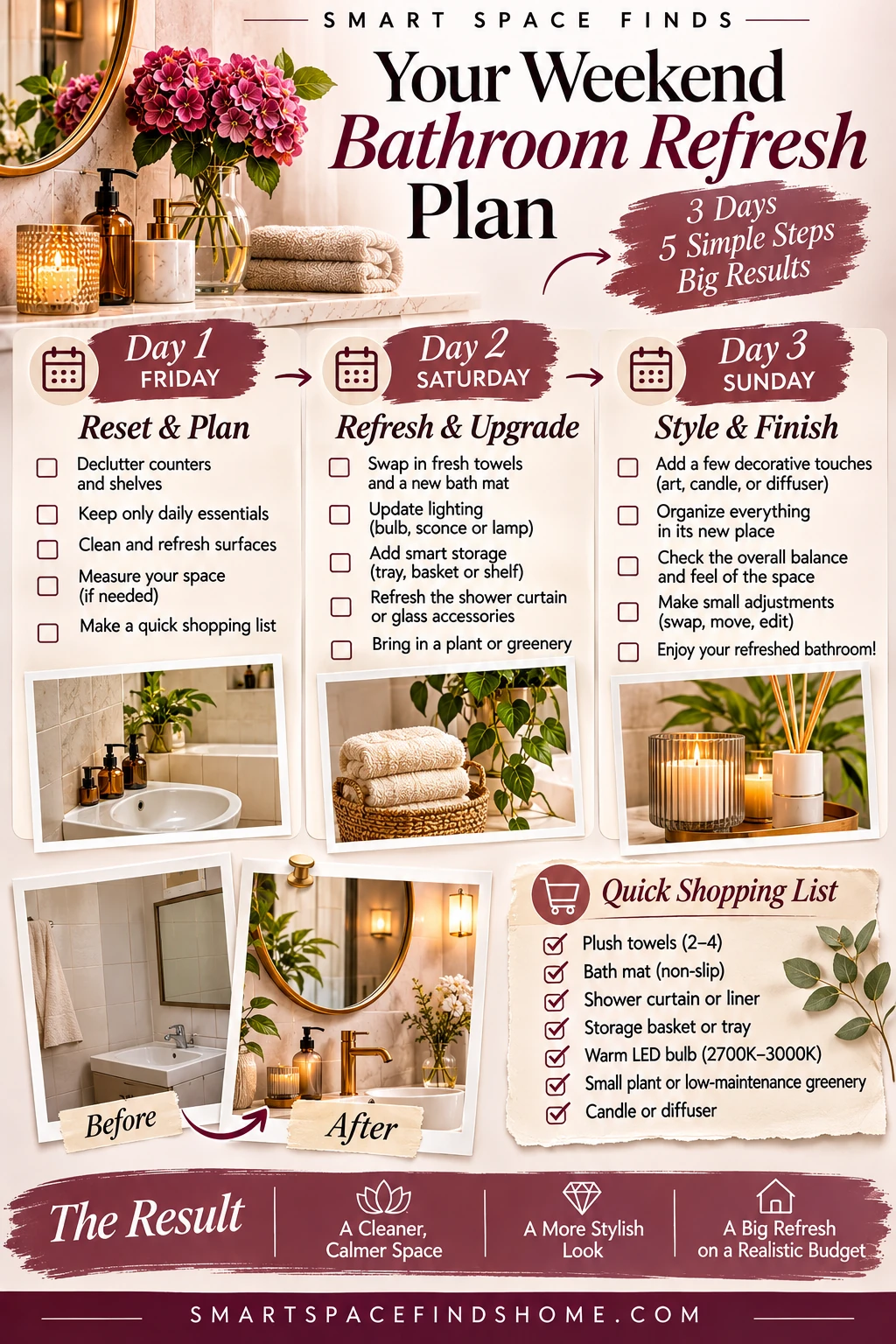
A realistic weekend bathroom refresh schedule
A real-world rule: buy no permanent fixture before your first cleaning-and-decluttering pass. You may discover that the room needs fewer objects, not more. If you do need to shop, use exact measurements and allow a contingency for replacement liners, wall anchors or other appropriate supplies.
Friday evening: decide
Take the starting photo and choose a single outcome: a clearer vanity, fresher textiles, better grooming light or accessible storage. Set a maximum spend including supplies and delivery.
Saturday: reset
Remove items, clean safely, launder fabrics and test your new arrangement. Allow surfaces to dry fully before replacing objects.
Sunday: finish
Add the one or two pieces that genuinely improve the room. Photograph from the same angle in similar light and test how the bathroom works during a normal routine.
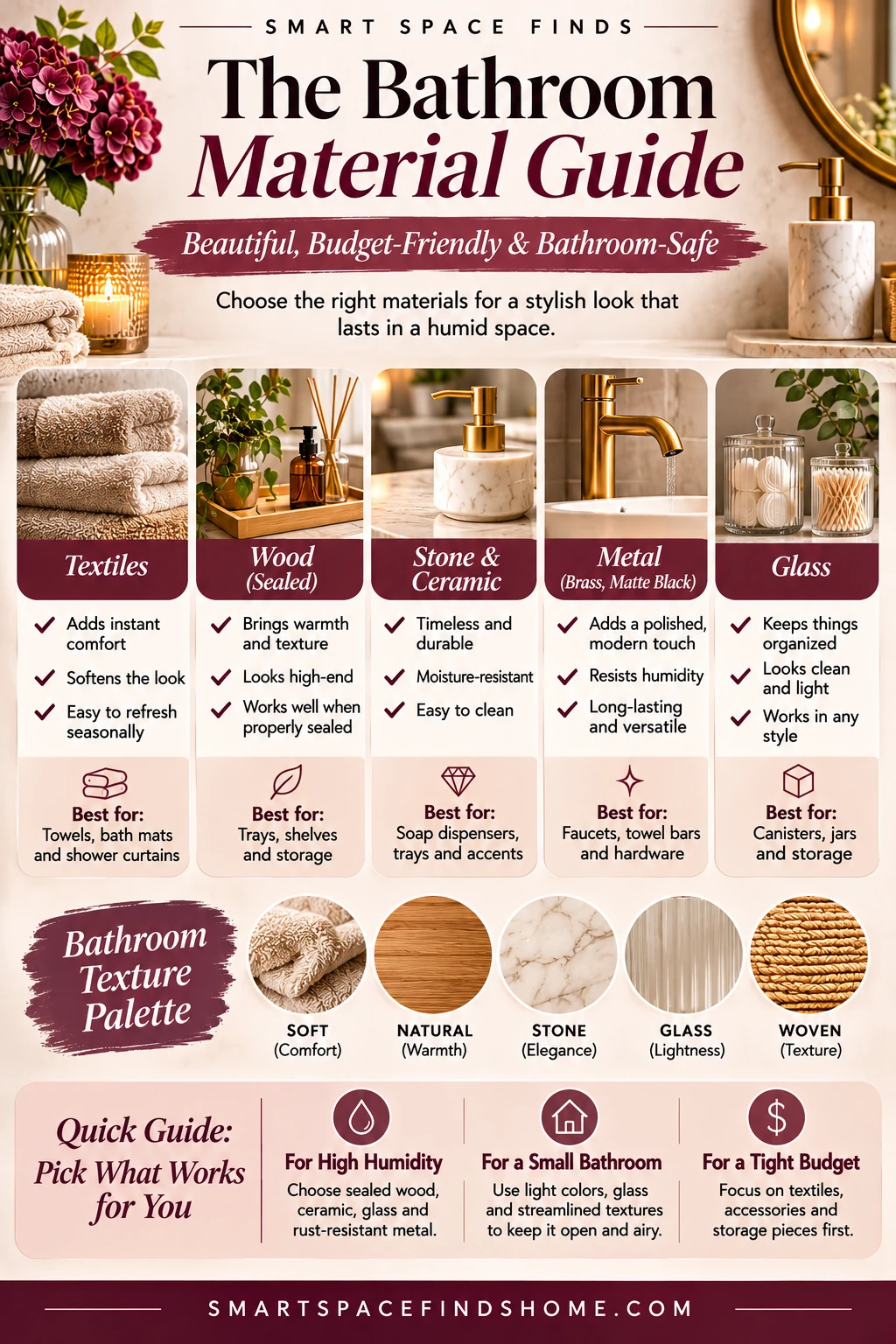
MATERIAL ATELIER / KEEP IT BEAUTIFUL
A bathroom is a wet room. Choose accordingly.
The most sophisticated-looking material is not necessarily the most practical one next to a shower. Match each choice to how much moisture and cleaning it will encounter.
| Material / item | Practical check |
|---|---|
| Cotton towels | Launder and fully dry between uses |
| Stone accessories | Check porosity, sealing and cleaner compatibility |
| Wood or bamboo | Avoid standing water; verify finish and ventilation |
| Adhesive organizers | Confirm substrate, moisture rating and load limit |
| Metal fittings | Check corrosion resistance and surface-care guidance |
THE EDITOR’S COLOR STUDY
Three palettes that feel more considered than costly
Soft Mineral
Limestone, sage and chalk. For an airy, quietly restorative space.
Warm Heritage
Oat, espresso and antique-brass tones. For warmth without clutter.
Quiet Contrast
Porcelain white, charcoal and mist. For a clean modern reading.
Styling palettes are illustrative; keep existing permanent finishes in mind when choosing an accent.
Three refresh mistakes that waste money
Buying decor before solving moisture
A stylish basket cannot compensate for a persistent leak. Correct the source of dampness first; choose moisture-tolerant materials only after the space is sound.
Mixing too many statement finishes
A small bathroom rarely benefits from changing every accent at once. Let one feature lead and use quieter elements around it.
Trading practical counter space for styling
Decor should not make washing hands, brushing teeth or cleaning the sink more difficult. Keep the layout easy to maintain after the camera is gone.
THE FIVE-MINUTE SHOPPING FILTER
Measure twice. Buy once.
Before adding anything to your cart, note the usable counter width and depth, clearance around the faucet, cabinet opening height, door swing, shelf load rating and the full width of your shower curtain rod. Photograph measurements beside each location so you can compare actual dimensions—not styled product photos.
Pass / pause / skip: Pass if the item solves a daily problem and fits the space; pause if it needs installation permission or uncertain material compatibility; skip if it duplicates something you already own or blocks access.
The 30-day test: did the refresh really work?
A bathroom can look beautiful in a reveal photo and still be inconvenient the next morning. After one week, notice whether products remain in their assigned places and whether towels or baskets dry properly. After one month, ask three questions: Is the sink faster to clean? Is everything easier to reach? Has the room stayed calmer without extra maintenance?
If an accessory makes cleaning harder, remove it. If a shelf stays almost empty, you may not need it. The best refresh is the smallest set of changes you can comfortably maintain.
Frequently asked questions
How can I make an old bathroom look better without renovating?
Start by restoring cleanliness, removing visible clutter and simplifying the textiles. Then choose the smallest functional upgrade that addresses the room’s most noticeable problem.
What is the cheapest way to refresh a bathroom?
A zero-cost declutter and surface-safe clean is often the best first step. Washing existing towels and consolidating products can transform the appearance before shopping.
Which bathroom upgrades work best for renters?
Washable textiles, portable storage and non-permanent counter organization are usually the easiest starting points. Always check lease terms and the product’s surface compatibility.
Can peel-and-stick products go inside a shower?
Do not assume they can. Many decorative adhesive products are intended for dry or splash-prone areas, not continual direct water exposure. Follow the exact manufacturer’s installation and wet-area guidance.
Should I update lighting myself?
Cleaning an existing fixture is simple; electrical alterations are different. Use a qualified professional where required and select fixtures appropriate for the bathroom zone.
How do I stop my bathroom from looking cluttered again?
Give each daily-use item a stable home, limit backups on display and reassess the layout after a week. If an organizer adds extra steps, simplify it.
The final edit: refresh what you notice every day
A thoughtful bathroom makeover is not measured by how many packages arrive. It succeeds when mornings feel easier, surfaces are simpler to maintain and the space looks considered in normal light. Fix first, reuse when possible and let each purchase solve a genuine problem.
Editorial note: Budget tiers are examples for planning, not verified current retail prices. Cleaning, electrical, surface and installation advice must be checked against product instructions and local requirements.