
Bathroom under-sink storage should be designed around the plumbing, not the other way around. A central P-trap, supply hoses, shutoff valves, and door hinges can turn a roomy-looking vanity into an awkward space. The solution is to measure the usable zones, protect access to fittings, and choose removable storage that really fits.
This step-by-step guide explains which organizers work with different pipe layouts, what to measure before shopping, and how to create a practical, renter-friendly system.
Affiliate disclosure: As an Amazon Associate I earn from qualifying purchases. This article contains affiliate links, which may earn us a commission at no additional cost to you.
1. Measure Your Vanity Before Buying
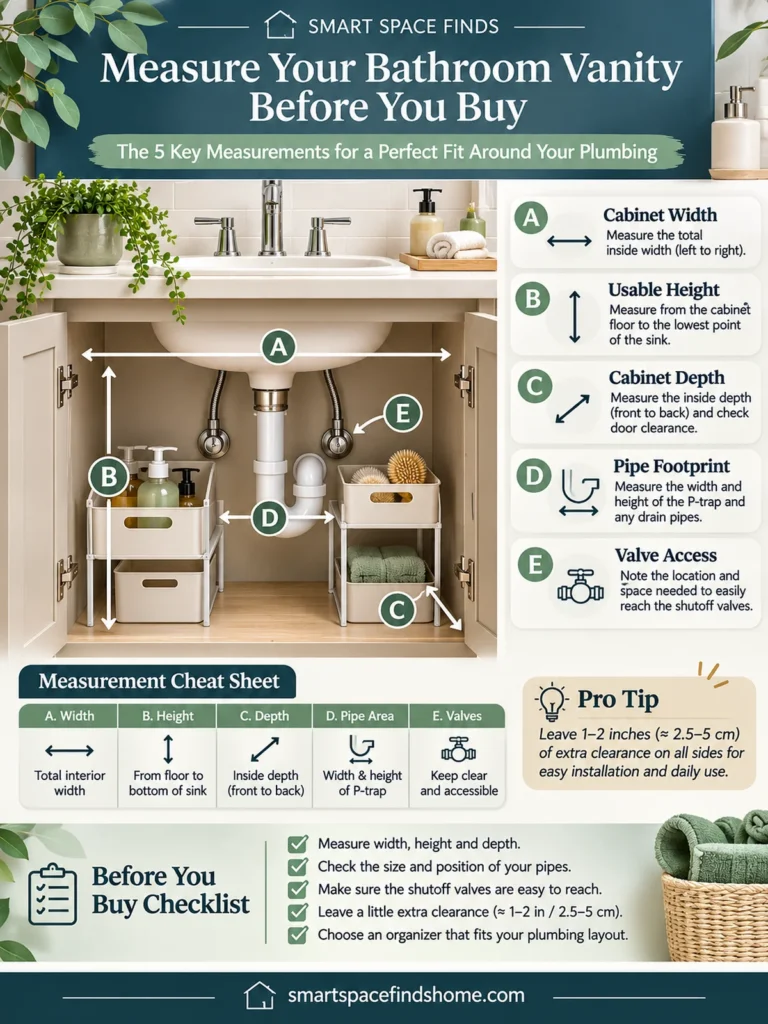
Empty the cabinet and photograph the plumbing. Measure the interior—not the external vanity width—and look at where containers can actually sit and be removed. Note the drain trap, supply lines, back wall, hinges, and the clearance needed to reach the shutoff valves quickly.
- Left and right clear width: measure each unobstructed space beside the trap separately.
- Usable depth: measure from the door’s inner face to the nearest pipe or wall obstruction, accounting for hinges.
- Clear height: measure from the cabinet floor to the lowest pipe, basin, hose, or fitting above each prospective bin.
- Removal path: check whether a bin or sliding shelf can pass through the open doorway without striking hinges.
- Valve access: verify that shutoff valves can be reached promptly without tools or dismantling the whole storage system.
| Area | Record | Purpose |
|---|---|---|
| Left clear width | _____ in. | Left bin or shelf size |
| Right clear width | _____ in. | Right bin or shelf size |
| Usable depth | _____ in. | Prevents door and pipe contact |
| Usable height | _____ in. | Checks tiered shelf clearance |
| Hinge clearance | _____ in. | Ensures lift-out access |
| Shutoff valves | Accessible? Yes / No | Critical for safety and repairs |
Allow a small practical margin instead of purchasing organizers that fit only when forced in. Compare the manufacturer’s assembled dimensions—including handles, supports, and pull-out travel—with your measurements. Never move, loosen, or bend plumbing to accommodate a storage product.
2. Plumbing Fit Guide: Match Storage to Your Pipe Layout
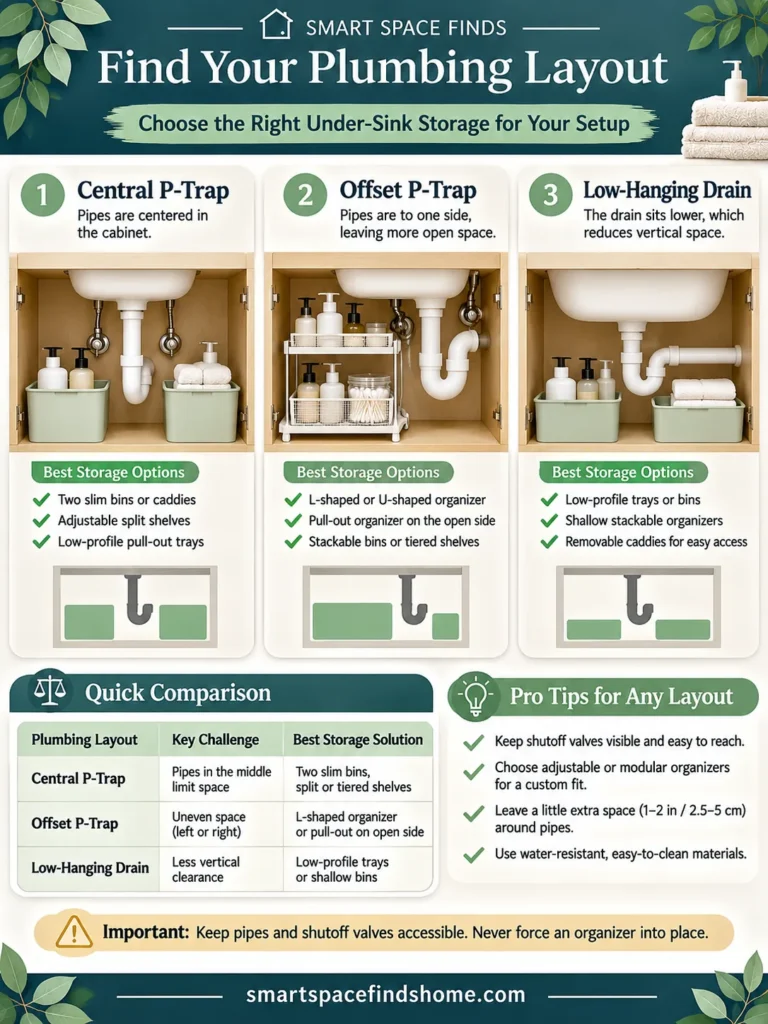
The location and height of your P-trap matter more than a product label claiming “under-sink fit.” Use this table to identify your closest situation before shopping.
| Plumbing layout | Best starting solution | What to avoid |
|---|---|---|
| Central P-trap | Two separate shallow removable bins | A full-width rigid shelf blocking the trap |
| Offset P-trap | Measured L-shaped or narrow pull-out organizer on the clear side | Rails touching pipe connections |
| Low-hanging drain | Single-level low trays | Tall two-tier systems under the trap |
| Wide vanity, rear plumbing | Removable front bins with open access behind | Oversized deep bins hiding valves |
| Very narrow cabinet | One compact caddy and off-site backups | Trying to store every product inside |
| Intruding hinges or supply lines | Shorter, slim lift-out containers | Drawers without full clearance |
Central P-trap: treat both sides as independent zones
Two low bins are usually more practical than a single large box. Keep daily toiletries on the easier-to-reach side and suitable backup supplies on the other. Both bins should lift out without touching fittings. Leave the drain and connections visible enough for routine inspection.
Separate sliding baskets for clear zones beside a central P-trap; verify the width and drawer travel.
Offset drain: use the open side without crowding plumbing
An L-shaped shelf or pull-out unit can make sense if its shape matches the actual trap position. Check the clearance for shelf legs, drawer tracks, and full extension. Do not let the organizer rest on hoses, valves, or drain parts.
Low trap: keep the system simple
If the lowest drain section leaves little vertical room, abandon the idea of stacking shelves. Low trays and small baskets make supplies easier to reach while maintaining a clear view of the plumbing. A useful single-level system is better than a crowded two-tier one.
3. Compare the Best Types of Bathroom Under-Sink Organizers
Shallow washable bins: the most versatile first purchase
Choose wipe-clean containers with grip-friendly edges and enough room to remove them separately. They are especially useful for rental bathrooms, central plumbing, and narrow cabinets. Avoid unusually tall bins, deep opaque boxes hiding valves, and heavy stacks of containers.
Removable clear bins for toiletries and backups; check individual bin dimensions against the free side spaces.
L-shaped pull-out organizers: best for offset pipes
These use the open side of a cabinet while leaving a cutout around the drain. Verify the specific model’s dimensions, extension distance, stability, and suitability for the plumbing footprint. Not every L-shaped model fits every offset drain.
Designed for offset pipes with a clear side zone. Check the L-shaped shelf footprint and valve access.
An alternative pull-out design for unobstructed cabinet zones; measure door clearance and the full slide path.
Adjustable shelves: best when there is genuinely clear height
A freestanding adjustable shelf may add a second level beside pipes. Check that legs and crossbars stand on a stable cabinet floor, clear fittings, and still allow quick removal of containers. Skip the shelf when the space is too tight.
Expandable shelving for wider cabinets; check crossbars, sink clearance, and plumbing cutouts before buying.
Height-adjustable storage where clear vertical room exists; do not obstruct pipes or shutoff valves.
Small caddies: best for daily-care routines
Keep everyday products together in a washable lift-out caddy instead of scattering them throughout the cabinet. A shared bathroom can benefit from separate caddies for different routines. Store only products suitable for the cabinet’s temperature and humidity.
Small personal-care accessories in a dry, unobstructed corner; ensure each drawer opens freely.
Door-mounted accessories: only if the door and hinges allow it
Light accessories can sometimes go on the cabinet door. Before using adhesive or over-door racks, check the humidity, door thickness, installation rules, weight limit, and whether the closed door would collide with plumbing. Heavy cleaning bottles belong on a stable supported surface.
| Type | Best for | Main limitation | Rental suitability |
|---|---|---|---|
| Two removable bins | Central pipes, simple layouts | Limited vertical space | Excellent |
| L-shaped pull-out | Open side beside offset drain | Needs exact sizing | Good if freestanding |
| Adjustable shelf | Wider, taller cabinets | Supports may block fittings | Good if freestanding |
| Slim caddy | Narrow vanity, daily essentials | Limited capacity | Excellent |
| Door organizer | Lightweight accessories | Hinges and load limits | Depends on attachment |
Editorial rule: Choose the simplest organizer that clears plumbing, keeps valves accessible, and comes out easily. More tiers do not automatically mean better storage.
4. Inspect for Leaks and Moisture First
Look for drips, swollen cabinet flooring, discoloration, rust, or musty odors. Do not cover an active moisture problem with a mat or organizer: move stored items out, investigate the cause, and seek qualified repair help where needed. Once the cabinet is dry and sound, use removable, washable bins that allow you to inspect plumbing connections. Avoid absorbent woven baskets or untreated fiberboard on a damp base.
An optional washable-surface aid; this is not a leak-containment tray or a substitute for plumbing repair.
5. Keep Personal-Care Products Separate From Cleaning Chemicals
Organize by purpose: a front caddy for daily essentials, a dry bin for appropriate backups, and a separate safe place for household cleaners. Keep chemicals in their original labeled packaging and follow all child- and pet-safety instructions. Never mix cleaning products or decant them into food containers. When safe separation is impossible, move the cleaners elsewhere rather than overfilling the vanity.
Relocate absorbent paper products if humidity is high. Avoid keeping medications here unless their storage instructions permit the conditions. Keep electrical devices, cords, and loose batteries away from possible plumbing leaks.
6. Three Realistic Vanity Layouts
Layout A: compact vanity with a central trap
Place one low, removable bin on each side of the drain. Use the front of one for daily items and the other for a modest quantity of dry backup products. Leave the center and valve area accessible. No second tier is necessary.
Layout B: standard vanity with offset plumbing
Use a slim L-shaped or pull-out organizer only on the genuinely clear side, with a small independent bin opposite if space allows. Test the full pull-out movement before loading toiletries.
Layout C: shallow rental vanity with difficult hinges
Choose short open-top trays that can be lifted straight out. Store bulky supplies elsewhere, and skip door-mounted accessories if they interfere with closure. For more ideas throughout the room, see our small bathroom storage solutions.
7. A No-Drill Setup in Seven Steps
- Empty the cabinet and sort belongings into daily, backup, relocate, and discard groups.
- Check for plumbing leaks and moisture damage.
- Measure the left, right, front, and usable vertical zones.
- Test bins you already own before buying anything.
- Place only stable, freestanding storage where it clears pipes.
- Keep everyday items at the front and suitable backups behind or beside them.
- Close the doors, then remove every organizer to confirm it can come out freely.
Use restrained, washable finishes rather than prioritizing matching decorative baskets. For other reversible ideas, explore our renter-friendly storage hacks. For reducing clutter above the sink, visit our small bathroom counter organization guide.
8. Shopping Checklist: What to Verify Before Ordering
- Assembled size: width, depth, and height including handles, tracks, and supports.
- Pipe clearance: the cutout or open zone matches your own P-trap and hoses.
- Removal path: the organizer fits past door hinges and can slide or lift out.
- Valve access: shutoff valves remain promptly accessible.
- Moisture resistance: surfaces are suitable for bathroom humidity and easy to wash.
- Stability: the organizer safely holds the intended weight without relying on pipes.
- Installation: any mounting method is appropriate for your tenancy and cabinet.
- Returns: review the return terms in case the real plumbing footprint prevents a fit.
The same measurement mindset applies beneath kitchen sinks, but the fittings and items stored there can differ. Read our under-sink kitchen organization guide for that distinct application.
9. The Five-Minute Weekly Reset
Lift out the daily-use bin, remove packaging, wipe accessible surfaces, and check that products are sealed. Look for new drips, stains, and musty odors. Once a month, remove all bins and inspect the floor and pipe joints. A well-designed storage system makes leaks easier—not harder—to notice.
10. What Not to Store Under a Bathroom Sink
- Medicines that require dry, stable storage conditions.
- Electrical appliances, cords, or batteries exposed to moisture.
- Unlabeled, leaking, or open cleaning chemicals.
- Cleaning products that children or pets can reach.
- Paper goods in persistently damp cabinets.
- Heavy equipment that may strike or damage fittings.
- Any item or rack that obstructs shutoff valves.
Frequently Asked Questions
What is the best way to organize under a bathroom sink with pipes in the middle?
Use two small, removable shallow bins on opposite sides of the P-trap after measuring each clear zone. Do not hide or obstruct valves and plumbing connections.
Can I put a shelf over the drain pipe?
Only when the shelf is designed to clear plumbing without touching or supporting any pipes, hoses, or valves, and the fittings remain accessible.
Are pull-out organizers better than ordinary bins?
Pull-out units may improve access in deep cabinets with free side space. In narrow or irregular vanities, simple lift-out bins often work better.
What if my bathroom vanity is extremely narrow?
Keep one small caddy for daily essentials, store large backups elsewhere, and measure the actual clear footprint rather than the exterior cabinet width.
Can renters organize under a sink without drilling?
Yes. Freestanding bins, trays, caddies, and appropriately sized adjustable shelves can be reversible, provided they do not obstruct the plumbing.
Should I put a waterproof mat under the sink?
A removable mat or tray may simplify cleaning when the cabinet is dry and sound. It must be easy to lift for inspection and should never hide an ongoing leak.
The Bottom Line
Effective bathroom under-sink storage is measured, removable, moisture-conscious, and designed for the pipes you actually have. Start with two small bins where possible, add specialized shelving only when the layout justifies it, and always preserve access for inspections and repairs.