
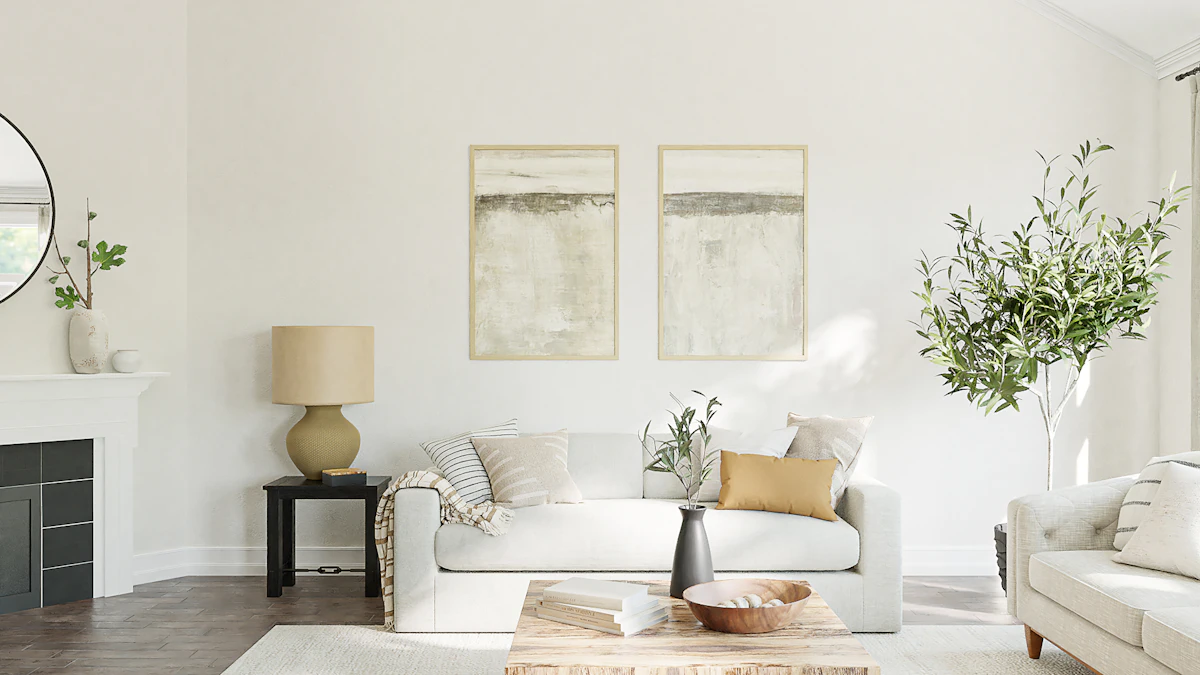
The practical home edit / Affordable transformations
The best budget home makeover is not the one with the biggest reveal. It is the one that makes a room noticeably easier, calmer, or more enjoyable to use—without a renovation bill or a cart full of things you do not need.
Whether you rent a small apartment or own a home that feels overdue for a refresh, these five high-impact ideas give you a starting point. You will find realistic planning ranges, measurement checks, rental caveats, and a simple way to decide what deserves your money first.
Picture the room at 7 p.m., not just at noon when the sunlight makes everything look expensive. Is there a reading light where you need it? Can you reach the drawer without fighting the handle? Do you actually like sitting here? Those ordinary moments are where a successful makeover proves itself.
For the five ideas below, the question is never simply “Will it look better?” It is “Will it work better for the way I live?”
FIELD GUIDE / 01
The 20-minute room diagnosis
Before you buy a single thing, stand in the doorway and take four photographs: one wide room view, the busiest surface, the area you use after dark, and the one detail that annoys you most. Then ask what would make a normal Tuesday easier.
This is a decision exercise, not a claimed scientific test. You are looking for a better starting point, not a dramatic photograph.
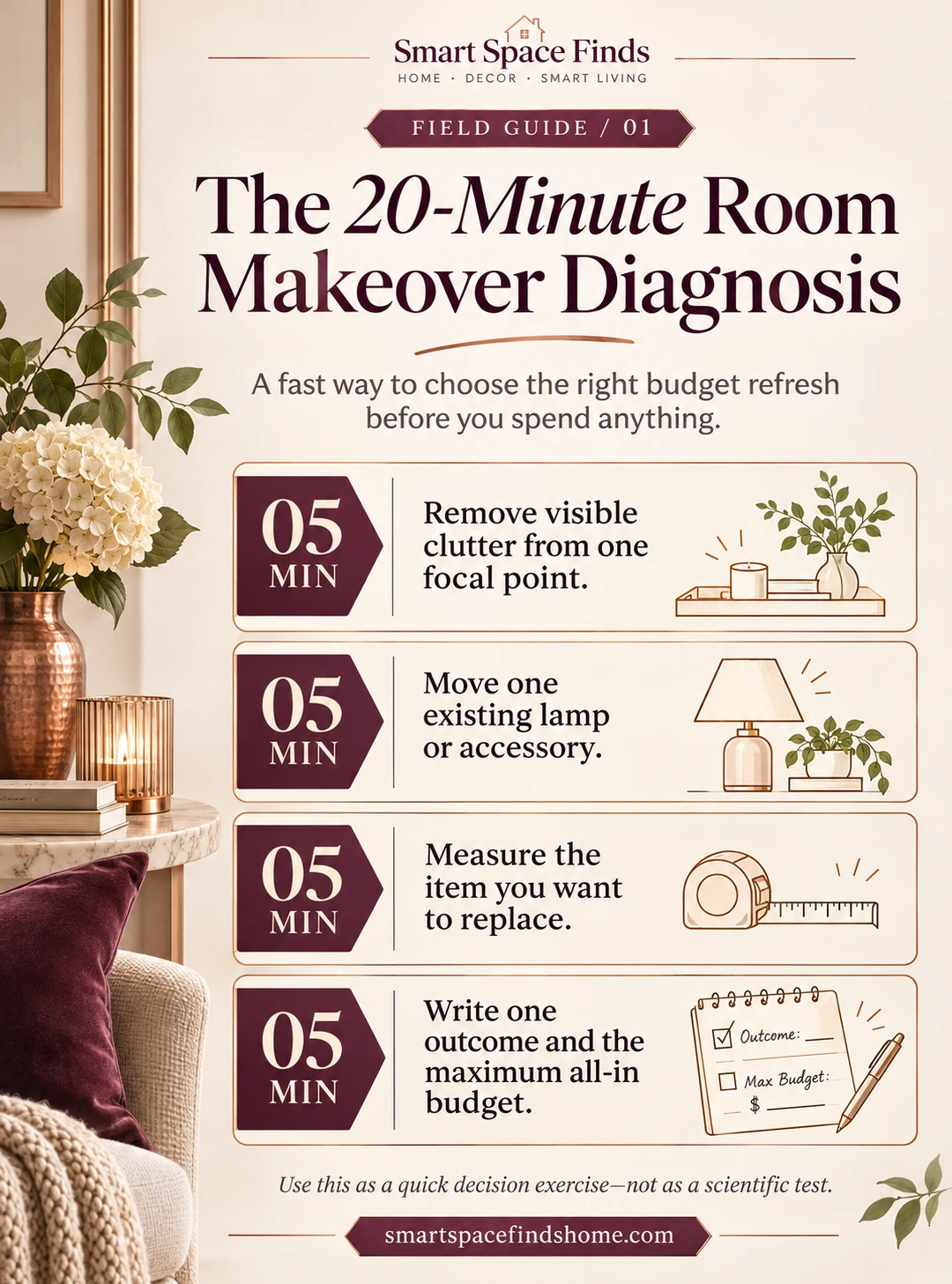
Which budget makeover is actually worth it?
Use this decision table before committing. The following dollar figures are illustrative DIY planning allowances, not verified retailer quotes; material, quantity, local taxes, tools, and labor can move your actual total.
| Makeover | Planning allowance | Best payoff | Before buying |
|---|---|---|---|
| Cabinet hardware | $20–$90 | More cohesive kitchen or vanity | Count pulls and measure screw spacing |
| Pillow covers + throw | $20–$80 | Warmer living room without replacing furniture | Measure inserts; check washing needs |
| Removable decorative accent | $25–$120+ | A focal point without a full renovation | Lease, wall finish, maker’s restrictions, test patch |
| Layered lighting | $0–$100 | Better evenings and task visibility | Use rated bulbs and suitable fixtures |
| Furniture repair + restyle | $0–$75+ | Extend life of a piece you already like | Check structural soundness first |
The makeover filter
Fix → Feel → Finish
Fix: Identify a real inconvenience. Feel: Specify the everyday improvement you want. Finish: Select the smallest visible change that delivers both. This order protects you from impulse decorating.
Start with your problem—not a shopping cart
Looks dated? Use cohesive hardware, existing textiles, or fewer accessories.
Feels awkward? Rework lighting, clear a path, or fix something you touch daily.
Living in a rental? Start with portable decor and preserve all original fittings.
Only one afternoon? Prioritize reversible, low-mess changes.
01 / Refresh cabinet hardware—not the whole kitchen
A kitchen can look inconsistent simply because its knobs and pulls have mixed shapes or finishes. Replacing compatible hardware is a controlled edit, rather than a cabinet makeover that needs paint, sanding, and days of downtime.
How to do it well
- Count every knob and pull, including drawers, pantry doors, and the bathroom vanity if you are coordinating finishes.
- For pulls, measure center-to-center between existing screw holes in millimeters or inches. Do not estimate by overall handle length.
- Check mounting-screw length against the cabinet front thickness, then order one sample before buying the entire set.
- Keep the old hardware in a labeled bag if renting; photograph original placement and avoid drilling new holes unless permitted.
Editorial styling note: Brushed nickel pairs quietly with many appliances; darker hardware produces stronger contrast, but only when it works with the room’s other visible metals. Consistency matters more than chasing a trend.
Cabinet Hardware Worth Considering
Choose the same hole spacing and screw length as your existing hardware.
A coordinated matte-black update; check 3-inch hole spacing.
A consistent nickel finish across multiple cabinets.
A warm metallic accent for compatible doors and drawers.
Single-hole knobs for a simple cohesive refresh.
An alternative to pulls for compatible cabinet fronts.
Affiliate disclosure: As an Amazon Associate, Smart Space Finds earns from qualifying purchases. Product options and availability may change. Confirm size, color, compatibility and current offer on Amazon before ordering.
02 / Make the sofa look considered with textiles
A sofa does not need to be replaced because its styling feels tired. First clean the upholstery according to its care label and rearrange the pillows you already own. Then use a small, purposeful textile palette rather than a pile of matching accessories.
The two-texture formula
Choose one grounded base shade from the sofa, rug, or curtains; introduce one secondary color; and vary texture rather than adding more patterns. Think oatmeal linen-look covers, a muted olive cotton throw, and a single patterned cushion—not six unrelated accent colors.
Measure before ordering: Compare your pillow insert dimensions with the manufacturer’s recommended cover fit; consider zipper construction, cleaning instructions, and whether the textile can stand up to pets or frequent use. Buy covers rather than new inserts when practical.
Best for: Renters, first apartments, small living rooms, and anyone who wants a noticeable weekend refresh without modifying surfaces.
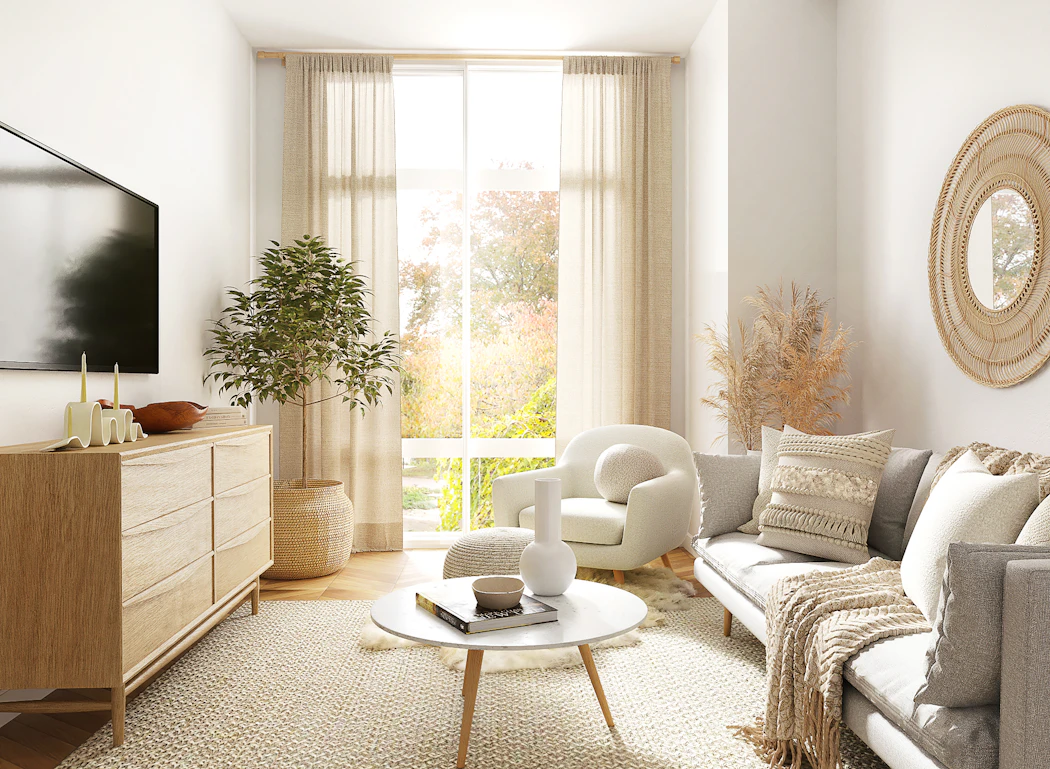
Soft Textures, Small Budget
Covers are often sold without inserts; check size and care instructions.
Light tonal texture for existing cushions.
A coordinated muted-green accent for the sofa.
A softer contrast to linen and corduroy.
A comfort-focused layer for the seating area.
Warm earth tones to anchor a neutral palette.
Affiliate disclosure: As an Amazon Associate, Smart Space Finds earns from qualifying purchases. Product options and availability may change. Confirm size, color, compatibility and current offer on Amazon before ordering.
03 / Introduce a temporary accent—but be realistic about removal
Removable wallpaper, decorative film, and adhesive accents can provide a dramatic visual shift. They are not automatically damage-free. Adhesive performance depends on paint condition, wall texture, moisture, preparation, time installed, and removal method.
The renter-safe decision sequence
- Read the lease or obtain written permission before applying wall coverings.
- Check the manufacturer’s compatibility guidance, especially for newly painted, textured, repaired, or damp walls.
- Order a sample, test an inconspicuous area, and follow the stated waiting and removal directions.
- Calculate wall area and pattern repeat, adding sensible waste before purchasing.
- Avoid heat-affected, wet, or frequently splashed surfaces unless a product specifically permits that setting.
If the wall is unsuitable, change the room with a freestanding folding screen, framed art leaning securely on furniture, or a textile panel instead. Secure tall and heavy furnishings against tipping using an appropriate method and the property rules.
Removable Accent Ideas
Removable does not mean damage-free: always test finishes and consult rental restrictions.
A subtle texture-led accent for suitable walls.
A patterned option for a carefully tested accent.
A strong color accent without a full repaint.
A softer botanical statement.
A neutral option for compatible surfaces.
Affiliate disclosure: As an Amazon Associate, Smart Space Finds earns from qualifying purchases. Product options and availability may change. Confirm size, color, compatibility and current offer on Amazon before ordering.
04 / Change how the room feels with layered lighting
Lighting is often the highest-return makeover because it changes the way a room functions after sunset. Begin for free: clean dusty shades, open window treatments when privacy allows, and move an existing lamp where it supports reading, cooking, or relaxing.
For a cozy evening setting, many people prefer warm-white bulbs around 2700K, while work areas may benefit from different color temperatures. Check the fixture’s maximum permitted wattage, bulb base, dimmer compatibility, ventilation requirements, and manufacturer directions. Never improvise electrical modifications.
Try this tonight: Move a lamp from behind the seating to beside the reading chair and compare the comfort and visibility before spending anything.
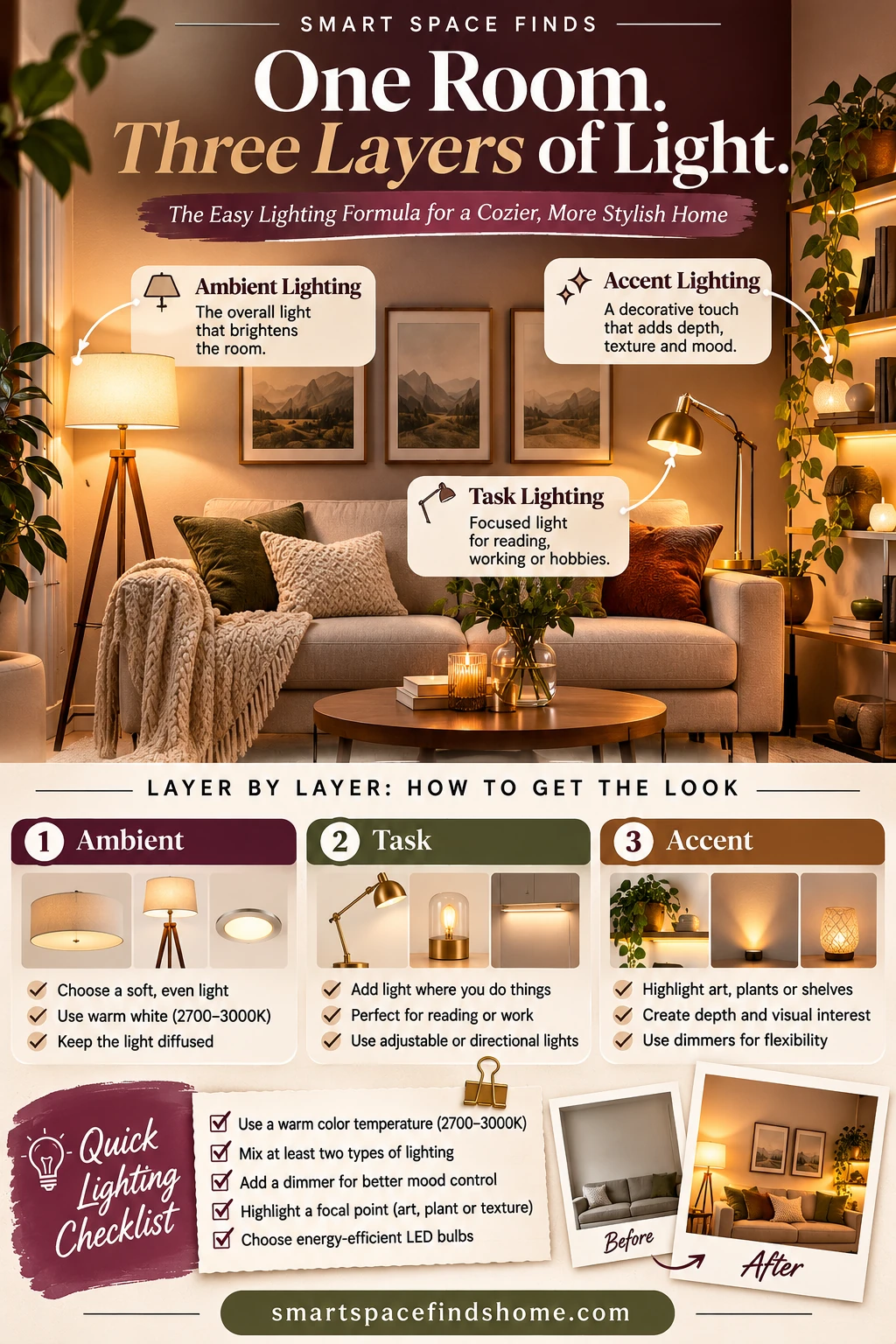
Make the Lighting Work Harder
Check bulb bases, switch access, electrical compatibility and placement before buying.
Compact task or evening light.
Portable lighting for flexible placement.
A simple soft-light accent for a small room.
Color and mood control with compatible fixtures.
A single-bulb starting point for smart lighting.
Affiliate disclosure: As an Amazon Associate, Smart Space Finds earns from qualifying purchases. Product options and availability may change. Confirm size, color, compatibility and current offer on Amazon before ordering.
05 / Repair, reposition, and restyle one piece of furniture
An outdated cabinet or side table may need a better location or minor maintenance, not replacement. Tighten permitted fittings, replace worn feet where appropriate, clean the surface with material-compatible products, and remove visual clutter from around it.
A practical furniture triage
- Keep and restyle: Structurally sound, useful, and appropriately sized for the room.
- Repair with care: Cosmetic scratches, a loose non-load-bearing handle, or worn protective pads.
- Get specialist help or replace: Structural instability, broken weight-bearing joints, tipping risk, severe water damage, or uncertain electrical components.
Restyle with a restrained grouping: one functional object, one personal item, and enough negative space that the furniture is still useful. A room looks intentional when there is somewhere to set down a cup or keys.
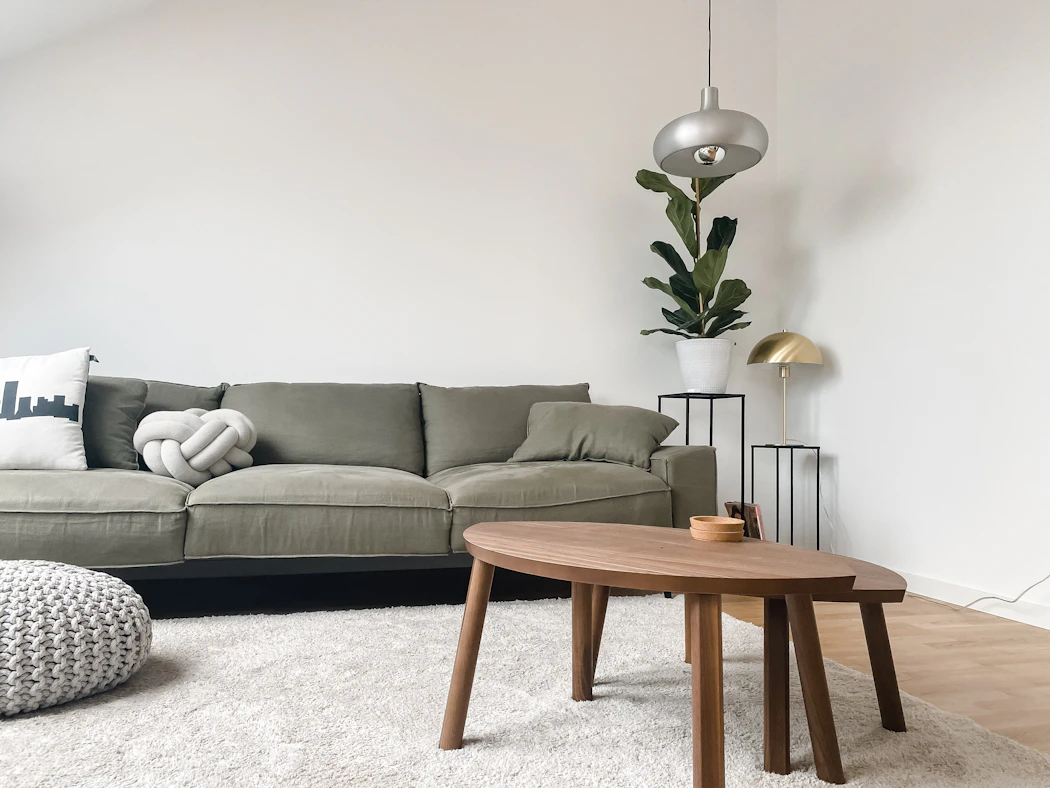
Refresh, Repair & Protect
Patch-test repair products and match the original furniture finish.
Minor cosmetic scratch and finish touch-ups.
A controlled repair for suitable wood surfaces.
Floor protection for compatible furniture legs.
A smaller option for chair and table feet.
Mixed sizes for multiple furniture feet.
Affiliate disclosure: As an Amazon Associate, Smart Space Finds earns from qualifying purchases. Product options and availability may change. Confirm size, color, compatibility and current offer on Amazon before ordering.
FIELD GUIDE / 02
Use a simple project scorecard before spending
Give each proposed update a 0, 1, or 2 in the four areas below. Add the numbers. This is a practical editorial decision aid—not a scientifically validated rating system.
| Criterion | 0 points | 1 point | 2 points |
|---|---|---|---|
| Daily usefulness | Mostly for photos | Occasional benefit | Solves a daily annoyance |
| Cost fit | Above your cap | Only just fits | Comfortably under cap |
| Reversibility | Permanent or risky | Some effort to undo | Easy to reverse |
| Execution | Needs specialist work | Several steps/tools | Simple and safe |
Interpretation: 7–8 means a good candidate to test first; 4–6 means refine the scope; 0–3 means investigate another solution. Safety, permissions, and suitability override every score.
Three makeover budgets that actually make sense
| Budget | Suggested approach | What to avoid |
|---|---|---|
| $0 | Clean, edit surfaces, reposition lamps, exchange decor between rooms, and test a furniture layout. | Buying storage before deciding what to keep. |
| $50 | Pick one outcome: fresh cushion covers or a lamp/bulb refresh or a small repair. | Splitting $50 among many inconsequential purchases. |
| $150 | Choose one primary visual improvement and reserve a portion for tools, samples, fasteners, tax, and surprises. | Ordering an entire wall covering or hardware batch without testing first. |
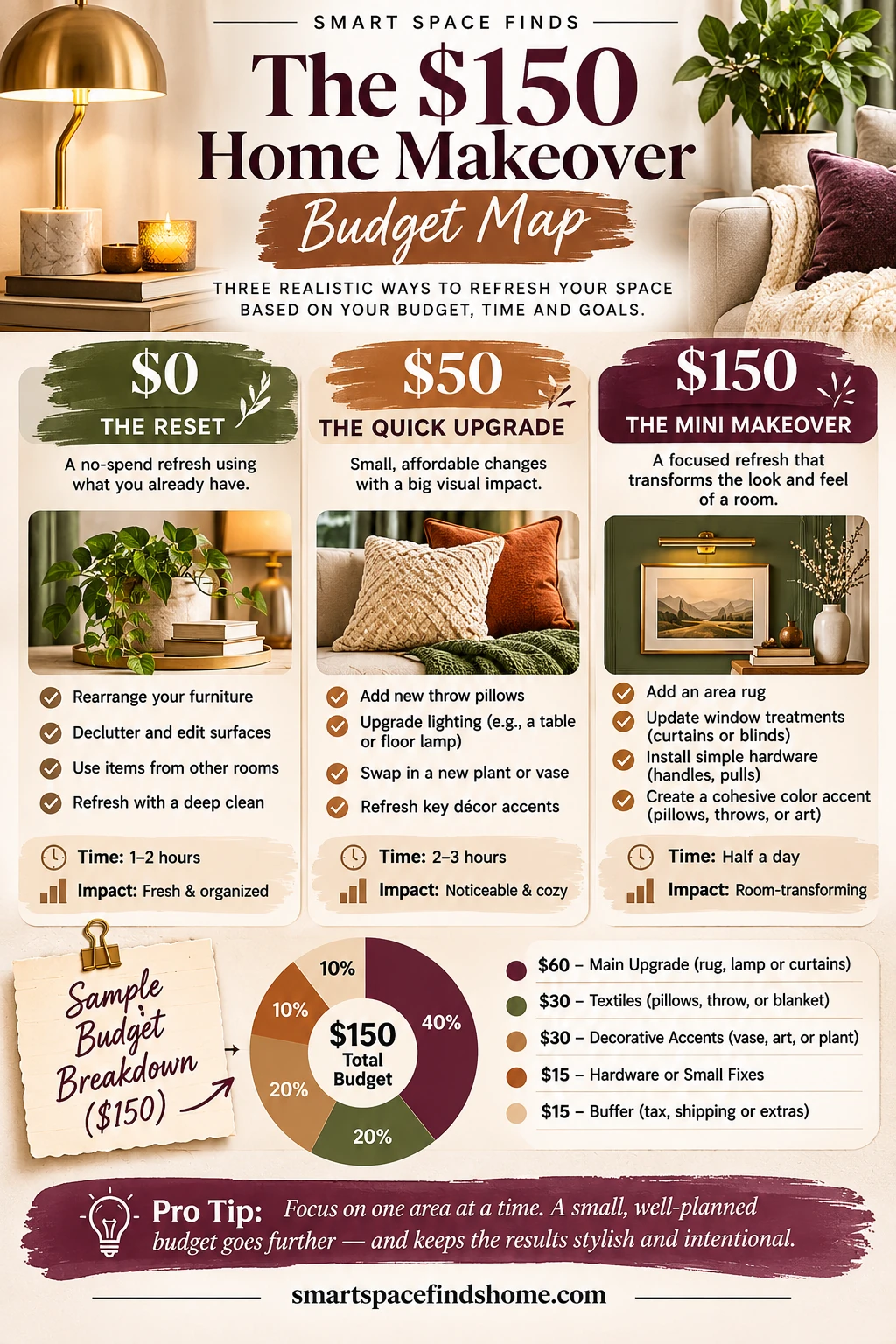
Calculate the full makeover budget
Remember: the product price is not always the project price. Count packs, tools, screws, delivery, applicable tax, and a small buffer before ordering.
Example, for planning only: Two hardware packs at $24 each ($48), $8 for replacement screws, $6 delivery, and a $10 buffer total $72 before sales tax. On a $60 spending cap, change the scope before you buy—not after.
The Weekend Makeover Toolkit
Buy only tools your specific project requires; you may already own suitable alternatives.
Helps align new cabinet hardware accurately.
Starter tools for simple household adjustments.
Basic drivers for small maintenance tasks.
A powered option for suitable assembly work.
Useful for careful application of peel-and-stick film.
Affiliate disclosure: As an Amazon Associate, Smart Space Finds earns from qualifying purchases. Product options and availability may change. Confirm size, color, compatibility and current offer on Amazon before ordering.
Where to start, room by room
Kitchen: Fix a crowded prep surface, then assess cabinet pulls or under-cabinet task visibility. Living room: Check furniture spacing and lighting before buying a rug or pillows. Bedroom: Prioritize clear bedside access, comfortable lighting, and textiles you can maintain. Entryway: Design a landing spot for keys, bags, and shoes before introducing decorative objects. Bathroom: Improve frequently touched hardware or towels first; keep adhesive experiments away from unsupported wet zones.
The one-weekend makeover plan
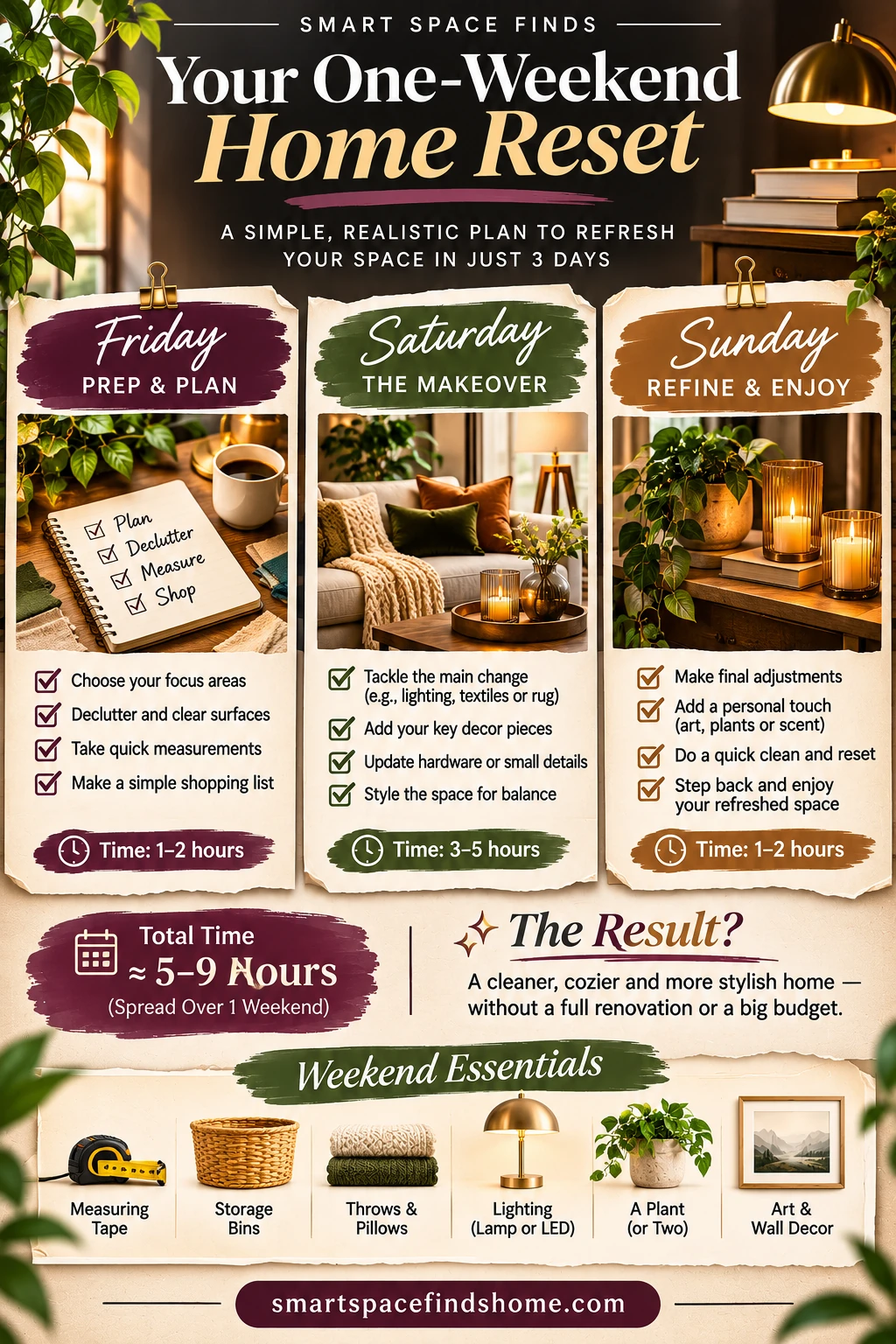
The no-regrets shopping checklist
- □ I know which problem the product solves.
- □ I checked dimensions, quantity, and compatibility.
- □ I included tools, consumables, tax, and returns in the budget.
- □ My lease and surface conditions allow the project.
- □ I know the cleaning, upkeep, and removal requirements.
- □ I would still want this change without a before-and-after photo.
FIELD GUIDE / 03
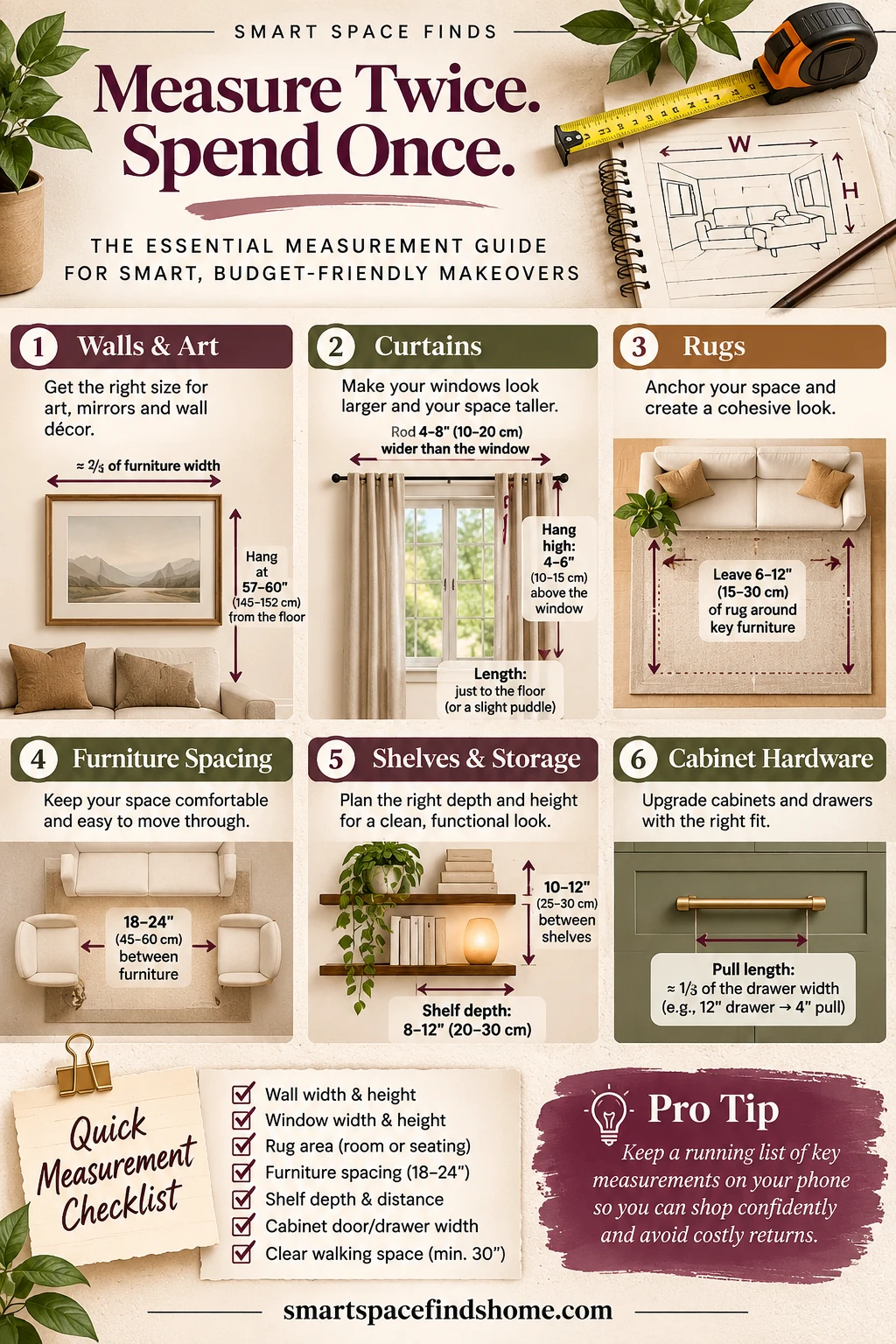
The measurements that prevent expensive do-overs
Center-to-center hole spacing, screw length, door thickness, total quantity.
Insert width and height, cover closure, shrinkage and washing instructions.
Usable surface width × height, pattern repeat, sample cost, removal instructions.
Bulb base, fixture wattage limit, plug reach, switch access, dimmer compatibility.
Before checkout: photograph your measurements, review return terms, and confirm whether a trial piece can be ordered. Keep packaging until the fit is confirmed.
Five budget-makeover mistakes to avoid
- Buying first, measuring later. Incompatible hardware and wrong-size covers cost more to correct.
- Confusing removable with risk-free. Test surfaces rather than trusting a marketing label.
- Styling over maintenance. Fix a loose fitting or lighting issue before hiding it with decor.
- Chasing an artificial before-and-after. Compare equivalent lighting, angles, and use conditions.
- Overdecorating a small room. Leave functional open space; not every wall and surface needs an accessory.
Make the result feel intentionally designed
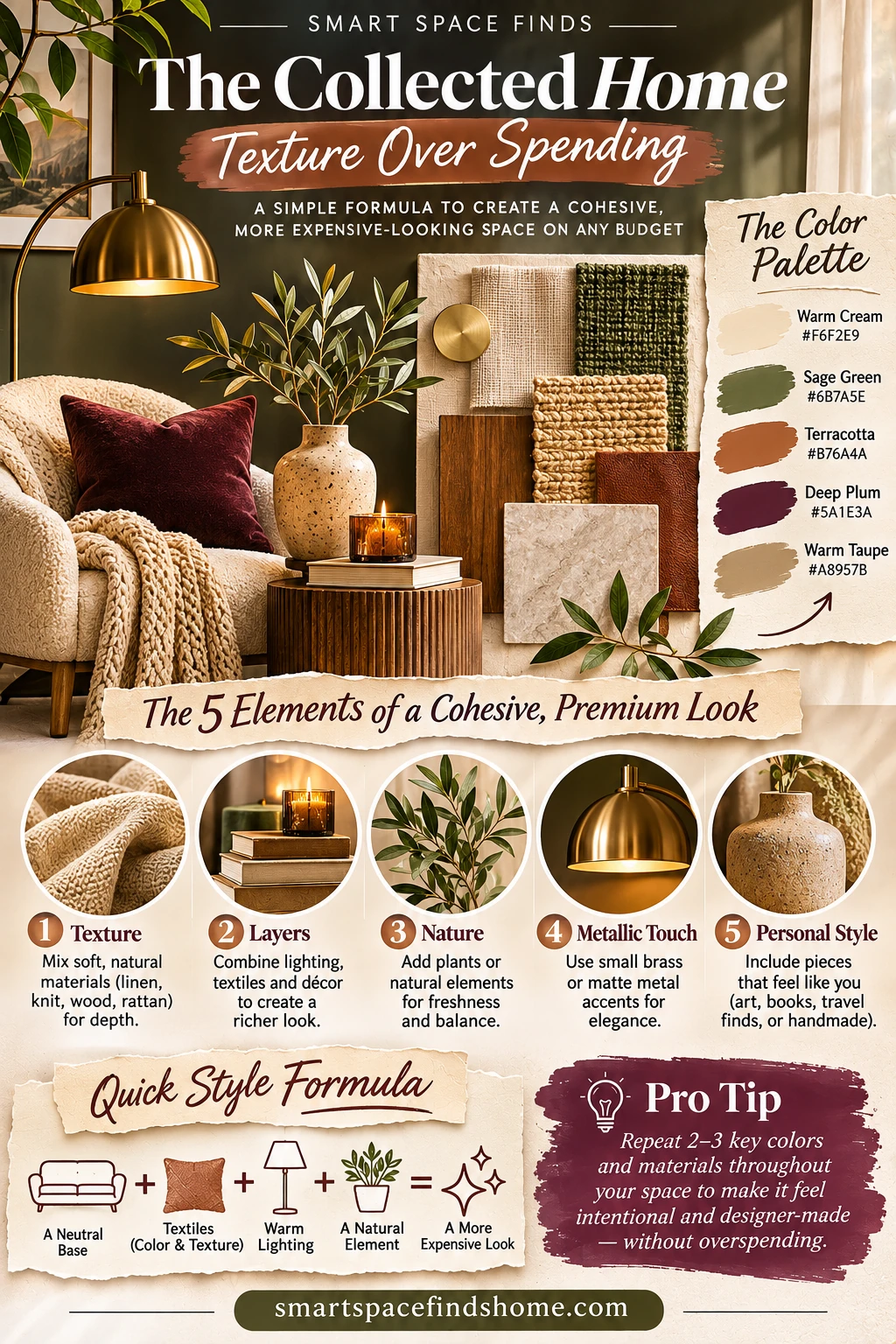
Begin with one anchor you already own: a wood cabinet, a charcoal sofa, or a cream rug. Choose one dominant neutral, one supporting shade, and one texture. Repeat an existing material just twice. You do not have to match every finish or fill every empty corner.
Example palette: warm cream / soft taupe / olive / charcoal. Adapt these to the pieces already in your home.
Remove visual distractions before buying decor.
Echo one tone or finish for cohesion.
Keep the room usable for an ordinary Tuesday.
Budget home makeover FAQs
What is the cheapest way to make a room look better?
Start with a no-cost reset: remove unnecessary items, clean surfaces, reposition furniture, and use lamps you already own. If the room still needs an update, choose one focused purchase based on its actual use.
Can I makeover a rental without damaging it?
You can make many low-intervention changes using movable textiles, existing furniture, and freestanding decor. Adhesives, wall attachments, and even so-called removable finishes can carry risks, so consult the lease, product instructions, and a test area.
Is $100 enough for a noticeable home refresh?
It can be, particularly when the budget targets one feature such as cushions, compatible hardware, or lighting. The result depends on existing room conditions and the number of items required.
Should I buy new furniture for a budget makeover?
Usually not as a first move. Assess layout, repairs, lighting, and textiles before replacing a structurally sound piece that already fits.
How do I make a small room feel more expensive?
A deliberate palette, well-positioned light, suitable furniture scale, tidier visible surfaces, and appropriately sized textiles often create a more composed result than adding decorative objects.
This editorial guide favors low-intervention changes, clear measurements, reversible choices, and daily usefulness. Dollar figures are illustrative planning allowances, not verified current product prices. Surface compatibility, permits, lease conditions, electrical safety, and project complexity vary. Consult qualified professionals for structural or electrical work.
THE ONE-WEEK TEST
What changes after the camera goes away?
One week after your makeover, ask three questions: Do I reach for the room more often? Is it easier to clean or use? Would I repeat this purchase? If the answer is no, you have useful information. Reposition, return, or rethink rather than buying another decorative fix.
The final edit
The smartest makeover respects the home you already have. Choose one problem, make one meaningful change, and evaluate it during an ordinary week. A good result is easier living—not simply a more dramatic photograph.
Keep exploring: how to make a small living room feel bigger and budget-friendly bathroom refresh ideas.