
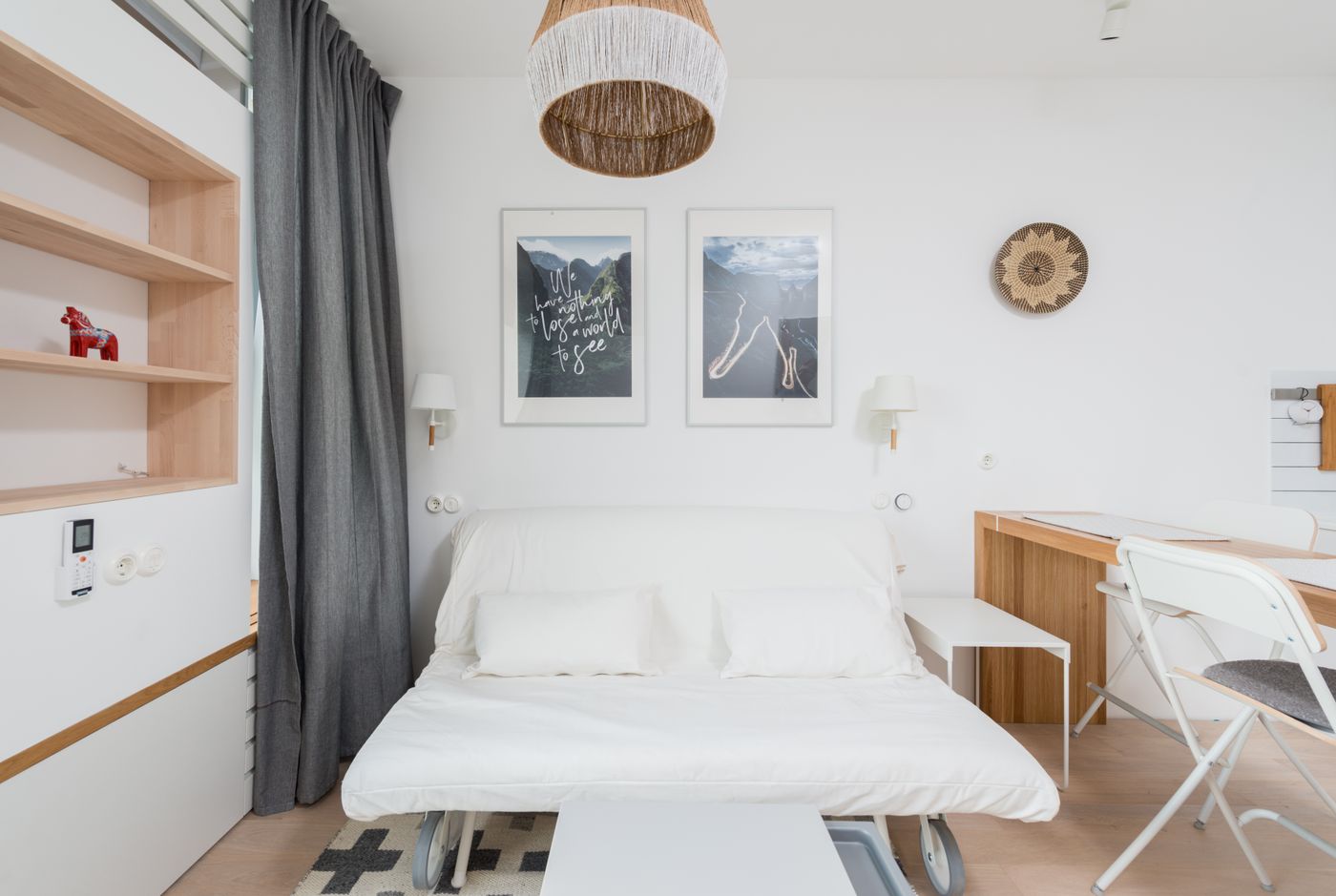
A studio benefits most from furniture that performs two useful functions without making either one awkward. The ideas below focus on affordable, attainable changes, with particular attention to homes where every square foot has to work harder.
THE SMALL-SPACE EDIT · SMART SPACE FINDS
Make one room work beautifully for sleep, work, dining, and downtime—without filling every inch of floor.
How to Evaluate Multifunctional Furniture Before Buying
Measure the furniture in every operating position, not just when folded away. A sofa bed needs room to unfold, a lift-top table needs knee clearance, and a storage ottoman needs space for its lid. Record door widths and stair access before ordering bulky pieces.
Compare the quality of moving mechanisms, return policies, replacement parts and cleaning requirements. Favor furniture that performs its main everyday job comfortably; a clever second function is not useful if the primary seat, desk or bed is awkward.
Multifunctional Furniture for Studio Apartments: What Works in Real Life
In a studio, one piece of furniture may have to support sleeping, working, eating and entertaining. The most successful choices begin with the task performed every day, not the cleverest transformation. Before buying, draw the room to scale and mark doors, radiators, windows, walkways and the full dimensions of furniture when opened.
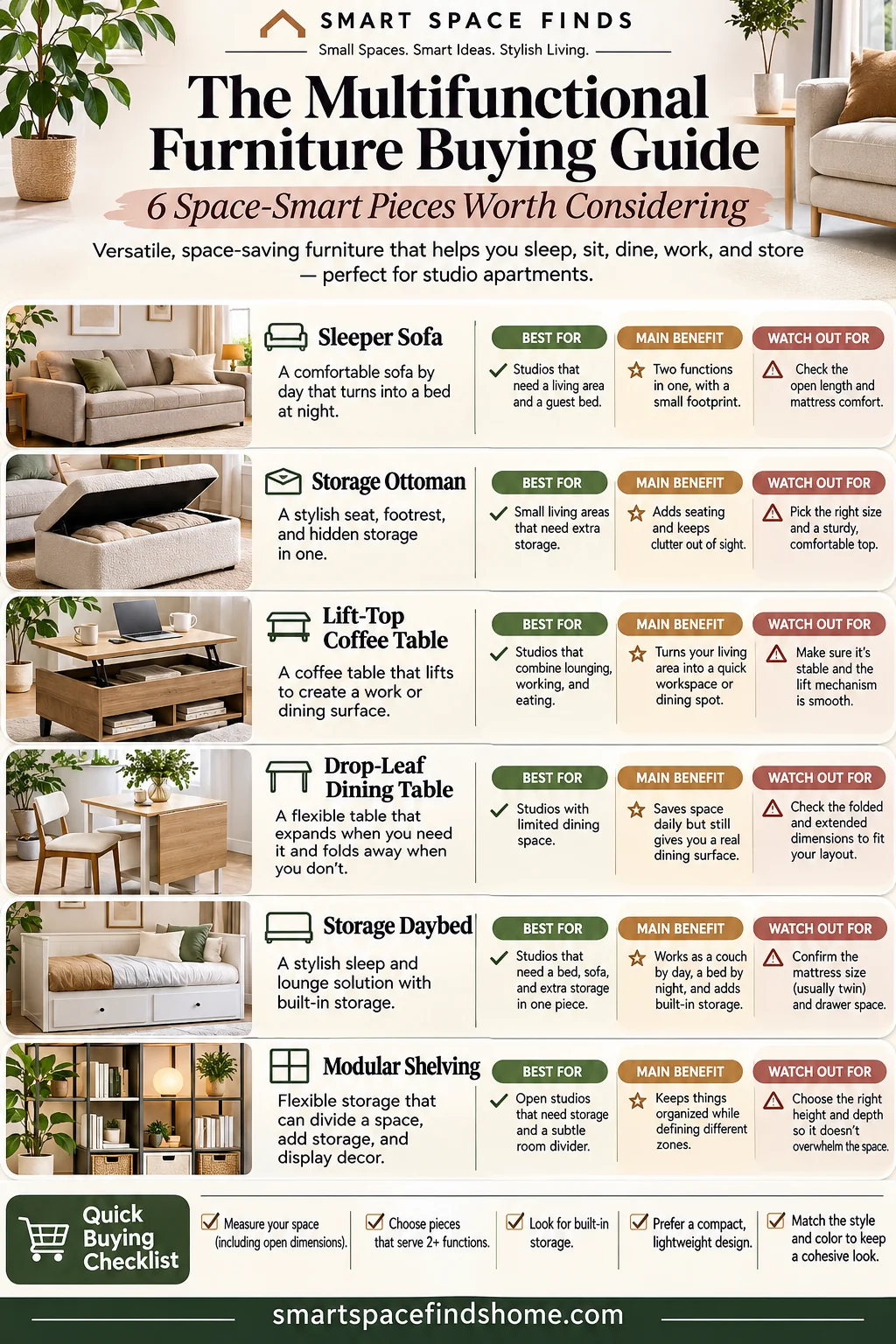
Compare the six most useful furniture types
| Furniture type | Best for | Important trade-off |
|---|---|---|
| Storage ottoman | Blankets, games and occasional seating | Check lid access and weight rating |
| Lift-top coffee table | Occasional laptop use and dining | Less ergonomic than a dedicated desk |
| Drop-leaf dining table | Flexible meals and occasional guests | Requires wall and chair clearance |
| Daybed or sofa bed | Combining sleeping and seating | Mattress comfort and opening mechanism matter |
| Wall-mounted fold-down desk | Short work sessions | Wall fixing and lease restrictions |
| Modular shelving with closed storage | Separating zones without building walls | Depth, stability and anti-tip protection |
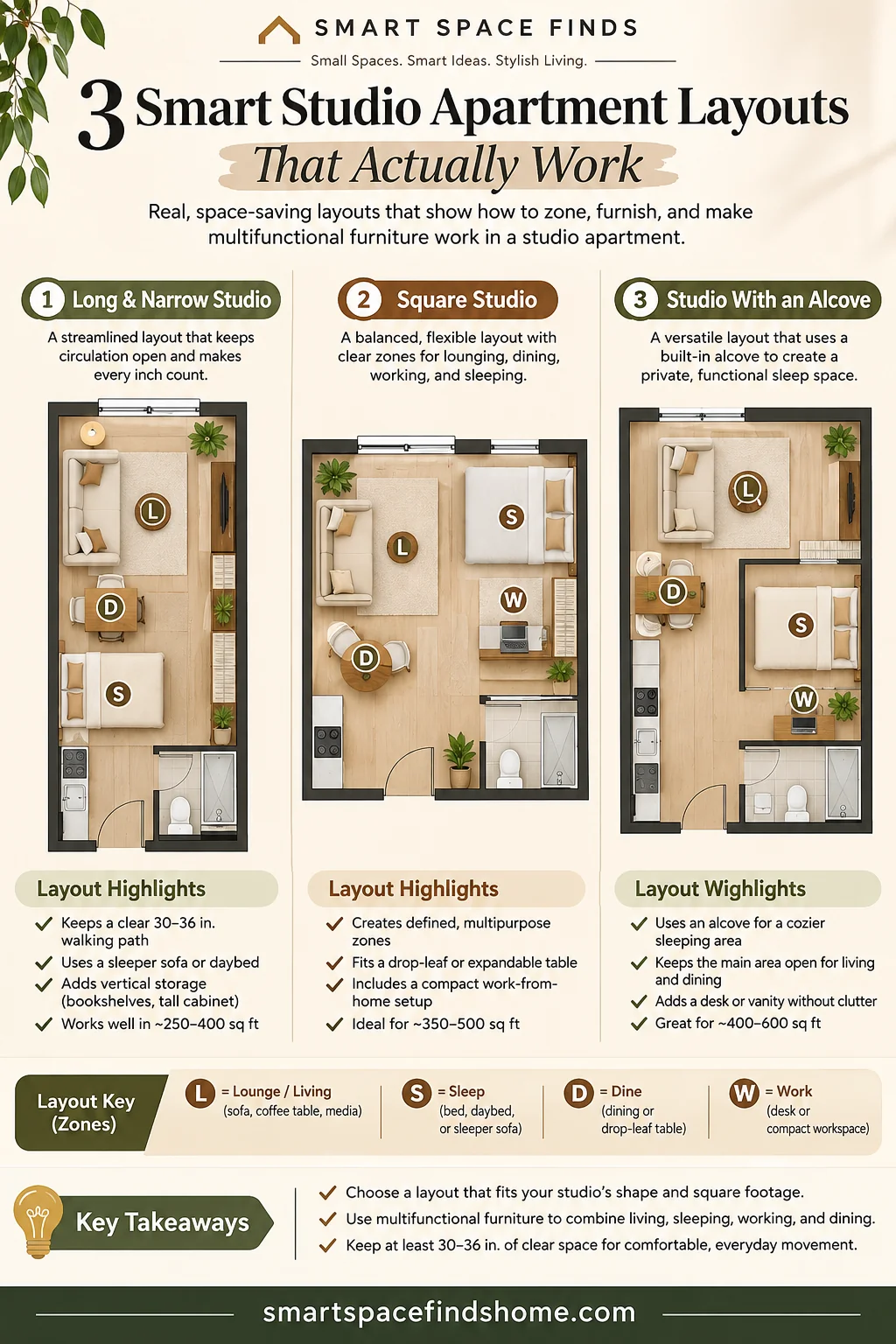
Choose by floor plan, not by product photograph
Narrow studio: favor shallow storage and furniture that opens parallel to the longest wall. Square studio: use a convertible table or low modular shelving to define zones without obstructing daylight. Studio with an alcove: reserve that recess for a desk or sleeping setup if ventilation and access remain practical.
For every option, measure three footprints: closed, operating and circulation. A folding desk that saves space when shut is a poor fit if its opened surface blocks the bathroom door. Check delivery dimensions as carefully as the final assembled dimensions.
Seven-point pre-purchase checklist
- Will the main function be comfortable for daily use?
- Does it open fully without blocking doorways?
- Can you assemble or move it through the building?
- Are fabrics, hinges and surfaces easy to clean?
- Is the weight capacity documented by the manufacturer?
- Are spare parts, return terms and warranty clear?
- Does the purchase replace something you already own rather than adding clutter?
Common mistakes to avoid
Avoid buying a sleeper sofa without testing sleep comfort, choosing a lift-top table as a substitute for a full-time ergonomic workstation, or positioning tall unsecured furniture where it could tip. In rental properties, confirm whether the building and lease permit permanent wall fixings.
Build a coordinated storage system
Pair multifunctional furniture with a consistent organization plan rather than unrelated storage containers. Our small-space storage ideas cover vertical opportunities and underused gaps. For a compact lounge, the small living room storage guide offers furniture-led layouts, while studio room divider ideas help define zones without permanent construction.
Frequently asked questions
What is the best multifunctional furniture for a very small studio?
Start with a piece that solves the room’s largest everyday constraint. That may be a comfortable sleeper sofa in a sleeping-living area, a drop-leaf table when dining space is scarce, or an ottoman if bulky soft goods need concealed storage.
Are Murphy beds suitable for renters?
Many models require structural anchoring. Never assume a freestanding look means anchoring is unnecessary; follow the manufacturer’s installation requirements and seek landlord permission where needed.
Is convertible furniture always worth the premium?
No. Compare the real cost of each function and the effort needed to convert it every day. Two simple, appropriately sized pieces can outperform one expensive but awkward mechanism.
Affiliate disclosure: As an Amazon Associate, Smart Space Finds earns from qualifying purchases. Product availability and specifications may change.
Shop the Transformation — The Sleep & Lounge Studio
Flexible surfaces and hidden storage that support a comfortable small-space lounge.
Prices, colors and stock can change. Confirm the selected variation on Amazon.
Measure Your Studio Before You Shop
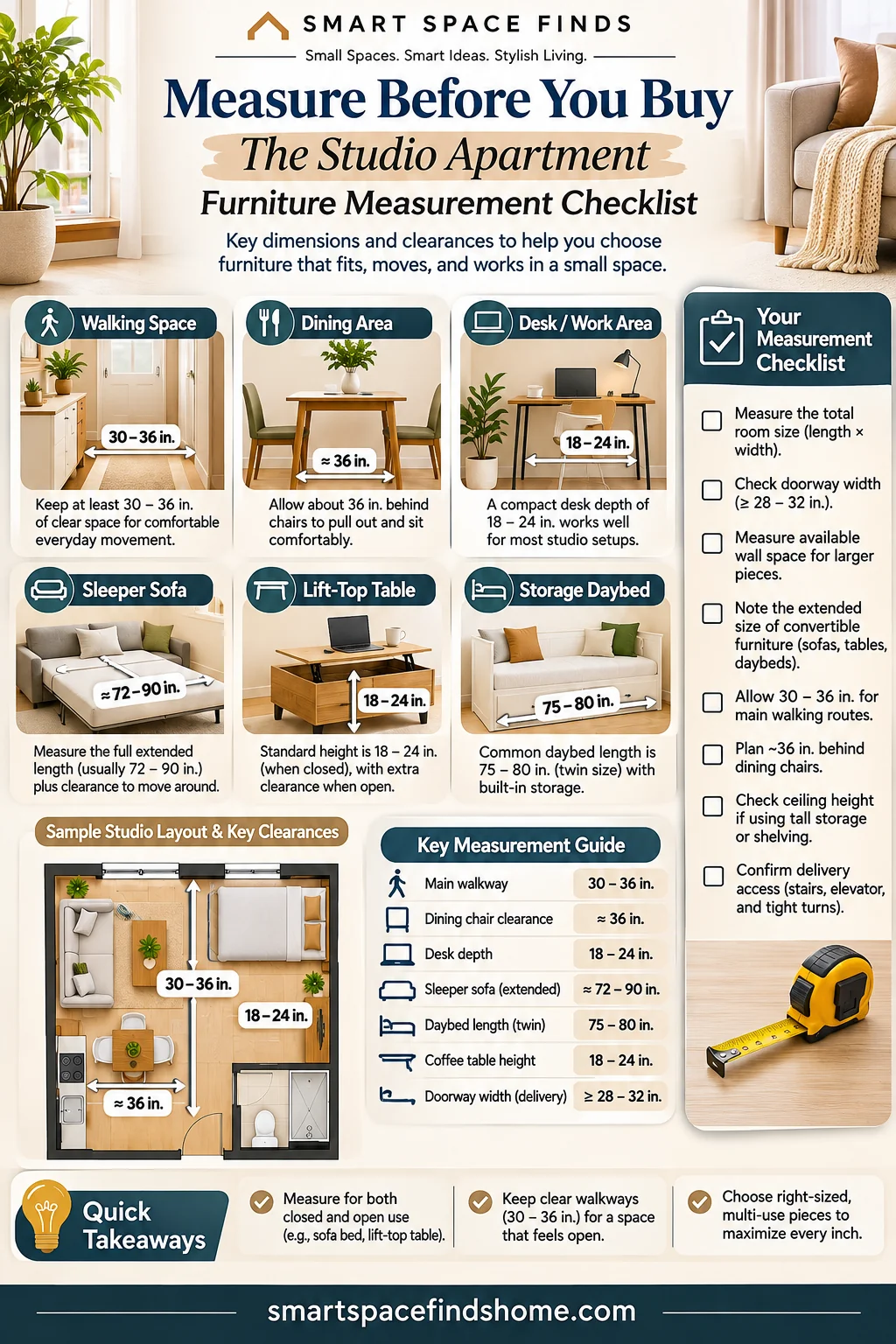
Use a tape measure and a simple floor-plan sketch before comparing furniture. Record the room’s wall lengths, ceiling height, window swings, baseboards, heater locations, electrical outlets, and the path from the building entrance to the apartment. Measure every piece both closed and fully open, including chairs pulled out, a sleeper sofa extended, and a cabinet door swung wide.
| Planning dimension | Practical starting point | What to verify |
|---|---|---|
| Main walking route | About 30–36 in. | Protect accessible routes and door clearances; applicable requirements may differ. |
| Behind an occupied dining chair | About 36 in. where possible | Check actual chair pullback and circulation. |
| Compact desk depth | About 18–24 in. | Monitor distance, keyboard space, and legroom. |
| Fold-out sleeper | Use the manufacturer’s open dimensions | Include bedding access and an unobstructed route. |
These are preliminary layout-planning guidelines, not universal building-code or accessibility minimums. Verify your particular home and furniture specifications.
Before making changes, photograph the room in daylight, measure usable surfaces and make a short list of what frustrates you most. Solving an everyday inconvenience usually improves a small home more than adding decorative objects. Keep the first version of your project reversible and test it for a week.
Three Studio Layouts That Make Convertible Furniture Work
Long, narrow studio: align the primary sofa or daybed with the long wall and choose a slim drop-leaf table that can close between meals. Square studio: float a compact storage ottoman between the seating and dining zones; use a low shelving unit to separate functions while allowing light across the room. Studio with an alcove: place the bed or desk in the recess only if ventilation, outlets and safe access remain intact. Tape each furniture footprint on the floor before purchasing.
Sketch separate areas for sleeping, eating, working and relaxing. Note which activities happen simultaneously.
Shop the Transformation — The Work & Dine Studio
A compact dining station with mobile storage for everyday essentials.
Prices, colors and stock can change. Confirm the selected variation on Amazon.
Best Multifunctional Furniture Pairings for Real Life
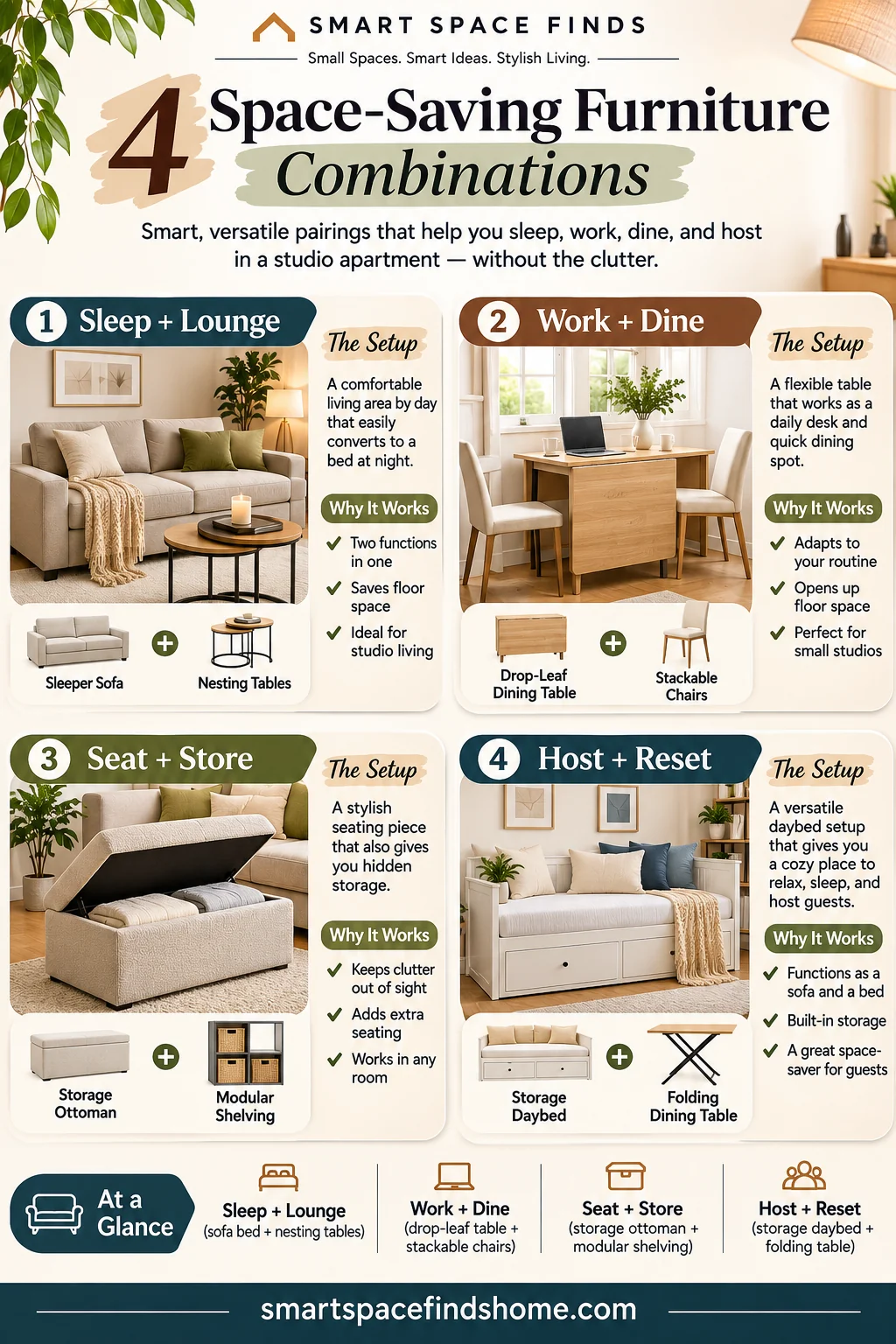
Sleep + lounge: sleeper sofa plus nesting side tables keeps the middle of the room usable. Work + dine: a drop-leaf table paired with two stackable chairs handles a laptop and everyday meals, provided the work setup remains ergonomic. Seat + store: a storage ottoman and slim enclosed bookshelf conceal bedding and daily clutter. Host + reset: a daybed with drawers and a foldable dining setup can accommodate a guest without permanently sacrificing floor area.
Measure how far a sofa bed opens, how a folding table pivots and where chairs will go when furniture changes shape.
What to Look for Before Buying Convertible Furniture
For a sleeper sofa, compare mattress construction, sleeping-surface dimensions, seated comfort, and the effort required to open it. For lift-top coffee tables, assess hinge stability, lifting range, weight limits and pinch points. For storage benches and ottomans, inspect lid support, internal usable dimensions, fabric cleanability and manufacturer-rated load. For wall desks or tall shelving, review mounting requirements, tip-over risk and renter permissions. Confirm delivery-box measurements, returns and replacement-parts support before checkout.
Daily-use rule: Test the conversion mechanism and check how easy it is to reach the storage compartment before buying.
Shop the Transformation — The Organized Urban Studio
Concealed vertical storage to reduce visual clutter; anchor the cabinet according to its instructions.
Prices, colors and stock can change. Confirm the selected variation on Amazon.
Style Your Studio Without Visual Clutter
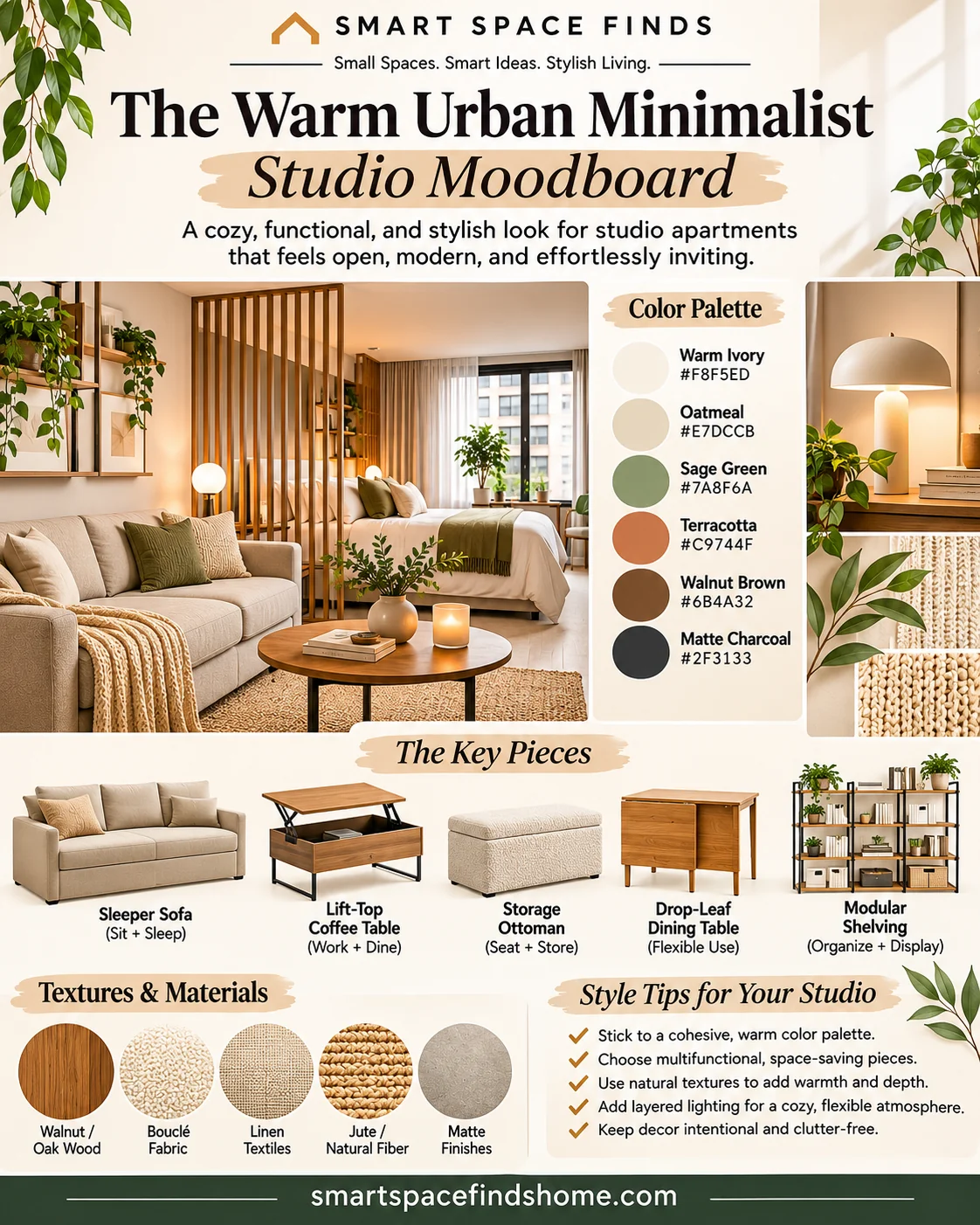
Use a warm minimalist palette: oatmeal upholstery, light oak or walnut, soft ivory walls and a small amount of matte charcoal for contrast. Repeat just two wood tones or metal finishes, leave some floor visible beneath seating and choose closed storage for visually busy items. Keep the main furniture silhouette quiet; introduce personality through a washable rug, one textured throw and warm layered lighting.
A simple weekend action plan
- Take measurements and note obstructions such as radiators, doors and power outlets.
- Remove items that do not support the main purpose of the space.
- Test one layout or organization change with what you already own.
- Check comfort and safety during a normal weekday before investing.
- Photograph the result and keep only the improvements that make daily life easier.
Common mistakes to avoid
A crowded mood board is not the same as a functional home. Do not copy a photo without checking dimensions, clearance, ventilation, electrical safety and rental restrictions. Prioritize flexible choices that still look good when the room is being used rather than only when it is photographed.
Budget and Styling Questions
Do I need a large budget?
No. Rearranging furniture, editing belongings and improving lighting or storage habits can make the biggest difference before you spend money.
Should every element match?
Not exactly. Repeating a few finishes and colors creates coherence, while different textures and personal details keep the room from feeling generic.
The takeaway: Start with one friction point, make a small change, and refine it after living with the result. Functional choices are the foundation of a beautiful small home.
Explore more practical ideas in our small spaces guides.