
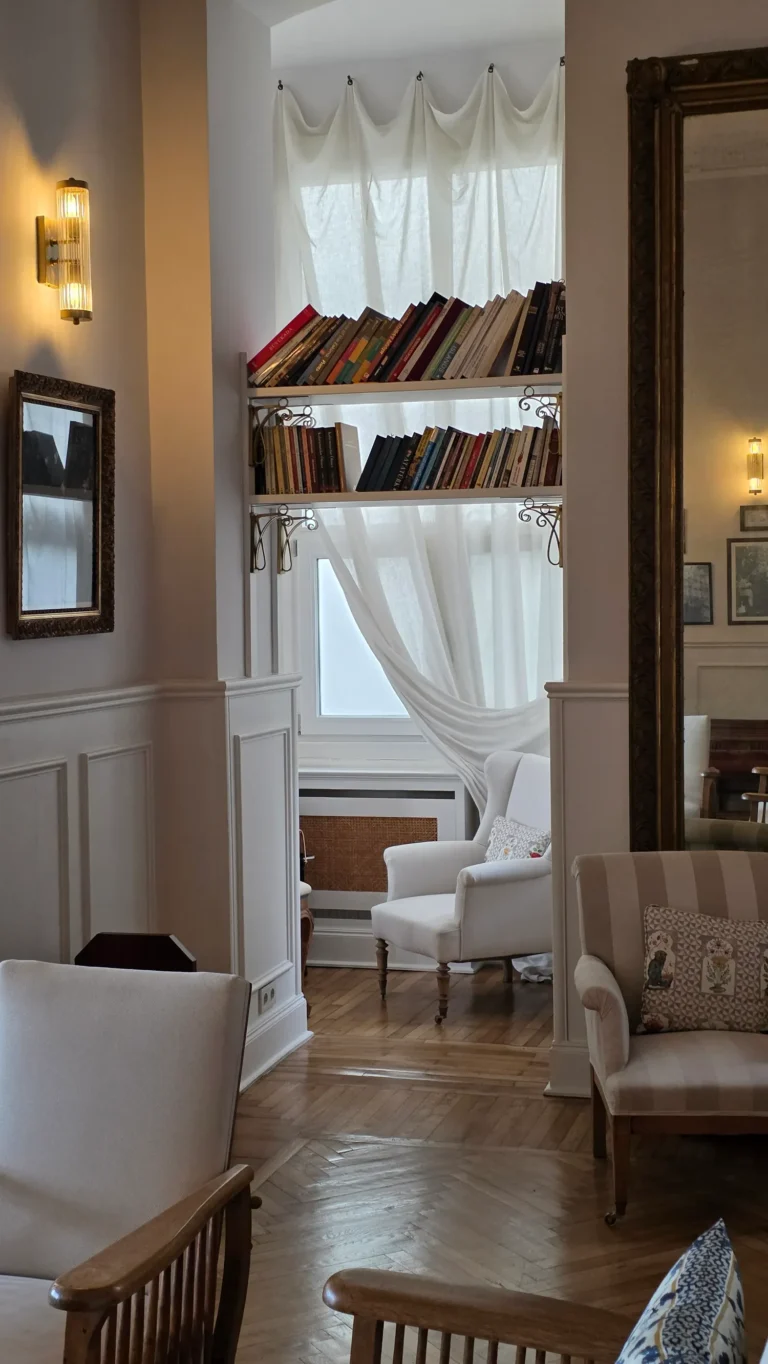
You do not need a library-sized room to create a place you actually want to read. A bedroom corner, an unused spot beside the sofa, or a narrow window alcove can become a comfortable reading nook with the right chair, task light, and thoughtful storage. These 12 small-space ideas favor layouts you can live with, not just photograph.
Start here: Measure the usable corner, test your seating before buying anything, position a light where it won’t glare onto the page, and keep a book and drink within reach. If you rent, choose freestanding or removable solutions first.
Build Your Reading Nook in Four Decisions
A window, sofa end, empty bedroom corner or alcove works—provided you can still open doors and walk freely.
Use the sofa you own, a supportive compact chair, or a suitable floor-cushion setup.
Position a controllable task light close to the page without shining into your eyes.
One accessible surface and a few books are usually more useful than a large bookcase.
Our editing rule: A reading nook should improve daily life without making a small room harder to use.
12 Reading Nook Ideas for Small Rooms
Choose a setup based on the corner you have—not the size of a styled room in a photograph. The easiest successful nook pairs a comfortable seat with a directed reading light and one accessible surface.
1. Create a window-side reading corner
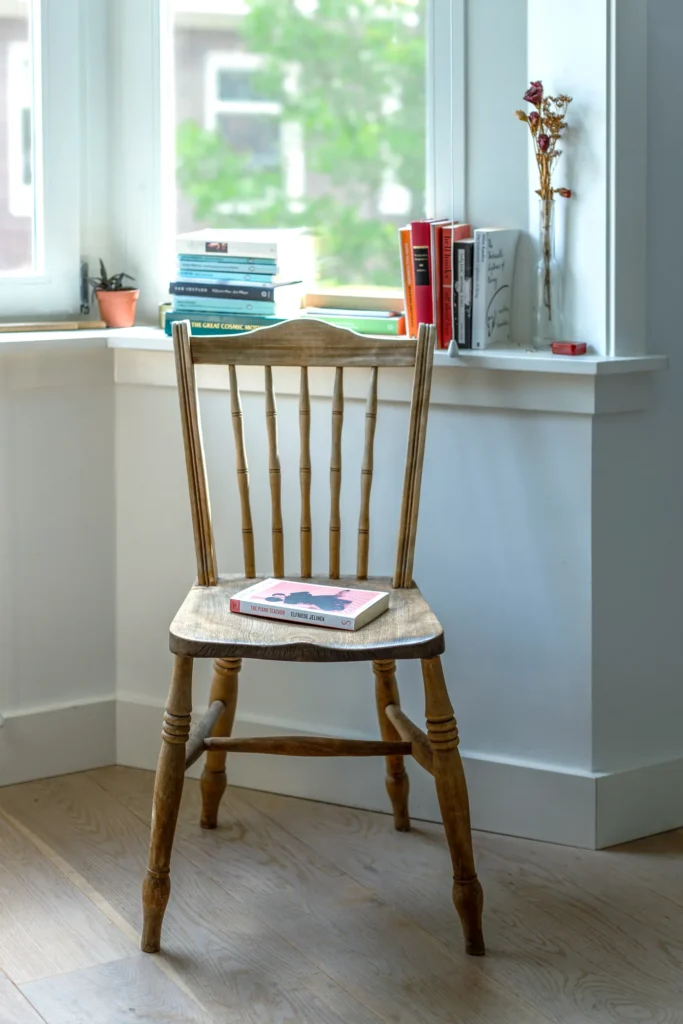
Place a compact upholstered chair beside a window rather than directly against it. Natural light makes the nook inviting during the day, while a slim lamp ensures it works after sunset. Keep curtains, radiator airflow, and window access unobstructed. In a narrow room, a small stool can do double duty as a footrest and book perch.
2. Turn the end of your sofa into a mini nook
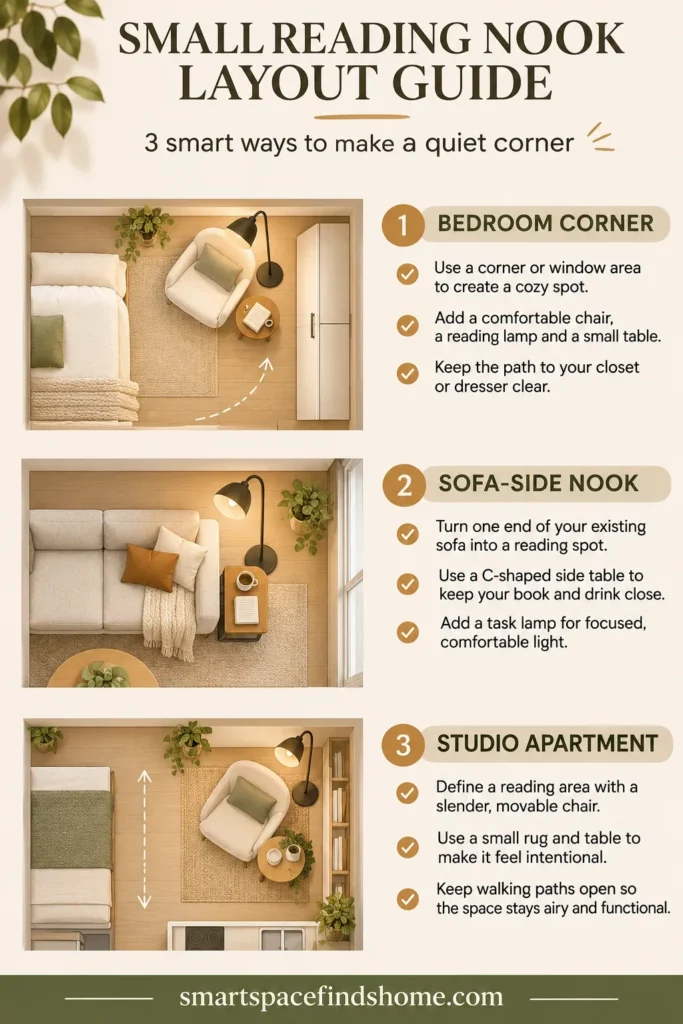
No space for a second chair? Use one end of the sofa as the reading seat. Add an adjustable floor lamp behind the arm, a cushion to support your back, and a narrow C-shaped table for your book. This is often the best zero-extra-floor-space solution for a small living room.
3. Use a quiet bedroom corner
Choose the side of the bedroom away from the main walking route. A slim accent chair, wall-adjacent floor lamp, and small side table can create a retreat without making the room feel overfurnished. Keep the chair clear of closet doors and bedside drawers. For a calmer bedroom atmosphere, see our cozy bedroom lighting guide.
4. Make a reading nook beside a bookcase
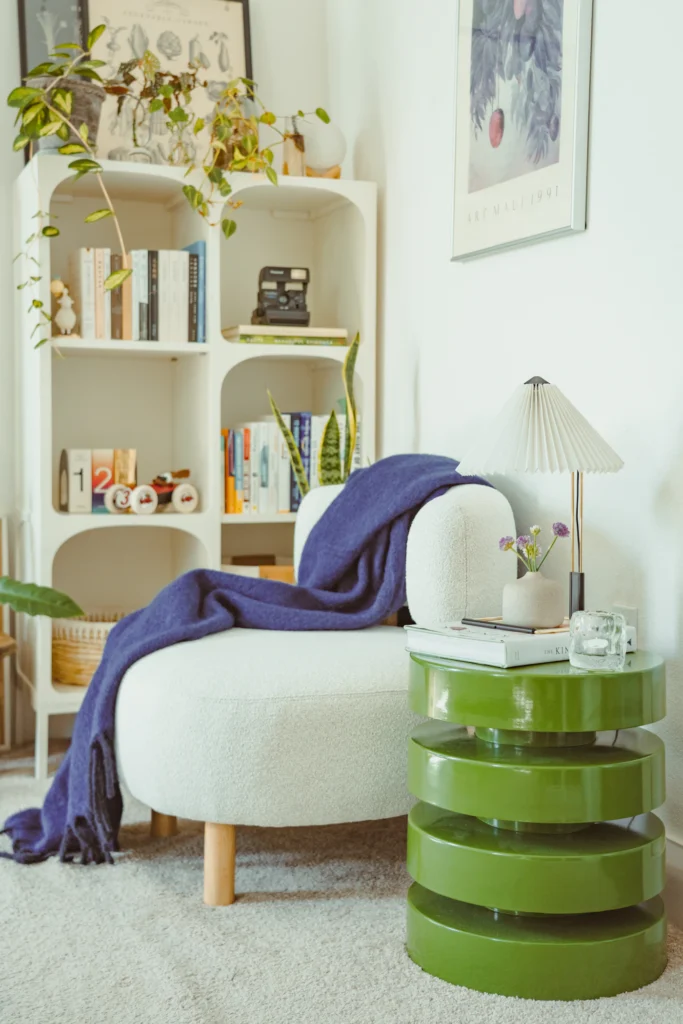
A narrow bookcase gives the nook a sense of purpose and makes your current reads visible. Anchor a tall freestanding unit according to its manufacturer’s instructions, especially where children or pets may be present. Use only a few shelves for books at eye level; leave room for a lamp and a personal detail rather than packing every surface.
5. Build a floor-cushion nook with back support
When a chair will not fit, a thick floor cushion and supportive backrest can work in a low-traffic area. Put a washable rug beneath it, provide task lighting, and keep the arrangement easy to move. This option is best for people comfortable sitting close to the floor—not a universal replacement for a proper chair.
6. Create an alcove or recess retreat
Make an awkward recess feel intentional with a suitably sized chair or a freestanding bench. Check seat depth, legroom, and access before choosing furniture. Avoid blocking heating vents or using an unsupported DIY window seat. A textured throw brings softness without making the alcove visually busy.
7. Fit a compact chair in a studio apartment
In an open-plan studio, position a small chair so it faces toward the window or away from the desk. A low-pile rug and directional lamp can suggest a dedicated zone without permanent partitions. Choose pieces that can move when guests visit.
8. Try a bedside reading setup
Sometimes the most useful nook is the bed itself. A supportive reading pillow, clamp-free bedside lamp on a stable table, and an organized book tray create a practical ritual with no additional furniture footprint. Keep cords off walking paths and avoid placing hot bulbs near bedding.
9. Use a slim side table instead of a bulky coffee table
For a genuine reading nook, a surface big enough for one book, glasses, and a drink is often sufficient. Look for stable round or narrow rectangular tables that fit close to your chair without obstructing your exit. A tray table can fold away when not needed.
10. Add a plug-in wall light when floor space is scarce
A carefully positioned wall reading light can free the floor area a lamp base would otherwise occupy. If you rent, check the lease before drilling; consider a freestanding adjustable lamp instead. Route cables safely along a wall and never pinch cords behind furniture.
11. Make the corner cozy with one or two soft layers
Choose a comfortable cushion and a lightweight, washable throw rather than an oversized pile of decorative pillows. Muted sage, ivory, warm taupe, and natural oak can create a calm Japandi-inspired palette. Keep contrast between the chair, walls, and textiles so the nook has visual definition.
12. Create a portable reading nook
A lightweight chair, rechargeable reading lamp that is suitable for reading, and compact rolling cart allow your nook to move between a sunny window and an evening corner. This works especially well in shared apartments, multiuse living rooms, or spaces where fixed furniture is impractical.
Which Reading Nook Layout Works Best in Your Room?
| Room | Best starting point | What to avoid |
|---|---|---|
| Small bedroom | Chair in an unused corner with compact lamp | Blocking wardrobe and bedside access |
| Small living room | Sofa-end reading station with C-table | Adding a bulky second armchair automatically |
| Studio apartment | Moveable accent chair and narrow rug | Creating another permanent traffic barrier |
| Rental home | Freestanding lamp, table and book cart | Unapproved holes or unreliable adhesive shelves |
| Window alcove | Compact seating positioned for daylight | Blocking radiators, ventilation, or windows |
THE SPACE PLANNING GUIDE
How Much Space Do You Need for a Reading Nook?
Think of the footprint as three zones rather than one square: the seat, the space to get into and out of the seat, and the reachable area for light and a book. A chair might fit within the corner on paper while leaving no room to stand up. Always test the full arrangement, not just the furniture dimensions.
There is no universal minimum footprint: a sofa-side setup adds almost none, while a separate chair needs its actual width and depth plus room for your knees, feet, and a comfortable way to stand up. Measure the chair’s published dimensions, then mock up its footprint on the floor with painter’s tape. Open nearby doors and drawers while the tape is in place. Sit in a comparable chair if possible before you buy.
Small-space rule: Keep the room’s existing walking route clear rather than forcing a preconceived floor-plan measurement. Check furniture placement against the needs of everyone using the space.
AMAZON FIND · AFFILIATE LINK
Choose Comfortable Seating Without Overfilling the Room
ERGONOMICS BEFORE AESTHETICS
How to test a reading chair in five minutes
- Start with your feet: Sit back and check whether your feet can rest comfortably. Try a footstool if the seat is deep.
- Check the back: Your lower back should feel supported without forcing you to slouch or slide forward.
- Read in your actual posture: Hold a book for several minutes to assess elbow and shoulder comfort.
- Practice standing: Make sure you can get up easily, particularly in a narrow space.
- Measure the complete footprint: Include the width of the arms, any footstool, and the space a recliner requires when extended.
Chair, sofa or floor cushion: which is right for you?
| Seating style | Ideal for | Watch out for |
|---|---|---|
| Existing sofa | Zero additional chair footprint | Support and lamp reach |
| Compact armchair | Dedicated reading spot | Seat depth and door clearance |
| Upholstered accent chair | Flexible studio layout | Comfort over long sessions |
| Floor cushion + back support | Very low furniture footprint | Getting up and sustained posture |
| Window bench | Existing safe, structurally appropriate alcove | Support, seat depth and window access |
Back support, stable armrests, seat height, and the ability to reposition your feet matter more than the chair’s appearance alone. A compact chair can feel spacious if it has an open base and slender arms; conversely, a beautiful low lounge chair may be unpleasant for extended reading. If your existing sofa is comfortable, start there and buy nothing new.
Reading Light Placement: Get the Function Right
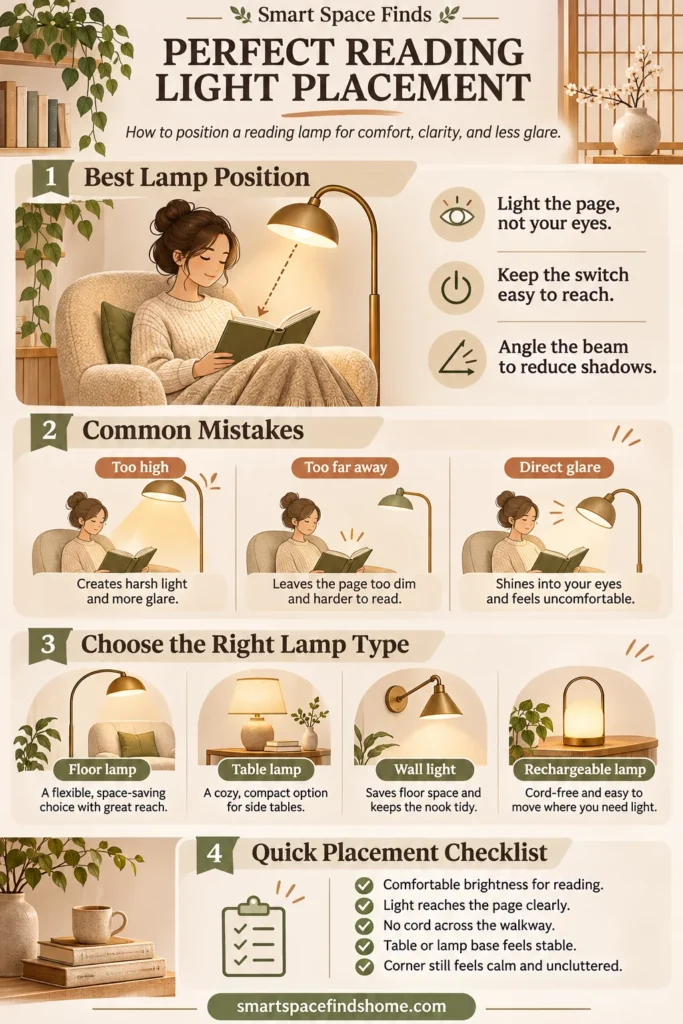
A focused, adjustable lamp should illuminate the book without shining into your eyes. Position it to the side and slightly behind your reading shoulder, then adjust its angle to avoid shadows cast by your hand. Exact placement depends on your seat, reading posture, and whether you read print or a screen. For placement diagrams and alternative lamp styles, read our reading lamp placement guide.
- Floor lamp: Flexible choice when you cannot drill walls; keep the base clear of the walkway.
- Table lamp: Useful beside an armchair when the table is stable and within easy reach.
- Wall light: Saves floor space, but verify installation requirements and cord routing.
- Rechargeable lamp: Convenient when outlets are awkward; check runtime, light output, and whether it provides enough task lighting.
Affiliate links: As an Amazon Associate, we earn from qualifying purchases. See the full disclosure near the beginning of this guide.
Reading Lamps Worth Comparing
Choose a lamp for your reading position and available floor space. Product selection and availability may vary by location.
Use warm, comfortable ambient lighting with a sufficiently bright, directed task source. A dim decorative lamp alone is not always practical for reading. Our warm lighting ideas offer more ways to layer the room.
AMAZON FIND · AFFILIATE LINK
Books, Side Tables, and Storage That Stay Tidy
Choose storage according to how you read
If you rotate between two or three books, a single shallow surface is more useful than a large display shelf. If you collect books, place a narrow bookcase next to—but not behind—the chair, and keep heavier books lower down. For a shared room, a mobile cart or compact lidded basket helps the nook reset quickly after use.
Side-table decision guide
AMAZON FIND · AFFILIATE LINK
- C-shaped table: Helpful beside a sofa with little open floor area; confirm the base can slide safely under your furniture.
- Round pedestal table: Softens a tight corner and provides a stable reachable surface when the base is sufficiently wide.
- Small stool: A flexible alternative for one book or a mug, provided the surface is stable and designed for the use.
- Wall shelf: Appropriate only when it can be installed securely and your lease permits it; avoid heavy loads above the seat.
Keep one current book, reading glasses, and a drink close at hand. A narrow side table, book cart, or slim shelf can support the ritual, but storage should not crowd your elbow room. Avoid unsecured heavy shelving above where someone sits. For other discreet storage ideas, explore our small living room storage guide.
AMAZON FIND · AFFILIATE LINK
Cozy Japandi Styling Without Visual Clutter
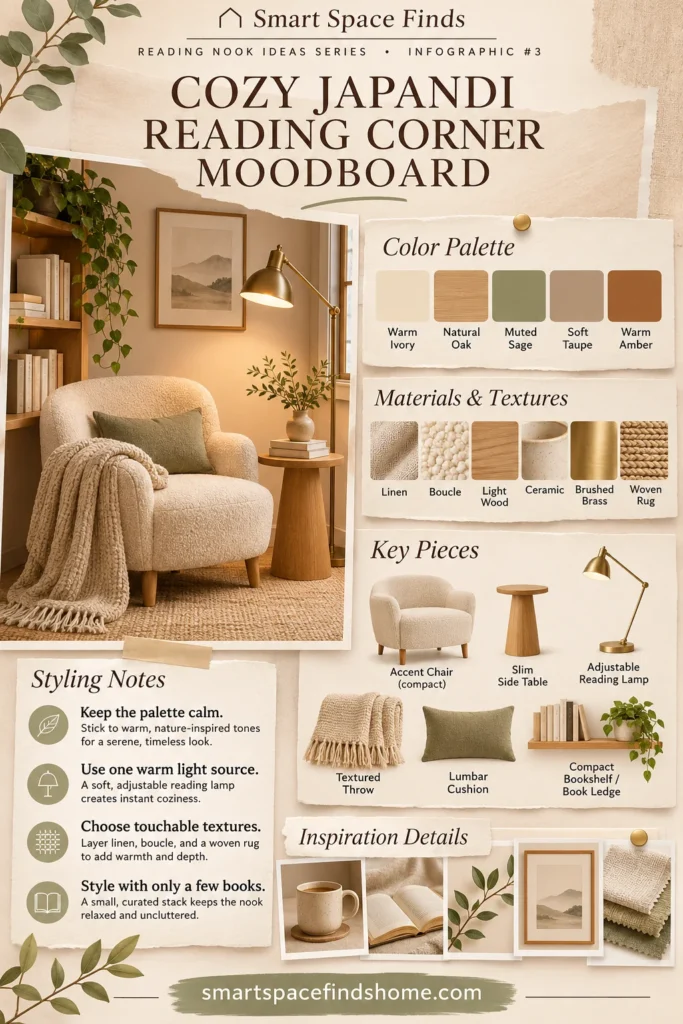
Start with an ivory or taupe base, add natural oak, and use muted sage sparingly. Combine linen, cotton, textured upholstery, and one warm accent light. You do not need to buy matching pieces: repeating two materials or finishes will make a small corner feel intentional. Instead of styling ten accessories, choose one framed print or a small plant where light conditions permit.
AMAZON FIND · AFFILIATE LINK
Renter-Friendly Reading Nook Ideas (No Drilling Required)
“Removable” does not always mean “damage-free.” Check weight limits, wall finish, power-cord routing and your lease before installing any hanging component. For books, a securely positioned freestanding unit is generally more dependable than an adhesive shelf.
A fully reversible renter setup
Pair a chair or existing sofa seat with an adjustable plug-in floor lamp, small freestanding table, movable basket and washable throw. Define the area with a compact rug only when it will not create a trip hazard. This setup can be rearranged in minutes without drilling into walls.
- Start with a freestanding floor lamp rather than a wall sconce.
- Choose a stable rolling cart or slim freestanding bookcase rather than adhesive shelves for heavy books.
- Use a washable area rug to define the corner without installing flooring.
- Pick furniture that fits through doors and can move with you.
- Check lease rules before using removable hooks, shelves, or cable clips; removable does not guarantee damage-free.
For more removable solutions, see our renter-friendly storage ideas.
AMAZON FIND · AFFILIATE LINK
Reading Nook Essentials: Buy Only What Solves a Problem
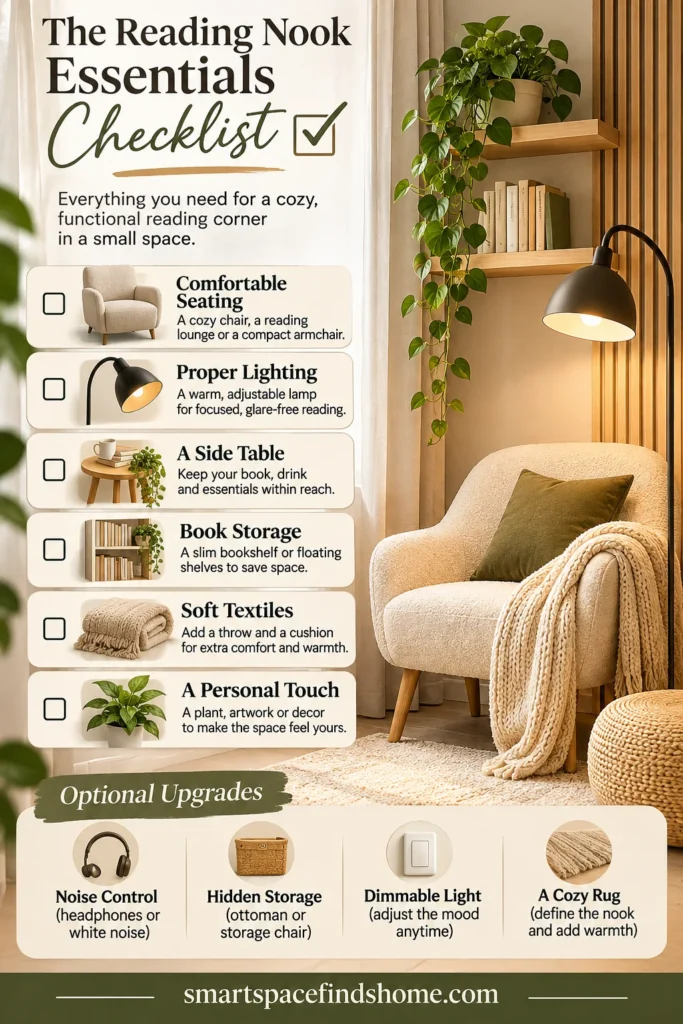
Before you shop, identify which of these functions is missing: supportive seating, focused lighting, reachable surface, book storage, or one comfortable textile. Do not buy a new chair because an inspiration photo has one if your sofa already works. A future curated product selection will prioritize compact dimensions, ease of cleaning, practical installation, and overall value over decorative novelty.
Shopping note: The product links above are affiliate links. Review the size, product details and current availability on Amazon before purchasing.
AMAZON FIND · AFFILIATE LINK
Three Practical Reading Nook Setups by Budget
These are shopping approaches rather than fixed price promises: chair quality, local availability, and installation needs can change the final cost. Start by trying the least expensive version.
Use what you have
Rearrange the sofa or spare chair, move an existing lamp, and place a small stool or side table within reach. Prioritize comfort and test the new routine for a week.
Upgrade one essential
Invest in the missing functional item—most often an adjustable reading lamp, supportive cushion, or stable side table. Measure first, then compare quality and return policies.
Build a complete corner
When you genuinely have the space, coordinate a compact chair, directional light, and narrow surface. Buy for fit and ergonomics rather than assembling a decorative set from a photograph.
AMAZON FIND · AFFILIATE LINK
Reading Nook Safety, Accessibility and Maintenance
A comfortable reading nook should be safe to use every day. Keep electrical cords out of walking paths, check the stability of floor lamps and side tables, and never place a hot bulb against fabric or paper. Secure tall storage furniture according to the manufacturer’s instructions. Do not overload adhesive shelves or obstruct windows, doors, ventilation or heating.
Making a reading nook easier to use
If standing up from low seating is difficult, favor a chair with suitable seat height, supportive arms and a clear approach. Choose lighting controls you can reach without leaning across furniture. Keep the floor even and avoid loose rug edges. Small-space design should serve the people using the room rather than force them to adapt to an inspiration image.
Keep the corner inviting in five minutes a week
Return finished books to a shelf, wash or shake out soft textiles as recommended, wipe the table, and check whether the lamp still points at the reading surface. If objects keep accumulating, reduce the number of decorative pieces rather than adding more organizers.
Reading Nook Layouts for Awkward Spaces
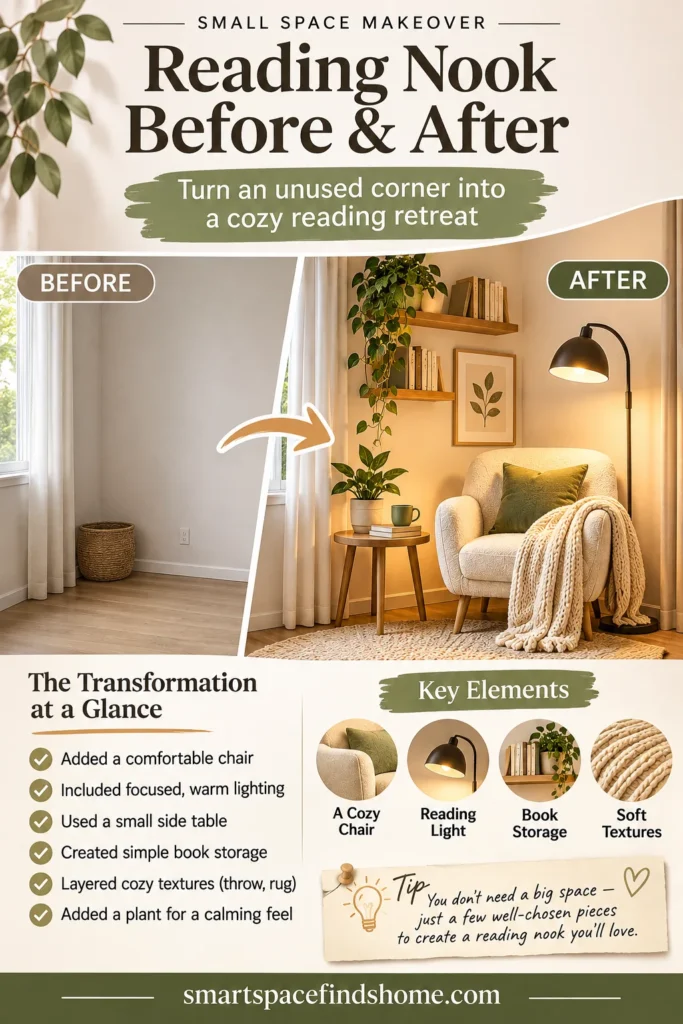
Before buying anything, visualize what an unused corner could become. The illustration below shows a concept—not a photographed renovation—and highlights the difference that appropriate seating, lighting and one reachable surface can make.
Very narrow bedroom
Skip a wide accent chair. Test whether the bed, a slim upright chair, or a folded chair can function as the reading seat while keeping the wardrobe fully usable. A compact light on an existing bedside surface can outperform a new floor lamp.
Long, narrow living room
Use a sofa-end reading station rather than putting a second chair in the main path. Direct the light toward your book and select a side table with a base that does not project into the walkway.
Empty corner behind the door
Check the full door swing before buying a chair. If the door reaches the corner, use the space for light storage rather than seating, or relocate the nook to a less obstructed spot.
Corner without a nearby outlet
Choose a properly rated rechargeable reading light with adequate brightness and runtime, or use a different corner. Avoid creating long extension-cord routes across the floor or hiding cords under rugs.
Five Mistakes That Make a Reading Nook Less Comfortable
- Buying an oversized chair before checking clearances.
- Relying only on decorative ambient light for reading.
- Putting a table too far away to reach comfortably.
- Blocking radiators, doors, window access, or circulation.
- Overloading the corner with throws, books, and accessories.
A SIMPLE WEEKEND PROJECT
Set Up Your Reading Corner in One Weekend
Step 1 — Audit: Identify a place with the least interruption to doors, drawers, heating, ventilation and walking routes.
Step 2 — Tape it out: Mark the seat and table footprint before making purchases.
Step 3 — Test comfort: Move a chair you own into position and spend a normal reading session there.
Step 4 — Fix the light: Adjust the beam for your posture, remove glare and keep cables controlled.
Step 5 — Style lightly: Add one cushion or throw and one reachable book surface. Photograph the result and remove anything you do not use.
Frequently Asked Questions About Small Reading Nooks
Can I make a reading nook in a room with no spare corner?
Yes. A comfortable end of the sofa or a bedside reading setup can function as a dedicated reading area without introducing another chair.
What kind of chair is best for a small reading nook?
A supportive chair that fits your specific space and sitting posture. Choose back support, stability, and adequate legroom over a particular trend or silhouette.
How do I make a reading nook cozy without clutter?
Use one good reading light, one soft layer, a reachable surface, and a restrained color palette. Keep only a few current books close by.
Where should a reading lamp go?
Usually beside and slightly behind the reading shoulder, aimed at the page without glare. Adjust it to your chair, dominant hand, and preferred posture.
Can renters create reading nooks without drilling?
Yes. Freestanding lighting, compact furniture, rolling carts, and a rug can create a complete setup without changing the walls.
How much should I spend on a reading nook?
Start at zero by testing what you already own. If something is uncomfortable or missing, upgrade that single element first rather than buying a full furniture set.
The Takeaway: Make Room for Reading, Not More Stuff
The best small reading nook is the corner you will actually use: comfortable seating, light that helps you read, and an easy place to set down your book. Start with one layout change and live with it before adding furniture. For another peaceful small-space retreat, explore our cozy meditation corner ideas.