
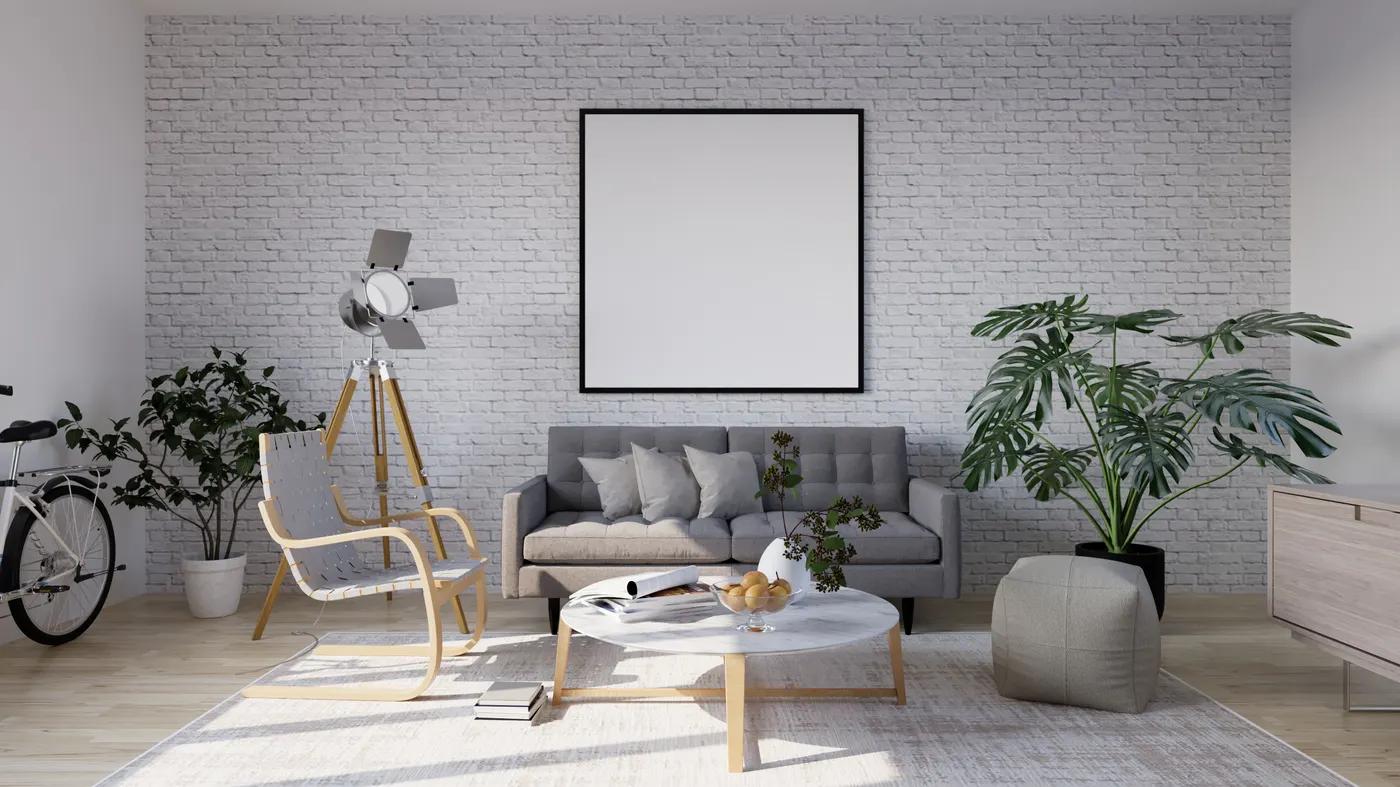
A stylish small living room does not need more furniture. It needs smarter places for the things you use. The most successful setups combine closed storage for visual clutter, easy-access baskets for soft essentials, and a little open space that lets the room breathe. Whether you live in a studio, a rental, or a narrow apartment, these practical ideas help you build a living room that looks intentional and works on a busy weekday.
Start by identifying what needs a home: throws, remote controls, books, charging cables, toys, games, paperwork, or extra cushions. Then choose storage based on access, not just appearance. Below is a room-by-room decision guide, plus a low-cost reset you can try before buying anything.
The Small Living Room Storage Formula: Hide, Reach, Display
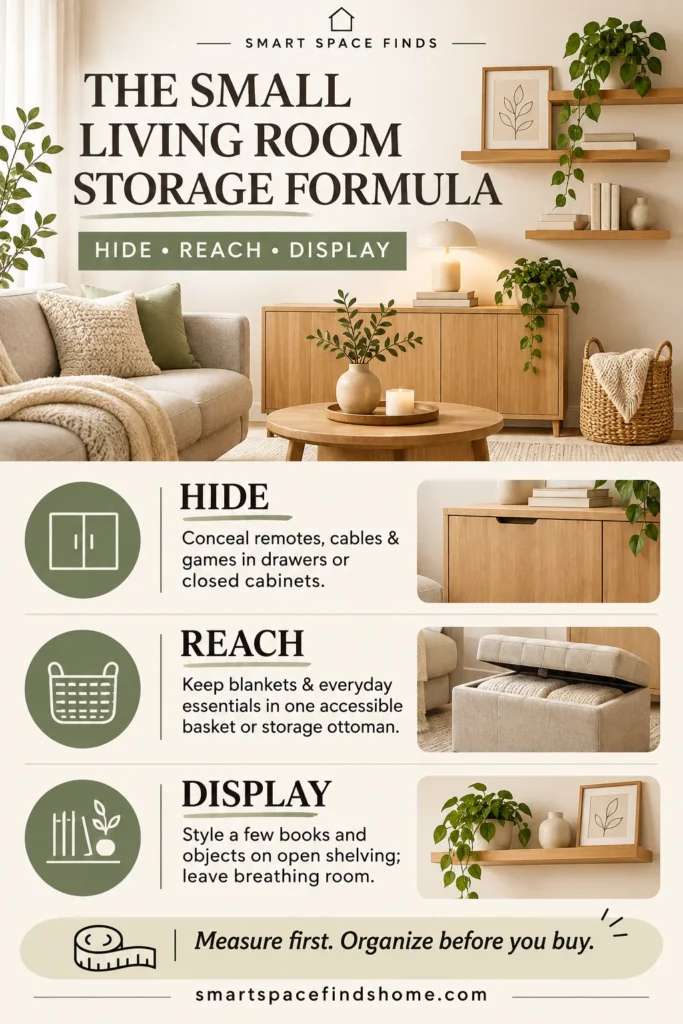
Think of storage in three layers. Hide the everyday visual noise in drawers, cabinets, or lidded compartments. Reach for the things you use often using a basket or easy-to-open side table. Display only the pieces that genuinely improve the room, such as favorite books, artwork, or one sculptural vessel. This approach prevents a wall of storage from becoming another wall of clutter.
Measure first, then choose the furniture
Measure wall width, available depth, and the space needed to walk past or fully open a drawer, cabinet, or ottoman lid. Mark outlets, radiator vents, heating sources, and door swings. Use painter’s tape to outline a proposed cabinet or coffee table on the floor; live with that footprint for a day before ordering. In rentals, favor freestanding or properly approved nonpermanent solutions.
10 Stylish Small Living Room Storage Ideas That Actually Work
Affiliate disclosure: As an Amazon Associate, I earn from qualifying purchases. Product links below may earn us a commission at no additional cost to you.
1. Choose a storage ottoman that doubles as extra seating
A storage ottoman is ideal for throws, board games, and off-season pillow covers. Place it where you would use a footstool rather than squeezing it into a walking route. Check how the lid opens, the interior volume, and any stated load limit before treating it as a seat. Upholstery in oatmeal, taupe, or muted olive can make the piece feel like furniture instead of a storage bin.
2. Use a lift-top coffee table for frequently used items
Lift-top tables can conceal coasters, chargers, notebooks, and remotes while offering an occasional work surface. They are especially useful in a living room that also serves as a home office. Check the opening clearance in front of the sofa and the mechanism’s stability; an oversized table can make a compact room feel tighter.
3. Replace visual clutter with a slim closed cabinet
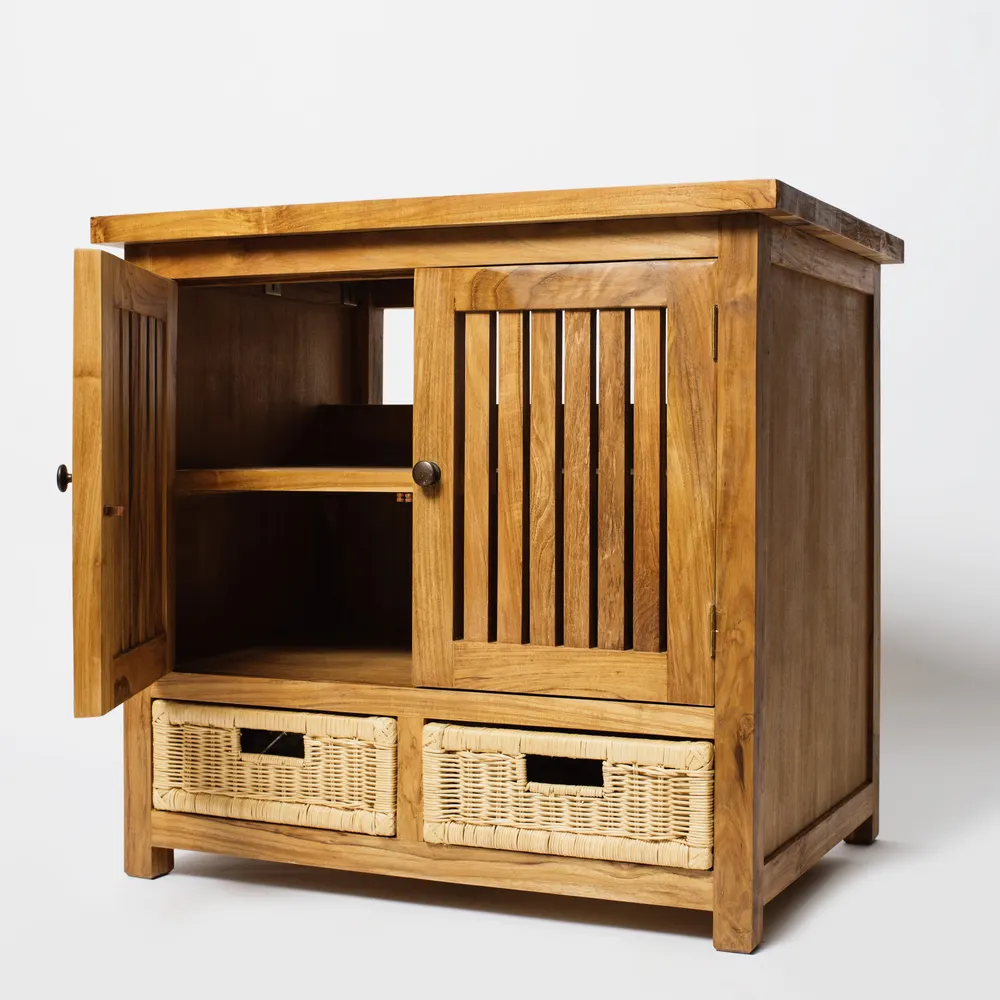
A shallow cabinet or low sideboard hides mismatched items behind a cohesive finish. Choose adjustable shelves if you store books, games, or electronics of different sizes. Keep the cabinet lower than the main sight line when possible, and verify ventilation requirements before storing active electronics behind doors.
4. Use floating shelves sparingly
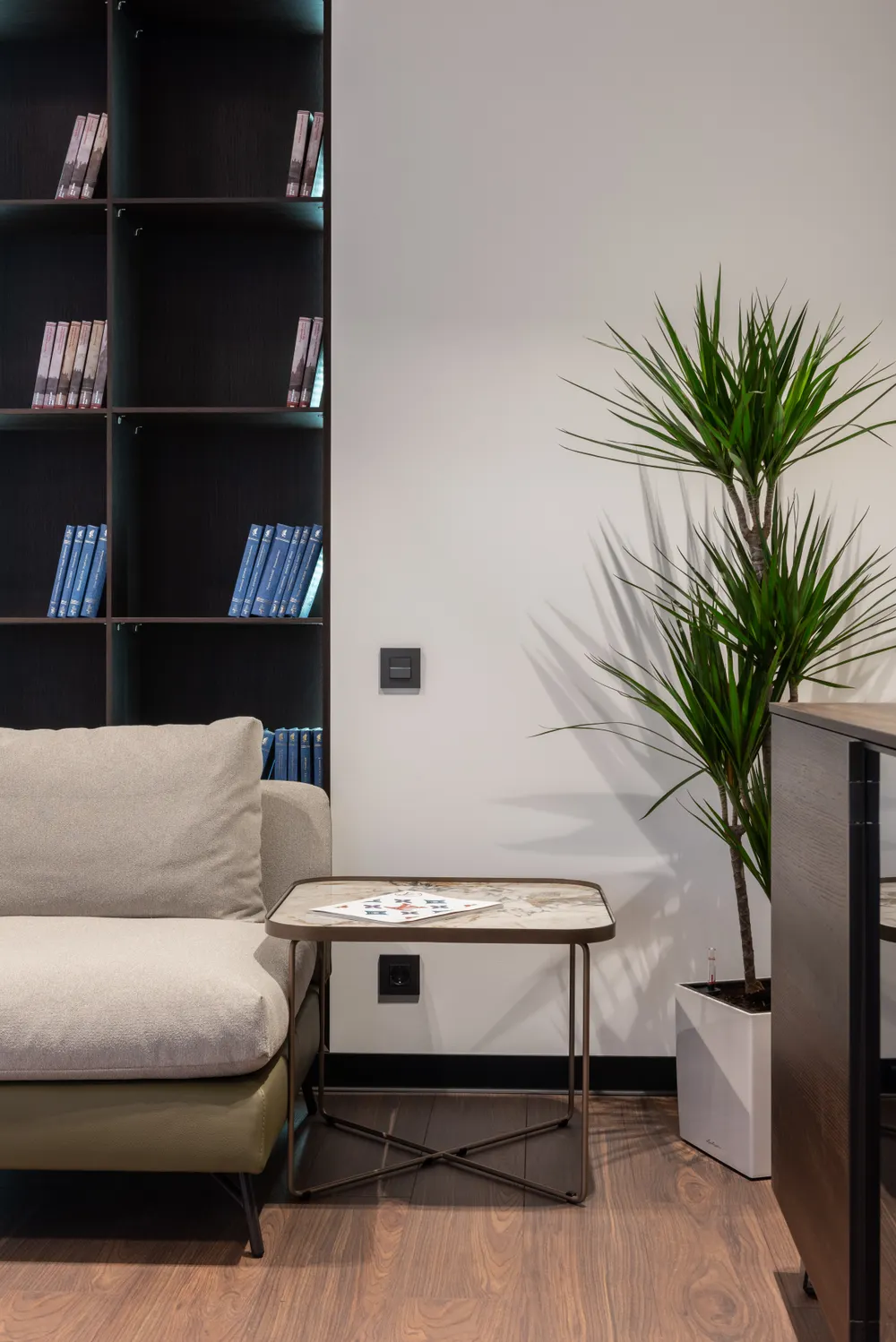
Floating shelves draw attention upward without taking floor space, but they only feel airy when they are not packed edge-to-edge. Group a few books with one decorative object; leave gaps between groups. Confirm wall construction, hardware capacity, and rental permissions. Heavy objects should never be placed on shelves with unverified anchors.
5. Give blankets one beautiful home
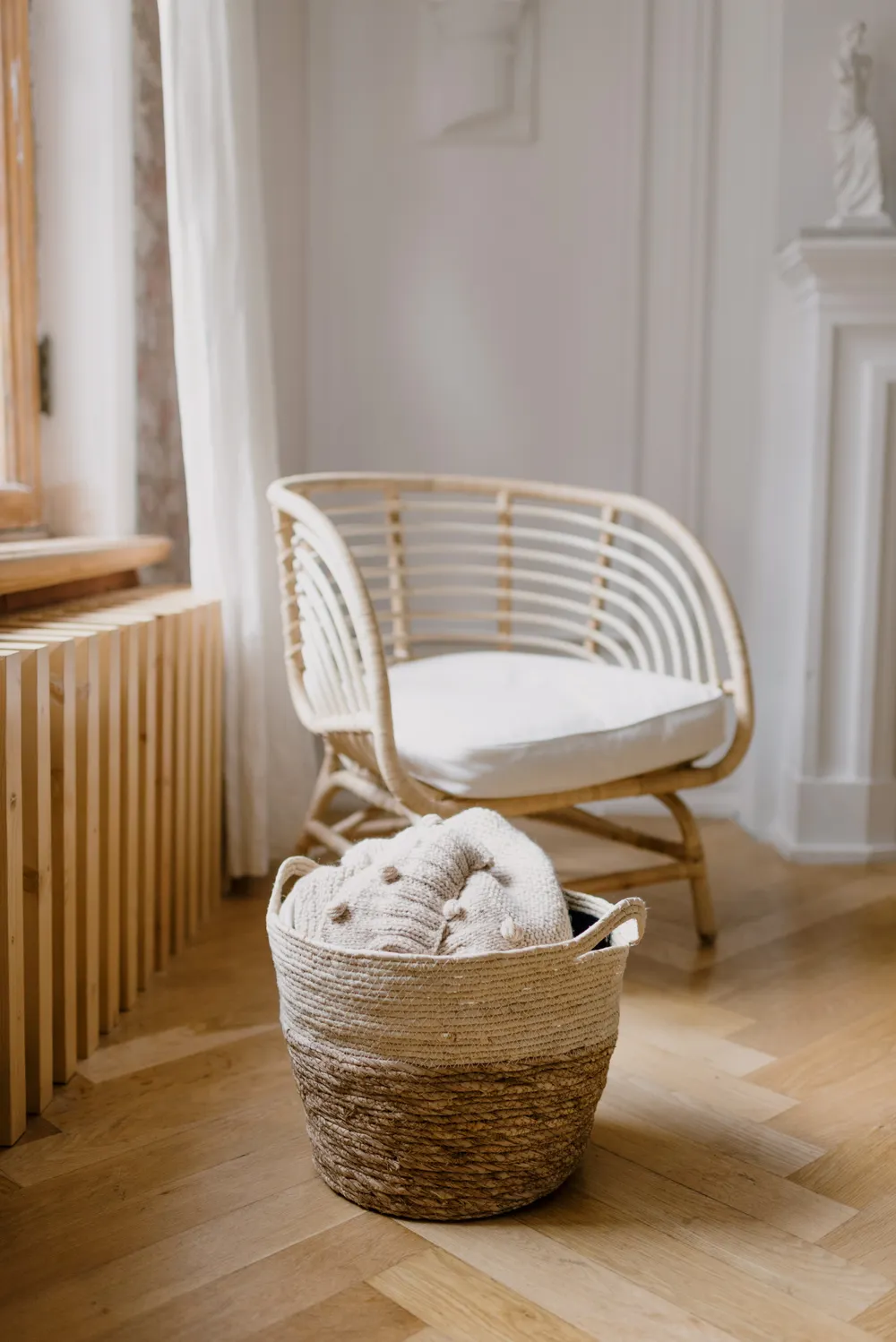
One large woven basket or soft felt bin beside the sofa can make a room feel warmer while making quick cleanup effortless. Select a basket with a stable base and a smooth finish that will not snag textiles. Avoid multiplying baskets across every corner: one visible texture reads as deliberate; five competing baskets can look like clutter.
6. Choose a narrow side table with drawers
A compact side table can store a charging cable, glasses, reading material, and other small items right where they are used. Look for a surface large enough for a lamp and a drink, but not so deep that it blocks circulation. A drawer is often more valuable than an extra open shelf if daily tidiness is the priority.
7. Make media storage invisible
Gather remotes, adapters, power bricks, and controller accessories in a single zone near the TV. Use cable sleeves or clips only where cords can be routed without pinching, overheating, or interfering with ventilation. Never place power strips under rugs or inside airtight containers. A closed media console with proper ventilation can provide the calmest look.
8. Use vertical space behind doors—carefully
In suitable rooms, over-door organizers can hold light accessories or hobby supplies, but check door clearance and weight limits. For living-room-facing doors, discreet hooks or a narrow freestanding organizer often look more intentional than a large hanging pocket system.
9. Consider low-profile under-sofa storage
If the sofa has accessible clearance, shallow bins can hold seasonal textiles or infrequently used items. Measure the lowest point under the frame, not just the visible gap at the front. Keep bins away from vents, moving sleeper-sofa mechanisms, and any electrical equipment.
10. Let one multifunctional piece do two jobs
Rather than adding a bench, console, and extra shelves, choose the one piece that addresses your biggest storage problem. A bench with enclosed storage, a slim console with drawers, or nesting pieces can work better than several small purchases. Prefer durable mechanisms and wipeable surfaces for everyday-use furniture.
Small Living Room Storage Comparison
| Storage option | Best for | Visual effect | Check before buying |
|---|---|---|---|
| Storage ottoman | Throws and games | Soft, furniture-like | Lid clearance and load rating |
| Lift-top coffee table | Remotes, work essentials | Concealed central storage | Opening mechanism and depth |
| Slim closed cabinet | Mixed everyday objects | Clean visual line | Door swing and ventilation |
| Floating shelves | Books and curated display | Airy, vertical | Wall anchors and weight rating |
| Woven basket | Blankets and cushions | Warm and textured | Footprint and easy access |
| Drawer side table | Small daily essentials | Quiet bedside-style storage | Height beside the sofa |
Budget-smart rule: Organize what you already own for a week first. If a particular category still has no home, purchase the smallest suitable storage piece that solves that exact problem.
Choose Storage for Your Living Room Layout
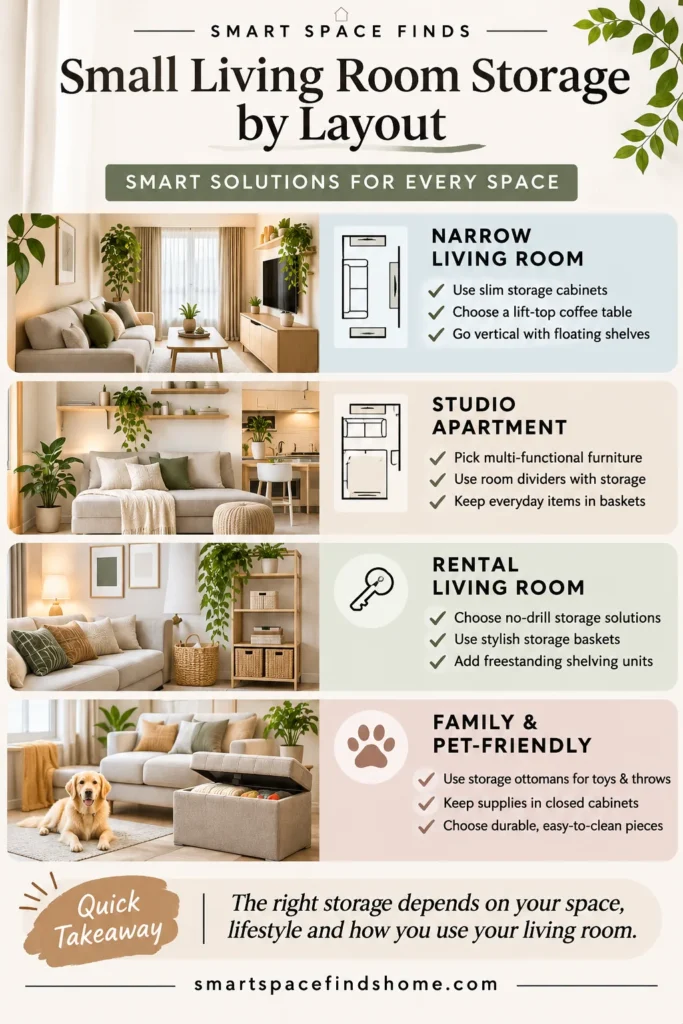
For a narrow living room
Focus on shallow cabinets and visually light pieces. Keep floor routes clear and avoid deep coffee tables that make seating hard to access. Use one wall for primary storage instead of dotting multiple bulky units around the room.
For a studio apartment
Choose furniture that supports multiple activities: a storage ottoman for extra seating, a lift-top table for occasional laptop use, and a closed cabinet for supplies that should disappear after work hours. Group living-room items by function so the space can change purpose quickly.
For a renter-friendly room
Prioritize removable, freestanding pieces, baskets, and existing furniture you can repurpose. Always confirm mounting rules before installing shelves or wall organizers. For additional adaptable solutions, see our renter-friendly storage hacks.
For a room shared with kids or pets
Make everyday items easy to return to their place, but avoid loose hardware, unstable tall units, or easy-to-tip furniture. Anchor storage units as specified by the manufacturer, and keep small hazardous items out of reach. Low, accessible bins can support tidy routines without constant adult intervention.
How to Make Living Room Storage Look Expensive
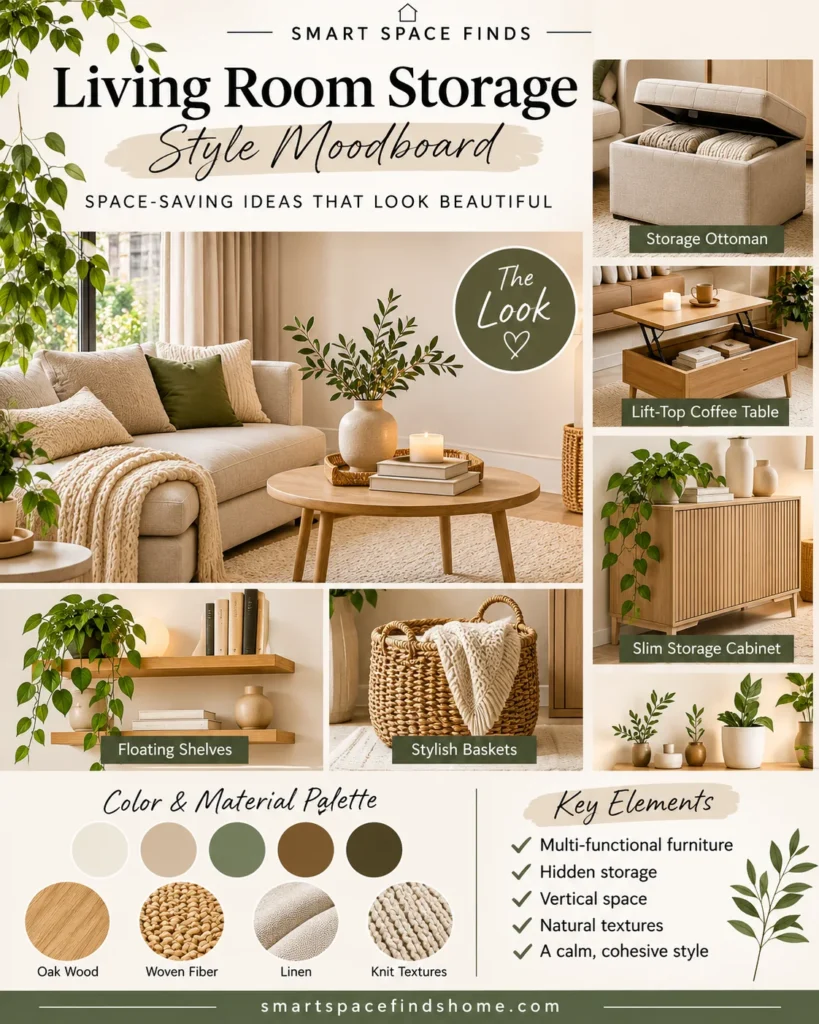
Choose a restrained palette of two or three dominant finishes: for example, warm oak, cream textiles, and a deep olive accent. Repeat one material at least twice, such as natural wood on a table and a narrow cabinet. Keep baskets similar in tone, not necessarily identical. Combine closed-door storage with a few thoughtfully styled open surfaces rather than turning every shelf into a display case.
Use negative space as a design material
Leave part of the coffee table and at least some shelving visibly empty. Negative space gives the eye a place to rest and helps the objects you love stand out. A small living room looks more intentional when storage supports the room’s atmosphere instead of dominating it.
Use lighting to emphasize the room, not the clutter
A reading lamp beside a compact side table can anchor a comfortable zone. Aim light at the seating and useful surfaces, keeping messy shelves out of the strongest visual focus. For lighting guidance, visit our reading lamp placement guide.
Smart Shopping Checklist Before You Buy
- Dimensions: Record furniture width, depth, height, and the required clearance for doors or lids.
- Access: Can you open the storage from your normal seated position?
- Capacity: Will it hold your actual belongings, not just look good in a product image?
- Material: Consider easy cleaning, wear resistance, and whether the finish matches existing furniture.
- Safety: Check tip-over precautions, weight ratings, ventilation, and cable management requirements.
- Returns: Check current seller specifications and return terms before purchasing large furniture.
Shopping note: The Amazon finds featured above were selected for specific storage needs, with their listed products and affiliate destinations checked on November 4, 2026. Product details and availability may change, so review measurements, finishes, and current listing information before ordering. The HOOBRO narrow side table is not linked until its availability can be confirmed.
A 15-Minute Small Living Room Reset
- Minutes 0–3: Collect items that belong in another room.
- Minutes 3–6: Return remotes, chargers, and everyday accessories to their assigned storage spot.
- Minutes 6–9: Fold throws, return cushions, and put away games or hobby materials.
- Minutes 9–12: Clear the coffee table and one other main visual surface.
- Minutes 12–15: Check the room from the doorway and remove one unnecessary visible cluster.
Repeat the same sequence for a week before deciding whether you need more storage. The items that repeatedly fail to find a home tell you which product category would actually help.
Frequently Asked Questions
How do I add storage to a tiny living room without making it feel crowded?
Start with closed storage inside a piece you already need, such as an ottoman or side table. Keep the floor route open and use wall shelves only for lightweight, deliberately curated items.
Is open or closed storage better for a small living room?
Closed storage is generally better for mixed everyday items; open shelves suit frequently used books or a small selection of decorative objects. Most stylish rooms benefit from a combination rather than relying entirely on one approach.
Where should I store blankets in a small living room?
A storage ottoman, a large basket near the sofa, or a low cabinet is usually practical. Choose whichever option makes putting blankets away effortless, even during a busy evening.
What if I cannot drill into the walls?
Try a shallow freestanding cabinet, a drawer side table, storage seating, or baskets. Follow rental rules and avoid unstable makeshift wall installations.
What should I organize before shopping?
Sort items by where they are used and how often you need them. Remove duplicates and test your existing storage for a week. This helps prevent buying attractive containers that do not solve a real problem.
Build a Room That Stays Beautiful After You Use It
The best small living room storage is easy to access, comfortable to live with, and visually quiet. Start with one real friction point, select furniture that earns its footprint, and leave enough room for the space to feel open. For more furniture-led inspiration, compare our 12 stylish living room storage ideas.