
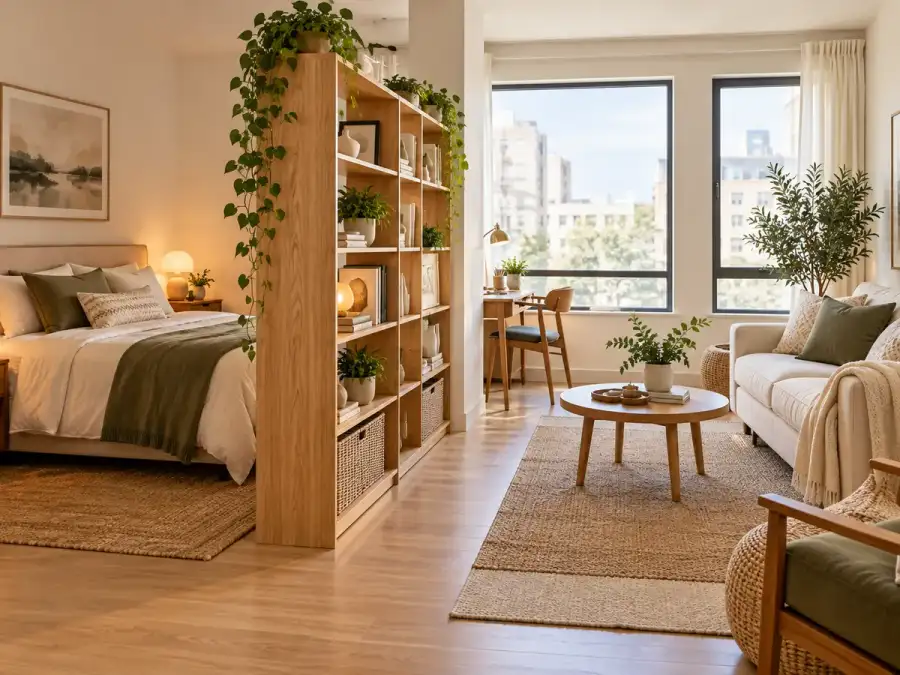
A studio can feel much more organized when sleeping, working and relaxing have clear visual zones. The best renter-friendly divider creates privacy without blocking daylight, safe access or the flexibility of a single-room home.
Quick answer: The best no-drill room divider for a studio apartment is usually a freestanding folding screen for flexible privacy, a low open shelf for storage and daylight, or a purpose-built freestanding curtain frame for adjustable separation. Furniture placement can also create distinct zones at no additional cost. Choose according to sightlines, stability, floor space and the location of your main window.
Best Studio Apartment Room Dividers: Quick Comparison
| Solution | Privacy | Daylight | Space and installation considerations |
|---|---|---|---|
| Folding screen | Medium to high | Depends on panel material | Portable; requires a stable angled footprint |
| Low open bookcase | Low to medium | Good | Useful storage; follow all anchoring instructions |
| Freestanding curtain frame | High when closed | Adjustable | Check frame footprint and fabric weight limit |
| Approved tension curtain system | High when closed | Adjustable | Only for supported spans and surfaces |
| Back-to-back sofa and furniture | Low to medium | Excellent | No additional divider purchase needed |
| Wheeled privacy panel | Medium to high | Material-dependent | Lock wheels where provided; check tip resistance |
Best overall for renters: a compact folding screen that meets the manufacturer’s stability requirements. Best for daylight: low open shelving. Best for adjustable bed privacy: a properly installed freestanding curtain frame. None of these options guarantees soundproofing.
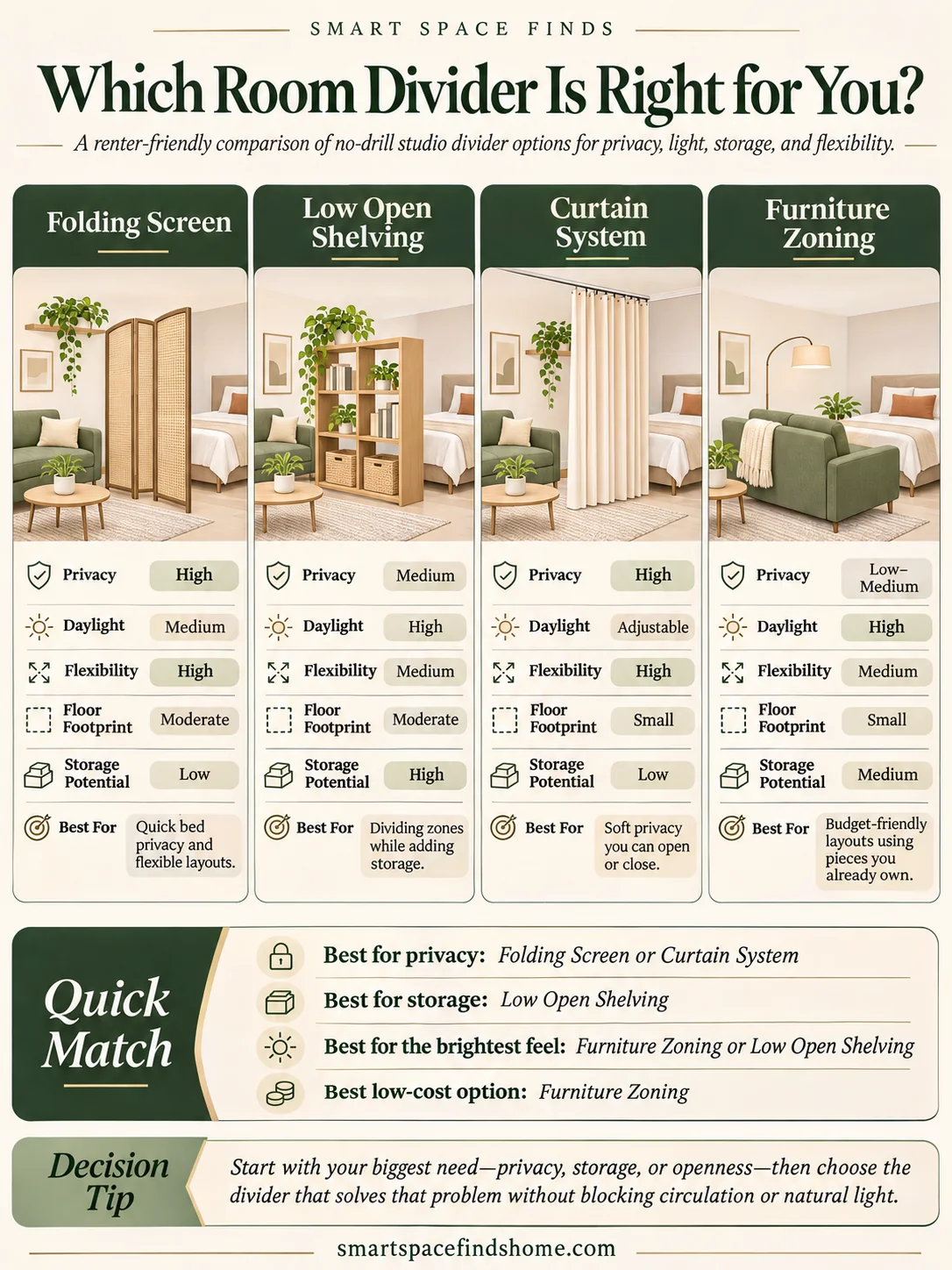
How to Choose a No-Drill Divider for Your Floor Plan
- Identify the sightline: stand at the front door and sofa to find what actually needs shielding.
- Measure both width and depth: folding panels need an angled footprint, while curtains need clearance to open and close.
- Preserve the main window: test the layout before putting an opaque screen between the window and the workspace.
- Protect circulation: check entry, bathroom and kitchen access and all door swings.
- Verify stability: a shelf that requires wall anchors is not an appropriate no-drill purchase when you cannot install those anchors.
- Plan the budget: using existing furniture may be free; screens, frames and shelves vary widely by material, size and shipping. Compare total delivered costs rather than assuming a fixed price range.
Define the Zone You Want to Separate
A studio apartment may need a boundary between sleeping and relaxing, between a desk and dining area, or simply a little privacy near the entrance. Begin with the function instead of choosing a screen by appearance. Sit in each area and notice sightlines, natural light and the route to the bathroom or kitchen. A divider should clarify activities while leaving room for ordinary movement. Mark possible locations with painter’s tape and check the arrangement at different times of day. Decide whether you need visual privacy, sound reduction or storage, because each requires a different solution.
Use Open Shelving as a Partial Divider
An open bookshelf can form a soft boundary while allowing daylight to pass through. Choose a shallow, stable unit that suits the available floor area and obey manufacturer guidance on loading and tip-over restraint. Avoid placing heavy objects on high shelves or pushing a tall unit into a narrow passage. Leave some compartments empty so the space does not feel like a solid wall. In a rental, check whether necessary anti-tip fixtures are permitted and can be installed safely. A low shelf may be more appropriate than a tall partition where ceiling height or floor clearance is limited.
Try a Freestanding Folding Screen
Shop Folding Screens for Studio Privacy
Choose a lightweight, foldable screen for a reversible visual boundary. Compare material, standing footprint and light transmission.
Affiliate disclosure: As an Amazon Associate, Smart Space Finds earns from qualifying purchases. Prices, variants and availability may change. Always check product details, dimensions and installation requirements on Amazon.
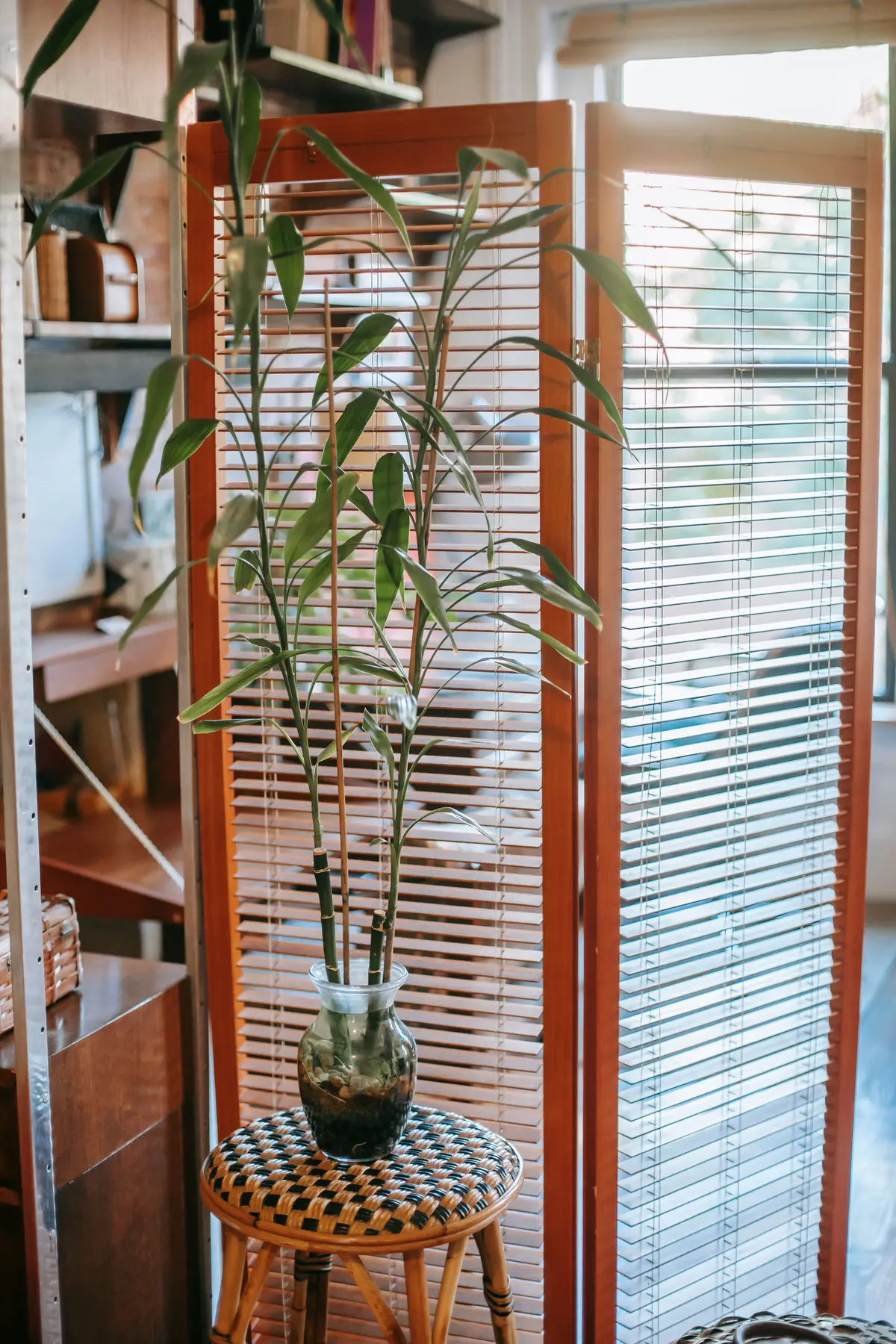
A folding screen is one of the most reversible ways to hide a sleeping area from the entry or living zone. Choose a width that provides privacy without creating a dark corner. Check how wide the screen stands when its panels are angled, since the open footprint differs from its folded dimensions. Use a model with stable hinges and suitable support, away from drafty doors and active walkways. Light woven or translucent panels often retain a calm feeling in small rooms. Fold the screen away when you need floor space for cleaning, exercise or guests.
Arrange Furniture Back-to-Back
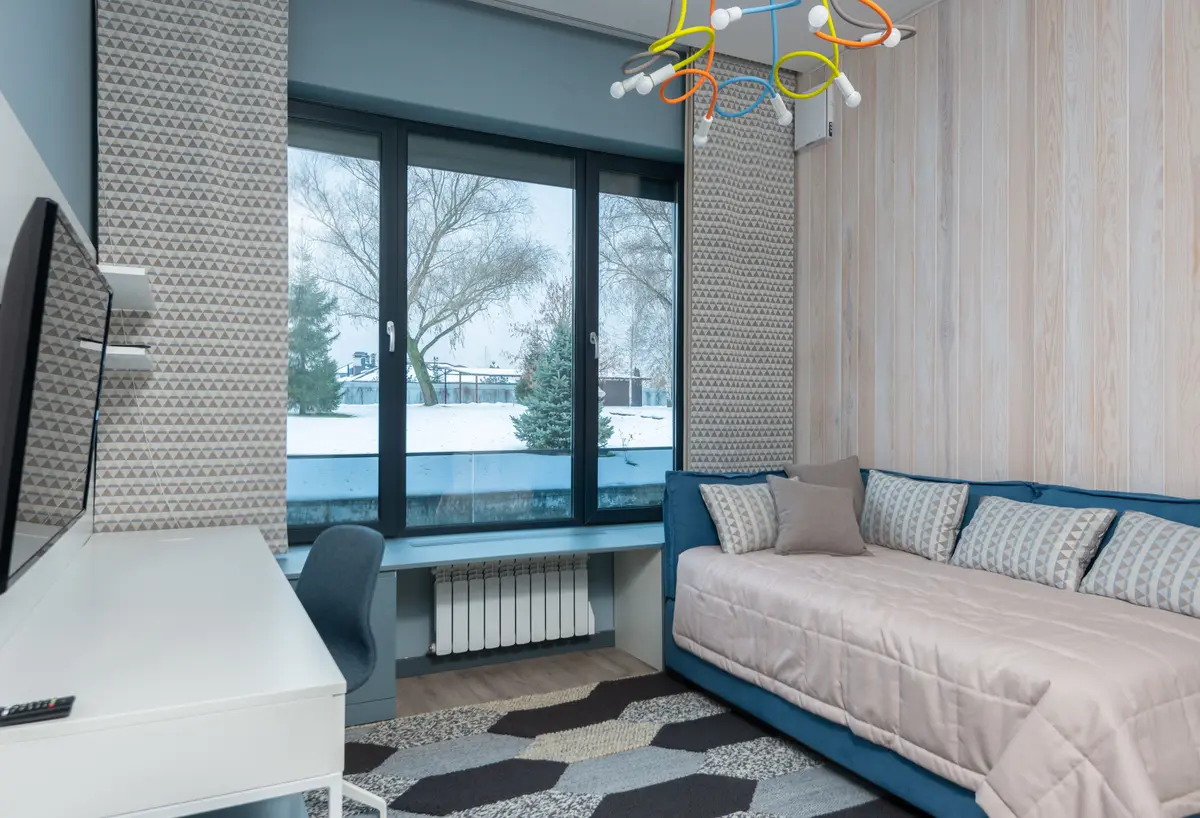
A sofa facing one direction and a desk or bed facing another can establish zones without buying any additional divider. Place the sofa back toward the sleeping area only if the route around it remains comfortable. A console behind the sofa may hold a lamp or small tray, but should not become a barrier to movement. Avoid covering outlets or placing tall objects where they interrupt ventilation and windows. This approach is particularly useful in long studio layouts where furniture orientation can create distinct activities while preserving an open sightline.
Curtains Without Permanent Drilling
Create a No-Drill Curtain Divider
An adjustable curtain system can soften a sleeping nook. Check ceiling height, span, allowed surfaces and weight rating. Curtains may be sold separately.
Affiliate disclosure: As an Amazon Associate, Smart Space Finds earns from qualifying purchases. Prices, variants and availability may change. Always check product details, dimensions and installation requirements on Amazon.
A suitable tension system or freestanding curtain frame may create adjustable privacy without holes in the ceiling. Check manufacturer span limits, weight ratings and surface compatibility. A loose tension rod should not be treated as safe support for heavy blackout drapes, especially in a household with children or pets. Lightweight curtains may offer visual separation while allowing them to be drawn back during the day. Measure the fabric drop so it does not drag through cooking or walking areas. Avoid placing curtains too close to heaters, cooking appliances or moving doors.
Keep Natural Light Moving Through the Room
Many studios rely on one window for most daylight. A solid divider set perpendicular to the window can make the sleeping zone and desk area feel gloomy. Test any potential partition with a temporary cardboard outline or furniture arrangement before buying. Open shelves, slatted screens and lighter materials allow more brightness to travel through the space. Place a desk where daytime light supports work without causing screen glare. Use separate task lamps for evening activities. Good zoning creates privacy without sacrificing the natural advantages of the room.
A Small Desk Nook With Visual Privacy
Portable Privacy Screens for Work & Living
Use freestanding panels to create a movable backdrop for your desk or sleeping space without permanent installation.
Affiliate disclosure: As an Amazon Associate, Smart Space Finds earns from qualifying purchases. Prices, variants and availability may change. Always check product details, dimensions and installation requirements on Amazon.
Working from the living area is easier when papers and cables have a defined home. A compact desk beside a short shelf or folding screen can provide some separation from the sofa. Keep the screen far enough away that a chair can slide back normally. Use a shallow drawer or portable caddy for work accessories, then clear the desk after finishing. Avoid placing a tall barrier in front of a radiator or ventilation outlet. If video calls are a priority, test the camera background from the seated position before settling on the final arrangement.
Separate the Bed Without Closing It In
A sleeping corner should feel restful but remain ventilated and easy to access. A low bookcase at the foot of the bed can provide a boundary while keeping the upper space open. Avoid blocking a bedroom window, covering heating equipment or creating a narrow exit from the bed. Lightweight textile screens can add privacy, but must be kept clear of heat sources and lamps. Remember that visual partitions do not offer meaningful sound isolation, so a divider cannot replace considerate activity timing in a shared studio.
Respect Safe Clearances
Check all exit routes, electrical panels, door swings and access to windows before positioning tall furniture. Free-standing pieces may need appropriate anti-tip protection; follow instructions rather than assuming a heavy shelf will remain stable. Place taller items where children or pets cannot easily pull them over. A divider should not require residents to step around sharp corners in the dark. Avoid balancing decorative plants on unstable screen tops. Safety matters more than fitting every activity into a perfectly symmetrical floor plan.
Consider Storage as Part of the Divider
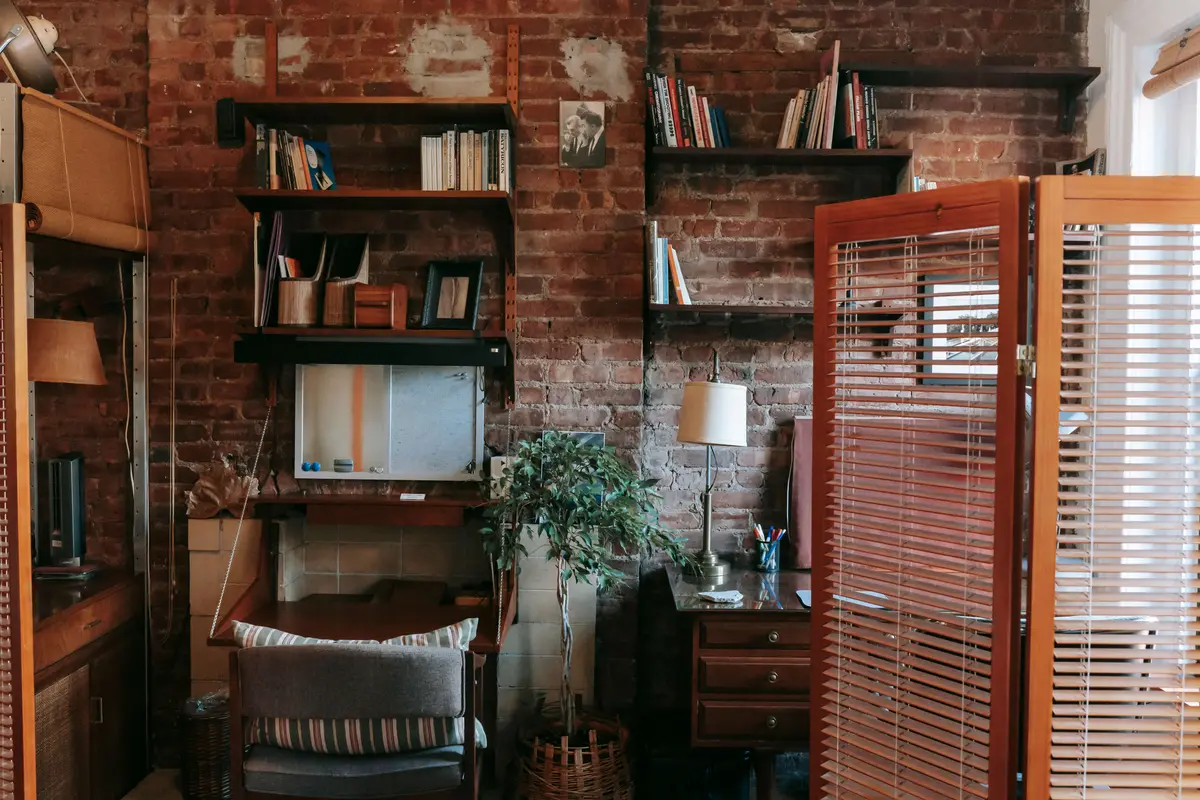
A low unit with drawers can help separate zones while holding folded blankets, books or office supplies. However, closed storage makes the furniture heavier and may block more light than open shelves. Assign each compartment a specific purpose and avoid stacking loose objects on top. Measure the drawers fully extended to ensure they remain usable. If the divider becomes a dumping ground, it can make the studio appear smaller even when technically providing more storage. Prefer one useful unit rather than a row of mismatched containers.
Keep the Visual Palette Quiet
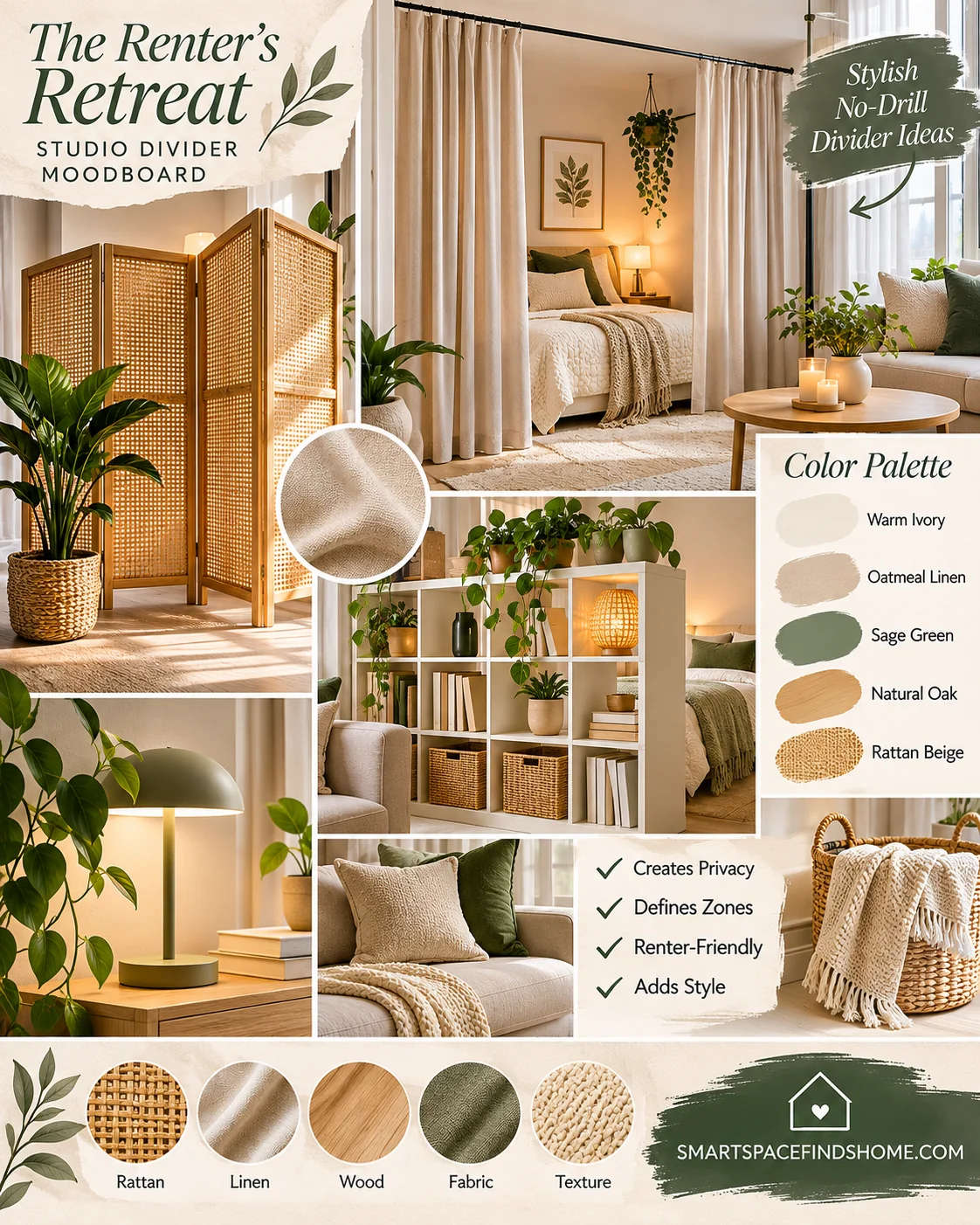
A room divider is a large visual element, so its finish should connect with the existing floor, walls and furniture. Warm wood, linen tones or muted olive may suit a cozy editorial apartment without demanding new decor. Avoid highly patterned screens when the room already contains a colorful rug and several busy textiles. Let the divider function as part of the furniture rather than as a theatrical feature. A consistent palette helps the zones feel coordinated even though their activities differ.
Test the Layout for a Full Week
Live with a provisional furniture arrangement before investing in a screen or shelving unit. Notice whether you bump corners, lose daylight, struggle to clean or end up moving the divider each evening. Check how the setup functions when guests visit and when someone needs to use the bathroom at night. If the partition is continually in the way, choose a smaller or movable solution. A successful studio divider creates a useful sense of privacy without making the single room less convenient to live in.
Six Renter-Friendly Studio Divider Layouts That Actually Work
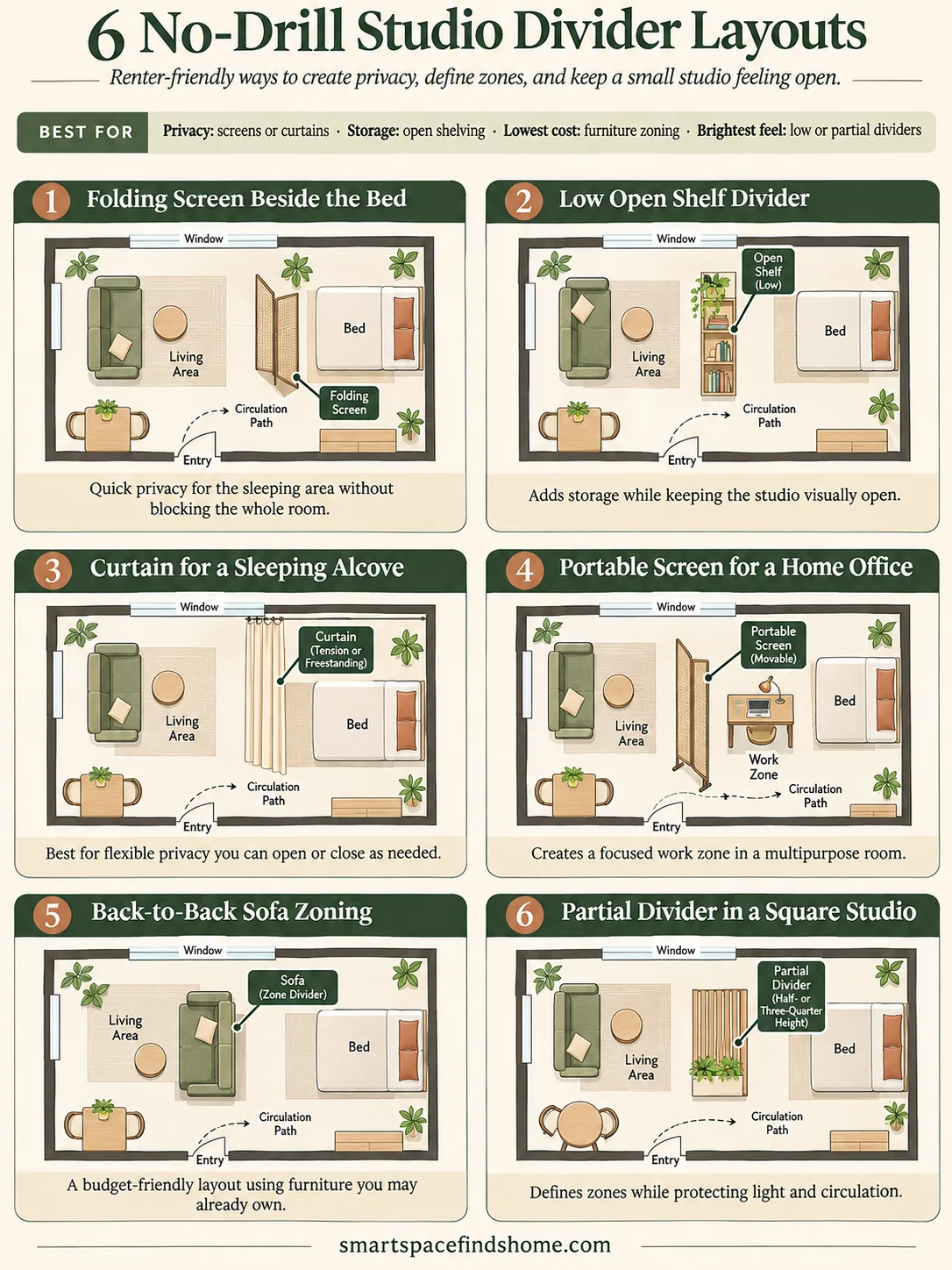
1. Sleeping nook: place a folding screen beside the bed
Position a stable folding screen along the exposed side of the bed rather than across the entire room. The goal is to block the direct view from the entrance while keeping access on at least one side comfortable. Follow the required panel angle and support instructions; do not stretch a folding screen flat if that makes it unstable.
2. One-window studio: separate zones with low open shelving
A shorter, open-backed shelf can define a living area without blocking most daylight. Keep the heavier items on lower shelves and comply with the unit’s anti-tip requirements. If the shelf is designed to be wall-anchored, do not treat it as safely freestanding simply because it can stand upright.
3. Bed alcove: close curtains only when you need privacy
A purpose-built freestanding curtain frame can create a softer sleeping nook, while keeping fabric open during the day. For tension-mounted systems, check the manufacturer’s allowable span, support surfaces and weight rating before use. Avoid unsupported ceiling installations and heavy fabric on lightweight rods.
4. Work-from-home corner: use a portable privacy panel
For a desk near the living area, a folding screen or appropriate mobile panel behind your chair can help tidy video-call backgrounds. Leave clearance for your chair, access to outlets and natural airflow. If the product has casters, follow its instructions for locking or securing them.
5. Long rectangular studio: turn the sofa into the divider
Place the sofa with its back to the sleeping area and align a desk or low console with the opposite zone. This approach retains an open ceiling line, preserves daylight and may avoid the expense of buying a separate divider.
6. Small square studio: create a partial visual boundary
A modest screen near the foot of the bed is often more practical than a floor-to-ceiling partition. Leave enough open space to move through the room without weaving around furniture. If the square layout feels tight, first test the boundary with painter’s tape.
Privacy, Sound, Lighting and Safety: What to Expect
Visual privacy: opaque screens and curtains can hide a sleeping area from the doorway. Open shelves only partly obscure the view. Acoustics: lightweight folding screens and ordinary curtains are not soundproof walls. Lighting: translucent fabrics, lower partitions and open shelving make it easier for sunlight to reach the rest of a studio. Safety: avoid blocking emergency exits, operable escape windows, smoke alarms, sprinkler coverage, radiators, heaters, electrical panels and ventilation. Follow the product’s installation and tip-over instructions, especially around children and pets.
Before You Buy: Nine-Point Studio Divider Checklist
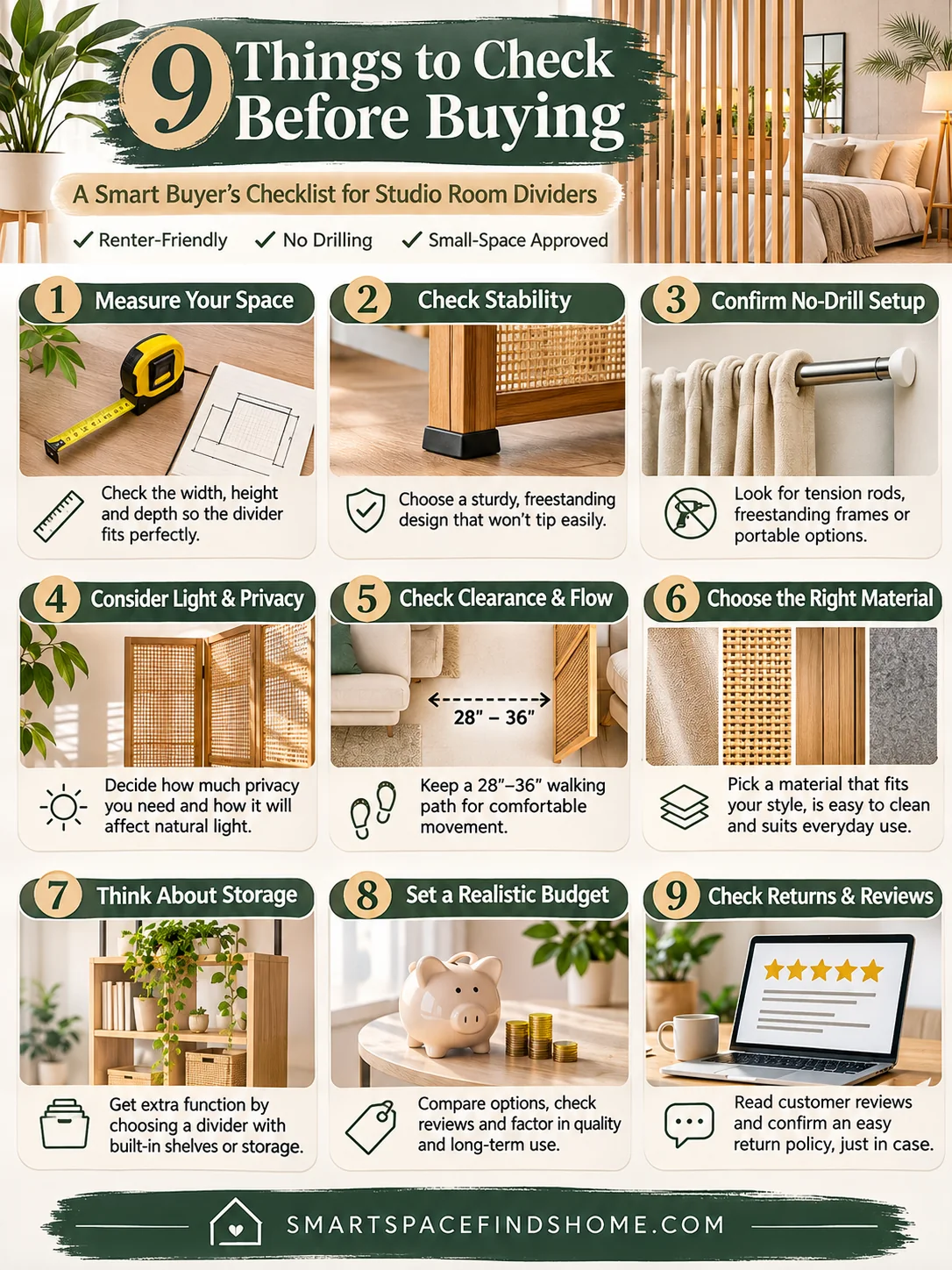
- Measure the width, height and depth of the proposed divider.
- Check the unfolded footprint, not only the folded dimensions.
- Confirm that required safety restraints are allowed and feasible.
- Check that every exit route and door swing remains clear.
- Avoid obstructing the only substantial source of daylight.
- Check how far drawers and desk chairs must extend.
- Read material, cleaning and assembly instructions.
- Compare return terms and the full delivered price.
- Test the arrangement for several days before committing.
More Small-Space Ideas to Complete Your Studio
Pair your room divider with multifunctional furniture ideas for studio apartments to use every square foot effectively. For a coordinated rental refresh, explore our renter-friendly apartment makeover guide. And for your newly separated reading zone, see small-room reading lamp placement.
Which Studio Divider Should You Choose? A Practical Decision Guide
Start with the problem you need to solve, not the product category. A divider that works beside a bed may be frustrating near a desk or entryway.
| Your priority | First option to test | Key trade-off |
|---|---|---|
| Hide the bed from the entry | Opaque folding screen | Needs floor depth for stable angled panels |
| Keep a one-window studio bright | Low open shelf or sofa-backed zoning | Less visual privacy |
| Open privacy only at night | Freestanding curtain frame | Frame and curtain need storage and clearance |
| Create a work video-call backdrop | Portable folding panel | Position must accommodate desk chair movement |
| Spend as little as possible | Rearrange existing furniture | May not conceal the sleeping zone |
| Need storage and separation | Low shelving approved for your setup | Heavy or tall shelves may require wall anchoring |
Measure Your Space Before Ordering a Room Divider
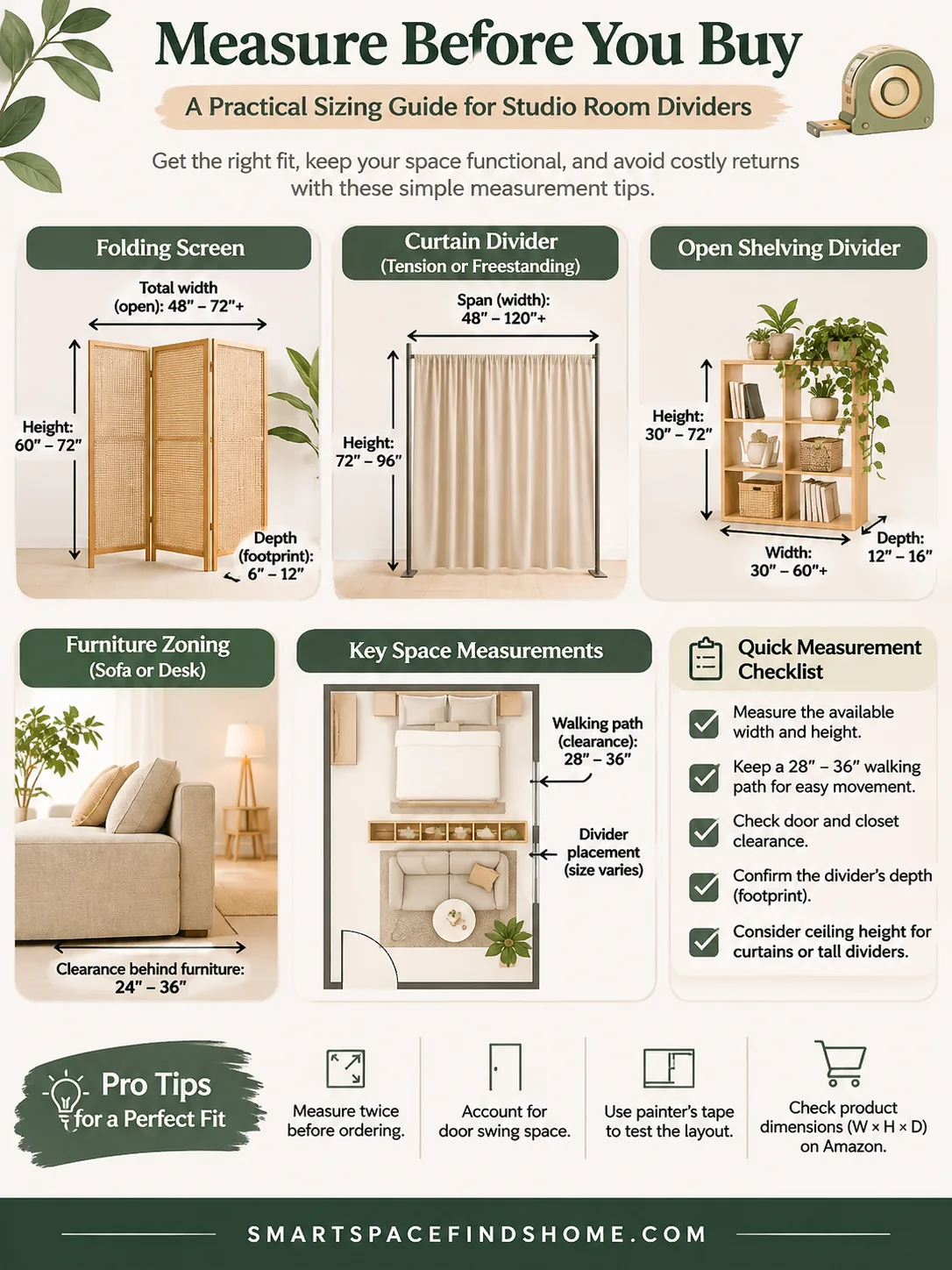
Measure the proposed divider line in inches, then mark its full footprint with removable painter’s tape. For a folding screen, check the standing width listed by the seller or manufacturer: angled panels usually cover less wall-to-wall distance than their unfolded flat width. Measure the depth of those angled panels, too. For curtains, measure the opening, frame footprint and fabric drop; verify the exact manufacturer’s supported range rather than assuming an adjustable rod can carry any curtain.
Next, rehearse your normal routine: open all doors, pull out the desk chair, access storage drawers, carry laundry and walk from the bed to the bathroom. Keep required emergency routes clear and follow applicable building rules. In a studio with one main window, check how much daylight reaches the far side of the partition at midday.
Studio Room Divider Costs: Where to Save and Where to Invest
Rearranging furniture you already own is often the lowest-cost choice. For a new divider, compare the product’s delivered price, actual standing dimensions, materials, weight, assembly, stability requirements and return terms. Lightweight folding screens can be easier to move, while substantial frames or shelving may offer other functions but take more floor space. There is no universal cheapest or safest product: evaluate a specific model against your room and its instructions.
Budget-first: test a sofa or desk placement before shopping. Privacy-first: favor opaque panels or a compatible curtain frame. Storage-first: consider low open shelving only if all required anti-tip precautions can be met. Light-first: keep the upper sightline open with lower furniture and translucent materials.
Common Studio Divider Mistakes to Avoid
- Buying by flat width alone: a folding screen often requires angled panels to stand securely.
- Putting a tall solid divider in front of the only window: the result can darken the entire apartment.
- Ignoring product anchoring instructions: a tall shelf is not automatically safe to use freestanding.
- Expecting soundproofing: ordinary curtains and decorative screens mainly control sightlines.
- Blocking circulation: no decorative partition should interfere with required exits, doors, ventilation or heating equipment.
- Choosing the divider before testing the furniture plan: painter’s tape and a temporary layout can prevent an expensive return.
Related Renter-Friendly Small-Space Guides
For additional space-saving choices, explore multifunctional furniture for studio apartments, hidden desk ideas for compact living rooms, and renter-friendly shelf styling. For a cohesive rental refresh, see our apartment makeover ideas without renovation.
Frequently Asked Questions
What divider works without drilling?
A stable folding screen or low shelving unit can work, subject to its required safety fittings and the room’s layout.
Can a divider block noise?
Most open shelves, screens and curtains provide visual privacy rather than meaningful acoustic isolation.
What is the best temporary room divider for renters?
A properly supported folding screen is usually the most flexible choice because it is movable and needs no wall attachment. For a bed nook that needs full visual coverage, an appropriately rated freestanding curtain frame may be better.
How do you divide a studio apartment without building a wall?
Use a folding screen, low open bookshelf, furniture placed back-to-back or a freestanding curtain system. Choose the placement by testing direct sightlines and preserving natural light.
Can I use a bookcase as a divider without attaching it to the wall?
Only if the manufacturer explicitly permits that configuration and its stability requirements are met. Many tall bookcases require anchoring, even if they appear stable when empty.
Are tension rods safe as room dividers?
They may work for a supported span, surface and light curtain when installed strictly according to the manufacturer’s specifications. Do not assume a standard shower rod safely supports a large or heavy curtain.
How much does a no-drill room divider cost?
Rearranging existing furniture can cost nothing. Purchased screens, shelves and curtain frames span a wide price range depending on dimensions, quality and shipping. Compare the total cost of a setup that meets your safety and privacy needs.
Can curtains or folding screens soundproof a studio?
No. They mainly create visual separation. Some soft materials can reduce reflections, but they cannot provide the noise isolation of an acoustically designed wall.
What room divider is best for a very small studio?
Try back-to-back furniture or a compact folding screen before a large partition. A partial divider is often more useful than enclosing a small room’s only window.
How do I keep a studio bright?
Choose partial-height or open dividers and test the layout before obstructing the main window.