
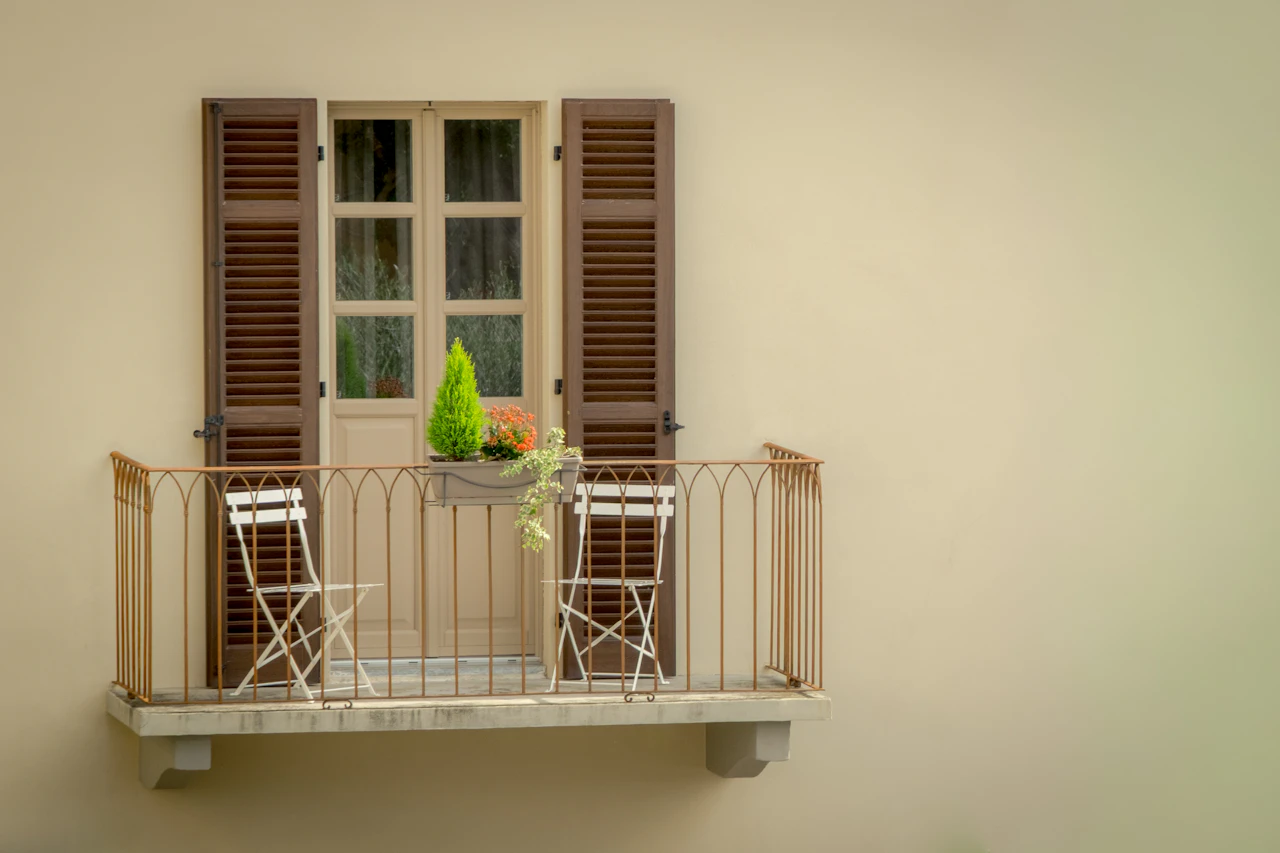
There is a particular kind of pleasure in stepping outside with a fresh cup of coffee and finding a little breathing room—especially when that outdoor space is only a few steps wide. The challenge is not making it look like a sprawling designer terrace. It is making it feel like a place you genuinely want to return to.
Small outdoor space transformations work best when you stop treating a balcony, patio, or tiny terrace as a miniature backyard. Instead, give every square foot a purpose. A folding café table can turn a narrow balcony into a breakfast spot. One comfortable chair can make an awkward corner feel intentional. A few well-placed containers can add privacy without building a wall.
The goal is not to copy a perfectly styled photograph. It is to create an outdoor space that feels good on an ordinary Tuesday, takes a reasonable amount of effort to maintain, and works with your lease, climate, and actual dimensions.
Measure first. Choose one primary activity. Test the layout with things you already own. Only then invest in durable, weather-appropriate pieces.
THE OUTDOOR EDIT · ISSUE 01
A better balcony begins with a better question.
Not “What should I buy?” but “What do I want to enjoy out here?” Use the guide below to turn that answer into a layout that fits your everyday life.
Before You Buy Anything: The 15-Minute Outdoor Space Audit
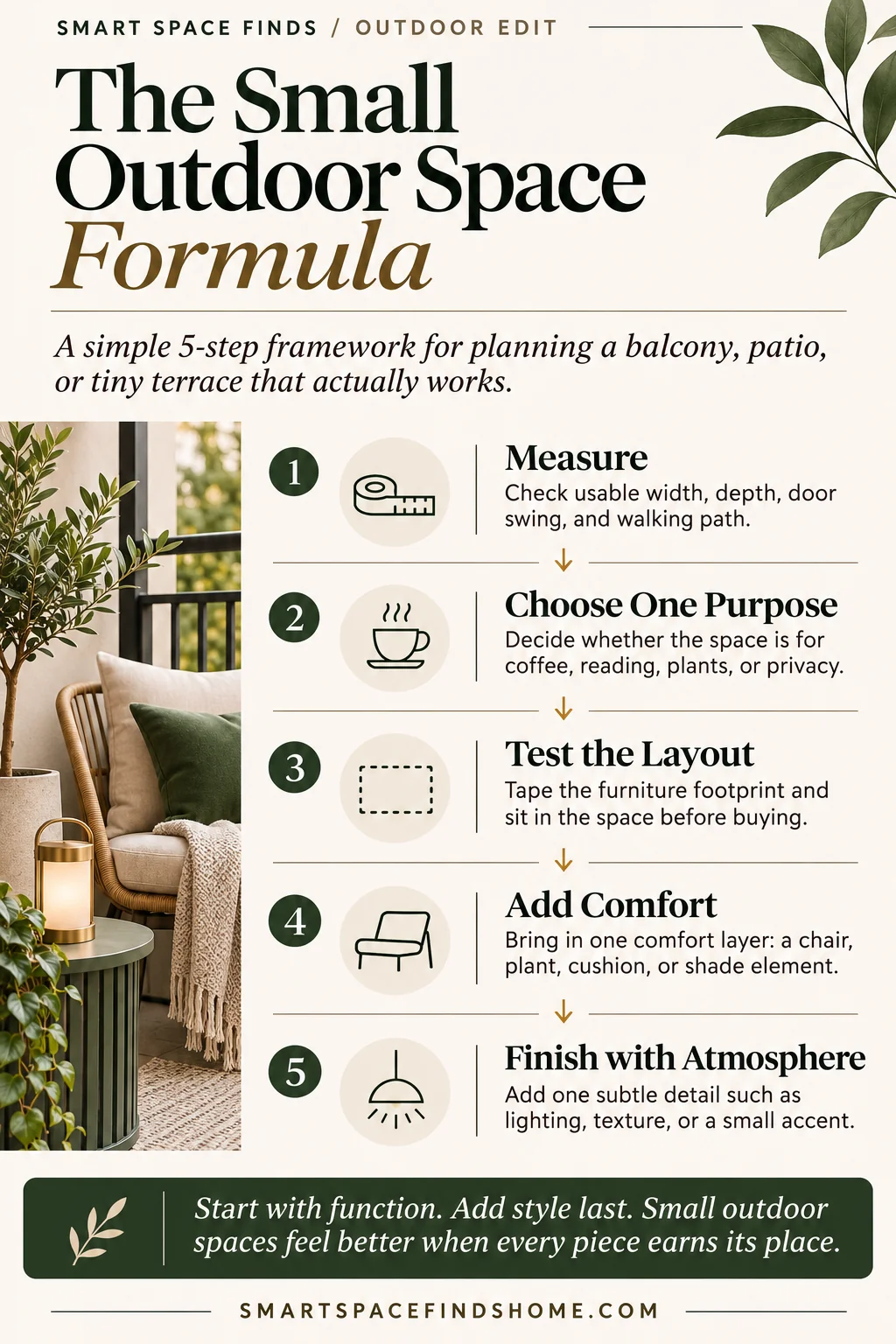
Take three measurements: the overall length and depth, the door’s full swing, and the widest usable path between furniture and the exit. Note any drains, electrical outlets, vents, maintenance access, and railing restrictions. Then watch the space at the time of day you actually want to use it. Morning sun, afternoon heat, wind, and street noise will change what counts as comfortable.
Choose one primary function
A very small balcony does not need to be a dining room, reading room, container garden, and storage closet all at once. Give it one main job, and let everything else support that job.
| Your priority | Start with | Skip for now |
|---|---|---|
| Morning coffee | Folding chair + small table | Oversized lounge set |
| Quiet reading | Supportive chair + shade | Extra guest seating |
| Plants | Two or three suitable containers | Heavy, crowded planters |
| Privacy | Safe, approved freestanding solution | DIY railing attachments |
A simple measuring tip: place painter’s tape on the floor to represent your planned furniture footprint, then open the door and walk the intended route. For a balcony, the clear access path and emergency egress requirements take priority over any suggested furniture dimensions.
5 Small Outdoor Space Transformations Worth Trying
1. Turn a narrow balcony into a folding café corner
Best for: narrow balconies, renters, people who want morning coffee or an occasional meal outside.
A slim bistro arrangement is useful because it can disappear when you need floor space. Start with one folding chair and a small, stable outdoor-rated table. If the arrangement remains comfortable, add a second folding chair instead of buying a larger dining set.
Position the table where it does not interrupt the doorway or the principal walking route. Choose chairs you can actually fold and store without lifting them over other furniture. Open-frame metal pieces visually recede; teak-look or natural-finish surfaces create a warmer, softer atmosphere.
Bring a sturdy chair and a small side table outside briefly in suitable weather. Sit for ten minutes at your usual coffee time. If the sun, wind, noise, or door clearance makes it unpleasant, change the layout before shopping.
Watch out for: sharp table corners near the exit, slippery feet on wet surfaces, and furniture that is not rated for outdoor use. For detailed configurations, explore our compact balcony seating layouts for two.
THE OUTDOOR EDIT / SHOP BY NEED
The Compact Seating Edit
Choose one seating format that fits your measured footprint; these are alternatives, not a shopping list to buy in full.
Affiliate disclosure: As an Amazon Associate, Smart Space Finds earns from qualifying purchases. Product options, prices and availability may change. Confirm specifications, variant, and current offer on Amazon before ordering.
2. Create a single comfort zone instead of filling every corner
Best for: tiny patios, square balconies, and outdoor areas where sitting comfortably matters more than entertaining.
Resist the temptation to squeeze in a sectional, side table, two planters, rug, and extra stools. One genuinely comfortable chair often makes a stronger design statement than a crowded cluster of cheaper pieces. Use a small movable table for a book or drink, and leave some visible floor around the furniture.
For a calmer aesthetic, repeat two or three materials rather than introducing a different finish with every object: for example, warm wood, chalk-colored cushions, and dark green foliage. Use one accent color sparingly through a removable cushion or planter.
Make it more versatile: an outdoor-rated ottoman can act as a footrest or occasional extra seat, but only if its weight and footprint suit the balcony and it does not obstruct access.
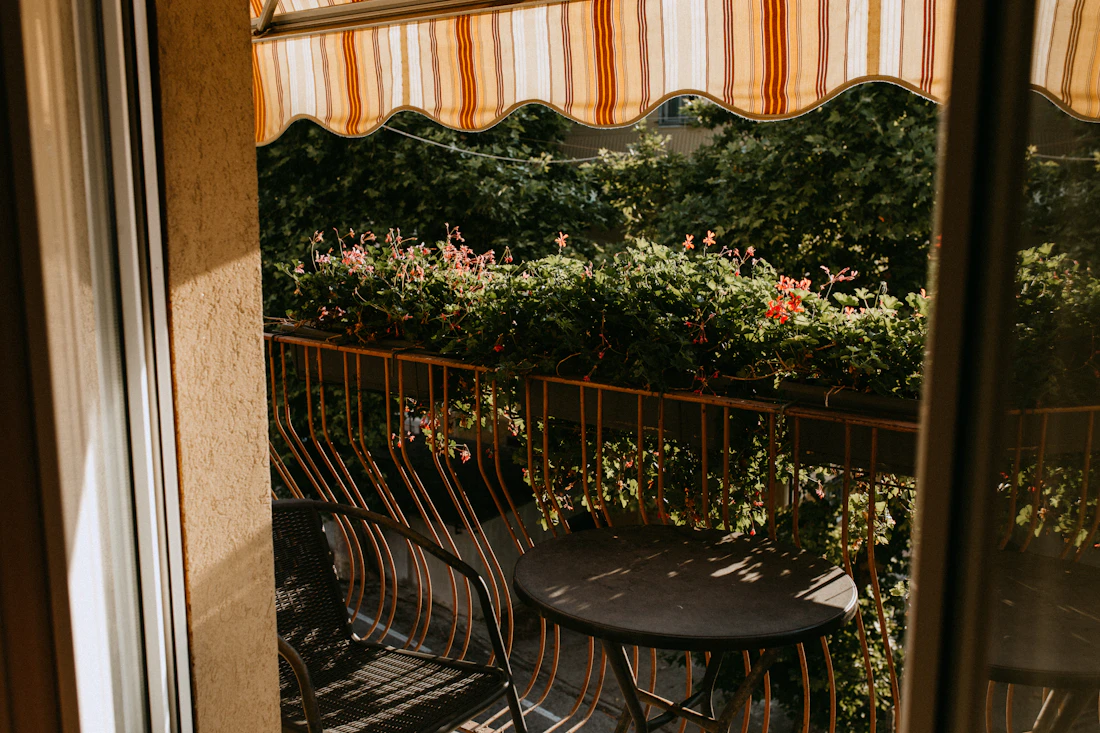
For a more restful setup, see how to design an outdoor reading nook in a tiny space.
3. Add softness with a weather-conscious material palette
Best for: hard concrete floors, exposed metal furniture, or balconies that feel visually cold.
Textiles make outdoor seating inviting, but they should never create a second maintenance problem. Choose removable, outdoor-rated cushion covers and a rug designed for the surface and drainage conditions. In consistently damp or exposed locations, fewer textiles and easy-to-dry materials may be a better decision than a plush layered look.
Use a restrained palette: sand, oat, olive, warm charcoal, and one muted accent. This creates continuity without relying on expensive furnishings. A narrow stripe or small woven texture adds interest while keeping the atmosphere relaxed.
Important: outdoor-rated does not mean permanently weatherproof. Follow care instructions, allow wet cushions to dry fully, and make a realistic plan for storage during storms or prolonged wet weather. Never cover a required drain with decking, mats, or rugs.
THE OUTDOOR EDIT / SHOP BY NEED
Texture Without the Clutter
Softness is optional: check dry-out time, drainage, cushion dimensions and storage first.
Affiliate disclosure: As an Amazon Associate, Smart Space Finds earns from qualifying purchases. Product options, prices and availability may change. Confirm specifications, variant, and current offer on Amazon before ordering.
4. Build a small green backdrop, not an overcrowded garden
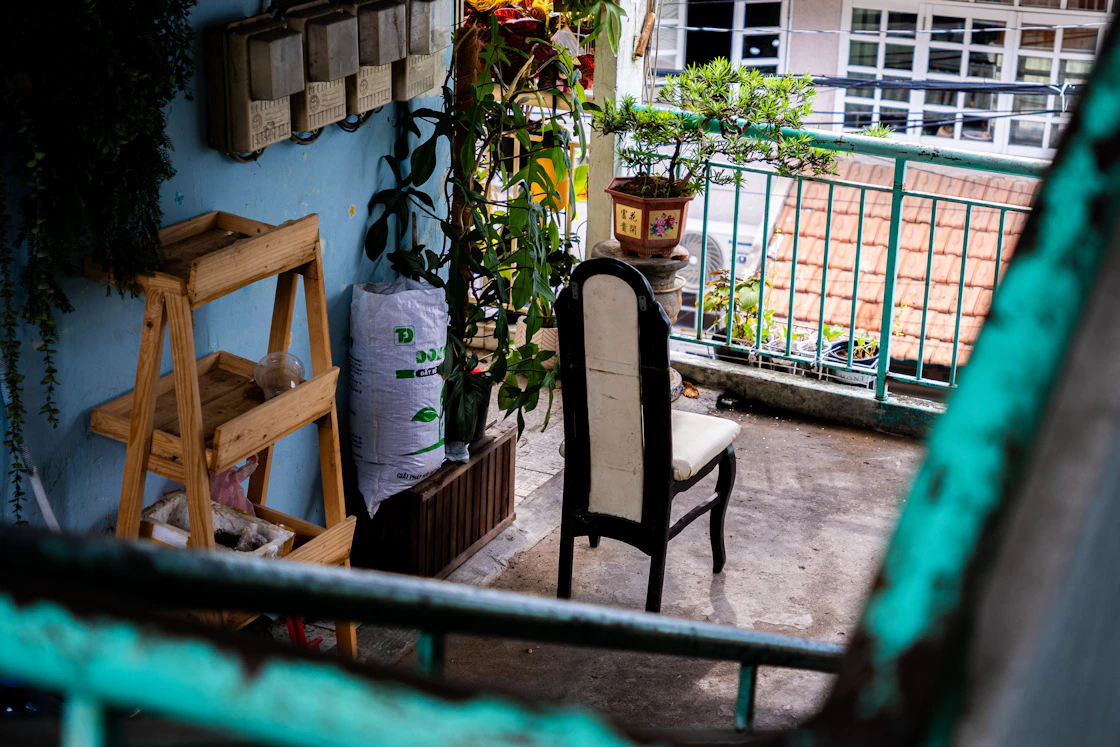
Best for: overlooked balconies, plain urban patios, and outdoor corners that need a softer view.
Plants work best as a composition, not a collection of impulse purchases. Try two or three containers at different heights, chosen for the sun, wind, and watering conditions of your actual location. A tall plant in a stable floor planter can form a backdrop; a smaller herb container can provide a usable detail near the seat.
Match the plant to its location rather than choosing it only by appearance. For shadier exposures, start with our shady balcony planting guide. If your goal is a more layered vertical look, our vertical garden ideas explain space-efficient approaches.
A freestanding floor planter is not the same as a railing planter. Balcony railings, wind exposure, weight capacity and approved fixing methods must be checked before placing or attaching anything above ground level. Never assume an attractive reference photograph demonstrates a safe installation.
Keep planters away from door clearance and drainage channels. Consider the combined weight of wet soil, water, containers, and furniture. If you do not know the balcony’s permitted loading, ask your building management rather than inventing a capacity estimate.
THE OUTDOOR EDIT / SHOP BY NEED
Plant Corners & Small-Space Storage
Only add plant stands where stable and permitted. Combine wet soil, container and furniture loads when planning.
Affiliate disclosure: As an Amazon Associate, Smart Space Finds earns from qualifying purchases. Product options, prices and availability may change. Confirm specifications, variant, and current offer on Amazon before ordering.
5. Improve privacy and evening atmosphere without permanent alterations
Best for: apartment balconies facing neighbors, shared courtyards, and outdoor spaces used after sunset.
Privacy is often a sightline problem, not a reason to enclose the entire balcony. Sit in the intended chair and identify where unwanted views enter. A correctly positioned, permitted freestanding planter or lightweight screen may solve the issue more simply than a full-height divider. Screens and shade products create wind loads: they require building approval and secure installation appropriate to the location.
For evening comfort, prioritize low-glare illumination that does not disturb neighbors. Choose products specifically rated for outdoor conditions; keep power connections protected according to manufacturer instructions. Where flame, electrical, or building restrictions apply, a properly rated portable light may be more appropriate than candles or wired installations.
See our separate guides to balcony privacy ideas for renters and cozy small balcony evening styling for more focused inspiration.
THE OUTDOOR EDIT / SHOP BY NEED
After-Dark Atmosphere
Check electrical and outdoor-use ratings. Keep indoor-only or unprotected lamps sheltered and bring them inside after use.
Affiliate disclosure: As an Amazon Associate, Smart Space Finds earns from qualifying purchases. Product options, prices and availability may change. Confirm specifications, variant, and current offer on Amazon before ordering.
The Small Outdoor Space Layout Selector
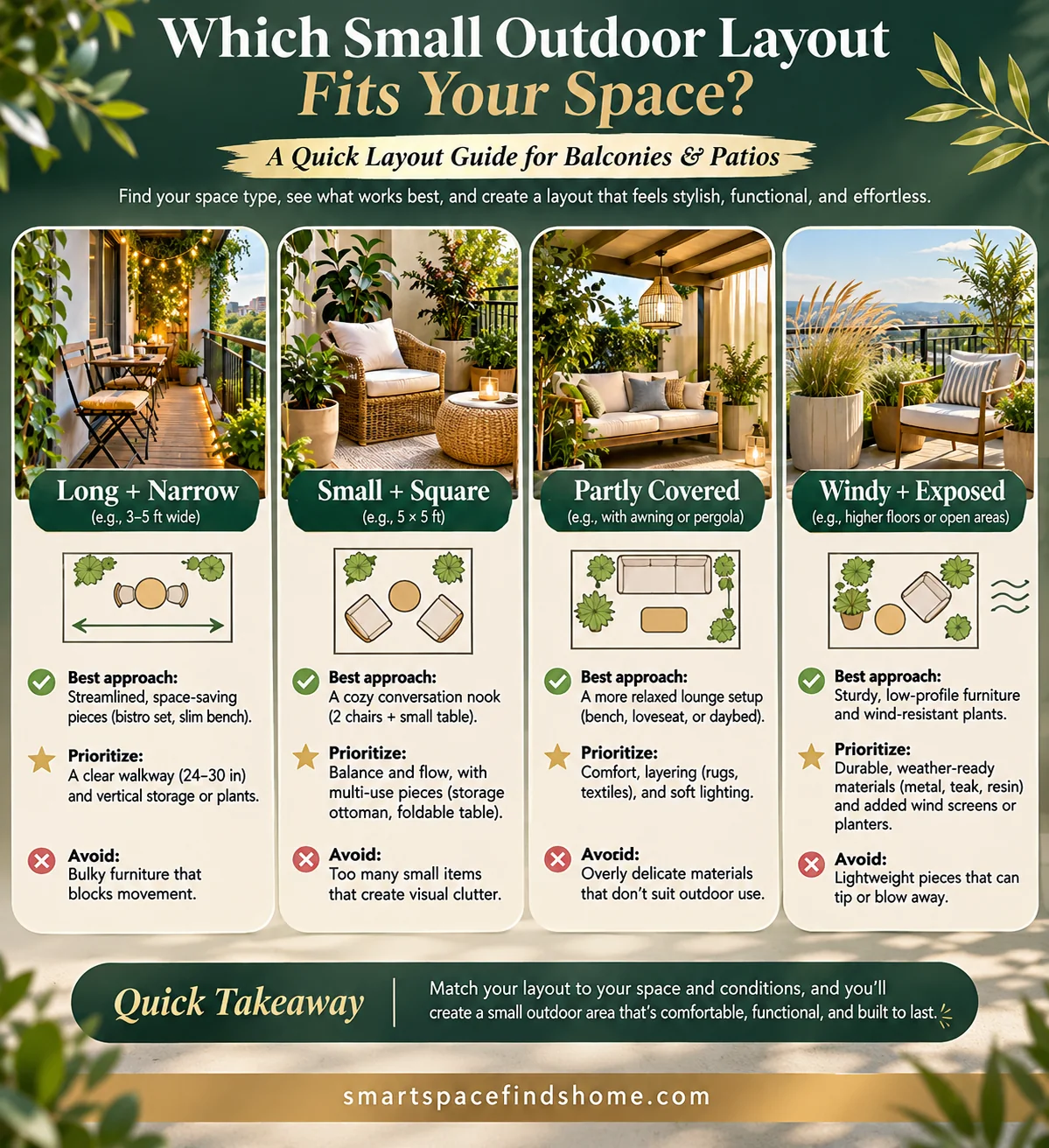
THE SPACE LAB / 01
Choose the closest shape below, then plan around access and use rather than appearance alone. These are editorial concepts, not scale drawings or structural advice.
Fold-away bistro chair, slim side table, uncluttered door-to-end route.
One comfortable chair, one movable table, plants grouped at one side.
Use sheltered seating when appropriate; retain drainage and airflow.
Low-profile, secured, weather-rated furniture; avoid tall unstable add-ons.
The 3-Piece Styling Formula
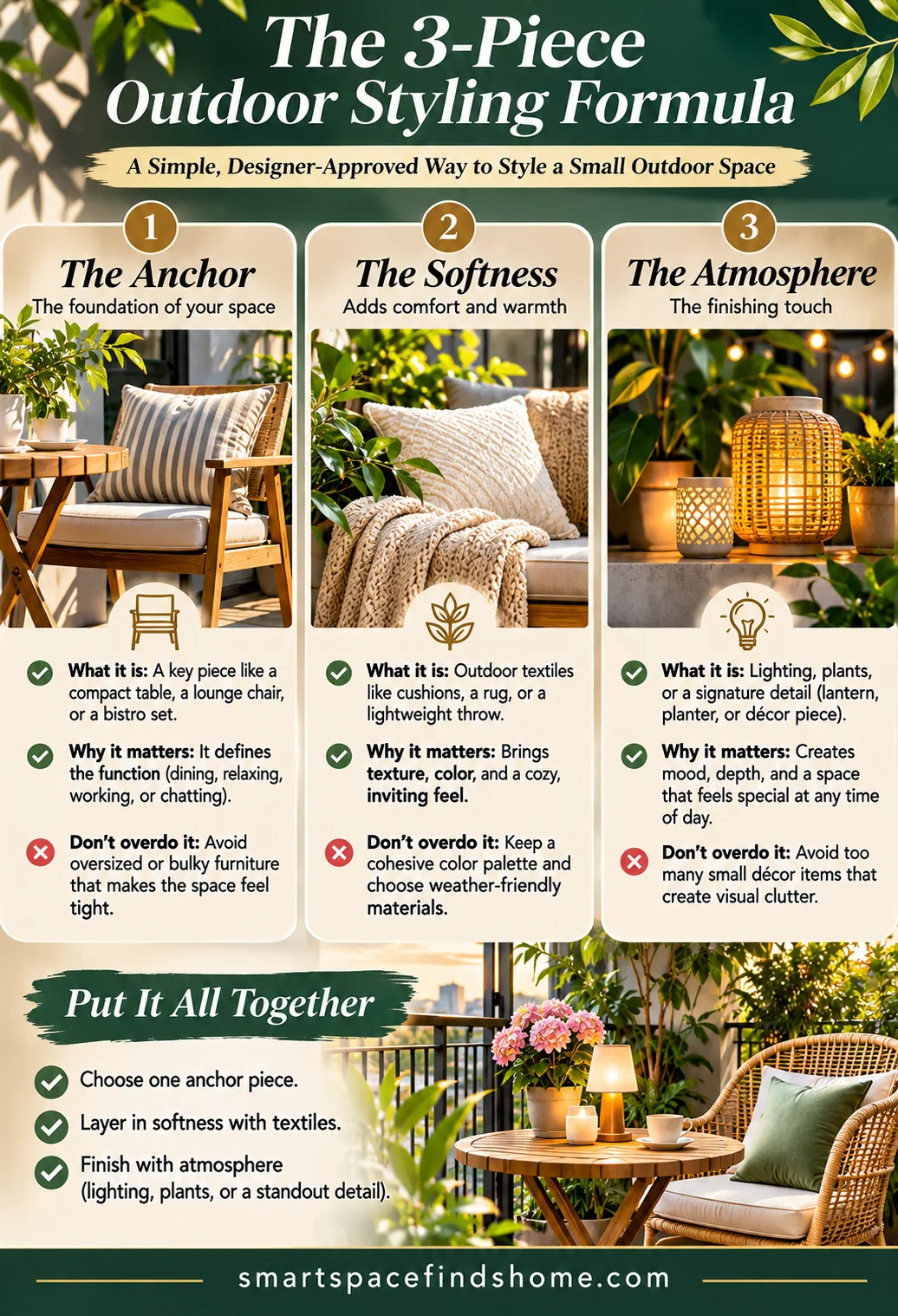
THE EDIT / KEEP ONLY WHAT EARNS ITS PLACE
For an uncluttered editorial look, start with one functional anchor (chair or compact table), one softening element (plant or outdoor-rated textile), and one atmosphere detail (subtle lighting or a small accent). Stop there for a few days. If something feels missing, identify the specific problem instead of adding another decorative object.
Three Design Recipes You Can Adapt to Your Own Space
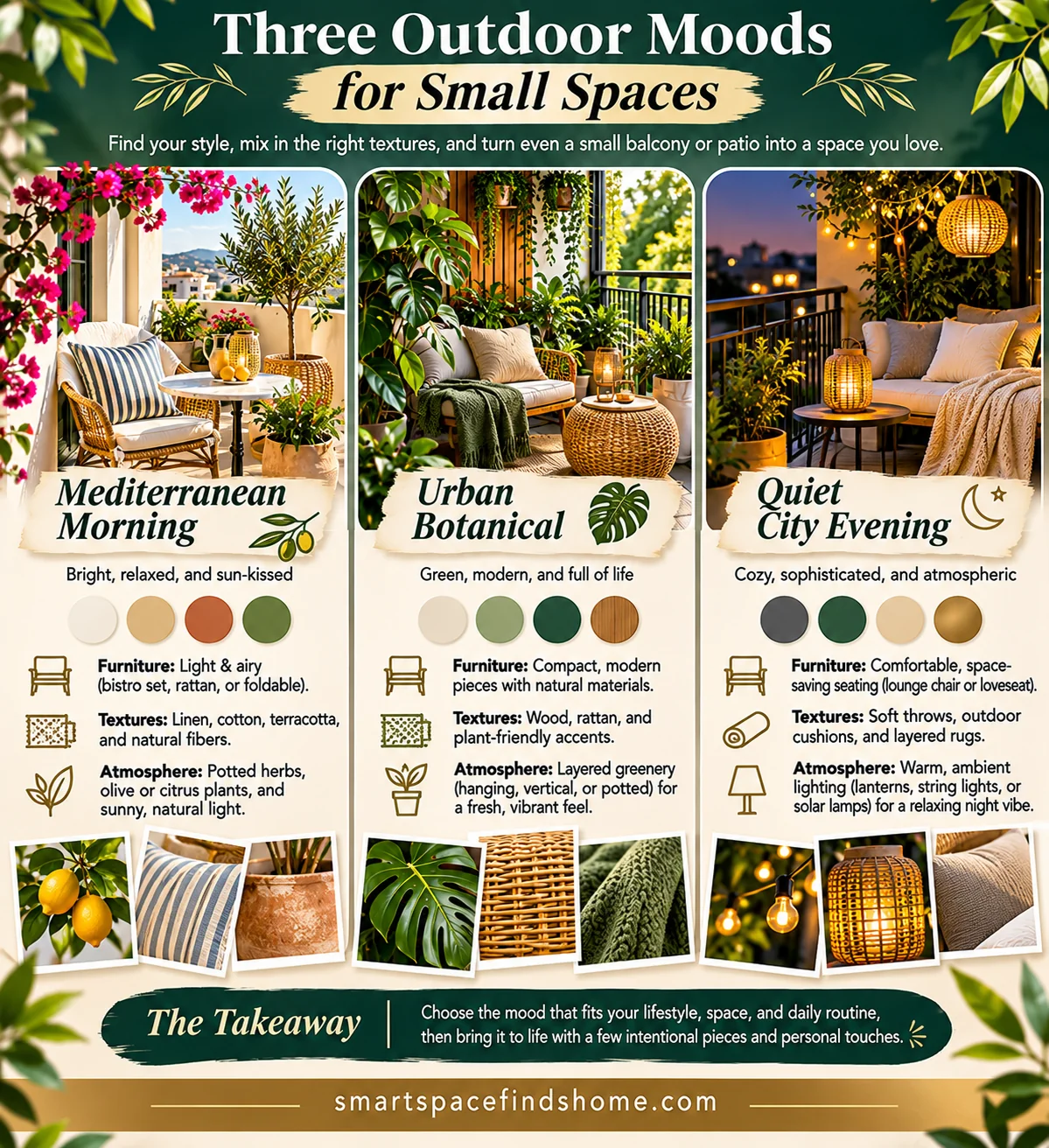
These are illustrative styling directions, not photographed client transformations. Choose a mood only after you know the layout works.
Mediterranean Morning
A folding café set, chalky neutrals, terracotta and a single aromatic herb. Ideal for morning light and slow coffee rituals.
Urban Botanical
One supportive chair, grouped planters and weather-conscious fabrics. Useful when your view needs a softer green foreground.
Quiet City Evening
Slim furniture, a discreet outdoor-rated light and one warm texture. A restrained setup for an evening pause.
What to Spend First: A Practical Budget Strategy
There is no universal price that makes a balcony transformation successful. The right amount depends on condition, climate, furniture quality, and how often the area will be used. These are planning ranges, not current retailer quotes.
| Budget range | Best use |
|---|---|
| $0–$50 | Cleaning, rearranging, a small plant, or a single washable accent. |
| $50–$150 | A compact weather-rated chair or table, assuming a compatible choice is available. |
| $150–$350+ | A durable seating setup plus one carefully chosen comfort upgrade. |
The best investment order: fix safety and maintenance problems first; choose seating second; improve weather comfort third; add decor last. If the balcony is seldom used, begin with a no-buy test and delay purchasing.
Choose Materials for the Weather You Actually Have
Beautiful surfaces become disappointing quickly when the maintenance requirements do not match your life. Use this decision matrix before ordering furniture, textiles or planters. Product specifications—not appearance—determine suitability.
| Exposure | Prioritize | Think twice about |
|---|---|---|
| Strong sun | UV-rated finishes, breathable seating, approved shade | Fading indoor fabrics |
| Frequent rain | Drainage, quick-dry materials, easy storage | Water-holding rugs and cushions |
| High wind | Low profiles, approved secure setups, removable accents | Tall screens and loose lightweight items |
| Mostly shade | Suitable shade plants, airflow, moisture checks | Sun-loving plants and slow-drying layers |
A 30-Minute Before-and-After Test That Actually Tells You Something
Observe → Clear → Rearrange → Evaluate
- Minute 0–5: photograph the current space in natural light and write down its biggest inconvenience.
- Minute 5–15: clear clutter, check the drainage area, and tape the proposed furniture footprint.
- Minute 15–25: rearrange one or two pieces you already have, then sit in the planned spot.
- Minute 25–30: check access and comfort; record what worked and what did not.
Repeat the test during the time of day you expect to use the space. A comparison is meaningful when the viewpoint and lighting are similar, not when the “after” image is heavily staged. Ask: Would I use this three times a week? Is it easy to clean? Can I move around safely?
Safety, Renter Rules, and Weather: The Non-Negotiables
Outdoor design is different from styling an indoor nook. Before adding anything heavy, tall, mounted, electrical, or wind-catching, check your lease or building rules and seek the appropriate professional or property-management guidance.
- Keep exits clear. Do not obstruct doors, emergency access, or required circulation.
- Respect weight limits. Account for people, furniture, water, and saturated soil together; do not guess the balcony’s structural rating.
- Protect against falling objects. Keep loose pots and decor away from edges; only use approved mounting systems.
- Protect drainage. Never block outlets, slope, or access to drainage components.
- Plan for wind. Screens, umbrellas, curtains, and tall plants can become hazards when not properly specified and secured.
- Follow fire and electrical rules. Avoid open flames, unsafe grills, and unsuitable indoor-only power accessories.
- Check children and pet safety. Do not position climbable furniture near railings.
These considerations reflect published balcony-safety and loss-prevention guidance; applicable building requirements vary by location and property.
What If Your Balcony Is Only 3 to 5 Feet Deep?
Depth is often a more useful constraint than total square footage. For a balcony about 3 feet deep, a conventional dining setup may block movement when chairs are pulled out. Test a single slim chair or a removable, approved surface instead. At around 4 feet deep, one compact seat and a very small table may be workable. At 5 feet deep, a pair of folding seats might fit—but only if door clearance, the required route, railings, and property rules allow it. These are design scenarios, not accessibility, egress, or code-prescribed clearance standards.
THE FOOTPRINT TEST / THREE QUESTIONS
01 · Open the door. Does anything interfere with the full swing or exit?
02 · Sit and stand. Can you actually use the chair without shifting every object?
03 · Walk the route. Is the route safe, clear, and compliant with your building’s requirements?
The Smart Shopping Filter: Buy Only After These Five Answers
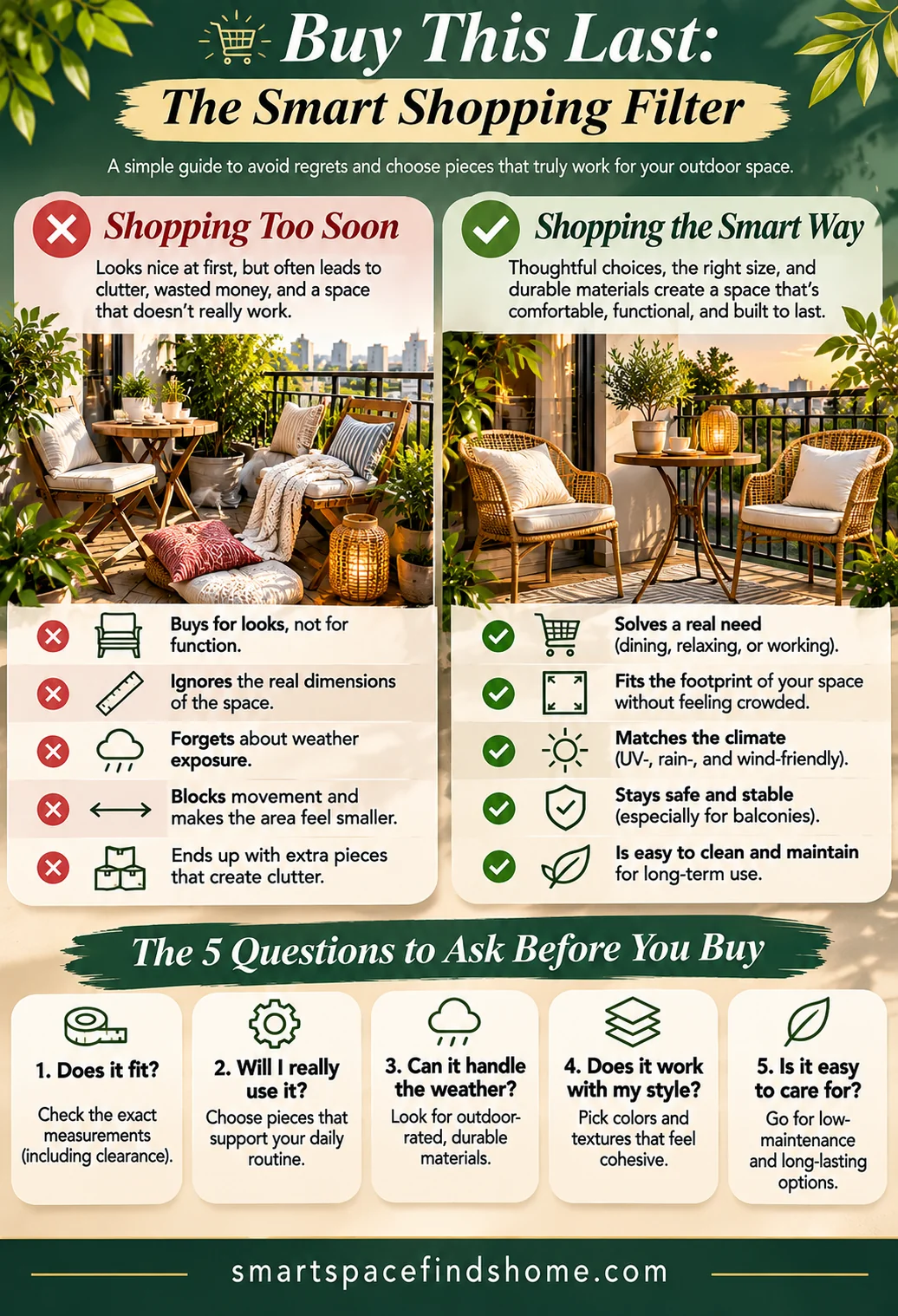
Shopping can be part of the transformation, but it should come at the end of the planning process. Before adding a product to your cart, ask:
- Does it solve the exact problem? A pretty table is not useful if the issue is excessive afternoon heat.
- Will it physically fit? Check real product dimensions in both the open and stored positions.
- Is it suitable for my exposure? Look for the manufacturer’s outdoor-use and care information.
- Will it stay safe? Check assembly, stability, access, approvals and possible wind or load risks.
- Will I maintain it? Consider drying, cleaning, winter storage, and replacement parts.
If you cannot answer all five, wait. The best purchase is usually the one you can confidently use and care for, not the one that photographs most impressively.
Common Small Balcony Design Mistakes
- Buying a complete set before measuring: a coordinated set can still be unusable if the chairs cannot move.
- Styling only for the photo: too many cushions and accessories create daily maintenance.
- Ignoring climate: textiles and untreated finishes wear differently in shade, wind, rain, and strong sun.
- Choosing tall privacy solutions without approval: wind exposure and attachments matter more than appearance.
- Copying a larger terrace: fewer, more useful pieces almost always make a small footprint easier to live with.
THE OUTDOOR EDIT / SHOP BY NEED
The Weather-Ready Protection Edit
Only buy a cover after measuring your actual furniture. Larger set covers are usually unnecessary on tiny balconies.
Affiliate disclosure: As an Amazon Associate, Smart Space Finds earns from qualifying purchases. Product options, prices and availability may change. Confirm specifications, variant, and current offer on Amazon before ordering.
Keep It Beautiful: The Low-Effort Care Plan
The easiest outdoor space to enjoy is one that does not become another chore. Build a realistic maintenance rhythm around your climate and the products you own.
Bring in loose items when weather requires. Check that doors and drains remain clear.
Remove debris, inspect plants and wipe frequently used surfaces.
Inspect hardware, clean textiles as directed, and prepare furniture for local weather.
Frequently Asked Questions
How can I make a tiny balcony look beautiful on a budget?
Start with cleaning and layout. Choose one purposeful seat, repeat a calm palette, and add one plant or washable accent if space permits. Better proportions often matter more than the number of purchases.
What furniture is best for a very narrow balcony?
A stable, slim outdoor-rated chair and a small folding or movable table are often more adaptable than a fixed dining set. Measure the open door, access route, and clearance before committing.
How do I make a small balcony feel private without drilling?
First identify the exact sightline. Depending on wind conditions and building rules, a properly secured and approved freestanding solution or suitable floor planter may help. Avoid unapproved attachments to railings.
Are outdoor rugs a good idea for apartment balconies?
They can visually unify a seating area, provided the rug is suitable for the surface, dries appropriately, does not slip, and does not interfere with drainage. In exposed or continuously damp areas, a rug may not be worthwhile.
Can I decorate a balcony without buying anything?
Yes. Clean and repair what is already there, rearrange suitable furnishings, remove visual clutter, and test a simple seating plan. A transformation is successful when it improves how you use the space.
How many plants should I put on a small balcony?
There is no universal number. Start with two or three suitable, secure containers if there is space and the load is permitted. Consider mature plant size, wet weight, watering, wind, and drainage.
THE EDITOR’S NOTE
The most luxurious thing a tiny outdoor space can offer is not another object. It is a place where life feels a little less hurried.
The Final Edit: Make the Space Work Before Making It Photogenic
The most effective small outdoor space transformations are not necessarily dramatic. A chair that finally fits, a clear path from the door, a calmer view, or a comfortable spot for coffee can change how often you enjoy the space. Design the layout for ordinary life first. Let the style come from thoughtful restraint, honest materials, and details that earn their place.
Next step: take three measurements, name your main activity, and test one rearrangement this week. You may discover that your best outdoor upgrade is much smaller than you expected.