
SMART SPACE FINDS / SMALL SPACE LIVING
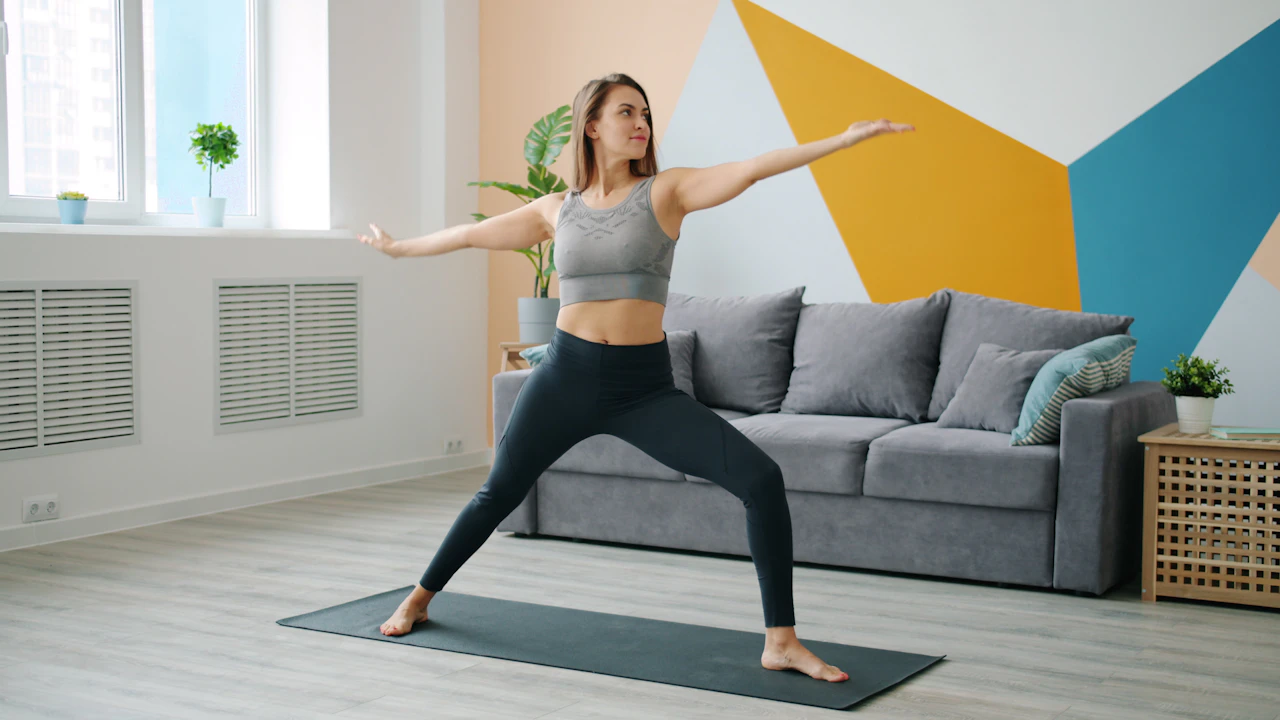
Your apartment doesn’t need a gym. It needs a place where movement feels natural.
Picture the living room at seven in the evening. Dinner is over, the light has softened, and you finally have a little time to yourself. You want to stretch, but the coffee table is in the way, the mat is buried behind winter coats, and the dumbbells are somewhere under the bed. By the time the room is ready, the moment has passed.
There is nothing inherently wrong with a living room that looks like a living room. The trick is to make its second purpose easy to begin and easy to put away. A beautiful apartment workout corner should feel as intentional as a reading nook, not like a compromise you have to apologize for.
These small apartment workout corner ideas start with the room you already have. Whether you rent a studio, share a living room or want a quiet bedroom fitness nook, the aim is a space that supports your routine without taking over your home.
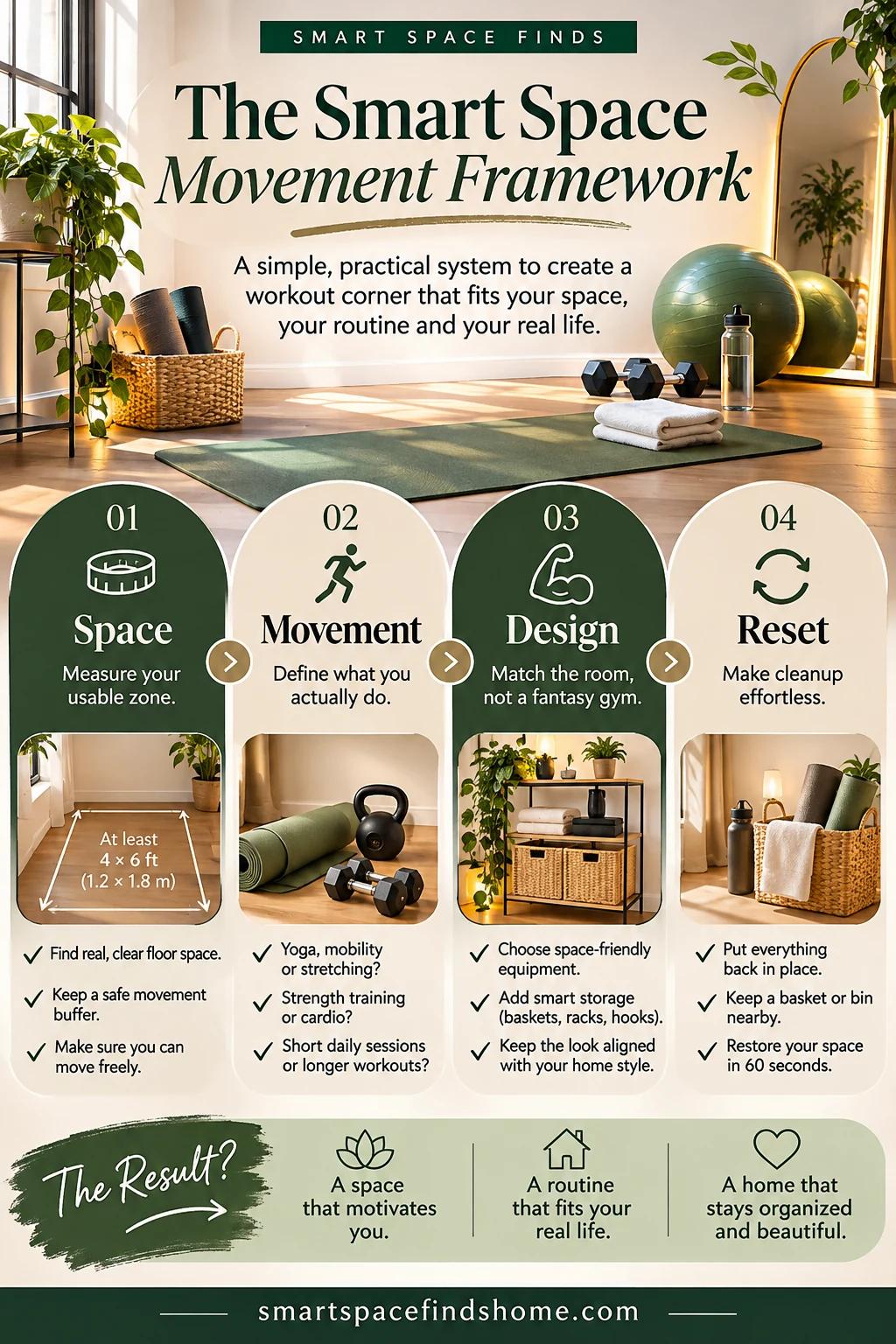
Find your layout before buying equipment
Measure the clear floor between fixed furniture, not the room’s wall-to-wall dimensions. Mark the proposed zone with removable painter’s tape if compatible with your floor. Open nearby doors and drawers, then slowly rehearse your intended movements without weights. If anything crosses the boundary, expand the zone or change the activity.
Open the five-point apartment layout test
- Can I enter and leave the room normally?
- Can I reach in every direction required by my routine?
- Is the surface level, stable and suitable for the equipment?
- Can I restore the room without shifting heavy furniture?
- Have I checked lease, floor-load and equipment requirements?
These illustrative footprints are planning examples, not minimum safe clearances. Check the entire movement envelope, ceiling height, manufacturer instructions and building restrictions.
| Example area | Potential use | Design priority |
|---|---|---|
| 4 × 6 ft | Selected mat-based movements | Clear furniture edges |
| 5 × 7 ft | Mobility or compact resistance gear | Test reach and clearance |
| 6 × 8 ft | Flexible mat and strength zone | Check equipment footprint |
| 8 × 8 ft | Potential mixed-use fitness area | Preserve circulation |
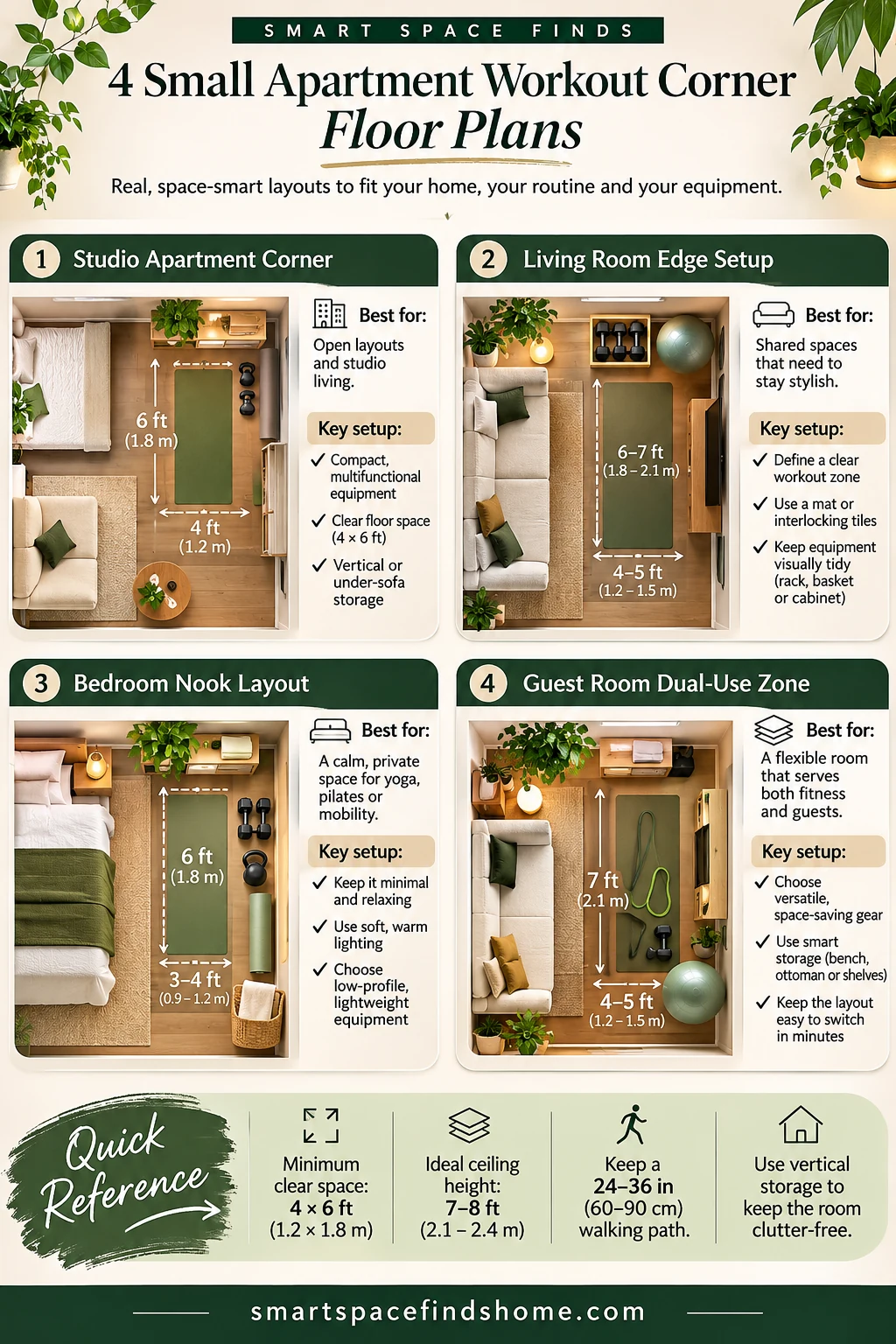
15 small apartment workout corner ideas
Think of the following ideas as a design menu rather than a shopping list. Choose one location, one main activity and one way to reset the space. Combining every idea in a single corner would defeat the purpose.
CHAPTER 01 / THE ROOM YOU ALREADY HAVE
1. Make a living room corner earn its space
Start with an unused edge of the room, away from the main walking route. Roll out a mat and rehearse the movements you plan to do before adding equipment. Repeat the color of your sofa or wood furniture in a mat or accessory basket. Store heavy equipment low on a stable surface.
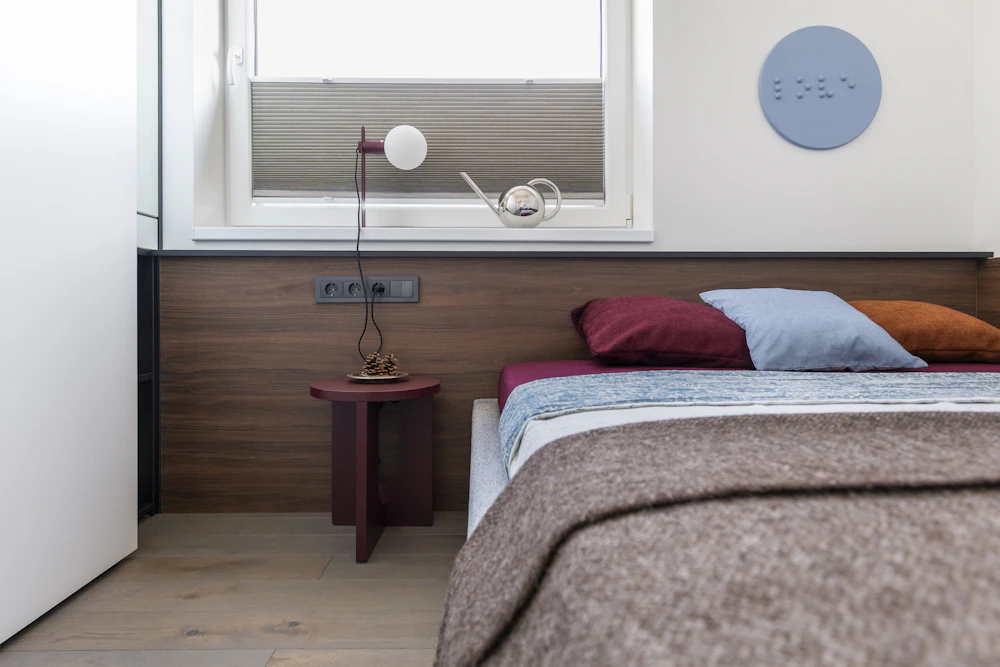
2. Create a bedroom mobility station
A clear corner beside a dresser can be a useful place for a morning stretching routine. Keep drawer access and the route around your bed unobstructed. A mat and two blocks may be enough; avoid turning your bedroom into a permanent equipment showroom.
3. Build a fold-away fitness studio
For a room that must perform several jobs, choose a folding mat and compact resistance loops. Give each item a designated home. A successful temporary studio is one you can set up and clear away without moving half the room.
4. Use the space beside your home office
Make movement an alternative to another hour at the desk. Set aside an unobstructed patch of floor for a short mobility break. Keep cables, rolling chairs and power strips outside the movement zone.
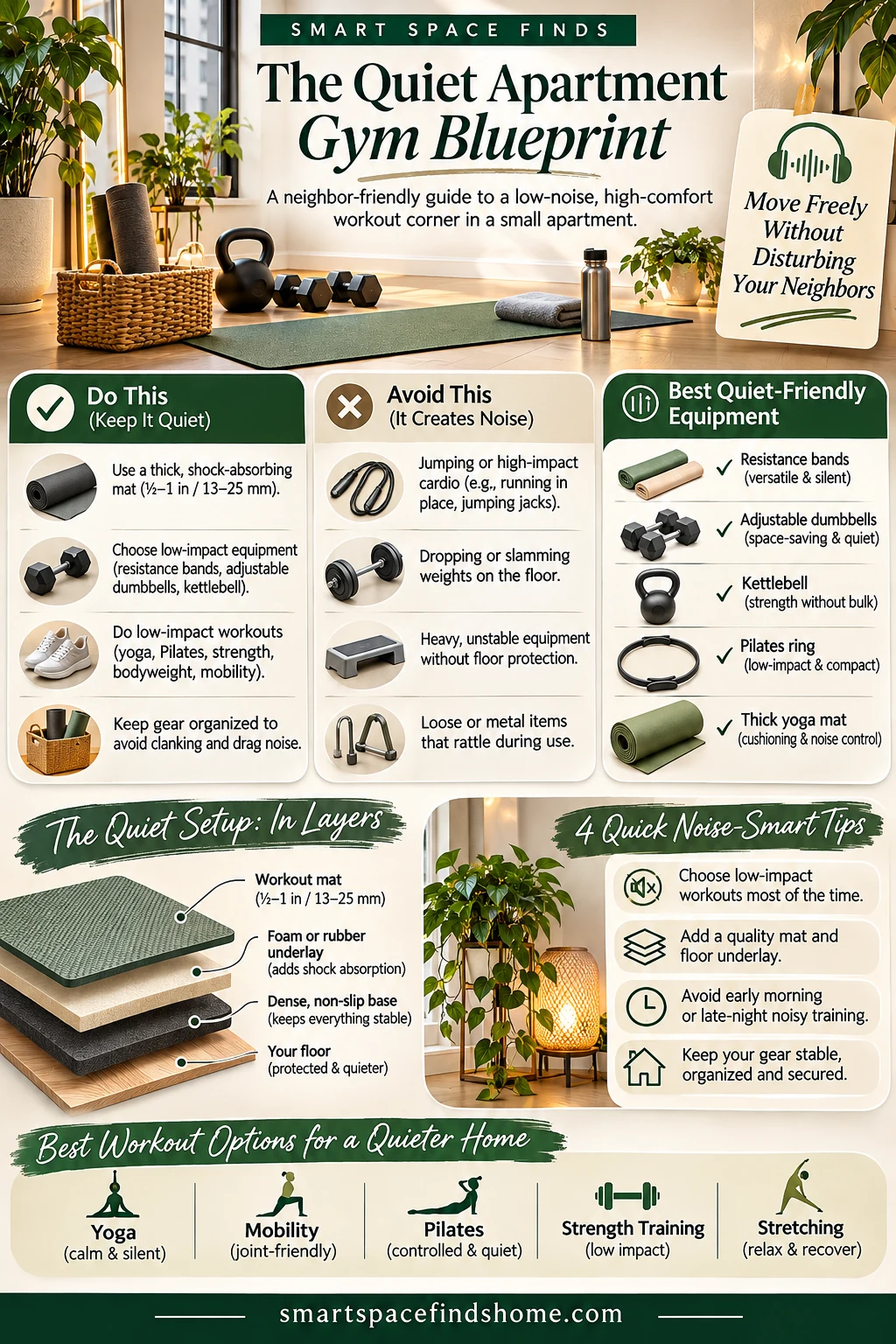
5. Design a quiet apartment workout corner
Controlled movements and gently setting down weights are more considerate than jumping or dropping equipment. Suitable floor protection can reduce some impact, but it cannot guarantee sound isolation. Follow building rules and check equipment and flooring compatibility.
CHAPTER 02 / DESIGN AROUND HOW YOU MOVE
Quiet Apartment & Floor Protection
Choose stable, compatible protection; mats cannot guarantee sound isolation.
As an Amazon Associate, we earn from qualifying purchases.
6. Choose one anchor piece
A compact bike, adjustable dumbbell set or folding bench can anchor the design, depending on your routine. Compare operating dimensions, folded dimensions, weight and required clearance before purchasing. A machine that fits in storage may still be too large in use.
7. Give a yoga corner a calmer visual rhythm
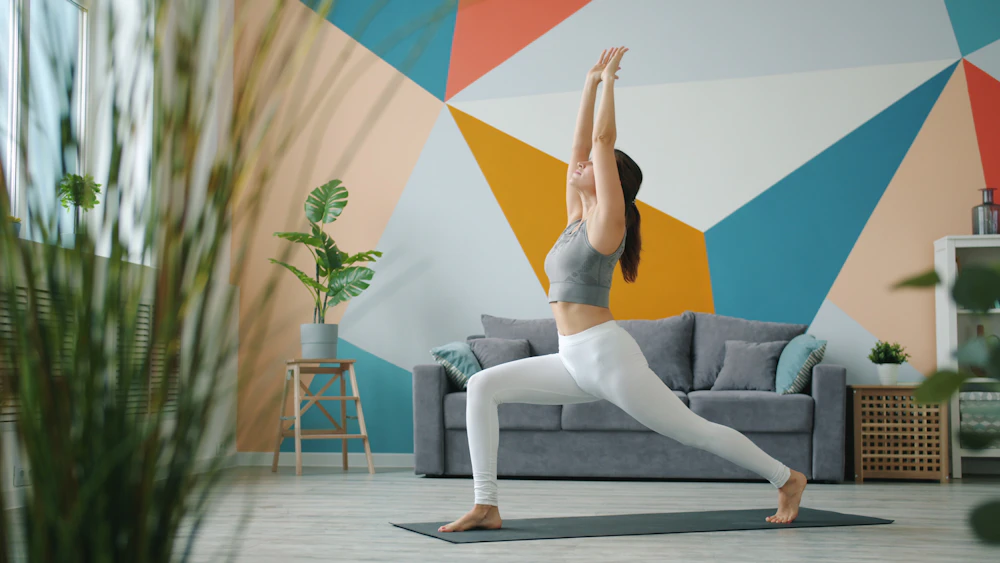
Use a restrained palette, a non-slip mat and soft ambient light. Keep decorative objects beyond your reach while exercising. A clean sightline can make a modest corner feel deliberate rather than leftover.
Yoga & Mobility Essentials
Choose a mat and accessories that suit your available floor space.
As an Amazon Associate, we earn from qualifying purchases.
8. Create a compact Pilates station
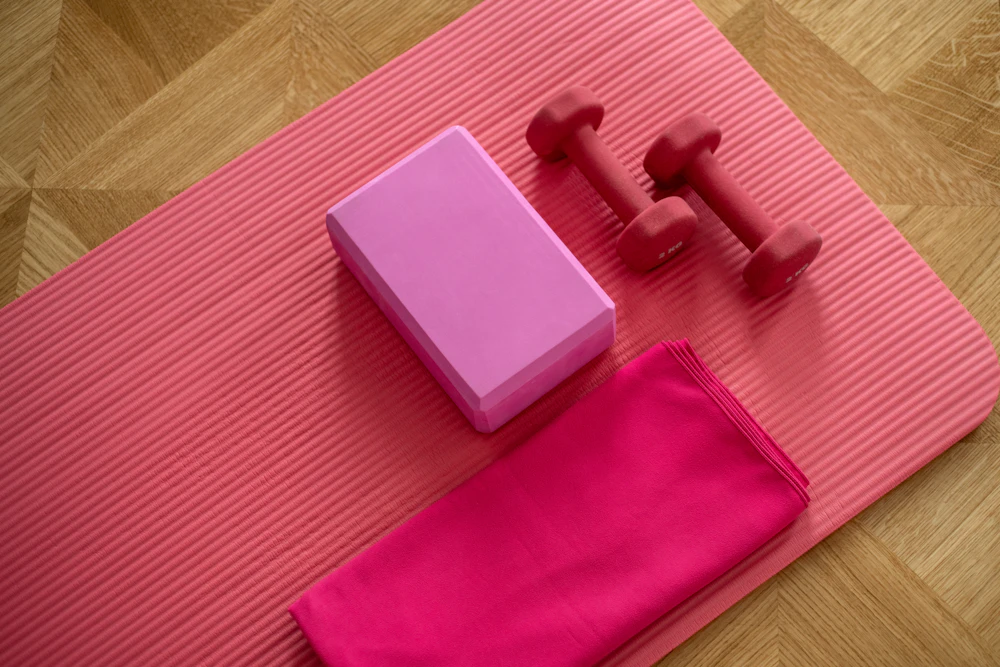
Keep a mat, Pilates ring and small ball together, if these suit your routine. A stable low shelf can hold light accessories. Check that you can extend your arms and legs without contacting furniture.
Pilates & Resistance Training
Portable accessories can support a mat-based routine without permanent installations.
As an Amazon Associate, we earn from qualifying purchases.
9. Make a strength-training micro-zone
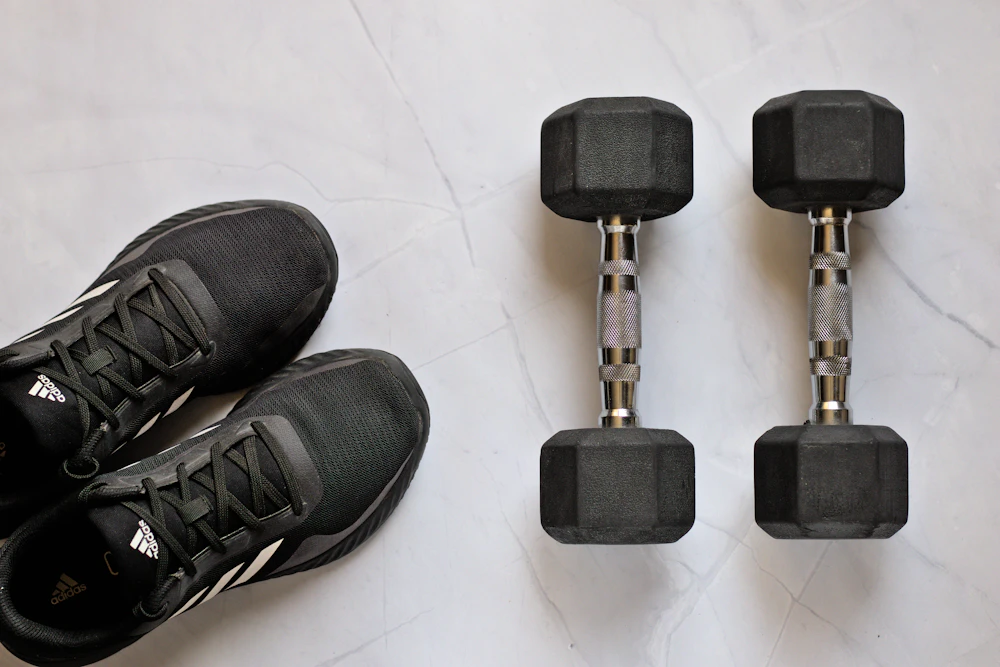
Choose weights appropriate to your experience and a stable floor suitable for their load. Keep weight changes away from circulation paths. Adjustable dumbbells may reduce the number of pieces you store, but their dimensions and locking mechanisms vary.
Compact Strength Training
Select manageable weights and check the floor and equipment requirements.
As an Amazon Associate, we earn from qualifying purchases.
10. Use a guest room as a dual-purpose studio
Leave an open area beside the bed instead of filling every wall. A folding bench can work if its operating footprint and required clearances fit. Restore the guest room layout after each session.
CHAPTER 03 / MAKE IT FEEL LIKE HOME
11. Design a studio apartment reset system
In an open-plan home, visual clutter travels. Store light gear in a closed basket, and keep weights on a suitable low rack. Use a simple routine: clear, move, wipe and return. For more storage ideas, explore our small-space gym equipment storage guide.
12. Make natural light part of the design
Choose a bright area when possible, without blocking windows, radiators or ventilation. A shaded window can make daytime sessions more comfortable. Use a stable lamp outside the exercise footprint for darker mornings.
13. Add a mirror with care
A properly installed mirror can make a corner feel brighter and help you see your position. Use mounting hardware rated for the wall and mirror weight, with landlord permission where required. Avoid unsecured leaning glass in an active movement zone.
14. Keep the rental reversible
Favor freestanding furniture and portable equipment. Do not attach load-bearing exercise gear to walls, ceilings or doors unless the structure, hardware and lease permit it. Adhesive hooks are not suitable anchors for loaded resistance training.
15. Give the corner a finished interior-design identity
Repeat two or three materials already present in the room: oak, warm white and graphite, for example. Choose a practical mat and a simple storage finish rather than adding decorative objects that consume usable floor area. The goal is a space that belongs to the home even when nobody is exercising.
Fix the five problems that make apartment gyms frustrating
- Problem: the coffee table is always in the way.
- Solution: choose a lightweight table that is intended to be moved, or redesign the workout area elsewhere. Never rely on lifting heavy furniture before every session.
- Problem: the downstairs neighbors can hear you.
- Solution: favor controlled, low-impact movement, avoid dropping weights, follow quiet hours and test how sound travels. Mats are not soundproofing.
- Problem: the corner looks messy.
- Solution: reduce the number of visible objects, repeat an existing finish and use closed storage for lightweight items. Leave heavy gear in stable, load-rated storage.
- Problem: you share the room with family or pets.
- Solution: agree on a temporary exercise zone, keep others outside the movement envelope and secure equipment after use.
- Problem: you rarely use the equipment you bought.
- Solution: test a simpler setup for a week. Make the equipment you actually use easy to reach, and postpone purchases that add setup time.
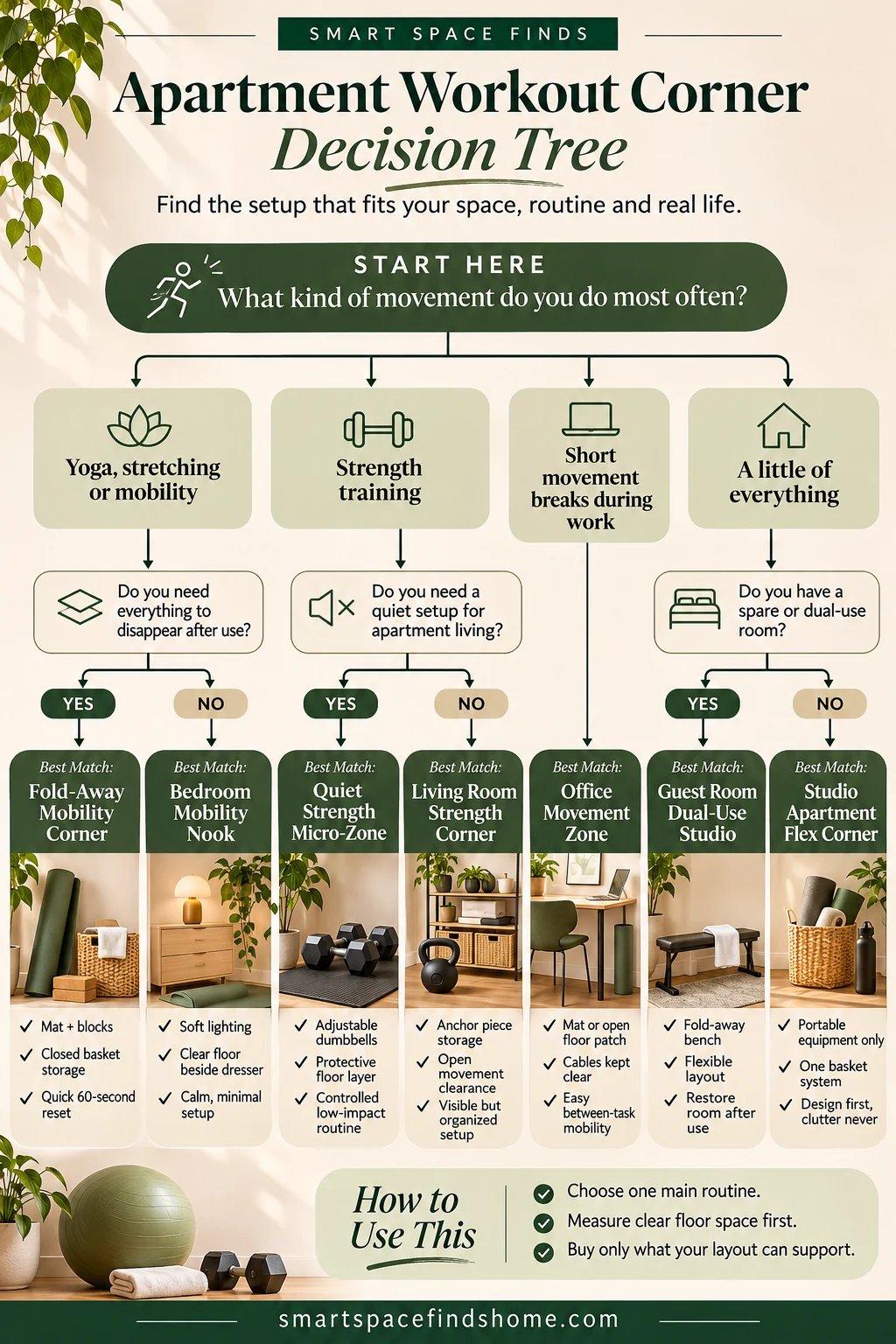
Choose your setup by routine
Three design recipes for a small space home gym
Soft Scandinavian: warm white, pale oak and muted sage. Pair a neutral mat with a lidded basket for lightweight accessories.
Urban studio: charcoal, walnut and cream. Let compact strength equipment become the visual anchor, with a clear area for movement.
Quiet retreat: sand, linen and muted terracotta. Use warm indirect lighting and a simple mat setup, keeping textiles clear of the exercise area.
- Mobility: start with a suitable mat and open floor.
- Strength: choose a manageable set of weights and appropriate floor protection.
- Low-impact cardio: compare compact equipment operating clearance and noise.
- Mixed use: prioritize portable equipment over a collection of machines.
How to plan a small apartment gym on a budget
These are example spending envelopes in US dollars, not live product prices. Use them as limits rather than targets; spend less if existing equipment already meets your needs.
The minimal reset: clear the floor, reuse suitable storage, add only a missing essential.
The flexible corner: prioritize a suitable mat and compact accessories for your chosen activity.
The dedicated setup: consider a carefully measured anchor item only if you have a proven need.
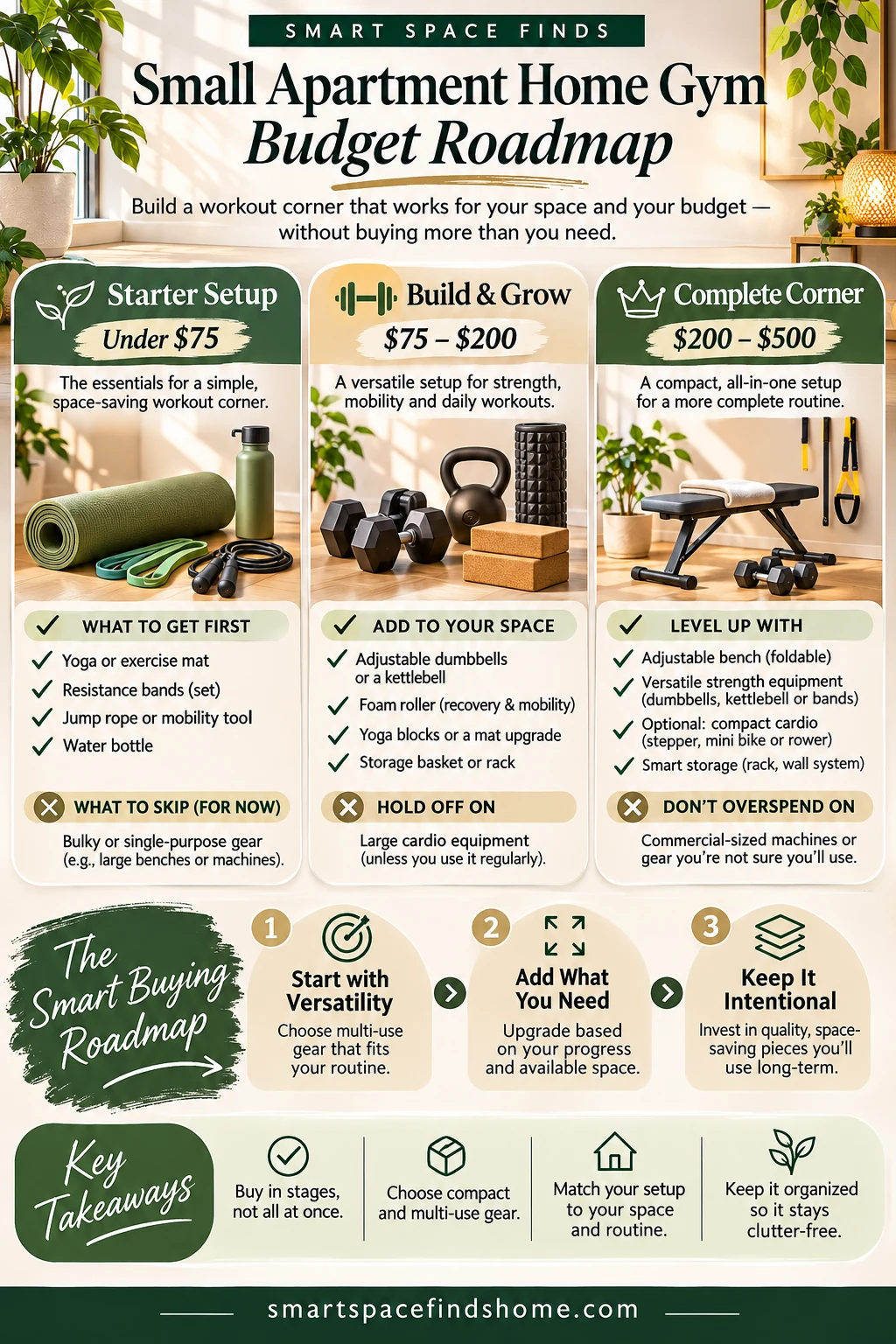
What to buy first — and what to skip
Build in three spending stages
Stage 1: use what you have. Clear a usable area, check lighting and ventilation, and try your routine before shopping.
Stage 2: solve one problem. Buy a suitable mat if the surface needs it, or one compact resistance item if your routine calls for it. Compare specifications instead of relying on marketing labels.
Stage 3: upgrade only after repeated use. A bench, cardio machine or heavier weights should solve a demonstrated need. Check operating clearance, load limits, maintenance, return terms and storage before ordering.
Before you buy: the footprint test
Record the product’s length, width and height in use, then its stored dimensions. Include the space needed to enter, exit, adjust and safely operate it. A folding treadmill, for example, may require considerably more room during use than it occupies against a wall.
Start with the essentials for your preferred movement. Add a storage solution only once you know what needs storing. Avoid buying a large machine because its advertised folded size looks small. Measure the working footprint first. See our yoga mat and workout gear storage ideas and workout gear organization guide for dedicated storage solutions.
Compact Fitness Equipment
Measure operating and stored dimensions, load limits and required clearance before buying.
As an Amazon Associate, we earn from qualifying purchases.
The 60-second apartment fitness reset
Use one minute as a design goal, not a deadline. Take longer whenever equipment is heavy, a mat needs drying or the manufacturer’s storage instructions require it.
- Return weights to a stable, suitable storage spot.
- Clean and dry the mat according to its care instructions.
- Put away lightweight accessories.
- Restore walking routes and check that nothing can roll or tip.
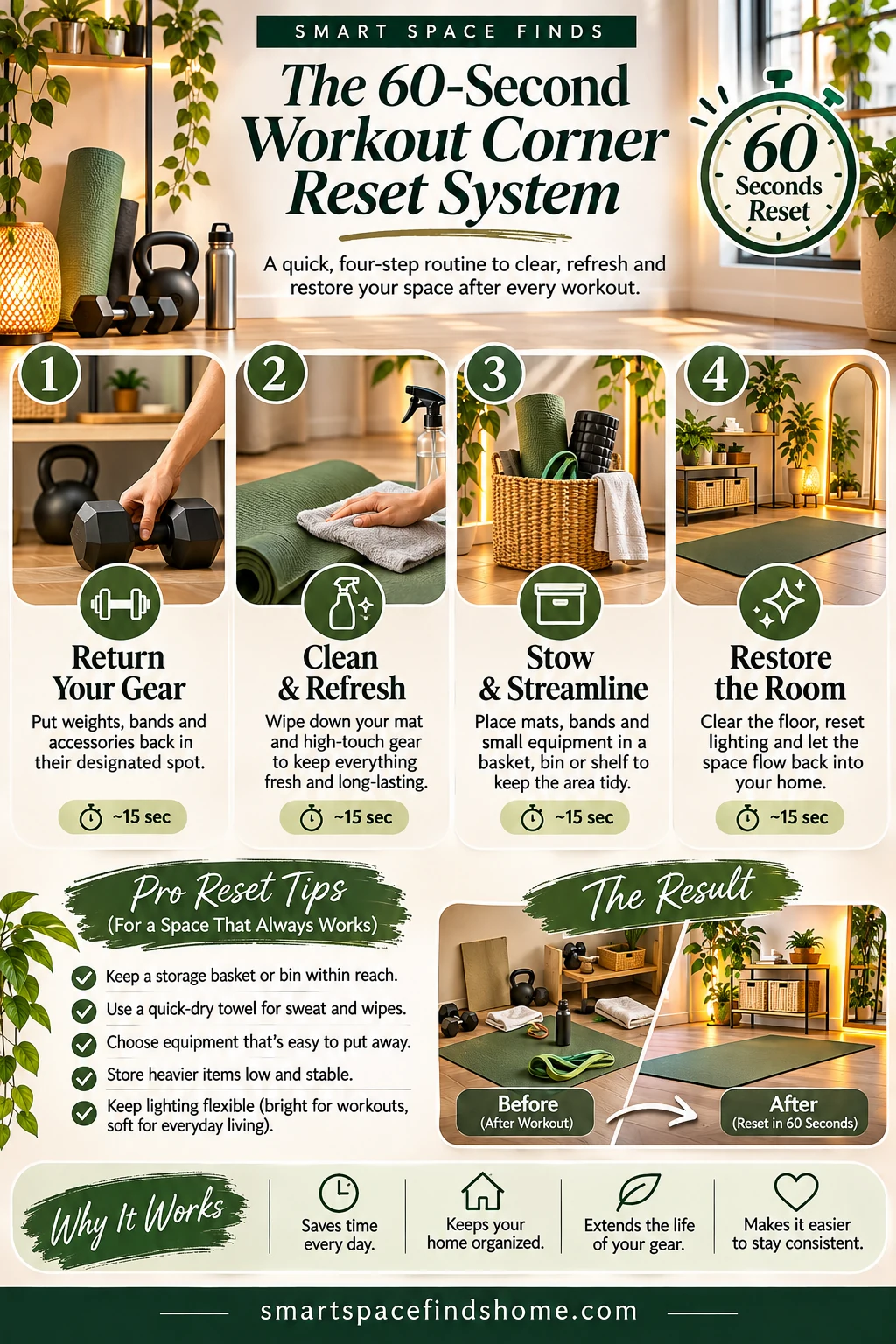
Organization & Workout Corner Reset
Check storage compatibility and rated capacity; keep heavy equipment low and stable.
As an Amazon Associate, we earn from qualifying purchases.
The apartment workout corner decision lab
Before you change your room, choose the constraint that matters most. These four design scenarios are illustrative starting points, not tested floor plans or exercise prescriptions.
01 / SHARED LIVING ROOM
The disappearing studio
Choose portable gear, a clear floor patch and a nearby storage spot. Keep the sofa and main walking route in their normal positions.
02 / RENTED BEDROOM
The reversible retreat
Start with a mat and lightweight accessories. Preserve access to drawers, windows and doors. Skip permanent installations.
03 / UPSTAIRS APARTMENT
The considerate corner
Prioritize controlled movement and suitable floor protection. Check building restrictions before adding machines or heavy equipment.
04 / DEDICATED NOOK
The one-anchor studio
Choose one main piece of equipment only after measuring its full operating envelope. Leave room for access, cleaning and ventilation.
A simple way to compare two possible corners
Give each location one point for each condition it meets: unobstructed access, sufficient movement clearance, suitable flooring, comfortable lighting and ventilation, easy equipment storage, and compatibility with household routines. A higher score suggests a more convenient location, but a failed safety or clearance check rules it out regardless of score.
Frequently asked questions
Can I create a home gym without a spare room?
Yes. A living room edge or bedroom nook can work if you have adequate clearance for your intended movements and can keep the space safe and accessible.
How do I protect apartment floors?
Use flooring protection compatible with your floor finish and equipment. Avoid dropping weights and check for trapped moisture or discoloration under mats.
What equipment is best for a tiny apartment?
It depends on your routine. A mat, resistance loops or appropriately sized weights may be enough. Compare dimensions and clearances rather than buying by equipment category alone.
Can I make a workout corner without drilling?
Yes. Portable mats, freestanding storage and compact equipment can create a useful space without permanent changes. Avoid improvised load-bearing mounts.
How can I make a workout corner look like part of my living room?
Repeat an existing wood tone or color, choose a restrained equipment palette and keep the movement area free of ornaments. Conceal lightweight accessories when the room returns to ordinary use.
Is a walking pad suitable for every apartment?
No. Check the manufacturer’s operating clearance, user weight limit, ventilation, flooring requirements and noise characteristics. Confirm that the building permits its use and that the stored machine cannot tip or obstruct exits.
Try the seven-day space test before committing
On day one, clear and measure the corner. On days two through six, use it for the movement you already enjoy and notice what gets in your way: setup time, light, temperature, furniture, noise or storage. On day seven, change the single biggest obstacle. This is a design trial, not a prescribed exercise program. You may discover that moving a lamp or choosing a different corner makes more difference than buying another piece of equipment.
A space that makes movement easier
The best workout corner is not necessarily the most impressive one. It is the corner that fits your home, your routine and your available space. Start small, keep the floor clear and let the room evolve with the way you actually use it.