
DESIGN INTELLIGENCE / EVERYDAY LIVING
The extraordinary intelligence of ordinary things
You reach for a saucepan, pull on your jeans and measure a space for a new shelf. Nothing about these moments seems remarkable. Yet each object contains a small design decision that quietly shapes your experience.
Good everyday object design often goes unnoticed precisely because it works. The details we explore here reveal five different ways designers address storage, changing habits, measurement accuracy, mess and grip. Once you understand the reasoning, shopping becomes less about novelty and more about choosing objects that fit your life.
DESIGN STUDY / 01
Why do saucepan handles have holes?

Imagine washing a saucepan in a compact kitchen and realizing there is nowhere to put it without stacking it against another pan. A small opening at the end of a handle can turn unused wall space into practical storage.
The design logic: storage without stacking
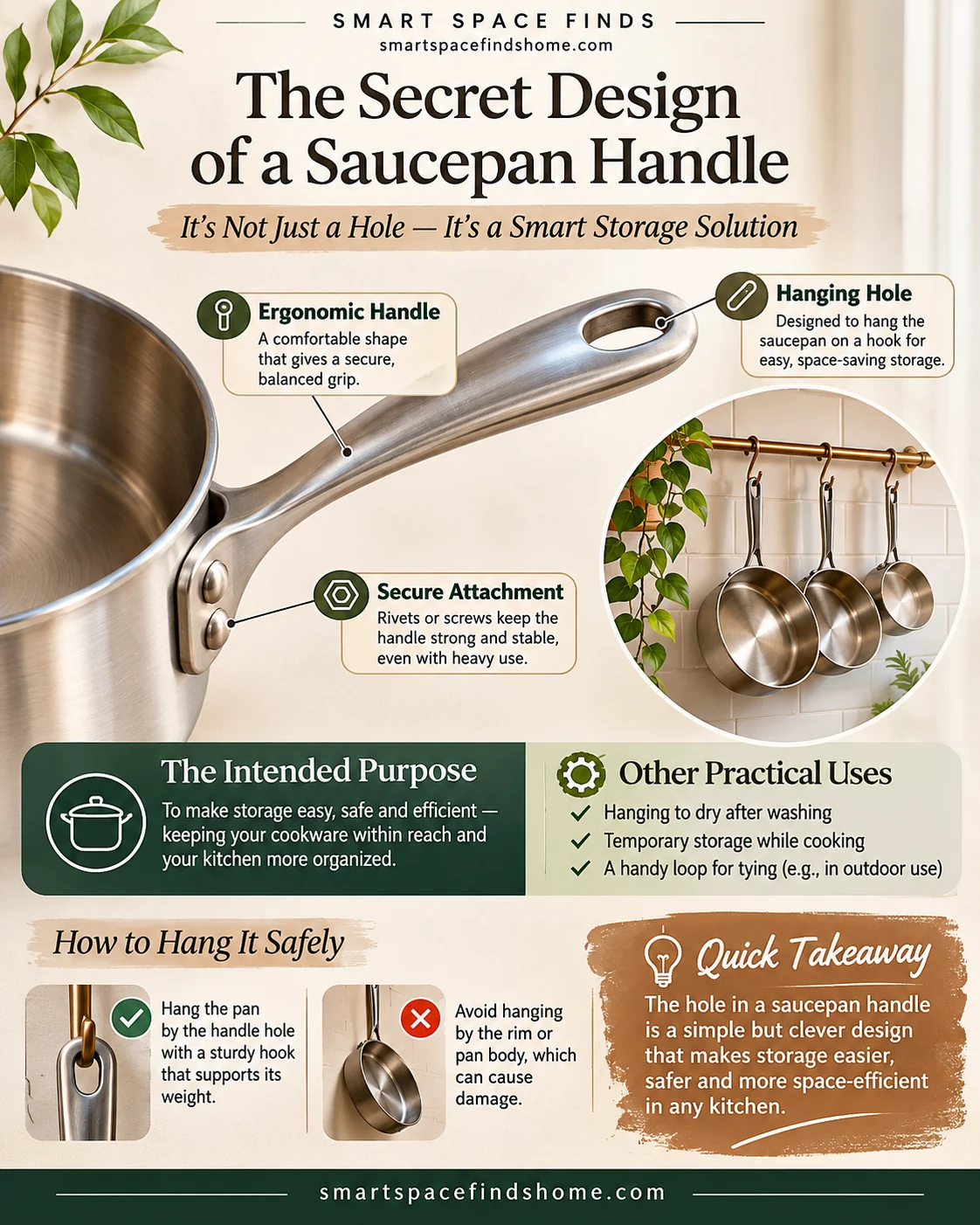
Many cookware handles incorporate a hanging hole. A compatible hook allows a cool, clean pan to hang vertically, making it easier to retrieve and reducing contact between stacked cooking surfaces. This is especially useful in a small kitchen where drawers are shallow.
Some handles can also accommodate a cooking utensil, but a spoon rest is not a universal or necessarily safe purpose of the opening. The geometry of the handle, heat exposure and the manufacturer’s instructions matter.
What to look for when choosing cookware
Prioritize a secure handle, a comfortable grip, compatibility with your cooktop and manageable weight. A hanging hole is a useful bonus if you actually have safe hanging storage. Do not replace a perfectly functional pan simply because another model has this feature.
DESIGN STUDY / 02
What is the small pocket in jeans for?
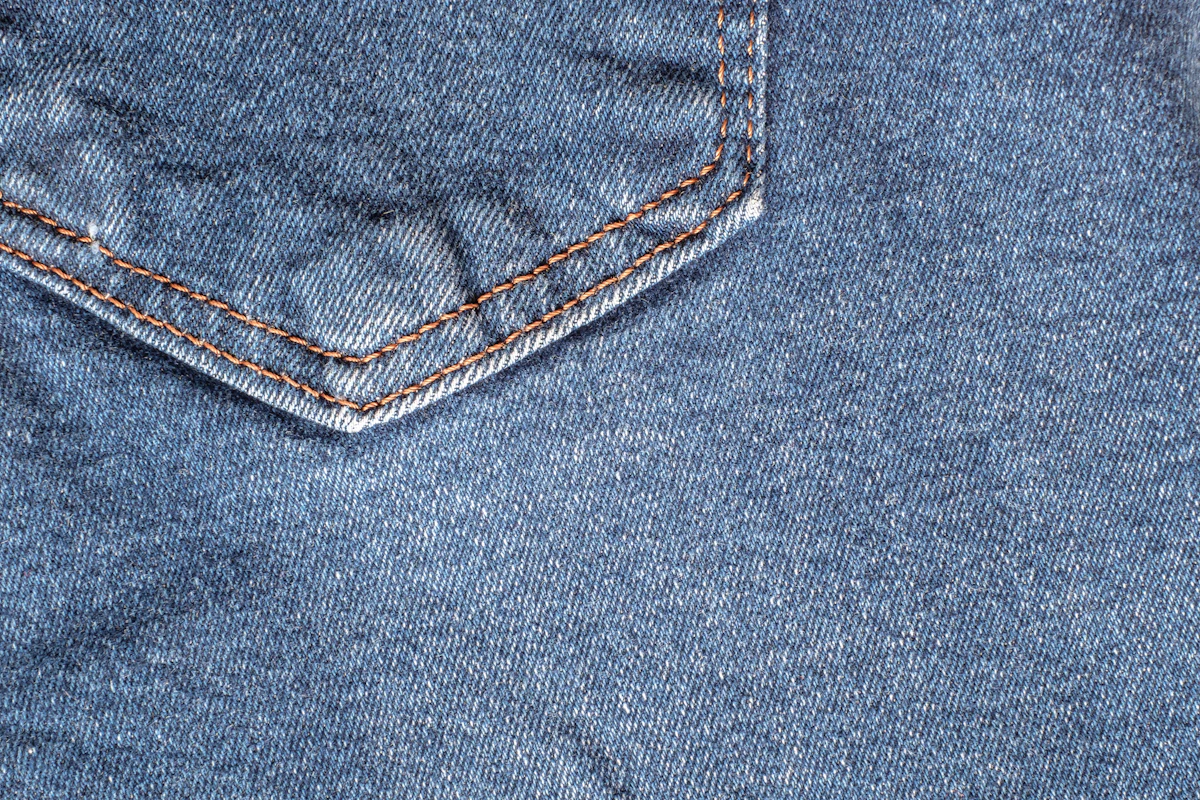
The little pocket nested inside a larger front pocket looks almost comically small beside a modern phone. Its proportions make more sense when viewed through the history of clothing rather than the needs of today’s electronics.
The design logic: a place for a pocket watch
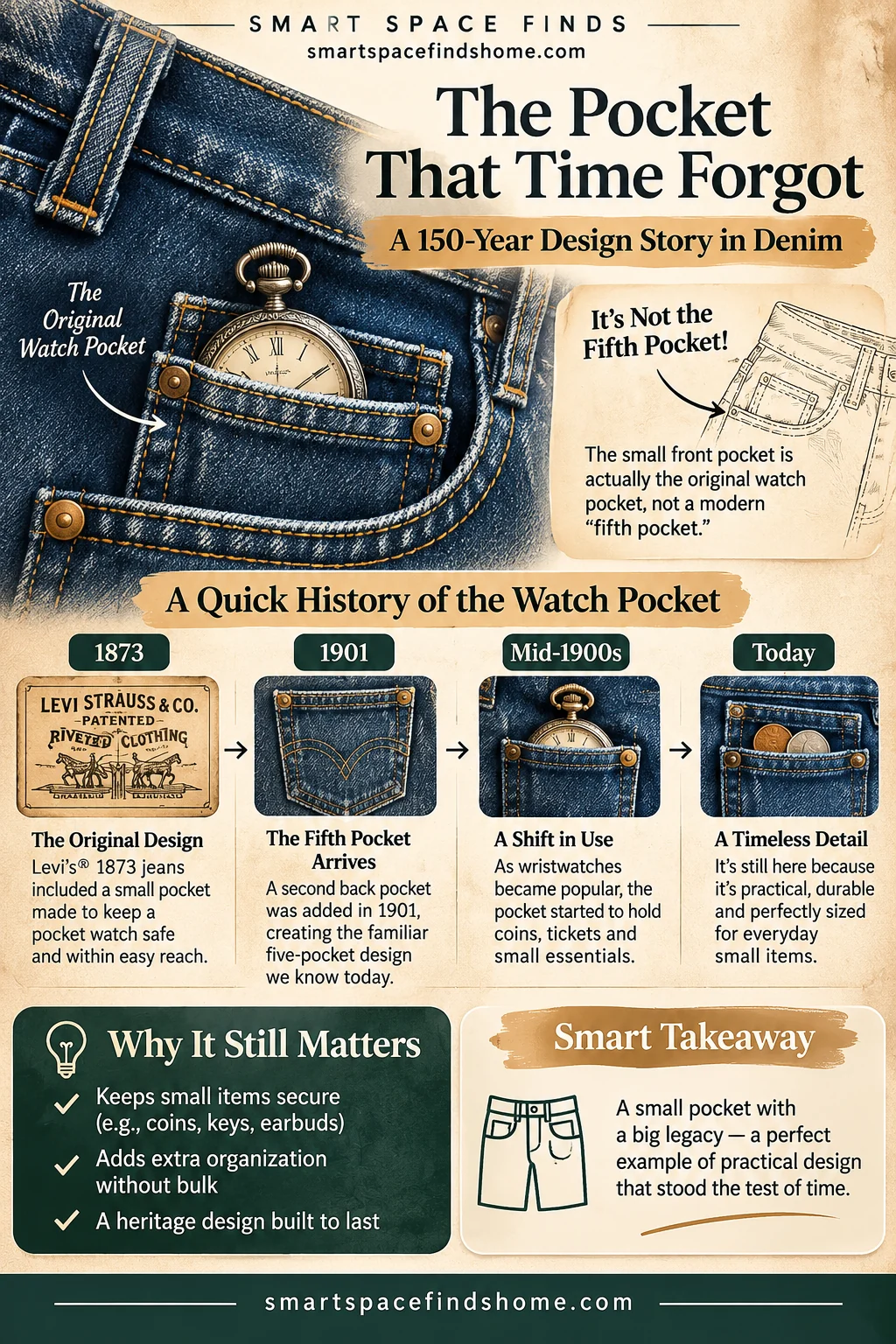
Levi Strauss & Co. identifies this detail as a watch pocket, a feature of early blue jeans. It offered a dedicated place for a small timepiece. Its continued presence shows how a recognizable design can survive long after everyday habits change. Levi Strauss & Co.’s historical accounts explain that the 1873 jeans had four pockets, including the watch pocket; the second back pocket arrived in 1901. Calling the little pocket the original fifth pocket therefore reverses the history.
Modern versions vary. Some are large enough for a folded receipt or a coin; others are largely decorative. The pocket is not a guarantee of secure storage for valuables.
What to look for when choosing denim
Check usable pocket depth, stitching, comfort while seated and how your everyday essentials fit. A small pocket can be a charming historical detail, but good overall fit is more important than the number of pockets.
DESIGN STUDY / 03
Why does the hook on a tape measure move?
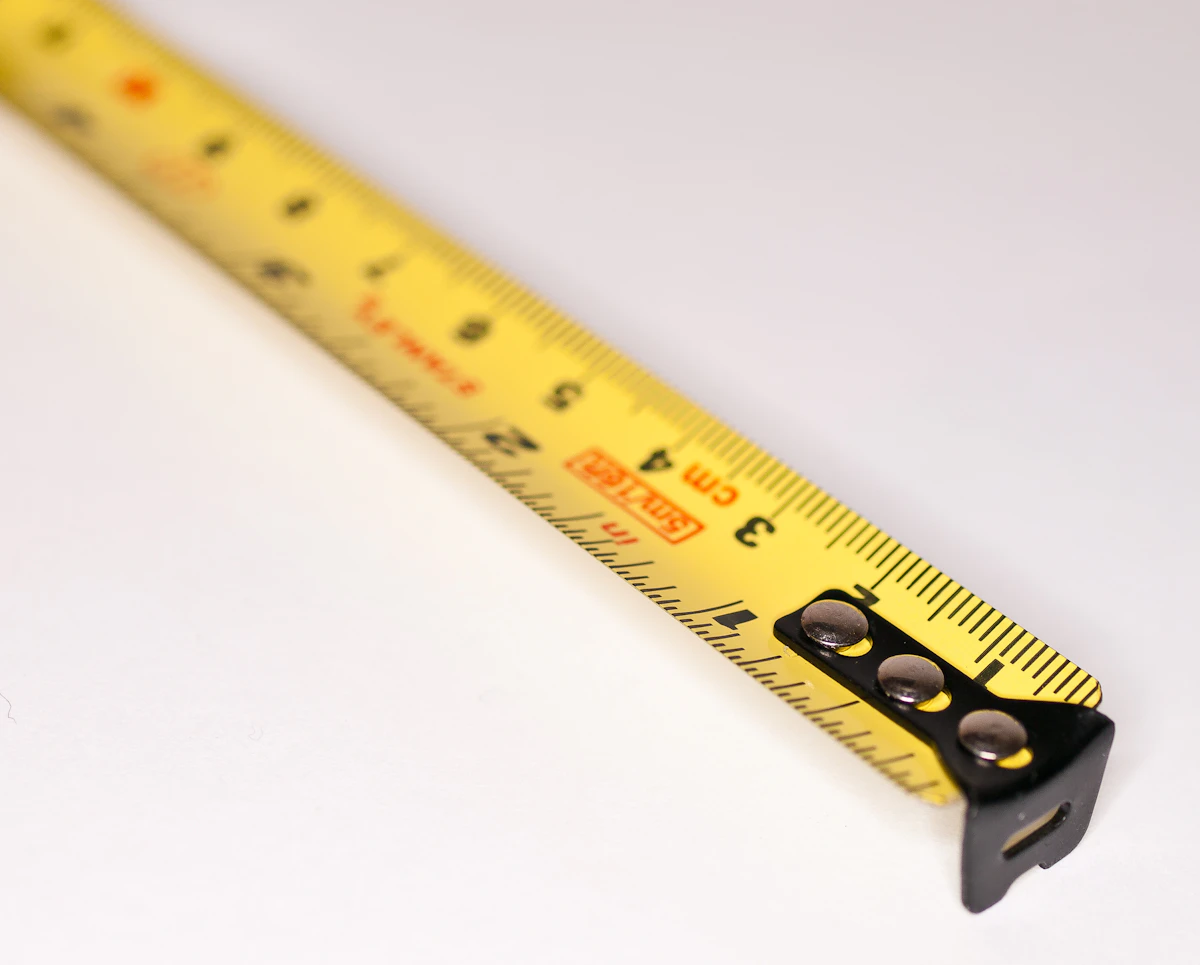
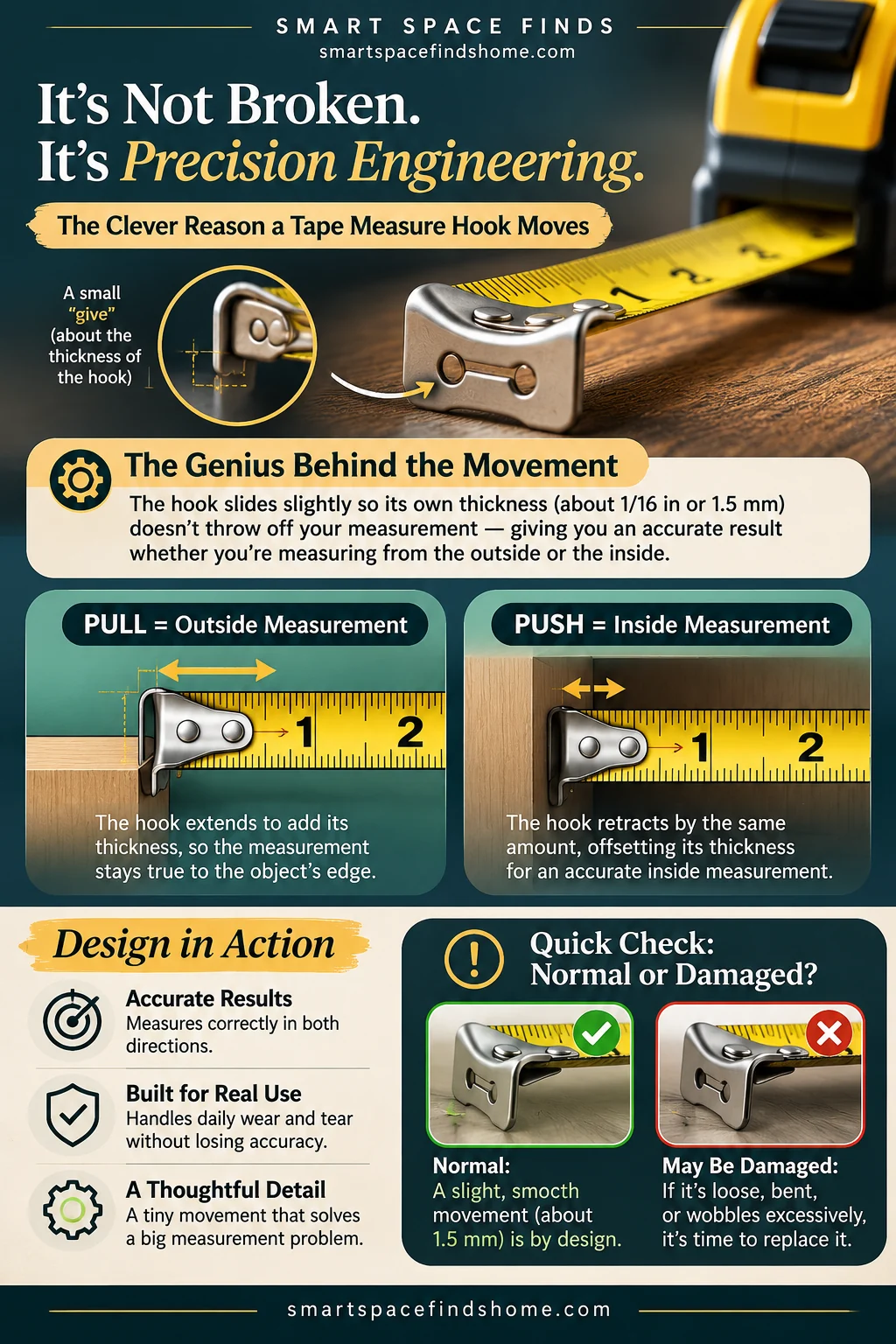
When the little metal hook at the end of a tape measure shifts, the natural reaction is to assume the tool is loose. On many retractable tape measures, that movement is intentional.
The design logic: compensating for hook thickness
When you pull the hook over an outside edge, the hook moves outward. When you push it against a surface, it moves inward. The intended travel compensates for the thickness of the hook so that the reference point remains consistent in both modes.
Hook the edge of a board and extend the blade.
Press the hook against a fixed surface and read the blade.
This is commonly called true-zero or hook compensation. It is not a reason to ignore a damaged hook: bent metal, worn rivets or excessive play can introduce errors.
What to look for when choosing a measuring tool
Seek clear markings, controlled retraction, a dependable lock and appropriate accuracy for the task. A readable blade may matter more than extra features when you are measuring a shelf or checking whether furniture will fit through a doorway.
DESIGN STUDY / 04
What is a cutting board juice groove for?
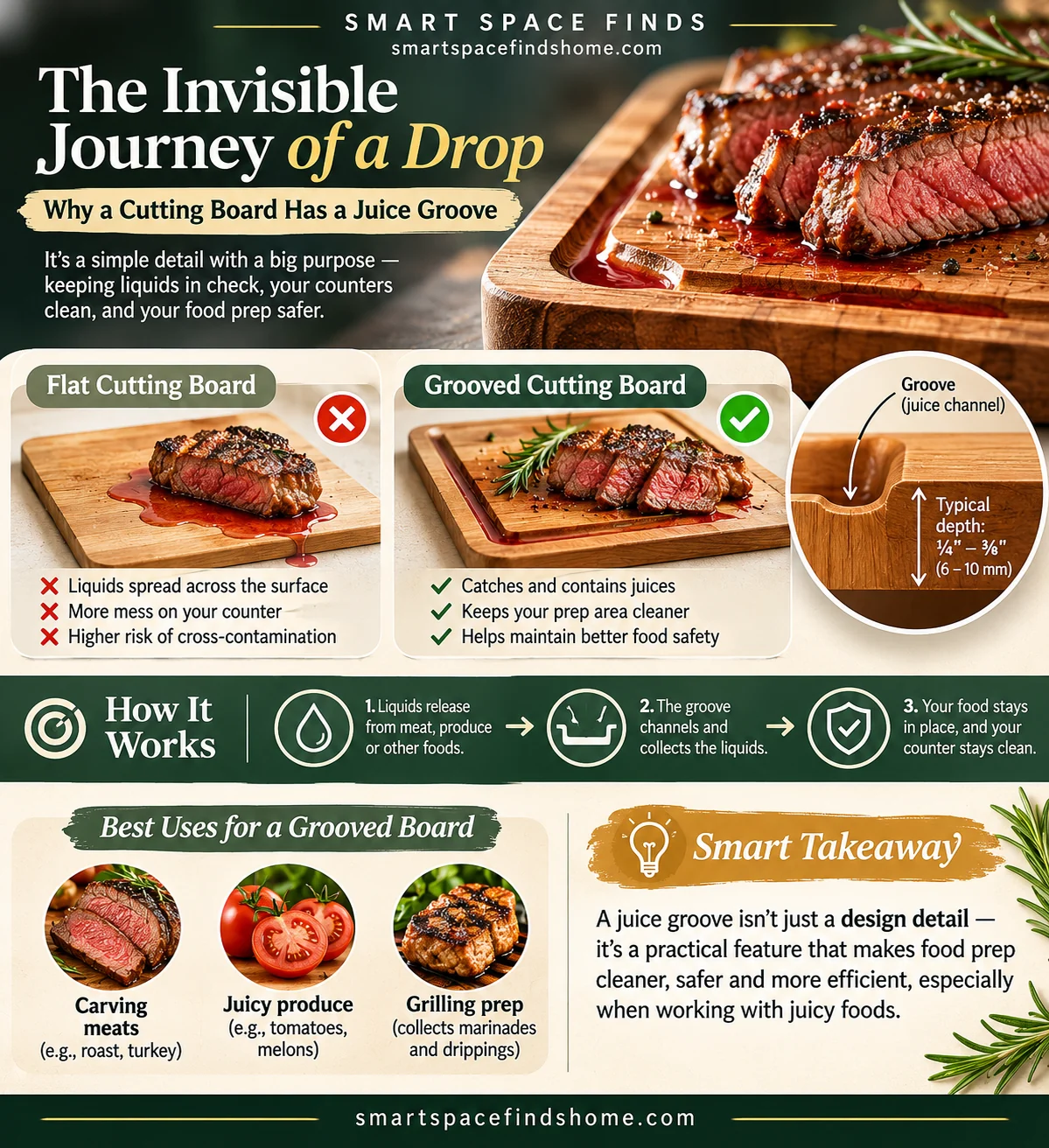
Carving a roast or slicing a ripe tomato can create a small pool of liquid that travels toward the edge of a flat board. A recessed perimeter channel offers somewhere for that liquid to collect.
The design logic: controlled runoff
A juice groove is a shallow reservoir, not a drain. It can help contain modest amounts of liquid and reduce mess on the counter. Carving boards often incorporate this feature, whereas flat preparation boards provide uninterrupted space for chopping and transferring ingredients.
The groove does not make a board hygienic by itself. Follow appropriate cleaning and sanitizing instructions, especially after contact with raw meat, poultry or seafood. A shallow channel can overflow.
What to look for when choosing a cutting board
Consider stability, usable surface area, cleaning requirements, groove capacity and whether the board fits your sink. A reversible board with one flat side and one grooved side may offer flexibility without requiring two separate boards.
DESIGN STUDY / 05
Why do some jar lids have ridges?

Opening a jar should not feel like a contest between your hand and a piece of metal. The surface geometry of a closure can influence how confidently you grip and turn it.
The design logic: grip and torque
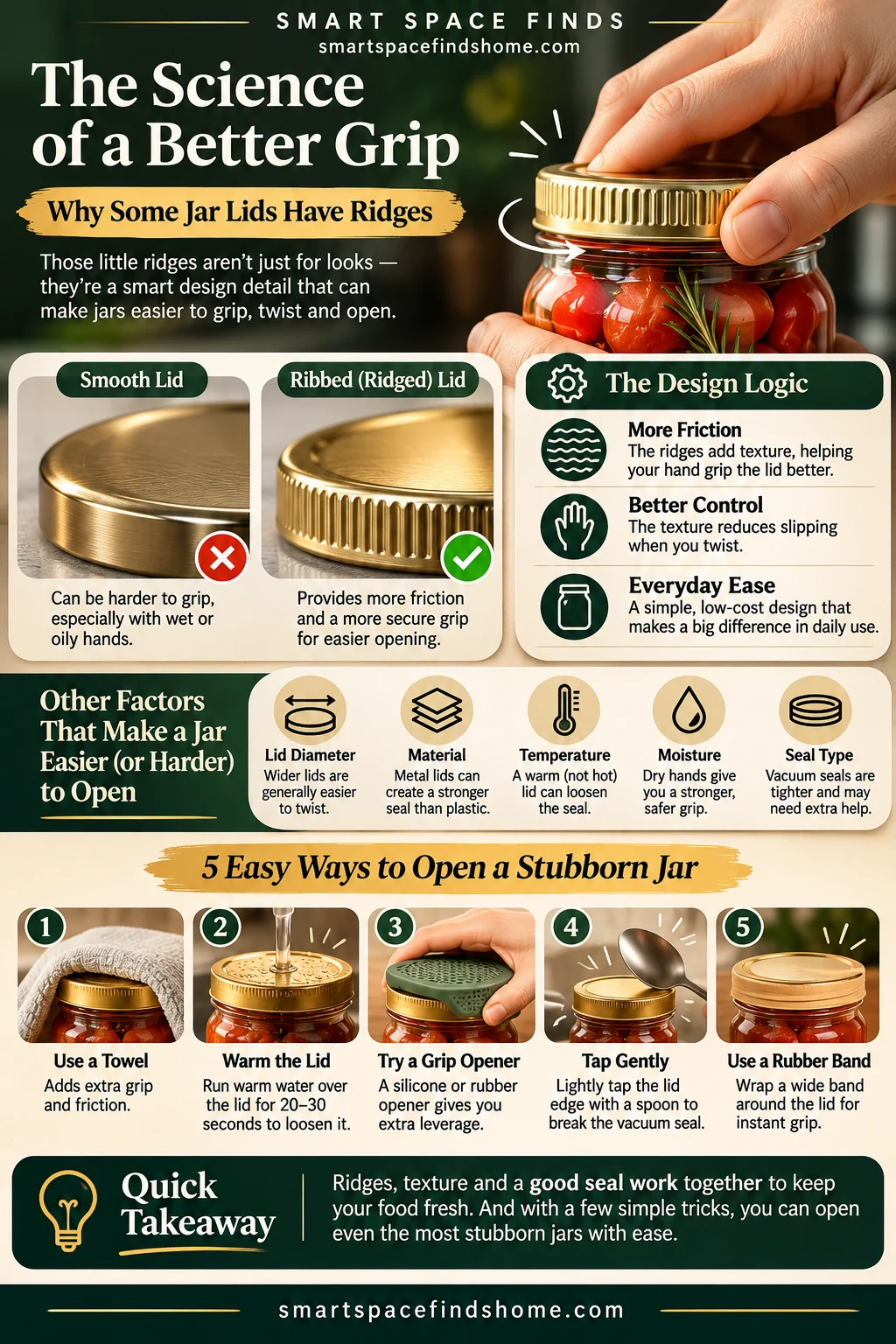
Ridges and textured edges can help fingers maintain contact while twisting a lid. Closure patterns also vary according to manufacturing processes and packaging requirements, so it would be misleading to assign one universal purpose to every pattern.
The force needed to open a jar depends on more than texture: lid diameter, the seal, moisture and hand strength all play a role. A dry nonslip pad or a purpose-designed jar opener can help when the lid is difficult to grip.
What to look for when choosing storage containers
Choose a closure that you can operate comfortably, seals appropriately for the contents and is easy to clean. If gripping is difficult, try a dry nonslip mat to stabilize the jar and a broad-handled opener intended for its lid size. Avoid buying matching containers until you know you can comfortably open and close one. For frequent use, accessible lids can be more valuable than a perfectly coordinated pantry aesthetic.
The DESIGN DNA method
Six questions for recognizing thoughtful design in objects you already own.
D — Discover · Notice an overlooked detail.
E — Explain · Look for a documented original purpose.
S — Solve · Identify the problem it addresses.
I — Inspect · Check the actual model you own.
G — Gauge · Decide whether it reduces effort or improves usability.
N — Navigate · Choose whether to keep, repair or upgrade.
Original purpose versus modern usefulness
Historical origin, present-day function and improvised use are three different things. A watch pocket can be historically authentic without being useful for your lifestyle. A saucepan handle can accommodate a utensil without having been designed as a utensil holder. A clever explanation should respect those distinctions.
| Feature | Design benefit | Check before buying |
|---|---|---|
| Handle opening | Storage | Safe hook compatibility |
| Watch pocket | Dedicated small storage | Comfort and depth |
| Moving hook | Measurement accuracy | Condition and tolerance |
| Juice groove | Runoff containment | Capacity and cleaning |
| Textured lid | Grip | Opening comfort |
Keep, upgrade or replace? A practical decision guide
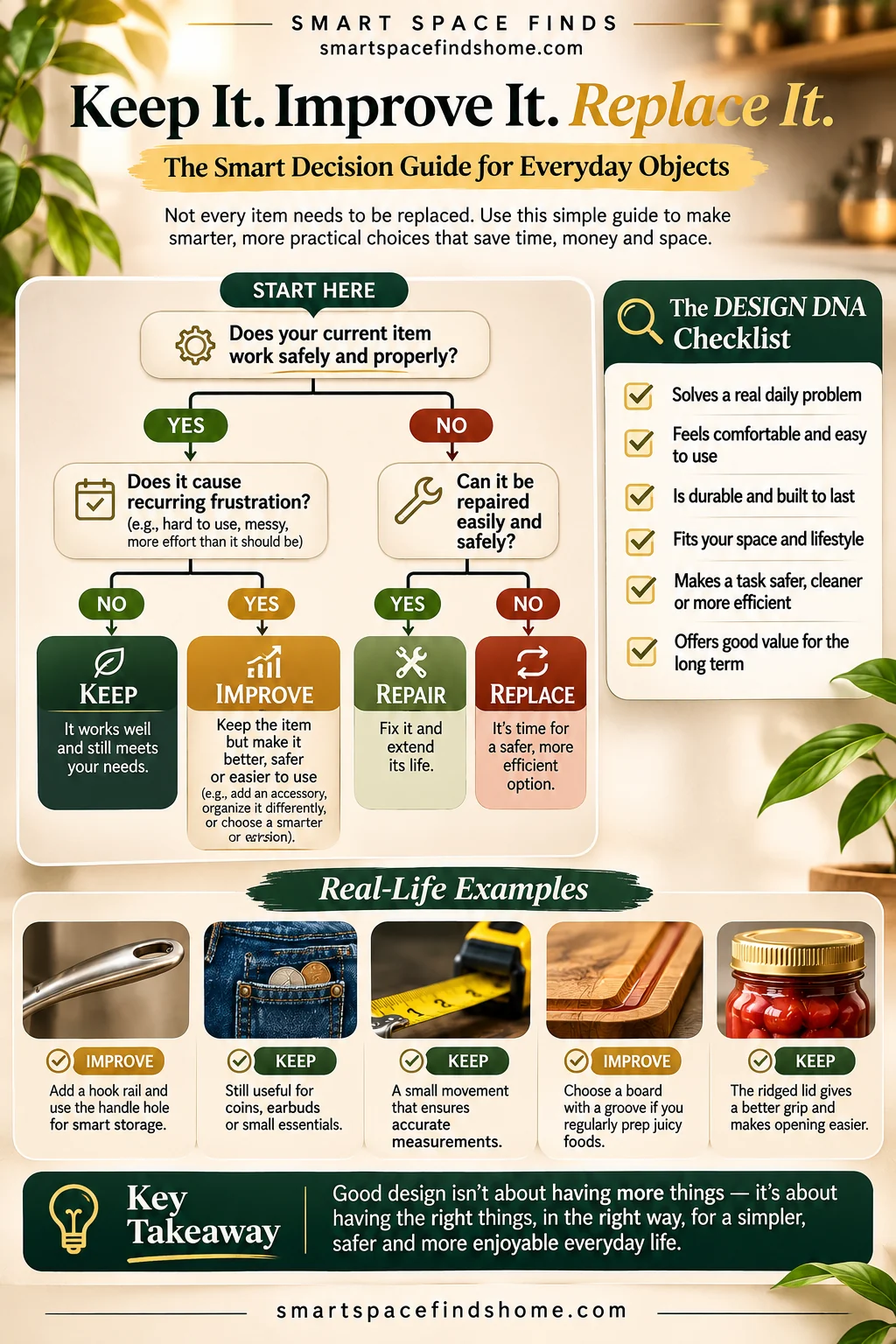
Use the following checklist before spending money on a supposedly smarter version of something you already own.
Keep: If the current object works well, there is no need to replace it. Upgrade: If a recurring inconvenience has a documented design solution, compare options. Replace or repair: If a product is damaged or unsafe, follow manufacturer guidance rather than trying to compensate with a clever hack.
The five-minute everyday friction audit
Before buying another clever gadget, identify the exact moment an existing object makes your day harder.
- Storage friction
- Measure the available storage and check whether a safe hook or divider would solve the problem.
- Access friction
- Try retrieving the item with one hand while it is safely at rest. Move frequently used objects within comfortable reach.
- Accuracy friction
- Compare the tool against a trusted reference before replacing it.
- Cleanup friction
- Choose a surface that fits your sink and the food you prepare most often.
- Grip friction
- Try a nonslip aid on an intact closure before buying a new set of containers.
Your no-buy rule: Change one thing about how you store, access or maintain the object. If the problem disappears, keep what you own.
How to spot a viral design myth
Start with the manufacturer’s description or historical records. Compare the exact product model, not merely its resemblance to another object. Ask whether the proposed use introduces heat, pressure, contamination or mechanical risks. When the original intention cannot be established, describe the feature as a possible use rather than a proven fact.
For this guide, historical context for denim comes from Levi Strauss & Co.; tape measure terminology is consistent with Stanley’s true-zero hook explanations; and carving-board designs from manufacturers such as John Boos illustrate the runoff-collection function. Cookware handle and closure designs vary, so their purposes should be checked against individual product documentation.
Continue exploring thoughtful design
- Discover more overlooked features in things you own
- Find alternative uses for everyday objects
- Explore clever architectural details at home
- Understand functional home design choices
Frequently asked questions
Are all everyday object features intentional?
Not necessarily. A detail may reflect manufacturing constraints, aesthetic preferences, historical conventions or functional needs. Look for evidence before assigning a purpose.
Is a moving tape measure hook defective?
A small amount of designed movement is normal on many models. Excessive movement or bending can indicate damage; compare the tool with a reliable reference.
Can I use a saucepan handle hole as a spoon holder?
Only if the specific design and manufacturer guidance support that use safely. Hanging storage is a common function, and a separate spoon rest is often simpler.
Is a juice groove necessary on a cutting board?
No. It is useful for liquid-producing tasks, but a flat board may be preferable for dry ingredients or moving chopped food.
Do ridged jar lids guarantee easy opening?
No. Texture can help grip, but the seal, diameter, hand strength and moisture also affect opening effort.
How can I recognize good product design?
Look for clear operation, suitable dimensions, comfortable handling, reliability and manageable maintenance. Choose features that address problems you actually encounter.