

You do not need a spare bedroom—or even an empty wall—to create a space that feels like your own. The best small apartment self-care corner ideas begin with one realistic question: What would you actually enjoy doing here for ten minutes? From reading and journaling to stretching and simply sitting with a cup of tea, a meaningful retreat can fit inside the room you already have.
The Smart Space Finds edit
Start with a ritual, not a shopping list. Find a comfortable seat, add usable light, keep one essential within reach, and leave enough clear space to enjoy it. Everything else is optional.
First, choose the right corner for your real life
A beautiful nook that blocks a closet, gets too hot in the afternoon, or becomes a drop zone for laundry will not be used. Walk through your apartment and look for an underused spot that offers a reasonable balance of comfort, light, noise, and access. Measure the room before buying furniture, including the space needed to pull out drawers or open doors.
The 60-second space test
- Function: Will you read, journal, sit quietly, or stretch?
- Footprint: Can you sit comfortably without squeezing the walkway?
- Lighting: Is the available light suitable for that activity?
- Storage: Can essentials be put away in one easy motion?
- Reset: Would you be willing to tidy this area daily?
Choose by apartment type: In a studio, reuse the sofa or try a portable floor setup. In a one-bedroom rental, consider a bedside or window nook. In a shared apartment, prioritize a visual boundary and easy-to-store items. If you have no free floor space, use a shelf or portable tray rather than forcing in another chair.
The small-space decision edit · 01
Which kind of retreat can your apartment actually hold?
No spare floor space
Use the sofa, a portable tray, or your bedside surface.
Shared apartment
Choose a portable kit or reversible visual boundary.
Visual field guide · The corner in four moves
Before you decorate, make sure all four ingredients work together. If the corner feels cramped, remove an item instead of adding one.
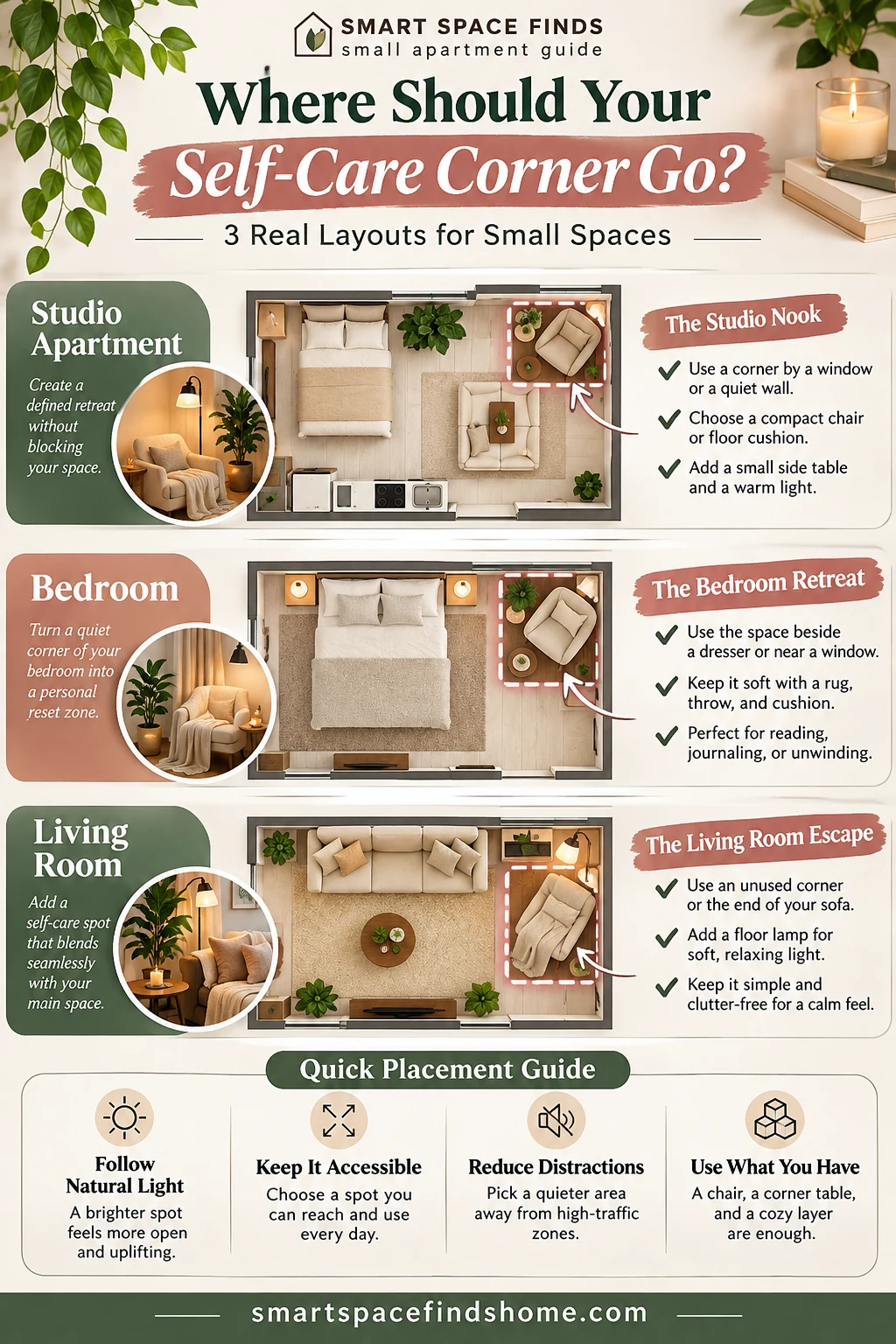
15 small apartment self-care corner ideas worth trying
These options are designed to solve different space problems, not to create fifteen versions of the same styled armchair. Pick the one that fits your routine first; decorate later.
1.Make a window-side pause spot
Place an existing chair near a window and angle it toward the view rather than the TV. A washable cushion and a slim side surface are enough for coffee, reading, or a few quiet minutes.
Make it work: Leave radiators, doors, blinds, and window access unobstructed. If direct sun makes the spot uncomfortable, use a light-filtering shade.
2.Turn one end of the sofa into a retreat
Your self-care corner does not need its own chair. Assign one end of your sofa a throw, a small book basket, and a warm reading light that can be switched on independently.
Make it work: Use a basket that slides under the side table so the setup disappears when guests arrive.
3.Build a floor-cushion reset nook
In a studio where another chair would crowd the room, a supportive floor cushion plus a folded mat creates a flexible spot for stretching or journaling.
Make it work: Store both vertically when not in use; choose a higher seat or existing chair if floor sitting is uncomfortable.
4. Create a five-minute journaling ledge
A narrow console, wall shelf, or cleared corner of a desk can become a personal writing station. Keep only a notebook, pen, and light there.
Make it work: A fold-down wall desk can work in a rental only when mounting is permitted and properly installed; a small portable lap desk needs no drilling.
5.Use a bedside calm-down zone
If the bedroom is the quietest room, style a bedside surface with a small lamp, one book, and a water coaster. Treat it as a wind-down spot, not a second storage shelf.
Make it work: Keep the lamp switch reachable from bed and avoid charging cables trailing across the floor.
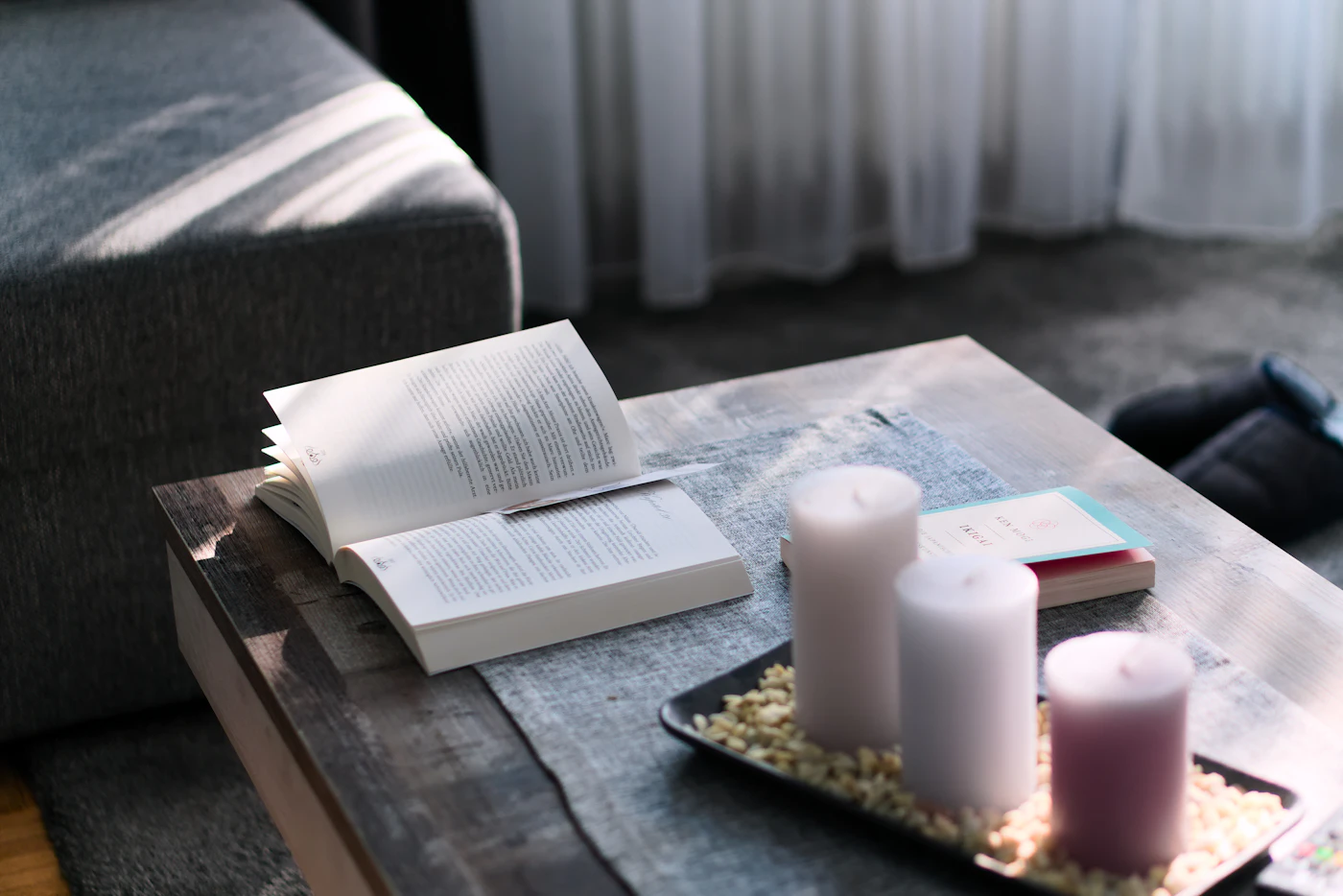
6. Try a soft-lit corner without a window
An interior corner can feel inviting with a warm, shaded lamp, pale textiles, and a small reflective surface. Add a task light if you plan to read.
Make it work: Use efficient LED lighting and avoid putting fabric against hot bulbs or fixtures.
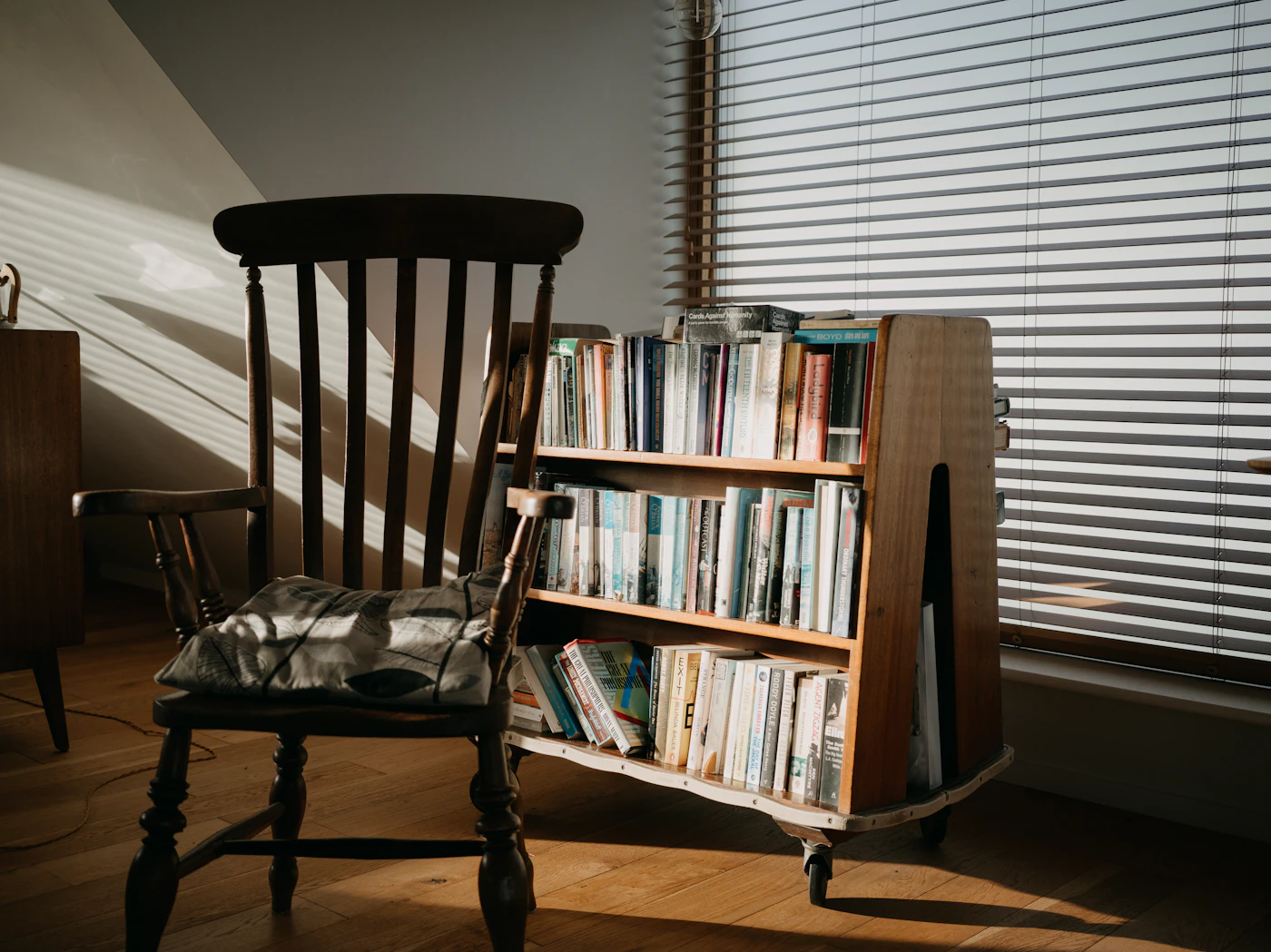
7. Let a bookshelf create a boundary
Turn a low bookcase perpendicular to a wall to visually define a tiny nook within a larger living room. Books, a plant, and a favorite chair make the zone feel intentional.
Make it work: Anchor unstable shelving appropriately and keep the walking path clear; do not create a narrow escape route.
8. Make a portable tea-and-reading tray
A lightweight tray keeps your ritual essentials together: mug, book, coaster, and a small cloth napkin. Carry it to your favorite existing seat, then put it away.
Make it work: Choose a stable surface for hot drinks, and never balance boiling liquids on soft cushions.
9. Style a low-maintenance nature nook
Choose one plant suited to the actual light in your room, alongside a natural-fiber basket or wooden tray. Let texture and greenery do the decorating.
Make it work: Check plant safety for household pets and children; consider a botanical print instead of live plants.
10. Design a screen-free hobby pocket
A compact lidded box can hold knitting, a sketchbook, puzzles, or another calming activity. Keep it beside a comfortable seat so starting takes little effort.
Make it work: Select one hobby at a time rather than piling several projects into view.
11.Use a privacy curtain where space is shared
A ceiling-mounted curtain or movable screen can give a living-room nook visual separation in a shared apartment.
Make it work: Check rental rules and fire safety; a lightweight freestanding screen is easier to reverse than permanent modifications.
12.Borrow a corner of the dining table
When space is exceptionally tight, use a small tote or drawer organizer to transform a cleared table seat for a 10-minute self-care session.
Make it work: Put the kit away after your session so the dining table remains fully functional.
13. Create a quiet morning-light station
Set a cushion or chair where morning light falls, with a small water carafe and something to read. The ritual might last just five minutes.
Make it work: Avoid promising a particular mood or health outcome; the goal is simply to make a restorative habit easier to begin.
14. Make a tiny hotel-inspired retreat
Layer a neutral pillow, a textured throw, and a shaded lamp around one existing chair. Limit the palette to two or three tones for a composed, high-end feel.
Make it work: Resist buying matching sets; use what you own before purchasing a new piece.
15.Make the corner reversible in under two minutes
For renters and people who frequently rearrange rooms, use a movable pouf, clip-on light, and handled storage basket. The nook can appear on demand.
Make it work: Test the configuration for everyday circulation first; a temporary retreat should never obstruct an exit.
What does a small self-care corner cost?
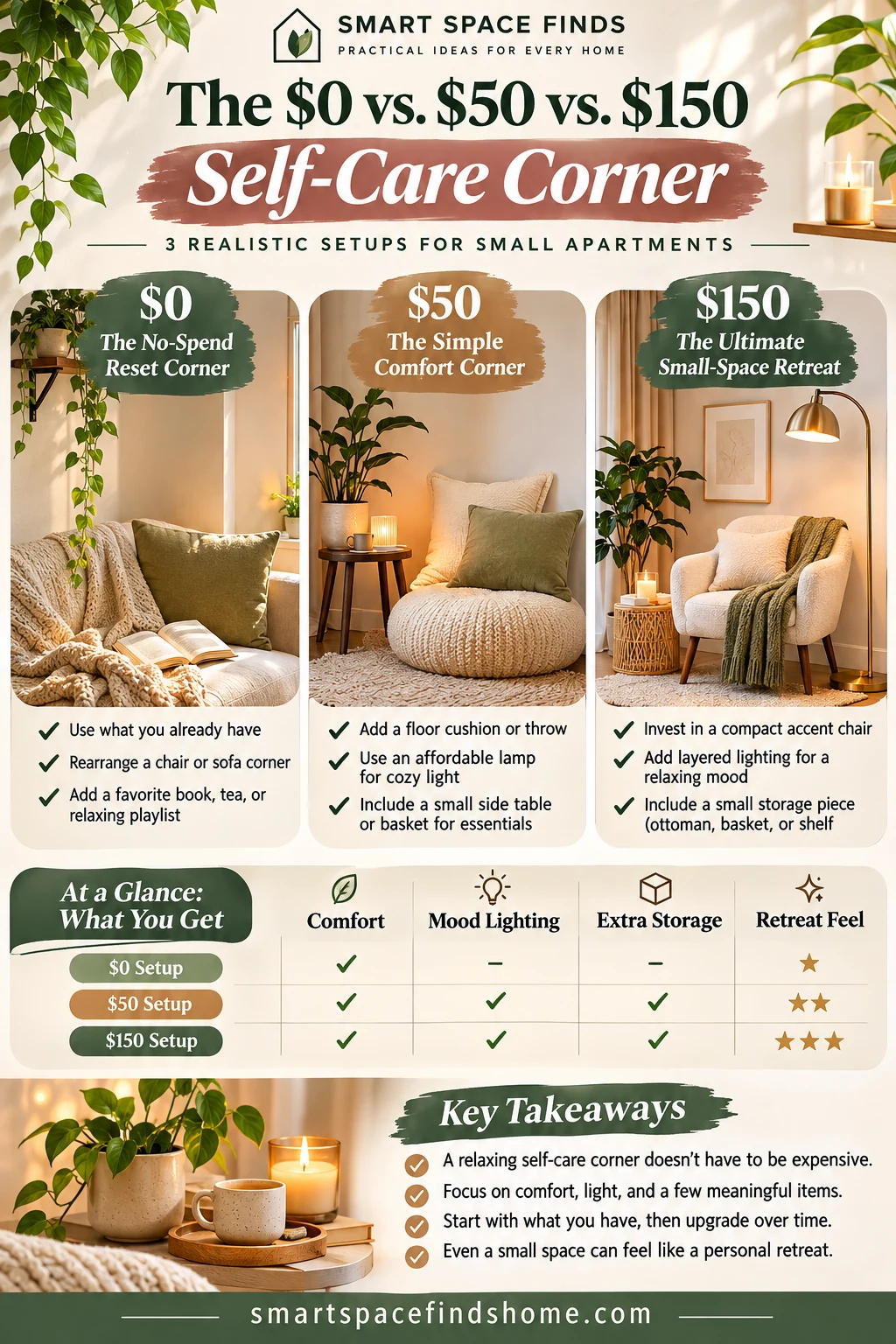
A satisfying corner does not depend on an expensive chair. These are illustrative US budget scenarios, not current retailer quotes; use them to decide what is worth reusing and what deserves investment.
| Budget | Use what you have | Smart optional upgrade |
|---|---|---|
| $0 | Existing chair, blanket, book, natural light | Rearrange and declutter only |
| About $50 | Existing seating | Warm LED lamp, small basket, washable cushion |
| About $150 | Existing table or chair where possible | Compact seat or pouf, focused lighting, storage |
The spending rule: Solve the biggest obstacle first. A better lamp matters more than a decorative tray if you cannot see your book. A comfortable existing chair beats an attractive new one that leaves no legroom.
The four-part formula for a corner that feels intentional
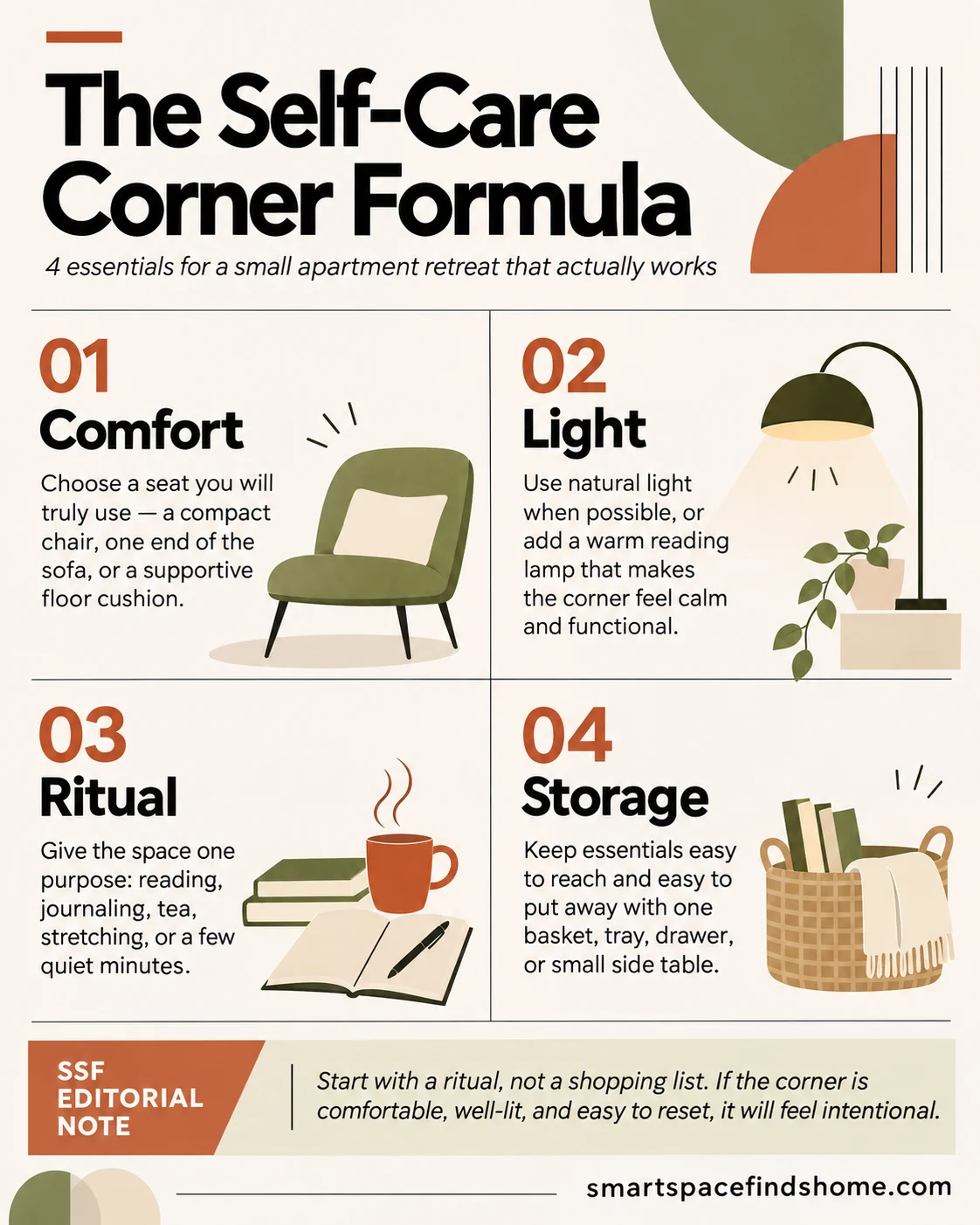
SSF / Design formula 01
Comfort + Light + One Ritual + A Place to Put Things Away
If one part is missing, work on it before adding decoration. A nook should be easy to use and easy to reset.
Keep the palette quiet, but never flat
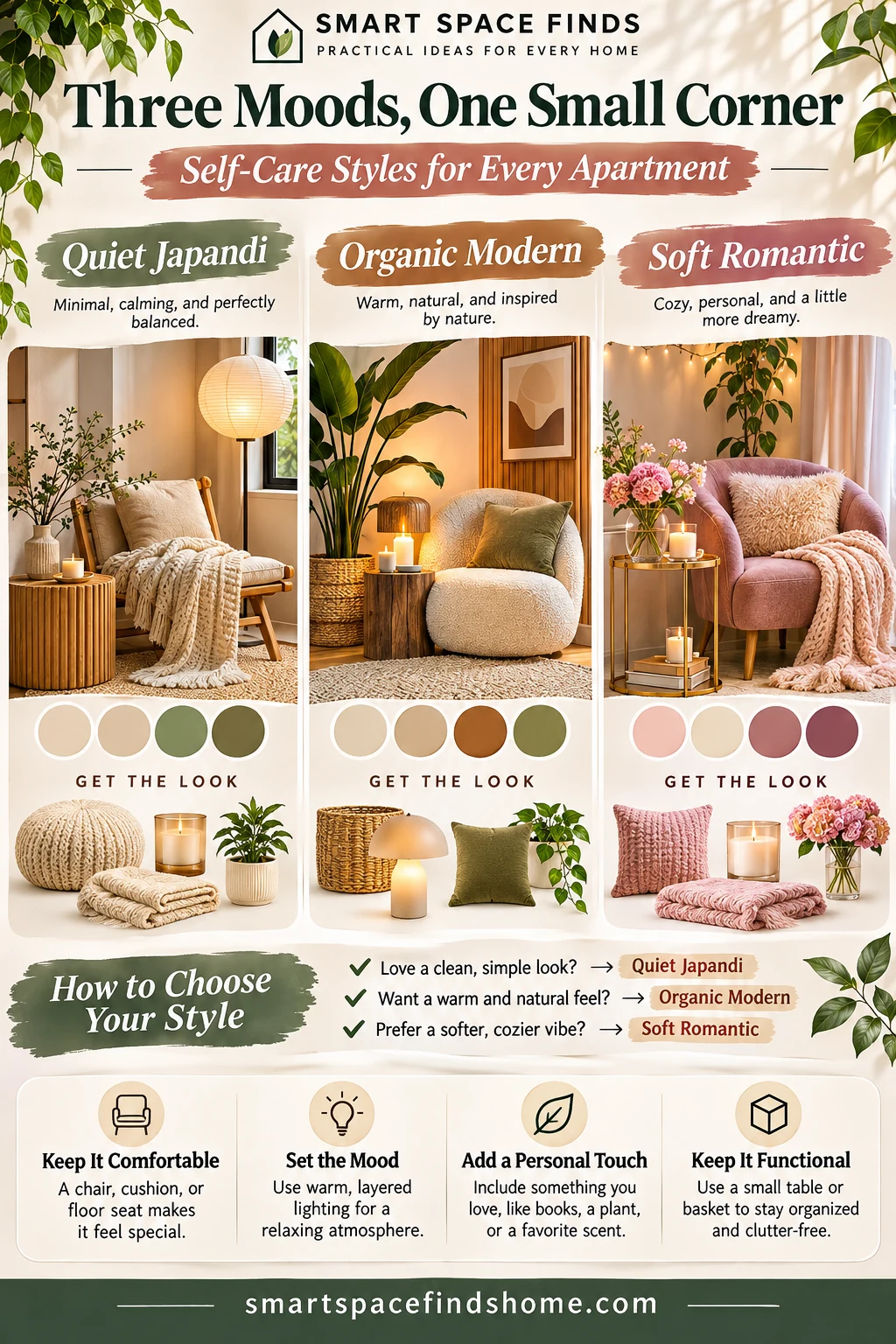
Try warm cream, muted olive, soft terracotta, or wood tones with a single contrasting texture. Soft upholstery against a smooth side table makes a bigger visual difference than adding several small ornaments. A Japandi-inspired retreat might use linen and pale wood; an organic-modern one could use textured cream fabric and warm walnut.
Layer light without taking over the room
For reading, prioritize a shaded task lamp that directs illumination onto the page. For a quiet wind-down ritual, an adjustable warm LED is more flexible than bright overhead lighting. Keep cords secure and avoid overloaded outlets or draping textiles over fixtures.
Give your essentials a home
Think one basket, a drawer, or a lidded box—not a collection of display trays. A designated place for a book, pen, and throw makes it easier to use the corner without recreating clutter.
Three small-space mistakes that make a cozy corner less useful
- Buying before measuring. Include door swings, foot traffic, and usable legroom in your plan.
- Decorating for a photograph rather than a habit. If a candle, plant, and stack of books leave no room for your tea, edit the arrangement.
- Creating a permanent obstacle. Use movable or wall-light solutions where circulation is limited; preserve safe routes through the apartment.
The ten-minute corner reset
When the day feels busy, keep the practice very small: return loose items to their basket, turn on your reading light, put your phone somewhere else if you prefer, and choose one activity. Afterward, fold the throw, clear the surface, and leave the next session easy to begin. The corner works because it lowers the effort needed to use it—not because it looks perfect every day.
Explore the related edits
For a more focused setup, see our small-room meditation corner ideas. For simple everyday rituals, try cozy evening ideas. Our guides to making a small home more comfortable and relaxing bedroom setups offer more practical next steps.
Frequently asked questions
Can I create a self-care corner in a studio apartment?
Yes. Reuse one end of your sofa, a bedside spot, or a portable floor cushion. A dedicated room is unnecessary; the essential feature is a repeatable routine that fits your existing layout.
What if my apartment has no unused corners?
Make the setup temporary. A tray, lap desk, reading lamp, and small handled basket can transform an existing chair for a few minutes and then be stored away.
How do I make a self-care corner cozy on a budget?
Start by rearranging what you own. Improve one thing at a time—usually usable light, seat comfort, or accessible storage—rather than buying decor bundles.
How can I make the corner renter-friendly?
Choose freestanding furniture, removable accessories that suit your lease, and lighting that does not require rewiring. Avoid drilling without permission, blocking ventilation, or narrowing safe walking routes.
Does a self-care corner need candles, plants, or special products?
No. Those are optional decorative choices, not requirements. A comfortable seat and a meaningful activity can be enough.
Smart Space Finds Editorial Note: This guide focuses on practical, renter-conscious home styling. Budget examples are illustrative; measurements, product suitability, household safety, and lease rules should always be checked for your space. No products in this edition are represented as personally tested.