
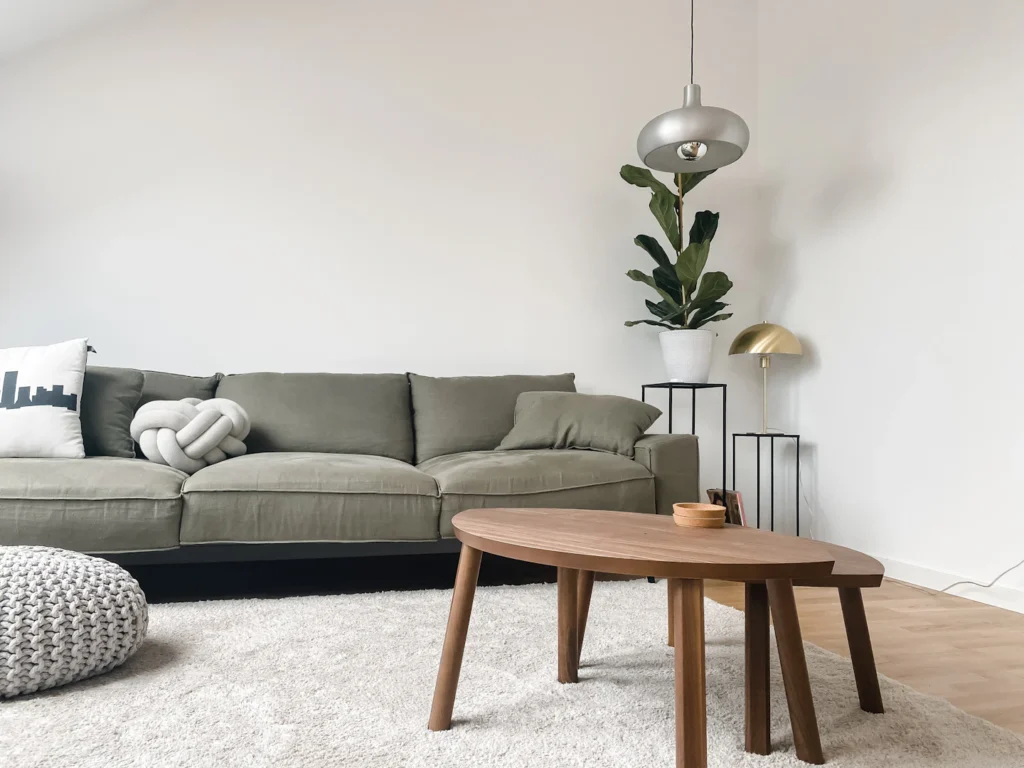
SMALL-SPACE LIVING / THE COMFORT EDIT
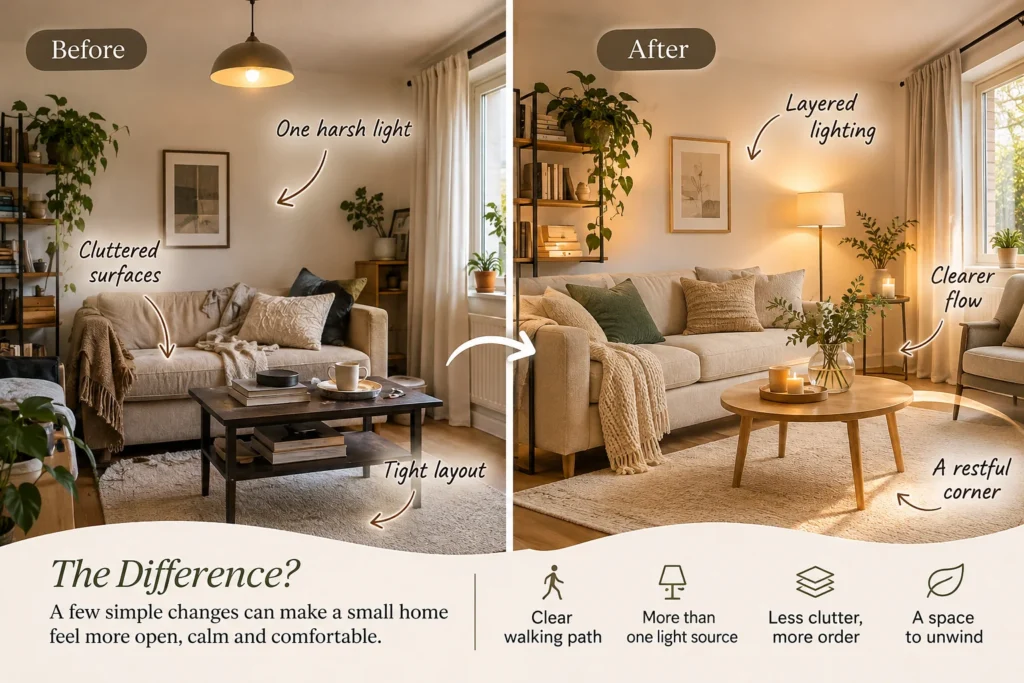
A comfortable small home is not necessarily a bigger-looking home. It is one where you can move easily, find what you need, settle into a favorite corner, and adjust the light and temperature without fighting the space.
Picture coming home to a compact apartment. Your bag has a place to land. The path to the sofa is clear. A lamp makes the room welcoming without leaving the kitchen too dim to use. Nothing in that scene requires a renovation—or a shopping spree. It starts with noticing the small moments when your home asks you to work harder than it should.
Below are five practical ways to make a small home feel more comfortable. Each includes a low-cost first step and a design option if you want to go further. These are adaptable suggestions, not rules about how a home should look.
The comfort edit · 01
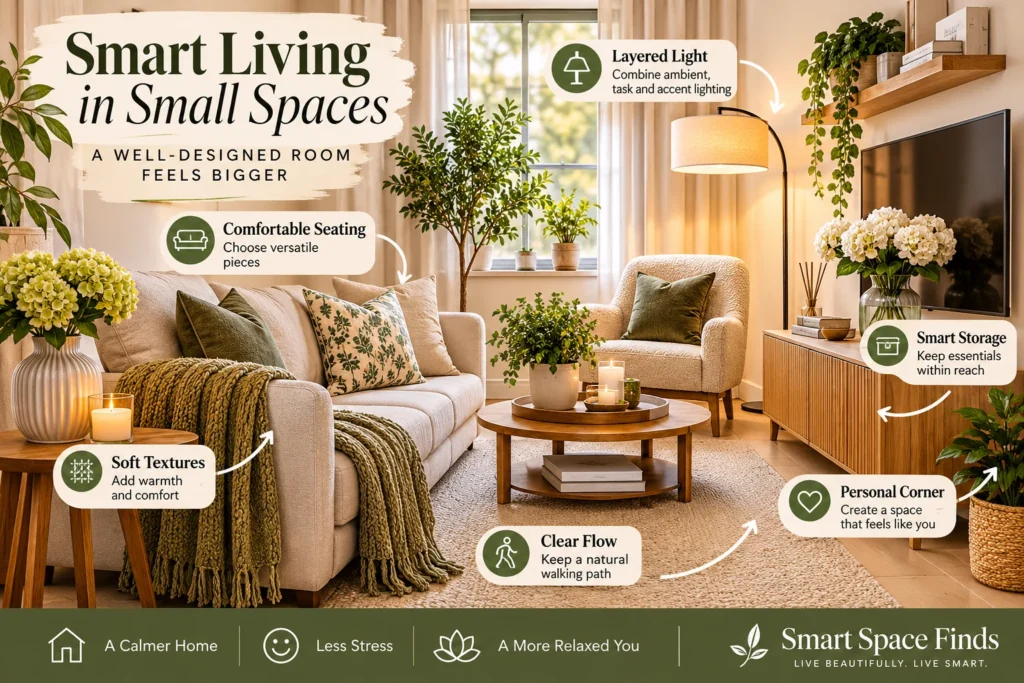
1. Make the room easier to move through
Before changing the decor, walk through the space as you normally would: from the entry to the kitchen, from the bed to the bathroom, and from your chair to the window. Where do you turn sideways, step around a table, or move a bag out of the way?
Try this before buying anything
Move one lightweight piece of furniture, clear the floor beside a doorway, or relocate a basket that interrupts a common route. Open drawers and doors to check whether the arrangement works in real life, not only in a photograph. Keep exits and access to doors clear.
Design consideration: Furniture with exposed legs or a smaller visual profile can look airy, but comfort depends more on actual clearance, stable placement, and usable seating than on any single style. If you’re reconsidering a tight layout, see our small-space storage ideas.
Notice the result: Can you cross the room without shifting something first?
The comfort edit · 02
2. Build gentle layers of light—not just one bright ceiling fixture
A single overhead light may be useful for cleaning but unpleasant for unwinding. A small home often asks one room to perform several jobs, so its lighting should be flexible too.
A simple three-layer approach
- Ambient: enough general light for comfortable movement.
- Task: focused light where you read, chop vegetables, or work.
- Accent: a softly shaded lamp that adds warmth to a living area when full brightness is not needed.
Start free: reposition an existing lamp and check for reflections on screens or glare at eye level. Choose a warm-looking bulb for an evening lamp if you like that ambiance, but keep task areas bright enough for their purpose. The US Department of Energy discusses glare as a visual comfort issue; exact lighting preferences vary among people and tasks.
Small-home example: A reading lamp beside the sofa can create an evening zone without requiring a second room. For bedroom inspiration, explore our cozy bedside table ideas.
Notice the result: Can you move between cooking, reading, and relaxing without unpleasant glare or darkness?
The comfort edit · 03
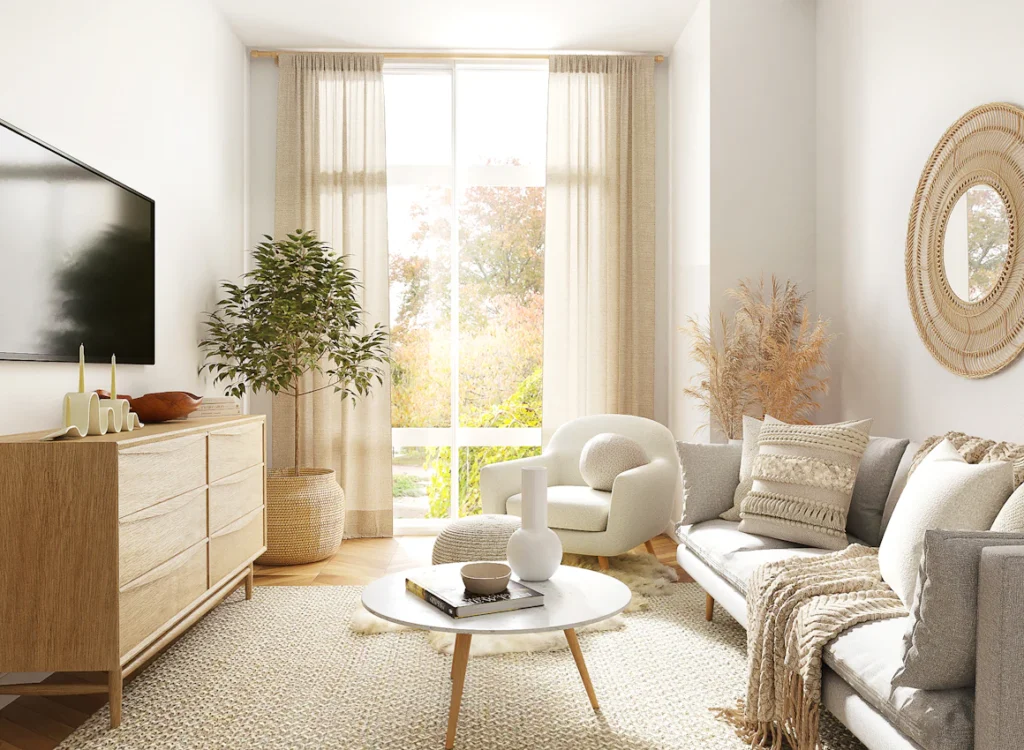
3. Add soft texture where your body actually feels it
Comfort is physical as well as visual. A cushion that supports your back, a throw within easy reach, and a washable rug under bare feet may be more valuable than another decorative object.
Choose one touchpoint
Start where you spend the most time: sofa, bed, or dining chair. Replace a scratchy cover, adjust the pillow arrangement, or bring out a blanket you already own. If you add textiles, favor washable fabrics and pieces suited to your climate and household.
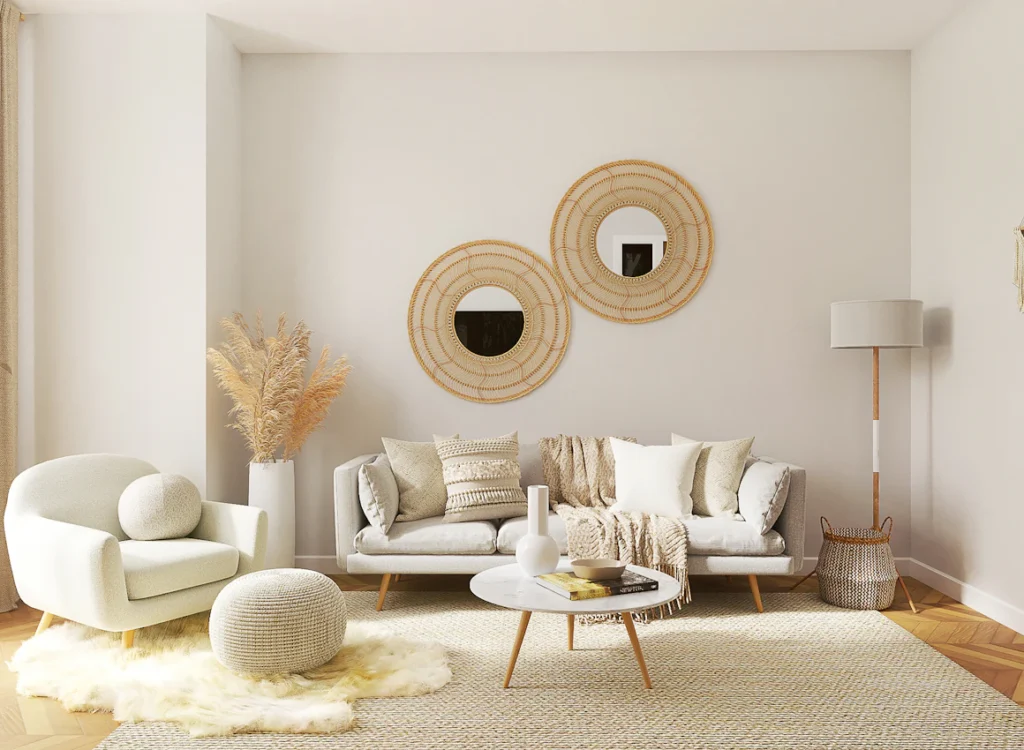
Editorial styling tip: A quiet palette of oat, cream, warm gray, muted olive, and natural wood can create a cohesive look. This is a design preference—not proof that neutral colors make everyone feel calmer. A colorful room can be every bit as comfortable if it suits its residents.
Practical caution: Avoid thick rugs that catch doors or cause trips; use appropriate nonslip backing. Keep fabric away from heaters and other heat sources. If you want to refine a sleep space, our small-bedroom bedding guide offers additional ideas.
Notice the result: Is the spot more pleasant to sit or lie in, and is it still easy to clean?
“The most luxurious thing a small home can offer is an everyday routine that feels easy.”
Smart Space Finds · The Comfort Edit
The comfort edit · 04
4. Store things where the routine happens
Small homes can feel exhausting when retrieving one everyday item means moving three others. Instead of adding storage everywhere, make the frequently used things easy to reach.
Design around a real routine
Watch what happens when you walk in: Where do the keys, shoes, mail, and bag naturally land? Give each one a simple destination close to that point. A hook or small tray you already have may solve more than a large cabinet placed across the room.
Use the one-move test: Can you retrieve and put back an everyday item in one easy action? If a storage system needs multiple lids, stacked baskets, or constant reshuffling, simplify it.
Think about access: Frequently used items belong within comfortable reach. Store heavier items low, secure tall furniture according to its instructions, and avoid blocking vents or access panels. Our entryway organization without a hallway guide shows ways to adapt this idea to a tight entrance.
Notice the result: Do you spend less time searching for daily essentials?
The comfort edit · 05
5. Make one corner feel intentionally yours
A compact apartment may be a home office, dining room, and living room in one. Rather than trying to create five separate rooms, give one small area a clear purpose: reading, tea, music, or simply sitting without working.
The two-foot reset
Choose a chair, a window-side spot, or one end of the sofa. Clear the nearest surface, position a comfortable light, and keep only what supports that activity nearby. A small tray or a familiar piece of artwork may be enough. You do not have to buy a new accent chair or build a nook.
For added physical comfort: Check the temperature and any noticeable drafts. Window coverings can help manage daylight and unwanted heat gain; their effect depends on window type, season, fabric, and installation. The US Department of Energy’s window-covering guidance explains the trade-offs. Maintain proper ventilation and do not cover heating equipment.
Design consideration: A rug, a different lamp, or a shift in furniture orientation can visually distinguish a relaxation area without adding a partition. For a more polished sleep zone, see how to make a small bedroom feel like a boutique hotel.
Notice the result: Is there a place where you can settle without first clearing away work or clutter?
THE SIGNATURE EDIT · SAVE THIS IDEA
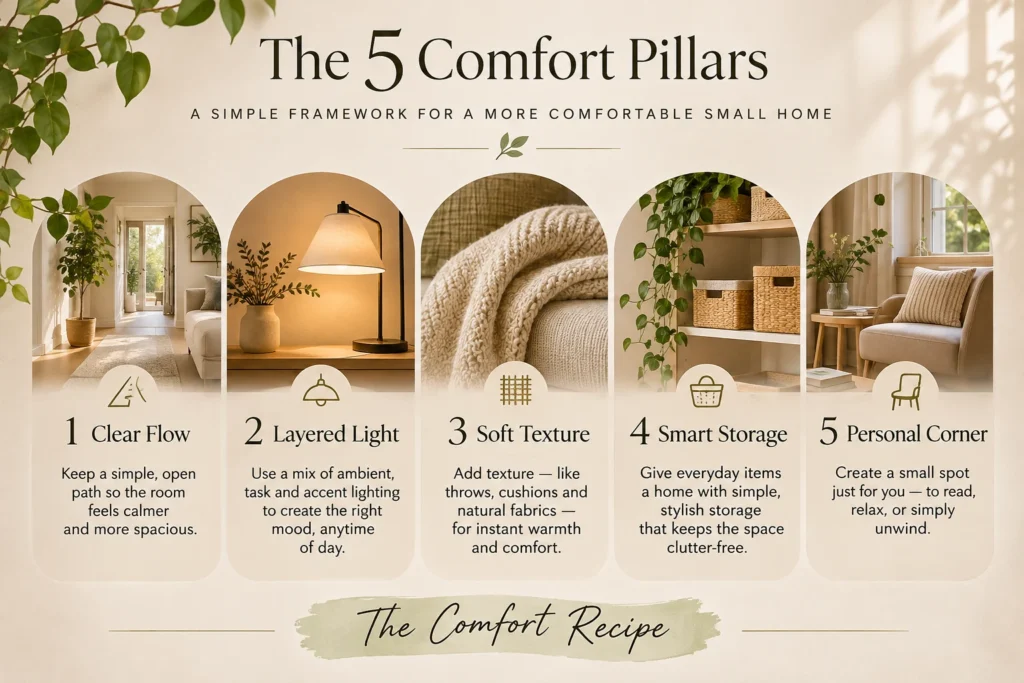
The Small-Home Comfort Recipe
Five ingredients, one more livable home. Start with what you own; treat these as design prompts rather than universal rules.
The point is not to purchase five things. It is to remove five common sources of friction. Even one change may be enough.
SMARTSPACEFINDSHOME.COM · THE COMFORT EDIT
Save this summary
The five-minute comfort edit
Short on time? Pick one improvement you can finish before your next cup of coffee.
| If the problem is… | Try this first |
|---|---|
| Cramped pathways | Move one obstacle |
| Harsh lighting | Reposition a lamp |
| Uncomfortable seating | Adjust a cushion |
| Missing essentials | Put items near their routine |
| No place to relax | Clear one restful corner |
Start here
A seven-day comfort experiment you can do at home
This is a personal check-in, not a scientific test of the advice. Pick one change; avoid changing five things at once if you want to learn what helped.
- Day 1: Write down the one moment your space feels most inconvenient.
- Day 2: Try a free adjustment—move, relocate, soften, or simplify.
- Days 3–6: Live normally. Notice whether that specific annoyance returns.
- Day 7: Keep, refine, or reverse the change based on your experience.
Ask yourself: Was the room easier to use? Did it feel more comfortable? Would I maintain this setup without extra effort? A small improvement that lasts is more useful than a dramatic makeover that creates new chores.
Small-space reality check
Comfort depends on your home—not a trend
Living with children or pets? Choose sturdy pieces, washable fabrics, and secured storage over delicate styling. Renting? Prioritize reversible changes. Sharing the space? Ask which routines need the easiest access and agree on a landing place for common belongings. Low on daylight? Make task lighting a priority without assuming one color palette will solve the problem.
Wherever possible, experiment with what you already own before deciding to buy more.
A SIMPLE PERSONAL EXPERIMENT
Your 7-Day Comfort Journal
Choose one change to your home and follow it for a week. This is a personal reflection exercise, not a scientific measurement of the article’s effectiveness.
Open your printable comfort worksheet
My problem: __________________________________
The one change I’ll test: __________________________
What improved after seven days: __________________
What still feels inconvenient: _____________________
My decision: Keep / Adjust / Reverse
To keep a copy, use your browser’s Print command or Save as PDF. No account or email required.
Frequently asked questions
How can I make a small apartment cozy on a budget?
Start with free changes: clear a walking route, reposition a lamp, move essentials closer to where you use them, and reuse a favorite throw. Spend only after identifying a specific problem a purchase will solve.
Will dark colors make a small room feel smaller?
Not necessarily. Dark colors can create an intimate atmosphere, while lighter surfaces often reflect more available light. Choose based on daylight, desired mood, and your own preferences rather than a universal rule.
What is the best lighting for a cozy small living room?
Use adequate general lighting plus a lamp for reading or other tasks. A shaded accent lamp can make evenings feel softer. Prioritize visibility and avoid glare rather than relying only on bulb color.
How do I make a small home comfortable without adding clutter?
Choose adjustments that serve a daily function: a supportive cushion, a better light position, accessible storage, or a clear surface. One useful change often beats several decorative additions.
How do I make a small rental feel like home?
Focus on removable, reversible choices such as furniture placement, textiles, portable lamps, and freestanding storage. Check your lease before fixing items to walls or changing window treatments.
Comfort is a feeling you can design for
The most welcoming small home is not the one with the most clever furniture or the fewest possessions. It is the one that supports how you actually live. Begin with a single friction point, test a modest improvement, and let your everyday experience—not a perfect photograph—decide what stays.
SMART SPACE FINDS · THE CONSIDERED SHOP
The Comfort Essentials Edit
A small home rarely needs more things. But when you have identified a specific friction point, one well-chosen addition can help. These optional finds are organized by the problem they solve, not by price or hype.
Try a free change first: move a lamp, clear a route, or repurpose a basket. Product details and options may change; check the item and selected variation on Amazon before purchasing.
01 · The Gentle Lighting Edit
Create light that suits the moment
A softer evening, an easier bedtime routine, or better reading light—start by repositioning the lights you already own.
Gritin 19 LED Rechargeable Book Light
Clip-on lighting for reading without adding another piece of furniture.
L LOHAS LED Dusk-to-Dawn Night Lights
Gentle plug-in guidance lighting for nighttime trips between rooms.
Glocusent Rechargeable LED Neck Reading Light
Hands-free reading light for a favorite chair or quiet corner.
As an Amazon Associate, Smart Space Finds earns from qualifying purchases.
02 · The Soft Comfort Edit
Make the places you use feel better
Try moving furniture or reusing a throw first. These are optional additions when comfort or utility is still missing.
SONGMICS Folding Storage Ottoman Bench
Flexible seating or footrest with hidden storage; check room dimensions.
GORILLA GRIP Area Rug Gripper Pad
Helps keep a compatible rug in place; check floor-finish guidance.
Bedsure GentleSoft Sherpa Fleece Throw
An inviting soft layer for the sofa or reading chair.
VASAGLE C-Shaped End Table
A slim landing spot beside a sofa; measure before ordering.
MIULEE Throw Pillow Inserts, 2-Pack
Refresh favorite pillow covers for a more supportive sofa setup.
As an Amazon Associate, Smart Space Finds earns from qualifying purchases.
03 · The Everyday Ease Edit
Put the small essentials where you need them
The most useful organizer is the one you can reach without changing your routine.
Yamazaki Home Magnetic Key Rack with Tray
A compact drop zone for keys; confirm mounting-surface compatibility.
Command Large Utility Hooks
Simple hanging spots for light everyday items; follow surface and load limits.
mDesign Small Storage Bins, 4-Pack
Give loose essentials a clear home in drawers or on shelves.
Vtopmart 25-Piece Clear Drawer Organizer Set
Modular trays for small items that often go missing.
D-Line Cord Cover Kit
A tidier route for visible cords; check wall finish and installation instructions.
As an Amazon Associate, Smart Space Finds earns from qualifying purchases.
04 · The Hidden Space Edit
Find room without making the room feel full
Measure the available space first. An organizer should improve movement—not create a new obstacle.
SimpleHouseware 24-Pocket Over-the-Door Organizer
Use the back of a suitable door for lightweight essentials.
SPACEKEEPER Slim 4-Tier Rolling Storage Cart
A narrow rolling organizer for an unused gap; verify clearance.
Amazon Basics Under-Bed Storage Bags, 2-Pack
Stow seasonal linens without using visible shelves; measure under-bed height.
Amazon Basics Slim Velvet Hangers, 50-Pack
Create a consistent, space-conscious closet hanging system.
As an Amazon Associate, Smart Space Finds earns from qualifying purchases.
Our editorial advice comes first. These are optional shopping ideas, not requirements for a comfortable home.
Editorial note: Movement, lighting, storage access, and temperature are practical considerations. Palette, texture, and the idea of a sanctuary corner are editorial design recommendations. This guide does not claim that its suggestions have been proven to change psychological outcomes.