
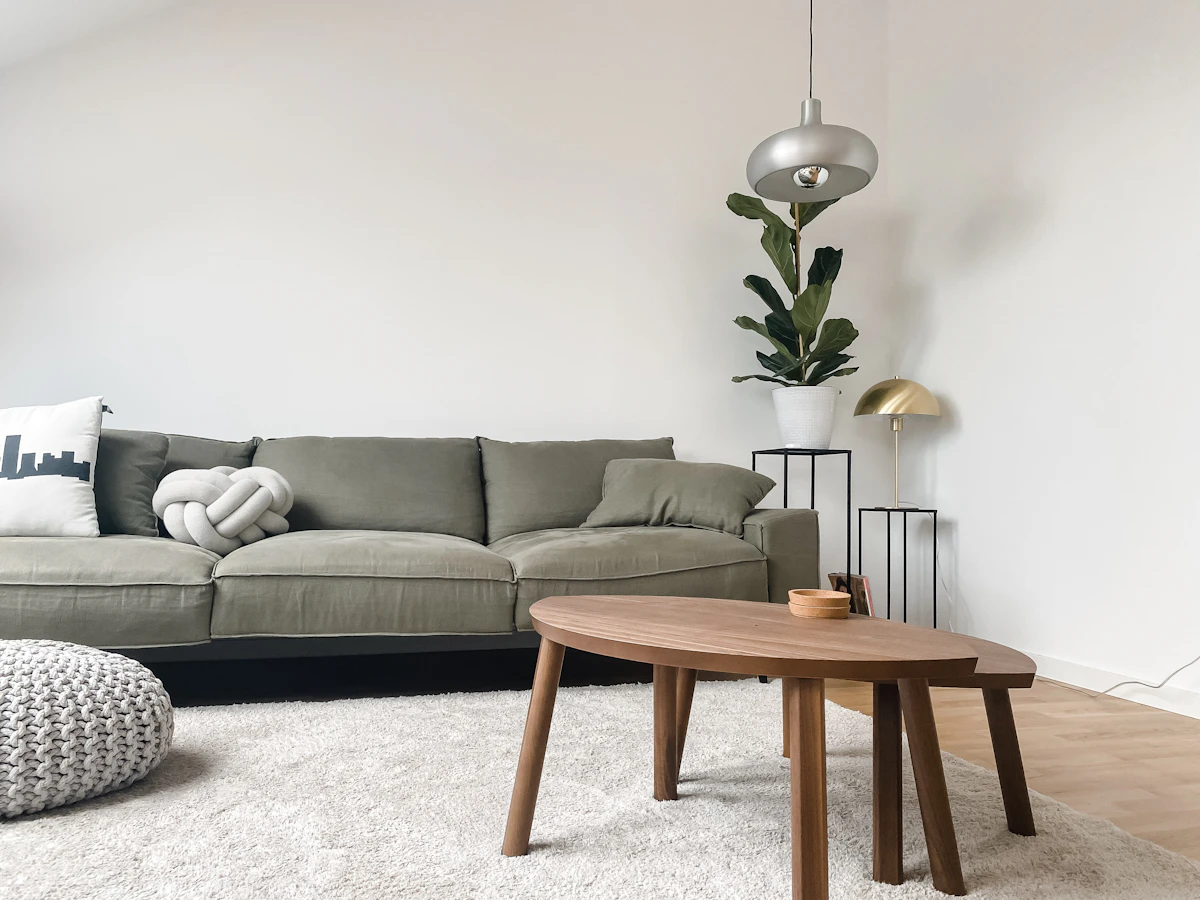
The Apartment Edit / Design with intention
The art of softness: a home that feels beautiful, not overdone.
Imagine coming home after a long day. The lamp casts a warm pool of light, the sofa is inviting, and a few personal objects make the room unmistakably yours. Nothing needs to match perfectly. Nothing demands your attention. That is the promise of soft feminine apartment decor: a space that feels gentle, expressive and sophisticated without becoming impractical or excessively themed.
These 21 ideas work with the apartment you already have, whether you rent a studio or live in a larger home. Start with balance, add texture and contrast, and make purchases only when they solve a real design problem.
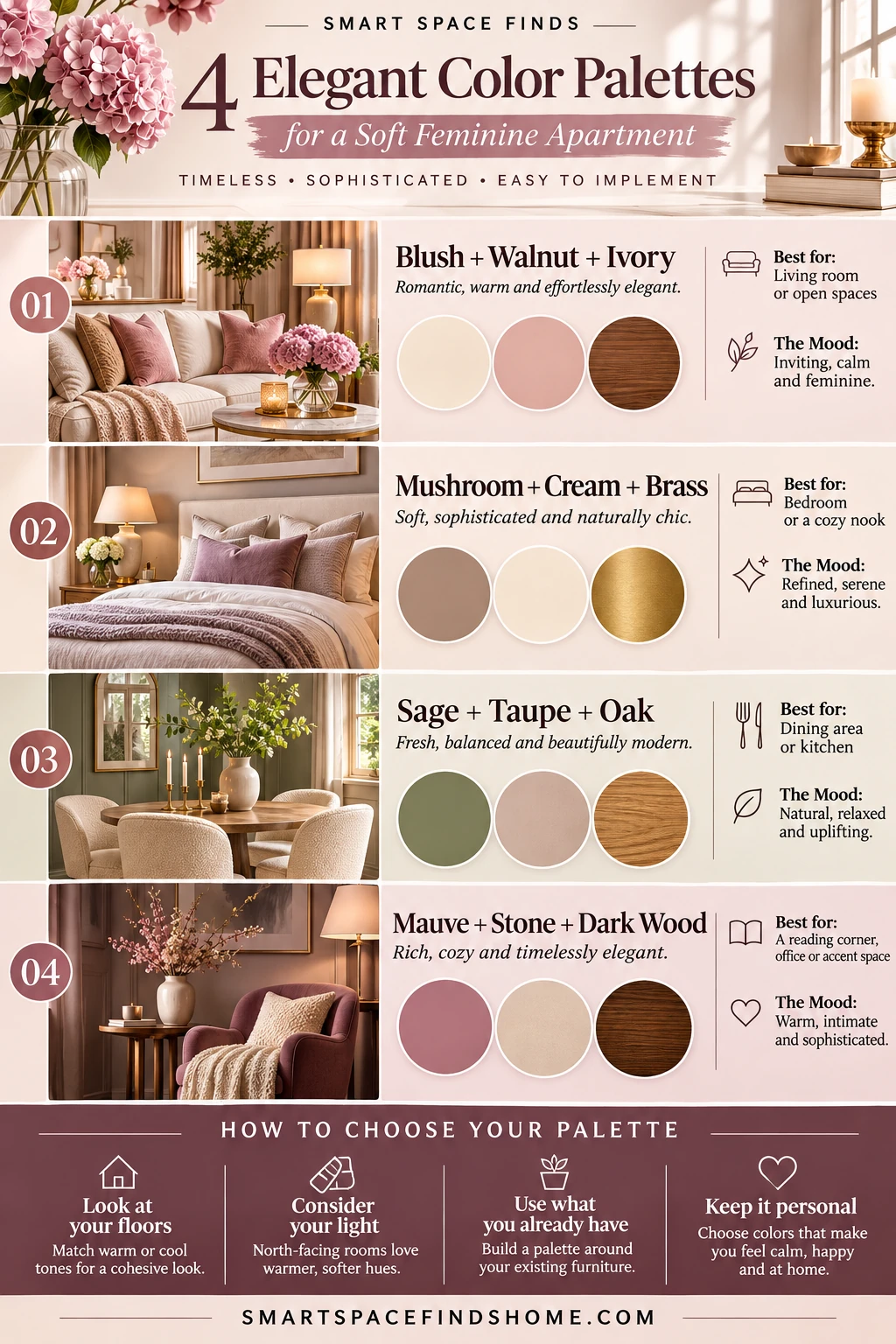
The short answer
For an elegant feminine apartment, combine a calm neutral foundation with muted accent colors, tactile fabrics, a few curved shapes and layered lighting. Add dark wood or another grounding finish, preserve usable surfaces and repeat colors selectively. Pink is optional.
The foundation: softness with structure
01. Start with the room you actually have
The most useful decorating decision is not a color choice. It is deciding what needs to change. Stand at your doorway and notice the largest surfaces: flooring, sofa, walls and window treatments. If they are already neutral, you have a foundation. If they are visually busy, simplify one surface before introducing another pattern. A feminine apartment can be expressive without looking like a showroom.
02. Use the 65–25–10 soft balance formula
Treat this as a flexible visual estimate, not a mathematical rule. Give roughly two-thirds of the room to calm foundational colors, one-quarter to softer expressive shades and the remainder to grounding contrast. In a cream living room, dusty rose cushions and a walnut table can do the work. If the floor is already dark, count it as part of the grounding layer rather than buying more dark furniture.
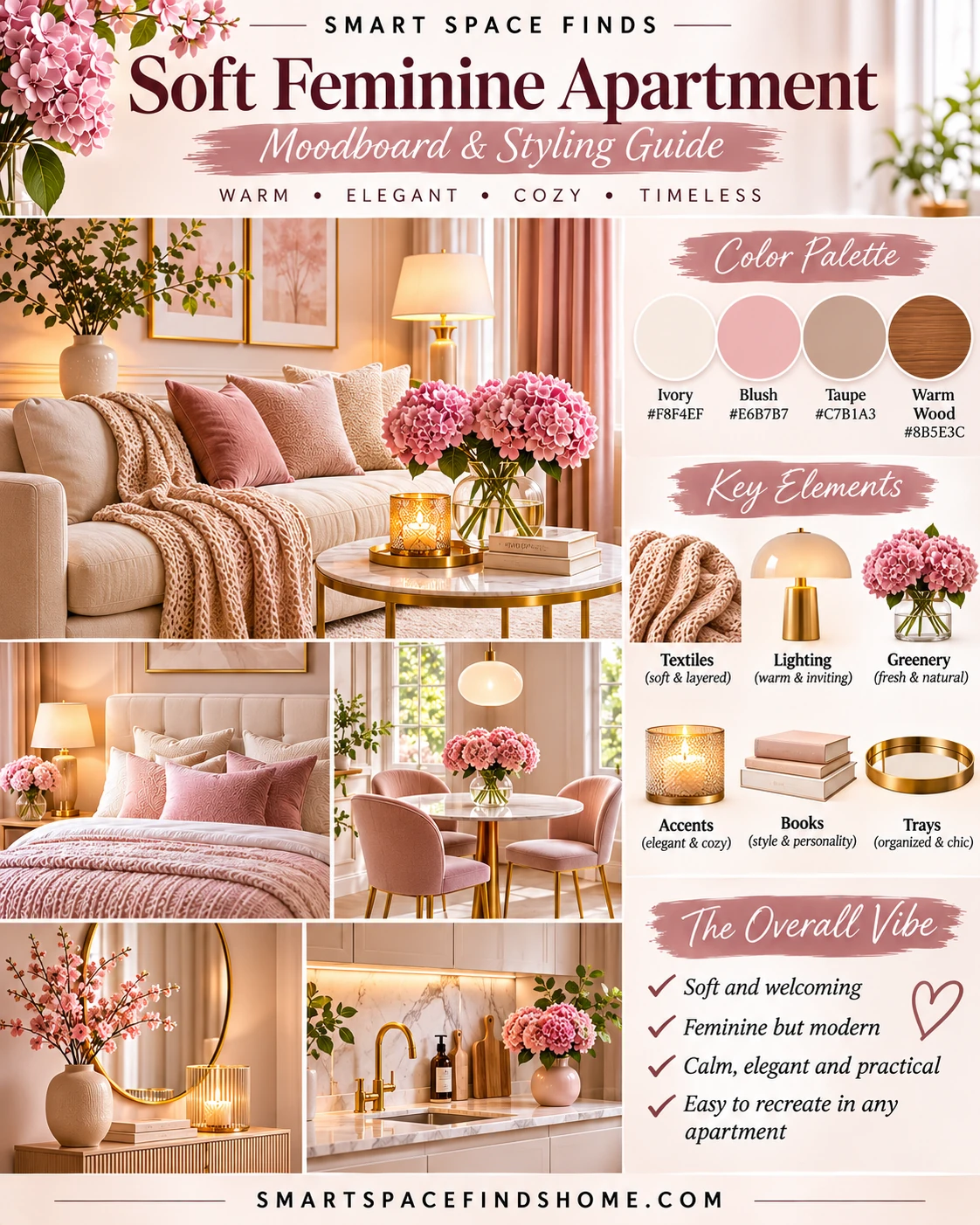
The Blush Atelier palette
Choose two or three of these colors, not necessarily all six.
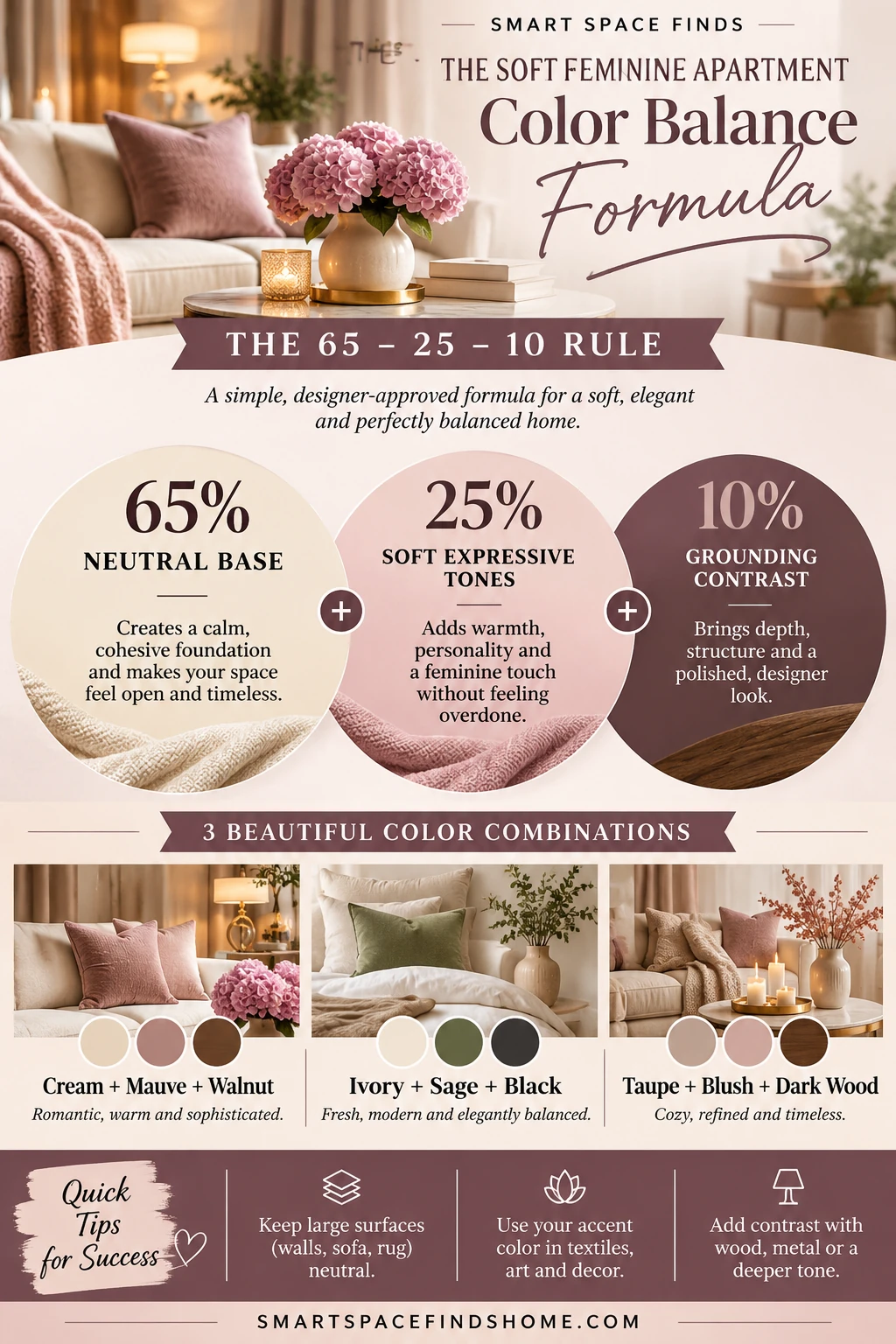
03. Choose blush by undertone, not by name
Dusty rose, peach and mauve can look completely different under the same lamp. Place fabric samples beside your flooring and existing upholstery, then check them in morning and evening light. A muted mauve may complement cool gray; warm clay pink may sit more comfortably with honey oak. For a deeper exploration, see our sage green and pink room ideas.
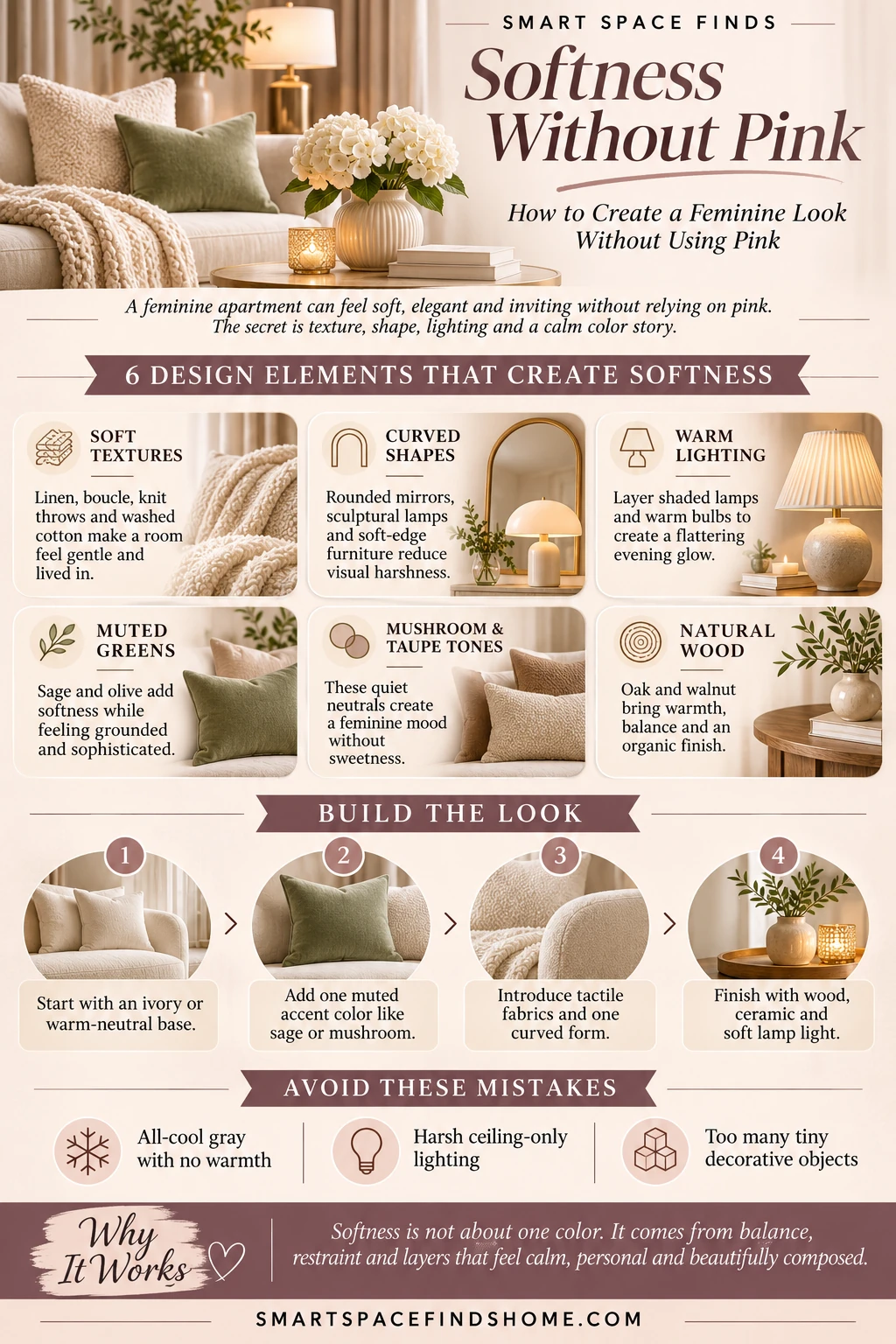
04. Create softness without pink
Use an ivory linen curtain, a rounded ceramic vessel, a finely ribbed lampshade and a warm wood finish. These four elements introduce movement and tactile interest without relying on a gendered color palette. An olive or mushroom accent can be just as effective as blush.
05. Balance curves with straight lines
A round side table beside a straight-arm sofa makes both silhouettes more interesting. Choose one curved statement shape per furniture grouping, then repeat the curve subtly in a mirror or bowl. Avoid replacing every rectangular piece: contrast makes the curved forms visible.
Living room: comfort before decoration
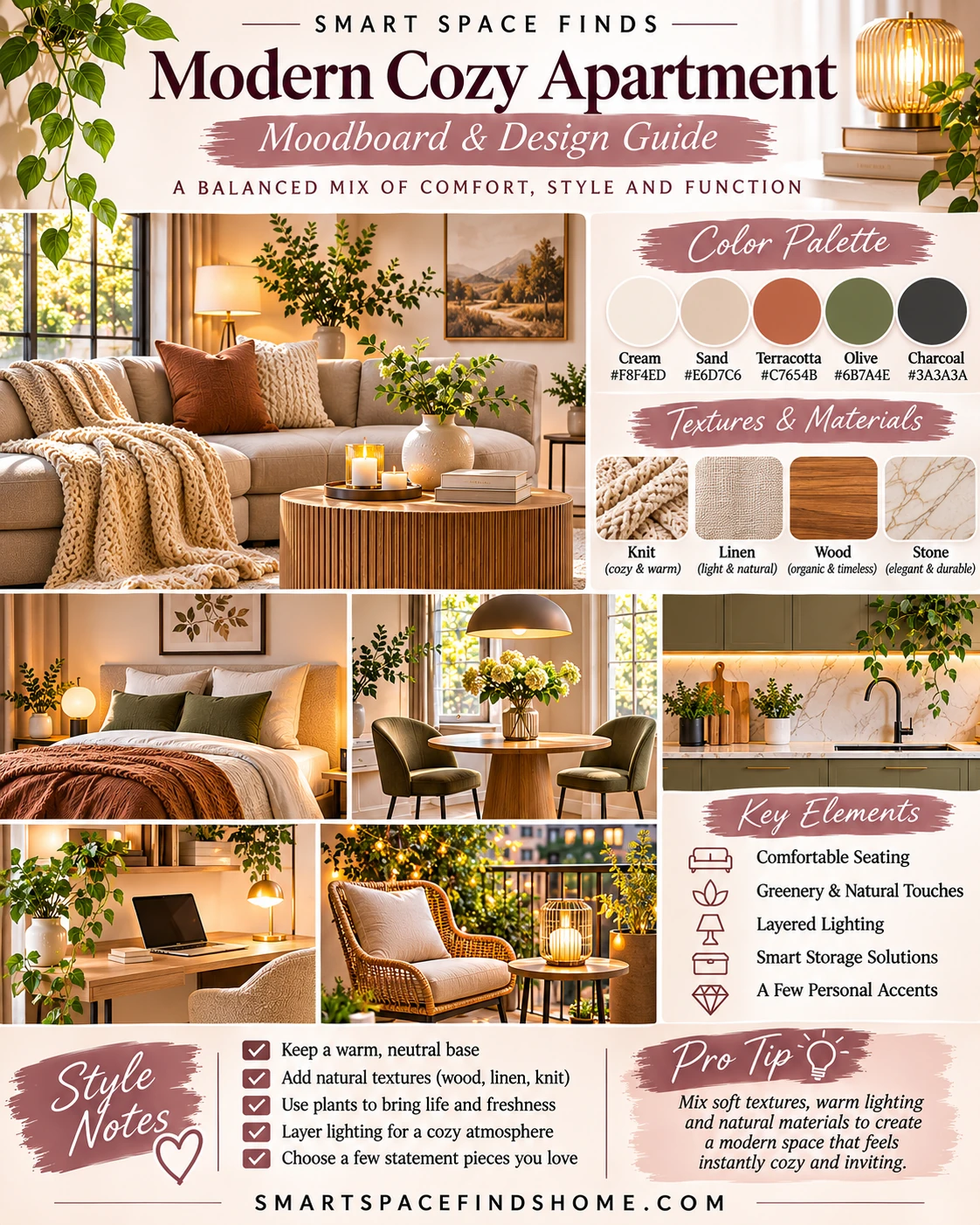
06. Make the sofa feel collected, not coordinated
Begin with two pillow textures and one throw. A solid linen pillow, a small patterned cushion and a loosely folded blanket are often enough for a compact sofa. Leave a comfortable seat available. If the cushions need to be moved every time you sit down, the styling is no longer working.
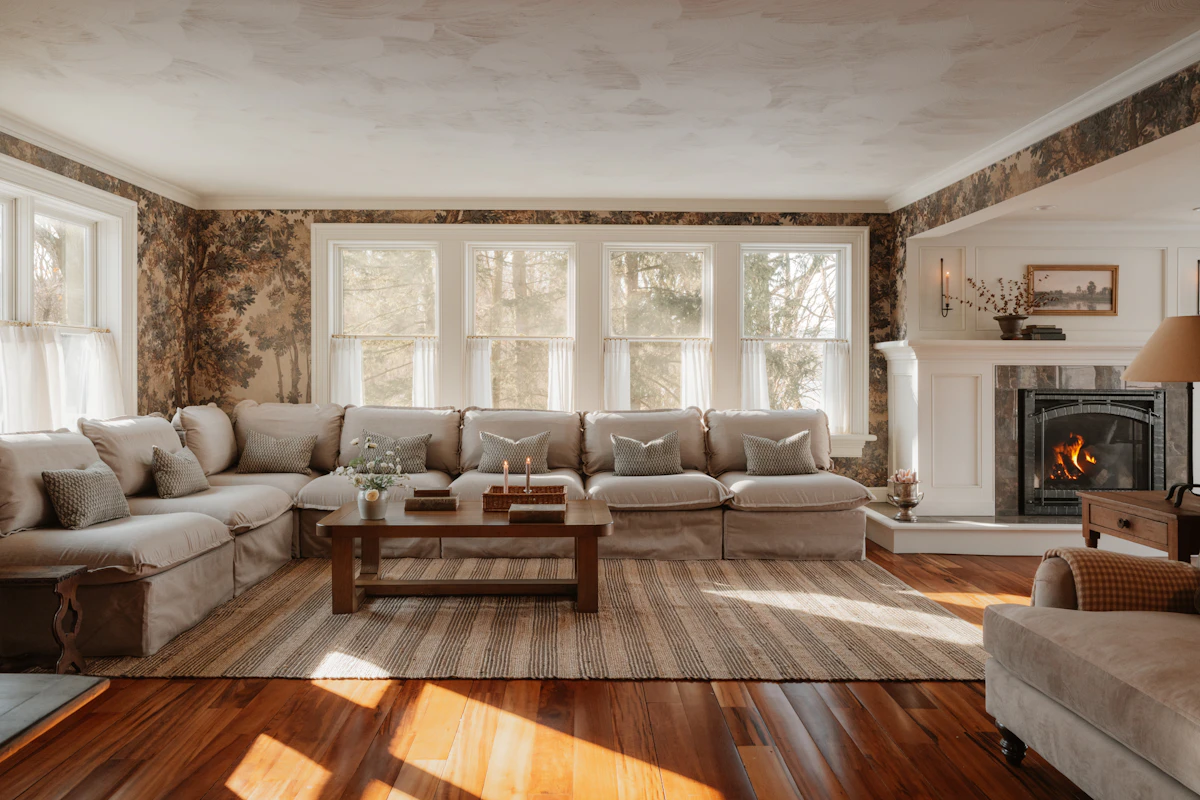
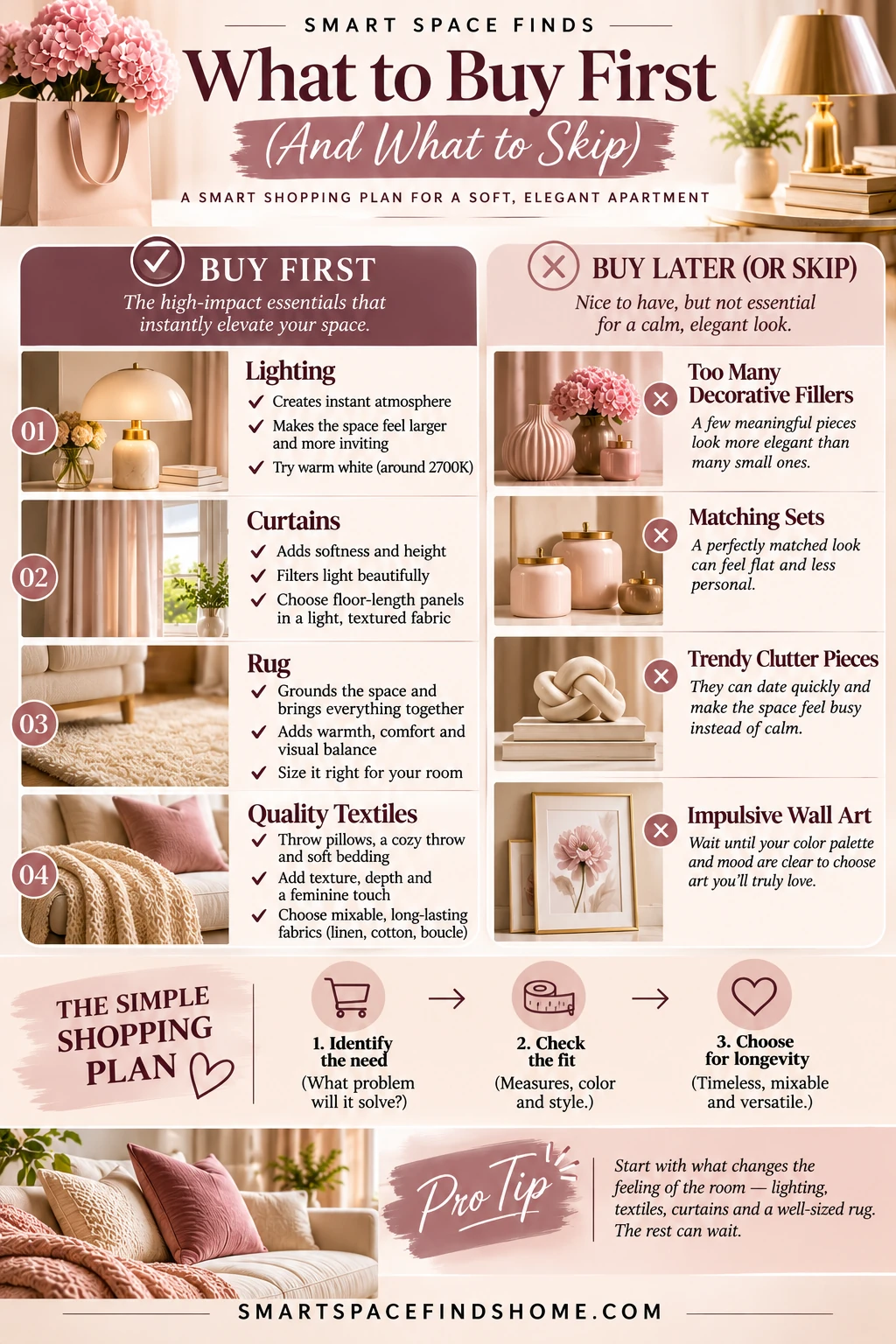
07. Let curtains create a softer backdrop
Choose curtains that relate to the wall color rather than demanding attention. Measure the window, rod position and floor clearance before ordering. Full-length panels can emphasize height, but keep fabric clear of heaters and vents. Renters should use existing hardware or an appropriately rated removable system.
08. Ground the room with a properly sized rug
Use painter’s tape to test the footprint before ordering. Ideally, at least the front feet of the main seating fit on the rug, if the layout allows. Check door clearance and choose a suitable non-slip pad. A subtle faded pattern offers visual softness while disguising ordinary wear.
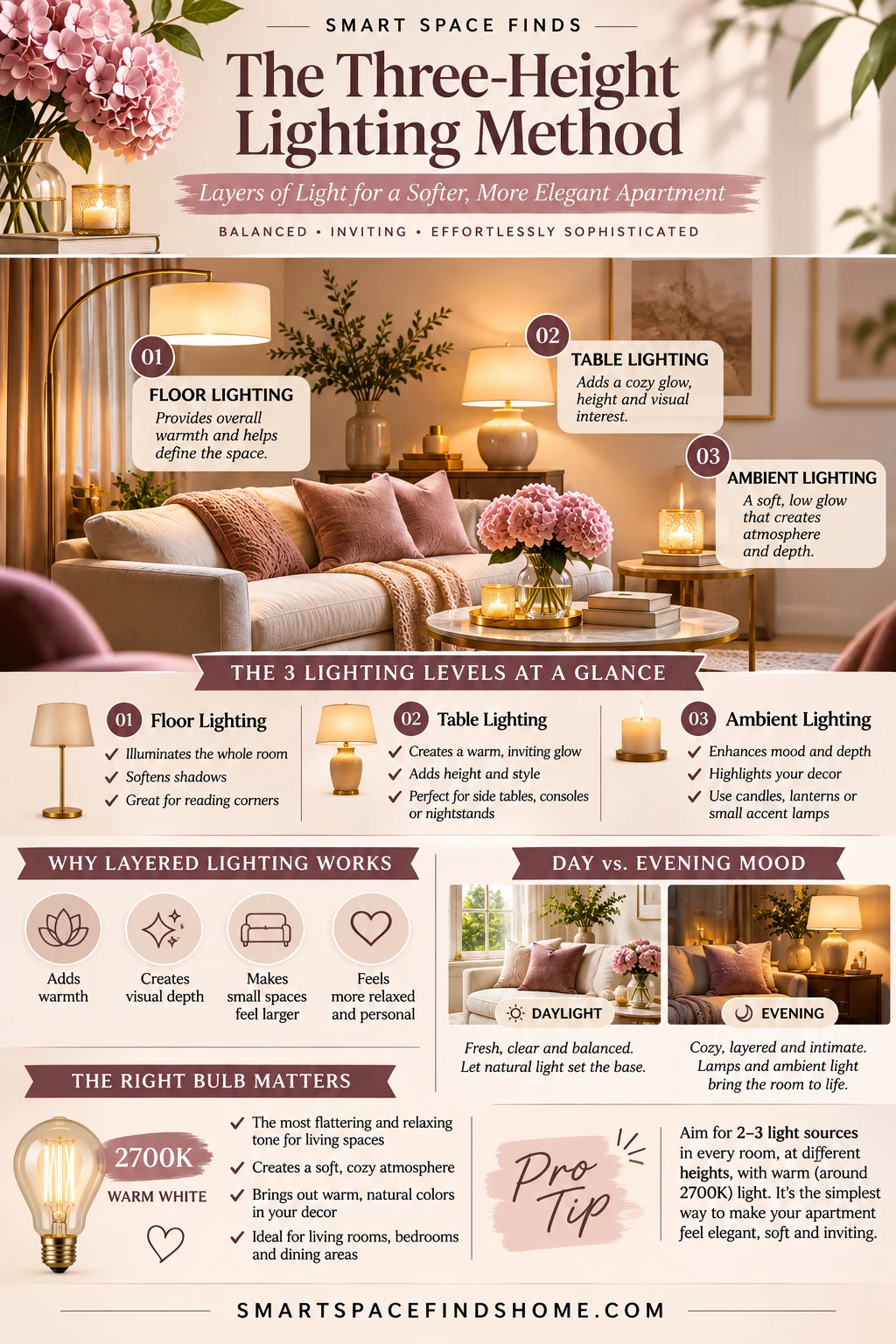
09. Use three heights of light
Pair a tall floor lamp with a medium-height table lamp and a low accent light where appropriate. Warm-white bulbs around 2700K are a useful starting point for evening ambience; task areas may need brighter illumination. Choose shades that conceal distracting glare, and never exceed fixture ratings.
The romance and restraint test
Check your room against three questions: Can you see a clear focal point? Can you use each surface comfortably? Is there a grounding color or texture? If not, remove one decorative layer before adding anything else.
Bedroom: a quieter kind of luxury
10. Give the bedroom a quieter palette
A bedroom does not need five different accent colors. Try ivory bedding, one muted accent and a darker wood or metal detail. Keep the most saturated shade away from the largest surface if you prefer a calm look. Our bedroom color combinations guide offers additional options.
11. Layer bedding for real life
Start with washable sheets and a comforter appropriate to your climate. Add a textured coverlet or throw only if it is useful. Two sleeping pillows and one accent cushion can be plenty in a small bedroom. Avoid creating a nightly ritual of removing a mountain of decorative pillows.
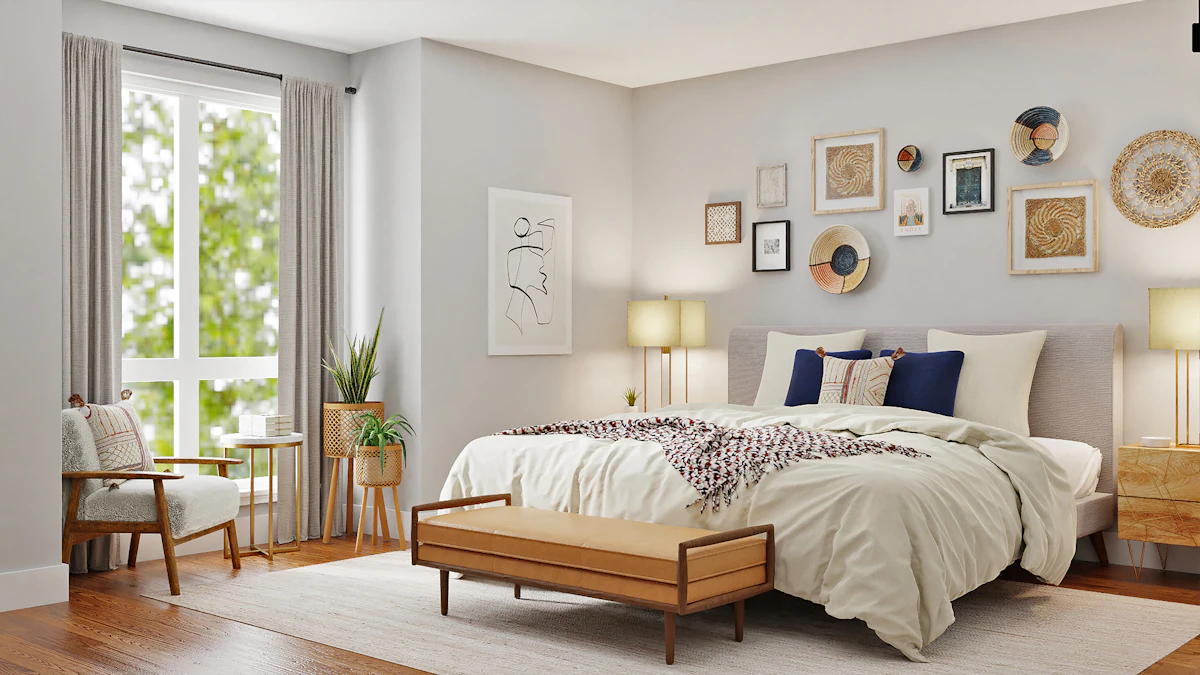
12. Style a bedside table around your routine
Reserve space for a lamp, water and your phone or book. Use one small tray to contain loose items. A compact lamp with a shade can soften the room while preserving usable surface area. If you have a narrow walkway, choose a shallow table rather than a larger decorative piece.
Everyday spaces: small details, useful results
13. Make a dining nook feel intentional
A simple table runner, a low vessel and a pair of comfortable chairs can establish a dining zone without extra furniture. Keep the centerpiece low enough for conversation. Choose washable fabrics and remove the runner during messy meals if necessary.
14. Soften a rental kitchen without sacrificing counter space
Introduce a washable towel, a small wood tray and a practical ceramic utensil holder. Group objects you use together near their point of use. Avoid fabric near cooking flames and keep working surfaces clear. A kitchen that looks good but cannot accommodate dinner preparation is not a successful makeover.
15. Make the bathroom feel like a small boutique retreat
Repeat one accent color in towels and a small accessory, then use a neutral shower curtain if the room needs visual relief. Choose moisture-appropriate storage and washable textiles. Keep electrical decor out of wet zones. For a room-specific approach, explore pink bathroom decor for renters.
16. Create an entryway that welcomes you home
A shallow tray for keys, a compact mirror and an existing hook can establish a landing zone. The mirror need not be ornate: a simple rounded frame can soften a narrow hallway. Secure heavy mirrors according to manufacturer instructions and your lease; do not rely on decorative adhesive strips for heavy glass.
17. Use art to communicate personality
Pick a piece because you enjoy its subject, not because it matches every cushion. A botanical drawing, abstract print or personal photograph can introduce a soft palette while still feeling individual. Repeat one small color from the artwork elsewhere in the room, rather than copying the entire palette.
18. Mix metals with restraint
Choose one dominant metal finish and a secondary finish that already exists in the room. For example, brushed brass can coexist with black curtain hardware. Keep the finishes distributed rather than adding a collection of matching gold objects. A small amount of contrast makes the room feel layered.
Small apartments and rental-friendly design
19. Zone a studio apartment with repetition
Use the same neutral foundation in the sleeping and living areas, then vary the textures. A shared accent hue can connect both zones. A rug or lamp may establish a boundary without blocking daylight. Maintain clear access to doors and avoid tall partitions that make the room difficult to navigate.
20. Make reversible upgrades before permanent ones
Start with textiles, freestanding lighting and furniture placement. Test removable products in an inconspicuous spot and confirm your lease permits them. Adhesives can damage paint, especially on unsuitable surfaces. Keep original hardware if you receive permission to swap it. See how to add color without painting.
21. Finish by editing, not shopping
Photograph the room from the doorway and ask what attracts attention first. If five objects compete, remove two and look again. Leave one clear surface for everyday living. A beautiful apartment should make your morning easier, not give you another collection of things to maintain.
Design clinic / 01
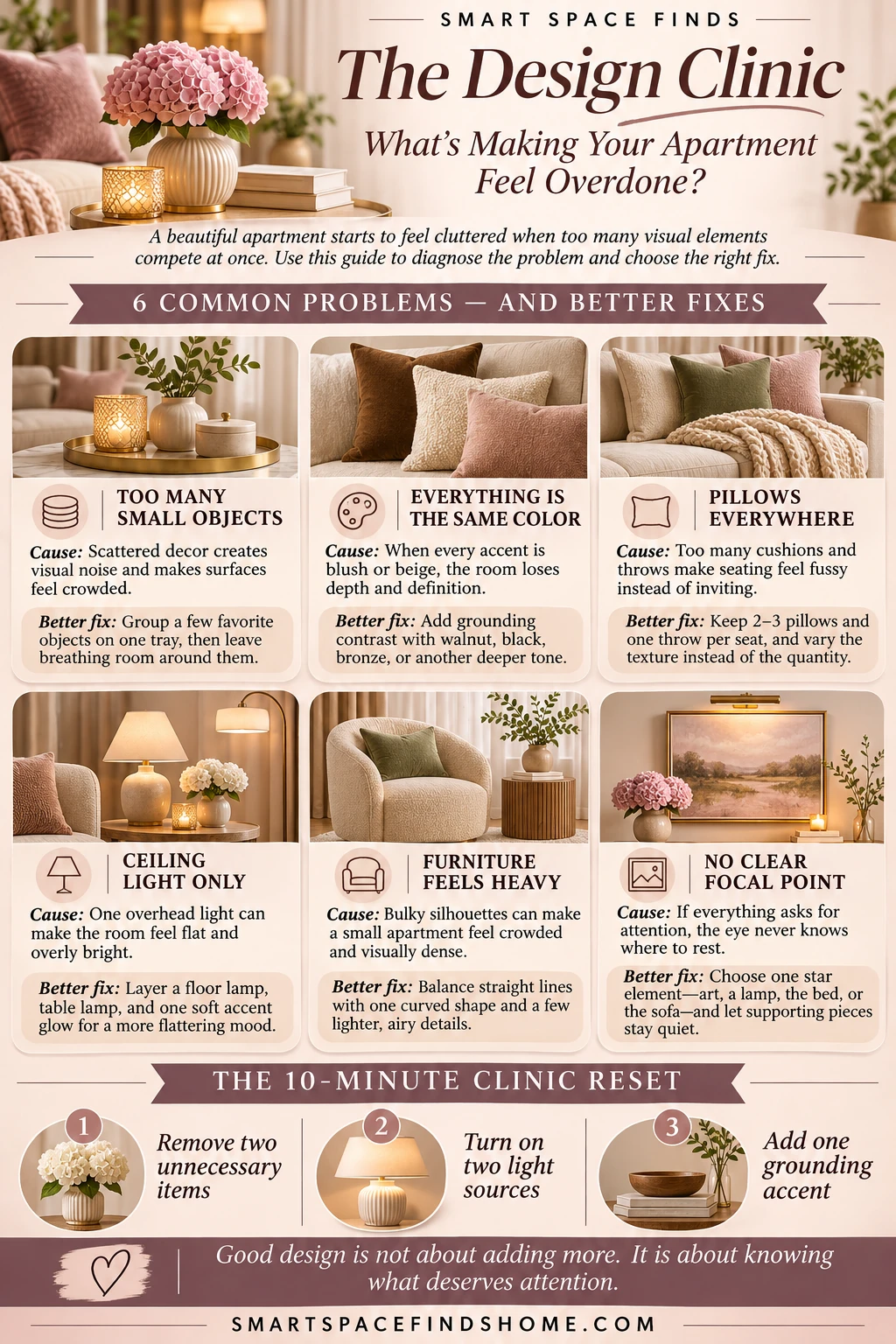
What is actually making your apartment feel overdone?
Before changing a room, take two photographs from the same doorway: one in daylight, one with your evening lamps. The camera makes it easier to notice repetition, mismatched undertones and competing focal points. Compare the pictures before spending money.
Everything looks too sweet
Replace one repeated pink accessory with a wood, charcoal or earthy olive element. Keep the pink piece you genuinely love.
The room looks flat
Change the texture before the color: introduce a woven fabric, matte ceramic or visible wood grain against a smooth surface.
The space feels smaller
Clear the main walking route and remove one unnecessary side table or oversized floor basket. Keep the window area open.
It looks beautiful but feels cold
Try a shaded lamp at seated eye level, a washable throw and a piece of art with personal meaning.
It feels like a furniture catalog
Break up matching sets with an inherited object, a vintage find or a favorite photograph.
It looks untidy within hours
Reduce the number of objects on working surfaces and give keys, chargers and remotes a dedicated home.
Design clinic / 02
Four apartment palettes that work with existing finishes
Instead of choosing colors in isolation, build around the flooring, countertop or sofa you cannot easily replace. These combinations are starting points; samples are more reliable than screen colors.
Warm oak or honey-toned floors
Cream, muted clay rose and tobacco brown. Avoid adding another orange-heavy wood finish unless it relates to the floor.
Cool gray flooring
Soft off-white, muted mauve and charcoal. Use warm textiles to soften the gray without forcing a yellow beige.
Dark espresso furniture
Ivory, dusty petal and mushroom. Let the furniture serve as the dark anchor.
White walls and pale wood
Porcelain, sage and warm taupe. A pink-free alternative that still feels gentle and personal.
The small-apartment measurement checklist
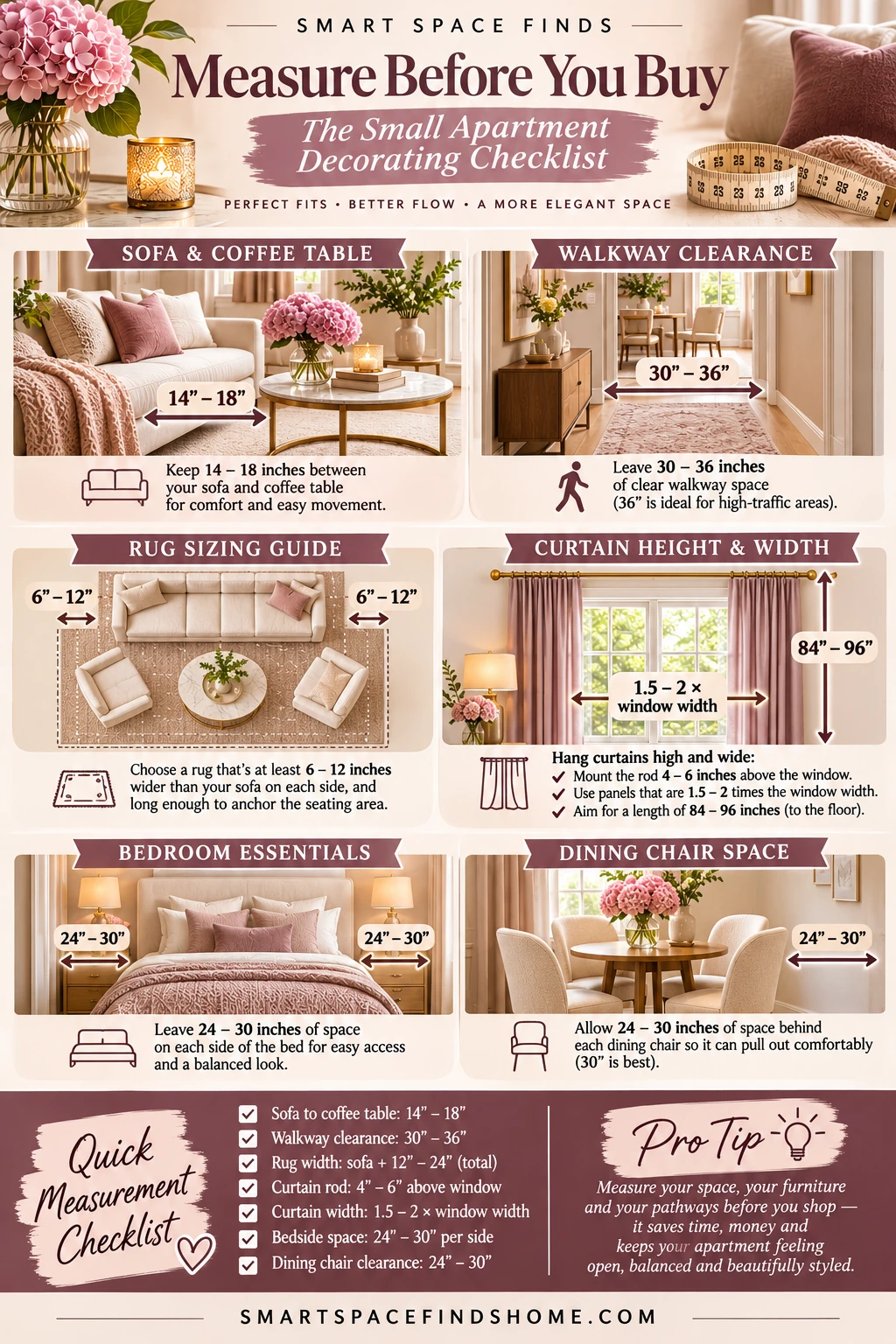
In a compact home, an attractive piece that blocks a drawer or a door is a costly mistake. Record the width and depth of the space, the opening swing of doors, the route from the building entrance and the position of outlets. Include the depth of handles and the space required to pull out a chair.
For a coffee table, roughly 14–18 inches from the sofa is a common starting point, not an accessibility standard. Aim for about 30–36 inches along frequently used walking routes where your layout allows, and allow more where mobility needs require it. Test the footprint using tape and walk through the room as you normally would. Keep exits unobstructed.
For curtains, measure from the actual rod to the intended hem. For rugs, mark the corners and open all nearby doors. For a bedside table, check that drawers open fully and that the lamp switch is within comfortable reach.
Reader toolkit / 03
The one-in, one-out shopping filter
Before buying a decorative piece, answer these four questions:
- What specific problem does this solve?
- Where will it live, and does it fit?
- What existing item could do the same job?
- Will I still enjoy it when the rest of the room changes?
If the answer to the first two questions is unclear, save the item for later rather than buying it immediately.
Three realistic apartment makeover scenarios
The gray rental that feels impersonal
Keep the gray sofa. Introduce an oatmeal throw, muted mauve cushion and a warm shaded lamp. Use a favorite framed print to bridge the cool sofa and warm accents. The aim is to make the gray intentional, not hide every trace of it.
The studio with a bed visible from the sofa
Repeat the same cream or mushroom base on the bedding and sofa textiles, but use different weaves. Place a small lamp in each zone. Keep the bed made with a simple washable cover rather than adding a divider that blocks light or movement.
The apartment with too many pink accessories
Choose the one pink item with the greatest personal value, then remove the smaller matching pieces temporarily. Reintroduce only what supports a function or focal point. Add a dark frame or a wood tray if the room needs visual definition.
For additional room-specific ideas, explore our small-space solutions and ways to make your home feel less cluttered.
Three budget-friendly makeover plans
These are illustrative spending allocations in US dollars, not current product quotes. Reuse what you own first.
$50 — The atmosphere reset
$20 for cushion covers, $15 for a warm bulb or suitable small light, $15 for a washable accent textile. If you already have these, spend nothing.
$150 — The room refresh
$55 for curtains, $45 for a compact lamp, $30 for textile accents and $20 for a practical tray or frame. Measure first and adjust to local prices.
$300 — The foundation upgrade
$130 toward a suitable rug, $70 toward lighting, $60 toward curtains and $40 toward useful accessories. Prioritize the element that solves your biggest problem.
The 30-minute apartment reset
- 5 minutes: Clear surfaces and remove items that do not belong.
- 10 minutes: Rearrange furniture accents and restore clear walking routes.
- 10 minutes: Layer one textile and create a single focal point.
- 5 minutes: Switch on appropriate lamps and evaluate the room from the doorway.
What to buy first — and what to skip
Prioritize useful lighting, properly sized curtains, washable textiles and a rug that fits. Decorative objects come last. Check measurements, care instructions, fixture compatibility and return conditions before purchasing. Skip matching accessory sets if individual items do not have a purpose. Our quiet luxury interior design guide and budget home makeover ideas expand on this approach.
Frequently asked questions
How can I make my apartment look feminine without pink?
Choose soft textures, rounded silhouettes, warm lighting, botanical or abstract art and colors such as ivory, sage, mushroom or muted lavender.
How do I make feminine decor look sophisticated?
Limit competing patterns, introduce grounding contrast and choose functional pieces with pleasing proportions. Leave some surfaces undecorated.
What colors work best for a soft feminine apartment?
Warm white, dusty rose, taupe, mauve and muted sage are useful starting points. Choose shades that suit your existing floor and daylight.
Can I decorate a rental without painting?
Yes. Use textiles, freestanding lamps, artwork on permitted hardware and reversible furniture arrangements. Check your lease before attaching anything.
How do I avoid making a small apartment feel cluttered?
Keep circulation clear, group small objects, choose appropriately sized furniture and edit accessories before buying new ones.
What is the most affordable way to start?
Rearrange objects you already own, remove visual clutter and change how you use existing lighting and textiles. Buy only to fill a specific gap.
The Smart Space Finds signature edit
The seven-day softness experiment
Give your apartment one week before buying a new piece. Each day changes just one variable, making it easier to notice what actually improves your home.
- Monday — Observe: photograph your room from the doorway and identify the dominant color.
- Tuesday — Edit: remove three objects that compete for attention.
- Wednesday — Ground: move an existing dark or wooden object beside a pale surface.
- Thursday — Soften: borrow a textile from another room and compare the effect.
- Friday — Illuminate: switch off overhead lighting when safe and compare your lamps.
- Saturday — Personalize: display one meaningful object rather than another matching accessory.
- Sunday — Decide: repeat the doorway photograph. List only the missing items that would make daily life easier.
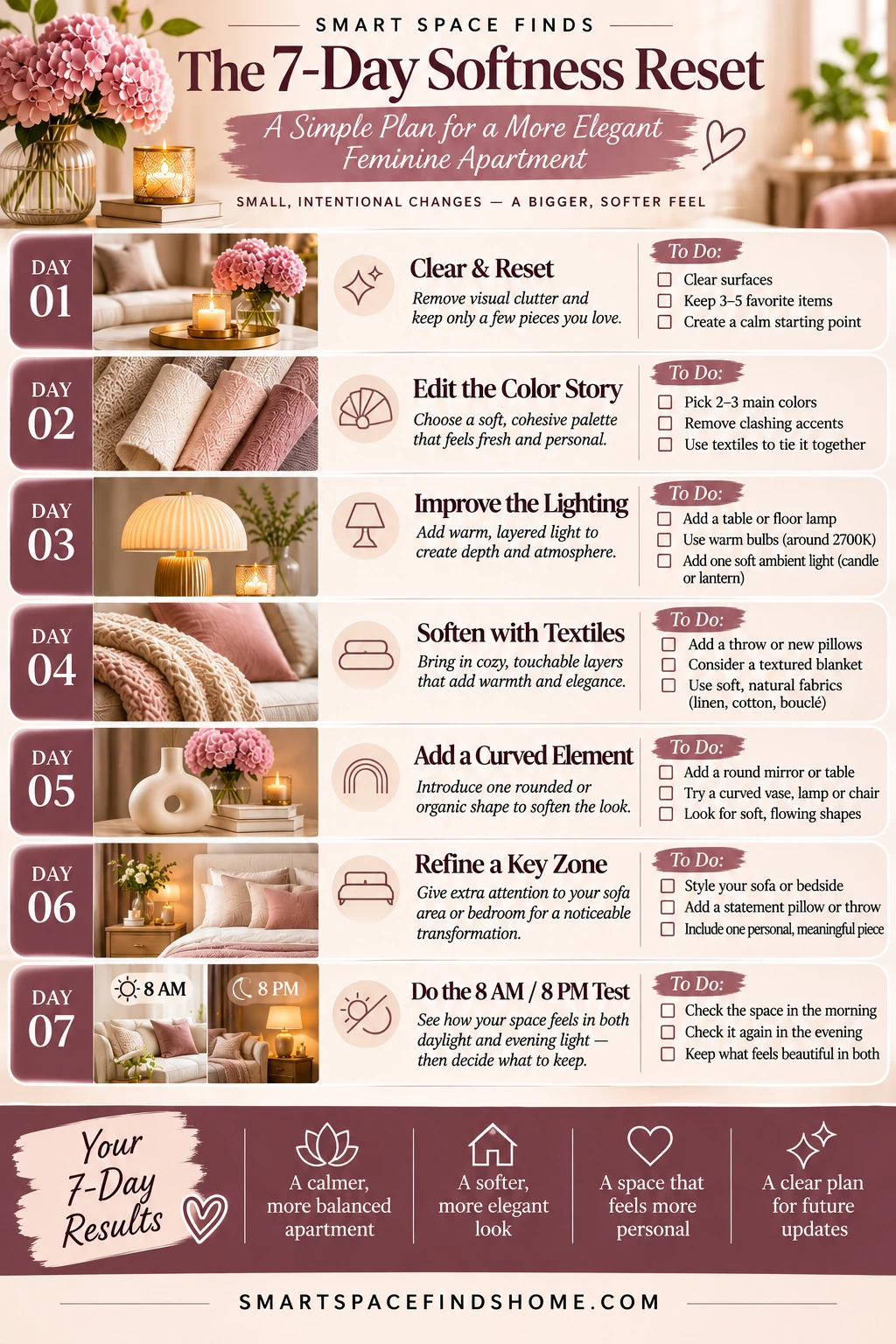
A final styling test: beautiful at 8 a.m. and 8 p.m.
In daylight, check whether your curtains permit enough light, whether the colors relate to the floor and whether your main seating area is easy to use. At night, check glare, shadow and the visibility of walking routes. A room that looks lovely in a photograph but frustrates you after sunset needs a functional adjustment, not another decorative layer.
When you share a home, agree on a common foundation and give each person a small area for personal expression. Softness is a design quality, not a requirement that every object communicate the same identity.
Make softness your own
A feminine apartment is not a checklist of colors or objects. It is a home that reflects your tastes, supports your routines and makes room for the things you love. Start with one corner, choose one meaningful improvement and give the result time to settle before changing anything else.
Smart Space Finds editorial note: The design frameworks are practical editorial heuristics, not experimentally validated formulas. Photography illustrates design principles; it does not imply product testing.