
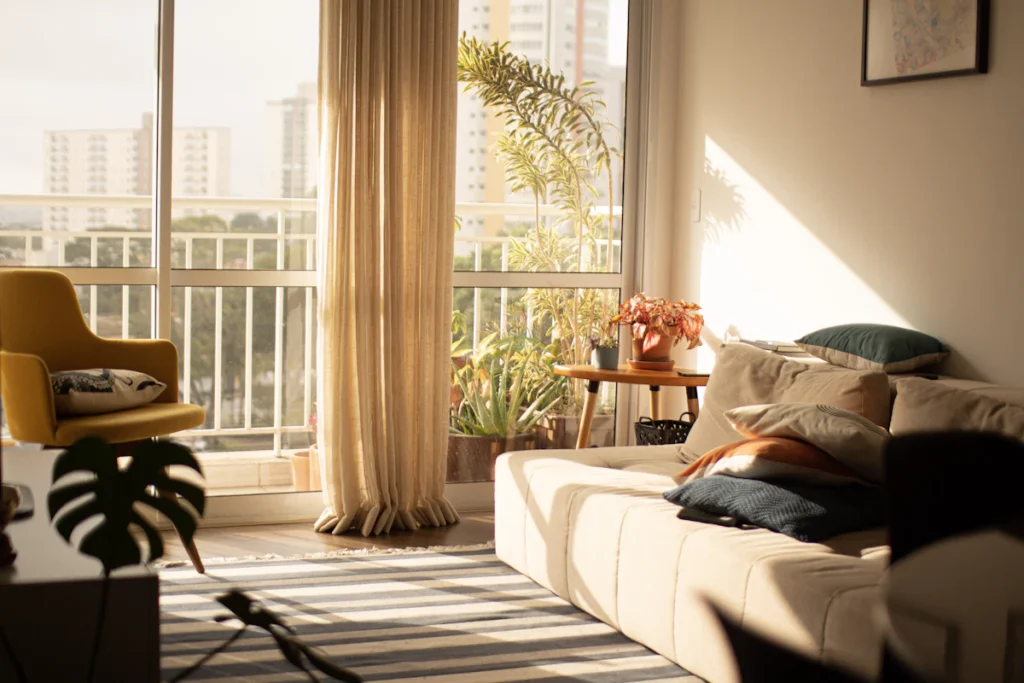
The Apartment Living Journal · Botanical Edition
Less maintenance. More living. A thoughtful guide to greener spaces and calmer routines.
The best low-maintenance indoor plants for apartments are the ones that match your windows, your schedule, and your household—not just your decor. Start with one resilient plant, use a pot with drainage, and check soil moisture before watering. If cats or dogs share your home, plant toxicity should come before aesthetics.
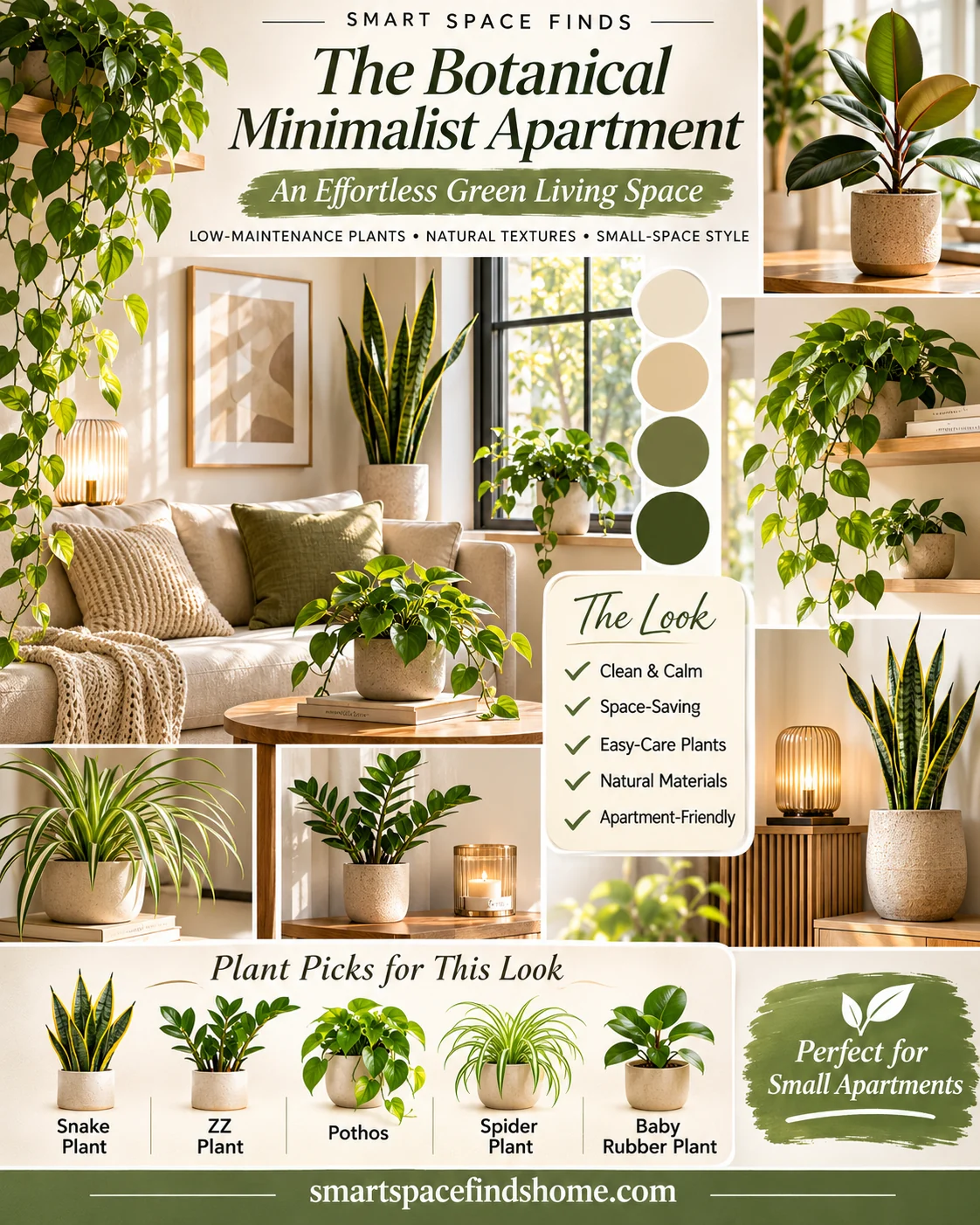
From easy-care snake plants and ZZ plants to pet-conscious spider plants and compact peperomias, this practical guide helps you choose greenery that looks intentional in a small space without turning care into another daily task.
The smartest plant collection starts with the conditions you actually have: window exposure, room temperature, pets, and the time you can realistically spend checking soil. Below, compare resilient species and build a low-effort care routine that works in a rental or small apartment.
In this guide
Compare the plants · Match your light · Pet-conscious picks · Water correctly · FAQs
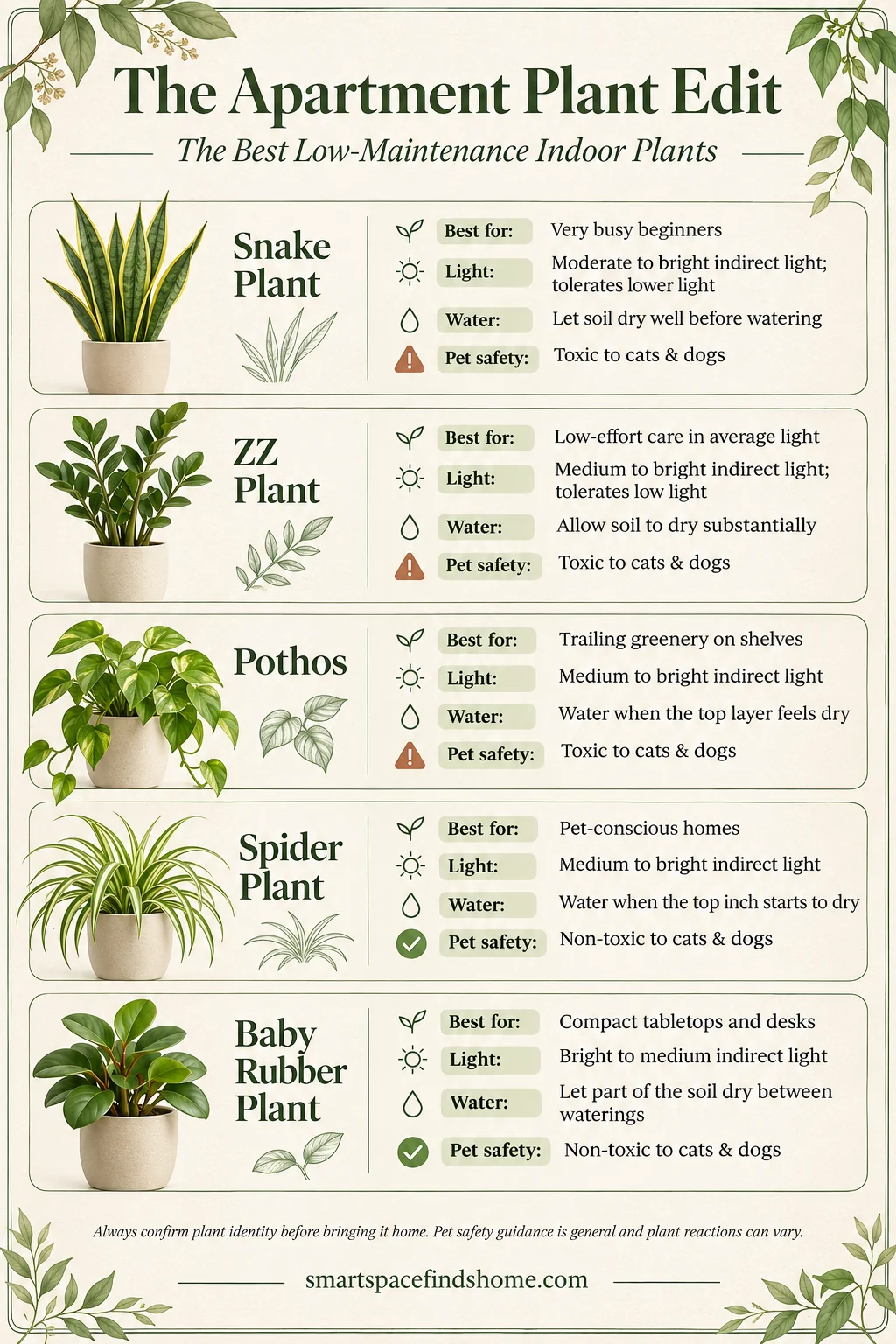
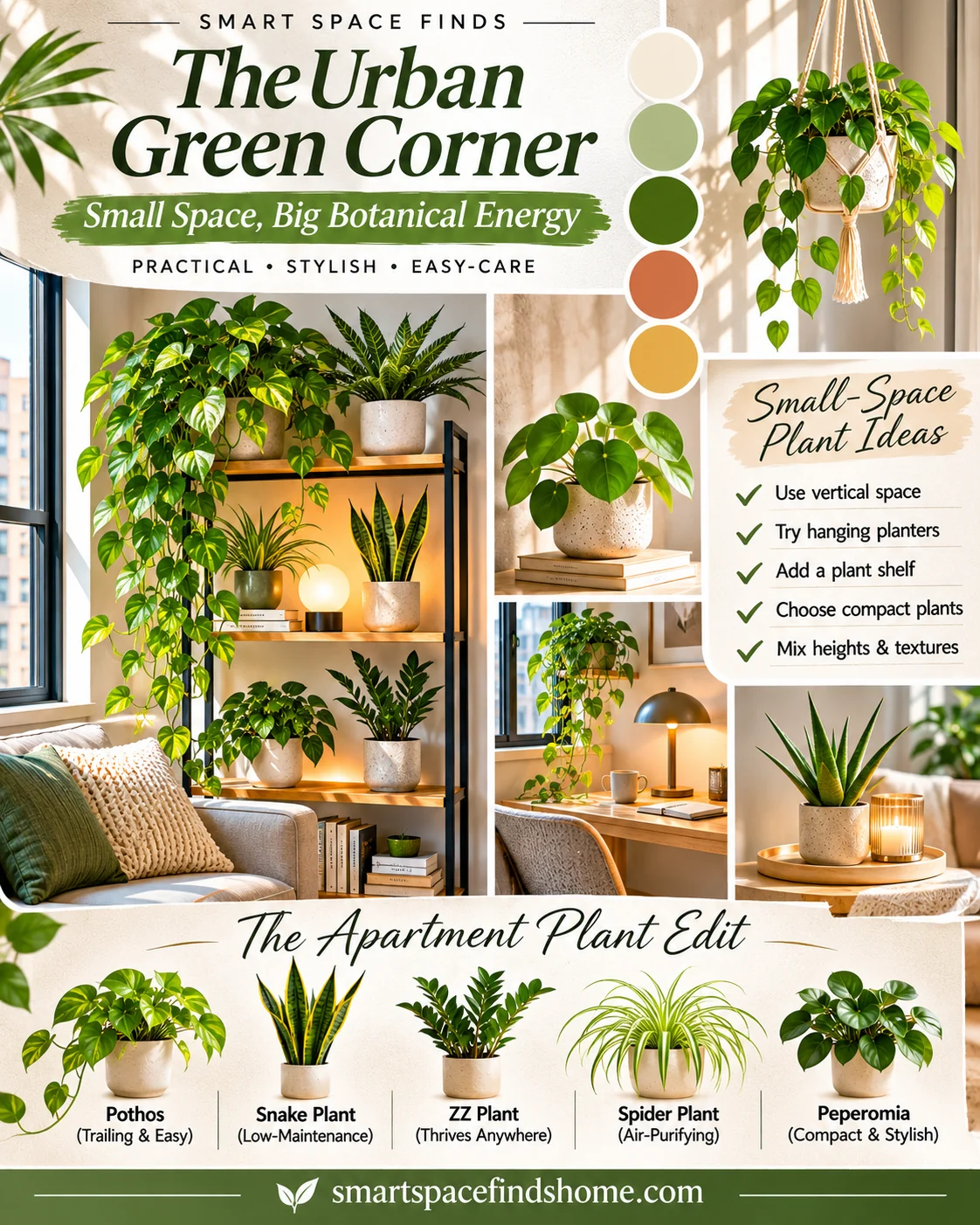
The Apartment Plant Edit
For beginners: start with a spider plant if pet safety is a priority, or consider a snake plant or ZZ plant only in a pet-free household. No houseplant thrives in a truly lightless room without supplemental lighting.
01 / Choose your greenery
At a Glance: Which Easy-Care Houseplant Fits Your Apartment?
Think of the chart below as a starting point, not a universal watering schedule. Light levels, soil, pot size and season all change what an individual plant needs.
| Plant | Best placement | Watering approach | Cats and dogs |
|---|---|---|---|
| Snake plant | Moderate to bright indirect light; tolerates lower light | Let mix dry well between waterings | Toxic |
| ZZ plant | Indirect light; slower growth in dim rooms | Allow substantial drying | Avoid with chewing pets |
| Pothos | Medium to bright indirect light | Let upper soil partly dry | Toxic |
| Spider plant | Medium to bright indirect light | Check upper soil before watering | ASPCA: non-toxic |
| Peperomia (verify species) | Medium to bright filtered light | Allow top layer to dry | Verify botanical species |
Safety note: “Non-toxic” does not mean edible or guaranteed free of stomach upset. Always check the exact botanical name against an authoritative veterinary database before purchasing.
The Best Low-Effort Plants by Lifestyle
For a bright, pet-conscious apartment: spider plant
Spider plants (Chlorophytum comosum) are a practical first choice for a sunny-but-not-scorching shelf or hanging planter. The ASPCA lists them as non-toxic to cats and dogs. Give them bright indirect light, a draining pot, and water when the upper potting mix has begun to dry. Non-toxic does not mean edible: chewed leaves can still cause digestive upset.
For a compact desk or narrow shelf: baby rubber plant
The baby rubber plant (Peperomia obtusifolia) has neat glossy leaves and a compact silhouette. It prefers bright filtered light and a well-drained mix; let the top layer dry rather than keeping roots wet. The ASPCA lists this specific species as non-toxic to cats and dogs. Do not confuse it with the unrelated rubber tree (Ficus elastica), which has different pet-safety guidance.
For an occasionally forgotten watering check: snake plant
Snake plants can cope with a drier potting mix and inconsistent watering, but they are toxic to cats and dogs if eaten. Use them only when household exposure risks have been carefully considered. Low-light tolerance is not permission to place one in a dark, windowless room.
For a pet-free apartment with moderate indirect light: ZZ plant
ZZ plants store water in thick underground rhizomes and typically need time to dry between waterings. Their leaves contain irritating calcium oxalate crystals; avoid them where pets or children may chew foliage. Poor light slows growth and makes overwatering more likely.
02 / Read the room
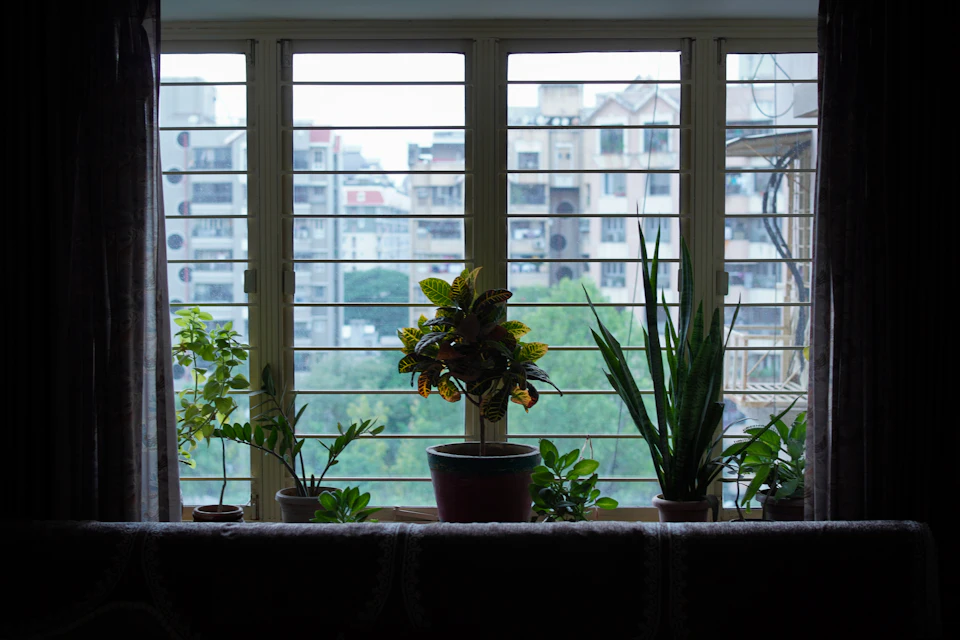
Evaluate the Actual Light
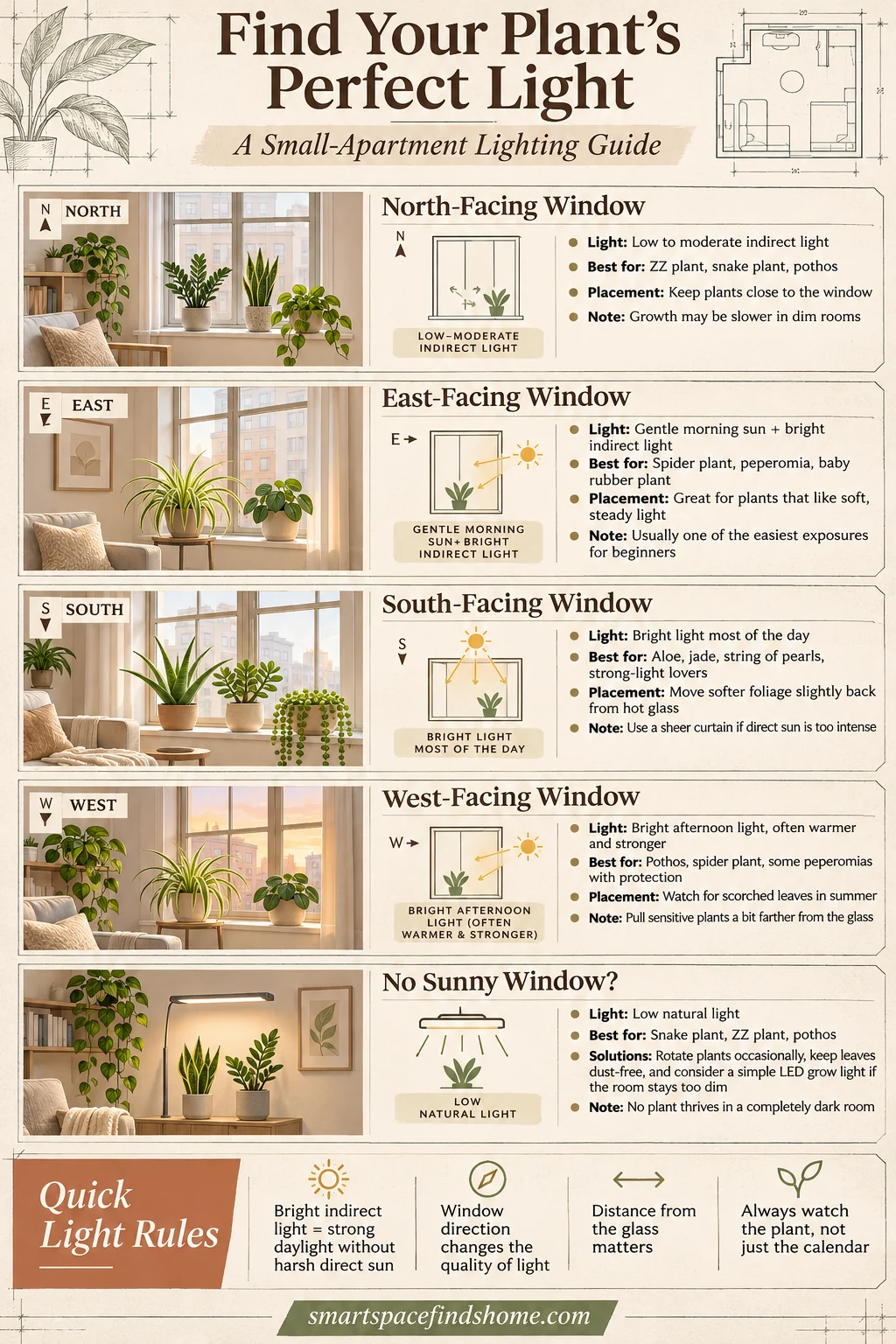
Low maintenance starts with matching a plant to available light, not buying the most fashionable species. Spend a few days observing when sun reaches each potential location and whether neighboring buildings shade the windows. Bright indirect light is different from direct midday exposure. North-facing rooms may need species tolerant of lower light, while hot south-facing windows can burn leaves. A plant described as low-light tolerant still needs enough illumination to remain healthy. Avoid putting a pot in a dark bathroom simply because it looks appealing in photographs. Light is the foundation of any realistic care routine.
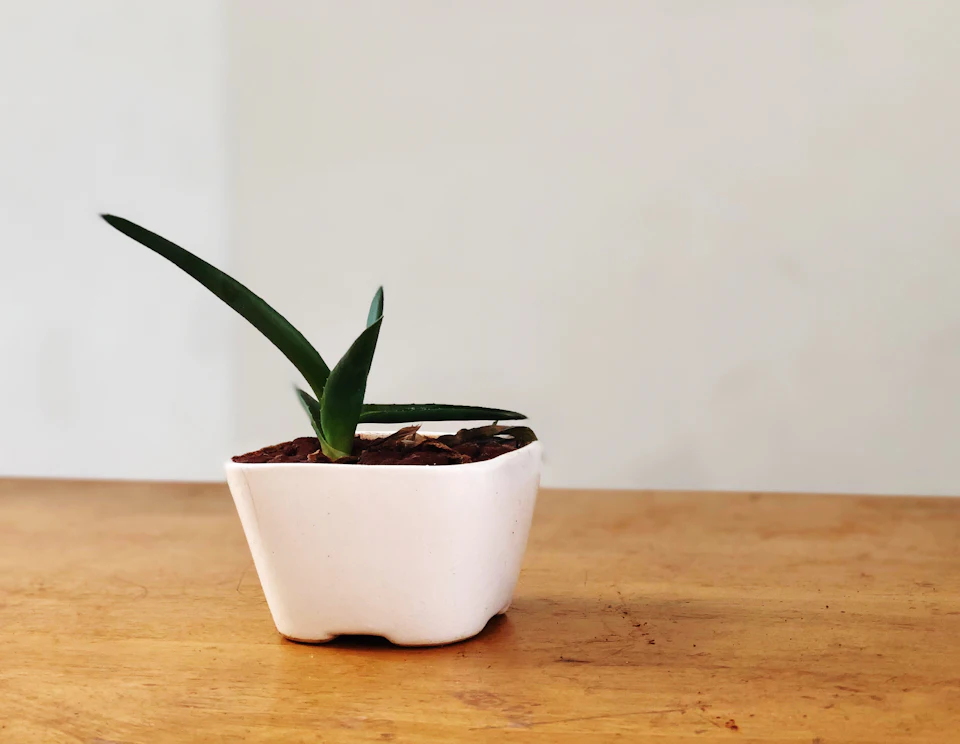
Try a Snake Plant
Many snake plants tolerate irregular watering and a range of indoor light conditions, although growth slows in dim locations. Use a suitable free-draining potting mix and a container with drainage. Let the medium dry appropriately rather than watering on a fixed calendar. Root rot is more common than drought damage when a snake plant is kept constantly damp. Keep it away from prolonged cold drafts. Snake plants can be toxic if eaten by pets, so consider household safety before purchasing one. A sturdy stand or inaccessible position may not fully remove pet exposure risks.
Consider a ZZ Plant
The ZZ plant is appreciated for glossy foliage and tolerance of periods between watering. It still needs some useful indoor light and a suitable pot with drainage. In a low-light corner, soil may stay wet for longer, so check moisture before adding water. Do not leave the nursery pot sitting in a decorative cachepot filled with runoff. Its thick stems store moisture, but yellowing leaves can signal several problems including excessive watering. ZZ plants are toxic if chewed, making them unsuitable for some homes with curious animals or small children.
Pothos for a Bright Shelf
Pothos vines can adapt to indirect light and may trail attractively from a high shelf. They perform better when allowed to dry partly between waterings than when the soil stays saturated. Prune long vines if they interfere with furniture or become difficult to inspect for pests. Place pots securely so trailing stems cannot pull the container down. Pothos is toxic to pets, so do not assume a hanging planter makes it safe in a home with climbing cats. A modest plant on a stable shelf often provides enough greenery without turning the room into a jungle.
A Spider Plant for Softer Foliage
Spider plants offer arching leaves and often produce small plantlets. They appreciate suitable indirect light and a watering routine that avoids permanently waterlogged soil. Browning leaf tips may relate to several care conditions; inspect watering, mineral accumulation and dry indoor air before changing products. Remove dead material and keep the pot well drained. Spider plants are generally considered non-toxic to cats and dogs, though chewing any houseplant can still cause stomach upset. Verify current pet-safety guidance for the particular plant before bringing it home.
The simple planter rule: select a drainage pot first and a decorative outer vessel second. Empty the outer vessel after watering; beautiful containers should protect roots as well as furniture.
Choose the Right Pot
Decorative baskets and glazed ceramic containers can conceal a nursery pot, but water needs a route to drain. Keep the plant in an inner pot with suitable holes and empty water collected in the outer vessel after watering. Choose a container sized for the root system rather than jumping to a huge pot that stays damp for weeks. Place a protective saucer beneath porous pots, especially on timber furniture. A heavy top-heavy plant may need a more stable base. The best container keeps roots healthy and protects household surfaces, not merely a Pinterest-ready arrangement.
The Botanical Essentials Edit · A
The Perfect Plant Setup
Build a healthier foundation with drainage-first essentials.
Affiliate disclosure: As an Amazon Associate I earn from qualifying purchases. This module contains affiliate links.
Where to Put Plants in a Small Apartment
North-facing window: choose a plant tolerant of lower indirect light, but confirm that daylight reaches the foliage. East-facing window: morning sun is often favorable for spider plants and peperomias. South- or west-facing window: move tender foliage back from hot glass or soften harsh direct sun with a sheer curtain. Window orientation alone is not enough: nearby buildings, season and distance from the glass all matter.
Windowless bathroom or hallway: living plants need adequate artificial grow lighting; an ordinary decorative ceiling light may not provide enough usable light. Follow the grow light manufacturer’s guidance on distance and daily duration.
The Botanical Essentials Edit · C
Better Light, Healthier Plants
Practical grow-light choices for apartments with limited natural light.
Affiliate disclosure: As an Amazon Associate I earn from qualifying purchases. This module contains affiliate links.
03 / Care, simplified
Water by Soil Condition, Not the Calendar
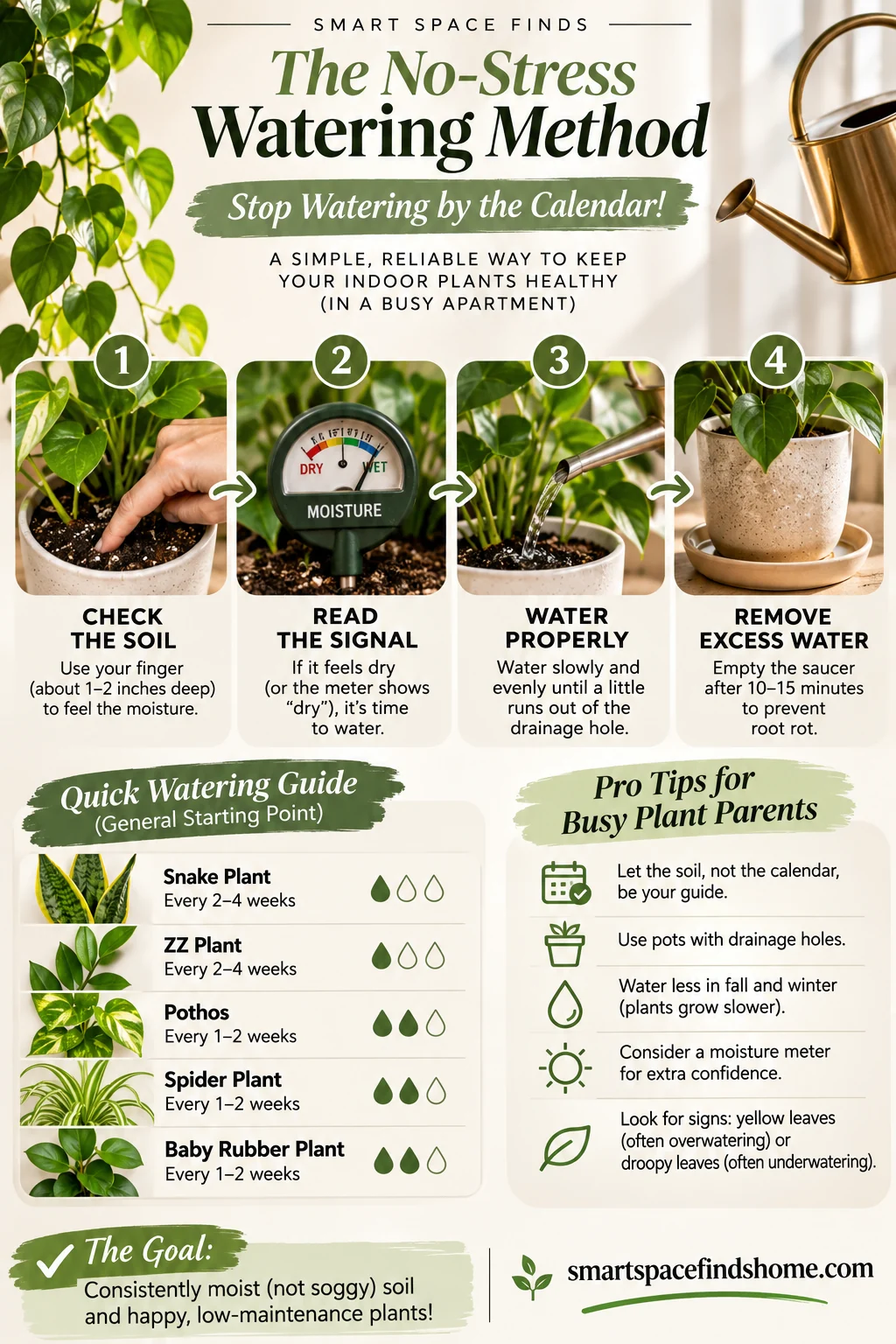
A reminder can help you inspect plants, but it should not automatically trigger watering. Feel the potting medium at an appropriate depth and learn how its weight changes as it dries. Light, season, room temperature and pot size all affect how quickly a plant uses moisture. In winter, many indoor plants need less frequent watering as growth slows. Water thoroughly when appropriate, let excess drain and empty the saucer or cover pot. Avoid misting as a substitute for proper care. A weekly two-minute check is more useful than an inflexible schedule.
Keep Plants Away From Heat and Drafts
Radiators, heating vents, frequently opened balcony doors and cold window glass can all stress otherwise resilient plants. Measure the shelf or corner before positioning a pot so leaves do not touch a heater. Sudden changes in temperature and strong drafts can cause damage. Keep plant leaves away from curtains that might restrict airflow or become damp. If you move pots seasonally, introduce significant light changes gradually to reduce shock. A plant located where it can be inspected and watered conveniently is more likely to thrive than one hidden behind furniture.
A Routine for Busy Weeks
Pick one day each week to inspect leaves, soil moisture and drainage trays. Rotate a plant occasionally if its growth leans strongly toward a window, and remove yellow or dead leaves with clean tools. Check the undersides of leaves for pests before they spread. If work travel is frequent, choose fewer species with similar needs instead of a collection requiring different daily care. Ask someone to inspect plants for extended absences rather than leaving saturated pots behind. The goal is sustainable greenery that supports your lifestyle without becoming another demanding chore.
Know the Warning Signs
Yellow foliage can result from overwatering, insufficient light, natural leaf aging or pests; one symptom rarely gives a certain diagnosis. Brown dry edges may reflect inconsistent moisture or dry air. Soft stems and sour-smelling wet soil can indicate root problems. Inspect the whole plant before applying fertilizer, pesticides or home remedies. Isolate a new or visibly infested plant while determining an appropriate response. Avoid buying treatments automatically without identifying the issue and checking product guidance.
Start With One Plant
A small apartment gains visual life from one healthy specimen placed well, not from ten stressed plants scattered across shelves. Choose a species based on actual light and household safety, then learn its response to watering over several weeks. Once that routine feels manageable, add another plant with similar needs if you want more greenery. This approach reduces waste and makes it easier to notice pests or soil problems early. A coordinated pot color can connect plants to a cozy interior without requiring elaborate plant stands or decorative accessories.
04 / A safer home
Pet and Child Safety Comes First
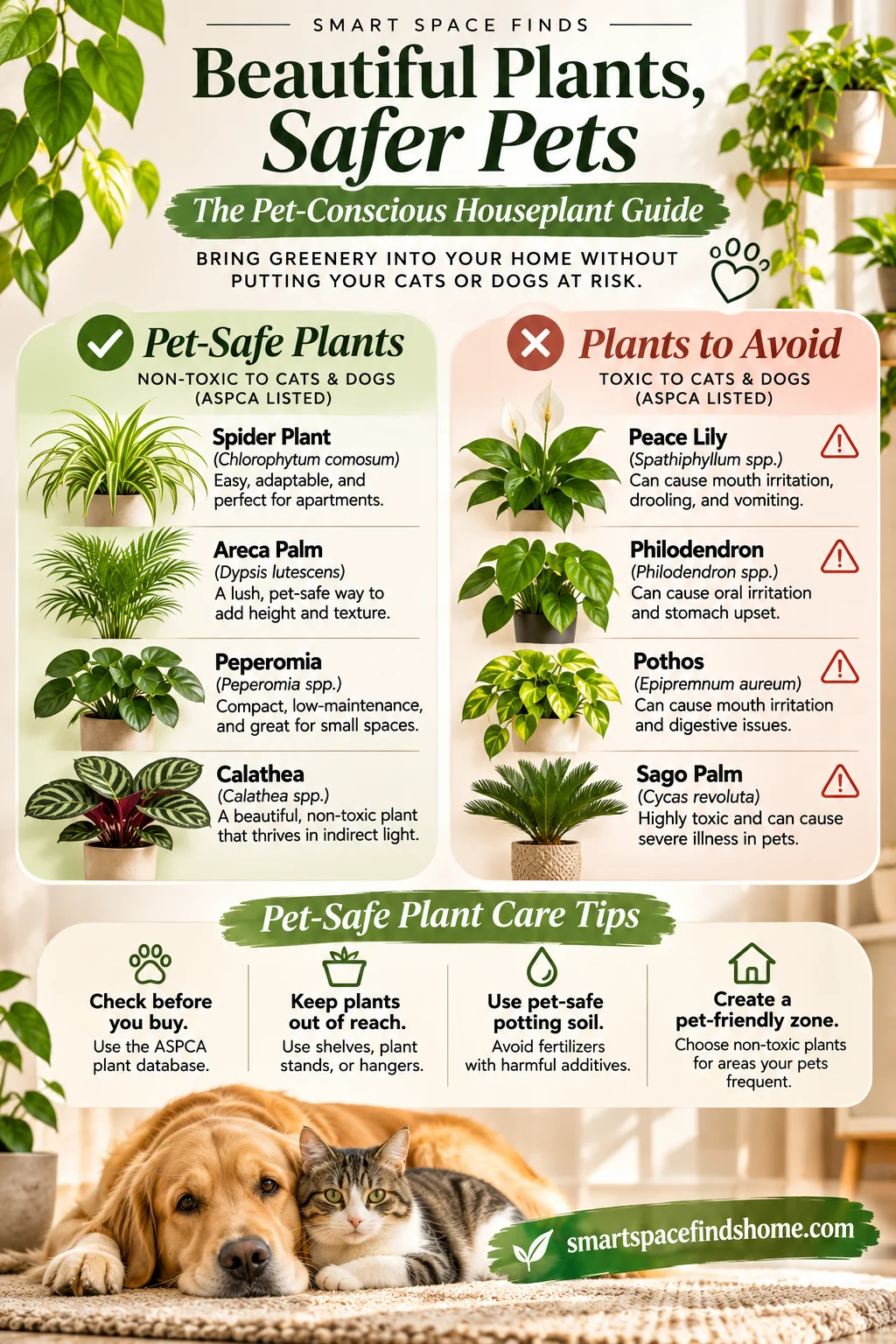
A botanical name is more useful than a shop label. The baby rubber plant (Peperomia obtusifolia) is not the same plant as the rubber tree (Ficus elastica). If a plant cannot be identified confidently, do not assume it is suitable for a home with animals that chew leaves.
Common resilient plants such as pothos, ZZ plants and snake plants may be toxic if chewed. Check the precise species and reliable veterinary or poison-center information before purchasing plants for a household with pets or children. Avoid assuming a tall stand or high shelf makes a toxic plant inaccessible. Plant labels can use broad common names that cover several species, so confirm the botanical identity where possible. Select safer alternatives when necessary and seek professional guidance promptly if an exposure occurs. Practical home styling should never compromise household safety.
05 / Style with intention
Small-Apartment Plant Styling Without Clutter
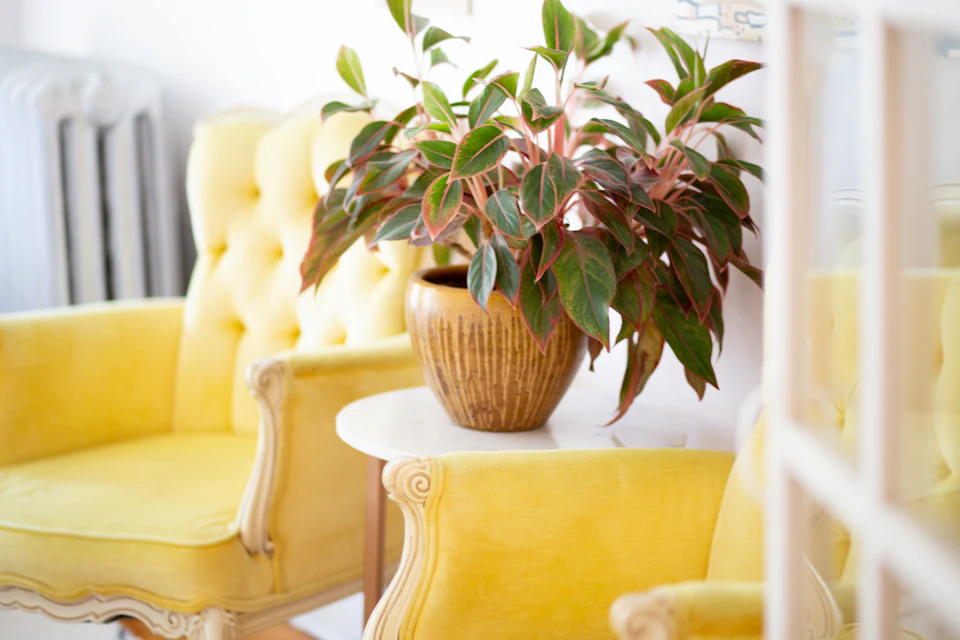
A single statement plant
Use one medium-size specimen in a well-proportioned planter beside a bright window. Leave clearance around pathways and furniture; never block a heater, outlet or emergency exit. A coordinated cachepot makes inexpensive greenery feel curated.
A narrow shelf or windowsill
Choose a compact plant such as a correctly identified peperomia where the light fits. Use a stable saucer or removable liner to protect painted wood, and avoid precarious heavy pots or loose trailing stems. For related display ideas, see our renter-friendly studio room divider guide and small-apartment wellness corner ideas.
A softer bedroom corner
Keep the composition restrained: one healthy plant, a neutral pot and a window with adequate natural light. Place it away from curtains and bedding that could stay damp. Explore additional calming bedroom ideas.
The Botanical Essentials Edit · D
The Small-Apartment Styling Edit
Thoughtful ways to display greenery without crowding a room.
Affiliate disclosure: As an Amazon Associate I earn from qualifying purchases. This module contains affiliate links.
Seven Common Indoor Plant Mistakes—and Their Fixes
- Watering every Sunday: check the soil and pot weight weekly, but water only when needed.
- Calling a dark room “low light”: low-light tolerance is not the same as thriving without usable light; consider a suitable grow light.
- Leaving runoff in a decorative pot: empty it after watering to protect roots.
- Repotting into a huge container: move up gradually when roots require more space.
- Placing plants beside heat or cold drafts: use a more stable location.
- Assuming hanging means pet-safe: cats may climb and vines may drop.
- Buying treatment before diagnosing: inspect light, roots, moisture and pests before intervening.
A care ritual, not another chore
One weekly check-in is enough to build consistency. Inspect the soil, leaves and drainage; only water when the plant actually needs it. A check-in is not a watering appointment.
The Five-Minute Weekly Plant Reset
Minute 1: check leaf color and look underneath foliage for pests. Minute 2: test soil moisture for each species. Minute 3: inspect drainage and empty any standing water. Minute 4: remove dead leaves and wipe visible dust if appropriate. Minute 5: assess whether the location still gets adequate light; make small adjustments rather than moving pots constantly.
The Botanical Essentials Edit · B
The Five-Minute Plant Care Kit
Simple tools for low-effort plant care and maintenance.
Affiliate disclosure: As an Amazon Associate I earn from qualifying purchases. This module contains affiliate links.
The considered essentials
The Minimal Plant-Care Toolkit
Skip complicated gadgets at first. A lightweight nursery pot with drainage holes, a stable waterproof saucer or cachepot, a suitable potting mix and a simple watering can cover most beginner needs. A moisture meter can be a secondary clue, but inexpensive meters are not definitive: confirm with finger checks, pot weight and the plant’s appearance. A small LED grow light is worth considering only where daylight is genuinely insufficient.
Pet-first plant selection
Non-toxic does not mean edible. Botanical names matter: spider plant (Chlorophytum comosum) and baby rubber plant (Peperomia obtusifolia) are generally listed as non-toxic for cats and dogs, while snake plant, ZZ plant and pothos should be avoided where pets may chew foliage.
If Your Cat or Dog Eats a Houseplant
Remove access to the plant, keep the plant label or a clear photograph for identification, and contact your veterinarian or an animal poison-control service promptly. Do not induce vomiting or try home remedies unless directed by a veterinary professional. For species-specific information, consult the ASPCA toxic and non-toxic plant database.
06 / Answers for real apartment life
Frequently Asked Questions
Which plant needs the least attention?
Snake and ZZ plants are often forgiving of irregular watering, but both need proper light, drainage and consideration of pet toxicity.
Can a plant survive in a room without windows?
Plants still require adequate light; a suitable artificial grow light may be needed where daylight is insufficient.
Are low-maintenance plants also safe for pets?
Not necessarily. Snake plants, pothos and ZZ plants are poor choices for animals that chew foliage. ASPCA lists spider plants as non-toxic to dogs and cats. Confirm the exact species, not just the store label, and call a veterinarian promptly if an exposure is suspected.
What is the easiest houseplant for a small low-light apartment?
Snake and ZZ plants tolerate relatively low indoor light, but both require some illumination and are inappropriate for households where pets may chew them. An actual windowless room usually requires a suitable grow light.
Should I water every Sunday?
Inspect soil moisture weekly, but water only when the particular species and growing conditions require it.