
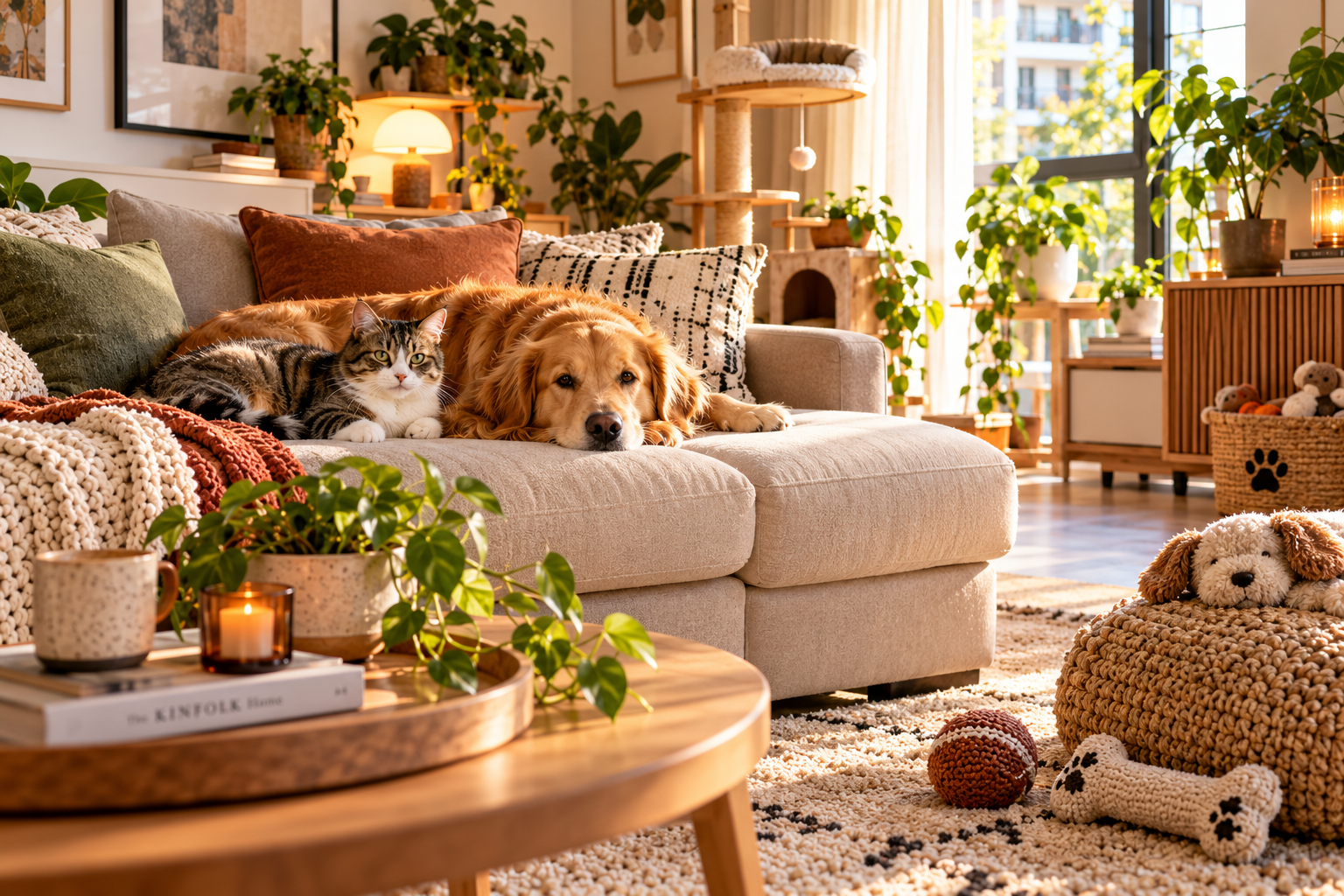
A beautiful living room should work for everyone who lives there—including pets. In a small home, that means choosing furniture, fabrics and storage that tolerate everyday paws without sacrificing your personal style. These pet-friendly living room ideas focus on practical decisions: washable surfaces, clear circulation routes, inviting resting spots and thoughtful safety details.
Affiliate disclosure: As an Amazon Associate, Smart Space Finds earns from qualifying purchases. We may earn a commission from product links at no extra cost to you.
SMART SPACE FINDS · ROOM DESIGN GUIDE
A Beautiful Room, With Pets in Mind
Removable covers, washable rugs and simple surfaces.
Secure cords, furniture, plants and loose decor.
Designate calm pet zones without blocking the room.
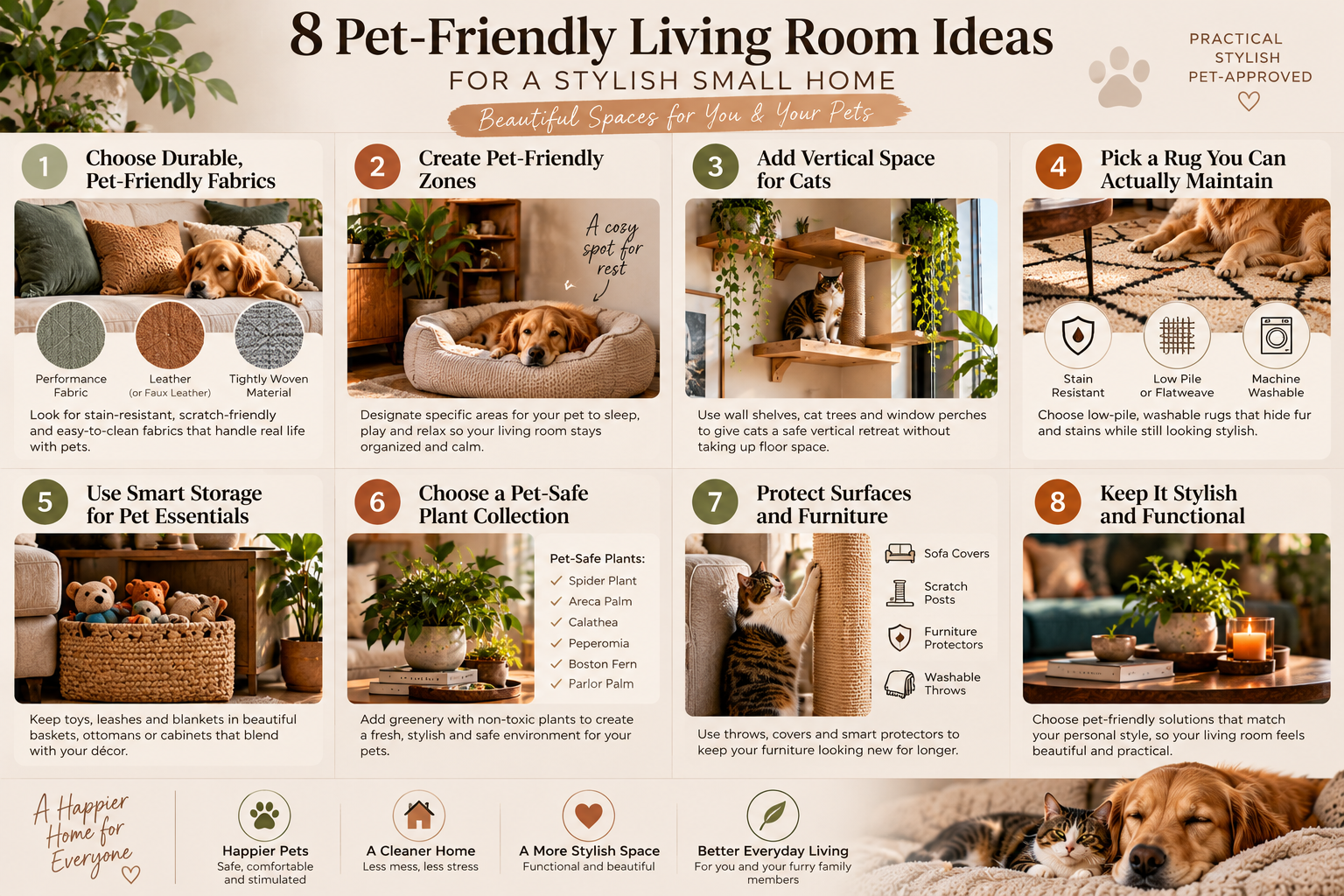
1. Choose Upholstery for Real Life, Not Just the Showroom
For a pet-friendly living room, your sofa is usually the most important investment. Look beyond the color swatch: ask how the upholstery can be cleaned, how tightly the fabric is woven, whether cushions have removable covers and whether the manufacturer publishes a specific care code. No fabric is genuinely scratch-proof or stain-proof.
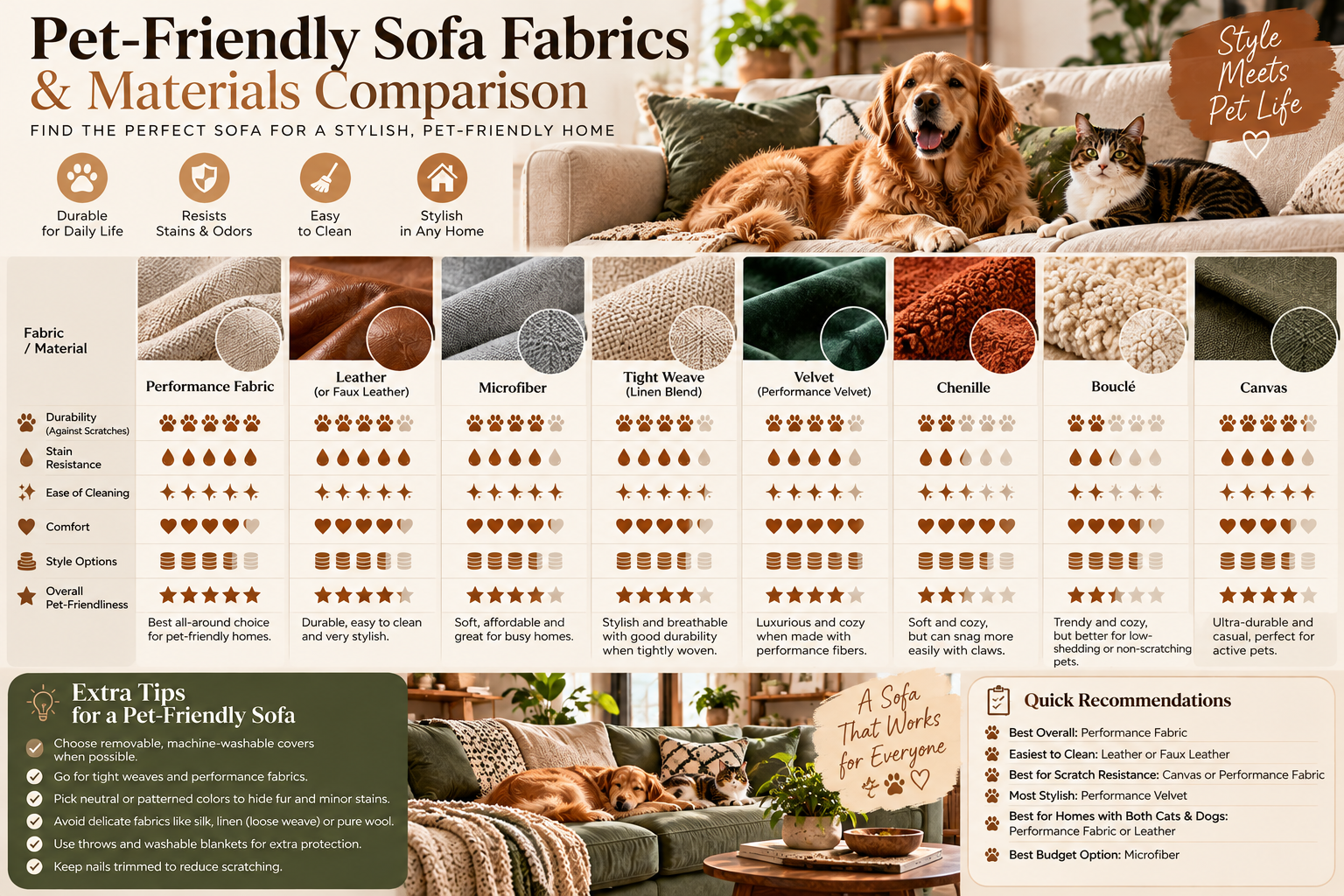
Performance fabrics, tightly woven textiles and washable covers
A closely woven fabric is often easier to maintain than a loosely looped texture that can catch claws. High-quality performance upholstery may resist everyday spots, but resistance varies by material and treatment. Machine-washable slipcovers are especially useful if your dog comes in wet or your cat sheds heavily. Check actual washing instructions before purchasing—some covers are dry-clean-only even when removable.
Velvet can look luxurious, but some finishes attract visible fur or show pressure marks. Bouclé looks appealing in editorial photographs, yet its loops can snag. Leather and faux leather are wipeable but can develop scratches and are not automatically a better choice for climbing cats. Choose based on your animal’s behavior, cleaning preferences and the specific product—not an absolute promise.
| Material | Potential advantage | Watch out for |
|---|---|---|
| Tight-weave upholstery | May reduce snagging | Cleaning code varies |
| Washable slipcover | Easier periodic laundering | Shrinkage and fit |
| Performance textile | Some stain resistance | Check treatment and testing |
| Leather or faux leather | Simple surface wipe-down | Claw marks and surface wear |
| Bouclé / open-loop texture | Soft sculptural appearance | Snagging risk |
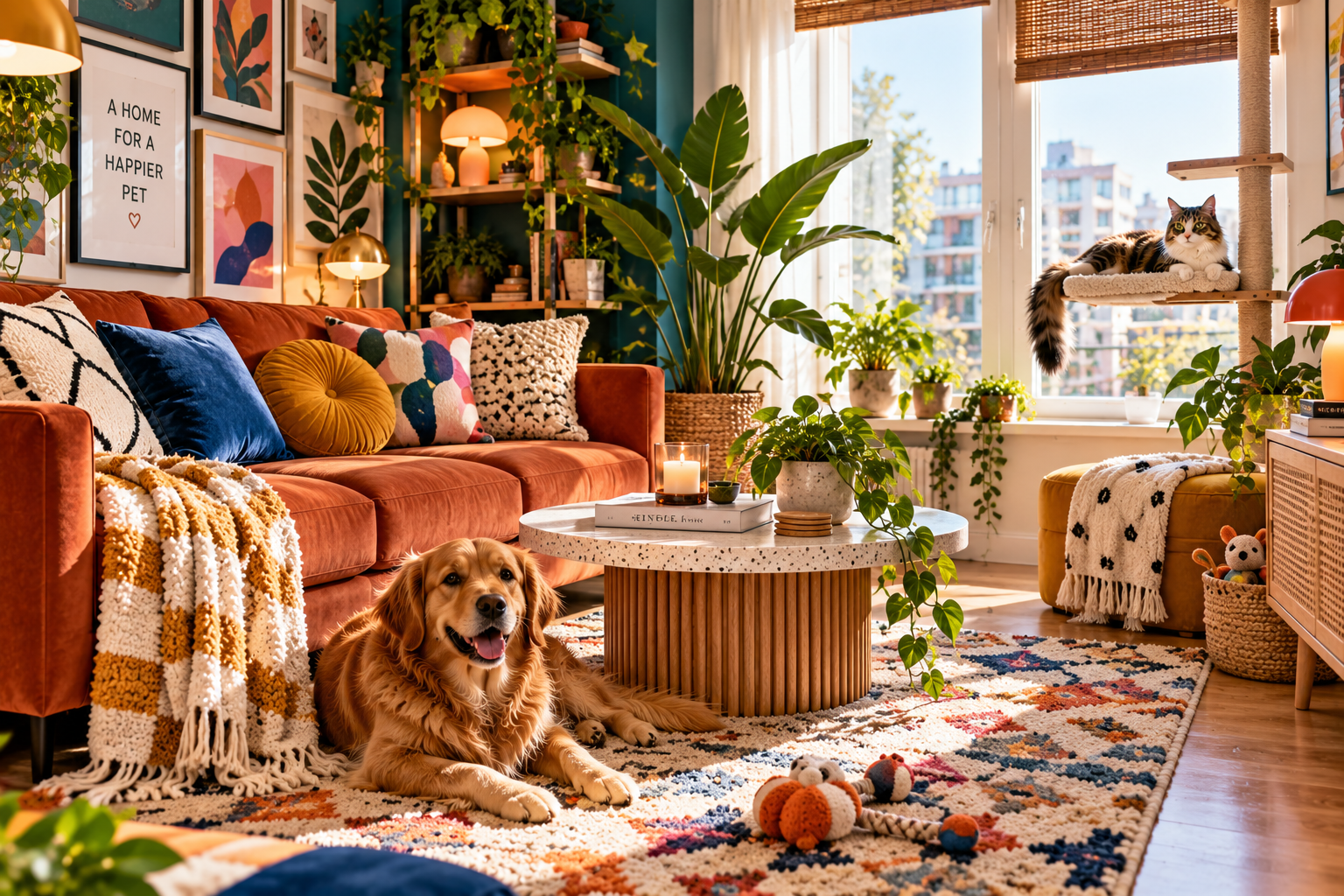
2. Build a Softer Color Palette That Hides Everyday Wear
You do not need dark furniture to live with pets. Mid-tones, textured neutrals and subtle patterns are forgiving choices. Think warm taupe, chestnut, mushroom, muted olive, slate blue or sand. Choose a shade that works with your pet’s fur rather than expecting one color to hide every mark. A tonal woven throw can protect the most-used sofa cushion and add a considered editorial layer.
For contrast, repeat one accent color in two or three places: a cushion, a small artwork and a washable runner. Keep the room’s base palette calm so pet accessories feel incorporated rather than added as an afterthought. For additional inspiration, explore cozy layered lighting in small rooms.
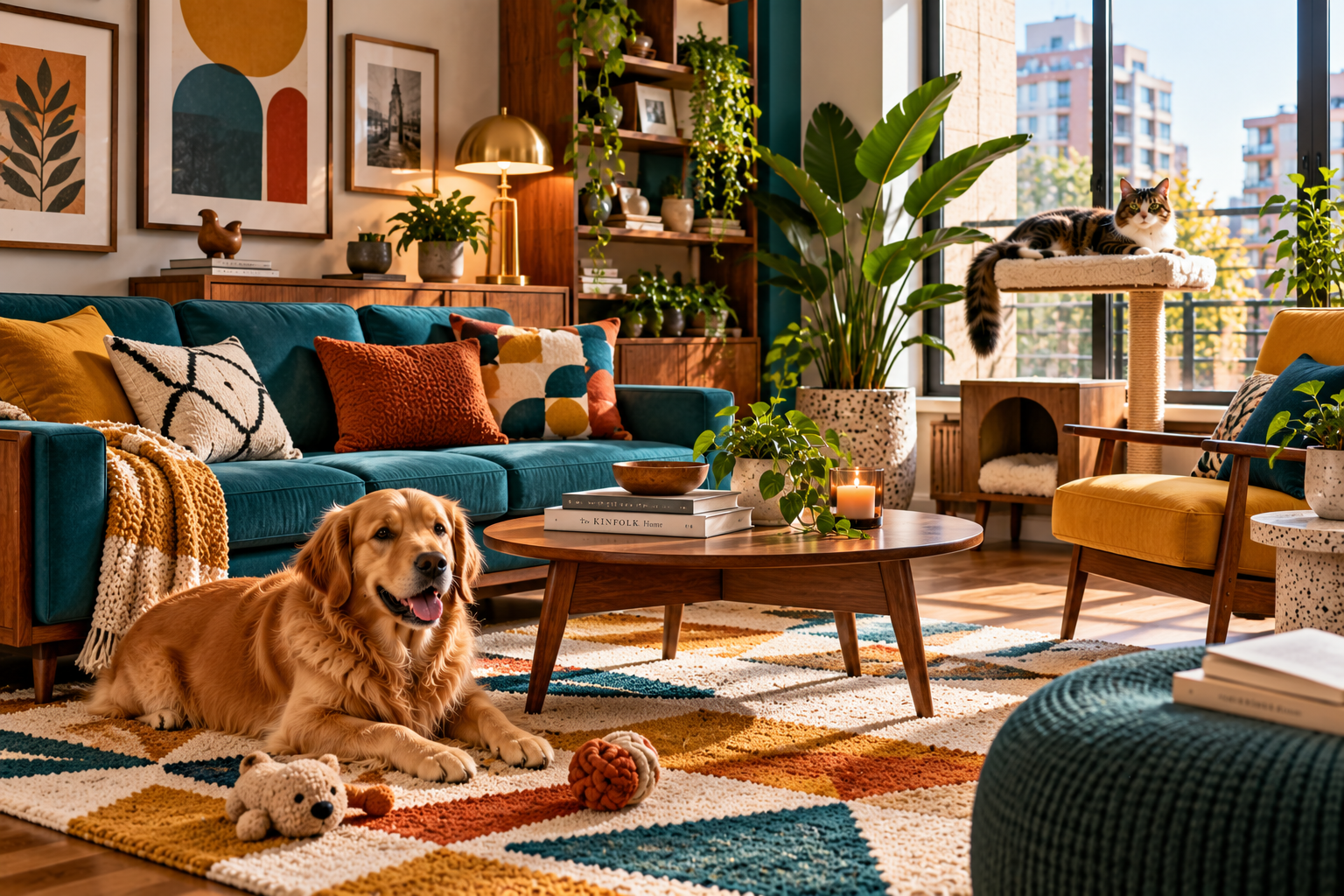
3. Select a Rug You Can Actually Maintain
Rugs make compact rooms feel grounded, but not every rug suits active paws. A low-pile, washable design can be practical for frequent cleaning. Check machine capacity and the rug’s label: “washable” does not necessarily mean it fits a standard home washer. Use a suitable nonslip backing where the floor type and rug maker permit it, especially on slippery surfaces.
Look for a size that anchors the seating zone without creeping into door clearance. A rug that slides, bunches or curls can create a trip hazard for people and animals. In homes with puppies or older pets, clear routes often matter more than a perfectly symmetrical furniture arrangement.
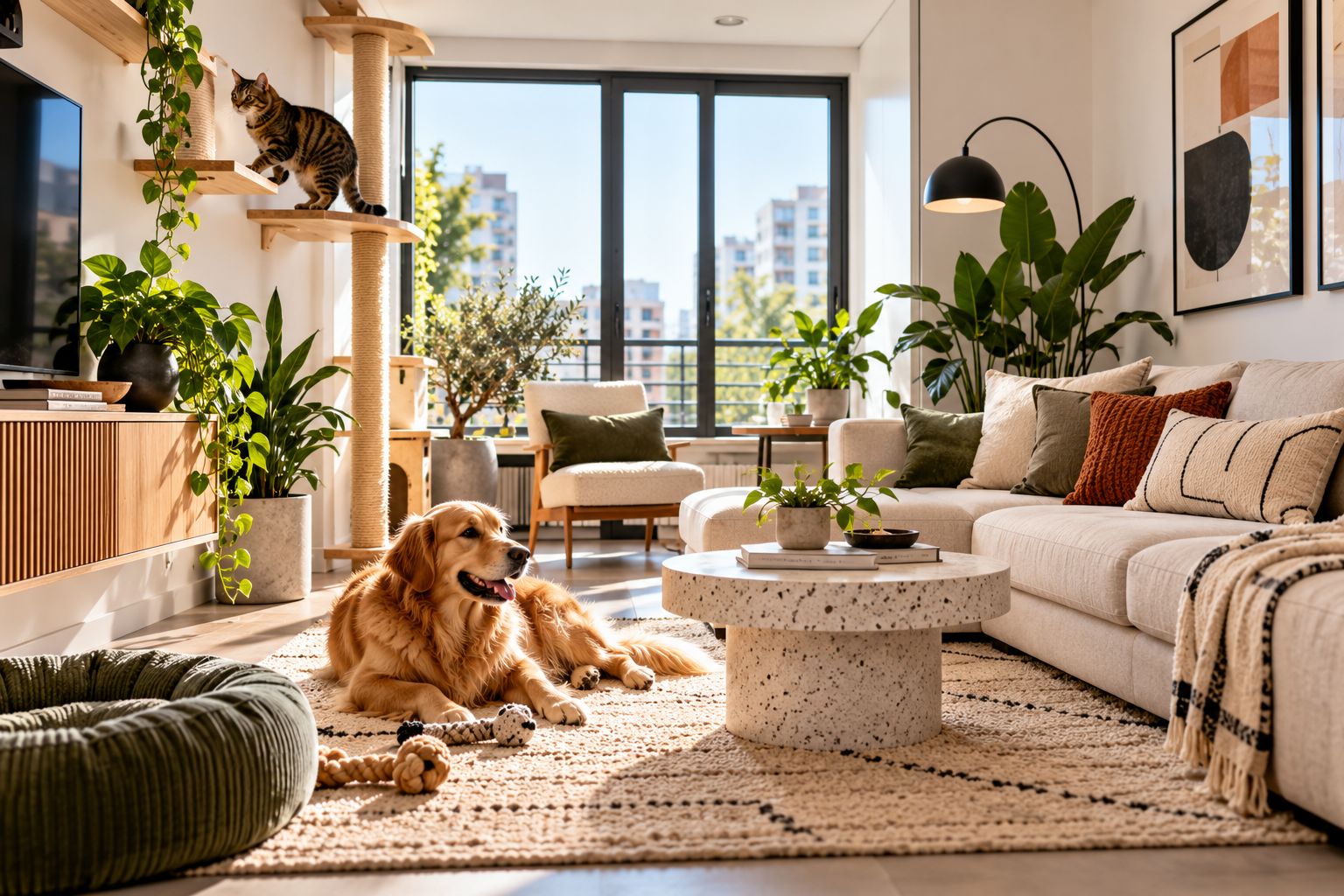
4. Plan a Living Room Layout With Clear Pet Paths
In a small apartment, pets tend to repeat favorite routes: door to sofa, sofa to window, bed to water bowl. Observe these patterns for a few days before rearranging. Leave adequate passages around the coffee table, avoid narrow dead ends behind furniture and give pets a place to settle without crossing the center of every conversation.
Keep the furniture footprint intentional
A compact sofa and nesting tables can be more flexible than a bulky sectional. Choose rounded or softened corners when they make sense for the room, but remember they do not replace supervision or training. Use closed baskets or cabinets for objects that your pets may chew, swallow or scatter.
If you share one room for relaxing and working, consider a low profile storage ottoman to contain throws, grooming accessories or spare washable covers, provided the construction is safe and contents are not accessible to curious animals.
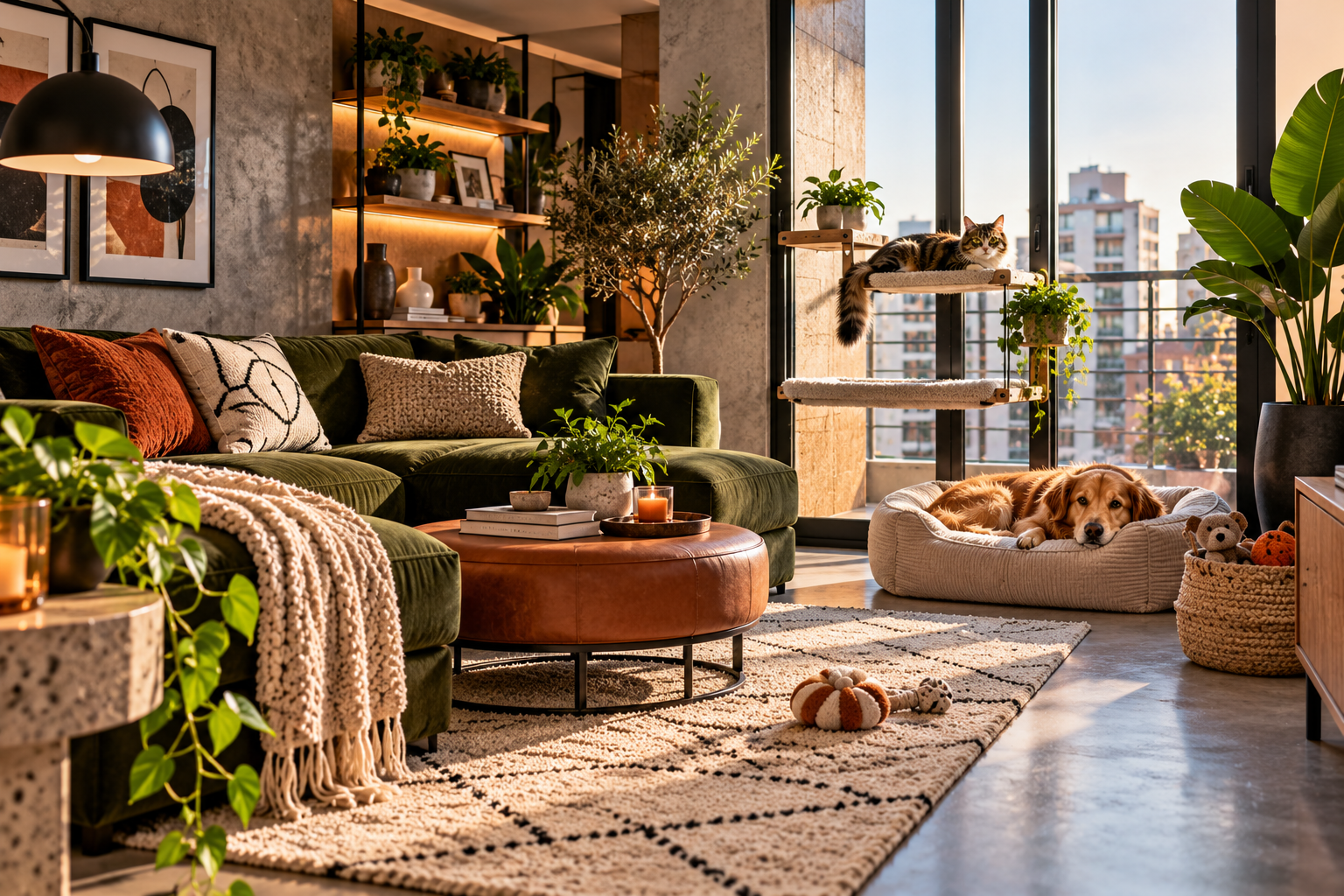
5. Create a Designated Dog Resting Corner
Many dogs settle best in a predictable space away from the highest-traffic route. Try a comfortable washable bed beside, rather than in front of, the sofa. Avoid placing it directly against a radiator, drafty exterior door or speaker. Measure your dog when lying in its preferred position and select a bed large enough to stretch naturally.
Match the bed to the decor without prioritizing appearance over support or easy cleaning. A low-profile rectangular bed in oatmeal or dark olive may blend into the seating area, while an older dog may need firmer support and easier entry. A vet can advise when mobility or pain is a concern.
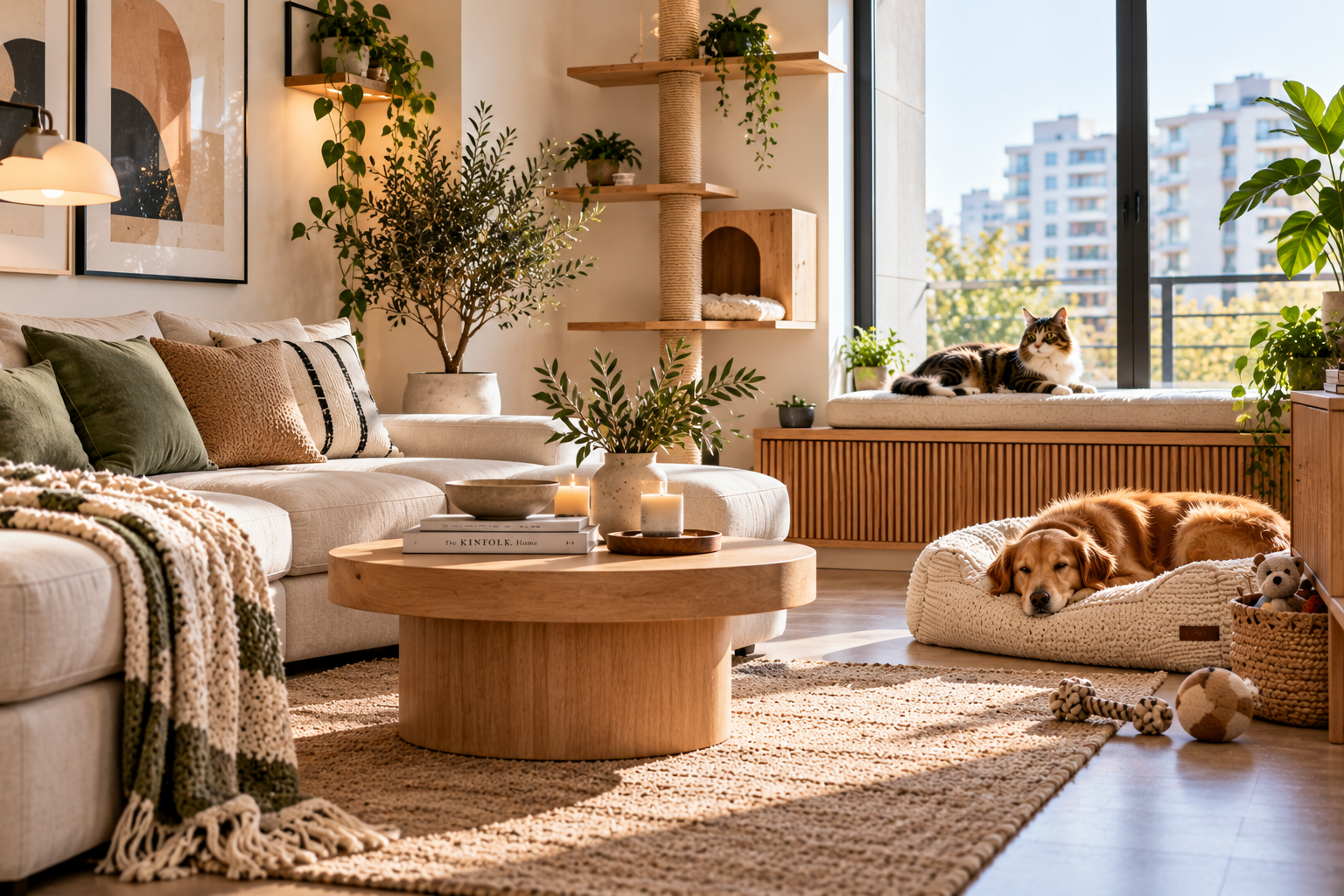
6. Give Cats a Vertical Retreat Without Crowding the Floor
Cats frequently appreciate the ability to observe the room from a raised point and retreat from busy activity. A narrow, stable cat tree or properly installed wall shelf can add vertical enrichment. Avoid unstable bookcases or DIY shelves without verified fixings. The cat should always have a clear route up and down, and any tall freestanding structure should be secured as appropriate.
For a detailed approach to window spots, see our cat-friendly window corner guide. If your home needs a discreet litter solution, browse our small-apartment cat litter box ideas. Keep litter facilities separate from food, sleeping areas and high-traffic seating when possible.
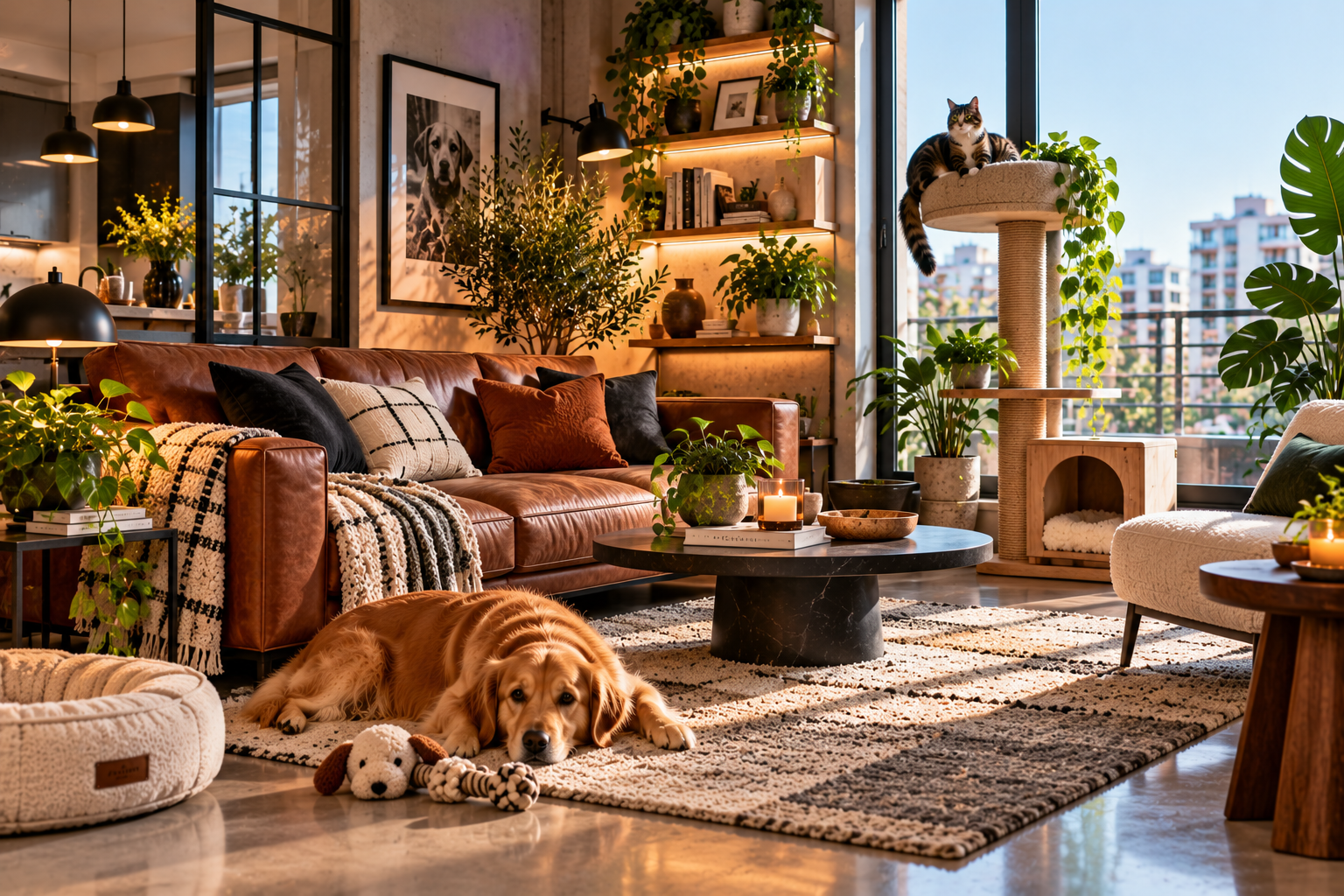
7. Make Pet Toy Storage Part of the Interior Design
One accessible toy basket near the main seating area is usually enough for everyday use. Choose a soft-sided, washable container that is unlikely to tip onto a pet and check for loose handles or fibers that could be chewed. Rotate a few toys rather than leaving everything out. Keep any damaged toys, strings and small pieces out of reach, especially when animals are unsupervised.
Closed cabinetry is best for grooming products, medications and cleaning sprays. A wall hook can keep leashes handy near the entrance, but avoid dangling cords at pet height. Our small-entryway organization guide offers related ideas for compact homes.
8. Use Curtains, Lighting and Decor More Carefully
Fabric panels should hang clear of pet beds and feeding stations, and blind cords should be secured beyond reach. Choose stable lamps with guarded or inaccessible wiring. Keep candles, diffusers and fragile ceramic objects where an animal cannot knock them down; essential oils and scented products should not be assumed safe for all pets.
Low-profile, battery-powered accent lighting can help if exposed cables are a recurring problem, provided batteries and housings are secure and inaccessible. Decorative houseplants also require attention: verify every species using a reputable animal-toxicity resource before placing it within reach.
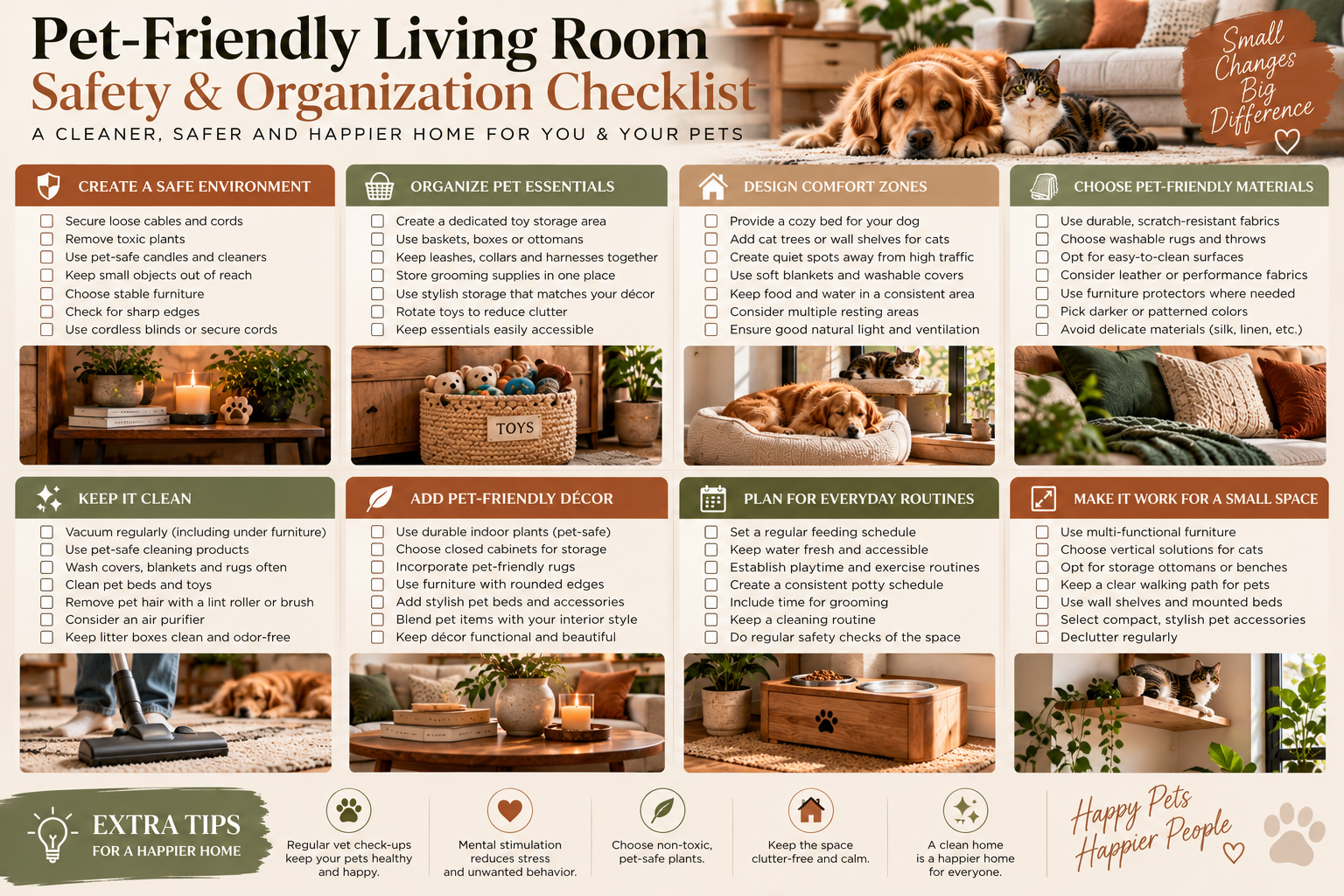
9. Pet-Proof the Living Room Without Making It Look Clinical
Start with hazards before styling. Route electrical cables behind secure covers, anchor furniture where tip risk exists and keep medications, cleaners and small swallowable objects in closed storage. The American Humane pet-proofing guide highlights hanging wires and unstable small objects as common living-room concerns.
Plants deserve particular care. The ASPCA explains that lilies can be especially dangerous to cats and sago palms are hazardous to both cats and dogs. Rather than using a generic “pet-safe plant” label, confirm the botanical name and the species of pet you have. Seek veterinary guidance immediately after suspected toxic exposure.
The 10-Minute Living Room Safety Scan
- Check access to outlets, cords and chargers
- Check curtain and blind cords
- Remove accessible toxic plants and flowers
- Secure tall or unstable furniture
- Put small objects and damaged toys away
- Confirm clear routes to food, water and resting areas
- Review rug grip and slippery flooring
10. Make Cleaning a Low-Effort Routine
Keep one washable throw for your pet’s usual sofa spot, vacuum upholstery using the manufacturer’s care instructions and launder bedding according to the label. Wipe paws when needed and use a pet-appropriate stain-cleaning product tested first on an inconspicuous area. Avoid mixing cleaning chemicals and keep animals away from wet treated surfaces until they are safe to use.
For daily maintenance, put toys back into one basket, shake or brush the throw and remove fur from the most-used seating. Once a week, wash removable textiles as appropriate and check pet furniture for loose fittings, tears or wear. A maintainable room matters more than a room that photographs perfectly for one afternoon.
11. What Is Worth Buying First?
Begin with the biggest daily friction point. If fur and muddy paws dominate, prioritize a washable cover or rug. If your dog is never comfortable, start with an appropriately sized bed. If your cat climbs unstable furniture, a safe purpose-built climbing solution may be more useful than buying decorative storage. These are product categories for consideration, not endorsements of particular Amazon listings.
| Problem | Practical first purchase | What to verify |
|---|---|---|
| Sofa wear | Washable sofa cover | Fit, material care, slipping |
| Hard-to-clean floor | Low-pile washable rug | Cleaning capacity, grip |
| Dog resting in walkway | Supportive compact dog bed | Dimensions, washability |
| Cats climbing furniture | Stable cat tree / platform | Weight limits, fixing, access |
| Pet supply clutter | Closed cabinet / soft storage | Secure storage, materials |
Our editorial approach: We recommend buying only what solves a real problem. If verified Amazon affiliate product cards are added in a later update, they will be clearly disclosed and linked to the exact products rather than generic lookalikes.
12. A Weekend Pet-Friendly Living Room Refresh
- Friday evening: observe your pet’s favorite paths, resting spots and problem areas. Take photos and measure furniture.
- Saturday morning: remove hazards, secure cables, edit clutter and move obstacles away from circulation routes.
- Saturday afternoon: test a new pet bed or resting location using existing bedding and one easy-to-clean textile.
- Sunday: assess light, temperature, noise and how your pet responds. Keep only the changes that make daily life better.
Frequently Asked Questions
What is the best sofa fabric for pets?
There is no single best fabric. A tightly woven, manufacturer-approved cleanable upholstery or a properly washable slipcover can be practical, depending on your cat or dog’s habits.
Can a pet-friendly living room still look luxurious?
Absolutely. Consistent colors, a well-proportioned rug, neatly integrated pet beds and intentional storage can make a small room cohesive rather than cluttered.
What should I avoid with cats in the living room?
Unsecured heavy furniture, accessible cords, unstable climbing surfaces, small chewable objects and plants known to be toxic to cats. Provide appropriate scratching and resting options.
Where should a dog bed go in a small living room?
Choose a calm, comfortably ventilated area near family activity but away from walking routes, hazards and strong heat sources. Observe where your dog naturally settles.
Are washable rugs really worth it?
They can simplify maintenance, but only if the chosen size and construction are suitable for your washing machine or cleaning routine. Always check the care label.
How can I style a pet-friendly room on a budget?
First rearrange what you have, move cords out of reach, reuse a washable blanket and repurpose safe storage. Add purchases only after identifying what is missing.
The Takeaway
The most stylish pet-friendly living rooms balance three things: safety, comfort and an easy cleaning routine. Begin with the actual behavior of your dog or cat, preserve clear floor space and let your design choices support—not fight—daily life.