

Sharing your bedroom with a baby does not require a second room’s worth of furniture. The best small nursery organization ideas start with a safe, separate sleep surface, a simple diaper-changing routine, and storage arranged around what caregivers use most. Here is a practical, renter-aware guide to making a shared bedroom calmer without putting style ahead of infant safety.
One safe sleep space. Three practical zones. Fewer daily decisions. Start with a compliant crib or bassinet, an adult-managed care spot, and anchored storage. Keep the baby’s sleep surface clear and group everyday supplies where caregivers use them—not on the crib.
Ideal for: studio apartments, one-bedroom rentals, and compact primary bedrooms shared with an infant.
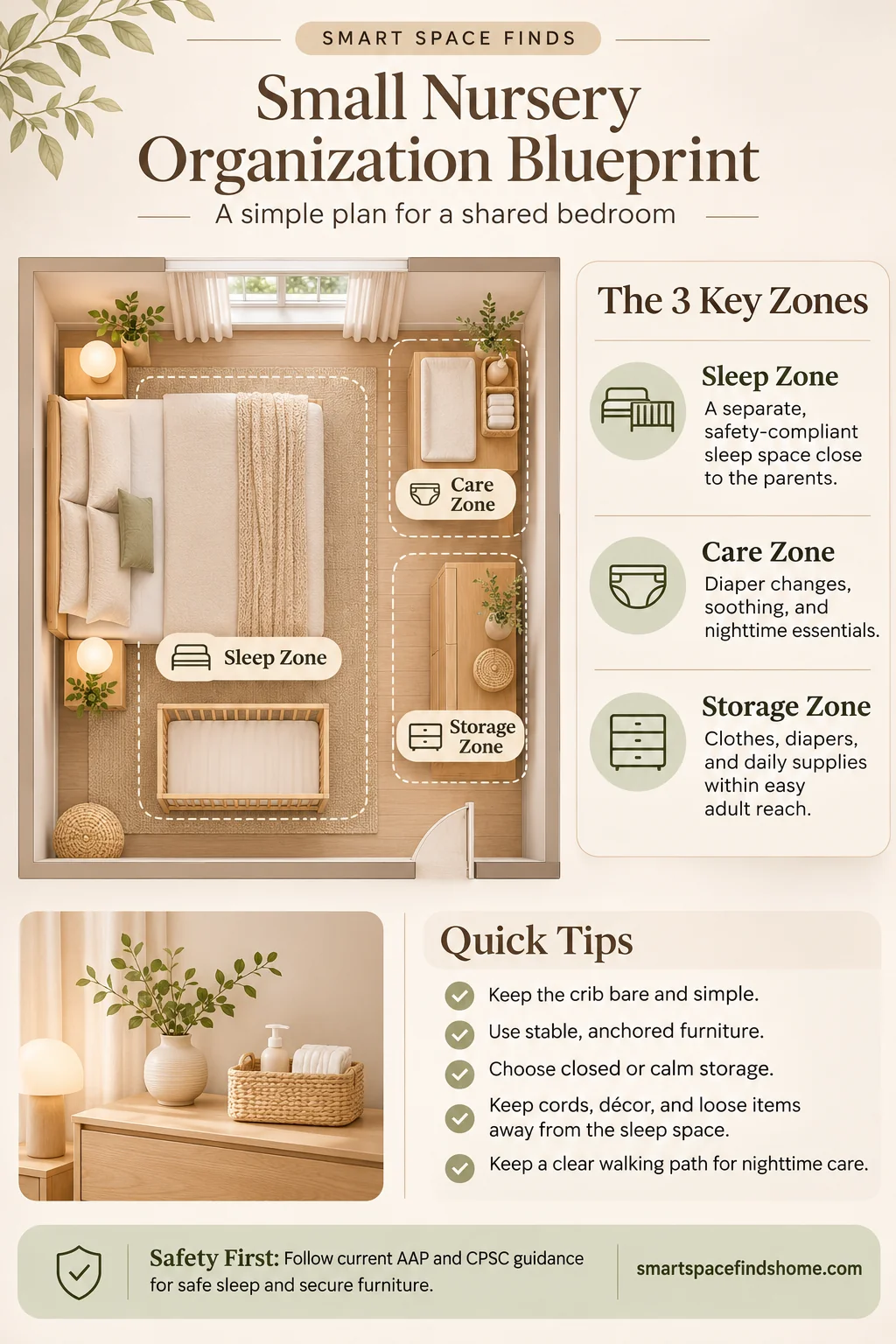
1. Start with three zones, not three pieces of furniture
Divide the room into baby sleep, care and changing, and clothing and backup storage. Use the adult bed as the planning anchor, then map doors, vents, outlets, windows and any routes used at night. A small floor area is easier to manage when each activity has a predictable place.
- Sleep zone: a compliant crib, bassinet or play yard assembled and used exactly as directed, positioned away from windows, blind cords, draperies, shelves, wall art and anything that could fall into or be pulled into it.
- Changing zone: a stable, designated changing surface or a practical floor-based setup with supplies ready for a caregiver.
- Storage zone: anchored drawers or low, appropriate furniture with daily essentials accessible to adults, and hazardous items secured away from children.
Keep a clear route between your bed, the baby’s sleep space and the room exit. Do not force a bassinet between furniture if the required clearance or manufacturer’s instructions cannot be met.
2. Choose a shared-bedroom layout that fits
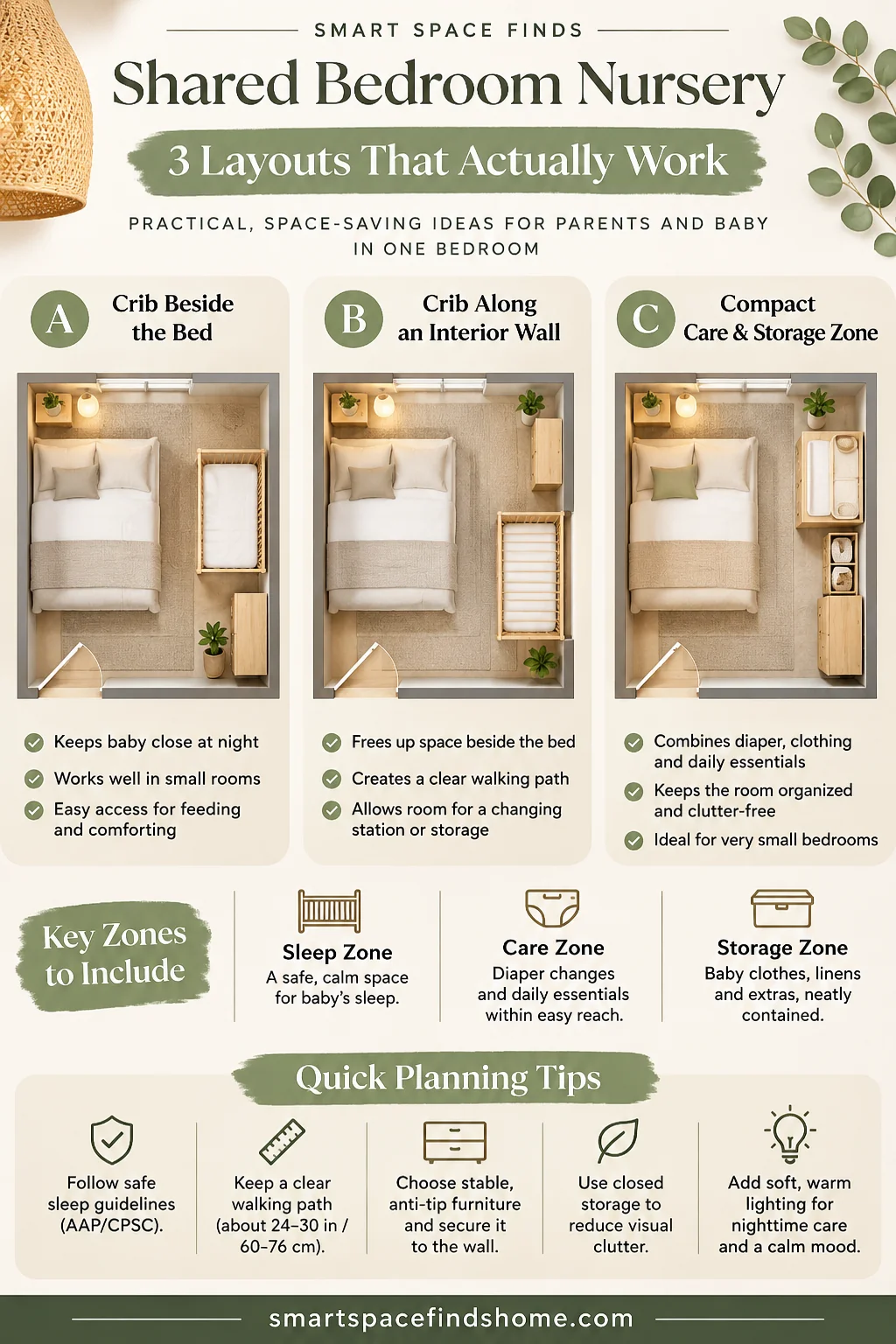
Before you rearrange: measure the width of the crib or bassinet, the usable floor area when drawers and doors are open, and the clearance required by the sleep-product manufacturer. Sketch the room to scale before buying compact nursery furniture. A good setup should allow the parent to reach the baby without stepping over laundry or moving furniture.
Important: a bedside bassinet is not automatically a bed-sharing product. Use only its approved sleep configuration and follow the manufacturer’s instructions; do not improvise side openings or attachments.
Layout A: Bassinet or crib beside the adult bed
This arrangement supports night checks and feeds while preserving a separate infant sleep space. Position it close enough for convenient access, but keep adult comforters, pillows, cords and loose fabrics from reaching the sleep area. Follow all product-specific placement directions.
Layout B: Crib along a clear interior wall
Where a room is narrow, an unobstructed interior wall may give more usable floor space. Do not place shelves, heavy frames, storage baskets or hanging organizers above the crib. Avoid heaters, windows and blind cords.
Layout C: Compact care station across from the sleep area
Use an appropriately anchored dresser for folded clothes, with a changing setup only if the furniture and changing product are designed and approved for that use. Otherwise, keep a separate, safe diapering spot. Never leave a baby unattended on any elevated surface.
The Shared Bedroom Nursery Setup
Create useful storage without crowding your baby’s sleep zone.
As an Amazon Associate, I earn from qualifying purchases. Use organizers outside the crib and away from the baby’s reach. Choose only what suits your room and follow manufacturer instructions.
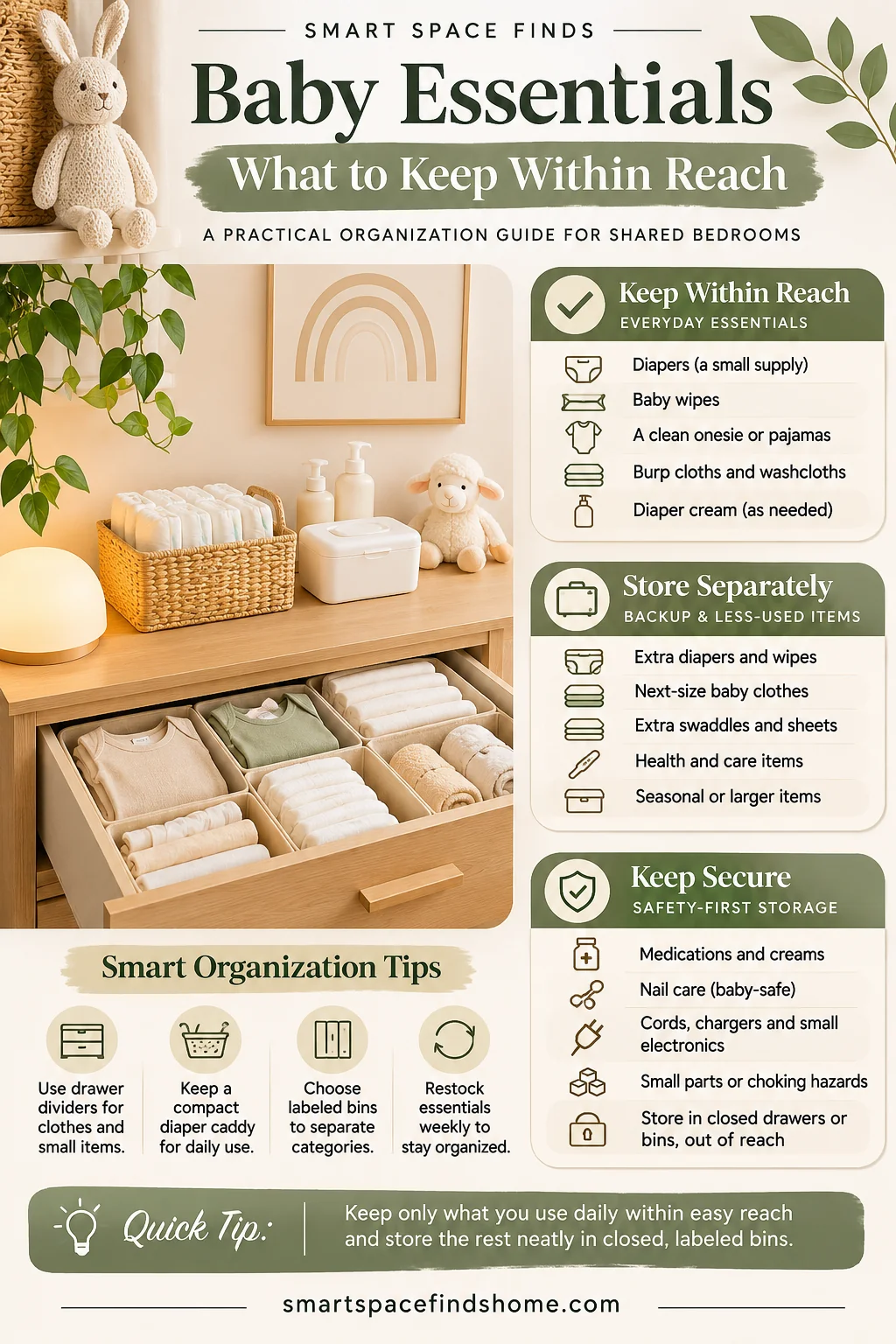
3. Build a two-drawer baby clothing system
Limit your most accessible space to clothes that fit your baby now. In the first drawer, use soft dividers or removable bins for everyday onesies, pajamas and socks. In the second, keep spare fitted sheets, burp cloths and a small backup clothing supply. Put outgrown or next-size clothing in labeled, closed containers elsewhere; review sizes every few weeks.
Fold garments upright where drawer depth allows. Use labels such as Sleep, Daywear and Next Size, rather than creating a separate container for every tiny category. Store heavy items low and anchor dressers following manufacturer instructions and CPSC guidance.

4. Make diaper changes simple, not elaborate
A useful diaper station needs less than a full changing-table installation. Group supplies by daily use (diapers and wipes), occasional use (spare outfits and washable covers), and secured storage (medicines and creams). This prevents constantly shifting baskets around a room.
A compact diaper caddy works best when it lives at the designated changing spot, not on the crib rail. Keep a small, realistic supply of diapers, wipes, clean clothes and disposal bags ready for the adult. Store creams, medicines and other potentially harmful products secured out of children’s reach. Keep one hand on your baby while changing and never leave them alone, even with a safety strap.
For very tight rooms, a safe, floor-level diapering routine can reduce the need for a dedicated changing table. Choose a washable surface that can be cleaned after each use and put supplies away immediately after.
Read the AAP changing table safety guidance before choosing an elevated station.
The Compact Baby Storage System
Organize daily clothes and changing supplies in the furniture you already own.
As an Amazon Associate, I earn from qualifying purchases. Use organizers outside the crib and away from the baby’s reach. Choose only what suits your room and follow manufacturer instructions.
5. Use vertical space only where it is genuinely safe
Wall storage is not automatically nursery-safe. Install shelving to its rated capacity, anchor furniture correctly, and keep all mounted storage and décor well away from the baby’s sleep surface. Never place shelves, hanging baskets, hooks, garlands, mobiles with unsafe attachments or heavy frames above the crib. Keep blind cords, charging cables and monitor cords inaccessible to children.
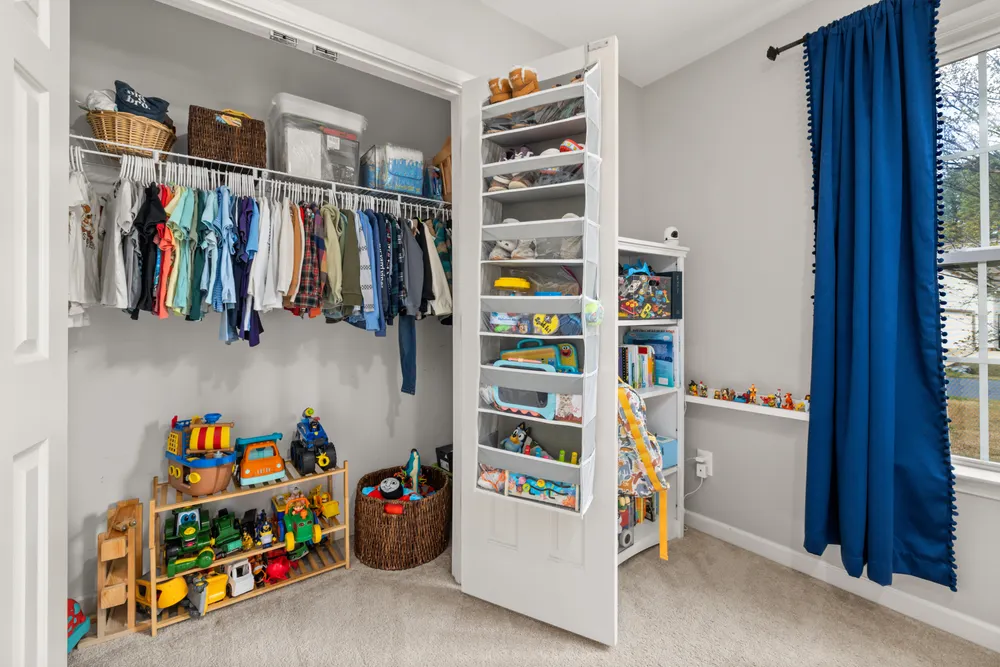
Back-of-door storage can be practical for adults’ lightweight supplies provided it cannot fall, obstruct a door, become a climbing or entanglement hazard, or be reached by the child as they grow. Reassess storage as soon as your baby begins rolling, crawling or pulling up.
6. Create a nighttime essentials station for the parent
Keep your phone, a dim adult-use light, water, burp cloths and feeding essentials in the adult zone—not attached to or inside the crib. Keep electrical cords secured and well out of the baby’s reach. A small closed drawer or stable bedside surface can hold night-time items without turning the room into a second nursery.
After a feed or comfort session, return the baby to their own safe sleep surface before you sleep. A sofa, armchair, infant lounger or adult bed should never become a substitute for a suitable infant sleep space.
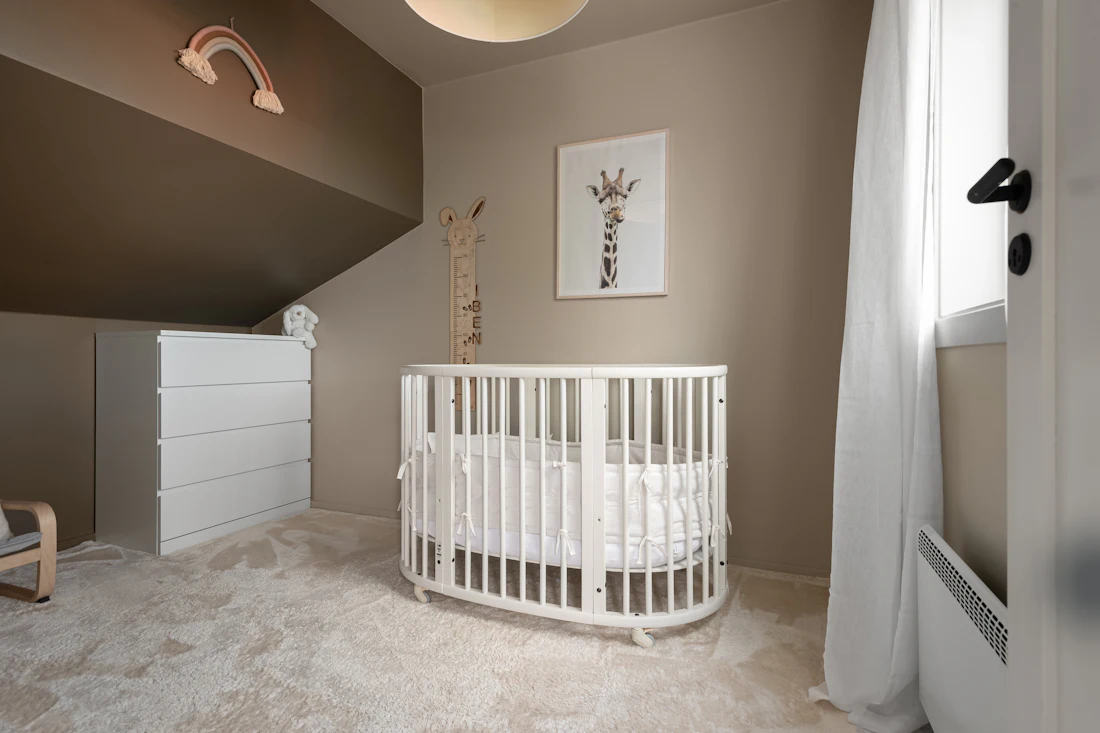
The Calm Nursery Essentials Edit
Streamline care and cleanup while keeping the sleep space completely clear.
As an Amazon Associate, I earn from qualifying purchases. Use organizers outside the crib and away from the baby’s reach. Choose only what suits your room and follow manufacturer instructions.
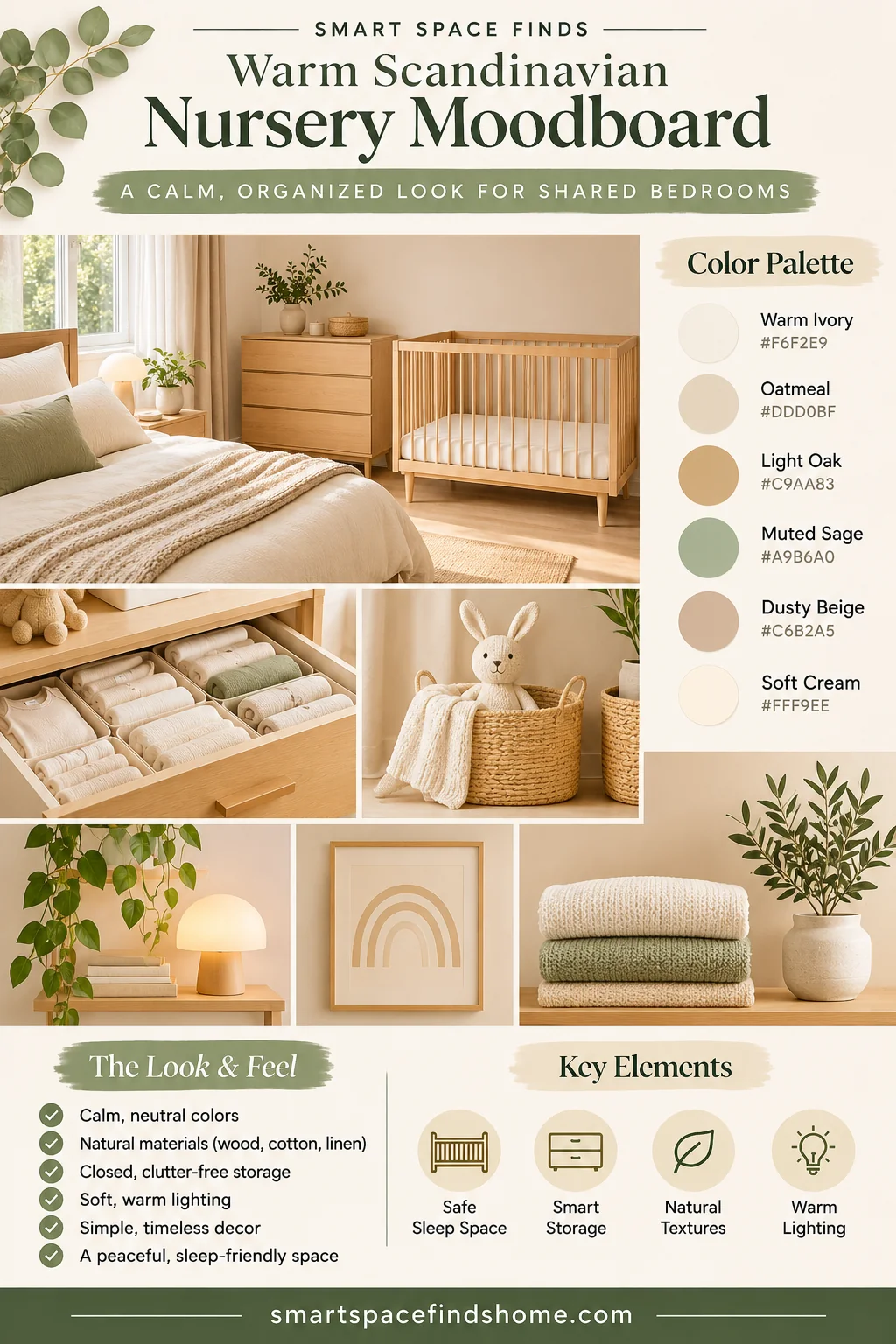
7. A Warm Scandinavian nursery that stays uncluttered
Rather than matching every piece, repeat just three visual elements: one light wood tone, one soft neutral textile color, and one muted accent. Leave intentional negative space around adult furniture. This makes a small shared bedroom feel composed while keeping baby-care supplies easy to locate.
Choose a restrained palette: warm ivory walls, oatmeal washable textiles for adult furnishings, light oak finishes, and touches of muted sage. Put visual interest on an adult-facing wall or stable furniture away from the crib, not on the sleep surface. Styling should never compromise the baby’s sleep environment or furniture stability.
Favor closed storage over a collection of decorative baskets, and use an easy-to-clean rug only where it does not create a trip hazard. The most polished rooms give everyday items a home instead of trying to hide safety essentials.
8. Small room checklist: what to buy and what to skip
Worth prioritizing
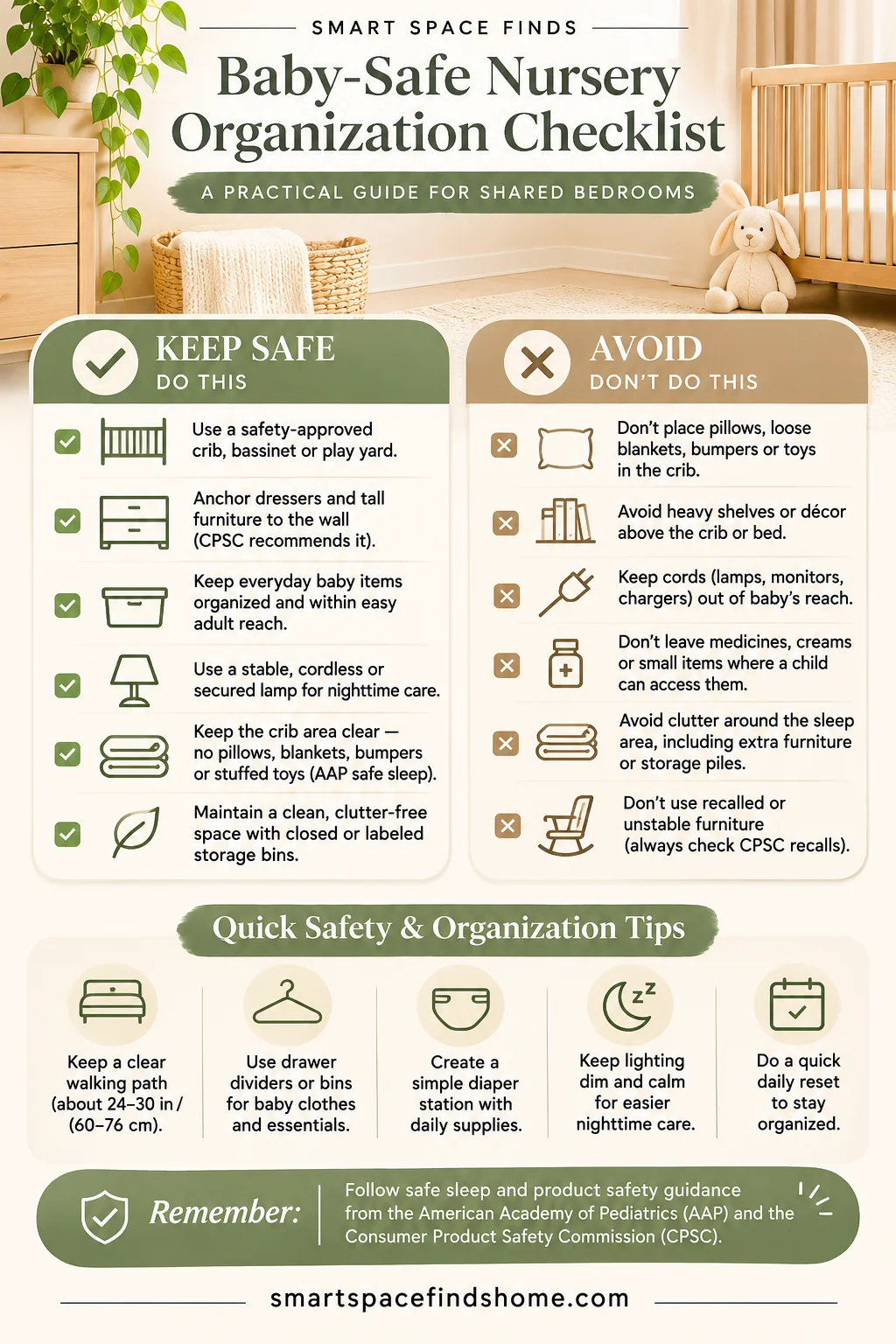
- An appropriate, current-standard infant sleep product used as directed.
- Reliable, properly anchored furniture with practical drawers.
- Drawer dividers, easy-clean storage bins and a manageable diaper caddy kept outside the crib.
- Safe access to essential care supplies and sufficient floor clearance.
Skip these clutter traps
- Crib bumpers, sleep positioners, loungers or wedges marketed as sleep shortcuts.
- Hanging crib-side organizers, canopies or shelves above the sleep space.
- Unanchored tall dressers or unstable stacked storage.
- Too many baskets, decorative pillows, blankets or toys in the baby’s sleep area.
9. The 15-minute reset that makes the system work
For newborns: prioritize a small stock of diapers, clean sleepwear and burp cloths. When rolling begins: reevaluate changing-surface safety and floor-level clutter. When crawling and pulling up begin: check anchors, drawers, cords, outlets and any items that could invite climbing. What works during the first weeks must evolve as mobility changes.
- Five minutes: refill diapers and wipes at the designated care station.
- Four minutes: return clean daily clothes to their labeled drawer sections.
- Three minutes: remove laundry, rubbish and outgrown clothing from the immediate room.
- Three minutes: check the crib is bare, pathways are clear, and cords and storage remain inaccessible to the baby.
A weekly inventory prevents duplicate purchases: review diapers, clean sheets, current-size outfits and any new hazards as mobility develops.
Choose nursery products for safety and daily use
Before buying, check current product safety standards, recalls, crib instructions and furniture anchoring options. Prioritize a safe sleep product, stable storage and a few practical care supplies rather than a roomful of accessories.
Organize a shared nursery without buying more furniture
Start with a one-week trial. Photograph the room, identify your top three interruptions during nighttime care, and move only the supplies needed to solve them. Repurpose existing anchored drawers before purchasing a second chest. Keep just one adult-controlled diaper caddy; designate one closet shelf or closed container for refills. Eliminate duplicate blankets and décor from the baby’s area instead of finding places to display them.
A practical small-nursery measurement list
- Measure the crib or bassinet footprint and manufacturer-required clearances.
- Check door swings, drawers, closet access and the route to the exit.
- Identify reachable window-covering cords, electrical cables and heaters.
- Check that storage furniture can be properly anchored and remains out of the infant’s sleep area.
- Leave suitable adult standing space at the changing or care station.
Frequently asked questions
How do you organize a nursery in a small bedroom?
Use three separate zones—safe sleep, care and clothing—then favor anchored drawers and a small daily-supply station instead of additional freestanding furniture. Keep the crib completely clear.
How long should a baby share a bedroom with parents?
The AAP recommends room sharing without bed sharing for at least the first six months. Ask your pediatrician about circumstances specific to your family.
Can I put shelves above the crib to save space?
No. Do not put shelves, framed art, baskets or other objects above or immediately beside the baby’s sleep space where they could fall or be reached.
Are over-the-crib organizers a good space saver?
No. Keep organizers, loose fabrics and hanging storage off the crib and outside the infant’s sleep area.
What if we rent and cannot anchor a dresser?
Do not assume an unanchored dresser is safe. Discuss approved anchoring with your landlord, choose storage that can be safely secured, or use an appropriate low-storage alternative that avoids tip-over and climbing hazards.
Final takeaway: design for real life, then protect the sleep space
A shared bedroom works when parents can reach what they need without surrounding the baby with objects. Start with a separate safe sleep surface, edit the number of belongings, and create accessible storage away from the crib. The result can look warm, natural and peaceful without sacrificing infant safety.
More ideas: closet organization for small spaces, under-bed storage ideas, and better bedroom layout and comfort. These guides discuss general home storage and should not be used to override nursery safety requirements.
Safety references: AAP Safe Sleep · CPSC Safe Sleep · CPSC Anchor It. This guide provides general educational information, not individualized medical or product-safety advice.