
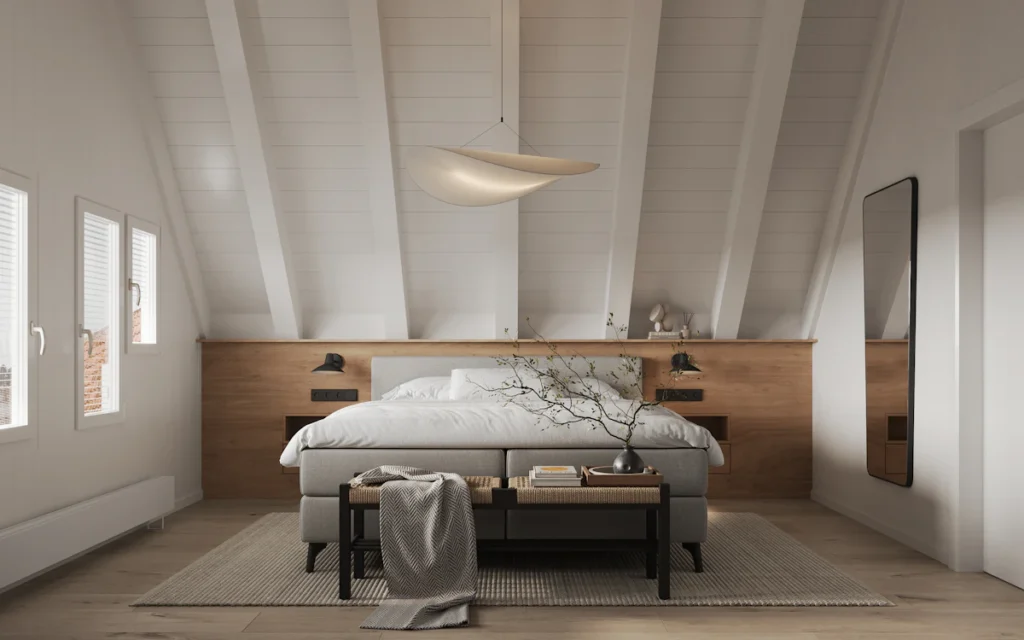
THE SMALL BEDROOM EDIT · SLEEP-FRIENDLY SPACES
A small bedroom does not need an expensive makeover to feel more restful. Start with the factors that can interrupt sleep—unwanted light, noise, uncomfortable temperatures and an awkward nighttime route—then layer in space-saving design decisions that make the room easier to live in.
1. Plan the Layout Around the Bed and the Nighttime Route
SPACE PLANNING · SMALL BEDROOM LAYOUT
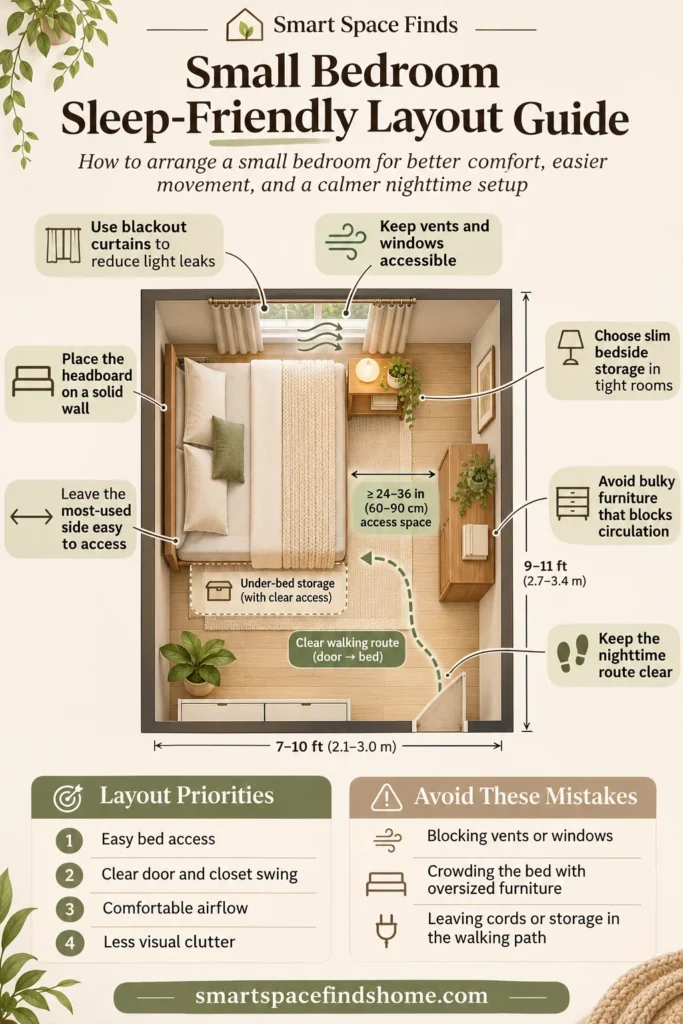
Measure the room before buying a new nightstand or storage unit. Record the door swing, closet clearance, window access, outlet locations and any heating or ventilation equipment. The best bed position is the one that lets you get in and out easily without blocking a door, window or vent.
Choose a layout that fits your real room
| Room situation | Practical layout choice | What to check |
|---|---|---|
| Narrow rectangular bedroom | Place the headboard on a solid wall and keep the more-used side accessible. | Door swing and the route to the bathroom |
| Bedroom with a tight closet | Use a slim bedside shelf or wall-mounted light rather than a wide nightstand. | Closet doors or drawers opening fully |
| Studio sleeping corner | Use a low visual divider or curtain only where it will not obstruct ventilation. | Airflow, safe exits and available daylight |
| Bed beside a window | Choose secure, easy-to-operate window coverings and keep window access usable. | Drafts, light leaks and window safety |
As a planning preference, try to preserve roughly 24–30 inches on the side you use most, where the room allows. This is not a universal building-code requirement; check the dimensions and accessibility needs of your actual space. Avoid exposed extension cords or piles of under-bed boxes in walking paths.
2. Control Streetlights, Sunrise and Indicator LEDs
WINDOW TREATMENTS · BLACKOUT CURTAINS FOR SMALL BEDROOMS
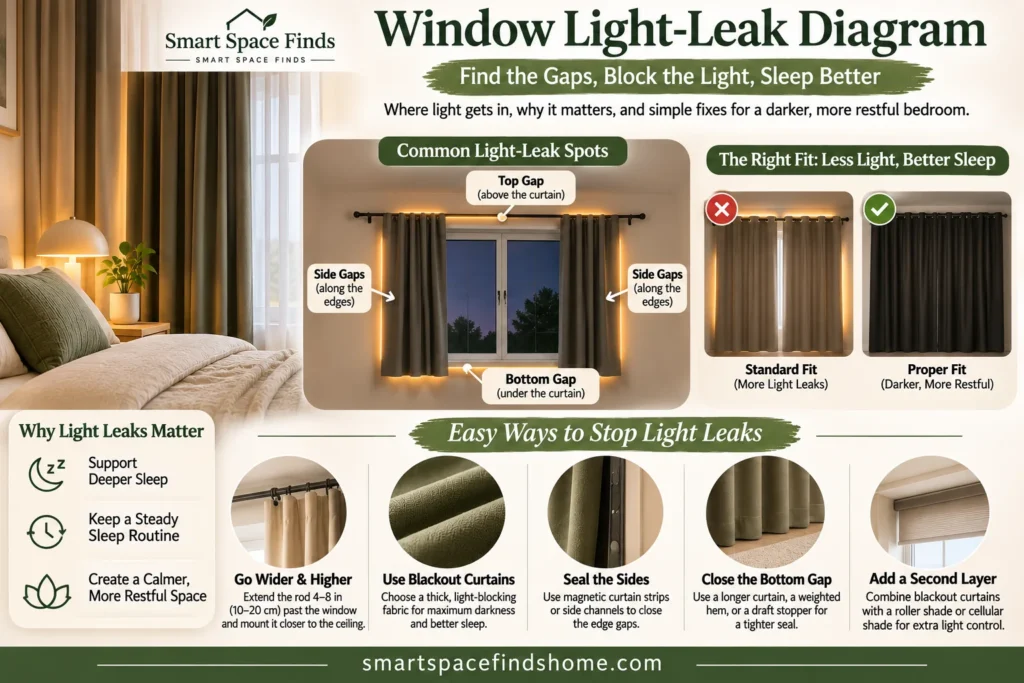
A dark sleeping environment is one of the most useful upgrades for a bright apartment bedroom. Start by lying on the pillow after sunset: look for gaps around the curtain edges, light beneath the door, glowing chargers and light entering from a hallway. CDC/NIOSH guidance recommends minimizing unwanted nighttime light.
Choose the window treatment for the problem
Blackout curtains are useful when you want a soft textile look and need wide coverage. Measure both window and hardware: a rod mounted wider than the glass can help reduce side gaps. Blackout roller shades offer a neater profile but may leave light at the edges. For rentals, select mounting hardware according to the manufacturer’s instructions and test whether the wall surface and curtain weight are suitable; “no drill” does not always mean damage-free.
Keep window handles, ventilation and emergency exits accessible. A sleep mask can be a low-cost alternative when curtains are unsuitable. For more room-specific lighting inspiration, see our cozy bedroom lighting ideas for small spaces.
Practical blackout curtain and hardware options
These products are optional examples to compare; match dimensions, mounting method and load ratings to your window before purchasing.
NICETOWN Blackout Curtains · Two Panels
Window panels for reducing unwanted light.
Amazon Basics Wraparound Blackout Curtain Rod · 48–88 in
Wraparound design intended to reduce side light gaps.
3. Find a Comfortable Temperature and Keep Air Moving
BEDROOM COMFORT · VENTILATION
The NIH recommends a cool, quiet and dark bedroom, but comfort varies by person, climate and bedding. Instead of treating one thermostat number as mandatory, adjust heat, blankets and ventilation together. If your room overheats, check whether sunshine hits the window late in the day, whether bedding traps excess warmth and whether furniture blocks a vent.
A compact fan can help with airflow and perceived comfort; it is not a substitute for safe ventilation or fixing an unsafe indoor environment. Keep fans stable, clear of loose bedding and away from trailing cords. In damp spaces, address moisture and ventilation problems rather than masking odors with fragrance.
A compact airflow option
Vornado 133 Personal Air Circulator · Black
Compact air circulation for a small bedroom.
4. Reduce Apartment Noise Without Overpromising
APARTMENT LIVING · QUIET BEDROOM IDEAS
Identify the source: street noise, footsteps, a noisy HVAC system or sound traveling through a shared wall. Shut gaps around doors using renter-compatible weatherstripping where permitted, but never seal a required ventilation opening. Thick curtains and rugs may soften echoes inside the room; they generally will not soundproof an apartment against low-frequency traffic or loud neighbors.
For intermittent disturbances, a small white-noise machine or fan may help mask some sounds for some people. Choose an adjustable volume, place it away from your head and avoid unnecessarily loud playback. If noise is severe or persistent, speak with building management about the underlying source.
Optional noise-masking equipment
LectroFan EVO White Noise Machine · White
Adjustable background sound for masking some disturbances.
5. Prioritize Mattress, Pillow and Bedding Comfort
Before replacing a mattress, inspect its support, age, sagging and fit for the frame. The ideal firmness is individual—not a universal medical prescription. A pillow should feel supportive for your preferred sleeping position; a pillow that forces the neck sharply upward or downward may feel uncomfortable. When purchasing bedding, compare fabric feel, care requirements and how warmly you personally sleep instead of trusting “cooling” marketing alone.
In a small room, a washable duvet cover and a modest set of spare linens often work better than bulky decorative layers. If you need to store the extras, see our under-bed storage ideas for small bedrooms and keep stored items out of circulation routes.
6. Layer Gentle Evening Lighting Without Cluttering the Nightstand
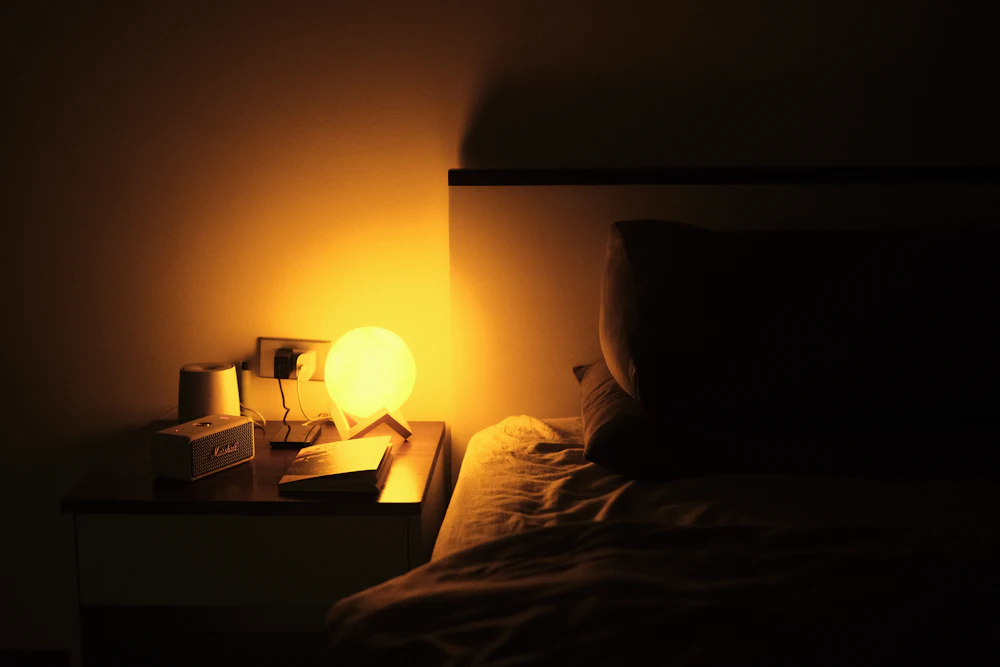
Use brighter general lighting for cleaning and dressing, then switch to lower, comfortable light as bedtime approaches. Try a warm, dimmable bedside lamp or a wall-mounted reading light with a shade that prevents glare from the pillow. Check dimmer/bulb compatibility and position cords safely. A very dim pathway light can be useful if you get up during the night.
The NIH recommends reducing bright light before bedtime and maintaining a consistent sleep schedule. A beautifully styled lamp is a design choice; the functional goal is to prevent glare, reduce unnecessary light exposure and allow safe movement. Our reading lamp placement guide explores compact room setups in greater detail.
Space-conscious bedside lighting to compare
O’Bright Seraph Cordless LED Table Lamp · Antique Brass
Portable bedside light with adjustable illumination.
LEPOWER Adjustable Metal Desk Lamp
Directional task lighting for reading.
O’Bright Adjustable Dimmable Floor Lamp · Antique Brass
Floor-standing lighting when a bedside table is impractical.
7. Reduce Clutter and Create a Calm Visual Rhythm
Clear the surface beside the bed until only nighttime essentials remain: a light, water if needed and perhaps a book. Put chargers in a managed cable route, keep shoes out of walkways, and move rarely used objects into a drawer or covered container. These changes can make the space easier to use, although decluttering or a coordinated palette alone is not an established treatment for insomnia.
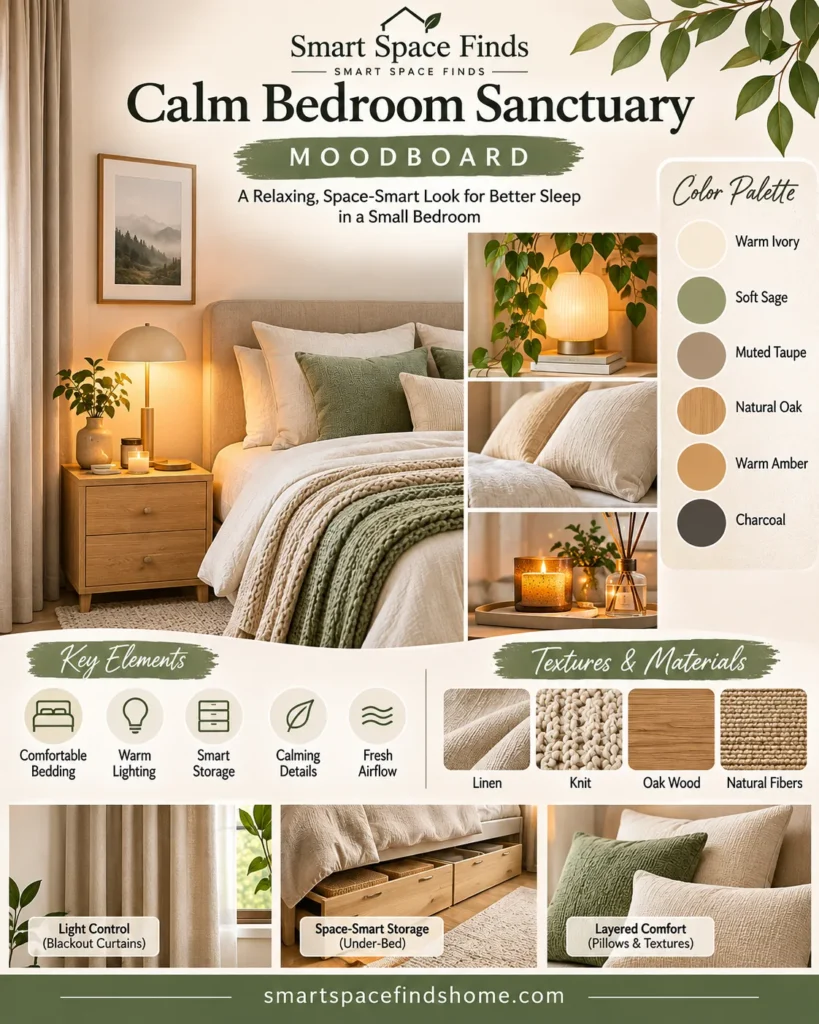
For a warm Scandinavian look, choose an ivory foundation, muted sage accents, natural oak and small amounts of amber lighting. Repeat just two or three materials. Textured bedding adds depth without an oversized stack of pillows.
Light leakage
Start with coverage at the curtain edges and remove indicator light where safe.
Unwanted sound
Identify the source before trying masking sounds or soft furnishings.
Heat & airflow
Adjust bedding and unblock ventilation before adding equipment.
Under-bed storage options
Amazon Basics Under-Bed Storage Bags · Gray, 2-Pack
Low-profile storage for spare linens and off-season bedding.
Lifewit 95L Under-Bed Storage Containers · 4-Pack
Extra soft-storage capacity where under-bed clearance allows.
8. Renter-Friendly Changes Worth Trying First
- Test a properly rated removable curtain solution with the weight of your actual curtains.
- Use a plug-in dimmable lamp or compatible smart bulb rather than modifying electrical wiring.
- Try an eye mask before investing in custom window treatments.
- Use slim closed storage only where it does not obstruct airflow or access.
- Use a stable fan and safe cable routing; follow manufacturer and lease requirements.
No-drill curtain hardware for lightweight window treatments
A tension rod is not suitable for every blackout curtain. Check the supported weight, opening width and installation instructions before choosing this renter-friendly alternative.
AIZESI Spring Tension Curtain Rods · 26–39 in, 2-Pack
No-drill option for appropriately sized openings and lightweight curtains; check load limits.
9. Common Small-Bedroom Setup Mistakes
- Choosing a bed that overwhelms the room: confirm usable clearances before ordering.
- Installing blackout curtains without checking gaps: the edges can matter as much as the fabric.
- Relying on a single glaring ceiling light: create a separately controllable low-light option.
- Blocking a vent with furniture: leave the manufacturer’s recommended clearance.
- Using “soundproof” decor as a guarantee: soft furnishings are not structural acoustic insulation.
- Buying too many sleep gadgets: test simple, reversible changes first.
10. Small Bedroom Comfort Checklist
Use this seven-point room audit before buying anything:
- □ I can walk to the door without stepping over objects or cords.
- □ Curtains, shades or an eye mask manage unwanted light.
- □ My pillow and bedding feel comfortable for my needs.
- □ Heating, cooling and ventilation openings are unobstructed.
- □ I have identified and reduced avoidable sources of noise.
- □ My bedside lighting is easy to operate without glare.
- □ Nighttime essentials are accessible without a crowded surface.
11. A Seven-Night Bedroom Reset: What to Test First
| When | One useful change | What to notice |
|---|---|---|
| Night 1 | Record where unwanted light enters. | Window edges, door gaps and device LEDs |
| Night 2 | Change only your window or eye-mask setup. | Whether light is less distracting |
| Night 3 | Clear the route to the bed and organize charging cords. | Easier, safer nighttime movement |
| Night 4 | Adjust bedding and room ventilation. | Personal comfort without overheating |
| Night 5 | Identify the dominant sound source. | Which noise-control approach is realistic |
| Night 6 | Swap bright overhead lighting for a lower-glare bedside option. | More comfortable evening use of the room |
| Night 7 | Keep the helpful changes; remove ineffective extras. | Simple improvements worth retaining |
This is a practical home-assessment sequence, not a clinical sleep intervention or a validated test. Keep personal sleep notes if useful, and seek healthcare advice for persistent problems rather than assuming room design alone will solve them.
Frequently Asked Questions
What is the best bed position in a very small bedroom?
Usually the position that preserves door, closet, window and ventilation access while allowing a safe route in and out. There is no single ideal compass direction or aesthetic rule for every room.
Are blackout curtains worth it for a rental apartment?
They can be useful when streetlights or morning light are the main disturbance. Measure for coverage and choose a permitted mounting method with the correct load rating.
What temperature should a small bedroom be at night?
A comfortably cool room is generally recommended, but the right setting depends on individual comfort, climate and bedding. Adjust gradually rather than relying on an absolute number.
Can a white-noise machine soundproof my bedroom?
No. It may mask some distracting sounds but cannot block structural noise or replace building sound insulation.
Will decorating my bedroom in sage green help me sleep?
Choose colors that feel relaxing to you, but do not mistake styling preferences for clinically proven sleep interventions.
What should I upgrade first on a limited budget?
Identify the biggest problem first: light leaks, noise, bedding discomfort, temperature or awkward access. Try a small reversible change and assess it over several nights.
When should I seek professional advice about sleep?
If sleep difficulties continue, interfere with daytime functioning or involve symptoms such as loud snoring or breathing pauses, consult a qualified healthcare professional. Room styling is not a substitute for clinical evaluation.
Final Thought: A Better Bedroom Starts With One Solved Problem
A premium small bedroom should function well on an ordinary weeknight, not only in photographs. Test the layout, manage the light and sound, then choose the textures and finishes that make it feel like yours.
Evidence sources: NIH/NHLBI: Healthy Sleep Habits · CDC/NIOSH: Creating a Good Sleep Environment. Product-specific advice is practical home-design guidance, not medical treatment.