
THE EVERYDAY EDIT · SMALL RITUALS, REAL PLEASURE
A better day does not have to be a more expensive one. These five practical little luxuries bring comfort, intention, and a sense of occasion to the routines you already have—without turning self-care into another shopping list.
AT A GLANCE · FIVE MOMENTS WORTH SAVORING
Think about the last ordinary moment that felt unexpectedly good: a warm drink in your favorite cup, a towel fresh from the dryer, dinner eaten away from your laptop, or ten quiet minutes in a chair by the window. None needs a luxury price tag. What makes it memorable is how well it fits your life.
Start here: pick one ritual you already enjoy, remove one source of friction, and repeat it before deciding whether to buy anything. Below, each idea includes a free starting point, an optional upgrade, and a reason to skip the purchase.
THE SMART SPACE FINDS APPROACH
Make the ordinary feel intentional—not expensive
There is a difference between a beautiful object and a beautiful experience. A new candle might look wonderful, but opening the curtains, clearing a comfortable seat, and putting your phone away may do more for your actual evening. Start with the experience you want; then choose only the objects that genuinely support it.
5 little luxuries that make everyday life feel special
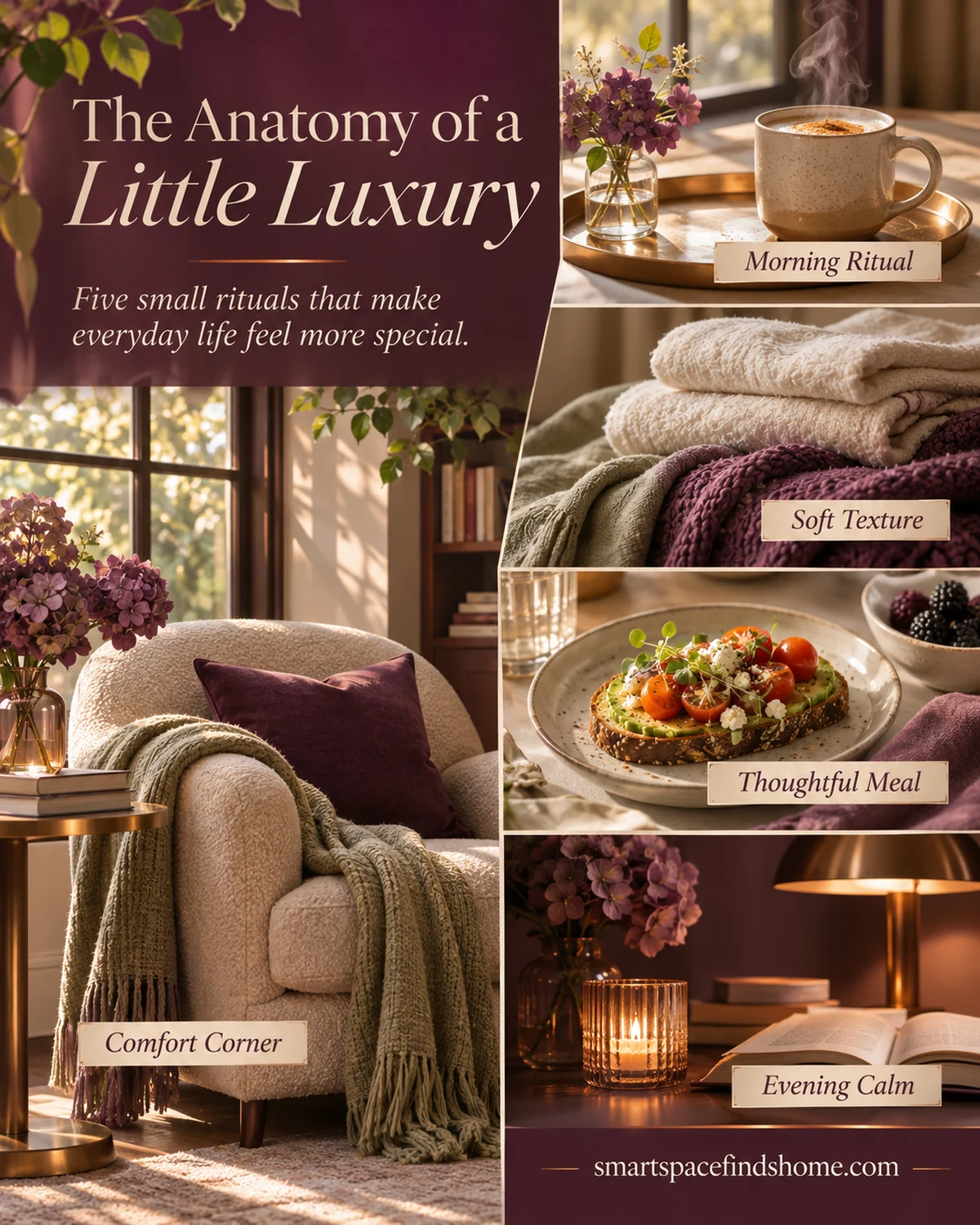
Little luxuries are small, repeatable experiences that make daily life feel more comfortable or enjoyable. Think of moments you can realistically repeat, not aspirational routines you have to maintain for a photograph. Each of the five ideas below begins with something you can do for free.
01. Give your morning drink its own moment
Instead of rushing through coffee or tea while scrolling, put your drink in a cup you like, find a comfortable spot, and give yourself five uninterrupted minutes. The ritual is the luxury, not the coffee equipment.
The 60-second setup: put the cup beside the kettle or coffee maker the evening before. In the morning, clear one small patch of counter rather than reorganizing the whole kitchen. Sit down for the first few sips—even on busy days. That tiny reduction in preparation makes the ritual easier to keep.
Try it for $0: clean your favorite mug, use the beans or tea you already have, and move somewhere with pleasant daylight. Worth considering: a dependable insulated mug if your drink repeatedly goes cold, or a compact tray if spills and clutter make the ritual difficult. Skip it when: the new item would duplicate something that already works.
Want to make the whole setup more deliberate? Explore our at-home café experience guide for ideas that don’t require a complete coffee station makeover.
THE PRACTICAL SHOPPING EDIT
The Morning Ritual Edit
Consider a small upgrade only if it removes a real obstacle from a ritual you already enjoy.
As an Amazon Associate, I earn from qualifying purchases. Product availability, price, and options may change.
02. Upgrade the texture you touch every day
Little luxuries often happen through touch: a soft towel, clean sheets, a pleasant robe, or a throw that actually feels comfortable against your skin. Focus on what you use most, not what photographs best.
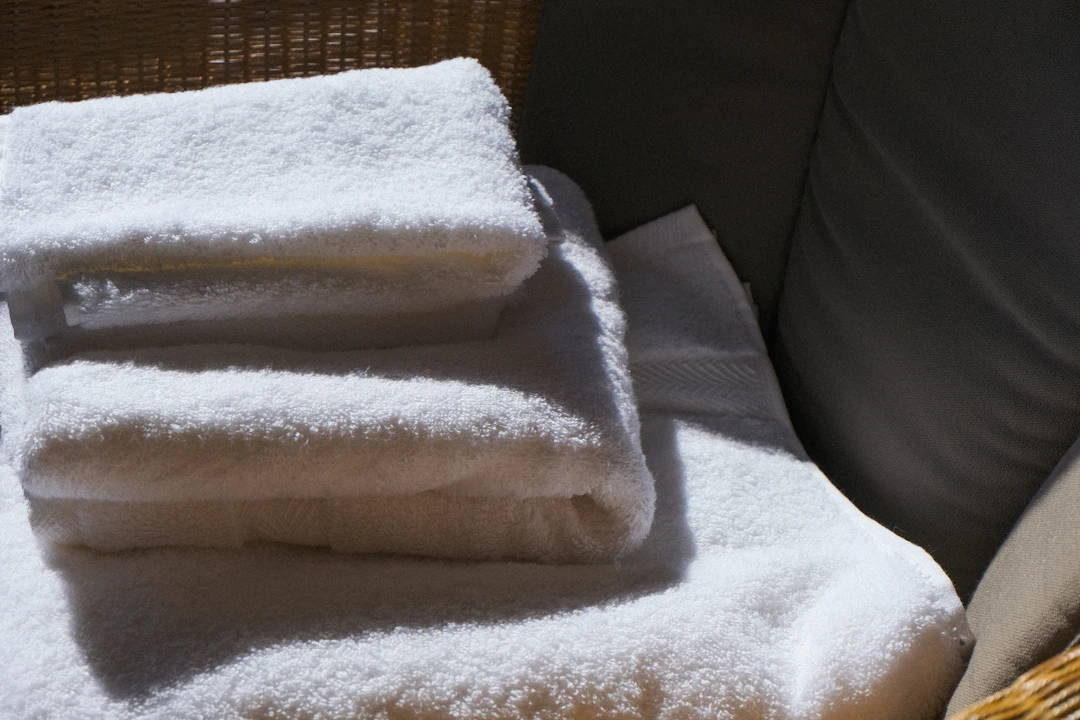
Try it for $0: wash and fully dry the textiles you own according to their care labels, rotate the most comfortable ones into everyday use, and repair small issues when practical. Worth considering: replacing a scratchy, worn-out towel or choosing a throw with the texture and care requirements you truly prefer. Skip it when: dry-cleaning, shedding, or delicate maintenance would turn a pleasant object into extra work.
Small-space note: one excellent throw that you use every day is often preferable to five decorative blankets you must constantly move.
THE PRACTICAL SHOPPING EDIT
The Everyday Comfort Edit
Prioritize the textiles you reach for regularly rather than buying more to decorate shelves.
As an Amazon Associate, I earn from qualifying purchases. Product availability, price, and options may change.
03. Turn a familiar meal into a tiny occasion
Presentation changes how we approach an ordinary meal even when the ingredients stay the same. Put lunch on a real plate, use the napkin you normally save for company, or eat dinner at a cleared table rather than over your keyboard.
Try it for $0: plate food instead of eating from its container, add a little color with ingredients already on hand, sit down, and enjoy the first few bites without a screen. Worth considering: a sturdy everyday plate only if your current dishes are chipped, awkward to use, or difficult to clean. Skip it when: the styling would add food waste, extra dishes, or pressure to make every meal photo-ready.
“Special” does not have to mean elaborate. Sometimes it means giving an ordinary thing your full attention.
04. Make one place in your home ready for rest
A truly welcoming corner is available when you need it. You should not have to move laundry, untangle cords, or search for a lamp every time you sit down. The most useful upgrade may be removing the obstacles rather than buying more décor.
Real-life test: time how long it takes to sit down comfortably. If you spend several minutes relocating things first, focus on making the seat available. If you can sit down immediately but the light is uncomfortable, move your existing lamp before shopping for another.
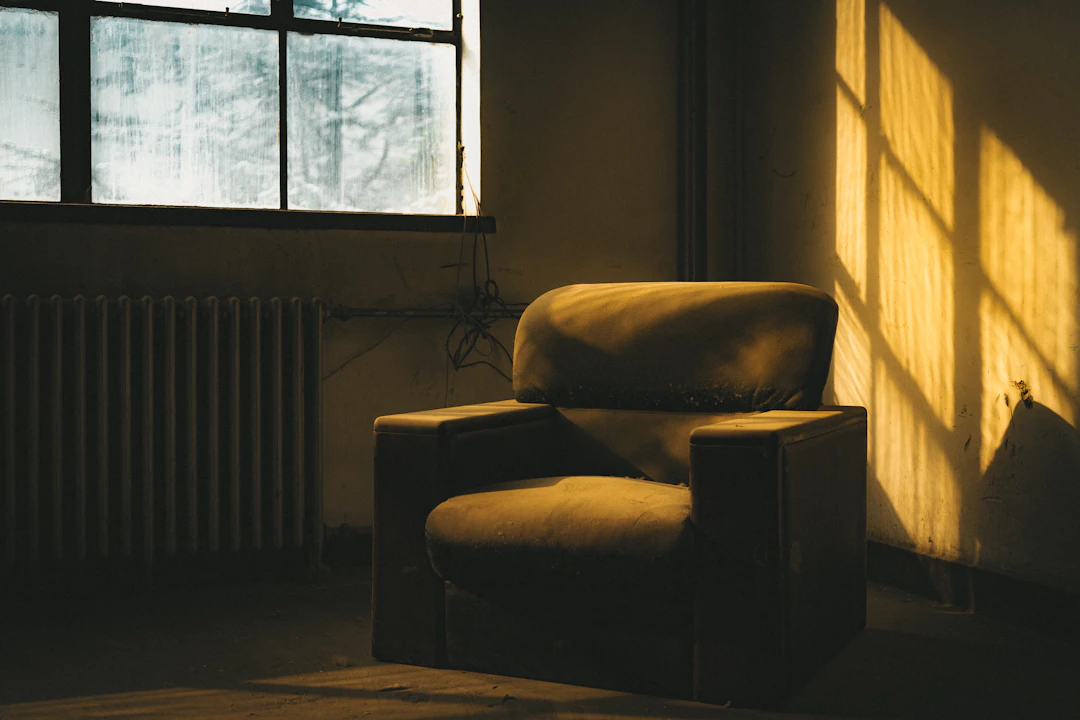
Try it for $0: clear a chair, position an existing lamp where you need it, keep a book nearby, and give your phone somewhere else to live for ten minutes. Worth considering: a supportive cushion or warm, comfortable task light if these solve a recurring problem. Skip it when: the setup blocks a walkway, makes cleaning difficult, or simply won’t fit your routine.
For limited floor space, see our small-apartment self-care corner ideas or our small-home comfort guide.
THE PRACTICAL SHOPPING EDIT
The Thoughtful Details Edit
Small changes work best when they solve a practical need or make an existing habit easier.
As an Amazon Associate, I earn from qualifying purchases. Product availability, price, and options may change.
05. End the day with a gentle sensory reset
A little luxury can be as simple as dimming the lights, listening to a favorite song, taking a comfortable shower, or opening a book. Choose the sensory environment that suits you: not everyone enjoys fragrances, background music, or dramatic low lighting.
Try it for $0: turn off the harsh overhead light, put on music you already enjoy—or choose silence—and spend ten minutes on one calming activity. Worth considering: an adjustable lamp if your existing lighting is uncomfortable. Skip it when: fragrance triggers discomfort, candles create safety concerns, or a new routine starts feeling obligatory.
Need a low-effort evening plan? Our cozy evening ideas offer additional ways to make home feel restful.
A BETTER WAY TO CHOOSE
The Little Luxury Decision Tool
Before buying an item meant to make life feel more special, ask four questions. There is no magic score: the aim is to make a considered decision rather than an impulsive one.
- Frequency: Will I realistically use it several times a week?
- Friction: Does it remove a genuine annoyance or improve comfort?
- Upkeep: Is it easy to clean, store, and maintain?
- Fit: Is it affordable and suitable for my actual space and preferences?
ORIGINAL FRAMEWORK / 02 MINUTES
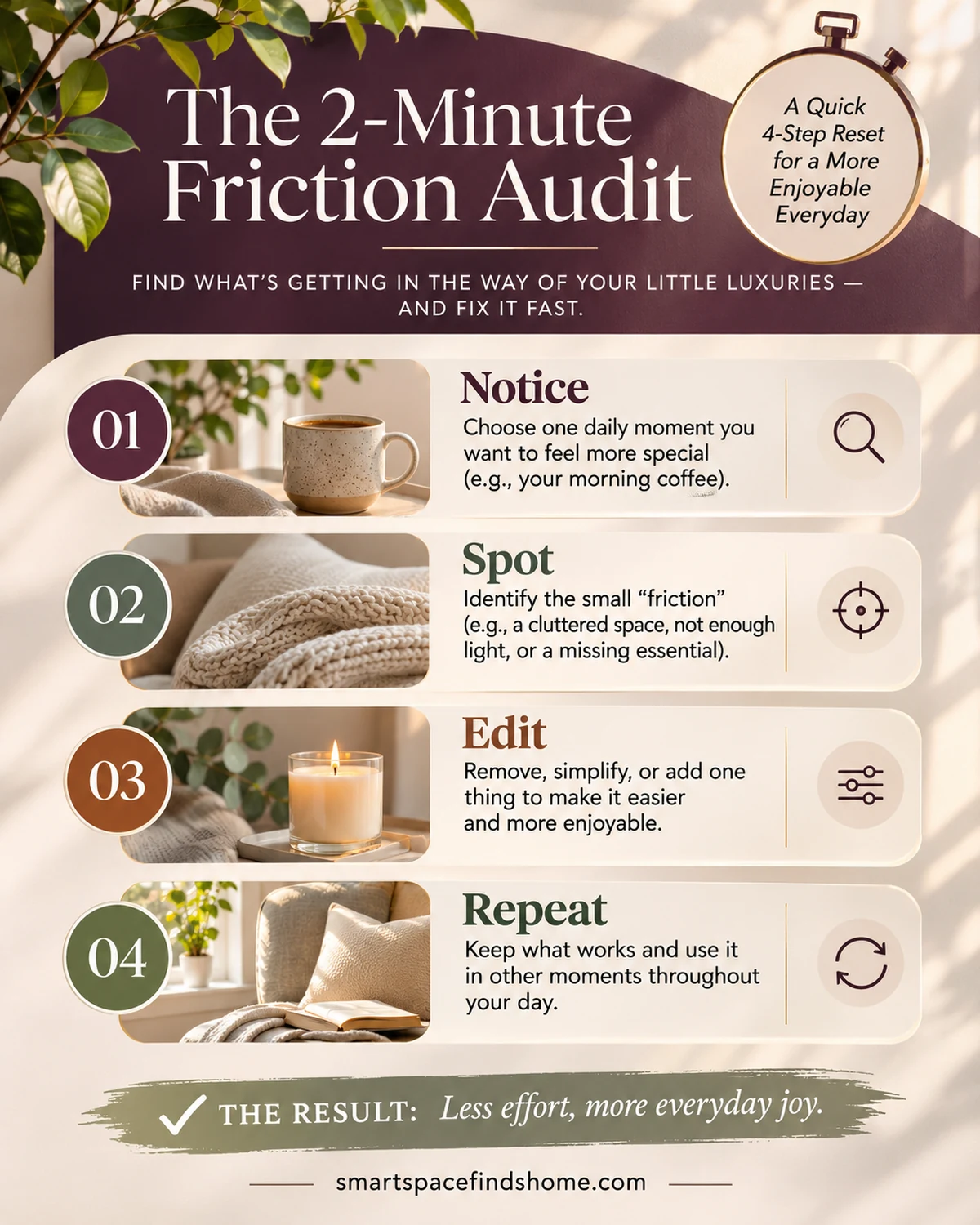
The 2-Minute Friction Audit
The quickest route to a more luxurious everyday routine is often subtraction, not shopping. Choose one moment you want to enjoy more, and look for the single inconvenience that spoils it.
“I want my first cup of tea to feel calm.” Keep the goal specific and small.
Perhaps the counter is crowded or your favorite cup is hard to reach.
Clear a hand-sized surface or put your cup in an easy-to-access spot.
If the new setup makes the moment easier, keep it. If not, simplify again.
Why this works as a decision tool: it makes the improvement observable. You are testing your actual routine rather than assuming an attractive product will change how you feel.
Free, thoughtful upgrade, or not worth it? A practical comparison
| Everyday moment | Start free | Upgrade only if needed | Common purchase trap |
|---|---|---|---|
| Morning coffee | Use a favorite cup, sit down | Insulated cup for repeated cold coffee | Expensive gear without a real need |
| Bath or shower | Fresh, properly washed towel | Replace a worn towel | Delicate fabrics you dislike maintaining |
| Meals | Clear surface and thoughtful plating | Durable everyday dishes | Special-occasion dishes that sit unused |
| Reading or resting | Clear a seat, reposition a light | Comfortable cushion or lamp | Decorative furniture that is uncomfortable |
| Evenings | Dim lights, music or silence | Adjustable light if current lighting is poor | Fragrance or gadget purchases by default |
THE PERSONAL EDIT
Which little luxury should you try first?
Start with the problem you want to improve, not an item you want to buy.
Choose five minutes with your favorite drink. Prepare the cup the night before so it requires almost no effort.
Clear one comfortable seat. Limit the setup to a light, a book, and a place to rest your drink.
Make one familiar meal feel intentional: use a plate, sit down, and give it your attention.
Refresh the towel, throw, or bedding you already use most often before shopping for replacements.
Design one beautiful moment using what you already have
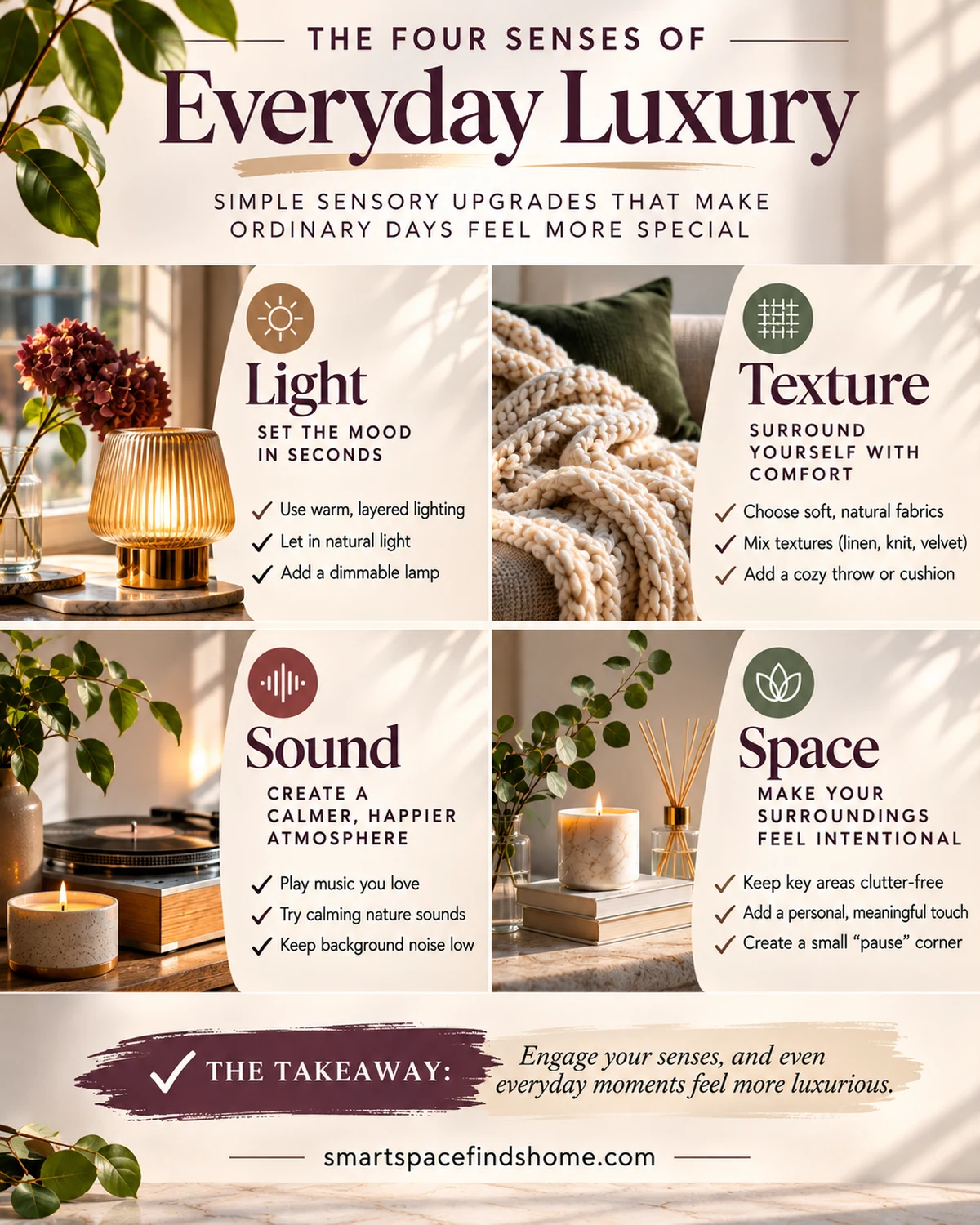
Choose one or two senses to support a ritual rather than adding every element at once. Personal comfort matters more than creating a particular aesthetic.
Try daylight by a window, a familiar table lamp, or softer evening illumination.
Use a freshly washed towel, the softer side of a throw, or your most comfortable chair.
Play one favorite track, listen to natural ambient sounds, or enjoy complete silence.
Leave one surface clear and keep essential things within easy reach.
What makes a small luxury genuinely worthwhile?
Three characteristics matter more than the price or brand:
- It matches your life. An early riser may treasure a peaceful breakfast; a night owl may value an unhurried evening.
- It remains easy to repeat. If you need a 30-minute cleanup to enjoy a five-minute break, simplify the setup.
- It is comfortable over time. A first impression can be misleading; test the routine on ordinary weekdays as well as weekends.
For more intentional purchasing decisions, our affordable alternatives to expensive home upgrades shows how to identify a useful improvement before paying for a bigger change.
THE PRACTICAL SHOPPING EDIT
The Quiet Evening Edit
Choose lighting for the task at hand: comfortable reading first, atmosphere second.
As an Amazon Associate, I earn from qualifying purchases. Product availability, price, and options may change.
THE SEVEN-DAY EXPERIMENT
Find your personal version of everyday luxury
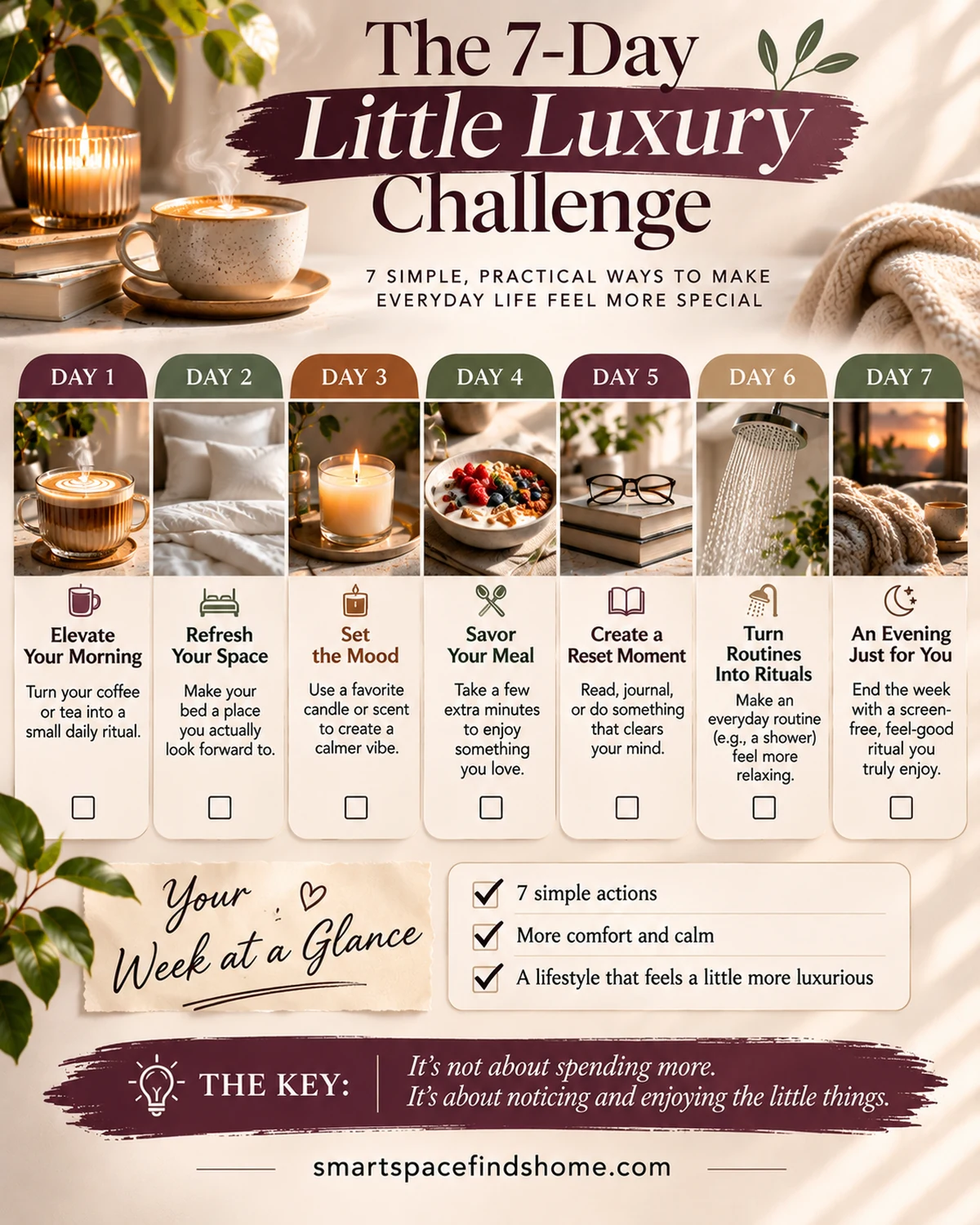
You don’t have to adopt all five ideas. Try one small change each day, then notice what you actually want to repeat.
Day 1 · Enjoy your morning drink without multitasking.
Day 2 · Refresh your bedding or most-used textiles so they feel comfortable and inviting.
Day 3 · Set a gentler mood with an existing lamp or other comfortable lighting; avoid candles where they are unsafe.
Day 4 · Savor one familiar meal at a cleared table, away from your screen.
Day 5 · Spend a few quiet minutes reading, journaling, or doing another simple activity you genuinely enjoy.
Day 6 · Make an everyday shower or other routine feel more considered, using what you already have.
Day 7 · End the week with a screen-free wind-down, then decide which one ritual you would like to repeat.
At the end of the week: ask, “Did it make daily life more enjoyable without creating more work?” If yes, you have found a luxury worth keeping.
AN EDITOR’S NOTE
The small-space luxury rule: edit before you add
A tiny apartment does not need a dedicated spa room, a sprawling breakfast bar, or a new lounge chair. Pick a place that already exists and make its best feature easier to enjoy. A window can provide a morning view. A dining chair can become a five-minute reading spot. A clean shelf can hold your favorite cup and book. Preserving clear walking routes, useful storage, and effortless cleanup is part of the luxury—not a compromise.
The one-in, one-use test: before bringing an object home, identify exactly where it will live and what repeated experience it will improve. If either answer is vague, the experience may be better without it.
Design inspiration without the pressure to buy
Beautiful interiors can be a source of ideas, but a photograph does not reveal the cost, upkeep, or everyday practicality of the space. Take inspiration from its light, color, proportions, and calm atmosphere—not from a presumed list of things you must own. Our boutique-hotel atmosphere at home guide explores how those visual principles can translate into real rooms.
Frequently asked questions
What are examples of little luxuries in everyday life?
Five accessible examples are a deliberate coffee or tea break, a freshly washed soft towel, a carefully presented everyday meal, a comfortable uncluttered chair, and a quiet evening ritual. The best choice is the one you genuinely enjoy and can repeat.
How can I make an ordinary day feel special without spending money?
Make an existing routine intentional: use a favorite cup, eat away from a screen, clear a comfortable place to rest, adjust the lighting, or spend a few minutes listening to music. Start with what you already own.
What makes a home feel luxurious on a budget?
Comfortable lighting, clean textiles, uncluttered surfaces, usable furniture, and a consistent sense of care can contribute to a more elevated feel. Prioritize how a room functions rather than copying costly décor.
Are inexpensive luxury purchases worth it?
Sometimes. Look for an item that solves a repeated problem, fits your space, has manageable upkeep, and is affordable. If it adds little beyond its appearance, the no-cost version of the ritual may be better.
What are the best little luxuries for a small apartment?
Choose ideas with a tiny physical footprint: a favorite mug, fresh towels, comfortable lighting, a cleared chair, or a meal enjoyed at the table. Avoid adding furniture or decorative items that interfere with storage and circulation.
How do I avoid buying too much self-care décor?
Try the activity for a week using items you already own. Make a note of the specific limitation you encounter. Only consider a purchase if it addresses that limitation and you expect to use it regularly.
EDITORIAL METHOD
How we selected these ideas
This guide organizes everyday rituals around repeatability, comfort, cost, upkeep, and fit for smaller homes. It is an editorial decision framework, not the result of a controlled experiment or hands-on testing of products. The suggestions are intentionally adaptable: a ritual only qualifies as a useful little luxury when it makes your real day better without adding unreasonable expense or work.
Final thought: a little more attention, a little less excess
The purpose of a little luxury is not to perform a perfect lifestyle. It is to make real life feel better: a warm drink enjoyed slowly, a chair that welcomes you, a meal given a moment of care. Choose one small ritual that is genuinely yours, and let that be enough.