
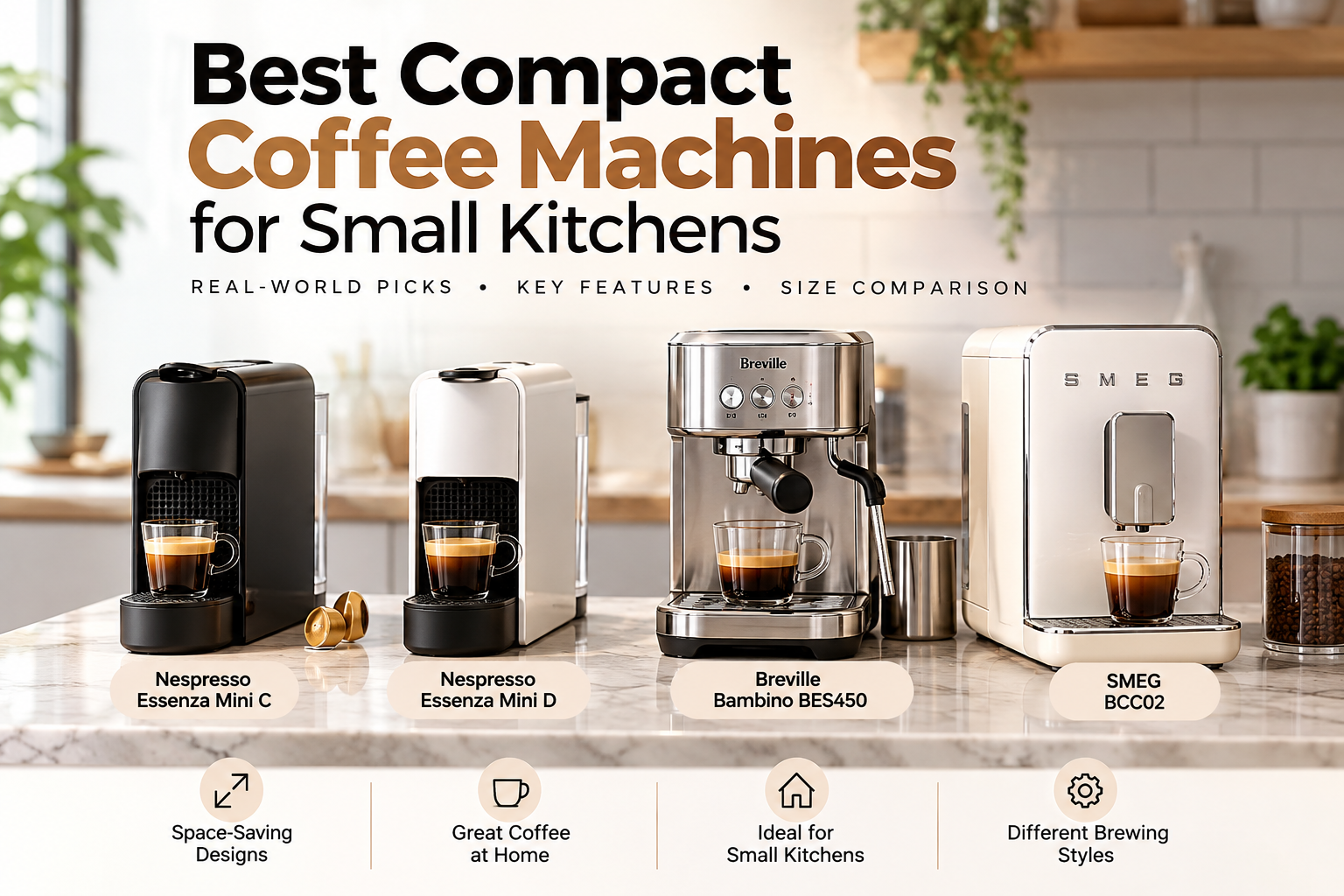
The best compact coffee machine for a small kitchen is the one that fits the way you drink coffee—not simply the one with the smallest advertised width. A narrow capsule brewer, a hands-on espresso machine and a bean-to-cup model solve different problems. This evidence-led buying guide compares four real machine variants using manufacturer specifications, countertop requirements and daily maintenance considerations.
How we selected the shortlist
This comparison is based on publicly available manufacturer specifications, brewing-system differences and the practical constraints of compact kitchens. It is not a hands-on test, taste ranking or long-term reliability study. Models sold in different countries may have different dimensions, plugs and included accessories. Confirm the exact local model number before purchasing.
Quick comparison: four different approaches
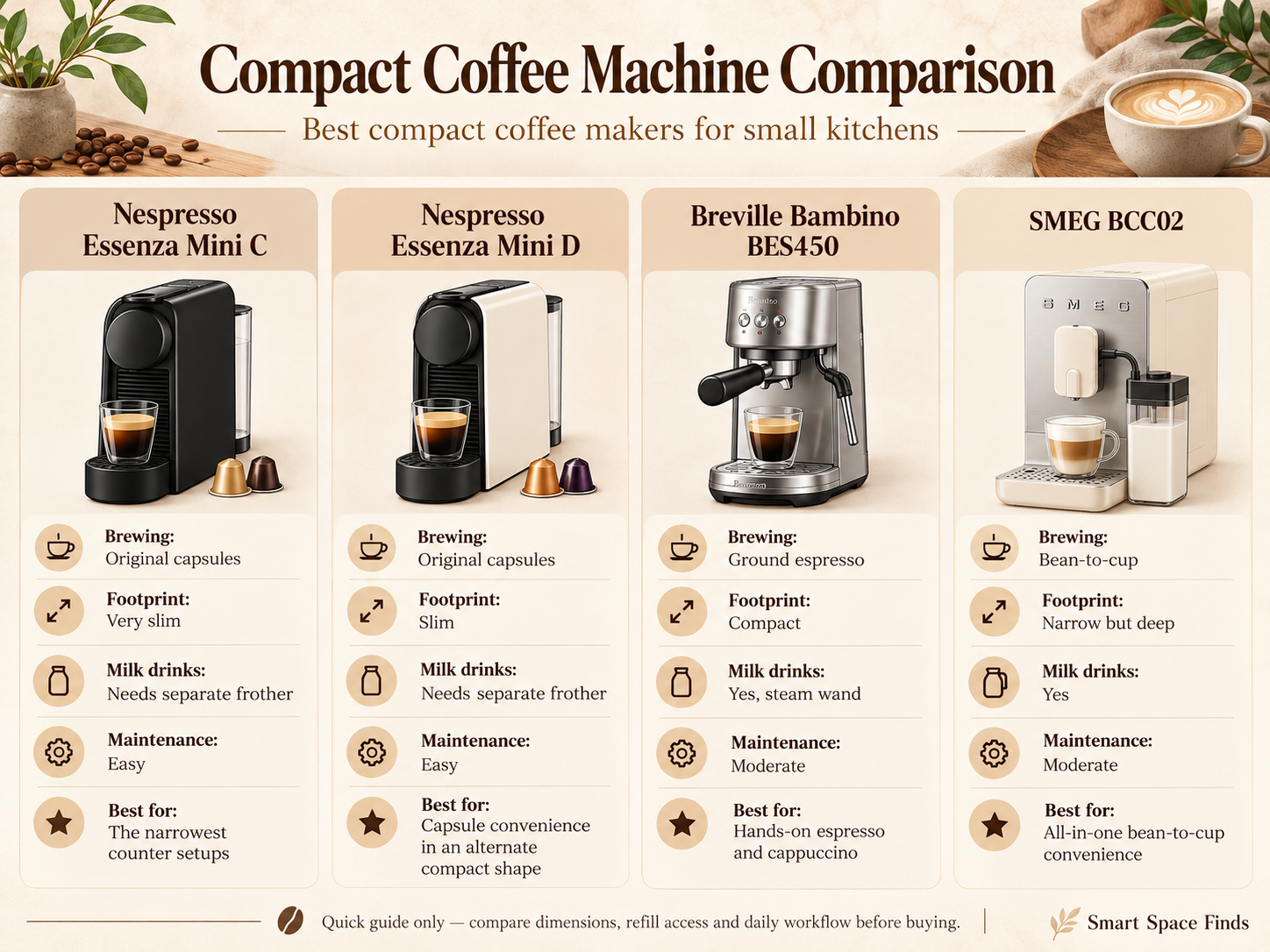
| Machine | Brewing type | Manufacturer-listed dimensions | Best suited to |
|---|---|---|---|
| Nespresso Essenza Mini C | Original capsules | 8.4 × 20.4 × 33 cm (W×D×H) | Very narrow counter, quick espresso/lungo |
| Nespresso Essenza Mini D | Original capsules | 11 × 20.5 × 32.5 cm (W×D×H) | Quick capsule coffee, alternate housing |
| Breville Bambino BES450 | Ground-coffee espresso | 11.9 × 6.1 × 13.5 in as listed on US page; verify orientation and local variant | Hands-on espresso and steamed milk |
| SMEG BCC02 | Bean-to-cup automatic | 18 × 43.3 × 33.6 cm (W×D×H) | Fresh beans with automated grinding |
Important: Published dimensions describe machine bodies, not necessarily the clearance for refilling, operating, cleaning or steaming milk. The Bambino specification on its US page uses an unconventional displayed orientation; consult the manual for your exact model and installation.
1. Nespresso Essenza Mini C — the narrow-counter capsule choice
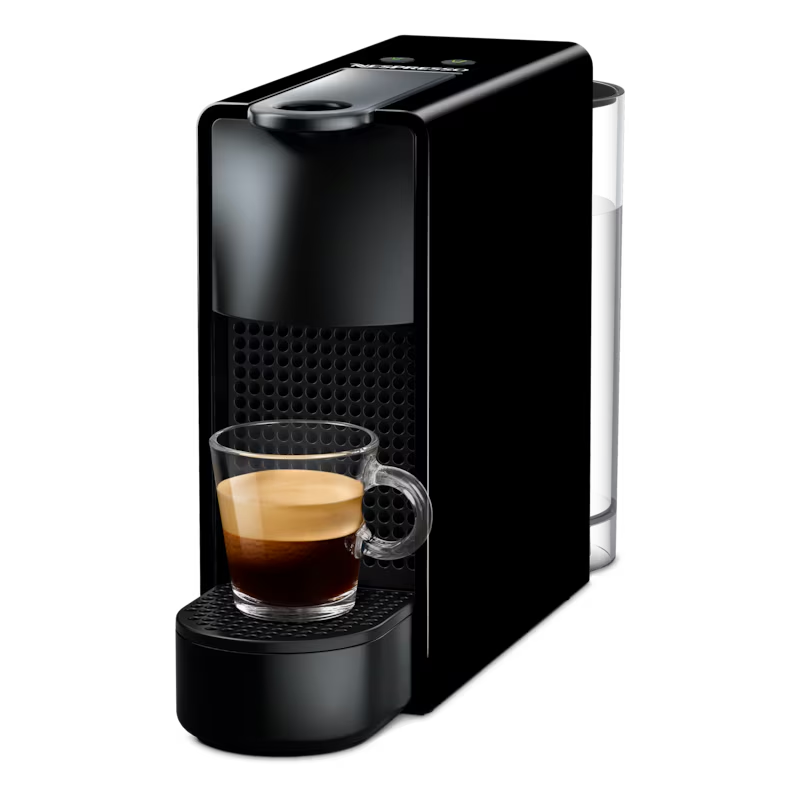
The Essenza Mini C has a remarkably slim 8.4 cm machine width in the referenced regional specification, a 0.6-liter water reservoir, and two programmable Original-system servings: espresso and lungo. Its compact body makes it a logical shortlist candidate for a countertop where width is the main constraint. Capsules simplify the daily workflow, but used capsules still require disposal or recycling and the 0.6-liter tank needs routine refilling.
Advantages
- Especially narrow nominal footprint
- Simple two-button drink routine
- Suitable for occasional coffee drinkers who prioritize speed
Trade-offs
- Original-system capsules add recurring costs
- No integrated milk frother or bean grinder
- Limited choice of coffee preparation styles
Best for: someone who wants espresso-like capsule drinks with almost no preparation space. Not ideal for: someone who enjoys dialing in freshly ground espresso or wants a built-in cappuccino workflow.
2. Nespresso Essenza Mini D — an alternative compact housing
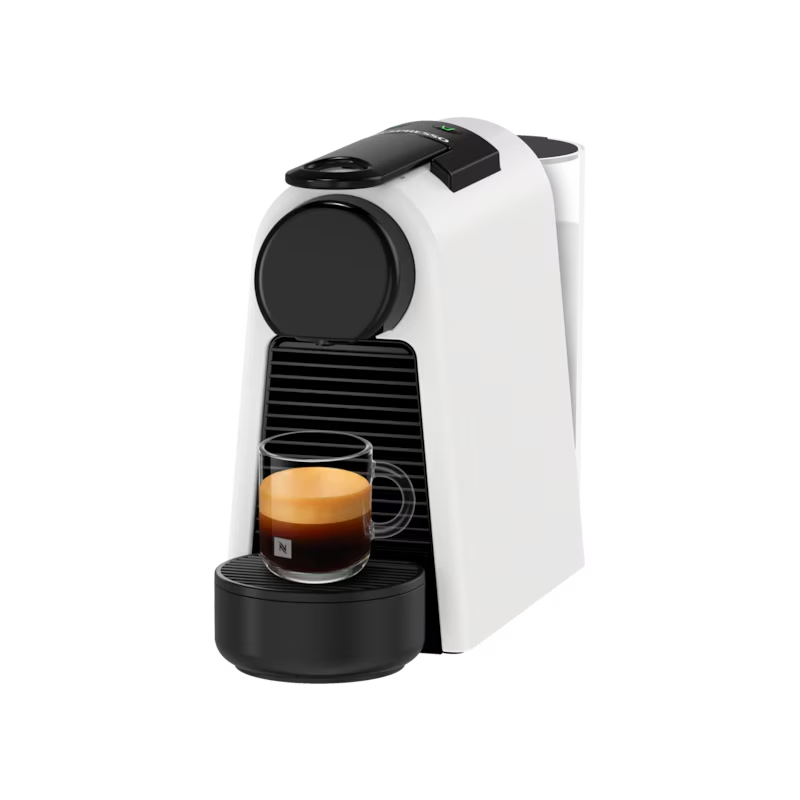
The Essenza Mini D uses the Nespresso Original capsule system but comes in a different body shape. The manufacturer lists dimensions of 11 × 20.5 × 32.5 cm for its red D model and the same 0.6-liter tank class. That makes it slightly wider than the C model in the referenced specifications while still compact.
Advantages
- Small overall dimensions
- Convenient Original capsule format
- Easy to coordinate with a tiny breakfast or coffee corner
Trade-offs
- Still requires capsule purchases and storage
- No integrated milk texture controls
- Its extra width compared with the C housing matters on very narrow counters
Best for: households that like the Essenza workflow and prefer the D profile. Do not assume that dimensions are interchangeable across Mini versions or regional SKUs.
3. Breville Bambino BES450 — for hands-on home espresso
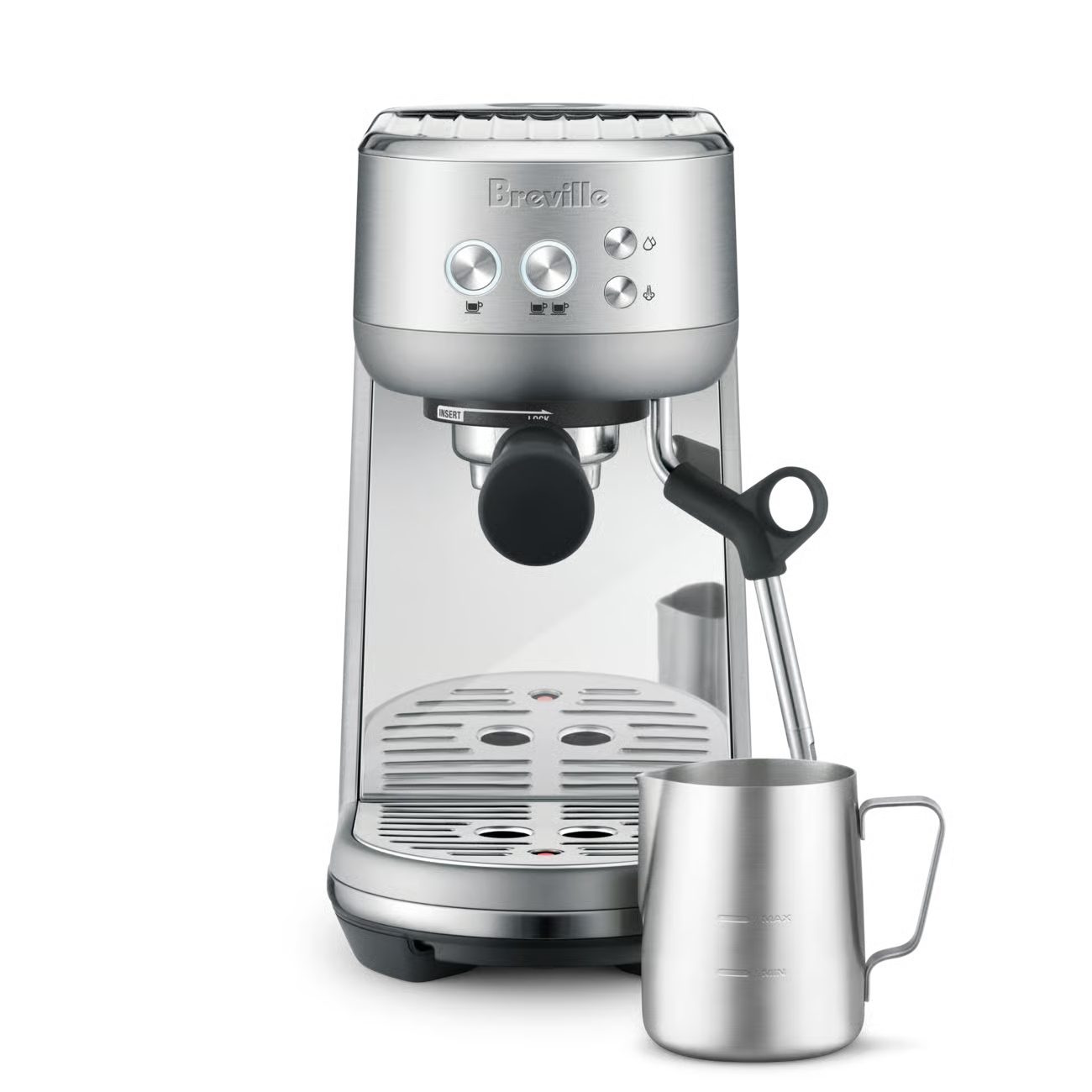
Unlike capsule machines, the Bambino is a compact manual espresso setup designed for ground coffee and milk drinks. The official US product page lists a steam wand and includes a portafilter, baskets, tamper and milk jug. That shifts the practical footprint: your working area must hold the grinder or coffee grounds, a tamper, a knock or waste container, and space for milk steaming.
Advantages
- More direct control over coffee preparation than capsules
- Steam wand for milk-based drinks
- A route into learning espresso skills
Trade-offs
- More cleanup and training
- A capable espresso grinder can substantially increase cost and space
- Requires room in front and beside the machine during preparation
Best for: a person who enjoys espresso as a hobby and can make room for the workflow. Not ideal for: someone who wants to press one button and leave. The US product page is a specification reference, not evidence that a US machine is suitable for European electrical outlets.
4. SMEG BCC02 — narrow but deep bean-to-cup alternative
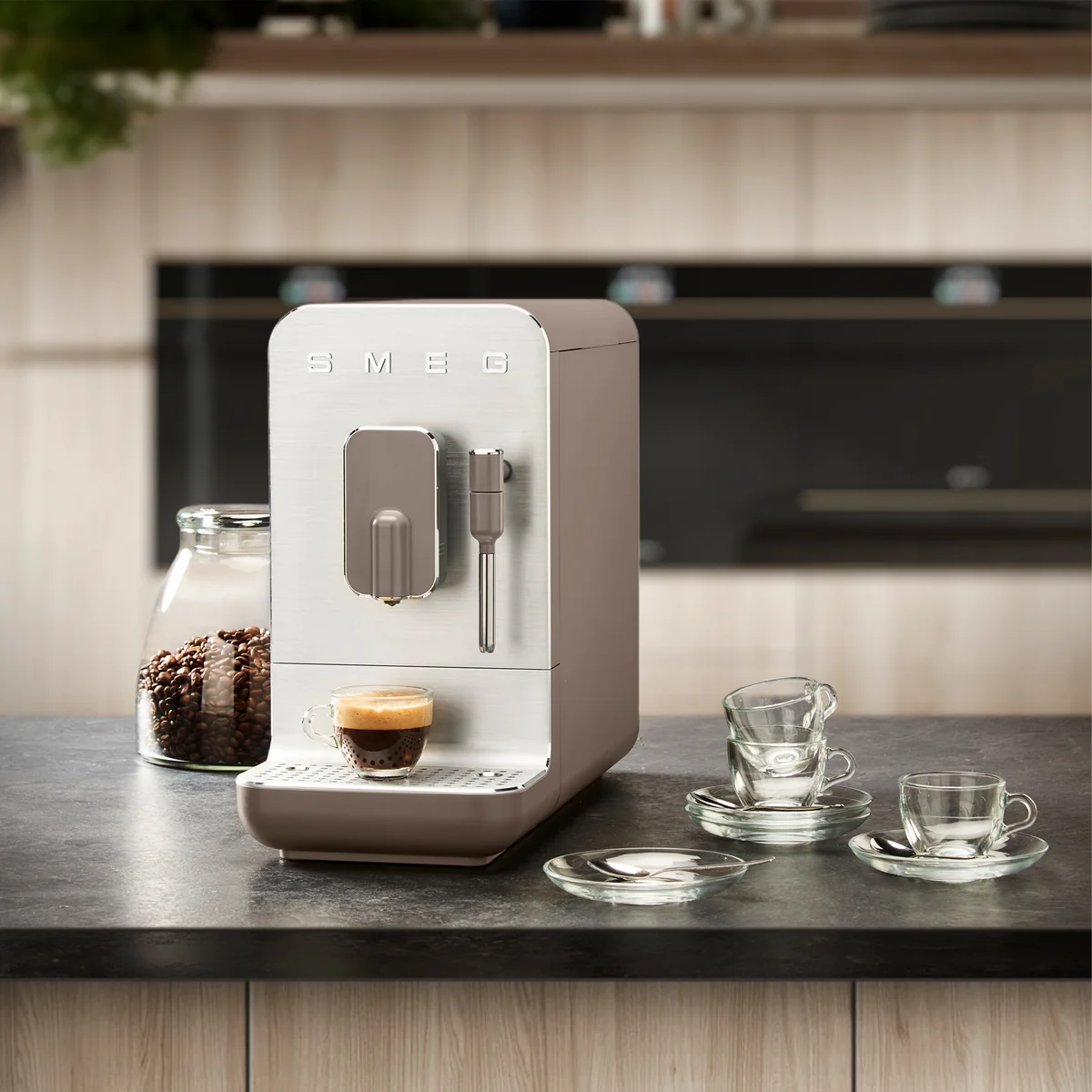
The BCC02 is approximately 18 cm wide, but the manufacturer lists 43.3 cm of depth, plus a height of 33.6 cm. That is an important small-space distinction: a machine can be narrow yet still protrude much farther than a shallow countertop allows. The BCC02 includes grinding and milk-steam capability in a single automatic machine, with maintenance requirements such as rinsing, grounds disposal and descaling.
Advantages
- Bean-to-cup brewing without a separate counter grinder
- Adjustable grind settings and coffee volume
- Integrated steam function for milk drinks
Trade-offs
- Deep machine body despite narrow width
- Higher cleaning and maintenance complexity than a basic capsule machine
- More substantial initial investment and weight
Best for: someone who values whole beans and a relatively narrow machine, and has sufficient counter depth. Not ideal for: shallow counters or rooms where front clearance is limited.
Which compact coffee machine should you choose?
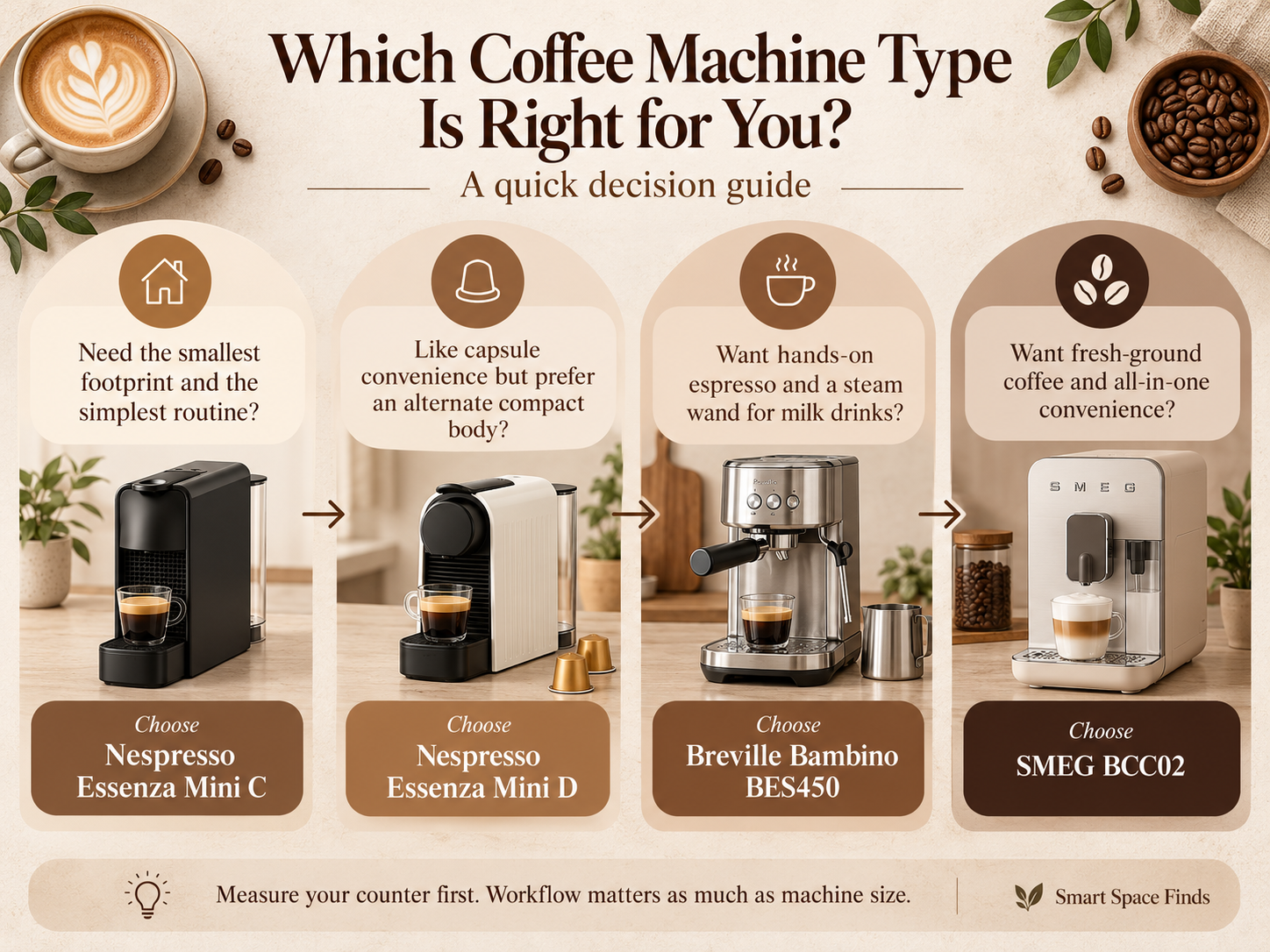
| If you care most about… | Start by considering… | Why |
|---|---|---|
| The narrowest listed body | Essenza Mini C | Its cited 8.4 cm body width is particularly compact |
| Easy capsule coffee | Either Essenza Mini variant | Simple espresso/lungo preparation |
| Learning espresso and steaming milk | Breville Bambino | Hands-on portafilter and steam workflow |
| Fresh beans without separate grinder | SMEG BCC02 | Integrated bean-to-cup system |
These are use-case matches, not laboratory-awarded winners. A machine that fits your morning routine can be a better purchase than a feature-rich option you rarely use.
Measure the entire coffee-station footprint
Before ordering, tape a rectangle on your counter matching the machine’s listed width and depth. Then simulate pouring water into the tank, opening a capsule lever or bean lid, removing the drip tray, placing mugs, and cleaning after use. Check cabinets above the machine, the location of sockets, cord reach, and the manufacturer’s ventilation and electrical directions. Never place a machine where hot steam will continually strike vulnerable cabinetry.
How much does the brewing method cost over time?
Instead of comparing promotional sticker prices, calculate cost per drink using locally available capsules or beans. For example, at two coffees daily, a difference of €0.30 per serving represents about €219 over 365 days. This is an arithmetic illustration, not an estimate of what any specific brand’s coffee costs. Add descaling supplies, filters, milk frother or grinder, warranty conditions and delivery. A manual machine can be economical over time but may require significant accessories upfront.
What we would avoid buying for a tiny kitchen
Avoid an espresso machine that requires a separate grinder if you do not have room for both; avoid a tall unit under low cupboards if refilling happens from above; and avoid overbuying accessories before you know the workflow. Large built-in milk systems can be convenient but require regular cleaning. A decorative coffee tray is optional: usable preparation space is not.
A practical 7-day setup plan
- Day 1: Measure width, depth, height and access to power.
- Day 2: Choose capsules, ground espresso or whole-bean automatic coffee.
- Day 3: Estimate annual consumable costs.
- Day 4: Compare maintenance and cleaning routines.
- Day 5: Verify model-specific specifications and local service support.
- Day 6: Place a paper template on the counter and test mug access.
- Day 7: Buy only the core machine and essentials, leaving room to improve later.
Countertop fit: four real-world layouts
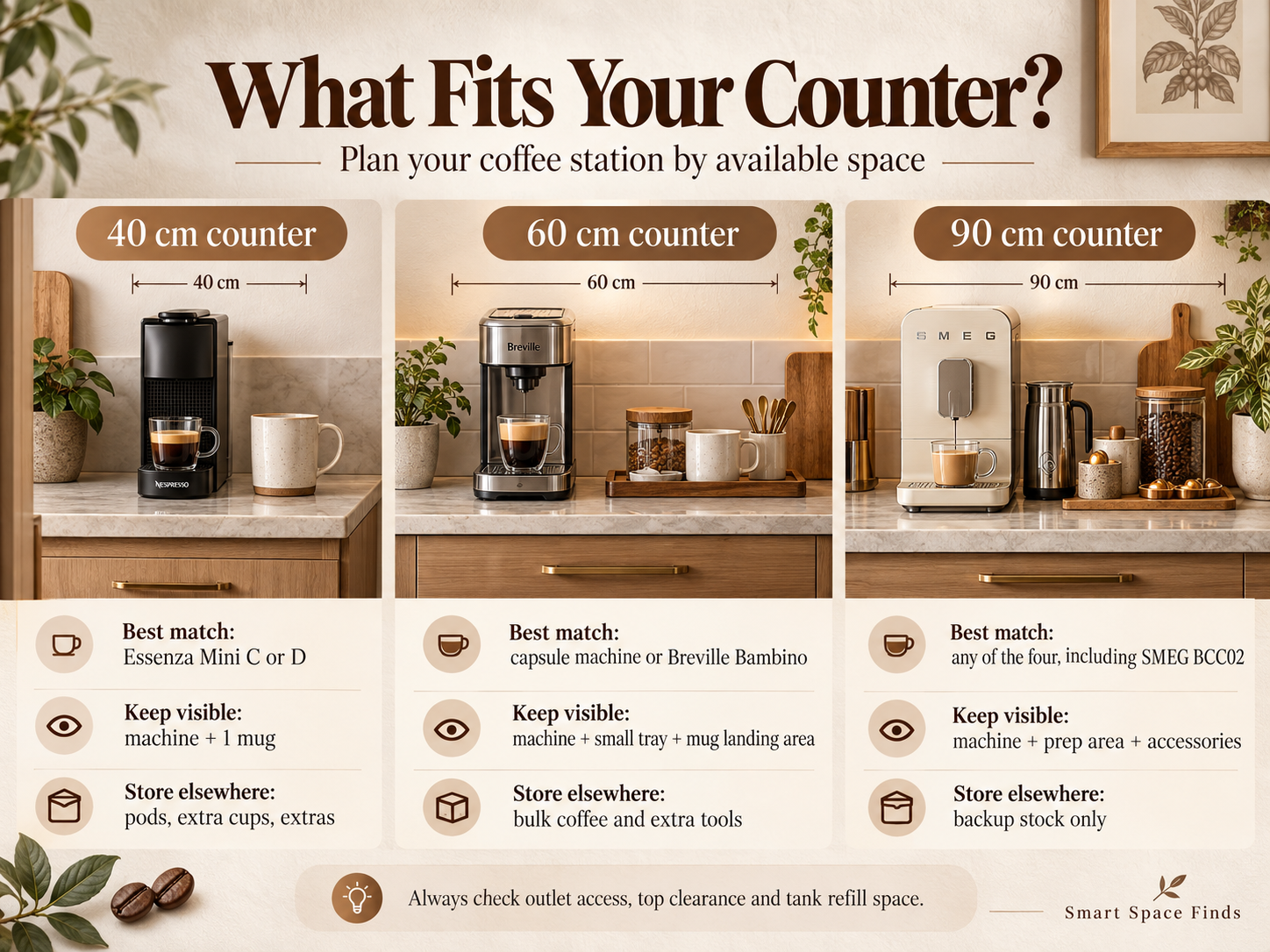
40 cm available width: The Essenza Mini C is a plausible candidate because its published body is 8.4 cm wide, but allow space for placing the mug, opening its lever and reaching the tank. Do not interpret this example as a manufacturer’s installation clearance.
60 cm available width: A capsule brewer and a small tray for one or two cups can often be organized together. Make the tray removable so the surface can be wiped after spills. A manual espresso machine requires more working area for tamping, steaming and disposing of pucks.
90 cm available width: Consider a dedicated preparation zone beside the machine, keeping a grinder or reusable coffee tools within reach. Retain an unobstructed section of counter so the coffee bar does not take over food preparation.
Shallow counter: Compare machine depth before comparing width. The SMEG BCC02, for example, is listed at approximately 43.3 cm deep; it may be inconvenient on a shallow surface even though its body is relatively narrow.
Capsule vs manual espresso vs bean-to-cup
| Factor | Capsule | Manual espresso | Bean-to-cup |
|---|---|---|---|
| Preparation skill | Low | Moderate to high | Low to moderate |
| Daily cleanup | Used capsules and tray | Portafilter, basket, steam wand | Grounds, rinse cycle, milk tools |
| Other equipment | Optional frother | Grinder often needed | Usually built-in grinder |
| Recurring costs | Capsules and descaling | Beans, filters, cleaners | Beans, cleaners and servicing |
| Typical reason to choose | Convenience | Control and craft | Integrated whole-bean routine |
Maintenance checklist before buying
Ask how frequently the machine needs descaling for your water hardness, whether the drip tray is removable, and how quickly the used-capsule or grounds container fills. Milk-handling systems need special attention: clean the steam wand immediately after milk use and follow the manufacturer’s hygiene instructions. A machine that is hard to clean is especially inconvenient on a compact counter with little spare work surface.
Source notes and date-sensitive details
Product specifications were reviewed for this working draft in October 2026. The products shown are illustrative alternatives across brewing systems, not direct performance-test winners. Dimensions, regional model names, bundled accessories and electrical specifications can vary. This site has not conducted hands-on tests.
Frequently asked questions
Is a capsule machine always the best choice for a small kitchen?
No. Capsules simplify the workflow, but recurring costs, recycling, flavor preferences and the need for milk preparation matter. A compact manual machine can fit well if you have a place for accessories.
Does a narrower coffee maker automatically fit a smaller countertop?
No. Depth, top access, steam clearance and working space matter as much as width.
Can I place an espresso machine directly beneath a wall cabinet?
Only where the exact manufacturer instructions permit sufficient clearance and heat or moisture will not damage surrounding surfaces. Consider how the water tank opens and how steam is directed.
Which machine should a beginner buy?
Start with what you drink: capsules for convenience, hands-on espresso for a hobby, and bean-to-cup for an integrated whole-bean routine. There is no universal winner.
Related reading and editorial transparency
Design your station with our Coffee Station Ideas for Small Kitchen Counters guide and its free printable planner. For adjacent organization ideas, see Small Kitchen Countertop Organizers That Save Space.
Editorial disclosure: This guide uses manufacturer documentation and practical suitability criteria. We have not physically tested the machines described. There are currently no affiliate purchase links on this draft. Any future links will be labeled, and prices and availability will be checked closer to publication.