
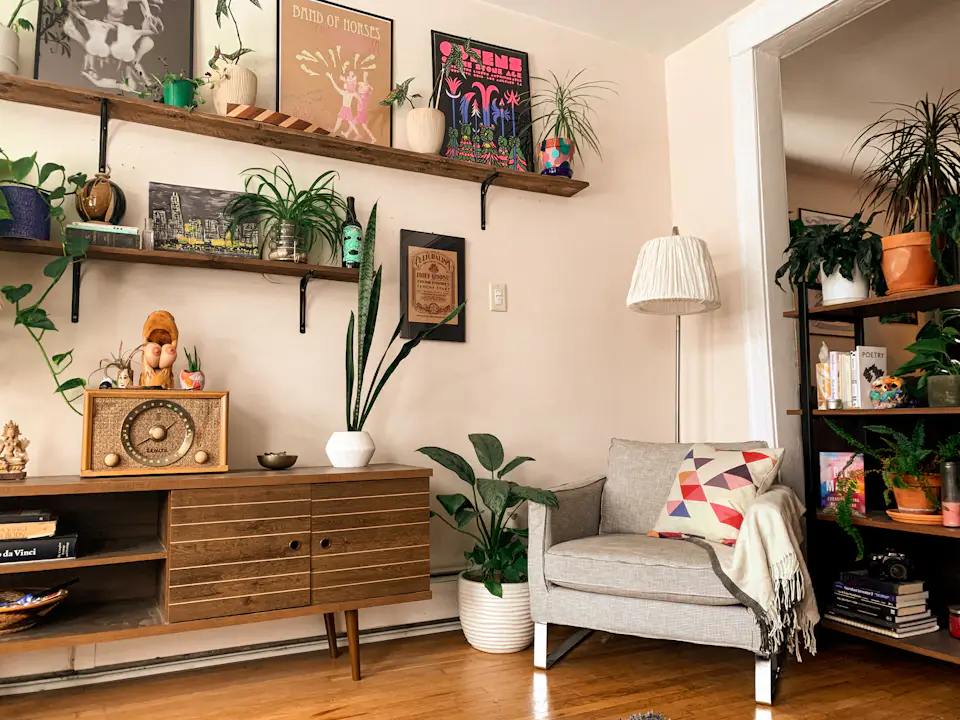
Your home can say something about you without looking like a themed room. Start with what you genuinely love doing—listening to music, cooking, making things, traveling, or collecting art—and give that interest one useful, beautifully considered place.
Personal home decor works best when it supports real life. These five ideas are designed for apartments, small rooms, and renters, with simple ways to start using items you already own.
Start here: the 3-question filter
- What do I already enjoy doing at home?
- Where could that activity happen more comfortably?
- What can I move, display, or organize before buying anything?
Choose one interest and one small area. That is enough to begin.
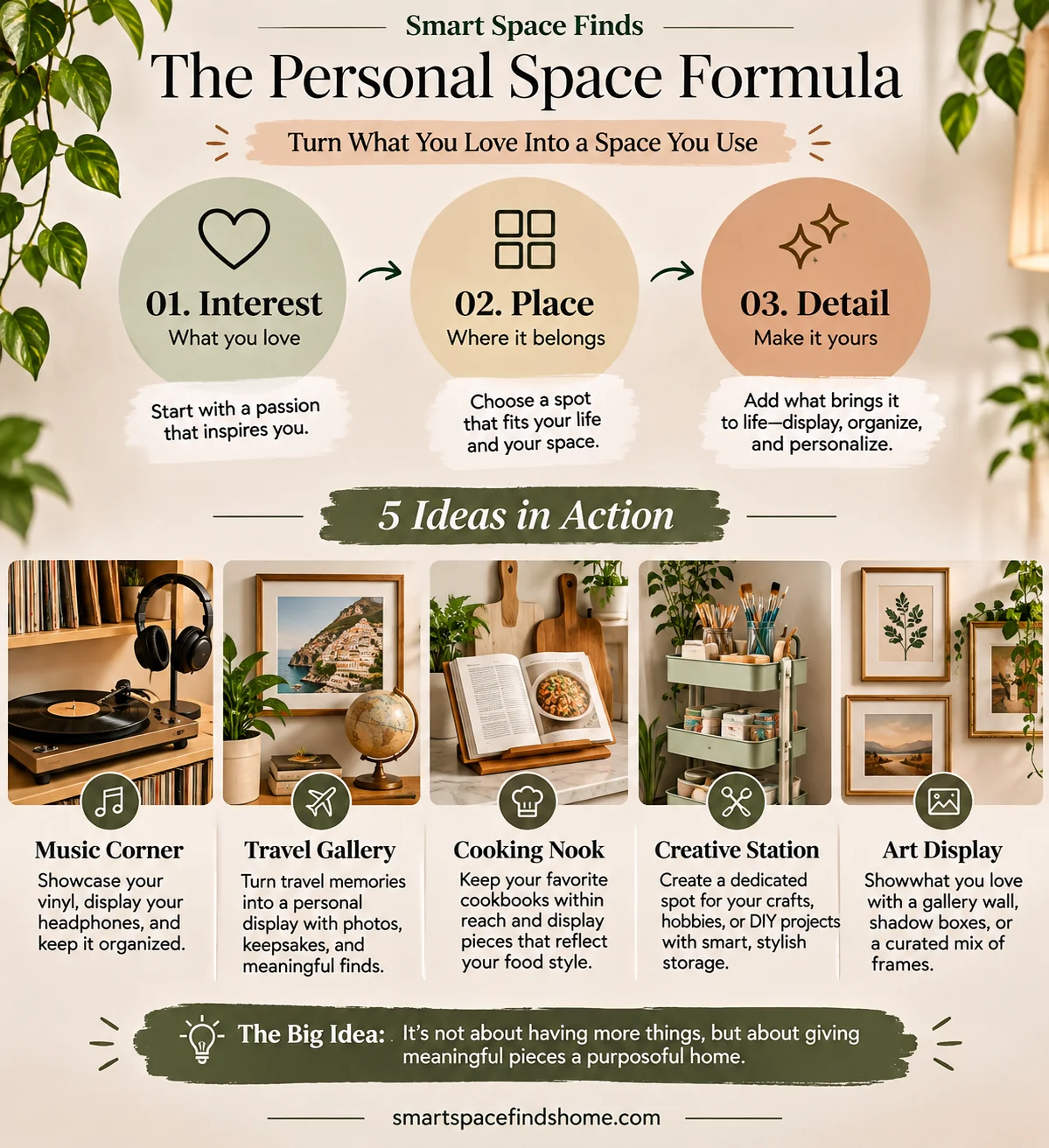
5 personal home decor ideas that feel like you
Each idea below includes a space-saving setup, a no-buy first step, and a practical detail to consider.
1. Make a music corner you actually use
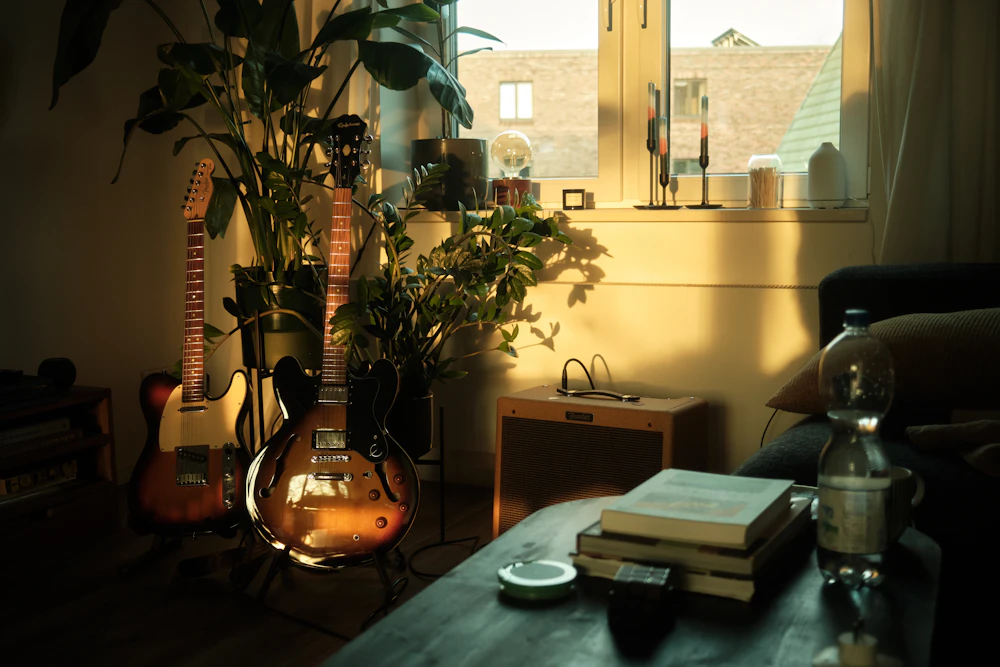
A listening corner can be as simple as a comfortable chair, your favorite headphones, and a small surface for a speaker or record player. The point is to make listening convenient, not to build an expensive audio setup.
- Try it without shopping: Turn a chair toward a calm spot and gather the music equipment you already own.
- Small-space move: Use a narrow shelf or existing side table instead of a large media console.
- Keep it functional: Route cables away from walking paths, allow equipment ventilation, and store records upright according to manufacturer guidance.
The personal detail: Display one album cover or instrument that has a story behind it. Let the rest of the collection be easy to access rather than permanently on show.
The Listening Corner Edit
Optional upgrades for a listening space you already enjoy: begin with cable-safe headphone storage, then consider record-care accessories only if you own vinyl.
New Bee Headphone Stand (Black)
A compact stand for keeping headphones off a work surface.
EURPMASK Rotating Clamp-On Headphone Hanger
A clamp-on option when desk space is limited.
Lamicall Adhesive Headphone Hanger
An adhesive hanger for a compatible, clean mounting surface.
Big Fudge 4-in-1 Vinyl Record Cleaning Kit
Cleaning tools for an existing vinyl collection.
Invest In Vinyl 100 Clear LP Outer Sleeves
Outer sleeves for organizing and protecting record jackets.
Hudson Hi-Fi Anti-Static Vinyl Inner Sleeves
Replacement inner sleeves for compatible LP records.
Retro 3-Speed Bluetooth Record Player
An optional player to evaluate for size and playback needs.
Affiliate disclosure: As an Amazon Associate, Smart Space Finds earns from qualifying purchases. These links may earn us a commission at no extra cost to you. Product availability and options can change.
2. Curate a travel memory display—not a souvenir pile
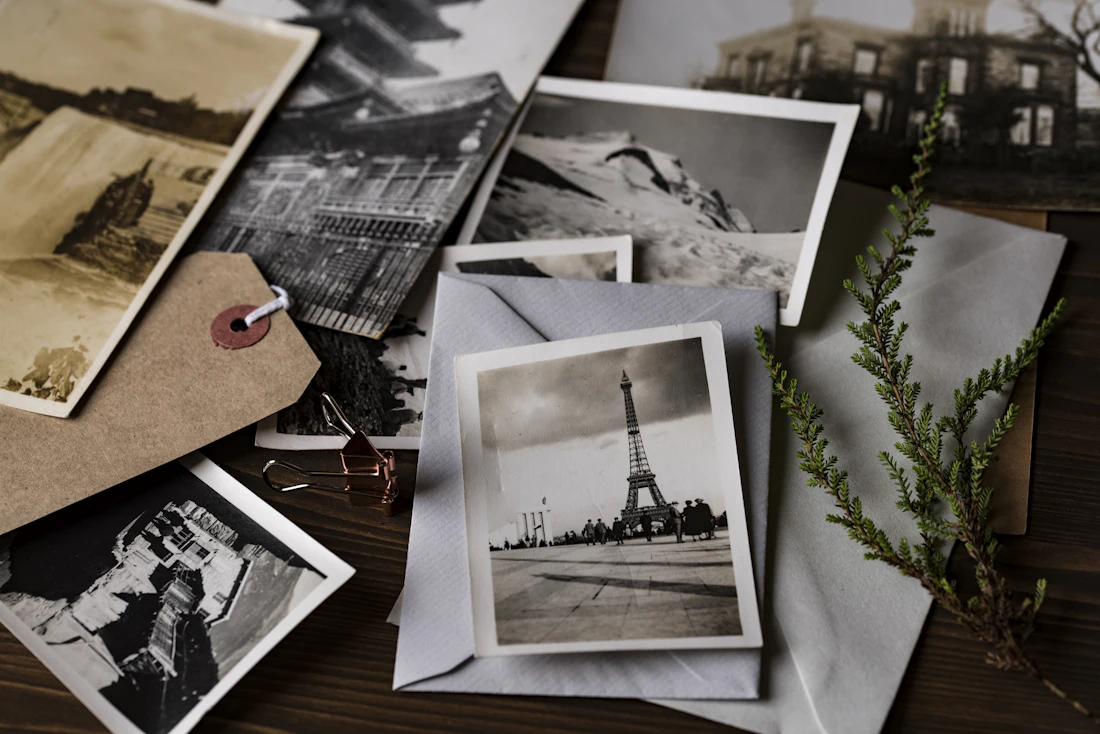
A small gallery of your favorite places can make a home feel more personal than an entire shelf crowded with keepsakes. Start with one meaningful photo, a postcard, or a small object that reminds you of a trip.
- Try it without shopping: Rotate three existing photographs in frames you already have.
- Small-space move: Use one shelf, tray, or compact gallery grouping instead of several scattered displays.
- Keep it functional: Leave visual breathing room around objects and use renter-friendly hanging solutions only where suitable for the wall and object weight.
The personal detail: Pair a photograph with a handwritten note about why that place matters. You do not need to display every trip to tell your story.
The Memory Display Edit
Frames and shadow boxes help give a few favorite photographs or keepsakes a defined place. Measure your wall or shelf before choosing a format.
Americanflat 11×14 Shadow Box Frame
A deeper display format for selected three-dimensional mementos.
Califortree 8×8 Shadow Box with Linen Back
A compact shadow box with a fabric-style background.
iRahmen 5×7 Rustic Frame Set of 4
A coordinated set for a small series of travel photographs.
iRahmen Scalloped 5×7 Frame Set of 2
Decorative frames for two meaningful images.
Picrit 4×6 Gallery Frame Set of 12
A larger set for a unified gallery arrangement.
Gaevuian Antique Gold Trim 5×7 Frame
A single accent frame for a favorite memory.
Affiliate disclosure: As an Amazon Associate, Smart Space Finds earns from qualifying purchases. These links may earn us a commission at no extra cost to you. Product availability and options can change.
3. Turn your cookbooks into a working kitchen feature
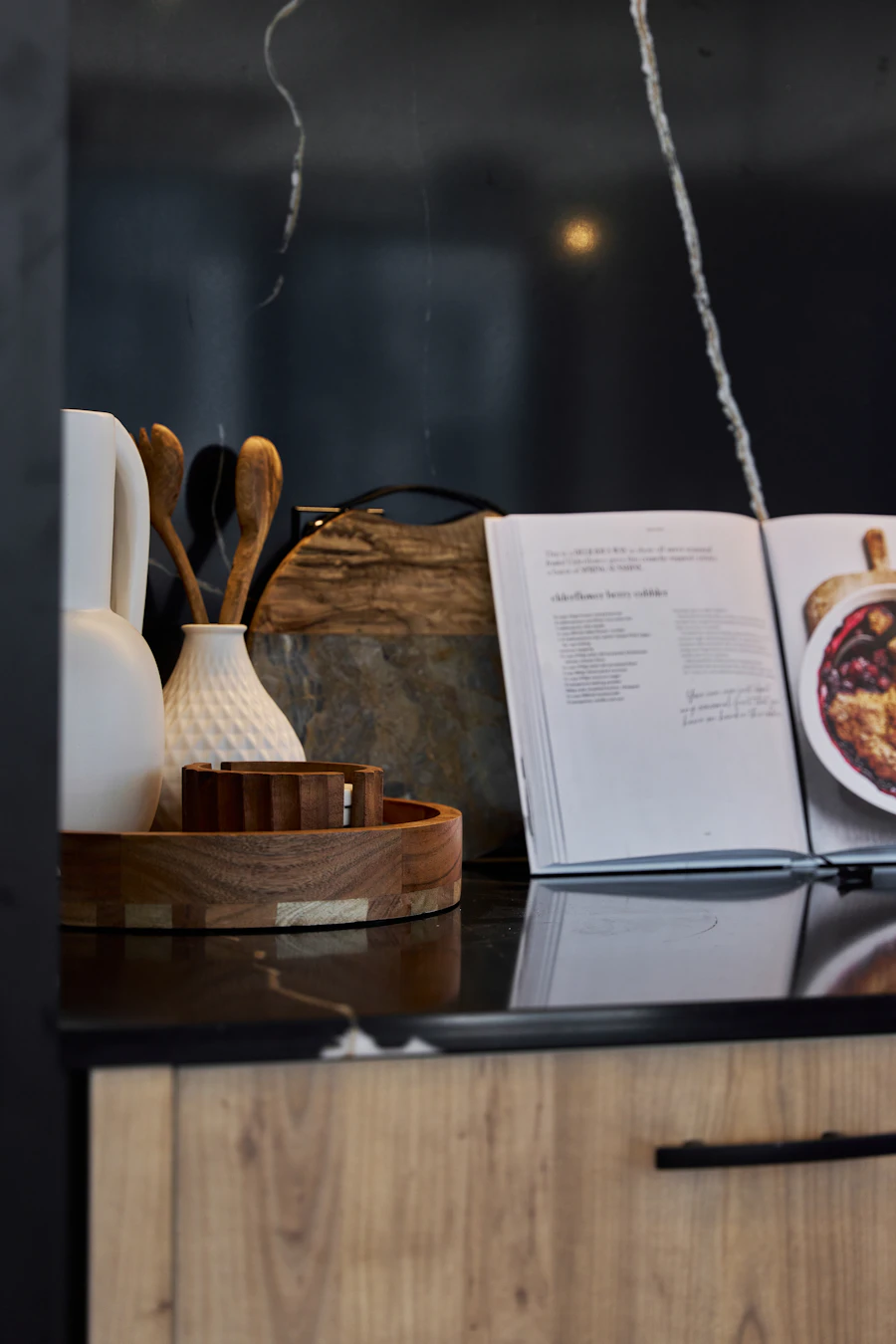
If cooking is one of your interests, the books you reach for can belong in your everyday setup. A few well-chosen cookbooks on a shelf or stable counter spot can add color and personality while making recipes easier to use.
- Try it without shopping: Bring your three most-used cookbooks together and store the rest elsewhere.
- Small-space move: Use an existing shelf or a secure bookend rather than consuming valuable prep space.
- Keep it functional: Position paper away from burners, heat, steam, and wet prep areas. Keep an open recipe at a safe, readable height.
The personal detail: Add a recipe card from a family dish or a favorite handwritten note beside the books.
If you are also organizing a compact cooking area, explore our one-wall kitchen storage ideas for complementary solutions.
The Working Cookbook Shelf
Choose tools that make your favorite recipes easier to reach, not extra objects that reduce your prep space. Keep books safely away from heat and splashes.
PUERSI Rustic Wooden Cookbook Stand
A wooden stand for an open recipe book.
Aredpoook Acrylic Display Stands (6-Pack)
Small display stands that can be used for suitable lightweight items.
TR-LIFE 6-Inch Plate / Book Display Stand
A small stand for a compatible book or plate.
SONGMICS Bamboo and Steel Cabinet Organizer Shelves
Additional shelf levels for appropriately sized storage areas.
VFINE Black Metal Bookends
Minimal metal supports for an accessible cookbook row.
MaxGear Tree-Design Metal Bookends
Decorative metal bookends for a personal collection.
Adjustable Desktop Recipe Holder
An adjustable option for recipes and reading material.
Affiliate disclosure: As an Amazon Associate, Smart Space Finds earns from qualifying purchases. These links may earn us a commission at no extra cost to you. Product availability and options can change.
4. Give your creative hobby a ready-to-use station
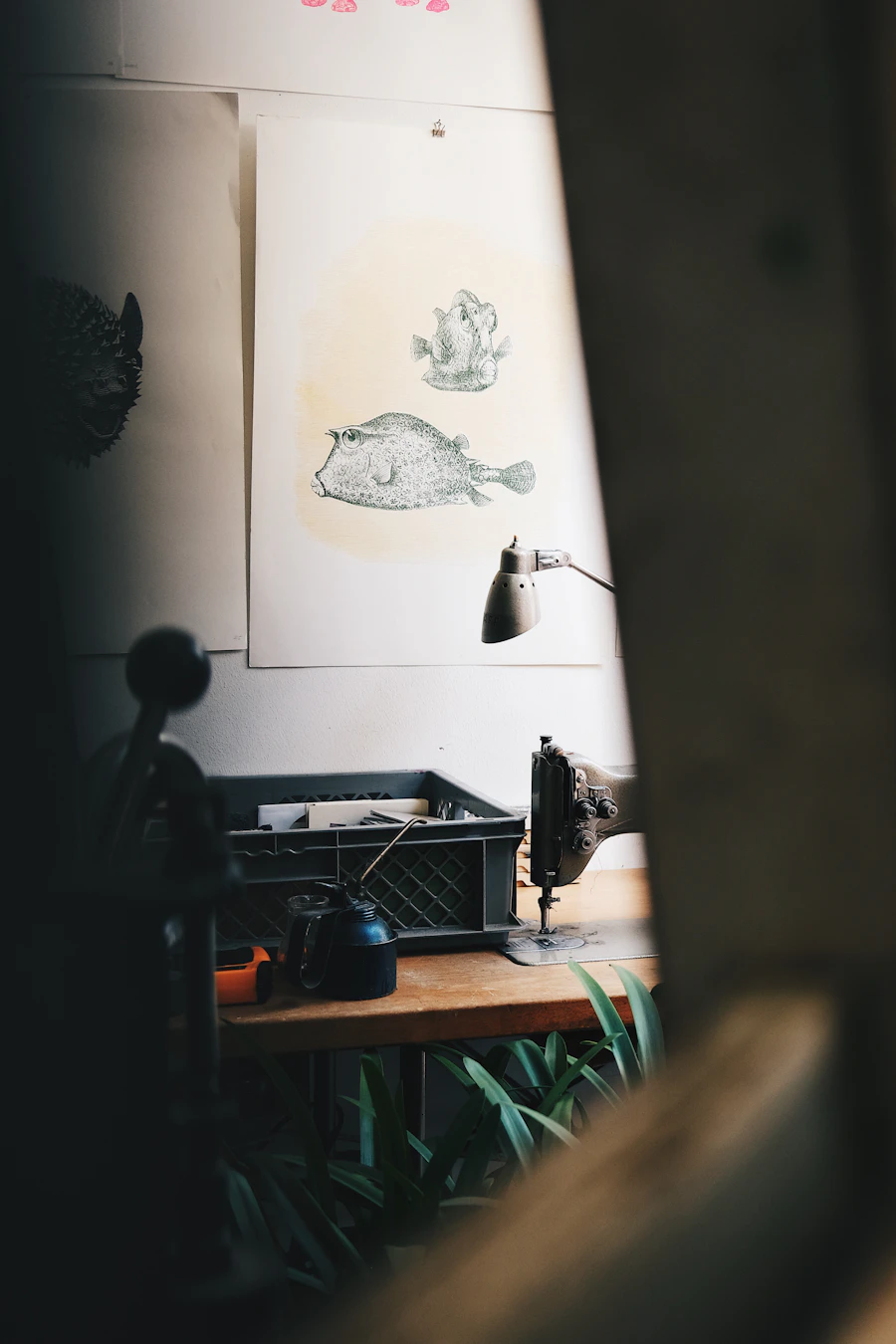
Drawing, sewing, journaling, and crafting are easier to return to when setup and cleanup take only a moment. You do not need a dedicated studio: a small portable station can make a meaningful difference.
- Try it without shopping: Place supplies for your most common activity into a tray, box, or container you already own.
- Small-space move: Choose a portable kit that can move to a dining table and pack away after use.
- Keep it functional: Separate sharp tools and potentially hazardous supplies, follow storage labels, and keep materials out of children’s and pets’ reach when applicable.
The personal detail: Leave one finished piece or sketch visible, rather than allowing unfinished supplies to spread across the room.
The Creative Station Edit
Start with the supplies you already have. These organizers make most sense when a portable kit, a small cart, or sorted tools would help you return to a hobby more often.
YASONIC 3-Tier Metal Rolling Craft Cart
A rolling storage option for a dedicated hobby zone.
Pipishell 3-Tier Rolling Organizer
Tiered mobile storage for a compact creative setup.
Simple Houseware Heavy Duty 3-Tier Cart
A multi-level cart for frequently used supplies.
Citylife 17QT Craft Box with Removable Tray
A portable container for sorted crafting tools.
CRAFTSMAN 30-Drawer Modular Organizer
Small drawers for hobby parts and notions.
Goovilla 3-Tier Cart with Drawer
A cart combining open storage and a small drawer.
YFXCVSL 4-Tier Stackable Storage Bins
Stackable bins for sorting larger hobby items.
Double-Sided Scrapbook Adhesive Tape Rollers
An adhesive supply for paper-based projects.
Affiliate disclosure: As an Amazon Associate, Smart Space Finds earns from qualifying purchases. These links may earn us a commission at no extra cost to you. Product availability and options can change.
5. Build an art wall that grows with you
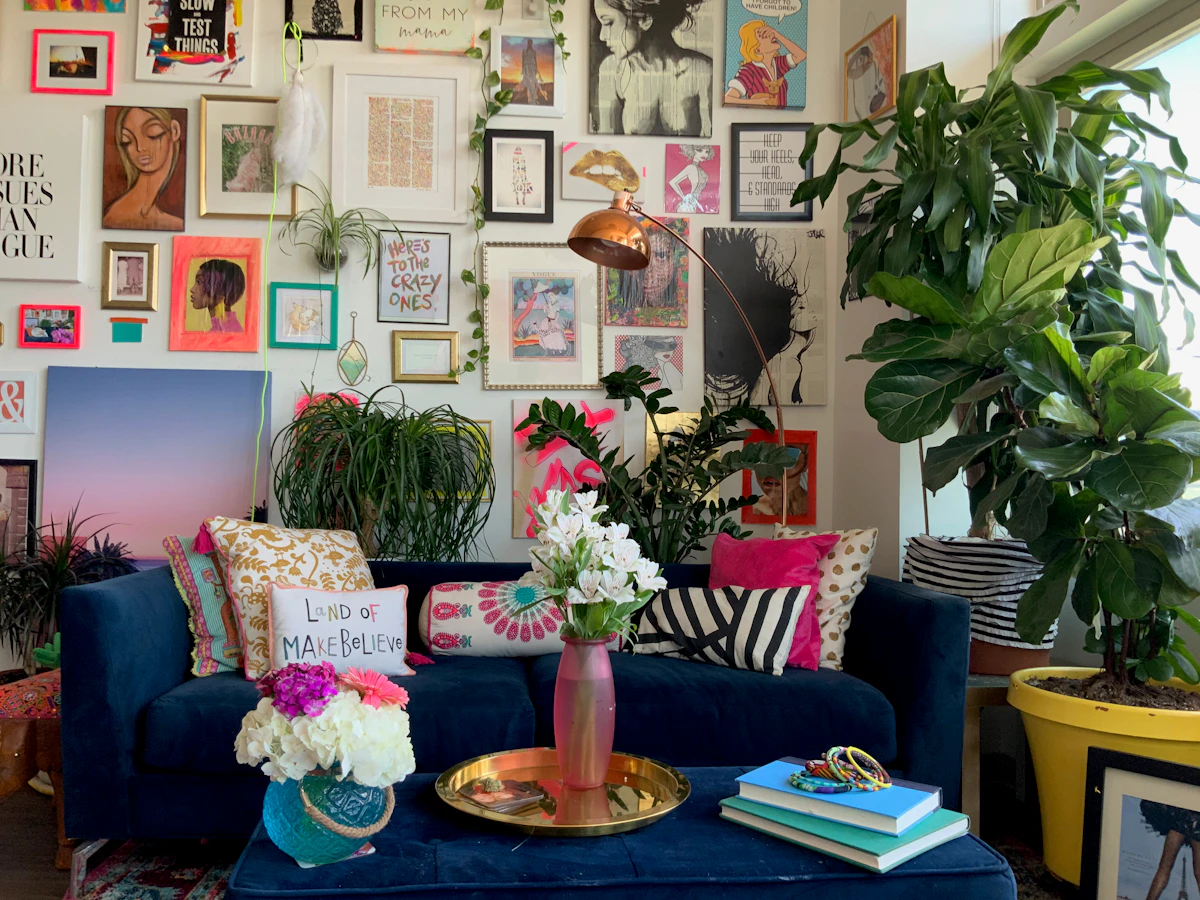
Art does not need to match one predetermined aesthetic. A collection of prints, drawings, photographs, or original pieces can show what you are drawn to right now—and evolve as your interests change.
- Try it without shopping: Rearrange artwork you already own on the floor before committing to a wall layout.
- Small-space move: Start with one larger piece or two coordinating frames instead of a wall full of tiny items.
- Keep it functional: Consider viewing height, secure mounting, sunlight exposure, and appropriate permission for any art you reproduce.
The personal detail: Mix a personal photograph with a piece you acquired because you genuinely loved it, not because it matched a trend.
The Personal Gallery Wall Edit
Start with an arrangement on the floor, then select hardware based on the actual wall surface, weight, frame size, and manufacturer instructions.
Command Large 15lb Picture Hanging Strips
Removable-style hanging strips for compatible surfaces and loads.
Command Medium and Large Hanging Strips
Mixed-size hanging strips for suitable frames.
Command XL 20lb Heavyweight Hanging Strips
Higher-capacity strips, subject to the product’s installation requirements.
KURUI 303-Piece Picture Hanging Hardware Kit
A hardware assortment for traditional frame mounting.
Amazon Basics Picture Hanging Hardware Assortment Kit (220 Pieces)
A multi-piece hanging hardware assortment for suitable framed artwork; verify wall material and weight limits before installation.
Americanflat 16×20 Wide Black Picture Frame
A larger frame for a statement piece or matted print.
iRahmen Wavy 5×7 Picture Frame Set of 2
A decorative pair to mix with simpler frames.
Command Medium Picture Hanging Strips
A smaller hanging-strip option for compatible lightweight frames.
Affiliate disclosure: As an Amazon Associate, Smart Space Finds earns from qualifying purchases. These links may earn us a commission at no extra cost to you. Product availability and options can change.
Which idea fits your space?
| Interest | Smallest useful setup | First no-buy action |
|---|---|---|
| Music | Chair + small surface | Move your listening gear together |
| Travel | One shelf or 2–3 frames | Choose your favorite three memories |
| Cooking | Narrow bookshelf space | Gather your most-used recipes |
| Creative hobby | Portable tray or box | Sort one activity’s tools |
| Art | One picture or paired frames | Test an arrangement on the floor |
The practical takeaway
The 10-minute personal-style edit
- Choose one interest. Pick something you already do, not a hobby you feel you should have.
- Choose one location. Find a shelf, corner, wall, or surface close to where the activity naturally happens.
- Choose three objects. Select one useful item, one meaningful item, and one item that makes the space comfortable.
- Remove the extra. Keep the area easy to clean and the activity easy to start.
- Live with it for a week. Notice whether you use the space more, whether it stays tidy, and what feels inconvenient.
This is a small, reversible experiment. If the arrangement does not help, change it; your home does not need to prove anything about your identity.
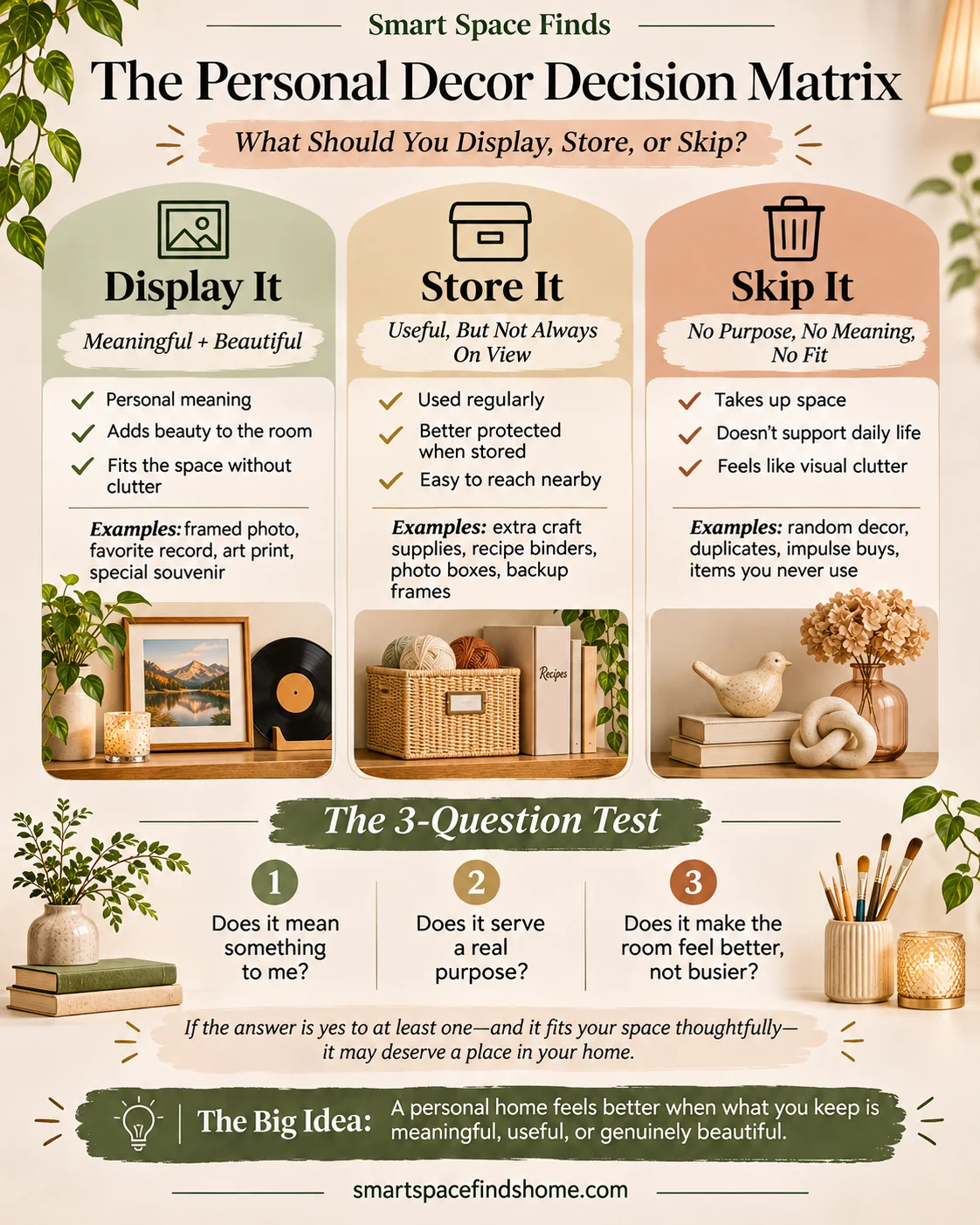
Before you buy a new decor piece
Not every personal display needs a shopping list. If you are considering a shelf, frame, lamp, organizer, or storage accessory, check these practical points first:
- Purpose: Will it make an activity easier or just add another object to maintain?
- Footprint: Measure the actual space, including clearance for doors, drawers, and walking paths.
- Flexibility: Could you move or reuse it when your interests change?
- Care: Can you clean around it and safely store what it holds?
Design principle: Buy only after a no-cost arrangement shows you what is genuinely missing.
How to keep personal decor from looking cluttered
Personal decor and clutter are not opposites—but a display needs a clear boundary. Give each collection one defined zone. Vary object heights, leave open space, and keep frequently used items reachable. If dusting or everyday cleanup becomes difficult, scale the display back.
For more ways to simplify your space without losing character, see five clever ways to make your home feel less cluttered and how to make a small home feel more comfortable.
Frequently asked questions
How do I decorate to show my personality on a budget?
Start with objects you own: books, photos, artwork, instruments, or hobby supplies. Rearranging and displaying them intentionally often makes a bigger difference than buying more decorations.
How do I show my interests in a small apartment?
Choose one compact zone per interest, prioritize functional objects, and rotate displays rather than keeping everything visible. Portable hobby stations and small framed groupings are especially flexible.
Does all my decor need to match?
No. Repeating one or two colors, materials, or frame styles can create enough visual connection while leaving room for different interests and eras.
What if my interests change?
Use flexible shelves, movable objects, and reversible arrangements before investing in permanent fixtures. A personal home should be able to evolve with you.
Make room for what matters to you
Your space should make more room for what you love doing—not more work for you.
The most interesting homes are not necessarily the ones with the most things. They are the ones where a few thoughtful details make everyday interests easier to enjoy. Start with one corner, use what you have, and let the result change as your life does.