
SMARTER EVERYDAY LIVING / THE HIDDEN DESIGN OF EVERYDAY LIFE
It is 9 p.m. The living room is finally quiet, but your charging cable has disappeared behind the sofa again. On the coffee table, yesterday’s mail is slowly taking over. Neither problem needs a room makeover. Both may have a solution tucked away in a drawer.
These clever uses for everyday objects begin with the things you already own: a clip, a tray, a spare rack, and the small details that make them useful. Instead of asking what else to buy, ask what would make tomorrow a little easier.
These five clever uses for everyday objects are not about collecting more stuff or chasing viral tricks. They are about noticing what an object can do, matching it to a real need, and knowing when a dedicated tool would work better.
The quick answer
Try binder clips for loose cable guidance, clothespins for removable labels, serving trays for portable activity stations, a spare dish rack for vertical paper storage, and rubber bands for temporary lid grip. Start with one recurring annoyance and an object you already own.
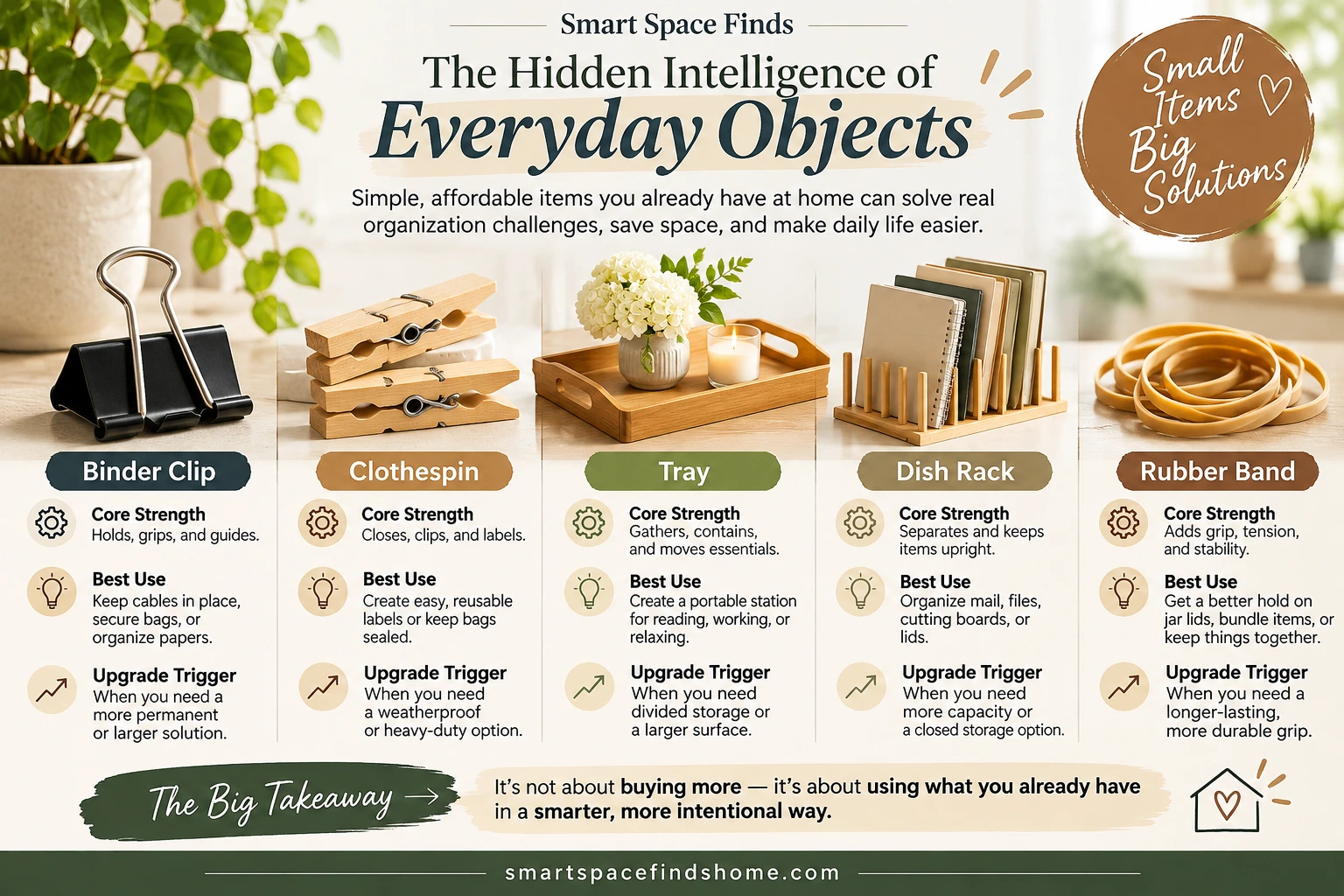
Five clever uses for everyday objects you already own
Think of these as five small design principles: attachment, labeling, containment, separation, and traction. Once you recognize the principle, you can decide whether it belongs in your own space.
OBJECT 01
Binder clips: create a removable cable landing spot
The charging cable slips behind the nightstand just when you need it. Instead of buying a desk accessory immediately, try a medium binder clip on a suitable, sturdy edge. Its wire handles can provide a loose guide for a small charging connector.
Try it at home
Protect the finish with a thin felt pad if needed. Check that the connector can pass through the handle and that the cable moves freely. Never clamp the cable itself between the metal jaws. Keep the arrangement away from chair wheels, heat, and liquids.
A spring-loaded clip combines temporary attachment with a removable loop. The useful feature is not the clamping force but the ability to establish a predictable resting place.
When to upgrade: Choose a purpose-built soft cable holder if the furniture is delicate, the clip slips, or the cable needs a tighter bend than its manufacturer permits.
Setup detail: Measure the furniture edge before choosing a clip. If the jaws cannot sit securely without damaging the finish, abandon the idea. Leave enough cable slack for normal movement.
Best for: Bedside charging, a shared desk, or a temporary guest workspace.
OBJECT 02
Clothespins: make temporary household labels
A basket of folded linens looks tidy until you need to find the guest towels. A wooden clothespin with a removable paper label gives the basket a name without committing to a permanent label. You can also use a clean clip to hold a folded dry-food bag closed temporarily.
Try it at home
Clip a label to the basket rim, not to delicate fabric. For dry snacks, fold the original packaging and attach a clean clip outside it. Follow package storage directions; a clothespin is not an airtight seal.
The spring creates a reversible attachment. This is especially useful in homes where storage categories change from week to week.
When to upgrade: Use washable purpose-made labels in damp rooms, and appropriate food storage containers where freshness or food safety requires a reliable seal.
Setup detail: Write one short category on a sturdy paper tag. Face every label toward the point of access. If the system changes, replace the tag rather than the basket.
Best for: Linen closets, craft baskets, and rotating seasonal storage.
OBJECT 03
Serving trays: build a portable activity station
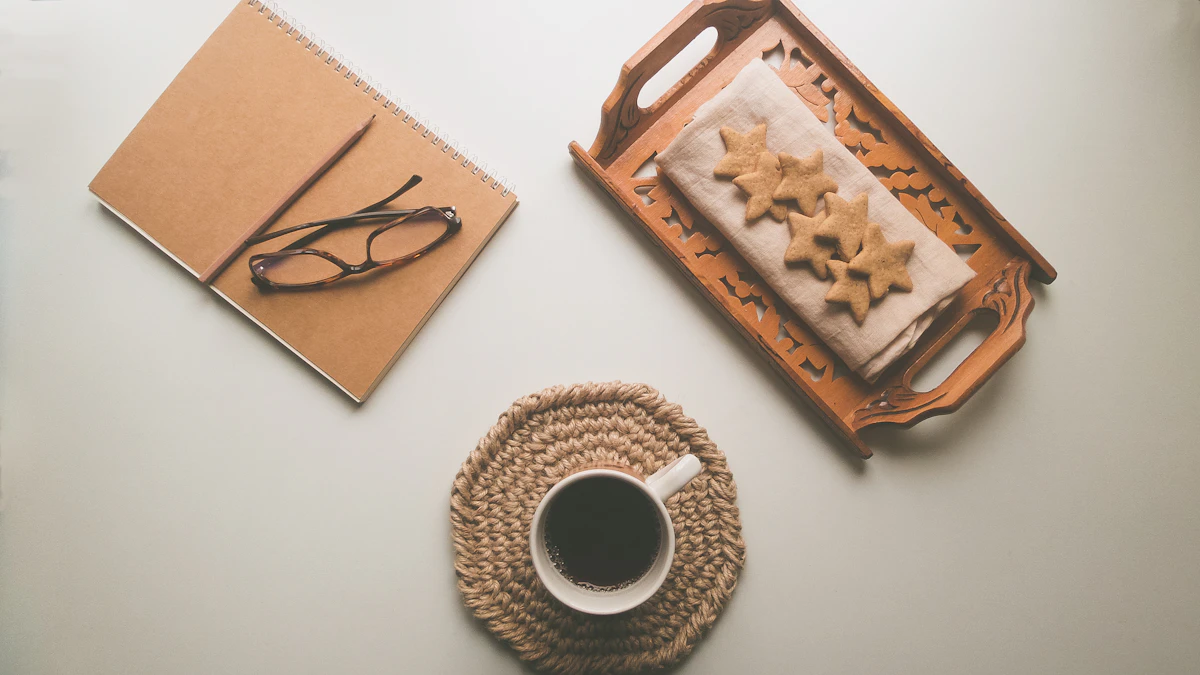
Imagine sitting down to read and discovering your glasses are in the bedroom, your pen is in the kitchen, and your notebook is on the desk. A shallow tray can bring these small items together without turning your coffee table into a permanent workstation.
Try it at home
Choose a stable tray that fits the destination surface. Group only the items needed for one activity, such as reading or journaling. Keep the load light, and carry it with two hands when necessary. Keep hot drinks and electronics separate.
A tray defines a visual boundary and converts several separate objects into one movable group. In a small home, this can make transitions between work and relaxation easier.
When to upgrade: Upgrade only if the existing tray is unstable, too heavy, or hard to grip. A lightweight caddy with handles can be better when you frequently move between rooms.
Setup detail: Give the tray a permanent parking spot and choose three to five essentials for a single activity. Remove anything that does not belong to that activity.
Best for: Reading, journaling, remote controls, or a simple evening reset.
OBJECT 04
A spare dish rack: make a vertical paper station
A few notebooks, incoming mail, and recipe folders can quickly become a pile that hides everything underneath. A clean, completely dry spare dish rack with closely spaced slots can turn that pile into a row of visible items.
Try it at home
Place the rack on a level surface. Put one lightweight folder or notebook in each compatible slot. Keep paper away from water and cooking splashes. Remove papers weekly and store confidential documents securely.
The dividers create separation and make each item easier to retrieve without disturbing the rest. It is the same organizing principle as vertical filing.
When to upgrade: If the rack tips, has sharp edges, or cannot hold your folders upright, switch to a stable file sorter. Do not repurpose your only dish rack if doing so creates another problem.
Setup detail: Check the rack footprint and slot width against your largest lightweight folder. Keep a single slot for items that need action and empty it regularly.
Best for: A small entryway console, home office, or dry kitchen command center.
OBJECT 05
Rubber bands: add temporary grip to a stubborn lid
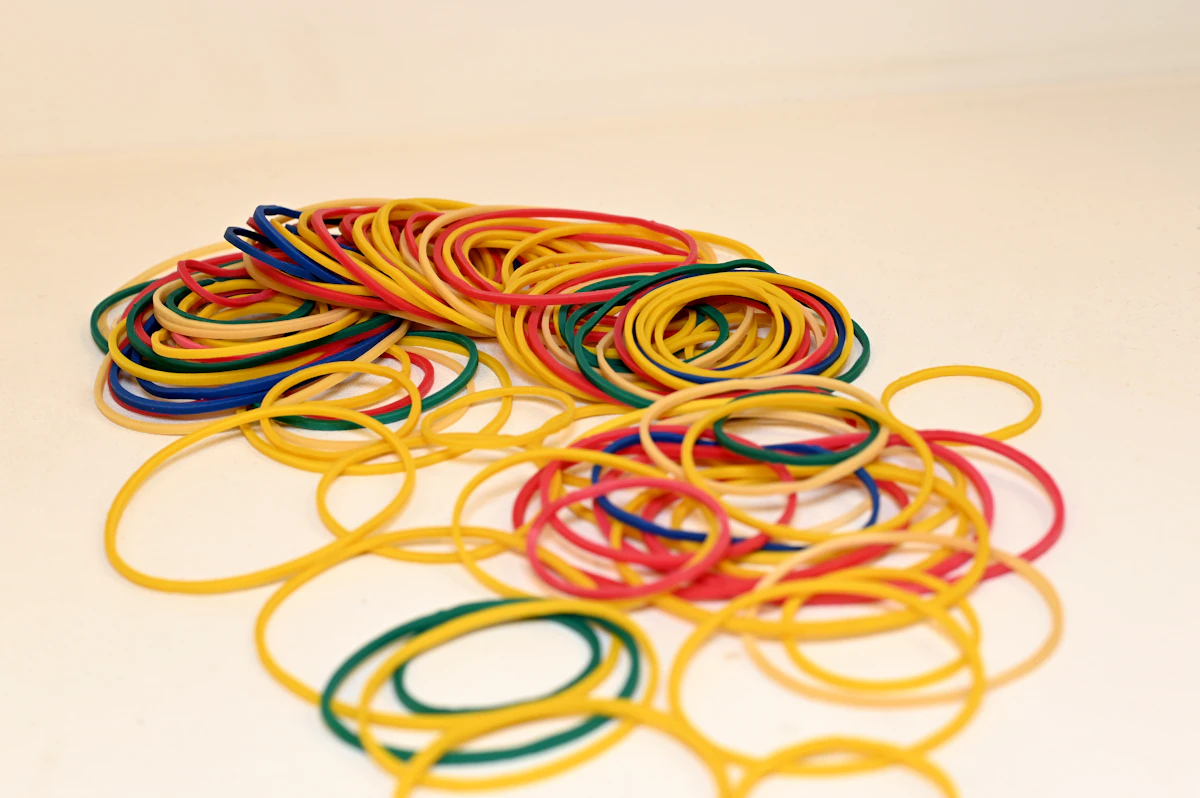
A small jar can be surprisingly difficult to open when the lid is smooth. A wide, clean rubber band around a cool, dry lid may give your hand more traction.
Try it at home
Use a band that sits securely without snapping or rolling. Hold the jar on a stable surface and turn gently. Avoid cracked glass, hot containers, and excessive force. Discard deteriorated bands and keep them away from small children and pets.
Rubber can improve friction between your hand and the lid. Better traction may reduce slipping, but it does not remove the need for safe force.
When to upgrade: If opening jars is a recurring difficulty or you have limited hand strength, a suitable ergonomic jar opener is a better long-term solution. Do not force a damaged or unusually resistant container.
Setup detail: Dry the lid and your hands first. If the band slips, stop rather than adding more force. Consider a dedicated opener if the problem persists.
Best for: Occasional difficulty gripping a cool, undamaged screw-top jar.
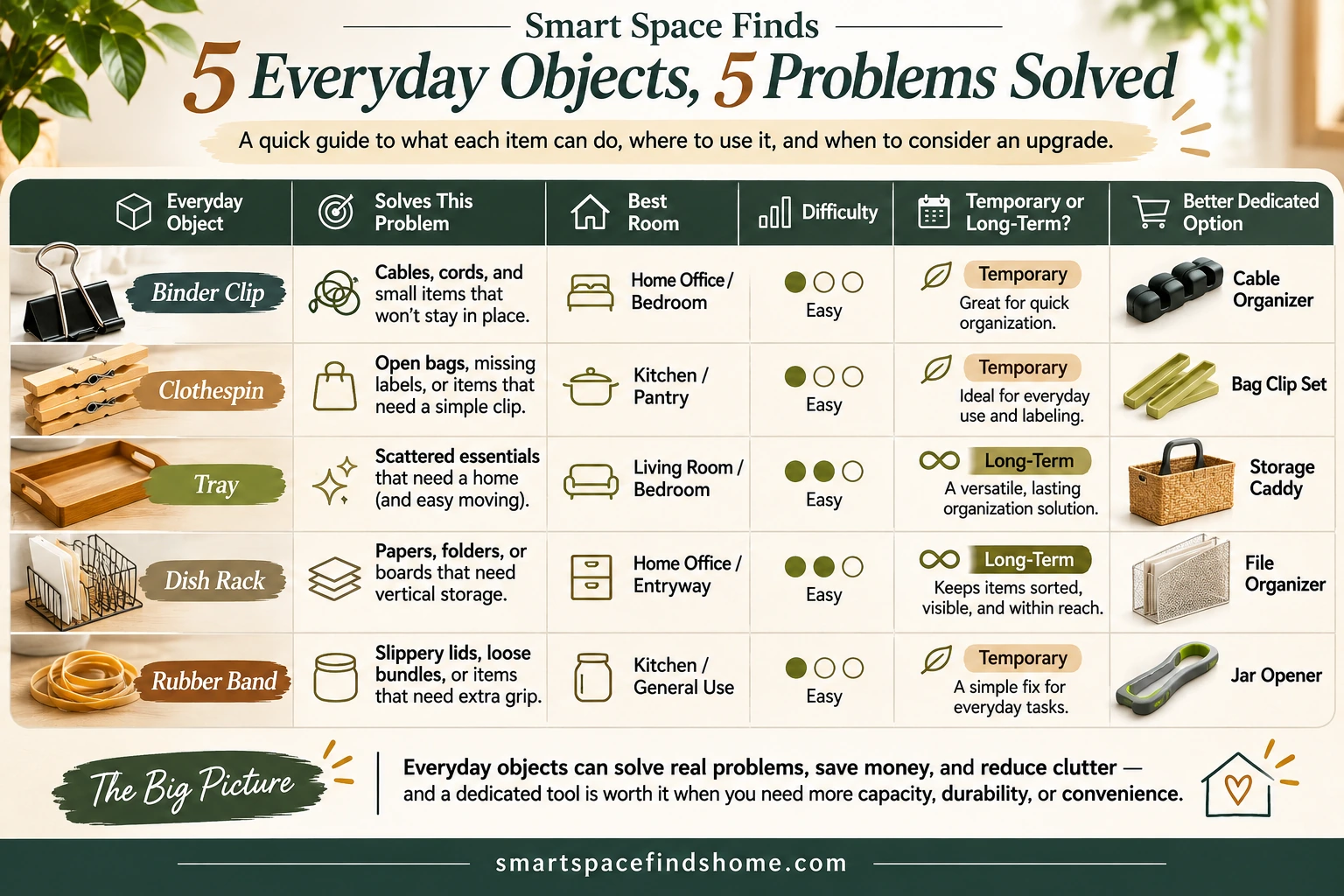
Reuse or replace? A simple decision guide
Before keeping a clever household hack, ask four questions. If any answer is no, adjust the idea or choose a more suitable tool.
- Fit: Does it fit the object and the space without pinching, tipping, or scraping?
- Safety: Does it preserve the original item’s safe operation?
- Effort: Does it remove a step rather than introduce a new chore?
- Reset: Can you return the space to normal quickly?
The Smart Space Finds rule
Use what you own first. Keep a solution only when it earns its place in your daily routine. Buy a dedicated tool when the makeshift version creates more friction than it removes.
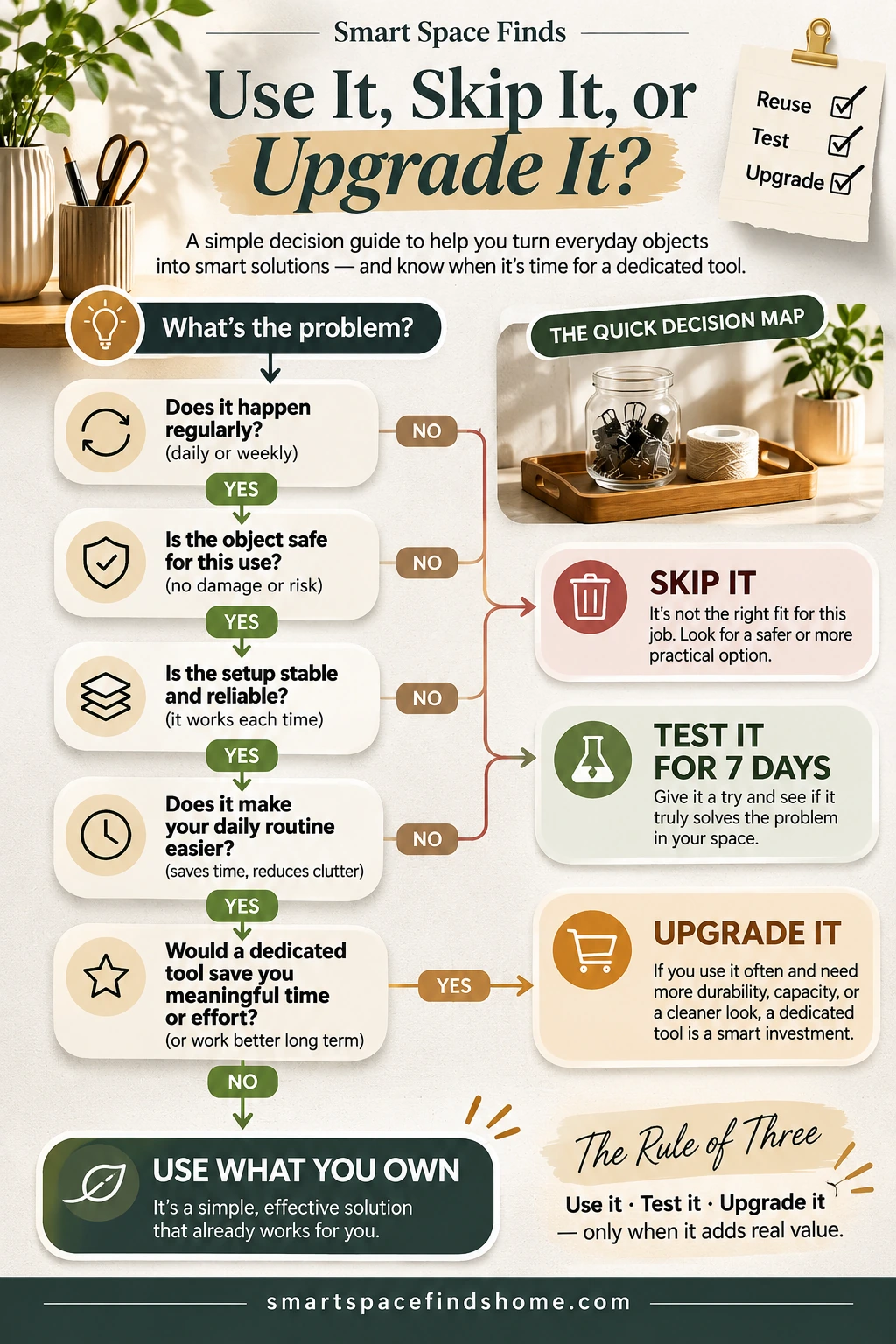
Which everyday item solves your problem?
- Cables keep disappearing
- Try a loose clip guide; upgrade to a soft cable dock if needed.
- Storage categories keep changing
- Try removable clothespin labels.
- Essentials are scattered across rooms
- Try a portable tray with a small, defined set of items.
- Paper piles are hiding important items
- Try a stable vertical rack.
- Smooth lids are hard to grip
- Try a clean rubber band or a purpose-built opener.
Room-by-room: where to start
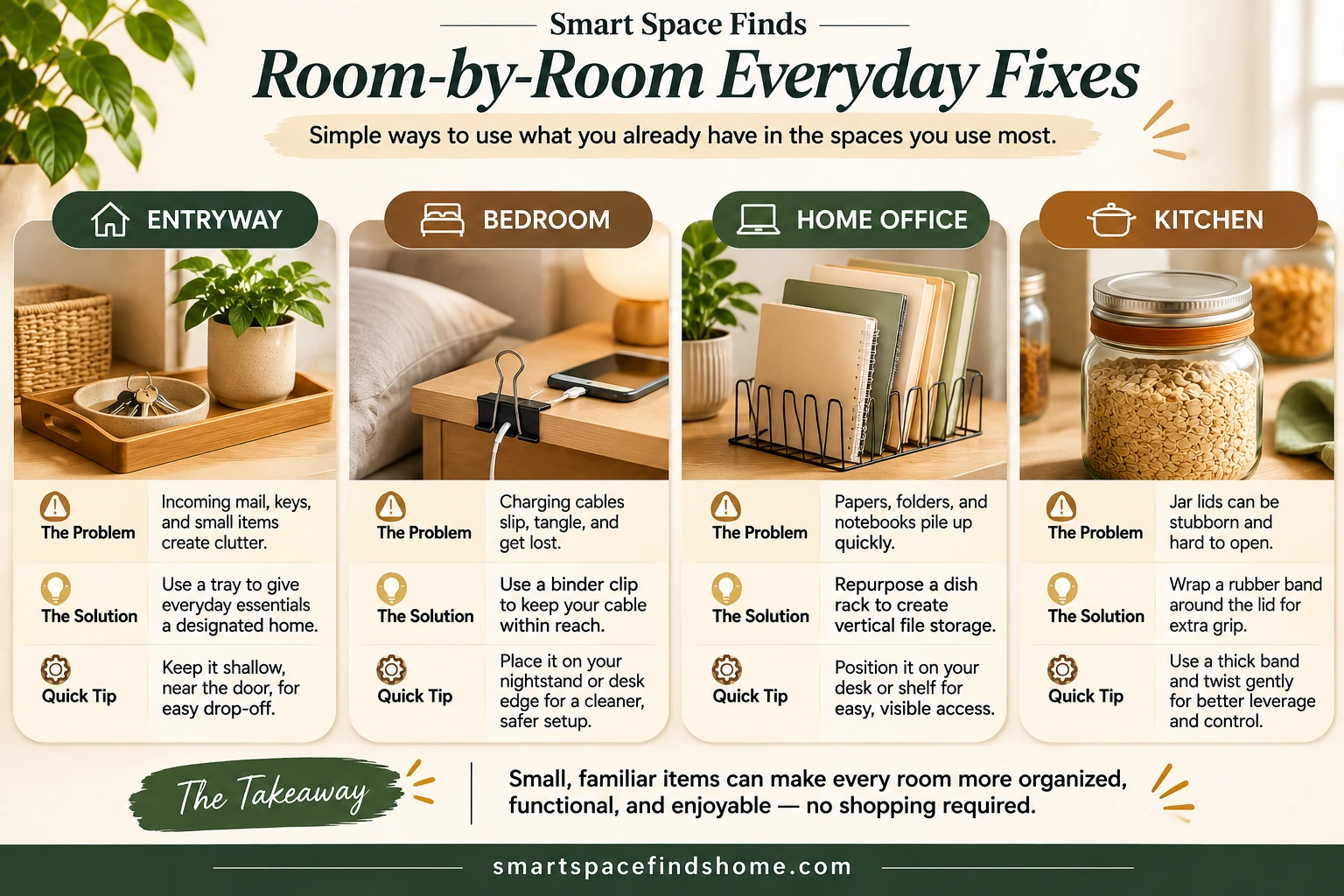
Give incoming mail a vertical landing spot and keep keys in a shallow tray.
Guide a charging cord loosely beside the bed and keep reading essentials together.
Use removable labels for changing projects and a rack for active folders.
Use clean clips for temporary dry-package closure and a suitable grip aid for cool lids.
Make practical objects look intentional
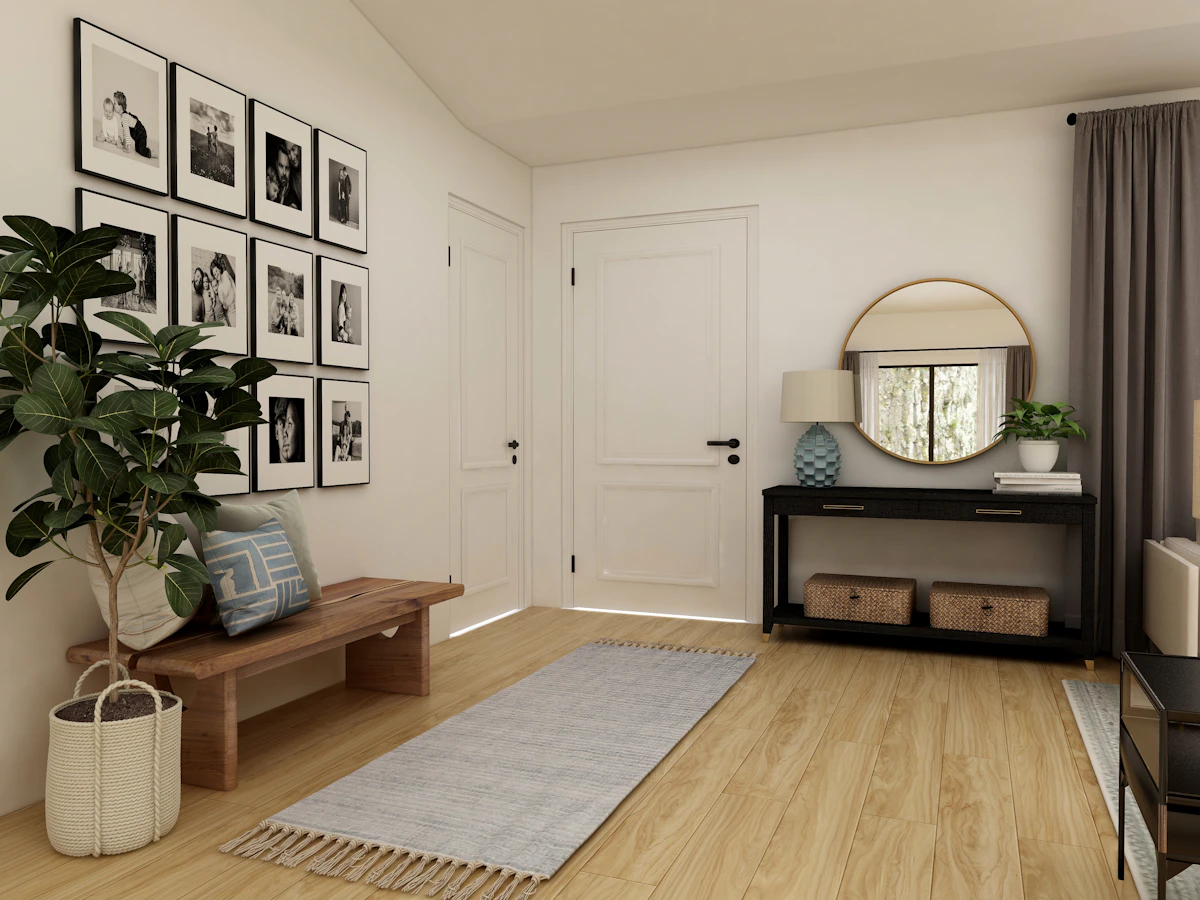
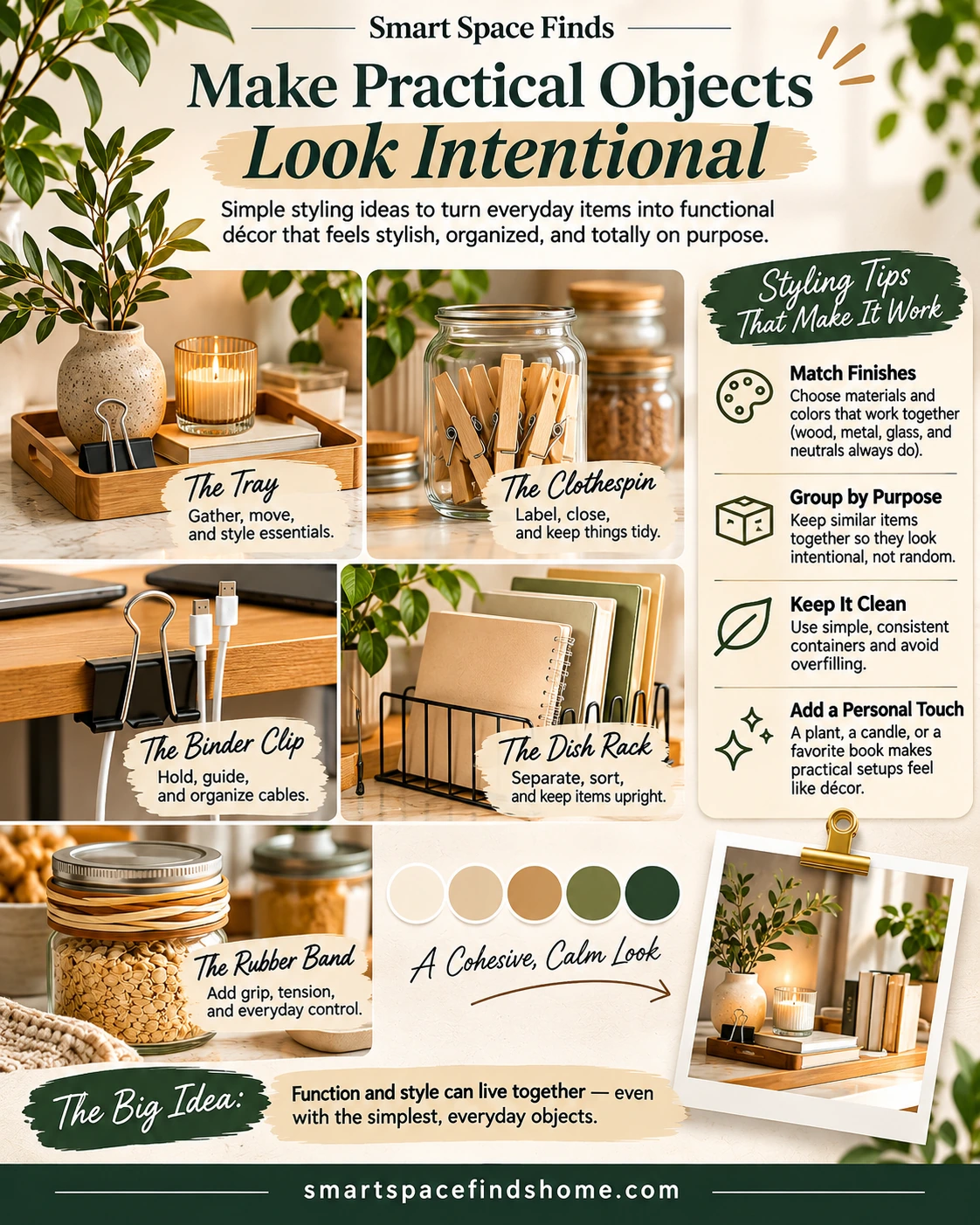
Useful does not have to mean visually busy. Group small accessories by finish, keep the visible collection limited, and place the object where the task actually happens. A wooden tray can warm up a desk, while a dark metal clip can blend into a black cable setup. In a small room, leaving some empty surface is often more valuable than adding another container.
For more ways to improve the spaces where daily tasks happen, explore our functional desk setup ideas and small-space solutions.
Three signs a clever idea is actually creating clutter
It needs constant adjustment, it takes up more space than the original problem, or nobody else in the household knows how to use it. In any of those cases, simplify the setup rather than adding another layer of organization.
For renters, prioritize removable arrangements and check the furniture finish before attaching anything. In shared homes, agree on a single landing spot for common items. If an arrangement is difficult to use because of limited dexterity, choose a purpose-made accessible alternative rather than trying to make a clever trick work.
The seven-day no-buy experiment
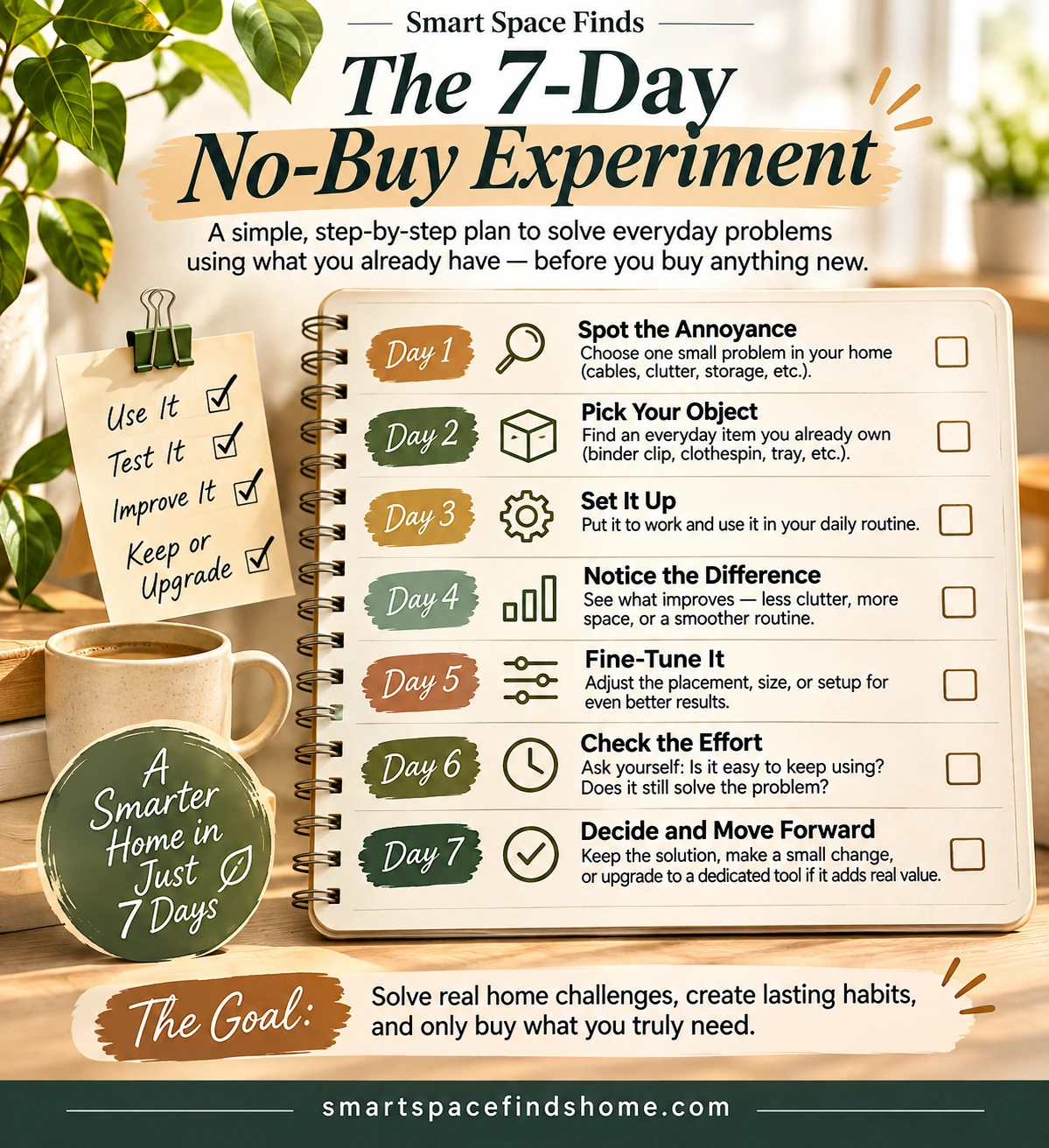
Pick one of the five ideas, then give it a week. Record how often the problem occurs and whether the new arrangement actually helps. This is a personal observation exercise, not a promise of measurable savings.
If you discover that a dedicated accessory is genuinely needed, our guide to low-cost everyday essentials can help you think through the purchase.
Frequently asked questions
What are some clever uses for everyday household objects?
Binder clips can guide small cables, clothespins can hold temporary labels, trays can group activity essentials, spare dish racks can separate lightweight folders, and rubber bands may improve grip on dry, cool lids.
How can I organize my home without buying organizers?
Start with the items you already have. Assign each one a defined task and location. Avoid keeping spare objects without a specific use, and remove solutions that make a space harder to maintain.
Are household hacks safe for every object?
No. Materials, dimensions, and manufacturer instructions vary. Avoid using improvised tools with heat, electrical hazards, heavy loads, damaged glass, or food-contact situations that require specialized equipment.
When is a dedicated organizer worth buying?
When the task happens frequently and the improvised solution is unstable, inconvenient, unsuitable for the material, or difficult to use safely.
What is the difference between hidden features and repurposing?
A hidden feature is an intended function that is easy to overlook. Repurposing applies an object’s physical properties to a different task. These five examples are primarily repurposing ideas, not claims about secret manufacturer intentions. Read our guide to hidden features in everyday things for the related topic.
Can I use these ideas in a rental apartment?
Yes, provided the arrangement is removable, stable, and suitable for the surface. Avoid clamps on fragile finishes and check any lease restrictions before attaching accessories to walls or furniture.
Look at what you own differently
A more useful home does not necessarily begin with a shopping cart. It begins with a small observation: what keeps getting in your way, and what is already nearby that might help? Keep the solutions that make life easier, and let the others go.