
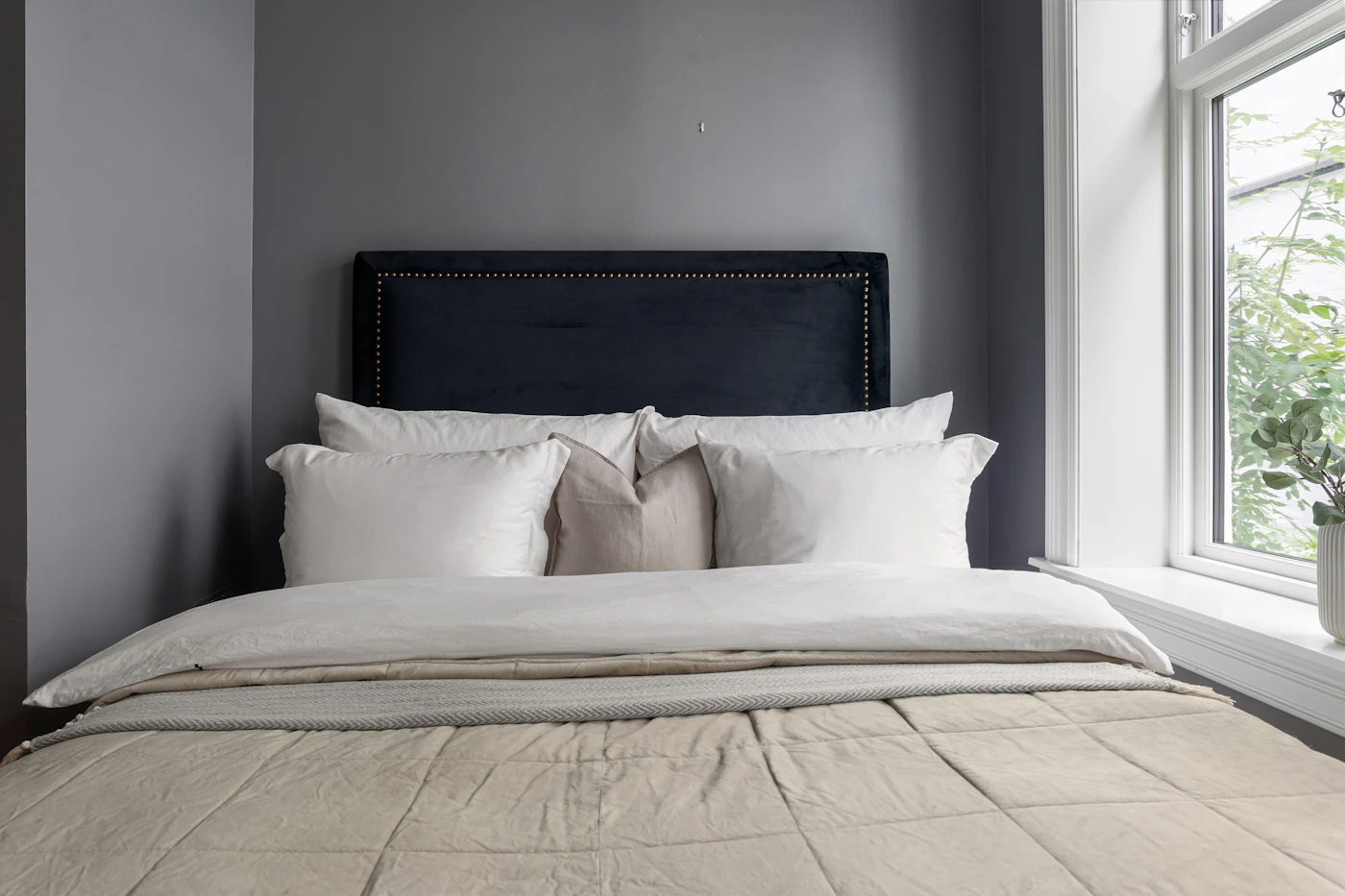
The Bedroom Edit · Small-Space Luxury
A beautifully layered bed can make even the smallest bedroom feel like a private boutique-hotel suite. The trick isn’t adding more pillows or buying the most expensive duvet. It’s choosing the right proportions, textures, and finishing details.
The designer’s shortcut: Start with breathable sheets, give your duvet generous but controlled volume, add one contrasting texture at the foot, and style only the pillows your room can visually accommodate. A restrained palette makes the layers feel intentional—not crowded.
If you’re searching for luxury bedding layering ideas for a cozy small bedroom, this guide takes you from practical bed-making techniques to fabric choices, sophisticated color palettes, seasonal swaps, and budget-conscious upgrades. Every idea is designed for a bedroom where floor space—and visual breathing room—matter.
The Five-Part Luxury Bedding Formula
Designer beds feel elevated because every layer plays a distinct role. In a small bedroom, an edited version of the hotel formula creates richness without unnecessary bulk.
Soft foundation + one generous main layer + one tactile accent + a restrained pillow arrangement + a consistent color story.
| Layer | Purpose | Small-room edit |
|---|---|---|
| Sheets | Comfort and a polished foundation | Choose a calm solid color or barely visible stripe |
| Duvet or comforter | The main volume and visual anchor | One well-fitting insert instead of multiple heavy toppers |
| Quilt or coverlet | Quiet texture and adjustable warmth | Optional; fold neatly rather than spreading multiple pieces |
| Throw | A finishing contrast in texture | One throw at the lower third |
| Pillows | Shape and height at the headboard | Sleep pillows plus one or two accents |
For a compact room, you don’t need all five pieces on the mattress at once. A fitted sheet, duvet, two sleeping pillows, and a single throw can look remarkably luxurious when the proportions and materials are right.
A considered bed feels luxurious before you add a single decorative pillow.
The anatomy / An editorial reference
The Six Layers of a Beautiful Bed
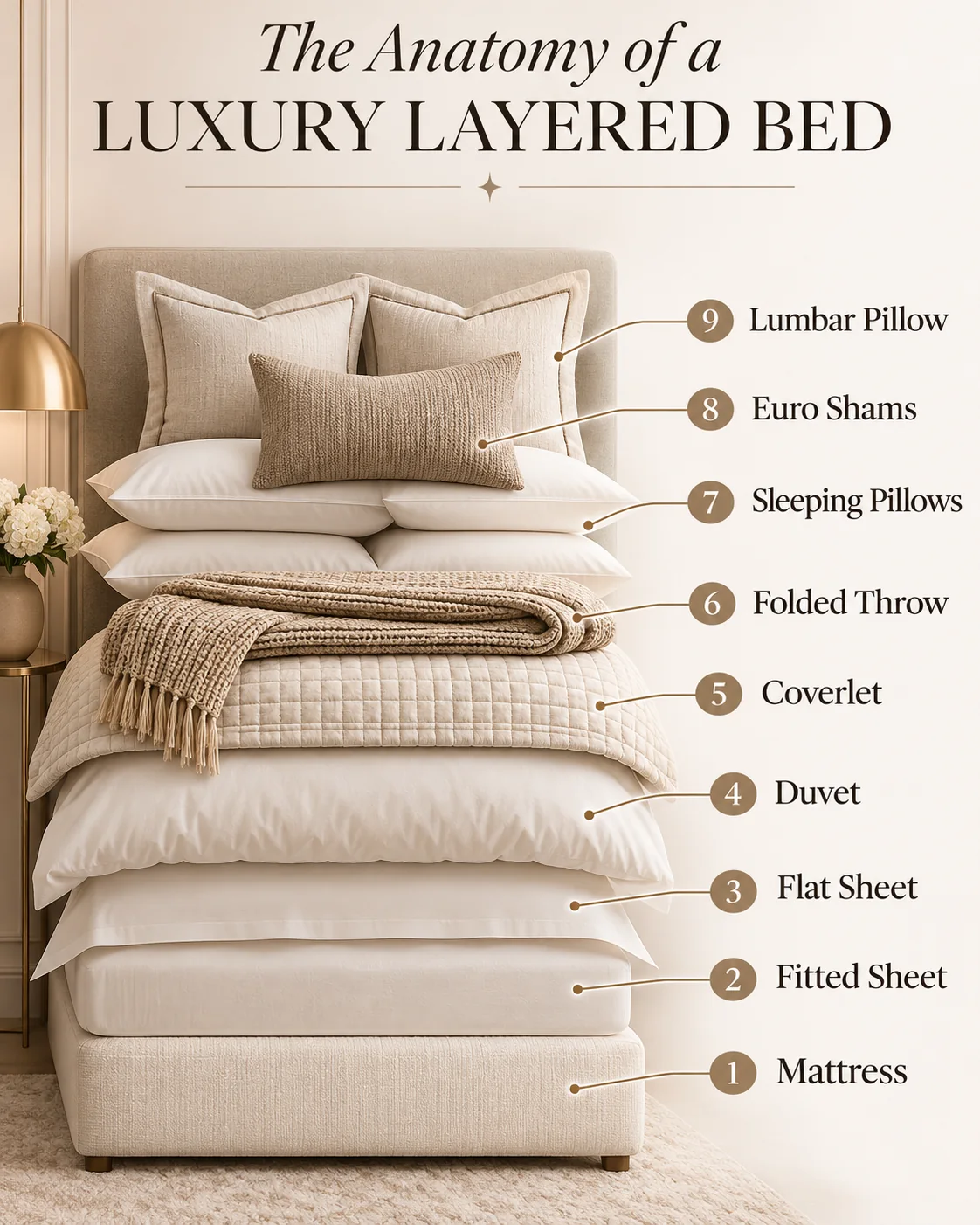
Follow the layers from top to bottom. Optional layers can be skipped for small bedrooms or warm nights.
Read the illustrated hierarchy: Start with comfortable sheets and a well-fitting duvet. Add one throw for texture; a coverlet and decorative pillows are optional. The practical layer-by-layer instructions below explain how to adapt the look to your own bed.
THE EDITOR’S RULE: A restful bed does not need every optional layer.
How to Layer a Bed Like a Boutique Hotel: Step by Step
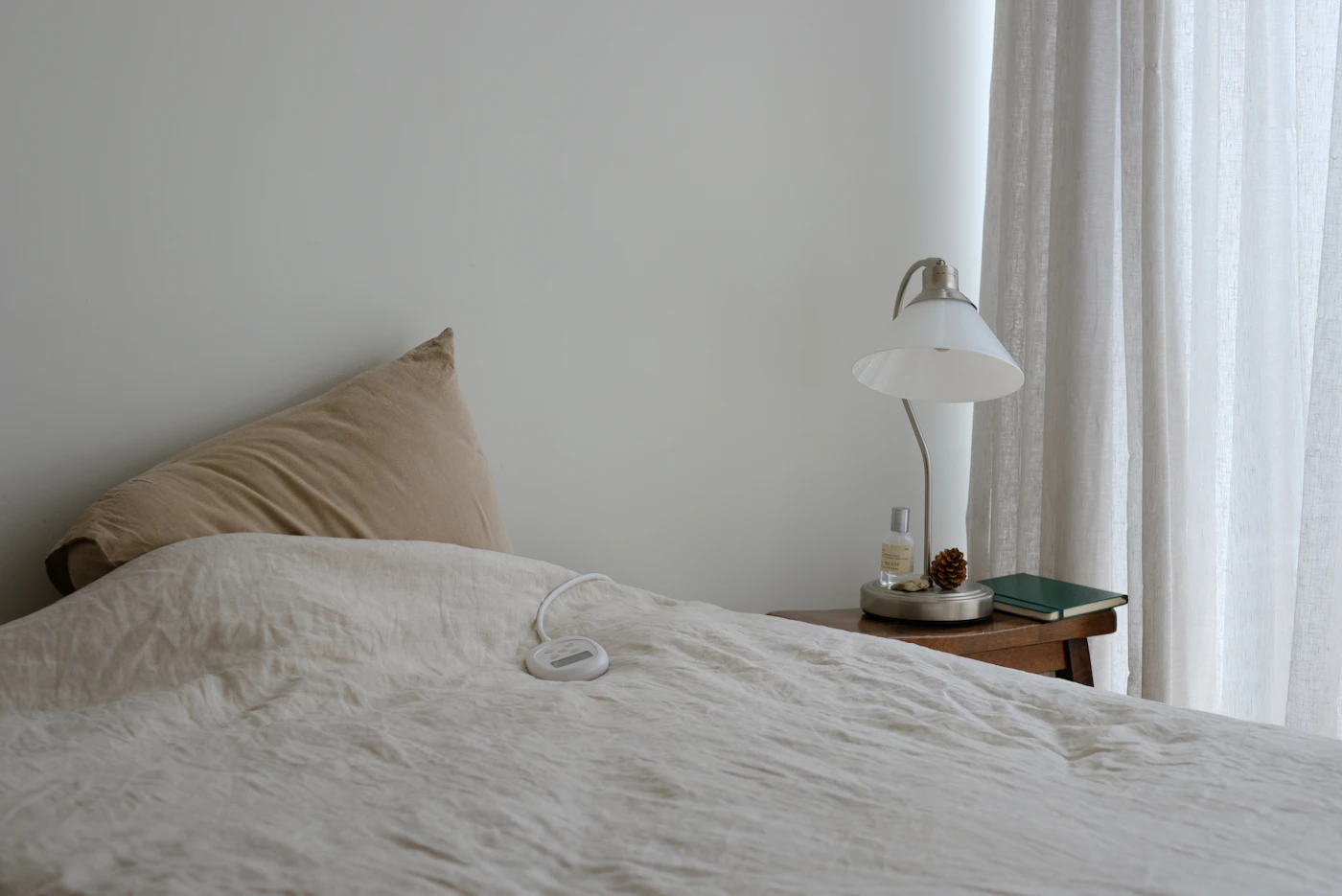
Choose sheets for the feel you want
Use a fitted sheet that fits your mattress depth. Add a flat sheet if you enjoy one; fold its top edge over for a crisp hotel-style finish. White, ivory, soft stone, and warm gray are versatile because they create a visually quiet base.
Make the duvet the hero
Shake the duvet insert into the corners of its cover, smooth the surface, and fold the top back slightly to reveal the sheet. For a tailored look, keep the duvet centered with even drape on each side. For a softer, more relaxed look, allow gentle folds—but avoid a heap of extra comforters at the foot.
Layer a lightweight quilt or coverlet only when useful
A matelassé coverlet, subtle waffle weave, or lightweight quilt offers visual texture and another warmth option. In a small bedroom, display just a narrow band beneath a folded duvet, or skip it altogether during warmer months.
Add one throw across the lower third
A brushed cotton, washed linen, fine wool, or textured knit throw can create depth without dominating the bed. Fold it into a long rectangle for tailored luxury; drape one corner casually for an organic editorial mood. A throw should complement the duvet, not compete with it.
Build height, then stop
Place your functional pillows against the headboard, then add either a pair of shams or one long lumbar pillow. The bed should still look inviting to sleep in—and easy to make each morning. Skip the towering collection of cushions often shown in oversized showroom bedrooms.
The proportion blueprint / By bed size
How Many Pillows Look Right?
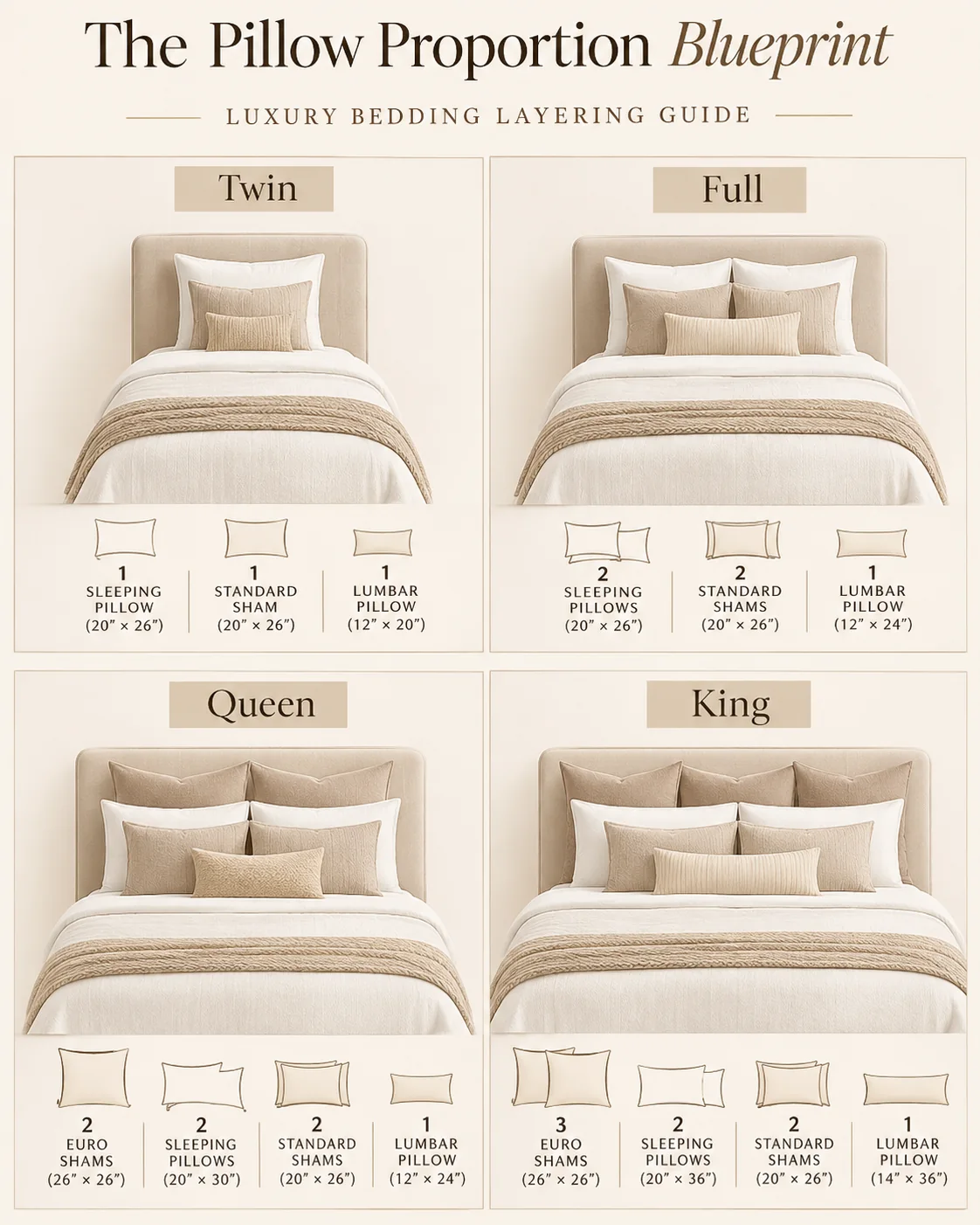
Small-bedroom interpretation: One functional pillow often suits a twin; two functional pillows are a practical foundation for full, queen, and king beds. Use the detailed sizing table below to decide whether any decorative shams or a lumbar pillow belong in your layout.
Amounts are styling suggestions, not a reason to buy extra pillows.
Get the Proportions Right in a Small Bedroom
Scale matters more than quantity. The bed is often the room’s largest object; too many high-contrast patterns and thick textiles can make it feel visually heavier than it is.
Think in thirds, not piles
Let the duvet cover roughly the main visual field, reserve the headboard end for a compact pillow arrangement, and use the lower third for a throw or folded coverlet. These are styling guidelines, not strict measurements; adjust them for mattress length and headboard height.
Choose pillows by bed size
| Bed | Understated arrangement | Optional upgrade |
|---|---|---|
| Twin / Twin XL | One sleeping pillow | One small accent pillow |
| Full | Two sleeping pillows | One lumbar pillow |
| Queen | Two sleeping pillows | Two tailored shams or one lumbar |
| King | Two king pillows | Two larger shams and one low accent, if space allows |
For reference, common U.S. mattress dimensions are Twin 38 × 75 inches, Full 54 × 75 inches, Queen 60 × 80 inches, and King 76 × 80 inches. Always verify the brand’s bedding dimensions and your mattress depth: duvet and quilt sizing varies widely.
Let the bedding drape without swallowing the bed frame
An oversized duvet can produce an attractive, plush drop, especially on a low-profile bed, but it can also conceal a beautiful frame or bunch against a nearby nightstand. Measure the mattress width, mattress thickness, and desired drop before sizing up. When your bed sits close to a wall, prioritize easy daily access over symmetrical styling perfection.
The Best Fabrics for Luxury Bedding Layering

Luxury is sensory. Think about how textiles feel against your skin, how they catch light, and whether their weight suits your sleep temperature—not just the thread-count number on a package.
| Fabric | Look and feel | Best for |
|---|---|---|
| Cotton percale | Crisp, matte, airy | Classic hotel-inspired beds and warmer sleepers |
| Cotton sateen | Smooth, softly lustrous | Polished bedrooms and people who prefer a silkier hand feel |
| Washed linen | Relaxed, textured, softly rumpled | Organic minimalism and breathable layering |
| Cotton matelassé | Subtle dimensional weave | Elegant coverlets without dramatic patterns |
| Flannel | Brushed, warm, cozy | Cool-weather bedding for cold sleepers |
| Wool or cotton knit | Tactile statement | A single throw for depth at the foot |
Breathable cotton percale and linen can be good options for people who sleep warm, while flannel and heavier layers favor cooler conditions. The Sleep Foundation’s fabric guide explains how weave and fiber affect feel and temperature regulation. It’s a useful reminder that higher thread count does not automatically mean better bedding.
Five quiet-luxury palettes
The Bedding Color Atelier
Color swatches are editorial references, not exact retail color matches.
Five Sophisticated Bedding Color Palettes for Small Bedrooms
A coherent palette allows texture to do the decorative work. Start with one dominant neutral, a supporting midtone, and one restrained accent. Exact-match bedding sets can look flat; subtle tonal variation is usually more interesting.
01. Warm ivory + oatmeal + sand
Soft luxuryJapandi Pair ivory cotton sheets with an oatmeal linen duvet and a sand-colored knit throw. This combination adds softness without creating hard visual edges.
02. White + mushroom + charcoal
Modern hotelUrban minimalism Build a crisp white base, then introduce a mushroom coverlet and one narrow charcoal lumbar pillow. Keep charcoal as an accent rather than making every layer dark.
03. Greige + dusty sage + warm cream
RestfulNature-inspired Choose cream sheets, a greige duvet, and a dusty sage throw. This is an understated way to bring color into a small room while preserving a calm atmosphere.
04. Pale stone + muted blue + soft white
Quiet coastalAiry Pair soft-white bedding with a subtle stone quilt and a washed blue throw. Avoid nautical motifs if you want a timeless, residential look.
05. Cocoa + camel + creamy white
Moody boutiqueWarm contemporary Keep the sleep-facing layers light, then bring cocoa or camel into the accent textiles. In a dim bedroom, a cream duvet keeps the bed from becoming one dark visual block.
Four Editorial Bedding Looks You Can Recreate
The Parisian boutique suite
Start with white percale sheets, a softly tailored ivory duvet, and a fine striped or subtly patterned lumbar pillow. Fold a textured taupe throw across the foot. The effect is quietly luxurious: slightly romantic, but never fussy.
The Scandinavian cloud bed
Use light cotton sheets, an easygoing off-white duvet, and a single heathered gray throw. Keep pillows low and symmetrical. This is particularly effective in rooms with pale walls and modest natural light.
The Japandi retreat
Blend warm linen, oat tones, and a finely textured coverlet. Choose fewer, better-made pieces and leave generous negative space around the pillow arrangement. A carefully folded throw feels intentional; a mountain of cushions does not.
The refined contemporary hotel
Combine smooth white sheets, a pale greige duvet, and one architectural dark accent at the headboard. Keep the throw folded in a precise band. The contrast gives definition without requiring bold patterns or visually heavy decorative pieces.
Layer Luxury Bedding for Every Season
| Season | Practical formula | Visual finish |
|---|---|---|
| Spring | Breathable sheets + lightweight duvet | Soft sage or pale stone accent |
| Summer | Percale or linen + light coverlet, if enough | Airy folds and minimal pillows |
| Fall | Sheets + duvet + medium-weight throw | Oatmeal, camel, muted cocoa |
| Winter | Comfortable sheets + warmer duvet + optional quilt | Matelassé or fine knit texture |
Layer for your actual room temperature and personal comfort, not the calendar. If you regularly overheat, avoid stacking heavy bedding simply to achieve a photographed look. Keep a decorative throw folded away at night if it adds unwanted warmth.
The Smart Space Finds product edit
Shop the Bedding Layers
Choose only the pieces that suit your bed and daily routine. Check the exact fabric, size, color, availability, and included components on the retailer’s current listing before ordering.
The Hotel Bed Foundation
Affiliate disclosure: As an Amazon Associate, Smart Space Finds earns from qualifying purchases. Product links in this section may earn us a commission at no additional cost to you.
The Texture & Warmth Edit
Affiliate disclosure: As an Amazon Associate, Smart Space Finds earns from qualifying purchases. Product links in this section may earn us a commission at no additional cost to you.
The Finishing Touches
Affiliate disclosure: As an Amazon Associate, Smart Space Finds earns from qualifying purchases. Product links in this section may earn us a commission at no additional cost to you.
How to Make Bedding Look Expensive on a Realistic Budget
You don’t have to buy an entire luxury collection. In a small bedroom, a few highly visible upgrades can make more difference than a matched eight-piece set.
- Prioritize touch: Spend first on sheets and pillowcases you enjoy using every night.
- Upgrade the duvet cover: A simple, well-fitting duvet cover has more visual impact than several decorative cushions.
- Choose one quality accent: Add a washable textured throw or restrained lumbar pillow instead of a pile of inexpensive decor.
- Repeat tones: Work with the bedding you already own and build around one or two complementary colors.
- Keep it maintained: Follow the care label, wash regularly, smooth wrinkles, and replace damaged or flattened inserts when necessary.
Seven Layering Mistakes That Make a Small Bedroom Feel Cluttered
- Overfilling the bed with pillows. Keep your everyday sleep arrangement practical.
- Mixing too many patterns. Use one subtle pattern at most, then rely on varied textures.
- Buying an oversized duvet without measuring. Check the drop and clearance first.
- Using several thick blankets year-round. Match weight to your comfort needs.
- Choosing identical fabric for every layer. A little textural contrast makes the composition richer.
- Making every item the focal point. Give the duvet the starring role and let accents support it.
- Ignoring care and storage. An elaborate bedding setup that is difficult to wash or stow is rarely the best small-space solution.
Small-Bedroom Bedding Checklist
Before buying another piece, ask whether the bedding improves the room’s appearance, comfort, or usability. Ideally, it does at least two of the three.
- Does the duvet fall neatly without blocking floor clearance?
- Do the sheets suit how warm or cool you sleep?
- Is there at least one contrasting texture?
- Are your main colors cohesive?
- Can you make the bed comfortably in about a minute?
- Can every decorative layer be cleaned and stored easily?
The Unseen Luxury: Fit, Care, and Daily Function
Many hotel-inspired beds look exceptional in photographs but feel impractical at home. These often-overlooked decisions separate a beautiful-looking bed from a genuinely beautiful bedroom.
Measure the mattress before purchasing
Write down its width, length, and height—including any mattress topper. Compare those measurements with the sheet pocket depth and the stated duvet dimensions. Labels such as “queen” are convenient starting points, not substitutes for checking measurements across manufacturers.
Plan where the extra layers go at night
In a small bedroom, a throw that moves from the bed to the floor every evening is not serving the space well. For practical alternatives, explore our guest bedding storage ideas for small apartments. Use a clean under-bed storage bag, a dedicated shelf, or a basket large enough to avoid compressing delicate fibers. Only buy an extra coverlet if you have a place to put it.
Make maintenance part of the aesthetic
Keep a spare set of pillowcases if they are used frequently, follow each fabric’s care label, and dry bedding fully before storing. Some natural fabrics are meant to look gently rumpled; others benefit from a smoother finish. The goal is clean, comfortable, low-stress luxury—not an unrealistic showroom routine.
Make the Bedding Work with the Room
Layering does not happen in isolation. The height of the headboard, color of the walls, and amount of daylight change how the same bedding looks. For a complementary approach, see our guide to decorating with texture instead of clutter.
| Room condition | Best bedding adjustment |
|---|---|
| Low ceiling or short headboard | Use a lower pillow arrangement and less vertical bulk |
| Dark or north-facing bedroom | Choose warmer light neutrals and subtle texture instead of stark high contrast |
| Bed against one wall | Reduce decorative pieces so bedding is easy to tuck and straighten |
| Patterned wallpaper or bold artwork | Let bedding remain mostly solid and tonal |
| Minimal white walls | Introduce warmth through weave, quilt texture, and one muted accent color |
Frequently Asked Questions About Layering Luxury Bedding
How do you layer bedding to make it look luxurious?
Start with fitted sheets and a centered duvet, add one textured quilt or throw, and finish with a restrained pillow arrangement. Cohesive color and scale matter more than the number of layers.
How many pillows should a small bed have?
Two sleeping pillows and an optional low lumbar work for most full or queen beds. A twin may need only one.
Should a duvet go over or under a quilt?
Either works. Place the duvet over the quilt for volume, or use the quilt alone for a lighter summer bed.
What bedding colors make a small bedroom feel bigger?
Warm white, ivory, oatmeal and stone create a continuous look. Reserve darker shades for one intentional accent.
Is linen or cotton better for luxury bedding?
Linen feels relaxed and textured, cotton percale feels crisp, and cotton sateen feels smoother. Choose for comfort and care needs.
Can I make a bed look expensive without a headboard?
Yes. Use orderly, low pillows, a well-fitting duvet and one contrasting texture instead of a tall pillow stack.
What is the easiest luxury bedding upgrade?
Refresh the duvet cover and add one textured throw before replacing your entire bedding set.
The final edit
The most luxurious small bedroom isn’t the one with the most layers. It’s the one where every layer earns its place.
Start with the bedding you already love, build a calm color story, and add texture with intention. Your bed will feel welcoming, beautifully composed, and unmistakably yours.
Further reading: Sleep Foundation: bedding materials · Sleep Foundation: linen vs. cotton. These resources provide general fabric guidance; styling advice and arrangements above are editorial recommendations.