
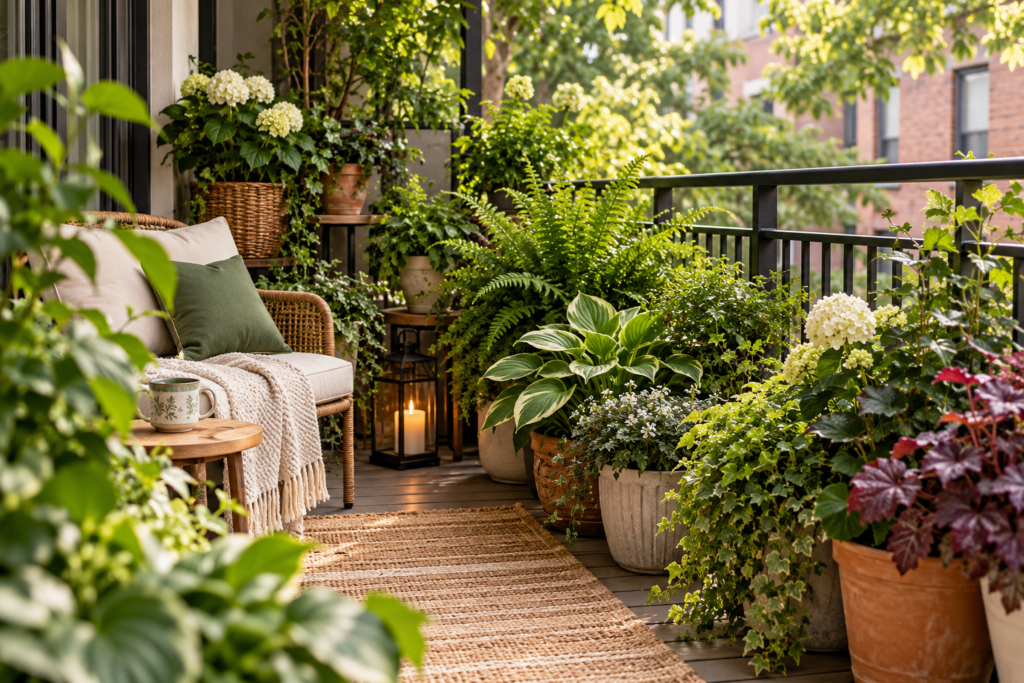
Wondering what to grow on a shady balcony? Start with the light you actually have, not the picture on a plant label. This guide compares 12 foliage plants, flowers and herbs and shows how to create an attractive, manageable outdoor garden without full sun.
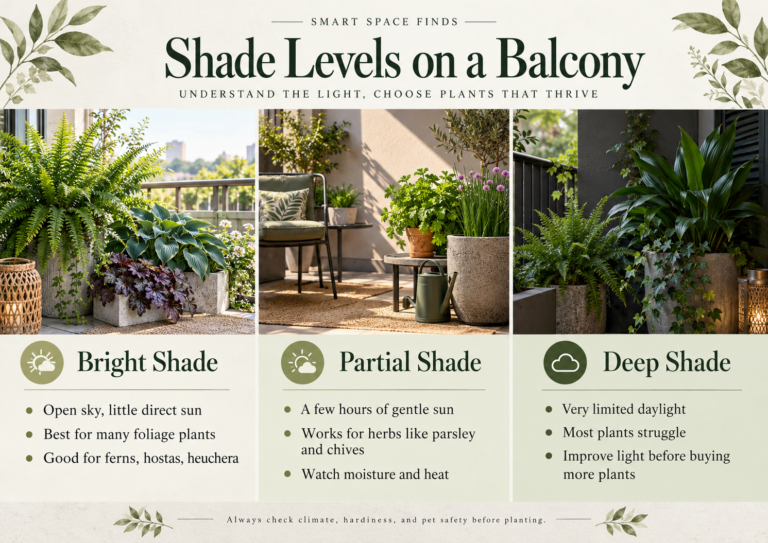
12 plants worth considering for shaded balconies
Shade is not one universal condition. These choices are starting points; check each cultivar’s exact light needs, climate tolerance and pet safety before buying.
Useful diffuse daylight without strong direct sun: foliage can shine here.
Some gentle sunlight or bright filtered light: wider plant choices.
Very limited daylight: measure conditions before adding more plants.
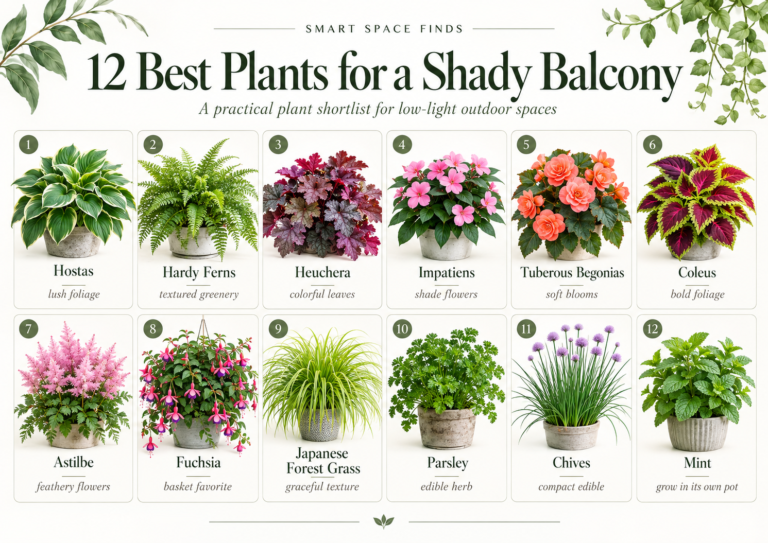
| Plant | Preferred light | What to know |
|---|---|---|
| Hostas | Bright to partial shade | Lush leaves; toxic to dogs and cats; check winter hardiness. |
| Hardy ferns | Bright shade | Check species, soil moisture and hardiness. |
| Heuchera | Partial shade | Colorful leaves; well-drained potting mix. |
| Impatiens | Bright or partial shade | Seasonal flowers; frost sensitive. |
| Tuberous begonias | Bright shade | Blooms in appropriate conditions; frost tender. |
| Coleus | Bright shade | Colorful foliage; needs protection from cold. |
| Astilbe | Partial shade | Needs consistently moist soil. |
| Fuchsia | Bright shade | Sheltered hanging baskets; varies by variety. |
| Japanese forest grass | Partial shade | Graceful leaves; protect container roots in winter. |
| Parsley | Partial shade | Modest edible harvest possible. |
| Chives | Partial shade | Compact herb; expect slower growth. |
| Mint | Partial shade | Grow separately to contain vigorous roots. |
Important: Light requirements vary by species. For pet-owning households, check scientific names with a reliable veterinary toxicity resource.
Measure your balcony’s real daylight
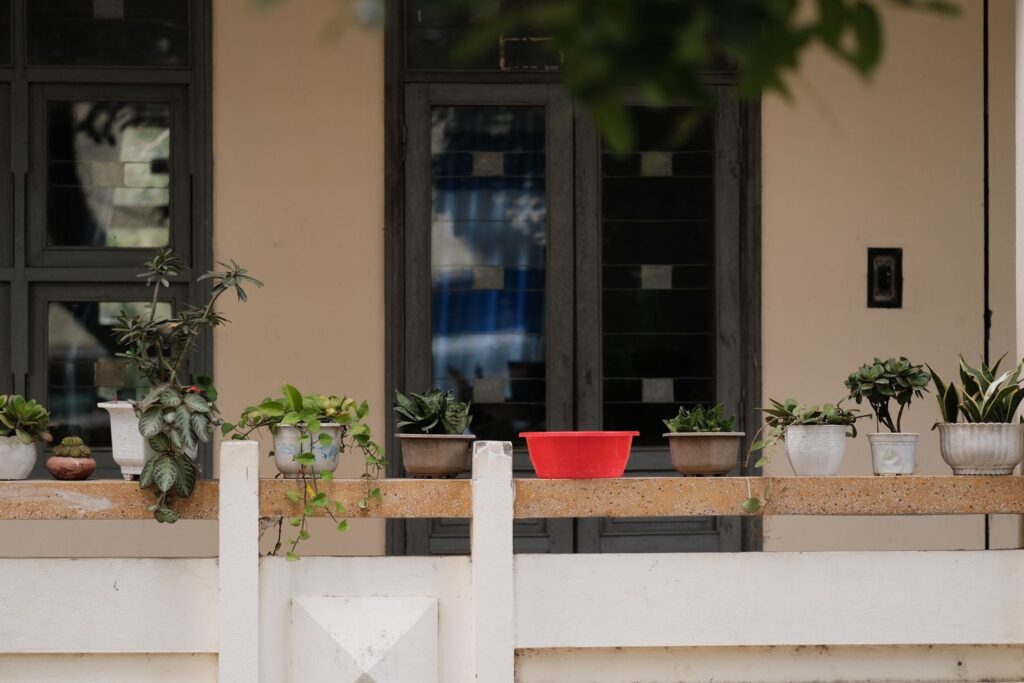
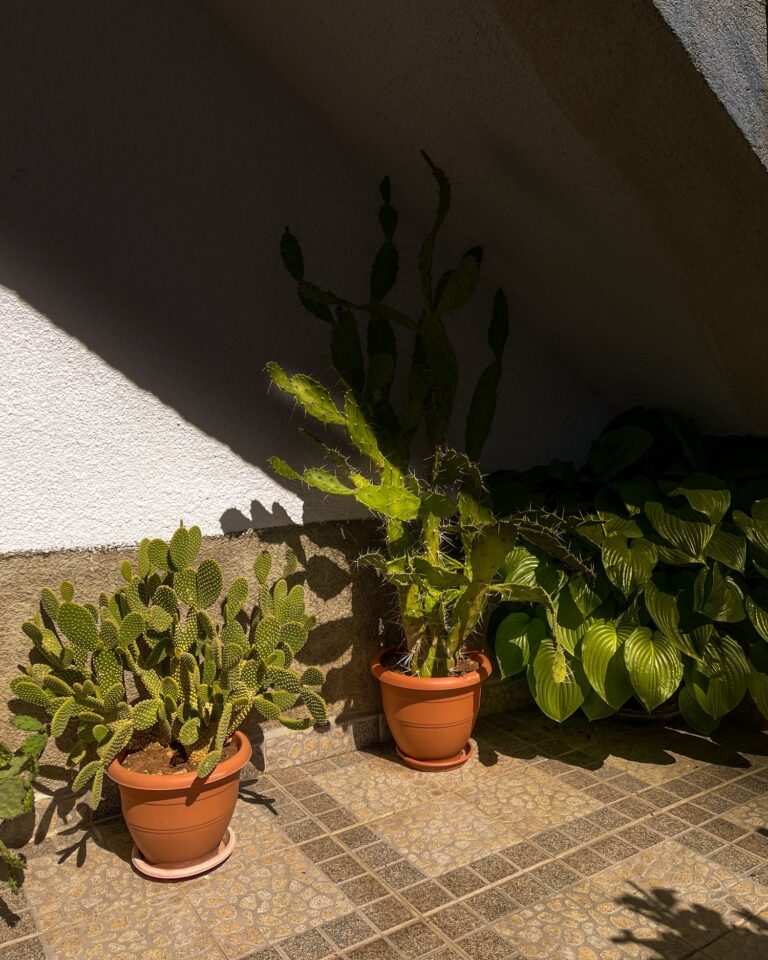
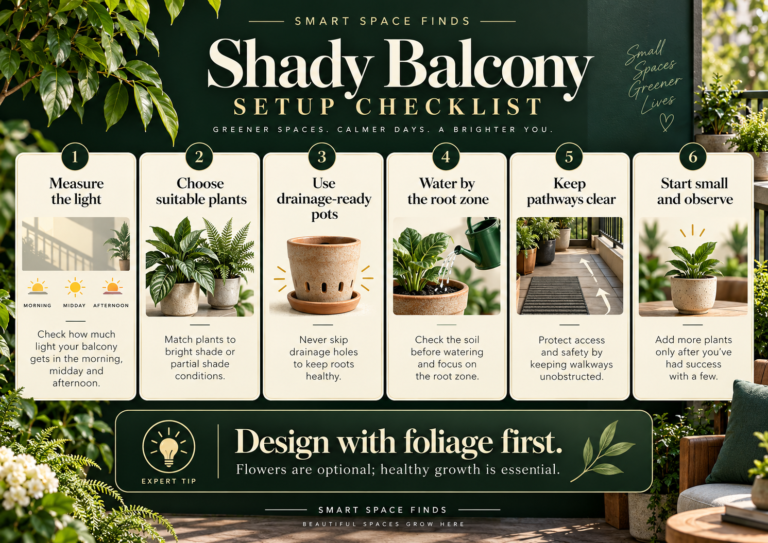
Observe your balcony in the morning, at midday and in late afternoon for several days. Record any direct sunlight, open-sky brightness and shadows caused by roofs, railings or neighboring buildings. A north-facing balcony can still have valuable reflected daylight; a covered south-facing recess can be darker than expected. Bright shade provides useful ambient light, whereas deep shade receives very little. Repeat the observation at another time of year because seasonal sun angles change. A plant that survives without producing healthy new leaves may still be receiving too little light.
Choose plants for your climate and household
Start with botanical names, mature plant size and local winter hardiness, not only nursery photos. A hosta that thrives in a cool shaded garden may struggle in a very hot, dry balcony container. Hardy ferns vary by species and some prefer consistently moist soil. Begonias, coleus and impatiens may be frost-sensitive and require seasonal protection. Where pets can reach foliage, verify toxicity for the exact species using a veterinary resource. Hostas are toxic to dogs and cats; do not treat shade tolerance as evidence of pet safety.
Create an inviting balcony layout in three layers
Choose one statement foliage plant to anchor the brightest practical corner, then arrange medium-height planters with contrasting leaf shapes and smaller containers near the front. Fern fronds, broad hosta leaves and colorful heuchera foliage can create a rich composition when their growing requirements align. Repeat a restrained collection of warm ivory, olive and weathered terracotta pots to keep the look cohesive. Leave adequate space to water each plant and do not obscure door swings or emergency exits. Test your arrangement before filling large containers with heavy wet soil.
Affiliate disclosure: As an Amazon Associate, we earn from qualifying purchases. Product links below may earn us a commission at no additional cost to you.
Pick drainage-ready planters and suitable potting mix
Use stable outdoor-rated pots with drainage holes and enough root volume for mature growth. Choose container potting mix instead of dense garden soil, which may compact and restrict drainage in pots. Smaller pots are easier to rearrange but fluctuate in moisture more quickly; large containers offer greater root volume but substantially increase balcony load when watered. Ensure any saucers or outer cachepots do not trap excess water. Avoid placing unsecured heavy planters on railings, and always verify building weight and attachment restrictions before installing a vertical stand.
Seed-starting supplies for a compact balcony
Pick one tray or starter setup suited to your space, and give seedlings adequate light.
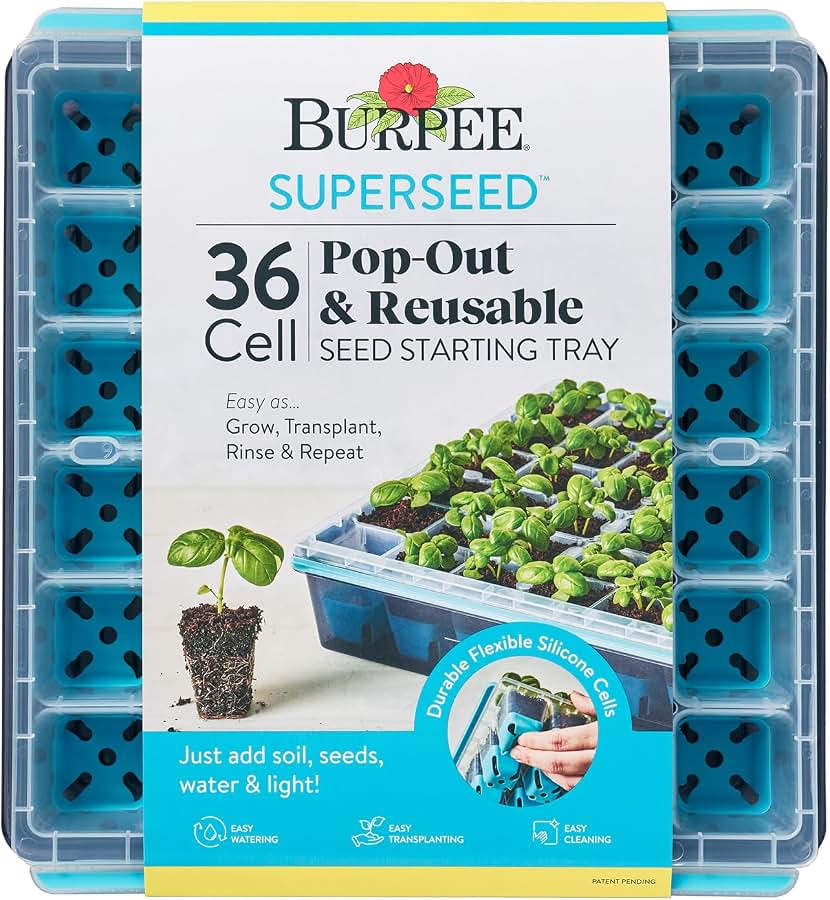
Burpee SuperSeed 36-Cell
Reusable seed-starting tray for organizing small batches of seedlings.
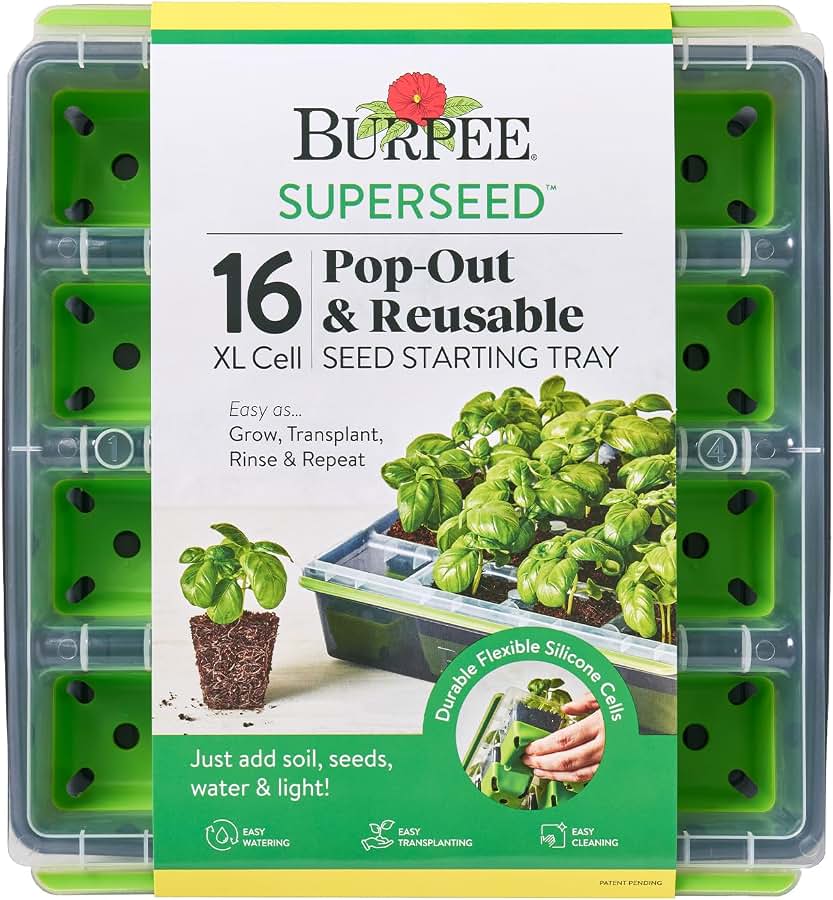
Burpee SuperSeed 16 XL-Cell
Larger-cell alternative for starting fewer seedlings with more growing room.
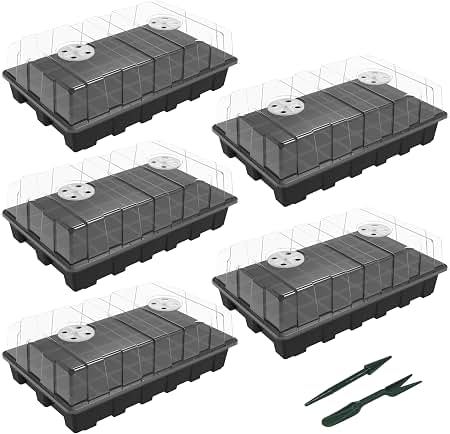
Gardzen Seed Starter Kit
Seed-starting kit option; ventilate humidity covers and provide light after sprouting.
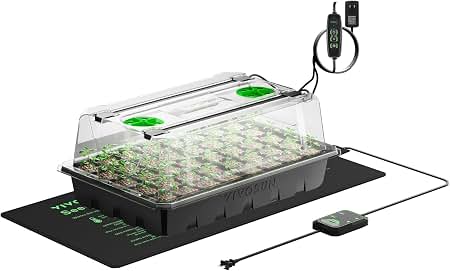
VIVOSUN 40-Cell Grow Light Kit
Indoor seed-starting option when the balcony is too dark for strong seedlings.
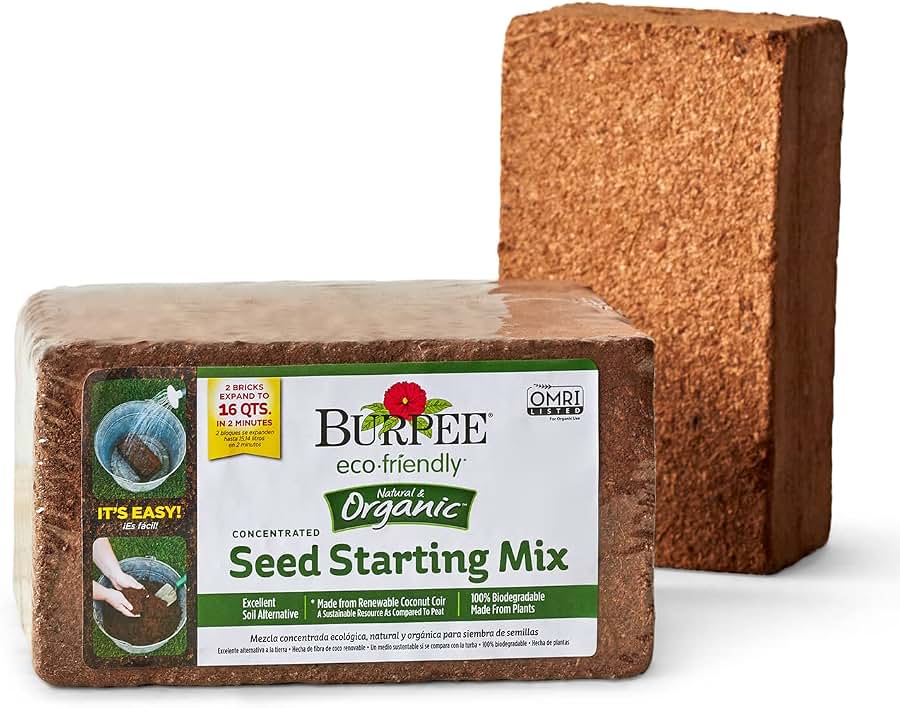
Burpee Coconut Coir Mix
Coconut coir-based starting medium; check product instructions and supplement nutrients when needed.
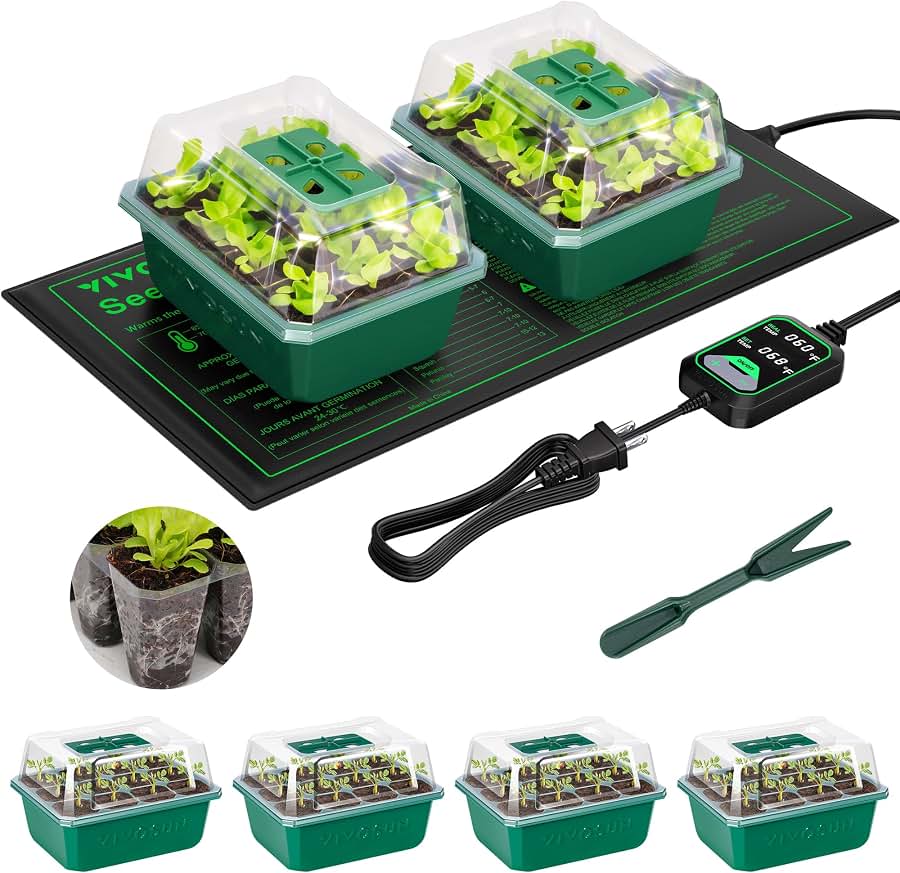
VIVOSUN Seed Starter with Heat Mat
Seed-starting setup with supplemental warmth; match temperature to seed requirements.
Water according to the roots, not the calendar
Shaded pots sometimes remain damp longer because evaporation and plant growth are reduced. Yet a windy upper-floor balcony can dry quickly even in the absence of direct sun. Check a little below the surface, examine the pot’s weight and water when the particular plant requires it. Yellow leaves and wilted stems can result from different causes, including both drought and damaged roots from waterlogging. Empty water trapped in decorative pots after heavy rain and keep drainage openings clear. Avoid using extra fertilizer as a response to insufficient daylight.
A targeted balcony watering option
Automated watering still requires careful adjustment for shaded containers.
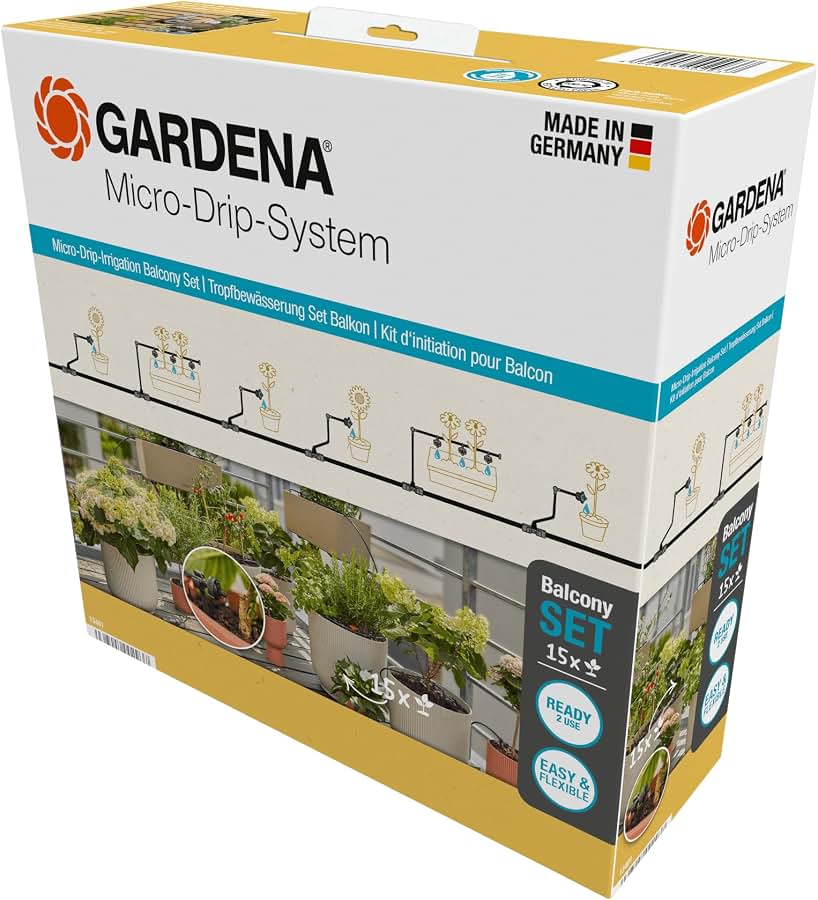
GARDENA Micro-Drip Balcony Set
A potential solution for watering grouped containers; check fittings, compatibility and water supply.
Grow edible herbs with realistic expectations
Bright partial shade may support modest parsley, chives and mint harvests, particularly when temperatures are mild. Expect slower growth and fewer harvestable leaves than in a brighter position. Keep mint in its own container to prevent its roots from crowding other herbs. Rosemary, basil, tomatoes and peppers generally need more light for vigorous production. Place edible pots in your best lit safe location and monitor new growth before adding more varieties. A foliage-first balcony can be highly successful even when it is not a productive vegetable garden.
Herb and lettuce seeds for bright partial shade
Seeds are not a solution for deep shade. Read packet light requirements before sowing.
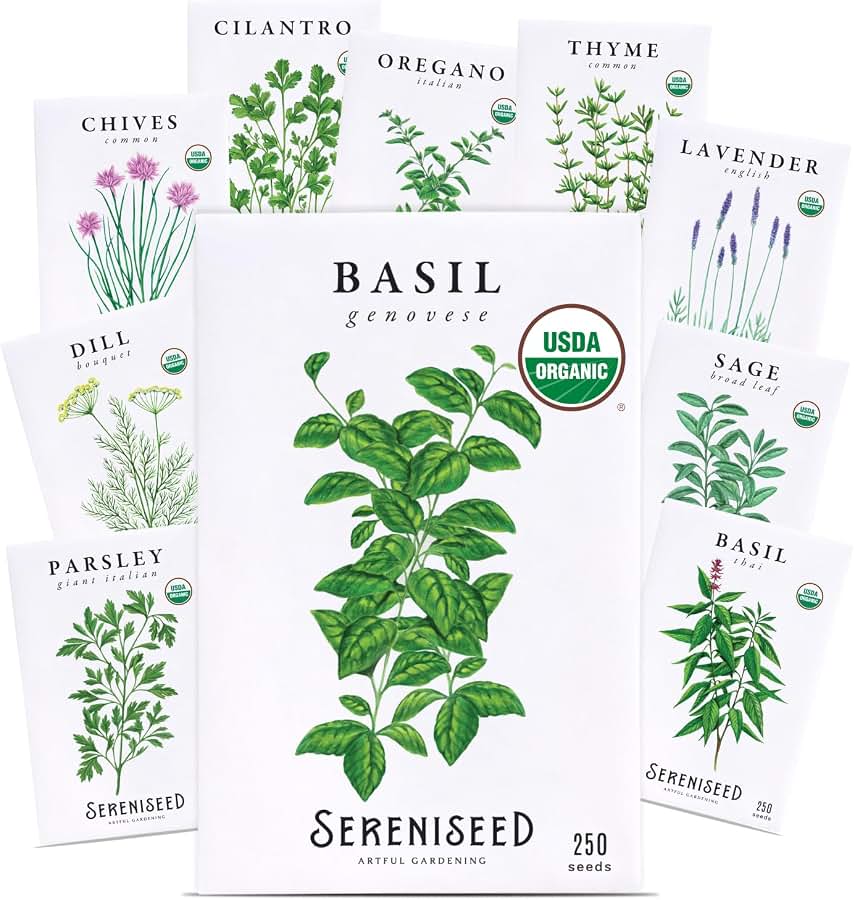
Sereniseed Organic Herb Seeds
Herb seed assortment for experimenting with container herbs. Check the light needs of each variety.
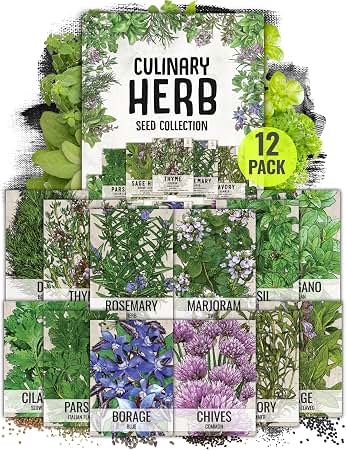
Seed Needs Culinary Herb Seeds
Culinary herb seed collection; reserve your brightest balcony spot for sun-loving varieties.
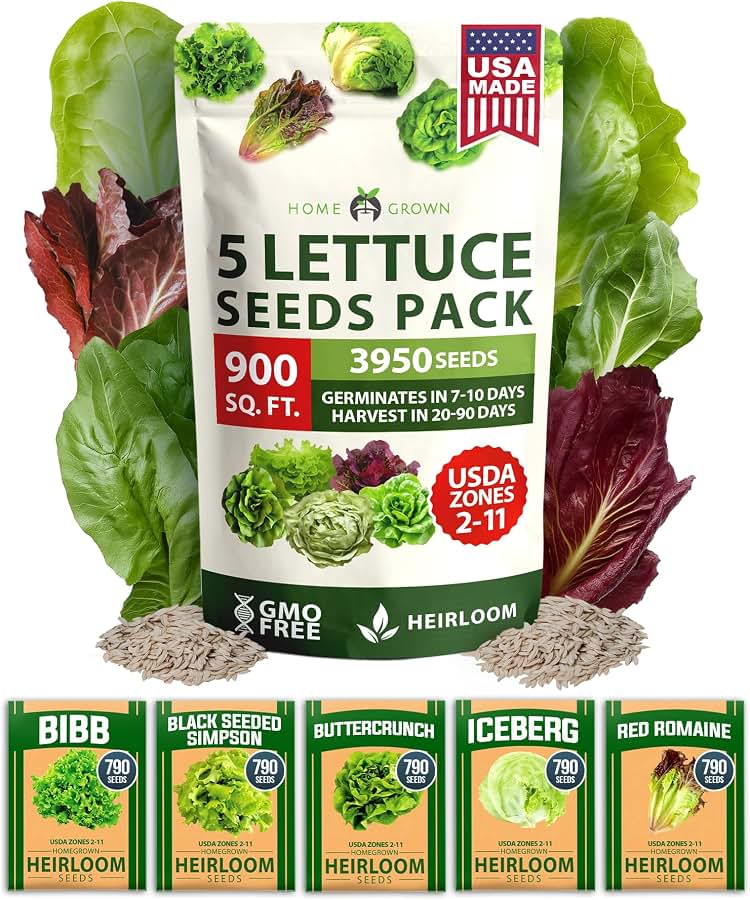
HOME GROWN Lettuce Mix
A selection of lettuce seeds for cool-season containers with sufficient indirect daylight.
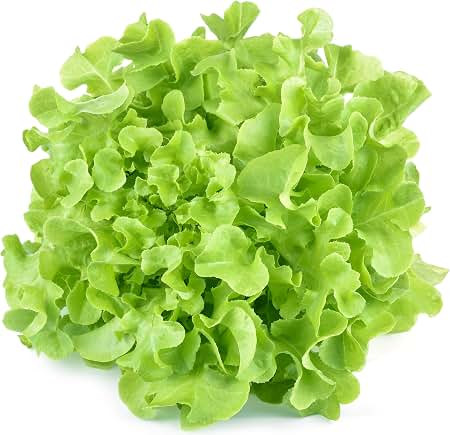
RDR Oakleaf Lettuce
Oakleaf lettuce seeds to try in a bright, partially shaded container.
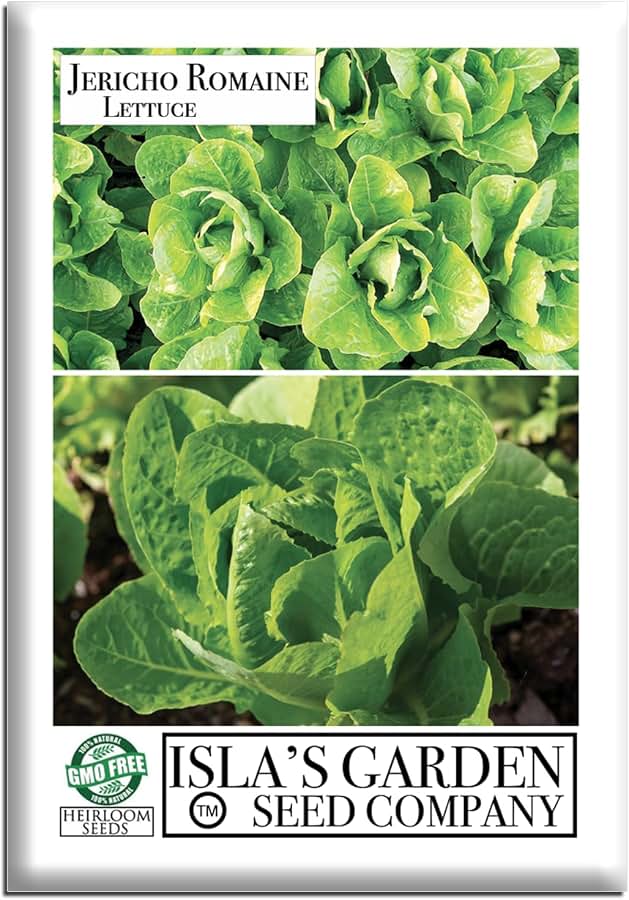
Isla’s Garden Jericho Romaine
Romaine lettuce seeds for a well-lit planter; deep shade can limit harvests.
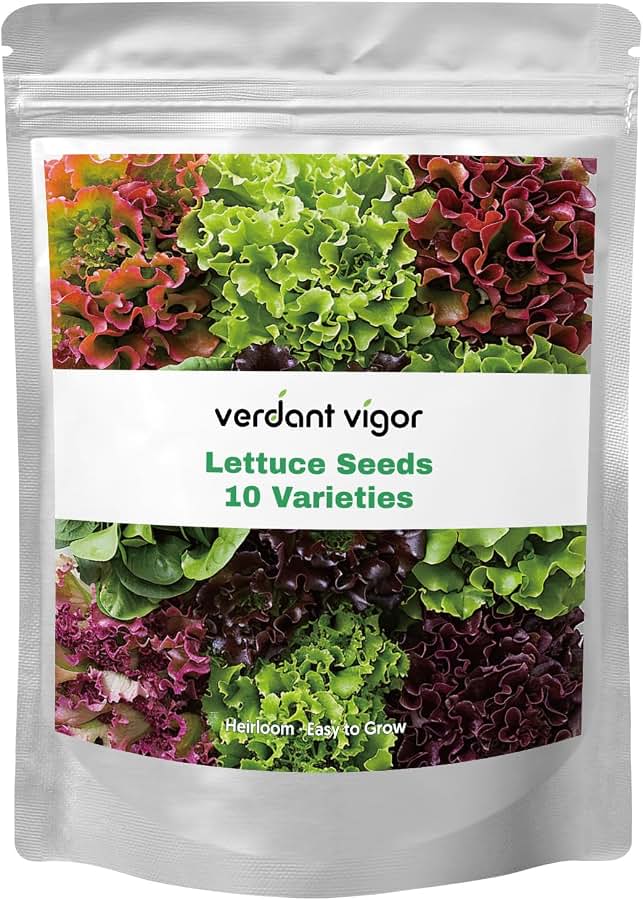
10-Variety Lettuce Seeds
A multi-variety lettuce seed option for comparing growth in bright partial shade.
Keep the garden healthy through every season
Check leaf undersides, pests, soil moisture, drainage and plant supports weekly. Photograph the balcony monthly from the same viewpoint; changes in leaf size and growth can be easier to assess over time than day to day. Pale stretched stems often indicate inadequate light, but plant stress can also result from wind, cold or watering problems. Protect containers from freezing conditions in winter and move tender plants to an appropriate sheltered or indoor position where necessary. Choose weatherproof seating accessories and store damp textiles inside.
Useful accessories for daily plant care
These small tools help you organize seedlings and keep repotting tidy.
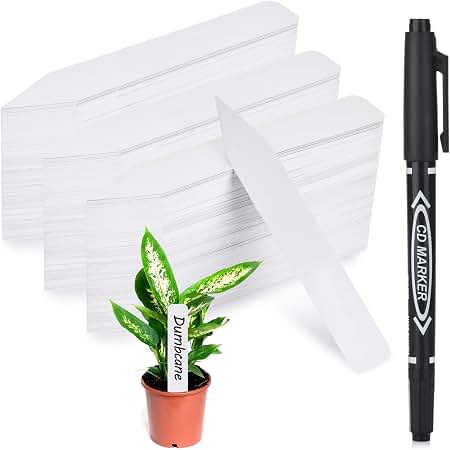
Darfukei Waterproof Plant Labels
Labels to track seed variety, sowing date and growing position.
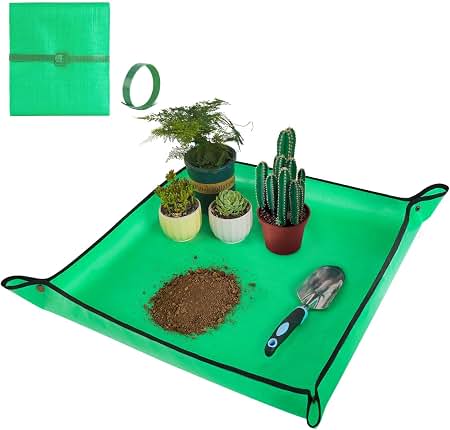
HNXTYAOB Repotting Mat
Foldable surface to contain potting mix while working in a compact space.
Make room for people, pets and safe access
A beautiful garden should remain practical: leave a comfortable route to doors and windows and ensure plants do not cover vents or obstruct an exit. Secure tall stands and hanging items in windy conditions, and verify that attachments and total load comply with balcony rules. Check plant safety if children or pets have access. Outdoor electrical lights must be rated for the exposure and installed according to manufacturer instructions. Start with three compatible plants, observe them for four weeks and expand only when they are thriving.
What to buy for your shaded balcony
Invest in the basics that support healthy roots and a safe layout, not gadgets promising to solve missing daylight.
Roomy weather-resistant pots with working drainage holes.
A high-quality mix suited to your exact plant choices.
Only where weight, wind and access conditions allow.
Precise watering without excessive runoff.
Durable trowel, pruners and garden gloves.
For atmosphere and safety, not plant growth.
Affiliate disclosure: Smart Space Finds may earn a commission from qualifying purchases through affiliate links, at no additional cost to you. Product prices and ratings are not shown unless verified.
Shady balcony gardening FAQ
Can plants grow on a balcony with no direct sun?
Yes, if it has enough bright indirect daylight. Ferns, hostas and selected foliage plants may be suitable, but no plants flourish in complete darkness.
What is best for a north-facing balcony?
Assess available ambient sky light, wind and local climate first. Hardy ferns, heuchera and hostas are possible starting points in suitable conditions.
Can you grow herbs in shade?
Parsley, chives and mint may yield some leaves in partial shade, but they grow less productively with insufficient daylight.
Do shade-loving plants need less watering?
Not necessarily. Wind and pot size also affect drying; inspect the root zone before watering.
Are hostas pet-safe?
No. Hostas are toxic to dogs and cats, so verify plant safety before purchase.
Should I install a plant stand?
Only if the stand is stable, does not overload the balcony, leaves exits clear and does not block light to lower pots.
Your shaded balcony can still feel lush
Begin with three plants suited to your actual conditions, monitor their growth for four weeks and expand slowly. Healthy greenery, an uncluttered layout and safe containers will always look better than an overcrowded collection.