
Affiliate disclosure: As an Amazon Associate, Smart Space Finds earns from qualifying purchases. Product links may earn us a commission at no additional cost to you.
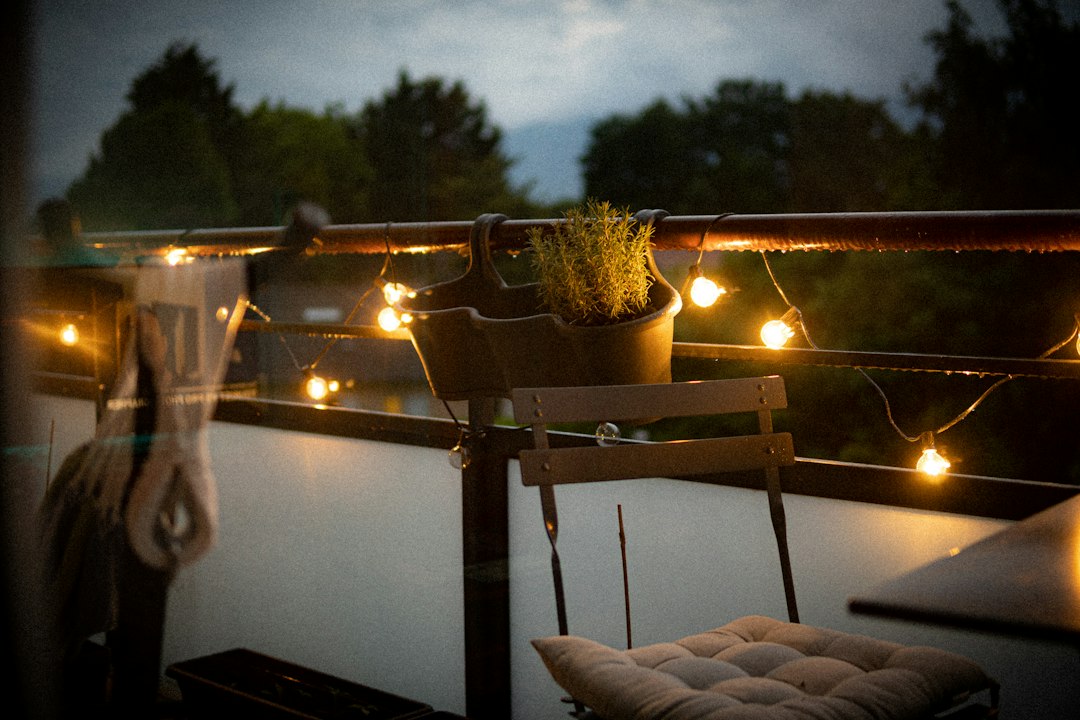
A cozy small balcony does not require a complete renovation. Thoughtful seating, warm outdoor-safe lighting, a touch of greenery, and a plan for storing textiles can turn a narrow apartment balcony into a place you genuinely want to spend time.
The best small balcony evening ideas begin with how you live. Perhaps you want to read after work, share an evening drink with a friend, or simply sit outside for ten quiet minutes. This guide will help you build around that ritual while protecting your available space, budget, and safety.
1. Measure Your Balcony Before Styling It
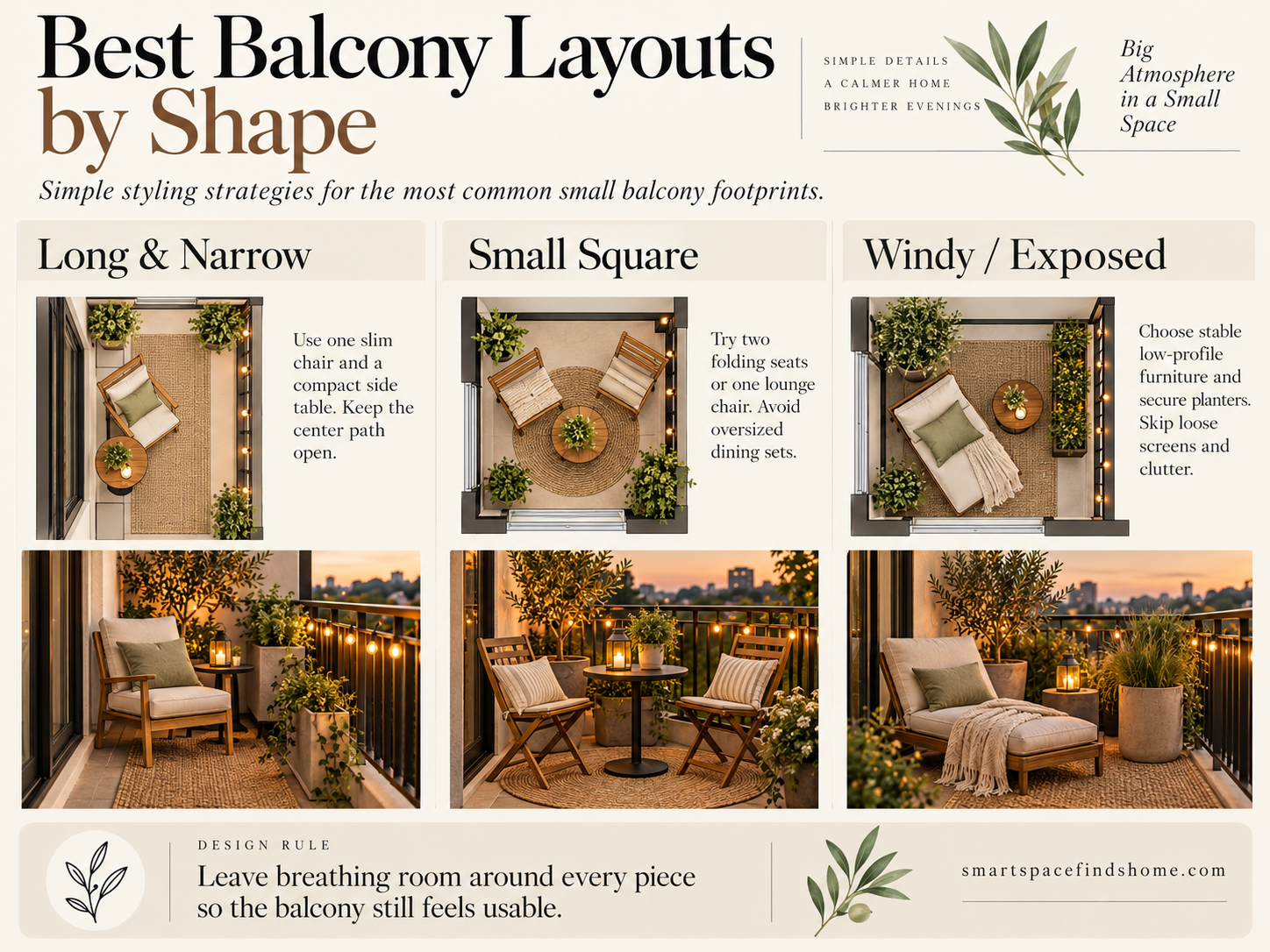
Measure usable floor space, rather than just the distance between the wall and railing. Account for the door swing, chair clearance, drainage points, and any required escape or service route. A seating arrangement that fits on paper can become uncomfortable when a guest actually pulls out a chair.
Use cardboard templates or removable tape to map out a chair and table. Open the balcony door all the way, sit down, and try walking past the furniture with a watering can or small tray. If the movement feels awkward, reduce the footprint.
Check landlord or building rules before mounting lights, attaching planters, or adding privacy screens. Wet soil is heavy, and wind can make loose outdoor objects hazardous. Do not attach items to railings without confirming that the installation is approved.
Match the arrangement to your footprint
| Balcony shape | Good starting point | Avoid |
|---|---|---|
| Long and narrow | One slim chair plus a compact side table | Deep furniture that blocks access |
| Small square | Two folding seats or one lounge chair | Oversized dining sets |
| Exposed and windy | Stable, low-profile furniture | Loose screens and unsecured accessories |
| Mostly shaded | Comfortable seating and practical task lighting | Plants that require full sun |
2. Choose Seating for the Way You Unwind
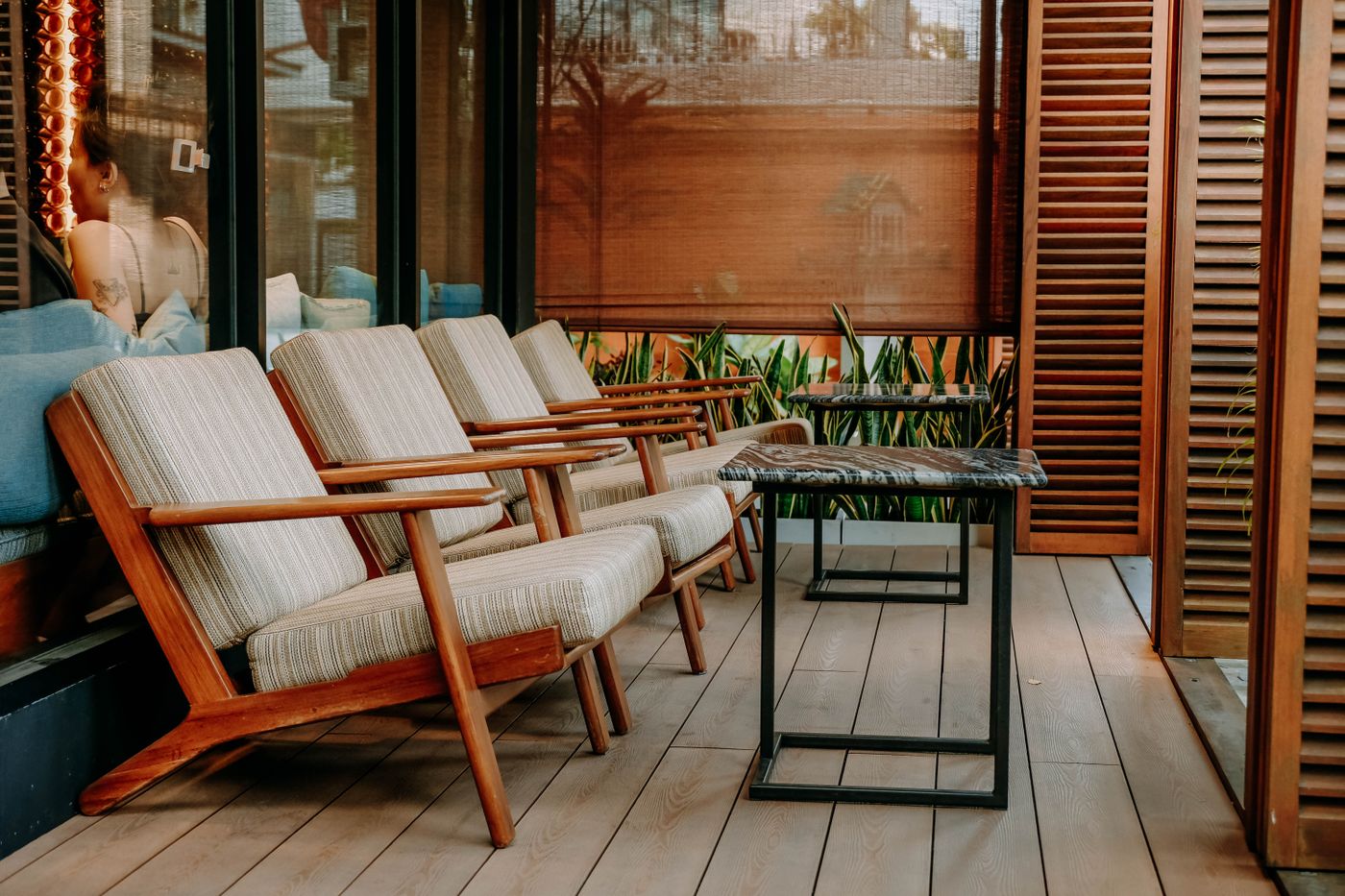
One supportive chair may be a better investment than a cramped matching pair. If reading is your favorite evening activity, prioritize back support, armrests, and room to stretch your legs. For conversation, arrange two seats so both people can reach the table without twisting.
Pay attention to furniture dimensions in use, not just in a product listing. A chair needs space for knees and movement. Folding and stackable options can be convenient in small rentals, but they should remain stable during use and fold away safely.
You can also combine a comfortable primary seat with a smaller movable guest chair. Coordinated finishes make the arrangement feel intentional even when the furniture does not match exactly. Choose outdoor-suitable construction and care instructions appropriate for your climate.
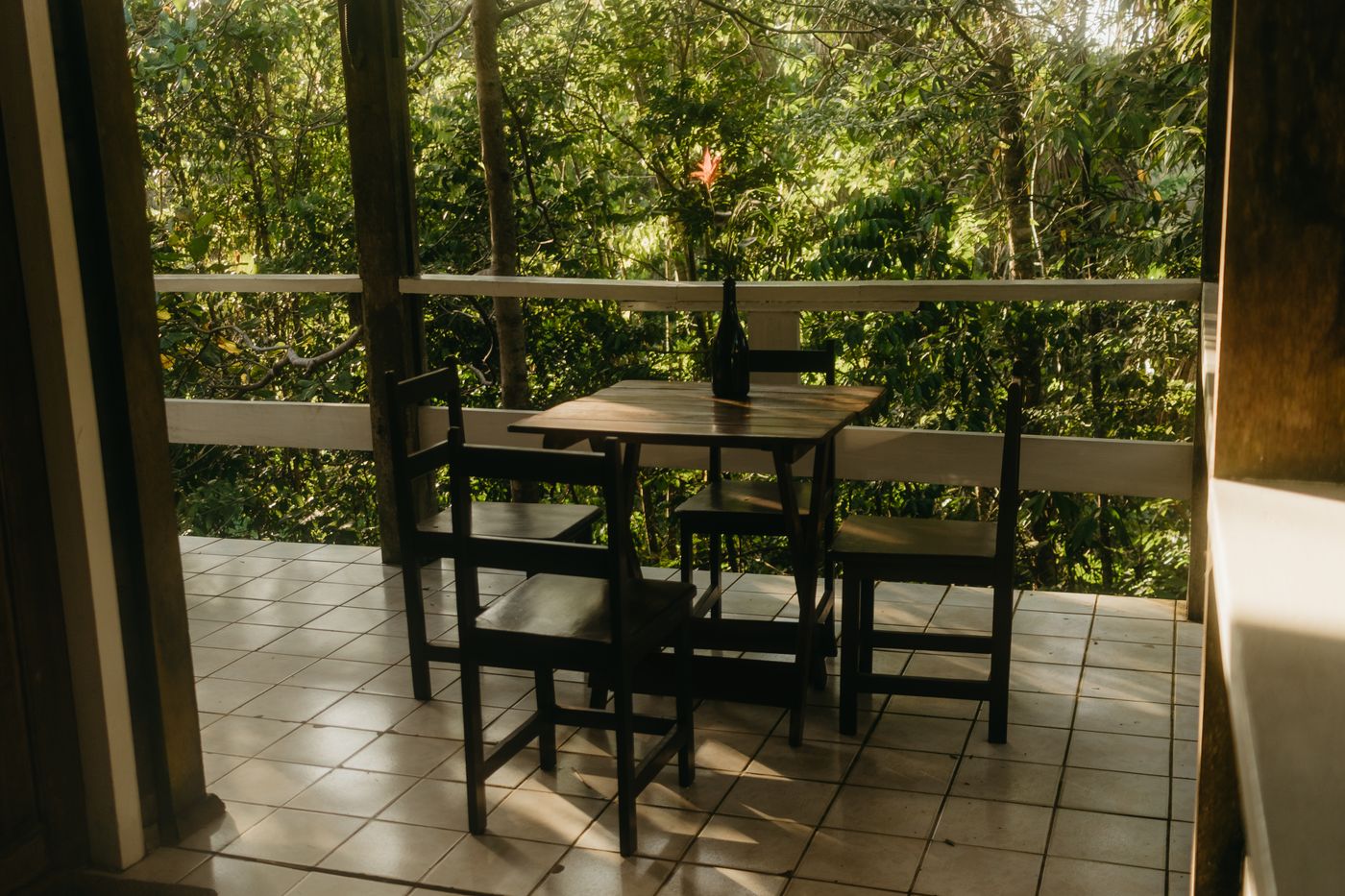
3. Layer Lighting for a Soft Evening Glow
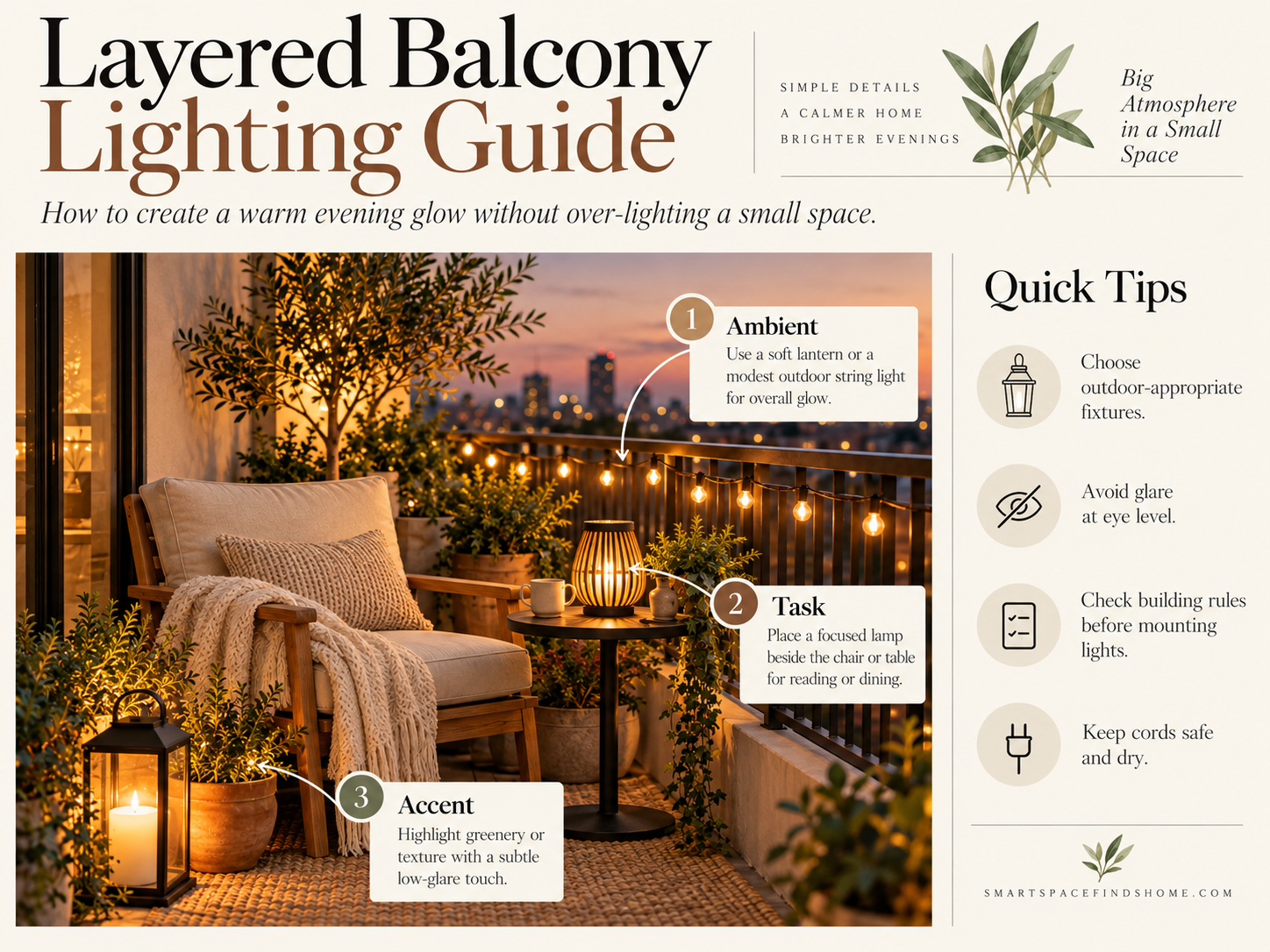
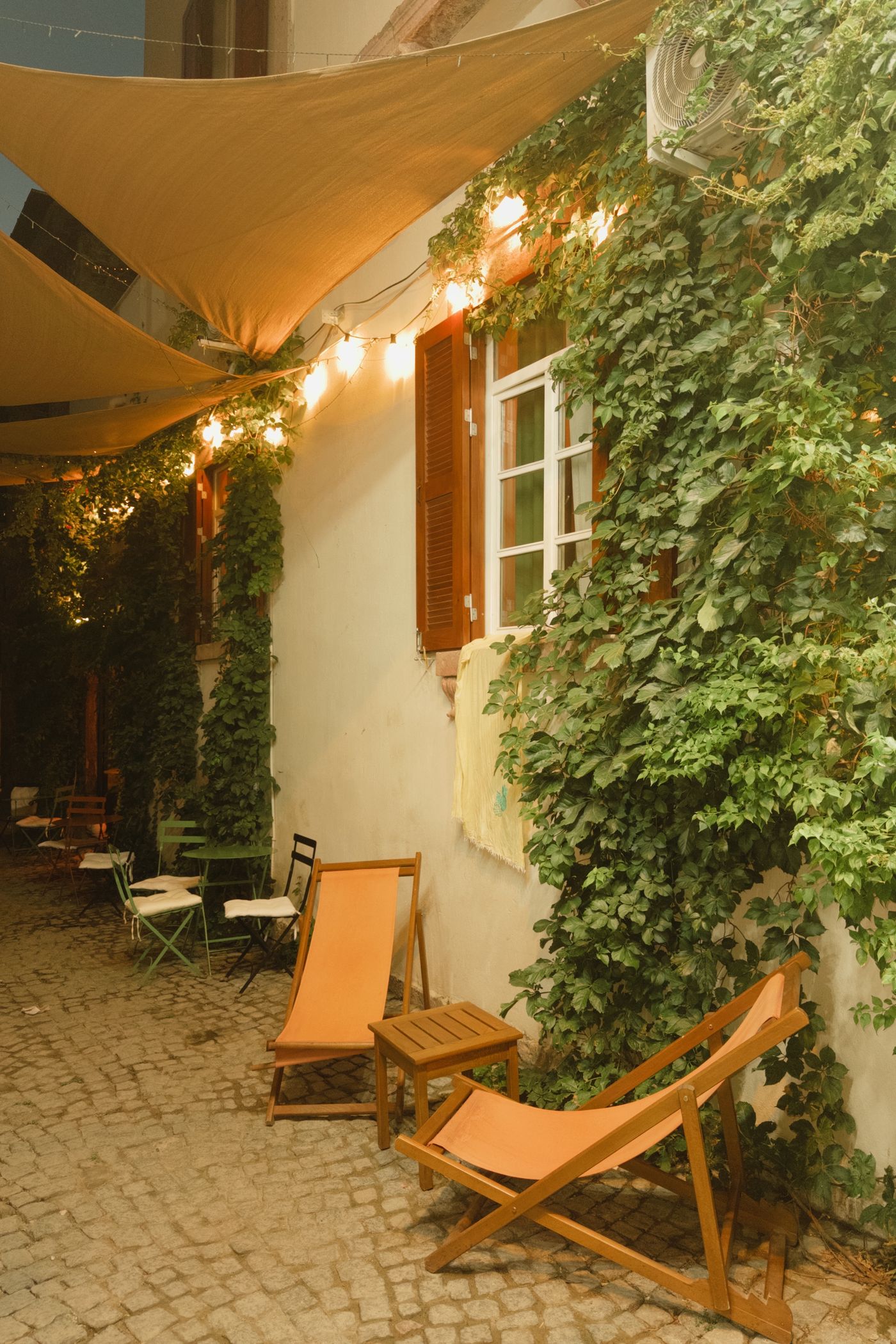
Lighting has an outsized effect on how a balcony feels at night. Start with modest ambient light, then add a functional light near the chair or table. A single glaring bulb is often less comfortable than a softly diffused lantern and one focused reading light.
Rechargeable outdoor-rated lamps can suit renters who cannot install permanent fixtures. However, battery-powered does not automatically mean weatherproof. Check the manufacturer’s environmental rating, charging directions, and safe-use instructions. Never treat indoor extension cords or indoor-only fixtures as suitable for an exposed balcony.
Decorative string lights can provide gentle atmosphere where the mounting method and building rules permit them. Keep connections protected as instructed, prevent wires from crossing doors, and avoid shining a strong beam toward neighboring windows. A warm appearance is useful, but low glare and safe placement matter more than a particular bulb color.
A simple three-layer lighting scheme
- Ambient: A soft outdoor-rated lantern or a modest securely mounted light string.
- Task: A practical lamp beside your reading chair or table.
- Accent: A subtle glow near plants or textured surfaces, without exposed unsafe wiring.
4. Give the Space a Calm Color Story
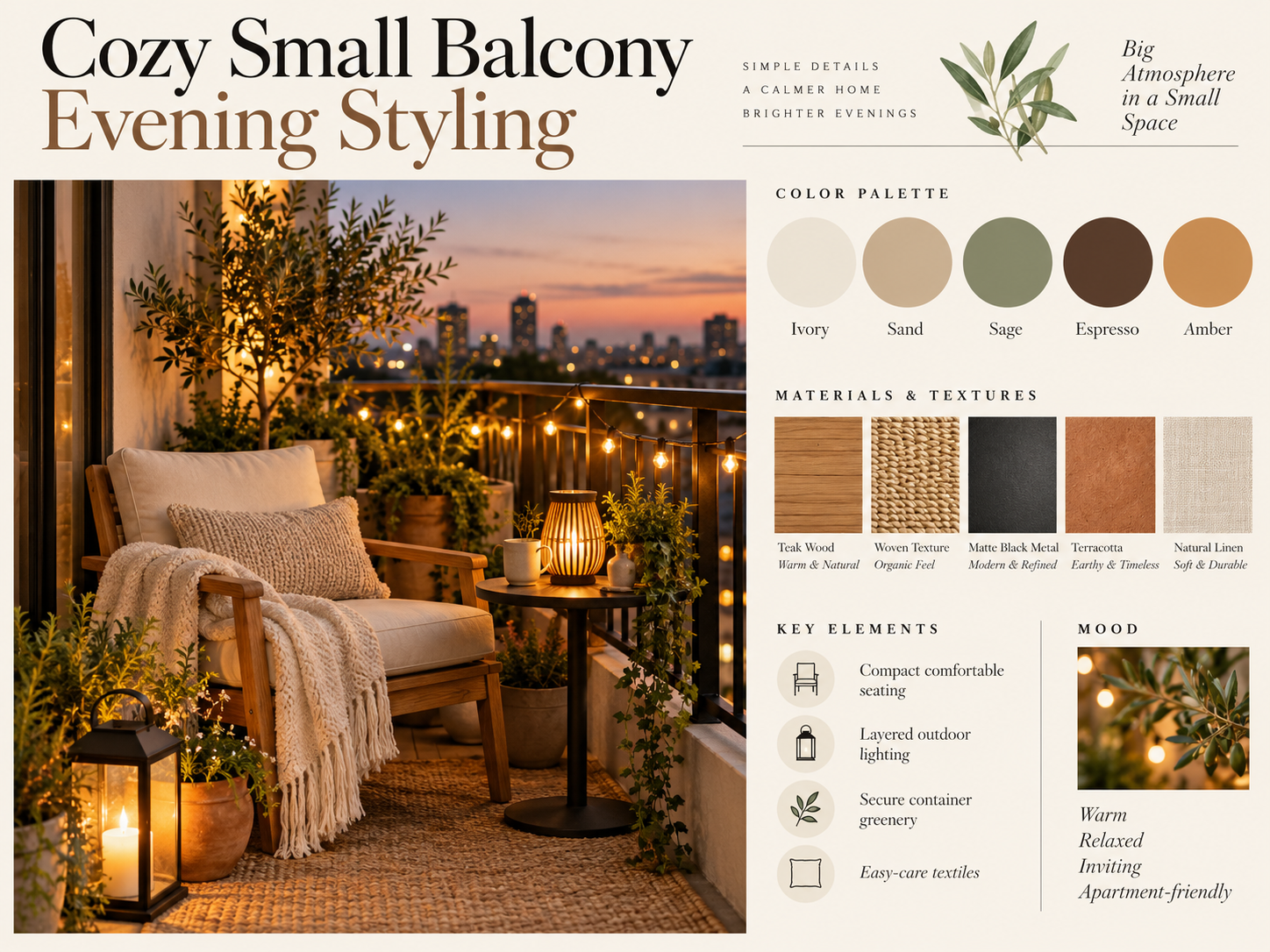
Choose two foundation materials and one accent rather than filling the balcony with unrelated finishes. Warm ivory, sandy beige, muted sage, and espresso brown work well for a relaxed California-casual look. You could instead choose crisp charcoal and white for a contemporary city balcony.
A repeated wood tone or matching matte metal finish helps connect the chair, table, and plant containers. Outdoor-suitable woven textures add softness, though every material requires appropriate cleaning and protection. Follow care guidance rather than assuming that weather-resistant means maintenance-free.
Leave visible floor and railing space. A few well-proportioned pieces generally create a calmer scene than many small decorative objects. Consider the view from the adjoining room as well as the balcony itself.
5. Add Greenery That Suits the Microclimate
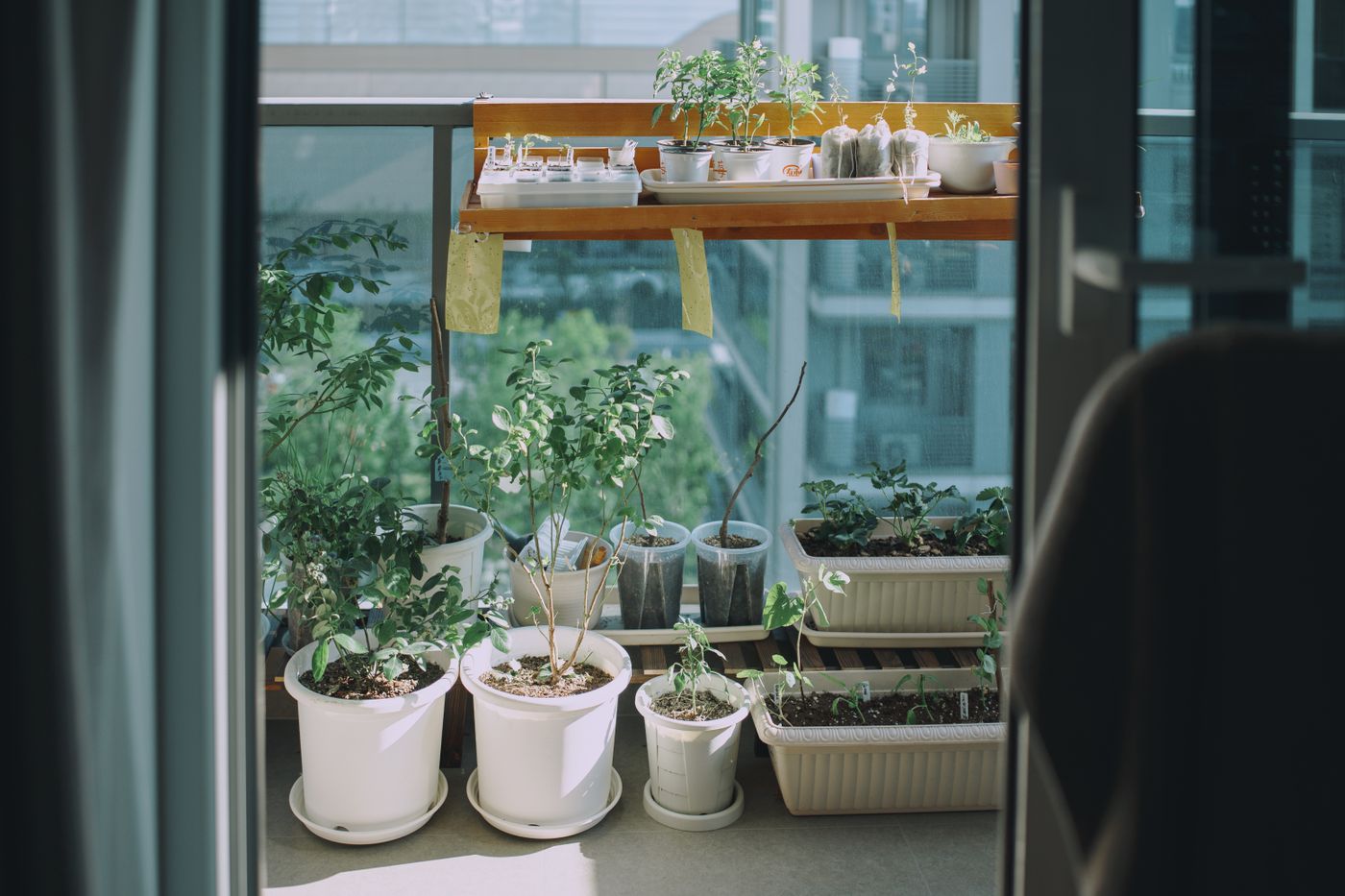
Balconies can have surprisingly different growing conditions. Observe direct sunlight over several days, notice where nearby buildings cast shade, and pay attention to wind. Select plants suited to the actual environment rather than copying a photograph from a different climate.
Choose stable containers with drainage and the appropriate root volume. Do not let water accumulate around vulnerable surfaces, block drainage, or run onto a neighbor’s property. A single secure planter beside the chair can be more atmospheric than several crowded pots.
If you are starting from scratch, use our three-container balcony garden guide. For a north-facing or otherwise shaded space, explore plants for shady balconies before choosing varieties.
6. Use Textiles You Can Easily Store
A washable cushion and a throw can bring an indoor sense of comfort outdoors without making the setup complicated. Choose fabrics suited to their intended use and follow laundering instructions. Even outdoor cushions may benefit from dry storage during persistent rain.
A small outdoor rug can define a seating zone, but check that it will not conceal drainage or hold moisture against the floor. In wet or cold months, a rug-free balcony may be the more practical choice. Keep a designated spot indoors for textiles and books.
Try adding just one accent cushion before buying a full set. Colors can change with the seasons while the furniture and layout remain consistent.
7. Create Privacy Without a Wind Hazard
Privacy can be achieved through orientation, lighting, and planting, not only screens. Angle the main chair away from a direct line of sight, or position a secure plant to soften the view. These modest changes can make the space feel more sheltered without blocking daylight.
Tall freestanding screens, fabric curtains, and loose panels may catch wind on upper floors. Confirm local and building restrictions before installing them. Any permitted screen should be appropriately engineered and fixed, without obstructing access or drainage.
Avoid excessively bright balcony lights after dark. Shielded, low-intensity fixtures help you feel comfortable while respecting nearby homes.
8. Make It Comfortable for One or Two
For solo evenings, prioritize a supportive chair, a reachable place for a drink, and a good reading light. Place the table where it does not force you to turn your body awkwardly or block a walkway.
If two people will use the balcony, test the full arrangement while both are seated. Two identical large chairs are not essential: a compact bench or movable second seat may work, depending on the footprint and building rules. Keep drinking glasses off narrow railings.
If your favorite ritual is reading, see our small outdoor reading nook ideas for more targeted inspiration.
9. Adapt Your Styling to the Season
In summer, prioritize airflow and comfortable shade. Autumn evenings may call for a removable throw and a more focused lamp. During extended rain, strong wind, or frost, storing vulnerable accessories is often better than keeping a fully decorated arrangement outside.
Never use an indoor heater or open-flame appliance on a balcony unless it is expressly suitable, permitted, and operated as directed. The safest cozy atmosphere often comes from textiles you bring outside temporarily and properly rated lighting.
After storms, inspect loose hardware and containers for movement. Keep drainage clear, clean wet surfaces when appropriate, and adjust the arrangement to local weather rather than maintaining the same setup year-round.
10. Upgrade in the Right Order
Before spending money, try one evening with a suitable chair and a safe light source you already own. Notice whether the table is too far away, the view feels awkward, or the lighting is too harsh. These observations can help you choose the single most useful improvement.
A sensible purchase order is: suitable seating and safe circulation, an appropriate light, a stable table, one plant, then washable textiles. Budget for storage and care as well as the visible decor. Avoid buying a complete collection merely because the pieces are sold together.
The most successful balcony is an evolving space that supports your real habits. A modest first arrangement may be all you need.
Small Balcony Evening Styling: The 5-Step Checklist
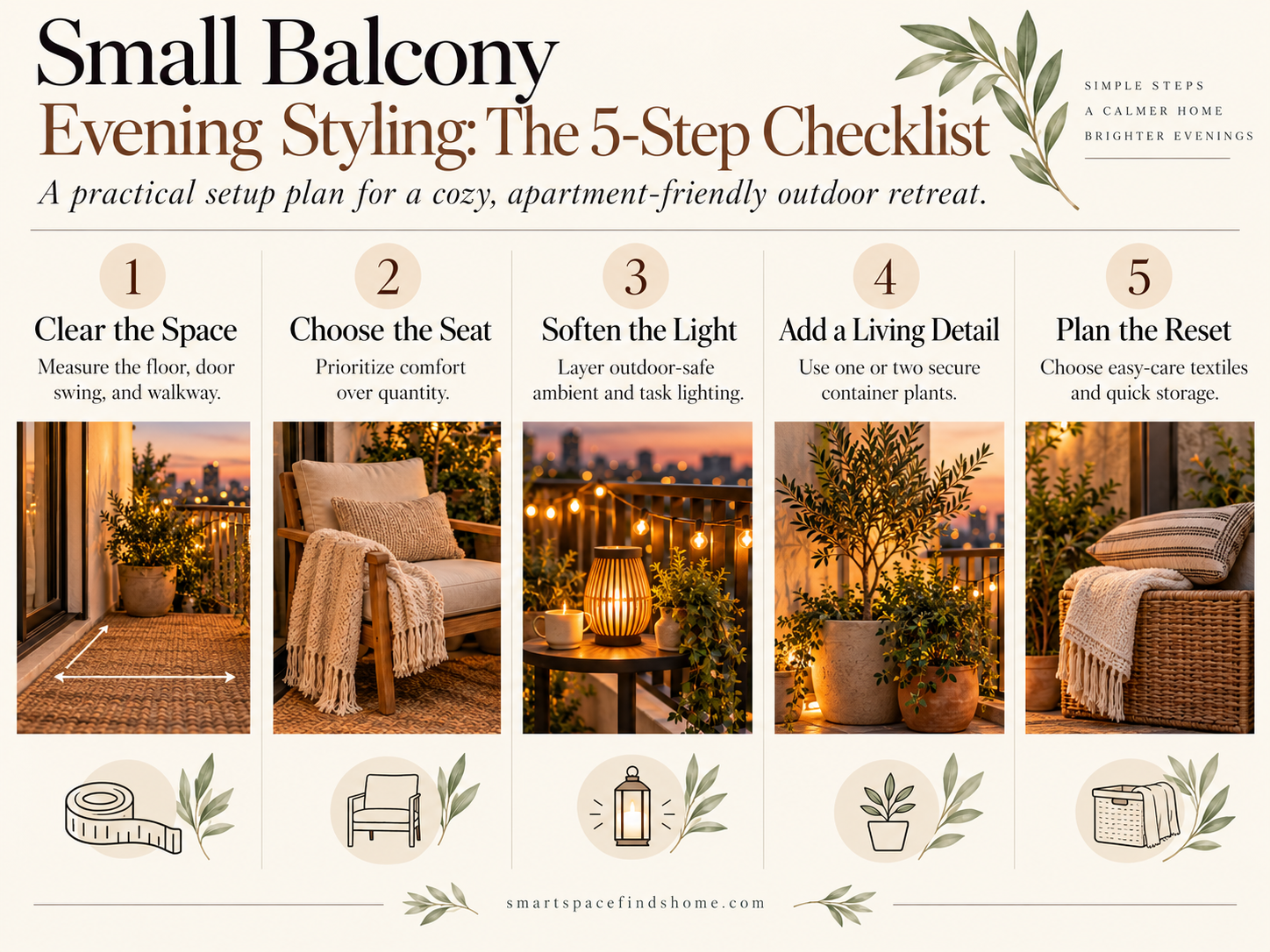
Save this short setup plan for your next balcony refresh. Each step solves a practical problem before you add more decor.
Read the checklist as text
THE EVENING EDIT · A PRACTICAL CHECKLIST
- 01 · CLEAR THE SPACE
Measure the door swing and keep paths, drainage, and approved load limits in mind.
- 02 · CHOOSE THE SEAT
Start with one comfortable, outdoor-suitable chair and a reachable side table.
- 03 · SOFTEN THE LIGHT
Add layered, outdoor-rated lighting without exposed cables or neighbor-facing glare.
- 04 · ADD A LIVING DETAIL
Choose one secure planter suited to your balcony’s actual light and wind.
- 05 · PLAN THE RESET
Store textiles dry, secure loose items, and keep the layout simple to maintain.
A Five-Minute Evening Reset
At the end of the evening, bring inside any glasses, books, and vulnerable textiles; turn off lights as instructed; and check that loose accessories are secure. Keep the balcony door and any required passage clear.
Once a week, wipe down surfaces, inspect planters, check for pooled water, and look for damaged fixings. After severe weather, inspect furniture and containers before using the balcony again. Easy maintenance is an important part of good design.
Frequently Asked Questions
How can I make a tiny balcony cozy on a budget?
Begin with one comfortable outdoor-suitable chair, a stable table, and soft light. Add a plant or washable cushion after testing the layout; prioritize useful pieces over decoration.
What lighting works best on a rental balcony?
An outdoor-rated rechargeable table lamp may provide flexibility without permanent wiring. Follow the manufacturer instructions and building rules. Securely installed decorative lights are another option where permitted.
Should outdoor cushions stay outside overnight?
Follow the fabric and cushion care instructions. Persistent damp and rain can affect textiles, so a dry storage plan is usually helpful.
How do I add privacy on an exposed balcony?
Start with chair orientation and carefully positioned secure planters. Avoid loose tall screens or fabric panels where wind could make them unsafe.
Can I use candles or a heater outside?
Open flames and heaters may be prohibited or inappropriate for the space. Check building rules and product instructions; outdoor-suitable electric lighting is often a simpler way to establish atmosphere.
Final Thoughts: Make Room for the Evening
The best balcony setup is the one you will use regularly. Begin with clear circulation, an inviting seat, and a gentle safe glow. Then layer in a plant and a few easy-care textures. Thoughtful simplicity turns a small outdoor footprint into a real extension of the home.