
Smart Space Finds / The Organized Home / Storage Edit
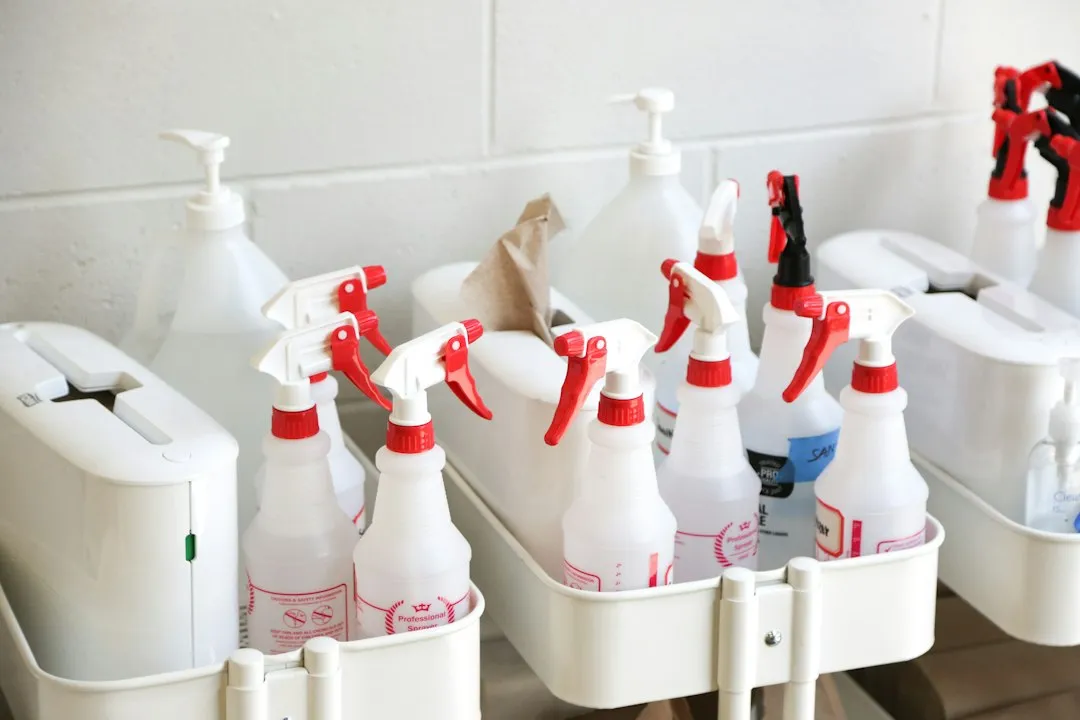
Wondering how to organize cleaning supplies in a small home without a dedicated utility closet? The secret isn’t buying more organizers. It’s creating a compact, safe system that puts everyday tools within reach, keeps bottles identifiable and makes use of awkward cabinet space.
Inventory what you own, select one secure storage area for household cleaners, group tools by cleaning task, use a small portable caddy, and give bulky mops and brooms a separate vertical home. Measure first, store heavy items low and keep cleaners in their original labeled containers.
Chapter 01 / A clean start
Start with a 20-minute cleaning supplies reset
The fastest way to gain space is to stop storing items you don’t need. Work through this reset without opening, mixing or transferring chemical products. Read their labels first, especially if products have been stored in a warm cabinet or in damaged packaging.
- Minutes 0–5: Take inventory. Identify multipurpose products, bathroom cleaners, laundry products and surface-specific formulas. Review labels and set aside any damaged or unidentified containers for safe handling.
- Minutes 5–10: Remove unnecessary duplicates. Keep the products you actually use for your household surfaces. Do not substitute one chemical for another without checking the manufacturer directions.
- Minutes 10–15: Measure the space. Note usable cabinet width, height, depth, pipes, hinges and the room needed to lift bottles out upright.
- Minutes 15–20: Create functional groups. Separate original-bottle cleaning products, dry microfiber cloths, brushes, a daily cleaning caddy and long-handled tools.
Never combine cleaning chemicals or decant them into unlabeled matching containers. Bleach must not be mixed with ammonia-containing cleaners or acids. Follow each product’s instructions for secure storage, temperature, ventilation and disposal. Where children or pets may access the area, use appropriate protective storage.
The initial reset also helps prevent impulse purchases. If you already own a durable caddy or washable tray that fits, reuse it rather than buying an identical product simply for a matching color palette.
Chapter 02 / The space plan
Where to store cleaning supplies when space is tight
There is no universally ideal cleaning closet. The best location depends on the products’ labels, whether children or pets can reach them, cabinet ventilation and the dimensions of your apartment. Use the options below as a layout guide, not permission to store hazardous cleaners on an exposed shelf.
Best for removable trays or low-profile bins when label directions permit. Keep shutoff valves and plumbing visible; fix leaks before using the space.
Give closed, original-labeled products a secure low shelf. Store dry mops and brooms vertically without obstructing the door.
Group detergent bottles and laundry tools into easy-to-check sections. Store pods and other hazardous products securely away from children.
Choose an existing secure cabinet for cleaners. Put nonchemical accessories such as dusters, cloths and brooms on separate hooks or shelves.
Under-sink cleaning supply organization
Under the sink is a popular storage spot because it can be awkward for everyday cookware. But it is not automatically the safest option. Check for moisture, condensation, leaky pipes and restricted access. A freestanding washable tray may fit around plumbing better than a fixed two-tier pull-out organizer. Avoid anything that strains flexible hoses or hides shutoff valves.
Cleaning supply storage without a closet
Use a dedicated lockable or otherwise appropriately secured cabinet rather than spreading chemical bottles across an open rolling cart. Wall-mounted holders can handle a broom, dustpan or dry mop, while a small basket can contain clean microfiber cloths. Keep hazardous contents out of exposed vertical storage.
Small laundry room cleaning storage
Choose bins with handles for clean cloths and utility brushes, plus appropriate cabinet storage for detergents. Keep laundry pods in their original packaging, securely stored. If the space gets damp, make sure your dry tools are not trapped in sealed containers before they have dried completely.
Chapter 03 / The visual system
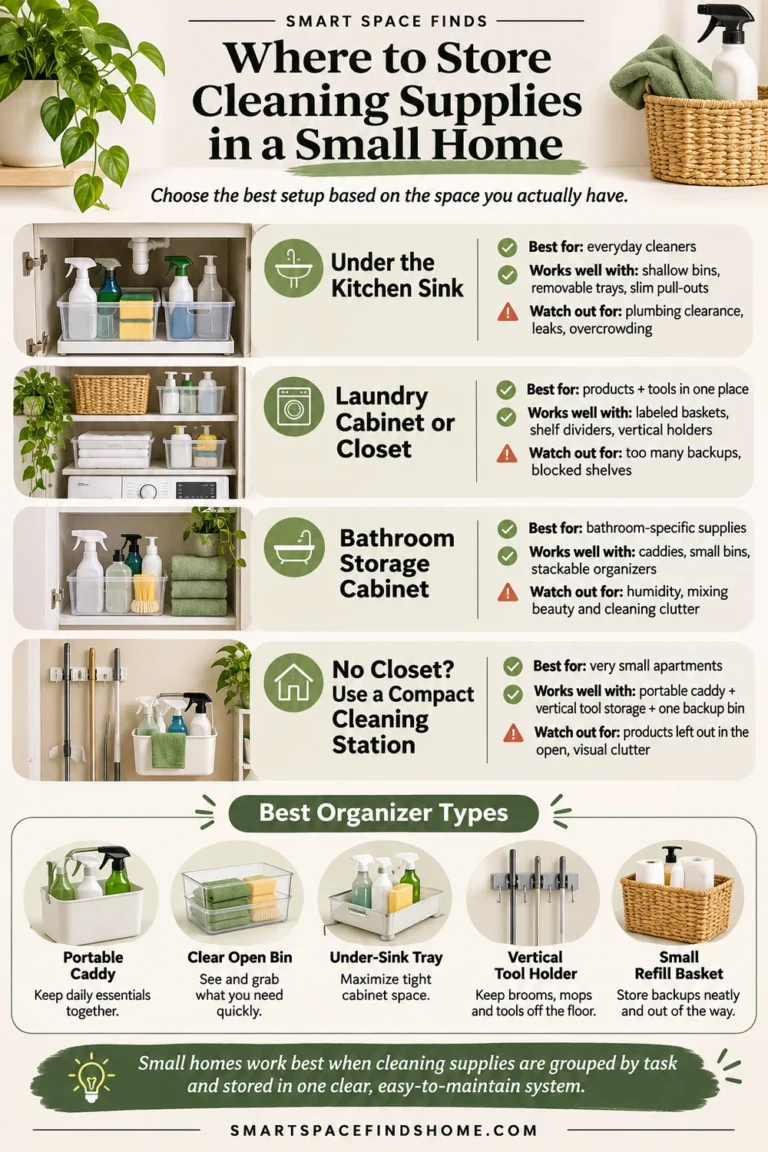
The five-zone cleaning storage blueprint
This is the organizing system to use in almost any apartment. Instead of sorting by bottle color or trying to fill every inch, assign a clear role to each storage area.
The five-zone formula: Secure · Carry · Dry · Vertical · Backup. Follow individual product labels and keep hazardous cleaners secured.
Zone 1: A secure home base for cleaning products
Keep original labels in view and bottles upright in a stable cabinet. Select a location away from food and medications, and use appropriate safety measures for children and pets. If two chemicals have different storage requirements, do not force them into one shared bin. Safety and accessibility of warnings always take precedence over visual symmetry.
Zone 2: A grab-and-go cleaning caddy
A portable caddy is one of the most practical tools for a small home because it can reduce the temptation to keep duplicates in multiple rooms. Choose a stable, washable base, a comfortable handle and enough clearance for upright bottles. Pack only compatible supplies needed for a particular task, then return any hazardous contents to secure storage after cleaning.
Zone 3: Dry cleaning cloths and sponges
Use a small breathable basket or washable organizer for microfiber cloths and brushes. Separate clean cloths from used ones. Let damp tools dry appropriately before placing them back into storage to avoid trapped moisture and unpleasant odors.
Zone 4: Vertical broom and mop storage
Save floor space with a correctly rated broom holder or wall hook. Choose a location that does not interfere with a door swing or walking path. In a rental, check mounting instructions, weight limits and surface compatibility before choosing adhesive hardware.
Zone 5: A smaller backup supply section
Bulk buying can save money only when spare containers fit securely and will actually be used. Store heavy refills low, follow all label requirements and avoid unstable stacks. A compact apartment is rarely improved by keeping a year of duplicate bottles.
Chapter 04 / Smart storage moves
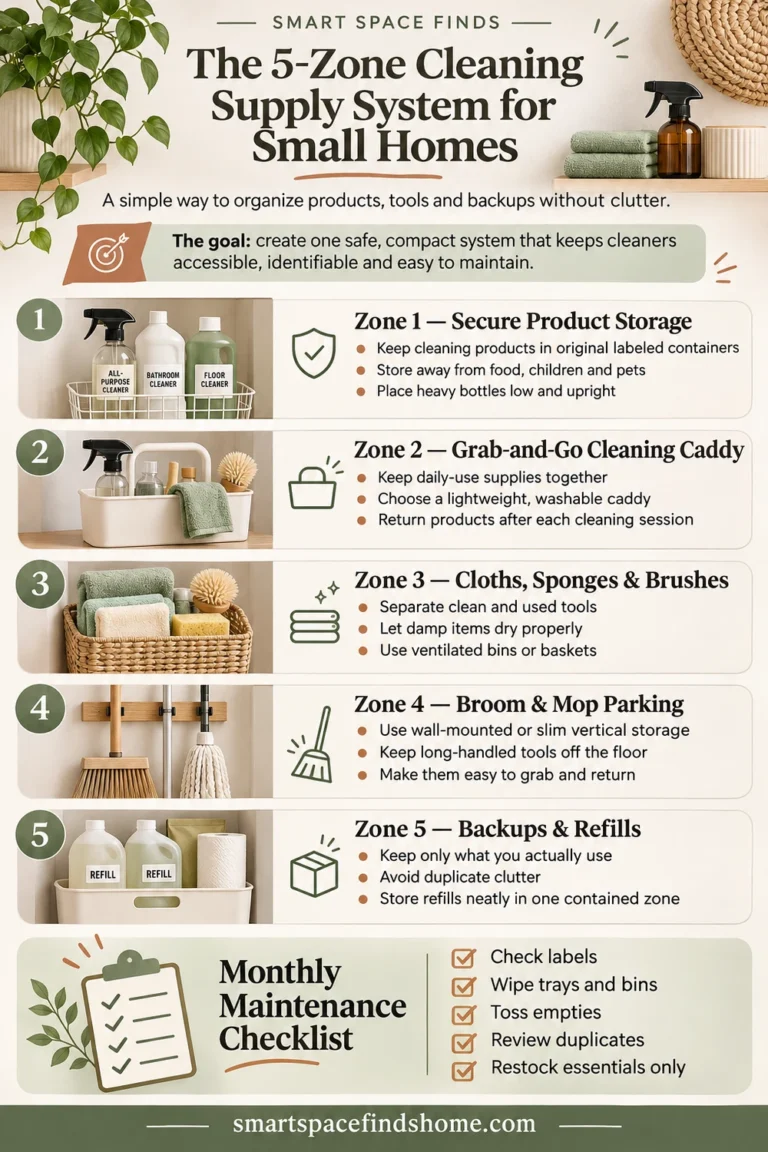
12 smart cleaning supply storage ideas for small spaces
1. Use an easy-to-clean utility caddy
Choose handles that are comfortable when loaded, a flat base and dividers sized for your actual supplies. Use the caddy as a temporary work station—not long-term exposed storage for hazardous chemicals.
2. Organize cabinet shelves with removable bins
Washable open-top bins let you remove a category of items without taking the entire cabinet apart. Make sure the original bottle labels remain easy to see and inspect.
3. Fit a pull-out organizer around pipes
Measure the drainpipe path and door clearance before ordering. Confirm that a sliding organizer does not wobble when extended and never blocks a shutoff valve.
4. Use a low-profile tray on the cabinet floor
A removable, easy-to-wash tray can simplify shelf maintenance and leak inspections. It does not make leaking or damaged chemical containers safe to keep.
5. Reserve vertical hooks for dry equipment
Free up floor area by hanging a lightweight broom, dustpan or dry duster. Verify load limits and keep tools clear of electrical outlets and doorways.
6. Store heavy cleaners on lower shelves
Avoid lifting large detergent bottles above shoulder height. Keep the heaviest safely stored containers on sturdy shelves within their published load limits.
7. Label bins rather than decanting bottles
Labels such as “Microfiber Cloths,” “Cleaning Brushes” and “Bathroom Tools” improve the workflow while original product labels and first-aid directions remain intact.
8. Set a limit for duplicates
Consider one backup for the few items you use frequently. Check current stock before shopping, especially if the cabinet has deep areas that hide unopened packages.
9. Keep wet and dry tools separate
Prevent damp sponges from sitting against clean towels or spare paper products. Use an open drying location appropriate for the tool before returning it to its storage zone.
10. Create an easily accessible daily-tools drawer
A drawer can work well for nonchemical items such as gloves, dusters and clean cloths. Avoid placing hazardous products where children or pets can reach them.
11. Make room for plumbing checks
Under-sink organizers should lift out easily. Leave enough clearance to inspect the bottom of the cabinet and detect moisture or damage early.
12. Give every item a return position
When cleaning is done, return each item to the same clearly defined zone. If something has no safe, practical location, rethink the layout before adding another bin.
Chapter 05 / Measure before buying
What cleaning supply organizers are worth buying?
Start with the function you need rather than the appearance of a product listing. A good organizer should fit inside your actual cabinet, stay stable when loaded and be easy to clean. Review these categories before selecting products.
| Organizer | Best use | What to verify |
|---|---|---|
| Portable cleaning caddy | Carrying a small selection of compatible daily-use supplies | Handle strength, loaded weight, bottle clearance |
| Open-top washable bins | Grouping tools and suitably stored products | Interior width, depth, visibility of labels |
| Under-sink pull-out shelf | Reaching the back of an awkward cabinet | Plumbing clearance, fixing method, stable load rating |
| Utility hooks or broom holder | Vertical storage of dry long-handled tools | Surface compatibility, mounting limits |
| Ventilated accessory basket | Clean cloths and appropriately dried brushes | Airflow and washable material |
- Does it fit the usable cabinet opening and depth?
- Can you retrieve bottles without tipping or scraping them?
- Are original labels and any required warnings visible?
- Is its rated load capacity sufficient?
- Can you remove and clean it without blocking access to plumbing?
Affiliate disclosure: As an Amazon Associate, Smart Space Finds earns from qualifying purchases. Product links are sponsored; there is no additional cost to you. Check the current product details, dimensions and availability on Amazon before buying.
01 / Cleaning Caddies
Portable caddies for compatible supplies during cleaning. Return hazardous products to secure storage after use.
02 / Under-Sink Organizers
Measure pipes, door swing and usable space first. Keep shutoff valves accessible and products properly secured.
03 / Bins & Vertical Tool Storage
Use washable bins for compatible supplies and dry accessories; reserve broom holders for long-handled tools.
04 / Cleaning Tool Essentials
Small, functional accessories that are easy to wash, dry and return to their designated zone.
Safety reminder: Keep household cleaners in original labeled containers and follow the product label. An open bin or caddy is not child-resistant chemical storage.
Chapter 06 / Real-life upkeep
Three organization mistakes to avoid
Buying the organizer before taking measurements. A popular two-tier rack may be useless behind a drainpipe. Verify the usable opening, not just the cabinet’s exterior dimensions.
Using decorative refill bottles for hazardous cleaners. Matching containers can hide essential safety information and cause accidental misuse. Keep product identity and instructions intact.
Making an attractive but inaccessible display. Hazardous products should not be left on open carts or exposed shelves merely for the aesthetic. Choose a secure storage home and display only appropriate nonchemical accessories.
The five-minute monthly cleaning cabinet check
- Confirm caps and labels are intact and readable.
- Look for moisture, leaks, spills or signs of damaged packaging.
- Clean and dry trays and accessories appropriately.
- Return items to their correct storage zones.
- Check stock before buying duplicates.
- Use product instructions and local household hazardous waste guidance for unwanted chemicals.
Editor’s takeaway
Less clutter. Better access. Safer storage.The ideal small-home cleaning station is not the prettiest shelf of identical bottles. It is a secure, easy-to-maintain setup where every product remains identifiable, every useful tool has a home and every cabinet can be inspected in minutes.
Chapter 07 / Answers to common questions
Frequently asked questions
How do you organize cleaning supplies in a small apartment?
Start by consolidating essential cleaners into a secure, suitable cabinet. Use a portable caddy for compatible products needed during cleaning, store dry tools on a separate holder and divide accessories into labeled, washable bins.
Where can you keep cleaning supplies without a closet?
Choose an existing cabinet that can safely accommodate the products according to their labels and can be secured from children and pets. Reserve accessible open storage for nonhazardous tools such as microfiber cloths, brooms or dustpans.
Is it okay to store cleaning supplies under the kitchen sink?
It depends on the product label, household access and cabinet conditions. Keep products away from food, secure hazardous cleaners, leave valves reachable and address any leaks before using the area.
What should go in a cleaning caddy?
Carry a limited set of compatible supplies and tools for a specific task. Choose a stable container and avoid overloading it. Return hazardous products to their safe permanent storage location after use.
Can I put cleaning products in matching bottles?
Do not transfer hazardous cleaners to unlabeled or decorative containers. Keep them in original labeled packaging unless the manufacturer’s refill system and instructions explicitly provide a safe compatible option.
How should I organize cleaning supplies around kids or pets?
Keep hazardous products in appropriate secure storage that children and pets cannot access, following label instructions. Do not rely solely on putting a product on a high open shelf or inside a portable caddy.
How often should I organize my cleaning supplies?
A brief monthly check helps catch leaks, clutter and duplicates. Revisit the layout whenever your household routines change or you notice unstable items or dampness.
Explore more small-space storage ideas
Editorial references: U.S. EPA Safer Choice and Poison Help. Always follow the actual product’s manufacturer instructions and your local hazardous-waste disposal rules.