
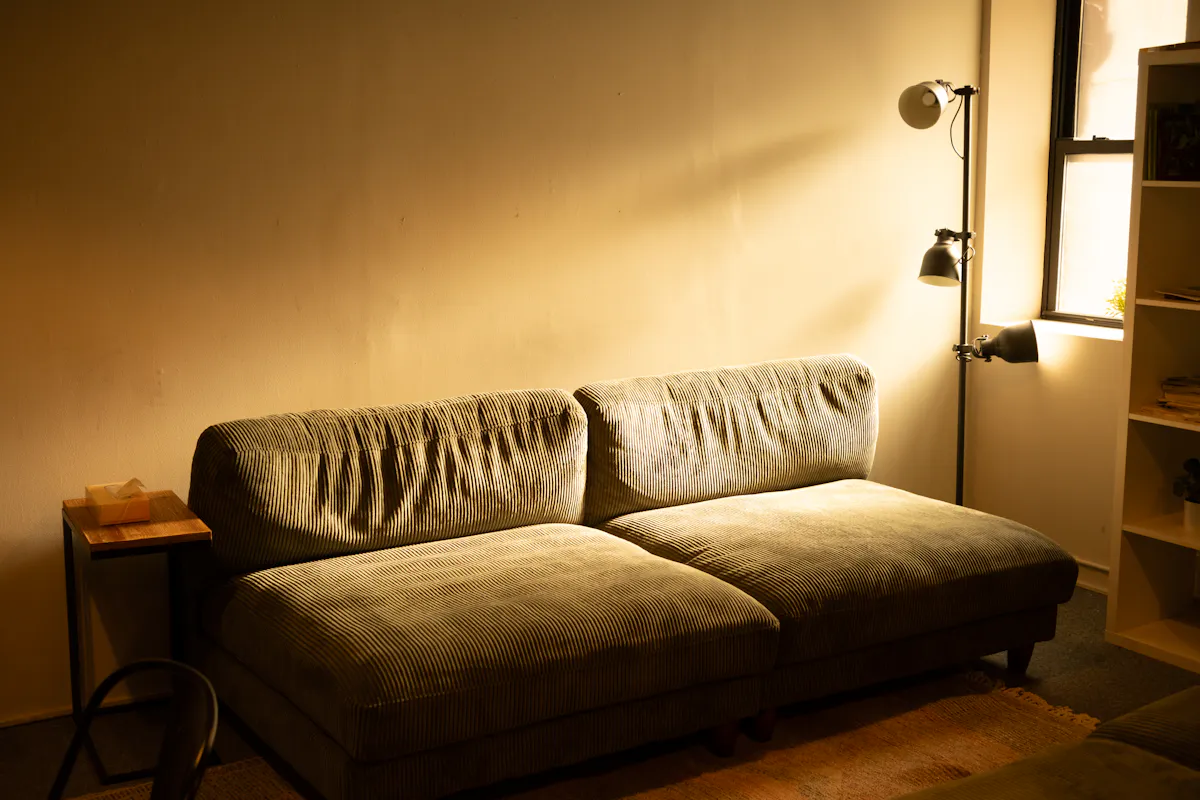
Your home does not need to be spotless before bed. A 15-minute evening home reset is a simple nightly cleaning and tidying routine designed to make tomorrow easier. In five focused, three-minute rounds, you will clear the kitchen, put away everyday clutter, prepare your morning essentials, and restore a comfortable living space. The routine works for small apartments, studios, families, and busy schedules—and requires only what you already own.
SMART SPACE FINDS / THE 15-MINUTE EDIT
A lighter evening. A more manageable morning.
What you need: a timer, a reusable cloth, and an optional carry basket. Start after dinner or whenever you naturally wind down.
What is a 15-minute evening home reset?
An evening home reset is a short, repeatable routine that puts the home’s busiest areas back into working order before the next day. Unlike deep cleaning, it focuses on immediately useful tasks: clearing a counter, returning everyday objects, setting out essentials, and making one shared space comfortable again.
Before you begin: put on a 15-minute timer, take a reusable cloth, and identify the single surface you most want usable tomorrow. Do not start with a crowded junk drawer or a full closet. If dishes, laundry, or deeper cleaning exceed the allotted time, treat them as separate chores—not evidence that the reset failed.
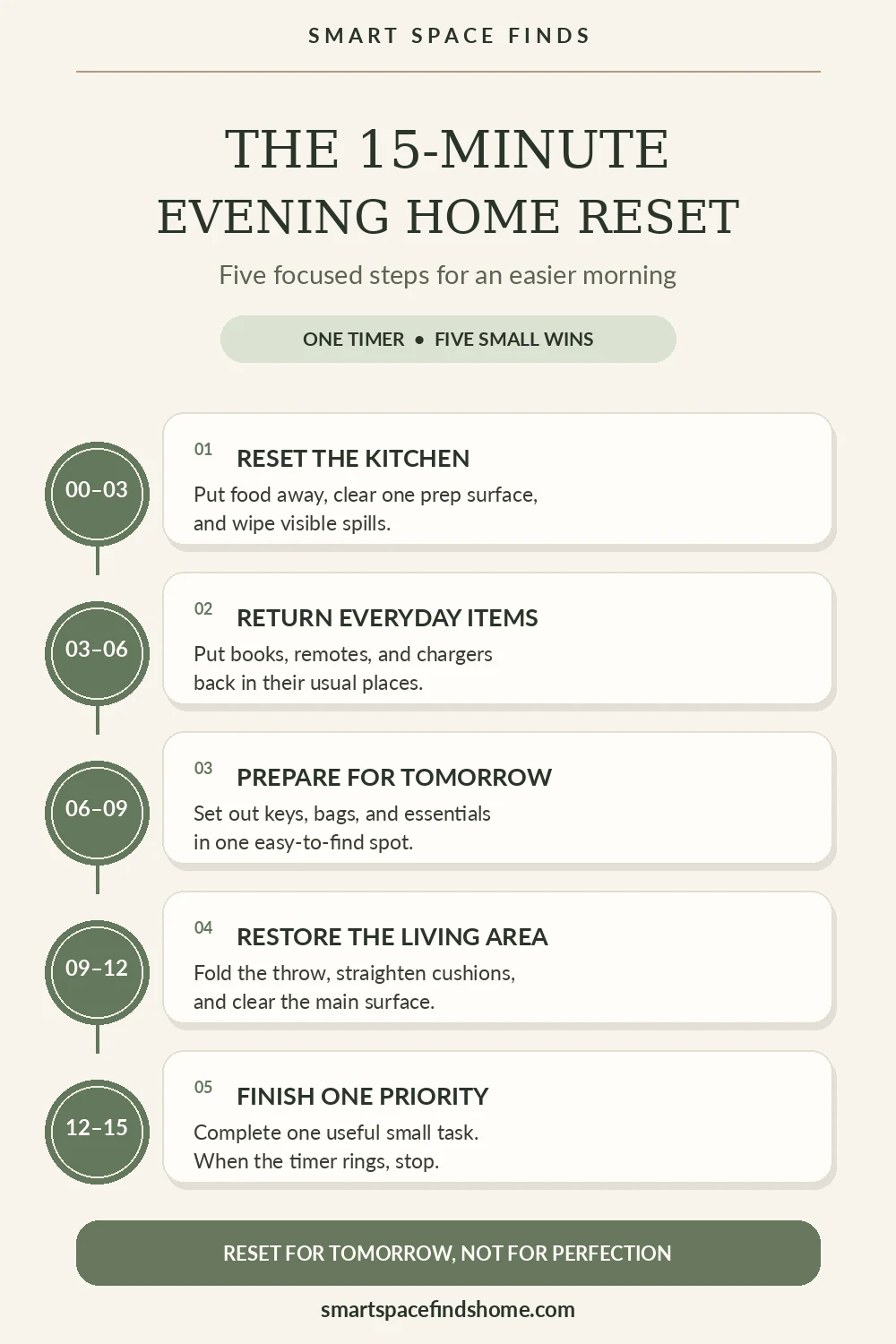
Your 15-minute evening reset: a realistic minute-by-minute routine
YOUR NIGHTLY ROUTINE
Five manageable moves
Minutes 0–3: reset the kitchen
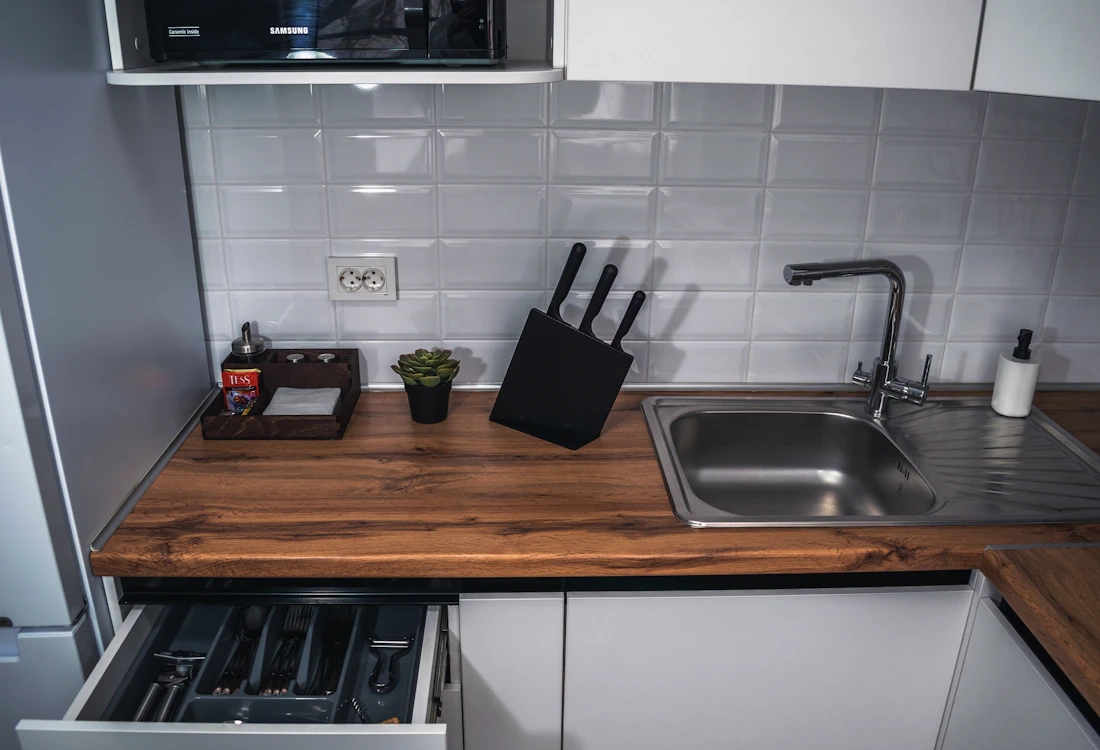
Put away food that needs refrigeration, load a few dishes or move them into the washing area, and clear one usable stretch of counter. Wipe visible crumbs or spills with a surface-appropriate cloth. The goal is a functional place to make breakfast—not an immaculate kitchen.
Small-space tip: If the kitchen counter also holds your coffee station or work supplies, give the next morning’s most important activity first claim on the surface.
SMART SPACE FINDS · EDITOR’S PRACTICAL PICKS
Shopthe 3-Minute Kitchen Reset
Four compact essentials for quick cleanups and a clearer kitchen counter.
Choose only what solves a repeat problem in your own home. Availability and product details are shown on Amazon.
Minutes 3–6: return things to their homes
Make one pass through the space you use most. Return books, remotes, chargers, shoes, and loose papers to their established spots. Use a small basket only to carry items between rooms; empty it before you finish so it does not become another clutter pile.
If the same things are always left out, make a note. That is often a storage-placement problem rather than a lack of discipline. You can solve it later with a reachable hook, tray, or drawer.
Minutes 6–9: make tomorrow easier
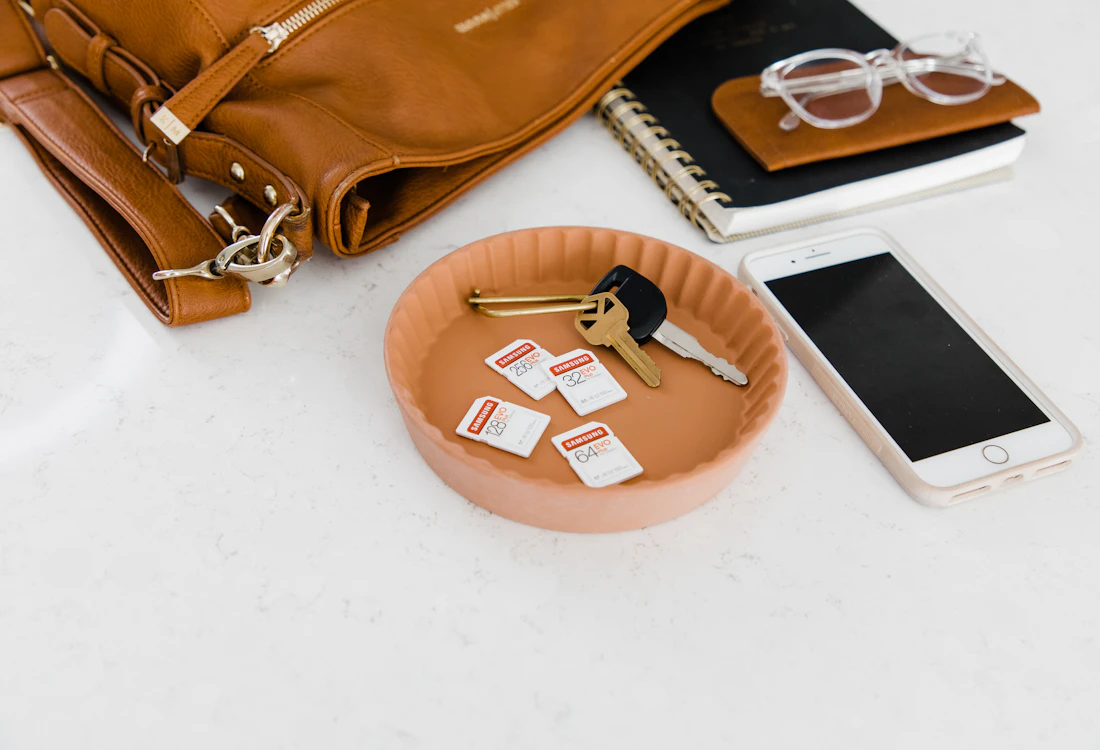
Place your keys, wallet, bag, and any essential paperwork in one visible landing zone. Check the next day’s first commitment and set aside only what you know you will need. Keep exits and walkways completely clear.
For households with children: An age-appropriate backpack or school-supplies check may be more valuable than styling the living room.
SMART SPACE FINDS · EDITOR’S PRACTICAL PICKS
ShopTomorrow’s Essentials
Create a reliable landing spot for keys, bags and other daily items.
Choose only what solves a repeat problem in your own home. Availability and product details are shown on Amazon.
Minutes 9–12: restore a comfortable living area
Fold the throw blanket, put cushions back where they are comfortable, clear the coffee table, and remove trip hazards such as loose cables. Keep this practical: you are resetting a room for living, not staging a photo shoot.
In a studio apartment, this step can be as simple as returning your dining table from work mode to dinner or breakfast mode.
Minutes 12–15: finish one meaningful task—and stop
Choose the task that would otherwise slow you down tomorrow: clear a chair, set up the coffee area, return shoes to their rack, or wipe a final high-use surface. Put cloths and cleaning supplies away safely. When the timer sounds, end the reset—even if the room is not perfect.
The simple evening reset checklist
Use this as a quick mental check rather than a second, longer to-do list:
- Kitchen has one clear prep surface and perishable food is stored safely.
- Everyday objects are back in their usual places.
- Keys, bags, and tomorrow’s important items are ready.
- The main living area is comfortable and walkways are clear.
- Cleaning supplies are stored safely, and the timer has stopped.
How to adapt the routine for a small apartment
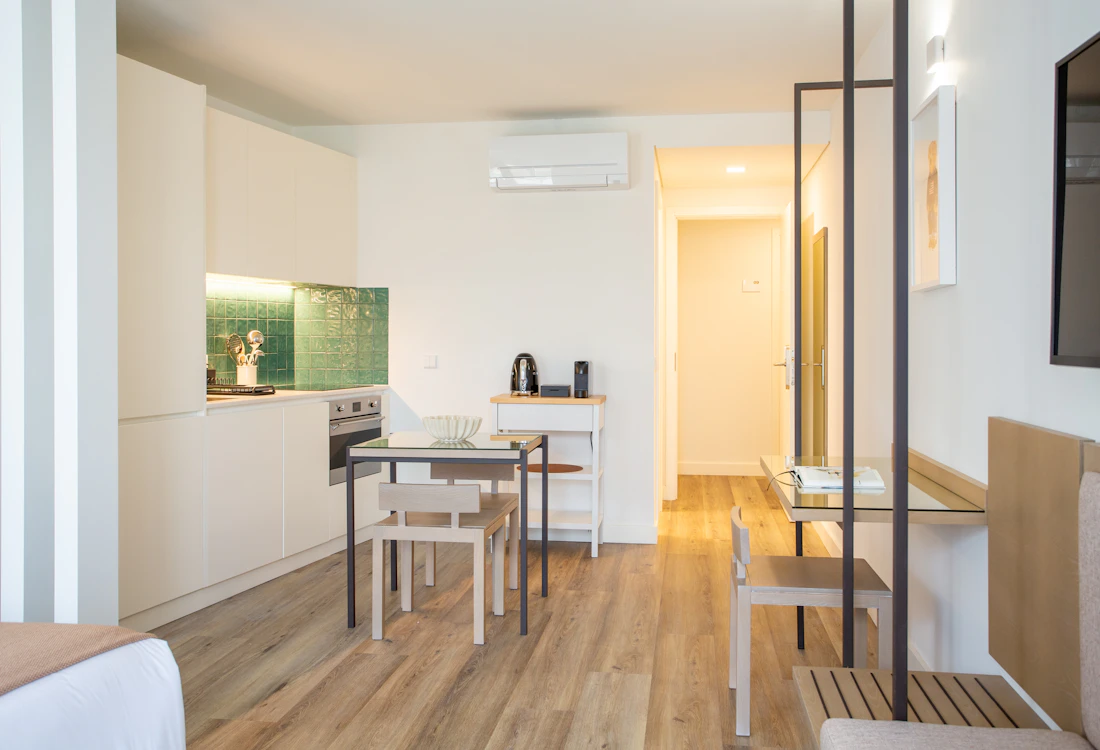
In compact homes, a single surface often does several jobs. Reset that surface for its next purpose rather than trying to clear the whole apartment. A tray can hold work accessories during dinner; a shallow dish can keep keys together near the entrance; a dedicated charging spot can prevent cables spreading across the floor.
- Prioritize one high-traffic surface over several minor messes.
- Use existing drawers, trays, and hooks before buying organizers.
- Keep shelves and hooks safely installed and easy to reach.
- Avoid storage that blocks doors, circulation, vents, or exits.
- Give shared spaces a simple, agreed-upon standard rather than expecting perfection.
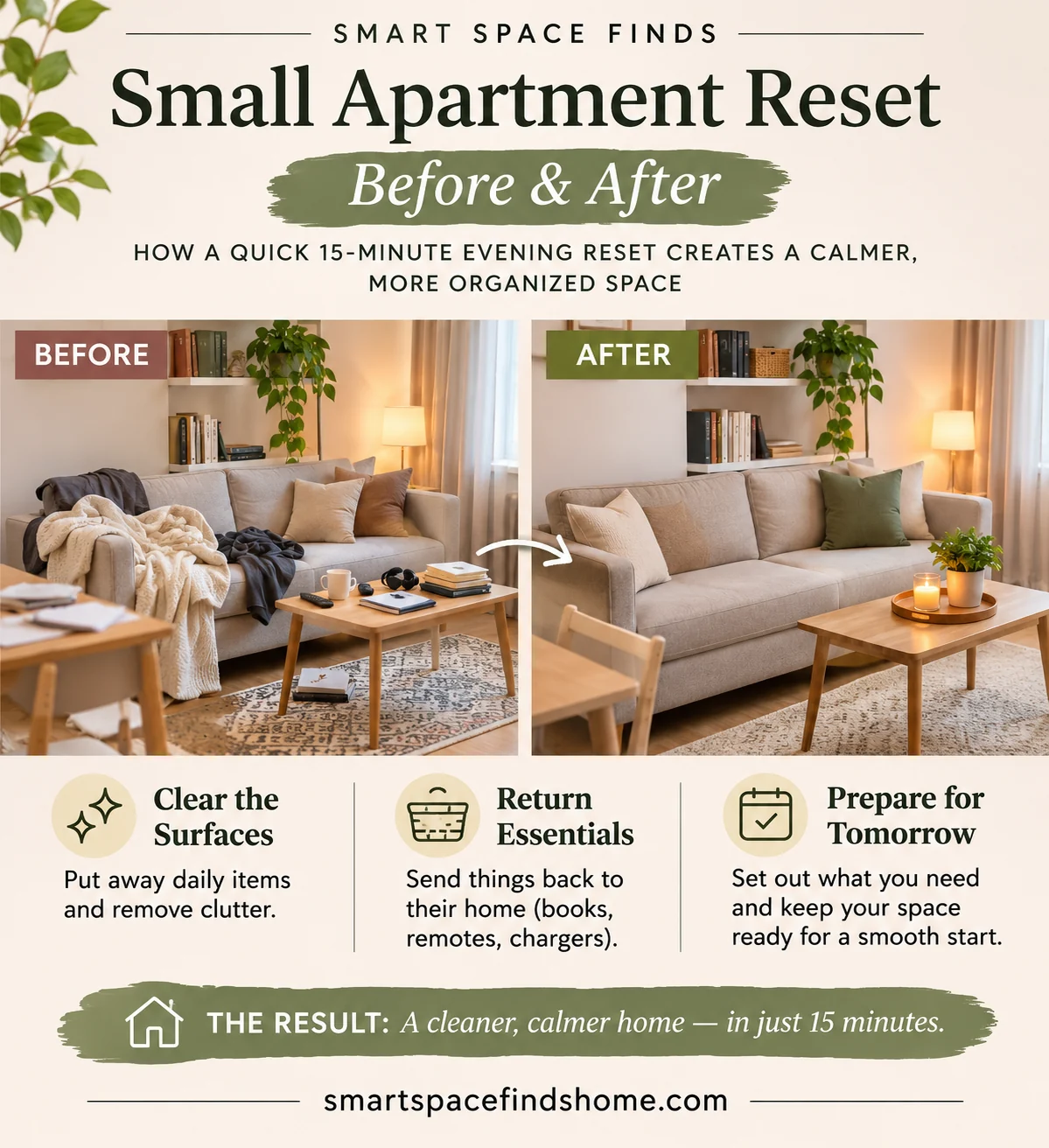
Studio example: put the laptop and charger in one drawer, move the dinner dishes to the sink, wipe the shared table, place keys by the exit, and straighten the sofa. That is a complete reset—even when there is only one room. For a bigger refresh on another day, try our calm weekend home reset.
SMART SPACE FINDS · EDITOR’S PRACTICAL PICKS
Shopthe Small-Space Reset
Thoughtful storage for cords, everyday accessories and compact cabinets.
Choose only what solves a repeat problem in your own home. Availability and product details are shown on Amazon.
SMART SPACE FINDS · MORE PRACTICAL OPTIONS
Shop More Compact Home Reset Essentials
Optional alternatives for different apartment layouts and compact kitchens. Compare the size and variant on Amazon.
These storage and cleaning tools are optional. A timer and existing supplies are enough to start.
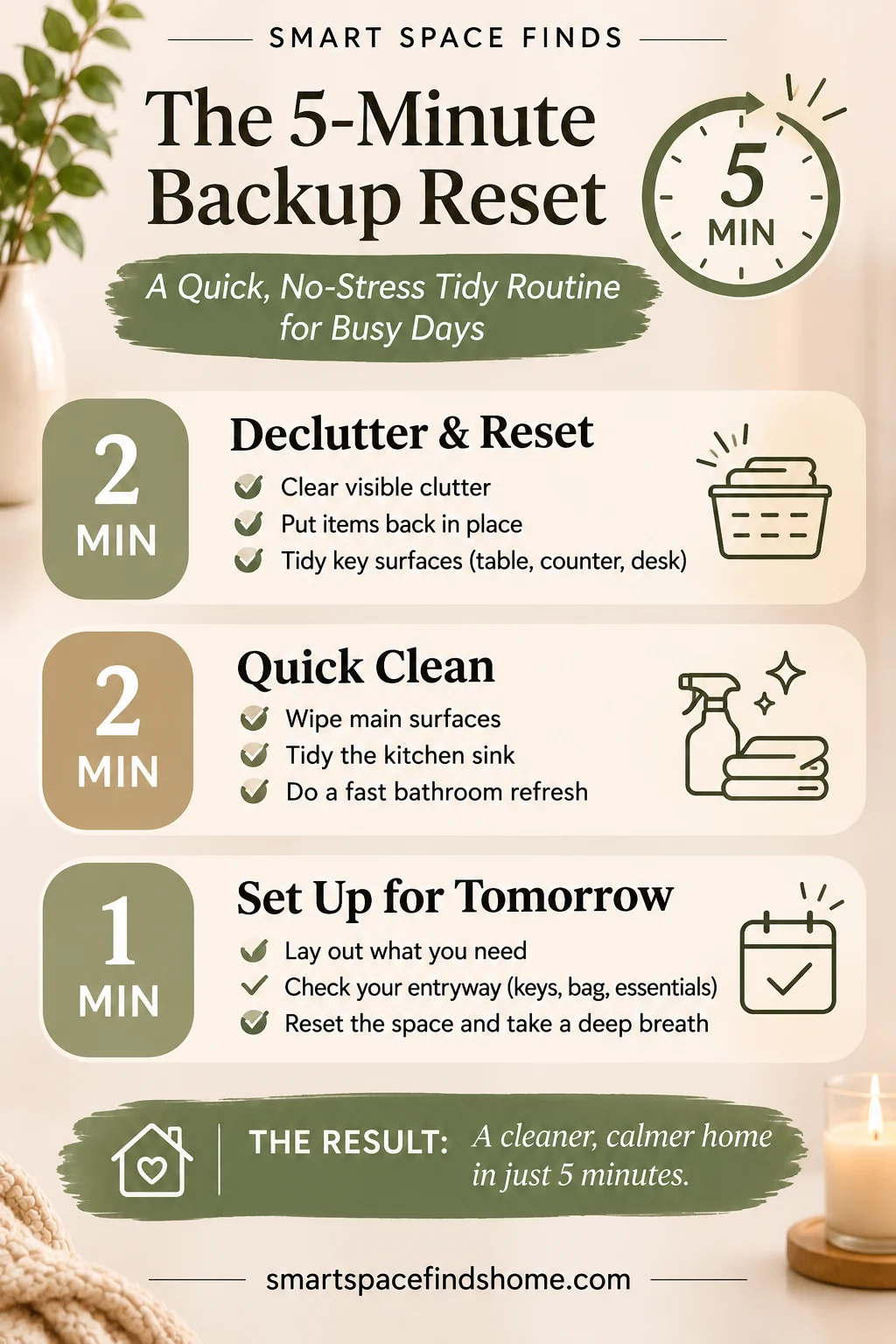
Only have five minutes? Try the minimum reset
THE BUSY-NIGHT VERSION
2 minutes: clear the main counter or table.
2 minutes: return the most visible stray items.
1 minute: place tomorrow’s essentials by the door.
A five-minute reset is still a useful reset. On difficult evenings, focus on reducing morning friction rather than catching up on every chore.
Five mistakes that make a quick reset take too long
- Opening drawers to declutter: sorting possessions belongs in a separate session.
- Trying to clean every room: choose the busiest zones first.
- Moving clutter from pile to pile: return items to actual homes.
- Buying organizers immediately: identify repeat problem areas before spending.
- Ignoring the timer: protecting the time limit is what makes the habit sustainable.
If bedroom clutter keeps returning, our guide to decluttering a small bedroom offers a more focused approach. You can also explore simple habits found in organized homes.
Make the habit stick with a seven-day test
For days 1–3, use the five-step schedule as written and notice which task consistently runs over time. On days 4–5, shift a minute or two toward the area that most improves your morning. At the end of the week, ask: Are keys easier to find? Is the kitchen ready to use? Do shared surfaces stay functional? Keep the parts that answer yes.
Keep three signals in mind: can you prepare breakfast without moving clutter, find your keys immediately, and use your main living surface? If two of those three improve, your routine is doing useful work. Adjust the schedule to fit your real home: six minutes in the kitchen and one minute by the sofa may work better than perfectly equal intervals.
Frequently asked questions
Is 15 minutes enough to clean an entire home?
No. Fifteen minutes is enough for a focused daily reset, not a complete cleaning session. Continue essential hygiene tasks as needed, and schedule deeper cleaning separately.
Should I reset my home every night?
Only if it makes your life easier. Many people find a short after-dinner routine helpful, but a few evenings per week or a five-minute fallback can be more realistic.
Do I need special cleaning or organizing products?
No. Start with a timer, a cloth, and storage you already own. After a week, consider whether any recurring problem genuinely warrants a tray, basket, or compact organizer.
What if my kitchen takes the whole 15 minutes?
Prioritize food safety and one usable preparation space, then stop. A very busy kitchen may need its own dishwashing or cleaning session; do not force the full-home checklist into the same window.
Can children or roommates participate?
Yes. Agree on a few achievable tasks and shared expectations. Give children only age-appropriate tasks with supervision, and keep cleaning chemicals and heavy items out of their reach.

The takeaway: reset for tomorrow, not for perfection
A good 15-minute evening reset is deliberately ordinary. Clear the spaces you will use tomorrow, return what you can, prepare the essentials, and finish on time. The result is not a picture-perfect home—it is a home that asks a little less of you in the morning.